
Skip to content
  • Home
  • Subscribe / donate
  • Events calendar
  • Business Directory
  • FAQ
  • News
    • Local
    • National
    • Israel
    • World
    • עניין בחדשות
      A roundup of news in Canada and further afield, in Hebrew.
  • Opinion
    • From the JI
    • Op-Ed
  • Arts & Culture
    • Performing Arts
    • Music
    • Books
    • Visual Arts
    • TV & Film
  • Life
    • Celebrating the Holidays
    • Travel
    • The Daily Snooze
      Cartoons by Jacob Samuel
    • Mystery Photo
      Help the JI and JMABC fill in the gaps in our archives.
  • Community Links
    • Organizations, Etc.
    • Other News Sources & Blogs
  • JI Chai Celebration
  • JI@88! video

Recent Posts

  • Legal help for students
  • Revisiting myth of Lilith
  • Wrong person rebuked
  • Canada’s mixed messages
  • Questions for museum
  • Symposium on antizionism
  • Making soccer political
  • CJPAC lauds Pulver’s impact
  • City recognizes Vrba’s legacy  
  • Organ donation saves lives
  • Theodore’s March premiere
  • A healing Shabbaton
  • Supplying healthy food
  • A chime of metal tags
  • Yellowknife seder a first
  • Ishai energizes, unifies
  • A Lag b’Omer to remember
  • Expanding the healing
  • Hannah Senesh – a unique hero
  • Community milestones … May 2026
  • Sharing her testimony
  • Fall fight takes leap forward
  • The balancing of rights
  • Multiple Tony n’ Tina roles
  • Stories of trauma, resilience
  • Celebrate our culture
  • A responsibility to help
  • What wellness means at JCC
  • Together in mourning
  • Downhill after Trump?
  • Birth control even easier now
  • Eco-Sisters mentorship
  • Unexpected discoveries
  • Study’s results hopeful
  • Bad behaviour affects us all
  • Thankful for the police

Archives

Follow @JewishIndie
image - The CJN - Visit Us Banner - 300x600 - 101625

Tag: Kibbutz Hatzerim

Reflections from Be’eri

Reflections from Be’eri

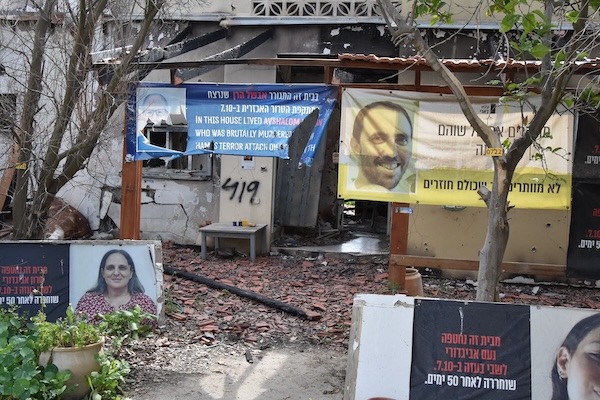
Hundreds of terrorists entered Kibbutz Be’eri. Of the 1,000-plus residents, 101 kibbutz members were killed, 30 people were abducted and one-third of the houses were severely damaged or destroyed. (photo by Larry Barzelai)

My wife and I frequently travel to Israel to visit our three grandchildren. Our interest in Be’eri comes from its special connection with Kibbutz Hatzerim, the birthplace of our daughter-in-law. I feel that the story of Be’eri is a paradigm for the story of the Jewish people, the story of building something magnificent, experiencing a great 

destruction and rebuilding afterwards to create something even better. It also illustrates how, when people work together, they can accomplish greater things.

Through a mutual friend, I arranged to meet Yaron, a lifelong member of Kibbutz Be’eri and one who had survived the Oct. 7 massacre. He graciously took me on a tour of the kibbutz as he described the events of that day. Much of what follows are descriptions of the events in his own words. He’s given me permission to share them with you. 

On the evening of Oct. 6, Yaron and other kibbutzniks were celebrating the anniversary of the founding of Kibbutz Be’eri. Sharing drinks later with some of his closest friends, they started planning a summer hiking trip in the French Alps.

At 6:30 in the morning of Oct. 7, Yaron heard unusual noises, as he slept with his wife and two young children – both under 5 years old. It sounded like shelling and bombing. When the red alert siren went off, they ran to join their kids in their home’s  mamad (reinforced security room), which is also the kids’ bedroom.

Initially, Yaron wasn’t too concerned, even after receiving a text that the kibbutz may have been infiltrated by enemies. “OK, I guess we’ll be cooped up in here for a couple of hours,” he thought.

“Messages in the different kibbutz WhatsApp groups start reporting about terrorists walking inside Be’eri,” he writes. “It is close to 8 a.m. Someone writes a message that she hears gunshots.” 

Shortly after that, someone reports hearing “terrible screams from the apartment above her, then silence.” Another says that one of the houses in the kibbutz is burning.

Yaron tries to stay calm. The power goes off. Their dog, who is not inside the room, is unusually silent. They hear that someone is in their house.

“They get to the room and try to open the door. I fight over the handle, heart pounding,” writes Yaron. “They don’t succeed! Every time they try, I swing the door handle back to the upright, ‘Safe’ position.”

Eventually, the terrorists give up on opening the mamad. Yaron ignores the calls in Arabic and English to come out of the room. He and his family listen, as the terrorists sing, while wrecking the house. First, there is the smell of gasoline, then smoke enters the room.

A neighbour advises them, via Yaron’s phone, that they should close the gap under the door with wet clothes. 

“I take the sheet from my daughter’s bed, pour the bucket of urine on it and jam it under the door,” Yaron writes. “Outside the room, the fire grows fierce, it consumes five years of our lives in minutes…. We are in a closed room, we have no electricity, the children are coughing. I realize that the fire in our home is probably so crazy that even those inhumane monsters can’t still be waiting outside the door. I let go of the handle and I take a deep breath and feel some oxygen flow to my brain. So far, it was the pressure and fear of the terrorists that was suffocating me, but now the smoke is becoming the main problem.”

Yaron’s wife continues to text with neighbours, calling emergency team members repeatedly.

“All of our children’s books are burning outside,” Yaron shares. “Amidst all the terror we hear one of our favourites, a sound book of Arik Einstein songs, catching fire. The fire makes it play, chillingly, one of the happiest songs we know: ‘It’s Saturday morning, a beautiful day….’”

Suffocating on the smoke, the family has no choice but to open a window of their second-floor apartment. Despite the fear of what awaits them outside, the smoke is too much and they climb out onto the metal awning below. 

“The four of us are sitting on the metal. We can breathe but we are exposed 2.5 metres (eight feet) above the ground. OK, now what?” Yaron recalls.

They can’t reach the emergency team, so they jump to the ground and hide in a nearby shed. Yaron jumps first, his wife hands him the kids, then follows. 
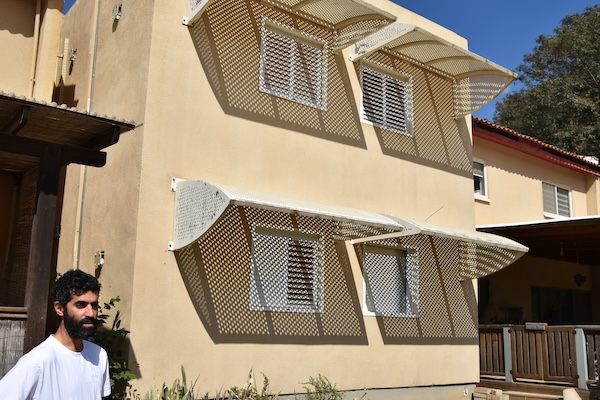
photo - A house identical to Yaron’s, which has been demolished, that gives an idea of the window of the family’s safe room and the challenge of jumping to the ground from the second storey
A house identical to Yaron’s, which has been demolished, that gives an idea of the window of the family’s safe room and the challenge of jumping to the ground from the second storey. (photo by Larry Barzelai)

“Another neighbour reaches out, ‘Come to my place.’ I call him. I ask him to risk his life, leave his mamad and open his house for us. He does this while we’re on the phone. We are hesitant to come outside, we are debating with our eyes, and can’t decide if we should stay hidden in an unsafe shed or try to reach a safer place but risk exposure. I ask him to risk his life even more, to take a look outside and verify there are no terrorists in sight. He bravely obliges and says it’s clear. We were in the shed for maybe five, maybe 10 minutes, maybe it was two years, who knows. The kids are silent…. My heart is racing, I open the shed door and we sprint to the neighbour’s house.”

The fire has consumed their own home, and their beloved dog. Temporarily safe at the neighbours’, Yaron sees that the fire might cross over to where they are hiding. “We decide we need to evacuate,” he writes. “At a distance, we spot a few IDF soldiers. A small company or a team…. They escort us to a nearby building where my brother lives. We contact him and he let us in together with two more kibbutz members who had gotten stuck in a similar situation.”

Around 11 p.m., soldiers returned to Yaron’s brother’s place. “They helped us out, they asked us to cover our children’s eyes to shield them from the horrors on the kibbutz lanes and they escorted us to the yellow gate.”

“We made it out,” he writes. “We made it out.”

Most of Yaron’s extended family survived the massacre, except for an aunt who was murdered. In total, hundreds of terrorists entered the kibbutz. Of the 1,000-plus residents, 101 kibbutz members were killed, 30 people were abducted and one-third of the houses were severely damaged or destroyed.

Another victim of the massacre was Winnipeg-born Vivian Silver, who had, prior to Oct. 7, driven patients from the Erez border crossing to hospitals in Israel. She learned Arabic so that she could better communicate with her Bedouin neighbours. She truly believed in a peaceful future between the residents of Israel and the Palestinians of Gaza. Sadly, she was killed on Oct. 7. Her remains were so badly burned that it took weeks to identify her by DNA analysis.

Eli Sharabi, another resident of Be’eri, was kidnapped and taken to Gaza. In his book Hostage, he describes 491 tortuous days in Hamas captivity. He was looking forward to reuniting with his family once he was freed. Instead, upon his release, he discovered that his wife and daughters had been killed on Oct. 7. He cried at their gravesites for two hours, before making the decision that he had to move forward. 

Immediately after Oct. 7, Yaron and his family spent many months living in an apartment in the Dead Sea area. They were alive and they were safe, relatively free from missile attacks, but life was far from normal. To say nothing of the trauma they were dealing with, reestablishing a kibbutz lifestyle, while living in a crowded hotel with none of the amenities that glue kibbutzniks together, was challenging. 

The family has since relocated to a temporary custom-built village adjacent to Kibbutz Hatzerim. Be’eri and Hatzerim are sister kibbutzim, both founded in 1946. Be’eri was named for Berl Katznelson, a founding father of Labour Zionism, whose nickname was Be’eri; Hatzerim, after a verse in Deuteronomy (2:23) that mentions hatzerim (farms/enclosures) “as far as Gaza.”

Be’eri and Hatzerim are both traditional socialist kibbutzim, populated mainly by people on the left of the political spectrum. Thus, it was natural for Kibbutz Hatzerim to offer to build a temporary kibbutz adjacent to them for people from Be’eri to live until their kibbutz was rebuilt over a two-year period.
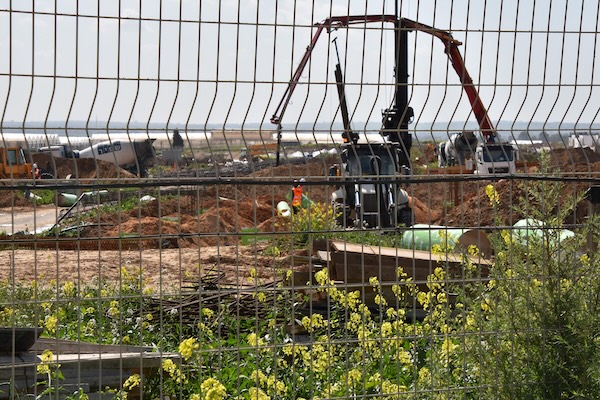
photo - The new neighbourhood on Kibbutz Be’eri, where Yaron and his family are planning on living. The rebuilding of the kibbutz is expected to take two years
The new neighbourhood on Kibbutz Be’eri, where Yaron and his family are planning on living. The rebuilding of the kibbutz is expected to take two years. (photo by Larry Barzelai)

Most former residents of Be’eri are now living in the temporary kibbutz. Some facilities, such as medical clinics and administrative offices, are shared by the two kibbutzim. Otherwise, the temporary Be’eri has its own houses, schools and offices. Hatzerim expanded its dental clinic, seniors lounge and grocery store to accommodate the increased needs of the larger population. In typical kibbutz fashion, members of both communities met many times to jointly plan this project.

Every day, Yaron leaves his family on the temporary Kibbutz Be’eri to commute 45 minutes to the original. About 60 kibbutz members are living there now, while it’s being rebuilt, and the plan is for most members to return by the start of the school year this September. A printing factory and agriculture are the two sustaining industries on Be’eri.

Yaron’s home, along with 140 others, was destroyed on Oct. 7. Recently, members of Kibbutz Be’eri made a collective decision to tear down all the damaged buildings. They want to try and wipe away the terrible memories of Oct. 7 and build anew. As one part of the construction work, the kibbutz is building a new subdivision, where Yaron and his family are planning to live.

But Yaron isn’t sure that he wants to return. He was born on Be’eri and has lived most of his life there. However, the memory of the trauma of Oct. 7 is very strong. He’s not sure he wants to move back to this place, where so much death and destruction happened. He confided that he may want to live outside of Israel, somewhere he can anticipate a more peaceful future for his children.  

Larry Barzelai is a Vancouver family physician, specializing in care of the elderly, who travels to Israel frequently to visit his three grandchildren there. He is presently co-chair of the Jewish Medical Association of British Columbia.

Format ImagePosted on April 10, 2026April 9, 2026Author Larry BarzelaiCategories IsraelTags hostages, Israel, Kibbutz Be’eri, Kibbutz Hatzerim, memoir, Oct. 7, rebuilding, testimony
Kibbutz movement in crisis

Kibbutz movement in crisis

A home in Kibbutz Erez. (photo by Larry Barzelai)

Spending a night in late March at Kibbutz Erez in southwestern Israel was an unforgettable experience. Visiting friends, it was somewhat eerie. Most residents have not returned since the Hamas terror attacks on Oct. 7, and the absence is profound. 

The area is like a Canadian suburb. A group of houses surrounds a large grassy area, which has children’s playgrounds and lemon, orange and kumquat trees. This type of living is a rarity in Israel, where most people live in apartment buildings.

While the environment was scenic and comfortable, explosions could be heard in the distance and puffs of smoke periodically arose from Gaza, the border of which is less than a kilometre away. The Israel Defence Forces were entrenched nearby.

Kibbutz Erez fared better on Oct. 7 than many other kibbutzim and towns in the region because they received advanced warning from a neighbouring kibbutz that an attack was underway. Their neighbours had seen hang gliders from Gaza soaring overhead.

The security team of Kibbutz Erez quickly assembled to try to prevent the invaders from entering the kibbutz through the main gate. First, they called the IDF to make sure that the army wasn’t conducting an exercise. Receiving confirmation that it was a terrorist attack, the kibbutzniks asked how long it would take for the army to come – they were told they were on their own. 

A firefight involving rifles, grenades and RPGs ensued. According to one of the kibbutzniks, “we fought like lions.” This was no ordinary military engagement, but a battle to protect their children and other family members from the Hamas terrorists. If they failed, they knew that Hamas would hurt their children.

Amir, one of the kibbutzniks, whose wife was expecting their first baby, was killed in the encounter. Danny received a bullet to the neck and Uri suffered wounds to his head and leg.

Liora, a nurse described as having nerves of steel, recognized that neither Danny nor Uri would survive without immediate medical attention. Both were bleeding profusely, and their level of consciousness was decreasing. With the help of a friend, she packed them into a car, drove out of the kibbutz amid a hail of bullets and got them to a nearby hospital, where they received lifesaving treatment. Both survived in relatively good physical shape.

After a fight of close to two hours, the terrorists decided that Kibbutz Erez was too difficult to overcome, and moved on to wreak havoc on the next village. The IDF did not arrive until later that day.

The whole kibbutz was evacuated to Mitzpe Ramon. Many of the families moved into hotel rooms there. After several weeks, makeshift schools were established and members of the kibbutz achieved some measure of normality, as much as it can be normal living in a hotel, totally dependent on caring neighbours, a supportive community and government help. Since then, some of the kibbutzniks have relocated to Kiryat Gat, which is much closer to their home. Some, including my friend, have returned home. 

What is the future of Kibbutz Erez? People are slowly trickling back. The telling test will be in the summer, if families return in preparation for the start of the school year in September. 

Kibbutz Hatzerim and Kibbutz Be’eri

Earlier in March, we visited extended family who live on Kibbutz Hatzerim, and heard about their experiences on Oct. 7.

People on Kibbutz Hatzerim awoke that day to sirens and multiple WhatsApp messages from friends and relatives, letting them know that Israel was under attack by Hamas terrorists, who were infiltrating the settlements close to the border. Were the attackers coming to Kibbutz Hatzerim, 20 kilometres west of Beer Sheva? Rumours circulated that they were on their way to Tel Aviv. People were reluctant to turn on their TVs, to protect their children from seeing the horrors that were happening. People received no directives from government sources or from the army. It was an information vacuum.

Some visitors at the kibbutz, who had arrived for Simchat Torah, decided to return to their homes in central Israel, but was it safe to drive there? Nobody knew.

Would the kibbutzniks be able to defend themselves? They did not have many weapons and the kibbutz could be easily infiltrated from several locations. But people on Kibbutz Hatzerim ended up being the fortunate ones. The terrorists were planning to move in that direction but didn’t make it that far. Apparently, they had killed and kidnapped enough people by then – 364 people killed and 44 kidnapped at the Nova music festival alone, mainly young people.

After Oct. 7, life returned to some degree of routine on Kibbutz Hatzerim. However, there were frequent missile attacks, necessitating trips to the bomb shelters. People were called up to do army service (miluim). The IDF was fighting in Gaza and soldiers were being killed. The plight of the more than 240 hostages was on everybody’s minds.

The death and destruction of some of Kibbutz Hatzerim’s neighbours is indescribable. Of special note is Kibbutz Be’eri: approximately 70 terrorists entered the kibbutz. Of the 1,000-plus residents, 97 kibbutz members were killed, 11 people were abducted and one-third of the houses were severely damaged.

Kibbutz Be’eri and Kibbutz Hatzerim have a lot in common. Hatzerim is famous for having developed the drip-irrigation technique and has a large production facility at the kibbutz. Be’eri houses one of the largest printing companies in Israel. Both kibbutzim resisted privatization, which many others had adopted as additional sources of revenue.

Hatzerim and Be’eri were both established in 1946 and both were comprised mainly of people on the left of the political spectrum. They looked forward to a peaceful future with the residents of Gaza. Many were involved in a program that transported sick people from Gaza to hospitals in Israel for advanced treatment. One of the residents of Be’eri, Vivian Silver, originally from Winnipeg, had learned Arabic to better communicate with her Palestinian neighbours, but that didn’t save her life on Oct. 7.

Currently, most residents of Kibbutz Be’eri are being housed in temporary locations, such as hotels in the Dead Sea area. They are safe and relatively free from missile attacks, but life is far from normal. Trying to reestablish a kibbutz lifestyle, while living in a crowded hotel with none of the amenities that glue kibbutzniks together, is challenging. 

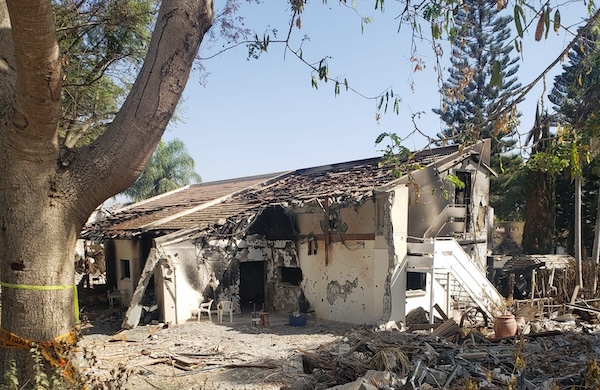
photo - A house in Kibbutz Be’eri after the Oct. 7, 2023, Hamas terror attacks
A house in Kibbutz Be’eri after the Oct. 7, 2023, Hamas terror attacks. (photo by Tomer Persico)

A massive building project is now underway adjacent to Kibbutz Hatzerim. A whole new temporary kibbutz to house the residents of Be’eri is under construction. The plan is to have the temporary kibbutz finished by the summer, so that families can move in before school starts in September. 

Some facilities, such as medical clinics and administrative offices, will be shared by the two kibbutzim. Otherwise, the temporary Kibbutz Be’eri will have its own houses, schools and offices. Hatzerim will expand its present dental clinic, seniors lounge and grocery store to accommodate the increased needs from the larger population. In typical kibbutz fashion, members of both kibbutzim have met many times to jointly plan this project. 

The ultimate plan is to rebuild the original Kibbutz Be’eri, which was mainly destroyed on Oct. 7. It is hoped that this will be accomplished within the next two years.

Kibbutz Yiron

Look at the label on your kosher wine from Israel. Most likely it comes from Kibbutz Yiron. Next year will probably be different, as the kibbutz is on the Lebanese border and has been evacuated – no one is allowed into the area. As a result, according to one kibbutz member, the pruning of the vines, which usually takes place in the spring, did not happen this year. The same kibbutznik informed me that $20,000 worth of his favourite apple, Pink Lady, was left to rot.

Kibbutz Yiron is an oasis in the desert. We have visited because we have friends who live there, but people come from many other places in Israel and elsewhere to enjoy the mountain scenery, go for hikes and rest in a peaceful environment. Lebanon is visible in the background, but the border was quiet. It is heartbreaking to see this piece of paradise abandoned.

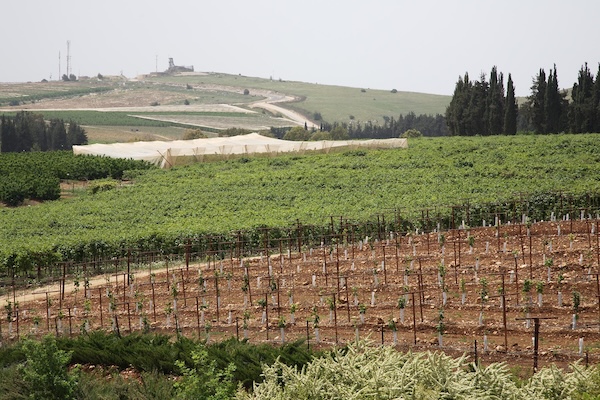
photo - Spring pruning hasn’t been possible at Kibbutz Yiron’s vineyards because of the evacuation
Spring pruning hasn’t been possible at Kibbutz Yiron’s vineyards because of the evacuation. (photo by B. Negin / flickr)

The jewel of Yiron was its Pinat Chai, a literal oasis consisting of a zoo with multiple animals, including a python, which would be taken out on non-feeding days and draped around the necks of unsuspecting visitors. Peacocks, ducks and geese roamed freely. Deer would run around their enclosed area, frequently escaping into the wider area, trying to evade recapture. A lake in the middle of the zoo was a star attraction. Row boats and paddleboats navigated the small artificial lake in a region with no natural lakes.

Kibbutz members looked forward to the day when Pinat Chai would serve as a meeting place for children and families of different origins. They anticipated a day when Lebanese children would enjoy themselves at Pinat Chai together with Israeli children.

But the zoo is now gone. The government also ordered them out of the kibbutz. The animals have been relocated to other places in Israel, and even to other countries.

The evacuation was part of a larger one that included all settlements close to the Lebanese border, like the city of Kiryat Shmona, with 22,000 inhabitants; and the town of Metulla, home of Canada Centre and one of only a few skating rinks in Israel. This area of northern Israel has special significance to the Jewish community of Vancouver, as our partnership region. Since the mid-1990s, Jewish Federation of Greater Vancouver has worked closely with Etzba HaGalil (the Galilee Panhandle).

Kibbutz Yiron was not attacked on Oct. 7. However, the northern border has heated up since then. Hezbollah has been firing many missiles into the region, sometimes 30 per day, killing several Israelis.

Villages, especially in the Gaza Envelope, are receiving government compensation and many have relocated so that they are all living as a group, whether in Mitzpe Ramon or Eilat or the hotels at the Dead Sea. People in the north have not received the same compensation, so they are widely scattered. The kibbutznik with whom I spoke is living in a village close to Haifa. When I asked him when he’s going back to his home, he said anywhere from six months to maybe a couple of years.

There are many in Israel, including government ministers, who think that a war with Hezbollah is imminent. Hezbollah’s arsenal of weapons is much larger than that of Hamas, so a war with them could be even more destructive. The IDF has been stationing additional troops in the north, as tensions rise. Many people are strengthening their bomb shelters.

Looking to the future 

Oct. 7 changed Israel in dramatic ways. Stories of neglect, abandonment and destruction are legion. At the same time, Israelis have shown incredible resilience to plan and rebuild for the future.

For many years, kibbutzim have defined Israel’s borders and acted as a protective barrier, both in the north and surrounding the Gaza Strip. But will the kibbutzim be able to rebuild their lives with some semblance of security? Can they ever again trust a government and an army that so dramatically let them down?

People are slowly returning to the kibbutzim surrounding Gaza, but many may never return. For the people along the Lebanese border, the situation in some sense is more dire. They have been exiled from their residences for more than seven months. The agricultural and industrial bases of the kibbutzim economies have been shattered. When will they be able to return? Will the small-scale conflict in progress along the Lebanese-Israel border become a major war?

It’s a very challenging time to be an Israeli, especially a kibbutznik living close to Israel’s borders. Hopefully, their future will include some degree of peace and normality. 

Larry Barzelai is a semi-retired Vancouver family physician, who travels to Israel frequently to visit his three grandchildren there. He is presently co-chair of the Jewish Medical Association of British Columbia.
Format ImagePosted on May 24, 2024May 23, 2024Author Larry BarzelaiCategories IsraelTags agriculture, economy, evacuations, Hamas terror attacks, Israel-Hamas war, Kibbutz Be’eri, Kibbutz Erez, Kibbutz Hatzerim, Kibbutz movement, Kibbutz Yiron, kibbutzim, Oct. 7, tourism
Proudly powered by WordPress