An equal, just society

Hannah Kehat (photo from New Israel Fund Canada)

A crowd of 100 people – mostly women – filled Temple Sholom’s sanctuary on Feb. 23 to hear Dr. Hannah Kehat, a prominent feminist religious activist in Israel.

Kehat’s Kolech, founded in 1998, was the first Orthodox Jewish feminist organization in Israel. The group’s aim is to create awareness around gender equality and women’s rights in the religious and public spheres, and advancing women’s engagement with Jewish and civic life in Israel.

In her address, which was moderated by Rabbi Dan Moskovitz, Kehat underscored that Israeli women, religious and secular, face different challenges than women in North America.

One major difference, said Kehat, is the lack of separation between religion and state in Israel. All marriages, divorces, conversions and burials go through the rabbinate; their ultimate authority means you cannot have a non-regulated lifecycle event, no matter your level of religiosity. Women may have equality under the Declaration of Independence, she said, but this equality is aspirational in reality. The aim of religious Jewish feminists is to reframe women’s rights for the Orthodox community, but also to integrate the daily concerns of secular women into their fight for representation and legal-halachic equality.

The obstacles to full equality for Israeli women start with being seen and heard in public. In the last several years, women and girls have been systematically erased from advertisements, billboards, books, pamphlets and textbooks, and they have been subjected to segregated seating on buses, enforced modesty codes, street harassment and violence. Meanwhile, there are still people – women and men – who assume feminism and religion to be mutually exclusive.

“We’re tired of apologizing,” said Kehat. “We want to stay religious. Don’t ask us why are you still religious if you are a feminist, and don’t ask me why are you a feminist if you are religious. It was acceptable until maybe the last 20 years that it doesn’t work together, either you’re a feminist or you are Orthodox….

“We say in Israel, ‘gam v’gam.’ It’s very complicated. We know it’s very complicated. It’s hard to hold the both together. It’s very painful because you have all the time to fight and you have a lot of battles in the family, in the synagogue, in the community, but we don’t want to give up any part of our identity…. We knew in the beginning [of the movement] that it’s not halacha that is against feminism…. It’s social power. It’s political….

“We started from the place that we know Torah. We’re all lecturers, rebbetzins, we know Torah; we know the truth that it’s not the problem, that we can have an equal society, even if we’re religious.”

Kehat said that, today, Israeli women are raising their voices and claiming their space, and Israeli courts have been supporting legal challenges to the status quo. Recently, the Supreme Court ruled that it is illegal to harass women on buses or on the street, and those abuses have almost all but stopped, she said. Legal challenges have proved successful and are one major strategy to create institutional change, she added.

Kehat described growing up the daughter of a rabbi in the Jerusalem Charedi enclave of Meah Shearim, a world she consciously left as a young woman so that she could advance her education and follow her own path. She became modern Orthodox, got a PhD in Jewish philosophy from the Hebrew University of Jerusalem, married a rabbi and had six children. She is a lecturer, an academic, a writer, an activist and a Torah scholar. And, while she started her movement from within the modern Orthodox world, she sees more and more Charedi women taking up the feminist mantle – progress that cannot come soon enough.

“Charedi women, I can use the example of myself. To grow up as a Charedi girl, I think it’s the lowest level in Israel. You’re silent, you don’t have any voice. You come to the world just to serve the man since you are very, very young. You can see it in Jerusalem, B’nai Brak, like me, girls, 6, 7, carrying their brothers and the babies and doing all the [house]work. Really, the aim, the mission of [a woman’s] life is to serve the man … the father, the husband. So, Charedi women are still really very depressed. They have a lot of pressure in their lives.

“When I started Kolech … I got a phone call from the minister of health…. He said, ‘I heard about you, the leader of the Orthodox feminist movement. Finally, I have an address to address my problem.’” He told her the alarming statistic that the death rate for Charedi women with breast cancer was 30 percent higher than for other Israeli women. Today, that statistic is even worse, Kehat said, and may be closer to 50 percent higher. The minister continued, “‘Do you know that the expectancy of life of Charedi women is the lowest, the worst in the country?’ It’s unbelievable,” Kehat said. “They did research in B’nai Brak. The Charedi men are in the second level of life expectancy, and the women are [at the bottom]…. Even though Kolech is not a Charedi group, [we] try to raise the consciousness of Charedi women to take responsibility for their health and educate them about resources.”

The main obstacle to women’s equality is the conflation of religion and politics with the rabbinate.

“In Israel, we have another problem – that the rabbinate is a political institution, part of the government. This is really unbelievable and it’s really an historical mistake. The rabbinate became such a political powerful part of government and it’s worse than the government because we are not choosing the rabbis, only the politicians choose the rabbis and we don’t have any influence over who is going to be the rabbi…. Everyone knows that the rabbinate and the chief rabbis are not really the ideal people that we’d like to be our religious leaders, they’re political rabbis, we know that. So, it’s not so hard for us to go out and say, ‘Something is wrong over there, something is corrupt and we have to change it.’”

The visibility of women’s rights activism is growing. “The feminist issues are on the agenda for the religious community all the time. Every seminar, every yeshiva, we have a lot of yeshivot for women … synagogues are much more open to egalitarian ideas. I think there are more than 20 synagogues that are egalitarian…. The last two years, there is a big change. Something is going on in the Charedi community. It’s very exciting.”

One of the bright spots is the number of women joining Facebook groups dedicated to women’s activism. There are groups like “Feminists under the wig” and the group wryly named “I’m also a religious feminist and I don’t have any sense of humor,” both of which have growing membership and provide an online space to share experiences, gain empowerment and strategize.

Kehat was brought to Vancouver by New Israel Fund Canada. NIF in Israel supports at least 800 nonprofit, government-certified organizations with priorities to “strengthen and safeguard civil and human rights, bridge social and economic gaps and foster tolerance and religious pluralism for all its citizens.”

NIFC’s national outreach associate, Atarah Derrick, spoke at the top of the program. “Thirty years ago, NIFC was established in Canada to address Canadians’ desire to address the needs of Israelis in a way that no other charity was doing,” she said. “Every year, Israelis have told us what it is that they need to create the kind of world that they’d want to live in, a place where all Israeli residents are equal, where they have the freedom and the voice to improve their status … regardless of race, gender or ethnicity.”

She added, “I work with New Israel Fund of Canada, with NIF, because I am passionate about making Israel an even better place than it already is and, in my work with New Israel Fund, I get to see firsthand the kind of change that we are able to make when we get together.”

Basya Laye is the former editor of the Jewish Independent.
Na’amat stands in solidarity

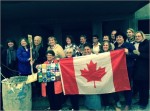
The Canadian contingent included representatives from Montreal, Ottawa, Toronto, Hamilton, Calgary, Edmonton and Vancouver. (photo by Israel Malovani)

Leaders of Na’amat Canada joined representatives of the organization from the United States, Brazil, Mexico, Belgium, Argentina, Uruguay and Israel for the first Na’amat International Solidarity Conference in Israel. The delegation, led by national president Sarah Beutel, were guests of Israeli President Reuven Rivlin during the conference’s opening session on Feb. 10.

Rivlin welcomed the representatives. “The state of Israel has always been committed to the value of equality,” he said. “In the Declaration of Independence, our leaders committed themselves to the complete social and political equality for all citizens of Israel, without distinction of religion, race or gender. And when we promise something, we then must be committed to working hard to deliver on our promises.

“You, the women of Na’amat, have always supported the state of Israel, and dedicated so much to the welfare of the citizens of Israel. You were always proud Zionists, even in times when people were afraid to show public support for Israel. Moreover, your support helped, and still helps us, to ensure that we live up to our promises and that we keep alive the symbiotic connection between Israel’s Jewish and democratic identities.”

Attendees at the conference also took part in groundbreaking ceremonies for a new day-care centre sponsored by Na’amat Canada.

Other highlights included visiting a centre for victims of domestic violence, an evening in the Ayanot Youth Village, a Na’amat’s boarding school and a day in Jerusalem.

Delegates discussed issues confronting Israel, women and families, and Na’amat’s role in meeting those challenges. The conference provided an opportunity to experience the fruits of the organization’s efforts to promote gender equality and to help women with child-care, legal and family issues, domestic violence and employment issues.

The three trials of Gett

Viviane (Ronit Elkabetz) and Carmel (Menashe Noy) in Gett. (photo from Music Box Films)

The marvelously claustrophobic and deeply damning Israeli courtroom drama Gett: The Trial of Viviane Amsalem – which opens March 13 at Vancity Theatre – actually consists of three trials.

Seeking a divorce after some 30 years, Viviane aims to cast her husband Elisha as the defendant. However, the government-funded religious court vested with authority over Jewish divorces won’t grant a gett without the husband’s consent – and the triumvirate of Orthodox rabbis insists it has limited power to pressure him. As a result, it often feels as if Viviane (rivetingly played by Ronit Elkabetz) is on trial. And, because the process seems arbitrary and unfairly skewed in favor of the husband (the taciturn, unwavering Simon Abkarian), the film explicitly puts the system itself on trial.

“Our work is very political,” said Shlomi Elkabetz, who co-wrote and co-directed the film with his sister Ronit. “Gett is a protest film.”

The Elkabetzes come from a Moroccan Sephardi background, and were born in Beersheva and raised around Haifa.

“We did not have any connection whatsoever to the cultural centres in Israel [growing up],” Elkabetz said during a visit to San Francisco last fall. “We did not have any access, not by our family members and not by the surroundings of the places we grew up in.”

As outsiders who had to push and elbow their way into Israel’s Ashkenazi-dominated cultural hierarchy, they take great satisfaction in Gett’s Ophir Award for best picture and selection as Israel’s official submission to the Oscars in the best foreign language film category. (It didn’t receive a nomination.)

The film’s structure and setup is simple and powerful: Viviane wants a divorce, and her husband says no.

“Just like that there is huge suspense, because we identify with the wish of Viviane to be free,” Elkabetz said. “The dream of the modern world is freedom. She wants something that all of us want.”

The corollary to rooting for Viviane is that the other characters assume the cloak of villains, but the filmmakers made a concerted effort to imbue Gett with nuance and ambiguity, which makes for a more interesting, provocative and richer work.

“[Ronit and I] don’t judge Viviane, we do not judge Elisha, not the judges, we do not judge [Viviane’s] advocate,” said Elkabetz. “Everybody has his place for performing their interior life and making it exterior in that little theatre of the court. Everybody is respected by us, the storytellers.”

Gett marks the third and final chapter of an exceptional trilogy that began, in the very first scene of To Take a Wife (2004), with Viviane’s seven brothers discouraging her from rocking the boat and seeking a divorce. Shiva (Seven Days), set a few years after Viviane has left Elisha, reunites the extended family for a funeral.

Shiva (2008) also won the Ophir for best picture, so the attention and respect of their peers is not a brand new experience for the Elkabetzes. One gets the feeling that Shlomi and Ronit (familiar to movie-goers from The Band’s Visit), a gay man and a woman, respectively, are fueled by the role of underdogs.

For his part, Shlomi Elkabetz wants to make accessible films that provoke audience reactions and, ideally, promote societal change. Intense and often intensely absurd, the beautifully crafted and acted Gett hits every mark.

“If I go to all this trouble, I want people to be aware of the film,” he said. “Part of my attraction in cinema is to try to make cinema that does not give up filmmaking. I’m not trying to flatter anyone but to be strict and radical and at the same time to be popular. Is it possible? I don’t know.”

Elkabetz laughs, at himself and the test he has set for himself. Consider it Gett’s fourth trial.

Michael Fox is a writer and film critic living in San Francisco.

Bipartisan support of Israel

The controversy around Israeli Prime Minister Binyamin Netanyahu’s speech to the U.S. Congress this week was so fraught with partisan rancor – or at least with punditry alleging partisan rancor – that the theme at the AIPAC conference in Washington, which immediately preceded the prime minister’s address, was “all bipartisanship all the time.”

Democratic U.S. Senator Ben Cardin and Republican Senator Lindsay Graham opened the event Sunday morning with emphatic assertions that American support for Israel overrides all partisan politics. The message was repeated later in the day by top Democratic and Republican officials from the House of Representatives. Messages of cross-partisan rah-rah for Israel were featured in many of the conference speakers’ messages and on the massive 360-degree screens encircling the U.S. capital’s cavernous convention centre. The American ambassador to the United Nations made the same case.

As the country’s greatest ally in the raucous Middle East, Israel is somewhat akin in the American political culture to the U.S. military – one can criticize policies and politicians, but it is de rigueur to restate philosophical support for Israel as a great ally and for the right of Israel to defend its citizens.

This sort of bipartisanship has not always been the case in Canada, which has a very different perspective on foreign affairs and, sometimes, on Israel. But that has changed, according to a panel of Canadians who addressed the conference.

Shimon Fogel, chief executive officer of Canada’s Centre for Israel and Jewish Affairs, moderated a session featuring Jonathan Kay, editor of The Walrus magazine and former comment page editor of the National Post, and Terry Glavin, a Victoria-based commentator and author.

“Israel has won the battle of ideas in Canada,” Kay said.

While many credit Prime Minister Stephen Harper with leading the change, both men see a deeper shift in public opinion. Glavin called it “tectonic.”

The change is due to a few things, the two commentators agreed.

Anti-Zionism comes in a grab bag with anti-Americanism, Kay said, and Canadian anti-Americanism is in freefall since Barack Obama became U.S. president and Stephen Harper became Canadian prime minister. (It’s hard to condemn Americans over, say, environmental issues when Obama vetoes the pipeline Harper backs.)

The rise of social media has also played a back-door role. The CBC was routinely criticized for being anti-Israel a few years back, but the social media backlash every time biased reporting occurred – aided by groups like Honest Reporting – has led to fairer coverage.

“I actually find the CBC’s coverage of Israel pretty good,” said Kay.

The 9/11 terror attacks also provided a major impetus for changing Canadian views of friends and enemies. But the Canadian military engagement in Afghanistan perhaps drove the major shift of opinion, said Glavin. Two generations of Canadians had not seen active wartime mobilization. The fight against radical Islam, in the form of the Taliban, changed perceptions of global issues, including Israel’s struggle against nominally different but ideologically parallel enemies.

Where anti-Zionism was most successful – on university campuses – most students now roll their eyes at the “trite and ritualized” debate on both sides, said Kay. In terms of professors supporting the BDS movement, he added, it is the “least consequential” academic organizations making the case. And gay rights groups opposing Israel are “underemployed” activists who have won most of what they were demanding.

Significantly, he continued, at the national level, the elements of the Liberal and New Democratic parties that once condemned Israel for every imaginable crime have been reined in by their parties. Notoriously anti-Israel NDP MP Svend Robinson is gone from the scene. His ideological successor in anti-Zionism, Libby Davies, has announced she will not seek re-election in Vancouver East, although Kay said she has already been “defanged” by party leader Thomas Mulcair, who Kay said makes no apologies for his support for Israel.

Glavin noted that the Arab Spring, which represented the rising of 300 million more or less enslaved people, made it “difficult to make the case that Israel is the big problem in the Middle East.”

Both men noted that the shift began with Liberal Prime Minister Paul Martin, under whose leadership Canada changed its voting patterns at the United Nations. The pro-Israel position accelerated under Harper, particularly after the 2011 election when the Conservatives won a majority and John Baird was appointed foreign affairs minister. Baird, who left politics this year, was greeted with a hero’s welcome at the AIPAC conference.

While Canadians are proud to be different than Americans on many fronts, the consensus on Israel that has reigned in the United States is now dominant in Canada, as well.

Using art to bridge peoples

The gallery includes work by Almagul Menlibayeva of Kazakhstan. (photo from AMOCAH)

When people in Israel saw that Belu-Simion Fainaru and his partner Avital Bar-Shay were considering opening yet another art museum/gallery, some eyebrows were raised. But what this dynamic duo in life and in art had in mind was much more than another one-dimensional art space. Their far-reaching ideas will likely quiet the doubts of any naysayers.

Fainaru and Bar-Shay, both Jewish artists living in Haifa, decided to create an art meeting space for Jewish, Christian, Muslim, Bedouin and Druze artists – a place where they could display their art alongside one another. They created the Arab Museum of Contemporary Art and Heritage (AMOCAH) in Sakhnin in the Lower Galilee, which was declared a city in 1995 and has a population of 25,000 of mostly Muslims and a minority of Christians. It also is home to a significant population of Sufis, Muslims who adhere to a mystical stream of Islam.

Bar-Shay and Fainaru originally met in Israel. Fainaru made aliyah from Romania in 1973. A successful visual artist, he has curated exhibits around the world, making international connections along the way. Bar-Shay is an Israeli-born artist, designer and architect. She has exhibited in Israel and abroad and has vast experience in public art, working as a cultural entrepreneur. She specializes in artistic activity in the periphery.

The idea for AMOCAH started with Fainaru and Bar-Shay initiating and curating the Haifa Mediterranean Biennale four years ago. This led to a second biennale in 2013, which took place in Sakhnin. At the Haifa biennale, they used shipping containers to exhibit the artwork. In Sakhnin, the biennale was held in a building that the town’s mayor offered for the occasion.

“Right now in Israel, a lot of … Jewish people feel a special energy when it comes to Sakhnin,” said Fainaru. “So, we did this big project in the Sakhnin area, where a lot of Jewish people are already using various art mediums to bring communities together.”

Fainaru said that the various communities do not usually do things together and, even within the Arab community, Muslims and Christians generally keep to themselves.

“The art will have an urban dimension and we can approach art for a population that’s not very familiar with contemporary art,” said Fainaru. “We think it’s important to decentralize the art scene in Israel.”

Going with the biennale (Italian for every two years) concept seemed the most feasible, with politics and budgets in Israel regularly being in flux. “We had a big project with the Ministry of Education, but a few months after we decided to move ahead with [the minister], he [had] just resigned,” noted Fainaru, as an example.

While the idea of a biennale was born 100 years ago in Venice, Fainaru and Bar-Shay wanted to go with that premise and added a new twist – creating a biennale melting pot of cultures, and eventually transform that into a permanent museum in Sakhnin.

“We think countries around Israel and the Mediterranean should cooperate and exchange ideas in the area of contemporary art,” said Fainaru. “We put a lot of emphasis on education and doing workshops with artists from abroad.

photo - Afghani-German artist Jeanno Gaussi’s work is at AMOCAH
Afghani-German artist Jeanno Gaussi’s work is at AMOCAH. (photo from mfa.gov.il)

“We want to develop projects under the umbrella of the biennale and museum, also with Jewish and Arab children – the next generation – to communicate and get to know each other, have fewer misconceptions, and make a better living here not based on violence.”

It took some time and meetings with the right people to get the Sakhnin museum off the ground. Fainaru and Bar-Shay met with the mayor of Sakhnin, Mazin G’Nayem, who was open to the idea. The mayor spoke with his culture deputy and the pieces began to fall into place.

“He [the mayor] thinks it’s important to have contact between Jews and Arabs, as we have to live together,” said Fainaru. “He understands that art will help the people of Sakhnin and promote coexistence between Jews and Arabs. He saw that with the football team he put together that has Jews and Arabs playing together.”

During the first biennale in Sakhnin in 2013, Sakhnin was flooded with people coming to participate in the festivities. AMOCAH is open to the public and, so far, the majority of the visitors have been students of contemporary art. The educational component of the museum is still being developed. “We hope, with these educational activities with the biennale, Israel’s sense of art will become known to people all around,” Fainaru said.

AMOCAH carries art from the various cultures in the region and from different religions, but Fainaru is especially proud of the art coming from countries without political ties to Israel, like Syria, Iraq, Iran, Afghanistan and Turkey.

“Normally, relations between Israel and Turkey are very bad,” he said. “Even I was dismissed from a biennale exhibition in Turkey, because of war between Israel and Gaza [last] summer.”

To facilitate cooperation between the Jews and Arab artists involved, the biennale and the museum are being organized by both communities.

“Tel Aviv-area people are self-sufficient in art, culture, cinema, food … in life,” said Fainaru. “They don’t feel they have to go to another place inside Israel. But, in the periphery, what we’re doing is creating an alternative activity in art in Israel and having an influence on life here – making a change and bringing art to people while incorporating cooperation between Jews and Arabs and neighbors around. This is just a beginning.”

The next Sakhnin biennale is scheduled for the end of 2015, with Fainaru and Bar-Shay already working to bring in the works of many new artists from Israel and abroad.

Rebeca Kuropatwa is a Winnipeg freelance writer.

Halper talks across Canada

Dr. Jeff Halper speaks at the University of Manitoba on Feb. 9. (photo by Rebeca Kuropatwa)

Dr. Jeff Halper, an Israeli anthropologist and Nobel Peace Prize nominee, spoke on four different occasions in Winnipeg over two days, Feb. 8 and 9, as part of a cross-Canada speaking tour, which also brought him to Vancouver Feb. 10-12. He is the head of the Israeli Committee Against House Demolitions (ICAHD), an organization self-described as “dedicated to ending the Israeli occupation and [that] advocates for a just peace between Israel and the Palestinian people.”

The first of Halper’s Winnipeg talks was An Israeli in Palestine, and it was held at Crescent Fort Rouge United Church. He then spoke at the University of Manitoba on Academic Freedom and the Israeli-Palestinian Conflict, reprised An Israeli in Palestine at the University of Winnipeg and, finally, did an interview with Jewish Post & News editor Bernie Bellan at the Free Press News Café (which can be found at icahd.org/node/568).

The U of M lecture on Feb. 9 was sponsored by the department of history, the Centre for Professional and Applied Ethics, and the Global Political Economy program. Halper began this talk by saying that “the side” most people are aware of is the one that “only demolishes houses of terrorists and that is trying really hard to make a fair peace with the Palestinians.” But, he said, people are not very aware of the side that is “building settlements in the West Bank and refusing to issue building permits to Palestinians in the West Bank.”

According to Halper, Israel has been working for years to physically eliminate the proposition of a two-state solution by creating in the West Bank a Palestinian territory that is so fragmented with Israeli settlements that such an option is no longer viable. “A solution that the Israeli peace camp, including myself, supported for many years … the solution accepted by the international community … U.S., Canada, the UN, the Palestinians and every Arab country, is gone,” he said.

Halper believes that the two-state solution is “tremendously pro-Israeli.” He said, “If Israel in fact wants peace and security, it could have had that 27 years ago. And, it could have kept 78 percent of the country. This two-state solution was adopted unanimously by the Arab League. Every Arab country said that if Israel relinquishes the occupation, we will not only make peace with Israel, we’ll integrate Israel into the region. There was even talk of Israel joining the Arab League.”

In Halper’s view, “Israel has always said no and never seriously considered a two-state solution…. In 1993, there were 200,000 settlers. By the year 2000, after seven years of negotiation, there were 400,000 settlers. Today, there are 600,000 settlers. In four years from now, there will be a million Israelis living in the occupied territory.

“What Israel has done to ensure its permanent control, to ensure that the Palestinians are imprisoned in areas, is not a bi-national state … heaven forbid, because it has to be a Jewish state…. There’s no chance Israel will be forced out of the occupied territory. Israel has laid over the West Bank what I call ‘a matrix of control.’”

Halper argued, “There is no more West Bank: it’s gone. There are today more Israelis living in east Jerusalem than there are Palestinians. And whether it’s east Jerusalem or the West Bank, Palestinian territory is completely fragmented.

“Also, out of the 600 checkpoints in the West Bank, only 17 are actually between the West Bank and Israel. All the others are inside the West Bank, preventing Palestinian movement, confining them to these islands.

“How will a Palestinian state emerge from this?” he asked. “The whole idea of the two-state solution was based on a north/south axis, here’s Israel and, alongside, it’s a Palestinian state.”

Halper sees Israel as “working to force Palestinians out of homes located in the ‘wrong’ place, largely through house demolition. None of those homes had anything to do with security.”

As an example, Halper used the house of ICAHD member Salim Shawamreh. To date, said Halper, that home has been demolished and rebuilt by the ICAHD six times. “They bought a small plot of land in the town of Anata, which is right next to Jerusalem,” said Halper. “The land is registered. When they went to apply for a building permit, the answer was ‘no.’ Israel has zoned the entire West Bank as agricultural land so, when a Palestinian comes to build a home on land he owns, the answer is ‘Sorry, but this is agricultural land.’ It applies to Jews and Arabs.”

Beside Anata is the Israeli town of Ma’ale Adumim, which, Halper said, is built on the same agricultural land with a permit. “You have 50,000 Israelis living in government-built cities on the same land,” said Halper. “If you want to rezone from agricultural to residential, it takes a second.”

Many families build without a permit, said Halper, and Shawamreh “decided to build his house without a permit and the Israeli authority sent a demolition order with a dozen solders. They aren’t coming to arrest him. They’re coming to demolish his home…. Salim resisted and was taken out by force. His wife, Arabiya, managed to lock the door and stayed inside with the children. So, the soldiers broke the windows and threw in tear gas to flush the family out. Arabiya was taken out unconscious, the kids running and screaming in every direction. We get into the act if we can. She managed to call us … [and] we resist the demolition of homes.

“We rebuild homes as political acts of resistance,” he continued. “We’ve rebuilt 587 homes over the last 14 years or so … 587 joint acts of resistance. We refuse to be enemies. That’s one of our slogans.”

Halper’s tour, organized by United Network for Justice and Peace in Palestine/Israel and Independent Jewish Voices-Canada, as well as various local groups, fundraised for ICAHD’s building of a house for a Palestinian family whose home was demolished. Admission to events was free, though donations were welcomed.

Rebeca Kuropatwa is a Winnipeg freelance writer.

Brush up kids’ STEM

(photo from e2 Young Engineers)

The Israeli education revolution is here. e2 Young Engineers, which started operating in 2008, is pioneering the concept of “edutainment” in the classroom, combining education and entertainment. The edutainment method is used to develop children’s knowledge and understanding of STEM (science, technology, engineering and mathematics) subjects. In turn, Young Engineers is helping foster the next generation of engineers.

e2 Young Engineers was founded by Amir Asor, a young Israeli entrepreneur. Asor, who dealt with learning difficulties as a child, understood from firsthand experience that the way schools teach STEM does not engage all children, challenge them or give them the desire to continue learning these subjects. Inspired to change this reality, Asor began to develop the Young Engineers’ curricula. In its first year of operation, the company opened 10 centres across Israel. During the following year, 2009, the company grew to 90 centres.

The curricula created by Asor are aimed at children between the ages of 4 and 15, and operate in community centres, after-school programs, private schools, teen centres, private homes and more. e2 Young Engineers lessons are built on a logical progression of teaching theoretical material in a lively way – using engaging stories, demonstrations and experiments – and then giving the children the opportunity to build a K’nex (for the younger age group) or LEGO bricks model that illustrates the principle being studied in that lesson. At the end of the year, children who have participated in a e2 Young Engineers lesson will be able to explain, for example, what transmission is, the difference between a power-increasing transmission and a speed-increasing transmission, what centripetal and centrifugal force are and how Bernoulli’s Law works. These concepts and basic principles of physics and engineering are not sufficiently covered by traditional school curricula, and e2 Young Engineers’ courses give children great exposure and access to these professions.

e2 Young Engineers operates from north to south in Israel, and continues to grow. International recognition arrived for the company in 2011, when Asor was awarded the Youth Business International Entrepreneur of the Year prize, presented by YBI’s founder, HRH Prince Charles. Building on this, e2 Young Engineers’ franchise operation was launched in 2012; in the space of two years, franchisees from 15 different countries spanning five continents signed up, forming a family of 40 franchisees – a number that is still growing. In addition, the University of Carnegie Mellon has chosen to market Young Engineers courses through its subsidiary, iCarnegie.

The company is continuing to develop its curricula at both the technological and pedagogical levels. An intensive project to bring digital technology to the classroom is nearing completion, with the development of a 3-D application exclusive to e2 Young Engineers. The application, which is used on a tablet, contains all the building stages for every model, which can be viewed 360°. It also contains pop quizzes, fun and educational cartoons (featuring Eureka, the e2 Young Engineers mascot), and a very popular function that allows the child take a photo of themselves with the model they built and email it to their parents – or whomever they choose – via the app. In this way, parents can receive instant insight into what their child is learning and how much they are enjoying themselves.

As an Israeli company, Young Engineers has a particularly special connection with Jewish communities worldwide and, to this end, has generated much interest from Jewish schools and educators across the world, supported by the company’s active approach to cultivating such ties. The Jewish community in Vancouver – and the wider British Columbia area – has been identified as having potential for being a flag-bearer for the company in Canada. The company is open to potential franchisees from across British Columbia. Find out more by visiting youngeng.net/franchise or by emailing natasha@e2youngengineers.com.

One-stop planning and sharing app

Wedivite founder and groom-to-be Ben Novak. (photo from israel21c.org)

Within a couple months of its alpha launch in June last year, more than 7,000 couples around the world had already used Wedivite, the first free socially integrated digital platform exclusively for weddings. As of last week, nearly 36,000 couples had used it.

Conceived and built by Israeli groom-to-be Ben Novak, Wedivite enables sending invitations via email, Facebook, Twitter, Google+, SMS or WhatsApp, or adding a QR code to a printed invitation. There’s an option to create a custom page for a wedding registry, too.

Guests can click to RSVP, add the event to their Google calendar, get directions to the wedding, send greetings and gifts, recommend songs for the playlist and add photos to the online album and live wedding slideshow.

Additional features have since been added, such as a dedicated gift registry, integration with Google contacts and Dropbox (for photo storage and printing), text reminders for guests and designer invitation templates.

“We’re connecting everything to make it more comfortable for couples to engage guests and to make it cheaper and fun,” said the 29-year-old founder, who is bootstrapping the venture by working as a digital marketing consultant.

From Israel with love

Wedivite’s website and mobile app were launched in beta in January 2013 and became an instant hit with couples in India, the United States, South Africa, the United Kingdom and Canada. A Spanish-language version was added before the alpha launch, due to demand from users in Spain, Latin America and the United States.

Novak also introduced a Korean beta version of Wedivite, he said.

“Three months ago [prior to August 2014], a wedding organizer from South Korea emailed me and said online mobile invitations are big in Korea but they don’t have everything I am offering, and she wanted to translate all the material for me [in return for putting] her link on my website in Korea,” he explained.

While his fiancée was scouting out a gown and a hall for the couple’s May 2015 nuptials, Novak was knee-deep in the technical side of pending matrimony, learning that vast cultural differences require him to tweak Wedivite for specific audiences.

In South Korea, for instance, nobody uses PayPal or Google Maps, which are integral to Wedivite. And because Koreans don’t dance at weddings, there’s no need for a song-suggestion feature.

“One of my dreams is to create a big infographic or PDF with cultural differences between weddings that I have learned about,” said Novak, a Tel Aviv resident.

But some things are universal, such as the increasingly digital components surrounding the romance of engagements and weddings.

Mashable’s social and tech wedding survey in 2012 revealed that “relationship status” is the digital age’s version of flaunting a new diamond ring, as 31 percent of engaged women update their status within hours of accepting a marriage proposal.

Other trends show that couples are forgoing classic wedding formats in favor of ceremonies and receptions that reflect their personal tastes and create a positive experience for guests while keeping costs down.

“Wedivite is here to re-set the standard of wedding invitations from the traditional to the digital,” said Novak. “By putting social-media integration at the forefront of our platform, we recognize the influence that social media and digital presence has in the lives of today’s couples.”

Novak was inspired to start Wedivite by a conversation with a newly married friend whose wedding photographer had failed to take a picture of the groom’s mother. Though many guests take their own photos at weddings, these couldn’t easily be added to an official album.

“My idea was to make a shareable photo album for weddings, but I decided, why not make it a lot cooler?” Novak said. “Eventually, it became what it is today.”

Novak possessed the requisite skills to realize his idea, because he has been a graphic designer and web developer since age 14, and has experience working for an ad agency and as marketing director for New Media College in Tel Aviv.

“I always had my own businesses on the side, but now I am 100 percent working on Wedivite around the clock,” he said. That, and planning his own wedding.

For details, visit wedivite.com.

Israel21C is a nonprofit educational foundation with a mission to focus media and public attention on the 21st-century Israel that exists beyond the conflict. For more, or to donate, visit israel21c.org.

***

In addition to the wedding invitation and all its aspects, wedivite.com also offers a lot of other information for planning your big day. Among its blog categories are love quotes, if you’re looking for inspiration, or a few pithy phrases to round out your vows; do-it-yourself ideas on a host of topics, such as reception themes, food offerings, flower decorations, etc.; and wedding tips on photography, budgeting and more. It is from this latter section that the following advice on budgeting comes.

One of the first things that you will notice when you begin perusing wedding magazines and guides is the amount of cash that most people sacrifice to their big day. If the average $27,000 price tag has you rethinking your nuptials, rest assured that there is a better – and less expensive – way.

Beginning married life with a burden of debt may not be in the best interest of your relationship, so find some ways to have a fabulous time within a beautiful venue without breaking the bank.

Choose an off-season date

Not only will this offer you greater availability of the locations and services that you would like to reserve, you are likely to get a better price than you would if you were married in the peak month of June. You will also enjoy savings when you plan your honeymoon.

Select a gorgeous venue

This may seem counterintuitive since a lovely location may come with a hefty price tag. However, if you choose a venue that is beautiful as-is, you can skip the decorations and make the most of what your venue offers. Historic sites and outdoor locations are wonderful choices for venues that do not require additional décor.

Bargain shop

Chances are that your marriage will be just as amazing if you are married in a dress from last year’s collection for a fraction of the price of the latest styles. This single purchase offers you the opportunity to save hundreds of dollars. Shop clearance racks, online sales and reusable party supply sites for great deals on the stuff you need.

Get creative with catering

What are your priorities when it comes to food at your reception? If a sit down, multicourse meal is a necessity, be sure to budget for it. This is a potential area to save serious money by planning a buffet. Consider your favorite restaurants as caterers rather than only those who specialize in weddings.

Forget the favors

Party favors are one of those things that everyone buys and nobody wants. Your guests will not feel less loved or important if they do not go home with a piece of tchotchke that will collect dust for a few weeks before they finally through it in the trash.

Use a Wedivite invitation

Save hundreds of dollars in printing costs and postage by using Wedivite’s digital wedding invitations to communicate with guests rather than old-fashioned snail mail. It’s free and comes with a lot of cool features like a social wedding album, songs suggestion, directions for guests, wedding registries and more.

 – From wedivite.com

Zionism’s meaning in Diaspora

After the attacks in Copenhagen, like after the violence and vandalisms that have rocked the French Jewish community, Israel’s Prime Minister Binyamin Netanyahu is urging the Jews of Europe to come to Israel as violence against Jews and Jewish institutions increases across that troubled continent.

This call for a new mass aliyah is being met with opposition by European leaders – including Jewish leaders. In Copenhagen, more than 30,000 people, led by their prime minister, commemorated the victims of the terror attacks. Copenhagen’s chief rabbi, Jair Melchior, told the Associated Press, “People from Denmark move to Israel because they love Israel, because of Zionism. But not because of terrorism. If the way we deal with terror is to run somewhere else, we should all run to a deserted island.”

Coincidentally, in preparation for our upcoming 85th anniversary issue, we were perusing old copies of this newspaper recently. We came across a commentary from July 1948 titled “Zionism should be wound up.” The author argued that the motive for Zionism – the creation of a Jewish state – had been realized and so the global enterprise should be concluded: even as Israel was literally fighting for its survival in the ongoing War of Independence, and so soon after the Holocaust.

Zionism had been a divisive force in the Diaspora Jewish community, including here in Canada. There were pro- and anti-Zionist Jews of left, right and centre politics, and of Orthodox and secular persuasion and everything in between. Some arguments against Zionism as a movement relied on religious foundations, contending that the ingathering of the exiles would coincide with the messianic era. Other arguments were emphatically secular with the left holding, for example, that it was incumbent upon Jews to remain where they are and fight for a better world for all, rather than retrenching to nationalistic or religious-based separations.

Reading the editorial from 1948, one particular sticking point was that community fundraising efforts had been overwhelmingly allocated to the Zionist effort. Now that the goal had been achieved, the author argued, it was time to redirect fundraising and spending inward, to individual Diaspora communities and to resurrect the “kehilla pattern” of community building and security, with each community taking care of its own needs.

Despite the writer’s conclusion, as successive wars and decades of terrorism confronted Israel, Zionism was not shelved. It morphed into a different type of movement. No longer mobilizing for the creation of a Jewish homeland, it became the overseas support group for the country. After 1967, when “the occupation” altered perceptions of Israel at home and abroad, Zionism again became a divisive cause. But for those two decades, the Jewish people were probably as united as they have ever been in support of Israel.

The lesson of the second half of the 20th century proved the lesson of the first half. Close to a million Jews across the Middle East and North Africa were forced, driven or encouraged by various means to leave their homelands. The difference for these people was that there was now a place where Jews control the immigration policy. Had such a place existed in the 1930s, the impact of the Holocaust may have been massively reduced. Nitpickers will contend that it was the creation of the state of Israel itself that led to the expulsion of Jews from the Arab world, but this equivalency, whatever its merits, does not distract from the underlying point: Jews have often lacked security and permanence in places where they are a permanent minority.

However, being a majority is no assurance of safety. Despite Netanyahu’s invitation, all is not nirvana for the Jews of Israel. Violence and terrorism are not unknown, and life is challenging in different ways than in Europe. It also needs mentioning that everything Netanyahu says and does right now must be seen through the prism of political expediency as the Israeli elections approach.

Nevertheless, these events raise a very serious question: What does Zionism mean today for people in the Diaspora?

There are probably more answers than there are Jews and, in a way, this is the question we grapple with, in one way or another, in these pages every week. But this conclusion may be safe to draw: it is not quite time for Zionism to wind up its affairs.

Israel-Turkey relations

Israelis buying a Japanese car in Tel Aviv might be surprised to learn that the car was actually built in Turkey. Tourists buying dried figs in Israel’s Machane Yehuda market probably don’t know that the figs might also be imported.

These are just two of the examples of the burgeoning trade between Israel and Turkey, trade that has more than doubled in the past five years, according to the Turkish Statistics Institute, and confirmed by Israeli officials, to $5.6 billion. About half of that is exports from Israel to Turkey, and the other half, Turkish goods, like the cars, coming to Israel.

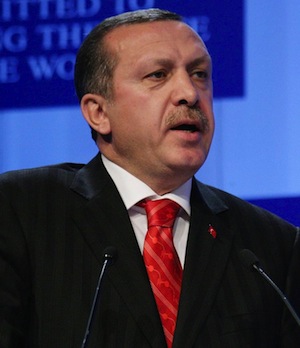
photo - Turkish President Recep Tayyip Erdogan
Turkish President Recep Tayyip Erdogan. (photo from commons.wikimedia.org)

“The economies of Turkey and Israel complement each other and the trade ties are flourishing,” Israeli foreign ministry spokesman Emmanuel Nachshon told this reporter. “That’s the good news. Unfortunately, the political ties are not as good, and this is a consequence of the harsh attack by the Turkish leadership against Israel.”

Ties between Israel and Turkey have foundered since Israeli naval commandos killed 10 Turkish activists on a ship that was trying to break Israel’s blockade of the Gaza Strip. Three years later, U.S. President Barack Obama brokered a telephone apology from Israeli Prime Minister Binyamin Netanyahu for the deaths of the 10 Turkish citizens, but relations have not returned to normal.

Israel and Turkey do not currently have ambassadors in each other’s countries, but do have lower-level diplomatic representatives. Turkish Prime Minister Recep Tayyip Erdogan has consistently made anti-Israel comments, including last month, commenting on Netanyahu’s trip to Paris after the killings at Charlie Hebdo and the kosher supermarket. Referring to last summer’s fighting between Israel and Hamas in the Gaza Strip, Erdogan said Netanyahu must “give an account for the children, women you massacred.”

In response, Israel’s Foreign Minister Avigdor Lieberman called Erodan an “antisemitic neighborhood bully.”

That type of Turkish rhetoric has been stepped up in advance of the June 2015 election for 550 new members of the Grand National Assembly, the country’s parliament.

“We’ve repeatedly seen that whenever there is an election campaign there is an increase in anti-Israel rhetoric,” a senior Israeli official told this reporter on condition of anonymity. “It’s almost part of the electoral campaign and the more anti-Israel you are, the more popular you are. That is something we can’t accept.”

Yet both Israel and Turkey seem happy to distinguish between their political and economic connections.

Read more at themedialine.org.