
Skip to content

  • Home
  • Subscribe / donate
  • Events calendar
  • News
    • Local
    • National
    • Israel
    • World
    • עניין בחדשות
      A roundup of news in Canada and further afield, in Hebrew.
  • Opinion
    • From the JI
    • Op-Ed
  • Arts & Culture
    • Performing Arts
    • Music
    • Books
    • Visual Arts
    • TV & Film
  • Life
    • Celebrating the Holidays
    • Travel
    • The Daily Snooze
      Cartoons by Jacob Samuel
    • Mystery Photo
      Help the JI and JMABC fill in the gaps in our archives.
  • Community Links
    • Organizations, Etc.
    • Other News Sources & Blogs
    • Business Directory
  • FAQ
  • JI Chai Celebration
  • JI@88! video
image - Weizmann Canada Physics Tournament 2025
image - The CJN - Visit Us Banner - 300x600 - 101625

Recent Posts

  • היהירות היא אחד האויבים הגדולים ביותר של ישראל
  • Vrba monument is unveiled
  • Music to build bridges
  • A better future possible
  • Anne Frank exhibit on now
  • Human rights in sport
  • Telling the story of an icon
  • Crawl bigger than ever
  • JCC Maccabi in Toronto
  • A way to meet fellow Jews
  • Time to include
  • Add Jewish joy to the mix
  • Reminder of humanity’s light
  • From the archives … editorials
  • Year-round holiday recipes
  • מדוע עזבתי את ישראל ואינני חושב לחזור ארצה
  • OJC hosts Oct. 7 memorial
  • A journey beyond self
  • Antisemitism a problem
  • Young man is missed
  • Orr action sparks complaint
  • Prison sentence for hate
  • Etgar Keret comes to Vancouver
  • New fall lecture series
  • Series explores music
  • Doc on Zapiro screens Nov. 6
  • Joy of shared existence
  • Community milestones … October 2025
  • MAID vs Jewish values
  • Cheshvan a great month, too
  • Bull, bear or bubble?
  • From the archives … a coin, etc.
  • מדוע האנטישמיות הולכת וגואה בעולם
  • New bio gives Vrba his due
  • Joy brighter than ever
  • When approaches differ

Archives

Follow @JewishIndie

Tag: housing

Housing woes in Vancouver

Housing woes in Vancouver

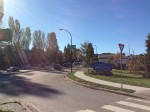
As housing prices in Vancouver continue to rise, people will have to be creative about, and flexible in, their living arrangements. (photo by Cynthia Ramsay)

Until recently, Naava Smolash was living in a collective house in East Vancouver with five roommates. The combined monthly rent for the 100-year-old character house, with high ceilings, fir floors and stained glass windows, was $2,700 and, though the inhabitants have changed over the past decade, Smolash has been a constant since she moved from Montreal 10 years ago.

What’s a collective house? “It’s people sharing spaces,” she explained. “We cook together, share our food and have a house bank account to which we all contribute money. It’s a small urban commune but the difference is that the members tend to be older, with families and professionals living together.”

Smolash’s fellow roomies, all in their 30s, included a scientist, a lawyer, an artist and a law student, while Smolash herself is a professor of English literature at Douglas College. In her spare time, she manages the Vancouver Collective House Network’s Facebook page. She estimates hers was one of 50 collective houses in the city, and that the residents of at least 10 of them are being evicted. Hers included.

Things changed this past summer when her house on Victoria Drive was sold for more than $2 million. A young family will be moving in and Smolash is stuck for a place to live. “There isn’t anywhere else we can afford,” she said. “This neighborhood is changing so quickly that only wealthy people can afford to live here, and I don’t think that’s what we want.”

She’s been talking with the Waterfront Consumers’ Cooperative, which suggested she and her roommates put in proposals for buying a house. “The problem is the co-op can’t buy a million dollar house and, even if they could, the mortgage would be $5,000 a month, which would make it unaffordable,” she said.

Smolash is feeling the panic. “We’re older, we can’t just keep moving,” she lamented. “And co-op houses tend to be rented to families, while a collective home has changing inhabitants.

“What we need is more cooperatively owned collective houses. We’re hoping that people who bought houses in the 1970s or 1980s will step up and sell it to the co-op for an amount the organization can afford. In so doing, they could create a legacy of affordable collective housing that’s cooperatively owned in East Vancouver.”

Michael Geller, a Vancouver architect, planner and developer, is sympathetic to her plight. “I think there’s a need for collective housing, and there’s a real problem here. But maybe this group should look at that $5,000 per month mortgage payment as a good way to go. While we’d like to think there’s some benevolent person in the community who might be willing to donate or reduce the price of a property, it’s been very difficult to achieve that in the past.”

Susana Cogan, housing development director at Tikva Housing Society, has a budget of $75,000 this year (down from $90,000 last year) to help subsidize the rent of those in the community who need it. “Right now, we’re helping 46 Jewish people,” she said. “Being Jewish is not a condition – we house low-income people, giving preference to Jews, so if there are two families with the same need and one is Jewish, we’d subsidize the Jewish family first.”

In February 2014, Adam M (not his real name), 57, and his wife moved to Vancouver from Montreal and the two, both shomer Shabbat, struggled to find jobs and affordable rental accommodation near the Jewish centre. Eventually, they found a one-bedroom apartment near Oak and 17th for $1,200. Tikva Housing is helping subsidize 38% of the monthly rent.

“People don’t like to ask for help,” Cogan said. “But, due to circumstances, they sometimes end up having to take it. Most of the needs arise because of unforeseen things – an illness, a divorce.”

In Adam’s case, the couple had arrived in Vancouver with some resources but depleted them before they were able to find affordable accommodation.

“Our rent subsidy program is supposed to help people for the short term, while they bridge their problems,” Cogan said, adding that each case is different, but one to one-and-a-half years is the average period of assistance.

Adam is grateful for help from the Jewish community in Vancouver but said more resources from donors are necessary. “I know a lot of religious people that would want to come and live in Vancouver with their families because of the lifestyle out west. The problem is, living close to the Jewish community is too expensive.”

Cogan said we definitely should not be encouraging people to come and live in Vancouver if they cannot afford it. Subsidies are scarce, she stressed. “We can’t assist everyone who comes here and we turn a lot of people away, only assisting those who have the most need.”

Right now, there are at least 50 people waiting for Tikva Housing’s help.

“Maybe next year we’ll have even less resources,” Cogan speculated. “But our goal is that if people come here and run out of resources, we don’t want them to be living on the street. We’ll help them find affordable accommodation.”

Lauren Kramer, an award-winning writer and editor, lives in Richmond, B.C. To read her work online, visit laurenkramer.net.

Format ImagePosted on October 16, 2015May 16, 2019Author Lauren KramerCategories LocalTags affordability, housing, Michael Geller, rent subsidy, Susana Cogan, Tikva Housing Society
Narrowing the housing gap

Narrowing the housing gap

Gil Gan-Mor of the Association of Civil Rights in Israel will be one of the speakers at Gimme Shelter on Nov. 20. (photo from Gil Gan-Mor)

A condominium used to be a potentially affordable alternative to a home for buyers in Vancouver, but condo prices are now so high that the vast majority of Vancouverites cannot afford them.

The most recent Strategics’ Vancouver Condo Report, released last week, noted that, in Vancouver, “The average low-rise project … asking price is $632,000, which eliminates many of the young couples and single buyers in this market.” Other reports using other factors have come to similar conclusions. And housing affordability is not just a problem facing this city.

On Nov. 20, New Israel Fund of Canada is hosting the event Gimme Shelter: Closing the Middle Class Housing Gap in Israel and Canada, co-sponsored by Temple Sholom, Generation Squeeze and Tikva Housing Society. It will feature speakers Gil Gan-Mor of the Association of Civil Rights in Israel (ACRI), Dr. Penelope Gurstein of the University of British Columbia and Dr. Paul Kershaw, founder of Generation Squeeze.

Gan-Mor, an attorney, will talk about the situation in Israel and provide an update on the government’s actions there since the social protests that took place in 2011. He spoke with the Independent in anticipation of his visit.

According to Gan-Mor, ACRI is the only human rights organization in Israel “that engages with the full spectrum of human rights and civil liberties.” A nonprofit, it is funded through donations and grants, but receives no financial support from the government. Its goals, Gan-Mor said, “are to protect and promote human rights in Israel through a combination of litigation, policy advocacy and public outreach. Specifically, in the Right to Housing Project, our goals are to ensure equal access to housing, fight housing discrimination, protect the right to affordable housing, promote inclusionary policies in housing and reduce segregation, combat homelessness and protect the rights of homeless people.”

Gan-Mor began working with ACRI during his second year of an NIF fellowship for graduates of its Civil Liberties Law program. He was “given the opportunity to develop a new project in ACRI,” he said, “the Right to Housing Project, which fit in with ACRI’s efforts to increase its involvement in social and economic rights.” He “didn’t expect at that time that, four years later, the right to affordable housing would be at the centre of the social protests that drew hundreds of thousands of Israelis to the streets.”

About the current situation, he explained, “In Israel, housing affordability is a big issue, because of two processes. First, in the last two decades, the governments in Israel dramatically withdrew from their past involvement in the housing market, leaving the role of providing housing to private market forces…. The second process is the dramatic increase in housing prices, which were already expensive…. These two processes led to a growing inequality in Israel,” as “more and more families must spend an increasing share of their income to ensure decent housing at the expense of other basic needs,” as well as “a growing polarization of residential neighborhoods, which are becoming increasingly separated on a socioeconomic level.”

Gan-Mor added, “We in ACRI view those aspects with great concern and are acting to force the government to become more active in realizing the right to housing, a right which cannot be ensured only through private market forces.”

The Gimme Shelter event will give attendees an opportunity “to question how Israel expresses the values of human rights in its domestic policy, and how they as international supporters of Israel can participate in this dialogue on building a more just society inside Israel,” said Gan-Mor. And it will offer a similar opportunity for Vancouverites to participate in the dialogue about how to build a more just society here, too, at least as far as housing is concerned.

Gimme Shelter will take place at Temple Sholom on Nov. 20, 7 p.m. For more information about the speakers and to register for the event, visit nifcan.org/our-events/upcoming.

Zach Sagorin is a Vancouver freelance writer.


Format ImagePosted on November 14, 2014November 13, 2014Author Zach SagorinCategories LocalTags ACRI, Association of Civil Rights in Israel, Generation Squeeze, Gil Gan-Mor, Gimme Shelter, housing, New Israel Fund of Canada, NIFC, Paul Kershaw, Penelope Gurstein, Temple Sholom, Tikva Housing Society

Posts pagination

Previous page Page 1 Page 2 Page 3
Proudly powered by WordPress