Skip to content
  • Home
  • Subscribe / donate
  • Events calendar
  • News
    • Local
    • National
    • Israel
    • World
    • עניין בחדשות
      A roundup of news in Canada and further afield, in Hebrew.
  • Opinion
    • From the JI
    • Op-Ed
  • Arts & Culture
    • Performing Arts
    • Music
    • Books
    • Visual Arts
    • TV & Film
  • Life
    • Celebrating the Holidays
    • Travel
    • The Daily Snooze
      Cartoons by Jacob Samuel
    • Mystery Photo
      Help the JI and JMABC fill in the gaps in our archives.
  • Community Links
    • Organizations, Etc.
    • Other News Sources & Blogs
    • Business Directory
  • FAQ
  • JI Chai Celebration
  • JI@88! video

Recent Posts

  • Sharing her testimony
  • Fall fight takes leap forward
  • The balancing of rights
  • Multiple Tony n’ Tina roles
  • Stories of trauma, resilience
  • Celebrate our culture
  • A responsibility to help
  • What wellness means at JCC
  • Together in mourning
  • Downhill after Trump?
  • Birth control even easier now
  • Eco-Sisters mentorship
  • Unexpected discoveries
  • Study’s results hopeful
  • Bad behaviour affects us all
  • Thankful for the police
  • UBC needs a wake-up call
  • Recalling a shining star
  • Sleep well …
  • BGU fosters startup culture
  • Photography and glass
  • Is it the end of an era?
  • Taking life a step at a time
  • Nakba exhibit biased
  • Film festival starts next week
  • Musical with heart and soul
  • Rabbi marks 13 years
  • Keeper of VTT’s history
  • Gala fêtes Infeld’s 20th
  • Building JWest together
  • Challah Mom comes to Vancouver
  • What to do about media bias
  • Education offers hope
  • Remembrance – a moral act
  • What makes us human
  • המלחמות של נתניהו וטראמפ

Archives

Follow @JewishIndie
image - The CJN - Visit Us Banner - 300x600 - 101625

Tag: Binyamin Netanyahu

נתניהו בקונגרס האמריקני

נתניהו בקונגרס האמריקני

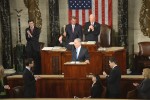
כלי התקשורת בקנדה סיקרו בהרחבה את נאומו של ראש הממשלה, בנימין נתניהו, בקונגרס האמריקני ביום שלישי בשבוע שעבר. (צילום: Amos Ben Gershom / IGPO via Ashernet)

כלי התקשורת בקנדה סיקרו בהרחבה את נאום נתניהו בקונגרס האמריקני
כלי התקשורת בקנדה סיקרו בהרחבה את נאומו של ראש הממשלה, בנימין נתניהו, בקונגרס האמריקני ביום שלישי בשבוע שעבר. זאת, תוך מתן דגש לעימות שיצר נתניהו עם נשיא ארה”ב, ברק אובמה, שביקורו נעשה בניגוד לפרוטוקול ולכללים של מנהיגים זרים שמגיעים למדינה, כיוון שהבחירות בישראל יתקיימו ביום שלישי בשבוע הבא.
עיתון ‘גלוב אנד מייל’ ציין כי אובמה שלא טרח לצפות בנאום של נתניהו, לא מצא בו שום דבר חדש. לדברי העיתון למעלה משלושים חברי קונגרס מטעם המפלגה הדמוקרטית החרימו את את הנאום. מנהיגת המיעוט הדמוקרטי בבית הנבחרים, ננסי פלוסי, הגדילה לעשות ואמרה: “נאום נתניהו הוא עלבון לאינטיליגנציה של ארה”ב”.
‘גלוב אנד מייל’ הוסיף כי במשרד החוץ הקנדי הגיבו בזהירות לנאום. במשרד אמרו: “אנו תומכים בצעדי המשא ומתן עם איראן, אך במקביל אנו ספקטים לגבי כוונותיה של איראן בנוגע לתוכנית הגרעין”. לדברי הפרשנים של ‘גלוב אנד מייל’ “נתניהו גרם לממשלת הרפר להיות במצב מביך, כיוון שמצד אחד היא רוצה להביע את תמיכתה החזקה בראש הממשלה, ומצד שני היא לא רוצה להעליב את בת הברית הקרובה ביותר שלה”. בקרב הקהילה היהודית בארה”ב נשמעו קולות של תומכים ומתנגדים כאחד, לצעדו החריג והמתוקשר של נתניהו, שלא זכור כמותו בוושינגטון. גם בקרב הקהילה היהודית בקנדה יש תומכים ומתנגדים לנאום נתניהו.
‘גלוב אנד מייל’ ציין עוד כי הנאום מוושינגטון שודר בשעת ארוחת הערב בישראל, שבועיים לפני הבחירות בימים מכריעים לגבי עתידו של נתניהו.
עיתון ‘הנשיונל פוסט’ מצטט מחוקקים בארה”ב שאמרו שהנאום של נתניהו, סיים כל תקווה לתיקון מערכת היחסים השבורה בין עם אובמה. אחד מהסנטורים הדמוקרטים שהחרימו את הנאום, סטיב כהן, הדגיש בחריפות: “הדבר היחיד שראש ממשלת ישראל השיג הוא הרחבת הקרע בין שני המנהיגים”.
‘הנשיונל פוסט’ דיווח גם על התגובה הנרחבת של הבית הלבן על נאומו של נתניהו. להלן הדברים: “ראש ממשלת ישראל לא סיפק כל סוג של חלופה, שישיג אותו מנגנון לאימות, למנוע מאיראן להשיג את הנשק גרעיני. נתניהו נשא נאום די דומה ב-2012 על כמה שעיסקה עם איראן הולכת להיות מסוכנת. ובכל זאת שנה מאוחר יותר אפילו קציני מודיעין ישראלים ומספר חברי ממשלה בישראל, הודו במפורש כי המשא ומתן עם איראן, מנע ממנה להתקדם בתוכנית הגרעין שלה. עדיין אין לנו עיסקה, ואנחנו מנהלים משא ומתן למנוע מאיראן להשיג נשק גרעיני. אך שום דבר אחר לא מתקרב לזה. הסנקציות או אפילו פעולה צבאית לא תהיה מוצלחת כמו העיסקה שאנו מנסים להשיג”.
כתב ‘הסי.בי.סי’ השוהה בישראל, דרק סטופר, אומר כי נתניהו אמנם נאם בקונגרס, אבל יתכן והקהל האמיתי שלו היה כאן בישראל. כאשר קמפיין הבחירות הקרובות נמצא בשבועיים האחרונים שלו. הנאום נקבע לשעה שהישראלים יוכלו לצפו בו, בעת שהם בבית. נתניהו ידע היטב שהופעה חזותית חזקה תשחק לטובתו משמעותית בישראל. לדברי סטופר נתניהו מכה בתוף נגד איראן כבר שנים, ובנאום שלו הוא השתמש רבות באותה שפה ובאותם נימוקים כבעבר.
לטור שלו בעיתון ‘הטורונטו סטאר’ על ראש ממשלת ישראל, העניק הרב דב מרמור, שהוא ניצול שואה וממנהיגי היהדות הרפורמית החשובים ביותר, את הכותרת: “נתניהו בחר בתעמולת בחירות על חשבון מדינאיות בנאום לקונגרס”. ואילו כותרת המשנה של מרמור: “זה אתגר היסטורי למנוע שואה נוספת. בנוסף לאמצעי הבטחה קונבציונאלים דרושה מדיניות עדינה, ולא רברבנות ותעמולת בחירות”.

Format ImagePosted on March 10, 2015Author Roni RachmaniCategories עניין בחדשותTags Barack Obama, Binyamin Netanyahu, Congress, בנימין נתניהו, ברק אובמה, קונגרס
All ears on Netanyahu talk

All ears on Netanyahu talk

Israeli Prime Minister Binyamin Netanyahu addresses AIPAC. (photo by Amos Ben Gershom IGPO via Ashernet)

Washington, D.C.

Israeli Prime Minister Binyamin Netanyahu addressed the AIPAC Policy Conference Monday, presaging his address to the U.S. Congress Tuesday. “Never has so much been written about a speech that hasn’t been given,” he joked, referencing the controversy around his visit.

Netanyahu said the speech was not intended to show disrespect to U.S. President Barack Obama. “I deeply appreciate all that President Obama has done for Israel: security cooperation, intelligence sharing, support at the UN, and much more, some things that I, as prime minister of Israel, cannot even divulge to you because it remains in the realm of the confidences that are kept between an American president and an Israeli prime minister,” he said. “I am deeply grateful for this support, and so should you be.”

He said his purpose in coming was to “speak up about a potential deal with Iran that could threaten the survival of Israel.”

As prime minister of Israel, Netanyahu said, he has a moral obligation to speak up. “For 2,000 years, my people, the Jewish people, were stateless, defenseless, voiceless. We were utterly powerless against our enemies who swore to destroy us. We suffered relentless persecution and horrific attacks. We could never speak on our own behalf, and we could not defend ourselves.

“Well, no more, no more,” he said. “The days when the Jewish people are passive in the face of threats to annihilate us, those days are over.”

Of the controversy that surrounds his visit, and the apparent rift it illuminates, Netanyahu took the opportunity to itemize a long list of historical disagreements between the two allies.

“In 1948, Secretary of State [George] Marshall opposed David Ben-Gurion’s intention to declare statehood. That’s an understatement. He vehemently opposed it. But Ben-Gurion, understanding what was at stake, went ahead and declared Israel’s independence,” said Netanyahu.

“In 1967, as an Arab noose was tightening around Israel’s neck, the United States warned prime minister Levi Eshkol that if Israel acted alone, it would be alone. But Israel did act – acted alone to defend itself.”

He noted, “In 1981, under the leadership of Prime Minister Menachem Begin, Israel destroyed the nuclear reactor at Osirak: the United States criticized Israel and suspended arms transfers for three months. And, in 2002, after the worst wave of Palestinian terror attacks in Israel’s history, Prime Minister [Ariel] Sharon launched Operation Defensive Shield. The United States demanded that Israel withdraw its troops immediately, but Sharon continued until the operation was completed.”

The reason he mentioned all this history, he said, was to make a point. “Despite occasional disagreements, the friendship between America and Israel grew stronger and stronger, decade after decade. And our friendship will weather the current disagreement, as well, to grow even stronger in the future. And I’ll tell you why. Because we share the same dreams. Because we pray and hope and aspire for that same better world. Because the values that unite us are much stronger than the differences that divide us. Values like liberty, equality, justice, tolerance, compassion.”

On Tuesday, Netanyahu addressed Congress, thanking Obama and the United States for support. “This Capitol dome helped build our Iron Dome,” he said.

The day before Purim, he made a parallel between Haman and Ayatollah Khamenei and outlined a litany of Iran’s sins. He warned that the agreement being negotiated “doesn’t block Iran’s path to the bomb, it paves Iran’s path to the bomb.”

If all else fails, the prime minister warned, Israel will do what it needs to do. “For the first time in 100 generations, we the Jewish people can defend ourselves,” he said. “Even if Israel has to stand alone, Israel will stand.” However, he added that he knows Israel does not stand alone because it has the support of the United States, an assertion that received an ovation from the combined senators and congresspeople.

Top of agenda

Fears that the controversy over Netanyahu’s speech to Congress could fragment the historic support for Israel across Democratic and Republican members of Congress pushed bipartisanship up the agenda of the 16,000-delegate AIPAC conference, which ran Sunday to Tuesday.

Former CNN anchor Frank Sesno interviewed Democratic Senator Ben Cardin and Republican Senator Lindsey Graham on stage at the conference, primarily about Iran’s nuclear program. Both politicians were emphatic that the pro-Israel consensus would withstand the tempest.

Cardin insisted that a final agreement must be transparent and allow inspectors on the ground throughout Iran. He favors increased sanctions on Iran if no deal is reached by the March 24 deadline. He said the only reason Iran is negotiating in the first place is because of sanctions and the economic isolation they have put on the country. “We’ve got to keep the heat on,” he said.

“Diplomacy would be the right answer, rather than war,” Graham said, adding that Congress should have the right to vote on the deal. “A bad deal is a nightmare for us, Israel and the world.” He warned that if Iran were to get a nuclear weapon it would lead to a nuclear arms race in the Middle East, with the Sunni countries seeking the same weaponry.

On the reactions to Netanyahu’s visit, the men were unanimous.

“Don’t lose focus,” Cardin said. “The bad guy is Iran.” He urged AIPAC delegates to put pressure on their members of Congress to support proposed legislation that would make it difficult or impossible for countries that boycott Israel to do business with the United States.

Graham, who is chair of the Subcommittee on the Department of State, Foreign Operations and Related Programs, received an ovation when he threatened to cut off money to the UN if vilification of Israel in the General Assembly continues.

The bipartisanship flag was waved again later in the day when Representative Steny Hoyer, the Democratic whip in the House of Representatives, and Representative Kevin McCarthy, the Republican majority leader in the house, spoke.

Lawfare not fair

The 1975 UN General Assembly resolution equating Zionism with racism is that body’s most notorious attack on Israel, said Brett Schaefer, a research fellow at the Heritage Foundation, but there have been 20 condemnatory resolutions against Israel just in this session of the GA alone, compared with three condemnatory resolutions for every other nation.

Likewise, the UN Human Rights Council, he said, has a disproportionate focus on Israel, while ignoring serious human rights abuses elsewhere. The council’s standing agenda has one permanent item on Israel and another item covering every other country on earth.

These institutional attacks on Israel began before the latest round of “lawfare,” Palestinian leaders’ attempts to gain international recognition without negotiating directly with Israel. Schaefer outlined a long list of successful and unsuccessful attempts by the Palestinians to gain legitimacy through the UN and its agencies. Yet such efforts are in direct violation of peace negotiations, which are premised on mutual recognition and negotiation, he said.

While Palestine has been recognized by UNESCO, the UN body on culture, education and science, Schaefer said Palestine is highly unlikely to be recognized as a full member of the GA because membership must be recommended by the Security Council to the assembly and the United States would likely veto such a move.

“What this is about is Palestinians getting what they want without compromise,” he said, noting that the Palestinian leadership has prepared their people to expect nothing less than complete victory and to view compromise as betrayal. However, Schaefer added, “They’ve been pretty successful so far.” The international community is “enabling Palestinians” in avoiding peace negotiations, he said. This includes the Obama administration, according to Schaefer, which puts pressure on Israel to compromise, but not on the Palestinians. “The Palestinians see no downside to what they’re doing right now,” he said, adding that there does not appear to be any reason to change course.

Gil Troy, a professor of history at McGill University, said the UN was founded as a great healing, redeeming instrument promoting the universality of human rights, but it is now a “Third World Dictators’ Debating Society.” A coalition of Soviet-led developing countries hijacked the UN from the democracies decades ago, he said.

With 193 member-states now, Troy said, the UN represents 193 forms of nationalism, but there is only one form of nationalism that is delegitimized by the GA – the Jewish nationalism called Zionism.

A conundrum for Israel in all of this is that the UN is widely respected worldwide. “The United Nations is the greatest social services agency the world has ever seen,” Troy said. For the overwhelming majority of the world, it is a great organization helping their daily lives, therefore, if the UN hates Israel, Israel must be evil.

Schaefer said Palestinian leaders have benefited from their position as something between a government and a figurehead. “Palestinians have achieved some aspects of self-government but they don’t have any of the responsibilities of government,” he said. UNRWA and other international agencies use foreign aid to run the health, education and civil infrastructure in Palestine, so the Palestinian leaders do not have to take responsibility for their people. He said the world should force the leaders to govern their people.

Schaefer suggested that the United States begin using its own power at the UN. “The United States needs to elevate awareness among other countries that their votes at the General Assembly matter,” he said. There used to be a rule about aid to countries that do not vote with the Americans consistently, but that has been rescinded, he said.

Canada, eh?

An AIPAC session on relations between Ottawa and Jerusalem drew a respectable audience – mostly Canadians but a significant number of Americans as well – and this itself is a sign of Canada’s changed roles in the world, said Jonathan Kay. “No one would have cared what Canada thought 10 years ago,” he said.

Kay, editor of The Walrus and former editor of the National Post’s comments section, was joined on a panel by B.C. author Terry Glavin.

While Prime Minister Stephen Harper is widely credited (or condemned) for shifting Canada’s position to be more pro-Israel, Kay noted it was former Liberal prime minister Paul Martin who changed Canada’s voting patterns at the UN. Kay said he sees this shift as one of the most abrupt changes in foreign policy he’s ever seen. Canadian voting policy had been in line with European nations, he said, which meant generally anti-Israel, but it is now the most “doctrinaire pro-Israel country in the world.”

Glavin said the shift did not come from the top down. Changes in the views of the Canadian general public have been seismic, he said. Canadians had clung to the idea that their country is one of “peacemakers, not warmongers,” an “honest broker” and “not those vulgar Americans.”

As well, the presence in the Liberal and New Democratic parties of a small group of vocal anti-Israel members went largely unchecked until after the 9/11 terror attacks in 2001, when there was a significant shift in what Canadians were willing to accept in terms of radical foreign-policy views, Glavin said. “Most Canadians had enough by about 2006, 2007,” he added.

The Conservative party that Harper leads is technically less than 20 years old. When the Conservatives won a majority in 2011, Glavin said, some Canadians were waiting for the creation of a “Pentecostalist Taliban State.” Instead, he said, the country has accepted thousands of gay refugees, increased aid to Palestinians and focused on maternal health in the developing world.

Kay put it more succinctly, calling the Conservatives socially liberal on gay rights and abortion in a way that has no analogue in the United States. He characterized Canada for his American audience as “like one big Vermont,” and said the Conservative government accepts gay marriage as a given and, “cats aren’t marrying dogs or whatever.”

On the Israel front, Glavin said Harper has made clear that the struggle is between “free people and tyrants,” not between Israelis and Palestinians. The engagement in Afghanistan has also changed Canadians’ views of foreign affairs, he added.

Kay believes that the 1956 Canadian “invention” of peacekeeping was a stale dogma that Canadians cherished but were eventually prepared to abandon as the country became more confident. As the threats in the world, particularly radical Islam, increased, Canadians took a different view of their own role.

Will things change if this year’s election is won by Justin Trudeau, whom Glavin said some Canadians view as a “foppish drama teacher snowboarder”?

Kay predicts Trudeau would essentially ignore the Middle East. “To the extent that he knows about stuff, it’s domestic stuff,” Kay said.

Kay credits the CBC for moderating what was once a reliably anti-Israel bias, but Glavin raised a recent incident in which CBC television host Evan Solomon asked then foreign minister John Baird if he thought it was OK to appoint a Jewish person, Vivian Bercovici, as ambassador to Israel. Glavin said that the prime minister recently appointed Kevin Vickers, the heroic sergeant-at-arms who killed the terrorist on Parliament Hill last year, ambassador to Ireland and nobody questioned the fact that an Irish Catholic was being appointed to Canada’s highest office in Dublin.

Baird reflects

Recently resigned foreign affairs minister Baird rejected the idea that strong support for Israel has damaged Canadian relations with other countries, saying that Canada has better relations with the Arab world now than it has had in years.

As foreign affairs minister, he said, his job was to promote Canadian values and interests. Supporting Israel, he said, is where those two intersect.

On Iran, Baird said, history should provide an object lesson. Hitler published Mein Kampf years before he began the “Final Solution.” The world was warned. Now Iran is promising to wipe Israel off the map.

“We’ve got to take that incredibly seriously,” he said.

Pat Johnson is a Vancouver writer and principal in PRsuasiveMedia.com.

Format ImagePosted on March 6, 2015March 4, 2015Author Pat JohnsonCategories WorldTags AIPAC, Barack Obama, Ben Cardin, Binyamin Netanyahu, Brett Schaefer, Gil Troy, John Baird, Jonathan Kay, lawfare, Lindsey Graham, Pat Johnson, Terry Glavin, UN, United Nations

Bipartisan support of Israel

The controversy around Israeli Prime Minister Binyamin Netanyahu’s speech to the U.S. Congress this week was so fraught with partisan rancor – or at least with punditry alleging partisan rancor – that the theme at the AIPAC conference in Washington, which immediately preceded the prime minister’s address, was “all bipartisanship all the time.”

Democratic U.S. Senator Ben Cardin and Republican Senator Lindsay Graham opened the event Sunday morning with emphatic assertions that American support for Israel overrides all partisan politics. The message was repeated later in the day by top Democratic and Republican officials from the House of Representatives. Messages of cross-partisan rah-rah for Israel were featured in many of the conference speakers’ messages and on the massive 360-degree screens encircling the U.S. capital’s cavernous convention centre. The American ambassador to the United Nations made the same case.

As the country’s greatest ally in the raucous Middle East, Israel is somewhat akin in the American political culture to the U.S. military – one can criticize policies and politicians, but it is de rigueur to restate philosophical support for Israel as a great ally and for the right of Israel to defend its citizens.

This sort of bipartisanship has not always been the case in Canada, which has a very different perspective on foreign affairs and, sometimes, on Israel. But that has changed, according to a panel of Canadians who addressed the conference.

Shimon Fogel, chief executive officer of Canada’s Centre for Israel and Jewish Affairs, moderated a session featuring Jonathan Kay, editor of The Walrus magazine and former comment page editor of the National Post, and Terry Glavin, a Victoria-based commentator and author.

“Israel has won the battle of ideas in Canada,” Kay said.

While many credit Prime Minister Stephen Harper with leading the change, both men see a deeper shift in public opinion. Glavin called it “tectonic.”

The change is due to a few things, the two commentators agreed.

Anti-Zionism comes in a grab bag with anti-Americanism, Kay said, and Canadian anti-Americanism is in freefall since Barack Obama became U.S. president and Stephen Harper became Canadian prime minister. (It’s hard to condemn Americans over, say, environmental issues when Obama vetoes the pipeline Harper backs.)

The rise of social media has also played a back-door role. The CBC was routinely criticized for being anti-Israel a few years back, but the social media backlash every time biased reporting occurred – aided by groups like Honest Reporting – has led to fairer coverage.

“I actually find the CBC’s coverage of Israel pretty good,” said Kay.

The 9/11 terror attacks also provided a major impetus for changing Canadian views of friends and enemies. But the Canadian military engagement in Afghanistan perhaps drove the major shift of opinion, said Glavin. Two generations of Canadians had not seen active wartime mobilization. The fight against radical Islam, in the form of the Taliban, changed perceptions of global issues, including Israel’s struggle against nominally different but ideologically parallel enemies.

Where anti-Zionism was most successful – on university campuses – most students now roll their eyes at the “trite and ritualized” debate on both sides, said Kay. In terms of professors supporting the BDS movement, he added, it is the “least consequential” academic organizations making the case. And gay rights groups opposing Israel are “underemployed” activists who have won most of what they were demanding.

Significantly, he continued, at the national level, the elements of the Liberal and New Democratic parties that once condemned Israel for every imaginable crime have been reined in by their parties. Notoriously anti-Israel NDP MP Svend Robinson is gone from the scene. His ideological successor in anti-Zionism, Libby Davies, has announced she will not seek re-election in Vancouver East, although Kay said she has already been “defanged” by party leader Thomas Mulcair, who Kay said makes no apologies for his support for Israel.

Glavin noted that the Arab Spring, which represented the rising of 300 million more or less enslaved people, made it “difficult to make the case that Israel is the big problem in the Middle East.”

Both men noted that the shift began with Liberal Prime Minister Paul Martin, under whose leadership Canada changed its voting patterns at the United Nations. The pro-Israel position accelerated under Harper, particularly after the 2011 election when the Conservatives won a majority and John Baird was appointed foreign affairs minister. Baird, who left politics this year, was greeted with a hero’s welcome at the AIPAC conference.

While Canadians are proud to be different than Americans on many fronts, the consensus on Israel that has reigned in the United States is now dominant in Canada, as well.

Posted on March 6, 2015March 4, 2015Author The Editorial BoardCategories From the JITags AIPAC, Binyamin Netanyahu, Israel, Jonathan Kay, Terry Glavin
האם הרפר עוזר לנתניהו להיבחר שוב לרשות הממשלה

האם הרפר עוזר לנתניהו להיבחר שוב לרשות הממשלה

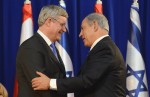
ראש ממשלת ישראל, בנימין נתניהו, מברך את ראש ממשלת קנדה, סטיבן הרפר, בנמל התעופה בן-גוריון ב-19 בינואר 2014. לאחרונה נפוצה שמועה שהרפר עוזר לנתניהו להיבחר שוב. (צילום: חיים צח / לע”מ / Ashernet)

האם הרפר עוזר לנתניהו להיבחר שוב לרשות הממשלה?

לאחרונה נפוצה שמועה שראש ממשלת קנדה, סטיבן הרפר, עוזר לראש ממשלת ישראל, בנימין נתניהו, להיבחר שוב. גורם שמקורב למפלגת השמרנים של הרפר מציין, שהרפר שלח לישראל יועצים מהקמפיין שלו, שיעזרו לנתניהו לנצח בבחירות שיתקיימו בעוד כשבועיים (17 בחודש). היועצים של הרפר עובדים בקמפיין של השמרנים, לקראת הבחירות הכלליות בקנדה שיתקיימו בחודש אוקטובר.

הרפר ונתניהו כידוע קרובים מאוד. הרפר שנבחר במכהן ראש הממשלה מ-2006, הוא הידיד הקרוב ביותר של ישראל מאז. בפועל הוא המנהיג היחידי בעולם שמגבה את נתניהו וממשלתו כמעט בכל דבר, בכל הסכסוכים והעימותים המדיניים והצבאיים כאחד. הרפר הסתייג ממדיניות נתניהו רק בשני מקרים. הראשון – הבנייה בשטחי “אי 1” (בין ירושלים למעלה אדומים). השני – הוא לא הסכים לעמדת נתניהו בעניין הצבת הקווים האדומים לאיראן, בנושא החימוש הגרעיני (כפי שהובעה בנאומו באו”ם בספטמבר 2012). לכן בסך הכל לא מפתיע שהרפר רוצה מאוד שנתניהו יבחר לרשות הממשלה בפעם הרביעית, בדיוק כמו שהוא רוצה להיבחר לרשות ממשלת קנדה בפעם הרביעית.

יצויין כי כל פניותי לקבל את תגובות לשכת התקשורת של הרפר, נענו בשלילה.

בעמדת האייקון: עכשיו כבר לומדים על רונלדו באוניברסיטה

כוכבה של ריאל מדריד שהוא השחקן המוכר בעולם, כריסטיאנו רונלדו, מושך מעריצים רבים לאצטדיונים בהם הוא משחק, ולא מעט צעירות היו שמחות לצאת עימו. עכשיו מתברר שרונלדו מושך גם סטודנטים שמעוניינים ללמוד עליו, והוא נושאו של קורס באוניברסיטה של בריטיש קולומביה בקמפוס שבקולונה.

עשרים סטודנטים נרשמו לקורס היוצא דופן בחוג לסוציולוגיה על הכדורגלן הפורטגזי, שעוסק בהיבטים החברתיים והכלכליים שקשורים בו. הסטודנטים לומדים על תהליך ההתפתוחות של רונלדו, בן זקונים למשפחה ענייה בפונשל שבפורטוגל. מרקע עני זה בגיל 13 הצטרף למועדון מקצועני ספורטינג ליסבון, ומהר מאוד הפך לאייקון תרבותי וחברתי מהידועים בעולם, והוא מרוויח כיום 18.2 מיליון יורו בשנה. רונלדו למרות שעזב את ליסבון בגיל 18 ועבר למנצ’סטר יונייטד, מתברר לסטודנטים, נשאר מושא להערצה מצד פורטגזים בכל העולם, והוא עוזר להם לשמור על הזהות הלאומית. אחת משאלות המפתח בקורס מה הפך את רונלדו לכל כך מיוחד? התשובה כפולה: הכשרון הגדול שלו וכן כוחו העצום של משחק הכדורגל. רונלדו שמשפיע כצפוי גם מחוץ לעולם הכדורגל נחשב לכוח כלכלי אדיר. הסטודנטים חוקרים כתבות, ספרים וסרטים תעודיים עליו, פרסומות בהן השתתף (בעיקר להלבשה תחתונה שבמבליטה את גופו השרירי) ועוד.

רונלדו (30) ציין באחד הראיונות האחרונים כי האישה המשפיעה עליו ביותר בחייו היא דווקא אמו.

“תאומי הדודג'”: שני תינוקות נולדו ברכב בדרך לבית החולים

שני תינוקות תאומים שנולדו לאחרונה ברכב של הוריהם שגרים בסורנטו שבבריטיש קולומביה, זכו לכינוי “תאומי הדודג'”.

האם ניקה גילבאו (28) קיבלה צירים, ובעלה כריס סנט ז’אן הסיע אותה במהירות בדודג’ המשפחתית לבית החולים, שנמצא במרחק שעה (בקמלפוס). לאחר כחצי של נסיעה יצאה לאוויר העולם התינוקת, כשגילבאו נאלצה לילד אותה. היא טפחה קלות על גב התינוקת שהחלה לנשום בזכות עצמה, ואז עטפה אותה בחולצתה. בעת שהגיעו לחניית בית החולים יצא לאוויר העולם התינוק. צוות רפואי עזר לסיים את הלידה בהצלחה והעביר את התינוקות להשגחה רפואית.

גילבאו גדלה בחווה ועזרה לא פעם לבעלי החיים ללדת. לכן לא הייתה מודאגת וידעה מה לעשות לדבריה, בעת לידת התאומים שלה. מסתבר שדווקא הרופאים היו יותר מופתעים ממנה.

האם החליטה להעניק לתינוקת את השם נבדה סיירה ולתינוק את השם הנרי דודג’.

Format ImagePosted on March 2, 2015March 2, 2015Author Roni RachmaniCategories עניין בחדשותTags Binyamin Netanyahu, Chris St. Jean, Cristiano Ronaldo, Dodge Twins, elections, Nika Guilbault, soccer, Stephen Harper, University of British Columbia, אוניברסיטה של בריטיש קולומביה, בבחירות, בנימין נתניה, כדורגל, כריס סנט ז'אן, כריסטיאנו רונלדו, ניקה גילבאו, סטיבן הרפר, תאומי הדודג

Zionism’s meaning in Diaspora

After the attacks in Copenhagen, like after the violence and vandalisms that have rocked the French Jewish community, Israel’s Prime Minister Binyamin Netanyahu is urging the Jews of Europe to come to Israel as violence against Jews and Jewish institutions increases across that troubled continent.

This call for a new mass aliyah is being met with opposition by European leaders – including Jewish leaders. In Copenhagen, more than 30,000 people, led by their prime minister, commemorated the victims of the terror attacks. Copenhagen’s chief rabbi, Jair Melchior, told the Associated Press, “People from Denmark move to Israel because they love Israel, because of Zionism. But not because of terrorism. If the way we deal with terror is to run somewhere else, we should all run to a deserted island.”

Coincidentally, in preparation for our upcoming 85th anniversary issue, we were perusing old copies of this newspaper recently. We came across a commentary from July 1948 titled “Zionism should be wound up.” The author argued that the motive for Zionism – the creation of a Jewish state – had been realized and so the global enterprise should be concluded: even as Israel was literally fighting for its survival in the ongoing War of Independence, and so soon after the Holocaust.

Zionism had been a divisive force in the Diaspora Jewish community, including here in Canada. There were pro- and anti-Zionist Jews of left, right and centre politics, and of Orthodox and secular persuasion and everything in between. Some arguments against Zionism as a movement relied on religious foundations, contending that the ingathering of the exiles would coincide with the messianic era. Other arguments were emphatically secular with the left holding, for example, that it was incumbent upon Jews to remain where they are and fight for a better world for all, rather than retrenching to nationalistic or religious-based separations.

Reading the editorial from 1948, one particular sticking point was that community fundraising efforts had been overwhelmingly allocated to the Zionist effort. Now that the goal had been achieved, the author argued, it was time to redirect fundraising and spending inward, to individual Diaspora communities and to resurrect the “kehilla pattern” of community building and security, with each community taking care of its own needs.

Despite the writer’s conclusion, as successive wars and decades of terrorism confronted Israel, Zionism was not shelved. It morphed into a different type of movement. No longer mobilizing for the creation of a Jewish homeland, it became the overseas support group for the country. After 1967, when “the occupation” altered perceptions of Israel at home and abroad, Zionism again became a divisive cause. But for those two decades, the Jewish people were probably as united as they have ever been in support of Israel.

The lesson of the second half of the 20th century proved the lesson of the first half. Close to a million Jews across the Middle East and North Africa were forced, driven or encouraged by various means to leave their homelands. The difference for these people was that there was now a place where Jews control the immigration policy. Had such a place existed in the 1930s, the impact of the Holocaust may have been massively reduced. Nitpickers will contend that it was the creation of the state of Israel itself that led to the expulsion of Jews from the Arab world, but this equivalency, whatever its merits, does not distract from the underlying point: Jews have often lacked security and permanence in places where they are a permanent minority.

However, being a majority is no assurance of safety. Despite Netanyahu’s invitation, all is not nirvana for the Jews of Israel. Violence and terrorism are not unknown, and life is challenging in different ways than in Europe. It also needs mentioning that everything Netanyahu says and does right now must be seen through the prism of political expediency as the Israeli elections approach.

Nevertheless, these events raise a very serious question: What does Zionism mean today for people in the Diaspora?

There are probably more answers than there are Jews and, in a way, this is the question we grapple with, in one way or another, in these pages every week. But this conclusion may be safe to draw: it is not quite time for Zionism to wind up its affairs.

Posted on February 20, 2015February 20, 2015Author The Editorial BoardCategories From the JITags antisemitism, Binyamin Netanyahu, Copenhagen, Israel, Jair Melchior, terrorism, Zionism1 Comment on Zionism’s meaning in Diaspora
Clues to the end game

Clues to the end game

On Jan. 28, Israeli soldiers in the northern Mount Dov region are pictured after an Israel Defence Forces patrol came under anti-tank fire from Hezbollah terrorist operatives. The Hezbollah attack killed two Israeli soldiers and injured seven others. (photo by Basal Awidat/Flash90)

Who was behind the Jan. 28 attack on northern Israel that killed two Israeli soldiers and wounded seven others? The easy answer is the Lebanon-based terrorist group Hezbollah, which claimed responsibility for the attack. But the wider view suggests Hezbollah’s state sponsor: Iran.

Dr. Ely Karmon, a senior research scholar at Israel’s International Institute for Counterterrorism, said that Hezbollah’s actions represent “an attempt to change the strategic rules of the game.” According to Karmon, Iran and Hezbollah have been working for months to take advantage of instability in Syria in order to create a forward military position against

Israel in Syria’s Quneitra region, close to the triple Syria-Lebanon-Israel border.

“This is actually an Iranian project,” Karmon told this reporter. “They have around 1,500 people on the ground in Syria, most of whom are counseling or training Syrian militias, and they have Hezbollah providing military support.”

On Jan. 28, Hezbollah fired five Kornet guided anti-tank missiles at an Israeli military convoy approximately 2.5 miles inside Israel’s border with Lebanon. A day earlier, less sophisticated mortars were fired from southern Syria into Israeli territory, with no damage reported.

In response to the Jan. 28 attack, Israeli Prime Minister Binyamin Netanyahu said, “Whoever is behind today’s attack will pay the full price.” Netanyahu – like Karmon – stressed that the attack points back to Iran, adding, “with the assistance of Hezbollah, Iran has been for some time trying to open another front against Israel on the Golan Heights. We are acting with force and determination against these attempts.”

“Because of the weakness of the Syrian regime, the Iranians are now permitted to have a foothold directly on Israel’s border, which until now they didn’t have,” Karmon explained.

Israel is widely believed to be responsible for a Jan. 18 airstrike against that foothold in southern Syria, which killed six Hezbollah operatives and six Iranians, including notorious Hezbollah commander Jihad Mughniyeh and Iranian general Mohammad Ali Allahdadi.

Karmon believes the airstrike “was a message sent by Israel” to forewarn Iran and Hezbollah not to continue their military efforts in Syrian territory.

The retaliatory attacks by Hezbollah following the deadly airstrike were widely expected. That the more sophisticated Kornet anti-tank missiles were fired from Lebanon and not Syria provides a strong indication that the Syrian position is not as well-stocked with weaponry as southern Lebanon – a zone that was supposed to remain completely demilitarized under United Nations Security Council Resolution 1701, which arranged for the cessation of hostilities following the Second Lebanon War of 2006.

“Resolution 1701 calls for complete disarmament in southern Lebanon and, yet, Hezbollah, instead of disarming, they have amassed some 80,000-90,000 missiles,” Karmon said.

“Now, they want to achieve the same equation in southern Syria. If Israel does not stop them, and there are two to three years with relative quiet, with only occasional penetrations of our border and sometimes mortar fire and so on, a kind of ‘war of attrition,’ then all of a sudden we will find ourselves staring at 5,000-10,000 missiles,” he said.

Read more at jns.org.

Format ImagePosted on February 6, 2015February 5, 2015Author Alex Traiman JNS.ORGCategories WorldTags Binyamin Netanyahu, Ely Karmon, Hezbollah, Iran, Israel, Syria, terrorism

Bibi, Obama: Grow up

Iran’s propaganda machine Press TV on Monday reported that U.S. President Barack Obama had “unfriended” Israeli Prime Minister Binyamin Netanyahu on Facebook.

Predictably, it turned out the report was a hoax. Iran’s humorless propagandists reported as fact a joke from an Israeli satire site. And yet, despite the big journalistic oops (as if they care), the Iranian voice box made a legitimate point. The two men, ostensibly leading figures in world diplomacy, have in recent weeks been behaving like sulky teenagers.

Netanyahu unwisely accepted an invitation from the speaker of the U.S. House of Representatives, John Boehner, to address Congress, specifically to pressure the Americans to increase sanctions on Iran. The fact that this visit would take place at the height of the Israeli election campaign has been criticized by some, with others noting that former president Bill Clinton hosted Shimon Peres during an election cycle. The fact that the invitation came from the speaker of the house, rather than from the president, whose responsibilities include being the country’s foremost voice on foreign affairs – and its head of state and commander in chief – is a significant protocol breech, but a deliberate one.

We are becoming almost inured to successive hyperbolic assertions that bilateral relations between the United States and Israel are at their lowest ebb. But this time, it seems true, although a result of such foolishness that it seems almost comical, as well as tragic. These two men, whose seeming dislike for each other they are not even mature enough to hide or deny, are submerging the best interests of the relationship, shootings spitballs at each another across the divide.

Critics of Obama’s motivations allege that he does not pass the “kishkes” question; that his commitment to Israel’s security, such as it may be, is based a political imperatives or strategic demands, rather than a personal commitment to the idea of the Jewish state. To many others, these criticisms don’t hold water.

But what of Netanyahu? What on earth is he thinking, deliberately provoking his country’s most important international ally by inserting himself squarely into a constitutional tight spot, pitting the executive and legislative branches of the U.S. government against each other? Especially when Israel’s own intelligence service, the Mossad, has made clear that it is in Israel’s interest to allow negotiations with Iran to proceed, rather than to undermine them with additional immediate sanctions.

We are driven to ask, does Netanyahu know something we don’t? Does he know something the Mossad does not? Or is he driven merely by the hawkish demands of his domestic political constituency?

And why does he think that picking a fight – a very public, nasty and juvenile fight – with the president who was reelected with the support of 70 percent of American Jewish voters, would be a wise strategic or ideological move?

Greater minds can dissect the realpolitik motivations of these two strong figures. Wise figures in the think tanks of Washington and Tel Aviv are dissecting the nuance and nonsense the two leaders have displayed recently.

From where we sit, however, their behavior simply looks like they are putting their immature dislike for each other as individuals ahead of the interests of their countries. And, there is Speaker Boehner, ready to take political advantage.

Barrels of ink are being spilled this week on this topic, with the best minds of our generation advising both these men how to proceed. Our advice is simple, but it should be said: Just grow up.

Posted on January 30, 2015January 29, 2015Author The Editorial BoardCategories From the JITags Barack Obama, Binyamin Netanyahu, Iran, Israel, John Boehner, United States
Israel launches campaign to discredit inquiry

Israel launches campaign to discredit inquiry

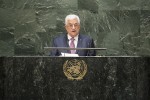
Palestinian Authority President Mahmoud Abbas at the United Nations General Assembly in September 2014. (photo from UN photo/Amanda Voisard)

The Israeli government has launched a public diplomacy campaign to discredit the legitimacy of the International Criminal Court’s recent decision to start an inquiry into what the Palestinians call Israeli “war crimes” in the disputed territories.

According to ICC prosecutor Fatou Bensouda, the inquiry – which was initiated after a request by the Palestinian Authority – is not a formal investigation, but rather “a process of examining the information available in order to reach a fully informed determination on whether there is a reasonable basis to proceed with an investigation pursuant to the criteria established by the [ICC’s] Rome Statute.”

Palestinian Authority President Mahmoud Abbas recently signed the Rome Statute in order to join the ICC after failing to get a UN Security Council resolution passed that called for Israel’s withdrawal from the disputed territories by 2017.

Israel’s campaign against the ICC inquiry will focus on the fact that the because the charges were filed by the PA, which is not a state, the court has no authority to act. In addition, the campaign will point out the court’s bias against Israel – a country on the frontline of the war against terrorism that makes sure to abide by international law by way of an independent legal system.

The Israeli government decided to launch the public diplomacy campaign at an emergency meeting in response to the ICC decision that was convened by Prime Minister Binyamin Netanyahu. The meeting, which took place at Netanyahu’s office, was attended by Israeli security, legal and diplomatic officials.

The ICC’s decision to launch the inquiry into Israeli actions is “the height of hypocrisy and the opposite of justice,” Netanyahu said on Sunday at the start of this week’s cabinet meeting, two days after the court announced the inquiry.

“During my years of public service, both as UN ambassador and as prime minister, I encountered these kinds of events, but this decision by the [ICC] prosecutor is in a league of its own,” Netanyahu said. “It gives international legitimacy to international terrorism.”

The prime minister said Israel would fight the ICC’s decision with every means it has available, including the enlistment of its allies. Along those lines, Israel is lobbying member states of the ICC to cut funding for the tribunal, Israeli Foreign Minister Avigdor Lieberman said on Sunday. Israel, which like the United States does not belong to the ICC, hopes to dent funding for the court that is drawn from its 122 member states in accordance with the size of member states’ economies, said Lieberman.

“We will demand of our friends in Canada, in Australia and in Germany simply to stop funding it,” Lieberman told Israel Radio.

Read more at jns.org.

Format ImagePosted on January 23, 2015January 23, 2015Author Shlomo Cesana ISRAEL HAYOM/JNS.ORGCategories IsraelTags Binyamin Netanyahu, Fatou Bensouda, ICC, International Criminal Court, Israel, Israeli-Palestinian conflict, Mahmoud Abbas, Palestine
Baird’s visit to Israel, Ramallah

Baird’s visit to Israel, Ramallah

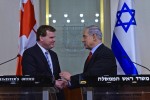
Canada’s Foreign Minister John Baird, left, meets with Israeli Prime Minister Binyamin Netanyahu earlier this week. (photo by Kobi Gideon/GPO)

After a hostile greeting by protesters in the Palestinian Authority capital of Ramallah, who pelted his convoy with shoes and eggs, Canadian Foreign Minister John Baird returned to Jerusalem to meet with Israeli Prime Minister Binyamin Netanyahu, Foreign Minister Avigdor Lieberman and President Reuven Rivlin.

According to reports, Ramallah activists carried signs reading “Baird you are not welcome in Palestine.” Baird has opposed the PA’s bid for war crimes charges against Israel and other moves by the PA at the United Nations. Ottawa has also been vocally supportive of Israel during Stephen Harper’s tenure.

The foreign minister’s visit came on the anniversary of Harper’s tour of the region in 2014. Baird hoped to reaffirm Canada’s commitment to the strategic partnership and agreements forged on that visit. “Canada deeply values its close ties with Israel,” Baird said prior to his trip.

Baird traveled to Ramallah Sunday morning to meet with PA Foreign Minister Riyad al-Maliki. At that meeting, which Baird called “cordial and constructive,” Baird and Maliki discussed Canada’s “desire for a future of peace and prosperity, stability and security for both Palestinians and Israelis.”

Baird said Canada considers itself a “friend” to both Israel and the Palestinian Authority. “As friends, we have candid and frank exchanges on areas where we differ in opinion,” he said, adding that he asked Maliki to “strongly reconsider the consequences of moving forward with any action that may be counterproductive to a negotiated solution with the state of Israel.”

Last week, the PA brought war crimes charges against Israel at the International Criminal Court in The Hague, along with ongoing efforts to seek sanctions at the UN. Baird said these moves, “will not contribute to peace and security in the region.”

As Canadians, said Baird, “we strongly support Israel’s right to defend itself, and we will play our part to defend Israel from international attempts to delegitimize it.”

“Canada believes strongly in a two-state solution between Israel and the Palestinian Authority,” Baird said prior to the trip. “Negotiations provide the only viable path to lasting peace.”

Returning from Ramallah Sunday afternoon, Baird met privately with Lieberman.

Lieberman has earned scorn with his plan to annex Israeli Arab villages to the PA. Under Lieberman’s plan, only those Arab citizens who moved to Israeli-controlled areas and pledged loyalty to the state of Israel would retain their current citizenship. Once considered a contender for prime minister, Lieberman’s chances have been diminished considerably by recent corruption allegations.

The ministers jointly signed four memoranda of understanding and agreements, including a declaration of solidarity and friendship, and a declaration on trade that Baird said aims “to double the value of our [countries’] commercial relationship.”

Baird said that with the rise of worldwide terrorism, including October’s attack on the Parliament buildings in Ottawa, “the relationship between Canada and Israel is stronger than ever been, and getting stronger every day.”

Business development between the two countries will be targeted specifically in the area of defence, security and cyber security, Baird said.

Canadian Ambassador Vivian Bercovici and other official representatives from both countries remained after Baird’s departure for award presentations to the 10 finalists of Grand Challenges Israel (GCI). Inspired by Grand Challenges Canada (GCC), which is led by chief executive officer Peter Singer, who received the Order of Canada in 2011, GCI rewards entrepreneurs for advances in affordable health care for the developing world. Finalists, chosen from more than 100 entries, presented innovations in water purification, disease diagnosis and an affordable wheelchair for children. Worldwide, the Grand Challenges initiative was launched by the Bill and Melinda Gates Foundation in 2003.

Baird’s trip to the region included a stop in Egypt, which he visited prior to the Israel leg of his trip. There, he met with Foreign Minister Sameh Shoukry but failed to ensure the release of Canadian-Egyptian journalist Mohamed Fahmy, convicted for being a member of the Muslim Brotherhood, a group that is now banned in Egypt.

A year ago, on Jan. 20, Harper became the first Canadian prime minister to speak in the Knesset. His remarks about Israel’s right to exist and defend itself received a standing ovation, along with jeers and catcalls from Israeli Arab MKs who walked out in protest. On that visit, Harper pledged millions of dollars in increased support for the PA. Although Harper’s visit was well received by the Israeli media, the Canadian press was critical of Harper’s large delegation and “rigid” pro-Israel stance.

Baird’s Israel agenda originally included stops at the Dome of the Rock and the Al-Aqsa Mosque, both atop the Temple Mount area behind the Western Wall in Jerusalem. No reason was given for the decision to cancel visits there. Harper canceled a similar visit a year ago.

Baird met Netanyahu on Monday afternoon before leaving Israel. He continued to Davos, Switzerland, to attend the 2015 World Economic Forum from Jan. 21-24.

– For more national Jewish news, visit cjnews.com.

Format ImagePosted on January 23, 2015January 21, 2015Author CJN StaffCategories IsraelTags Avigdor Lieberman, Binyamin Netanyahu, Grand Challenges Israel, Israel, John Baird, PA, Palestine, Peter Singer, Reuven Rivlin, Riyad al-Maliki, Sameh Shoukry, Vivian Bercovici

“Jewish state bill” should be nixed

A proposed “Jewish state bill” may be up for a Knesset vote next week. An amalgamation of previous drafts, the bill would, among other things, enshrine in Basic Law Israel’s Jewish identity, reserve the right of national self-determination to Jews only, institutionalize Jewish law as the basis for Israeli law, and de-list Arabic as an official language, relegating it to “special status.”

Passed by a 14-6 majority of cabinet ministers on Sunday, the bill – which includes some 14 principles – still requires Knesset approval. With Yesh Atid and Hatnua threatening to leave the coalition government in reaction to the proposal, the Knesset vote was postponed until the middle of next week, at least.

“The vote set off a stormy cabinet session in which two of his most centrist coalition partners voted against the proposed bill and voiced fierce opposition, claiming that at this sensitive juncture it would likely just escalate tensions,” reported CBC.

President Reuven Rivlin is against the bill, saying it undermines the country’s Jewish character and calls into question the success of Zionism. Attorney General Yehuda Weinstein also has come out against the bill, writing a legal opinion that was published in Hebrew on Walla, indicating, according to various news reports, that the planned proposal features “significant changes in the founding principles of constitutional law as anchored in the Declaration of Independence and in the basic laws of the Knesset, which can flatten the democratic character of the state.”

Despite these and many other criticisms and concerns expressed within Israel by Israelis, Prime Minister Binyamin Netanyahu has said he is determined to pass the bill, “with or without consensus.” He confusingly added, “I don’t know a country that is more democratic, or a more vibrant democracy than Israel in the world, certainly not in our region.” Yet this point of pride would no longer exist if the bill passed.

Outside of the country, the United States State Department cautioned that Israel should “stick to its democratic principles.” This warning was roundly rejected by Jewish Home party MK and Economic Minister Naftali Bennett, who reportedly said, “We will manage the affairs of the state of Israel. We have to deal with the ramifications of what sort of state we want. In the end, this is our problem, an internal problem, and I don’t think anyone has the right to wade into it.”

Just what kind of state this bill is proposing is not clear. Not to wade into it too deeply but we find ourselves agreeing with the U.S. State Department and the Anti-Defamation League’s Abe Foxman, who made a statement about how “well-meaning” (we’re not sure about that) and “unnecessary” the bill is, the latter being an opinion expressed by many of those that lean to the right in Israel. We even find ourselves agreeing, at first blush, with those on the left in Israel who are calling the bill racist.

In his Nov. 25 Haaretz column, Bradley Burston writes, “Listen to the words of Mahmoud Seif, uncle of sergeant-major Zidan Nahad Seif, the Druze Arab Israeli policeman slain … as he fought to stop the terrorist murder of Jews at prayer in a Jerusalem synagogue…. ‘The “nation-state law,” is saying, in other words: “Only the Jews should remain here.”’

“‘What about the Druze? What about the many, many Arabs who are loyal to the country?’ he asked on Army Radio this week.

“‘What are they going to do now? This is a law for Jews only.’”

Twenty percent of Israel’s population – one in five – is not Jewish.

All logic, all compassion, all pragmatism – everything! – cries out against this bill. Please, Knesset, vote it down.


Posted on November 28, 2014November 27, 2014Author The Editorial BoardCategories From the JITags Binyamin Netanyahu, Bradley Burston, Israel, Knesset, Mahmoud Seif, Naftali Bennett, Reuven Rivlin

Posts pagination

Previous page Page 1 … Page 3 Page 4 Page 5 Next page
Proudly powered by WordPress