A case for mothering

“Oh, I know that I owe what I am today to that dear little lady so old and grey / To that wonderful Yiddishe momme of mine.” (from the song “My Yiddishe Momme,” by Sophie Tucker, 1920s)

It was not until the early part of the 20th century that a day was created to honour and officially acknowledge the importance of mothers. Founded by American Anna Jarvis and first observed on May 10 in 1908, Mother’s Day will be celebrated this year on May 12.

But times change, and what may have applied in Jarvis’s time doesn’t go far enough in our present society. A distinction should be made between the mother and the act of mothering: one is a noun, the other a verb. Historically and biologically driven, the role of mothering has been primarily fulfilled by the biological mother. However, in the 21st century, this role is now often carried out by a variety of others, such as fathers, grandparents, adoptive parents, foster parents, step-parents or paid caregivers.

The explosion of neuroscience research over the past few decades has provided a meteoric rise in neurobiological literature with findings that support their predecessors’ observations and predictions in child development. Selma Fraiberg (1977) was farsighted when she wrote that mothering “is the nurturing of the human potential of every baby to love, to trust and to bind to human partnerships in a lifetime of love.” The evidence from various sources converges in the consensus that the human capacity to love is formed in infancy and this bond should not only be considered a gift of love to the baby, but a right – “a birthright for every child.”

Unfortunately, the recognition and awareness of the crucial role of mothering in a child’s healthy development and, consequently, to future generations, is gradually being eroded. It is often seen as a secondary role in the scheme of our busy lives. It was 42 years ago when Fraiberg wrote that we are seeing a devaluation of parental nurturing and commitment to babies and young children, which may affect the quality and stability of the child’s human attachments in ways that cannot yet be predicted. She warned that the deprivation of a mother or mother substitute will diminish a child’s capacity for life.

Fraiberg’s cautionary notice is eerily apparent in the growing numbers of young children and troubled youth as reflected in mental health issues and criminal behaviours. For example, Canadian Bullying Statistics (Canadian Institutes of Health Research, 2012) indicated that 47% of Canadian parents have had a child who has been a victim of bullying; Canada has the ninth-highest rate of bullying in the 13-year-old category in a survey of 35 countries; and at least one in three adolescents have reported being bullied.

The basic needs of children have not changed, but our priorities seem to have been rearranged, as advertisers increasingly shape our wants into needs. We did not invent childhood. We are only discovering what has likely existed since the beginning of time. Louis Cozolino, PhD, (2014) notes there is “a causal link between interpersonal experiences and biological growth.” These links are of particular interest in their impact on early caretaking relationships, when the neural infrastructure of the social brain is forming.

As Lloyd deMause notes in The History of Childhood, “That because psychic structure must always be passed from generation to generation through the narrow funnel of childhood, a society’s child-rearing practices are not just one item in a list of cultural traits. They are the very condition for the transmission and development of all other cultural elements, and place definite limits on what can be achieved in all other spheres of history.”

A world of mothers and mother substitutes has taken on the loving and arduous tasks of mothering, with all the pleasures and perils of parenting. To those who are fortunate to still have mothers in their lives – be thankful and let her know how much she is cherished. For those who don’t, treasure the memories that have become even more precious. And for those who are themselves mothers, you have undertaken the most difficult but important task of life with all its joys and sorrows. You have taken on the most valuable contribution to society and its future as well. So, to mothers and to those who mother, we honour you today and every day.

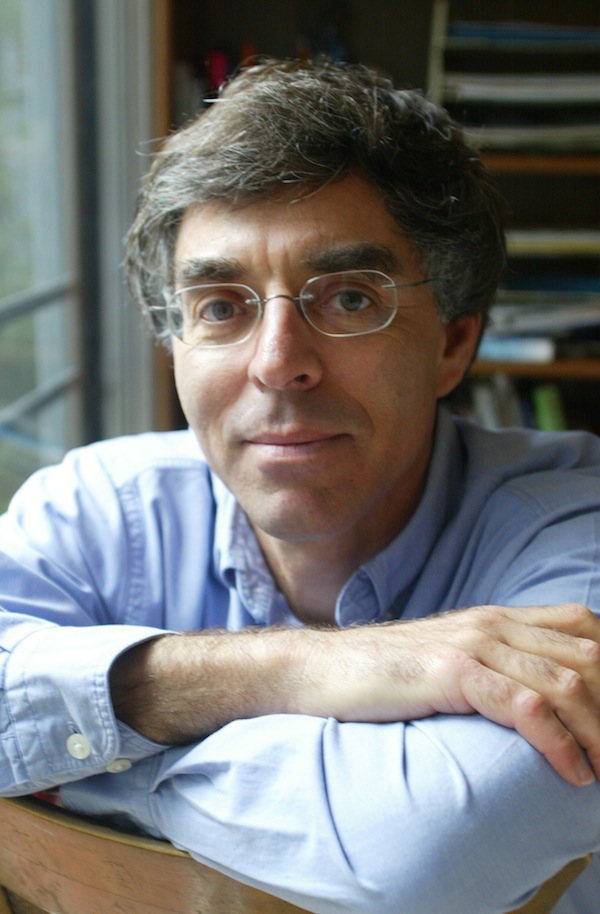
Libby Simon, MSW, worked in child welfare services prior to joining the Child Guidance Clinic in Winnipeg as a school social worker and parent educator for 20 years. Also a freelance writer, her writing has appeared in Canada, the United States, and internationally, in such outlets as Canadian Living, CBC, Winnipeg Free Press, PsychCentral and Cardus, a Canadian research and educational public policy think tank.

Spring cleaning

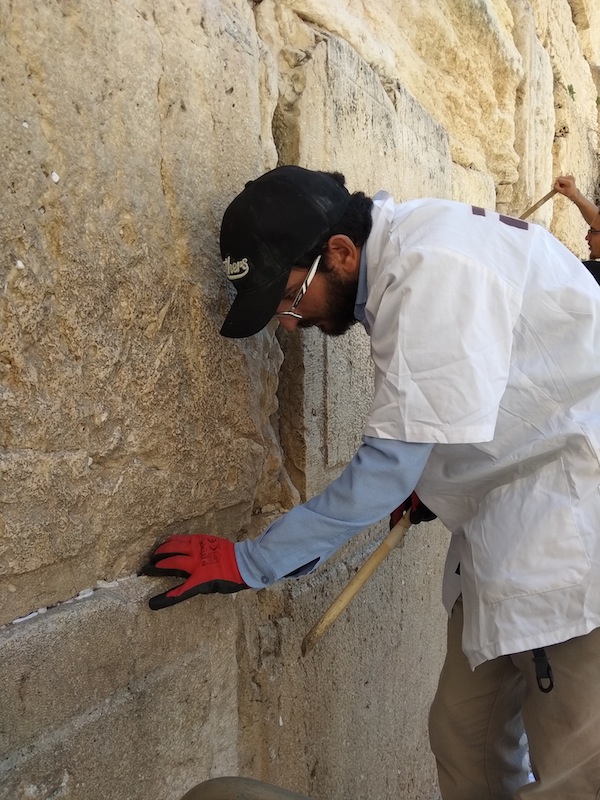
Crews from the office of the Rabbi of the Western Wall remove tens of thousands of written prayers from the Western Wall. (photo by Gil Zohar)

On April 10, equipped with long sticks, crews from the office of the Rabbi of the Western Wall removed tens of thousands of written prayers, which worshippers had wedged into crevices at the holy site over the previous half year. The painstaking work is done twice annually, in advance of Passover in April and Rosh Hashanah in September, to ensure space for new prayers. The notes that are removed are buried in Mount of Olives Cemetery.

The origin of the practice of placing small folded sheets of paper between the cracks of the 2,000-year-old ashlars is unclear. According to tradition, God’s female presence (Shechinah), has never left the holy site.

A retaining wall of the Temple Mount, built by King Solomon circa 960 BCE and destroyed by the Romans in 70 CE, the Kotel Maaravi (Western Wall) stands today beneath a religious plaza known in Arabic to Muslims as al-Haram ash-Sharif (the Noble Sanctuary). Jews believe the holy hill marks the navel of the world from where God began his creation 5779 years ago; the site also marks where Abraham brought his son Isaac to offer him up as a sacrifice. Muslims consider the Western Wall to be where Muhammad tethered his winged steed al-Burak when he ascended to the Seventh Heaven. And Christians believe Jesus was one of the millions of Jewish pilgrims in antiquity who came here during the festivals of Passover, Tabernacles and Pentecost.

From 1948 until 1967, when East Jerusalem was under the control of Jordan, Israelis were prohibited from visiting the site.

Gil Zohar is a journalist based in Jerusalem.

Balabusta preps for Pesach

Harvey’s charoset pyramid. (photo by Shelley Civkin)

As the Torah commands us, we tell the story of Passover and the Israelites’ exodus from slavery in Egypt to our children and ourselves every year, by reading from the Haggadah. Coming from a secular home, I don’t recall our family owning a single Haggadah. Instead, my father had a little black notebook in which he wrote down the story of Passover and the Jews’ exodus from Egypt. It took about five minutes for Dad to read it, and then we had our seder. It wasn’t particularly traditional, but it was meaningful nonetheless.

On the all-encompassing journey called Yiddishkeit, preparing for Passover scores about an 18/10 on the commitment scale. Between the feathers and flashlights, flourless sponge cakes and briskets, a balabusta has her work cut out for her. And then some.

As an accidental balabusta and relative neophyte to traditional Passover preparations, I want to get with the program as much as possible. I scared myself the other day though, by reading articles about what goes into getting ready for this significant holiday. One such article – called “Cook your Pesach while you sleep” – was particularly troubling. It seems to me that a Pesadik balabusta requires at least 36 hours in every day to prepare her food for the seder, a month ahead of time. She might also require a housekeeper to do all the laundry and clean the house while she’s tethered to the kitchen, cutting, peeling, blanching, baking and roasting the eight-course meals she’ll serve to her 42 guests over the two nights of Passover. Oh, and did I mention the other two minor meals she needs to organize daily for her family during the eight days of the holiday? Holy flourless kugel, Batman!

And then there’s the issue of finding and removing all the chametz from your home. Let me confess something right from the get-go: I am not an observant Jew in the strict sense of the word. I do observe certain things, like going to synagogue every Shabbat, lighting Shabbat candles, doing the odd mitzvah, and studying a little Torah. That’s about the extent of it. I refrain from eating chametz during Pesach, but I have never actually removed all the chametz from my home before the holiday. And I don’t keep kosher. However, I do eat matzah religiously during Pesach. And I kind of have a crush on shmurah matzah.

As for that age-old shmurah versus Manischewitz matzah debate … I wholeheartedly throw my vote behind shmurah. Yes, it’s expensive, but it’s so worth it. Having visited Kfar Chabad on our trip to Israel last year, we went to their shmurah matzah factory and witnessed how the matzah is made by hand. Seeing the meticulous precision with which everything is measured, timed and baked, it was a fascinating and educational experience. And did I mention its unique flavour and round shape? Sure, parts of it can be burnt, but that just enhances the taste. Once you go shmurah, you’ll never go back.

I’m the kind of accidental balabusta that, instead of making matzah ball soup, brisket, tzimmes and macaroons for Pesach, I’m inclined to make hotel reservations in Whistler and call it a day. There’s no need for me to be Jewish Wonder Woman. Gal Godot has that covered. I know, not every woman who prepares for Pesach considers herself Wonder Woman. But, given the magnitude of preparation that must get done in advance – and done to rigorous standards – I’m pretty sure that devotedly observant women qualify for that title. As for me, I’ll do the best I can to honour the traditions, prepare a welcoming and tasty seder for my family, then enjoy a plotzfest.

Preparing for Pesach can be dangerous though. A couple of years ago, I decided to forgo the store-bought chrain (horseradish) and make my own. I found a recipe, then went out and bought the fresh horseradish root. It looked innocent enough. From a distance. Nobody told me that taking a close-up whiff of newly pulverized horseradish root is akin to inhaling mustard gas. I thought I’d burned my lungs. Sure, it produced that unrivaled heat I always admire in a memorable horseradish. However, it almost knocked me out. This Pesach, I plan to simplify the process by buying horseradish. And saving my lungs for more important things … like breathing.

On the topic of food … my husband Harvey makes the ultimate Passover crowd-pleaser: a visually stunning, delicious pyramid-shaped charoset. He got the recipe decades ago from the L.A. Times. It never fails to impress guests. Here’s the recipe.

HARVEY’S CHAROSET PYRAMID

1 unpeeled pear, cored and chopped roughly
1 unpeeled apple, cored and chopped roughly
1 cup chopped walnuts
1 cup chopped almonds
1 cup chopped hazelnuts
1 cup chopped pistachios
1 cup chopped pitted dates
1 cup chopped raisins
2 tsp ground cinnamon
2 tsp grated fresh ginger
1 tbsp apple cider vinegar
sweet wine, preferably Manischewitz (about 1/4 cup)
extra dates to decorate the plate

  1. Put all the nuts in food processor and chop, but not too finely. Place in a bowl.
  2. Put dates and raisins in food processor and chop, but not too finely. Place in separate bowl.
  3. Core and roughly chop apple and pear by hand, then put in the food processor, along with the nuts, and the raisin and date mixture. Add cinnamon, ginger, apple cider vinegar and wine. Chop till it’s all mixed together. Be careful not to overdo it – you don’t want it mushy.
  4. Remove it all from the food processor and shape it into a pyramid with a spatula. Then use a small, sharp knife to lightly make “brick” shapes in the pyramid. Refrigerate. Put whole dates around the outside before serving.

For another Passover culinary experience, check out Jamie Geller’s recipe for potato kugel cups at joyofkosher.com/recipes/potato-kugel-cups. You can YouTube it, too. If you’re not afraid of hot oil in a 425°F oven, this recipe will knock your Pesach socks off. Personally, scorching hot oil makes me a bit skittish. But the result is potato heaven.

As Pesach approaches, it’s a time to clean house, both literally and spiritually. It’s a time to remember how blessed we are in our freedom as Jews today. And it’s a time to hold close our traditions, pass along the story of our exodus from Egypt to the younger generation, and be thankful for where we are now.

So, eat the matzah and bitter herbs and drink those four cups of wine. Then go out and buy lots of Metamucil. Because you’re going to need it after eight days of matzah. But check with your rabbi first to make sure Metamucil is kosher for Pesach.

Wishing you all a meaningful and freilach Pesach.

Shelley Civkin, aka the Accidental Balabusta, is a happily retired librarian and communications officer. For 17 years, she wrote a weekly book review column for the Richmond Review, and currently writes a bi-weekly column about retirement for the Richmond News.

About the cover art – Passover 2019

Moses and Aaron lead the Israelites to the Red Sea in this still from Nina Paley’s feature-length animated film Seder-Masochism, which screened at the Vancouver International Film Festival last year and is available to view for free online at archive.org/details/sedermasochism. Being in the public domain means that all of Paley’s animation and images are free for anyone to use. Nonetheless, the Jewish Independent requested and received her blessing to run the images from the film that grace the cover of this issue and its Passover section.

According to sedermasochism.com, the film “loosely follows the Passover seder story, with events from the Book of Exodus retold by Moses, Aharon, the Angel of Death, Jesus and the director’s father. The film puts a twist on the traditional biblical story by including a female deity perspective – the Goddess – in a tragic struggle against the forces of patriarchy.”

The feature was “in the works since 2012, when Paley first animated a scene called This Land Is Mine, a parody about never-ending conflict in the Levant, which has been viewed over 10 million times on various online channels.” Paley has written and designed a companion book, The Seder-Masochism: A Haggadah and Anti-Haggadah, which can be purchased through Amazon.

Paley is also the creator of the animated musical feature film Sita Sings the Blues, which, her bio at palegraylabs.com notes, “has screened in over 150 film festivals and won over 35 international awards.” It continues: “Her adventures in our broken copyright system led her to join questioncopyright.org as artist-in-residence in 2008. Prior to becoming an animator, Nina was a syndicated cartoonist. A 2006 Guggenheim Fellow, she also produced a series of animated shorts about intellectual freedom called Minute Memes. Nina began quilting in 2011 as a way to do something real with her hands after years of pushing pixels.”

Readers can find out more about Paley at blog.ninapaley.com.

Enjoy these Pesach desserts

In Jerusalem, as soon as Purim is over, everyone begins to get ready for Pesach. Two-and-a-half weeks ahead, macaroons are already in the stores, as well as various other products for the holiday. Here are a few desserts you can make at home, from traditional to unusual.

CLASSIC ALMOND MACAROONS
Makes 20 macaroons. This recipe is adapted from an American food magazine (not sure which).

1 1/2 cups blanched almonds
1/4 cup sugar
2 egg whites
1/4 tsp almond extract
3/4 cup sugar
4 tsp confectioners sugar

  1. Place almonds in a pan, cover with water and bring to a boil. Boil 10 seconds. Remove one almond and see if it slips out of its skin. If not, boil a few seconds more. Spread on paper towels and pat dry once ready.
  2. Preheat oven to 325 °F. Line a baking sheet with parchment or wax paper.
  3. Grind almonds with 1/4 cup sugar in processor. Add egg whites and extract and blend 20 seconds. Add the 3/4 cup sugar in two batches, blending 10 seconds after each addition.
  4. Roll one tablespoon of mixture between moistened palms into ball. Repeat until all mixture is used, spacing cookies one inch apart on the prepared cookie sheet. Flatten each to half-an-inch high. Brush each with water. Sift confectioners sugar over each. Bake for 25 minutes.
  5. Lift one end of parchment paper and pour two tablespoons water onto cookie sheet. Lift other end and pour two tablespoons water under. Tilt to spread water. When water stops boiling, remove macaroons.

CHOCOLATE BISCOTTI
3/4 cup margarine or butter
2 1/8 cup sugar
6 eggs
2 tbsp vanilla extract
3 1/2 cups matzah flour
1 1/4 cups potato flour
3/4 cup cocoa
1 tbsp Passover baking powder
5/8 cup ground almonds
2 cups chocolate chips

  1. Preheat oven to 375°F. Spray a cookie sheet.
  2. In a bowl, cream margarine or butter and sugar. Add eggs and vanilla.
  3. In another bowl, combine matzah flour, potato flour, cocoa and baking powder. Gradually add to batter.
  4. Add nuts and chocolate chips and combine.
  5. Form into two logs and place on cookie sheet. Bake for 30 minutes. Let cool.
  6. Slice. Return slices to cookie sheet and bake 15 minutes.

TOFFEE MATZAH
This is my favourite sweet for Pesach but this version is an Andrew Zimmern contribution from Food & Wine magazine with a few of my changes.

1 cup salted butter or margarine
5 pieces of matzah
1 cup packed brown sugar
2 cups chocolate chips
1 cup mixed chopped nuts

  1. Preheat oven to 350°F. Line a cookie sheet with foil and spray with vegetable spray. Line with parchment paper and spray again.
  2. Arrange a layer of matzah on the sheet.
  3. Melt butter or margarine with brown sugar in a saucepan. Cook five minutes. Pour over matzah. Bake five to eight minutes, until bubbling.
  4. Remove from oven and spread chocolate chips on top, letting them melt for five minutes. Sprinkle nuts on top. Let cool or refrigerate to cool. Break into pieces.

MARILYN’S CHOCOLATE BRANDIED CANDY
Marilyn is a longtime friend of mine who came from the Boston area and has lived in Israel since 1949.

3 1/2 ounces bittersweet chocolate (a candy bar works fine)
1 cup raisins, soaked in cherry brandy
1 cup chopped walnuts
1 cup matzah pieces

  1. Melt chocolate in a saucepan. Add raisins, walnuts and matzah and mix well.
  2. Drop by tablespoon into small cupcake papers. Refrigerate.

Sybil Kaplan is a journalist, lecturer, book reviewer and food writer in Jerusalem. She created and leads the weekly English-language Shuk Walks in Machane Yehuda, she has compiled and edited nine kosher cookbooks, and is the author of Witness to History: Ten Years as a Woman Journalist in Israel.

The great matzah ball debate

What food eaten during Pesach causes the most debates? If you guessed matzah balls, you’re right. Should they be hard or light? Big or small? What secret ingredient should be added to them?

From where did matzah balls, or kneidlach, originate? German Jews had a dumpling that they put into their soup called knodel. From this came the Yiddish term kneydl, singular, or kneydlach, in the plural. In Czech, it is known as knedliky. Dumplings have been in Central European cookery since the Middle Ages and then they came to Germany and Eastern Europe later.

So, just how many ways are there to make matzah balls?

Joan Nathan, a friend of mine, who has written a number of cookbooks and is considered a maven of American Jewish cooking, proposes adding chicken fat or vegetable oil plus seltzer, club soda or chicken broth, to make them light and airy. In Jewish Cooking in America, she also relates that some matzah balls, originating in Lithuania, use chicken fat or vegetable shortening and contain a filling made of onion, oil or chicken fat, matzah meal, egg yolk, salt, pepper and cinnamon. The filling is then placed in the middle of the matzah ball before they are cooked in salt water. After cooking in salt water, they are baked 30 minutes then placed in the soup for serving. Joan also has a recipe for matzah balls made in the southern United States, using pecans. In my research, I discovered that some Louisiana Jews add green onions and cayenne pepper.

In her cookbook Quiches, Kugels and Couscous: My Search for Jewish Cooking in France, Joan explains that, in France, matzah balls are called boulettes de paque, krepfle or kneipflich. They are the size of walnuts and not fluffy. They are made from stale bread or matzah soaked in water and dried, and they contain rendered goose fat, vegetable oil or beef marrow, eggs, water or chicken broth, matzah meal, salt, pepper, ginger and nutmeg.

In The New York Times Passover Cookbook, edited by Linda Amster, among the recipes for matzah balls is one by Mimi Sheraton, Times food critic at the time, who used chicken fat and cold water. Another is from Joan’s cookbook Jewish Holiday Kitchen, and she uses ginger and nutmeg. The winning recipe for the first Matzah Bowl contest in New York at the time the Times cookbook was published used vodka and club soda. A low-fat, low-salt version is made with egg whites and vegetable oil. Another style, which is airy, is made with beef marrow, instead of chicken fat, plus nutmeg.

Refrigeration and the temperature of the liquid seem to be key common denominators in many recipes.

Nina Rousso, an Israeli, in her book The Passover Gourmet, uses beaten egg yolks, lukewarm water, melted margarine, salt, parsley, matzah meal and stiffly beaten egg whites folded in. The mixture is refrigerated two hours before making.

In Passover Lite, Gail Ashkenazi-Hankin, an American, combines egg yolks, onion powder, salt, pepper, matzah meal, water and beaten egg whites and chills the mixture 30 minutes.

Zell Schulman, the American author of Let My People Eat, says the key to making light, melt-in-your-mouth, floating matzah balls is to beat egg whites until stiff then fold into the yolks with salt, pepper, cinnamon, matzah meal and optional parsley and refrigerate 15 minutes. A second version combines matzah meal with only the beaten egg whites until they hold peaks, plus parsley, cinnamon, grated carrot and oil, but no egg yolks.

Susan Friedland, the American author of The Passover Table, combines whole eggs with seltzer, salt, pepper, matzah meal and schmaltz, which she refrigerates for one hour. The schmaltz adds the flavour.

Marlene Sorosky, American author of Fast and Festive Meals for the Jewish Holidays, provides a recipe using ground almonds, ginger and chopped parsley. She chills the matzah balls for one hour.

Edda Servi Machlin, whose family has 2,000-year-old roots in Italy, says her family serves a mix between Italian Passover soup and Ashkenazi chicken soup. Her matzah balls are made of chopped chicken, egg, broth, olive oil, salt, pepper, nutmeg and matzah meal. The batter is refrigerated one hour before making.

Other Italian Jews, who call the matzah balls gnocchi di azzaima, add onions or mashed potatoes to the dough or grated lemon rind.

An aside: In 2001, Ariel Toaff, a professor at Bar-Ilan University, who is the son of Rome’s chief rabbi, came out with a book called Mangiare alla Giudia (Eating the Jewish Way). He devotes a chapter to Passover traditions, and writes that matzah was so popular that the Catholic authorities banned Jews from selling matzah to non-Jews and banned Christians from eating it.

Italian bakers also baked different kinds of matzah: plain for intermediate days, shmurah matzah for the sederim, and matzah made with white wine, eggs, sugar, anise and goose fat for those with more rich tastes.

Jews of Italy even developed sfoglietti or foglietti, a kosher-for-Passover pasta made with flour and eggs, which was then quickly dried and baked in a hot oven and served in soup or with a sauce.

Joyce Goldstein, an American fascinated by Italian Jewish cuisine, describes, in Cucina Ebraica, a combination of ground chicken, egg, matzah meal, salt, pepper and cinnamon, which she refrigerates before cooking in soup, but she does not say for how long.

Sonia Levy, a native of Zimbabwe, wrote a cookbook of her community, called Traditions. She describes luft kneidlach, light matzah balls, made with matzah meal, water, salt, nutmeg, cinnamon or ginger, eggs and oil. These must be refrigerated at least half a day. She adds that you can also make a pit with a finger and insert chopped meat that has been mixed with fried onions and spices. Another Zimbabwe version uses egg, cold water, chicken fat, salt, pepper, ginger and matzah meal.

Ruth Sirkis, an Israeli, in A Taste of Tradition, says “air” matzah balls have eggs, matzah meal, salt, chicken soup and chicken fat and are refrigerated two hours.

Another version, by Anya von Bemzen and John Welchman in Please to the Table: A Russian Cookbook, has walnut balls for soup, which are made by the Georgian Jews using ground walnuts, onion, egg, matzah meal, oregano, salt, pepper and a froth egg white.

A couple of last pieces of matzah ball trivia. In 2008, a New York kosher delicatessen held its annual matzah ball-eating competition to raise money for a shelter for the homeless. The winner ate 78 matzah balls in eight minutes. Although not in the Guinness Book of World Records, a few years ago, the largest matzah ball was measured at 17.75 inches across and weighed more than 33 pounds.

And, lastly, among some ultra-Orthodox Jews, matzah balls are not eaten because they expand when they cook, and they consider this reaction a form of leavening.

Regardless of the style of matzah balls you prefer, just make plenty for your guests!

Sybil Kaplan is a journalist, lecturer, book reviewer and food writer in Jerusalem. She created and leads the weekly English-language Shuk Walks in Machane Yehuda, she has compiled and edited nine kosher cookbooks, and is the author of Witness to History: Ten Years as a Woman Journalist in Israel.

Pesach: story of a people’s birth

God Almighty Herself induces Egypt to give birth. We simply need to listen for the birth mother’s screams in the delivery room. We hear the screams throughout the plagues, as they become increasingly intensive, starting with the first plague, blood. (illustration by Nina Paley)

The idea of the Exodus as a birth story begins as Shemot (Exodus) begins. The first chapter brings us into the atmosphere of a giant delivery room. Things have gotten out of control: “And the Israelites were fruitful and increased abundantly and multiplied and grew exceedingly strong and the land was filled with them.” (Shemot 1:7)

The Israelites are having children all the time. There’s this anonymous, collective mass of people that are steadily spreading out. The only two figures mentioned by name are the midwives, Shifra and Pua, and there’s a reason for that. The book is telling us: “Pay attention, readers. We are entering a delivery room, and so the most important figures are the midwives. You will feel this sense of birth.”

If one didn’t get this sense from Chapter 1, take a look at Chapter 2. It begins with the personal birth story of Moses, the story of a natural, biological birth, in which a woman becomes pregnant and has a son. A few verses later, the mother places the baby in an ark, or basket, and, when Pharaoh’s daughter comes by, she takes him in and becomes his adoptive mother. She, too, has a birth story. There’s a womb – the ark. There’s water – the Nile. She sees the womb, the ark. She opens it and she sees the baby. She, too, is portrayed as having given birth. If we saw a portrait of the natural, biological birth by the Hebrew mother, we also have a portrait of the Egyptian adoptive mother who takes the child.

This “birth” mindset will intensify and be actualized through this grand metaphoric story we call the story of the Exodus from Egypt. There was a famine in Canaan, so the Israelites went to Egypt to buy grain and find seed. They stayed. Scripture tells us how they “were fruitful and increased abundantly and multiplied and grew exceedingly strong, and the land was filled with them.”

This little nucleus, the embryo that first descended, is developing within this large Egyptian womb, Israel’s “surrogate mother,” which nourishes this fetus. The time comes for the birth. As in any case of surrogate motherhood, there is difficulty. On one hand, it’s not my baby. I want it out. On the other hand, there’s emotional difficulty. I nourished that child. He’s part of my body.

From the perspective of the child, there will be problems, or challenges, of attraction and repulsion toward the surrogate mother in whom he developed. The Children of Israel grew and developed in that womb, and it must be taken out. But the Egyptian mother refuses to begin the birthing process.

Enter the most powerful midwife imaginable – God Almighty Herself. She induces Egypt to give birth. The entire story is described in this manner. We simply need to listen for the birth mother’s screams in the delivery room. We hear the screams throughout the plagues, as they become increasingly intensive. Blood. Frogs. Lice. Beasts. Pestilence. Boils.

We’re standing next to the birth mother, saying, “Push! Push! Scream! Scream! Let this baby out!” Just before the birth, a moment before the Children of Israel emerge, they are commanded to paint the doorposts with blood. Soon after, this people will pass through this doorway.

They will reach the waters. And the waters will descend, as well. Then the sea will split in two, and the Children of Israel will pass through the waters on dry land, through the birth canal that has opened for them. At the end of the birth canal, who will be waiting for them? The midwife, ready to grasp them and teach them to walk.

This story, this birth story, is the powerful story of the birth of a people. But, beyond the importance of hearing this story, it can also explain what happens later, during their travels in the desert.

Like any newborn baby, the people will cry and scream for their most immediate needs – water, food. Moses and God will provide for them because that’s how you take care of an infant. You give water and food. You can’t expect anything else. Slowly but surely, he will be taught to walk. Slowly, he will learn rules. He will be given laws to follow.

When we meet this child in Bamidbar (Numbers), once he has grown, he will make the same requests that he made in Shemot as an infant: water and food. But God’s response will be different, because we don’t have the same expectations of a little baby that we have from a growing child. We expect something different.

How do we connect this to the seder night? The Exodus, first, is a story. There is a strong emphasis on telling the story. It has all the detail it needs, and all the drama we want. These are what make this story a foundational story, one that can be transmitted generation after generation.

We sit around and tell our birth as a people. We try to impart it to the next generation. When we tell the story with all its detail, it excites us once more. But why is this done over matzah?

God planned the Exodus from the time of Abraham: “Know that your seed will be a sojourned in a land not theirs; they will serve them and be tormented by them for 400 years. But then they will go out with great wealth.”

It’s all planned, down to the moment. God tells them to have their loins girded, their bags packed and their food prepared and, when I say so, leave. Everything had been planned. So what happened? Why couldn’t the dough rise? Why couldn’t they have fresh rolls?

This is a precise dramatization of a birth story. If you want it to be credible, it has to be exact. As in the story of any birth, everything is planned. There’s a due date. There’s a packed suitcase, a list of phone numbers to call. If it’s not the first birth, there are arrangements for the older kids.

Yet labour will always be unexpected. It’s always sudden. The water breaks suddenly. Contractions come suddenly. Suddenly, it’s time to go. That’s birth. Everything is planned, but the moment arrives suddenly. This is the meaning of eating matzah. It’s as if we are saying, everything was there, everything was planned. This birth was a major event and, like every other birth, it was unexpected. Despite all the preparations, we had to run, we had to leave. The dough did not have a chance to rise. All that could be made from it was matzah.

Ilana Pardes’s book The Biography of Ancient Israel describes this as the story of a collective persona, the people of Israel: “The Israelites are delivered collectively out of the womb of Egypt. National birth, much like individual births (and all the more so in ancient times), takes place on a delicate border between life and death. It involves the transformation of blood from a signifier of death to a signifier of life. It also involves the successful opening of the womb, the prevention of the womb’s turning into a tomb…. God performs a variety of wonders in Egypt (the 10 plagues in fact are perceived as such), but the parting of the Red Sea seems to surpass them all. It marks the nation’s first breath – out in the open air – and serves as a distinct reminder of the miraculous character of the birth. Where there was nothing, a living creature emerges all of a sudden….”

As we sit around the seder table, around the matzah, telling the story of our birth each year, you may want to read from the poem, “Miracles,” by Yehuda Amichai: “From a distance everything looks like a miracle / But up close even a miracle doesn’t appear so. / Even someone who crossed the Red Sea when it split only saw the sweaty back of the one in front of him.”

Ask every participant at the seder to think of something that happened to them during the year, something that, because the individual was part of it, they “only saw the sweaty back of the one in front of him.” If we were to take a step back and look at things from a distance, we could have said to ourselves: “I’m living through a miracle. I’m passing through the sea, on dry land. I’m undergoing the process of birth, right now.”

It is worthwhile, and it even brings joy, to mention this miracle and think about it at this event celebrating the great miracle of the nation’s birth.

Dr. Orit Avnery is a research fellow at the Shalom Hartman Institute. She received her PhD in Bible studies at Bar-Ilan University. Her dissertation is entitled The Threefold Cord: Interrelations between the Books of Samuel, Ruth and Esther. This article is based on a talk she gave in Hebrew. Articles by Avnery and other institute scholars can be found at shalomhartman.org.

On the value of stubbornness

“Moses and Aaron Appear before Pharaoh,” from Gustave Doré’s English Bible, 1866. (image from Wikimedia Commons)

Stubbornness is a complex and harsh characteristic. It is no surprise, then, that Pharaoh, who is considered to be one of the most wicked characters in the Torah, is shown as being very stubborn. We see Pharaoh repeatedly refusing to engage with the reality that he is faced with and, stubbornly, over and over, refusing to send the Israelites out of Egypt.

Pharaoh is the paradigmatic stubborn person in the Exodus story, yet parashat Vayeira also points to other characters in the story who are not considered wicked in any way but who are nevertheless portrayed with this characteristic of stubbornness. This implies that perhaps stubbornness is not all bad. What can we learn about this character trait from our parashah and when it might make sense to employ it?

We’ll start with Pharaoh, the paradigm of stubbornness. Repeatedly, we see him refusing to yield, to listen to Moses and Aaron’s pleading, as the text says: “Pharaoh’s heart stiffened and he did not heed them.” (Exodus/Shemot 7:13) He appears equally stubborn in the conversations between God and Moses: “And God said to Moses, ‘Pharaoh is stubborn; he refuses to let the people go,’” (7:14) and in his response to the first plague: “Pharaoh turned and went into his palace, paying no regard even to this.” (7:23) Again and again, Pharaoh’s stubbornness – at least at a particular stage – is portrayed as having been almost thrust or forced upon him. God says as much to Moses: “But I will harden Pharaoh’s heart … and he will not heed you….” (7:3-4)

Indeed, as events are taking place and described, it appears that God is actively strengthening or hardening Pharaoh’s heart: “God stiffened the heart of Pharaoh, and he would not heed them, just as God had told Moses.” (9:12) This strengthens our resolve to discover what this stubbornness is really about, why it is so critical and what role it plays in the story.

Samson Raphael Hirsch suggests that this stubbornness or “hardening” that Pharaoh experiences can be divided into three types, based on the language that the Torah uses to describe it: “I will harden,” “I will make heavy” and “I will strengthen.”

1) Hard: being rigid, without registering any influences, without being influenced by anything that passes us.

2) Heavy: being a person of weight, able to be influenced, but with a significant gap between the actual impression and the willingness to act based on it. Sluggish.

3) Strong: steadfast, fully opposing to submit despite a full recognition, totally obliterating the influence.

Hirsch describes the three different, but similar, forms of this attribute and how it manifests itself in Pharaoh.

The first is characterized by rigidity, that is characterized itself by an ignoring of the environment, a rigidity that blocks any outside influences. This kind of behaviour can be seen when Pharaoh is completely unimpressed and unmoved by Moses’s pleading, the suffering of Israel, or even the plagues that affected him and his people directly.

The second is characterized by heaviness. This heaviness is not about ignoring – someone whose heart is heavy can absorb information from his surroundings, but this is insufficient to influence him, to get him to act upon those potential influences. They don’t propel him to act in the direction where the information points. This phenomenon is evident in the way that Pharaoh reacts to the second plague of frogs. This plague is described in all of its gross and gory details:

“If you refuse to let them go, then I will plague your whole country with frogs. The Nile shall swarm with frogs, and they shall come up and enter your palace, your bedchamber and your bed, the houses of your courtiers and your people, and your ovens and your kneading bowls.… The frogs died out in the houses, the courtyards and the fields. And they piled them up in heaps, until the land stank.” (7:27-8:10)

Despite this horrifying scene, Pharaoh is unfazed: “But when Pharaoh saw that there was relief, he became stubborn….” (8:11) He is not moved to eject the Israelites from Egypt. Instead, he is weighed down (perhaps wilfully) and unmoved.

Lastly, Pharaoh exhibits strength. According to Hirsch, behaviour that is defined by strength is self-aware and defiant. The lack of change in it is not defined by being weighed down or passive inertia, but rather an active refusal to be moved. He is aware that he doesn’t want to move or change because these actions are perceived by him as giving in. For example, during the third plague of lice (kinim):

“Then God said to Moses, ‘Say to Aaron, hold out your rod and strike the dust of the earth, and it shall turn to lice throughout the land of Egypt.’… The magicians did the like with their spells to produce lice, but they could not … and the magicians said to Pharaoh, ‘This is the finger of God!’ But Pharaoh’s heart stiffened and he would not heed them.…” (8:12-15)

Even when Pharaoh’s people tell him explicitly that they are all witnessing the finger of a mighty god, and all that Pharaoh needs to do to resolve the situation is let the people go, Pharaoh digs in his heels and will not give up and will not give in.

Pharaoh is not alone in his stubbornness, in his unwillingness to accept that the slavery is ending and the exodus is immanent. Even without a divine hardening of their hearts, the Israelites also show a stubbornness. It says about Pharaoh, “he didn’t heed” (e.g. 7:10-13) and it also says about the Israelites, “and they did not heed.” (6:9)

Even though it seems that Pharaoh and the Israelites are exhibiting the same behaviour – they both are stubborn in refusing to accept the reality that God is going to redeem the Israelites through Moses’s leadership – the contexts for their behaviour are quite different, almost opposite. Pharaoh is holding onto the Israelites and enslaving them. He is insisting on a continuation of the suffering and backbreaking labour, which he initiated. The Israelites, on the other hand, are described as refusing to listen because they themselves are suffering, “their spirits crushed by cruel bondage.” (6:9)

Pharaoh is mired in a lack of morality; Israel is mired in a lack of faith. What they have in common is that they refuse to accept what seem like the futile fantasies of Moses about the Israelites leaving Egypt with him, and moving from bondage to freedom.

Israel needs to be convinced that this idea of the exodus, of actually leaving Egypt, is real, implementable and viable. They need to believe in it. While deep in the heart of slavery, it’s hard for the Israelites to imagine a different reality. Their insistence on relying on the here and now as opposed to a promise for the future stems from despair. How much hope are they supposed to keep?

Pharaoh also refuses to accept the future as described by Moses and, in this way, his stubbornness, in all its strength, weight and difficulty, is close to the Israelites’ despair. Pharaoh refuses to see what the Israelites cannot.

In contrast to both of these images of stubbornness, Pharaoh’s refusal and the Israelites’ despair, there is a third image. This third character needs to be even more stubborn, strong and resolute – this character is God. God’s stubbornness is characterized by steadfastness, insistence and resoluteness in the face of those who don’t believe in his presence and his promise. God needs to stand against those who refuse him, who repeatedly reject the vision of the future that He presents.

At the very beginning of the story, God makes a promise: “God spoke to Moses.… ‘I appeared to Avraham … and I have remembered My covenant. Say, therefore, to the Israelite people: I am God. I will free you … and deliver you … I will redeem you … and I will take you … and I will bring you into the land….’” (6:2-8)

A few verses later, God speaks to Moshe again: “Go and tell Pharaoh, king of Egypt, to let the Israelites depart from his land.” (11)

God is always responded to with negativity and refusal. “The Israelites would not listen to me, how then should Pharaoh heed me?” (12) God continues with his own steady perseverance: “So God spoke to both Moses and Aaron in regard to the Israelites and Pharaoh, king of Egypt, instructing them to deliver the Israelites from the land of Egypt.” (13)

God’s stubbornness is instructive and holds a lesson for all of us who dream of a world that looks different than the one we now inhabit. Maybe anyone who dreams about a different reality, anyone who believes that it is truly possible that our existence can be transformed, needs a form of stubbornness. They need to be unrelenting and steadfast in holding onto their dreams, rejecting the people who resist change, on the one hand, and who are too beaten down to have faith, on the other.

God’s character in the story emerges for the benefit of dreamers, to call us to be constant and steadfast in our faith that, indeed, tomorrow can be different. And, if we are not dreamers but rather are those who listen, God’s voice is charging us to bear the difficulty, the heaviness, the strength of those who are dreamers. Because it is in the merit of those divine representatives, such as Moses and Aaron, that we became able, we became brazen enough, to imagine what a life beyond slavery would look like, to see it and even live it.

Rabbi Avital Hochstein is president of Hadar Israel and a research fellow at the Shalom Hartman Institute. She received rabbinic ordination from the institute in 2016. Articles by Hochstein and other institute scholars can be found at shalomhartman.org.


Why Purim costumes?

Purim in Tel Aviv last year. (photo by Igor Zed)

What is the origin of wearing costumes on Purim? One theory relates to the fact that the Jews in the Purim story live in the galut (“exile,” outside of Israel). Haman says to the king: “There is a certain people scattered abroad and dispersed among the peoples in all the provinces of thy kingdom and their laws are diverse from those of every people; neither they keep the king’s laws.” One might say, these Jews in Shushan are the minority in a Christian country who disguise themselves or mask their identity by trying to dress like the majority and blend in.

Probably the closest explanation as to why we wear costumes is because Esther masqueraded as a non-Jew and dressed up as a queen. Esther also hid her assertiveness and her strength – and her Jewish identity – until she had no other choice. One source has said wearing costumes is to imitate the costume parties of the court mentioned in the story.

Another source says traditional Jews believe that G-d is hidden behind all the events of the Megillah. Although there is no mention of G-d in the Book of Esther, we believe he had a hand in the saving of the people. In a sense, he was masked or disguised and rabbis referred to G-d’s role as “hester panim,” or “hiding of the face,” which is also said to be a play on the words Megillat Hester, rather than the Hebrew name for the Book of Esther, Megillat Esther.

Philosophers and scriptural commentators believe that G-d’s name is omitted to emphasize the very point that G-d remained hidden throughout the story, but was nonetheless present and played a large role in its outcome. Megillat Esther may show that, although G-d may not be conspicuously present at times, he nevertheless plays an important role in everyone’s lives and that of the Jewish nation. In remembrance of how G-d remained hidden throughout the Purim miracle, Jews dress up on the holiday and many hide their faces.

Another explanation is in the Book of Esther’s eighth chapter, verse 17: “And many from among the peoples of the land became Jews, for the fear of the Jews was fallen upon them.” Non-Jews converted or perhaps pretended or disguised themselves as Jews for fear of Haman’s fate befalling them.

We do know for sure that the Book of Esther and the Talmud never discuss Purim costumes.

One source says the costumes and masks originated at the end of the 15th century among Italian Jews, influenced by the country’s carnivals. From there, the custom spread across Europe and to other countries where Jews lived, except perhaps the Far East.

Another source contends the custom could have originated in the medieval period in Germany and was an imitation of Christian carnivals, which took place around the same season.

Judah ben Eliezer ha-Levi Minz was a Venetian codifier of the 15th century, known as the “Mahari Minz”; he died in Padua, Italy, in 1508. In his responsa No. 17, quoted by Moses Isserles, the 16th-century rabbi and talmudist, in his book Orach Chayim (696:8), the Mahari Minz expresses the opinion that, since the purpose of the masquerade is only merrymaking, it should not be considered a transgression of the biblical law regarding dress, but he does not provide the origin of wearing Purim costumes. Furthermore, he permitted men and women to wear clothing of the opposite gender, even though this violates the biblical prohibition of cross-dressing (Deuteronomy 22:5). Some have speculated that it commemorates when Mordechai was dressed in regal clothing and escorted by Haman (Esther 6:11), a clear turning point in the plot of the story.

Although some authorities issued prohibitions against the custom of dressing up in costumes, people did not heed them and the more lenient view prevailed. Jews of the Middle East, however, did not start this custom until the 19th century.

Whatever its origins, dressing in costumes has been a tradition for many a Purim now, for adults and children alike. Purim sameach!

Sybil Kaplan is a journalist, lecturer, book reviewer and food writer in Jerusalem. She created and leads the weekly English-language Shuk Walks in Machane Yehuda, she has compiled and edited nine kosher cookbooks, and is the author of Witness to History: Ten Years as a Woman Journalist in Israel.