Preserving the environment

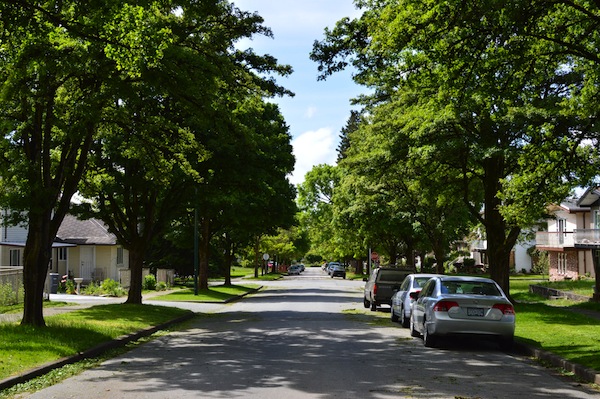
According to talmudic sages, “It is forbidden to live in a town which has no garden or greenery.” (Kiddushin 4:12; 66d) (photo by A. Christen)

Many contemporary Jews look upon Tu b’Shevat as a Jewish Earth Day, a day for contemplating our ecological heritage – and the multitude of threats our planet currently faces.

An ancient midrash has become all too relevant. “In the hour when the Holy One, blessed be He, created the first person, He showed him the trees in the Garden of Eden, and said to him: ‘See My works, how fine they are. Now all that I have created, I created for your benefit. Think upon this and do not corrupt and destroy My world, for if you destroy it, there is no one to restore it after you.’” (Ecclesiastes Rabbah 7:28)

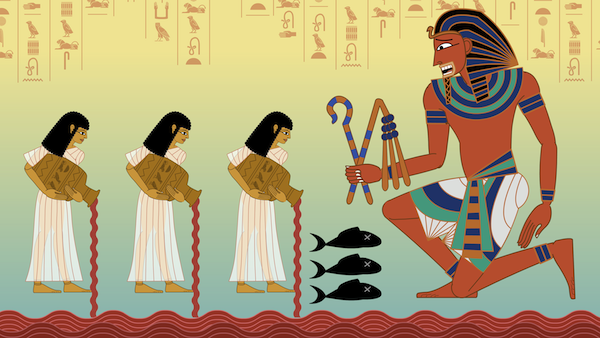
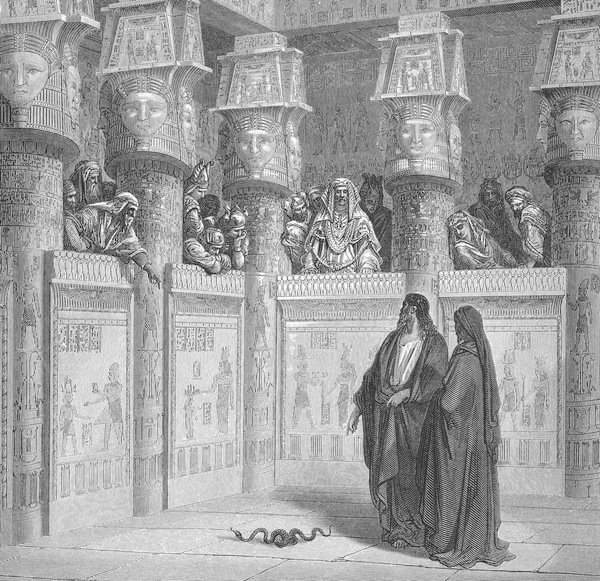
Today’s environmental threats can be compared in many ways to the biblical 10 plagues, which appear in the Torah portions read on the Shabbats immediately preceding Tu b’Shevat. When we consider the threats to our land, water and air – pesticides and other chemical pollutants, resource scarcities, threats to our climate, etc. – we can easily enumerate 10 modern “plagues.” Unfortunately, like the ancient Pharaoh, our hearts have been hardened by the greed, materialism and wastefulness that are at the root of these threats. And, in contrast to the biblical plagues, modern plagues are all occurring simultaneously, and there is no modern Goshen as a refuge, where most of these plagues do not occur.

The talmudic sages express a sense of sanctity toward the environment: “The atmosphere [air] of the land of Israel makes one wise.” (Baba Batra 158b) They assert that people’s role is to enhance the world as “partners of God in the work of creation.” (Shabbat 10a)

The rabbis indicate great concern for preserving the environment and preventing pollution: “It is forbidden to live in a town which has no garden or greenery.” (Kiddushin 4:12; 66d) Threshing floors are to be placed far enough from a town so that the town is not dirtied by chaff carried by winds. (Baba Batra 2:8) Tanneries are to be kept at least 50 cubits from a town and placed only on its eastern side, so that odours are not carried by the prevailing winds from the west. (Baba Batra 2:8,9)

“The earth is the Lord’s.” (Psalms 24:1) And we are the stewards of God’s earth, responsible to see that its produce is available for all God’s children. Property is a sacred trust given by God; it must be used to fulfil God’s purposes.

The story is told of two men who were fighting over a piece of land. Each claimed ownership and bolstered his claim with apparent proof. To resolve their differences, they agreed to put the case before the rabbi. The rabbi listened but could come to no decision because both seemed to be right. Finally, he said, “Since I cannot decide to whom this land belongs, let us ask the land.” He put his ear to the ground and, after a moment, straightened up. “Gentlemen, the land says it belongs to neither of you but that you belong to it.”

The prohibition not to waste or destroy unnecessarily anything of value (bal tashchit, “thou shalt not destroy”) is based on concern for fruit-bearing trees, as indicated in the following Torah statement:

“When in your war against a city you have to besiege it a long time in order to capture it, you must not destroy its trees, wielding the ax against them. You may eat of them, but you must not cut them down. Are trees of the field human to withdraw before you under siege? Only trees that you know to not yield food may be destroyed; you may cut them down for constructing siege works against the city that is waging war on you, until it has been destroyed.” (Deuteronomy 20:19-20)

This prohibition against destroying fruit-bearing trees in time of warfare was extended by the Jewish sages. It is forbidden to cut down even a barren tree or to waste anything if no useful purpose is accomplished. (Sefer HaChinuch 530)

The sages of the Talmud made a general prohibition against waste: “Whoever breaks vessels or tears garments, or destroys a building, or clogs up a fountain, or destroys food violates the prohibition of bal tashchit.”  (Kiddushin 32a)

Rabbi Samson Raphael Hirsch, a 19th-century philosopher and author, states that bal tashchit is the first and most general call of God. We are to “regard things as God’s property and use them with a sense of responsibility for wise human purposes. Destroy nothing! Waste nothing!” He indicates further that destruction includes using more things (or things of greater value) than are necessary to obtain one’s aim. (Horeb, Chapter 56)

It has become customary to recite psalms on Tu b’Shevat, among them Psalm 104. This psalm speaks of God’s concern and care extended to all creatures, and illustrates that God created the entire earth as a unity, in ecological balance:

“You make springs gush forth in torrents; they make their way between the hills, giving drink to all the wild beasts; the wild asses slake their thirst. The birds of the sky dwell beside them and sing among the foliage. You water the mountains from Your lofts; the earth is sated from the fruit of Your work. You make the grass grow for the cattle and herbage for man’s labour, that he may get food out of the earth, wine that cheers the hearts of men, oil that makes the face shine and bread that sustains man’s life.” (Psalm 104:10-15)

Tu b’Shevat is indeed an appropriate time to apply Judaism’s powerful ethic of reverence for God’s creation, conservation and sustainability, to help move our precious, but imperiled, planet onto a sustainable path.

Richard H. Schwartz, PhD, is professor emeritus, College of Staten Island, president emeritus of Jewish Veg and president of Society of Ethical and Religious Vegetarians. He is the author of several books, including Judaism and Vegetarianism and Who Stole My Religion? Revitalizing Judaism and Applying Jewish Values to Help Heal Our Imperiled Planet, and more than 250 articles at jewishveg.org/schwartz. He was associate producer of the documentary A Sacred Duty: Applying Jewish Values to Help Heal the World.

The beauty of creation

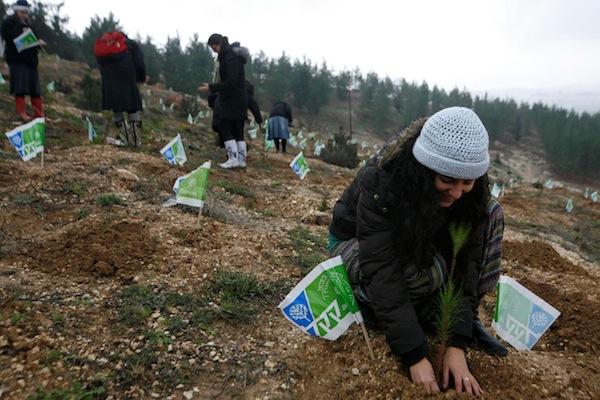
In Israel, Tu b’Shevat is a day for planting saplings. (photo from JNF via israel21c.org)

“Keep a green tree in your heart and perhaps the singing bird will come.” This lovely quotation is not from our sages, but is an old Chinese proverb. Nevertheless, it seems appropriate for Tu b’Shevat, the New Year of the Trees, which falls this year on Jan. 21.

Of course, we have our own Jewish sources. For example, “When you see handsome people or fine trees, pronounce the benediction, ‘Praised be He who created beautiful things.’” (Tosefta: Berakot 7:4) Trees have a great significance in Judaism and, long before “ecology” became a popular word, Jews were commanded, even in times of war, when besieging a city, to not destroy its trees. (Deuteronomy 20:19)

Trees were sacred to many people. Pagans believed that gods inhabited them and took their forms. They were druidic, rising out of the earth and tossing their hair. They cooled, sheltered and calmed. It is easy to understand reverence for the splendor and dignity of trees, but only Judaism has a new year for them, which falls on 15th day of the Hebrew month of Shevat (Tu b’Shevat).

In Israel, this date once marked the time from which to count the age of the tree for reasons of tithe or taxes, and also to indicate the maturation of the fruit of the tree. Even today, fruit cannot be eaten until the fourth year, so Tu b’Shevat standardizes the birthday of trees.

The holiday doesn’t commemorate any great historical event, and there are no special prayers in the synagogue. It is a lovely time, ushered in by blossoming white almond trees with their promise of warm summer weather.

Tu b’Shevat is traditionally a time for planting every variety of tree. The Talmud mentions “the joyous planting” on happy occasions. There was a delightful custom of planting a cedar when a boy was born and a cypress sapling at the birth of a girl. When a couple married, the wood of the trees would be used as poles to support the wedding canopy.

In Israel, it is a day for children and teens to go with their teachers into the hills and valleys and plant tens of thousands of saplings. There is also a custom to eat all the fruits of Israel – olives, dates, grapes, figs, citrus, apples, bananas, nuts and pears, which grow in great abundance.

Many scholars stay up late on the eve of Tu b’Shevat, reciting biblical passages dealing with the earth’s fertility. They read from Genesis how trees were created along with all the plants; from Leviticus how the Divine promised abundance as a reward for keeping the commandments; and from Ezekiel 17, the parable of the spreading vine, symbolizing the people of Israel.

Many people hold a special seder to celebrate the holiday, the New Year of the Tree of Life. They drink four cups of wine, beginning with white wine and ending with red, with the second cup a mixture more of white and the third more of red wine. It is rather like the landscape, as it changes from white (pale narcissus and crocus) to red (anemones and tulips) as Tu b’Shevat approaches.

As well as being a birthday, Tu b’Shevat is also a day of judgment for the trees, which ones will thrive and be healthy, which ones will wither and die. Chassidim pray for the etrogim, that they may grow in beauty and perfection for Sukkot.

Planting trees is very significant for Jews, the indestructible people for whom faith in the future is almost an emblem. We plant trees whose fruit we will not eat and in whose shade we will not sit. The one who fears that the world will end tomorrow or next year does not plant trees.

As well, Tu b’Shevat affirms that the soil of Israel is holy. The people and the land have a mystic affinity in Judaism, and the New Year of the Trees reminds us every year of the wonder of God’s creation.

Dvora Waysman is a Jerusalem-based author. She has written 14 books, including The Pomegranate Pendant, which was made into a movie, and her latest novella, Searching for Sarah. She can be contacted at dwaysman@gmail.com or through her blog dvorawaysman.com.

Sharing holiday spirit

Left to right: Archbishop JohnMichael Miller, Dr. Gregg Gardner, Fr. Nick Meisl, Dr. Jay Eidelman and RabbiJonathan Infeld. (photo by Rabbi Adam Stein)

“This is a unique opportunity to learn and growtogether. What better way to open ourselves to that holiday spirit, to welcomethe mysterious and send away the fear of the unknown,” said Congregation BethIsrael president Helen Pinsky in introducing the Dec. 5 program at thesynagogue on Chanukah and Christmas, which was co-hosted by Beth Israel and theRoman Catholic Archdiocese of Vancouver.

After the lighting of a giant electronic chanukiyah by Rabbi Jonathan Infeld, the reciting of the motzi by Archbishop of Vancouver John Michael Miller and a latke-laden dinner, the crowd moved into the sanctuary to hear three scholars: Dr. Gregg Gardner, Diamond Chair in Jewish Law and Ethics at the University of British Columbia; Fr. Nick Meisl, a professor at St. Mark’s College; and Dr. Jay Eidelman, who lectures on the Holocaust and Jewish history at UBC.

Infeld started things off with a short talk.

“The neighbourhood we grew up in, in Pittsburgh, was 50% Jewish or Catholic,” he said. “The kids did not refer to themselves as Jewish or Christian but as ‘Chanukah’ or ‘Christmas.’ We don’t love this, but it shows that the holidays have a particular power.”

Noting that, for many Jews and Christians of the past, neither Chanukah or Christmas were important as religious holidays, the rabbi quoted a documentary he had watched that argued that Charles Dickens had created Christmas, quipping that maybe Dickens “created Chanukah as well, in its modern version.”

Gardner spoke on the origins of Chanukah, noting it was a festival created by the Maccabees to mark their military successes against the Greeks in an effort to preserve traditional Jewish culture. “Ironically,” he said, “creating a holiday to honour yourself is, in fact, a very Greek thing to do.”

The “subversive” rabbis of later generations altered the holiday to downplay its militaristic elements and its focus on the Maccabees, Gardner explained, replacing that with a focus on God’s miraculous intervention in the miracle of the oil that burned for eight days in the rededicated Temple.

In his remarks, Meisl said the balloon of his “naive beliefs” about Christmas popped when, in the course of his studies, he learned that Dec. 25 was not Jesus’s birthday, but rather a date chosen for other reasons. He explored the theories linking the day to the ancient Roman Saturnalia festival of late December, or the Dec. 25 holiday of Sol Invictus (Unconquerable Sun). With humour, he quoted the ancient Christian theologian Origen, who questioned whether Jesus’s birthday should be celebrated at all, noting that, in the Hebrew Bible, only “bad people celebrate their birthdays.” In seriousness, he said it seems that it was around 336 CE that Christians began celebrating Jesus’s birthday on Dec. 25.

Eidelman took to the podium to the sound of the 1970s classic “Eight Days of Chanukah” by Sharon Jones and the Dap-Kings, while changing from his suit jacket to a tacky Chanukah sweater, in the style of the dreaded Christmas sweater. His speech covered various historical and pop-culture themes related to the two holidays, with a focus on how Jews have imagined and reimagined Chanukah “as a way to define ourselves spiritually and a way to claim space in a culture largely based on Christian customs.”

After a short question-and-answer period in which people asked about the development of certain Chanukah customs and the role the story of the Maccabees has played in the Christian tradition, among other things, the archbishop wrapped up the event.

“This has been a wonderful evening of sharing the joy we each feel in the holidays with each other,” said Miller, who made a point of thanking everyone involved in the event by name, right down to the members of the catering and kitchen staff.

“The event was a splendid manifestation of the ties that bind Christians and Jews together in an age-old spiritual heritage,” Miller told the Jewish Independent by email. “Such occasions foster friendships and mutual understanding, and my hope is that they continue. I am very grateful to Rabbi Jonathan Infeld for his leadership role in interfaith relations.”

Matthew Gindin is a freelance journalist, writer and lecturer. He is Pacific correspondent for the CJN, writes regularly for the Forward, Tricycle and the Wisdom Daily, and has been published in Sojourners, Religion Dispatches and elsewhere. He can be found on Medium and Twitter.

Alternatives to potato latkes

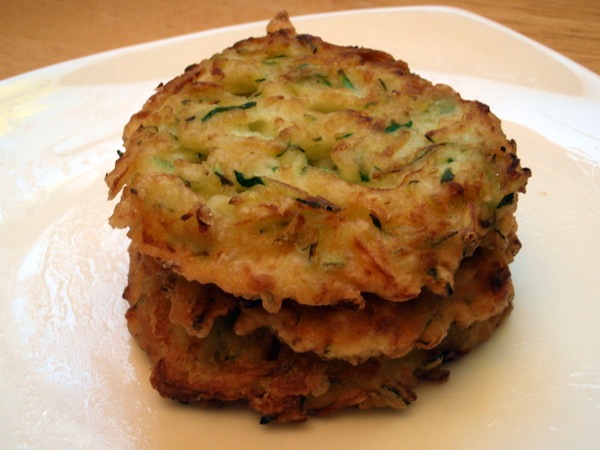
(photo from Joy/flickr.com)

An old folk proverb says, “Chanukah latkes teach us that one cannot live by miracles alone.”

Jewish food writer and cookbook author Joan Nathan contends that the word latke is not Yiddish, as everyone presumes, but stems from “a Russian word, latka, and a pastry, from obsolete Russian, oladka, or flat cake of leavened wheat dough.” This, in turn, probably came from a Middle Greek word, eladion, or oil cake, stemming from elaion, meaning olive oil.

Potato pancakes do seem to have originated among poor Eastern European Jews, but potatoes did not become a staple until the mid-19th century. John Cooper, in Eat and Be Satisfied: A Social History of Jewish Food, comments that Jews from Lithuania ate pancakes made from potato flour for Chanukah and had borrowed the idea from the Ukrainians, who made a potato pancake dish with goose fat called kartoflani platske, which they ate for Christmas. Since Chanukah fell about the same time, and there were plenty of geese to provide goose fat or schmaltz, we could conclude that schmaltz became a substitute for oil. Jews living in the Pale of Settlement in the 17th century probably adapted it for Chanukah as a way to dress potatoes differently for the holiday. Cooper also states that many Eastern European Jews ate buckwheat latkes for Chanukah, while Polish Jews made placki (pancakes) from potato flour and fried them in oil.

But what happens when you get tired of potato latkes? Here are some variations for Chanukah.

OLD JERUSALEM ZUCCHINI PANCAKES
Adapted from The Delights of Jerusalem by Rena Valero (Steimatzky, 1985). Recipe makes 20 patties.

6 zucchini
salt, to taste
salt and pepper to taste
1 diced onion
2 tbsp chopped parsley
2 tbsp chopped dill
2 large eggs
1/2 cup matzah meal
1 tbsp vegetable oil
oil for frying

  1. Grate unpeeled zucchini into a strainer. Sprinkle with salt and drain for 30 minutes. Squeeze to remove remaining liquid.
  2. In a mixing bowl, combine zucchini, salt, pepper, onion, parsley, dill, eggs and matzah meal and one tablespoon oil.
  3. Heat oil in a frying pan. Form zucchini mixture into patties. Fry for a few a minutes on each side. Drain on paper towels.

CARROT-PARSNIP LATKES
makes 16 patties

5 grated parsnips
2 grated carrots
1/4 cup flour
2 eggs
1 tsp dry chives or onion
1 tsp dry parsley
1/2 tsp salt
oil

  1. Grate parsnips and carrots into a mixing bowl and toss with flour.
  2. Add eggs, chives or onion, parsley and salt and mix.
  3. Heat oil in a frying pan. Make latkes by hand, add to oil, and fry until brown on both sides. Drain on paper towels.

VEGETABLE FETA LATKES
makes 10 to 12 patties

1 cup grated carrots
2 1/2 cups grated zucchini
1 cup grated potatoes or grated kohlrabi
1/2 tsp salt
3 eggs
salt and pepper to taste
3/4 cup flour
1/2 cup chopped fresh parsley
1/2 cup crumbled feta cheese
1/5 cup vegetable oil

  1. Place carrots, zucchini and potato (or kohlrabi) in a colander. Cover with cheesecloth or paper towels and squeeze out as much liquid as possible. Sprinkle salt and let them drain 15 minutes, then squeeze in paper towels.
  2. Place vegetables in a mixing bowl. Add eggs, salt and pepper, flour, parsley and cheese.
  3. Heat oil in a frying pan. Form mixture into patties. Fry in hot oil until brown on both sides. Drain on paper towels.

Applesauce & sour cream

Recently, someone asked me, why applesauce and sour cream for latkes? I wrote to my American Jewish food expert friend, Joan Nathan, but she didn’t know, so I Googled latkes and applesauce, found a blogger who voiced an idea, and I thought it made sense.

He suggested that, maybe, one year before Chanukah, a shopkeeper somewhere in Eastern Europe placed his annual order for potatoes to his dry goods provider. He wrote potatoes in Hebrew as tapuah adama. Somehow, the word adama was inadvertently erased and ended up being tapuach, the Hebrew word for apple. The supplier read the order and scratched his head, wondering why the shopkeeper didn’t want potatoes for Chanukah. But, due to the limits of communication back in those days, he couldn’t check with him in time, so he went ahead and filled the order, sending a bushel of apples.

When the shopkeeper saw the apples instead of potatoes, he wondered what to do with them but then figured, surely they would be a treat for Chanukah. He was able to sell the idea to the townspeople to buy apples, and some clever women decided to cook the apples – hence, applesauce. By the end of the holiday, everyone was raving about the apples and apple dishes.

In the Encyclopedia of Jewish Food, Gil Marks wrote that Greek Jews had a tradition that the Maccabees ate duck with apples to celebrate their victory, and that this was extended to serving apple rings, apple fritters and applesauce.

John Cooper, in Eat and Be Satisfied, reasons that the only fat for frying latkes was schmaltz, so the only topping could be applesauce.

Another source says apples were eaten on Rosh Chodesh, the start of a new month. Hungarian Jews made apple cake and strudel or tart for Rosh Hashanah, while Indian Jews dip apple in honey and rose water and Sephardi Jews make apple compote. Ashkenazi Jews serve apple strudel on Sukkot, and children place apples at the end of a flag stick for Simchat Torah.

As for sour cream, well, made in its fermented form, it was popular in the Slavic region. The idea of boiled potatoes eaten with sour cream was associated with Eastern European Jews, so, if they found a substitute for the schmaltz when frying their latkes, they could well have used sour cream as an accompaniment.

Sybil Kaplan is a journalist, author, compiler/editor of nine kosher cookbooks and a food writer for North American Jewish publications, who lives in Jerusalem where she leads weekly walks of the Jewish food market, Machaneh Yehudah, in English.

Hot pancakes for breakfast

(photo by Brandon Martin-Anderson)

According to my research, some type of pancakes was made by ancient Greeks and Romans, or even earlier; Christians made them before Lent to use up foods they could not otherwise consume. The earliest pancakes were made with spelt flour and the word “pancake” first appears in a 15th-century English document. North American-style pancakes likely began in the form of Johnnycakes, a savoury flatbread made with cornmeal, which are at least 500 years old.

Given their long history, and because they are fried, perhaps during Chanukah, a few pancake breakfasts would be appropriate – and tasty. Here are a few recipes to try.

BASIC BREAKFAST PANCAKES
makes 12 pancakes

1/2 cup flour
1/2 tsp baking powder
1 tbsp sugar
1 egg
1 tbsp melted margarine or butter
1/3 cup milk
cinnamon (optional)
vanilla (optional)
oil for frying

Combine flour, baking powder, sugar, egg, melted margarine or butter and milk in a mixing bowl and blend. Heat oil in a frying pan. Spoon batter around pan and fry until brown on both sides. Keep warm in an oven until ready to serve.

LEMON RICOTTA PANCAKES
Adapted from a Food &Wine recipe from 2002. Makes four servings.

1 cup part-skim ricotta cheese
2 large eggs
2 large egg whites
1/2 cup flour
1 tbsp vegetable oil
1 tsp finely grated lemon peel
2 tsp honey
oil for frying

Blend cheese, egg, egg whites, flour, oil, lemon peel and honey until smooth. Heat griddle or frying pan with oil. Spoon the batter around pan for pancakes. Cook until golden on both sides. Keep warm until ready to serve.

BANANA PANCAKES
makes four servings

3 sliced bananas
2 tbsp orange juice
1 tbsp sugar
1 cup flour
1/2 tsp baking powder
1 egg
1/2 cup milk
2 tbsp melted butter or margarine
1/4 tsp vanilla
1 tsp orange peel
vegetable oil

  1. In a bowl, combine orange juice and sugar. Add banana slices and let stand.
  2. In a mixing bowl, combine flour, baking powder, egg, milk, melted butter or margarine, vanilla and orange peel.
  3. Drain banana slices and add to batter.
  4. Heat oil in a frying pan. Spoon the batter around pan for pancakes. Cook until brown on both sides. Keep warm until ready to serve.

Sybil Kaplan is a journalist, author, compiler/editor of nine kosher cookbooks and a food writer for North American Jewish publications, who lives in Jerusalem where she leads weekly walks of the Jewish food market, Machaneh Yehudah, in English.

I know who I am … or do I?

Moving into a condominium forced the writer to modify how she approached the holiday season, including the purchase of an electric chanukiyah. (photo by Libby Simon)

For Jews, the celebrations of Chanukah arrive on Sunday evening, Dec.2, and close on Monday evening, Dec.10. It is also a time when many people struggle with dissonance between religion and Western values. I know who I am, so it was not a problem – except, an epiphany struck.

I had a dream some time ago. I dreamed I was in the lobby of a hotel filled with a patchwork of people of different colours and garbs reflecting differences in religious, cultural and ethnic backgrounds. My eyes scanned the room searching for someone, or something, the object of my search unclear. No one took notice as I wound my way through the crowd and exited the area into a corridor. Turning to the right, I entered a room through an open door. My eyes were drawn to a box gift-wrapped with blue-and-white Chanukah paper sitting on a table. As I picked it up, a feeling of warmth wrapped around me. Suddenly, a non-descript, dark, threatening shadow loomed overhead, momentarily startling me. With outstretched arms, I handed my gift over to this strange apparition as if to appease it, and was immediately filled with a deep sense of inner peace and contentment.

This dream was so close to the surface, its meaning became readily clear. I was fully aware of a recent inner struggle triggered by the Christmas/Chanukah season in which I felt the very soul of my Jewishness being challenged from an external source. It was a strange and surprising experience because, as an adult, I have never been particularly observant. Although raised in an Orthodox Jewish family, my personal beliefs led me to a secular lifestyle. Following dietary laws, for example, was irrelevant in determining the quality of good character. Traditions were important more for benefit of family than in any religious sense. Rituals, such as lighting the chanukiyah candles on Chanukah did not seem necessary. After all, I know who I am. I define myself first as a human being, who happens to be of Jewish descent. But, after a lifetime of working and living in a dominant, multi-religious society, why now had it become an issue? As an empty nester, for whom do I practise it?

The answer was surprising but simple: the condominium lifestyle. Who would have anticipated that this popular and accepted way of life would create such a fall-out? I had long questioned this concept in which total strangers of diverse backgrounds would make a large monetary investment and enter into a common living arrangement – an arrangement in which they become inextricably bound to one another in some very basic ways. They accept the premise and agree to give up certain freedoms in exchange for reducing personal responsibilities. In doing so, they turn their decision-making powers and independence over to others who may have different opinions, qualifications, priorities, intelligences and abilities. Nonetheless, this is what I bought into without realizing that, as important as these issues are, others would run even deeper – such as ethnicity, culture and religion.

I have grown up with the symbols and celebrations of Christmas. As a child, I participated in school plays and choirs and Santa never asked your religion when he warmly handed you a candy cane. Feelings of deprivation or envy never entered my psyche because the love of family filled my needs. As an adult, I have continued to take in the festivities, in sharing the spirit of peace and goodwill with non-Jewish friends, neighbours and colleagues.

But something changed. Tolerance, appreciation and participation were all possible when “The Season” did not infringe on my personal turf. In the spirit of goodwill, it is important to accommodate and respect these symbolic religious expressions. However, some individuals threatened to extend these decorations over my personal unit and warned that any resistance on my part could be crushed by a simple vote of the majority. Canada is a multicultural country supporting the values and rights of freedom of religion, thus protecting minorities. Such intimidation threatens to swallow who I am.

As neighbours on a street, such a thought would never even materialize. Yet, in a condominium arrangement, boundaries become blurred. Such actions deny my very existence. They render me invisible and impose a choice – assimilation or alienation. Neither is acceptable and therein lies the conflict.

However, the dream did offer a resolution. It led me on a personal journey through the chaos of diversity. I turned towards what was right for me – the box, wrapped in blue-and-white Chanukah paper, that confirmed who I am. By walking through the open door in my dream, I received the reward of self-discovery. I realized that knowing who I am was not enough. It was only in giving my gift to the “faceless figure” of others did I feel a sense of inner peace and contentment. The dream revealed not only who I am, but who I am in relation to others. Until now, my identity had been like a one-way mirror. I could see through the glass while the other side only reflected the viewer’s own image. If others do not see me, I will disappear like a ghost in the morning light. Still, I cannot ask anyone to extinguish their light, for that is who they are, only not to impose it on mine.

What was the solution? Instead of the customary, small, coloured licorice-like wax Chanukah candles whose symbolic message of freedom dies quickly in a muted puff of smoke, I purchased and placed an electric chanukiyah in my window. Through the sustained bright light, the “mirror” becomes translucent, revealing the beautiful cultural mosaic that is Canada’s proud tradition, one that allows each of us to be who we are.

And, perhaps along with the glittering Christmas lights, we will all be enriched, as, together, they cast a far greater illumination in recognizing, respecting, accepting and even appreciating our differences: Just like the mirror on the wall / Silvered coats reflect us all / Strip bare the veneer of hypocrisy / A window reveals you are just like me.

Libby Simon, MSW, worked in child welfare services prior to joining the Child Guidance Clinic in Winnipeg as a school social worker and parent educator for 20 years. Also a freelance writer, her writing has appeared in Canada, the United States, and internationally, in such outlets as Canadian Living, CBC, Winnipeg Free Press, PsychCentral and Cardus, a Canadian research and educational public policy think tank.

The last candle for the rabbi

(photo by Jon Sullivan)

In the village of Chelm, just before every Chanukah, the ancient debate begun by the two great rabbis Hillel and Shammai resumed. Do you start the festival by lighting one candle and counting up, or with eight and counting down?

Every year, Rabbi Kibbitz issued the same ruling – do whatever makes you happy.

This year, although the argument was heated, rumour was that Rabbi Kibbitz was bedridden. He was old. Was he sick? He was tired.

It was worrisome that his wife, Mrs. Chaipul (she kept her name, which is another story), who owned the only kosher restaurant in Chelm, hadn’t been to work in three days.

Filling in behind the restaurant’s counter, Rabbi Yohon Abrahms, the schoolteacher and mashgiach, was cooking, cleaning and taking orders.

“So, about the Chanukah candles,” Reb Cantor the merchant asked the young rabbi, who was busy refilling cups of tea, “how many on the first night and how many on the last?”

Rabbi Abrahms answered with a shrug. “Rabbi Kibbitz always says, do whatever makes you happy.”

“But you’re a rabbi, too,” Reb Cantor said. “What do you think?”

“Do you want food or a theological dissertation?” Rabbi Abrahms shot back. “Because I can’t do both at the same time!”

The room fell quiet.

“Food, of course!”

In Chelm, food was always more important than discussion – until it was gone, then discussion.

* * *

“Channah, you should go to your restaurant,” Rabbi Kibbitz said. His voice was soft.

“No, my love,” Mrs. Chaipul said. “I’ve left it in good hands. I will stay here with you.”

“It’s OK,” he said. “I’m not going to die until after Chanukah.”

“Don’t say such things.” She made the sign against the evil eye.

“Will you cry when I go?”

“For you? Probably.” She was barely holding back the tears. “But enough. We have years ahead.”

“No.” He sighed. “We’ve had years. Good years. Many, but not enough. Never enough. Now we have only days.”

He began coughing, and she fed him spoonfuls of warm chicken soup.

“Channah?”

“I’m here.”

Do you know what the problem with sitting shivah is?”

“Too much noodle pudding?”

“True.” The rabbi laughed, then he coughed. “Shivah is meant to comfort the living, but I’ve noticed that most bereaved are very uncomfortable. Mourning is overrated. For a week, everyone visits and talks about the recently deceased. And the family has to sit and listen, no matter how tired or sad…. All they really want is their loved one back.”

“Shaa, shaa,” his wife said. “Your shivah is a long way off.”

“No. But I have a request.”

“What is it?”

“During Chanukah,” the old rabbi said, “let me sit shivah with you, before I’m dead. Then you won’t be so alone.”

She covered her mouth to stifle a sob. What a foolish request!

Then she nodded. “Yes. Yes. Of course.”

* * *

It caused quite a stir in the village.

“If he’s not dead, how is it shivah?”

“We’re going to talk about him while he’s lying there in the house?”

“After he dies for real, are we going to have to do another shivah?”

“And what if he doesn’t die?”

This last question was interesting, because no one really believed that Rabbi Kibbitz would ever die. He was a bear of a man, who had been old forever. How could one such as that pass on?

Still, Chelm was a village that embraced the unconventional.

A schedule was made and, on each night of Chanukah, a different group trudged through the snow to light the candles and sit shivah.

The two-room house was small. The table was moved to the side of the kitchen, and extra chairs brought in for visitors. The rabbi’s bed was set in the doorway of the bedroom, so he could sit up or lie down as needed. Mrs. Chaipul’s sewing chair was next to the doorway, so she could sit beside him.

This living shivah turned out to be quite a success, mostly because the rabbi kept his mouth shut and said nothing. Everyone forgot that he was there.

Each night, blessings were sung and candles were lit. Most of the villagers were counting up with Hillel, but some were counting down with Shammai. No matter how many or how few, the light was warm and bright.

Yes, there was noodle kugel, but there were also latkes, so many different kinds, including potato, sweet potato and even zucchini.

Every villager stopped by and shared stories of how Rabbi Kibbitz had listen, talked, helped, advised or officiated. There had been weddings and brises, funerals and so many sermons.

Mrs. Chaipul listened to all the praise, and the occasional complaint. She accepted comfort and hugs, and wondered at the frequent comment, “What will we do now that he is gone?”

Strangely, hearing these words while her husband was still breathing didn’t leave her as sad as she’d expected. She found herself reliving their life together.

“He never had children with his first wife,” she told everyone. “And we, of course, were too old. But he always told me that he didn’t need any kinder because the whole village was his family.”

At last, on the eighth night of Chanukah, by some silent agreement, only the younger villagers came to visit. They all had chosen, with Shammai, to light just one candle.

There was wine and laughter and spirited discussion about the many texts that they had read with the rabbi.

Rachel Cohen said that she was proud to have been the rabbi’s first female student.

Her husband, Doodle, agreed that, without Rabbi Kibbitz, none of his many questions about life and death would have been answered so well.

A hush fell over the room as Doodle mentioned death.

The last few Chanukah candles sputtered and one by one extinguished.

All eyes turned to Mrs. Chaipul, who began to cry softly.

Except for the coals from the stove, the room was black.

“Is he?” someone whispered.

“We should go,” whispered another.

“Why is it so dark and quiet?” came a booming voice. “Am I dead?”

“He’s very noisy if he is dead,” said Doodle.

Rachel Cohen quickly snatched up a spare candle and lit it from the stove.

In the dim light, everyone looked and saw Rabbi Kibbitz was sitting up in his bed.

“Hello,” he said. His eyes glinted brightly. “I’m sorry to interrupt. You all said such nice things about me. Thank you. But I don’t think I’m done yet. I’m feeling much better. Channah, maybe you and I could leave Chelm together and do some traveling?”

“You old fool!” His wife threw her arms around his neck.

Rabbi Kibbitz hugged her close, and thought about the days to come; each of them an adventure to be shared.

One by one, but all at once, the students sneaked out of the house to spread word of the miraculous recovery.

The next morning, when a delegation of elders went to the rabbi’s house, they found it empty.

A note on the kitchen table read, “No, we’re not dead. Yes, we’ve gone. Shalom.”

Mark Binder is an author and storyteller. The former editor of the Rhode Island Jewish Herald – back when there was such a thing as a for-profit Jewish newspaper – writes the “Life in Chelm” series of books and stories. The first volume, A Hanukkah Present, was the runner-up for the National Jewish Book Award for family literature. The Brothers Schlemiel was serialized for two years in the Houston Jewish Voice. Binder’s a graduate of the Trinity Rep Theatre Conservatory, studied storytelling with Spalding Gray, and has taught the course Telling Lies: How To at the Rhode Island School of Design. He’s toured the world telling stories to listeners of all ages and backgrounds with the secret mission of transmitting joy with story. Readers can listen to the audio version of “The last candle” story at transmitjoy.com/spotify.

Jewish identity and Chanukah

“The Triumph of Judas Maccabeus” by Peter Paul Rubens, between 1634 and 1636. (photo from Wikimedia Commons)

One of the richest statements found in the Talmud about the meaning of Jewish identity is the following: “He who does not feel shame and humility before others, does not show love and compassion or abundant kindness to others, such a person is not from the seed of Abraham.” According to this statement, Jewish “genes” are as nothing without Jewish ethics. To be counted among the seed of Abraham, one’s character structure must reflect the values by which Abraham lived.

Maimonides was fully in accord with the talmudic concern with action rather than descent, with purpose and commitment rather than race. He expressed it as follows: “The distinguishing sign of a child of the covenant is his disposition to do tzedakah.” Placing action at the centre of Jewish identity mirrors a fundamental characteristic of the Judaic tradition.

For Aristotle, the peak of human perfection was to be found in thought. Man perfected himself to the degree that the objects of his thought were perfect. God – the most perfect being – was engaged in thought upon His own perfect self. In the biblical tradition, human perfection was realized in moral behaviour. Not thought but action; not knowledge of the cosmos, but involvement in history. The prophets condemned the community not because of their failure to become intellectuals, but because of their failure to feed the hungry, clothe the naked, care for the lonely and protect the socially vulnerable.

In the Torah, God is an active being. He creates the world, He feeds the hungry, He is involved in the drama of history. Typical of the Judaic worldview is the midrashic “question: “What does God do now that he has created the world?” (Such a question could never have been asked by Aristotle.) The midrash answers: “He arranges marriages!”

In the Jewish tradition, God is the creator of life, and His message to humanity is expressed in the language of mitzvah (commandment). His presence in the world entails human responsibility to improve the conditions of society and history. In the Jewish tradition, we live in the presence of God when we hear a mitzvah that obliges us to act in a particular way. Maimonides wrote that God gave the 613 commandments so that a Jew can find one mitzvah that they can perform with love and complete devotion.

One of the distortions of modern existentialism is the exaltation of the virtues of sincerity, devotion, authenticity, etc., irrespective of their specific content. The sincerity of the Nazis in no way mitigates their barbarity and depravity. Subjective attitudes are important aspects of human behaviour, only if their content is worthwhile and significant. It is ludicrous to celebrate Maccabean courage without appreciating their commitment to monotheism, mitzvah and the dignity of Jewish particularity.

In celebrating Chanukah, therefore, we should direct our attention to the problematic issues involved in the spiritual survival of the Jewish community within the modern world. Many traditional Jews believe that Jewish particularity is incompatible with modern mass culture and that Judaic bonds holding together the community cannot bear the stress caused by exposure to the cultural rhythms of the larger non-Jewish society.

Those who accept this assessment of Judaism in the modern world turn to social and cultural separation in order to secure Judaism’s survival. There are others who are skeptical as to whether this ghettoization can succeed. Modern communication makes it impossible to escape acculturation to modern “Hellenism.” It is, in their opinion, futile to resist. We should accept our fate and accommodate ourselves to the inevitability of our eventual assimilation.

A third option, which defines the philosophy of the Shalom Hartman Institute, rejects the defeatism of the latter point of view and also the separatism of the former. We question the belief that Judaism has always survived because of its radical separation from the surrounding culture. Chanukah does not commemorate a total rejection of Hellenism but, as Elias Bickerman shows in From Ezra to the Last of the Maccabees, the revolt focused specifically on those aspects of foreign rule that expressly aimed at weakening loyalty to the God of Israel.

photo - A Maimonides stamp from Paraguay, 1985
A Maimonides stamp from Paraguay, 1985. (photo from Wikimedia Commons)

Maimonides’ thought was clearly enriched by his exposure to the writings of Aristotle and Plato and Islamic scholars such as al-Farazi and Ibn Baja. Rabbi Joseph B. Soloveitchik was enriched by Kant and Kierkegaard. These two great halachic teachers are living examples of the intellectual and spiritual enrichment that results from exposure to non-Jewish intellectual and spiritual frameworks.

The major question that we must ponder on Chanukah is whether the Jewish people can develop an identity that will enable it to meet the outside world without feeling threatened or intimidated.

Can we absorb from others without being smothered? Can we appreciate and assimilate that which derives from “foreign” sources, while at the same time feel firmly anchored to our particular frame of reference?

In order to determine what we can or cannot select, it is essential that the modern Jew gains an intelligent appreciation of the basic values of their tradition. Learning was not essential for our ancestors, because they were insulated by the cultural and physical Jewish ghetto. For the Jew to leave the protective framework of that ghetto, it is necessary for them to have a personal sense of self-worth and dignity.

In celebrating Chanukah, we remind ourselves that our Jewish identity must not be grounded in biological descent but in a heroic commitment to a way of life. Our past, the memories we bring from the home we came from, are only the beginning stages of our spiritual self-understanding as Jews. How we live in the present and what we aspire for in the future must be the major sources nurturing our identity as Jews.

On the holiday of Shavuot, we remember how our people pledged to live by the Ten Commandments. On Chanukah, we remember how that commitment inspired a nation to engage in a heroic battle against religious tyranny. Today, the battle for cultural and spiritual survival continues.

In the Western, free world, the battle is against indifference, anomie and cultural assimilation. In Israel, the challenge is to do battle against making nationalism a substitute for covenantal Judaism. For Jews who live in the different areas of the globe, the memory of the Maccabees can be an inspiration to persevere and believe that, ultimately, they will be victorious in their struggle.

Rabbi Prof. David Hartman (1931-2013) was founder of the Shalom Hartman Institute. This essay on Chanukah, one of several on the holiday, dates to 1984. This and other writings have been brought to light by SHI library director Daniel Price. Articles by Hartman, z”l, and other institute scholars can be found at shalomhartman.org.

What does Chanukah mean?

The light of our chanukiyot must shine as a commitment to discovering a Judaism of ideas and values as an integral part of our journey. (photo by David Williss/flickr.com)

Chanukah is a holiday with an identity crisis. From the beginning, the rabbis had difficulty pinpointing what it was that we were celebrating. Was it the Maccabees’ or God’s military victory over the Assyrians? Was it a spiritual victory of Judaism over Hellenism? Was it the miracle in which one small jar gave light in the Temple for eight days? Or is it a holiday celebrating a victory of the Jewish people against religious oppression?

What we often do when we have many options is that we pick all of them. Instead of clarifying, however, this creates confusion and a lack of focus and a relegating of the holiday away from values to the realm of ritual observance alone. We light candles without really knowing why and celebrate without a clear understanding of the cause of our joy.

The identity crisis of Chanukah, however, comes from an even deeper source. Many of the above potential meanings for celebration are no longer compelling or meaningful. Military victories are wonderful, especially when one takes into account the alternative, but in a world in which Jewish power is integral to the Jewish experience, the celebration of a victory more than 2,000 years ago is not particularly compelling or meaningful. For a military victory to be memorable, its outcome needs to have produced a tipping point. The Maccabean victory was no such tipping point in Jewish history.

Today, however, we face an even more substantive issue. When Chanukah became a holiday, we lived in a world of dichotomies between Judaism and Hellenism, in which the lights of Chanukah symbolized a purity of faith and commitment to Torah free from Hellenistic influence and corruption. We spoke of Athens and Jerusalem as two alternative and mutually exclusive paths. One’s identity was either grounded in and nurtured by Jerusalem or was rooted and guided by Athens. Each creates a distinct and mutually exclusive identity. The victory of one is the defeat of the other.

The essence of the modern era, however, may be encapsulated as the period in which such dichotomies have come to an end. A modern Jew is one who has multiple identities and multiple loyalties. He or she is a traveler in an open marketplace of ideas in search of new synergies and meanings. What a previous generation would call assimilation – that is, the penetration of “outside” ideas and cultures within a Jewish one – the modern Jew sees as essential to building a life of meaning and a Judaism of excellence.

Whatever Athens or Jerusalem might have signified in the past, today they represent the notion that to be a Jew is to live in the larger world and aspire to create a new dialogue with that world in which both sides learn from and impact each other. As a result, Jewish identity has changed. We no longer see our identity as singular and unique, but as integrated and complex. Jews today see themselves as citizens of both Athens and Jerusalem.

What then does Chanukah mean? For many, it acquires special significance as a buttress to Jewish identity during Christmas season, when Christian identity shines. The chanukiyah is the antidote to the Christmas tree, and we can give our children presents for eight days and not merely one.

Far from ridiculing the above, I actually believe that therein may lay the beginning of a new meaning for Chanukah. Not, however, in its commercial sense or as an antidote to anything, but in its aspirations to create a space for Jews and Judaism within a larger world. We do not yearn to reject Athens or to go back to a singular identity. We celebrate the possibilities of engaging one of our identities with the other, one idea with another, to the mutual growth and benefit of each. The challenge, however, in a multicultural, multi-identity world is how not to descend into mediocre notions of common denominators and superficial syntheses.

If the real gift of modernity is the moral and spiritual consequences of having a complex identity and living in both the metaphorical Jerusalem and Athens, the challenge is how to sustain all the various features of one’s identity. Assimilation today is no longer the removal of dichotomies, but the abandonment of difference.

Our enemy is not outside but within. The purpose of lighting a candle is not to celebrate a miracle of yesteryear but to declare a commitment to ensuring that to maintain a Jewish identity is a part of my being. One is obligated to place the chanukiyah in a window where passers-by can see it and, in so doing, make space within one’s public persona for Judaism to shine forth.

A “good Jew” is no longer one who fights Hellenism but one who maintains a Jewish core within the multiple facets of his or her life. It was often much easier to be a Jew when we were fighting “them,” whoever “them” may have been. To maintain a Jewish commitment within a world in which dichotomies are gone requires a level of Jewish education and knowledge unparalleled in Jewish history. A dialogue between Jerusalem and Athens in which the value of each is maintained will only be possible if one knows what Jerusalem means and what values and ideas Judaism can contribute to living a meaningful life.

We are free today to light our chanukiyot, but the light must not only shine outside as a wall between us and them, it must shine within as a commitment to discovering a Judaism of ideas and values as an integral part of our journey.

Rabbi Dr. Donniel Hartman is president of the Shalom Hartman Institute and author of the 2016 book Putting God Second: How to Save Religion from Itself. This article was initially published in 2010, and updated and syndicated by Religion News Service in 2017. Articles by Hartman and other institute scholars can be found at shalomhartman.org.

Israel-Diaspora divide

Mattathias and the Apostate (1 Maccabees 2:1-25) in Gustave Doré’s English Bible 1866. The time has not yet come when we no longer need the warrior Maccabee. (photo from Wikimedia Commons)

Before the rebirth of the modern state of Israel and the unprecedented success of Jews in North America, Jews had very little to celebrate. After our triumphant Exodus from Egypt, it was more or less downhill and, in the competition between monotheistic faiths, we were always on the losing side. The God who chose us, to quote Woody Allen, was a consistent “underachiever,” at least when it came to looking after our interests.

One of the few exceptions in this tragic tale was Chanukah. For a moment, we won. Who we defeated and what we achieved are debated though. Were the Maccabees fighting a foreign, occupying force that wanted to deny the Jewish people their freedom and liberty, or was the war essentially a battle against Hellenization and assimilation? Was the miracle the military victory or a spiritual one? Before the 20th century, it didn’t really matter. We had won at something. Dayenu. The light of Chanukah illuminated the darkness that engulfed much of Jewish history, and gave hope that, one day, we would again prevail.

That hope came true in the 20th century, and both Israel and North American Judaism embraced Chanukah as the paradigm for their success. Each, however, tells a very different Chanukah tale and sees itself as combating a very different darkness.

Now, differences alone are not a problem, as long as they complement each other. In the case of Chanukah, however, these differences express a deep schism between Israel and North American Jewry. It is not hyperbolic to argue that, unless we learn how to share a Chanukah story, our shared enterprise and common identity are at risk.

In Israel, Chanukah is primarily a story of our military victory over an oppressive enemy that sought to destroy us. Zionists who wanted to re-form the Jewish psyche and heal it from its diasporic defeatism and powerlessness saw the foundation for the new Jew in the Maccabees of old – a Jew who was brave, a Jew who was willing to bear arms and, most significantly, a Jew who was victorious.

The Maccabean victory of the few over the many continues to serve as a dominant theme in Israeli discourse. In our experience, we continue to encounter forces of darkness who seek to destroy us. We are the light that they yearn to extinguish and, as we celebrate Chanukah, we recommit ourselves to the heroism and sacrifice that our survival requires and demands. If, in the past, our tradition commanded every Jew to see themselves as coming out of Egypt, in modern Israeli society, the demand is that every Jew commits himself or herself to being a modern Maccabee.

In North America, a very different Chanukah story is told. As paragons of religious tolerance, the United States and Canada have created an unprecedented environment for Jews to live and thrive as a powerful and beloved minority. There is no war of survival. Consequently, North American Jews have little personal use for the warrior Maccabee.

Through the North American lens, Chanukah celebrates the constitutional rights of all to religious freedom and to the fostering of religious tolerance. The war of the Maccabees was a battle against religious oppression, and the Maccabees were liberal warriors against the darkness of religious oppression and fundamentalism. Through the chanukiyah, which stands proudly side-by-side with the Christmas tree, Jews pledge to lead the fight to preserve the religious freedoms of liberal democratic life. The Chanukah light is the torch leading their way.

The beauty of religious symbols is that they have no inherent meaning, and the history on which they stand is but raw material to be molded by each generation and community in search of meaning and relevance. People in different times and circumstances will inevitably develop diverse understandings. The problem arises when these differences become expressions of value systems that are positioned as mutually exclusive.

A community is a collection of individuals who do not merely share common symbols. A strong and vibrant worldwide Jewish community is only possible if we share as well a set of common values. For North American and Israeli Jews to walk hand-in-hand, we cannot be alienated from each other’s values, but, quite to the contrary, we must respect and seek to embody them. In short, we must not only light the same candles, but strive to illuminate and overcome the same darkness.

Israelis must begin to fight against the darkness of religious intolerance. Religious freedom must be the foundation of Israel’s democracy, and Israelis must cease to vote primarily for the Maccabean leader who will lead us to victory against external foes, and instead seek a Maccabee who is devoted to creating a Jewish society where all forms of Judaism and all religions are supported and treated with equal respect. No North American Jew will in the long run have a relationship with Israel that does not strive to embody these values.

At the same time, the generation of North American Jews for whom the survival and power of Israel are a given, must learn to recognize and respect the real threats and dangers that their people in Israel experience every day. The time has not yet come when we no longer need the warrior Maccabee. While we share the same values of justice and peace, in the realities of the Middle East, their implementation is challenging at best. Israelis will not feel connected to a North American Jewry that does not appreciate the complexity of this reality.

As a people, we share the same Chanukah. To be a united people, we must learn how to share each other’s stories, share each other’s needs and values, and together fight to embody them in our lives.

Rabbi Dr. Donniel Hartman is president of the Shalom Hartman Institute and author of the 2016 book Putting God Second: How to Save Religion from Itself. This article was initially posted on the Times of Israel in 2015. Articles by Hartman and other institute scholars can be found at shalomhartman.org.