Story of love and second chances

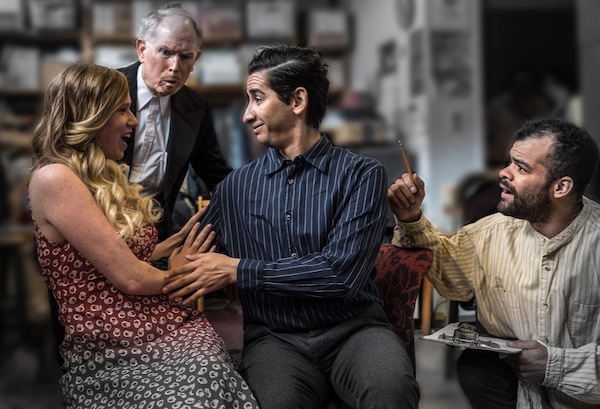
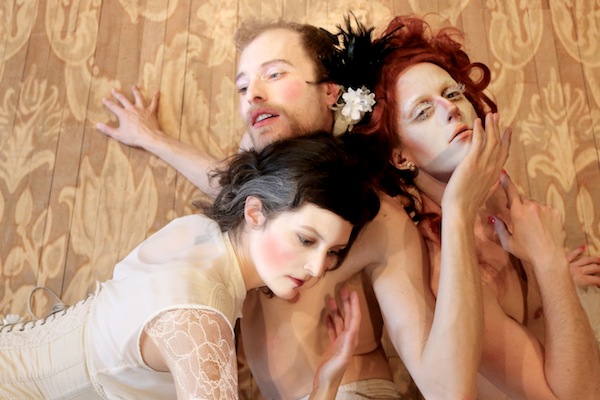
Judy McLellan as Lady Russell and Roger Monk as Sir Walter Elliot in Metro Theatre’s production of Persuasion. (photo by Tracy-Lynn Chernaske)

Who hasn’t wished for at least one do-over, a second chance? Who hasn’t made the mistake of following bad advice, even if it was well-intended?

In Jane Austen’s Persuasion, Anne Elliot falls in love with naval officer Captain Frederick Wentworth and they become engaged, but, based on the counsel of a family friend, Anne breaks off the engagement. Jewish community member Judy McLellan plays Lady Russell – the purveyor of that counsel – in Metro Theatre’s upcoming production of Persuasion, which runs until April 20.

“Lady Russell was a very close friend of Anne’s mother, who died, and she had taken the role of surrogate mother to Anne since that time,” explained McLellan. “She is very protective of Anne and felt that Anne was too young to get married, especially to a man who, at that time, had no money and no real position in society. This is why she now sees Mr. Elliot [Anne’s cousin] as a much more desirable match for Anne.”

Persuasion was adapted for the theatre by British playwright Timothy Luscombe. The Metro Theatre production is directed by Joan Bryans. McLellan, who was part of the cast of Metro’s Calendar Girls, which the Jewish Independent quite enjoyed (jewishindependent.ca/calendar-girls-now-at-metro), auditioned specifically for the role of Lady Russell. “Got a call back and then Joan offered me the role, which I was very excited to accept,” said McLellan.

Pride and Prejudice was McLellan’s “first venture into Jane Austen.”

“Loved it,” she said. “Went on to read the rest!”

About Persuasion, she said, “It’s a wonderful period piece of mid-19th century. The characters are diverse and interesting, and very reflective of society at that time. But, above all, it’s a love story, which, after all the trials and tribulations, comes to a delightful happy ending. Who wouldn’t enjoy that?!”

For tickets to Persuasion, visit metrotheatre.com.

To raise funds for building up-keep, Metro Theatre is holding a silent auction during the run of Persuasion for a painting by Tracy-Lynn Chernaske. “By tying together appropriate colours and soft textures, the painting reflects suggestions of [Jane] Austen’s historical multi-location story line, full of ships, seaside beaches, grand old manors and tidy cottages.” The opening bid is set at $300 and the winner will be announced on closing night. Bidding ballots, the artist’s bio and more information can be found at metrotheatre.com/show-persuasion-2019.

Cohen dusts off tap shoes

Andrew Cohen takes on the lead role of Don Lockwood in Royal City Musical Theatre’s Singin’ in the Rain, which runs April 4-20. (photo by David Cooper)

“I’m excited for audiences to see Singin’ in the Rain. The film is a classic, and I hope we’re able to bring that same charm and excitement to the Massey Stage,” Michael Wilkinson told the Independent. “It is on the older side of the musical theatre canon, but I think our production – especially Andrew Cohen as Don Lockwood and Tessa Trach as Kathy Selden – do such a beautiful job at bringing these characters to life in 2019, while still keeping the familiarity and charm of the characters and story.”

Royal City Musical Theatre presents Singin’ in the Rain at the Massey Theatre in New Westminster April 4-20. For those unfamiliar with the story, Don Lockwood and Lina Lamont are silent film stars, dashing and beautiful, but their stars will fade unless they can make the transition to talkies, the new technology of the time. The studio decides to change the couple’s latest silent film into a musical but, the problem is, Lamont has a horrible voice – even listening to her talk is painful. The solution? Have her voice dubbed by aspiring actress Kathy Selden.

Filled with humour, eminently singable and memorable music – “Good Mornin’,” “Make ’em Laugh,” and, of course, “Singin’ in the Rain,” to name a few – and incredible choreography, Singin’ in the Rain is one of the most popular musicals of all time, while also being an insightful commentary on the film industry, the impacts of technology and the nature of fame.

Cohen said he was asked to audition for the role of Lockwood last fall, while he was away doing Fiddler on the Roof in Saskatchewan.

“Gene Kelly made this role, this music, famous. He is in every neuron of this show. But I am no Gene Kelly (though I sure do wish I had his moves),” Cohen told the Independent about making such a famous character his own. “I think any actor preparing to take on an iconic role like Don Lockwood needs to find where the character lives within themselves rather than trying to mimic the character’s originator.”

And Cohen has more than the chops necessary to step into Kelly’s shoes. Since the Jewish Independent featured Cohen and his wife, Anna Kuman, in 2017, when they premièred Circle Game: Reimagining the Music of Joni Mitchell – which they co-created and co-directed – the couple has been working on different projects around the world.

“We were on the mass choreography team for the Fifth Asian Indoor and Martial Arts Games opening ceremony in Ashgabat, Turkmenistan, that had us work with a cast of 8,000, not to mention aerialists, horses, dogs, camels,” said Cohen. “It was a crazy experience! I then joined the stage management teams for the Gold Coast Commonwealth Games and the Sydney Invictus Games opening and closing ceremonies, getting to work at the Sydney Opera House and along the stunning shores of the Gold Coast.”

Cohen also premièred the new musical Les Filles Du Roi, for which he had to sing in English, French and Kanienké:ha (Mohawk). “Last winter,” he said, “I reconnected to my ancestral roots in the shmatta trade by playing Motel Kamzoil the Tailor in Fiddler on the Roof at Persephone Theatre in Saskatoon. Also, being the show’s music director, this production boasted a cast full of actor/musicians and was extended four times due to popular demand.”

While he’s very excited to return home and “dust off” his tap shoes for Singin’ in the Rain, Cohen won’t be in town long. He’s “heading to Toronto, Tel Aviv and Europe this spring for a tour of the new Canadian show Charlotte: A Tri-Coloured Play with Music that chronicles the life of renowned Jewish painter Charlotte Salomon.”

Singin’ in the Rain marks Cohen’s debut with Royal City Musical Theatre.

“Both my wife and my brother have worked with them before,” he said, “but this is my first time with RCMT, so it’s lovely to get to join the club, especially since RCMT is a theatrical institution for large-scale classic musicals. Seldom do audiences (and actors alike) get to revel in the grandeur of the art form in this town than at the Massey Theatre every April.”

Cohen’s fellow Jewish community member, Wilkinson, certainly enjoys this annual tradition.

“It’s the community that keeps me coming back,” he said. “Obviously performing is very fun, but I’ve also made some great friendships through RCMT. It has become something to look forward to in April, and it’s the people that make it such a wonderful environment.”

Wilkinson is in his final year of studies at the University of British Columbia’s Institute for Gender, Race, Sexuality and Social Justice, so he’s not sure how long he’ll be able to continue performing with RCMT, but he feels “very fortunate to have been a part of five productions over the last few years.” As part of the ensemble in Singin’ in the Rain, he has more than one role.

“The Quartet,” he explained, “is a part of the number ‘Beautiful Girl,’ which is a big showgirl number that is the first ‘talkie’ by Monumental Pictures (the film production studio in the show). Typically, the number only has the tenor soloist and the female ensemble, but our director and choreographer, Valerie Easton, has added four of the male ensemble to create a quartet and have some fun partnering moments in the number. It’s really just a quick snippet of the show, and many of us in the ensemble jump around playing multiple parts. I’m also playing Rod, who is the head of the publicity department at Monumental Pictures, which has been a fun bit role.”

Wilkinson’s favourite scene, he said, “would have to be the number ‘Broadway Rhythm,’ which happens about halfway through Act 2. It’s around eight minutes long, and there is some amazing dancing and singing throughout the number. I think the audience will really enjoy it, especially once we have rehearsed it to perfection!”

For Cohen, the biggest challenge so far with the role of Lockwood has been “the sheer amount of material to learn. Don sings and dances a lot. In Act 1, he barely leaves the stage,” said Cohen. “Prepping for this show has been like training to do a marathon – every day a little further, more lines down, going over and over songs and dance breaks. That said, I grew up tap dancing but haven’t had the chance to tap professionally in a long time. It’s a real privilege getting to tap with some of the amazing tappers in this company.”

Cohen said, “It’s very exciting, seeing it all come together with the sets and the lights and the orchestra. How often do you get to sing with a real 18-piece orchestra?!”

For tickets to RCMT’s Singin’ in the Rain, visit ticketsnw.ca or call 604-521-5050.

Glory tour starts soon

The original cast of Glory. (photo by Barbara Zimonick)

I hope Glory inspires audience members to look up the Preston Rivulettes and learn how amazingly driven, committed, skilled and bad-ass these female hockey players were,” Advah Soudack told the Independent.

The Rivulettes were entered into the Canadian Hockey Hall of Fame in 1963. According to the website of the Rivulettes Junior Hockey Club, “The team played an estimated 350 games between 1930 and 1940, tying three and losing only two. In that 10-year span, the Rivulettes were 10 times the winners of the Bobbie Rosenfeld Trophy that was presented each year to the champions of Ontario. They were also six-time winners of the Eastern Canadian championship and the Elmer Doust Cup that went with it. They won the trophy each time they competed for it. The team’s crowning achievement was capturing the Lady Bessborough Trophy as Canadian champions no less than six times.”

“Their determination, their courage, their fight and their passion” were what inspired Tracey Power to write Glory, which starts its touring run March 29-30 at Kay Meek Arts Centre in West Vancouver.

Power was also interested in 1930s Canada, which “presented many personal challenges, a national depression, the growth of international hatred that would ultimately become the Second World War, and how those international relations greatly affected Canadian multicultural relations, antisemitism and sexism, to name just a few.

“Through hard times,” she said, “we often turn to sport or entertainment for escape, for community and for strength. For me, the women on this team and their coach represented not just a team of hockey players, but a country fighting to survive.”

Glory premièred last year, and the touring production brings with it some changes, including two new actors, Andrew Wheeler as the team’s coach, Herb Fach, and Soudack as the character Marm Schwartz.

photo - Tracey Power
Tracey Power (photo from Gateway)

“The choreography grows and strengthens with every run,” said Power of other changes. “I’m a huge believer in trying new ideas, and the more detailed we can be in our storytelling, the more exciting it will be for our audience. There may be some new text ideas that come out of rehearsal. I’m always open to a new play exploring new territory each time we go back into rehearsal.”

Kate Dion-Richard reprises her role as Helen Schwartz.

“Tracey reached out to me a couple of years ago to play the part of Helen in a workshop and reading for the show,” said Dion-Richard. “A few months after the workshop, I auditioned formally for the role. That included reading a couple of scenes, as well as taking part in a group dance call. The dance was a new style of ‘swing-skate’ that Tracey had created, which incorporated swing dance moves of the 1930s with hockey skills and plays.”

It is not an accident that Jewish community members have been cast as the real-life Jewish sisters.

“Marm struggles with being able to get the education she wants because of quotas universities had at the time; she fights back against antisemitism and must find ways to deal with her anger both on the ice and off. Helen is confident in her femininity and struggles to figure out how such an aggressive sport fits within the expected view of a woman of that time. It has always been important to me to have Jewish actors play these roles,” explained Power.

“During the development of the play,” she said, “the conversations we had were instrumental in bringing the characters’ truths to the stage. I am not Jewish, but it’s my duty as the playwright to understand the souls and bones of these women and what they went through. I’m extremely thankful to Kate Dion-Richard, Gili Roskies [who played Marm last year] and Advah Soudack for being so open and honest with me about their own Jewish history.

“Bobbie Rosenfeld was one of the most famous Canadian athletes of the 1920s/30s,” she added. “She was an Olympic gold medalist and, among many other sports, played hockey for the Toronto Pats. She inspired many women to follow their athletic dreams – including Hilda Ranscombe, who was the Hayley Wickenheiser of the Preston Rivulettes – and, much like Marm, she also fought against antisemitism in her sport and life.”

“The awareness of, frustration and personal experience with antisemitism are a big part of Marm’s storyline and journey in this show,” said Soudack. “I personally have not experienced the extent of antisemitism that Marm experiences in this story, however, my close family members have, and I can understand and imagine what it would be like. I feel that I bring my strong sense of Jewish identity to the role of Marm, with all its deep-rooted traditions and expectations. I also share and connect with the concern and, at times, discomfort Marm feels with being Jewish in a world where antisemitism lingers right around the corner.”

photo - Kate Dion-Richard
Kate Dion-Richard (photo from Gateway)

Dion-Richard, whose Jewish side of the family is from London, England, grew up hearing stories of living through the war from her grandparents. “Those stories stay with me and in many ways is why this role is so close to home,” she said. “Although Helen is Canadian, the antisemitism felt in Canada in the 1930s was strong and I am able to connect to that through my family’s experiences. Also, on a lighter note, I married a man who isn’t Jewish and so did my character, so that’s a nice similarity.”

And there are other connections for Dion-Richard, who was a hockey fan before taking on this show. “My large extended family of Richards are huge Montreal Canadiens fans due to our distant cousin Maurice Richard (‘The Rocket’),” she shared, “and I grew up on the West Coast, so the Canucks were frequently on the television at home. I have definitely become more of a fan since doing this show – especially of women’s hockey. The Canadian women’s team is incredible and I’d love to meet them and chat about their experiences as women in a traditionally male-dominated sport. I’d also love to know if they know about the Rivulettes!”

Soudack admitted to not having been much of a hockey fan before she started her research and work on Glory. “My husband is a big fan, so I always hear him talking about it, and get dragged onto his computer to watch videos of amazing plays and goals,” she said. However, since Glory, she has become more interested in the game. “I recently went to Thunderbird Stadium to watch the UBC Women’s Hockey playoffs,” she said. “Their commitment, drive and talent were inspiring. I was moved to tears as I sat there, thinking of Hilda, Nellie [Ranscombe], Marm and Helen, realizing and deeply understanding why they loved the game so much.”

photo - Advah Soudack
Advah Soudack (photo from Gateway)

About sports and the relevance of the Rivulettes’ experiences for today’s audiences, Soudack said, “It still feels the same, in regard to women not having the same opportunities and not really being seen as equals to men in athletic ability. I find it sad that young girls can fall in love with a sport and be exceptional at it, like Hilda Ranscombe; however, there is no future career they can look toward. Once the war was over, women’s opportunity to play sports vanished, whereas the men’s opportunities and careers took off.”

“Women not only had to fight for ice time – often having to play and practise in the very early hours or very late hours of the day; essentially when the men didn’t need the ice – but they also had to fight to be taken seriously,” said Dion-Richard. “Many of the reports of the women’s hockey games included remarks about the apparent lack of femininity within the game and some even questioned the sex of the players because of how aggressive the women were. Also, women were unable to be professional hockey players. The men were paid and the women weren’t. As a woman living in 2019, I still see the need to fight for equality with pay, representation and respect.”

Directed by James MacDonald, Glory has some minor profanity and is recommended for ages 9+. The Western Canada Theatre production – which includes Katie Ryerson as Hilda and Morgan Yamada as her sister, Nellie – heads to Gateway Theatre in Richmond April 4-13 after the March 29-30 Kay Meek shows, then to Capitol Theatre in Nelson April 16, Vernon’s art centre April 18 and Coquitlam’s Evergreen centre April 23-27. It also travels to Ontario, where it plays in several communities over the course of a few months.

“I’d love to add that this show has something for everyone,” said Dion-Richard. “The Canadian history is so important to know, as well as the fight for respect and equality that these women pushed for. They really paved the way for all of us and I hope we can show how grateful we are to them for that. This is a show that could be a link for people who don’t normally go to the theatre. It fuses sport and theatre with Canadian history, and the story is as relevant today as it was in the 1930s.”

JNF gala features comic Gold

Elon Gold performs in Vancouver on April 14 at the JNF Negev Gala. (photo from elongold.com)

Comedian Elon Gold loves doing charity events, especially Jewish ones. The Independent caught him for a phone interview as he was on the road – with his family – to Las Vegas from Los Angeles to do gigs for the Adelson Education Campus and then the Israeli-American Coalition. On April 14, he will be in Vancouver to co-headline, with Ambassador Ron Prosor, the Jewish National Fund, Pacific Region, Negev Gala. The event raises funds for Sderot Animal-Assisted Therapy Centre.

“I feel like I’m doing a mitzvah by making my people laugh. And I’m also helping this cause that’s really important, and Israel is really important to me,” said Gold. “And we’re living in a highly antisemitic time, it’s dark out there, so anything I can do to bring light into our world and make my fellow Jew happy, I’m there for it.”

Gold’s resumé is impressive. He starred in the television series Stacked and In-Laws, had a recurring role on Bones and on The Dana Carvey Show. He guest starred just recently on HBO’s Crashing and, longer ago, on shows including Frasier and The Mentalist. He has appeared in films, his one-hour Netflix special, Elon Gold: Chosen and Taken, is available on Amazon and his show Elon Gold: Pro-Semite premièred at the Montreal Comedy Festival. He has made multiple appearances on The Tonight Show and his July 2018 segment on The Late Late Show With James Corden – how, like everyone else, Jews love sex, money and food, but just in a different order – has been watched and shared by countless people on the internet, as has his routine on why Jews shouldn’t have Christmas trees and so many others.

Despite all of his accomplishments and his years in the business, Gold still gets excited about his work, and he shared what he described as a “wow” moment, one of the best days of his life, almost immediately when talking with the JI.

“Yesterday,” he said, “I was filming a scene of Curb Your Enthusiasm with Larry David…. It was really, truly a dream come true.”

But Gold didn’t take his being hired by David as a sign that he had “made it.”

“The truth is, I have been a guy with lucky breaks and hard breaks for the last 20 years,” said Gold. “This is another achievement, and one that’s beyond anything I would dream of…. I’m gratified in the sense that I finally feel like I’m in a place, not where I’ve made it, but where I actually have fans, and my clips are viral and people are sharing my bits on Facebook, WhatsApp or whatever. I did the James Corden show and, again, that doesn’t mean I’ve arrived … but what’s cool to me is that I did that set and then everyone’s sharing it, especially Jews. My biggest fans are my people.”

It’s been a 25-year journey, said Gold of his career, “with all sorts of great highs, like yesterday, and huge lows, like having a sitcom that you pitched and created and started get canceled. There are so many lows, and then there is the daily rejection that is show business. And that’s why I’m so glad I’m a comedian and an actor. I get rejected all day in Hollywood at auditions, but then, at night, I’ll go to the Laugh Factory comedy club and I’ll have 300 people roaring, and that will validate [me] – I knew they were wrong! I knew I could do this. See, I’m funny. These people think so, at least.”

Gold said his resilience, his ability to keep trying, likely comes from stand-up. “Because stand-up is all about bombing and killing, and the killing is so worth it that even the terrible, dejected feeling of bombing [is manageable].”

As far as his career, he said, “I have no other choice. I don’t love doing anything else and I’m not good at anything else.”

Known for his impressions, he said, “I used to impersonate my teachers in eighth grade.” His goal wasn’t to ridicule people, he said, but to make even the teachers laugh.

He enjoyed making people laugh, and writing comedy. One of the first things he wrote, he said, was a Purim shpiel. “And I’ll never forget the feeling of having the entire high school laughing, and thinking, there has never been anything more gratifying than what I just did, I want to do this more. Everybody says it’s like a drug…. It’s so addictive. Once you get a taste of it, that’s it, you’re hooked. And very little can discourage a comedian [so much that they get] out of comedy; certainly not a bad set, because we all know that we all have them.”

A combination of things drives him.

“It’s probably disingenuous to say that I do this because I love to make others laugh,” he admitted. There is a selfish aspect to it, he said. While making people happy is a “key component” of why he does comedy, he said, “I also love everything about it… I love the process of having an observation and then writing it and tinkering with it and working on it. I love doing it and I love the fact that I have so much freedom in my days because I don’t have that nine-to-five job most people have…. I’m always working. At the same time, I’m always on vacation.”

Gold loves getting the laughs, and said that’s probably 70% of the reason he does comedy; the other 30% is making people happy.

“There is so much misery in the world,” he said, “to make people happy is a great thing, but it’s only a part of it.”

On the acting side, Gold said his favourite kind of acting is for sitcoms “with a live studio audience because you’re still getting the laugh but now you’re not looking at the audience and talking to them, you’re looking at your fellow actor … and, peripherally, you hear and see these people cracking up.”

Ultimately, he said, “I just love performing.”

The only “grueling part,” he said, is the memorizing “and the pressure of 200 people staring at you, saying, ‘You better know your lines, pal, because we’re all here and we all want to go home…. Acting is challenging, but it’s also just fun…. It’s fun to get into a character and just play.”

Gold, who is from the Bronx originally, recalled his first open-mic night at the Comic Strip Live in Manhattan; he was 16 years old. “Fortunately, I had beginner’s luck because I was doing impressions – my early act was all impressions – and impressions are like magic tricks, they just wow the audience.”

Despite being a touring comedian by university (he got a bachelor’s in economics at Boston U), it took years, he said, to develop his own voice, to figure out what he wanted to talk about and how to talk about it.

“I’m obsessed with Jewish stuff because I live such a Jewish life,” he said. “I’m an observant Jew, I keep Shabbos and all that stuff, keep kosher. So much of my life is in the Jewish world, I can’t help myself but to come up with observations about our traditions, our holidays, our rituals. A lot of what I talk about is what I live…. The other part of my life is being married, being a dad, so I talk about that.”

Gold and his wife, Sasha, have four kids, two sons and two daughters, ranging in age from 9 to 18. The couple is coming up to their 25th anniversary in June.

As he stopped to fill up his car with gas on the way to Vegas, he told the JI about why he likes performing at Jewish events, while simultaneously directing his kids to be quick about heading into the gas station, as they were running late.

“There are not a lot of comedians out there that will go that deep into the Jewish experience and, for me, there are not a lot of audiences I can share my Jewish experiences with,” he said. “I can’t do lulav and etrog jokes on James Corden…. At the same time, we’re raising money, we’re raising awareness for incredible organizations…. It’s all win-win for me – I’m raising money, I’m making money, I’m getting laughs, I’m getting to do material I don’t do anywhere else…. And I love Jewish audiences; I love connecting on more than just a human level…. We’re connecting about a shared experience that is almost indescribable to anyone else.”

For tickets to the JNF Pacific Region evening event on April 14, which will be held at Schara Tzedeck, call 604-257-5155.

Gotta Sing! 2019 registration

(photo from JCCGV)

For the past 24 summers, Gotta Sing! Gotta Dance! has attracted hundreds of enthusiastic and talented participants from throughout Canada, the United States and Israel, many of whom have gone on to successful careers in the performing arts. The deadline is April 1 to apply for this summer’s sessions, which take place at the Jewish Community Centre of Greater Vancouver July 2-25 and Aug. 6-29.

The director and creator of Gotta Sing! Gotta Dance! is Perry Ehrlich, who received an Ovation Award and the Canadian Bar Association’s Community Service Award (acknowledging his dedication to working with children and musical theatre). A composer, pianist, teacher, arranger, producer, adjudicator, writer and talent coordinator, Ehrlich also directs ShowStoppers performance troupe (theimpresario.ca).

Gotta Sing! Gotta Dance! is taught by a faculty of professional instructors, each working in his or her respective field, including musical directors Wendy Bross Stuart and Diane Speirs; director Chris McGregor; choreographers Anna Kuman, Jason Franco, Keri Minty and Meghan Anderssen; acting coach Amanda Testini; and Mariana Munoz and Charlie Weaver, set construction and costume co-ordination.

Peter Birnie, former theatre critic for the Vancouver Sun, commented that the faculty members “are all teaching in a carefully choreographed nesting of studies that takes place all over the JCC and culminates in a big, brassy show. I try to attend every year, and always come away just as thrilled as the parents and families with the level of talent on display. It is about the joy that comes from singing your lungs out and dancing your hooves off.”

This year’s final production in each session – called Shamilton – will take place in the Rothstein Theatre and feature an original script and a broad repertoire of music from Broadway and movie musicals.

The Finishing School will again be offered for serious musical theatre students attending Gotta Sing! Gotta Dance! and it will feature approximately 10 sessions from 3:15 to 5:15 p.m., after the regular program, which will run 9 a.m. to 3 p.m. Finishing School students will receive instruction in audition technique, presentation of songs and scene work, and will participate in intensive dance workshops and meet with well-known professionals in the theatre community.

The Boot Camp Dance – for those either new to dance or wanting to refine their skills – will also be offered.

The cost to attend Gotta Sing! Gotta Dance! is $750 for JCCGV members and $850 for non-members. Scholarships are available through the Babe Oreck Memorial Fund, the Phyliss and Irving Snider Foundation, and others for those with financial need.

For more information and registration, visit jccgv.com/performing-arts/gotta-sing-gotta-dance.

Using absurdity to illuminate

Left to right are GOLDRAUSCH actors Tebo Nzeku, Gray Clark, Karthik Kadam, Matthew Rhodes and Hannah Everett. (photo by Javier Sotres)

GOLDRAUSCH is described as “a comedy with music that journeys through film director Oskar’s efforts to make a film about the man who started the Gold Rush Fever of 1848: the ‘Emperor of California.’ Mixed with classic country and Mexican banda songs, GOLDRAUSCH is the story of rampant jealousy, greed and ambition run amok, as dueling actors fight for their close-ups in Oskar’s magnum opus.”

The University of British Columbia’s theatre and film department presents GOLDRAUSCH at Frederic Wood Theatre March 14-30.

“GOLDRAUSCH follows the story of director Oskar, creating a film on Johann Augustus Sutter, based on the book Gold by Blaise Cendrars,” explained Hannah Everett, who plays the role of Marlene in the UBC production. “Sutter was a German-born colonizer who came to America, set up a farm for himself and became rich – until the gold rush of the 1850s, which destroyed the land he had taken.

“The playwright, Guillermo Calderón, is commenting on how Blaise Cendrar’s Gold is an exaggerated and fictionalized version of Sutter’s life that glosses over his problematic character, and the history surrounding the land and people during this time,” she said. “The play begins months into the shoot when Oskar realizes his film has become boring, and lacking ‘soul.’ He decides to bring in two new actors and shoot a porn scene, much to the other actors’ surprise.”

Marlene is one of the new actors.

“Marlene has been hired by Oskar to perform a porn scene and body double the leading lady, Greta, on set,” said Everett. “Marlene represents Oskar’s ‘fresh start’ to the film, in order to make it more interesting. Throughout the play, we learn she contracted hepatitis from the porn industry and is incredibly poor. She needs this job to make money and survive, which sends Greta into a panic as she learns Marlene is her replacement.”

Appropriately for a play about a film, GOLDRAUSCH is a multimedia work.

GOLDRAUSCH features real cameras and sound equipment that will project film scenes onto the stage,” said Everett. “We are calling it a ‘meta-theatrical comedy with music’ and, in a way that is somewhat Brechtian, the play often breaks into song and dance, with karaoke tracks projected onto screens. In a final scene, where Oskar and the four actors interview about their film, it becomes clear that these songs are included in the film soundtrack. The multimedia layers to this piece create an effect that continues to take the audiences out of these different worlds of the past and the present, and remind them that they are watching a performance – and that not everything is always as it seems.”

Calderón, a Chilean playwright, wrote GOLDRAUSCH in 2017, “in a continuing time of political upheaval and uncertainty, particularly in United States,” said Everett. “Johannes Augustus Sutter came to America in the 1800s, stole land and enslaved indigenous peoples. His story, Calderón highlights, is unfortunately still incredibly relevant.

“Calderón asks us to think about land ownership, freedom and immigration. He shows us how history repeats itself,” she said. “The play satirizes Cendrar’s book, Gold, demonstrating how we become numb and alienate ourselves from people and politics that attempt to take away basic human rights. This is seen in Oskar’s film, and the ego and greed between the four actors, all struggling for the spotlight…. Calderón has decided to illuminate these issues in a way that is absurd and entertaining, as a way to get audiences to think more actively than perhaps watching or reading a news story.”

photo - Hannah Everett plays the role of the model, Marlene, in UBC Theatre’s production of GOLDRAUSCH
Hannah Everett plays the role of the model, Marlene, in UBC Theatre’s production of GOLDRAUSCH. (photo from UBC)

Born in White Rock, Everett grew up in Tsawwassen. She got into acting through various avenues, including Gateway Theatre and high school productions. During a three-year internship with the Riotous Youth program at Bard on the Beach, she helped create A Shakesperience and Shakespeare Unhinged. She also participated in the InTune Young Company Intensive with Touchstone Theatre and with the Stratford Theatre Performance Intensive.

In the course of her university studies, Everett has performed in many theatre and some film productions at UBC, as well as in other theatre productions. In her fourth and final year of UBC’s bachelor of fine arts acting program, Everett graduates in May.

“I’m hoping to get a film agent and, ideally, work in both film and theatre,” she said of what comes next. “I am keen to explore more devised performance, Shakespeare and the contemporary Canadian theatre scene. What I love about this line of work is that it scares me and challenges me to always keep learning, whatever the future may hold.”

Everett’s love of theatre came from her maternal grandmother, Irene N. Watts, who most recently has published Seeking Refuge (2016), a graphic novel, with Kathryn E. Shoemaker, which is a sequel to the graphic novel version of Goodbye Marianne. (See jewishindependent.ca/meet-award-winning-artists.)

“Her most well-known trilogy includes the novel (adapted from the play) Goodbye Marianne, which draws from her experience as a child Holocaust survivor, arriving in England via the Kindertransport from Germany,” said Everett of her grandmother. “In England, she became a teacher and worked in drama education before coming over to Canada in 1968, where she continued working in children’s theatre, acting and directing.

“Her love for theatre trickled down to me, and I was incredibly fortunate to be taken to numerous productions over the years, and given seemingly endless supplies of plays and books. Our shared passion has created such a cherished and close relationship and, as Judaism has had such a deep effect on her life and storytelling, I am always eager to share and learn her stories. Coming from both Jewish and non-Jewish heritage on my father’s side, I have learned to appreciate and be open to different views of the world, especially when it comes to making art.”

Tickets for GOLDRAUSCH – which contains adult themes and language – can be purchased from ubctheatretickets.com or 604-822-2678.

Audiences share own stories

Brian Linds reminisces about his bar mitzvah in Reverberations, which is at Presentation House Theatre until March 17. (photo from Courtesy PHT)

“There are so many wonderful, heartfelt moments in the stories that are told,” Brian Linds told the Independent about Reverberations. “Some are sad. Some are funny. But these same moments have been shared by us all.”

Reverberations opened March 7 at Presentation House Theatre. Created by Linds, a sound designer and an actor, it is co-produced by the theatre and Reverberations Collective with Mortal Coil Performance. Based on Linds’ life, some of the moments he shares with the audience are “his parents’ love story, a childhood act of betrayal, his bar mitzvah, his mother’s Alzheimer’s diagnosis and a moment of lucidity his mother experienced while in the late stages of the disease.”

“The idea for Reverberations came to me after I had created a couple of 10-minute sound performance pieces for pre-events during the SPARK Festival at the Belfry Theatre in Victoria where I live,” said Linds. “I created stories using only sound. These sound performances would play in unusual spaces in and around the theatre.

“I was so pleased with the results that I created three more mini shows and I came up with the concept of Reverberations as a full 90-minute show, using five spaces and four actors who interact with the soundscapes. The production premièred in 2017 as a main stage production of the SPARK Festival.”

The audience, divided into smaller groups of 20, also moves through the five performance spaces. About the première, which took place at Belfry Theatre, Lind remarks in the Vancouver show’s press material that “audiences enjoyed the novelty of moving from space to space and loved the idea that each group’s journey was a unique unfolding of the story told. They were also inspired to share with the performers and audience members their own experiences of loss, betrayal and love. It was deeply touching for our team to experience.”

photo - The role of Brian Linds’ mother, who suffered from Alzheimer’s disease, is played by Nicola Lipman
The role of Brian Linds’ mother, who suffered from Alzheimer’s disease, is played by Nicola Lipman. (photo by Angela Henry)

It was the “immersive, personal and celebratory” experience that attracted Presentation House artistic director Kim Selody to Reverberations. “His creation honours the life of his mother, and what it feels like to lose someone to Alzheimer’s disease,” notes Selody. “Having lost my own mother in the same way, I was deeply touched by how Brian approached his experiences. His choice to end with a celebration is a touch of genius.”

During the writing process, Linds himself had revelations about aspects of his life.

“While I was creating a segment for Reverberations about my bar mitzvah,” he shared, “I found myself thinking about what it means for me to be Jewish. I discovered that who I am was formed and shaped because I was born Jewish. I like being Jewish. I’m a part of something pretty special. Come see the play and you will see.”

Some people will also want to come to the show for a touch of nostalgia, as Reverberations features a range of sound technology, from digital recordings to LPs and cassettes, reel-to-reel and 8-track tapes.

Linds came into sound design kind of by accident.

“I had been working as a professional actor for 25 years but, one day during a show, I was backstage with an actor who knew of my love of music and he asked me to design the sound for his play. It came very naturally to me and I haven’t stopped for 15 years,” he said.

“My favourite part of working on sound is that it gives me a chance to be on the other side of the footlights and work with directors in a completely different way. I love working with directors who collaborate and show me new ways to use my talent.”

The production at Presentation House Theatre is directed by Mindy Parfitt and is performed by Linds, Nicola Lipman, Victor Mariano and Jan Wood. Set and costume designer is Catherine Hahn, lighting designer John Webber and stage manager Heidi Quick.

Reverberations runs until March 17 and tickets start at $15. For more information, visit phtheatre.org/event/reverberations or call 604-990-3474.

Mizrahi to perform here

Isaac Mizrahi’s cabaret show, which is at the Rio Theatre on March 18, is a preview of his new book I.M.: A Memoir. (photo by Britt Kubat)

Celebrated fashion icon Isaac Mizrahi is bringing his multiple talents to Vancouver. On March 18 at the Rio Theatre, he will be performing his cabaret show I & Me, accompanied by the Ben Waltzer Jazz Quartet.

Mizrahi’s North American tour is timed with the release of his new book, I.M.: A Memoir (Flatiron Books). The show, which includes poignant stories and fun songs, covers anecdotes about his life, his mother, what it was like growing up in an Orthodox Jewish Syrian community in Brooklyn, the challenge of being gay, and rising to the top of the fashion world. “It’s done with a lot of humour,” he told the Independent. “I hope it’s compelling, amusing and resonates with the audience.”

The songs, he explained, go along with the story. “I chose songs that can dramatize the story,” said Mizrahi, who has performed with Waltzer in clubs for more than 20 years. “My opening number is ‘I feel Pretty’ and, believe it or not, I am not singing it with irony.”

Mizrahi also delivers his own rendition of Cole Porter’s “You’re the Top.”

The first time Mizrahi showed off his talents in front of a crowd was in elementary school, when he started doing impressions for his peers.

“When I was about 7 years old, I went to see Funny Girl with my family and was so inspired by [Barbra] Streisand I started imitating her. Then I impersonated Judy Garland and Liza Minnelli,” recalled Mizrahi, who attended yeshivah from kindergarten through eighth grade. “I would do these female impressions inappropriately in places like the lobby of shul!”

But it was designing clothes for the rich and famous that made Mizrahi a household name. When he entered High School of Performing Arts in New York City, he had planned on going into show business. However, by the time he was a junior, he switched gears and found a better way to express himself. “I realized all my friends were gorgeous, thin, blond and movie-star types, and I was fat and I didn’t have that self-image,” he said. “So, I re-thought my career and decided to work in the fashion industry. It enriched me so much, and gave my life a different kind of story and platform.”

His interest in the world of fashion didn’t come from out of the blue. His father was a children’s clothing manufacturer and Mizrahi, who was obsessed with reading fashion magazines, had sewing machines at his disposal. “I started to make puppets and sew clothes for them,” said Mizrahi, who added that he liked doodling sketches of outfits in the margins of his Hebrew books. “By the time I was 10, I had this big puppet theatre in the garage and I made their clothes. My father had sewing machines everywhere and he taught me how to sew. By the time I was 13, I was a really good sewer and I started making clothes for my mom and myself. It became this fun, compelling thing. My mom, who is now 91 years old, was really into fashion and encouraged my interest.”

After high school, Mizrahi attended Parson’s School of Design in New York City. His first fashion job was working at Perry Ellis, then with designer Jeffrey Banks, and then Calvin Klein. Along the way, he honed his skills, in such areas as selecting fabric, sketching clothes and participating in design meetings. By the time he was 26, he went out on his own.

In 1989, he presented his first show, which catapulted him into fame and his couture soon dominated the fashion mags. He dressed celebs for red carpets, and his clients included Michelle Obama, Meryl Streep, Hillary Clinton and Oprah Winfrey.

“Designing for Michelle Obama was such a thrill,” he said. “And Barbra Streisand was so lovely. I tailored a suit for her and Women’s Wear Daily erroneously attributed it to Donna Karan. Barbra wrote me a note saying, ‘We know who really made this suit!’”

But Mizrahi’s successful journey has had its lows. While he made countless guest appearances on television and in movies, earned an Emmy nomination for best costume design for his work in Liza Minnelli Live and was the subject of the acclaimed documentary film Unzipped, which chronicled his 1994 collection, his company was losing money and closed after his fall 1998 collection.

He returned to fashion in 2002, teaming up with Target and becoming one of the first high-end designers to create affordable clothes for the general public. In 2009, he launched his lifestyle brand Isaac Mizrahi Live!, sold exclusively on QVC. In 2011, he sold his trademark to Xcel Brands. Among his many credits, he hosted his own television talk show, The Isaac Mizrahi Show, for seven years; he wrote two books; and he narrated his production of the children’s classic Peter and the Wolf at the Guggenheim Museum. In 2016, he had an exhibition of his designs at the Jewish Museum in New York. Currently, he sells on QVC and via Lord & Taylor, and serves as a judge on Project Runway: All Stars.

Throughout all of his fashion endeavours, he has found time to be on stage. Mizrahi, who is a charming storyteller, said he loves doing live cabaret. “I hope the audience will really enjoy themselves when they see my show, and laugh and enjoy the music,” he said. “I want them to get the idea who I am and how I got there – and I want them to know the story of my life.”

When asked what he’d like his legacy to be, the designer, entertainer and showman referred to his Judaism. “My name is Isaac, which means laughter in Hebrew,” said Mizrahi, who considers himself a cultural Jew. “I think, most importantly, I want my legacy to be about humour.”

Tickets to I & Me at the Rio Theatre are $58 in advance and $60 at the door. They can be purchased at riotheatre.ca/event/isaac-mizrahi-i-me. The March 18 show starts at 8 p.m.

Alice Burdick Schweiger is a New York City-based freelance writer who has written for many national magazines, including Good Housekeeping, Family Circle, Woman’s Day and The Grand Magazine. She specializes in writing about Broadway, entertainment, travel and health, and covers Broadway for the Jewish News. She is co-author of the 2004 book Secrets of the Sexually Satisfied Woman, with Jennifer Berman and Laura Berman.

Dance explores our relationships

Noam Gagnon’s Vision Impure performs Pathways at the Roundhouse, as part of the Vancouver International Dance Festival, which runs March 4-30. (photo by Erik Zennström)

“It’s important that dance and art ask questions, even without necessarily explicitly spelling out the answers,” Noam Gagnon, artistic director of Vision Impure, told the Independent.

Vision Impure presents the world première of their latest contemporary dance work, Pathways, at the Roundhouse Performance Centre March 20-23, as part of the Vancouver International Dance Festival, which runs March 4-30.

“The works I create are not meant to be stories but rather are meant to be seen as a series of powerful images and states that hopefully anchor, engage and stimulate the audience to have their own powerful experience,” said Gagnon, who is a member of the Jewish community.

Pathways is described as a work that “illuminates the stories we share, exploring the intricate push and pull of relationships impacted by urban living. Simple moments lead to more complex ones, questioning our ability or inability to connect with one another and what makes us react more strongly to some than to others.” It was performed as a work-in-progress at last July’s Dancing on the Edge festival.

Pathways has lengthened and developed considerably since Dancing on the Edge,” said Gagnon. “It is now a full-length work, approximately one hour long, presented in two parts with an intermission in between. The company has continued the research and investigation into Part 2, which informs what has already been seen, what else was potentially needed, and then added the alterations necessary to create better cohesion for Pathways as a full work.”

Gagnon is an award-winning choreographer and his work has been performed internationally. He is regularly commissioned by dance artists and companies, and is an associate dance artist of Canada’s National Arts Centre. He has collaborated often with other artists, and Pathways is no exception.

“The creation of Pathways has been a long process of research and accumulation in multiple cities involving multiple companies and dancers,” said Gagnon. “The initial concepts for Pathways started germinating in May 2012 during a choreographic laboratory under the mentorship of Davida Monk at Dancers Studio West (DSW) in Edmonton, where I was given the opportunity to develop the original concept on seven amazing dancers.

“In 2014, I was invited to create a dance work on 17 crazy, generous student dancers at L’Ecole de danse contemporaine de Montréal (EDCM). It was in Montreal where the first version of Pathways Part 1 came to life and was subsequently presented as part of the EDCM Professional Program spring presentation Danses de Mai, Opus 2014.”

Back in Vancouver, in 2017, Gagnon was invited to create a work for EDAM’s (Experimental Dance and Movement’s) Spring Choreographic Series and to develop additional material for the piece with a few other dancers. And, in the spring of 2018, he said, “I was invited by Lesley Telford to do research/creation at Arts Umbrella on nine of their very gifted PReP program emerging dance professionals, further expanding on some of the concepts of the previous works.”

The development of Pathways continued in 2018 with nine dancers at Simon Fraser University’s School for the Contemporary Arts and 27 dancers at Modus Operandi.

“The current cast of 10 incredible young dancers for the new full-length version of Pathways, to be presented at Vancouver International Dance Festival (VIDF), has been my heart, soul and brain,” said Gagnon.

In addition to the dancers involved, composers James Coomber (Vancouver) and Guillaume Cliche (Montreal) created Pathways’ sound design.

“My creative process always starts with images, which evoke various states in me initially and then evolve, arousing strong desires within my imagination that make me want to act upon them. Then the hard work and countless hours to bring a piece to the stage begin,” explained Gagnon.

“For the Pathways project,” he said, “I first came up with a series of questions, with answers coming from the responses of each of the dancers. I then started to generate a physical vocabulary, which would become my text. I immediately reshaped the movement vocabulary that was given to me in order to generate a more cohesive bank of movements and to ensure that all the artists involved were part of the same world. With this bank of movements, I then started gathering and creating worlds of moving physical landscapes in various states of action and transformation. Each movement phrase evolved over time to support the vision that first drove me initially.

“It is also extremely crucial for me to tailor the work perfectly for who is dancing it and to always create the strongest structure possible,” he added. “I then challenge or reshape the work with movement that creates strong intent and keeps these incredible dance artists alive and real in the world I have envisioned.”

Part of Vision Impure’s mission is to create “performances that explore the intricacies of human relationships and the dynamic tension that move us … [and to reflect] the intimate concerns, ideas and attitudes that shape our relationships to ourselves and each other.”

When asked what he has learned through his work and life experience about how we connect and isolate ourselves and others, Gagnon said, “Everything in life starts from within ourselves first, the choices we give ourselves, how we negotiate what comes our way, what we do with what we have and then being honest and real enough to accept the facts and be accountable for the choices we make. Action-reaction is real and undeniable to me. In relationships, I find communication to be the biggest challenge, seemingly constantly lost in translation.

“Recently,” he said, “I have begun to strongly believe that, as a species, we are hardwired for extinction. Despite our biggest strength being our ability to learn to adapt, it seems lately we as a whole are not able to learn from our experiences or the past experiences of others. We are living in an era of social amnesia. Our desires have become powerful weapons going in uncontrolled directions.”

The Vancouver International Dance Festival presents many artists during its run, including the Japan-based butoh ensemble Dairakudakan, Vancouver’s Raven Spirit Dance, Ottawa’s 10 Gates Dance, Montreal’s Daina Ashbee and Tjimur Dance Theatre from Taiwan. The festival features workshops, as well as many interactive dance activities at various venues throughout the city. For more information, visit vidf.ca.

Monster brings back Jesus

Ryan Gladstone is co-writer of Jesus Christ: The Lost Years, which opens at Havana Theatre March 13, 8 p.m. (photo from Monster Theatre)

Scholars have pondered the question of the unknown, or missing, years of Jesus. In the Christian Bible, he disappears from the narrative in his teens, only reappearing at age 30. What happened in that time? What was Jesus doing? Even if you haven’t wondered about this before, you should consider checking out the award-winning theatrical romp Jesus Christ: The Lost Years, which offers some unconventional theories that academics and theologians have possibly overlooked.

Written by Ryan Gladstone, Bruce Horak and Katherine Sanders, with an original score by Drew Jurecka, Jesus Christ: The Lost Years was first created in 2006. It toured until 2008, then also had its “lost years,” returning to the Fringe circuit only last summer; this time, with two women playing the male leads. Directed by Gladstone, the irreverent physical comedy opens at the Havana Theatre March 13.

“The script is pretty much the same, so the biggest change is what the two new performers bring to the table,” said Gladstone about how the current iteration of the play differs from the original. “Carly Pokoradi and Alex Gullason really have made the play their own, and that’s been a pleasure to watch. It’s also fun watching two talented and funny women being funny and talented on stage.”

Both actors take on multiple characters. In the play, notes the promotional material, “we see teenaged Jesus, wondering why he doesn’t fit in. Mary and Joseph finally come clean and tell him that Joseph isn’t his real father. Hurt and confused, Jesus heads off on the most epic father quest of all time. Along the way he meets Judas, Mary Magdalene, the Three Wise Men, lepers, Romans, he even has a battle with the spirit of Elvis!”

The idea for Jesus Christ: The Lost Years came up long before it was first produced in 2006.

“Katherine Sanders and I were roommates in Calgary in the late ’90s, and we came up with the idea of doing a play about a teenaged Jesus. But Monster Theatre was just on the cusp of being founded and it wasn’t the right time,” said Gladstone. “I remember calling her in 2005, saying, ‘It’s time.’ So, we started researching, and we got Bruce Horak on board, who we both greatly respected, and got to work. The writing process was pretty smooth for having three writers, though maybe some of us were more forceful with our ideas than others! (I’m talking about me, if it’s not clear.)”

As wild as the play gets, it is based on research, as are all Monster Theatre productions. Part of the company’s mission is to reimagine history or adapt “universal stories to make them relevant for our specific time.”

“I took a couple history classes in university but, funnily enough, my thirst for history came out of doing plays for Monster,” Gladstone told the Independent. “In 2001, we created our longest-running, most successful show, The Canada Show: The Complete History of Canada in One Hour, and the research portion of the project really fired my imagination. I loved the idea of taking amazing events that people have never heard of and exposing them to these great moments in our past, or events that people think they know and showing it from another angle. In 2003, Bruce Horak (and later my brother Jeff) and myself spent about seven months researching and writing the follow-up show, The Big Rock Show: The Complete History of the World. It was really this that gave me my love for history. Having that broad overview of everything has given me context for every other event I learn about.”

Perhaps also “funnily enough,” given his love of history, Gladstone only recently found out about his Jewish heritage. “A couple years ago,” he said, “my brothers and I got one of those DNA tests done for both our parents, and discovered that our dad has about 30% Jewish blood. We have some very close Jewish friends here in Vancouver that took us under their wings and guided us through everything they thought we needed to know.”

Born and raised in Calgary, Gladstone went to theatre school at the University of Calgary. “I had been caught up in the exciting whirlwind that was the Loose Moose Theatre Company, run by improv guru Keith Johnstone, who was also teaching in the theatre department at U of C,” explained Gladstone. “After I graduated, I moved to Toronto, because that’s where all my friends were, and I loved it. That was around the time that I founded Monster Theatre. In 2006, I moved to Vancouver. My (now) wife had come to Toronto from Vancouver and tried it out for a few years and we decided we would give Vancouver a shot for year or two. Well, that’s been 13 years now.”

Gladstone followed up his bachelor of fine arts in acting from U of C with a master of fine arts in directing from the University of British Columbia. He has written or co-written, produced, directed or acted in every Monster production.

“It’s a tough thing to tally, but I think it’s around 40 original plays, written or co-written,” Gladstone said of his literary output. “I occasionally write for other mediums; I’ve been co-writing a kids’ book for many years, and we have tried adapting our plays for film and web series.”

Gladstone founded Monster Theatre almost 20 years ago. “In 2000,” he said, “I wanted to tour the Fringe Festival circuit. I had some friends with a comedy troupe called the 3 Canadians who were very successful and were touring Australia and beyond every year, and I basically wanted to be like them. So, I filled out an application form for the Edmonton Fringe and, when it came down to ‘Company Name,’ I just wrote down Monster Theatre for the first time.

“The name is based on something Keith Johnstone said one day when I was in university. We were working on a scene from Othello and Keith was discussing Iago and the difference between demons and monsters. He said, ‘Demons are evil and twisted on the inside, but they are usually quite attractive on the outside, while monsters are strange, twisted and bizarre on the outside, but they always have a good heart.’ And I thought, that’s the kind of theatre I want to make! So, we try to create original plays that are odd, unique, unlike what everyone else is doing, but we are always focused on the heart of the play, making sure that it is rooted in something meaningful or profound. We often talk about our style as being at the intersection where high brow and low brow meet.”

Gladstone was still living in Calgary when he started Monster Theatre. “But, when I moved to Toronto, the company, such as it was, moved with me and, when I moved here in 2006, it moved again,” he said. “Since arriving in Vancouver, we have laid down roots and I don’t think there will be another relocation for Monster in the future. With that said, Monster is a very cross-national company – we have a fan base in a number of cities across the country. In fact, for a long time, Vancouverites witnessed fewer productions of ours than Toronto, Winnipeg, Calgary or Edmonton.”

Over the years, the societal norm of what is acceptable and offensive in word or deed has changed, but Gladstone said there aren’t really any “red lines” he won’t cross in his writing.

“I mean, in the old days, my writing was way more provocative,” he acknowledged. “We were trying to offend people. We often talked about trying to piss off everyone, then no one gets left out. But, these days, it’s a different atmosphere. I’m not afraid of offending people, but I think there needs to be a worthwhile reason, not just for the shock of it.”

Jesus Christ: The Lost Years is at Havana Theatre March 13-16 and 20-23, 8 p.m. For tickets ($20/$15), visit showpass.com/ticket-buyers.