Presenting our stories

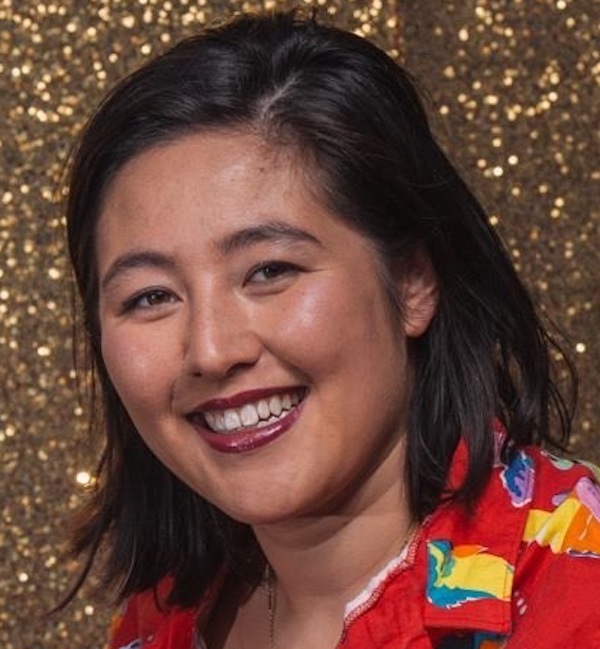
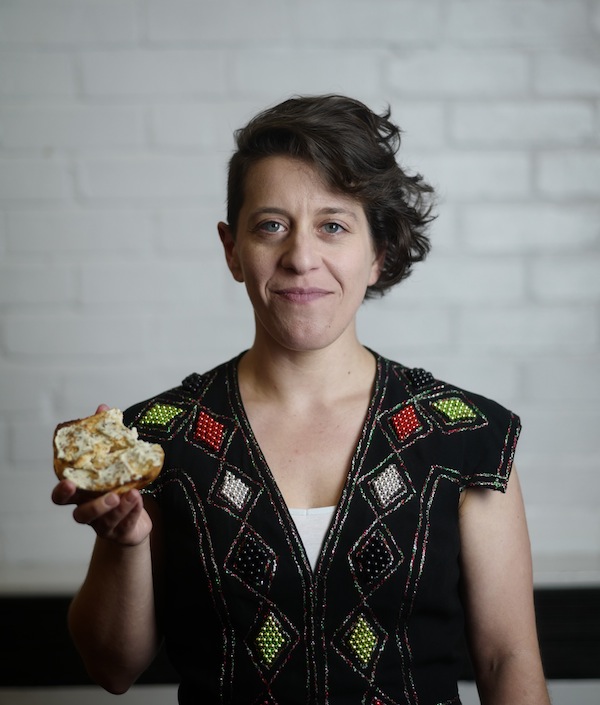
Tamara Micner performs her one-woman play Holocaust Brunch this weekend at Chutzpah! (photo by Sophie le Roux)

“In recent years,” playwright Tamara Micner told the Independent, “I feel there’s been increasing discussion about inherited trauma in indigenous communities and in other minority communities, such as Japanese- and Chinese-Canadian communities. For me, it’s been valuable to remember that, sadly, we as Jews are not alone in inheriting collective trauma. In fact, I also know white, Christian Canadians who have it, too. The tsures we carry is unique in some ways, but we’re definitely in good company.”

Micner, who now lives in London, England, will be returning home to Vancouver for a couple of weeks to perform her new one-woman show, Holocaust Brunch, at the Chutzpah! Festival. It is one of two theatre works that will see their Canadian première at this year’s festival; the other is The Diary of Anne Frank LatinX, directed by Stan Zimmerman, who is based in Los Angeles.

While The Diary of Anne Frank was mounted by Fighting Chance Productions last year (jewishindependent.ca/glimpse-of-life-in-the-annex), Zimmerman’s production features only Latinx actors. This is what makes this version of the play – written by Frances Goodrich and Albert Hackett Based and adapted by Wendy Kesselman – unique.

“I chose to use Latinx actors for the characters in the attic,” Zimmerman told the Independent, “after seeing a CNN report about a Jewish woman in L.A. who arranged to hide a Latina mom and her daughters after her husband was suddenly deported by ICE [U.S. Immigration and Customs Enforcement].

“Contrary to initial media reports – that went worldwide – we are not replacing the Nazis with ICE agents [in the play]. We are performing a word-for-word production of the script that Natalie Portman starred in on Broadway in 1997. I’m not saying the situation is exactly the same as the Second World War, but there are parallels – parallels that we can hopefully learn from. Only then can we live by Elie Wiesel’s famous phrase, ‘Never again.’”

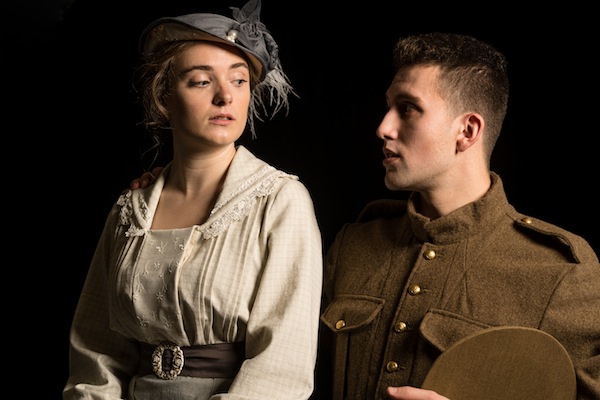
photo - Emiliano Torres and Genesis Ochoa in The Diary of Anne Frank LatinX, which will be at Chutzpah! Nov. 6-9
Emiliano Torres and Genesis Ochoa in The Diary of Anne Frank LatinX, which will be at Chutzpah! Nov. 6-9. (photo by Elvira Barjau)

Some Jewish community members were concerned about Zimmerman’s casting choice.

“Initially,” he said, “I had a few Jewish friends question my decision to cast Latinx actors in the play. For them, it was more about not wanting to tarnish the legacy of Anne Frank. But, when they saw that we were honouring her memory, they understood the power of this production. I took to heart the insightful words of a young Anne Frank from her diary – ‘Our lives are all different, and yet the same.’”

The concept of “different yet the same” is one of the reasons that Micner was interested in telling the stories of Bluma and Isaac Tischler, who have both passed away. Born in Poland, they “met in medical school in Tajikistan during the war, and went on to become renowned Vancouver doctors.”

“I have known the Tischler family since 1987, when their daughter Yael and I did What Do I Do When I’m Two? together at the JCC,” said Micner, referring to a program at the Jewish Community Centre of Greater Vancouver. “Our parents and grandparents have also known each other for many years.”

That said, Micner explored some of her gaps in understanding, through creating Holocaust Brunch.

“Growing up,” she said, “I felt there was a disconnect between ‘the Holocaust story’ I was taught, which focused on Western Europe and camps, and my own family’s story, which was about living in Eastern Europe (Poland) and surviving the war in the Soviet Union. The Tischlers’ story has those parallels as well, and it feels important to me to talk about a kind of Holocaust story that I haven’t seen told in wider culture, and that some non-Jews I know have never even heard.”

Micner is no stranger to writing plays based on people she knows.

“I have created shows in the past that are inspired by my own family,” she said. “Holocaust Brunch is partly about another family’s story, and started with the Tischlers offering me part of their family’s story to tell in a piece of theatre. I take that offer very seriously as an act of trust and a responsibility, as the creator and performer of the piece. We’ve had several conversations along the way about the central questions and themes of the piece as it has taken shape, and they have seen the show as it has evolved.”

One of the central aspects of the work is looking at trauma from a third-generation perspective.

“I am indeed part of the ‘third generation,’ and Holocaust Brunch explores what it’s like living as a descendant of Holocaust survivors, two generations removed from that history and trauma,” said Micner. “It’s certainly based on some of my experiences and, inevitably, incorporates aspects of other people’s experiences based on conversations I’ve been part of, books and articles I’ve read, and so on. There are many of us who are thinking and talking about these issues.”

In contrast, Zimmerman witnessed a lack of discussion and knowledge about the Holocaust and, specifically, The Diary of Anne Frank.

“I was quite shocked,” he said, “when the 15-year-old actor playing Anne told us that she did not know who Anne Frank was before auditioning for our production. As a Jew, I grew mad to learn that Anne’s diary is no longer required reading in the California school system. I decided then that it was vital to get as many student groups as possible to see this play, with this cast.”

And it hasn’t been only the cast and audiences who have learned something from the play.

“Although I was a good student at my temple’s Sunday school,” said Zimmerman, “being involved in this play opened my eyes to so many stories about the Holocaust that I never knew before. These important lessons were gained by visits to several museums and meeting many survivors and hearing their stories firsthand.”

He added, “As many of our survivors pass, it is important for us as artists to find creative ways to keep Anne’s story alive.”

One of the ways in which Micner creatively tells her story is with humour. Describing Holocaust Brunch as a “dark comedy,” Micner explained, “I think there’s a history of Ashkenazi Jews using comedy to look at hard things – the oppression we’ve suffered, displacement, antisemitism, poverty and so on. Holocaust Brunch is certainly engaging with that tradition,” she said. “I think there’s also a history of Ashkenazi humour being self-deprecating – as in, making fun of ourselves – and, one of the things I’ve been interested in, is looking at where that comes from and what it would mean for us not to be the butt of our own jokes. Holocaust Brunch is using comedy to look at communal trauma, and how we might be able to heal from that. The show also uses humour to explore stereotypes and assumptions that some non-Jews have about Jews. I think laughter helps us open up and look at hard places.”

For his part, Zimmerman would like audiences who come to see The Diary of Anne Frank LatinX “to feel like they literally stepped into the shoes of these characters – just like the actors have. Then we can all have this highly emotional and very visceral experience that can only be achieved communally with live theatre.”

Holocaust Brunch runs this weekend in the JCCGV’s Wosk Auditorium, Oct. 27, 1 p.m., and Oct. 28, 7 p.m. The Diary of Anne Frank LatinX, co-presented with Howard Blank of Point Blank Productions, is at the Rothstein Theatre Nov. 6, 8 p.m.; Nov. 7, 8 p.m.; Nov. 8, 1 p.m. and 8 p.m.; and Nov. 9, 2 p.m. For tickets to these and other Chutzpah! shows, visit chutzpahfestival.com.

Vital, relevant culture

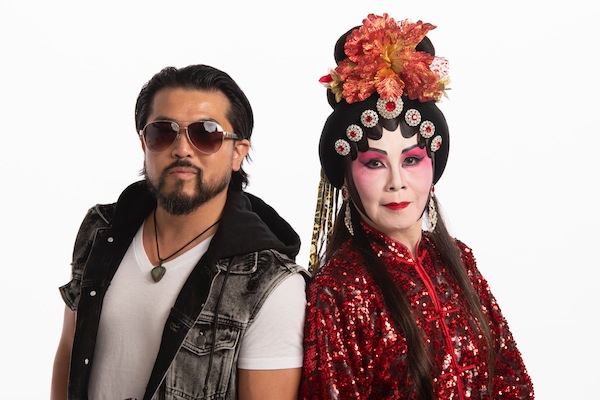
Tale of the Eastside Lantern’s Shon Wong and Rosa Cheng. (photo by David Cooper)

Among the many artists participating in this year’s Downtown Eastside Heart of the City Festival is Jewish community member Elliot Polsky. The multi-percussionist joins the Son of James Band in Tale of the Eastside Lantern, a workshop presentation of a new hybrid Chinese rock opera.

From Oct. 30 to Nov. 10, the annual Heart of the City offers 12 days of music, stories, theatre, poetry, cultural celebrations, films, dance, readings, forums, workshops, discussions, gallery exhibits, mixed media, art talks, history talks and history walks. More than 100 events are scheduled to take place at more than 40 locations throughout the Downtown Eastside. This year’s theme – “Holding the Light” – has emerged from the need of Downtown Eastside-involved artists and residents to illuminate the vitality and relevance of the Downtown Eastside community and its diverse traditions, knowledge systems, ancestral languages, cultural roots and stories.

Tale of the Eastside Lantern is one of the top festival picks: “In the streets and shops of Vancouver’s Chinatown, Jimmy wrestles with his personal demons and sets out to solve a mystery that is guarded by Chinese opera spirits of the underworld. Jimmy is led by the sounds of rock music and motivated by the oldest feeling in the world … love.” Written and composed by Shon Wong and directed by Andy Toth, the rock opera is produced by Vancouver Cantonese Opera and Son of James Band in partnership with Vancouver Moving Theatre. Performed in English and Cantonese, the workshop presentation takes place Oct. 31, 8 p.m., at CBC Studio 700. Tickets ($15) are available at the door or in advance from eastsidelantern2.eventbrite.ca.

Another top pick is Sis Ne’ Bi -Yïz: Mother Bear Speaks, written and performed by Taninli Wright (Wet’suwet’en) about her Messenger of Hope Walk – she walked 1,600 kilometres across British Columbia to give voice to First Nations children and other marginalized youth. Developed in collaboration with Laura Barron, Jason Clift, Julie McIsaac and Jessica Schacht, the play is produced by Instruments of Change. There are several performances Oct. 30-Nov. 3 at Firehall Arts Centre. For advance tickets ($20/$15), call 604-689-0926 or visit boxoffice@firehallartscentre.ca.

Written and performed by Yvonne Wallace (Lilwat) and directed by Jefferson Guzman, ūtszan (to make things better) follows the journey of a woman to reclaim her language; in the process, she uncovers indigenous knowledge, humour, strength and resilience. The play has three shows at the Firehall Oct. 31-Nov. 2, with tickets ($20/$15) available at the door and in advance.

Of special interest to the Jewish community, whose oral histories form part of Daphne Marlatt and Carole Itter’s Opening Doors: Vancouver’s East End, is the dramatization of that book, which was first published in 1979. Directed by Donna Spencer and co-produced by the Firehall and Vancouver Moving Theatre, Opening Doors has several performances Nov. 6-9 at the Firehall, with tickets $20/$15.

While there are these and other ticketed shows, most of the festival events are free to attend. For example, on Nov. 2, 11 a.m., at CRAB Park, there is a mini-landing of canoes, featuring a welcome ceremony, after which paddlers and guests journey on land to the Police Museum and the exhibition Healing Waters, an exploration of how communities heal through connecting to cultural practice. This landing, in honour of the inaugural Pulling Together canoe journey in 2001, launches a year of story gathering and history sharing in preparation for the 20th anniversary celebration of the Pulling Together Society at next year’s Heart of the City.

In Speaking in Tongues, guests Woody Morrison, David Ng, Grace Eiko Thomson and Dalannah Gail Bowen discuss mother tongues and how their interactions can give birth to hybrid languages such as Japanese Pidgin, which is unique to the West Coast of Canada. This conversation is part of Homing Pidgin, an interactive installation by Haruko Okano, and takes place on Nov. 2, 1 p.m., at Centre A (205-268 Keefer).

Meanwhile, Irreparable Harm? is by Sinister Sisters Ensemble – activists and theatre folk, young and old, First Nations and settlers, many of whom were arrested in the protests against the twinning of the Trans Mountain Pipeline. It uses videos, transcripts of the court proceedings and statements that were read in the courtroom to shine a light on the justice system. It is at Carnegie Theatre on Nov. 8, 3 p.m.

For full festival details, visit heartofthecityfestival.com.


Dancing to Beethoven

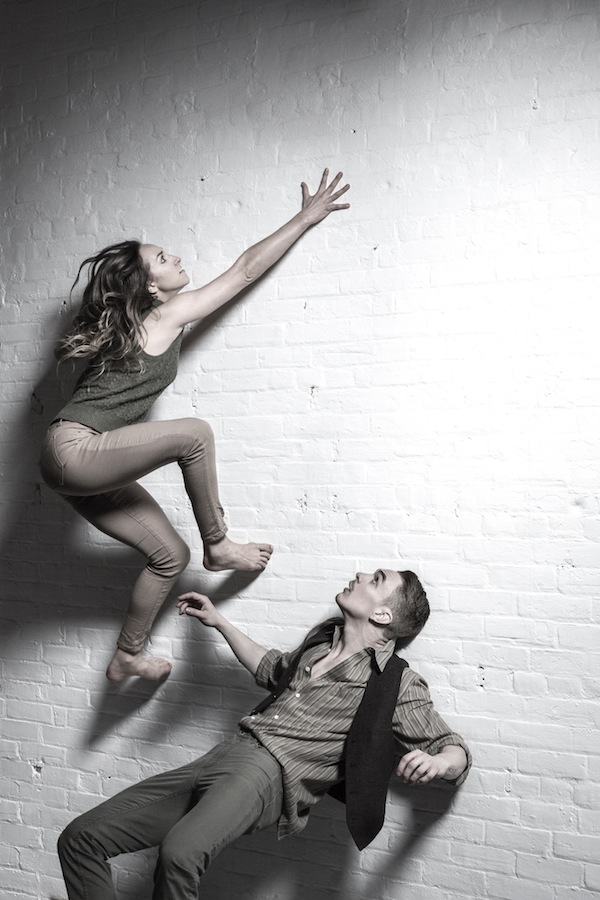
ProArteDanza’s The 9th will première in Vancouver before heading home to Toronto. (photo by Alexander Antonijevic)

Ten years after its conception, ProArteDanza’s The 9th, a full-length contemporary dance performance, will have its world première in Vancouver at the Chutzpah! Festival Oct. 26-28.

“We were originally planning to première it in Toronto for November,” Roberto Campanella, co-artistic director of ProArteDanza, told the Independent in a phone interview. “We’re opening in Toronto Nov. 6, which is a week-and-a-half after Chutzpah! And then Mary-Louise [Albert] called and said, ‘How do you feel about bringing The 9th here?’ And I said, ‘Well, it would not be a bad idea for everybody involved to have that opportunity…. We love being at Chutzpah! We’ve been before, we have a longtime relationship with Mary-Louise.” (Albert is artistic managing director of Chutzpah!)

Campanella created The 9th with ProArteDanza co-artistic director Robert Glumbek in collaboration with the dancers. Inspired by Beethoven’s Ninth Symphony and performed to the score, the show has four movements and is about 70 minutes long, with no intermission.

Each dance movement was created and mounted on its own: the first, then the third, the second and, finally, the fourth, which the company performed this past June in Trois-Rivières, Que., for the festival called Dansencore. Regarding the full-length work, Campanella said “it’s one thing to put on one movement at a time separately, and we’re realizing it’s a completely different beast because we have to also layer [each movement] with the concept of a wall or, in this case, the symbol of the Berlin Wall, so it’s taking almost a different life for me and for Robert…. And it’s only eight dancers and it’s going to be incredibly physical and athletic and intense, so we also have to distribute our dancers in a way that we don’t kill them in the first movement.”

Ten years ago, Dansencore commissioned Campanella and Glumbek to create the first movement. At the time, the festival was celebrating its 15th anniversary, as well as the establishment of Trois-Rivières, with Beethoven’s Ninth, said Campanella. “The idea was that there were different choreographers allocated for the four different movements … and we put the whole thing together probably in one day or two with the live orchestra and the live choir, so it was a mega-super-project. It all came together then.

“What we decided to do, with the permission, of course, of the festival, we said, ‘Can we present out first movement only for our company, ProArteDanza?’ We were granted permission and we presented just the movement itself as part of a mixed program the year after, or the same year, here in Toronto. Then we looked at each other, Robert and I, and said, ‘Why don’t we do a long version of it? Why don’t we continue? But let’s take our time. Why don’t we continue on the same path we’re doing, a movement at a time, we present it, we look at it and see what comes out of it?’

“And then, in 2010, I was in Berlin shooting a movie and I had a few days off,” continued Campanella. “I went to the Berlin Wall, which is essentially rubble, it’s just bricks, there isn’t much, but there are these audio-visual stations, where you can put headphones on and have a look at old footage of when they were building it; it’s pretty much the history of the wall. And there was one image that still, I would say, hit the spot, which was these two families on [opposite] sides of the wall waving at each other, probably they were related to each other … and the waving at each other was different from one side of the wall and the other. And then I thought, could it be that this [image] is actually our Ninth Symphony concept? So, I talked to Robert and I said, ‘Can we explore that and see where it goes?’ And that’s when the ball started rolling for us, but always maintaining the idea that we were not going to present the whole thing until we had all the four movements done and presented.”

The timing of The 9th’s completion comes with a few coincidences, said Campanella. Most notably, the final concert date, in Toronto, is Nov. 9 and, he said, “Nov. 9, 1989, is the actual day of the fall of the Berlin Wall,” so the show will occur exactly 30 years after the wall’s fall. He also noted that ProArteDanza’s show, which is called The 9th, ends on the ninth and that, at the 1989 celebration of the fall of the Berlin Wall, Leonard Bernstein conducted the Ninth Symphony.

For Campanella, the fall of the Berlin Wall is “about freedom, it’s about brotherhood, it’s about unity and diversity, celebrating all of that.”

In addition to the challenges of portraying these concepts, Campanella said it’s been fascinating to reimagine the movements that were created in the early years.

“We look at what we did 10 years ago and we cringe,” he said. When he and Glumbek watched videos of the piece, “you should have heard us, we were thinking, ‘Who choreographed that?’”

The pair have broken through many artistic walls since then in their respective careers, said Campanella, that they decided “this is not us anymore and so we are going to revisit it, reassess it, reevaluate what we’ve done and why.”

He pointed out that the original first movement was also created by a different cast. “There is only, I think, one [dancer] left who’s done everything. So, there are things that are born with a certain cast but there is a turnover of cast, [so] it will inevitably take a different direction naturally, as well as us being different now than 10 years ago.”

Part of what’s great about dance, he said, “is that you have the ability to remount things. A painting, once it’s done, it’s done. You’re going to hang it somewhere and you’ll look at it; it’s done, it’s over. For us, we have that ability to remount and re-look at it and say, ‘Who am I now that’s going to be in this current version of it?’ So, it’s been a very fascinating process.”

Campanella said, in creating The 9th, he and Glumbek “took our time because we really wanted to respect first and foremost the score of this magnificent piece of artwork,” referring to Beethoven’s composition.

In The 9th, more than one version of the symphony is used. Of those that were not chosen, Campanella said, “some of the versions are what we think are excruciatingly slow for us. Maybe they are amazing versions for musicians, for the experts, [but] they’re not conducive to the physical movement part of it.”

For tickets to The 9th, visit chutzpahfestival.com.

Gotta Sing! marks 25

Simone Osborne, left, Tiffany Rivera and Matthew Rossoff are just three of the alumni who will help Gotta Sing! Gotta Dance! celebrate on Nov. 10 at the Rothstein Theatre. (photos from the artists)

“I never thought that Gotta Sing! Gotta Dance! would be so popular and I certainly didn’t think that I would still be involved 25 years later. I love these kids and being involved!” Perry Ehrlich told the Independent.

Ehrlich created the musical theatre summer camp at the Jewish Community Centre of Greater Vancouver in 1995. Its first quarter-century will be celebrated at the Rothstein Theatre Nov. 10, with 3:30 p.m. and 7:30 p.m. shows, as part of this year’s Chutzpah! Festival.

“The two shows,” said Ehrlich, “feature opera sensation Simone Osborne, currently living in Germany, who was the youngest winner of the Metropolitan Opera theatre auditions; Matthew Rossoff, from New York and Toronto, who was dance captain for Jesus Christ Superstar on Broadway; Tiffany Rivera, a pop, jazz and soul singer; faculty members Advah Soudack, who just toured Canada in the hit play Glory, and Meghan Anderssen, star of Annie Get Your Gun and Thoroughly Modern Millie at Theatre Under the Stars); my daughter, Lisa Ehrlich Kesselman, winner of the PNE Star Discovery and National Youth Talent Search; Erik Ioannidis, star of Joseph and the Amazing Technicolor Dreamcoat [at Theatre Under the Stars]; vocalist Andrew Robb; singer and bassist Benjamin Millman; and, of course, my ShowStoppers troupe, who performed with Eric Church and Barry Manilow at Rogers Arena, with the legendary troupe Foreigner at Hard Rock Casino Theatre, [on] Canada Day at Canada Place, [and] singing the anthems for the Canucks and at the PNE.

“Everyone – and I mean everyone, including the kids who will narrate the shows – participated in Gotta Sing! Gotta Dance! in the past. And Wendy Bross Stuart will be on stage with them!”

Since Gotta Sing! Gotta Dance! began, Erhlich said “four things have changed.

“One, the kids are now older. In year one, we accepted 6-year-olds. Now, the youngest are 9 or 10 and over 70% are in high school.

“Two, the curriculum for Gotta Sing! Gotta Dance! has become more intensive each year; the levels of singing, dancing and acting is at an all-time high.

“Three, there has been a great social dynamic among the kids that has increased over the years. I hear over and over again that kids have met lifelong friends at Gotta Sing! Gotta Dance!

“And, four, I am thrilled by the number of non-Jewish kids who participate in the program and love being at the JCC. In early years, I had to explain security and what it means to be Jewish. No more.”

For tickets to the 25th anniversary tribute and other Chutzpah! shows, visit chutzpahfestival.com.

Chutzpah! hosts Bernhard

Sandra Bernhard is at the Vogue on Halloween night, as part of the Chutzpah! Festival. (photo by Brian Ziegler)

“When I was a little kid, I had three older brothers and I got a lot of attention for being cute and funny, and I’ve always had an ability to comment on situations as they unfolded in front of me,” said veteran performer Sandra Bernhard in a phone interview with the Jewish Independent. “I think that’s what kept it going all these years – I find it entirely hilarious when you’re in the middle of something and you’re able to pull it apart and bring the most humour out of it, or the most outrage, and that’s always been the most interesting part of what I do.”

Bernhard is bringing her critically acclaimed show Quick Sand to the Vogue Theatre on Oct. 31 as part of the Chutzpah! Festival, which runs Oct. 24-Nov. 24. The comedian, actor, author and radio host is known for her outspokenness. She said it’s second nature for her to say what’s on her mind. “By being funny and being a character, which I’ve always been,” she said, “that gave me the access to say things that other people wouldn’t say necessarily, or that wouldn’t be heard.”

Bernhard’s daily radio show, Sandyland, which is on SiriusXM’s Radio Andy channel (created by Andy Cohen), earned her a Gracie Award, an honour given by the Alliance for Women in Media to “recognize exemplary programming created by women, for women and about women in all facets of media and entertainment.” Bernhard also stars as Nurse Judy in the award-winning, boundary-pushing show Pose on FX Networks, about “the legends, icons and ferocious house mothers of New York’s underground ball culture, a movement that first gained notice in the 1980s.”

Bernhard has countless film and television credits, has created and performed several one-woman shows, recorded a few albums and performed with or opened for many artists. She also has written three books.

While she knew from a young age that she wanted to be a performer, it wasn’t until her late teens that the goal started to become a reality.

“I moved to L.A. in the mid-’70s, when I was 18, 19,” she said. “I became a manicurist in Beverly Hills, so I had a day gig, but I didn’t really know how I was going to jump into the waters, because I also wanted to be a singer. I really wanted to be an entertainer, the whole package.

“And then I met up with a group of friends and they thought I was hysterical and then there was this woman I met who, I did her nails and she was a cabaret singer and she would go to the open mic nights and she said, ‘You’re really funny. I know you want to sing, but put your material together and I’ll take you to these open mic nights.’ She took me to one and then I met my friend Paul Mooney and my friend Lotus Weinstock the first night I got up and they took me under their wings. And that’s how I started – I literally fell into it, because I was a natural, and then I started doing the hard work, which was getting up night after night after night to do my act, and I honed my act and the material and then, eventually, I got good at it.”

One of the reasons she remains popular and her material fresh is because she keeps working at it, “finding different ways into it. For me,” she said, “the most important thing is being as authentic as I can, year to year, day to day, because you do change, you evolve as a person, you want to peel the layers of the onion away and get deeper into your core as an artist, as a performer, and I think that’s what continues to inspire you and make you a better performer.”

Describing her style as “edgy, funny, strong, no nonsense, but funny nonsense,” she said, “I don’t feel like I have to really temper anything because you shed your skin as you go along, and certain things just don’t work anymore.”

Born in Flint, Mich., and raised in Scottsdale, Ariz., Bernhard was bat mitzvahed, but, she said, “My father, I don’t think he related to being Jewish much at all, except maybe culturally, and my grandparents – my grandfather went to shul every day but I think that was a little bit later in life. When he came over here from Russia, everybody was busy trying to make a living. And, of course, people ended up in some small towns here and there, and you didn’t always have time for your religion and your traditions.”

Nonetheless, Bernhard said, “I find a certain amount of meditative escape just going to Shabbat and hearing the music and the songs I grew up with, and I like the community. Whether it’s the High Holidays or staying for kiddush and eating a bowl of cholent, there’s something very visceral about it. It connects me with who I was as a kid and my grandparents…. There’s all that emotion, it’s vivid and visceral and it’s just a nice place to calm down and go into and have a little bit of a break from the day to day.”

Saying that she’s “thrilled to be coming back to Vancouver,” Bernhard said the Oct. 31 performance will be “a fun night.” Accompanied by the Sandyland Squad Band, she will combine music, comedy and social commentary in Quick Sand, which, she said, offers “endless amounts of room” for her to go off script.

“I’m always prepared to jump off if something happens or inspires me or the thought process, my mind, and that’s the way it’s always been for me,” she said. “But I also have very set pieces that you want to be able to fall back on and have that continuity to the show, so that you’re not standing up there just talking about a bunch of silliness. I want people to walk away having been entertained.”

For tickets to Bernhard and other Chutzpah! shows, visit chutzpahfestival.com.

A frantically funny farce

Cindy Hirschberg-Schon, left, as Maria Merelli and Tracy Labrosse as Tatiana Racón in A Comedy of Tenors, at Metro Theatre Oct. 4-19. (photo by Sophie Gardner)

Tracy LabrosseTracy Labrosse“What could possibly be better than escaping life with a frantically funny farce? A Comedy of Tenors has slamming doors, mistaken identities, ridiculous dialects and a very suggestive tongue prop. What else do you need?” said Tracy Labrosse about the upcoming production at Metro Theatre.

Set in 1936, A Comedy of Tenors centres on Henry Saunders’ efforts to put on the greatest concert that Paris has ever seen – The Three Tenors – but he will only succeed if he “can keep an amorous Italian superstar and his hot-blooded wife from causing runaway chaos.” Written by Ken Ludwig, the Metro production, which runs Oct. 4-19, is directed by Kayt Roth.

Labrosse, who works at Vancouver Talmud Torah, plays Tatiana Racón.

“I love to be challenged in each production I’m in [and] Racón has definitely been a fun challenge for me,” Labrosse told the Independent. “I tend to get the ‘girl next door’ roles, so playing a sexy Russian opera singer has certainly allowed me to tackle a type that I don’t normally get the chance to play. She’s bold, she’s vivacious, and she’s a troublemaker.”

Jewish community member Cindy Hirschberg-Schon takes on the role of Maria Merelli, the feisty wife of tenor Tito (played by Carlos Vela-Martinez).

“I tried out for both Maria and for Racón,” said Hirschberg-Schon. “I thought I’d keep the options open. But I have a lot more in common with Maria.”

She said, “Maria is her own woman – strong and independent – but she is also very loving. Maria has a lot of me in her. She and Tito have been married for 25 years and I have been married for 27 years. From their fierce love to their fierce fighting, I can relate.”

In addition to her role, Hirschberg-Schon also helped on the costume front.

“I work in fashion as a technical designer, so I know about apparel,” she explained. “I did costumes once before but, being also an actor, it would be a lot to take on. But we needed help so I stepped in…. I measured the full cast, which for me is not a big deal. I helped out when we needed a few extra eyes to find costumes in both the Metro costume closet and also the kindness of Vagabond Players [and their] closet.”

Hirschberg-Schon studied acting before changing career directions.

“I went to college for acting in Toronto for two years,” she said, “but then decided I did not want to be a waitress the rest of my life and went to fashion school. I then concentrated on career, marriage and motherhood. After 20 years, I finally decided it was time to get back to the stage, with the support of my husband and family. So, I guess I have been acting for seven years plus a few.”

“I’ve been in love with theatre ever since I was given my first speaking role in a school play at the age of 9,” said Labrosse. “I went to theatre school after high school, and have been involved in theatre consistently ever since. It’s a lifelong love affair for me.”

Labrosse said she didn’t audition for any specific role in A Comedy of Tenors. “For me,” she said, “if the story is something I’m drawn to – something that I find intriguing – then I want to be a part of it. After that, it’s up to the director. In this case, Kayt saw me as Racón, and I’m so glad she did. It’s such a fun role to play.”

Both Labrosse and Hirschberg-Schon have been in other Metro productions.

“I’ve had the pleasure of acting, producing and directing at the Metro Theatre. A Comedy of Tenors is my 10th production there,” said Labrosse. “There are so many wonderful community theatre organizations in the Lower Mainland and I think I’ve worked with most of them over the years. Some of my favourite previous productions include The 39 Steps, Steel Magnolias, Moon Over Buffalo (also a Ken Ludwig show) and Wait Until Dark.”

Among Hirschberg-Schon’s favourite roles are Evil Stepmother in the award-winning Cinderella panto with Metro Theatre and Lady Edith in Metro’s Robin Hood and Marian panto; Penny in Vagabond Players’ You Can’t Take it With You; Olga in Royal Canadian Theatre Company’s Bedfull of Foreigners; and Yenta in a Toronto production of Fiddler on the Roof.

“Growing up,” said Hirschberg-Schon, “I watched my mother, Marion Hirschberg, on the stage. She was very involved in community theatre and is still on the stage now, at 80. She taught me so much and I am in awe to see her perform. I have theatre in my blood and stage is home to me. But the biggest thrill is to share it with an audience – because theatre does not become alive until there is an audience to share it with.”

To be a part of that audience, tickets can be purchased by leaving a message at the Metro Theatre box office, 604-266-7191, or visiting tickets.metrotheatre.com. Note that A Comedy of Tenors “contains strong language and sexual references.”

It’s Bobby’s birthday

Jonathan Winsby plays birthday boy Robert in Company, which opens Oct. 11. (photo by Nicol Spinola)

For his 35th birthday, Robert (Bobby), a bachelor, has invited a group of his married friends over to celebrate. And, married or not, you can be a part of Bobby’s party by attending Raincity Theatre’s production of Company, which runs Oct. 11-26 at “Bobby’s Apartment,” 2531 Ontario St.

The immersive production of Stephen Sondheim’s Company is being produced by the same creative team that was behind last fall’s award-winning immersive production of Sweeney Todd: The Demon Barber of Fleet Street. Co-producers are Chris Adams (director), Nicol Spinola (choreographer) and Jewish community member Kat Palmer. Also part of the Company creative team was researcher Michael Groberman. And there are other Jewish connections.

“It is only notated in the script that Paul, Amy’s fiancé, is Jewish,” Adams told the Independent. “However, it is mentioned that half of Amy’s friends are Jewish, meaning a few other characters probably are, too – most notably, Larry, played by Jewish community member Warren Kimmel.”

Larry is Joanne’s third husband. Joanne has known Robert for years.

“Larry is extremely wealthy and successful,” said Kimmel. “He is probably the oldest character in the play. His parents split when he was a child but he is fascinated by his wife and very happily married.”

Just now old enough to play the character, Kimmel quipped, “I intend to make him look younger than his real age.”

Company debuted in 1970.

“This piece is all about commitment and partnership and marriage,” said Kimmel. “It was written not long after the pill was invented, which, along with other cultural changes, threw into question traditional ideas around marriage, monogamy and the way men and women in society commit to each other.”

He added, “As is usually the case, Sondheim and his collaborators have created perhaps the most incisive examination of these issues and so they resonate even today. Every song is so specific and true to life that everyone can identify and, if you haven’t had these exact thoughts yourself, you will definitely have a friend or family member who is in just such a situation. Add to that the incredible music and one hell of a cast and what you have from Raincity is another ‘must see’ piece of theatre.”

As for Raincity’s choice to produce Company, Adams said, “Oftentimes, as it goes with equity collectives, it is a group of people who find a great show and want to see it produced. In this case, not only did I know the show was great, I knew we had Jonathan Winsby to play Bobby. Having worked with Jonathan on last year’s Sweeney Todd, I knew he was more than up for the challenge of this role and I knew it was on his bucket list to play. Sondheim is popular with actor/singers because it is difficult. People want to sing it and audiences seem to want to hear it. We are blessed as well that Company comes with such a strong book and brilliant songs.”

As with Sweeney Todd, the audience will be in the thick of things, specifically, in the midst of Bobby’s birthday party. “We have a bar set up to sell drinks, you can purchase birthday cake or come early and play a song on the piano – everything a fun 1969 birthday party should have,” said Adams. “The audience will grab their purchased seating – you can buy a pillow/floor seat, a couch, a chair or a bar stool – and cozy up to enjoy the show. While there is, obviously, no audience participation, they will feel very much included in the festivities and witness this brilliant journey of a man struggling through his 35th year.”

There is limited seating at the party, however, and Adams said the run is already more than 80% sold out. “If anyone is wanting tickets,” he said, “I’d suggest they don’t wait.”

For tickets, visit raincitytheatre.com.

Yiddish Fiddler draws crowds

Steven Skybell and Jennifer Babiak in the Yiddish version of Fiddler on the Roof, which is slated to run through January 2020 in New York City. (photo by Matthew Murphy)

It’s no wonder the current Fiddler on the Roof on stage in New York City has been extended several times since it debuted Off-Broadway last summer. The immense draw isn’t just the splendid choreography, the well-known beloved music, the compelling, stellar cast, the emotional dialogue – it’s the authenticity that strikes a chord. Based on a collection of vignettes by Yiddish literary icon Sholem Aleichem, this production of Fiddler is entirely in Yiddish, the guttural tongue that the people on whom the characters are based would have used in real life.

This is the first time in the United States that Fiddler is being staged in Yiddish. Directed by the venerable actor Joel Grey, it opened at the Lower Manhattan’s Museum of Jewish Heritage in July 2018 and transferred to the more commercial Stage 42 near Times Square in February 2019. It’s expected to run through January 2020. It has both English and Russian supertitles.

“When Fiddler on the Roof in Yiddish first premièred last summer for a limited eight-week run under Joel’s vision, it was a show that moved people to tears and I knew it had to be seen by as many people as possible,” producer Hal Luftig told the Independent.

Set in 1905 in a Jewish shtetl in the town of Anatevka, on the outskirts of czarist Russia, Fiddler is centred around Tevye (played by Steven Skybell). He’s a poor dairyman with a wife and five daughters. Three of his daughters are of marrying age and the expectations are a matchmaker will find them a husband.

But, despite tradition, the strong-willed girls have their own idea of who they want to marry – and it’s all for love. Their marital choices give Tevye plenty of tsouris (aggravation). Eldest daughter Tsatyl (Rachel Zatcoff) marries a poor tailor in need of a sewing machine. Second daughter Hodl (Stephanie Lynne Mason) falls in love with a penniless Bolshevik revolutionary who winds up in Siberia. And though Tevye convinces his wife, Golde (Jennifer Babiak), that it’s OK to break from the matchmaker tradition, it is too much even for him when his third daughter, Khave (Rosie Jo Neddy), falls in love with a gentile – he banishes her from the family, declaring her dead.

Meanwhile, the political climate is very antisemitic. There are pogroms, and the czar is expelling Jews from the villages. At the end of the musical, the Jews of Anatevka are notified that they have three days to leave the village or they will be forced out by the government.

The original Broadway production opened in 1964 and, in 1965, won nine Tony Awards including best musical, best score, book, direction and choreography. Zero Mostel was the original Tevye. The music was by Jerry Bock, lyrics by Sheldon Harnick and book by Joseph Stein. The original New York stage production was directed and choreographed by Jerome Robbins. In 1971, there was a critically acclaimed film adaptation that garnered three Academy Awards, including best music.

The Yiddish translation was originally performed in Israel in 1965. It was crafted by Shraga Friedman, an Israeli actor who was born in Warsaw, escaped the Nazis in 1941 and settled in Tel Aviv.

In the New York production, the set design, credited to Beowulf Boritt, is simple. The word Torah (in Hebrew) is painted across the main banner and is torn apart and sewn back together as a symbol of what the Jewish people have endured.

From the very start, the audience gets drawn in when the cast forms a circle and sings “Traditsye” (“Tradition”). Another familiar tune – “Shadkhnte Shadkhnte” (“Matchmaker Matchmaker”) has the audience moving in their seats. While most of the music and lyrics are basically the same, there are some changes. “If I Were a Rich Man” becomes “Ven Ikh Bin a Rothshild” (“If I Were a Rothschild”).

While most of the cast is Jewish, some are not, and very few of the actors actually knew Yiddish before the show. Jackie Hoffman, who brilliantly plays Yente the Matchmaker, grew up with some Yiddish in her home but was far from fluent in it.

photo - Jackie Hoffman plays Yente the Matchmaker
Jackie Hoffman plays Yente the Matchmaker. (photo by Matthew Murphy)

“I didn’t learn the language for my role, I learned my lines,” admitted Hoffman, who grew up on Long Island, N.Y., in an Orthodox home and attended a yeshivah for nine years. “It was difficult, but when I’m hungry to learn a role, that helps a lot. We have great coaches who are relentless. I did hear Yiddish in the house growing up, my mom and grandmother conversed, and I’m now grateful for every word I’ve learned.”

Hoffman and the cast were taught the language phonetically. Many had seen Fiddler performed in English in various theatrical productions, as well as the film. “It feels bashert this is the first production of Fiddler that I have ever been in and it is clearly the most meaningful,” said Hoffman, who has been in dozens of television shows and films, including Birdman, Garden State and Legally Blonde 2. “It merges the Jewish part of my life with the career part,” she told the Independent.

It is hard to leave the theatre without thinking of the similarities between Tevye’s Anatevka and many parts of the world today, including the United States. Jewish traditions are often challenged and antisemitism is once again on the rise.

“I don’t think that antisemitism ever went away, but it is a very scary time now,” said Hoffman. “It is mind-blowing how current the piece feels in that way.”

At the end of each performance, it’s clear by the enthusiastic applause and the long standing ovations, that the audience feels they have experienced something great. “They seem blown away by it,” said Hoffman. “They are impressed that we’ve pulled off a three-hour musical in Yiddish and they’re staggered by how pure and emotional an experience it is.”

At Stage 42 on 422 West 42nd St. in Manhattan, Fiddler on the Roof in Yiddish runs just under three hours with one intermission. For tickets, call 212-239-6200 or visit fiddlernyc.com.

Alice Burdick Schweiger is a New York City-based freelance writer who has written for many national magazines, including Good Housekeeping, Family Circle, Woman’s Day and The Grand Magazine. She specializes in writing about Broadway, entertainment, travel and health, and covers Broadway for the Jewish News. She is co-author of the 2004 book Secrets of the Sexually Satisfied Woman, with Jennifer Berman and Laura Berman.

Glimpse of 19th festival

Sandra Bernhard performs at the Chutzpah! Festival Oct. 31. (photo by J. Graham)

The Chutzpah! Festival returns during a new late-fall time period – from Oct. 24 to Nov. 24 – with performances at the Rothstein Theatre, Vogue Theatre, Rickshaw Theatre and the WISE Hall. Here are some of this year’s offerings.

Opening night, Oct. 24: Multi-award-winning, London-based songwriter, broadcaster and musical storyteller Daniel Cainer performs the Canadian première of his internationally acclaimed Gefilte Fish and Chips. Based on personal stories of what it’s like to be Jewish – and British – then and now, it includes travelers’ tales, feuding tailors, a naughty rabbi, family fables, and foibles. All of the human condition is here, lovingly and intelligently depicted in a remarkable collection of stories in song.

photo - Sandra Bernhard
Sandra Bernhard (photo by J. Graham)

Quick Sand, Oct. 31: Sandra Bernhard is always three steps ahead of the crowd. She has to be. She’s “quick sand.” In these fast-paced times, a lady can’t stop moving. You never know what you might encounter next in this fun house world we’re living in. So, performing with a three-piece band, Bernhard takes control, bringing a mélange of musings, music and whimsy – “never boring, j’adoring” is her motto, covering the waterfront of the outrageous, quotidian and glamorous.

The Trombonik Returns to New Chelm, Nov. 1: Taking inspiration from the traditional comic tales of Jewish folklore about Chelm, songwriter Geoff Berner and writer, performer and satirist T.J. Dawe, along with friends Toby Berner, Tallulah Winkelman and Jack Garten, present a klezmer musical set in Depression-era Saskatchewan.

A wandering con artist posing as a rabbi becomes entangled in the Prohibition-era whiskey trade. This production combines the social critique of Berner’s decades of activist songcraft with the comedic zaniness of Mel Brooks. Following this performance is a celebratory full-on drinking, dancing Klezmer Punk performance with Berner and his co-conspirators, along with special guest and renowned clarinetist Michael Winograd, to mark the release of Berner’s new CD, Grand Hotel Cosmopolis.

The Diary of Anne Frank LatinX, Nov. 6-9: Everyone knows the story of Anne Frank, the Jewish teenager hidden away while Nazis hunted down Jews during the Holocaust. One American-Jewish director, Stan Zimmerman, adds a modern-day twist to the production, which will see its Canadian première at Chutzpah! Zimmerman said, “When I learned there are over a dozen Safe Houses in the L.A. area hiding Latinx families from ICE [Immigration and Customs Enforcement], it got me wondering – How do these families survive with so little money and needing to remain in the shadows? How do they not lose hope? What are their lives like on a day-to-day basis? Do they see the parallels to Anne’s story?”

DAI (enough), Nov. 12-13: Iris Bahr is an award-winning writer, actor, director, producer and host of the hit podcast X-RAE and she is bringing her critically acclaimed, award-winning solo show DAI (enough) to Vancouver.

AvevA, Nov. 14: Chutzpah! presents the West Coast première of Ethiopian-Israeli singer and songwriter Aveva Dese. A rising star in the Israeli music scene, AvevA’s music fuses traditional Ethiopian sounds and groove with her soul-pop songs; she sings powerfully in both English and Amharic about society, freedom and love. Opening for AvevA is B.C.-based Leila Neverland with Mountain Sound.

Closing night, Nov. 24: Celebrates a week-long inclusion project of sharing, exploring and creating through art. Internationally renowned disability and mental health advocate and stand-up comedian Pamela Schuller and Brooklyn-based professional dancers and choreographers Troy Ogilvie and Rebecca Margolick will perform stand-up and solo dance work, respectively, in a shared evening of dance and comedy. The show will also present Ogilvie and Margolick’s new movement dance work created, directed and performed with members and guests of the inclusion community of the Jewish Community Centre of Greater Vancouver.

In addition to these and many other shows, the Chutzpah! Festival will pay tribute to the JCCGV and celebrate the 25th anniversary of its long-standing and renowned musical theatre summer camp created by Perry Ehrlich – Gotta Sing! Gotta Dance!; present a Shticks & Giggles comedy night with local comedians Ivan Decker, John Cullen, Lisa Person, Yisrael Shurack and others; and host multiple workshops as well as creation residencies for artists in dance and theatre in urban and rural B.C. settings.

Festival tickets range from $24 to $60 and are available at chutzpahfestival.com or 604-257-5145.

Premières & audience faves

Artists of Ballet BC in a previous production of Bill. (photo by Cindi Wicklund)

Ballet BC’s 2019/20 season marks its 34th anniversary year, as the company continues to celebrate life as movement. The new season features a North American première, a Ballet BC première and the return of five renowned choreographers.

Reveling in the beauty of our humanity, the season opens with Program 1, Oct. 31-Nov. 2. It features the première of BUSK by Canadian choreographer Aszure Barton and B.R.I.S.A. by Johan Inger. Inspired by the world of busking and set to an atmospheric score, Barton’s BUSK showcases her versatile and poignant choreography. Inger’s B.R.I.S.A., a probing and liberating piece exploring themes of awakening and change, returns to the stage by popular demand.

In Program 2, March 4-7, the company revisits the pleasure, pain and politics of young love with Romeo + Juliet by Medhi Walerski. In response to unprecedented demand and soldout performances for 2018’s world première of Romeo + Juliet in Vancouver, Ballet BC returns to this iconic story set to Sergei Prokofiev’s score. Crafted by Walerski, an original voice in international dance, it is an innovative and contemporary retelling of the full-length classic.

The season closes May 7-9 with the return of two of the most influential artists in international dance today, both of whom are from Israel. Ballet BC will be the first North American company to perform Hora by Ohad Naharin, following the success of the audience favourite Minus 16 in previous seaons. Program 3’s dynamic lineup features the much-anticipated return of Bill by Sharon Eyal and Gai Behar.

For the holidays in December, Ballet BC presents Alberta Ballet’s retelling of holiday classic The Nutcracker. With choreography by Edmund Stripe, sets and costumes designed by Emmy Award-winning designer Zack Brown, and Tchaikovsky’s musical score played live by the Vancouver Symphony Orchestra, this extravagant production is set in turn-of-the-century Imperial Russia. Reflecting an era noted for its opulent grandeur, this show, which runs Dec. 28-30, displays more than a million dollars in sets and costumes.

“In 2019/20, we are excited to continue a dialogue about dance and its power to transform and connect us in ways that echo across time, place and culture. Today, more than ever, we need channels of expression that examine society and our place in it,” said Ballet BC artistic director Emily Molnar. “Dance can move people to feel and interpret life in new and meaningful ways. This season we are eager to delve deeper into a dance with each of you.”

All performances are at the Queen Elizabeth Theatre. Tickets and more information can be found at balletbc.com.