Skip to content
  • Home
  • Subscribe / donate
  • Events calendar
  • Business Directory
  • FAQ
  • News
    • Local
    • National
    • Israel
    • World
    • עניין בחדשות
      A roundup of news in Canada and further afield, in Hebrew.
  • Opinion
    • From the JI
    • Op-Ed
  • Arts & Culture
    • Performing Arts
    • Music
    • Books
    • Visual Arts
    • TV & Film
  • Life
    • Celebrating the Holidays
    • Travel
    • The Daily Snooze
      Cartoons by Jacob Samuel
    • Mystery Photo
      Help the JI and JMABC fill in the gaps in our archives.
  • Community Links
    • Organizations, Etc.
    • Other News Sources & Blogs
  • JI Chai Celebration
  • JI@88! video

Recent Posts

  • Legal help for students
  • Revisiting myth of Lilith
  • Wrong person rebuked
  • Canada’s mixed messages
  • Questions for museum
  • Symposium on antizionism
  • Making soccer political
  • CJPAC lauds Pulver’s impact
  • City recognizes Vrba’s legacy  
  • Organ donation saves lives
  • Theodore’s March premiere
  • A healing Shabbaton
  • Supplying healthy food
  • A chime of metal tags
  • Yellowknife seder a first
  • Ishai energizes, unifies
  • A Lag b’Omer to remember
  • Expanding the healing
  • Hannah Senesh – a unique hero
  • Community milestones … May 2026
  • Sharing her testimony
  • Fall fight takes leap forward
  • The balancing of rights
  • Multiple Tony n’ Tina roles
  • Stories of trauma, resilience
  • Celebrate our culture
  • A responsibility to help
  • What wellness means at JCC
  • Together in mourning
  • Downhill after Trump?
  • Birth control even easier now
  • Eco-Sisters mentorship
  • Unexpected discoveries
  • Study’s results hopeful
  • Bad behaviour affects us all
  • Thankful for the police

Archives

Follow @JewishIndie
image - The CJN - Visit Us Banner - 300x600 - 101625

Month: January 2022

Studying social sense

Studying social sense

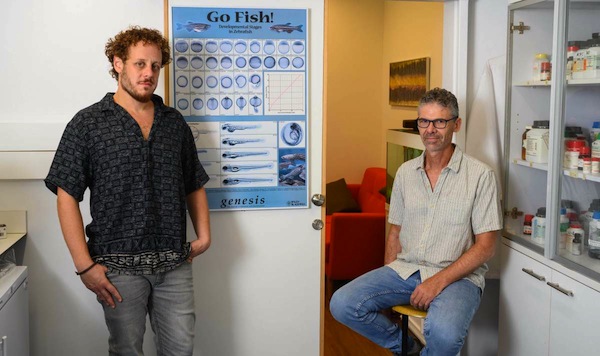
Michael Gliksberg, left, and Prof. Gil Levkowitz are among the researchers who have discovered that oxytocin in a developing zebrafish brain determines later social behaviour. (photo from Weizmann Institute)

Whenever we decide to throw a party, invite in-laws to dinner or embark on a cruise, we are driven by the most basic component of social behaviour: the desire to hang out with other humans. Considering that the drive to form groups with members of one’s own species has been conserved throughout evolution, it’s evident that social behaviour is governed by genes, at least to some degree. But our parents and teachers help us hone our social graces, so teasing apart the effects of nature and nurture on this behaviour is hard, if not impossible. By studying zebrafish, Weizmann Institute of Science researchers, in collaboration with scientists in Portugal, have managed to solve part of the riddle of how social behaviour is hardwired into the developing brain.

Zebrafish are perfect for studying the inborn basis of behaviour because they receive zero nurturing from parents. “Some fish species take care of their young, but not zebrafish,” explained Prof. Gil Levkowitz of the Weizmann Institute’s molecular cell biology and molecular neuroscience departments, who headed the research team together with Prof. Rui F. Oliveira of Instituto Gulbenkian de Ciência in Portugal. “The female zebrafish spawns several hundred eggs, which are fertilized by sperm released into the water by the male. She does provide her offspring with a ‘lunchbox’ – a protein sac, or yolk, that makes up part of the egg – but, otherwise, her message to her children is: manage on your own.”

At about four weeks of age, the centimetre-long juvenile fish, just out of the larval stage, begin to socialize. Though not as exquisitely synchronized as the schools of moonfish in the movie Finding Nemo, they do exhibit a strong tendency to swim together as a group, termed a shoal. Much like humans, they have an incentive to seek company; in their case, the group provides them with advantages in searching for food, overcoming currents, avoiding predators and finding mates. The shoaling behaviour of zebrafish requires sophisticated processing of visual and social cues, very similar to that which takes place in the brains of socializing humans. In particular, the zebrafish must be able to identify other fish as belonging to their own, “friendly” – as opposed to different or, worse yet, predatory – species.

To learn how the social behaviour of zebrafish develops, the researchers focused on the hormone oxytocin, one of the most important neurochemicals known to enhance social interactions, including bonding. Postdoctoral fellow Dr. Ana Rita Nunes and doctoral student Michael Gliksberg created a system for exploring the effects of oxytocin on the developing brains of zebrafish larvae. They produced transgenic larvae whose oxytocin-making neurons harboured a bacterial gene encoding fatal sensitivity to antibiotics. The researchers could then eliminate these neurons from the brains of the larvae at different stages of their development by adding antibiotics to the water, and they later observed the zebrafish behaviour as they became adults.

The scientists discovered that the larvae whose brains lacked oxytocin early on – specifically, in the first two weeks of life – grew into adult fish with an impaired capacity for social interaction, namely, swimming in a shoal. Although their brains regenerated the oxytocin neurons later in life, this capacity was not restored. This meant that, for adults to be capable of social behaviour, their brains had to be organized by oxytocin in a certain manner during a critical time window of brain development in which the social traits are established.

The researchers further discovered the mechanisms by which oxytocin primes the growing brain for socializing. They showed that oxytocin-producing neurons were critical to the birth of another type of neuron, one that releases the neurotransmitter dopamine, which is known to regulate feelings of reward and motivation. Zebrafish whose brains had not been exposed to oxytocin during the first two weeks of life had reduced numbers of dopamine-making neurons, as well as a reduced number of connections to these neurons, in two distinct brain areas.

One of these areas was responsible for processing visual stimuli, apparently of the kind essential for recognizing potential swimming partners. An analogous area in the brains of mammals, including humans, is involved in processing visual cues in social situations. It controls eye movements that scan, for example, different elements of the face in a particular order to decipher facial expressions. This pattern is often absent in people with autism, suggesting that their brains respond to social-based visual cues differently.

The other dopamine-deficient brain area in the zebrafish was analogous to a major reward centre in the mammalian brain, which is involved in the positive reinforcement of social interactions.

A lack of oxytocin in the critical early developmental period also disrupted a system of neuronal connections known as the social decision-making network – a group of brain areas that work together to process social information. In fish whose brains had developed without oxytocin, the synchronization patterns of neuronal activities among these centres were completely different from those of regular fish.

Nunes summarized: “Oxytocin organizes the developing brain in a way that’s essential for responding to social situations.”

– Courtesy Weizmann Institute
Format ImagePosted on January 14, 2022January 13, 2022Author Weizmann InstituteCategories IsraelTags Ana Rita Nunes, Gil Levkowitz, health, Michael Gliksberg, oxytocin, research, science, social behaviour, Weizmann Institute, zebrafish
mRNA & cancer drugs

mRNA & cancer drugs

Prof. Etta Livneh (photo by Shay Shmueli/BGU)

Most everyone on the planet has now heard of mRNA, thanks to the vaccines against COVID-19 from Pfizer and Moderna, which are based on messenger RNA. But, before mRNA was used to address COVID, research was conducted into how it could fight cancer. Now, researchers at Ben-Gurion University of the Negev have discovered a key connection between mRNA, peptide proteins and tumour progression.

Messenger RNA codes for different proteins, each with a unique function. There are both “long” and “short” peptides. Until now, scientists were not sure if short peptides had any biological function.

Prof. Etta Livneh of BGU’s Shraga Segal Department of Immunology, Microbiology and Genetics has shown that single short peptides in fact have a very important role – as a kinase inhibitor that can slow tumour growth and invasion, cancer cell survival and metastasis.

Proteins (and protein kinases in particular) propagate signals that carry instructions to the cells and dictate cell fate. There are more than 500 different kinases in the human body.

With cancer, a kinase erroneously tells the cells to divide and reproduce in a rapid and uncontrollable manner. But the flipside is also true: if a kinase can be inhibited, it should block the proliferation of cancer cells.

And that’s “just the tip of the iceberg,” said Livneh, whose discovery has been a decade in the making. “Now that we know that at least some peptides have a biological function, we can begin to discover the roles of many more.”

Kinase inhibitors are already one of the hottest areas of cancer research, in some cases replacing chemotherapy. Livneh’s research will allow scientists to better understand how to control this cancer-fighting technology.

The research was supported by a grant from the Israel Science Foundation and published in PNAS (Proceedings of the National Academy of Sciences of the United States of America).

Israel21c is a nonprofit educational foundation with a mission to focus media and public attention on the 21st-century Israel that exists beyond the conflict. For more, or to donate, visit israel21c.org.

Format ImagePosted on January 14, 2022January 13, 2022Author Brian Blum ISRAEL21CCategories IsraelTags Ben-Gurion University, BGU, cancer, Etta Livneh, health, kinase, mRNA, research, science
בבית החולים בשתיים לפנות בוקר

בבית החולים בשתיים לפנות בוקר

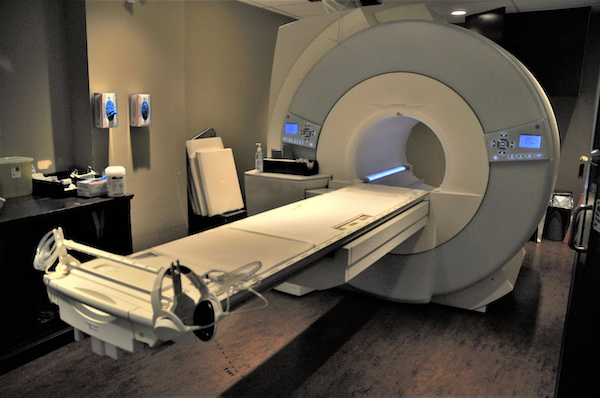
 הרופאה המומחה החליטה שעלי לעשות בדיקת אם. אר. איי. לאזור הצוואר שלי לאור מוגבלות מסוימת שאני חש בו. בדיקת הסי. טי. שעשיתי בבית החולים סנט פול לא הייתה מספיק טובה מבחינתה, והיא התעקשה על בדיקת אם. אר. איי. שהיא הרבה יותר מקיפה. הרופאה הזכירה לי, בביקור במרפאתה בסוף חודש נובמבר, כי התור לאם. אר. איי. הוא ארוך מאוד, ולכן כדאי שארשם לכל בית החולים שעושים אותה באזור ונקובר. אני סירבתי בכל תוקף ואמרתי לה שאני מוכן לעשות את הבדיקה רק בשני בתי החולים המרכזיים של ונקובר: סנט פול וונקובר ג’נרל – כיוון שלהם יש את ציוד הטוב ביותר

המזכירות הרפואית במרפאה בה עובדת הרופאה רשמה אותי לבדיקה וידעתי שיתכן ואאלץ להמתין חודשים ארוכים ואולי אף יותר מכך לבדיקה המיוחלת. לכן מספר ימים לאחר הפגישה עם הרופאה המומחית התקשרתי למזכירות וביקשתי מהם לרשום אותי גם לתור של ביטולים באחד משני בתי החולים בעיר. מניסיוני לאחר שבע עשרה שנים של מגורים בוונקובר, אני יודע שברוב המקרים זה עובד מצוין. מטופל נאלץ לבטל תור לבדיקה מסוימת או אפילו לניתוח, ואז מי שנמצא בתור הביטולים מקבל התראה קצרה על תאריך פינוי לביצועה. קנדים רבים כאן לא חושבים כלל על האופציה של תור הביטולים והם ממתינים בשקט לתור שלהם, גם אם זה כרוך בחודשים רבים מאוד. אני כבר הבנתי מזמן את הפרינציפ: צריך להיות קצת קריאטיבי ואז אפשר להשיג את מבוקשתך

במקביל להמתנה לבדיקת האם. אר. איי. במערכת הציבורית, החלטתי לנסות ולבדוק מה המצב במכונים הפרטיים שבעיר. מצאתי בסך הכול שני מכונים בלבד שמבצעים בדיקה שכזו, והעלות יקרה מאוד: קרוב לאלף דולר. החלטתי לשמור את האופציה היקרה הזאת למקרה שאאלץ להמתין חודשים ארוכים לבדיקה באמצעות המערכת הציבורית. ולשמחתי זה לא קרה. ביום שני בשבוע שעבר (שחל בשבוע האחרון של דצמבר) קיבלתי פתאום טלפון ממספר לא מזוהה. תחילה חשבתי שמדובר בעוד שיחה של נוכלים שמנסים באמצעות תרגילים שונים לגנוב כסף. אך לא כך הוא. על הקו הייתה אחת העובדות במזכירות הרפואית של בית החולים סנט פול, שאמרה לי כי התפנה תור לבדיקת האם. אר. איי למחרת – יום שלישי בשעה שתיים לפנות בוקר. כמובן קפצתי על המציאה והסכמתי מייד. העובדת הסבירה לי כי בשעות שכאלה בית החולים סגור ואפשר להגיע למכון לבדיקת האם. אר. איי. רק דרך חדר המיון. כיוון שהבדיקה בשעות מאוד מאוחרות בלילה היא שאלה אותי היכן אני גר? ואז עניתי לה בפשטות: במרחק חמש דקות הליכה בלבד מבית החולים

ביום שני בלילה בשעה אחת וחמישים אחרי חצות צעדתי בקור המקפיא של ונקובר אל סנט פול. הגעתי כעבור חמש דקות לחדר המיון, ומשם הופניתי אל המכון לבדיקת האם. אר. איי. הלכתי במסדרונות הריקים והכמעט חשוכים של בית החולים עד שמצאתי את דלת המכון. המזכירה הרפואית קיבלה אותי בסבר פנים יפות וביקשה ממני לשבת ולמלא מספר טפסים פשוטים. במקביל היא בדקה את פרטי האישיים. המזכירה הסבירה לי שהבדיקה לוקחת כחצי שעה ובתוך כשבוע הרופאה המומחית ורופאת המשפחה שלי יקבלו את תוצאותיה. המתנתי כעשר דקות ואז הופיע טכנאי נחמד בשם פול שהזמין אותי לחדר הבדיקה. קודם לכן נאלצתי להחליף את בגדי בבגדים של בית החולים. הבדיקה נמשכה כחצי שעה ואז יצאתי לחופשי

Format ImagePosted on January 13, 2022January 13, 2022Author Roni RachmaniCategories עניין בחדשותTags health, hospital, MRI, Vancouver, waitlists, אם. אר. איי., בית החולים, וונקובר, תור של ביטולים

Posts pagination

Previous page Page 1 … Page 3 Page 4
Proudly powered by WordPress