
Skip to content
  • Home
  • Subscribe / donate
  • Events calendar
  • News
    • Local
    • National
    • Israel
    • World
    • עניין בחדשות
      A roundup of news in Canada and further afield, in Hebrew.
  • Opinion
    • From the JI
    • Op-Ed
  • Arts & Culture
    • Performing Arts
    • Music
    • Books
    • Visual Arts
    • TV & Film
  • Life
    • Celebrating the Holidays
    • Travel
    • The Daily Snooze
      Cartoons by Jacob Samuel
    • Mystery Photo
      Help the JI and JMABC fill in the gaps in our archives.
  • Community Links
    • Organizations, Etc.
    • Other News Sources & Blogs
    • Business Directory
  • FAQ
  • JI Chai Celebration
  • JI@88! video

Recent Posts

  • BGU fosters startup culture
  • Photography and glass
  • Is it the end of an era?
  • Taking life a step at a time
  • Nakba exhibit biased
  • Film festival starts next week
  • Musical with heart and soul
  • Rabbi marks 13 years
  • Keeper of VTT’s history
  • Gala fêtes Infeld’s 20th
  • Building JWest together
  • Challah Mom comes to Vancouver
  • What to do about media bias
  • Education offers hope
  • Remembrance – a moral act
  • What makes us human
  • המלחמות של נתניהו וטראמפ
  • Zionism wins big in Vegas
  • Different but connected
  • Survival not passive
  • Musical celebration of Israel
  • Shoppe celebrates 25 years
  • Human “book” event
  • Reclaiming Jewish stories
  • Bema presents Perseverance
  • CSS honours Bellas z”l
  • Sheba Promise here May 7
  • Reflections from Be’eri
  • New law a desecration
  • Resilient joy in tough times
  • Rescue dog brings joy
  • Art chosen for new museum
  • Reminder of hope, resilience
  • The national food of Israel?
  • Story of Israel’s north
  • Sheltering in train stations

Archives

Follow @JewishIndie
image - The CJN - Visit Us Banner - 300x600 - 101625

Tag: Kristallnacht

Bonds survived the Holocaust

In the dystopia of the Holocaust, pregnancy and childbirth were life-threatening situations – for the mother and the child. In Auschwitz, if a woman were able to conceal her pregnancy long enough to come to term, despite malnutrition and epidemics, the women who helped deliver the baby would sometimes kill the child and dispose of the body in order to save the mother from the Nazi overseers.
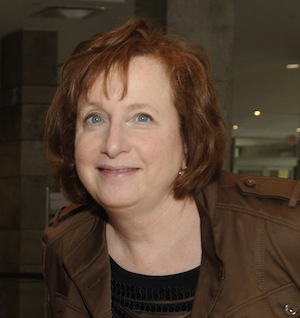
photo - Dr. Sara R. Horowitz
Dr. Sara R. Horowitz (photo from York University)

Ending Jewish civilization, which was the goal of the Nazi Holocaust, focused particular attention on children and pregnant women, according to Prof. Sara R. Horowitz, who delivered the annual Kristallnacht memorial lecture Sunday night at Congregation Beth Israel.

Jewish men, women and children were all targeted by the Nazis, but their experiences were different, said Horowitz. While female victims of the Nazis may have been doctors, businesspeople, farmers or had other roles, they were particularly under assault as mothers. Horowitz based her lecture, Mothers and Daughters in the Holocaust, on many recorded narratives from mothers and daughters affected by the Holocaust. The harrowing stories involved both unthinkable choices during the Shoah and strained relationships thereafter.

For Jews in hiding, babies could be particularly dangerous. A baby’s cry could betray entire families hiding in attics or under floorboards. In one case, Horowitz recounts a mother pulling her hair out in silence while an uncle smothered her baby as Nazis searched the house in which they were hiding.

Women were routinely forced to make impossible choices between their own welfare and that of their children. In many cases, she said, women given a choice opted to die so that their child would not die alone. In others, mothers knew they could do nothing to forestall the inevitable and saved themselves.

In the concentration camps, pregnant women and young children were automatically selected for death. Horowitz quoted Dr. Josef Mengele, the infamous Auschwitz doctor, as saying that the mothers could have been spared but that it would “not be humanitarian” to send a child to death without its mother.

Secret abortions were performed and pregnancies hidden. In one case, Horowitz said, a woman survived to deliver her child by positioning herself among beautiful young women during naked inspections by Nazi guards, hoping, successfully, that the guards’ attentions would be distracted from her condition.

One of the experiments Mengele undertook was to see how long a newborn could survive without nourishment. A woman delivered a baby under his direct supervision and then had her breasts bound so she was unable to feed the baby. Mengele came daily to inspect the situation and take notes.

Experiences during the Shoah had indelible impacts on its victims, their children and grandchildren.

Horowitz reflected on Motherland, a memoir by the writer Fern Schumer Chapman, whose mother was sent from her home on the Kindertransport, which took Jewish children from their homes in Europe to safety in England and elsewhere. Her mother, Edith, never forgave her parents for “abandoning” her, even though she understood that she would have perished along with them had she remained behind.

“At least we would have been together,” Horowitz quoted Edith, noting that the author-daughter’s conclusion was that her mother’s understanding of those early events was “stuck in a 12-year-old’s heart.”

Horowitz also discussed Sarah Kofman, who would go on to become a leading French philosopher. She survived as a hidden child in Paris, with her mother, but the woman who provided them shelter worked to detach Sarah from her mother and from Judaism, which led to difficult relations between all three women after liberation. Kofman never wrote about her experiences during the war until her 60th year, when she penned a memoir of the time and shortly thereafter committed suicide.

Relationships between parents and children after the Holocaust were often difficult. Adults understood both the “preciousness and precariousness” of children. For children born after 1945, many of whom bear the names of victims of Nazism, their relationships with the past and with their parents can bear varieties of scars.

Many parents, having missed normal upbringings, did not intuit how to parent. In one case Horowitz mentioned, a woman who had never witnessed a normal pregnancy and whose mother died in the Holocaust lamented that no one told her what to expect or how to prepare. When labor began while her husband was at work, the woman rode a bicycle to the hospital.

A woman who was forced to murder her own baby during the Holocaust went on to have two sons after liberation. In an Israeli hospital, when a nurse momentarily took her baby away, the woman became hysterical.

“Nobody knew and nobody cared about people from the concentration camps,” Horowitz quoted the woman. “They thought we were mad.”

Mothers who were unable to protect their children during the Holocaust carried concealed memories that sometimes prevented them from normal mothering after liberation.

In many cases, though, the mother-daughter relationship was credited with saving one or both parties. Mothers provided inner strength, a moral anchor and often ingenuity, said Horowitz.

One mother, a seamstress, ingratiated herself with the town mayor by making dresses for the mayor’s wife and daughters, thereby delaying her family’s selection for successive roundups. When at last her family was lined up for the trains, the mayor’s wife insisted the woman be removed so she could finish the dresses she was working on. When the seamstress insisted she could not possibly do good dressmaking while worrying about her family, the mayor’s wife insisted the rest of the family also be removed from the transport.

In last words between mothers and daughters, strength and continuity prevailed, said Horowitz. In face-to-face goodbyes, and in letters and postcards received after a death, mothers granted children “permission to survive” without guilt, urged survivors to tell the world what happened and instructed them not to internalize the perceptions the Nazis had of them.

In one instance, where a young woman was spared while her mother and two young sisters were selected for death, the mother implored her daughter not to become bitter and hateful.

“Don’t let them destroy you,” the mother said.

Horowitz is the director of the Israel and Golda Koschitzky Centre for Jewish Studies at York University, and a professor of comparative literature. Her diverse areas of research and writing include cultural responses to the Holocaust. She is a member of the academic advisory board of the U.S. Holocaust Memorial Museum and a former president of the Association for Jewish Studies.

At the start of the evening, Prof. Chris Friedrichs, representing the Kristallnacht committee, reflected on the symbolism of coming together in the recently completed new Beth Israel synagogue to commemorate an historical event in which “hundreds of synagogues like this were put to the torch and destroyed.”

Cantor Lawrence Szenes-Strauss recited El Moleh Rachamim, the memorial prayer. Holocaust survivors participated in a candlelighting procession. Barry Dunner reflected on being a child of Holocaust survivors. Prof. Richard Menkis introduced the keynote speaker and Rabbi Jonathan Infeld thanked her. Vancouver Mayor Gregor Robertson read a proclamation from the city.

The annual Kristallnacht commemorative event is a partnership between the Vancouver Holocaust Education Centre, Congregation Beth Israel and Jewish Federation of Greater Vancouver.

Pat Johnson is a Vancouver writer and principal in PRsuasiveMedia.com.
Posted on November 14, 2014November 13, 2014Author Pat JohnsonCategories LocalTags Holocaust, Kristallnacht, Sara R. Horowitz, Vancouver Holocaust Education Centre

Fresh, solemn significance

For a great number of Canadians, particularly those too young to remember the Second World War, Remembrance Day is not the day of intimate commemoration it was for previous generations. Canadian engagement in Afghanistan, however, has once again bestowed on this solemn occasion more immediacy. That said, most young Canadians who file into school auditoriums for the recitation of “In Flanders Fields” and a moment of silence understandably may not experience the same emotional reaction as their parents or grandparents who participated in or lost loved ones in the world wars.

This Nov. 11 will probably have poignancy beyond the routine, though, because of the tragic events of recent days. Our country is mourning Warrant Officer Patrice Vincent, who was murdered last month in Quebec, and Corporal Nathan Cirillo, who was shot at the National War Memorial in Ottawa two days later.

The murder of Cirillo was immediately followed by a dramatic shootout at the heart of our democracy, the Parliament Buildings, in which the assassin and thankfully no one else was killed.

The symbolism of the latter shootings is unambiguous. A killer – maybe deranged, maybe driven by ideology, maybe a bit of both – kills a military official standing guard at the icon of Canada’s military sacrifices, then heads directly to the legislature of our country, apparently intending further destruction.

Reaction has varied intensely. American 24-hour news outlets treated the occasion with typical spectacle. Canadian media have been credited with exhibiting characteristic Canadian moderation. Canadians have not, evidence so far suggests, gone hog-wild in demanding the swapping of human rights for physical security. A typically Canadian assessment will be made about whether elected officials should have greater protection, but there has been minimal hysteria about an imminent invasion by terrorists.

These incidents, of course, raised the inevitable fears and allegations. Both crimes were perpetrated by men who were newly observant Muslims. Yet, there is minimal evidence that either was in any way connected to a larger Islamist network or that religious fanaticism was a greater driver than grave psychological or emotional troubles.

Still, there was reaction in the unlikeliest of places. In Cold Lake, Alta., a mosque – talk about a little mosque on the prairie – was a hate-crime target with, among other things, “Go home” spray-painted on its exterior. In what was the perfect Canadian response, locals showed up to clean off the graffiti and festoon the place with signs, including one with the message “You ARE home.”

There may be a place for hate-crimes legislation and certainly there are laws against vandalism, but the greatest reaction of all is individual members of a community coming together to undo – literally and figuratively – the hatred purveyed by a minority of bigots.

As we prepare to mark Remembrance Day Tuesday, members of our community also gather Sunday night to mark the 76th anniversary of Kristallnacht. This date marks the horrible moment when the incremental threats of the Nazi regime moved from words to deeds, and the intimidations of successive antisemitic laws moved toward the grisly realities of the Final Solution.

Kristallnacht also holds particularly fresh import in a world where Jewish shops and people this year have been subjected to attack in Europe and elsewhere. Both of these solemn days call on us to consider events of the past and to be vigilant in the present. Lest we forget.

Posted on November 7, 2014November 5, 2014Author The Editorial BoardCategories From the JITags Kristallnacht, Nathan Cirillo, Patrice Vincent, racism, Remembrance Day

Nicholas Winton’s kindertransport

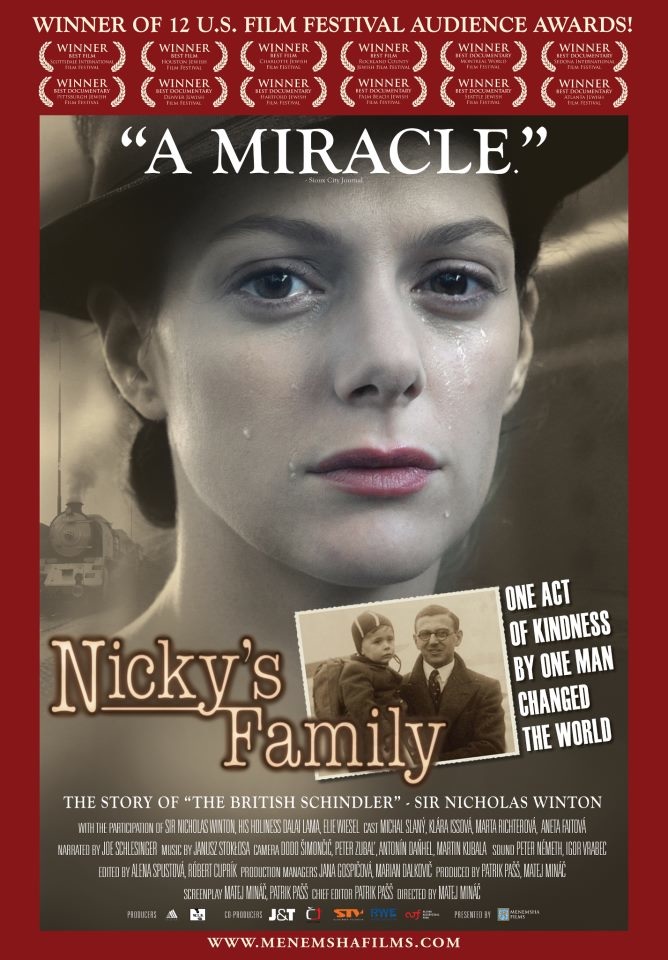
The Wallenberg-Sugihara Civil Courage Society will mark Vancouver Raoul Wallenberg Day on Jan. 19 with the screening of the documentary Nicky’s Family, about Holocaust hero Nicholas Winton.

Now 104 years old, Winton lives in England (where he was born). The story of his heroism during the Holocaust starts in 1938, when he was a stockbroker. Receiving a letter from a friend in Prague about the plight of Jews in German-occupied Czechoslovakia, he traveled there to assess the situation for himself. Shocked at what he witnessed, he established an organization to aid children from Jewish families, setting up office in his hotel room in Prague, from which he eventually expanded.

poster-Nicky's Family
Nicky’s Family will be screened in Vancouver on Jan. 19.

The director of Nicky’s Family, Matej Minac, said in an interview on Czech Radio in 2003: “When he came here to Prague, and wanted to rescue all these children, and he had a plan how to do it, everybody was telling him – you know, it’s absurd. You can never manage it. The British won’t let the children in. The Gestapo won’t let the children out. You don’t have the money, so how do you want to do it? It’s crazy. And Winton said that anything that is reasonable can be achieved.”

After Kristallnacht, in November 1938, the British Parliament approved the entry of refugees younger than 17 into the country, if they had a place to stay and a warranty was paid. Knowing this, Winton left his friends in Prague to manage the gathering of the children there and returned to London, where he started a campaign to find foster homes and the necessary guarantees for as many children as he could.

Winton also organized for the Jewish children to be transported on trains and then on to ferries to England, where the foster families met them. The operation later became known as the Czech Kindertransport. It lasted until the official start of the Second World War on Sept. 1, 1939, by which time 669 of “his children” had arrived in England. He kept records of the names and addresses of the children, their parents and their foster families. Most of the Jewish parents in Prague perished during the Holocaust.

Winton never told anyone of this enterprise. Fifty years after the fact, his wife found a suitcase in the attic with all his wartime documentation. She contacted the BBC, and they sent letters to the addresses of the foster families. Several dozen people responded. Most of them didn’t know the identity of their rescuer. His “children” and their children and grandchildren now number more than 6,000.

A 1988 TV program about the reunion of Winton and dozens of the children he had saved started a snowball of recognition; among the honors, Winton was knighted by Queen Elizabeth II.

In the late 1990s, Minac was searching for a theme for his next film. The Czech director read Pearls of Childhood by Vera Gissin, in which she mentions Winton and his rescue operation.

“I was astonished,” said Minac in the aforementioned radio interview. “That’s exactly what I needed for my story. I wrote a film treatment and I asked one lady, Alice Klimova, whether she could translate it into English. She said: ‘Matej, I think you have a few mistakes in your treatment, especially the scene in the train station, when the children are leaving for Britain.’ I said: ‘How do you know?’ And she said: ‘I know because I was one of those children, of Winton’s children…. I was only four-and-a-half years old. I don’t remember it so well. Why don’t you call Nicky, Nicky Winton?’ And I said: ‘How do you mean Nicky Winton? He’s still alive?’ She said: ‘Yes. He’d be very happy to talk to you, he’s a nice person, and I’m sure he would help.’ Two months later, I visited Nicky. We spent a beautiful afternoon together, and I knew that I can’t do only one film … but I will have to do also a documentary….”

In the end, Minac made three movies about Winton: one feature, All My Loved Ones (1999), the documentary The Power of Good: Nicholas Winton (2002), which won an Emmy Award, and Nicky’s Family (2011), which includes reenactments and never-before-seen archival footage, as well as interviews with Winton and a number of those he rescued.

The Wallenberg-Sugihara Civil Courage Society, which is hosting the Nicky’s Family screening and reception here, incorporated in April 2013, Deborah Ross-Grayman, one of the society’s founding members, told the Independent. “This was the natural outgrowth of the Raoul Wallenberg Day event, which began in 1986 with the placement of a plaque in Queen Elizabeth Park. It was revived on the 20th anniversary in 2006, as a cooperative event sponsored by the honorary Swedish consul, Anders Neumuller, and the Vancouver Second Generation Group…. We formed the society in order to be able to formally present an award for civil courage, and so acknowledge and support such heroic acts today.”

She added that approximately 50 diplomats from different countries risked their lives and careers to save the lives of Jews during the Second World War. “We have shown films highlighting the acts of Wallenberg, Sweden, and Chiune Sugihara, Japan, [whose visa saved Ross-Grayman’s mother’s life] as well as people from Chile, Portugal and Spain. Wallenberg saved approximately 100,000 people and Sugihara saved approximately 6,000. Their names stand as a symbol for all such courageous and heroic acts.”

Nicky’s Family will screen at the Jewish Community Centre of Greater Vancouver’s Rothstein Theatre on Jan. 19 at 1:30 p.m.

Olga Livshin is a Vancouver freelance writer. She can be reached at [email protected].

Posted on January 10, 2014March 28, 2014Author Olga LivshinCategories LocalTags Deborah Ross-Grayman, kindertransport, Kristallnacht, Matej Minac, Nicholas Winton, Nicky's Family, Pearls of Childhood, Raoul Wallenberg Day, The Power of Good, Wallenberg-Sugihara Civil Courage Society

Posts pagination

Previous page Page 1 Page 2 Page 3
Proudly powered by WordPress