Tikkun olam as focus

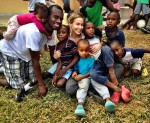
Leah Stern in Haiti, where she was helping orphaned and abandoned children. (photo from Leah Stern)

While London-based journalist and content producer Leah Stern was unable to be the guest speaker at this year’s Choices, the annual campaign event of Jewish Federation of Greater Vancouver’s women’s philanthropy, the Jewish Independent had the opportunity to chat with her over the phone prior to her scheduled talk. Hopefully, she will have the chance to come to Vancouver on another occasion, as she is a fascinating and accomplished person.

Born and raised in Miami, Stern made aliya after graduating university. In her career to date, she has been the face of the evening news on the Israel Broadcast Authority and a correspondent for CNN, she has liaised with the Vatican on behalf of the Israeli government and worked with nonprofits in South America. She is currently communications director in London, England, for OurCrowd, a high-tech, crowdfunding platform created by venture capitalist John Medved, for which she travels to Israel every couple of months. This is only a partial resumé.

JI: You made aliya in 2002. What led to that?

LS: Growing up in Miami Beach, everyone was very materialistic, focused on clothes, cars, houses, etc., and I wanted to run away from it all. My brother went to Israel to serve in an elite military group during the Second Intifada and my mother and I decided to follow him there. She went first, I came after.

JI: How did you get into journalism?

LS: That started with a program I saw in Miami on CNN with coverage of Scuds falling in Sderot and I saw a woman running in fear along the street. Suddenly, I thought, I need to be there in the thick of it all. When I finally went, I was only 21. At first, when I arrived, I could not find a job, so I folded laundry, made pizza and worked as a housekeeper.

JI: What happened next?

LS: I decided to volunteer for the Magen David Adom (MDA). That consisted of a week indoctrination course and then riding in the back of an ambulance to callouts. My first call was to a bus bombing in Jerusalem on May 18, 2003. I remember riding in the back of the ambulance, going at 100 miles an hour, running through red lights and then we came upon the shell of the bus. My first memory is seeing the bodies of college students my age, all sitting exactly as they were in that last moment before the explosion, one was reading a book, one was eating a sandwich. That picture still resonates with me today.

JI: Did that experience have an impact on your career?

LS: I did the MDA job for about three months. I was so affected by it I decided to … blog about it. I sent articles back to Miami. I wanted to give a different view than the jaded coverage by CNN and Fox. I thought I could make an impact on people by reporting the truth of what was happening through my eyes, and not through the eyes of the foreign press that did not understand the contextual background to the story.

JI: You also worked for the Jerusalem Post?

LS: Yes. I applied and got an internship as the funeral reporter. I did that for awhile but I wanted to go to the next level. So, I applied to IBA, the Israel Broadcast Authority, the only government-run, English-speaking channel in Israel, to be a news anchor. I bombed the audition. I said, “Baby Netanyahu” instead of “Bibi Netanyahu.” I thought I would never get the job. But the bureau chief called me that night and said, “You were absolutely terrible but there is something about you. Come in tomorrow for another screen test.” So, I studied the names of all of the people in the Knesset and practised in front of the mirror, and I got the job.

JI: What happened at IBA and where did you go from there?

LS: I started off as a newsreader but eventually my boss let me go out in the field. I went out as a one-woman band. I went and bought a video camera and all the equipment. I would mic myself up and take my camera out on a tripod and do the interview, write the text and send it to my editor in three-minute news package format while sitting in the front seat of my Peugeot. These were some of the most incredible days of my life, being in the thick of things.
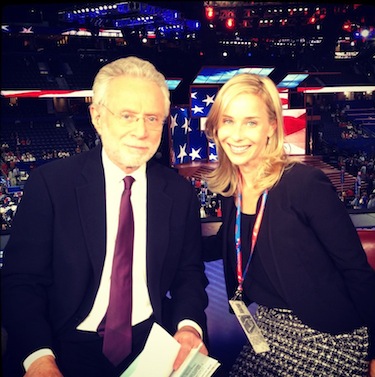
photo - Leah Stern on a CNN mentorship program with Wolf Blitzer at the Republican National Convention in Florida
Leah Stern on a CNN mentorship program with Wolf Blitzer at the Republican National Convention in Florida. (photo from Leah Stern)

It was during this time that I came to realize that there were so many stories that were not being covered, i.e. co-existence, Israeli doctors working with injured Palestinians, stories that I felt would change the world’s perception of what was happening in Israel. So, I started to tell them and sent some to CNN and they must have liked them because I got invited to Atlanta and met with Ted Turner, who offered me a job as a correspondent. Wolf Blitzer sort of took me under his wing.

JI: What were some of the stories you covered for IBA and CNN?

LS: I was sent all over, to Ethiopia to cover the migration of the Ethiopian Jews to Israel … to the Vatican to cover the funeral of Pope John Paul II in 2005. I went to Baghdad and Kabul and all over the Arab world.

JI: Were you concerned about any danger in covering some of these assignments?

LS: No. I was a CNN producer, an American journalist on an American passport and did not at any time feel in danger. I was running on pure adrenalin, and was determined to tell the story for people who did not have a voice.

JI: You accompanied the Israel Defence Forces during the disengagement from Gaza in 2005. What was that experience like?

LS: For me, this was the first time that I found myself reporting on a big story alongside the major players of the world media…. I had just interviewed Ariel Sharon and was forming my own opinion on this. I was conflicted, lots of questions were running through my mind, like, was the government right? What were these people entitled to? [Stern ended up making a documentary about the experience, called Disengagement (2006).]

JI: Were you treated any differently for being a woman reporter?

LS: War reporting is a man’s world. Here I was a young, blond, American, female journalist with not great Hebrew, with an English accent, with very seasoned male war reporters, trying to be one of the guys. I had to earn the respect. It was not easy. It took time.

JI: How did people react to you in the various areas you visited?

LS: Good reporters get people to open up to them and to trust them. You have to ask the tough questions, be relatable, get people to be real. I let people know I would tell their story … like they told it to me.

JI: Has your attitude towards covering the news changed over the years?

LS: I always remember the quote from Abba Eban, “To be a realist in Israel, you have to believe in miracles.” My time in Israel was one miracle after another. When I did my first stand up in front of the camera during the Second Lebanon War, a rocket landed near me and I was not afraid. I felt as if the camera would protect me and I was so dedicated to telling the story that I did not think of any danger. But one of my colleagues, Steve Sotloff, was beheaded by ISIS, and that was a wake-up call for me. I would not go back to some of those countries now even though I have been offered opportunities to report in Iran and Syria.

JI: In addition to reporting, you did a three-year diplomatic stint at the Vatican as a liaison for the Israeli government. What was that like?

LS: I studied Italian because I had to read 20 newspapers a morning and brief the Israeli ambassador on what Italians were saying about Israelis. Twice a week, I also got to sit in on meeting with Pope Benedict XVI and his cardinals…. I learned what it meant to be an Israeli diplomat in the Vatican. It was very interesting but it was also the first time I had to be careful about being open about my Israeli and Jewish status.

JI: What does your future hold?

LS: I am writing a book, but I am not sure what to focus on. I think writing a memoir is a bit egotistical at the age of 35. I have been roaming the world for 15 years, I am ready to put down some roots and I am getting married again next year.

JI: Do you have any advice for women considering career options like yours?

LS: I believe in tikkun olam, to make the world a better place. I think the best advice I can give is to be strong and to follow your dreams. Remember that small things make a difference. Don’t be afraid to try. Put yourself out there. Make an impact.

Tova Kornfeld is a Vancouver freelance writer and lawyer.
More than Slim Peace

Filmmaker Yael Luttwak spoke at Choices Nov. 1. (photo from jewishvancouver.com)

A film that brings Palestinian and Israeli women together in a weight-loss group. Who would have thought that was possible? American-Israeli Yael Luttwak did, and she made it happen. Luttwak, the keynote speaker at Choices, Jewish Federation of Greater Vancouver’s annual women in philanthropy event, held on Nov. 1 at Congregation Beth Israel, captivated the audience with her story.

“The idea came to me at a time when

I was attending Weight Watchers in Tel Aviv,” said Luttwak. “The peace process had broken down and Ariel Sharon had been hospitalized and I had this image of Sharon and [Yasser] Arafat jogging together on the beach and working it all out. It struck me, as I listened to women in my group who were uninhibited in sharing their struggles with health and weight and body image, that there was so much humanity in that room. What if we could capture this humanity and bring together women who otherwise would never have an opportunity to meet?”

She set out to find women who would be willing to participate in this social experiment. She approached Orthodox women, West Bank Muslims, American-born settlers and Bedouins. Fourteen women agreed to get involved. The Jerusalem Cinémathèque in East Jerusalem became the meeting place. Filming took six weeks.

The women metamorphosed during the process, as they started to come to the meetings in nicer clothes and make-up, and they began to share their thoughts (and recipes). “This was the first opportunity for Arab women to meet Jewish women that were not soldiers, and for Israeli women to meet Arabs that did not want to kill them. At the beginning, everyone was nervous, but very polite (unusual for the Middle East) but, within a few hours, they were all talking and sharing stories.”

The women found common ground on many issues that emphasized their similarities. Even when there was political turbulence, violence on the streets of Jerusalem and curfews, the Arab women would cross the checkpoints to attend the meetings. When Luttwak asked what it was about the group that kept them coming, they answered that it was their only opportunity for hope. And so, the 2007 documentary A Slim Peace came to be. It premièred at the Tribeca Film Festival in New York and screened in the United States on Sundance Channel.

While promoting the film, Luttwak was approached by English philanthropist Dame Hilary Blume, who offered to seed fund more women’s groups. She told Luttwak, “Don’t waste your talent on films. You have hit on something. You are building bridges. This is your destiny.” As a result, the nonprofit Slim Peace developed and, over the past eight years, it has opened 33 groups in six cities and two countries. Luttwak said, “It’s a train I cannot stop.” She has also been able to keep making films about contemporary issues. Her final messages – we all have to do our part for tikkun olam (repair of the world) and to never give up hope.

Prior to Luttwak’s talk, Ricki Thal addressed the audience: “My name is Esther Zuckerman Kaufman and I was born in Warsaw, Poland, on Oct. 11, 1920. I was one of the Jews on Schindler’s List.” Everyone’s attention caught, Thal then told the story of her grandmother and grandfather, Leon, both saved by Oskar Schindler. They never spoke about their wartime experiences and the family had no idea that they were Schindler Jews until they all went to see Steven Spielberg’s movie. That moment changed Thal’s life. It led her to explore her family’s history, to participate in March of the Living on two occasions, as a student and as a chaperone, and to become involved in the Jewish community. Kaufman died in 1999 but not before she appeared in New York on The Phil Donahue Show to tell her story to television audiences. Thal finished almost as she began: “My name is Ricki Thal and I was born in Vancouver in 1979 and I am proud to be the granddaughter of Esther and Leon Kaufman.”

CBC television personality Belle Puri emceed the night, co-chair Debbie Jeroff gave opening remarks and Stephen Gaerber brought greetings from Federation. Two video presentations, a raffle and a meal catered by Susy Siegel completed the night, and then 500 Jewish women went out into the rain inspired, full of good food and hope.

To donate to Federation’s annual campaign, visit jewishvancouver.com.

Tova Kornfeld is a Vancouver freelance writer and lawyer.
Community campaign

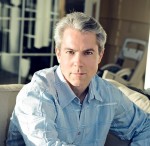
Neil Pollock, chair of the Jewish Federation annual campaign. (photo from Jewish Federation of Greater Vancouver)

There’s just under one month left to contribute to the Jewish Federation of Greater Vancouver annual campaign, which supports dozens of local community organizations, as well as partner agencies in Israel and overseas. The Jewish Independent spoke to this year’s campaign chair Neil Pollock via email about his reasons for being involved, and the importance of the campaign to the community.

JI: You’ve taken over the general chair position from Harvey Dales. I know you’ve done so much community work, but did he offer you any advice specific to the campaign that you could share?

NP: Harvey is a good friend, and working as his wingman for a few years before succeeding him as campaign chair was a tremendous learning experience for me. Harvey is, as we all know, a terrific leader and great asset to this community. In fact, if I recall correctly, it was at one of his last meetings as chair that Harvey inspired the concept for our new face-to-face incentive, which has been so well supported by donors and canvassers.

This year, every time a donor meets with their canvasser in person, an additional $500 will be donated to the campaign. It’s an important way we’re engaging in genuine conversations about our community and its needs, as well as donors’ values and interests. It’s also a key way in which we’re growing the campaign. If anyone reading this wants to meet face to face, but doesn’t have a canvasser, just contact the Federation office and they’ll set it up for you.

JI: What motivated you to take on the position of general chair?

NP: I thought I might be able to help out the community a little, and I was honored to be asked to serve. My wife, Michelle, and I have made a very conscious effort to live and practise our Jewish values – especially tikkun olam, chesed and tzedakah. We do this through our volunteer work in the community, and in our home with our children. It’s made our kids more aware of the responsibility we all share in building a better, stronger community, and of all of us being responsible for each other.

JI: The campaign theme is “Securing Our Future.” What does that mean to you in terms of the Jewish community?

NP: The theme has a few meanings. In one sense, it’s about community continuity and engaging the next generation – two of the priority areas for our work. We need to continue to fund young adult programming through Hillel and Axis. We also need to support innovative new Jewish education programs that will reach the more than 850 children in underserved areas who aren’t currently receiving any Jewish education. We live in this incredible city, but the cost of living is so high that many people are struggling with how they can stay connected Jewishly. Nearly half of community members are living outside the city of Vancouver, and funding new programs that reach them where they live is critical to their community involvement.

In a very literal sense, it’s about making sure everyone in our community feels safe. Our Federation has been very proactive in terms of security, conducting a community-wide training program and providing grants for security upgrades, but security is an ongoing need in our community. We need to increase funding for our community institutions so they remain safe, and ensure emergency preparedness.

What some people might not realize is that, every year, Jewish Federation receives more requests for support than there is funding available. On top of that, there are critical programs and services that need more funding than they currently receive. If we want to secure our community’s future, we need to close these gaps while at the same time addressing the issues of affordability and accessibility.

JI: Are there any special projects/ causes that the campaign is hoping to fund?

NP: We’re seeing a real shift in our community that’s creating issues of affordability and accessibility. More and more families are moving to underserved communities outside of the city of Vancouver. It’s just too expensive for them here. When they move, they become beyond the reach of most of our community institutions. We need to find new ways to make community accessible for them. For many of those who live close to the centre of Jewish community life, the cost of doing so is creating other barriers, notably affordability. The high cost of living here has a direct impact on the ability of regular families to engage in Jewish life. These are the issues Federation is addressing through the campaign and in coordination with its partner agencies.

JI: What is the campaign goal this year?

NP: Last year, we reached a record result of $8 million – and we are determined to surpass that. As community needs continue to grow and evolve, so must our response, so must the campaign.

JI: Until when does the campaign run?

NP: The campaign runs from September through to the end of November, which is very short, compared to other communities. One of the reasons we’re able to raise funds in such a condensed period is the incredible work of our canvassers. Supporting them in their work is something I’m passionate about, and we’re putting special emphasis on that this year. We’ve worked with a group of generous supporters to develop a new incentive: for every new canvasser who joins our team, an extra $1,000 will be donated to the campaign. Twice the mitzvah!

For more information and to donate, visit jewishvancouver.com.

FEDtalks launches annual campaign

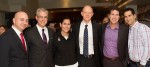
Left to right are Jewish Federation of Greater Vancouver CEO Ezra Shanken, campaign chair Dr. Neil Pollock, women’s philanthropy chair Lisa Pullan, board chair Stephen Gaerber and major donors co-chairs Alex Cristall and Andrew Merkur. (photo from JFGV)

On Sept. 17, Jewish Federation of Greater Vancouver kicked off this year’s annual campaign with a new event: FEDtalks. Featuring brief TED-style talks from four speakers – the Hon. Irwin Cotler, Eli Winkelman, Dafna Lifshitz and Rabbi David Wolpe – more than 700 community members attended the event at the Queen Elizabeth Theatre.

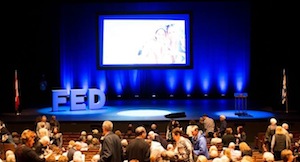
photo - Audience members take their seats at FEDtalks on Sept. 17
Audience members take their seats at FEDtalks on Sept. 17. (photo from JFGV)

“Each speaker delivered a message that was Federation related, from the refugee and migrant crisis, to caring for those facing hunger, to leveling the playing field in Israel’s periphery, to inspiring people to connect more fully with their Jewish identity and values,” said Jewish Federation chief executive officer Ezra S. Shanken. “Their messages were our messages, and they reflected the soul of who we are as a Federation.”

Cotler addressed issues important to the Vancouver Jewish community – and, indeed, to the world – with particular emphasis on Syria and the refugee and migrant crisis. As a well-respected parliamentarian and human rights lawyer, he brought depth and breadth of knowledge on the crisis.

Winkelman shared her story of turning the simple act of baking challah into acts of social justice by founding Challah for Hunger, which now has 90 chapters on college campuses in three countries. Her work was recognized by President Bill Clinton, who highlighted Challah for Hunger in his book Giving: How Each of Us Can Change the World.

Lifshitz, CEO of Appleseeds Academy, addressed her organization’s work bridging the digital divide in Israel’s periphery and, in particular, the Net@ program that is supported by Jewish Federation. Through Net@, at-risk youth in our partnership region of the Upper Galilee receive specialized computer training that catapults them into highly-skilled, well-paying jobs, thus helping break the cycle of poverty.

Wolpe, who was named the most influential rabbi in America by Newsweek magazine, also addressed the refugee and migrant crisis, but from a Jewish perspective. He closed the evening with an inspirational message that united the community through the shared values of chesed, tzedaka and tikkun olam.

The Vancouver Jewish community’s central fundraising initiative, the annual campaign supports critical social services, Jewish education, seniors programs and young adults programs, and fosters ties with our partnership region in Israel. To donate or volunteer, visit jewishvancouver.com/what-to-give/annual-campaign.

Israelis connect with locals

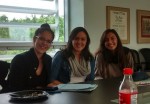
Left to right, shinshiniot Ophir Golumbek, Tomer Tetro and Lian Swissa are volunteering with various organizations in the Greater Vancouver Jewish community. (photo from Jewish Federation of Greater Vancouver)

For the first time, Vancouver is participating in the Shinshin program through the Jewish Federation of Greater Vancouver (JFGV) in conjunction with the Jewish Agency for Israel.

Shinshin is an acronym for shnat sherut, meaning year of service, which is exactly what the three 18-year-olds who arrived on Aug. 31 are here to provide the Vancouver Jewish community.

The project, which is co-funded by JFGV and the beneficiary agencies, is an outreach program created by the Jewish Agency to give exceptional Israeli youth a meaningful gap-year experience that furthers the objectives of the Jewish Agency for promoting goodwill and education about Israel. According to Vancouver’s shinshin coordinator, Lissa Weinberger, the program has been wildly successful and popular among the Jewish communities that have had the chance to host Israeli teens in the past. JFGV had planned to begin hosting Shinshinim in 2016 but because of the enthusiasm of participating agencies, they fast-tracked the program and made it happen this year.

Shinshin has been embraced by communities in England, the Netherlands, South Africa, North America and South America, growing from 54 participants last year to 100 this year. The Israeli youths volunteer with young people in schools, synagogues, Jewish community centres and other Jewish organizations to build awareness and give access to a teen perspective on Israel. According to Weinberger, the program has been so effective at building relationships between Israeli and Diaspora Jewish youth that there is a plan to grow it to 300 Shinshinim within five years.

Weinberger said that the young women in Vancouver – Ophir Golumbek, Tomer Tetro and Lian Swissa – will be working six days a week for the next nine months, with a few weeks off spread over that time.

“When we were discussing their schedule, we were told to keep them busy. They were coming to give back, not sit around,” Weinberger said.

The Shinshiniot (feminine plural) will be hosted by local families during their stay, a different family every three months. The host family experience is crucial to the program as it gives the youths a soft landing here in Vancouver, in a family environment.

Jennifer Shecter-Balin will be hosting one of the Shinshiniot for the first term. She spoke for her family when she said, “We are excited for the experience. I have been communicating with Ophir via email and I have been thoroughly impressed by her maturity, enthusiasm and introspection.”

In an interview with the Jewish Independent the day after their arrival, the three young women were indeed bubbling with energy and enthusiasm. Golumbek will be working primarily with students at Vancouver Talmud Torah (VTT), with the Temple Sholom Sunday school as her Sunday job. Tetro will divide her time between the Jewish Community Centre of Greater Vancouver and Congregation Beth Tikvah. Swissa will be working with King David High School, Congregation Beth Israel and Richmond Jewish Day School.

Each one of the Israelis comes with a history of volunteerism and leadership, as well as an impressive command of English. None of them comes from an English-speaking home in Israel but all are eloquent and clear in their goals for their year of service in Vancouver.

Golumbek explained why she applied to the Shinshin program. “I have family in the U.S., third cousins, and they all went on Birthright and I saw how it made them [connected to] Israel. Some came back to study and one made aliya. Each one of my cousins told me about a person who influenced them to love Israel and I wanted to build that connection for people here.”

Swissa echoed Golumbek’s interest in building connections with local Jews and added, “I believe that Jewish people have a shared history and we should create a shared present and future. We are here to learn about Vancouver and Judaism outside of Israel, as much as we are here to share our love of being Jewish in Israel.”

It’s not surprising that 18-year-olds who can express these types of ideas when jet-lagged were selected from the 1,700 applicants to the Shinshin program. Swissa and Tetro have leadership experience and a strong basis in working with other Jewish teens from a two-year program they did in high school called the Diller Teen Fellowship, which brought them to Chicago and Baltimore, respectively, when they were in grades 10 and 11. Their experience working within a pluralistic Jewish environment has prepared them for their work in Vancouver. Golumbek participated in a special program of her Scouts called Seeds of Peace in Maine, which brought together Israeli, American, British, Palestinian and Egyptian teens to work on building relationships and tackling issues of conflict.

When asked how they feel about being away from their families, they all teared up slightly. Swissa is the youngest of seven children, so it’s a shock for her to be without family here, while Tetro will miss her 5-year-old sister. Golumbek has a brother who is finishing his army service this year and, while she said she will miss her family, she looks at this year as an opportunity to get ready for being away when she goes into the army, while making an impact and making new connections. She said, “Our host families will be like a new family … we are grateful for the chance to come here, to make a mark. Thank you is a small word for what everyone has done for us so we could be here.”

Tetro spoke for all three volunteers when she explained what they hope for the year to come. She said, “We are so excited because this is a brand new program and nobody knows what to expect, but we are also stressed because we want to make the best impression. We want to build a really good base for next year so all of the kids will be eagerly waiting for the next Shinshinim to come.”

Michelle Dodek is a freelance writer living in Vancouver.

Blessings in our lives

Rabbi David Wolpe joins FEDtalks on Sept. 17 at Queen E. Theatre. (photo from Facebook)

When the man Newsweek calls the most influential rabbi in America gets up to speak in Vancouver this month, he may be as surprised as the audience by what he has to say.

“I really never know exactly until I get up to speak,” said Rabbi David Wolpe, who will be here Sept. 17 as one of four speakers at FEDtalks, the annual campaign launch of the Jewish Federation of Greater Vancouver. “I do this somewhat spontaneously and it will depend somewhat on what I hear the other people say because I don’t want to repeat what they would say.”

His talk, Inspiring Jewish Life, will address “something about the way in which our efforts have surprising and unanticipated consequences both in our community and in the world,” he told the Independent in a telephone interview.

Wolpe has also been dubbed one of the 50 most influential Jews in the world by the Jerusalem Post. He is the author of eight books, including the bestseller Making Loss Matter: Creating Meaning in Difficult Times. His most recent book, David, the Divided Heart, was a finalist for the National Jewish Book Awards. He has taught at the Jewish Theological Seminary of America in New York, the American Jewish University in Los Angeles, Hunter College and UCLA. He is a prolific writer and commentator.

Wolpe is the rabbi of Sinai Temple in Los Angeles, of which about half of the congregation are Jews of Iranian origin, which gives him an acute perspective on the nuclear deal between Iran and the P5+1 world powers.

“I would say in the Iranian Jewish community in L.A., the consensus is fairly strong against the deal,” he said. “It’s not unanimous, but it’s fairly strong.”

Wolpe sees a glimmer of hope but overall fears the deal is a bad one.

“The biggest reason for optimism long term is that the Iranian population is so young … and that many of those young people don’t support the theological or political views of their leaders,” said the rabbi. “That’s the reason long term for optimism and, of course, Iran and the United States have had an alliance in the past. Maybe one day that could be renewed.

“There is plenty of reason for worry, however,” he continued. “I, myself, oppose the deal. I think most of my Iranian congregants do as well. But whoever is correct about this deal, or no deal, I think that the prospect that Iran will get a nuclear bomb is both frighteningly real and just plain frightening.”

Wolpe is the son of a rabbi and has been taken aback by the persistence of global antisemitism across generations.

“When I started out in the rabbinate, I really did believe that, unlike my father’s rabbinate … antisemitism wasn’t going to be the theme of Jewish life anymore,” he said. “I really thought that. I thought it was on the wane. So, the resurgence through Europe is disheartening and pretty scary.”

Wolpe traveled in Europe this summer and sees little reason for optimism. “I wish I did,” he said. “The mood in Europe is very pessimistic.”

He believes that the United States is relatively well inoculated against antisemitism.

“Unlike the countries of Europe, the United States did not have an identifiable majority and minority,” he said. “Most antisemitism arose when there were the French and the Jews, the Germans and the Jews, the Russians and the Jews. The Jews were the clear, identifiable minority in most of these countries. That’s not true in America. We are a patchwork of minorities and, as a result … to be a Jew is not to be the one who stands out as being different.… America has historically not been a place that is hostile to Jews. Are there antisemitic acts? Yes. But I don’t see any serious signs that [tolerance toward Jews is] changing or threatens to change.”

Wolpe will be speaking at the event during the Days of Awe and said it is a good time to reflect on the positive.

“Rosh Hashana is really about our sense of gratitude, about the gift of everything that we have because we are showered with blessings,” he said. “Even though we focus on all the dangers and difficulties of our lives, we are just bursting with wonderful and extraordinary and often unprecedented blessings in our lives.”

For more information about and tickets to FEDtalks, visit jewishvancouver.com. Interviews with the three other speakers appeared in previous issues of the Independent: Irwin Cotler, Dafna Lifshitz and Eli Winkelman.

Help bake a difference

Eli Winkelman (photo from Eli Winkelman)

Eli Winkelman was just looking for a way to fit in at college. But her quest for a niche resulted in an international philanthropic phenomenon.

Winkelman’s passion for making challah caught fire with fellow students and she ended up founding one of the most familiar – and foodie-friendly – philanthropic endeavors in the Jewish community today.

Challah for Hunger is now known to thousands of students on campuses throughout Canada, the United States, Australia and elsewhere. Volunteers gather to make the irresistible braided loaves, then sell them to fellow students and divide the profits between a local charity and a designated national cause.

Winkelman, who founded the international movement, will be one of four speakers at FEDtalks, marking the launch of the Jewish Federation of Greater Vancouver’s annual campaign Sept. 17. She will speak on Chesed (Loving-kindness).

Winkelman’s expertise in challah came, as it has for centuries of women, through her mother. But where some recent generations have let the challah thread drop – who has time to knead, braid, bake? – Winkelman’s choice to become vegan sort of changed history.

“I decided to become vegan in high school and [her mother] said, ‘OK, but you’re making your own challah,’” she recalled.

When she arrived at the Claremont Colleges outside Los Angeles in 2004, Winkelman started baking challah for Shabbat dinners at Hillel.

“People heard that I was baking and they showed up to learn from me randomly,” she said. “And every week they came back and they complained that all their friends were eating their challah. So, I saw that there was demand for bread and demand for the activity of making the bread and I thought that we should scale up and do it for a good cause.”

Within two or three months of starting school, Winkelman had launched Challah for Hunger, selling 15 loaves. Her group started out baking in the dorm kitchen, then moved into the kitchen of the campus interfaith centre. They eventually got permission to use the dining hall kitchen.

The national charity is MAZON: A Jewish Response to Hunger. Local chapters can determine the cause to which they want to allocate the other 50% of profits. Some chapters, like at Emory University in Atlanta, have been supporting the same cause for years (in Emory’s case, a refugee assistance agency). Other campuses operate differently. At Stanford, for example, the chapter partners with other clubs every week and they choose a different designated recipient each time.

“Different chapters approach it differently, which I really love because they are figuring out how they want to be givers,” she said.

Winkelman is no longer operating the organization’s day-to-day activities – she’s started a business in Austin, Tex. – but she is on the board of directors and closely follows the progress. There are now more than 70 chapters worldwide, each baking 30 to 300 loaves, usually weekly. Sometimes they defy tradition and add chocolate chips, cinnamon sugar, sun-dried tomato or other innovations. Canada’s sole chapter is in Montreal.

Baking and sharing bread is an ancient, symbolic and ritualized process. Challah for Hunger makes it social in a way that may be particularly suited to undergrads finding their place and new friends.

“Part of how I define Challah for Hunger is doing it together and doing it on a regular basis so that it becomes a community,” she said. “For me, that is core to the organization. That’s how people learn and grow, by interacting with each other. Especially when you’re baking bread, your hands are engaged in something so you’re busy and that means that you can have a conversation or not have a conversation or have whatever kind of conversation you want with the person next to you. It really doesn’t leave any awkward quiet time.”

For more information about and tickets to FEDtalks, visit jewishvancouver.com. Interviews with fellow speakers Irwin Cotler and Dafna Lifshitz appeared in previous issues of the Independent, and Rabbi David Wolpe will be featured next.

Equalizing access to tech

Dafna Lifshitz, CEO of Appleseed Academies, is part of the FEDtalks lineup on Sept. 17. (photo from Dafna Lifshitz)

Israel is known as the “startup nation,” the incubator for much of the world’s most advanced technological, medical, scientific, cultural and other innovative advancements. But Dafna Lifshitz saw a different Israel that doesn’t fit that mold – and she set out to fix the problem.

Lifshitz is one of four speakers at FEDtalks, a series of short, intense speeches on diverse topics that will launch the Jewish Federation of Greater Vancouver’s annual campaign on Sept. 17 at Queen Elizabeth Theatre.

“In the past decade, Israel has reached incredible heights with the growth of our high-tech industry,” Lifshitz told the Independent in an email interview. “We are a world leader in R&D spending, per capita [venture capital] investment and multinational R&D centres.”

But this activity has been concentrated in the centre of the country, remains in the hands of the privileged few and is creating “a dangerous digital divide between the centre and the periphery,” she said. To leverage Israel’s success to even greater levels, access to relevant technological education must be made more widely available.

“Technology education is a tool to make Israel stronger, more vibrant and more equitable,” she explained. “First, from an economic perspective, future economic growth in Israel is all technology-based. To participate in the workforce and gain access to the best opportunities, everyone in Israel must be able to work online, write code and build technology solutions. Second, from a quality-of-life perspective, we know that those who have access to technology and use it effectively will receive better health care, financial services, and much more. Finally, communities who use technology tools to interact with each other and their leaders are stronger and more vibrant.”

People in disadvantaged communities, including those in Israel’s geographic periphery, suffer from lack of access to technology and opportunities in the tech sector, Lifshitz said. “Our challenge is to turn Israel from the startup nation of the few to the startup nation for all.”

And this will be the topic of her FEDtalk – “building a biotech hub in northern Israel.”

As CEO of Appleseed Academies since 2002, Lifshitz has helped a million people in Israel and the developing world access technological education programs through the nonprofit organization.

In Israel, the agency works especially with women, ultra-Orthodox Jews, youth-at-risk, new olim and members of minority communities. Appleseed Academies has 350 centres across Israel. Lifshitz has been dubbed one of Israel’s 100 most influential people by Haaretz and was awarded the Prime Minister’s Prize for Initiatives and Innovation in 2014.

The success of the program in Israel led Appleseed to expand its work to 93 locations in eight African countries through a partnership with Cisco and the Clinton Global Initiative.

“We have managed to build and learn so much in Israel and, from my perspective, if we can share our model with new partners in the developing world, it’s our responsibility to do so,” Lifshitz said. “As importantly, we learn so much from working with cultures different from our own – when I watch how entrepreneurs in Zimbabwe or South Africa work with our models, I’m filled with new inspiration for driving our mission back at home.”

Appleseed Academies partners with the biggest, most successful tech companies in Israel, including Cisco, Intel, Microsoft, Google and Bezeq, as well as with government agencies, municipalities and philanthropists.

“We have learned that when disadvantaged communities prosper, our whole society prospers,” she said.

Her own story undergirds the success of Appleseed Academies.

“It probably started with my choice to transition from a religious to a secular lifestyle, along with my decision to study law and start a law firm with a neighborhood friend,” she said. “As a result of my journey, I realized that I can lead change not just on a personal level, but on a broader scale, as well. As one of my close mentors, Cisco VP Zika Abzuk, and Spiderman like to say: with power comes responsibility. I know I can lead change, and simply cannot ignore that responsibility to do so.”

For more information about and tickets to FEDtalks, visit jewishvancouver.com. An interview with Irwin Cotler appeared in last week’s Independent and Eli Winkelman will be featured next.

Cotler speaks at FEDtalks

Irwin Cotler, left, with Bob Rae. Cotler is one of four speakers who will participate in FEDtalks, the Jewish Federation of Greater Vancouver’s annual campaign launch on Sept. 17. (photo from irwincotler.liberal.ca)

Irwin Cotler, one of the foremost figures in international human rights, will speak here next month on global trends impacting the Jewish community. He is one of four guest speakers at FEDtalks, an innovative new opening event for the Jewish Federation of Greater Vancouver’s annual campaign.

When the new Parliament is sworn in after the Oct. 19 election, Cotler’s career as an elected politician will end. He has served as MP for the Montreal riding of Mount Royal since 1999, and as minister of justice and attorney general for Canada. He is not seeking reelection.

His proudest achievements in politics, he told the Independent, include legislation against human trafficking, particularly of women and children. He also cited the legislated equality of marriage for gays and lesbians, which he shepherded through the House. “We were at the time only the fourth country in the world, in 2005, to do so and it was very divisive at the time,” Cotler said of the civil marriage law.

He also takes pride in being the attorney general when Steven Truscott’s conviction for rape and murder was overturned and declared a miscarriage of justice. Truscott was a 14-year-old Ontario boy sentenced to death in 1959 for the rape and murder of a classmate. His death sentence was commuted to life imprisonment and he was jailed for a decade before being paroled, but it was another four decades before his name was cleared and he was acquitted by the Ontario Court of Appeal.

In addition to landmark acts, Cotler said his proudest roles in public office have included helping individuals in ways that never make the news. “I think the one [achievement] that remains unheralded and that is true for all MPs is the one in which we try as best we can on a daily basis to act as an ombudsperson for the constituents in our riding,” he said.

After he leaves office, he will devote more time to the defence of political prisoners, he said. In his role as an international human rights lawyer, Cotler has been central to some of the most prominent cases in the world, including those of Andrei Sakharov, Nathan Sharansky and Nelson Mandela. He is currently on the legal team for Chinese Nobel Peace laureate Liu Xiaobo, the imprisoned Saudi blogger Raif Badawi, the Venezuelan political prisoner Leopoldo López and the Iranian Shi’ite cleric Ayatollah Boroujerdi. He has been recognized with numerous honorary degrees and other awards, including Parliamentarian of the Year by his colleagues in the House of Commons. He chaired the International Commission of Inquiry into the Fate and Whereabouts of Raoul Wallenberg.

“I am even exploring establishing a Raoul Wallenberg Centre for International Justice named after the first [Canadian] honorary citizen, a unique international consortium of politicians, scholars and jurists, human rights defenders, NGOs united in the pursuit of justice, inspired by and anchored in Wallenberg’s humanitarian legacy,” he said. “Those are some of the things I’m looking forward to.”

At the FEDtalks event, Cotler said he will address “mega-trends” affecting the Jewish people worldwide, foremost being what he calls the “Iranian five-fold threat.”

The nuclear agreement between Iran and the P5+1 powers, “both in the process of arriving at the agreement with Iran and the agreement itself, has overshadowed, if not sanitized, the other four threats,” he said.

Those overshadowed or sanitized threats, he continued, include Iran being the leading sponsor of international terrorism, “the hegemonic threat in terms of its destabilization of the Middle East and beyond,” the danger posed by Iran’s state-sanctioned incitement to hate and to genocide, and the “massive domestic repression” in Iran.

“While the nuclear negotiations have been going on, for example, Iran, which already was executing more people per capita than any other country in the world in the time of [Mahmoud] Ahmadinejad, has almost doubled the execution rate and yet we hear very little about it, and that’s only one example,” said Cotler. “I’ll be speaking about the criminalization of dissent, the prosecution and persecution of Baha’is and other religious and ethnic minorities.”

The second mega-theme, he said, will be terrorism, security and human rights, including how we combat terrorism without undermining civil liberties, and a third theme will probably address antisemitism in what he calls its old and new forms. “The old, or classic, antisemitism being the discrimination against, denial of, assault upon the rights of Jews to live as equal citizens within any society that they inhabit,” he explained, “and the new antisemitism being the discrimination against, denial of and assault upon the right of Israel and the Jewish people to live as an equal member among the family of nations or, at its worst, to even to live.”

FEDtalks, the opening event of the annual campaign for the Jewish Federation of Greater Vancouver, takes place Sept. 17 at Queen Elizabeth Theatre. More information is available at jewishvancouver.com and tickets are available at ticketpeak.com/JFGV. Interviews with the other speakers will appear in successive issues of the Independent.

תוגברו אמצעי הביטחון

ג’ון נוטל ואמנדה מרי קורודי, שתכננו לפוצץ את בית המחוקקים של המחוז בוויקטוריה. (צילום: RCMP)

תוגברו אמצעי הביטחון בקהילה היהודית לאור פרשת הזוג נוטל וקורודי שהתאסלמו ותכננו להרוג ילדים יהודים 

זוג קנדי שהתאסלם תכנן להסתנן לאחד מבתי בית כנסת יהודיים באזור ונקובר, כדי להרוג ילדים, כך עולה מחקירת שוטר סמוי במסגרת דיוני בית המשפט העליון של מחוז בריטיש קולומביה. מדובר בפרשת ג’ון נוטל ואמנדה מרי קורודי, שתכננו לפוצץ את בית המחוקקים של המחוז בוויקטוריה, ביום העצמאות הקנדי ב-1 ביולי 2013. השניים שהתאסלמו תכננו לפוצץ את הבניין באמצעות חומרי נפץ תוצרת בית שיוטמנו בסירי לחץ. הם הציבו את הפצצות הביתיות מחוץ לבית המחוקקים, אך השוטרים שעקבו אחריהם דאגו לנטרלן ולא נגרם שום נזק. הזוג הטרוריסטי טכננו לבצע פעולות טרור נוספות ולהרוג מספר אזרחים לא ידוע. השוטר הסמוי אמר עוד בחקירתו המעניינת, שנוטל וקורודי חשבו “שרצח של ילדים יהודים, שלדבריהם מחונכים רק לשנוא ערבים ומוסלמים, דווקא יעשה להם טובה. כי אז הם יגיעו לגן עדן”. לפי תפיסתם המעוותת לעומתם הילדים “יהודים מבוגרים לאחר מותם מגיעים הישר להגיהנום”. הזוג האמין שכיוון שהם לבנים לא התהיה להם בעייה להצטרף לאחד מבתי הכנסת על תקן של חברים, לאחר שיתחזו ליהודים. כך ירכשו את אמון המתפללים האחרים.

נוטל וקורודי נעצרו לפני כשנתיים לאחר חקירה מורכבת וממושכת של משטרה הפדרלית, סוכנות הביון הקנדית וסוכנות הריגול הקנדית. השניים הפכו לג’יהאדים קיצוניים לאחר שהושפעו מהתעמולה של ארגון אל-קעידה. הם רצו להשתתף במלחמת הקודש נגד מדינות המערב, “לאור מה שהן עושות לאיסלאם”. לטענת נוטל וקורודי הם הופללו על ידי שוטרי המשטרה הפדרלית, שאף עודדו אותם והאיצו בהם לבצע את פעולות הטרור. שני הנאשמים הורשעו כבר והדיונים בית המשפט העליון לקביעת עונשם יתחדשו בחודש אוקטובר.

לאור פרשה החמורה של נוטל וקורודי הוחלט בפדרציה היהודית של אזור מטרו ונקובר להגביר את הביטחון בקרב הקהילה היהודית, תוך שיתוף פעולה מלא עם הארגונים היהודים השונים.

מנכ”ל הפדרציה היהודית, עזרא שאנקן, מציין כי הפדרציה לוקחת את האיומים כנגד הקהילה היהודית באופן רציני ביותר. עם זאת הוא מדגיש כי לא ידוע בשלב זה על גידול כלשהו בסכנה לקהילה היהודית. שאנקן אומר עוד שלפדרציה יש כיום פרוטוקולים מסודרים וברורים לנושאי ביטחון, ונעשה בהם שימוש ברגע שיש התראות ביטחוניות. לדבריו לפדרציה יש קשרים טובים מאוד עם סוכנויות המשטרה השונות באזור ונקובר בהן המשטרה הפדרלית, והיא בקשר קבוע וישיר עימם בכל הנוגע לאיומים על הקהילה היהודית.

מנכ”ל הפדרציה היהודית המקומית אומר כי הארגון נקט לאחרונה במספר פעולות מורכבות בתחום הביטחון. בהן: פיקוח, בידוק וביקורות על תחום הביטחון בארגונים היהודים השונים באזור, שידרוג מערך הביטחון של ארגונים אלה תוך הקצאת משאבים כספיים ואחרים על ידי הפדרציה, המשך אספקת מערכי תדרוך, הכשרה, תרגול ותמיכה בארגונים בתחום הביטחון. כן הוחלט לאחרונה על הקמת ועדה מיוחדת בנושא תחום הביטחון בפדרציה היהודית, שתעזור ותייעץ בקביעת מדיניות הביטחון הרחבה, כולל קבלת החלטות ומימון בהמשך הדרך.

עזרא שאנקן אומר כי לאור צורך בפעילות ביטחונית בקרב הקהילה היהודית באופן שוטף ומתמשך, נדרש מימון יציב וקבוע לנושא חשוב זה. ולכן לדבריו יש מקום להשיג את מקורות התקציב, במסגרת הקמפיין השנתי החדש של הפדרציה לשנה זו (ערב הפתיחת הקמפיין של 2015 נקבע ל-17 בחודש ספטמבר). שאנקן אומר עוד כי הקצאת משאבים כספיים מהקמפיין השנתי החדש, היא אחת מהדרכים החדשות בה נוקטת הפדרציה היהודית, שמתאימה עצמה לדרישות המשתנות של הקהילה המקומית.