Skip to content
  • Home
  • Subscribe / donate
  • Events calendar
  • News
    • Local
    • National
    • Israel
    • World
    • עניין בחדשות
      A roundup of news in Canada and further afield, in Hebrew.
  • Opinion
    • From the JI
    • Op-Ed
  • Arts & Culture
    • Performing Arts
    • Music
    • Books
    • Visual Arts
    • TV & Film
  • Life
    • Celebrating the Holidays
    • Travel
    • The Daily Snooze
      Cartoons by Jacob Samuel
    • Mystery Photo
      Help the JI and JMABC fill in the gaps in our archives.
  • Community Links
    • Organizations, Etc.
    • Other News Sources & Blogs
    • Business Directory
  • FAQ
  • JI Chai Celebration
  • JI@88! video

Recent Posts

  • BGU fosters startup culture
  • Photography and glass
  • Is it the end of an era?
  • Taking life a step at a time
  • Nakba exhibit biased
  • Film festival starts next week
  • Musical with heart and soul
  • Rabbi marks 13 years
  • Keeper of VTT’s history
  • Gala fêtes Infeld’s 20th
  • Building JWest together
  • Challah Mom comes to Vancouver
  • What to do about media bias
  • Education offers hope
  • Remembrance – a moral act
  • What makes us human
  • המלחמות של נתניהו וטראמפ
  • Zionism wins big in Vegas
  • Different but connected
  • Survival not passive
  • Musical celebration of Israel
  • Shoppe celebrates 25 years
  • Human “book” event
  • Reclaiming Jewish stories
  • Bema presents Perseverance
  • CSS honours Bellas z”l
  • Sheba Promise here May 7
  • Reflections from Be’eri
  • New law a desecration
  • Resilient joy in tough times
  • Rescue dog brings joy
  • Art chosen for new museum
  • Reminder of hope, resilience
  • The national food of Israel?
  • Story of Israel’s north
  • Sheltering in train stations

Archives

Follow @JewishIndie
image - The CJN - Visit Us Banner - 300x600 - 101625

Tag: economics

A new consul general

A new consul general

Left to right: Nico Slobinsky, director of the Centre for Israel and Jewish Affairs, Pacific Region; Galit Baram, consul general of Israel to Toronto and Western Canada; Sara Lefton, vice-president of CIJA, Greater Toronto area; and Judy Zelikovitz, vice-president of CIJA University and Local Partner Services. (photo from CIJA-PR)

“There is never a dull moment,” Galit Baram, the new consul general of Israel to Toronto and Western Canada, told the Independent. “It is a whirlwind of names, people I should meet and new faces to remember.”

Baram said adaptability and versatility are key in the life of a diplomat, and her relish for her job comes through when speaking with her. Baram, who is married to a fellow diplomat and has two children, arrived in Toronto to replace D.J. Schneeweiss, the former consul general, in August. “I am looking forward to this new chapter, this new adventure,” said Baram.

Baram was born in Jerusalem. She has previously served as counselor for public affairs and coordinator of academic affairs at the Israeli embassy in Washington, D.C. (2009-2012); counselor for economic affairs in Cairo (2006-2009); and counselor for political affairs in Moscow (1998-2003). Most recently, she was the director of the Department for Palestinian Affairs and Regional Cooperation (2013-2016).

Baram’s first posting was in Moscow. This was particularly exciting for her, she told the Independent, because of her Russian-Israeli background. “For me, this was closing a circle representing my family and my country,” she said.

Her favorite Russian novelist? Leo Tolstoy, she said, the late works. Her single favorite Russian novel is Mikhail Bulgakov’s underground classic, The Master and Margarita.

Russia has one of the largest diplomatic communities in the world, and her time there was a great learning experience, she said. With 1.6 million Russians in Israel, the relationship between the two countries is an important one.

After Russia, Baram spent “three fascinating years in Cairo.” There, she was involved in bringing Israel and Egypt’s business sectors together. She left full of respect for businesspeople on both sides, she said. During her tenure, an important trilateral agreement was signed between Israel, Egypt and the United States, the Qualified Industrial Zones Agreement, which led to strengthening of economic ties and the mutual exchange of expertise.

In Washington, Baram brought her talents to bear on increasing academic cooperation between Israeli and American universities, before returning to Israel to head the Department for Palestinian Affairs and Regional Cooperation. Her duties focused on building aspects of civil society and cooperation between Israelis, Palestinians and neighboring countries. One of the key issues she sought to address was water.

“Water is going to be a central issue in the region,” said Baram. “Israel is leading the world in desalination technology, since the 1970s, and, in recent decades, has increasingly shared this technology around the world. Regionally, we supply water to Jordan (since 1994) and to the Palestinians. We are more than willing to share with more neighbors in the region.”

Baram also worked with a long list of Israeli nongovernmental organizations that cooperate across the Middle East in bridging the gap between different countries and groups of people, particularly young people. “We need to show that the young people can live together,” she said.

“I believe that, when it comes to the Middle Eastern region, education is a key element in regional stability,” she explained. “Jews, Arabs and Palestinians need to learn about each other. Animosity, mutual suspicion and ignorance are major problems. The best way to overcome this is to bring together young people and to bring together communities, and to build mutual understanding.”

Baram said she feels very comfortable in Canada – “Israel and Canada have very friendly and close relations, very warm,” she said. “There are many similarities between us. Both countries are very multicultural, and are always growing and changing. Canada and Israel share many important values in the spheres of human rights, democracy and pluralism. I am happy to say that Israeli diplomats feel very warmly welcomed in Canada.”

Baram added that she is very impressed with Canada’s Jewish institutions and their activities, and has found the community to be very well-organized and warm.

Baram hopes “to expand tourism and business connections between Israel and Canada, to invite Canadians to Israel to look for opportunities together, and to maintain close relations between the Jewish Diaspora and Israel.”

She said she has every intention to travel Western Canada as soon as possible, and plans to visit Vancouver soon to get acquainted with the Jewish community here.

She also added, “I would like to take this opportunity to say shanah tovah, a peaceful and successful year in Israeli-Canadian relations, and peace and happiness and health to us all.”

Baram and the consulate in Toronto can be followed on Facebook and Twitter as “Israel in Toronto.”

Matthew Gindin is a freelance journalist, writer and lecturer. He writes regularly for the Forward and All That Is Interesting, and has been published in Religion Dispatches, Situate Magazine, Tikkun and elsewhere. He can be found on Medium and Twitter.

Format ImagePosted on October 7, 2016October 5, 2016Author Matthew GindinCategories NationalTags diplomacy, economics, Israel
Plight of bees is our plight

Plight of bees is our plight

A European honey bee extracts nectar from an aster flower. (photo by John Severns via Wikimedia Commons)

Around the world, bee populations have been decreasing in number, year by year, at an alarming rate. Such a tragedy isn’t just stinging the beekeepers, whose livelihoods depend on the honey-making insects, it’s affecting global agriculture.

And there’s more at stake than just honey production. Bees’ handiwork assists in the growth of myriad foodstuffs. In fact, millions of honey bees are depended upon to pollinate plants and crops, which produce a quarter of the food we consume.

According to Science Daily from May 2015, beekeepers across the United States lost more than 40% of their honey bee colonies from April 2014 to April 2015, compared to the previous year’s decrease of 34%.

This is determined from an annual cross-country survey that is funded by the U.S. Department of Agriculture and conducted by Bee Informed Partnership with the Apiary Inspectors of America.

The survey asked commercial and small-scale beekeepers to track the health and survival rates of their honey bee colonies, in an effort to understand how to manage the decreasing population. This is the ninth straight year of losses. It’s referred to as colony collapse disorder.

More than 6,000 beekeepers, who manage 400,000 colonies from all 50 U.S. states responded. All told, these beekeepers are responsible for nearly 15% of the nation’s estimated 2.74 million managed honey bee colonies. The total economic value of honey bee pollination is said to be more than $15 billion each year in the United States alone.

Among small beekeepers – those who manage fewer than 50 colonies – a problem area appears to be the varroa mite, a lethal parasite, able to spread between colonies.

Beekeepers, environmental groups and some scientists also suspect blame lies with an insecticide known as neonicotinoids, or neonics. It is used on crops, such as corn, and on plants found in lawns and gardens. Its toll has been taken seriously enough that the Environmental Protection Agency is examining a series of studies on the insecticide and its effects on bees. The investigation is expected to be completed by year’s end.

The issue has even caught the attention of administrators at the White House, who have formed a task force to study the problem.

In Canada, the problem is even worse.

In Ontario, bee losses have been severe over the last few winters, measuring a decline of 58% in 2013-2014, due to a combination of extreme cold, mites, disease and the types of pesticides used on crops.

While it has experts scrambling for a solution, some people and companies are taking matters into their own hands.

One hotel is doing its part to increase the bee population. On the roof of the downtown Fairmont Royal York in Toronto, about 300,000 bees perch in six hives that produce anywhere between 500 and 900 pounds of honey per year. The hotel offers it to guests, and uses it in recipes.

CBC also recently installed hives on its rooftops in Toronto and Montreal, while Vancouver Police will build two hives at its headquarters.

Meanwhile, across the pond in England, the BBC reported that, in January 2014, in more than half of European countries, there were not enough honey bees to pollinate crops. And more than 14% of England’s honey bee colonies died over the winter, according to the latest research from the British Beekeepers Association (BBKA).

In the United Kingdom alone, nearly 90% of the apple crop and 45% of the strawberry crop relies on wild bees and managed honey bees to grow. It is a billion dollar economy there.

The BBKA’s annual survey of beekeepers across Great Britain showed the losses were up from nine percent last year, but lower than the year before; normal losses are about 10%. It blames “poor and variable weather, pesticides, bee diseases and parasites such as the varroa mite and starvation.”

To make matters worse, demand for the little honey-making insects has grown, while their numbers shrink.

Europe is experiencing a boom in biofuels, which is the result of the “EU renewable fuel directive,” where 10% of transport fuel must come from renewable sources by 2020. What that means for farming is planting a third more “oil” crops, like soybeans, oil palm, oilseed rape, sunflowers – all of which require ramping up bee numbers, which simply aren’t there.

According to the journal Plos One, Great Britain has only a quarter of the bees they need – their deficit equaling seven billion honey bees.

In light of this, as we approach Rosh Hashanah, you may think more about that little jar of honey on the festive meal table – millions, or perhaps billions, of honey bees came together to create that sweet liquid.

We know that the symbolism of honey on Rosh Hashanah is to have a sweet New Year. But there’s more: bees and the Jewish people are alike in many ways.

There’s little we can accomplish if we are alone; much that we can accomplish if we combine our efforts towards our goals as a people. We are more productive when in a community; our “hives” are our communities and synagogues, where we are needed – in fact, required – to be drawn to the whole. The honey bee teaches us that we must come together and work towards a higher purpose.

May everything go well next year not only for ourselves, friends, family and others, but for our little busy bee friends, buzz’mun hazeh!

Dave Gordon is a Toronto-based freelance writer whose work has appeared in more than a hundred publications around the world.


Format ImagePosted on September 23, 2016September 21, 2016Author Dave GordonCategories WorldTags agriculture, bees, economics, honeybees, pollinators, Rosh Hashanah
Expanding free trade

Expanding free trade

On July 21, Prime Minister Stephen Harper announced that negotiations toward an expanded and modernized Canada-Israel Free Trade Agreement (CIFTA) had concluded. “Israel is a priority market for Canada and holds great potential for Canadian companies in a variety of sectors. An expanded and modernized free trade agreement will lead to a strengthened bilateral relationship as well as an increase in jobs and opportunities for Canadians and Israelis alike,” said Harper.

The modernized CIFTA will notably provide expanded market access opportunities for agricultural, fish and seafood products through the reduction or elimination of Israeli tariffs on a large number of products, and duty-free access under tariff rate quotas for certain products.

Four existing areas of the current CIFTA have been amended, namely market access for goods, rules of origin, institutional provisions and dispute settlement. In addition, seven new chapters have been included in the areas of trade facilitation, sanitary and phytosanitary measures, technical barriers to trade, intellectual property, electronic commerce, labor and environment.

Israel is a priority market for Canada under the Global Markets Action Plan. Since CIFTA came into force in 1997, Canada’s two-way merchandise trade with Israel has tripled to $1.6 billion in 2014. Key opportunities for Canadian companies exist in sectors such as defence, information and communications technology, life sciences, sustainable technologies, agriculture and agri-food, and fish and seafood.

The modernized CIFTA will provide expanded market access opportunities for Canadian businesses through the elimination of tariff and non-tariff barriers, and help in creating new sources of jobs, growth and prosperity for both countries in the years ahead. It will support Canadian businesses and investors, deepen trade and investment linkages, and further strengthen Canada’s bilateral relationship with Israel.

Format ImagePosted on July 31, 2015July 28, 2015Author Prime Minister’s OfficeCategories NationalTags Canada, CIFTA, economics, free trade, Israel

Israel-Turkey relations

Israelis buying a Japanese car in Tel Aviv might be surprised to learn that the car was actually built in Turkey. Tourists buying dried figs in Israel’s Machane Yehuda market probably don’t know that the figs might also be imported.

These are just two of the examples of the burgeoning trade between Israel and Turkey, trade that has more than doubled in the past five years, according to the Turkish Statistics Institute, and confirmed by Israeli officials, to $5.6 billion. About half of that is exports from Israel to Turkey, and the other half, Turkish goods, like the cars, coming to Israel.

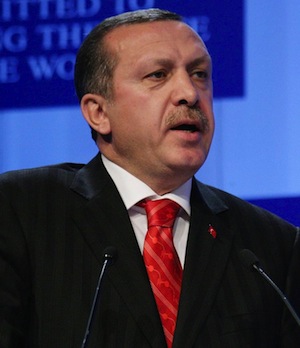
photo - Turkish President Recep Tayyip Erdogan
Turkish President Recep Tayyip Erdogan. (photo from commons.wikimedia.org)

“The economies of Turkey and Israel complement each other and the trade ties are flourishing,” Israeli foreign ministry spokesman Emmanuel Nachshon told this reporter. “That’s the good news. Unfortunately, the political ties are not as good, and this is a consequence of the harsh attack by the Turkish leadership against Israel.”

Ties between Israel and Turkey have foundered since Israeli naval commandos killed 10 Turkish activists on a ship that was trying to break Israel’s blockade of the Gaza Strip. Three years later, U.S. President Barack Obama brokered a telephone apology from Israeli Prime Minister Binyamin Netanyahu for the deaths of the 10 Turkish citizens, but relations have not returned to normal.

Israel and Turkey do not currently have ambassadors in each other’s countries, but do have lower-level diplomatic representatives. Turkish Prime Minister Recep Tayyip Erdogan has consistently made anti-Israel comments, including last month, commenting on Netanyahu’s trip to Paris after the killings at Charlie Hebdo and the kosher supermarket. Referring to last summer’s fighting between Israel and Hamas in the Gaza Strip, Erdogan said Netanyahu must “give an account for the children, women you massacred.”

In response, Israel’s Foreign Minister Avigdor Lieberman called Erodan an “antisemitic neighborhood bully.”

That type of Turkish rhetoric has been stepped up in advance of the June 2015 election for 550 new members of the Grand National Assembly, the country’s parliament.

“We’ve repeatedly seen that whenever there is an election campaign there is an increase in anti-Israel rhetoric,” a senior Israeli official told this reporter on condition of anonymity. “It’s almost part of the electoral campaign and the more anti-Israel you are, the more popular you are. That is something we can’t accept.”

Yet both Israel and Turkey seem happy to distinguish between their political and economic connections.

Read more at themedialine.org.

Posted on February 20, 2015February 19, 2015Author Linda Gradstein TMLCategories WorldTags Avigdor Lieberman, economics, Israel, Recep Tayyip Erdogan, Turkey

Posts pagination

Previous page Page 1 … Page 3 Page 4
Proudly powered by WordPress