Skip to content
  • Home
  • Subscribe / donate
  • Events calendar
  • News
    • Local
    • National
    • Israel
    • World
    • עניין בחדשות
      A roundup of news in Canada and further afield, in Hebrew.
  • Opinion
    • From the JI
    • Op-Ed
  • Arts & Culture
    • Performing Arts
    • Music
    • Books
    • Visual Arts
    • TV & Film
  • Life
    • Celebrating the Holidays
    • Travel
    • The Daily Snooze
      Cartoons by Jacob Samuel
    • Mystery Photo
      Help the JI and JMABC fill in the gaps in our archives.
  • Community Links
    • Organizations, Etc.
    • Other News Sources & Blogs
    • Business Directory
  • FAQ
  • JI Chai Celebration
  • JI@88! video

Recent Posts

  • Eby touts government record
  • Keep lighting candles
  • Facing a complex situation
  • Unique interview show a hit
  • See Annie at Gateway
  • Explorations of light
  • Help with the legal aspects
  • Stories create impact
  • Different faiths gather
  • Advocating for girls’ rights
  • An oral song tradition
  • Genealogy tools and tips
  • Jew-hatred is centuries old
  • Aiding medical research
  • Connecting Jews to Judaism
  • Beacon of light in heart of city
  • Drag & Dreidel: A Queer Jewish Hanukkah Celebration
  • An emotional reunion
  • Post-tumble, lights still shine
  • Visit to cradle of Ashkenaz
  • Unique, memorable travels
  • Family memoir a work of art
  • A little holiday romance
  • The Maccabees, old and new
  • My Hanukkah miracle
  • After the rededication … a Hanukkah cartoon
  • Improving the holiday table
  • Vive la différence!
  • Fresh, healthy comfort foods
  • From the archives … Hanukkah
  • תגובתי לכתבה על ישראלים שרצו להגר לקנדה ולא קיבלו אותם עם שטיח אדום
  • Lessons in Mamdani’s win
  • West Van Story at the York
  • Words hold much power
  • Plenty of hopefulness
  • Lessons from past for today

Archives

Follow @JewishIndie
image - The CJN - Visit Us Banner - 300x600 - 101625

The power of social media to terrorize

Others have observed that our generation is the first to carry a device in our pockets capable of accessing the entire depth and breadth of human knowledge, but mostly we use it to watch videos of kittens. This is not always the case, of course. Some of us use it to enrich our character, others less so.

During last week’s World Cup game between the United States and Germany, sports fans invoked Nazi imagery on Twitter 30,209 times. From referring to the players or referees as Nazis to otherwise throwing the term around, the word was tweeted an average of 3.4 times per second throughout the game. At one point, according to a blog that follows these statistics, references to Nazis came 20 times a second.

People say and do things on social media that they would never do without the anonymity it provides. It is not surprising that people looking for an obvious source of ridicule or debasement would focus on the darkest chapter in a country’s history, and one that is well known. Tweeting vicious names is not the worst that soccer fans have done. However, the phenomenal explosion of the use of “Nazi” during a sporting event is troubling in a few ways. From our perspective, accusations of Nazism should be limited to people who behave like Nazis – and that is a very, very small proportion of people in the world today, thankfully. To use this word with flippant nonchalance diminishes its meaning and the history that surrounds it. A worse thought is that people are using it without knowing its meaning and history.

More to the point, there is a certain amount of hypocrisy involved in non-Germans throwing this word at Germans. As a society, Germany has done a great deal to confront the meaning of its Nazi era, to an extent far greater than other countries that collaborated with the Third Reich, for example. The German government has over the decades been exemplary in trying to learn from that history and make a better society, as well as making restitution financially and, as much as such a thing is conceivable, morally to the Jewish people.

More bizarre is the apparent social media wizardry of the murderers that are killing Iraqis in the quest for a Sunni Muslim caliphate. The New York Times reported on Sunday that ISIS, the Islamic State in Iraq and Syria, “has hijacked World Cup hashtags, flooding unsuspecting soccer fans with its propaganda screeds. It has used Facebook as a death threat generator; the text sharing app JustPaste to upload book-length tirades; the app SoundCloud for jihadi music; and YouTube and Twitter for videos to terrify its enemies.” A particularly grisly example was a video of a policeman being beheaded accompanied by the message “This is our ball. It’s made of skin #WorldCup.”

The Times reported that, weeks before ISIS overran the city of Mosul, it had issued on Facebook death threats to every Iraqi journalist who worked there. Understandably, most of the journalists singled out for death fled the city, which the newspaper suggests may have accounted for why the successful launch of ISIS’s brutal campaign took time to filter out to wide global attention.

While most people on Twitter and Facebook are posting pictures of summer barbecues, kids and pets, ISIS is broadcasting a steady stream of decapitations and other executions of Iraqi soldiers, police and disobedient civilians. These extremists hope to impose a Stone Age social order in the Middle East and, presumably, beyond, but they have no qualms about using the most modern technologies to advance their cause.

Site owners like Google and YouTube are trying to confront their responsibilities, but it is technically difficult – as soon as one post/tweet/video is removed, for example, the content pops up elsewhere. As well, there is debate about the merits of blocking all access to the propaganda, and not just from free-speech advocates, but from intelligence agencies, who would prefer the content be left online because it aids them in tracking the extremists.

This is the power of social media. Death threats that have a tangible impact on war zones and which also carry the potential for intelligence gathering. It’s not just for cat videos anymore.

Posted on July 4, 2014July 2, 2014Author The Editorial BoardCategories From the JITags ISIS, Islamic State in Iraq and Syria, Nazi, World Cup
This week’s cartoon … July 4/14

This week’s cartoon … July 4/14

For more cartoons, visit thedailysnooze.com.

Format ImagePosted on July 4, 2014July 2, 2014Author Jacob SamuelCategories The Daily SnoozeTags Jacob Samuel, thedailysnooze.com

Stotland plays Carlebach – in Yiddish!

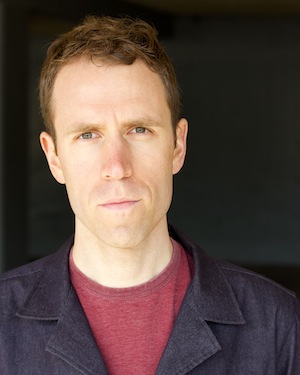
“Montreal Jewgrass” musician Adam Stotland channeled one of his musical gods since childhood – Rabbi Shlomo Carlebach – in his acting debut last month.

Stotland, who has Vancouver family connections, landed the title role in the musical Soul Doctor: The Journey of a Rock Star Rabbi, which made its world première in Yiddish at the Segal Centre for Performing Arts in Montreal, with a June 8-29 run.

photo - Adam Stotland
Adam Stotland (photo from cnjews.com)

Stotland, 37, is not a rabbi or exactly a rock star, but he is a cantor and singer-guitarist known for his brand of music that blends klezmer and other Jewish folk music with the sounds of bluegrass. He is a huge fan of Carlebach, the charismatic, yet controversial, voice of the Jewish revival movement of the 1950s through ’70s. But, as Stotland pointed out to the Segal team when they invited him to audition, he had never acted before – and didn’t know Yiddish.

He also wasn’t sure if he could find the time between his duties as cantor, for the past two years, at Shaare Zion Congregation and his busy performing schedule. He and his wife also have a young child and are expecting another.

Besides, as always, the actors and singers in Dora Wasserman Yiddish Theatre productions are highly talented, but unpaid.

But the Segal insisted he would be ideal.

Stotland headed a cast of 30, which included Mark Bassel, Aron Gonshor, Burney Lieberman and Sam Stein. Co-directors were Bryna Wasserman, artistic director of New York’s Folksbiene Theatre, who convinced the Segal they had to do this show, and Rachelle Glait.

Written by Daniel S. Wise with lyrics by David Shechter, Soul Doctor had its Broadway debut in English last summer. It was hailed by the New York Times as “a joyous, leaping roar” and “unabashedly celebratory show.” The Montreal show featured English and French supertitles.

More than 30 of Carlebach’s greatest hits over his 40-year career are featured, backed by a live band. “He had the ability to compose simple tunes that touched you,” Stotland said.

There is a storyline, and Stotland spent “hours and hours” learning the dialogue. His knowledge of Yiddish had been limited to a few affectionate and sometimes colorful phrases he knew from his bubbie. “Having a musical ear, however, has helped me get the meter, the lilting melody of the language,” he said.

Soul Doctor recounts Carlebach’s life from his childhood escape from Nazi Germany and his early rabbinical career, to his discovery of gospel and soul music after meeting acclaimed jazz singer Nina Simone in 1957. An unlikely collaboration and friendship blossomed from there.

He moved away from his strict Orthodox upbringing, but brought the Chassidic love of song to mainstream Jews. He developed a signature sound that combined folk, pop and soul with traditional Jewish music and liturgy, and his popularity grew well beyond Jewish fans. He performed with the likes of Bob Dylan, Jefferson Airplane and the Grateful Dead.

But stardom had its price and Carlebach, who died 20 years ago, struggled with personal demons that strained his family life and shook his faith.

“The music and journey of Rabbi Carlebach is one that will resonate strongly with our community,” said Wasserman prior to the opening, adding that the production “captures the spiritual essence of his songwriting.”

– For more national Jewish news, visit cjnews.com.


Posted on July 4, 2014July 2, 2014Author Janice Arnold CJNCategories Performing ArtsTags Adam Stotland, Dora Wasserman Yiddish Theatre, Shlomo Carlebach, Soul Doctor
Melanie Fogell’s paintings inspire imagination

Melanie Fogell’s paintings inspire imagination

Melanie Fogell’s paintings inspired the story told here. (photo by Olga Livshin)

The solo show Illuminated Forests by Melanie Fogell is on display at the Sidney and Gertrude Zack Gallery until July 27. As I wandered through the gallery, surrounded by Fogell’s paintings, I felt as if I were in a varicolored forest, alive with stories. Stories grew between the majestic trees, flitted among the rustling leaves and dozed under the evergreens.

***

Tia guided her wheelchair into the park. The dappled leaves whispered above her head, green and pink and pretty, smelling of sunlight. She resented them. Nothing should be that beautiful, while she was stuck in this ugly chair. After a single brief glance around, she stared sullenly ahead, into the shimmering, fragrant air. She found it oppressive. An hour outside, as the doctor prescribed, and she would head back home, into her room, where no beautiful things waited.

A gasp to her left caused her finger to jerk on the control stick, and her chair lurched forward. No matter how she detested the forest’s loveliness, she didn’t want to run anyone down. When she stopped and looked for the source of the noise, she saw an old woman in a wheelchair. The woman’s silver hair surrounded a pale wrinkled face like snowy lace.

“Hi,” the woman said. “You startled me, dear. How romantic. Two wheelchairs meeting in a park. Almost a love story.” She smiled.

“Nothing romantic,” Tia blurted. “And nothing to smile about. Definitely not a love story.” Tears sprang up, despite her attempt to suppress them. “Stupid,” she muttered, her fingers tightening on the controller.

“Don’t go,” the woman said. “It’s lonely here. Would you tell me about yourself? Was it an accident? I’m Alice.”

“I’m Tia.” Tia nodded stiffly. Alice looked truly interested. Why not? She had to kill the next hour anyway. She started talking. She was in a car, with her friend driving, and a drunk driver rammed his van into them.

Both her friend and the drunken jerk ended up dead, leaving her alive to deal with mangled legs.

“They are broken in a gazillion places.” She kept a sob inside by sheer willpower. “I was a dancer. Now, I’m … a cripple. The doctor said I might walk again, eventually, after another surgery. I’ll probably always limp. No dancing for sure.” This time, a sob escaped.

“So, you got lucky,” Alice said calmly. “You survived.”

“Lucky, ha!” Tia swore loudly, daring Alice to disapprove. She would never have said anything so rude before her accident, but now, she didn’t care. Rudeness even made a perverted sense. It helped her not to cry.

Alice nodded. “Good idea.” Then, she too swore, very creatively. “The trees absorb our anger and hurts,” she said. “They heal us. With obscenities, we pour out our pain, bury it. It’s like verbal manure.”

Surprised, Tia laughed. “You think so?”

“Yes. Now, inhale the sweet air. Take in the goodness.” Alice looked expectant, waiting.

Tia shrugged. Inhaled. Alice was right, the forest smelled good. It smelled of living things, of dreams.

“Now swear again,” Alice said. “Repeat after me.” The following string of descriptive verbal abuse made Tia laugh aloud for the first time since the accident. She dutifully repeated the words, wincing only a little.

“Well, dear. Do you feel better? I have to go back now, so I’ll have to turn here, at this intersection, but we’ll meet again, right?” She reversed her chair and met Tia’s eyes. “I hope you’ll walk soon. Bye, Tia.” Alice brushed her thin fingers across Tia’s hand, and then rolled away into the gold and green mosaic of the foliage, vanishing behind a bend in the greenery. The lower branches swayed in her wake, a bird trilled overhead.

“Bye, Alice,” Tia said. She did feel better. Only later, after returning home, she realized that she didn’t even thank Alice.

She visited the park every day afterwards, watching the trees and the light change with the season, feeling her pain draining away. She never met Alice again. The next surgery went well, and she healed quickly. After a couple months of grueling physiotherapy, she started limping on her own feet. The doctor said the limp would fade in time. No dancing, of course, but walking felt good. She would find Alice and say thank you.

The autumn forest overflowed with color, reds and greens and yellows of every shade. The fallen leaves bounced under her shoes. Alice would love it, she thought. But when Tia entered the nursing home on the other side of the park, Alice wasn’t there.

“She died in the spring,” said the receptionist. “Are you Tia?”

“Yes,” Tia breathed.

“She left something for you. She was an artist.”

It was a small painting, a forest in spring: leaves and sunlight embracing each other in a quiet melody of green and amber and peach, singing of hope.

Olga Livshin is a Vancouver freelance writer. She can be reached at [email protected].

Format ImagePosted on July 4, 2014July 2, 2014Author Olga LivshinCategories Visual ArtsTags Illuminated Forests, Melanie Fogell
ISIS looking to Jordan

ISIS looking to Jordan

An Israeli border policeman patrols the area of the Judean desert, near the Jordan border. After swift victories in Iraq, the Islamic State in Iraq and Greater Syria (ISIS) terrorist group is setting its sights on Jordan, threatening to drag Israel into the global jihadist conflict. (photo by Nati Shohat/FLASH90) 

Emerging from the chaos of the Syrian civil war, the Islamic State in Iraq and Syria (ISIS) terrorist group has gained the world’s attention for its brutal medieval-style justice and its swift victories in Iraq, threatening to overrun the weak U.S.-backed government there. But now ISIS is also setting its sights on Jordan, threatening to drag Israel into the global jihadist conflict.

“They are a vicious and brutal group, and have even done some things that al-Qaeda thought were unwise,” Elliot Abrams, who served as deputy national security advisor for former President George W. Bush and is currently a senior fellow at the Council on Foreign Relations, told this reporter. “More people, more money and more guns. They do constitute a real threat.”

The goals of ISIS are clear from its name. Alternatively translated as the Islamic State in Iraq and al-Sham (the Arabic name for the Levant region) or the Islamic State in Iraq and the Levant (ISIL), the group seeks to control the entire region, which, in addition to Iraq and Syria, includes Jordan, Lebanon, and even Israel and the Palestinian territories.

Read more at jns.org.

Format ImagePosted on July 4, 2014July 2, 2014Author Sean Savage JNS.ORGCategories WorldTags Elliot Abrams, ISIL, ISIS, Islamic State in Iraq and Syria
NCSY Vancouver celebrates organization’s 60 years

NCSY Vancouver celebrates organization’s 60 years

Graduates of NCSY’s Impact leadership program at the spring regional awards banquet in Harrison Hot Springs, with Rabbi Samuel Ross. (photo from Rabbi Samuel Ross)

In a Jewish community with one of the highest assimilation rates, the role of youth groups such as the Vancouver chapter of the National Conference of Synagogue Youth (NCSY) has become more important over the years. NCSY Vancouver’s parent organization was founded in 1954 and the local chapter, which emerged about a decade later, is helping celebrate the 60th anniversary milestone.

NCSY works to develop a connection with Jewish youth before they embark on their university and professional lives. Rabbi Samuel Ross, NCSY Vancouver director, spoke about the “unique, beautiful situation” in which the chapter works. He said they “cater to anyone and everyone, which is an ongoing challenge but it’s really reaping rewards.” Indeed, many of those who join or take part in NCSY activities develop lifelong connections to Judaism and Israel, which was Nicole Grubner’s experience.

Grubner grew up in West Vancouver and became involved with NCSY when she was in Grade 9. She started attending their Shabbatons, and loved the warm atmosphere and Jewish connection that she felt at these events. By the end of high school, she was on the NCSY student leadership board, began keeping Shabbat, and had signed up for a post-graduate year at a seminary in Israel.

“I think the goal of NCSY is for it to be a jumping off point for you, so I used it as that and continued my Jewish education after high school,” said Grubner, 25. “It brought a lot of meaning into my life and week and I enjoyed the sense of community that it brought.”

NCSY Vancouver hosts a mix of educational and social programs, everything from a mock casino night to sushi in the sukkah to Shabbatons, trips and leadership programs.

“The city is growing, the chapter is exploding, I wouldn’t want to be anywhere else. I’m actually bringing in someone else to come work for me next year,” said Ross, who has been leading NCSY Vancouver for the past three years. “We do the best we can to inspire them enough so that they’ll want to continue their Jewish growth once they get to university.”

In Grubner’s case, after her year in Israel, she studied at Stern College in New York, returning to Israel every year.

“I actually went back to NCSY and staffed summer programs in Israel for three years,” she said. “I had an amazing Israel experience and it was important for me to give that to someone else.”

Her love of Israel and connecting with the Jewish people didn’t dampen after university ended. In October 2012, she made aliyah.

“In Vancouver, we know that assimilation is a really huge problem, so NCSY is really important to the Jewish community in Vancouver because it’s a connection point, one that many kids don’t get the opportunity to be a part of.”

“It had a very big impact on my life, so much so that I made my best friends and closest connections in NCSY. I’m really grateful for the base it gave me, for the fact that I was able to get so involved and so connected in high school,” she said. “In Vancouver, we know that assimilation is a really huge problem, so NCSY is really important to the Jewish community in Vancouver because it’s a connection point, one that many kids don’t get the opportunity to be a part of. NCSY has really changed the face of Vancouver’s Jewish community,” she said.

NCSY is a globally recognized organization that connects Jewish youth through social, recreational, educational and spiritual programs.

“It’s about connecting kids to their roots and to their Jewish identity. Whether kids become religious or not, to me, that’s almost less important than kids thinking about their Judaism and it being something important to them in whatever way they choose to practise,” said Grubner. “It shouldn’t be a part of their identity that passes them by because of apathy or lack of knowledge.”

In Vancouver, the number of Jewish youth involved in NCSY programming has been growing. This year, they’re sending 16 youth to programs in Israel. Some of their programs draw 100 kids, and there are already 25 applicants this year for the NCSY Vancouver youth board.

“When I first came three years ago, we had to beg kids to be on that board,” said Ross. “Now, it’s really hard to get on. The kids have to write an essay why they like NCSY and what they can add, and it’s beautiful. You see how they write how Judaism has made such a difference in their lives and how passionate they are and how much they enjoy coming.”

Vicky Tobianah is a freelance writer and editor based in Toronto. Connect with her on Twitter, @vicktob, or at [email protected].

Format ImagePosted on July 4, 2014July 2, 2014Author Vicky TobianahCategories LocalTags NCSY, NCSY Vancouver, Nicole Grubner, Samuel Ross
Community memorial for Eyal Yifrach, Gilad Shaar and Naftali Fraenkel

Community memorial for Eyal Yifrach, Gilad Shaar and Naftali Fraenkel

Eyal Yifrach, Gilad Sha’er and Naftali Fraenkel z”l (photo from mfa.gov.il)

On Monday, June 30, the bodies of Eyal Yifrach, 19, Gilad Shaar, 16, Naftali Fraenkel, 16, who were kidnapped June 12, were found northwest of Hebron. The sad discovery was the result of an extensive search effort led by the Israel Defence Forces, the Israel Security Agency and the Israel Police. A joint funeral was held July 1. Jewish groups and others around the world join in mourning.

In Vancouver, there will be a community memorial service, coordinated by the Rabbinical Association of Vancouver and led by Rabbi Berger, Rabbi Moskovitz and Cantor Szenes-Strauss, on Thursday, July 3, at the Jewish Community Centre of Greater Vancouver at 7:30 p.m.

As well, to share your thoughts and express your condolences to the families of the boys, visit the Jewish Federations of North America’s “Remember Our Boys” page.

Format ImagePosted on July 2, 2014July 9, 2014Author Cynthia RamsayCategories Israel, LocalTags Eyal Yifrach, Gilad Shaar, memorial, Naftali Fraenkel
Love to win? Or hate to lose?

Love to win? Or hate to lose?

Pursuing more of my “Love to Win” side at the 2014 Spartan Sprint obstacle race.

Call it ironic, but in my less-than-fit days I was a regular subscriber to Men’s Health magazine.

As I looked upon the cover of each fresh edition I sincerely believed (read: hoped) that this just might be the edition that unveils the ground-breaking discovery that Maple Walnut ice cream contained a fat-burning ingredient that could give me “six-pack abs by summer!”

I eventually decided to take a different route to improved fitness. While I can’t say I would credit Men’s Health for my success, there was one posting that left a long-lasting impression on me.

This specific article effectively split humanity into two simple groups.

Group 1: Those who love to win.

Group 2: Those who hate to lose.

Of course everyone prefers winning and, thus, would rather not lose. But most people, if they really think it through, can probably identify what fuels them more; the rush of victory or resentment toward loss.

It didn’t take me long to realize I was a hate-to-lose kind of dude. If my team, in any sport, was winning life seemed in order and under control. There was balance in the Force. But if we were losing my emotions would take over in an effort to avoid failure. I would walk away from any loss feeling frustrated, unsettled and pondering what I could have done to avoid it. I didn’t need to celebrate the wins as much as I needed to avoid the feeling of loss.

I embraced that discovery and used it to make me better. In hockey I became a defensive, shut-down centre, eventually turning to a pure defenseman where my emotional drive to avoid getting beat could feed my game. It proved to be a good move for my career (boy, do I use the word career lightly).

In the last couple of years, however, I considered if perhaps my friendship with the hate-to-lose side of me had led to complacency and, in some cases, boredom! (we’ll get to that nasty word in a later post)

Generally speaking, of course, hate-to-lose people might play the game of life a little on the safe side. They could miss out on hidden opportunities while choosing to avoid opportunities to test their limits. They are less likely to take risks or seek adventure. Their theory being, “If it ain’t broke, don’t fix it.”

The love-to-win type is ready to take those risks and fly by the seat of their pants for the possible thrill of success. On the flip side, they might take unnecessary risks, act without calculated consideration of consequence, risk losing a lot for the sake of winning a little. Their theory being, “Let’s break it ‘cause maybe we can rebuild it better.”

So which one is better? I could give you all sorts of analogies of how either approach has a proven track record of success.

But the key is to find out who you are and challenge yourself to bring the other element into your life a little more. I’ll use a hockey analogy (get used to it) to show you what I mean. It is commonly preached that “defense wins championships.” But it is also a fact that you can’t win the Stanley Cup without scoring goals. Even the defensemen need to contribute to the offense for a team to be a serious contender. More specifically, the great players who  lead their teams to the big games are the ones who find the right balance of defense and offense. Those players aren’t born playing like that. They all enter the league with one style of play that has gotten them to where they are. Then they develop that balance over seasons of growth, experience and hard work. The most successful players develop their weaknesses to complement their strengths.

This is a concept we should all adopt for the sake of growth, inspiration and diversity. Whether you are more of a hate-to-lose or a love-to-win type, heighten your awareness to that and consider the areas of your life where a lack of balance has possibly challenged your growth or development. Then make the effort to approach the opposite way of thinking from time to time.

It worked for George Costanza!

Kyle Berger is a freelance writer and producer of the Berger With Fries health, fitness and entertainment blog. Follow him on Twitter @kberger16.

Format ImagePosted on June 29, 2014July 31, 2014Author Kyle BergerCategories It's Berger Time!Tags George Costanza, Hockey, Lose, Men's Health, Spartan Sprint, Win
Celebrate Canada’s start in P.E.I.

Celebrate Canada’s start in P.E.I.

From left to right, the Hon. Robert Henderson; Gary Schneider, Confederation Forest Project; John Horrelt, chair, PEI 2014 community advisory committee; and Penny Walsh McGuire, executive director, PEI 2014 Inc. (photo from pei2014.ca)

Prince Edward Island is where the idea of our country first took shape. On Sept. 1, 1864, the Charlottetown Conference brought together representatives of the Maritime colonies and the province of Canada (present-day Quebec and Ontario) and the “Fathers of Confederation” laid the groundwork for Confederation, which became reality on July 1, 1867.

This summer marks the 150th anniversary of that conference and the historic moment will be celebrated in what many consider to be the birthplace of Canada – Charlottetown, P.E.I. There will be more than 150 different festivals, events and activities in the province.

“P.E.I. is proud to have hosted such an important meeting in our nation’s history in 1864,” said Penny Walsh McGuire, executive director of PEI 2014, which is organizing the celebrations. “One hundred and fifty years later, Prince Edward Island is very proud to be playing host yet again – this time to all Canadians and visitors from around the world as we celebrate the creation of our nation.”

photo - Constructed between 1843 and 1847, Province House is Canada’s second-oldest legislature building and it is still in use, as the home of the Prince Edward Island House of Assembly
Constructed between 1843 and 1847, Province House is Canada’s second-oldest legislature building and it is still in use, as the home of the Prince Edward Island House of Assembly. (photo from en.wikipedia.org)

The 70 days of celebration, from July 1 until Sept. 7, feature daily concerts, theatre performances and comedy on the Atlantic Lottery/Red Shores Main Stage, cultural arts and heritage exhibits in the Canada Pavilion, chef demonstrations and local food tastings in the Culinary Pavilion, interactive activities in the Kids Pavilion, as well as historical walking tours.

While celebrating Prince Edward Island’s history, and our nation’s, it would be remiss to not also highlight the long history of the province’s small but strong Jewish community.

Prince Edward Island’s first Jewish settlers were recorded in a newspaper article about a celebration of Passover in 1908. The community grew very slowly, with only a dozen Jewish families reported as residing there before the Second World War. In the 1970s, a Torah scroll was brought to the island for the first time and there were the first recorded High Holiday services; 1976 marked the celebration of the first bar mitzvah there.

“Coming here for the first time was almost like coming to Israel the first time. I felt like I belonged,” said Leslee Sack, a New York native who moved to Prince Edward Island in 2007. She is now the secretary of the P.E.I. Jewish Community (PEIJC).

“This place is what Brooklyn was like in the ’50s,” she said. “Everyone wants to talk to you, everyone wants to know your story.”

For 40 years, Sacks worked as a travel agent in New York; her office was in a building across from the World Trade Centre. She wasn’t at work on Sept. 11, 2001, but later found out her boss had sent everyone home after the first tower fell.

“I would’ve been under building two waiting for the train,” she said. Deciding to make a change, she went on a Maritimes cruise and, after some deliberation, chose to settle and retire in Charlottetown.

“I came up here knowing no one and now I cannot walk the streets of Charlottetown without saying hi to someone,” she said. “It’s a beautiful place, terrific sightseeing, nice people. I’ve never looked back.”

Sacks estimated that there are about 150 Jews in Prince Edward Island. The province is the only one in Canada with no synagogue or rabbi, she said, but she insisted that the community is doing well. “We celebrate every single holiday except for Shavuot, which somehow gets left in the dust, in someone’s home. People volunteer to host, it’s always potluck. And, we recently acquired two different kinds of kosher wine, you can get kosher cheese, fish, but not kosher meat.”

If you haven’t made the trek to the other Canadian coast, this summer would be the perfect time to do so. Here are some highlights to check out:

• Visit the PEI 2014 Celebration Zone at Confederation Landing Park on the Charlottetown waterfront on July 1 for a fireworks show, as well as daily concerts, interactive walking tours, cultural exhibits and more continuing through until Sept. 7.

• Immerse yourself in the province’s history by attending a Belfast Historical Society Lecture Series event.

photo - Delegates from the legislatures of Canada, gathering on the steps of Prince Edward Island's Government House for the Charlottetown Conference in 1864
Delegates from the legislatures of Canada, gathering on the steps of Prince Edward Island’s Government House for the Charlottetown Conference in 1864 (photo by George P. Roberts via en.wikipedia.org)

• Pay tribute to the Fathers of Confederation during Founder’s Week from Aug. 28-Sept. 8, which features concerts, fireworks and other activities.

• Get an inside look at the controversies for and against Confederation by visiting the Eptek Summer Celebrations from June until October.

• Attend the Summerside Highland Gathering, filled with Celtic gift shops, live Celtic music and different clan tents.

• If you’re interested in visiting Prince Edward Island, PEIJC tries to answer every email they receive through their website, peijc.org.

Vicky Tobianah is a multimedia writer, editor and strategist based in Toronto. Connect with her on Twitter, @vicktob, or by email at [email protected].

Format ImagePosted on June 27, 2014June 25, 2014Author Vicky TobianahCategories NationalTags Charlottetown Conference, Fathers of Confederation, Leslee Sack, PEI 2014, PEIJC, Penny Walsh McGuire, Prince Edward Island Jewish Community
Meghan Goodman finds adventure in dance

Meghan Goodman finds adventure in dance

Meghan Goodman will perform next with Dusk Dances at Dancing on the Edge July 4-6. (photo by Dan Cento)

Meghan Goodman, a Vancouver dancer and yoga teacher, has always been daring. “Since I was a kid, I’ve had a big sense of adventure,” she said in an interview with the Independent. “I loved biking fast, doing interesting things.”

Her predilection for adventure frequently informs her choices, even now. At school, she was torn between the arts and sciences. At university, she majored in dance and minored in math, but eventually dancing as a career won out. “Dancing is exciting and challenging, and it has a nice community of people doing it,” she said.

Dancing also offers a variety of jobs and the ability to schedule her professional life. And, it feeds her desire for perpetual learning.

“The more I dance, the more I learn. There is always something new to learn. Never a dull moment. I noticed that mature dancers can do more, maybe not physically, but they have more inner richness, know how to channel emotions. Dancing has been an interesting and educational journey for me. I would probably be bored with a regular job. I like that my every day is different; I like the fluctuations. There are busy times and free times. Some days, I have three jobs a day, but there are periods when I don’t have anything scheduled. Then, I can rest or travel.”

Her craving for new and stimulating experiences led her to Aeriosa Dance Society, a company that performs dancing in the air, or rather on walls of tall buildings and other vertical surfaces.

“I’ve been a member of Aeriosa for about five years,” said Goodman. “I had seen them perform … and thought it was amazing. When, before the Olympics, their director asked me if I wanted to join – of course, I said yes.”

She revels in aerial dancing. “I love it. I have six or seven contracts with Aeriosa every year, about one-third of all my jobs…. My highest performance with them was about two years ago in Toronto – we performed at the level of the 33rd storey. But, more often, it’s eight- or 10-storey buildings, like the Vancouver Public Library. Or sometimes it’s the trees. It takes a special type of person to perform in the air and lots of training. It needs a different technique than dancing on the floor, because of gravity. When we dance on a vertical surface, we use different muscles.”

Goodman also has her own company, which is an adventure in itself, like any small business. In 2008, she co-founded Body Narrative Collective (BNC) with two friends, one of whom left the company soon after. Julia Carr and Goodman still keep it running.

“We don’t even remember how we first met, Julia and I,” Goodman said, laughing. “Maybe we had classes together or performed together. Now, we have BNC together. A collective needs three people, so we always bring at least one other person for every project, maybe a composer or an artist, usually more than one. Our latest project, Dark Room, had over 20 people.”

She explained that BNC has an interdisciplinary focus, viewing various artistic disciplines through the lens of dance. “Julia is interested in photography, and Dark Room was a collaboration between photography and dance. We explored different photographic techniques by integrating dance and huge, blown-up images. The show premièred in December 2013.”

Another aspect of Goodman’s life is teaching yoga. She began practising yoga in 1998 and received her first teaching certificate in 2006. Seeking ways of working with a wider range of students, she began studying Iyengar yoga. In 2013, she completed the Iyengar Intro 2 teaching certification.

“Iyengar yoga is suitable for all ages,” she said. “It’s good for people who like precision, science and math, like me. We use lots of props – ropes, straps, blocks – and slow, careful movements, so everyone could benefit from a pose, study it. This kind of yoga is excellent for those recovering from injuries and surgeries.”

For Goodman, Iyengar yoga has become a path to stability. “It’s good for settling myself after the excitement of a dance or aerial performance. It feels still and calm, brings me into a quiet space, provides a balance for my dancing and my busy life.”

She teaches predominantly adult students. “When I was younger, I often taught kids – first tutoring at school, later dancing lessons. I like teaching but now I prefer teaching adults. It requires a different level of passing information. Mostly, I teach yoga but I still teach dance once in awhile, usually in specialized workshops. I taught a workshop of contemporary dance to figure skaters. They discovered that they compete better with some dancing training.”

“Dancing is always extra – extra income and extra joy.”

Goodman sees teaching yoga as her future. “Dancing doesn’t last forever, but yoga teachers get better with age, improve. I can practise and teach yoga in my eighties,” she said cheerfully. “Right now, teaching yoga adds security to my life. It pays the bills. Dancing is always extra – extra income and extra joy.”

Goodman’s next performance will be with Dusk Dances, a Toronto company specializing in dancing in parks and other outdoor spaces. Part of this year’s Dancing on the Edge festival, the free shows will take place in Portside Park from July 4-6, 7 p.m. For more information, visit meghangoodman.wordpress.com or dancingontheedge.org.

Olga Livshin is a Vancouver freelance writer. She can be reached at [email protected].

Format ImagePosted on June 27, 2014June 25, 2014Author Olga LivshinCategories Performing ArtsTags Aeriosa Dance Society, Body Narrative Collective, Dancing on the Edge, Dusk Dances, Julia Carr, Meghan Goodman

Posts pagination

Previous page Page 1 … Page 625 Page 626 Page 627 … Page 650 Next page
Proudly powered by WordPress