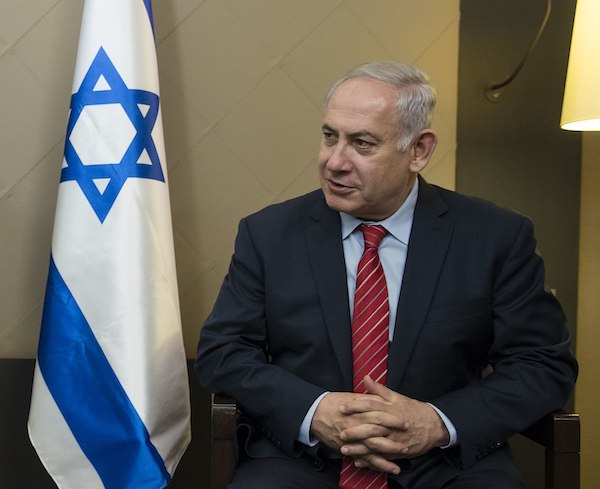
Minister and MP Harjit Sajjan speaks at the Jewish Community Centre of Greater Vancouver on Dec. 5, while Jewish Federation chief executive officer Ezra Shanken looks on. (photo from Jewish Federation)
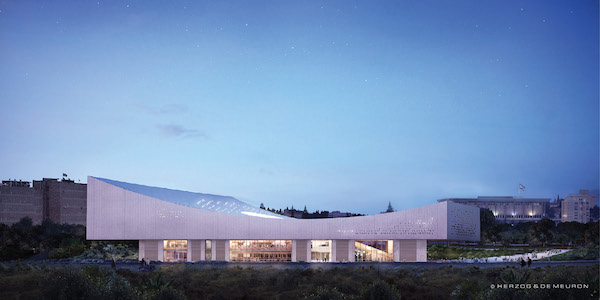
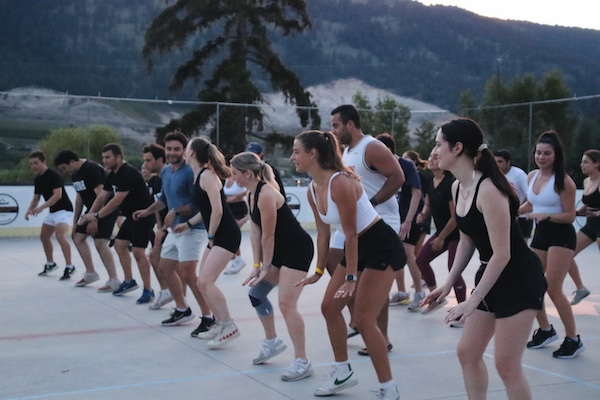
On Dec. 5, the Jewish Community Centre of Greater Vancouver (JCC) announced that it has received $25 million in support from the Government of Canada through the Department of Canadian Heritage. The funding will be used for the redevelopment of the 3.3-acre property at West 41st and Oak Street. It will support the transformation of the JCC into a state-of-the-art multigenerational community hub in the Oakridge area with more childcare spaces, expanded seniors programs, arts and cultural spaces, and an expanded Vancouver Holocaust Education Centre.
“The Government of Canada stands with Jewish communities across Canada and around the world. Today’s investment is part of our commitment to an inclusive Canada that is strong and proud of its diversity. Supporting cultural facilities is essential, not only to retain their viability today, but to help them flourish for generations to come,” said Minister of Canadian Heritage Pablo Rodriguez.
“The Jewish Community Centre of Greater Vancouver is now another step closer to building a larger community hub where Vancouverites of all backgrounds can connect through shared experiences, while allowing the centre to continue providing services and supports that enrich quality of life in our city,” said Harjit Sajjan, minister of international development, minister responsible for the Pacific Economic Development Agency of Canada and member of Parliament (Vancouver South).
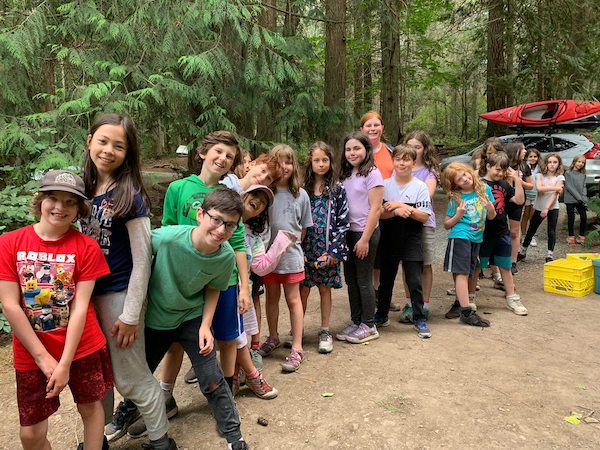
Minister and MP Harjit Sajjan took some time out to meet some of the kids at the centre; MP Taleeb Noormohamed is standing to the minister’s right. (photo from Jewish Federation)
The redevelopment of the JCC is the cornerstone of the overall site redevelopment plan, which will also provide permanent homes for more than 20 not-for-profit community organizations and two residential towers that will provide mixed-use rental housing, some to be at below-market rates.
The JCC, Jewish Federation of Greater Vancouver and King David High School have signed a memorandum of understanding that will see them work together to fulfil a shared vision rooted in extensive community and public consultation.
“The funding from the Government of Canada through the Department of Canadian Heritage contributes the resources necessary to support and sustain the Jewish community in Vancouver,” said Eldad Goldfarb, executive director of the JCC.
“The new space is poised to be a connection point that people of all ages and from all walks of life can enjoy for generations to come, and the legacy of this redevelopment will last a lifetime,” he added.
“This announcement is the result of efforts that spanned many years,” said Ezra Shanken, Jewish Federation chief executive officer. “We want to thank the Government of Canada and our advocacy agent, the Centre for Israel and Jewish Affairs, for their work on this.”
Monday’s announcement builds on the $25 million funding provided in 2021 by the B.C. government and a $25 million gift and community match from the Diamond Foundation.
– Courtesy Government of Canada and
Jewish Community Centre of Greater Vancouver
Anita Neville’s swearing-in ceremony on Oct. 24 included the blasts of a shofar blown by her rabbi, Anibal Mass. (screenshot)
Anita Neville says she “feels the responsibility” of being the first Jewish person to be appointed as the lieutenant governor of Manitoba – an office she was sworn into on Oct. 24, using a Hebrew Bible.
For the next five years, the vice-regal residence in Winnipeg will be where Neville calls home. And she was quick to start carrying out official duties like laying the first wreath during the province’s Remembrance Day ceremony, and reading the government’s Speech from the Throne to open a new Manitoba Legislature session on Nov. 15.
“The whole thing is new. The protocol is new. I’m fortunate that there are very knowledgeable, experienced people around me, so that makes it easier,” Neville told The CJN Daily in an interview from Government House, acknowledging that she has a steep learning curve for her new role.
Which is why, shortly after her swearing-in, Neville flew off to attend a round of orientation meetings. She also learned that she will be going to Buckingham Palace, at some point, to present her credentials to King Charles III.
“There are three others who have not presented their credentials to the monarch, so there are four of us in line,” said Neville. “I don’t know where I am in the order, but I look forward to it very much.”
Couldn’t lose face with grandson
Neville was at her cottage with her grandchildren in July when Prime Minister Justin Trudeau called to offer the position. She took time to think about whether she wanted this very public role. After all, she already had a fulfilling career in community service, including as chair of the city’s public school board, and then 11 years as the Liberal member of Parliament for Winnipeg South Centre, from 2000 to 2011. She’s also deeply involved in Jewish community matters, with her synagogue Shaarey Zedek, and the Jewish Heritage Centre of Western Canada.
At first, some members of Neville’s family were worried the new position might be too much for their 80-year-old mother and grandmother.
“I’ve got a very bad back,” she said. Neville walks with the assistance of a cane.
But her decision was made after she thought about her grandparents and her roots, having been born in the traditional Jewish immigrant neighbourhood in the North End of the city, then growing up after the Second World War, when barriers to advancement still existed for Jews.
What clinched it was when a grandson scolded her and said, “How could you not take the job? How many people get this opportunity?” Neville felt that she didn’t “want to lose face with Aaron.”
Considering saying no was “beyond his comprehension,” she said.
Jewish and Indigenous touches
The 26th lieutenant governor in Manitoba’s history made sure to put her own stamp on the official swearing-in. The formal ceremony was full of Jewish symbolism.
It not only involved her choice of Bible to swear the oath, but it also had the piercing blasts of a shofar blown by her rabbi, Anibal Mass – who delivered blessings and then led the audience with a loud “Mazel tov!”
The opportunity is something the daughter of Russian Jewish immigrants in Winnipeg’s North End never dreamed would be possible for somebody with such origins.
In her speech, Neville told the audience that her grandparents fled Bessarabia and Odessa a century ago, to escape a climate of murderous antisemitism, and to find freedom and opportunity in Canada.
“I wanted … the larger community of Manitoba to be aware of who I am and where I came from,” she said. “I did it thoughtfully. I don’t think I was over the top.”
It wasn’t only having Jewish rituals that marked a departure from previous swearing-in ceremonies. Neville pushed to include Indigenous people in the program, which she claims is the first time this has happened. It stems from her own decades of work on their behalf, and it will likely be a key part of her mandate.
An Indigenous elder, Myra Laramee of the Fisher River Cree Nation, delivered an invocation during the ceremony, and even called her longtime Jewish friend by the title of “Auntie.”
A positive signal: Neville
Neville’s swearing-in also came just three days before the Manitoba government adopted the International Holocaust Remembrance Alliance definition of antisemitism, becoming the fifth Canadian province to do so. (Canada adopted it nationally in 2019.)
While she did not have anything to do with the timing, and did not work behind the scenes on that file, Neville agrees both things are good for Jews.
“I think, for the Jewish community, it is a signal of positive acceptance, integration,” Neville said. “Not that it wasn’t there before, but it’s a kind of stamp. It’s like getting a check mark.”
Neville isn’t the first Jewish person to hold a similar appointment in Canada: that milestone was pioneered by Myra Freedman, who served as Nova Scotia’s lieutenant governor from 2000 to 2006. (Freedman held Shabbat dinners at the official residence and kept kosher.)
For her part, Neville plans to install a mezuzah at the entrance to her private quarters when she moves into the century-old Government House. And she won’t serve pork or shellfish.
When she was initially appointed, a friend immediately called
her, half-jokingly anticipating an invitation for the fast-breaking meal at the end of Yom Kippur. All Neville can say to that for now is, “We’ll see.”
Centre-left stance on Israel
Neville is a long-standing supporter of Israel, and her appointment comes amid rising antisemitism, including a torrent of hate for Israel and Zionism.
B’nai Brith Canada’s annual audit reported 223 anti-Jewish incidents in Manitoba last year, up from 92 in 2020, and 83 the year before that, according to Janna Minikovich, a spokesperson for the group.
Does Neville fear becoming a target for anti-Jewish sentiment in her new role? During her days in Parliament, she remembers receiving some hate mail, but she declined to comment further on her current opinions on Israel, besides describing those views as “centre left.”
Neville co-chaired the Liberal Parliamentarians for Israel caucus when she was an MP. Moreover, in the House of Commons, she raised the plight of the 800,000 Jewish refugees expelled from Arab lands, saying people needed to pay attention to this historic injustice.
But she also criticized Stephen Harper’s Conservative government for cutting federal funding to KAIROS Canada, an aid agency supported by several churches. The group supports the boycott, divestment and sanctions movement against Israel as a method of combating what it considers oppression of Palestinians. (Neville said at the time that, without clear explanations of the change in funding, it appeared Canada was stifling criticism of Israel.)
Operation Ezra volunteer
Neville has long been an advocate for social justice causes. One that is dear to her heart involves her work with a Jewish-led rescue organization in Winnipeg, Operation Ezra. The group has worked with other faith communities since 2015, to help bring 65 Yazidi refugees to Canada. (The federal government has brought in hundreds more under a federal sponsorship program starting in 2017.)
In between rehearsals for the Speech from the Throne and planning her move-in date to her new quarters, Neville made sure to turn up at the Winnipeg airport to greet the latest new arrival.
Ayad Alhussein, now 13, was captured by ISIS forces in 2014 – along with his entire family – when the Islamic extremists took over much of Iraq and Syria and set up a caliphate. Yazidis are not Muslims, and they were ordered to convert, or be killed. Ayad was just 5 years old at the time, and was kept prisoner for five years, until he escaped. He had been living in a displaced persons camp in Iraq, while two of his surviving sisters made it to Canada.
According to Michel Aziza, co-chair of Operation Ezra, it took constant pressure by the committee on local MPs and on immigration officials to get Ayad’s paperwork processed. “The world moved on, from Yazidis, to Afghans, to Ukrainians,” said a frustrated Aziza after Neville welcomed the slightly overwhelmed teenager.
Scenes like this underline why Neville’s swearing-in speech referred to her core values of “tikkun olam and tzedakah,” referring to herself as a descendent of refugees.
“I know that the Jewish community … because of what [feedback] I’ve received, has been very happy and very pleased with my appointment. And I feel the responsibility of it, let me tell you.”
Jewish Addiction Community Services (JACS) estimates that one in six members of the Jewish community in Metro Vancouver – or more than 4,000 people – are in need of support for dealing with substance use disorder. And yet, it is a topic that many of us find hard to talk openly about.
“I grew up around alcoholism in the home. There was shame in the family that dad had a drinking problem, and it affected my childhood, there is no doubt,” said L, who had the courage to speak with the Independent about their experience with alcoholism. “My dad was an angry drunk and he’d be embarrassing in public. He didn’t show up for commitments and didn’t turn out to be a very good father. I got to the point where I didn’t count on him because I couldn’t, and I resolved that with myself at a young age.
“Yet, there was a part of his life that was enticing and rather exciting for me,” added L, now a sober member of Alcoholics Anonymous (AA) and a participant in JACS Vancouver. “When my father would pick me up on a Friday night, we would head to the bar. I thought it was something fun, better than my boring life at home.
“I would be excited to play the bar games and drink Shirley Temples, but I was way too young to be in that environment, way too young to have my views shaped by those experiences.”
Although these tavern trips took place when L was in junior high school, they considered it normal. “I didn’t realize there were no other kids in the bar. It seems weird to me now that no one objected,” L reflected.
L grew up in an environment where Judaism was not talked about much, either. “There was already a stigma within a stigma. There was a great shame about being Jewish. Being Jewish was rarely discussed, the same way Dad’s drinking was rarely discussed. Both topics became elephants in the room.
“I think what I draw from that experience is that I really believe the disease of alcoholism is genetic; it seems to run in families,” L said. “All I needed was that environment to stir up that excitement. My dad had a full wet bar at home, and I just loved it. I was drawn to it like a magnet because I associated it with fun Friday nights when Dad took us to the bar.”
L’s father’s drinking led to L’s mother divorcing him when L was 5. There remained trauma within the home – matters that were not openly discussed – and alcohol presented a means “to take the edge off.”
L established their own relationship with alcohol and began drinking and using drugs as much as possible.
“I was the perfect rebellious child,” L said. “I found ways to drink – whether stealing it from my parents’ liquor cabinet or sneaking out at night to hang out with older kids to drink. I used to hide it in my room. I kept a mason jar of whiskey in my closet.”
As L’s dependence increased so, too, did their obsession to drown out reality. “In high school, I would sneak out to drink and do drugs. I would put a trashcan beside my bed so I would have a place to throw up when returning home. This way, I wouldn’t risk waking my parents, because my bathroom was right next to their bedroom. I was pretty far gone by high school. The more I drank, the less I was interested in life around me. I dropped out of school and then left the house at 16.”
The reliance on alcohol remained for another 10 years. Family members disassociated themselves and L eventually sought help. By the time L “hit bottom,” a phrase used in AA to describe the lowest moment in an alcoholic’s drinking experience, they were “unemployed, suicidal and physically dependent on alcohol to function on a daily basis.”
“I didn’t fashion myself to be that bad, yet I didn’t have any friends left,” said L. “No social network, I was very isolated. I didn’t leave my house anymore. I didn’t check the mail. I couldn’t even go to the grocery store without being drunk or high. I ended up going to a counselor, who thought I should go to an AA meeting. I thought that sounded horrible; I was only 26. AA sounded like it was for a bunch of old men and winos who lived under a bridge. However, my counselor said, ‘It has to be better than the way you’re living now.’”
Though there were struggles initially in attending AA meetings, L picked up a desire chip (sobriety coin) in August 1997 and has not had a drink or drug since, recently celebrating 25 years of continuous sobriety. L remains active in AA, and sponsors others who are looking for relief from their alcoholism.
AA, though it often holds meetings in churches, is a non-denominational program. “I am very steeped in Alcoholics Anonymous and that’s my central connection with sobriety,” L said. “It wasn’t until a Jewish friend in AA told me about JACS that I was able to reconcile my long-standing concern with the Christian side of AA.”
After attending some JACS meetings, L felt relieved that they could talk openly about their Judaism, which had been a sticking point for L in AA. Through JACS, L was introduced to the book Twelve Jewish Steps to Recovery, by Rabbi Kerry M. Olitzky and Dr. Stuart A. Copans.
“Just reading the foreword to that book helped me better understand that AA’s founder, Bill W., was only using the God of his understanding, which happened to be based in Christianity, to write the outline for sobriety in the AA literature.”
This realization was a profound moment for L, since they always “railed against [the Christian] part of the AA program,” saying “that never felt right.”
“All of a sudden,” L said, “I realized that AA wasn’t Christian at all, only Bill’s concept of his higher power was. AA allows me to choose the concept of my own higher power, which is based in Judaism.”
Becoming more involved with JACS has opened a whole new perspective for L, which was not found in AA meetings alone. “I couldn’t be more grateful for finding this missing piece of the puzzle at JACS and for the continued support of Shelley Karrel, who runs the Vancouver chapter,” said L, who attributes this shift to becoming more involved in the Jewish community and reconnecting with their lost Judaism.
“I would not have had this spiritual awakening without being more connected to my community and being introduced to JACS,” L said. “Being able to finally connect my sobriety with Judaism feels like coming home for me.
“When I think about my father’s demise – a sad and lonely alcoholic death – I know that could have been my fate as well. There isn’t a day that goes by without being reminded of where I came from and how grateful I am that I survived. I did not have to die by suicide, or alone with a bottle hidden away in my closet. I was given a new life. A sober life.
“Thinking about drinking is the furthest thing from my mind today,” said L. “It used to be the only thing I thought about 25 years ago. The obsession has been removed. I am completely safe and sound when it comes to alcohol now, as long as I stay active in AA and keep on the path of spiritual growth.”
For more information on available resources and support – within and beyond the Jewish community – visit jacsvancouver.com.
Sam Margolishas written for the Globe and Mail, the National Post, UPI and MSNBC.
King David High School’s Holocaust and Genocide Studies 12 class with Liliane Pari Umuhoza. (photo from KDHS)
On Nov. 24, King David High School Holocaust and Genocide Studies 12 teacher Anna-Mae Wiesenthal invited a guest speaker. The class had the opportunity to hear from Liliane Pari Umuhoza, a child survivor of the Rwandan genocide, who is currently doing a master’s degree at the University of British Columbia.
Hearing Umuhoza’s personal story of healing from trauma, as well as her work with other survivors of the genocide, gave our class a better understanding about how genocide affects individuals and how to help them with their personal growth. Especially interesting was hearing about her involvement with the Survivors Fund, and her process of helping women share their stories from the Rwandan genocide. Having Umuhoza speak to our class was an experience we will never forget, and that we will continue to learn from.
Emma Silber is a Grade 12 student at King David High School.
Toby Rubin was invested as the new president of CHW Vancouver on Oct. 16. (photo by Sid Akselrod)
A vast amount of progress has been made in gender equality in recent decades, but organizations where women come together for philanthropic work and social connections remain desirable and necessary, says Toby Rubin, the new president of CHW Vancouver.
Founded by Jewish women in 1917, after a visit from Hadassah founder Henrietta Szold, CHW started out as Hadassah Organization of Canada. In 1921, Canadian Hadassah affiliated with World WIZO and became known Hadassah-WIZO Organization of Canada (later condensed to Canadian Hadassah-WIZO). CHW defines itself as a non-political, non-partisan, national network of dedicated volunteers who believe that excellence and advancement of education, healthcare and social services transcend politics, religion and national boundaries.
Rubin has been a volunteer with the local chapter of the organization for years and was invested as the president at an event Oct. 16 at the Richmond Country Club. In an interview with the Independent, she attempted to dispel some misconceptions.
First and foremost, she said, is the concept that CHW “is a bubbe organization.”
“We have really changed,” she said. A new chapter of 25-to-40-year-old women – including Rubin’s daughter and a cadre of new leaders who were centre-stage at the installation luncheon – has launched and already held their first fundraising event. They raised $5,000 for JOLT, a leadership development curriculum being developed by Young Judaea Canada.
Another misconception, Rubin said, is that all funds from CHW’s philanthropy go to Israel. Rubin and a group of Canadian activists have just returned from a tour of Hadassah projects in Israel, but she stressed that local and Canadian projects are also supported by the chapter’s work. Among the initiatives the group supports is SOS, Starting Over Safely, for victims of domestic violence; scholarships for an LGBTQ+ kids’ camp; and Franny’s Fund.
The latter program was launched by Rebecca Snukal, a Calgary defence lawyer with two decades of experience navigating the legal system and social safety net through some emotionally and administratively perilous cases. But when she and her own family were rocked by crisis, she came to understand how unwieldy the system is – even people with expertise in the field have challenges accessing the legal and psychological supports they require. Snukal was the guest speaker at the October event.
Something that Rubin especially wants to dispel is the idea that CHW’s work is accessible only to Jews. The foremost example, she said, comes from Hadassah Medical Centre in Israel, where triage is based on medical need, to the extent that injured terrorists have been treated based on the severity of their condition alongside victims of their attack.
Also at the meeting, Daniella Givon, a past president, was honoured for her many years of commitment to the organization and the broader community. The meeting also expressed gratitude to outgoing presidents Stephanie Rusen and Sasha Gerson.
Daniella Givon, left, and Sasha Gerson. Givon is a past president of CHW and Gerson is one of the outgoing presidents this year, along with Stephanie Rusen. (photo by Sid Akselrod)
In addition to her role with CHW, Rubin is co-executive director of Kehila Society of Richmond, which connects Jewish people in Richmond with one another and with businesses, health and social service agencies and community resources. She is also a board member of Jewish Seniors Alliance and Better at Home committee of the City of Richmond.
Rubin comes to CHW naturally – her mother, Linda Hilford, is a member and both her grandmothers, Vera Himelfarb and Rae Moss, were involved on the Prairies back in the day.
The enthusiasm Rubin and other members of the local chapter exhibit is a reflection, she said, of exciting changes at the national level where, under the fresh leadership of national chief executive officer Lisa Colt-Kotler, the organization has seen dramatic progress in the past couple of years.
“She’s just really pumped energy into it and she’s updated it, and is working at making us more mainstream,” Rubin said of Colt-Kotler. Technology has been a boon, she added, allowing members from across the country to conveniently meet regularly without getting on a plane.
Times have changed from when a large proportion of Canadian women did not work outside the home. But those social and economic changes have not altered one fundamental need, said Rubin.
“We are really about bringing women together, to empower them in their philanthropic needs and introduce them and network them with other women,” she said. “We just want them to meet each other, be there, support each other, share their resources. Ultimately, what brought me to this organization 30 years ago – aside from the fact that I have grandparents and a mom who were involved and I love Israel – was women. The ceiling has broken in those 30 years but it’s still there and we need to be there for each other.”
For decades, CHW was most closely associated in the public mind with Hadassah Bazaar, a massive undertaking that ended about 15 years ago. The explosive growth of thrift stores, combined with the immense resources required to execute the annual event, led to the decision to end the tradition. But Rubin said a new initiative is soon to launch nationally that nods to that history – possibly an online version of the bazaar or something similar. Plans are in development.
Things have come a long way, but Rubin said expectations have grown in some ways and getting together with women experiencing similar things is no less valuable than it was in her mother’s or her grandmothers’ time.
“I think women still have a long way to go and we need to support each other and be there for each other, lift each other up,” she said. “I’m trying to be a mom and I’m trying to do a job and I can’t be Superwoman and [it’s good] to know that’s OK – nobody is. I think that’s truly, truly important.”
Archer’s Westberry Farms Hive dessert. (photo by Diane Tucker)
Opening several weeks ago, just in time for winter holiday festivities, Archer restaurant is the newest contribution to Vancouver’s fine dining scene from restaurateur Iain Bell, a member of the Jewish community.
Located at 1152 Alberni St., near Bute, the intimate West Coast vibe of the interior perfectly complements the inventive farm-to-table menu created by executive chef Sandy Chen, whose culinary chops include winner of B.C. Chef of the Year and Chef of the Year in the Canadian Culinary Federation national culinary competition. Working together with Chen is director of operations Clement Chan, whose credits are equally as impressive: chef/owner at Torafuku, contestant on Top Chef Canada and Team Canada member at World Culinary Olympics. Their team is ably completed by pastry chef Kiko Nakata and executive sous chef Siosian Tora.
Full disclosure, Iain and his wife Delaina are good friends and a group of us met to enjoy an evening of conversation and great food. We decided to sample the Chef’s Choice menu, as it seemed the best way to test the varied and enticing fare. This menu is available at a cost of $80/person for 10 shared dishes or $120/person for 12 shared dishes, plus tax. The offerings were small plates with local, fresh ingredients.
The burrata and endive salad, featuring warm burrata cheese, roasted beets, greens and toasted walnuts finished with a miso dressing, was my personal favourite. Another pleaser for me was the beautifully presented – in a smoke-filled glass terrarium, filled with objects reminiscent of a West Coast beach on a foggy day – Kusshi oysters on the half shell. The briny taste explosion, enhanced by sour apple, Ikura and miso mayo motoyaki, hit my palate and completed the sensory experience.
Among Archer’s many offerings was a salmon crudo. (photo by Diane Tucker)
Many other shareable courses later, all artfully presented, our group of six argued contentedly about our choices for top three dishes. With consensus reached, in no particular order, the three were: the salmon crudo, local salmon flavoured with compressed jalapeno, black coral, pinakurat coconut nage and topped with a castelvetrano crouton; the dill and coriander chicken wings; and the Westberry Farms Hive, a visually stunning dessert consisting of a meringue hive filled with Westberry Farms blueberry compote, dotted with yuzu curd and lime and Tahitian vanilla crème.
If a tasting menu is not your thing, then the sable fish en papillote with baby zucchini and kabocha squash comes highly recommended, as does the tempura-style rack of lamb with candied shallots. Since the menu changes regularly – remember it’s all about fresh farm-to-table availability – I recommend that you dine here and find your own personal favourites.
The wine list is varied with several wines available by the glass. There is also a decent cocktail and beer menu. Reservations are recommended and can be booked by calling 778-737-6218. The restaurant is open Wednesday through Sunday, from 5:30 pm. Visit archerdining.com.
Leanne Jacobsenwas the Jewish Independent’s sales director for more than 25 years and she continues to be an occasional contributor to the newspaper.
Vancouverite Eitan Nurick, right, with Aardvark madrich (counselor) Alon. (photo from Aardvark Israel)
“When my siblings came back from their year abroad and couldn’t stop raving about it, I couldn’t help but experience it myself. When the day came and the program started, I was anxious, as expected, but mostly excited,” said Eitan Nurick, 18, who went to King David High School.
Nurick was referring to Aardvark Israel, which offers four-to-10-month gap-year programs in Jerusalem and Tel Aviv, specializing in internships; volunteering, partnered with Masa Israel Journey and Israel Volunteering Association; and technology, partnered with the Developers Institute.
“The biggest learning curve was definitely figuring out how to live with four complete strangers,” said Nurick, from Tel Aviv. “I learned that the most important thing to do was to communicate and let your roommates know what you need, eventually coming to a decision that works for everyone.
“Something that I have been especially loving is my internship,” he said. “I work at Inklude, a tattoo studio…. While running the social media, and overall helping out around the studio, I have also been given the opportunity to learn how to tattoo, which ties in perfectly with my love for art. I really feel like I have been welcomed into the workplace and have made meaningful connections with my co-workers. So far, my experience in Israel and with Aardvark Israel has been amazing. I have been able to strengthen my bond with my religion and culture, as well as learn lifelong skills that will stick with me forever.”
Toronto student Lisa Fireman, 18, who attended TanenbaumCHAT high school, also is benefiting from her internship, which is at Eden Gallery in Tel Aviv. She described it as her favourite part of Aardvark.
“I am currently helping plan four events for Art Basel in Miami,” she said. “This has been the experience of a lifetime for me. I love my boss here and feel as if I am being trusted and treated as a real member of the Eden Gallery team. As someone going into art history in university, this could not be a more ideal internship. I love spending my days at the gallery, knowing that this experience will help me in my future path.”
She admitted, “It can be stressful living alone, but I wouldn’t want to do it in any other way. I have gained so much independence, friends I love with my whole heart, and a job that makes me feel so fulfilled.”
Toronto’s Lisa Fireman, second from the left, on a Shabbaton with fellow Aardvarkians Maya, Hayley and Dina. (photo from Aardvark Israel)
Fireman is preparing for her spring semester in Jerusalem.
“A lot of the gap year promotional testimonies write as if gap year is all peaches and sunshine,” she said. “While they aren’t wrong about how much fun it can be, being on Aardvark is so much more than that. My gap year story started last October, when my best friends were considering gap year programs. Out of a fear of going into college without them, I started looking into Aardvark Israel…. I fell so hard for the program that, even when all of my friends eventually decided against gap year, I still committed to spending time on Aardvark. So I went. Absolutely alone. And it was as terrifying as it sounds.”
Fireman had anxiety surrounding making new friends, but put herself out there anyway.
“I did this by asking people to be my ‘bus buddy’ on Tiyul Tuesdays, going to Wednesday night programming, and hosting Shabbat dinners,” she said. “I started to realize that everyone on Aardvark is just as alone as I was. We all had come from around the world and had to create our inner circle … so everyone was open and actively putting themselves into new social situations.”
Last month, Aardvark Israel’s first international trip since COVID took place – five days in the Czech Republic. Both Nurick and Fireman participated. Both students moved to Israel last August.
Prof. Simon Barak of the Jacob Blaustein Institutes for Desert Research at Ben-Gurion University of the Negev, right, is coordinating all the plant biologists and imaging specialists. (photo from CABGU)
Can plants grow in a barren landscape such as the surface of the moon? If so, what types of plants? Could enough plants grow to support a future moon colony? These are the types of questions the Lunaria One consortium has set out to answer.
An experiment proposed by Lunaria One, known as Aleph, was selected by SpaceIL, a nonprofit aerospace organization, to be included as one of the payloads on board their Beresheet2 lander. The Beresheet2 mission, scheduled to launch in mid-2025, will consist of two landers, landing on each side of the moon, and an orbiter that will continue to orbit the moon for up to five years. Aleph will consist of a tray of seeds and dehydrated plants, a device that will water them, heaters and cameras to monitor the plants.
Prof. Simon Barak of the Jacob Blaustein Institutes for Desert Research (BIDR) at Ben-Gurion University of the Negev is coordinating all the plant biologists and imaging specialists. They include three Australians, one South African and two of his colleagues from BIDR at Ben-Gurion University: Prof. Aaron Fait and Dr. Tarin Paz-Kagan.
“The chosen experiment has enormous value both for our life here on earth and for humanity’s progress in space exploration,” said Shimon Sarid, SpaceIL chief executive officer. “Examining plant growth under extreme conditions will help us as far as food security is concerned. Plant growth in extreme conditions will help humanity in the long run. We are happy to cooperate with Lunaria One and are very excited.”
“The motivation for this mission comes from humanity’s passion to explore and see life thrive in barren landscapes,” explained Barak. “We see the Aleph payload as an important step towards our eventual goal of providing plants for food, medicine, oxygen production, CO₂-scrubbing and general well-being for future astronauts inhabiting the moon and beyond.”
“The central value guiding this project is that space exploration is for everyone; we don’t want a future where only autonomous and remote-controlled machines inhabit realms beyond earth, but where humans can live and thrive,” said Lunaria One director Lauren Fell. “The key to this is to get humans involved and to give them a say in how we get there. The Aleph project aims to open up the science and engineering behind growing life on the moon so that anyone can be involved.”
Growing plants on the moon means overcoming several challenges, such as massive temperature swings on the way to the moon, a water supply for the plants, and high temperatures when growing the plants. The plant types will need to be those that can germinate and grow to an appropriate size for imaging within 72 hours of deployment.
The research team expects their plant selections to be relevant for vertical farming and resource-challenged landscapes here on earth.
The project also has a strong citizen science component. Parallel science experiments will be carried out by amateurs (for example, high school students) and professionals to compare growth to that on the moon.
Additional universities participating in Lunaria One include Queensland University of Technology, the Royal Melbourne Institute of Technology and the Australian National University, in Australia, and the University of Cape Town, in South Africa.
“The earth is finite,” said Barak. “Its resources are finite. So humanity’s future depends upon reaching the stars.”
– Courtesy Canadian Associates of Ben-Gurion University of the Negev
Holocaust survivors participate in the candlelighting ceremony at the community’s Kristallnacht commemoration Nov. 9. (photo by Al Szajman)
Commemorating the Holocaust and the sad succession of genocides that have been perpetrated since is a sacred responsibility – but it is not enough, says Liliane Pari Umuhoza. That memory must be the motivation that drives people to make a better world, she said.
Umuhoza was 2 years old when her father and a million others were murdered during the Genocide Against the Tutsis of Rwanda, in 1994. After experiencing trauma in her adolescence due to that familial and communal history, Umuhoza has devoted her life to commemorating and educating about the genocide and encouraging people to dedicate themselves to healing their societies.
“When we remember, we help ensure that the memories and legacies of the victims and survivors continue to resonate for future generations,” she said at Vancouver’s community Kristallnacht commemoration Nov. 9. “When we remember, we learn about the history and create awareness. But that’s not enough. What matters the most is how we use that history to create a better world.”
The annual event took place at Beth Israel synagogue on the 84th anniversary of Kristallnacht, the “Night of Broken Glass,” on Nov. 9-10, 1938, which is the moment when anti-Jewish regulations and systemic discrimination turned into overt violence and murder. It is seen by many historians as the effective beginning of the Holocaust.
The event was presented by the Vancouver Holocaust Education Centre (VHEC), in partnership with Congregation Beth Israel and with support from the Robert and Marilyn Krell Endowment Fund of the VHEC and from the Jewish Federation of Greater Vancouver annual campaign.
Umuhoza arrived in Vancouver several months ago to attend the University of British Columbia, where she is pursuing a master’s degree in public policy and global affairs. She is founder of the Women Genocide Survivors Retreat and is project officer for Foundation Rwanda, which provides funding for education to those who were born from rape during the genocide.
She began by outlining her own family’s history.
“I was 2 years old in the genocide of the Tutsis in Rwanda,” she said. “During this tragedy, my father was killed. Some of my uncles, aunties, cousins and many other members of my extended family are among the million Tutsi who were killed by the Hutu extremists in 100 days.
“One million people were killed in 100 days,” she stressed. “I was lucky to survive with my mother, who managed to escape to a neighbouring country, Congo, holding me, a 2-year-old baby, where we lived as refugees until it was safe enough for us to go back to Rwanda.”
She considers herself fortunate in comparison with many of her peers.
“I now have a stepfather and stepsiblings and I cannot tell you how blessed I feel because most of my friends from home grew up without a father or a mother figure in their lives,” she said.
Umuhoza was too young to understand what was happening at the time, she said. “But I grew up facing the consequences of that tragedy in every corner of my life. As many of you may know, psychologically, young children between the age of 0 and 5 are the most vulnerable to the effects of trauma since their brains are in the early development stage. For most people who have been exposed to genocide or war as children, the trauma can become severe at the adolescent stage and adulthood, if it is not properly treated.”
At the age of 12, Umuhoza began to exhibit symptoms of trauma, including depression, post-traumatic stress, nightmares, frustration, anger and confusion. She used the strength of others as an example to recover, including a friend who had to take on the parent role from childhood after she and her younger siblings were orphaned. Umuhoza is now deeply immersed in often deeply difficult aspects of education, such as translating the narratives of other survivors through Foundation Rwanda.
“My role with this organization was to listen to the stories of these women in their Rwandan mother language and translate the stories in English so we could use those stories to create awareness and educate the world about the genocide and its ongoing consequences,” she said. “I found myself in a series of stories I’d never heard before … stories of mass murder, stories of pain, stories of rape.”
One of the lessons she learned from the genocide is to never tolerate injustice, no matter how big or small, Umuhoza said.
“Speak up and raise your voice when you see or hear people denying that the Holocaust happened,” she said. “Speak up when you hear people saying that the genocide did not happen. Speak up when you see minorities being unfairly treated. Speak up when you see women in Tehran being oppressed. Let’s dare to step out of our common comfort zone and cultivate empathy to people around us.”
She concluded: “Individually, we can change our communities. But together we can change the world.”
Liliane Pari Umuhoza speaks with Prof. Chris Friedrichs at the Kristallnacht commemoration, which took place at Beth Israel. (photo by Al Szajman)
Earlier in the evening, Prof. Chris Friedrichs contextualized the history of the Holocaust, emphasizing the importance of synagogues as a place of refuge for Jewish communities. The Kristallnacht commemoration has been taking place in the sanctuary of Beth Israel for more than 40 years, he said.
There were more than 1,000 synagogues in Germany at the time of Kristallnacht, he noted, some many centuries old, while others were newer, having been dedicated in the presence of senior German officials, clergy and others, a testament to the apparent solidity of the Jewish community’s place in the country.
“But then, beginning in 1933, everything started to change,” said Friedrichs, professor emeritus of history at UBC. “Once the Nazis came to power, Germans were taught to shun their Jewish neighbours. Jews were banned from public places. They could no longer go to the theatre or walk in the park or send their children to public schools. But one place was still open to them – their own synagogues, where they could gather to worship or study or simply spend time with their fellow Jews. And so it was until Nov. 9, 1938, when, in one carefully orchestrated nationwide night of terror, hundreds of synagogues all over Germany were set aflame, thousands of Jews were arrested, over 100 were killed. The next morning, Jews found their synagogues turned into empty shells and the windows of their shops shattered into broken shards of glass and the contents plundered. No Jew in Germany ever forgot that night of broken glass, Kristallnacht.”
Irwin Cotler, Canada’s special envoy on preserving Holocaust remembrance and combatting antisemitism, spoke via video link to the audience.
Of the Holocaust, he said, “It was a continuation and manifestation of history’s oldest, longest, most enduring and most toxic of hatreds, antisemitism, a hatred that mutates and metastasizes over time, which is grounded in one generic, historical, foundational, conspiratorial trope of the Jews – the Jewish people, the Jewish state – as the enemy of all that is good and the embodiment of all that is evil, which led, therefore, to the demonization and dehumanization of the Jew as prologue and justification for Kristallnacht and the Holocaust.”
A parallel between the Holocaust and the genocide against the Tutsis, he said, is that they were preventable.
“Nobody could say we did not know,” said Cotler. “We knew, but we did not act.”
Corinne Zimmerman, president of the VHEC, opened the event. Nina Kreiger, executive director, introduced the speakers and acknowledged dignitaries in attendance.
Beth Israel’s Rabbi Jonathan Infeld, a child of Holocaust survivors, thanked Umuhoza and reflected on her words and those of other speakers. He understands the idea of trauma being passed down through generations, he said. Reflecting on Friedrichs’ discussion of the centrality of the synagogue in Jewish life, Infeld said his spiritual leadership of the congregation during the construction of the new synagogue building was a form of response to the history of his family and the Jewish people.
Elected officials also spoke at the ceremony. Taleeb Noormohamad, member of Parliament for Vancouver Granville, spoke of his first trip to Berlin, where he walked around the streets of the old Jewish district.
“As somebody who had never really seen firsthand until that trip the horrors of what had happened to the Jewish community and to so many others,” said Noormohamad, “in that moment you come to realize the absolute inexplicable horror that was cast upon people and what it does to people, to communities, to families and to the histories of people.”
He committed to standing with the Jewish community against discrimination and noted the diversity of the audience, which included himself, a Muslim Canadian; Michael Lee, a Chinese-Canadian member of the legislature; and Ken Sim, a Chinese-Canadian mayor.
Parm Bains, member of Parliament for Steveston-Richmond East, was also present, as was Marc Eichhorn, consul general of Germany in Vancouver.
“Antisemitism is not a problem, a fight, that is for the Jewish community alone,” Noormohamad said. “When you look in this room today, we are all in this together. This is our community. You are our family and the remembrance of what happened is our responsibility as much as it is yours.”
Vancouver Holocaust Education Centre president Corinne Zimmerman, left, and VHEC executive director Nina Kreiger with MP Taleeb Noormohamad. (photo by Al Szajman)
The Kristallnacht commemoration was the first official community event for Sim, who was sworn in as mayor of Vancouver three days before. He, too, spoke of visiting Germany, along with his wife and their four sons, where they witnessed the Memorial to the Murdered Jews of Europe and pondered the Stolpersteine, the “stumbling stones” that have been installed to mark the places where victims of Nazi extermination or persecution lived. The family, he said, has also visited Auschwitz, in Poland, and the United States Holocaust Memorial Museum, in Washington, D.C.
During the recent election campaign, Sim promised that, as mayor, he would promote the adoption of the International Holocaust Remembrance Alliance Working Definition of Antisemitism, which the previous council failed to do. He repeated his commitment at the ceremony, and council passed the motion on Nov. 16. (Click here and here for stories.)
Sim was joined at the event by Vancouver Councilor Sarah Kirby-Yung, who Sim credited as a stalwart ally of the Jewish community. Together, they read the official proclamation from the City of Vancouver.
“Out of the shards of destruction, in this case the glass on the night of Kristallnacht, often are born the glimmers of hope,” said Kirby-Yung, “and I think that is what keeps all of us going. It is the resilience and faith and the hope of the Jewish community that I think embodies the spirit of what we aspire to deliver here in the city of Vancouver.”
Reuben (Rube) Sinclair, centre, with Rabbi Levi Varnai and head of school Emily Greenberg. (photo by Tybie Lipetz)
In front of hundreds of students, staff and guests at Vancouver Talmud Torah elementary Nov. 11, Canada’s oldest veteran of the Second World took an honoured place and laid a wreath at the school’s annual Remembrance Day ceremony Nov. 10.
At the age of 111, Reuben (Rube) Sinclair is not only the oldest war veteran but certainly one of the oldest people in Canada. Soft-spoken and hard of hearing, Sinclair nevertheless quipped with family and reporters before the ceremony and beamed with pride at times throughout the midday event.
Sinclair was born in 1911, on the family farm near Lipton, Sask., a Jewish farm colony underwritten by Baron Maurice de Hirsch’s Jewish Colonization Association. Sinclair’s parents, Yitzok and Fraida, received property from the association but the farmland was poor so they saved up money Yitzok earned working for the Canadian National Railway to purchase better land nearby.
It was a vast undertaking – more than 2,500 acres, with milking cows and 42 horses. Among young Rube’s tasks was collecting the eggs from the chickens. He was driving vehicles at the age of 12.
Yitzok Sinclair (né Sandler) had migrated from Ukraine and was a leader in the small Saskatchewan Jewish community. He donated land and helped construct a school, which doubled as a synagogue.
Rube Sinclair was no longer a kid when he signed up for the war effort. At the age of 31, in 1941, he joined the Royal Canadian Air Force, where he became a corporal pilot and taught other pilots to take off and land in the dark using a “standard beam approach” that, in the days when radar was rare, involved a navigation receiver that lined the aircraft up with the runway.
The forces redeployed him to the West Coast and, after the war, with his youngest brother Joe, the siblings opened Sinclair Bros. Garage and Auto Wrecking in Richmond, just across the two long-disappeared Fraser Street bridges from Vancouver. Rube trolled in a tow truck, collecting old cars to salvage and the brothers refurbished and sold surplus military vehicles.
For three decades, from 1964, Sinclair and his wife, Ida, lived in southern California, where Rube worked in a family furniture business. Their philanthropy included raising more than a million dollars for a cancer hospital and research facility.
They returned to Vancouver, and Ida passed away in 1996. Rube is a great-great-grandfather and, among other recognitions, is a lifetime member of Congregation Schara Tzedeck.
At the VTT commemoration, Sinclair waved and grinned at students as his daughter, Nadine Lipetz, pushed him in a wheelchair, escorted by a bagpiper, to the place of honour at the ceremony in the school gymnasium.
Reuben (Rube) Sinclair with students at Vancouver Talmud Torah on Nov. 10. (photo by Tybie Lipetz)
Also present were representatives of the lieutenant governor of British Columbia, the Canadian Armed Forces, the Vancouver Police, the United States Secret Service and the Royal Canadian Legion Shalom Branch #178. All these guests laid wreaths, as did representatives of the Jewish Federation of Greater Vancouver, the Centre for Israel and Jewish Affairs, the VTT board of directors and VTT staff.
“Today, our community gathers to remember, pay our respects and appreciate the freedoms we have been granted by the sacrifices of others,” said Emily Greenberg, VTT head of school. She urged students to recommit themselves to being students of history and humanity “so that you can steward and inspire peace and compassion.”
In a d’var Torah, Rabbi Levi Varnai, the VTT school rabbi, held up the veterans as a model.
“What we can learn from their courage and their bravery is that we too should and could be brave and courageous, to always stand up for what’s right,” said Varnai. “Whenever we see something happening in the world, remember you have a voice and you can stand up and you can say always what’s right. That would be a legacy to their memories.”
Students sang and a video was screened of VTT students holding photographs of ancestors who had served in the military.