השתלטות הרפובליקנים על הסנט האמריקני צפויה לקדם את הקיסטון להעברת נפט בין שתי המדינות
commons.wikimedia.org : צילום

השתלטות הרפובליקנים על הסנט האמריקני צפויה לקדם את הקיסטון להעברת נפט בין שתי המדינות
commons.wikimedia.org : צילום
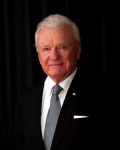
Samuel Belzberg is being honored as a “leading man” on Nov. 16 in Toronto. (photo from Weizmann Institute)
When Weizmann Canada’s Leading Men Gala is held Nov. 16 in Toronto, Samuel Belzberg will be one of the 10 honorees and the only one from Western Canada. Vancouver-based Belzberg will be in the audience of 500 that night and he and other honorees will address the audience in a video presentation, revealing their thoughts, comments and inspiration.
“We’ve never had an event on this scale before,” said Susan Stern, national executive director for Weizmann Canada. “But it’s our 50th anniversary and we wanted to do something really special.” The national event has an ambitious financial goal of raising $5 million to support the Weizmann Institute of Science in Rehovot, Israel. Speakers include actor William Shatner and Prof. Oded Aharonson, who will deliver a multimedia presentation about his research on extraterrestrial oceans.
Stern said she expected the dinner to sell out, adding that tables start at $50,000 and that there are various levels of sponsorship.
In selecting the honorees for the gala, Weizmann Canada’s goal was to find individuals who had distinguished themselves as leaders in their field, who understood the value of giving back and who had done something special in areas of research that were close to their hearts. Belzberg was an easy choice.
Founder and chairman of Gibralt Capital Corp. and Second City Real Estate, his two companies manage and own more than $500 million of real estate and capital investments. Back in 2001, he created Action Canada, which, in partnership with the federal government, endows 20 fellowships each year to Canadians who want to make a difference in the world.
It’s easy to look at the dollar figures his companies represent and assume that life has been just rosy for Belzberg, a father of four who boasts 16 grandchildren and eight great-grandchildren. But look a little deeper and it becomes clear that every family has its own unique battles. In Belzberg’s case it was the illness of one of his daughters, Cheri, who was diagnosed with dystonia, a neurological disorder that impacted her mobility and speech. Back in the 1970s, when doctors were trying to diagnose her condition, finding the right diagnosis took four to five years. “Nobody knew the first thing about it in those days,” he said.
Belzberg would change that, establishing the Dystonia Foundation with neurologist Stanley Fahn in 1976. The foundation has made significant contributions to clinical and diagnostic treatments though, sadly, none of them helped Cheri. Still, Belzberg is encouraged by the progress in research and the fact that it has given thousands of people cures for the disorder, as well as counseling and support.
“We have now learned that there are many different types of dystonia and we’ve been at the forefront of learning about them and finding either cures or short-term help,” he said. “For example, there’s a kind of dystonia that’s like writer’s cramp, or where a musician all of a sudden couldn’t play the piano.”
Belzberg has established many other initiatives, too. “He’s done so much for the community, locally, nationally and internationally – it’s unbelievable,” Stern said. In 1977, he created the Simon Wiesenthal Centre and the Museum of Tolerance in Los Angeles. The mission of the centre is to confront antisemitism, promote human rights and ensure that the Holocaust is never forgotten.
Belzberg, however, credits his success to picking the right partners for his projects. “It’s relatively easy to donate money, but it’s not so easy to take your time and actually work at a project,” he admitted. “I’ve been very lucky in that I’ve picked good partners. They carry the ball and I help the best way I can.”
He added that his involvement with Weizmann Canada over the years was prompted by a belief that the Weizmann Institute “is among the greatest institutes in Israel. The scientists at Weizmann have accomplished so much, and it’s a great honor to be playing a small part in moving the research forward.”
Lauren Kramer, an award-winning writer and editor, lives in Richmond, B.C. To read her work online, visit laurenkramer.net.
In the dystopia of the Holocaust, pregnancy and childbirth were life-threatening situations – for the mother and the child. In Auschwitz, if a woman were able to conceal her pregnancy long enough to come to term, despite malnutrition and epidemics, the women who helped deliver the baby would sometimes kill the child and dispose of the body in order to save the mother from the Nazi overseers.
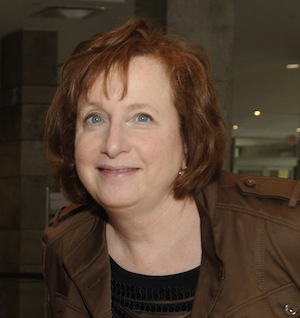
Ending Jewish civilization, which was the goal of the Nazi Holocaust, focused particular attention on children and pregnant women, according to Prof. Sara R. Horowitz, who delivered the annual Kristallnacht memorial lecture Sunday night at Congregation Beth Israel.
Jewish men, women and children were all targeted by the Nazis, but their experiences were different, said Horowitz. While female victims of the Nazis may have been doctors, businesspeople, farmers or had other roles, they were particularly under assault as mothers. Horowitz based her lecture, Mothers and Daughters in the Holocaust, on many recorded narratives from mothers and daughters affected by the Holocaust. The harrowing stories involved both unthinkable choices during the Shoah and strained relationships thereafter.
For Jews in hiding, babies could be particularly dangerous. A baby’s cry could betray entire families hiding in attics or under floorboards. In one case, Horowitz recounts a mother pulling her hair out in silence while an uncle smothered her baby as Nazis searched the house in which they were hiding.
Women were routinely forced to make impossible choices between their own welfare and that of their children. In many cases, she said, women given a choice opted to die so that their child would not die alone. In others, mothers knew they could do nothing to forestall the inevitable and saved themselves.
In the concentration camps, pregnant women and young children were automatically selected for death. Horowitz quoted Dr. Josef Mengele, the infamous Auschwitz doctor, as saying that the mothers could have been spared but that it would “not be humanitarian” to send a child to death without its mother.
Secret abortions were performed and pregnancies hidden. In one case, Horowitz said, a woman survived to deliver her child by positioning herself among beautiful young women during naked inspections by Nazi guards, hoping, successfully, that the guards’ attentions would be distracted from her condition.
One of the experiments Mengele undertook was to see how long a newborn could survive without nourishment. A woman delivered a baby under his direct supervision and then had her breasts bound so she was unable to feed the baby. Mengele came daily to inspect the situation and take notes.
Experiences during the Shoah had indelible impacts on its victims, their children and grandchildren.
Horowitz reflected on Motherland, a memoir by the writer Fern Schumer Chapman, whose mother was sent from her home on the Kindertransport, which took Jewish children from their homes in Europe to safety in England and elsewhere. Her mother, Edith, never forgave her parents for “abandoning” her, even though she understood that she would have perished along with them had she remained behind.
“At least we would have been together,” Horowitz quoted Edith, noting that the author-daughter’s conclusion was that her mother’s understanding of those early events was “stuck in a 12-year-old’s heart.”
Horowitz also discussed Sarah Kofman, who would go on to become a leading French philosopher. She survived as a hidden child in Paris, with her mother, but the woman who provided them shelter worked to detach Sarah from her mother and from Judaism, which led to difficult relations between all three women after liberation. Kofman never wrote about her experiences during the war until her 60th year, when she penned a memoir of the time and shortly thereafter committed suicide.
Relationships between parents and children after the Holocaust were often difficult. Adults understood both the “preciousness and precariousness” of children. For children born after 1945, many of whom bear the names of victims of Nazism, their relationships with the past and with their parents can bear varieties of scars.
Many parents, having missed normal upbringings, did not intuit how to parent. In one case Horowitz mentioned, a woman who had never witnessed a normal pregnancy and whose mother died in the Holocaust lamented that no one told her what to expect or how to prepare. When labor began while her husband was at work, the woman rode a bicycle to the hospital.
A woman who was forced to murder her own baby during the Holocaust went on to have two sons after liberation. In an Israeli hospital, when a nurse momentarily took her baby away, the woman became hysterical.
“Nobody knew and nobody cared about people from the concentration camps,” Horowitz quoted the woman. “They thought we were mad.”
Mothers who were unable to protect their children during the Holocaust carried concealed memories that sometimes prevented them from normal mothering after liberation.
In many cases, though, the mother-daughter relationship was credited with saving one or both parties. Mothers provided inner strength, a moral anchor and often ingenuity, said Horowitz.
One mother, a seamstress, ingratiated herself with the town mayor by making dresses for the mayor’s wife and daughters, thereby delaying her family’s selection for successive roundups. When at last her family was lined up for the trains, the mayor’s wife insisted the woman be removed so she could finish the dresses she was working on. When the seamstress insisted she could not possibly do good dressmaking while worrying about her family, the mayor’s wife insisted the rest of the family also be removed from the transport.
In last words between mothers and daughters, strength and continuity prevailed, said Horowitz. In face-to-face goodbyes, and in letters and postcards received after a death, mothers granted children “permission to survive” without guilt, urged survivors to tell the world what happened and instructed them not to internalize the perceptions the Nazis had of them.
In one instance, where a young woman was spared while her mother and two young sisters were selected for death, the mother implored her daughter not to become bitter and hateful.
“Don’t let them destroy you,” the mother said.
Horowitz is the director of the Israel and Golda Koschitzky Centre for Jewish Studies at York University, and a professor of comparative literature. Her diverse areas of research and writing include cultural responses to the Holocaust. She is a member of the academic advisory board of the U.S. Holocaust Memorial Museum and a former president of the Association for Jewish Studies.
At the start of the evening, Prof. Chris Friedrichs, representing the Kristallnacht committee, reflected on the symbolism of coming together in the recently completed new Beth Israel synagogue to commemorate an historical event in which “hundreds of synagogues like this were put to the torch and destroyed.”
Cantor Lawrence Szenes-Strauss recited El Moleh Rachamim, the memorial prayer. Holocaust survivors participated in a candlelighting procession. Barry Dunner reflected on being a child of Holocaust survivors. Prof. Richard Menkis introduced the keynote speaker and Rabbi Jonathan Infeld thanked her. Vancouver Mayor Gregor Robertson read a proclamation from the city.
The annual Kristallnacht commemorative event is a partnership between the Vancouver Holocaust Education Centre, Congregation Beth Israel and Jewish Federation of Greater Vancouver.
Pat Johnson is a Vancouver writer and principal in PRsuasiveMedia.com.
Change is hard. Ending one thing and beginning another can cause stress, and can even end up feeling like a poignant loss. It’s no different in the realm of synagogue life. When a long-serving rabbi leaves his or her position, the congregation may feel as though they exist in a vacuum and may need to go through a sort of grieving process before moving on.
The local community is in the unique situation of having had two rabbis of well-established congregations leave their pulpits in the course of one year. Both Beth Tikvah Congregation, Richmond’s Conservative synagogue, and the Renewal synagogue in Vancouver, Or Shalom, are in the process of adjusting to life after the leadership of rabbis who had been with them for nearly a decade.
Beth Tikvah’s Rabbi Claudio Kaiser-Blueth has retired from synagogue leadership, serving over the years as a congregational rabbi in both South and North America. Or Shalom’s Rabbi Laura Duhan Kaplan, who got smicha (rabbinical ordination) after a career as a university philosophy professor, has returned to academia; she is now interim director of Iona Pacific Inter-Religious Centre at the Vancouver School of Theology at the University of British Columbia.
The vacuum left by the departure of two such well-loved rabbis is not easy to fill. Both congregations have taken the course recommended by their movements for rabbi replacement: hire an interim rabbi to assist with the transition.
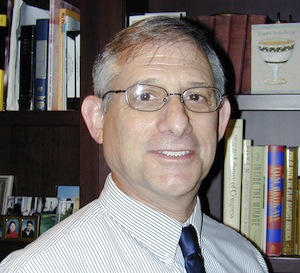
According to Rabbi Howard Siegel, Beth Tikvah’s interim rabbi, the position of interim rabbi is now a career choice, even for young rabbis starting out.
“The Reform movement has a very sophisticated course for interim rabbi training,” he told the Independent. “There is a seminar the Conservative movement provides to specialize in this area, as well.” Siegel has acted as interim rabbi for a number of congregations over the course of his career and mentioned that he could lead the seminar with the experience he has accumulated.
Prior to becoming a rabbi, Siegel earned a bachelor of science from the University of Minnesota, a bachelor of Hebrew literature from the University of Judaism in Los Angeles and a master of arts in Judaica from the Jewish Theological Seminary, where he also received his smicha in 1978.
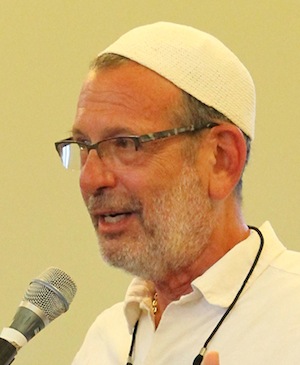
Or Shalom’s interim rabbi also has unique qualifications for helping congregants deal with the transition to a new permanent spiritual leader. Rabbi Louis Sutker recently retired from practising psychology. Prior to working in private practice, he was a professor of psychology at the University of Victoria. Sutker came into his smicha later in life, training at the same time as Duhan Kaplan, and he has experience as acting spiritual leader of Victoria’s Congregation Emanu-El before they found their current permanent rabbi.
“Being a psychologist is good preparation for being a rabbi, and thinking like a rabbi is good for being a psychologist,” said Sutker when asked about his decision to do formal rabbinic studies. He said he is enjoying the experience of working with congregants in a variety of ways, and towards helping them choose their next rabbi.
“Being an interim rabbi is a great experience,” he explained. “The expectations are clear. I’m here to help with the transition, to act as a place-marker, and encourage the possibility of doing things differently.”
Siegel agreed that congregations become set in their ways and need to redefine their goals when choosing a new rabbi. “The search for a new rabbi is a process. They first need to redefine their mission and purpose … they need to know their goals and find a rabbi to meet the objectives of the community.”
Unlike Sutker, who knows his term will end in June 2015, Siegel said that he’s happy to stick around for a couple of years. He feels it’s his role to slow the congregation down so they don’t hire the wrong person. Or Shalom, however, is farther along in the process; they will be soon hosting candidates at the shul.
One bonus of being an interim rabbi, said Sutker, is that he or she has the opportunity for change, as well, while helping a congregation transition.
Siegel, who hopes to retire with his wife to Austin, Tex., once Beth Tikvah fills the permanent position, sees it another way, too. He is thrilled to be in his position, not only because one of his four children lives in Richmond but also because he can be especially forthright as an interim rabbi. “If I’m not happy, I can be open and I don’t have to worry that my contract won’t be renewed!” he joked.
Michelle Dodek is a freelance writer and community volunteer living in Vancouver.
Gil Gan-Mor of the Association of Civil Rights in Israel will be one of the speakers at Gimme Shelter on Nov. 20. (photo from Gil Gan-Mor)
A condominium used to be a potentially affordable alternative to a home for buyers in Vancouver, but condo prices are now so high that the vast majority of Vancouverites cannot afford them.
The most recent Strategics’ Vancouver Condo Report, released last week, noted that, in Vancouver, “The average low-rise project … asking price is $632,000, which eliminates many of the young couples and single buyers in this market.” Other reports using other factors have come to similar conclusions. And housing affordability is not just a problem facing this city.
On Nov. 20, New Israel Fund of Canada is hosting the event Gimme Shelter: Closing the Middle Class Housing Gap in Israel and Canada, co-sponsored by Temple Sholom, Generation Squeeze and Tikva Housing Society. It will feature speakers Gil Gan-Mor of the Association of Civil Rights in Israel (ACRI), Dr. Penelope Gurstein of the University of British Columbia and Dr. Paul Kershaw, founder of Generation Squeeze.
Gan-Mor, an attorney, will talk about the situation in Israel and provide an update on the government’s actions there since the social protests that took place in 2011. He spoke with the Independent in anticipation of his visit.
According to Gan-Mor, ACRI is the only human rights organization in Israel “that engages with the full spectrum of human rights and civil liberties.” A nonprofit, it is funded through donations and grants, but receives no financial support from the government. Its goals, Gan-Mor said, “are to protect and promote human rights in Israel through a combination of litigation, policy advocacy and public outreach. Specifically, in the Right to Housing Project, our goals are to ensure equal access to housing, fight housing discrimination, protect the right to affordable housing, promote inclusionary policies in housing and reduce segregation, combat homelessness and protect the rights of homeless people.”
Gan-Mor began working with ACRI during his second year of an NIF fellowship for graduates of its Civil Liberties Law program. He was “given the opportunity to develop a new project in ACRI,” he said, “the Right to Housing Project, which fit in with ACRI’s efforts to increase its involvement in social and economic rights.” He “didn’t expect at that time that, four years later, the right to affordable housing would be at the centre of the social protests that drew hundreds of thousands of Israelis to the streets.”
About the current situation, he explained, “In Israel, housing affordability is a big issue, because of two processes. First, in the last two decades, the governments in Israel dramatically withdrew from their past involvement in the housing market, leaving the role of providing housing to private market forces…. The second process is the dramatic increase in housing prices, which were already expensive…. These two processes led to a growing inequality in Israel,” as “more and more families must spend an increasing share of their income to ensure decent housing at the expense of other basic needs,” as well as “a growing polarization of residential neighborhoods, which are becoming increasingly separated on a socioeconomic level.”
Gan-Mor added, “We in ACRI view those aspects with great concern and are acting to force the government to become more active in realizing the right to housing, a right which cannot be ensured only through private market forces.”
The Gimme Shelter event will give attendees an opportunity “to question how Israel expresses the values of human rights in its domestic policy, and how they as international supporters of Israel can participate in this dialogue on building a more just society inside Israel,” said Gan-Mor. And it will offer a similar opportunity for Vancouverites to participate in the dialogue about how to build a more just society here, too, at least as far as housing is concerned.
Gimme Shelter will take place at Temple Sholom on Nov. 20, 7 p.m. For more information about the speakers and to register for the event, visit nifcan.org/our-events/upcoming.
Zach Sagorin is a Vancouver freelance writer.
An anonymous contribution helped purchase a Magen David Adom ambulance for Israel in honor of Canadian Prime Minister Stephen Harper’s recent trip there. (photo from Magen David Adom)
Yarin Levi, 16, was moments from death after a rocket exploded near him in Ashkelon during the recent Gaza Operation Protective Edge. His life was saved by Ainav Asulin, a senior paramedic for Magen David Adom (MDA). In the course of five minutes, the paramedic secured him, performed CPR, arranged transport and ensured the hospital where he was transported would have blood transfusion supplies to save his life. Levi would live to thank the paramedic that saved his life.
While Asulin is not from Vancouver, during Operation Protective Edge, four Jewish volunteers from Vancouver and Richmond took part in the overseas volunteer program for MDA operations, responding to the aftermath of rockets, as most of Israel’s population ran to bomb shelters. The organization’s Vancouver office was involved not only in the sending of volunteers but also in securing donations for the procurement of MDA hardware, including ambulances, mobile intensive care units and medical equipment. Due to an anonymous contribution, an ambulance was gifted to Israel in honor of Canadian Prime Minister Stephen Harper’s recent trip there.
According to Roy Grinshpan, president of the B.C. regional chapter of MDA, there is always room to grow. At present, 40 percent of donations come from Christian organizations, and 12,000 volunteers worldwide keep MDA functioning, he told the Independent.
Donors that purchase ambulances with their contributions can have them dedicated, he said. Currently, ambulances in operation from Vancouver are based in Tel Aviv, Bat Yam and Modiin in central Israel and Carmiel in the north. According to Grinshpan, these ambulances are produced in a Montreal factory where Israeli orders represent a significant volume despite its small size. “Every year, Israel tries to upgrade their infrastructure” through research and development, and experience, he said. “It’s a win-win situation as [the] plant can keep their modifications” for use on other ambulances.
According to Ilan Klein, a front-line paramedic and deputy director of the fundraising and international relations department for MDA, who was in Vancouver on a cross-country speaking tour, the connection between MDA internationally and Vancouver can only be strengthened. Comparing the relationship to the Hebrew word for life, chai, he said that a strong connection is key to saving lives in Israel. “The community in Canada can help buy ambulances through a trusted relationship,” he said. “Two sides need to work to make a connection…. MDA needs to also invest more in speakers, paramedics and volunteers to come here to speak.”
Responding to the needs of MDA, Klein was quick to conceptualize the need for preparedness. During Operation Protective Edge, there were 600 Israelis
injured, 30 severely. The role of MDA was to respond to every person in distress. “Eighteen days before [Protective Edge], three teens were killed, and MDA began to be ready for more escalation,” said Klein. One thousand ambulances were on standby and 300 were activated to be ready for a fast response. MDA was an integral on-call first responder during the conflict. “While during a siren the Israeli people run to shelter, the MDA go out to help,” he said. “We work with the police and army [to respond quickly].”
Thanking the community, Klein said that Jews around the world, including Vancouver Jews, can and will continue to play an essential role in keeping MDA operational. “MDA and Israel would not have succeeded without a Diaspora Jewish community.”
Gil Lavie is a freelance correspondent, with articles published in the Jerusalem Post, Shalom Toronto and Tazpit News Agency. He has a master’s of global affairs from the Munk School of Global Affairs at the University of Toronto.


Dvori Balshine has served the Vancouver Jewish community, in one capacity or another, for 45 years. She is retiring in November from her latest post – director of development at Louis Brier Jewish Aged Foundation – and she talked to the Independent about her life and work.
“We came to Vancouver from Israel in 1969,” she said. As an educator who studied at the Hebrew University of Jerusalem, she found a job right away. She taught Hebrew and Jewish history until she fell into fundraising, almost by accident.
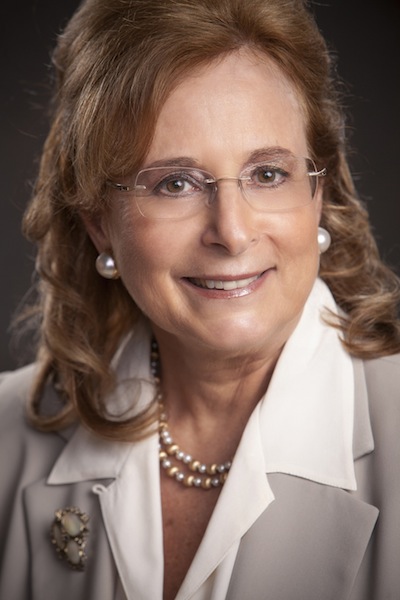
“I was hired by the JCC as a cultural director around 1980,” she recalled. “I wanted to start an art gallery and a Jewish authors festival, wanted to do events, but there was never enough money. So, I met with the community members and asked for their support. Our biggest fundraiser was held at the Oakridge movie theatre. They had a movie theatre at the time. It was the opening night of Chorus Line, and it was unbelievably successful.”
With the funds raised by this and similar events on behalf of the Jewish Community Centre of Greater Vancouver, Balshine was at the root of the Sidney and Gertrude Zack Gallery and one of the founders, together with Cherie Smith, of the JCCGV Jewish Book Festival. When Hebrew University asked her, as one of its alumni, to head their Western Canada division, she agreed. For 17 years, she served as the executive director in Western Canada.
“I raised lots of money for them, sent many students to study abroad, organized other specific projects. But then I thought: I should work for my own community.” In 2003, she came to the Louis Brier Jewish Aged Foundation.
In the 12 years she has worked at the foundation, she has led many campaigns, and established endowment funds and awards. As well, more than 600 art pieces were acquired as donations from local Jewish artists. These works hang on the walls of Louis Brier Home and Hospital and of the Weinberg Residence, making the rooms and corridors more like those of a home, less institutional. A bus and a piano, a dental clinic and a garden sculpture, multiple renovations around the home and the Gallery of Donors Wall – they all owe their existence to Balshine and her crew, to their continuous efforts to improve the quality of life of the residents. She was also active in community outreach programs, including, but not limited to, numerous musical events and lecture series, book launches and octogenarians’ celebrations.
“My dream was to leave the organization with $10 million, and we are at $8.5 million,” she wrote in her reflections of her most important activities at Louis Brier. “It is not that we didn’t raise it, we raised more, however, the demand from the home and Weinberg annually has been so great that we have only been able to invest and grow to this amount.”
She sounded modest, as if raising almost a million a year is a trifle, but for anyone else, it would be a major accomplishment, even the achievement of a lifetime.
“I believe in the mission of the organization I work for,” she said. “I do it with all my heart, my mind and my might. Of course, there are multiple challenges. One of them is that there are many Jewish organizations in B.C., and everybody needs a piece of the pie. The need is great, but there are not many industries here.”
She also encountered another challenge. “I found that it’s easier to raise money for the young, for schools and universities, than for the elderly. How do I deal with this? With a smile and an explanation. We organize events and introduce potential donors to the organization. We honor our donors.”
Her conviction that everyone should share his/her wealth comes from her family background. Both her father and grandmother were involved in their local communities on various levels, and Balshine has continued the tradition. “Some people in the community are doing extremely well. They have a responsibility to share. I learned that at home.”
Her approach to finding new benefactors is personal. “I meet with everyone I’m going to ask for donations. If I don’t know them, I look for someone who can introduce us. We have coffee together and talk. I try to share with everyone the importance of Louis Brier for our community. People give to people, not organizations. Of course, you need people skills to do this kind of work. You need to be kind, to smile, to have charm. You have to feel it, to be willing to give from yourself; otherwise, you can’t do a good job.”
With such a personal fundraising strategy, she knows many members of the Jewish community in Vancouver. “I’ll tell you an anecdote,” she said with a smile. “I love opera. Recently, I took my granddaughter, who is 12, to the opera Carmen at the Queen Elizabeth Theatre. I introduced her to my friends. When we came home, her parents asked her how she liked it. She said that, of course, the music was great and the show. She also said, ‘There were like 3,000 people in the audience, and my grandma knows half of them.’”
Olga Livshin is a Vancouver freelance writer. She can be reached at [email protected].
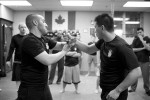
Jonathan Fader, left, and his business partner Borhan Jiang show a class at Urban Tactics Krav Maga how to disarm an attacker who has a knife. (photo by Albert Law)
When Jonathan Fader copied the Jewish Independent on an open letter that he posted online in mid-August, Operation Protective Edge was winding down. Noting the sometimes violent antisemitism that it had evoked in places around the world – including in some protests that took place in Canada – he stressed the need for members of the Jewish community to know self-defence. Since then, there have been two terrorist attacks on Canadian soil.
In the letter, he wrote, “I am asking you to please take it seriously and find your local krav maga gym and start learning to protect yourself. If there is none near by, at the very least find the most comparable style, just learn something!”
Intrigued, the Jewish Independent visited the Richmond location of Urban Tactics Krav Maga, Inc., in September. Fader and his business partner, Borhan Jiang, who has been featured in the Independent on more than one occasion, also have a Burnaby site.
Raised in a somewhat observant household, Fader, 27, said he nonetheless “didn’t really identify with being a Jew.” He describes himself as secular, and doesn’t “believe in religion but, of course, if the world is going to call me a Jew … I might as well accept it, and I’m a proud to represent the culture, but I’ll do it realistically…. I support Israel and what it does because, realistically, that’s just the way it is, but I have criticisms like anyone else.”
From 2009-2011, Fader lived in Israel. He went there for the purpose of joining the Israel Defence Forces, and he served in the 424th infantry battalion in the Givati regiment.
“When I came back, I literally did nothing,” he said. He had some savings and, “I was just living with my parents, living off of [my savings] for like five months. I did nothing.”
He spoke about some of the difficulties soldiers have in returning to civilian life. In his opinion, the “reason that they’re so slow to deal with PTSD and depression in Israel is because it’s less apparent, as everyone does the army and, when you go home, people understand, and you have people to talk to. So, the rates are much lower, but there … [are] still suicides and still depression…. But, when you come back here,” he said, referring to Canada, “you don’t have the support of your family or your friends because nobody understands what it’s like,” even if PTSD is more recognized.
He acknowledged that, as a result of the work of veterans here, “more PTSD and depression is being dealt with now and in the North American armies at least.” Once an “invisible group of people,” he said soldiers have become more vocal. If you look at the Canadian army, they now are starting to put psychiatrists actively in duty, he said.
For these and other reasons, Fader is studying psychology at Kwantlen Polytechnic University College. “I find that psychology really helps me understand everything, from marketing to trends to people, just everything,” he said, attributing the effectiveness of krav maga as a system of self-defence to the fact that “it’s working off of real psychology, action-reaction rate, fight or flight.”
He noted about Urban Tactics’ clients, “Interesting thing about that is, when we first started, we figured it was going be all young guys … but that wasn’t the case.… For the first year, it was predominantly males age 30 to 50 with families who wanted to protect the family.”
In general, Canadians don’t understand “what self-defence is and when aggression is appropriate, when violence is appropriate,” said Fader. Noting that women tend to be more vulnerable, he said, to defend yourself successfully, “you need to be able to hit hard and fast, and really be willing to damage the person who is attacking.”
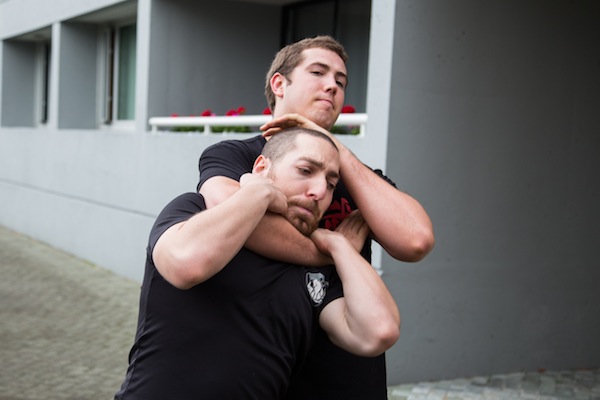
People here have the idea that you should never hit back and that you can talk yourself out of every situation, he said. And, he agrees, to a point: the first step for self-defence is to avoid the conflict completely, to not put yourself in a position where you might end up being in danger. However, if you do end up in trouble, you need to be able to assess whether talk will be enough because, “if you think you’re in danger, you need to attack first … because [with] action versus reaction, reaction is always slower…. [In] proper self-defence, it is absolutely OK to strike first.”
He gave the example of a person walking through an alley at night and being attacked. First, he noted, the choice to walk down the alley was probably not a good one, “and you have to take some of the blame now because that’s a grand scheme self-defence: Why are you there? If you go there thinking nothing is going to happen, that’s ridiculous.” But, now that you’re in trouble, he said, if you have the chance to run, “it’s OK to run, it’s OK to avoid the situation.” If you can’t run, then you have to act first if possible, “because if you wait, you could be knocked out … [so] kick him in the groin, go for his eyes … push, run.”
A good instructor, said Fader, will drill it into your head to avoid a situation, then teach you some basic techniques. But still, all the technique in the world won’t help you if “you’re not willing to hit that guy in the groin, go for his eyes, go for his throat,” he said.
Krav maga isn’t a fitness class. “I’m not teaching cardio kickboxing,” said Fader, “but the thing is that you need to be in some physical capability in order to legitimately defend yourself against a violent attack…. You have to be able to move correctly. Some people who are … limited in what they can do but they mentally are willing to hit hard, hit fast, will be OK, reasonably, if they’re up against a trained attacker…. We don’t teach fitness but you will get in shape … but I don’t care if you lose five pounds – I want you to know that you can defend yourself.”
The fact that both he and Jiang have trained in Israel sets Urban Tactics apart from other places that offer krav maga, said Fader. “The fact that we understand both cultures – North American and Israeli – is what truly makes us different.” While most martial arts will teach you techniques that will help you stay upright during a conflict, if you do fall to the ground, and if your opponent has a weapon or an accomplice, “going to the ground is the worst possible thing you can do, even if you’re a Brazilian jiu jitsu black belt.… We teach ground stuff, but it’s about everything you can do to get up.”
In the end, said Fader, the techniques he teaches focus on reality, how people react in a physically threatening situation. “How do you need to deal with it, what’s the strategy? It’s a constant assessment. We don’t just do a move and stop [in our instruction]. We always make sure, Are your hands still up? Are you paying attention? Are you looking around arbitrarily or are you actually actively scanning?” Proper training, he said, will teach you how to continually assess your situation, as every second counts.
Fader acknowledged that he may lose in a boxing match or a karate bout that only allows certain types of hits, but “in a street fight, I’m going to beat this guy because I’m playing by no rules. I do whatever I have to do.”
For more information about self-defence courses and Urban Tactics, visit urbantacticscanada.com.