Making a film during COVID

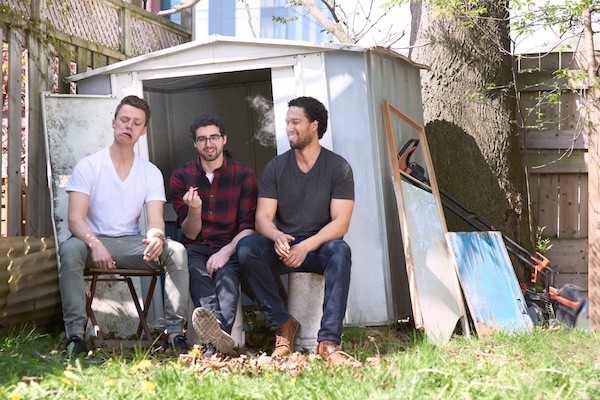
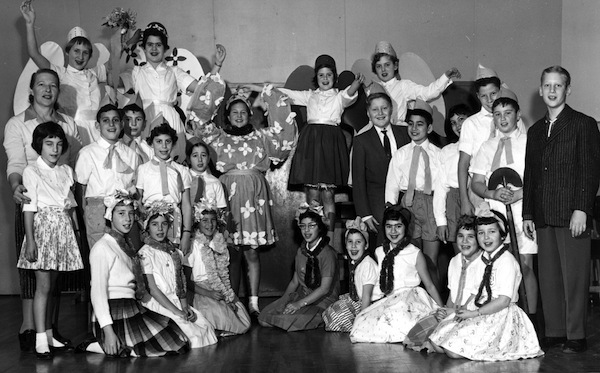
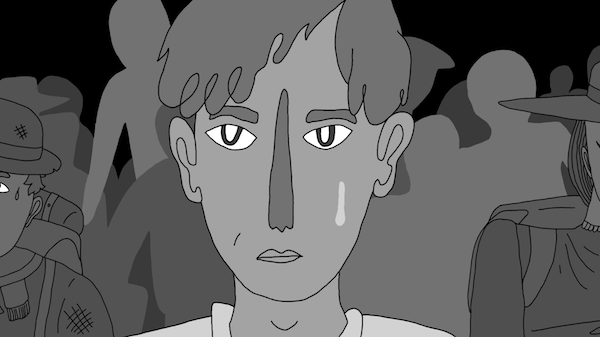
Kamil Whaley-Kalaora stars as the title character in Malka Martz-Oberlander’s David Michael Frankel Feinstein-Goldberg and the Unbarmitzvah. (screenshot)

It was a rainy day near the beginning of the pandemic. Sourdough was in the oven, Zoom was new and fun and spirits were higher. That’s when I found out I’d won the Earl Parker Award and I’d get to make my film for the Edmonton Jewish Film Festival. Little did I know I would have to go through months of hurdles, Plan B ideas and cast my entire family to get my film made.

A few months prior, my mom had passed me the Jewish Independent and showed me the notice for a film award at the Edmonton Jewish Film Festival. At the time, I was co-directing a musical, directing a film and finishing my applications for universities, so I didn’t think much of it. But, I am very glad I eventually picked up that notice and applied to the competition because it changed the course of my path.

image - The Community Calendar announcement in the Jewish Independent about the Edmonton Jewish Film Festival’s Earl Parker Award
The Community Calendar announcement in the Jewish Independent about the Edmonton Jewish Film Festival’s Earl Parker Award.

Last year was tough in a thousand ways. The pandemic hit everyone differently and, no doubt, we will all have lifelong effects because of it. When I originally pitched my film, David Michael Frankel Feinstein-Goldberg and the Unbarmitzvah, in 2020, I had a vision that could only have been actualized pre-pandemic. I adapted it and changed things to meet the constraints of the circumstances and I truly did my best to pull it off in a safe way for the entire cast and crew. One of the changes I had to make was to cast solely from within my bubble and community, which was not what I had originally planned to do.

screenshot - Malka Martz-Oberlander
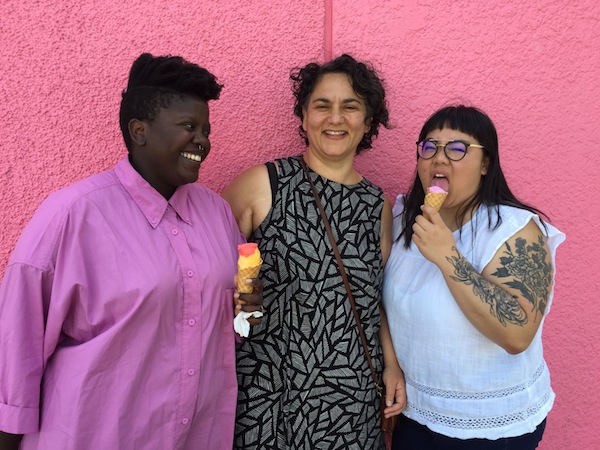
Malka Martz-Oberlander (screenshot)

I normally cast my films through Vancouver Actor’s Guide, UBC ACTRA and Facebook film & TV pages, but, instead, I ended up casting my parents as two of the main characters. As much as they are incredibly charismatic and intelligent people, they’re both doctors, not actors the stature of a Leonardo DiCaprio. So, performing was a big challenge for them and, vice versa, for me directing them. That being said, it was a fantastic experience for me to learn how to produce a film under circumstances that many filmmakers haven’t had to face.

In the early stages, I had a few moments when I felt selfish and embarrassed to want to make films during a literal plague. How could I have the chutzpah to be making dumb little comedy films while millions of people have died and more are dying? Why should I worry if my lenses are going to work for a scene while people are saying goodbye to their loved ones on iPads?

But then it dawned on me just how much we rely on art and story for our own sanity. We tell our children stories from the moment they are born, and we offer and receive stories to our last day on earth. We humans are, at our core, storytelling creatures. In moments of darkness we turn, time and time again, to art to save us. We are drawn to an astonishing multitude of fictions – on pages, on stages and on screens; stories of murder, love, war, conspiracies; stories fictional and true.

We are obsessed with story, but our obsession runs deeper than we think. We can walk away from our books and our screens, but story is like gravity: an inescapable force field that influences everything, but is so omnipresent that we hardly notice it. We’re social creatures and, with the added challenge of isolation, art has become a tool for staying connected with one another.

I’m now finishing up my first year at film school, in Capilano University’s Motion Picture Arts Program, where I have been learning invaluable skills and refining my knowledge and abilities in writing, directing and producing. With the vaccination rollout well underway and more knowledge and experience of how to safely work together in-person, I am ready to see what’s next for film and storytelling. I hope you are, too.

My film David Michael Frankel Feinstein-Goldberg and the Unbarmitzvah screened at the Edmonton Jewish Film Festival on May 2 and I will be speaking on a panel of past Earl Parker Award winners on May 9, 11 a.m., on Zoom (meeting ID 846 7697 0846). To view the film, visit jewishedmonton.org/festival-news; after the festival, it will be publicly available on Vimeo.

Malka Martz-Oberlander is a 19-year-old screenwriter, film and theatre director and actress, currently “squatting” at her parents’ house in Vancouver, the unceded territories of the Squamish, Tsleil-Waututh and Musqueam peoples. Her website is malkamo.wixsite.com/film. She thanks the Edmonton Jewish Film Festival and the Earl Parker Award for their kindness and generosity in making David Michael Frankel Feinstein-Goldberg and the Unbarmitzvah possible during such an unpredictable time for artists.

Interactive history tour

To find out more about the history of Made in BC – Dance on Tour and its network of artists, visitors to madeinbc.org/history-project just have to hover over one of the images displayed and click on it. (screenshot)

It is easy, in Metro Vancouver, to take certain things for granted, such as access to live theatre, music and dance. But the pandemic, with its limits on social gatherings, has given urbanites an inkling of what smaller communities regularly experience. The relative scarcity of live performance in places like Prince George and Revelstoke is one reason that Made in BC – Dance on Tour was created in 2006. It is unfortunate, then, that Made in BC’s 15th anniversary falls in a time of travel and other restrictions. But that hasn’t stopped the organization from celebrating, and innovatively so.

Made in BC (MiBC) has collaborated with artist and graphic recorder Adriana Contreras to create an interactive online illustrated map “offering viewers the opportunity to take a visual and audio trip through the last 15 years of work, celebrating the numerous artists, presenters and community members that have been a part of this history.” Among these artists are Jewish community members Tara Cheyenne Friedenberg (Tara Cheyenne Performance), Amber Funk Barton (the.response), Naomi Brand (All Bodies Dance Project) and Vanessa Goodman (Action at a Distance).

“Especially in an art form that is so ephemeral, documentation is important not only for our personal memories, but for the history of the organizations and communities that we work with,” Brand told the Independent. “These kinds of records are really valuable for us to learn from what has happened before and to remember the accomplishments and discoveries that came before us. The map is a beautiful and creative way to write our history in the present while it is still relatively fresh in the bodies and memories of those who participated in it.

She added, “The field of contemporary dance in Canada is small enough that most of us are connected through a few degrees of separation that can be traced through our lineage of teachers, mentors and collaborators…. The map project represents all of that visually across the geography of this province.”

Cheyenne Friedenberg also spoke about the ephemeral, or temporary, nature of dance, making it hard to keep track of accomplishments.

“We spend much of our time and energy justifying and fighting for our art and art-making, it’s no wonder many of us don’t take time to reflect or celebrate the wake behind the boat,” she said. “It’s also very important to take note of what artists have brought to communities around the province and how these communities have influenced the art and the art makers. We are an ecosystem and it benefits all of us to appreciate how we have grown and developed as an artistic community. I know my work has been greatly influenced by my relationships across the province. I know folks who started making their own work after seeing a show or taking a workshop. I think part of the reason I’m still making work is because I feel part of this artistic ecosystem that is ever-evolving.”

Made in BC statistics show that, over the past 15 years, MiBC “has provided opportunities for over 50 dance companies incorporating over 200 dance artists to tour their work, reaching over 20,000 people around the province. And over 30,000 people have participated in and experienced the joy of other community-engaged dance activities, beyond the theatre.”

“MiBC as a network is about fostering relationships between artists, presenters, audiences and new communities,” said Brand. “As dance artists, we work with living, breathing, feeling people as our material (as opposed to clay, or an instrument, or paint brushes). This human-to-human, personal interaction is so important to what we do in the studio, as well as through emails and Zoom these days. We’re lucky to have an organization like MiBC that supports artists and has brought so many incredible experiences to communities across the province.”

Brand recalled one experience in particular. “In 2017,” she said, “my colleague Sarah Lapp and I did a residency through Made in BC at the Rotary Centre for the Arts (RCA) in Kelowna. It was our first experience touring with our company All Bodies Dance Project and bringing our artistic practice to a new community. We met such beautiful, courageous and lovely participants in the weeklong workshop and learned a lot about ourselves through sharing what we do with a new community. That residency had a huge impact on Sarah, who actually ended up relocating to Kelowna a year or so later, and beginning an integrated dance project in partnership with RCA with a collaborator that she met during that residency.”

Cheyenne Friedenberg first toured with MiBC in 2009, when the organization selected her first full-length solo work, bANGER, to tour along with Day Helesic’s piece Surge.

“I had toured a lot in the U.S., across Canada and Europe, but this was my first real experience taking my own work around the province,” said Cheyenne Friedenberg. “I was, and continue to be, very interested in connecting with the land and the people closer to home. Why have we as a culture believed touring Europe is more prestigious than touring the West Coast? It’s not. Since that first tour in 2009, I have toured, taught, created and learned around B.C. over half a dozen times and I can’t wait to get back out here!”

She said it was hard to pick just one MiBC experience that was especially impactful or memorable, so she offered two:

“1) Smithers, 2012: after seeing my solo Goggles, a couple (who are now my friends) were so taken by seeing me and my family (who I tour with) taking questions and, probably, breast-feeding after the show, that they decided to have a baby and continue to make art.

“2) Dolly Alfredson, a Wet’suwet’en language speaker and teacher shared many post-show thoughts with me, all in Wet’suwet’en. It felt very special. This was after my show I can’t remember the word for ‘ I can’t remember,’ in 2018.”

Contreras, who collaborated with MiBC in collecting and communicating these types of recollections from the dance artists, said her favourite part of the process was listening to all the stories, “getting a glimpse at a special moment in time from the many artists I had the pleasure to work with in part.”

It was Jane Gabriels, executive director of MiBC, who invited Contreras – in spring of 2020 – to be part of the 15th anniversary history project.

“I had just left my full-time job as director of programming and communications with New Performance Works Society to work as an independent graphic recorder, illustrator and designer,” Contreras told the Independent. “This was also around the time that COVID-19 was declared a pandemic and the province went on lockdown. Needless to say, this project was a bright light in a very uncertain moment.”

On the project, she worked closely with Gabriels, as well as Debora Gordon, MiBC manager of community dance connectors, statistics and promotions, and Zahra Shahab, a dance artist and choreographer who was the 2019 creative residency artist at MiBC.

“The process was one of collective discovery and experimentation,” said Contreras. “I knew that MiBC has a vast archive documenting the work of all the artists that have been part of its programs, but I wanted to go back to the essence, the aspect that makes MiBC so unique, the unifying element of supporting B.C.-based artists to present their work and connect with communities throughout the province; bring contemporary dance to audiences that don’t often get to experience it.

“During my time as an arts administrator supporting dance artists,” she continued, “I had heard many anecdotes and memorable stories that happened during MiBC tours. Many of these occurred in the theatre, others in the liminal space, on the road. Many others in everyday occurrences that nurtured community. We decided that these were the stories we wanted to highlight.

“MiBC reached out to artists and asked if they wanted to share their stories, which were audio-recorded to be featured on the website. We then chose an object to represent each of the stories, and those are the elements you see in the drawing, one for each artist or collective.”

She added, “Creating this work reminded me why I love the performing arts so much, and I can’t wait to sit in a theatre and experience live dance, theatre and music again.”

In the meantime, dance enthusiasts can take a virtual audiovisual trip through the province at madeinbc.org/history-project.

From a singular perspective

Barb Choit’s “Ravenous Appetite and Boundless Energy” features a chimney swift that can only be recognized as such from one vantage point. (photo from Barb Choit)

Last October, in a year that could be considered one of the worst in history for artists overall, Vancouver artist Barb Choit completed a large public art project in Oakville, Ont. “Ravenous Appetite and Boundless Energy” is the image of a bird, a chimney swift, created from hand-drawn, coloured, lead-glass tubing filled with neon. It is installed in the Oakville Trafalgar Community Centre.

“Most public art projects are by invitation only. However, for this one, I responded to an open call put out by the Town of Oakville,” Choit told the Independent in an email interview. “With this process, the first step is to send a letter of interest describing your qualifications and approach. From that, a public art jury selects a smaller group of artists to create a design for an artwork, which is called a ‘concept proposal.’ Each artist makes a presentation of their proposal and one is selected to create their proposed project.”

Winning the competition, it took her one-and-a-half years to convert her original idea into the final installation, a bird in flight, soaring just under the ceiling of the community centre.

The chimney swift has special significance for the Oakville community, said Choit. “The work responds to the transformation of the adjacent, abandoned Oakville High School into a habitat for a colony of chimney swifts, a threatened migratory bird. Every year, residents of all backgrounds come to watch birds roost in the chimneys of the former school. The community’s galvanization around birdwatching inspired me to represent the chimney swift as an ‘artifact’ of the culture and spirit of Oakville.”

In Choit’s installation, visitors to the centre can only see a bird in the design from a certain perspective. If they look at it from other positions, all they see is a wriggle, written in shining neon.

photo - The sculpture appears abstract to viewers moving through the space. Yet, from a specific vantage point, a representation of a bird appears
The sculpture appears abstract to viewers moving through the space. Yet, from a specific vantage point, a representation of a bird appears. (photo from Barb Choit)

“For ‘Ravenous,’” she explained, “I used a display strategy employed by science and nature museums to spark the viewers’ interest in the natural world – an optical illusion, anamorphosis. It is a visual illusion in which an object is distorted so that it can only be recognized from a specific vantage point. The sculpture appears abstract to viewers moving through the space. Yet, from a specific vantage point, a representation of a bird appears. Many people find optical illusions particularly engaging. Creating a visually striking piece was crucial to engaging a multi-generational community. And the glowing yellow form complemented the space for which I was designing the work.”

The word “illusion” suits the chimney swift as a species. According to Wikipedia, during flight, the birds often appear to beat their wings asynchronously, but photographic and stroboscopic studies have shown that they beat them in unison. The illusion that they do otherwise is heightened by their speedy and erratic flying, with many rapid changes of direction.

Choit’s choice of medium for this work necessitated collaboration with the manufacturers of the neon-filled tube.

“Different projects require a different balance between collaboration and delegation,” she said. “My recent project uses neon, which requires a type of industrial fabrication that includes hazardous materials and live electricity. It wouldn’t be practical or advisable for me to carry out this part of the fabrication myself. However, one needs a grasp of how materials work in order to create a feasible design and communicate with fabricators.”

She compared it to the architectural process. “In order to design and build a successful building, an architect does not show up at the building site with a hammer and nails,” she noted. “However, she must know how a building is constructed, as well as the properties and possibilities of the materials used.”

As she has done for other works, Choit did extensive research for this installation.

“People know me for my photographic work, but I have worked in most mediums at one point or another,” she said. “Within my work, I look at how communities and individuals imbue objects with meaning. Most of my major projects involve cultivating collections and working with archives. I explore this theme in a variety of media, such as photography, installation, performance and sculpture. Recently, I have had commissions for 2-D and 3-D public artworks.”

photo - Artist Barb Choit
Artist Barb Choit (photo from Barb Choit)

Choit’s interest in collections is longstanding. She has a master of arts in critical and curatorial studies from Columbia University in New York. “At Columbia, I researched institutional frameworks for art,” she said. “I wrote my thesis on the history of collecting. This area of academic research still drives my work as an artist.”

Public art is a relatively new area for Choit and she is exploring the possibilities. “I primarily make works to be shown in galleries; it is only recently that I have moved into public art. I like public art because the projects can be much more ambitious than something that would be purchased by an individual. However, I still enjoy making smaller works that can be appreciated privately and I am open to larger site-specific commissions to be installed in privately owned buildings and outdoor spaces.”

She is planning to do more work in the public sector, despite the challenges. “Usually, public art projects are by invitation. There are also a few websites that list opportunities for artists to submit their qualifications, with the intention of being shortlisted to create a proposal for a specific project,” she said, noting the need to be wary of fraud.

“Artists need to be careful of websites that list art opportunities because there are dubious organizations out there to exploit them,” she said. “For example, some art ‘opportunities’ ask artists to pay a fee to be considered for a project. Artists should never pay a fee to have someone look at their work.

“Also, some organizations solicit full proposals from artists. Creating a proposal is an immense amount of work and a highly specialized skill. For legitimate public art calls, artists who are shortlisted to create a proposal are paid a fee for this work. I discourage any artist (or anyone, for that matter) from engaging professionally with an organization that expects unpaid work.”

Among Choit’s previous public works is the photographic project “Campaign,” a billboard series commissioned by the Capture Photography Festival in Vancouver in 2017. “It was a series of outdoor billboards based on my 2015 photography project where I remade Andy Warhol’s shoe Polaroids from the 1980s. I documented a collection of vintage women’s shoes using discontinued instant film and a vintage Polaroid camera from the era.”

Despite her extensive education, experience and obvious talent, Choit considers luck as one of the best ingredients for artistic success.

“Luck is crucial,” she said. “It is not necessarily about chance but infrastructure – family and community support, education, healthcare, even freedom of expression, can be just as crucial as talent and skill.”

Learn more at Choit’s website, barbchoit.com.

Olga Livshin is a Vancouver freelance writer. She can be reached at olgagodim@gmail.com.

Chai Quilt grows and changes

When I first entered the Zack Gallery to view its new show, the Chai Quilt, my first impression was that it was an amateur show. Only one wall of the gallery featured art, and it looked like the work of a kindergarten class, with several exceptions. I soon found out that that is indeed what it is!

In talking to gallery director Hope Forstenzer, I learned that this exhibit is different from most of the shows the gallery has produced. Many of the amateur artists are actually 3 to 5 years old and attend the JCC’s preschool.

“We sent out a call for participation in this show to everyone on the mailing lists of the JCC and the gallery,” said Forstenzer. “I wanted this show to connect the gallery to the community, to make it a mixed show. Whenever someone expressed an interest, we gave them the fabric squares and the craft kits. Some families received four or five squares for every family member. Our preschool at the centre had several, too. A few professional artists also responded to the call, as did some of the JCC staff.”

photo - A portion of the Chai Quilt at Zack Gallery
A portion of the Chai Quilt at Zack Gallery (photo by Hope Forstenzer)

The show takes place in conjunction with the JCC’s Festival of Israeli Culture and, therefore, shares the festival’s theme, which is celebrating life – chai, in Hebrew.

“We asked everyone to create their own celebration of life and spring,” explained Forstenzer. “No matter how hard the pandemic hit us all, there is still life worth celebrating.”

When the squares came back from the artists, Forstenzer created a quilt of them on one long wall of the gallery, a continuous artistic surface reflecting community members’ united vision of life. “The squares touch sides,” she said. “Even if we can’t meet because of the pandemic, we’re still in this together. Our art brings us together.”

The show’s unique blend of professional and amateur artists means there are several profound differences from previous Zack shows. One of those differences is that there are no name cards. If a participant signed their square, everyone can see their name; if not, the square’s creator is anonymous.

Another difference is that the show started a week later than planned.

“Many of the participants are families with children,” said Forstenzer. “They kept calling me and asking for more time. Even now, when the show is open, the squares are still trickling in. There are already over 70 on the wall. I had three new ones today, waiting on my desk, and more are coming, I’m sure. I’m going to add them on to the end of the quilt as they come.”

photo - Another part of the Chai Quilt at Zack Gallery
Another part of the Chai Quilt at Zack Gallery (photo by Hope Forstenzer)

The show, or rather the quilt, grows daily; resembling a living organism. And, it also changes. As I was speaking to Forstenzer, one of the participants, Jessica Gutteridge, artistic director of the Rothstein Theatre, came into the gallery. She wanted to rotate her square, which was already on the gallery wall. “It would look better the other way,” she offered, and Forstenzer agreed.

“I was excited to have an opportunity to participate in this community art project,” Gutteridge said. “Although my professional artistic practice is in the theatre, I have been involved as a hobbyist and student in visual arts and crafts, particularly needlework, for most of my life. During the early part of the pandemic, Hope and I created a virtual drop-in community art program called the Creative Kibbitz. It was based on a project I had started – to invite people to my home to socialize and make creative work. This show was a nice way to extend that work, and a theme based on celebrating life and renewal seemed very appropriate and inspiring in this moment.”

Although Gutteridge has never participated in a Zack show before, her pink square with its jolly cherry blossoms looks like it belongs on the gallery’s wall. “Cherry blossom time is one of my favourite moments of the year,” she said. “It is so ethereally beautiful for the short time it lasts. To me, it captures the rebirth of spring perfectly and the stirring of new life. I decided to make a spray of cherry blossoms using two of my favourite media, yarn and rhinestones, in an effort to make something that captures the shimmer and sparkle of spring.”

In addition to needlework, the quilt pieces have been made using an astounding variety of media. Photo collages and paintings. Feathers and beads and felt flowers. Dried leaves and confetti paper ribbons. Letters and abstract glitter splashes. Buttons and lace.

The creator of one square, which has dancers in lacy costumes, is Beryl Israel, a retired teacher. “I am a member of the fantastic JCC Circle of Friends program,” she said in an email interview. “Up to the start of COVID, I taught tap dancing at one of the local community centres.” Her love of dancing poured into her contribution to this show.

“My motivation for this work was to concentrate on the happiness and positivity around us in a gentle, hopeful way, with the inspiration from the dancing figures of Matisse,” she explained. “I wanted to record some of my old dress fabrics, laces from my mother, favourite photos, handmade paper, flowers, etc., plus the use of acrylic paints and stitching, which resulted in my composition.”

The imagination all the artists infused into their squares seems to know no bounds, as if they wanted to say, the ways in which we each see life is different, but, together, we can create a life as diverse and colourful as the Chai Quilt on the wall of the Zack Gallery.

The quilt is on exhibit until May 14.

Olga Livshin is a Vancouver freelance writer. She can be reached at olgagodim@gmail.com.

Worshipping with joy

On May 2, Kolot Mayim Reform Temple in Victoria welcomes singer, songwriter, teacher, music producer and cantorial soloist Len Udow to speak on Worship with Joy. Drawing on both secular and cantorial music, Udow will recall his journey from 1960s coffee-house folk singer to cantorial soloist at Temple Shalom, Winnipeg’s Reform congregation, where he helps to officiate and teach.

photo - Cantor Len Udow
Cantor Len Udow (photo from Kolot Mayim)

By sharing both his own story and performing live with vocals and guitar, Udow wants to show how we can “carry our ancient narratives to other hearts and souls … respecting the old traditions while introducing innovation in prayer and spirituality.” As he describes it, “In Judaism, we see ourselves enlivening prayer with breath and melody, revealing the joy, praise and gratitude embedded in our heritage.”

For Udow, the phrase iv’du b’simchah (worship with joy) has been “a call to service, putting this musician on the bimah (altar) of a little prairie shul … where I have been privileged to lead a kahal (assembly) to a closer musical fellowship and learning.”

With humour, Udow quotes his mentor, the late Rabbi Lord Jonathan Sacks, the former chief rabbi of the United Kingdom: “When Jews talk they argue; when they sing, they sing together.” To Sacks, “Words are the language of the Jewish mind; music is the language of the Jewish soul.”

Udow has performed on concert stages, at festivals, on radio and television, and on numerous recordings. As well as playing the piano, banjo and guitar, he was a featured vocalist and music producer with fellow Winnipegger, Fred Penner, for more than two decades.

Worship with Joy is the final lecture of Kolot Mayim’s six-part series called Building Bridges: Language, Song and Story. It starts on Zoom at 11 a.m. and registration is via kolotmayimreformtemple.com.

Memoir, tribute, history

Actor Tovah Feldshuh talks about her new book, Lilyville, on April 15, in an event held in partnership with the JCC Jewish Book Festival. (PR photo)

The long-awaited Cherie Smith JCC Jewish Book Festival closing night event – Tovah Feldshuh talking about her new book, Lilyville: Mother, Daughter, and Other Roles I’ve Played – finally takes place on April 15.

The event was postponed to piggyback on the Book Festival of the Marcus JCC of Atlanta and JCC National Literary Consortium In Your Living Room Live series. It will feature Feldshuh in conversation with CNN correspondent Holly Firfer, and promises to be an entertaining evening with many laughs and lots of good advice, if Lilyville is any indication.

Feldshuh’s first book is a unique memoir in that it is framed in terms of her relationship with her mother – the longest and most important of Feldshuh’s roles having been the one she didn’t audition for, being the daughter of Lillian (Lily) Kaplan Feldshuh. The memoir is structured as a theatre piece, starting with the Program Note and ending with Exit Music, with three acts, many scenes and more in between.

Strong women characters, from the fictional Yentl (from the mind of Sholem Aleichem) to the very real U.S. Supreme Court Justice Ruth Bader Ginsburg, dominate Feldshuh’s career. She has performed in theatre, film and television, winning numerous awards and nominations for the excellence of her work. She also has been recognized for her charity work. And, it seems, through it all, family has been a priority.

image - Lilyville book cover

In Lilyville, Feldshuh writes about her upbringing, how and why she became an actor, some of the people and incidents that have influenced her, her marriage (to a lawyer, like her beloved father was, and which she considered becoming at one point) and being a mother herself. Given her successes, readers may be surprised at the professional challenges she has overcome along the way, including being told outright by a director that she’d never make a good actress, she should become an accountant. But the biggest obstacle for her was coming to understand that her mother, who seemed cold and shy throughout Feldshuh’s (and her older brother’s) upbringing, loved them. While hypercritical and emotionally closed throughout their growing-up years, their mother was always there for them. It was only after their father died that their mother – who had been raised to be what was considered a good woman back then, ie. a woman who dedicated herself to her husband and kids, her own aspirations be damned – blossomed.

In an interview with the Detroit Jewish Book Fair, Feldshuh said about writing Lilyville that she “felt compelled to tell her [mother’s] story and mine and how the two of us had a lifelong journey toward each other. In essence, I dig down into the primal relationship between parent and child, with the specifics between mother and daughter.”

Luckily for the women, they had the time to repair and build their relationship, as Feldshuh’s mother lived to 103. Through that century-plus, Lily Kaplan Feldshuh, who was born before women were given the vote in the United States, witnessed countless social, cultural and technological changes, and Lilyville is partly a history of women’s rights in that country.

General admission to Feldshuh’s book talk is free. Admittance to the pre-event meet-and-greet portion of the event comes when, in addition to registering, you purchase the book; the $36US includes shipping and you will receive a copy with a signed bookplate. Visit jccgv.com/jewish-book-festival.

Dance-opera closer to final

Ted Littlemore is one of seven dancers in the latest iteration of Idan Cohen’s Orfeo ed Euridice, which will be available online April 6-13. (photo by Flick Harrison)

The first article the Jewish Independent published about choreographer and opera director Idan Cohen was about his reimagining of Christoph Willibald Gluck’s opera Orfeo ed Euridice. Much progress has been made in the few years since, and excerpts from the contemporary dance work will be streaming on demand April 6-13.

Cohen was a relatively recent arrival from Israel back in 2018. As artistic director of Ne. Sans Opera and Dance, which he established here in 2017, he has become a prominent part of the Vancouver arts scene. He is currently artist-in-residence at the Dance Centre, which describes Cohen’s approach to this 18th-century opera as one that interprets

“Orpheus not as a god, but as an artist – a human who looks at the complex and sometimes violent history of Western, classical opera and dance with eyes wide open, the dancing body serving as a living example of human strength and fragility.”

In the myth, poet and musician Orfeo mourns the death of his wife, Euridice, and tries to get her back from the Underworld. It is an effort fraught with challenges, not unlike creating a new artistic work.

“Staging an opera is a monumental task, and it is really exciting to have an audience who has been following this production from its inception,” Cohen told the Independent. “Alongside the Dance Centre’s residency, we were given a grant from the Canada Council for the Arts, through the Piercey family – the Sheila Kathleen Piercey Fund – which enabled us to continue and present this final phase of the research, leading to the full production in 2022.

“For the past few months,” he said, “I have been rehearsing with Leslie Dala as the music director and with seven incredible dancers and five opera singers. We are presenting almost 40 minutes of a piano reduction of the score, played live by Leslie, and the singers, as a dance-opera. So you’ll get to see and listen to a live opera that is also a dance performance.”

In 2019, Ne. Sans presented Trionfi Amore, as a part of the research for Orfeo ed Euridice. That production featured Ted Littlemore, Kate Franklin and Jeremy O’Neill. For this April’s production, they are joined by dancers Hana Rutka, Rachel Meyer, Aiden Cass and Stephanie Cyr.

“The wonderful counter-tenor Shane Hanson is singing Orfeo and the chorus singers are Heather Pawsey, Tyler Simpson, Heather Molloy and William Grossman,” said Cohen. Costume designer and stylist is Evan Clayton, while Littlemore pulls double duty – not only performing, but in charge of the makeup and masks.

The number of people involved now brings its own challenges, given the continuing pandemic.

“The Dance Centre’s residency enabled us to rehearse in large spaces that allowed for our relatively big group to remain socially distanced at all times,” said Cohen. “Following COVID-19 protocols meant that we needed to be wearing masks and that the performers could not touch. I tried to look at these not as obstacles but as creative opportunities and I am very proud of what we’ve managed to achieve.”

Ever the one to look on the bright side of things, Cohen added, “It was wonderful to gather musicians and dancers and create. There’s nothing quite like it, and I hope that the result will be as pleasurable to our audience as it was to us.”

The April streaming, which will have been pre-recorded, includes a discussion with Cohen. Tickets are on a sliding scale, and can be purchased from thedancecentre.ca/event/idan-cohen.

R2R fest teaches, entertains

Seu Jorge, left, and Noah Schnapp in a still from Abe. (image from Reel 2 Real)

The upcoming Reel 2 Real International Film Festival for Youth is not just for youth, though younger viewers are its target audience. There are entertaining and engaging films for all ages among the 18 features and 45 shorts that will be available for streaming online April 14-23.

The focus of this year’s festival is “films that explore the impact of social media, racism and discrimination, with a focus on Germany.” While many of the offerings will interest Jewish community members, at least four cover topics of specific relevance.

The American feature Abe was part of the recent Vancouver Jewish Film Festival. It is carried by the impressive acting of Noah Schnapp as 12-year-old Abe and that of Seu Jorge as Chico, the Brazilian-American chef that Abe idolizes. The food, glorious food, is an added bonus.

While the writing of Abe’s family dynamics is clunky and without nuance – his father’s side is Muslim, his mother’s Jewish, and never the twain shall meet on religion or the Palestinian-Israeli conflict – Abe himself is charming. He puts his heart into trying to bring everyone together, in part, by creating a fancy dinner that comprises several of his grandmothers’ traditional recipes. The grumpy but caring Chico helps, having reluctantly taken Abe in, first as a dishwasher then as one of his prep cooks.

Food doesn’t turn out to be the way to his family members’ hearts but the disastrous fusion meal, which ends in a big fight and Abe running away, does push his family to at least reconsider their priorities.

***

still - Mouize and Ranin become friends over popcorn and a shared love of cinema in Cinema Rex
Mouize and Ranin become friends over popcorn and a shared love of cinema in Cinema Rex. (image from Reel 2 Real)

In another charming film, the young also show the adults the possible way to some form of peace. In the Israeli animated short Cinema Rex, the Jewish boy Mouize and the Arab girl Ranin become friends over popcorn and a shared love of cinema.

Set in Jerusalem in 1938, a new movie theatre opens, “In the heart of the city, on the seam line between the Jewish side and the Arab side, and adjacent to the British police.” It is “co-owned by partners from both sides of [the] divided city” and Mouize’s dad is the projectionist. When Mouize catches a glimpse of someone peeking into the projection room, he follows the trail of popcorn to Ranin, who shares it with him in exchange for a seat beside him in the best seats in the house. The two imagine themselves as the heroes in Robin Hood, as actors in a Laurel and Hardy film, dancers in a Fred Astaire and Ginger Rogers movie, and more.

Ranin’s mother is non-plused to find her daughter hanging out with Mouize, and Mouize’s dad tries to tell him, “Someday, you’ll understand why you and she can’t be friends.” But the kids have none of it.

Beautifully drawn and a story simply told – in Arabic, English and Hebrew with English subtitles – this short is highly recommended viewing.

***

still - Alina is a tension-filled short film
Alina is a tension-filled short film. (image from Reel 2 Real)

A more serious and nerve-wracking short is the tension-filled American film Alina. For 25 minutes, breathing will be more difficult, as the fate of a three-month-old baby lies in the hands of Alina (played by Alia Shawkat). The non-Jewish woman is part of a group of women (and men, as her brother helps) who are smuggling Jewish children out of the Warsaw Ghetto during the Holocaust.

Inspired by factual events, but fictional, the film opens as Nazi soldiers kick their way into a building and make their way up each floor, searching every room for children, with orders to seize them. Alina must escape from an upper-level apartment with the baby through the bathroom window, using a makeshift rope of tied sheets. She must then meet her brother, make it through a checkpoint and even face Nazi soldiers in her own home, as a Nazi captain accompanies her there from the checkpoint, so convinced is he that she is hiding something from him.

Alina is a multiple-award-winning film for many reasons. And it precedes the fascinating feature-length documentary The Lesson, which sees its Canadian première at Reel 2 Real.

photo - The Lesson director Elena Horn
The Lesson director Elena Horn. (image from Reel 2 Real)

Through the lens of German filmmaker Elena Horn, who herself grew up in Fröndenberg and went to Fröndenberg Comprehensive School, The Lesson is a personal look at how students in Germany are taught about the Holocaust. Over a five-year period, Horn followed a handful of students through their classes on the topic, their projects and field trips. She juxtaposes this perspective with archival footage from the 1930s, showing children doing paramilitary exercises, learning about what makes a good German and other propaganda. She also includes current-day nationalism and how some of the students deal with the differences between what they’re being taught in school about the Holocaust and what their families have told them about that period in time.

Horn frames the content in the context of overarching questions such as, could the Holocaust have been initiated by other countries just as easily as in Germany, or is there something inherent about Germany that allowed it to start there? She wonders if history is repeating itself, and she continues to struggle with the question, “What would I have done?” She highlights some of the efforts of those who refused to be bystanders to genocide, and she hopes to inspire some viewers to be courageous if, God forbid, they ever face such a choice.

***

For the full festival schedule and tickets, as well as information on Reel 2 Real’s several youth programs and workshops, visit r2rfestival.org.

A great-grandmother’s song

Jesse Waldman was inspired by his great-grandmother Adele Waldman to reimagine the Yiddish song “Papirosen.” (photo from Jesse Waldman)

Several weeks ago, I was offered a commission by the Shadbolt Centre for the Arts to do a musical piece for their Covid Chronicles series. A Jewish musician living in Vancouver, I made a video of the classic Yiddish tune “Papirosen.” It has special significance, and it’s something I want to share with others.

As far back as I can remember, my family has been into taking photos, videos and recordings – I have at least three huge albums and a bunch of VHS tapes from birthdays, bar mitzvahs, etc. As well, there was a piano in my grandparents’ living room and music was always part of our lives. Before my grandmother passed away, she gave me a cassette that had been made on a reel-to-reel tape machine in Toronto in 1958. It included my mom at 2-and-a-half-years-old singing nursery rhymes, interviews with other family members, and my great-grandmother, Adele Waldman, singing traditional Yiddish folk songs.

Adele was my grandfather’s mother and she died before I was born. The quality and soul of her voice is absolutely stunning – some of the most moving singing I’ve ever heard, both haunting and soothing at the same time. I could listen to the recordings a million times and still be amazed by the off-the-cuff performances she did in the kitchen of my grandparents’ house.

photo - Jesse Waldman
Jesse Waldman (photo from Jesse Waldman)

I recently went through my storage closet and found a binder of sheet music that used to live in my grandparents’ piano bench. It was mostly big band and jazz tunes, but also a handful of Yiddish songs, including “Papirosen,” which was one the songs Adele sang on those tapes. As I put the sheet music on my music stand and began to study it, I was transported back to Eastern Europe in the 1920s.

Written by Herman Yablokoff in that decade, this song has the most dark yet beautiful melody, and I absolutely adore it. I looked up the lyrics (translated into English) and was struck again by the powerful storytelling about a young boy selling cigarettes, or papirosen, on the streets, offering an introspective look at his inner world.

For the Shadbolt-commissioned piece, I combined Adele’s recorded performance of “Papirosen” and a reimagined rendition of the song that I performed on guitar. After trying a few different things, I landed on the idea of sharing the first segment of her performance (her rendition is five minutes long) followed by a one-take performance by myself. The video can be found at youtube.com/watch?v=RWAVr2W0vvo.

Penn & Teller stumped

Illusionist Vitaly Beckman in the midst of fooling Penn & Teller on the March 19 broadcast of Penn & Teller: Fool Us. (screenshot)

Illusionist Vitaly Beckman has done it again – he stumped Penn & Teller a second time. The co-hosts of CW television network’s Penn & Teller: Fool Us could not figure out how Vitaly made a cup of coffee and a muffin appear from seemingly nowhere, brought into existence by his mere drawing of the items. They also could not figure out how he made the breakfast disappear, by simply tearing the illustration out of his sketchbook.

Vitaly’s winning performance, which aired March 19, can be seen via his Facebook page, facebook.com/beckman.vitaly, YouTube, or jewishindependent.ca. He first stumped the famous magicians in 2016 and his return to the reality show brought some tough (joking) remarks from Penn, who said he thought Vitaly was a nice guy the first time they met. Noting that he and Teller don’t like to be fooled once, let alone twice, Penn said, “You’re not a nice guy. You’re someone we have to take down!”

Despite the jovial animosity, Vitaly, who admitted to having been nervous in his first appearance on the show, told the Independent, “I was much more comfortable this time. However, the illusion I prepared, even though it looked simple in its execution, it was quite difficult to perform, requiring a lot of concentration, precision and coordination. I was rehearsing it for a few months before the show. So, when I was performing, I focused all of the nervous energy to work for me and help me execute well.”

Penn & Teller’s guesses at Vitaly’s secret – the use of mirrors and/or hidden assistants off-stage – proved incorrect, garnering Vitaly another Fool Us trophy.

Vitaly performed his act from his home in Metro Vancouver, while Penn & Teller were in Las Vegas, and a virtual audience appeared behind them.

“I’m used to feeding off a live audience’s energy and reactions, so not having any definitely makes it more challenging,” said Vitaly. “When I perform live, I like to interact with the audience, hear them laugh and be amazed; sometimes I bring a volunteer on stage. I purposely designed an act that wouldn’t rely on any of that, yet still translated through the TV screen. I think we all can connect to the idea of making a cup of coffee and a muffin or another favourite dish appear whenever we want one, and it’s certainly nice to have that ability during a pandemic!”

Vitaly is currently working on some TV projects and planning live tours. “I’m also working on brand new illusions, and can’t wait for you to see some of the new things,” he said.

Vitaly added, “I love to stay in touch with my fans, and hear their feedback about their favourite acts and what are they up to, so feel free to send me messages through my Facebook page.”