Tzimmes celebrates 35 years

The Tzimmes sextet, in 2019. Left to right are Saul Berson, Phil Belanger, Tim Stacey, Amy Stephen, Yona Bar-Sever and Moshe Denburg. Also part of the ensemble in the new recording, but not pictured here, is Fabiana Katz. (photo from Tzimmes)

Vancouver Jewish musical ensemble Tzimmes celebrates its 35th anniversary this year. To mark the occasion, the group, led by Moshe Denburg, has released a new album, The Road Never Travelled, its first in 23 years.

Denburg, who is also a classical composer, founded Tzimmes in Victoria in 1986. Throughout that time, the ensemble’s modus operandi has been to incorporate as many types of Jewish music as possible – traditional Ashkenazi, Sephardi and Mizrahi, along with more contemporary and secular styles.

The new album is comprised of two discs. Disc 1 offers secular pieces, while Disc 2, Liturgy Lane, presents listeners with original music based on sacred texts.

The repertoire includes “Hahmi-ini” (“Let Me Hear Your Voice”), which was written in 1966, when Denburg was in his teens; the title track, “The Road Never Travelled,” from 2005; and “other original arrangements of more recent vintage,” such as “Oyfn Veg” (“On the Way”). Some of the songs on Disc 1, including the title track, are English pop/folk/world music. And not all the songs on the album are Jewish. There is, for example, a rendition of the Beatles’ “In My Life.”

image - The Road Never Travelled album coverThe recording and mixing history for the collection stretches 28 years. When it became clear that this was more material than could fit on one album, Denburg decided to turn it into two.

“For a number of years,” he told the Independent, “we had some tracks that were on the back burner, so to speak – unfinished recordings that were begun in 2005-06. Tzimmes kept working in general – some concerts, lots of simchas, but completing a new recording was not in the cards, mainly because my own work was focused on founding and husbanding the Vancouver Inter-Cultural Orchestra (VICO).

“A few years ago, I wound down my administrative duties with the VICO, and started considering, in earnest, completing a new Tzimmes recording. The final impetus occurred when I turned 70, in 2019. I brought the group together, worked on a lot of new, and older, material, and took them into the studio to complete the older tracks and to lay down some fresh ones,” he said.

The Road Never Travelled features many past members, and several other musicians who have collaborated over the past 20 years, to become the Tzimmes of today. Denburg (voice, guitar) is joined by Fabiana Katz (voice), Yona Bar-Sever (lead guitar, voice, electric bass), Saul Berson (clarinet, flute, saxophone), Amy Stephen (voice, accordion, whistle, lever harp), Tim Stacey (bass, electric bass) and Phil Belanger (drums) to form the ensemble. A dozen other musicians, including guitarist Itamar Erez, cellist Finn Manniche and vocalist Myrna Rabinowitz – as well as international instrumentalists Joseph “Pepe” Danza, Yuji Nakagawa and Adel Awad – also appear, among others.

Tzimmes’ last album, KlezMyriad, was released in 1998, though the ensemble has performed at concerts and larger-scale projects since then. While changes have taken place over the past many years, it continues to be a tight-knit group of musicians.

When asked about the ensemble’s longevity and how it has maintained its cohesion, Denburg explained, “I believe Tzimmes has steered clear of the more difficult conflicts that are legion where artistic collaborations are concerned. But, as a bandleader, it has taken the wisdom that comes only with much experience to keep one’s passion alive while allowing for the artistic expression of one’s colleagues. This is what a good bandleader ought to do.

“Tzimmes is more a family than an enterprise, at least that’s the way I look at it,” he continued. “So, as in all families, there is the joy of knowing that everyone is basically rooting for each other and, yet, at the same time, conflicts do occur. We have lived long enough together, and have matured as people together, to have buried most of the hatchets and be guided by our natural affections for each other, and our love of our common purpose – the making of music.”

About the ensemble’s history, Denburg said, “Over 35 years, ensemble members come and go, and, actually, no one who was with me in 1986, when Tzimmes was formed in Victoria, is with me today. Tzimmes has changed and evolved over the years. Of today’s members, some have been with the ensemble for 30 years, some for over 20, and others are newer additions. One of the hallmarks of the new recording is that almost all Tzimmes members, of yesterday and today, are part of the recording.

“Tzimmes has always been dedicated to presenting Jewish music in all its facets,” Denburg concluded. “The challenge has always been to deal with the variety of these musical expressions in a non-superficial way, to make an original contribution to Jewish music-making.”

As the pandemic eventually fades, there are plans for a concert to herald the release of the CD and celebrate the ensemble’s 35 years. And Denburg sees many possibilities in providing musical services of various kinds.

“Speaking for myself, in the longer term, it would be nice to see Tzimmes continue with some next-generation musicians,” he said, “to carry on the tradition of original Jewish music-making in Vancouver.”

For information on buying tracks and sheet music, visit tzimmes.net.

Sam Margolis has written for the Globe and Mail, the National Post, UPI and MSNBC.

Exploring her family’s past

Afterlife is Isa Milman’s first work of nonfiction. (photo by Shea Lowry)

Midway through Isa Milman’s Afterlight, which came out this week, the author cites Reb Nachman of Breslov, who said, “The whole world is a very narrow bridge.” In Victoria-based Milman’s new work, we encounter bridges of various sorts: those that serve as a crucial lifeline to the survival of the denizens of cities, particularly at a time of war, and the bridges that bring together people from different continents in the pursuit of understanding an unconscionably horrific time in Eastern Europe.

And then there are the bridges that link us poignantly to our past – to those we know through words and photos but have never met. In Afterlight, one such bridge connects Milman to her mother’s twin sister, her aunt Basia, who perished in the Holocaust, and who, like Milman, wrote poetry. (Milman is a recipient of the Canadian Jewish Book Award for poetry.)

Milman’s journey began in 2013, when, following her mother’s death, she sought to find Basia’s poems from the 1930s. The book alternates between the present and the past (the war years), as Milman tries to uncover a layered tale. She travels to Europe where, at times, her quest for information leads to dead ends and, at other times, she finds details in unlikely places – a photograph in Amsterdam, for example.

At one stage, Milman finds poetry written in a Polish publication from the 1930s. She writes, “Reading the children’s poems, I felt a terrible nostalgia rise up – a dangerous nostalgia. Even now it hurts too much, this intense longing for a conversation with Basia, for a meeting, a recognition that we’ve lived on the same planet, come from the same earth, share blood and bone. We share a love of poetry, but I shall never know her, not even as smudged ink on a page.”

At one point in her exploration, Milman pens a poem to her aunt. “How many tiny flowers make one lilac sprig? / How many stars in the night sky have names? / How many yet to be seen? They disappear with morning sun too soon but in darkness or in light tucked in their beds they remain,” the poem reads.

image - Afterlife book coverBasia’s story is but one piece of the book. Afterlight also traces the journey of Milman’s parents and her other surviving aunts through the Holocaust and examines questions about the trauma, displacement and identity caused by the Holocaust to succeeding generations.

“I’d lived my life in a black hole of absence, of never having the experience of grandparents, of feeling rooted and at home with extended family. And this was not because of a tsunami, an earthquake, forest fire or plague. It was because of tribal hatred,” Milman writes.

As well, she explores the issue of reconciling the Poland that Jews thought of as their home with rampant antisemitism and the brutality of the war years. “Why couldn’t I choose how to think about Poland, even if it meant going against most everything I’d learned?” Milman asks. “Why couldn’t I revise my notion and accept that Poland is a place that I can love as well as despise and fear? Why must it be either/or? Was it possible to live in the uncomfortable in-between, where both realities coexist?”

Afterlight is Milman’s first work of nonfiction. At first, Milman, whose collections of poetry include Prairie Kaddish, Between the Doorposts and Something Small to Carry Home, was reluctant to write a nonfiction account of the Holocaust. However, recent surges in antisemitism around the world led her to change her mind.

“The lessons of the Holocaust need to be taught, and not just by citing facts and reportage,” she said. “Telling stories about real people and their experiences is the most effective way of reaching and teaching people about how evil can happen, and how we must fight our worst human inclinations and speak out against hatred and inhumanity.”

A big part of her decision to write a memoir was realizing that her family’s story did not match a more common Holocaust narrative. Hers is a lesser-told account of Jews from eastern Poland, some murdered in what’s known as “the Holocaust of Bullets” and others, like her parents, who survived because of deportation by the Soviets to the Gulag.

“I loved entering the world of creative nonfiction,” she said. “Using my imagination to create scenes where I clearly was not present enabled me to inhabit the places and people I needed to describe. Everything became more real as I entered into the minds of my characters, who happened to be my parents and close family.”

Sam Margolis has written for the Globe and Mail, the National Post, UPI and MSNBC.

Several shows to watch at Fringe Fest

Ariel Martz-Oberlander wrote and co-stars in on behalf. (photo from Julia Lank)

In the Aug. 20 issue of the Jewish Independent, there was a short article on the Vancouver Fringe Festival show A Coveted Wife of East Van, which “tells the story of Samantha Cohen as she navigates friendship, men and dating apps while making some very bad decisions along the way.” Playing at the Picnic Pavilion venue on Granville Island, the creative team includes Jewish community members Marn Norwich (poet), Ariel Martz-Oberlander (director), Itamar Erez (musician) and Hayley Sullivan (actor). Martz-Oberlander is also involved in the show on behalf, with fellow Jewish community members Tamar Tabori and Julia Lank (co-stage manager). And there are other Jewish community members to watch in this year’s festival, as well. Here are the broad strokes of the productions that were in touch with the JI.

on behalf

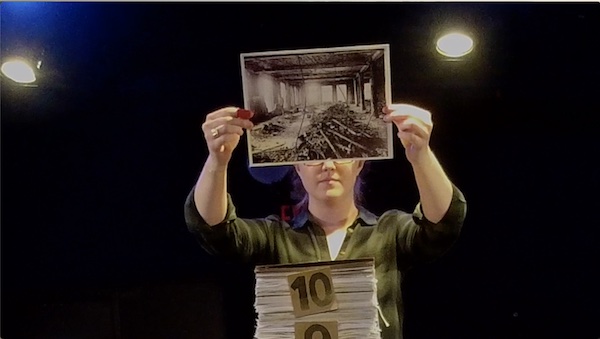
Martz-Oberlander’s on behalf is a conversational, humorous and lyric conversation between a young woman (Martz-Oberlander) and an ancient goddess (Tabori).

on behalf challenges assumptions about what it means to survive and to be a survivor,” said Martz-Oberlander. “Rather than framing ‘healing’ as an individual, linear journey, the show frames it as a collective political and cultural act – messy, strange, circular, ancestral, shattering, transformative and ongoing. Our identities affect our visions of justice, and diaspora shapes our ability to find belonging on stolen land and within a system that views justice only as punishment.”

The inspiration behind on behalf came out of Martz-Oberlander’s own healing journey, and lack of a road map. She began looking back into her own cultural inheritance and to mine the stories of women who have survived dispossession and sexual assault across time and space, with bravery, creativity and the strength of rituals.

After three years in development, on behalf has shifted in focus and form many times. Now in a filmic state at the Fringe, it moves again. Shot in a single take with a shifting camera, the show runs less than 20 minutes. The film format invites audiences to engage with the tactile and sensory experiences linked to traditional ritual work – like handwashing and bread baking – to highlight how healing extends beyond the individual, because our wounds too extend beyond the individual experience.

on behalf is a digital presentation and can be watched anytime during the Fringe.

Everybody Knows

photo - Rita Sheena pays homage to Leonard Cohen in Everybody Knows
Rita Sheena pays homage to Leonard Cohen in Everybody Knows. (photo by Kristine Cofsky)

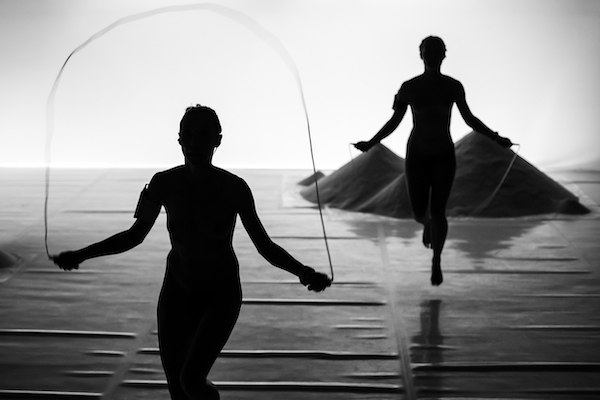
In this semi-autobiographical, one-woman musical, set to nine Leonard Cohen cover songs, Rita Sheena creates a spiraling narrative using contemporary dance, post-modern quirk and the haunting melodies of First Aid Kit’s Who By Fire album, which was released earlier this year.

Everybody Knows is the latest work from Sheena’s Come Emote With Me theatre series. It opens in a bright, primary-coloured hotel room. When we meet the smug captain, we are reminded that “everybody knows the dice are loaded, everybody rolls with their fingers crossed, and everybody knows the war is over, everybody knows the good guys lost….” Next, we meet a woman in a 1960s-style secretary dress who answers every telephone call ringing for death with “… and who shall I say is calling?”

Cohen enthusiasts will appreciate the esoteric nuances that Sheena emotes. Folks who love dance and movement artistry will enjoy the unique style of storytelling.

Everybody Knows is at the Revue Stage on Granville Island Sept. 11-18.

A Toast to Prohibition

photo - Melanie Gall brings her show A Toast to Prohibition to the Fringe
Melanie Gall brings her show A Toast to Prohibition to the Fringe. (photo from Melanie Gall)

International performer Melanie Gall comes to the Vancouver Fringe with her new historic musical, A Toast to Prohibition. Her previous shows include Piaf and Brel and off-Broadway’s Ingénue.

Celebrate the 101st anniversary of Prohibition with flappers, gin fizz and a speakeasy cabaret. Join Gladys in her secret gin joint, the Tipsy Sparrow, as she tells the story of when intoxicating liquor was forbidden and lawlessness ruled the day. From secret cellars and doctor-prescribed alcohol to a teetotaller attacking saloons with a hatchet, there’s a song about it! This show features, among other songs, forgotten 1920s hits “Lips That Touch Liquor Shall Never Touch Mine” and “Everybody Wants a Key to My Cellar.”

Performances of A Toast to Prohibition take place at Performance Works Sept. 10-19.

The Fringe Festival runs until Sept. 19. For tickets and the full schedule, visit vancouverfringe.com.

To do or not to do (the Bard)

Bard on the Beach’s Done/Undone, written by Kate Besworth, co-stars Harveen Sandhu and Charlie Gallant. (photo from bardonthebeach.org)

Throughout COVID, Vancouver’s Bard on the Beach has been unable to mount its popular summer festival at Vanier Park. However, it is easing its way back into the hearts and minds of Shakespeare fans with its innovative film production Done/Undone, written by Kate Besworth and starring Bard veterans Charlie Gallant and Harveen Sandhu, who take on multiple and diverse roles. The creative team includes community member Mishelle Cuttler as sound designer.

The film raises many probing questions. Is time up for Shakespeare’s works in the #metoo, woke, cancel culture era? Is there room today for plays written 400 years ago that can be interpreted as misogynist (The Taming of the Shrew), racist (Othello) or antisemitic (The Merchant of Venice)? Are the Bard’s works not just the reflections of a white, privileged male, written for colonial audiences to glorify British mores and culture? Or was English writer Ben Johnson, who died in 1637, right when he said Shakespeare was “not a man of his age, but a man for all times?” Should any form of Bardolatry continue or should Shakespeare and his folios be laid to rest as we move forward with contemporary artists telling contemporary stories?

To answer these questions, the film, set against the backdrop of a working theatre, uses snappy vignettes to showcase the pros and cons of the debate with interesting and perhaps unexpected results.

It opens as the two actors arrive at the theatre to prepare for a production of Hamlet, and the question first arises. Sandhu appears as Shakespeare to state that the purpose of writing is to “hold a mirror to humanity,” as she lists off the myriad subjects that the Bard explored – the sea, star-crossed lovers, a donkey in the arms of a fairy queen, an exiled warrior, an emperor of Rome, a triumphant king, how choices matter, and how governments fail us.

We then are spectators to a battle of wits between dueling professors, explaining and emoting from their respective lecterns. Gallant emphatically argues that Shakespeare is a product of a white, patriarchal society, using words as a tool of cultural imperialism written, originally, for white men to perform (women were not allowed to act in Shakespeare’s times, so male actors would take on the female roles) and that there is no place today for his work. Sandhu counters that Shakespeare’s texts still evoke emotions that resonate within the contemporary world – his topics of love, hate, greed and lust are timeless and embedded in the human character, she argues. She sees Shakespeare as remarkably progressive, with many of his characters in gender-fluid roles and with his portrayals of strong women – Rosalind, Cleopatra and Lady Macbeth, to name a few. His works can provide teaching moments, says Sandhu, giving the examples of Taming of the Shrew to show the harm that misogyny causes, King Lear, the scourge of elder abuse, and Othello and Merchant as vehicles to elicit tolerance and empathy in society.

Other vignettes in the film include a Bard board member – a neurosurgeon – who, during an opening night audience address, poignantly recounts the solace he found in the dark spaces of the theatre during a production of King Lear after the loss of a patient. He says that darkness was the escape from the reality of his grief.

Another scenario depicted is a couple taking in a performance of Romeo and Juliet, where the woman is clearly more into it than her male partner, who finds the Shakespearean language highbrow and difficult to understand.

Then there are the gothic, spectre-like creatures who denounce the Bard’s portrayal of women and Blacks in a macabre pas de deux; a talkback session after a Measure for Measure performance, where the female actor embarks on a scathing indictment of colour-blind casting; and the finale, in French, as the two actors attend an inventive Shakespeare festival in Montreal.

Shakespeare’s influence is global. At any given time, somewhere on the planet, one of his plays is being produced, either in its original form or as an adaptation. Do we judge him with our contemporary lens or should we remember the times in which he wrote and appreciate his genius? Done/Undone is a thoughtful and intelligent production that seamlessly blends the worlds of cinema and theatre, and considers some difficult questions. It leaves you to draw your own conclusions.

Done/Undone, with a run time of 76 minutes, is available for streaming online until Sept. 30. Tickets can be purchased at bardonthebeach.org or from the box office at 604-739-0559.

Tova Kornfeld is a Vancouver freelance writer and lawyer.

Challenging VIFF Films

Michal Wiets uses her great-grandfather’s diaries as the basis for her film Blue Box. (image courtesy)

At press time, the Vancouver International Film Festival lineup had not yet been announced. But the Independent received the names of some of the movies to be presented, as well as a couple of screeners.

Starting with the more challenging VIFF choices, most Jewish community members will either take a pass – with a roll of the eyes as to what film festivals often consider appropriately provocative fare – or get up the fortitude to watch the disparaging portrayals of Israel, so as to be better prepared to confront the criticisms, and perhaps learn from them. I admit that I have taken both routes in life and it was with great skepticism and high anxiety that I watched Michal Weits’s Blue Box.

Weits is the great-granddaughter of Yosef Weits (aka Weitz), a Russian immigrant to Palestine in the early 1900s who was instrumental in foresting Israel, as well as purchasing land for the Jewish government from the Arabs who owned it at the time (who were mostly absentee landlords and not the people who lived on and worked the land). Depending on one’s point of view, Weits was either a legendary pioneer to be tributed, as “the father of Israel’s forests,” or a notorious pirate of sorts, stealing land from Arabs and expelling them from it, as “the architect of transfer.” His great-granddaughter seems to believe he’s the latter, while he himself was conflicted.

The basis of the documentary is Yosef Weits’s diaries, some 5,000 pages. In them, he expresses his belief in the need for the reestablishment of the Jewish homeland and his fears for Jews’ continued existence (even before the Holocaust). He also details aspects of his work, with whom he negotiated land sales and meetings with David Ben-Gurion and other Israeli leaders. Presciently, he admits to misgivings about the way in which the Arab populations were being treated, predicting that such treatment would end up causing Israel severe problems if not dealt with.

The diary entries are fascinating and reveal some of the complexities of that era and of Yosef Weits’s legacy. The archival footage and photographs are compelling and expertly edited to make clear director Weits’s viewpoint – there is no mention of events that don’t fit her narrative, such as the expulsion of Jews from Arab lands.

Weits interviewed several family members about what she discovered from the diaries and other research. Their reactions are varied, with the generations closer to that of her great-grandfather more defensive and those closer to hers, more questioning, even condemning.

It might be helpful to watch this film with a non-Jew, as I did. In doing so, I found there were a few parts – such as the Israeli government’s relationship with the Jewish National Fund and why Weits named her film after the JNF’s donation box – that could have been better explained to viewers without prior knowledge. As well, a non-Jew is perhaps better able to keep in mind that every country deals with similar issues relating to how they were established, who was displaced, etc., and that Blue Box could be seen not only as a personal tale of one family, but as the beginning of a conversation about nation-building in general rather than as a stifling condemnation of Israel.

The same may or may not be said about The First 54 Years: An Abbreviated Manual for Military Occupation, directed by Avi Mograbi. There was no screener available for this documentary, which is described as “a ‘how-to’ guide to civilian subjugation along ethnic and religious lines, through the example of the Israeli occupation of Palestine. This is jet black, ice-cold political satire. But the harrowing statements of 38 former Israeli military personnel must be taken at face value as eyewitness testimony of decades of state-licensed crimes against humanity.”

Noam Imber plays a pothead teen in Quality Time
Noam Imber plays a pothead teen in Quality Time. (image courtesy)

Thankfully, there are at least a couple of more innocuous films in this year’s VIFF. One is the short Quality Time, written and directed by Omer Ben-David. When mom goes on a brief vacation, father (Shalom Korem) and son (Noam Imber) are left on their own together, and the awkwardness of their relationship is highlighted. Imber plays a pot-dealing and -smoking teen who’s just received his draft notice, while Korem is his recently retired – from the defence ministry – father. Both actors are wonderful and the story is quirky and fun, even if it doesn’t hold up logically at the end. While Israel-specific – a gym bag being blown up by the bomb squad is a key element – it has universal meanings.

The JI always sponsors a film at VIFF and, this year, we’ve chosen the animated feature Charlotte, about Charlotte Salomon, a German-Jewish artist who created her masterpiece work – called Life? Or Theatre? (comprising nearly 800 paintings) – between 1940 and 1942. She died in Auschwitz in 1943, at 26 years old. We’ll review that film next issue.

For more on the festival, visit viff.org.

Chutzpah! coming soon

Josh “Socalled” Dolgin leads an evening of Yiddish songs as part of Chutzpah! 2021. (photo from Chutzpah!)

The Chutzpah! Festival returns this November, presenting music, theatre, comedy and dance that reflect the joy of coming back together. For more than two decades, Chutzpah! has been an annual highlight of Greater Vancouver’s arts season. From Nov. 4 to 24, artists will once again grace the stage of the Norman & Annette Rothstein Theatre, the festival’s hub, and share their work in person and online. Tickets go on sale Sept. 15.

The 21st Annual Chutzpah! Festival will include a variety of performances, paired with conversations and opportunities to interact with the artists. Audiences will have the chance to attend in-person shows, with COVID safety protocols in place, or enjoy digital streams from their homes. With an emphasis on artists from across Canada, the festival will also present work from Israel, the United States and the United Kingdom.

“Artists and arts enthusiasts alike have been eagerly awaiting our chance to come back together to share our stories,” said Jessica Mann Gutteridge, artistic managing director. “With the joy of reconnecting comes the knowledge that our lives have profoundly changed over the past year-and-a-half. The Chutzpah! Festival will explore and celebrate the many ways we tell stories now, with a variety of ways to experience and participate in the work.”

The festival opens Nov. 4 with a screening at the Rothstein Theatre of the Marx brothers classic A Night at the Opera, during which City Opera Vancouver will sing the operatic music parodied in the film. The 1930s cinema experience will include festive treats, glamour and a costume contest.

In the comedy realm – all in-person performances at the Rothstein Theatre – Canadian-born, New York-based stand-up comedian, storyteller and writer Ophira Eisenberg, host of NPR’s comedy and trivia show Ask Me Another, performs Nov. 10. Israeli-American stand-up comedian Avi Liberman is joined by special guest Jacob Samuel and host Kyle Berger on Nov. 20. And Iris Bahr, who impressed Chutzpah! audiences in 2020 with her festival hosting and her solo show DAI (enough),  performs her new solo show Nov. 23.

The dance performances at the Rothstein will be in-person events, as well as digitally streamed. Nov. 6 and 7, a Project inTandem double-bill features the works of Calgary producers and choreographers Sylvie Moquin and Meghann Michalsky, which explore the themes of female struggle and empowerment. Nov. 13 and 14, Shay Kuebler/Radical System Art return to Chutzpah! as resident artists with the third “chapter” of Kuebler’s research that began in 2018, after he read about the United Kingdom hiring a minister of loneliness. On Nov. 16 and 18, Ballet BC artist in residence Alexis Fletcher, who was 2019 and 2021 Chutzpah! resident artist, returns to the festival with a solo integrating movement and the visual art of Vancouver painter and HIV/AIDS activist Tiko Kerr, while 2020 and 2021 Chutzpah! resident artist Ne.Sans Opera & Dance, led by Idan Cohen, returns to showcase a new solo drawing inspiration from the myth of Orpheus and Gluck’s opera Orfeo ed Euridice, with co-creator Ted Littlemore (aka Mila Dramatic).

Theatre works featured are Lilach Dekel-Avneri and the Pathos-Mathos Company’s The Eichmann Project – Terminal 1 on Nov. 8 (digital stream available); The Flame – An Evening of Storytelling on Nov. 17, under the stewardship of artistic director Deborah Williams, featuring storytellers including Stephen Aberle, Glenda Zenoff, Eleanor Lipov and Helen Schneiderman, with musical guest Anton Lipovetsky; and Halifax-based Surplus Production Unit’s A Timed Speed-Read of the Triangle Shirtwaist Factory Fire Trial Transcript on Nov. 21 and 22.

Montreal’s Josh “Socalled” Dolgin, accompanied by a local string quartet, leads an evening of rediscovered Yiddish songs, with stories and perhaps a little magic, on Nov. 19, and Israel’s Guy Mintus Trio’s performs A Gershwin Playground Nov. 24. (Digital streams available for both shows.)

Nov. 8-12, Chutzpah! Festival favourite, U.K.-based theatre artist Tamara Micner, transforms her theatrical work-in-progress (workshopped in the 2020 festival) into an audio installation. Audience members will be invited into the Zack Gallery to listen to Micner’s reading of letters written to Paul Simon and Art Garfunkel, reflecting on how their music informs her feelings about friendship, activism, Jewishness and art. There will be opportunities to “meet” the artist via video stream for conversations about her work and ideas.

Throughout the festival, Bahr converses with festival artists, featuring her stand-up and a wide-ranging cast of characters.

Due to COVID-19 safety processes, all tickets must be purchased in advance and will not be available at the door. Visit chutzpahfestival.com starting on Sept. 15 or call 604-257-5145.

– Courtesy Chutzpah! Festival

Bema mounts Wells’ Mazel Tov, John Lennon

Nicholas Guerriero as John Lennon, left, and Perry Burton as his Jewish lawyer, Leon Wildes, in Bema Productions’ rendition of Mazel Tov, John Lennon by David Wells, which had a virtual run at the Victoria Fringe Festival this year (photo from Bema Productions). Based on the true story of the Nixon administration’s attempt to deport John Lennon because of his political activism against the war in Vietnam, it is a fascinating play about a lesser-known aspect of American history. The years-long case ultimately led to various changes in the country’s immigration laws.

“I was so happy to be back in live rehearsal after a year-and-a-half, and had tears in my eyes at the first rehearsal,” director Zelda Dean told the Independent.  “Of course, we all wore masks until near the end.  This is the 142nd show I have directed in my long career and the first time that I couldn’t see the expression on the actors’ faces while we were working together.  Of course, their masks came off at the last few rehearsals and at the filming of the show [by Jason King] and, by then, everyone was fully vaccinated.  A new experience and I was delighted to learn much and develop new techniques.  I am always grateful to learn from the many skilled artists I am privileged to work with.”

Chosen Family now at Zack

JQT Vancouver executive director Carmel Tanaka at the Zack Gallery, where the Chosen Family exhibit is on display until Sept. 30. (photo from Carmel Tanaka)

In a Simon Fraser University survey of more than 4,000 elderly Canadians (55+), conducted from August to October 2020, to see how people were coping with the pandemic, about 10% of respondents identified themselves as part of the LGBTQ+ community. These respondents were more likely to follow COVID protocols and to have said they “feel they have been here before” – they were 10 times more likely to report experience with HIV/AIDS than heterosexual persons. Among the many other findings, LGBTQ+ respondents were less likely to ask relatives for help, but more likely to call upon close friends.

In the context of the pandemic, then, the focus of the new exhibit at the Zack Gallery has added significance. The show, called Chosen Family, is a multimedia partnership between the gallery and JQT Vancouver in honour of Vancouver Pride. It opened officially on Aug. 26, with the artists in attendance.

JQT (Jewish, Queer and Trans) is an arts, culture and education nonprofit organization. It is dedicated to creating connections and seeking space to celebrate the intersectional identities of Jews of diverse sexual orientations and genders. The organization’s executive director, Carmel Tanaka, said JQT’s members are accomplishing their goals “by queering Jewish space and ‘Jewifying’ queer space in Vancouver.”

“We started JQT in Vancouver four years ago, as a grassroots movement, everyone was a volunteer,” Tanaka told the Independent. “We incorporated as a nonprofit in 2020. This show feels like a milestone. It is probably the first exhibition here, at the Zack Gallery, that features exclusively queer Jewish artists.”

The theme of the show, Chosen Family, reflects that some LGBTQ+ individuals face rejection by their immediate family and must look elsewhere for understanding and acceptance. “I’m lucky,” said Tanaka. “I didn’t have to look for another family; my family was supportive. Unfortunately, that’s not true for everyone.”

image - One of the images in a series of six by Ari Fremder
One of the images in a series of six by Ari Fremder.

Only a few artists are featured in the exhibit. “We invited more artists from the JQT community, plus their families, to submit art for the show, but not everyone was easy with the invitation,” Tanaka said. “Some didn’t feel ‘artistic’ enough. Others didn’t feel Jewish enough. Still others – the older people mostly – didn’t feel entirely safe to identify themselves as queer to the wider community. It is an ongoing vulnerability issue with many of us.”

Another reason might lie in the location of the gallery. “The Zack Gallery is inside the Jewish Community Centre, so the art must be family friendly. That might be a limiting factor for some artists,” Tanaka mused. “We might look at another venue next time.”

The show includes art in a variety of media: paintings, prints, textiles, cinematography, sculpture. A series of six pictures by Ari Fremder all have the same size and structure – a human face surrounded by flowers – but they centre on different faces, representing different friends or family members, and have varied arrangements of flowers. Nonetheless, they all have one thing in common – they are all beautiful and upbeat.

Two of Fremder’s paintings are self-portraits. One looks like a face in repose; the other an angel with black wings. The angel soars in the dark sky and, unlike the six-photo series, this image is moody and contemplative.

image - A collage by artist Holly Steele
A collage by artist Holly Steele.

On another wall, there are several paintings by Holly Steele. In one, a multimedia print, hands clasp together in various combinations: hands of friends and hands of family, interspaced with positive, trust-affirming words. The image, done in a muted greenish-yellow palette, screams of the yearning for acceptance.

In the centre of the gallery resides a sculptural composition by Morgan Strug. A dinner table with chairs around it shows us what a family meal means to the artist. There is understanding and affection there, benign teasing and fierce joy in the others’ fulfilments. Is it wishful thinking? Is it the artist’s reality? Everyone can decide for themselves.

Strug is the director of the short movie Enby, which screened at the Vancouver Queer Film Festival earlier this month, and the film is part of the Zack exhibit. The gallery planned three screening dates, the first being for the exhibit opening Aug. 26, as well as Sept. 9 and Sept. 30. Those who want to see it should contact the gallery first.

“This is a very eclectic show,” Tanaka said. “It is the first art show for several of the participating artists. Some of them celebrate both their identities: as a queer and as a Jew. We would love this show to become an annual tradition.”

Chosen Family continues until Sept. 30. To learn more, visit jqtvancouver.ca.

Olga Livshin is a Vancouver freelance writer. She can be reached at olgagodim@gmail.com.

Animatedly tackling issues

In Bayla’s Issues, the title character is plagued by the travails of aging and anxiety, and a desire for acknowledgement in the art world.

Bayla’s Issues, a 2020 animated short based on the comic strip Bayla’s Comics by Vancouver artist Hinda Avery, has been making the Jewish film festival circuit, with a recent stop in Washington, D.C. The 15-minute film, which follows the story of its title character and her quest to be recognized as an artist, was directed and edited by Victoria’s Michael Kissinger, and is voiced by Ellen Kennedy and animated by Marty Emanuel.

Divided into eight chapters, Bayla’s Issues delves into the inner thoughts – a turbulent sea of doubts, fears and anxieties – of its heroine and her conversations with an expensive and expletive-laden therapist, who is neither encouraging nor helpful.

The character of Bayla came into being after Avery retired from her career in academia. At the time, she wanted to do two things: return to painting after a long break and establish a means of connecting with family who died in the Holocaust.

“Clearly, the only way for me to make this connection would be through an imaginary process, and painting seemed a tangible tool,” Avery told the Independent. “I decided to paint myself with my late mother and, with the help of only two motley photographs, my murdered aunt and grandmother. This would suffice as a way of spending time with them.”

Avery’s mother had left Poland before the start of the Second World War, but was severely traumatized by the murder of her family by the Nazis.

“The atrocity affected both her mental and physical health; her trauma was passed down to me, hence my close connection to the Holocaust,” Avery said.

Over time, in a process that began in 2005 and lasted 13 years, Avery was able to separate herself from, as she puts it, “an overt depiction of the Holocaust experience – an event too catastrophic for me to depict using conventional representation – and instead depicted it as a phantasmagoric event. I added more women and called us all ‘The Rosen Sisters.’” Rosen was her mother’s family name.

The paintings feature strong, confident women resisters in situations that are both humorous and dark. Avery found it therapeutic and liberating “to fight the Nazis in this vicarious method.” Still, she said, “beneath the surface of all the paintings, the calamity and horror of the Holocaust is ever present.”

screenshot - In Bayla’s Issues, Bayla must deal with her past
In Bayla’s Issues, Bayla must deal with her past.

When the paintings, in her view, had run their course, she was “desolate” and expressed this by drawing a comic about a befuddled, unfulfilled older Jewish woman who is plagued by the travails of aging and anxiety, and a desire for acknowledgement in the art world.

“In many of the comics, Bayla expresses her angst about being Jewish. Her Jewishness has never been a joy for her. In one of the comics, she says it feels like a huge lead-heavy Star of David, attached to a thick chain-link, hanging from her neck – it weighs her down, she can’t pull it off,” said Avery.

Kissinger’s collaboration with Avery can be traced to 2015, when he served as the editor of the now-defunct Vancouver Courier. “She left a message on my work phone about an upcoming art exhibit of her paintings and I, of course, never returned her call…. But she left another message, and another message,” Kissinger recounted.

“We didn’t do a lot of art exhibit coverage,” he explained. “But, for some reason, I decided to Google her name and up came these paintings of elderly women in bikinis holding automatic weapons and swearing and taking down Hitler and having a great time while they were at it. From that point on, I was in.”

Kissinger went on to write a story and created a five-minute video to accompany it on the newspaper’s website.

screenshot - Hinda Avery’s cartoon strip has been transformed into film about an “‘old, neurotic Jewish woman’ who wants to be an old, famous painter, but is hampered by her own demons”
Hinda Avery’s cartoon strip has been transformed into film about an “‘old, neurotic Jewish woman’ who wants to be an old, famous painter, but is hampered by her own demons.”

A year later, Avery reached out again – this time to share that she had obtained a Canada Council grant and to ask Kissinger if he would be interested in making a documentary about her, her paintings, and her journey in dealing with the Holocaust and depression.

A 27-minute documentary, Hinda and Her Sisterrrz, ensued. That 2018 film screened at a number of Jewish film festivals, including those of San Francisco, Toronto, Boston, Vancouver and Victoria.

“The documentary ends with Hinda talking about retiring the characters in her paintings and moving on to working on a comic strip about an ‘old, neurotic Jewish woman’ who wants to be an old, famous painter, but is hampered by her own demons,” said Kissinger.

“Because I know Hinda’s work and backstory and she trusts me with it and was happy with the documentary, she asked me if I could help her animate her comic strip,” he added.

“Bayla lends herself to being animated. I love seeing her come alive!” Avery said.

The original strip, Bayla’s Comics, appeared in Jewish Currents. More episodes about Bayla’s tribulations – under the title Bayla’s Got Problems – are currently underway.

To watch the trailer for Bayla’s Issues, visit vimeo.com/439541618.

Sam Margolis has written for the Globe and Mail, the National Post, UPI and MSNBC.

Khazzoom has new EP

The cover of Iraqis in Pajamas’ new album, Pijamama, features Loolwa Khazzooom’s grandfather, Abraham Khazzoom.

The multifaceted, multicultural and impossible-to-pigeonhole Loolwa Khazzoom is back, along with her band, Iraqis in Pajamas, with a studio-produced album, Pijamama, that was released on July 16.

The new album by the Seattle-based musician honours her mother, E.J., who passed away on July 16, 2019, and who encouraged Khazzoom to pursue her music. Khazzoom credits E.J. with demonstrating that we all have “the ability to radically transform ourselves and our relationships – and to stop the crushing boulder of intergenerational trauma – when are willing to face and go through the darkness together.”

A photo of Khazzoom’s grandfather, Abraham Khazzoom, who she describes as “the original Iraqi in pajamas,” graces the album’s cover. The band’s name, she explained, derives from an uncomplimentary reputation Iraqi expatriates had in the Israeli city of Ramat Gan for putting on their pajamas when they had arrived home and the work of the day was completed.

The EP features Khazzoom on vocals and bass, Robbie Morsehead on drums, Cali Hackmann on keyboard and backup vocals, and Alden Hackmann on guitar. The melodies and lyrics were written by Khazzoom. Pijamama showcases three songs.

“Mahalnu” explores the  Jewish practice of asking forgiveness ahead of Yom Kippur. It then raises the question of what happens when someone asks for forgiveness, without changing their behaviour, especially in the case of violence. “What is the difference between forgiveness of you and erasure of me?” Khazzoom asks.

“The Fixer,” a declarative prayer, advocates the rejection of compensating for another person’s not doing necessary work in a relationship. The chorus, “ashir shir hadash” (“I will sing a new song”), comes from “Ezer Musarai,” an Iraqi Jewish song for Purim, which inspired Khazzoom as a child.

“Fireball” looks at being a caregiver in spite of emotional violence. The lyrics proclaim: “You can be downright vicious / Throwing a fireball / At the one who cares most about you / The one who is always there for you….”

photo - Loolwa Khazzoom
Loolwa Khazzoom (photo from Iraqis in Pajamas)

Khazzoom has had a varied career. Among other things, she has been an educator, writer and health coach, all of which share, she says, the central principle of individual and collective healing. Ultimately, Khazzoom says she “ditched her power suit and Powerpoint in favour of combat boots and cat glasses to offer bold songwriting as the catalyst for deep and heart-centred conversation.”

The connections between her diverse activities have been subjects she has long contemplated.

“I have been keenly aware of interconnectedness since I was very young, partly because I was highly sensitive and thinking about things deeply, and partly because my identities were a crisscross of those considered at odds or even at war with each other – making it obvious to me that many social constructs and divisions were false,” Khazzoom explained.

“My songs reflect this awareness – explicitly or implicitly connecting dots between things that most people don’t initially recognize as being related to each other, and inviting listeners to rethink their notions and paradigms.”

Khazzoom said she likes to play with this crisscross of identities. For example, people may react one way if she tells them she is Iraqi, and another way if she tells them she is Jewish.

“People generally like shortcuts or scripts in determining what to think about someone, instead of doing the work of getting to know someone, with all the complexity and nuance involved…. I am the same person, yet an entirely different set of assumptions are projected on to me. Standing at the intersection of identities and experiences, I can poke fun at the absurdity of it all,” she said.

Khazzoom refers to her music as “conscious rock,” a way of exploring all our emotions, especially those that allow us to be loud in a healthy way.

“As a collective, we fear intense emotions like rage and grief, and we suppress those feelings in ourselves and others, leading to astronomical levels of addiction and a host of other social and personal ills,” she said. “I believe that all of our emotions are a gift, a GPS system of sorts, pointing us in the direction of that which is true and good, and I find it tremendously liberating, healing and transformative, to express the spectrum of emotions in healthy and constructive ways.”

Khazzoom’s songs are written in English, Judeo-Arabic and Hebrew, and blend Iraqi Jewish prayers, alternative rock and personal storytelling about subjects ranging from cancer, racism and mental illness to national exile.

For more information, visit iraqisinpajamas.com. To participate in the evolution of Loolwa’s work, from poem to spoken word performance to song, go to patreon.com/khazzoom?fan_landing=true.

Sam Margolis has written for the Globe and Mail, the National Post, UPI and MSNBC.