Artists rise to challenge

“Sometimes Being Human … Can Be Hard” by August Bramhoff.

The Jewish Community Centre of Greater Vancouver’s inclusion services’ third annual art exhibit at the Zack Gallery is on display this month. And people can meet the artists at a March 23 virtual reception.

“For the last two years, the JCC has celebrated Jewish Disability Awareness and Inclusion Month through an art exhibit that interrogated and explored themes of community longing and belonging,” Leamore Cohen, inclusion services coordinator, told the Independent. “We asked artists of mixed ability: How do we make meaning of the concept of community, the real and the imagined spaces we inhabit? What does community longing look like and what are the possibilities for belonging in an ever-changing world?”

This past year, the world has changed almost beyond recognition. “In Vancouver, we are nearing a year since the COVID pandemic shut down our city and transformed all aspects of our social world,” acknowledged Cohen. “However, while we were isolated, we also saw our creativity flourish.”

In the two previous exhibits, artists responded enthusiastically to inclusion services’ challenge, unfolding a fascinating slice of society through their art, and both shows were successful, well-attended cultural events. Unfortunately, the pandemic has moved most of our interactions online, and so it is with this new show, though it is also available to view in-person by appointment.

The participating artists are of differing abilities and artistic levels, so the artforms vary. There are paintings and multimedia collages, figurative and abstract imagery, landscapes and still life. Some pictures are disturbing in their naked emotional pain. Others are quietly sad, or funny, or absurd. One thing is universal: the artists’ willingness to express their feelings, both in their art and in words, as each piece is accompanied by its creator’s short writeup.

It is impossible to mention all 57 pieces on display, but here are a select few to represent this multifaceted show.

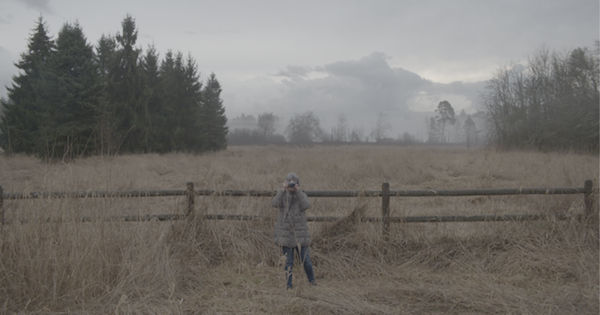
August Bramhoff’s painting “Sometimes Being Human … Can Be Hard” depicts a woman sitting, alone. She is sewing or knitting. The painting’s muted colours permit no joy. There is obviously no one there with her, even beyond the edges of the painting. The woman’s isolation and loneliness are palpable despite the spare simplicity of the image.

The artist wrote about his painting: “My main practice is analogue photography, with a focus on street photography…. This is the first painting I’ve created in over 10 years. The inspiration for this work is from a feature film. It captures the sense of longing and displacement we all seem to be juggling during the COVID shutdown.”

In contrast, Tracy-Lynn Chernaske’s “Whispers” is a dreamy landscape. The moon shines over the night forest and a trail of shiny fog weaves its way between earth and sky. Maybe it is just the weather. Or maybe the fog illustrates our mutual desire to connect with one another. Maybe it is a whisper of our souls.

The artist explained: “Community is … a place and a way to tell stories and journeys so they can be witnessed, heard and held. They are a way of bonding together … and the need to push away and seek out new and more fitting spaces.” According to Chernaske, we all nourish “the invisible threads of relationships that cross borders, land, sea and time.”

In Evelyn Finchman’s “Roots” – an abstract composition in the earthy colours of brown and beige – interconnected spirals, lines and shapes allow the viewer’s imagination to stir. Is it food? Is it a surreal terrain? A carpenter’s schematics?

“Belonging to a community is much more than interacting with our societies and being accepted by our peers,” mused Finchman. “This year, I realized how important it is to coexist within the nature that surrounds us…. There is no human life if we don’t respect all living beings on our planet and understand that we are part of the whole environment.”

image - “Roots” by Evelyn Finchmann
“Roots” by Evelyn Finchmann.

Another artist who touched on the theme of nature and its connection with humanity is Peggy Logan. Her painting “Flowers Adrift” shows single blooms, all different – a tulip, an orchid, a daffodil, a daisy – but all similarly pale and faded, bobbing on the blue background. The image seems dejected and symbolic.

“The piece of work I have created,” said Logan, “is about that sense of disconnection that exists now with friends and family with restrictions on travel, social distancing, and isolating inside. This image is about the lack of roots the flowers have as they float over the water via the internet.”

Symbolism is also the main approach of Theresa Moleski in her painting “Life In and Beyond our Bubble.” The painting is dark, almost black and white. A tree is imprisoned inside a sharply delineated bubble, striving to get free. But there is something vaguely optimistic outside the bubble, too. And the artist expressed herself in no uncertain terms in her writeup: “COVID or not, I will continue my journey as an artist!”

While most of the images in this show are serious in tone, a few offer a humorous slant on our very human follies. Danielle Haslip’s painting “First Date Red Flags” is a tongue-in-cheek exploration of dating. Its style – childlike and undeniably funny – includes a figure with lots of teeth. You see it and you know: something is gonna bite.

“Reflecting on my own personal growth, as I wait for conditions to be safer for meeting people, I thought I’d be cheeky and depict an exaggerated vision of dating, in which we can either fall prey to manipulative people, who mean us harm, or attempt to force a connection with someone who is not a good fit for us,” wrote Haslip.

Another smile-inspiring work is Paul Leighton’s “Not Over the Moon Yet.” On the painting, a sad cow is floating on a cloud. Or is it an island? The style is two-dimensional, but the meaning is much deeper. Is the poor cow attempting to fly away from stupid humans? The artist thinks so: “My approach to the theme of longing and belonging is to use oblique humour to ponder unfathomable human global problems through the lens of the preposterous…. An individual, no matter how earnest, can’t solve all the interrelated problems of the Anthropocene or rescue a cow fleeing into the clouds,” said Leighton. “However, social pressure and citizens’ assembly can help.”

image - “Not Over the Moon Yet” by Paul Leighton
“Not Over the Moon Yet” by Paul Leighton.

And then there are paintings like Gail Rudin’s “Home is Where the Heart Is.” Folk art in style, it is heart-warming in its essence. It reminds all of us of the importance of home.

The show is on display at the gallery until April 2. To view the exhibit anytime or attend the March 23, 5 p.m., reception, visit jccgv.com/community-longing-and-belonging.

Olga Livshin is a Vancouver freelance writer. She can be reached at olgagodim@gmail.com.

Can Vitaly fool Penn & Teller?

Times Square in New York City, 2018. (photo from eveningofwonders.com)

Illusionist Vitaly Beckman fooled the famous Las Vegas duo Penn & Teller on his first appearance on Penn & Teller: Fool Us, in Season 3. Now, four years later, he will attempt to do it again – this time, filmed remotely from Vancouver, and with only a virtual audience. The episode airs March 19, 6 p.m. PST, on CW Network, and the appearance will later be posted online.

The performance will be shot so as not to allow any camera trickery, and the secret of the act will be disclosed to a judge, who will be watching Vitaly’s act, as well as listening to every word Penn & Teller say to see if their guess is correct, or whether Vitaly will be receiving a second Fool Us trophy.

Vitaly, most recently, had his show produced off-Broadway by Daryl Roth, whose producing credits include Tony winners such as Kinky Boots and Indecent. Vitaly was booked for a 16-week run at New York City’s Westside Theatre, where Penn & Teller started their careers in the 1980s.

From making drawings and paintings spring to life to making audience’s faces disappear from their own driver’s licence photos, Vitaly’s illusions have never been replicated anywhere in the world. (See jewishindependent.ca/a-wonder-full-evening and other articles on the JI website for more on Vitaly.)

Watch facebook.com/vitaly.beckman for news of what happened on March 19, if you can’t watch Penn & Teller: Fool Us that night.

Making musical amid COVID

Anton Lipovetsky is among the professional artists working with Studio 58 to develop Monoceros: A Musical. (photo by Dahlia Katz)

In the face of a pandemic and all its associated restrictions, the show is going on at Langara College’s Studio 58 – albeit in a very different way. Monoceros: A Musical runs through the end of March and features the contributions of two Jewish community members: writer Josh Epstein and composer/lyricist Anton Lipovetsky.

In contrast to other Studio 58 productions, Monoceros is seen as a “development lab,” an opportunity for the creators to tweak the piece, while allowing students to work on a new musical and learn about the process. The production is not a performance in a traditional sense, as the public will not be able to come and watch it. Ordinarily, shows are performed in Langara’s 100-seat theatre, but this is the first time Studio 58 has created a production outdoors – because of the risks of singing inside.

photo - Josh Epstein
Josh Epstein (photo from Studio 58)

Adapted from a Suzette Mayr novel by Epstein and his business partner, Vancouver writer/director Kyle Rideout, Monoceros tells the story of Faraday, a high school wallflower who dreams of becoming a famous veterinarian. When Ethan, a classmate known for wearing a unicorn outfit, dies unexpectedly, Faraday sets off on a quest to fulfil Ethan’s last wish.

“The book starts with one of the most powerful chapters I’ve ever read,” Epstein told the Independent. “I was engaged from the first sentence, my heart was drawn to every word. I, too, lost my best friend much too early and I felt very connected to this book. We were about to turn the book into a film, for which we had funding, but, at the same time, we felt a musical bursting out of it and attached Ben Elliott and Anton to write the music. We fell so in love with the musical that we halted the film for now to keep working on the piece. Our show tackles difficult subject matter but in a fresh, humorous way, daring the audience to go on a wild adventure and to listen.”

“I read the book and I loved it. It was heartbreaking and brutal and honest – the kind of book that really stays with you after you read it,” said Lipovetsky. “We decided to centre the story more on a singular character, Faraday, and her quest to bring unicorns to Calgary in honour of the student who passed away. Her quest challenges who she is as a person and she discovers herself along the way.”

Putting on a production in 2021 is “completely wild,” said Epstein, an award-winning actor, writer and producer. “Until the day we started, we had no idea if it would actually happen. Now, here we are with a full tent city built by Studio 58, a rock concert sound setup and an incredible creative team that includes one of Canada’s top directors, Meg Roe, and Lily Ling (Hamilton’s musical director) – who was only available to us because Hamilton is on hiatus.”

Epstein emphasized that, “while the show’s path has been altered by COVID-19, the team has used the time to strengthen the script and score, as well as attach some of the best people around [to the project]. Above all, the process is very safe and we’re having fun being able to work together, if only from a masked distance.”

“Acting, singing and connecting with your collaborators while most of your face is covered is not easy. The students are doing a wonderful job,” Lipovetsky said. “And rehearsing outdoors during early March in Vancouver can be challenging – but sometimes it’s magical. There are moments where the students’ voices soar in beautiful harmony and the sun will come out above us and I’ll feel real joy. I have missed making music and theatre so much and I’m grateful to get to do it even under these strange circumstances.”

In addition to the staff and faculty who are involved, Studio 58 has 10 professionals working with the students, 14 student performers, and many other students helping with technical requirements. One of the top theatre schools in Canada, with the only conservatory-style program in Western Canada, the professional theatre training program at Langara is in its 55th season. It typically produces four main-stage productions a season, ranging from dramas, to comedies, to musicals.

Monoceros is commissioned and supported by Toronto’s Musical Stage Company and funded by the Aubrey and Marla Dan Foundation. The show has an elaborate development road planned out that will include workshop productions in British Columbia and Ontario – culminating in Toronto – before continuing to other stages.

Epstein, whose work has taken him around the world, is currently writing an original feature for Paramount with Rideout. Lipovetsky is an acclaimed composer, lyricist, performer and teacher, and he is currently an artist-in-residence in the Musical Stage Company’s Crescendo Series.

For more information about Studio 58 and its programs, visit langara.ca/studio-58.

Sam Margolis has written for the Globe and Mail, the National Post, UPI and MSNBC.

Paintings that sparkle

Yvette Gagnon holds one of her works. (photo from Yvette Gagnon)

Yvette Gagnon, a local French-Canadian multimedia artist, uses a unique technique: she combines acrylic paintings with mosaics. The glass shards she glues to her canvasses create a three-dimensional effect, while supplying a glittery, festive atmosphere for every one of her joyful images. Her flowers wink and grin at you. Her trees hang over your head, their dense foliage providing shade from the sun and homes for the birds. Her works, decorative and bright, infuse many local homes with her enthusiasm and imagination.

In a recent interview with the Jewish Independent, Gagnon reminisced about how her artistic path began.

“My grandmother lived next door to my family when I grew up. She was always creating something, and I loved that she always included me in her little art projects,” shared Gagnon. “One morning, I remember running in our backyard and I was blown away by the wildflowers that had opened over the night. I ran to my grandmother’s house, to her craft room, and, with an idea in mind of what I was going to recreate, I started to work. When I was done, I was so proud of myself for having created something so beautiful on my own.”

Completely self-taught, creativity runs in her family. “My parents were very creative,” she said. “They didn’t call themselves artists. My father was a carver. My mother sewed all the clothes for our family. I believe my artistic gift came from them.”

Gagnon has worked different jobs over the years, some art-related, some not, but her creativity was always present, always illuminating her life. She was a painter before she started using glass.

“When my kids were growing up, I created a lot of folk art. It was popular in the ’70s,” she said. “Then, I gradually progressed to teaching myself trompe l’oeils and started painting murals for my clients.”

The idea of using glass in her paintings came when she was working as a home and office decorator. “It happened about 30 years ago,” she said. “I was picking up glass shelves for a client and I found myself looking at tons of shattered glass on the ground in the shop’s backyard. I thought to myself: what can I do with this stuff? I asked the owner if I could take some, and he said, yeah sure. I took bags of glass home, washed it, put it in my closet, and started dreaming how I could create with it. Later, I used the glass to make large pieces for my clients. I think this technique has endless possibilities.”

Gagnon’s method lends itself beautifully to various art styles and themes. One of the pieces she produced recently was “The Tree of Life” for Jewish community members Irv and Betty Nitkin.

She originally met them not through her art but through Jewish Family Services. “I worked for JFS for three years, and my specialty was cooking. That’s how I met Irv and Betty Nitkin,” she explained. “I’ve been cooking for them once a week since the beginning. They have become like family over the years. They knew I was passionate about my glass art and they commissioned me to make ‘The Tree of Life’ for them.”

Trees and flowers are common features in Gagnon’s art. She loves gardening, and her garden is a constant source of inspiration. She has created a large series of painting dedicated to flowers.

Another inspiration is traveling. For years, she took in foreign students. “I was a ‘host mom,’ and kids from all over the world stayed with me,” she said. “They came from South America, Germany, France, the U.K. Long after they returned home, I might call them and say: I’d like to visit for a week or two. We made great memories during those visits. Not only did I get to see my ‘kids’ again, but I also met their parents. Those trips were fun.”

image - “French Cottages” is artist Yvette Gagnon’s most recent series
“French Cottages” is artist Yvette Gagnon’s most recent series. (photo from Yvette Gagnon)

One of her latest trips – to France – inspired her latest series of paintings, “French Cottages.” A former home-stay invited Gagnon to visit them. “I spent a month in France. We walked around and talked. On the weekends, we drove to garage sales in the old villages. I went nuts taking pictures of the old architecture. Later, I couldn’t believe how many photos I took there. I photographed doors, windows, stairways and flowers. When I looked through those pictures after I returned home, I thought they were gorgeous. They reminded me of what I experienced there. I decided to base my newest series on them.”

Of course, the pandemic put a stop to other travel plans, but Gagnon hopes the situation will change soon. “I’d like to go to Thailand,” she said. “They have amazing art and nature. Maybe I would find my next series there.”

COVID also disrupted her exhibition prospects, as it did for the majority of artists. “Right now, my only exhibit is at Hollyburn Country Club, but, unfortunately, only members are allowed in,” said Gagnon. “The other exhibits were recently taken down. With COVID, it’s really hard. I feel it is artists’ biggest challenge now: finding venues for our art. But I’ve been invited to display my glass art in virtual galleries in New York, London and South America. And, of course, the hallway in the building where I live, off Commercial Drive, has many of my pieces.”

In all her paintings, Gagnon uses exclusively clear glass. “I never wanted to use coloured glass – I paint over the glass or leave it as is, especially on the black background. It all depends on my muse,” she explained. “Glass gives texture and depth to my pieces. They become more realistic with it.”

In the past, she could get all the broken glass she wanted for free, but that is no longer the case. “Now, for whatever reason, they don’t give away broken glass anymore,” she said. “I have to buy sheets of glass from a company in Abbotsford and then I break them up myself. I use every fragment of glass, large and small. I’m frugal this way. My parents and grandparents would be proud of me. I learned my frugality from them. I don’t waste anything.”

More often than not, the sizes and shapes of the glass in her storage bins direct her next painting. Wherever her glass leads, she follows.

Olga Livshin is a Vancouver freelance writer. She can be reached at olgagodim@gmail.com.

What makes art Jewish?

Sorel Etrog’s sculpture in Odette Sculpture Park, in Windsor, Ont. Etrog was one of four artists featured in Prof. Jennifer Eiserman’s March 7 lecture, Is There Such a Thing as Canadian Jewish Art? (photo by Matt Glaman)

Is there such a thing as “Jewish art” in Canada? Dr. Jennifer Eiserman explored this question in a March 7 Zoom lecture organized by Victoria’s Kolot Mayim Reform Temple.

Eiserman, an artist and an art professor at the University of Calgary, shared some of the preliminary findings of her investigation. She pointed out that, with respect to the concept of “Jewish art,” she was not referring to Judaica or Jewish themes in art. “I’m curious about whether artists with some kind of Jewish background make art that is qualitatively different from other artists. If so, I am interested in how these Jewish artists speak and think Jewishly,” she explained.

She began by providing a background to Canadian art history and, specifically, how it has been taught. There has been a profound shift, to put it mildly, in focus, she said. Prior to 1990, the study of Canadian art was a colonial one, concentrating mostly on male artists of European descent. Now, the works of women, Indigenous people and others are part of the curriculum.

Eiserman then discussed four artists and how they speak both Jewishly and as Canadians. She started with sculptor Sorel Etrog (1933-2014) and his contribution to Canadian Modernism. Etrog was a Romanian-born Holocaust survivor who spent time in Israel before immigrating to Canada. His biography is one of movement from place to place.

“The way I see Etrog speaking Jewishly is through the tension between tradition and innovation and the notion of interweaving roads, the idea of the new, which occurs in Etrog’s work,” Eiserman said.

His work, she added, also speaks Jewishly, in that it maintains certain core principles of the genre of public sculpture while addressing the contemporary context in which the sculpture is being placed. Just as we place Jewish law from generation to generation into contemporary contexts, Etrog’s art innovates while carrying on traditional elements.

The figurative art of Betty Goodwin (1923-2008) was demonstrated as being the work of “an outsider, someone not part of the Old Boys’ Club and one who had to find her own way.” Her work, according to Eiserman, contributed internationally to how drawing was defined and what it was to become.

“Her floating figures might express the experience of being in a world that does not welcome one’s experience. The experience of being neither here nor there. Her work speaks to the experience of losing and finding,” Eiserman noted.

Sylvia Safdie’s video installations of flowing water, sand, light and sound advance the traditional concerns of Canadian art with landscape and nature, most commonly associated with the Group of Seven. Safdie was born in Lebanon in 1942 and her family moved to Montreal in 1953.

Safdie’s video can be perceived as exploring a variety of themes that allow her to bring her own voice into the world. “Her work is part of a post-colonial narrative in which some people have experienced harm as the nation of Canada came into being, and speaks Jewishly of the central issues of living in the Diaspora – how to adapt and yet maintain our identity,” said Eiserman.

The distinctively Jewish fantastical creatures of sculptor David Altmejd (born 1974), who represented Canada at the Venice Biennale in 2007, were the final set of slides shown by Eiserman. She described Altmejd as the “quintessential 21st-century Canadian artist. He is bicultural, multilingual, internationally known and now lives in another country (United States) yet is still deeply rooted in Canada.

“Life is complicated, Altmejd reminds us, we can’t have the good without the bad. Yet, always in his work, life shines through. While he rarely discusses his Jewish roots … one can see that his works speak Jewishly in many aspects,” Eiserman said.

Growing up in Montreal, Eiserman experienced the national influence that the Saidye Bronfman Centre had in disseminating Canadian Jewish art. She received her bachelor’s in art history and master’s in education through the arts at McGill University in Montreal, and a bachelor’s in fine arts (visual art) at the University of Regina in Saskatchewan. Her doctorate, one of the first to use studio art as its method of inquiry, is from the University of Calgary, where she is now an associate professor. Her current research is in North American contemporary Jewish art and community-based Jewish art.

In her artistic endeavours, Eiserman uses mixed media, crochet, watercolour, installation and public art projects to explore issues related to Jewish theology, philosophy and identity. She refers to her work as “visual Midrash, an artistic response to sacred Jewish texts.”

Sam Margolis has written for the Globe and Mail, the National Post, UPI and MSNBC.

Life-changing impact

Sandy Shefrin Rabin’s debut novel is a far-reaching account of Jewish life in a small town in the late 1940s and early 1950s. Targeted to young adult readers, Prairie Sonata may focus on 11-year-old Mira’s friendship with her school (and violin) teacher, a Holocaust survivor, but it touches upon countless issues, from dealing with trauma, to preserving a language and a culture (Yiddish), to understanding different musical forms, to interfaith dating, to society’s views of mental illness, to learning about the impacts of physical disease (polio).

image - Prairie Sonata book coverSet in the fictional town of Ambrosia, Man., an adult Mira reflects back on the impact that one of her teachers – Ari Bergman, called Chaver B by his students – had on her.

Chaver B is introduced to his Peretz School Yiddish class by the principal, who only shares, “Chaver Bergman has been living in Europe and just came over to Canada two weeks ago.” But Mira sees his vulnerability right away, the “melancholy about him,” and senses “that this was a man who needed kindness.”

Invited to Friday night dinner by Mira’s mother, Chaver B spots Mira’s violin and offers to teach her. He becomes a friend to the whole family – Mira’s parents and younger brother – but especially to Mira.

The novel is structured in three parts, like a sonata. As Chaver B explains to Mira, a sonata is comprised of an exposition, in which its themes are declared; a development, where the themes are explored and expanded; and a recapitulation, where the themes are repeated, leading to a resolution. In some cases, a coda is added, “to provide a sense of closure.”

Overall, Prairie Sonata is an intriguing novel, and even older readers will enjoy it, especially those who attended a Peretz School or who grew up in the era of the book. At times, when a character is explaining something, it sounds a bit like a Wikipedia entry, but the writing is strong overall and readers will relate to and empathize with the characters. In addition to all of the questions Mira raises throughout, there is a discussion and study guide at the end, with 17 thoughtful exercises for a school group or book club.

Tale of transformation

Near the beginning of her acting career more than 50 years ago, Beth Kaplan wanted to improve the world through art. “I believe in the theatre as a tool for social change,” she told the director of the London Academy of Music and Dramatic Art when she arrived for a one-year program. “I’d like to touch people’s lives as a force for good.” His reaction? “Well,” he said, standing up. “I do hope you have a fruitful year. Best of luck.”

Kaplan writes about her journey from acting to writing, from youth to adulthood, from insecurities to self-acceptance, and more, in her memoir Loose Woman: My Odyssey from Lost to Found. Local JI readers may recall her name, as she was a part of the Vancouver theatre scene in the 1970s. But a 1979 trip that included a visit to France to see her best friend, who had moved there, changed Kaplan’s life.

Through her friend’s husband, Kaplan ended up for a spell living and working in a L’Arche community, which brings people with and without intellectual disabilities together. Initially uncomfortable there, the experience and the slower pace allowed her to learn about herself, and to not treat life as a performance. From her time at L’Arche, she sees how, “in one way or another, we are all handicapped.”

In telling her story, Kaplan seems to rely mainly on thoughts she committed to her diaries over the years. She’s kept one ever since her first, which was a gift when she was 9 years old. Some of the terms she uses, like handicapped, hearken back to that time, and it’s a choice Kaplan makes, “to be true to the time, hoping that readers understand that what is offensive now was not so then.” Indeed, through some of the language and the stories of her objectively wild life during the 1970s, Kaplan highlights the advances that have been made in areas like women’s rights and inclusion.

Loose Woman is an interesting book, even though Kaplan is not a completely likeable heroine, despite it being her own story. Some readers might chafe at her harsh judgments (even when she is the target) and her self-acknowledged mix of confidence (some might say arrogance) and insecurity. But others might revel in her tales of debauchery and her resolute openness.

Make memorable meals

Sweet Potato Wedges with Avocado Drizzle, as made by Miriam Pascal, author of More Real Life Kosher Cooking. (photo by Miriam Pascal)

Many people have probably never heard of Miriam Pascal. I was one of them, but now am happily a fan. She describes herself as a 20-something Jewish gal from New York, a self-taught cook. She founded overtimecook.com, a popular kosher recipe blog, and More Real Life Kosher Cooking: Approachable Recipes for Memorable Dishes (Art Scroll, 2019) is her third cookbook.

More Real Life Kosher Cooking has many positive aspects – an introductory remark for each recipe; ingredients in the left column and numbered directions on the right; and a full-page, full-colour photograph for each recipe, including photographs of four dishes before each of the 10 chapters. In the introduction, Pascal recalls memories connected to various recipes and says her goal is to make the recipes in this cookbook “approachable and doable,” as the book’s subtitle states. She wants to help her readers “create delicious food and special moments.”

image - More Real Life Kosher Cooking book cover
More Real Life Kosher Cooking book cover

There are some 200 photographs and 139 recipes in this cookbook, plus directions for 22 sauces and dressings, which can be used with other creations. Chapters are Breakfasts and Breads, Appetizers and Snacks, Salads and Spreads, Soups and Stews, Meat and Poultry, Dairy and Meatless, Vegetables and Sides, Desserts and Drinks, Baked Goods and Pastries, and Sauces and Staples. Among the recipes are Puff Pastry Breakfast Pizza, Crispy Onion Strings, Meaty Root Vegetable Soup, Caramelized Onion and Cheese Manicotti, Two-Ingredient Chocolate Mousse and No-Bake S’mores Cheesecake.

Of the 139 basic recipes, 46 are listed in the Pesach guide at the end. Here are four from the book.

SWEET POTATO WEDGES WITH AVOCADO DRIZZLE
(pareve, makes six servings)

3 sweet potatoes
3 tbsp oil
1 tsp kosher salt
1/4 tsp black pepper
* * *
1 avocado
1/2 cup mayonnaise
1/2 tsp kosher salt
1 tsp garlic powder
2 tsp lemon juice

  1. Preheat oven to 425°F. Line two baking sheets with parchment paper; set aside.
  2. Peel sweet potatoes and cut into wedges. Place into a large bowl; add oil, salt and pepper. Toss to coat.
  3. Place wedges in a single layer on prepared baking sheet. Bake for about 50 minutes, until the outsides are starting to brown.
  4. Meanwhile, prepare the avocado drizzle. Place peeled and pitted avocado into a bowl; mash until smooth. Add remaining ingredients; stir to combine.
  5. Remove roasted sweet potato from oven; allow to cool slightly. Just before serving, drizzle avocado mixture over wedges.

The avocado drizzle can be prepared two to three days ahead. Due to the acid in the recipe, it should not turn brown. Sweet potato wedges are best fresh, but can be prepared a day or two ahead and served at room temperature.

MATBUCHA BRISKET
(meat, makes six to eight servings)

1 (about 3 lb) second cut brisket (see Note)
kosher salt, for sprinkling
black pepper, for sprinkling
3 tbsp oil
2 onions, sliced
2 tsp kosher salt, divided
3 bell peppers, sliced, preferably different colours
2 plum tomatoes, diced
5 cloves garlic, minced
1/2 jalapeño pepper, minced
2 tsp cumin
1 tsp chili powder
1 (28-ounce) can diced tomatoes

photo - Miriam Pascal’s Matbucha Brisket
Miriam Pascal’s Matbucha Brisket. (photo by Miriam Pascal)
  1. Preheat oven to 325°F.
  2. Sprinkle salt and pepper over both sides of roast. Heat a large, deep frying pan over high heat. Add roast; sear for two to three minutes per side, until browned on the outside. Transfer to a roasting pan; set aside.
  3. Turn heat under the frying pan to medium; add oil, onions and one teaspoon salt. Cook for about five minutes, until softened
  4. Add peppers, tomatoes, garlic, jalapeño and remaining teaspoon salt. Cook for eight to 10 minutes, until softened.
  5. Raise heat to high. Add cumin, chili powder and diced tomatoes with their liquid. Cook until mixture starts to bubble around the edges. Pour vegetable mixture over the meat.
  6. Cover roasting pan tightly; bake for 40-50 minutes per pound, until meat is soft and tender.

Note: Instead of a brisket, you can use any other cut of meat that does well when cooked low and slow.

The meat freezes well in the sauce, wrapped and airtight. Reheat, covered, until warmed through.

ROASTED VEGETABLE SOUP
(pareve, makes six to eight servings)

2 large zucchini, diced
3 medium yellow squash, diced
2 red bell peppers, diced
2 onions, diced
1 lb frozen cauliflower florets, defrosted
1/4 cup oil
1 tbsp kosher salt
1/2 tsp black pepper
* * *
4 cups vegetable broth
about 6 cups water
2 bay leaves
1 tbsp kosher salt

  1. Preheat oven to 400°F. Line two baking sheets with parchment paper.
  2. Place vegetables, oil, salt and pepper into a bowl. Toss to combine. Divide between prepared baking sheets. Roast for 50-60 minutes, until vegetables are starting to brown.
  3. Place roasted vegetables, along with any juices, into a large soup pot. Add soup ingredients; bring to a boil.
  4. Simmer for about one hour. Discard bay leaves. Using an immersion blender, blend soup well, for about three minutes, until fully smooth. Adjust salt and pepper to taste.

This soup can be prepared ahead of time, and frozen in an airtight container.

Sybil Kaplan is a journalist, lecturer, book reviewer and food writer in Jerusalem. She created and leads weekly English-language Shuk Walks in Machane Yehuda, she has compiled and edited nine kosher cookbooks, and is working on a 10th. She also writes restaurant features for janglo.net.

Recalling the Catskills

A postcard of the legendary Kutsher’s resort.

After the Lower Eastside of Manhattan, there is perhaps no place that holds so enormous a place in the imagination of Jewish life in North America as the Catskills.

The Catskill Mountains, really a region of the larger Appalachian Mountain range, is a sprawling section of southeastern New York state. Just 160 kilometres from New York City, the area is a world away from the workaday life that lower- and middle-income Jews of mid-century America experienced. The relative proximity to the world’s largest Jewish population centre made the Catskills a destination for generations of Jewish (and other) Americans.

Phil Brown, a professor at Northeastern University, author of Catskill Culture: A Mountain Rat’s Memories of the Great Jewish Resort Area and founder of the Catskills Institute, delivered a webinar March 3. It was presented by the Jewish Study Centre.

The resort region emerged, to use an inapt metaphor, by farmers trying to create a silk purse from a sow’s ear. The land was not good for farming. Chickens and dairy cows were about all it would sustain, and farmers began opening their homes to temporary lodgers.

“You didn’t come to a hotel, you didn’t come to a resort, you came to our house,” Brown reflected. “You came to our family and they treated you like family. And it didn’t matter if you wanted another potato because we grew them here, we grew the corn, we made the cheese, we made our own butter and the cows were giving us milk twice a day. We could make all the butter and cream and sour cream that you needed…. It was served with a full hand because that’s what people came up here for.”

Elaborate menus were an invitation to excess. “So many things to choose from,” said Brown, “and it wasn’t like you chose one or two of these things for breakfast, you had one from each group. You had the fruit, you had the appetizer, then the cereal, then the eggs and the pancakes.”

In addition to the three meals a day the all-inclusive resorts offered, there was a concession to buy snacks while lounging by the pool or playing tennis, then noshes during the evening program at the “casino” – this wasn’t a gambling den, just the name most resorts gave to the theatre space – and, after that, maybe a drive into town for a bite at one of the late-night diners.

In an astonishing array of about 500 “resorts” – ranging across every quality – and another 500 or so “bungalow colonies,” there was something for everybody. One colony, with accommodations that were a cross between cabins and tents, attracted single young people and newlyweds.

image - Pool scene at the Pines Resort in the heyday of the Catskills
Pool scene at the Pines Resort in the heyday of the Catskills.

In many cases, families would come for the entire summer – two months for a manageable price. Mom and kids might stay all through, with fathers commuting back to the city on Sundays. At its heyday, the Jewish Catskills drew 500,000 visitors a year, making it, in the 1950s and ’60s, the world’s largest resort area.

The glossy catalogues produced by the local tourism agency had subtle and less-subtle code words to segregate their clientele. “Dietary laws observed” was the signal for a Jewish resort, while “Churches nearby” sent the opposite message. The phrase “No Hebrews” left less to the imagination.

Brown’s own family story is a microcosm of Jewish American strivers taking entrepreneurial risks in the Catskills hospitality industry. “My parents began in 1946 as the owners of a small hotel called Brown’s Hotel Royal on White Lake,” he said. “They had that hotel until 1952. Not very long – six years.”

Economic challenge was a part of the Catskills experience in part because of extended families and the porous boundaries between work and play in vacationland. “It was a place where the family came to work, the family came to stay and no one could tell the difference if they were working or staying,” he said. “And this is partly why my parents went broke. People thought they would have a job there and they didn’t really do much work.”

After losing their hotel to bankruptcy, they worked for others. “My mother, always a chef, my father having other jobs, running a concession, working as a maître d’, working as a chauffeur,” Brown said. Young Phil started working in the resorts at a early age. By definition, the places that employed them were the smaller ones; the larger, swanky resorts only hired male chefs.

“After they lost their hotel in 1952, they moved down to Fort Pierce, a little town 150 miles or so north of Miami,” he said. “The idea here is that they would get a new start here and that all of the Jews coming down to go to Miami Beach would be so hungry for good New York food by the time they got to Florida that they would stop in here on the way.”

Opening a restaurant with a large sign declaring “Brown’s Jewish Restaurant” in a community where the Ku Klux Klan was still openly marching took chutzpah. They crossed local norms when an African-American family walked in and was served like any customers would be. But it was not racism or antisemitism that did the business in. “My parents, having lost a hotel because they were good businesspeople, did not do well running restaurants,” he said wryly.

They found their way to Miami Beach and they ran the coffee shop at the Haddon Hall Hotel, which was partly owned by the Kutsher family, who owned one of the Catskill’s most renowned resorts. It was not uncommon that proprietors of Catskills hotels would also own properties in Florida, capturing clientele for the summer season as well as the winter.

The resorts were not just getaways but miniature societies, where people knew lots about each other and created very intimate relationships. This was at least partly because the folks one would run into there were not usually strangers.

The Seven Gables Hotel, where Brown really learned the hotel industry ropes, was known as a “Jackson Heights hotel,” because most of the people who worked and lived there came from the Jackson Heights area of the New York borough of Queens. The owners came from there, they hired staff from there and they recruited guests via the local synagogues and social networks.

There was a huge diversity in the properties, but, generally, he said, lower-cost bungalow colonies had cabins with their own kitchens, so the food was prepared by the family rather than eating in a restaurant or dining hall. These were often built on a lake or river and so did not have swimming pools. Nor did they provide a wealth of entertainment. The bungalow colonies supplemented the low rent by selling groceries to the guests.

On the flip side, the higher-end hotels and resorts not only served multi-course meals, they also imported vaudeville acts from Manhattan’s Second Avenue theatres and other comedians, musicians and entertainers, who would work a circuit in the “Borscht Belt,” often making a good living and building a name for themselves.

By the 1970s, the Catskills were starting to decline as a destination. Some of the old resorts have become yeshivot or Jewish kids camps. Some are being used as boarding houses. Many of the smaller and mid-sized places have been converted into private homes. At least one is now a resort for Korean-Americans and another has been revived by Russian-speaking Jews. But the heyday is well and truly gone, Brown said.

“It’s a world mostly lost to us physically,” he said, “yet so powerful in our memories and emotions.”

Film festival underway

Alessandro Gassmann plays a Jewish surgeon whose idyllic kayaking trip – and life – is upended when he hears a car accident on the adjacent roadway. (photo from comingsoon.it)

The Vancouver Jewish Film Festival is finally here! Available for streaming until March 14 is a host of movies – thrillers, documentaries, dramas and comedies. We watched all of the above this past week and here’s what we thought about the handful of movies we saw.

Moral entanglement

In the Italian-set film Thou Shalt Not Kill, a Jewish surgeon’s idyllic kayaking on an Italian river is abruptly and inextricably interrupted when he hears a vehicle accident on the adjacent roadway. Coming ashore and scurrying up the embankment, Simone (Alessandro Gassmann) discovers a gravely injured man behind the wheel of a vehicle that has been involved in a hit-and-run. When the doctor, who we are to discover is the son of a Holocaust survivor, sees the swastika tattooed on the man’s chest, he confronts a fate-determining choice.

Driven by guilt or some other impetus, Simone begins a quest that entangles him into the lives of the crash victim’s family. At the same time as he is dealing with the estate of his own problematic father, the surgeon is confronted with the impacts of a different sort of intergenerational trauma.

Simone devises to hire the dead man’s daughter, Marica (Sara Serraiocco), as a cleaner and their awkward relationship evolves. Simone is drawn into their not-insignificant family dramas and he takes some steps to make amends for his lack of action at the scene of their father’s death.

Simone faces a sort of mirror image of his original moral choice when Marica’s brother Marcello is seriously wounded and, again, a despicable tattoo confronts the attending doctor. Is it his relationship with Marica that drives Simone to behave differently in this instance? Or is it a reconsidering of his earlier actions (or inactions) with their father and a chance to in some way right a wrong that leads Simone to save Marcello’s life?

Writers Davide Lisino and Mauro Mancini (the latter of whom also directed) resist some of the stereotypes common in depictions of hate-filled characters and instead allow a portrayal of even those with the most detestable ideas as ultimately human. The acting is universally good to excellent and the conclusion avoids simplistic tying up of loose ends. The complexities of every human life – including those we tend to see as uniformly malevolent – are represented, as are deeply alarming images of neo-Nazism in contemporary Italy.

– PJ

Freedom threatened

Kosher Beach takes viewers into a world about which most of us know little – the lives of a group of women who live in the ultra-Orthodox city of Bnei Brak. Specifically, the documentary focuses on Sheraton Beach in Tel Aviv, or the Separate Beach, so named because it used to front the now-demolished Sheraton Hotel and is open to women and men on different days, so that they are kept separate in their enjoyment of the recreation area.

This separation is what makes it possible for the Orthodox women to go there and they rent a bus to get there from Bnei Brak, about a half-hour drive away. Most of the women swim and relax almost fully garbed, but some younger women take the opportunity to shed their layers of clothing and, some would say, their modesty – but, still, only among women (and the few male lifeguards). We learn some of the reasons the women like going there. Among other things, the beach offers a respite from their families and their troubles, to which we also are made privy.

The safe haven is threatened, however, as there are rabbis in their community who believe that the road to the beach is full of temptation. And, even though the women bus there, the beach is adjacent to – and offers a view of – the Hilton section of the waterfront, the main beach for the gay community, which is problematic for the rabbis. It is interesting to hear the women’s differing opinions on the issue, and their reactions when this freedom of theirs – to go to the beach with one another – is put at risk.

– CR

Inconceivable

A slice-of-life dramedy that addresses the many-faceted hurdles facing a couple struggling to conceive a child, The Art of Waiting brings laughs and cringes.

Liran (Roy Assaf) and Tali (Nelly Tagar) are a couple in their mid-30s who face the reality that medical intervention will be required if they want to become pregnant.

Liran’s parents live in Sderot, the Israeli border town abutting the Gaza Strip that is subject to routine missile attacks from Hamas. A Shabbat in Sderot sends the family to the safe room, but the real bombshells are saved for the dinner table. Liran and Tali tell the family they are trying for a child, not letting everyone in on the challenges that entails. Unexpectedly, Liran’s brother and his same-sex partner make a similar announcement. (“Who’s the father?” blurts out the grandmother.)

In addition to the vagaries of kooky family members, like the fanatically vegan mother-in-law on an all-peel diet, the couple face the chaos of seemingly endless medical appointments and procedures crammed in among the obligations of two busy career professionals. The audience – and the doctor – wonder whether the couple is ready for kids when they only begrudgingly show up for the appointments necessary to hasten parenthood.

Predictably, lovemaking veers into something analogous to animal husbandry, with emphasis on the destination rather than the journey. Sex isn’t the only rote behaviour in the process. The doctor has been through it all many times and has a trademarked patter that amusingly repeats throughout the film.

It is an enchanting and often hilarious look at the difficulties couples face in such a circumstance and illustrates the toll the stresses take on a marriage. Each character is well sketched out and adds a unique and quirky contribution to the whole. The final scene is charming, if predictable.

– PJ

History through art

In The Samuel Project, Eli makes his grandfather, Samuel, the subject of his animated short – a project for school – when he finds out that Samuel is a Holocaust survivor. It is a tale of reconciliation, in part, as Samuel’s son Robert is both a neglectful son, as well as a neglectful father, and he must learn the value of family. (Eli’s mother left when he was very young and Samuel is a widow.) It is also a story about following your strengths and believing in yourself, as Eli’s desire to become an artist is met with derision by his father and grandfather.

The acting by the two leads – Ryan Ochoa as Eli and Hal Linden as Samuel – is a pleasure to watch and there are tender moments between the butcher, an Armenian named Vartan (Ken Davitian), and Samuel, who owns a dry-cleaner. The two men have a running chess game and Vartan brings Samuel some prize meat whenever he picks up his newly cleaned aprons.

While the movie starts strong, The Samuel Project ends with the feeling of an afterschool special. Samuel’s easy telling of his Holocaust experience lacks believability, as does the one-dimensional and undeveloped character of Robert (Michael B. Silver). The character of Eli’s schoolmate and project partner, Vartan’s son Kasim (Mateo Arias), is also lacking in development, but does provide some amusing moments. Eli’s artwork and final project are wonderful.

– CR

Love against the odds

still - Moran Rosenblatt (Shira) and Luise Wolfram (Maria) co-star in Kiss Me Kosher
Moran Rosenblatt (Shira) and Luise Wolfram (Maria) co-star in Kiss Me Kosher. (photo from totem-films.com)

The romantic comedy Kiss Me Kosher (aka Kiss Me Before It Blows Up) is the perfect example of why one should be skeptical of reviews. Read them, but then see what you want to see, regardless, because it would have been a shame to have missed out on this thoroughly enjoyable rom-com, which somehow had a rating of 4.9 out of 10 on imdb.com. At press time, it had risen to 5.1, but still not great, and there weren’t any easily findable articles on it in English. (It’s a German film that takes place in Israel, so there may be some reviews in German or Hebrew. For that matter, there may also be some in Arabic, as that language also makes an appearance.)

Kiss Me Kosher encompasses two love stories and a host of complex politics that are lightly touched upon; raising ideas rather than dwelling on them, leaving viewers to decide for themselves, or to question their reactions to various scenes later. The main romance is between Maria (Luise Wolfram), a German non-Jew, and Shira (Moran Rosenblatt), an Israeli granddaughter of a Holocaust survivor. For Shira and her family, there is some discomfort that Maria doesn’t know what her grandparents did during the war. But, for Shira, it is not a deal breaker, and she accepts Maria’s marriage proposal, despite it being only three months into their relationship. For Shira’s survivor grandmother, Berta (Rivka Michaeli), however, it is simply not acceptable for Shira to marry a German and Berta’s harsh and alienating reaction is as understandable as it is hard to watch.

But Berta herself is also in a difficult and publicly unacceptable situation – she’s in love with a Palestinian man, a fellow widower. But Berta knows how most people would react to the relationship. And one of those people is Shira’s dad, an American who made their home in one of the settlements not only because it was more affordable, but because of his politics.

It’s hard enough for all concerned, as Shira and Maria work through misunderstandings, jealousies and Shira’s family dynamics, including her sister, who’s keen to plan Shira’s big wedding that Shira doesn’t want, and brother, who’s filming everything for a school project. So things come to a boil when Maria’s parents fly in from Germany to meet Shira and her family. Revelations, new understandings and some silliness follow. It’s a well-acted, fun movie that makes you think. It deserves a relatively high rating, 7.5 or even an 8 out of 10, which hopefully it’ll receive as more people see it.

– CR

For tickets to the film festival, visit vjff.org.