Artwork of belonging

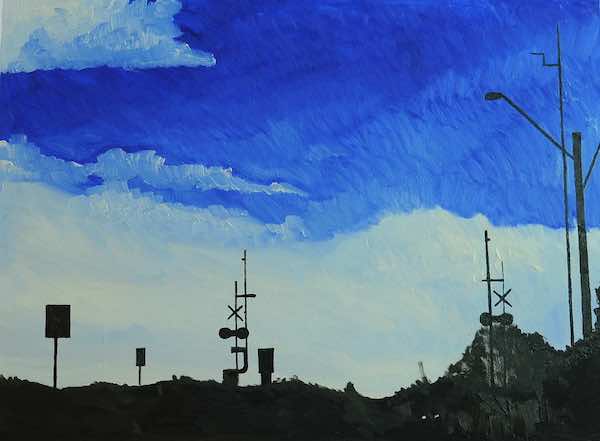
Mike Levin’s “Waiting for the Train.”

Community Longing and Belonging is a community art show in celebration of Jewish Disability Awareness and Inclusion Month. It opened at the Zack Gallery on Feb. 14.

Curated by Leamore Cohen, inclusion services coordinator at the Jewish Community Centre of Greater Vancouver, the fourth annual exhibit once again considers the questions, How do we make meaning of the concept of community, the real and the imagined spaces we inhabit? What does community longing look like and what are the possibilities for belonging in an ever-changing world?

Many of the pieces on display were made by artists from JCC Art Hive, a free and low-barrier program for artists with diverse needs. The collection comprises the work of diverse artists, with different levels of experience, perspective, faith and social location.

One of those featured is award-winning artist and writer Sandra Yuen, who is a member of Kickstart Disability Arts and Culture. Her piece, “Exploded,” is based on the prose of Derrick Bauman, an artist and writer, and influenced by pop art, Roy Lichtenstein, and graphic design. In her artist’s statement, Yuen writes, “As a person with schizophrenia, I wanted to express the fractured mind, the cut edges, the shattering of my life experience because of mental illness. However, this rendition is more a poetic image versus the cruel reality of living in madness, paranoia, hysteria and anger. The colours are sweet, the black lines clean and sharp, creating a mythological or romanticized view of insanity. I try to whitewash my life, sanitize the pain out of it, deny the diagnosis, but the illness remains, the weakness, the flaws, the humanity.”
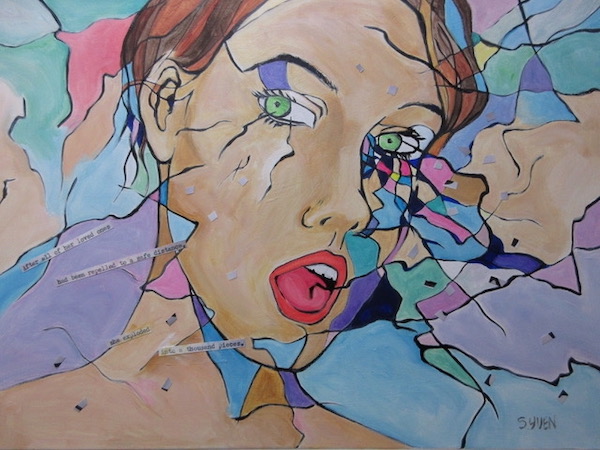
photo - “Exploded” by Sandra Yuen
“Exploded” by Sandra Yuen

Mike Levin’s “Waiting for the Train” is about being shrouded in darkness, yet feeling the abundance of sunshine not far away. It is a metaphor for the continued longing for COVID to end so that we can get back to normal living.

Levin’s paintings are often abstractions of nature or city life that conform to structure of composition. They are amalgamations conjured from his imagination, photos he has taken and memories of his experience of exploring.

Growing up in Calgary, Levin has practised art from a young age, and also plays clarinet and saxophone. He attended the University of Calgary’s fine arts and urban studies programs and, after moving to Vancouver, completed his bachelor’s degree in fine arts at Emily Carr University of Art + Design in 2020.

For the past 20 years, Levin has lived with schizo-affective disorder, which he controls through medication and being active in the arts and mental health communities. He has taught drawing and painting at Vancouver General Hospital, the Art Studios, Gallery Gachet and privately within the community; he also works part-time in carpentry. His art has been sold in Canada and the United States to more than 70 private collectors.

Mark Li is a Vancouver-based visual artist whose narrative-focused work creates a whimsical world filled with colour and imagination, as his untitled work in this exhibit shows. Every painting is a tale of friendship and acts of kindness: a bear might be best friends with a cat; a T-Rex smiles with shy humour and sweetness at the viewer; a lady bug and a cat might go dancing in the sunlight; a simple walk in the park with a friend and his dog is a delightful adventure – anything could happen and they could meet anyone.

photo - “Untitled” by Mark Li
“Untitled” by Mark Li

Rickie Sugars’ “Like Minded” is an example of his unique style of painting in abstract cubism expressionism, using bold colours and black outlines.

A seasoned professional artist, Sugars had his first gallery showing, and sold his first painting, at the age of 17. Since then, he has displayed and sold his art in several galleries and art shows throughout British Columbia.

Sugars is a classical animation graduate from Vancouver Film School. He started creating animated characters well before graduation, resulting in a partnership in an animation company that went on for many years. Continuing his artistic path, he began tattooing in 2004 and has his own tattoo shop. He also designs sculptures created from broken toys.

A few years ago, during an attempt to assist a woman who was being attacked, Sugars received a traumatic brain injury. He had to re-learn everything, including how to talk – however, it did not stop his artistic endeavours. Today, you will find Sugars painting on canvass (or any surface, really), crafting stickers, postcards, wall murals, sand and wood sculptures, and interior/exterior commissioned graffiti.

“My artwork is influenced by media, fads, plus social, political and cultural issues,” he writes in his artist statement. He wants viewers “to look past the obvious, to treasure and celebrate the unique, the unconventional, the familiar: and to be nonjudgmental. Respect others and support them for who they are. Find the beauty in broken toys, an old door, a broken guitar – take time to look more carefully at things around you and you’ll discover beauty in unusual places.”

Another of the artists contributing to the Community Longing and Belonging exhibit is Adrianne Fitch.

Born in Kew Gardens, Queens, N.Y., Fitch studied English and writing at Pennsylvania State University and has traveled all over the world, including living and studying in Israel. She has lived in Vancouver since 2008 and pursues a number of other art forms. She is also a writer and desktop publisher.

“Having lived with a hearing disability and also struggled with depression all my life,” she writes, “I definitely know what it means to feel isolated. As hearing loss is invisible, people frequently make assumptions about me (e.g. they think I’m stupid, stoned or purposely ignoring them). As I did not begin learning ASL until adulthood, I occupy that grey area between the hearing and deaf worlds. I miss a great deal of communication, both spoken and signed, and have often felt as though I don’t belong anywhere.

“That’s why this art show’s theme, Community Longing and Belonging, is so significant and meaningful to me. Indeed, I have always longed for community and belonging. The Jewish community, with its wonderful heritage and incredible diversity, is very precious to me. In creating these three ceramic menorahs, I have tried to express this diversity, as well as my love for the Jewish people.”

Community Longing and Belonging is at the Zack Gallery until March 17. There is a virtual meet-and-greet with the artists on March 2. Visit jccgv.com/art-and-culture/gallery or email Cohen, leamore@jccgv.bc.ca, for more information.

– Courtesy Jewish Community Centre of Greater Vancouver

MONOVA’s new space

Housed in the lobby of the Museum of North Vancouver, visitors can once more hop on Streetcar #153, which carried passengers along the Lonsdale Line from 1912 to 1946. (photo by Cynthia Ramsay)

This story took me a long time to write. Everything I read about the Museum of North Vancouver (MONOVA) set me off on another path of exploration. I’ve watched (really) old home movies, looked at countless archival photos, perused online exhibits – all of this after I was treated in December to a tour of the museum’s beautiful new space at 115 West Esplanade. Such is the seemingly never-ending amount of wonder the museum offers.

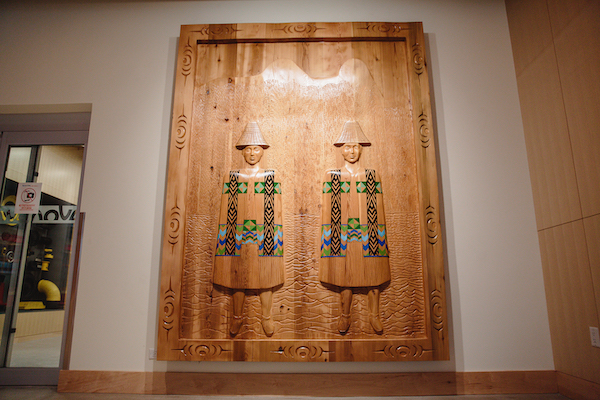
Days after the official opening on Dec. 4, curator Barbara Hilden walked me through the exhibits. I arrived early and had time to buy a few things in the gift shop – there are some excellent books, clothing, toys and other merchandise for sale. I also walked through the restored electric Streetcar #153, which carried passengers up and down the Lonsdale Line from 1912 to 1946, and admired Squamish (Sḵwx̱wú7mesh) artist Wade Baker’s cedar carving of Sch’ich’iyuy (the Two Sisters).

“The red cedar Sch’ich’iyuy panel is based on the ancient Sḵwx̱wú7mesh Sister’s Mountain Transformer legend,” says Baker on MONOVA’s website. “The twins were raised from childhood to be leaders for their people. They asked their father, the siyam, the chief, to bring peace to the warring tribes along the coast. He could not refuse their request and fires were lit all along the coast to signal a great welcoming feast to bring peace. For their efforts, the twins were immortalized in the mountain peaks you see today that watch over us.”

photo - The museum’s lobby features a cedar carving of Sch’ich’iyuy (the Two Sisters) by Squamish carver Wade Baker
The museum’s lobby features a cedar carving of Sch’ich’iyuy (the Two Sisters) by Squamish carver Wade Baker. (photo by Alison Boulier)

Beyond the museum lobby is a sparse area and a space for activities, a moveable wall separating the two. Visitors then walk through a corridor with images of trees on the walls, their branches continuing onto the ceiling. The Indigenous Welcome Circle, which highlights Squamish and Tsleil-Waututh (Səl̓ílwətaɬ) stories and items, is the anchor of the room. There is the notable presence and prominence of Indigenous involvement in the displays and, the day before the new museum’s opening, there was a memorandum-of-understanding signing ceremony that included members of the Tsleil-Waututh and Squamish nations.

“The MOUs affirm our commitment to working with Tsleil-Waututh and Squamish nations as equal partners,” Hilden told the Independent in an email interview after the tour. “MONOVA formed the Indigenous Advisory Committee several years ago to inform our programming, collecting, curatorial and operational activities. We rely on IVAC members to direct our strategic priorities in these areas and others, and to liaise with the nations. These needs do not diminish with opening our new location; on the contrary, their importance only increases. IVAC will continue to exist and we anticipate it growing larger and more robust as we look to incorporate Indigenous ways of knowing throughout the institution.”

Exhibits in the new permanent gallery include the Indigenous Welcome Circle, as well as themed displays – on sports, women in wartime, shipbuilding on the North Shore, and more. Interactive children’s displays help young visitors understand, for example, how to load a cargo ship and what various animals eat and what their poop looks like (this was a particularly fun exhibit, I must admit). An interactive map takes people through the history of the North Shore by water, trail, rail and road. Panels on one of the walls take us from the late 1700s to the present day with several photos and brief descriptions of notable events, good and bad, listed chronologically. There is a section – Truth and Reconciliation – dedicated to residential school survivors.

The museum’s first feature exhibition is called You Are Here @ The Shipyards. “It discusses the changing nature of North Vancouver’s lower Lonsdale area, from Indigenous settlement to working shipyards to contemporary tourist destination,” explained Hilden. “The exhibition features historic objects, archival photos and film … [and] will open in the spring of 2022 and run for one year. In the future, it’s anticipated that our calendar will be a mix of internally curated and traveling exhibitions.”

The North Vancouver Museum opened in 1972 in the old Pacific Great Eastern Historic Railway Station and moved to Presentation House in 1976, where it remained until last year. With the new location, came the new name, MONOVA.

“It’s taken more than 50 years, a multitude of meaningful discussions with community members and Indigenous leaders, countless volunteer hours, and painstaking research to amass a collection of more than 9,000 artifacts, but, after 20 years of planning, finally, the Museum of North Vancouver is ready to welcome the public,” reads the press release announcing the December opening.

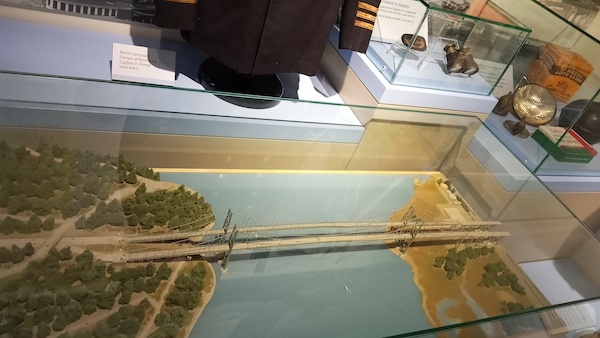
photo - Squamish Nation partnered with architect Moshe Safdie in the 1990s and proposed building a twin span next to the original, congested Lion’s Gate Bridge, but rehabilitation work of the existing bridge was undertaken instead. This model is currently on display at MONOVA
Squamish Nation partnered with architect Moshe Safdie in the 1990s and proposed building a twin span next to the original, congested Lion’s Gate Bridge, but rehabilitation work of the existing bridge was undertaken instead. This model is currently on display at MONOVA. (photo by Cynthia Ramsay)

In addition to the exhibits and activities that take place at 115 West Esplanade, there are many online exhibits. Archivist Dr. Jessica Bushey noted that two – Walter Draycott’s Great War Chronicle, and Climbing to the Clouds: A People’s History of B.C. Mountaineering – were created by the North Vancouver Museum and Archives, all departments working together.

“These were very large endeavours, taking nearly a year to create and involving consultants and partners,” said Bushey. “More recently, the archives team has focused on creating online exhibitions drawing upon archival materials that provide virtual access to the collections and offer a companion to on-site exhibitions at the archives building in Lynn Valley. These are smaller in scale, but strong in their interactivity and showcasing of archival photographs, moving images and oral histories.”

Currently, there is no specific Jewish connection in any of the material on display, but the museum is actively seeking additions to its collection.

“At the moment,” said Hilden, “we have materials exhibited from North Vancouver’s Ismaili, Iranian and Japanese communities. All the exhibits in our long-term gallery are designed to be flexible and changed out regularly, so we do anticipate updating and rotating these stories as more communities become aware of MONOVA and our desire to represent all North Shore stories.”

She said, “We would be thrilled to hear of more Jewish connections. We currently have very few tangible objects in our collection that would help us tell these stories, and I’d love to hear from members of North Van’s Jewish community.”

“The archives of North Vancouver is very interested in acquiring donations of archival materials from the Jewish community working, residing and thriving in the city and district of North Vancouver,” agreed Bushey, also noting the archives’ current lack of these materials.

“We have one file on Samuel Davis Schultz, who was a judge and alderman in North Vancouver and founded the honour roll of North Vancouver High School in 1912, a photograph of S. Schultz and a 2014 copy of the special issue of the Western States Jewish History quarterly journal, which focuses on the Davies and Schultz families. Lastly, we have the photographs from a City of North Vancouver 2000 millennium project on Diversity on the North Shore, which included the Jewish community and led to the publication From Far and Wide: Cultural Diversity in North Vancouver,” said Bushey.

“If anyone has archival records (e.g., correspondence, photographs, albums, diaries, home movies, business records etc.) they would like to donate,” she added, “they can email the archives with the particulars and we will get in touch.”

“MONOVA considers donations that have a close connection to the community of North Vancouver,” said Hilden. “The artifacts don’t need to be extremely old or extremely valuable to be considered. Sometimes, the most thought-provoking pieces are those that tell quotidian stories of everyday life. (Of course, the old and valuable belongings are welcome also!) We care for everything in our collection and, when we make the decision to acquire a piece, we commit to preserving, conserving and making it available for generations to come.”

To connect with the museum or archives, visit monova.ca.

Podcasts a vital part of CJN

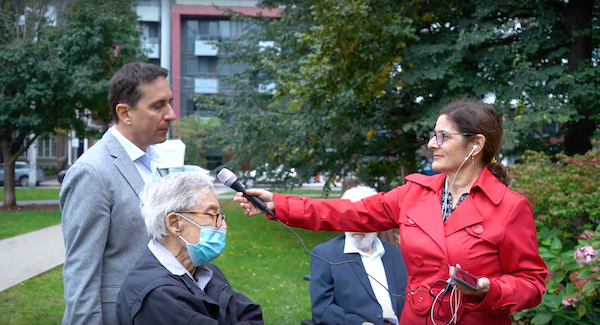
Ellin Bessner in the field reporting, October 2021, for her podcast, called The CJN Daily. (photo from Ellin Bessner)

Ellin Bessner is the host of The CJN Daily, one of several new podcasts featured on thecjn.ca, the Canadian Jewish News’ recently revamped website.

A veteran journalist, Bessner caught the reporting bug early in life.

“I have been a journalist since I was 10 years old – even though I didn’t know I was at the time. I was like the fictional character Harriet the Spy, writing notes about my parents’ friends,” she said of her first recollections as an aspiring member of the press.

These days, she hunts around for and discovers stories throughout the country that others might miss – all with the objective of depicting “what Jewish Canada ‘sounds’ like.”

“I read a lot, I scour the internet. There are literally stories everywhere. I don’t have enough time or enough podcasts to do [them all],” Bessner said, as The CJN Daily nears its first anniversary.

Bessner has broadcast stories on people as diverse as Rabbi Yehuda Sarna, the Montreal-born chief rabbi of the United Arab Emirates; Ashley Waxman Bakshi, a Canadian Israeli social media influencer; and Rabbi Arnold Noteh Glogauer, the first Canadian Jewish chaplain to set sail with the Royal Canadian Navy.

She also attempts to present all sides of contentious issues. During the February blockades in Ottawa, for example, she interviewed Jews who were involved in counter-protests against the truckers and two Jews (both vaccinated) who supported the convoy.

The CJN Daily has done several British Columbia stories, as well. To date, the show has aired a discussion with Aaron Levy, an Abbotsford disc jockey broadcasting about the November floods; a dispatch from a Jewish woman in Kamloops on her experience this summer in the path of British Columbia’s largest wildfire; an interview with Bernard Pinsky on security at the Jewish Community Centre of Greater Vancouver; a talk with environmental activist Seth Klein after COP26, the climate change conference in Glasgow; reflections on high school graduation from King David High School’s Class of 2021; a look at the number of people converting to Judaism in Kelowna; and a report about Jews in Kamloops and their reaction to the discovery of hundreds of Indigenous child graves in their community.

“British Columbia really had a terrible year,” said Bessner. “You had drought, forest fires, smoke, Indigenous issues … security issues and hunger. There is room for a B.C. story every single day. I really try to do as many as I can.”

CJN reinvents itself

In April 2020, a month into the pandemic, the CJN closed for the second time. The first time, in 2013, it returned after several months. This latest closure ended in December 2020, with a new CJN that is mainly a digital periodical.

“They chose to close after the Pesach issue in 2020. There was no revenue coming in and they decided to shut down,” explained Bessner. “A few months later, everyone thought that was CJN’s demise. Other websites came in to fill the gap. Meanwhile, those associated with CJN had decided to pivot to digital.

“It was a good opportunity to do that while everyone was at home and Zooming,” she said. “They re-launched digitally on Facebook only and got rid of the old website. Eventually, more money came in. The CJN doesn’t have the same look as before. We are doing it in a more modern way. These are the times and we have to be with the times.”

That said, for those who want to have a more traditional copy of the paper, the CJN still offers a printable weekly digest of stories every Friday (available on its website) and The CJ Magazine, a quarterly that will have its first issue later this year.

image - The CJN Daily logoAs for The CJN Daily, its start last spring did not go off according to script, Bessner recalled. “The podcast was launched on May 3, right when the Mount Meron tragedy occurred on Lag b’Omer,” she said. “All our planned interviews on Jewish Heritage Month were rescheduled. And then Israel had a war.”

The CJN Daily provides Monday to Thursday updates on the Canadian Jewish scene, from coast to coast to coast. The show can be heard on Spotify, Apple and other podcast platforms, as well as on the CJN website. There are also extended versions of Bessner’s interviews on the CJN’s YouTube channel.

Other podcasts on the CJN roster include Bonjour Chai, a weekly current affairs show; Yehupetzville, a look at Jewish life across Canada; Rivush, interviews with Jews of Colour hosted by Rivka Campbell; Menschwarmers, “the world’s most popular Jewish sports podcast”; and A Few of My Favourite Jews, with comedian Laura Leibow.

Bessner has worked for the Canadian Press, CTV News, CBC News and JazzFM. As a correspondent, she has reported from across Canada, Europe and Africa. As a professor, she has taught journalism at Ryerson University, Seneca College and, most recently, at Centennial College.

She is the author of Double Threat: Canadian Jews, the Military and World War II (2018) and a contributor to Northern Lights: A Canadian Jewish History (2020). In 2019, thanks to her efforts, Veterans Affairs Canada created a section on its website recognizing the contributions of Jewish men and women who served in the Canadian military during the Second World War.

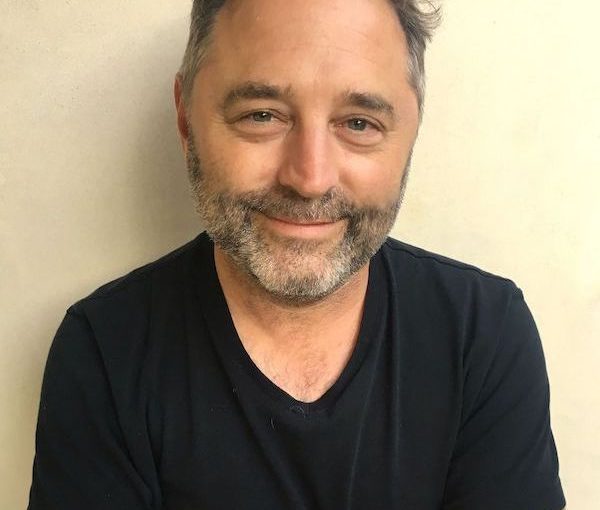
Sam Margolis has written for the Globe and Mail, the National Post, UPI and MSNBC.

Freedom found in art

Riva Lehrer, author of Golem Girl, recently spoke on the topic Art Celebrating JDAIM (Jewish Disability Awareness, Acceptance and Inclusion Month). (photo from JBF)

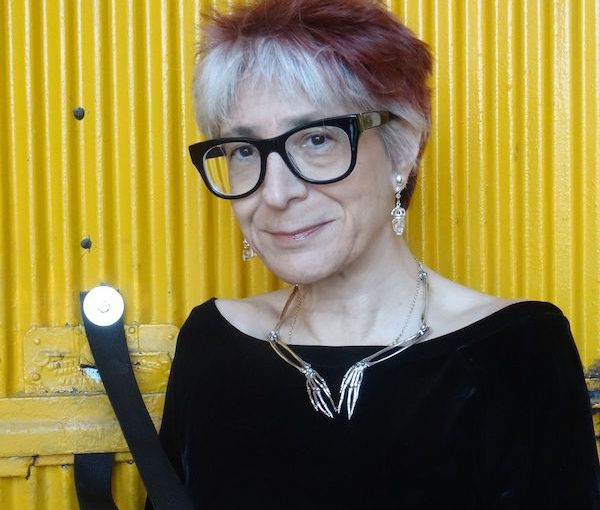
Artist, writer and curator Riva Lehrer spoke at this month’s Cherie Smith JCC Jewish Book Festival on the topic Art Celebrating JDAIM (Jewish Disability Awareness, Acceptance and Inclusion Month). Lehrer’s work focuses on issues of “physical identity and the socially challenged body.”

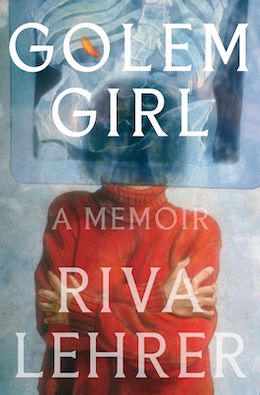
In the Feb. 7 Zoom talk from her home in Chicago, Lehrer discussed her 2020 illustrated memoir, Golem Girl,and her life as an artist born with disabilities into a world determined to “fix” her. Later in life, she found freedom through the flourishing disability arts movement.

Lehrer was born in 1958 with spina bifida. Throughout her early years, the message she received from those around her was that she was broken and would never have a job, a romantic relationship, or an independent life.

The memoir is comprised of two parts. The first deals with growing up in a time when people with disabilities were supposed to be hidden away from the rest of the world. The second looks at reaching adulthood after being raised to think that she was a mistake.

“I grew up thinking I was always wrong and always needed to be fixed, not just from medical professionals, but from everyone in society, who treated me like something to stare at or feel pity for. A lot of the book is taking that apart and addressing why people are stigmatized,” she said.

During Lehrer’s youth in Cincinnati, most children with a condition like hers were institutionalized. There was not a lot of modeling as to how to parent a child with disabilities. Lehrer, however, does credit her mother, who had worked as a medical researcher, for being much less fearful of the situation than an average parent might have been and for refusing the inclination to have her institutionalized.

Lehrer attended a school for children with impairments. “When you are surrounded with others like you, you are just a kid. You stop thinking you are different,” she recalled. The downside, however, was that kids at the time were not encouraged to imagine what they could be as far as a career, and high schools and colleges were not obligated to admit people with disabilities.

“The force of the message that I was a mistake was pretty powerful. By the time I was 12, I knew I was going to live in a body like this forever,” she said.

A resulting feeling of self-loathing persisted until her mid-30s, when novelist and disability rights activist Susan Nussbaum invited her to meet with a group of artists in Cincinnati. Lehrer reluctantly agreed to go and found it a life-changing experience.

“The sight of a lot of disabled people who were not hiding, and who were also funny and bright, gave me a way to understand my life and not just endure it,” she said.

The group showed Lehrer that disability is an opportunity for creativity and resistance. Finding inspiration and empowerment from people in the group, Lehrer asked them if she could paint their portraits. Even though she worked in portraiture, she “was very aware that she never saw images of people with disabilities ever, in museums or classes, only in telethons. It was never anything good.”

image - Golem Girl book coverNowadays, she said, her main interest is how people deal with and survive stigmatization. These are at the forefront of the 65 images contained in her book. Among the works she shared at the talk were a charcoal portrait of Nomy Lamm, an amputee musician, political activist and director of Sins Invalid in the Bay Area; a charcoal image of Mat Fraser, a British actor, writer and performance artist who was a regular cast member in American Horror Story: Freak Show television series; and a painting of Liz Carr, a British comedian, broadcaster and international disability rights activist.

“There is such a story behind each of these people,” Lehrer reflected.

As for the title, Golem Girl, Lehrer revealed a lifelong fascination with monsters. “One of the things monsters do is that they break boundaries,” she said. “Dead and moving, animal, person, person and machine, there is always something that violates a boundary. I was thinking how much this is like disability, that people don’t understand the disabled body. They think it is not human in some way. It is treated like it is alien.”

Lehrer is a faculty member of the School of the Art Institute of Chicago, and an instructor in medical humanities at Northwestern University.

The discussion was moderated by book festival director Dana Camil Hewitt.

Sam Margolis has written for the Globe and Mail, the National Post, UPI and MSNBC.

Shira Choir focus of lecture

Reverend Hazan Daniel Benlolo (photo from Kolot Mayim)

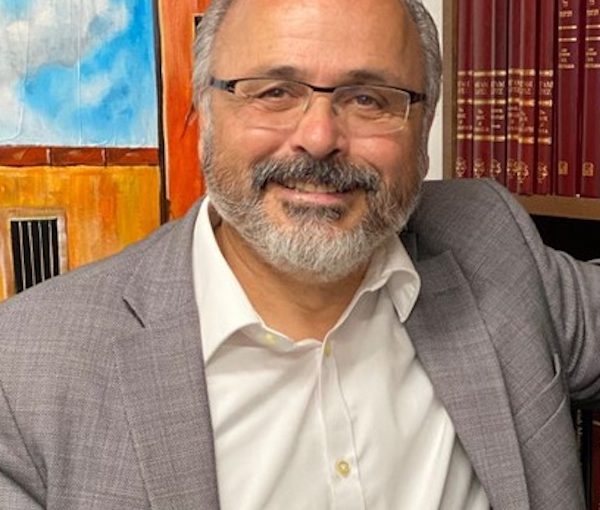
“To repair the often-shattered world, I cannot think of a better way than to give a voice to those less heard,” said Reverend Hazan Daniel Benlolo, leader of the Montreal Shira Choir, a vocal ensemble comprised exclusively of people with physical and intellectual challenges.

Benlolo was speaking at a Feb. 13 lecture co-hosted by Montreal’s Spanish and Portuguese Synagogue and Victoria’s Kolot Mayim Reform Temple during Jewish Disability Awareness and Inclusion Month, or JDAIM.

Born in Morocco, Benlolo settled with his family in Canada in the 1970s and became the cantor of Montreal’s Spanish and Portuguese Synagogue at the age of 17. He is also a rabbi and an artist who, among other things, designs ketubot (Jewish marriage contracts). Despite his many hats, Benlolo’s true passion, as evidenced throughout his talk, is to provide a stage for those who have seldom been listened to, accepted or appreciated in the community.

While working in Ottawa in 2002, he helped lead the Tamir Neshama Choir, which toured throughout Canada, the United States and Israel.

“It really inspired me and opened my eyes to a new life that I never explored before. To be able to spend time with people of special abilities made my life that much better in so many different ways,” Benlolo said of his Ottawa experience, for which he received a Governor General’s Caring Canadian Award in 2013.

The move back to Montreal came a few years ago. There, Benlolo and his wife Muriel Suissa founded the Shira Choir in 2019, with the assistance of Federation CJA and the Jewish Community Foundation of Montreal. The choir, made up of singers from many cultural backgrounds, performs a wide range of music, from liturgical to Broadway and pop.

Not long after the choir’s formation, the pandemic struck in early 2020. Nevertheless, Benlolo has managed to keep the music playing through Zoom rehearsals and socially distanced visits with choir members.

Benlolo stressed that, too often, people with special needs come in and out of our lives, without our taking the time to engage with them. His simple request to the Zoom audience was “to take the time,” as “it could make a world of difference.”

“They teach me more than I could ever teach them,” is the view Benlolo expresses regularly, saying there is no way to place a value on these relationships.

He emphasized the importance of not patronizing anyone in the choir. That is, audiences should give them a standing ovation only because members of the choir deserved one for the quality of their singing, not for the act of performing itself.

“They have hopes and aspirations. Some are going to fulfil them, some are not,” asserted Benlolo.

The future for the choir, he declared, is to continue to spread love, positivity, inclusion and the sense of community, but not tolerance, a word to which he has a particular aversion. “I don’t want to tolerate you, I want to love you. I want to count you in the community as a full member,” he said.

“We want to continue building from here,” he added. “It can only come to fruition if everyone puts in some effort. Just a little bit of an effort, the results will be so satisfactory, both for the individual and the community, [and] we will learn some new things, we will learn a way of life, that for so long has been hidden.”

Benlolo’s talk covered the recently premièred documentary Just As I Am, which can be viewed on CBC Gem (gem.cbc.ca/media/absolutely-canadian/s21e26). The film, a profile of the adults with special needs in the choir, explores the universal language of music and its ability to transform lives.

Benlolo also presented two short videos, both available on YouTube, showing members of the Shira Choir singing Ed Sheeran’s “Perfect” and Leonard Cohen’s “Hallelujah.”

In his concluding remarks, Benlolo urged the audience to not look upon those who are differently abled as “different” in a pejorative sense. “Different is great,” he said. “Different is beautiful. There is so much untapped talent out there that I am always in search of these people who are hidden gems.”

The Spanish and Portuguese Synagogue in Montreal is the oldest in Canada, tracing its history back to 1760, when the first Jewish settlers arrived in Quebec, making it as old as the province itself.

Now in its 14th year, JDAIM is a unified effort among Jewish organizations and communities throughout the world to build awareness and foster inclusion of people with disabilities and those who love them.

Benlolo’s presentation was the fifth in Kolot Mayim’s six-part series on the theme of Building Bridges: Celebrating Diversity in Jewish Life. The final session in the series features Indigenous artist Patricia June Vickers and Rabbi Adam Cutler of Adath Israel Congregation in Toronto, which is co-sponsoring the event. The topic on March 20, 11 a.m., is An Indigenous and Jewish Dialogue on Truth and Reconciliation. To register, visit kolotmayimreformtemple.com.

Sam Margolis has written for the Globe and Mail, the National Post, UPI and MSNBC.

Stepping back from abyss

Daniel Sokatch, New Israel Fund chief, urges openness to narratives of both peoples. (photo from JCC Jewish Book Festival)

The experiences of Jews and Arabs in the area between the Jordan and the Mediterranean are complex and both peoples deserve to have their stories understood, according to a leading voice of progressive Zionism.

Daniel Sokatch was the keynote speaker at the closing event of the 2022 Cherie Smith JCC Jewish Book Festival Feb. 10. Sokatch is chief executive officer of the New Israel Fund, a U.S.-based nonprofit funding Israeli civil and human rights organizations and initiatives, which also engages in reconciliation and conflict resolution efforts between Israelis and Palestinians. He shared reflections from his new book Can We Talk About Israel? A Guide for the Curious, Confused and Conflicted, which was illustrated by Christopher Noxon.

“Over my years of service at NIF as the chief executive officer – I’ve been there for over 13 years now – I witnessed personally the discourse about Israel become more heated, more vituperative, more emotional and less fact-based,” Sokatch said. He wrote the book to give average people “a GPS to the conflict that would help them negotiate their own relationship to this complex issue.”

Israel was at the edge of an abyss before the new eight-party coalition government was sworn in last year, Sokatch said.

“This government is a Frankenstein’s monster made up of parties of the right, centre, left and Arab community that shouldn’t work but does work because enough people from all parties, except for the hard right-wing parties, knew that Benjamin Netanyahu was leading Israel over a cliff,” he said. “That was my editorial opinion but it is also the rationale for this government.”

A chunk of the Israeli public realized that Netanyahu was moving Israel toward neo-authoritarianism and a “democracy recession,” said Sokatch. This was exemplified, in part, by moves to abrogate the country’s balance between its Jewish and its democratic identities, he said.

image - Can We Talk About Israel? book cover“Israel passed a series of laws – most of them, I think it’s important to note, passed only barely – that really reduce the standing of Arab citizens of Israel to something that looked a lot more like second-class citizenry,” said Sokatch. “The worst of these laws was something called the Nation-State Law.… The Nation-State Law essentially said to Arab-Israeli citizens, you may have the right to vote but only Jewish citizens of the state have the right to what the law says is ‘self-determination.’… It stripped Arabic of its official language status…. The only reason you do things like that is if you want to throw red meat to your base and make a statement to the minority about where they stand. Anyone who has been to Israel recently – and by recently I mean at any point during its entire existence as a state – knows that the Jewish character of Israel is under no threat. In that sense, the alarm raised by Netanyahu and that Nation-State Law was like [former U.S. president Donald] Trump’s Muslim ban. It was a draconian solution for a problem that doesn’t actually exist.”

Reuven Rivlin, who was president of Israel at the time, acknowledged that he was obligated to sign the bill into law, but promised to sign in Arabic, which he did as a symbol of protest.

Sokatch addressed the recent Amnesty International report that accuses Israel of operating an apartheid system. He said that any honest and fair-minded left-wing observer who traveled the length and breadth of Israel would recognize that the apartheid label does not fit. But, he added, any honest and fair-minded right-wing observer who traveled the length and breadth of the West Bank would see things that could legitimately justify the terminology.

“I happen to think that the Amnesty report is deeply flawed,” he said. But, on the flip side: “To dismiss it all as antisemitism is to, like an ostrich, stick your head in the ground and ignore the reality of the problem.”

If Jews worldwide are held responsible for Israel’s actions, that is antisemitic, he said. Likewise, if Israel is depicted as a tentacled monster controlling the world, or if Jews are depicted as clannish, disloyal and the embodiment of “cosmic evil,” these are examples of antisemitism. The hostage-taking at a Texas synagogue in January is another example.

“Why did the guy go to a synagogue, instead of a church or McDonald’s or wherever?” Sokatch asked. “He went to the synagogue because he thought the Jews could get him what he wanted. He thought that we were so powerful in the United States that we could pick up the phone and tell Joe Biden to let the person he wanted let out of jail let out of jail. When criticism of Israel engages in those tropes, you can bet your life it’s antisemitism.”

But these examples of bias should not blind people to the legitimate criticisms being leveled against Israel, he warned. He hopes his book will open up more dialogue.

“Too often, I think, we are afraid to talk about the hard things,” he said. “What is the role of Israel’s Arab citizenry? What is the relationship between the U.S. and Israeli Jewish communities, the two largest Jewish communities in the history of the world? What is the deal with the settlements? Is Israel an apartheid state? What is the boycott, divestment and sanctions movement? I didn’t want to shy away from those things. But I also felt strongly that, in order to have an intelligent conversation about them, or to hold informed opinions about them, you have to know what you’re talking about.”

The first half of his book is mostly straightforward history, he said, with his analysis in the second half. He encourages a more fluent understanding of the narratives of both peoples.

“These are two peoples, Israelis and Palestinians, Jews and Arabs, who have been victims of the world, of each other and of themselves,” said Sokatch. “I felt that it was important to hold both of their stories with compassion and curiosity and concern, and to acknowledge that both parties have legitimate claims to this little place between the Mediterranean Sea and the Jordan River. Both of these peoples have real histories of trauma and persecution and both of them have stories that help them understand who they are and where they are in the world and their connection to this place, and I wanted to tell those stories rather than just one of the stories.”

Sokatch appeared virtually in conversation with Dana Camil Hewitt, director of the book festival. Rikki Jacobson, chair of the festival committee, welcomed the audience and thanked the speaker.

Festival opener wows

A still of one of the humorous (and relatable) moments in Image of Victory, which is part of this year’s Vancouver Jewish Film Festival.

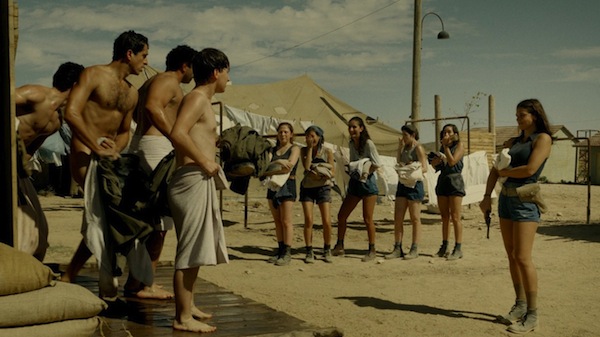
The Vancouver Jewish Film Festival opening night film is the epic Image of Victory, directed by Avi Nesher. It’s not with grandiosity that the movie leaves its mark, though there is some of that, but rather with the quiet moments of humanity it so movingly depicts.

Sombre piano music over which one can hear missiles flying, bombs exploding, wind blowing are heard as the initial credits are shown, modest white lettering on a black background, nothing showy. “There are moments when you try to make sense of your life,” begins the narrator, as black-and-white footage of a shot-out building appears, then a jeep, soldiers with rifles pointed, tanks. “You wonder if you made good use of the time God gave you on this earth. You seek someone to compare yourself to. Someone you think truly lived.”

For Egyptian journalist and filmmaker Mohamed Hassanein Heikal, that person is Mira Ben-Ari, though he doesn’t know her name or anything about her at the time. It is the image of her from decades ago that he cannot forget – battle-worn, staring down the Egyptian forces, she smiles, she takes out a gun and shoots. Cut to an older Hassanein, in his study, depressed and angry, watching the TV news about Israel and Egypt’s peace agreement, after decades of war. Was all the fighting and all the death it caused in vain? He blames himself for not having the courage to expose Egypt’s president as a traitor for making the peace deal. He idealizes Mira’s bravery and purpose, thinks back to when he was 24, and fearless – when he was assigned to document Egypt’s military operations against the soon-to-be-reestablished Jewish homeland.

Inspired by the Battle of Nitzanim in June 1948, in which the kibbutz was destroyed by Egypt, Image of Victory imagines what it might have been like on both sides of that conflict. Both Mira and Hassanein are based on real people, as are other characters in the film, and this movie is about a near-mythological event. The voiceover, the black-and-white footage, the fancy costumes of New Year’s Eve revellers in Cairo, idealistic kibbutzniks, zealous army commanders. Any one of these elements could have slipped into a larger-than-life portrayal, but director Avi Nesher shows restraint – and a valiant attempt at balance that has an air of realism, though the kibbutzniks are admittedly more developed entities.

The majority of the film takes place in chronological order, six months out from the battle. When we first see the kibbutzniks working the dusty land, they are doing so under occasional fire from the Egyptian farmers who were displaced after their landlord sold said land to the Jews. The rules of engagement are fascinating. After one altercation, the Egyptians yell to the kibbutzniks that they are all done on their side, and the Jews cease their fire so that both sides can safely collect their wounded and dead.

In the midst of the tension, life goes on in the kibbutz – there are broken hearts and newly starting relationships, there is joyous singing, dancing and piano playing, there is hard labour, there is frolicking on the beach. But underlying all the apparent normality is the hyper-reality of mortality, both because many of the residents and their recently arrived Haganah protectors are Holocaust survivors, as well as the threat of Egyptian attack. As one young soldier tells Mira, “You’d think it’s paradise if being here wasn’t risking death.”

After a brutal attack on a truck carrying supplies to the kibbutz, the Egyptian commander doesn’t want Hassanein to film the emptying of the truck of its supplies because it looks like they’re stealing. Perception is Hassanein’s constant battle – what he is being told to film and what he really wants to film. For example, during a lull in the fighting, he makes a film about two Arab villagers falling in love, which is trashed by the producer who hired him. People don’t want to watch that, yells the producer, they want war.

After the Egyptian forces are repelled by the newly declared state of Israel, Hassanein is ordered to film an Egyptian victory, so that King Farouk can save face. The enormity of the Egyptian army descends on Nitzanim, which Israel’s leaders – for ideological reasons encapsulated by the character of (real-life) commander Abba Kovner – have abandoned.

While the kibbutz’s children (including Mira’s young son) and some of the adults were evacuated or assigned to other defence tasks, the rest of the residents and soldiers were left to fend for themselves, vastly outnumbered. The real-life outcome is known: more than 30 kibbutz members and soldiers were killed, more than 100 taken prisoner. What Nesher’s film offers is an idea of the ambitions, the loves, the fears, and more, of some of those who were at the ground level, caught in a situation not entirely of their making.

The acting is phenomenal – adeptly showing the interplay of diverse characters, with their own senses of humour, their own past traumas, their own desires, their own measures of victory. The characters are more than stereotypes and the stories more nuanced than the ones we most often hear. Nesher wants us to be skeptical of national mythologies and of the media that help propel these misleading views, yet respectful of one another’s narratives, as complicated as they may be and no matter how divergent they may be from our own. It’s perhaps an impossible ask, but some ideals are worth dying for – or are they?

Image of Victory director Avi Nesher and producer Ehud Bleiberg participate in a live Q&A on March 6, 11 a.m. The Vancouver Jewish Film Festival runs March 3-13. For tickets: vjff.org.

A great diversity on screen

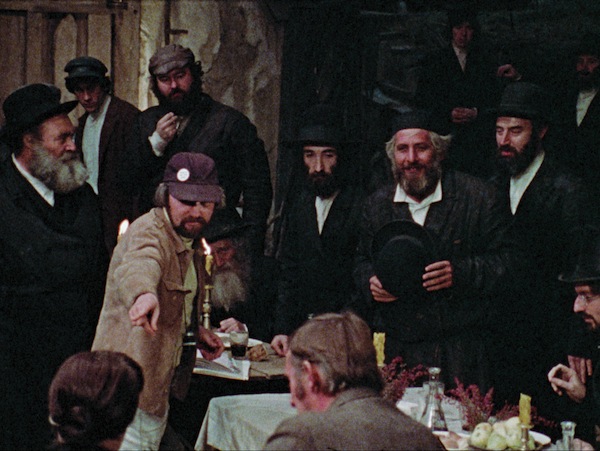
A still from the documentary Fiddler’s Journey to the Big Screen.

The Vancouver Jewish Film Festival runs March 3-13, and features more than 30 films, all of which will be available online for the duration of the festival. As always, there are shorts and features, fictional narratives and documentaries – presenting a great diversity of perspectives. This month, the JI offers readers a peek into the lineup.

Fifty years of Fiddler

Like a lot of people, Norman Jewison thought Norman Jewison was Jewish. When he was growing up in Toronto’s east end, other students would call out, “Hey Jewy!” Decades later, when he was one of Hollywood’s acclaimed filmmakers, it would come as a shock to many that someone with the word Jew as the root of their surname was, in fact, not Jewish. It hit Jewison earlier, when he tagged along to synagogue with one of the only actual Jewish kids in his school.

“When the melamed at the temple told me to leave, I thought, ‘What’s going on?’” he said. “Where do I belong?”

The feature-length documentary Fiddler’s Journey to the Big Screen purports to tell the story of how the stage play based on Sholem Aleichem’s Anatevka tales turned into the cinematic blockbuster Fiddler on the Roof. It does that, but it is also very much a story of Jewison’s trajectory as an interpreter of historical and current events.

Jewison had already made a splash with his 1967 race-focused movie In the Heat of the Night when he conjured the idea of filming Fiddler. Friends and foes predicted failure. Too Jewish. Not a large enough potential audience. But Jewison forged ahead, certain that his version would universalize the story into “a film for everybody.” Arriving at a time of social upheaval in the United States and elsewhere, Fiddler’s underlying themes were relatable to many, Jewish or not.

Case in point: the film was huge in Japan. There may be next to no Jews in that country, but, in the early 1970s, when Fiddler was released, Japanese society, like many countries, was struggling to balance modernity and tradition.

The documentary Fiddler’s Journey to the Big Screen comes a half-century after Fiddler on the Roof’s screen debut. It interviews surviving contributors and actors, many of whom saw their early careers explode with the popularity of the movie. Rosalind Harris, now 75, played Tzeitel both on Broadway (after understudying for Bette Midler) and in the film. Her thrill at the film and her place in it is undiminished by time and she nearly steals the documentary.

The enthusiasm of Jewison himself seems equally undiminished. He tells of how he sought out Isaac Stern, perhaps the 20th century’s greatest violinist, to dub the music of the titular character. He dismissed Frank Sinatra’s entreaties to play Tevye and scored Topol, the Israeli actor (né Chaim Topol), who had played the lead in Israel and then in London, casting aside, in the process, Zero Mostel, Broadway’s longtime Tevye.

Diplomatic relations with the Soviet bloc at the time made it impossible to film in Ukraine, where Anatevka is set, so Jewison struck a deal with the “non-aligned” Yugoslavia and much of the filming took place in Lekenik (now in Croatia), in wooden buildings constructed based on historical architectural records. One commentator in the documentary notes the irony that the film about a disappeared community was filmed in what is now referred to as “the former Yugoslavia” – “another place that is no more.”

Jewison speaks emotionally about watching the film’s Israeli debut beside Golda Meir and a meeting he had with David Ben-Gurion, who told Jewison that whoever is crazy enough to choose to be a Jew is Jew.

“If I’m crazy enough to want to be Jewish, then I’m Jewish,” Jewison interprets Ben-Gurion’s words.

But when he received an Academy Award, he cheekily acknowledged the truth. “Not bad for a goy,” he joked.

Not bad for a Canuck, one might add.

The documentary’s director, Daniel Raim, will participate in a live Q&A on March 7, 7 p.m.

Shorts of all sizes

Since this year’s Jewish Film Festival is online and on demand, you can choose to view the numerous short films as a binge or watch one or two between features as a sort of visual amuse bouche.

At about 30 minutes, Paradise is on the long end of the “shorts” spectrum. It features Ala Dakka, who will be recognizable to Fauda fans, as the doe-eyed Palestinian boxer, Bashar. In real life, Dakka is an Arab Israeli who, in media interviews, has been open about his struggle with his identity. In this film, he plays Ali, who has just arrived at Eilat airport from his home in Berlin, to attend his sister’s wedding. After a fight over the phone with his father (it was cheaper to fly to Eilat than to Tel Aviv, so now he is going to miss the pre-wedding dinner), he decides to skip the festivities altogether and hitchhike to the Sinai. (This after a five-hour interrogation by border security at the airport, which doesn’t help either Ali’s frame of mind or his ability to make the celebratory banquet.)

Picked up by a group of Israeli partiers, Ali opts to introduce himself as Eli, and so begins a subtle and, of course, inevitable succession of miscues and small betrayals. It is a tightly told story of self-identity and the perceptions of others. Dakka is a rising star in Israeli film and he brings memorable depth to his character in this short, charming drama. A subtext of the film is the happy-go-lucky Israelis’ perceptions of Egypt (or perhaps the broader “other”) and a degree of paranoia that one of the party crowd acknowledges doesn’t require pot-smoking to ignite.

A slightly shorter film, at about 20 minutes, is Pops, which pits grieving siblings against each other, as they try to do what they each think their recently deceased father would have wanted regarding his burial. The uptight son and the hippy-ish daughter come to an unorthodox compromise.

image - A scene from the short film Pops, in which two siblings must compromise on their father’s burial plans
A scene from the short film Pops, in which two siblings must compromise on their father’s burial plans.

You’re Invited sees a rabbi’s daughter invite her friends to a funeral when she learns that the deceased has no kin. Charming in concept and cheesy in execution, with uneven acting and heavy-handed writing, the short film is sweet enough, although anyone who has been a pallbearer will recognize an empty box when they see one carried in a movie. Explicitly based on a true story, the 13-minute film is neither too long nor too short.

For a quick laugh, at seven minutes, The Shabbos Goy follows a religious woman as she deals with the unexpected activation of a personal electronic device – a very personal electronic device – during Shabbat lunch. She runs into the street to find a non-Jew who she can entice but, due to halachah, not overtly request to turn the humming device off before the men in the house discover the source of the noise. (The women of the house, notably, remain blasé.)

The Jew who defended Nazis

image - Ira Glasser, a former head of the American Civil Liberties Union, is the focus of the documentary feature Mighty Ira
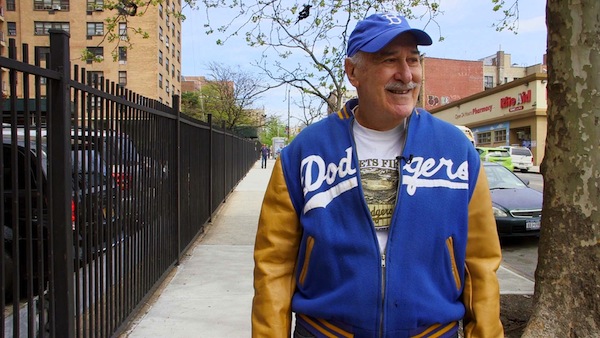
Ira Glasser, a former head of the American Civil Liberties Union, is the focus of the documentary feature Mighty Ira.

Ira Glasser was the director of the American Civil Liberties Union from 1978 to 2001, a period when the organization exploded in size and relevance – and also when it took on some of the most contentious topics the country has ever faced.

Perhaps not a household name, Glasser and his contributions to civil liberties in particular and to American society more broadly are examined in the documentary feature Mighty Ira.

It is easy to admire Glasser in theory and to support his principles in principle. It is harder to swallow when he champions what Oliver Wendell Holmes termed “freedom for ideas we loathe.” This challenging conflict is at the heart of Glasser’s life’s work and the heart of the film.

Glasser’s vigilance for justice was born at Ebbets Field, the now-disappeared home of the Brooklyn Dodgers, which Glasser calls his cathedral. The Dodgers were gods to the kids in Glasser’s Flatbush neighbourhood, no less so when Jackie Robinson integrated major league baseball, in 1947. At age 9, Glasser discovered that Robinson was forced to stay in hotels and eat at restaurants apart from his teammates while on road trips to parts of the country. That injustice stirred in young Ira a lifelong mission.

But devotion to racial equality can seem to come head-to-head with First Amendment rights to free expression, as when neo-Nazis sought to march in the Chicago suburb of Skokie, Ill., in 1977. The provocative plan to wear fascist regalia and parade through a town whose population was half Jewish – and which included one of the world’s largest communities of Holocaust survivors – was thwarted by town officials, who used a backdoor ordinance to prevent the event. (There was a 500-member B’nai B’rith chapter in town at the time, all of whose members were survivors.)

Glasser’s ACLU took up the case, and the backlash against the unpopular cause was enormous. It tested the mettle of the ACLU leadership – to say nothing of their fundraising department – and their commitment to free speech. But the leadership, which included a great many Jews, were almost unanimously steadfast.

The documentary shows how the ACLU’s relevance grew in the time of Glasser’s leadership, not solely because of his actions but also because the country was struggling with a range of social and moral conflicts. While the rights group had been at the forefront of issues like the Scopes “Monkey Trial” (addressing the place of religion in public education), the internment of Japanese-Americans during the Second World War and Brown v. Board of Education (banning school segregation), the ACLU’s docket really filled up in the time Glasser was at the helm in large part because the country was confronting and struggling with so many divisive issues.

Mighty Ira is the story of a remarkable man, but it is also a history of American free speech in the second half of the 20th century.

Director Nico Perrino will be a guest at the March 9, 1 p.m., screening of the documentary.

More information about the festival will soon be available at vjff.org.

Leading amid change

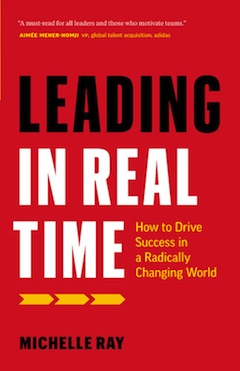
Michelle Ray’s latest book is Leading in Real Time: How to Drive Success in a Radically Changing World. (photo from espeakers.com)

Michelle Ray was recently inducted into the Canadian Speaking Hall of Fame, which is bestowed, in part, for excellence in “educating others to excel.” Of course, it is awarded to exemplary speakers, but Ray also educates using the written word. Her articles have appeared in various publications and she is now the author of two books: Lead Yourself First! Indispensable Lessons in Business and in Life, which was released in 2014, and Leading in Real Time: How to Drive Success in a Radically Changing World, which just came out in the fall of 2021.

Originally from Australia, Ray started her career in media and advertising while living there. She established her own business – as a professional speaker, leadership educator and consultant – in 1995, after she settled in Vancouver. In the conclusion of her new book, she shares what she learned from her parents, who were Holocaust survivors and faced several other challenges in their lives. Though they passed away many years ago, Ray writes, “the enormity of their respective losses is still with me…. They were truly my greatest mentors, and I believe there will never be another generation like theirs. As leaders, we have much to learn, appreciate and apply from their timeless legacy.”

The three lessons Ray highlights in this chapter are to be prepared for unanticipated events, to be optimistic and resilient in the face of difficulties, and to control what you can: “The now is all we know. It’s what we have. It’s the sum total of present moments and what we choose to do with them that prepares us for the unknown.”

image - Leading in Real Time book coverRay started writing Real Time in 2018, taking notes while traveling for speaking engagements and doing other work. Her schedule got so busy that the book project was set aside until January 2020. “Several months into the process,” she writes, as the pandemic hit, “it occurred to me that my teachings about leaders remaining relevant, flexible and open to new ideas applied to me. Realizing that the world had forever changed, I found myself questioning not only what lay ahead, but my own identity as a leadership expert and whether or not I had the energy to persevere in the face of so much uncertainty. I developed a deeper affinity with the challenges and struggles my clients faced, wanting to explore them further. I became more intrigued by their passion, ongoing success and commitment to the well-being of their workforce during a very difficult period.”

There are eight traits of a “real-time leader,” according to Ray. A real-time leader is transformative, emotionally intelligent, open-minded, humble, exceptional at listening, optimistic, consistent and trustworthy, and authentic. She explains each of these characteristics in more depth and examines the ways in which the workplace, workers and the economy have changed, and continue to change. She offers takeaways at the end of every chapter, as well as some homework, or what she calls real-time action steps. She suggests ways in which leaders having trouble with any aspect of leadership can improve, including hiring a coach or working with a mentor.

It’s not just a matter of personal growth. “There is a high cost to poor leadership choices,” she writes. “Especially when rolling the dice on leaders who are unprepared or who are incapable of immediately assessing real-time situations, including ongoing volatility, pressure from key stakeholders, and shifts in employee expectations.”

And yet, according to Gallup research cited by Ray, “companies in an array of industries put the wrong leaders into the wrong job over 80% of the time” and “65% of managers are not engaged or are actively disengaged. That’s not the workforce,” she writes. “That’s the leadership.”

It might sound obvious that disengagement compromises employee retention but Ray notes how often leaders do not move with the times, and hold on to outdated approaches. She recommends change management education so that leaders can model behaviour for their team regarding adapting to such things as technological innovation, as well as social advances, like women’s equality. Accountability is key and Ray offers readers of her book many ways “to recognize when they have a me problem rather than a we problem.” For example, do you step in to help when needed, are you respectful of others, do you keep your promises?

In the chapter on the human factors at play in running a business, Ray notes that “intelligence and self-awareness are traits that do not always come hand in hand.” But being self-aware and capable of learning – from experiences and from other people, including those working for you – is vital for someone wanting to be a capable leader.

For more on Ray, her books and learning programs, visit michelleray.com.

Novel informed by life

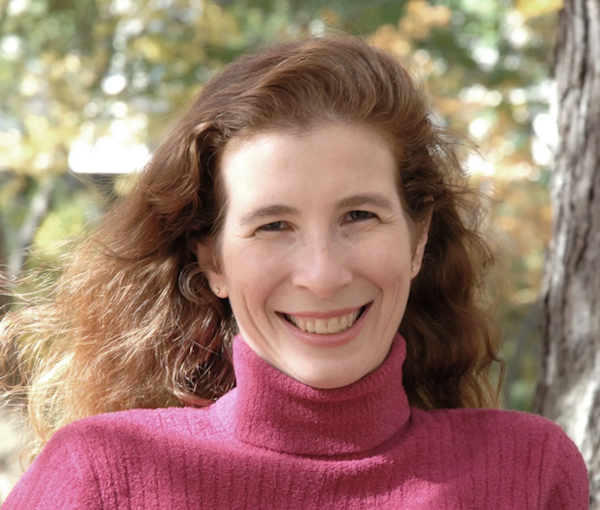
Alina Adams, author of The Nesting Dolls, spoke at a recent Zoom webinar organized by the Jewish Community Centre of Victoria. (photo from alinaadams.com)

New York City-based writer Alina Adams, author of the 2020 novel The Nesting Dolls – about three generations of Russian-Jewish women – spoke at a Jan. 27 Zoom webinar organized by the Jewish Community Centre of Victoria.

Adams began with her personal story. Born in the port city of Odessa, she spent the first seven years of her life in a communal apartment: a dwelling, including kitchen and bathroom, that was shared by two families.

“As I mention in The Nesting Dolls, these relationships were not always positive. My parents were lucky in that they got along well with the people they were assigned to share with,” said Adams.

In 1976, her parents decided to emigrate. Two years earlier, the United States had passed the Jackson-Vanik Amendment, which linked U.S. trade with the free movement of Jews and other groups in the Communist bloc.

“I like to say we were traded for wheat,” Adams quipped.

To those leaving the USSR, she said, “it was like stepping off the edge of the earth. You didn’t know where you were going, you didn’t know what life would be like when you were there, and you certainly knew you couldn’t come back.”

The family’s first stop was Vienna. From there, they took a bus to Rome, where they stayed for four months before traveling on to North America in January 1977, first to New York and then to San Francisco.

Adams recounted some of the reactions upon coming to America in the 1970s as a young child: for example, the surprise of watching a television screen in full colour. It was television, namely soap operas, that Adams later credited for helping her learn English.

The young immigrant started out in a Jewish day school, where the differences in various customs – her life in the new versus the old world – became very apparent. Parents in North America, she recalled, did not send their kids to school in the same dress every day; they used Band-Aids instead of green antiseptic to treat cuts; and, if their child had the sniffles, they did not place the child’s feet in hot water and then into socks filled with dried mustard.

Over time, Adams and her family got the hang of life in America. She graduated high school and college. All along, she knew she wanted to be a writer.

“My parents claim my first words were ‘pencil’ and ‘paper,’” said Adams. “And what’s the advice all writers get? Write about what you know. Well, what did I know? I knew about being a Soviet immigrant. I knew about living a culture that wasn’t mine.”

Publishers, at first, were not interested in those themes. Nonetheless, an editor at Avon Publishing did like her writing and contacted Adams, asking if she would write a Regency romance. This would become The Fictitious Marquis, a unique book in the Regency romance genre in that Jews are central characters.

Adams now has more than a dozen titles to her credit, including mysteries, books on figure skating (non-fiction) and other romances.

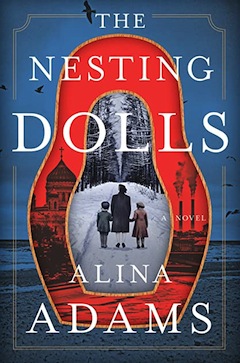
image - The Nesting Dolls book coverAbout four years ago, Adams’ literary agent told her that editors were becoming interested in Russia, and this led Adams to write The Nesting Dolls. The novel begins in the Soviet Union of the 1930s and ends in 21st-century, pre-pandemic Brighton Beach, in New York City. It focuses on the lives of three generations of Russian Jewish women in one family; the periods parallel those of Adams’ grandmother, mother and herself.

For Adams, it is the everyday events that are the most fascinating part of writing historical fiction. “Anyone can look up which date Nikita Khrushchev denounced Joseph Stalin, but it is the small details which make historical fiction compelling,” she said.

As an example, she pointed to a personal account she used in the novel. According to her mother, Adams did not want to be breastfed. This caused her mother to go to a doctor and ask him to write up a prescription for yogurt. “These are the little things, in this case how difficult it was to get regular foodstuffs in the Soviet Union, that bring a situation to life and show the reader what an era was like,” said Adams.

The novel was scheduled to be released in 2019 but was delayed to 2020, which, for Adams, turned out to be a blessing for the story’s timeline, in that she wasn’t finishing it during the pandemic. The last section of the book takes place in pre-pandemic Brooklyn in summer. “The things my characters do in the summer of 2019, they could not have done in the summer of 2020,” she said.

Adams lives in New York with her husband and their three children. She has written about her interracial, interfaith and intercultural family for Interfaith Family Magazine and the Forward, and has written columns and articles for dozens of publications.

Sam Margolis has written for the Globe and Mail, the National Post, UPI and MSNBC.