Stories with a message

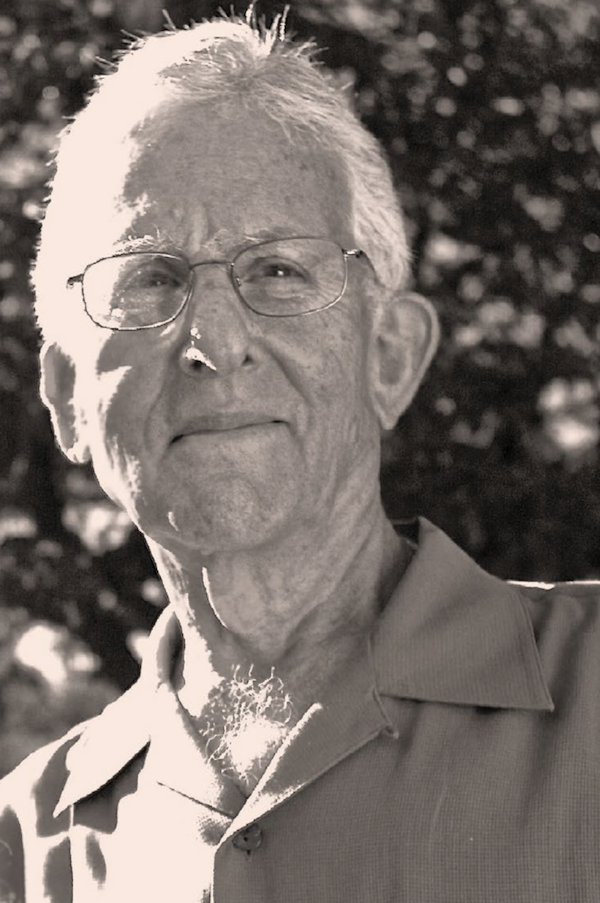
Michael Klein recently had his first book published. (photo from Michael Klein)

Dr. Michael Klein has published almost 200 scientific articles. Earlier this month, he launched his first book, Dissident Doctor: Catching Babies and Challenging the Medical Status Quo (Douglas & McIntyre).

Klein, who, with his wife Bonnie, splits his time between Robert’s Creek and Vancouver, is professor emeritus of family practice at the University of British Columbia, adjunct professor of family practice McGill University in Montreal and senior scientist emeritus at B.C. Children’s Hospital Research Institute. He was recognized as a member of the Order of Canada in 2016 for playing “a vital role in placing maternity care at the heart of family medicine.”

Klein has had a significant impact on the way the Canadian medical system has come to view midwifery and he played a prominent role in midwives becoming part of the healthcare system, first out east and later in here in British Columbia.

“I’m on the board of Canadian Doctors for Medicare, an organization that is trying to save Medicare from various encroachments from private interests, including U.S. multinationals,” Klein told the Independent. “We are about improving and extending Medicare. We are not about justifying things as they are. But, we are very much unhappy with the way privatization is going, which is a solution that is worse than the disease.”

book cover - Dissident DoctorAbout his new book, Klein said, “It began as something that I was writing as stories for my children and grandchildren … and, it got out of hand.”

At it happened, publishers at Douglas & Macintyre heard Klein tell a few of these stories and wanted them made into a book.

Klein set about developing them thematically. “I had to find out what the storyline was,” he said. “It’s a great deal about birth, but it’s not a birth book, per se. In many respects, birth is a metaphor.

“It’s about birth, family practice, midwifery, social justice, and about improving our rather challenged healthcare system. At the same time, I’ve deliberately chosen stories that have a message. For example, there are stories about people who were not supposed to get better but did. Many of the stories are actually detective stories. What I mean by that is that I try to make the stories go beyond the actual patient issue…. In what context does this illness take place? ”

Klein feels this approach to storytelling makes the point that, to provide really good care, you need to understand the patient, the full breadth of their situation.

He hopes the book also serves as a primer on how to advocate for yourself and your family in the complex medical system.

“Misunderstandings and mistakes in the healthcare system are actually inevitable,” said Klein. “I talk a lot about advocacy and the importance of making sure that, if things don’t seem right, they probably aren’t right.

“Because of my involvement with Canadian Doctors for Medicare, the whole issue of privatization is explored. For me, I have a special need to express this, because I’m in a unique position. I’ve practised in Canada before Medicare. I’ve practised in the States and ran health centres without Medicare – that wasn’t a lot of fun. And, I’ve practised back in Canada with Medicare.”

The main point Klein wants to impress upon readers is that humane, holistic care in the context of a person’s whole life is the ideal. “I am not putting this out as a dispassionate physician-scientist, but as somebody who really understands the big picture and can situate the patient or the system within a very large context of where we are going as a society,” he said.

The book is almost completely free of medical jargon, although it deals with complicated issues. Klein said the book is equally accessible to medical trainees, people in the profession and to the general public.

The stories he chose, the themes he discusses and the politics, he hopes, will be easily understood by anyone who has ever encountered the healthcare system. “Not just pregnant people and their partners, but anybody; also family physicians, midwives, obstetric nurses, dulas,” he said.

Klein showed the manuscript to people in all these categories, and, he said, “it seems to work for them.”

The feedback Klein has been getting is that people love the book’s advocacy stories. He even includes his wife’s experiences following a series of strokes, when she was told she was inoperable and would die. A surgeon in London, Ont., saved her life.

“There are a series of stories of my patients and other peoples’ patients who defied the odds, and where patient advocacy has been absolutely essential,” said Klein. “Whether they are physicians or laypeople, they became engaged in the right way with the health providers and improved their outcome.

“People relate to that very strongly, regardless of whether they are patients. The experiences they’ve had when their children, spouse or parents were sick and, either they were sidelined by the system or they embraced by the system. It varies enormously with who is providing the care and what their attitudes are. I cover that in the book.”

Other stories in the book tell of how Klein battled with the U.S. army and avoided going to the Vietnam War.

He also delves into his strong support for midwives. “People wondering if home birth is safe are very interested in that section,” said Klein. “Home birth is clearly safe. However, safe in the right kind of system, with the right kind of supports and back up. In other words, an integrated system like we have in British Columbia, as opposed to the chaos of the U.S.”

The launch event for Dissident Doctor took place in Toronto on Oct. 9.

Rebeca Kuropatwa is a Winnipeg freelance writer.


The achievements of Israel

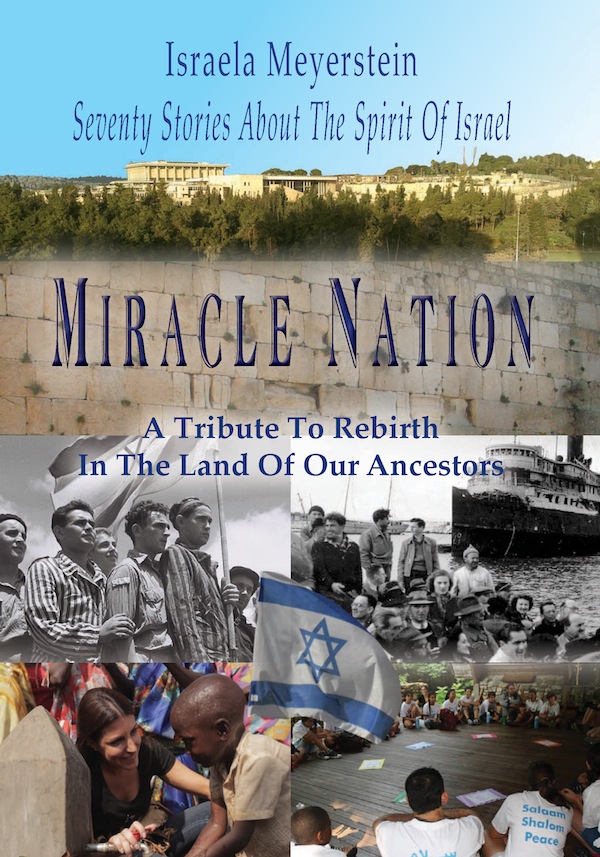
The anthology Miracle Nation: Seventy Stories About the Spirit of Israel; A Tribute to Rebirth in the Land of Our Ancestors by Israela Meyerstein (Mazo Publishers, 2018) highlights the amazing achievements of Israel in the 70 years since its rebirth in 1948. It contains the stories of ordinary people leading lives of courage, altruism and inspiration; stories that embody tikkun olam, repairing the world, which is at the heart of Judaism.

Meyerstein, a family therapist for more than 40 years, dedicated the book to Israel’s 70th birthday and in memory of relatives who perished at Treblinka. Each of the stories, many of which are contributed by writers other than the author, reminds us of how much there is to be proud of, as well as offering hope and optimism for the work still to be done.

Shlomo Alima, in “Destination: Return to Zion,” tells of his Iraqi ancestors, who were from the oldest Jewish Diaspora community in the world. His family left everything behind in 1925 to pursue their destiny in Israel. Their long, dangerous journey was made on donkeys, camels, bicycles and taxis – a two-month trek through Syria and Lebanon. They settled in Bet Yisrael, near Mea Shearim, and, in a two-room house, his grandparents raised 12 children. (Sadly, at only 30 years old, his father was murdered.)

Rabbi Micha Odenheimer contributed “Tevel b’Tzedek: Creating a Just, Compassionate and Beautiful World,” about a caste called the Mahji, who lived on the hills nearby rivers cascading from the majestic snow-covered Himalayas. They lived by fishing, both for feeding themselves and for trading with their neighbours, who grew rice, corn and wheat. Eventually, however, new roads brought people from other castes, who used explosives to kill the fish and bring them to the surface, and the Mahji ended up working in a brick factory, in order to survive. In addition, logging depleted the forests such that, during the monsoon season, the torrential rain couldn’t be absorbed into the earth quickly enough to recharge the springs that were needed in the dry season. Their life became unbearable.

But, a few years ago, something changed. An Israeli organization called Tevel b’Tzedek came to the area and joined up with a Nepali group, helping them grow enough crops for their own needs as well as for sale. Tevel b’Tzedek is Hebrew for “earth in justice.” Founded by Rabbi Micha Odenheimer in 2007 with 15 volunteers, there are now 800 volunteers, working with others to help some 40,000 Nepalese living in slums and villages.

Tevel b’Tzedek is just one of the many such Israeli organizations featured in this book. Another is Eco Peace Middle East, an environmental project that brings together young people from both sides of the Jordan River and the Dead Sea to try and prevent the waters from drying up, and to conserve water.

Pikuach nefesh (saving a life) is illustrated by stories of amazing acts by the Israel Defence Forces and of field hospitals for wounded Syrian civilians. Israeli hospitals offer medical care to Jews, Christians, Muslims, Druze – all nationalities and ethnicities without bias. There are wonderful organizations like Magen David Adom, Natal, Zaka and others that are always ready to save lives.

Another notable institution is Leket Israel, started by Joseph Gitler, a lawyer from New York. He found a way to garner good, surplus food – thrown out by supermarkets, caterers at event halls and farmers who grew too much – and collect it for those who need it. Leket is now an enormous food rescue network, which annually has 50,000 volunteers and feeds hundreds of thousands of Israelis every week.

Another miracle in Miracle Nation is described in “Oasis of Peace: Can a Song Heal?” by master musician Yuval Ron. Neve Shalom (Oasis of Peace) is a village where Jewish, Christian and Muslim families remain faithful to their own religious traditions, while dedicating their lives to advancing peace. It began as a dream of Father Bruno Hussar, who was born in Egypt and brought up in France. Only in adulthood did he discover that his family was Jewish. He started Neve Shalom on a monastery hillside, living alone until five families joined him. Today, the community is thriving – visitors from all over the world, including those who work for nongovernmental organizations and the United Nations, come to study in Neve Shalom. Friends of Oasis of Peace now exists in 11 countries.

On every page of this inspiring book, you will find a reason to be proud of this “miracle nation” – Israel – and its contribution to making the world a better place.

Dvora Waysman is a Jerusalem-based author. She has written 14 books, including The Pomegranate Pendant, which was made into a movie, and her latest novella, Searching for Sarah. She can be contacted at dwaysman@gmail.com or through her blog dvorawaysman.com.

Pelman participates in Word

Barbara Pelman (photo from Word Vancouver)

Among the writers being featured at this year’s Word Vancouver, which runs Sept. 26-30, is Victoria-based poet Barbara Pelman.

Pelman’s latest collection, narrow bridge (Ronsdale Press, 2017), is her third book of poetry. Its title comes from Rabbi Nachman of Breslov’s famous advice (at least in Jewish circles): “All the world is a narrow bridge – the important thing is not to be afraid at all.” Other than in one poem, however, called “Öresund,” where she tells herself, “I will not fear,” Pelman doesn’t come across in her writing as fearful.

“I’m delighted that I don’t come across as fearful,” Pelman told the Independent, “as I am full of fear, and certainly before each visit to my family in Sweden, I imagined everything that could go wrong and how incompetent I am. And was amazed that I survived intact.

“Generally, I tend to be a worrier (‘a misuse of the imagination’) but fight this negativity all the time. The tension, which I hope comes across, is between a general optimism and belief that, ‘in the long run’ … things sort themselves out. So, I tend to take on things that might terrify me, like art classes or solo trips to Berlin or train rides through Europe, and sign up, so there’s no going back. Not, however, bungee jumping or skydiving.

“When I have to deal with adversity – a separation and divorce, primarily – I talk and I write,” she said. “Both are clarifying agents. The poems in this book put forward a lot of my difficulty in being in the present, without wishing to be elsewhere. As in the first poem, ‘Gentle Reader’ – the desire to desire only what you have, and not what is somewhere else.”

On the family front, at least, Pelman’s journeys have become shorter since the book was published. Her daughter, who had been living in Sweden for three years, moved to Vancouver this summer, meaning that Pelman’s grandson is also now that much closer. He features in more than one poem – “Still Life with a Small Boy” is especially poignant. In it, he and his bubby, Pelman, are out having a hot chocolate and croissant. “Heads together, bending into each other. / They are a world. Outside, the world breaks. / She cannot read the news while she is with him, / tries to be calm, listen while he tells her / his new red bike helmet makes him safe.”

The collection is divided into three sections and includes some poems that Pelman has published before. Her previous books of poetry are One Stone (Ekstasis Editions, 2005) and Borrowed Rooms (Ronsdale Press, 2008), and she also has produced a chapbook, Aubade Amalfi: The Marcello Poems (Rubicon Press, 2016).

“This book had three iterations, each time being sent back by the publisher with suggestions – too much of Marcello and the adorable grandson, for example,” she said of the decision-making process for what would make it into narrow bridge. “So, I rejigged the poems, took out a lot of them, put in more recent ones, and relied on Russell [Thorburn] to put them in order. He sees an organic pattern of the poems, sometimes based on image or theme. I trust his choices, only changed a few.”

The poems in narrow bridge include many with Jewish themes.

“Most of my childhood centred around the synagogue, not in a hugely observant fashion, but, as my father was choir leader at the Beth Israel, I often went to services with him,” Pelman said about the place of Judaism and Jewish culture in guiding her work or approach to life. “Now, as a member of Congregation Emanu-El [in Victoria] and ‘den mother’ for the Calling All Artists project, I am interested and involved in learning Hebrew, chanting Haftorah, and generally intrigued by the culture and traditions of an ancient people.

“Moreover, and this is what I think is really wonderful, poetry and study of Torah have many similarities. Hebrew is a language that I think is embedded in metaphor, and studying Torah is the kind of layering analysis that I am used to in studying poetry. Layer upon layer of meaning and ambiguity. Rabbi Harry Brechner considers art as ‘mishnah’: another way to interpret, to find meaning that is relevant to us personally and globally.”

In narrow bridge, Pelman explores kabbalistic ideas, her own family history and relationships, as well as biblical ones (the poem “Isaac” is powerfully evocative). In at least two poems, she explores the concept of “thisness” – notably in the poem of that name, where, she writes, “Happiness, fed from detail: the thisness of things, / resting in the eye of the beetle, the creak of the board / she leans against, the cold air pricking her ears.” And several poems have to do with the spaces or pauses between, for example, a heartbeat or a pendulum’s swing; those moments that happen all the time but that we rarely acknowledge or even notice.

Aging features prominently, as well. And, while some poems are wistful – such as “Suitcase in the Closet,” where recollections of past travel suffice – others are almost calls to arms. “A woman over seventy should open her travel account, / run her fingers over the globe, and choose / She should trade her sensible shoes for sandals, / her Gucci bag for backpack, her datebook for weather reports,” begins the poem “Go,” a favourite in this collection, though this reader is still a couple of decades shy of 70.

As for how her style or subject matter has changed since her first collection, Pelman said, “I have continued to work with various poets in workshops and retreats, and continue to learn a great deal from poet friends and reading. I think my poems have become shorter, a bit more compressed. I am aware of the musicality of the poem – the cadence, the pacing, the rhythm. But the struggles are still there: how to get started, how to edit, how to know when a poem is done. I have a huge file on my computer, called ‘Working On.’

“And my subject matter has changed as my life has changed,” she said. “The first book dealt with the divorce and finding a new identity; the second book included the death of my father; this book is about travel, and daughters, and grandsons, and the new life of retirement. About balance. But there are still hummingbirds in the hawthorn tree. Jasmine and tulips. Old lovers and mothers.”

Pelman is at Word Vancouver on Sept. 30, 1:20 p.m., in the Suspension Bridge tent at Library Square Conference Centre, one of three poets participating in “Another Taste of Poetry.” She also joins two other poets in Ronsdale’s Fall Poetry Showcase at Dunbar Public Library on Nov. 7, 6:30 p.m.

For more about Word Vancouver – where Jewish community members Mark Winston and Claire Sicherman will also share their work, at 1:20 p.m. and 2:30 p.m., respectively on Sept. 30 in the Alma VanDusen Room at Library Square – visit wordvancouver.ca. The interim manager of the festival this year is community member Bonnie Nish.

Help dealing with dementia

For anyone who is close to someone with Alzheimer’s disease or another form of dementia, Dr. David Kirkpatrick’s Neither Married Nor Single: When Your Partner Has Alzheimer’s or Other Dementia (Brush Education, 2018) is a must-read. There is so much in it that is critical to know, learn or come to understand about living, loving and letting go of one’s spouse, partner or friend with Alzheimer’s.

Kirkpatrick, a recently retired psychiatrist, has written a rare gem of a book and its message is needed by so many spouses of patients with these dreaded diseases. Kirkpatrick is a widower; his wife, Dr. Clair Hawes, a proponent, educator and practitioner of Adlerian therapy, died only last year from Alzheimer’s. His warm, wise and wonderful book is a map to help family members make it through what is normally uncharted, terrifying and anxiety-filled territory.

Besides the great clarity and pathos with which this book is written, it is a rare book because it is written from the dual perspectives of a psychiatrist and a loving husband in the process of watching his beloved disappear. Kirkpatrick, the psychiatrist, brings much-needed information to help the care-taking spouse understand the complicated medical condition, from getting the right diagnosis to clear descriptions of how dementia manifests, and even understandable explanations of the brain. As a loving husband, he shares the insights gained from others, as well as from his own years of confusion, anxiety, pain and suffering.

image - Neither Married Nor Single book coverThe fact of the matter is that the vast majority of the information in this book is also needed by the children of parents suffering from Alzheimer’s or other dementia. If there is no spouse to read it, then children, nephews or nieces, grandchildren or even close friends should read this book.

There are eight chapters – “The Diagnosis,” “Alzheimer’s Disease: A History and an Update,” “Finding Help and Comfort for your AD Partner,” “Care Homes,” “Improving Your AD Partner’s Quality of Life,” “Taking Care of the Caregiver,” “Sexuality and Intimacy” and “Into the Future” – followed by notes and the bibliography.

This small but powerful book takes the reader from the first stages when a spouse or other family member realizes something cognitive is happening to one’s loved one; when a family member begins to know that their loved one’s life is changing for the worse.

With humour, honesty, pathos and the strong voice of man who deeply loved his wife, Kirkpatrick takes the reader on his journey, from before, during and after the diagnosis, to a care home, and all the way to her death.

There are so many quotes that I could share, but space doesn’t allow it. In addition to Kirkpatrick’s words of insight are many important transcripts from other spouses talking with great honesty about their experiences. Every person’s experience in such a situation is partly unique, but it is also fair to say that all of the spouses in the book are on the same road, just getting off at different exits before returning yet again to the main highway leading to the same destination. Kirkpatrick’s special personal and professional voice shines a light to assist readers to see their way.

In Chapter 4, “Care Homes,” after talking about many of the heartbreaking yet life-saving choices a spouse must make on where the Alzheimer’s spouse should live, Kirkpatrick encourages the reader this way: “These are questions that are not always answered quickly or easily, but they must be asked, and the earlier in your shared experience that you do this, the better.” Yet, near the end of the chapter, he writes, “Think it through carefully. Perhaps write down pros and cons. Other than your decision to become partners in the first place, this is the most important decision in all your years together, so take all the time you need.”

One of my favourite quotes from the book is at the beginning of Chapter 6. It is a toast: “Here’s to Aloneness and her second cousin, Loneliness. May we continue to especially savour and enjoy the former without being absorbed by the latter.” And isn’t this yet another way to describe the holy and tragic dance of loving and losing?

While Kirkpatrick writes beautifully as a psychiatrist and as a husband throughout the book, in Chapter 7, “Sex and Intimacy,” he reveals to the reader even greater depths and poignancy. But, every chapter is filled with meaningful advice, guidance and hope.

Finally, a personal note that I’d like to share with you, the reader of this review, and hopefully a future reader of David Kirkpatrick’s book. Besides being a past congregant of mine, David also has been a dear friend for the past 17 years. In addition, before the onset of Alzheimer’s, my wife and I used to go out with David and Clair to dinners and plays. They were one of our favourite couples to see. Watching their dynamic relationship, their sense of humour, their deep shared mutuality and enjoyment was truly an honour. It is, of course, all the more sad knowing what they had and what they lost.

David, already an accomplished psychiatrist and therapist, certainly never wanted to experience such a loss, but he has translated that tragedy into this book. Neither Married Nor Single is a gift to anyone related or close to people with Alzheimer’s, but it is an especially meaningful and helpful gift to spouses suffering on their own.

Rabbi Shmuel Birnham was the rabbi and spiritual leader at Congregation Har El on the North Shore for 16 years. He retired two years ago. Rabbi Shmuel thoroughly loved being Har El’s rabbi and he also completely loves being retired.

Stories to bring smiles

Delightful. That’s the first word that comes to my mind for two new hardcover children’s books by members of the Jewish community that will soon find their way to my youngest nieces’ bookshelves: Pip & Pup by Eugene Yelchin (Godwin Books) and Counting on Katherine: How Katherine Johnson Saved Apollo 13 by writer Helaine Becker and illustrator Dow Phumiruk (Christy Ottaviano Books).

Yelchin’s wordless book begins with a chick hatching. On a farm somewhere, having just come out of her shell, Pip sees the world for the first time. She spies a puppy sleeping under cover of a tractor. Fearless, she goes right up to Pup’s nose to say hello. When Pup awakens and barks in greeting, Pip is thrown into a panic, not quite prepared for the full size of her relatively large new friend.

When the rain starts, Pip literally climbs back into her shell, but just to stay dry. She is no longer afraid. In fact, when she sees Pup’s distress at getting wet and at the sound of the thunder and the force of the rain, she offers what help she can. The two start to play even before the sun comes out again. A broken eggshell dampens spirits momentarily, but then it’s Pup’s time to fix things, which she does.

Pip & Pup is a simple story that is evocatively illustrated using warm colours, texture and layers, combining pastels, coloured pencils and digital painting. There is a depth to the art and the story. Children and their adult readers will have fun asking each other questions as they go along. Do you think Pip is brave to say hello to Pup? Do you like the rain? How is Pup feeling right now? How would you feel if something of yours broke?

image - Counting on Katherine book coverMany questions will arise from reading Counting on Katherine, as well, though some of them will require a different kind of reflection, as the story touches upon racism, sexism and other such topics – in an age-appropriate way for readers 5 and up.

Becker interviewed Katherine Johnson, who turned 100 years old on Aug. 26, and Johnson’s family for this picture-book biography. Johnson was a mathematician at the National Aeronautics and Space Administration (NASA) and, among other things, her manual calculations were crucial in bringing the crew of Apollo 13 back to earth safely after it was damaged while in space.

In Counting on Katherine, we meet Johnson as a young girl: “Katherine loved to count. She counted the steps to the road. The steps up to church. The number of dishes and spoons she washed in the bright white sink. The only things she didn’t count were the stars in the sky. Only a fool, she thought, would try that!”

And Johnson was anything but a fool. She skipped three grades in elementary and was ready for high school at 10 years old. “But back then,” writes Becker, “America was legally segregated by race.” Johnson’s high school didn’t admit black students, so her father, by “working night and day, he earned enough money to move the family to a town with a black high school.”

Johnson’s next challenge was that, as a woman in that era, she was relegated to the teaching and nursing professions, so she became an elementary school teacher. However, in the late 1950s, the space race began, and NASA’s predecessor began hiring thousands of workers. “It even started hiring black women – as mathematicians.”

Johnson excelled at NASA and her work was integral to the United States’ space program, not just to the Apollo 13 mission, and Counting on Katherine has an epilogue that gives some additional information about Johnson. As well, Phumiruk’s imaginative digital artwork is also information-filled, clearly showing Katherine’s longing to learn, as she gazes from her bedroom window at the night sky; her joy with numbers, as she fills chalkboards with them; her anger at not being allowed to attend her town’s high school; her meticulousness, as she calculates a safe journey for Apollo 13. Counting on Katherine is a wonderful book.

We are hardwired to be kind

Dr. Brian Goldman is an emergency physician at Toronto’s Mount Sinai Hospital. (photo by Christopher Wahl)

According to Dr. Brian Goldman, author of The Power of Kindness: Why Empathy is Essential in Everyday Life (HarperCollins Publishers, 2018), we all have the innate ability to be kind, gentle and to give of ourselves without the need to get anything in return.

Goldman, who works as an emergency physician at Mount Sinai Hospital in Toronto, said the idea for The Power of Kindness had been germinating in his mind for a long time.

“I had originally pitched a book on empathy and health care,” he said, “and my publisher, HarperCollins, came back to me and asked why I don’t instead aim a little broader and write a book about empathy in the world at large, not focus just on the hospital.”

About the concept, he said, “The wise physician knows how to say, ‘I don’t know.’ The book doesn’t say how it feels to say ‘I don’t know’ 17 times in a row. At some point, you’re terrified that they’re going to say, ‘Why don’t you get us someone here right now who can answer our questions?’ And you’re afraid of being unmasked as being inadequate.”

In recognizing this in himself, Goldman decided to travel the world to speak to some of the kindest people to hopefully internalize their kindness and find ways to pass their enlightenment onto others. In doing this, he said, “I found answers and, for the rest, you’re going to have to read the book. But, I will tell you one thing. I found that some people are born with empathy.

“I found one extraordinary child,” he said, by way of example, “who was nicknamed ‘Ta Ta.’ And he, at the time that I met him, was [almost] 3 years old. His mom, Shala, adopted a man on the streets of Sao Paulo who had been homeless for nearly 40 years and called him her soulmate. The striking thing about her situation is that her son, as a toddler … without ever having known what his mom had done, adopted his own homeless man. You can’t make that up.

“At a time, whatever nurturing she provided had set the stage for him to be as empathic as her. But, he [also] feels things and understands things intuitively about Adriano, the man who he befriended in the same way that Shala did.”

Goldman met people for whom empathy comes naturally and some who are gifted in empathy, but he also realized that we all share the same common experiences – adversity, disappointment, shock, loneliness, physical ailments and failure.

“I think, more often than not, it’s these experiences that are the engine for empathy,” said Goldman. “Because, after that, you can either die or you can pay it forward. And the way you pay it forward is to provide comfort and empathy for people who are going through what you went through. That was probably the common denominator that I saw again and again.

“Shame-based people tend to absorb the idea that they cannot make a mistake. If they do, it will be the end of everything.

“My intuitive guess is that a lot of health professionals feel that way and that’s why they go into the health professions … because they are hoping that, if they can do enough good works, it will make up for the one mistake they made.

“I was very much like that. I wasn’t totally like that, because, if I were more like that, I’d be unaware of all the things I’m saying right now.”

image - The Power of Kindness book coverAccording to Goldman, kindness and empathy are the ability to imagine what it is like to be somebody else, to see things through their eyes and act accordingly, to put yourself in their place.

“Unless you have a narcissistic personality disorder, in which your brain circuits will show you’re less capable of empathy, you’re capable of empathy,” said Goldman. “Everyone is hardwired for empathy. But, the thing is that, at the highest levels of executive function, empathy is a choice and we are constantly being distracted by competing priorities – my needs versus yours, my family versus your family. I’m running around like a pinball … boy, that’s a dated metaphor … but I can’t be all things to all people all the time. It’s impossible. Somebody is going to judge what I’ve delivered as unkind care.

“To become more kind in everyday life,” he said, “first of all, believe in your hardwiredness to be capable of being kind and empathic. Know that there are things that get in the way and they are very stereotypical – lack of face-to-face time, spending more time on social media, contacting people on social media, and less time on listening and face-to-face and being able to recognize cues that say that somebody’s more unhappy than their words are telling you.”

Goldman suggests learning which factors get in your way and to start creating ways that work for you to push those distractions aside. In The Power of Kindness, he talks about breathing exercises – about how we get distracted by unpleasant thoughts and feelings and how to re-centre ourselves and allow the negativity to float away.

“I use the metaphor of a parade,” he said. “There are beautiful floats and they represent nice thoughts – happy things that have happened or that I’m looking forward to – and you let them float by without judging them. Then, every once in awhile, there is a lousy float that’s ugly – the boss who is yelling at you, the coworker or somebody who you think is whispering about you behind your back, or the person who gave you the finger in traffic when you were both driving.

“The reason I like the float metaphor is that, with a lousy float, you let it go by – you imagine you’re in the stands, reviewing the floats as they go by. If it’s a parade, you let it go by, because there will be another nice one down the road in a couple of minutes.”

As for what sort of reception the book has garnered so far, Goldman said it has been very positive.

“Maybe the world is ready for a book like this because we’re all living at such a time when … people are going for kill shots on Twitter and there’s so much nastiness…. We’re watching, in the United States, kids being separated from their parents and put into cages. We need kindness.”

Rebeca Kuropatwa is a Winnipeg freelance writer.

A once in 30-year occurrence

Take a seasoned children’s book author like New York-based Jane Breskin Zalben – who has created more than 50 children’s books and is an abstract painter – and pair her with Mehrdohkt Amini, an illustrator of children’s books who lives in the United Kingdom, and the result is a charming book about interfaith friendship for 3-to-7-year-olds – and older readers.

In A Moon for Moe and Mo (Charlesbridge Publishing, 2018), Moses Feldman and Mohammed Hassan meet in a Flatbush, Brooklyn, grocery store, where the storeowner mistakenly takes them for twins since they both have curly dark hair, brown eyes and olive skin. They are shopping with their mothers for their up-and-coming holidays, with Rosh Hashanah, the Jewish New Year, and Ramadan, the Muslim holy month of daylong fasts that marks the giving of the Qur’an to Muhammad, overlapping – something that happens only once every 30 years or so.

The two boys become friends, including going on a picnic, which brings their families together. That same evening in their homes, both boys see the first sliver of the new moon.

In an interview, Breskin Zalben said she was shopping with her granddaughter in a store in Brooklyn when she met an Arab mother with her child and the two children began to interact.

“After being invited to speak at many international schools, in counties where I visited mosques and old synagogues, doing this book was a natural outgrowth of those broadening journeys to other cultures,” she said.

Although Breskin Zalben was art director at Scriber Publishers and illustrated most of her other books, she knew that Amini was from Iran, saw her portfolio and wanted her to do the illustrations for this book. Amini has created beautiful acrylic, marker, ink and photo-collage artwork, which was then assembled digitally.

In the back of the book is information about Rosh Hashanah and Ramadan, notes from the author and illustrator and two recipes.

Said Breskin Zalben, “I am excited to share the diversity and the similarity of Moe and Mo…. I hope maybe this book, in any book’s small way, finds an audience. It was six years in the making and so much hard work and passion goes into every book.”

This is a very special book for children and their parents to read at Rosh Hashanah.

Sybil Kaplan is a journalist, lecturer, book reviewer and food writer in Jerusalem. She created and leads the weekly English-language Shuk Walks in Machane Yehuda, she has compiled and edited nine kosher cookbooks, and is the author of Witness to History: Ten Years as a Woman Journalist in Israel.

Grouchy Historian’s lessons

The gruff yet endearing Jewish character actor Ed Asner is instantly recognizable to many people for his portrayal of the equally gruff yet amiable Lou Grant in the classic 1970s television sitcom The Mary Tyler Moore Show and its spinoff drama Lou Grant. Fewer people realize that the Emmy Award-winning actor is also a well-known political activist, whose views became more prominent in the 1980s during his two terms as president of the Screen Actors Guild. Asner, now 88 and far from retirement – he just performed here in April in a one-man stage play – has written The Grouchy Historian: An Old-Time Lefty Defends Our Constitution Against Right-Wing Hypocrites and Nutjobs (Simon & Schuster, 2017) with Ed Weinberger, longtime screenwriter for The Mary Tyler Moore Show.

In this compelling read, Asner attempts – in his own words – to “reclaim the [U.S.] Constitution” from far-right conservative pundits. Making no secret of his ideological perspective, Asner argues, “The constitution is the cornerstone of the Republican party’s agenda, along with small government, less regulation and making sure the rich pay less taxes than the rest of us.” Yet, he maintains, the constitution was written to form a robust central government – giving sweeping powers to Congress (not the states) – secured by an equally strong executive branch. He further asserts, “Nothing in the constitution suggests, let alone enforces, the concepts of limited government, limited taxes and limited regulations.” Far from hating taxation, the framers of the constitution, writes Asner, desperately needed taxes because “[t]hey had a war to pay off.”

Asner notes that John Adams had wanted the presidential role to have even more powers by not requiring the “advice and consent” of the Senate to make federal and cabinet appointments, “a clear signal that Adams, like [Alexander] Hamilton, believed in a strong central government headed by an executive with vigorous powers.”

About the constitution’s founders and framers, Asner says they were “petty, flawed, inconsistent and all too human,” but, he concedes, they were highly educated “eloquent orators and brilliant writers,” who, “[u]nlike the current right-wing doomsayers and fearmongers, they were all, truly, apostles of optimism.”

Asner spends several chapters discussing God and the constitution – notably God’s absence from the preamble, as well as the Presidential Oath of Office – and speculates why the framers took their approach. He points out George Washington was a Grand Master Mason on whose Bible he took his oath of office, noting, “Masonic Bibles do not acknowledge the divinity of Jesus Christ.” As for Benjamin Franklin, Asner says, “you can quote endlessly about Franklin’s faith in Christian ethics, but none about his faith in Jesus the Christ.” Regarding Adams, Asner mentions that, as a member of the New England branch of the Unitarian Church, Adams and fellow “Unitarians did not believe in the divinity of Jesus Christ, the infallibility of the Bible, the Holy Trinity or Original Sin.” In other words, Asner takes a swipe at the Christian right who claim Christian origins for the American constitution. Asner points out that the entire career of James Madison Jr., as “a politician, lawmaker, intellectual – was devoted to the separation of church and state.” Yet Asner defends First Amendment rights for freedom of religion.

Not only does Asner explore in great detail the actual writing of the constitution and the financial backgrounds of all 55 delegates to the Constitutional Convention, but he does so in the gruff and thorough style of newsman Lou Grant. About these delegates – whom he claims conservative legal theory holds were “infallible patriots” who behaved “solely to establish national unity, economic development and the civil liberties of all citizens” – Asner concludes, “One thing is for certain: they are not the saints living in the imagination of the right wing, acting out God’s will.”

Asner notes that more than 40 delegates held government bonds, more than 15 were slave owners, and several were land and debt speculators. Most participated in more than one category, like Washington, who was not only “a slave owner [but] a money lender, a land speculator and the largest holder of government IOUs in the country.” Asner points out that small farmers, shopkeepers, labourers, Revolutionary War veterans and slaves, among others, were not at the convention. Hence, he paints a picture of a small group of “capitalist elites” with personal interests – two notable exceptions being Madison and Hamilton – who framed the constitution. In reaching his conclusions, Asner draws on the ideas of American historian Charles A. Beard’s admittedly controversial early 20th-century economic views of the document.

Asner shows his creativity in a humorous way, like in his “Open Letter to Senator Ted Cruz, Written in the Style of 1787,” where he states, “I am prompted to write this upon discovery of a foreword you penned to The U.S. Constitution for Dummies.” He proceeds to carefully address, in language of the day, five of Cruz’s assertions, after which he closes with “Whilst This Flame Exists Within Me, I Remain Your Most Staunch Adversary.”

Not many could pull this off as well as Asner. Same goes for his scathing review of the controversial personal and constitutional views of Dr. Ben Carson, neurosurgeon and secretary of housing and urban development. And Asner goes further in his criticism of such contemporary conservative social critics as Ann Coulter.

Asner critiques the origins of the Bill of Rights using language of the era in the inventive form of a series of letters from Madison to heighten the drama of the time. After all, as Asner correctly notes, “It is the Bill of Rights – guaranteeing our freedoms of speech, conscience, religion, and the press – that is the centrepiece of America’s exceptionalism.” However, he also argues its practical limitations over the centuries through a careful description of a series of legal cases.

Asner even shares his own set of constitutional amendments, both humorous and real, including his desire for a guaranteed minimum income, which he is careful to note was not just a liberal idea but was also advocated by conservative economist Milton Friedman and nearly implemented by Richard Nixon in the 1960s. Yet, for a self-declared “old-time lefty,” Asner surprises the reader with his qualified defence of the Second Amendment. He devotes an entire chapter to it.

Asner says he is “not against guns and the good people who own them.” He even admits to owning a Glock 15 – obtained for reasons of self-defence after receiving a death threat in 1979 – and a Beretta Px4, because he “liked its look and the heft of it” in his hand. However, he convincingly argues that American “gun culture” has led to too many deaths. He concedes, “It’s a bloody trail that leads right back to the Second Amendment,” specifically, “the right wing’s interpretation of it: an unfettered licence for every American to own, carry, collect, trade and eventually shoot a gun.” He maintains that this item in the Bill of Rights was not the clearest constitutional amendment ever written because, when it states the need for “a well-regulated militia,” that does not automatically imply a concurrent “personal right” for the individual citizen “to keep and bear arms.”

Asner takes this view from a close examination of the wording used by the framers of the constitution. “The only two subjects in the Second Amendment,” notes Asner, “are collective nouns: ‘state militia’ and ‘people.’” Asner asks, “where, then, can anyone find an individual right to own a weapon except as part of a ‘well-regulated militia’”? He maintains that, historically, Madison’s intent was to limit the Second Amendment “only to state militias” and that the United States was, in fact, “founded on gun control,” with a balance between gun ownership and the desire for public safety. He goes on to outline a very persuasive argument to support his case while emphasizing that “today, despite the evidence, the gun lobby has the chutzpah to claim that the Second Amendment belongs to them and them alone.” According to Asner, the issue boils down to whether the Second Amendment represents a fundamental or absolute right that cannot be limited nor regulated – Asner maintains the former view.

Ultimately, Asner feels it’s time to return to the kind of America its founders envisioned, including a “government that rules by reason, tempered with compassion and advanced by science,” that guarantees free speech and respects liberties for all while protecting its most vulnerable citizens.

Whether left, right or centrist, readers will learn much from Asner, who comprehensively studied the topic and arrived at a serious analysis along with amusing takes. Since his voice is heard throughout the book, it’s easy to imagine this tome being transformed into a one-man stage play some day. But no one could do it as well as Asner. As for why an award-winning actor like him would write about the U.S. Constitution, Asner states without equivocation, “Well, why not me? After all, I have played some of the smartest people ever seen on television.” Newsman Lou Grant would be the first to agree.

Arthur Wolak, PhD, is a freelance writer based in Vancouver and a member of the board of governors of Gratz College. He is author of The Development of Managerial Culture and Religion and Contemporary Management, available in hardcover and ebook formats from all online retailers.

Book has added spice

Traditions can disappear within a blink of an eye. But keeping certain practices alive is what helps us remember where we came from and shapes how we live and be Jewish today.

I was excited and curious to read volume 1 of The New Spice Box: Canadian Jewish Writing, edited by Ruth Panofsky, and published by New Jewish Press. I wanted to see how various writers used their family’s history in stories and poems to express their views.

The book is divided into three sections: voice, place and practice. Oppression and triumph are recurring themes throughout, and the stories exhibit strength and are endearing. Panofsky has brilliantly chosen selections that represent what it means to be Canadian in a Jewish context – overcoming difference while maintaining tradition.

The Spice Box: An Anthology of Jewish Canadian Writing was first published in 1981 by Lester and Orpen Dennys; it was edited by Gerri Sinclair and Morris Wolfe. The original book featured many authors, and brought Jewish stories to the forefront in Canada, including translations from original Yiddish texts.

For this new edition, Panofsky researched extensively writings from 1980 to the present. Material that did not make it into the original book was re-evaluated. Pieces relevant to the lives of Jews today were picked out and the contributors include authors from the first edition, such as Matt Cohen and Seymour Wayne. Current pieces were added, and they complement the other writings tremendously. This contemporary collection is intended to provoke new ideologies of culture and what Jewishness means in Canada. To do so, some of the stories refer back to a time before Jews arrived in Canada, while others relate modern-day situations. Readers can see how traditions and circumstances have changed over the years.

The collected pieces within The New Spice Box present how the writers see themselves today and how moving to Canada shaped who they are. In some stories, Canada is depicted as a haven, but also as an intimidating place for new arrivals. Moving to a new location during the war would have been difficult and somewhat terrifying, and these stories show just how much tenacity these immigrants had to begin again. Their families are what kept them going; making sure the next generations would play a role in telling their histories and keeping age-old traditions current.

One story, in particular, demonstrates how daunting moving to another country is. In “My Mother’s Luck” by Helen Weinzweig, a daughter is talking. Initially, it is written in the first person, but the narrative changes into the second person as the story continues. Esther begins, telling her story, but the mother’s perspective takes over. Lily is preparing her daughter, Esther, for her journey to Germany from the United States. Esther is very reluctant to go, even though she agreed beforehand to do so, in the pursuit of a higher education. Esther is scared about the impending changes and is nervous about fitting into a new country, as well as living with her estranged father.

Lily reassures her daughter that this is what she needs to accomplish, even though she herself is skeptical about the value of a higher education, believing that people who are more educated do not necessarily get decent paying jobs in their chosen profession. This attitude is most likely based on Lily’s terrible experiences with men. For example, Esther’s father abandoned them shortly after she was born, preferring to be around his university friends. But, even if mother and daughter fight throughout, Lily’s love for Esther shines through, and Lily assures her daughter that, if everything does not go smoothly, she has a ticket to come back home.

Meanwhile, “Pesach en Provence” by Gina Roitman highlights a duty to safeguard Jewish holiday customs. The narrator describes why making a Passover meal is particularly significant. While in Alpes-Maritimes, taking a break from her life in Montreal, she is planning a seder for a friend. Most of her family was killed in the Holocaust and, besides her brother, only distant relatives remain. In planning the seder, overwhelming memories of her mother at Passover return. Because of these recollections, the narrator adds dishes to the menu other than those she initially planned. By the end of the story, she comes to understand why the meal was so prominent in her family and why Passover is something powerful to celebrate. She realizes her mother’s importance in keeping the tradition alive, and comes to appreciate both her mother and her culture more.

Chloe Heuchert is a fifth-year history and political science student at Trinity Western University.

More literary than practical

As a longtime reviewer of recipe books, I’ve come to realize there are two distinct categories in this genre. One is the practical cookbook you leave open on your kitchen counter while cooking. It delivers bright, inspiring images that lift you out of the doldrums of your everyday repertoire and offers concise, clear instructions using as little text as possible. Bottom line: it’s super-practical. The second kind is more of a bedside reading book, more literature than cooking aid. It comes with lengthy introductions and reflections on what particular recipes mean to the author and it’s not a book to pull out if you need to bake a quick batch of chocolate chip cookies for the last-minute guests about to arrive or the kids coming home from school.

This latter category perfectly fits Daphna Rabinovitch’s cookbook The Baker In Me (Whitecap Books, 2016), which received the top prize in the single subject cookbook category at the Taste Canada Awards earlier this year. The Jewish author of this 478-page tome has superb credentials that include director of Canadian Living magazine’s test kitchen, studies in Italy and co-authoring a host of other books, which have received accolades from culinary and literary critics. In this, her first solo book, she aims squarely at the ordinary baker and spends many pages explaining the basics for successful results making cookies, bars, chocolate, muffins, breads, cakes, pies and other desserts.

You’ll want to read these essays slowly and quietly before you tackle the recipes, which is why I recommend this book as good bedside reading. Thanks to Rabinovitch’s many years in the field, she has a plethora of baking tips and gems to share. She offers pragmatic advice on the art of measuring ingredients, the variety of cooking techniques (convection versus radiant) and what they are best used for, when to use chocolate instead of cocoa powder, and how to make your biscuits flaky.

Jewish readers will enjoy her challah, rugelach, Rosh Hashanah honey cakes and Passover recipes. Kid-size bakers will love the oversized peanut butter and oat cookies, the fudgy brownies and the peek-a-boo chocolate cupcakes. And grownup bakers will enjoy the challenge of a chocolate devil’s food cake with chocolate buttercream, One Damn Good Cookie, and the chocolate truffle pecan tart with spun sugar dome. There is lots here to impress friends and family with special occasion and everyday treats. But, as the title suggests, this cookbook is all about baking, so don’t approach it with a dieter’s caution. This is high-calorie fare. We’re talking the full mix of butter, sugar and chocolate with no concessions for waistlines.

Rabinovitch’s recipes aren’t that complicated or out of reach for a beginner baker, but there’s a fair amount of reading involved if you want to be sure you’re baking them the right way. For bakers who are keen learners, her expert viewpoint and strategic advice will add volumes to their knowledge of baking. For bakers who just want to get straight to the recipe with no lengthy reading process, this may not be the right choice for a handy kitchen companion.

Lauren Kramer, an award-winning writer and editor, lives in Richmond. To read her work online, visit laurenkramer.net.