Pondering your vote choice

The Centre for Israel and Jewish Affairs has developed an online “election hub” for navigating the issues.

Topics that might be considered “Jewish issues” in a political context are generally more federal in nature. Foreign affairs as they relate to Israel are top of mind for Jewish voters, as are things like hate crimes and discrimination, which fall under criminal law and national legislation.

Jewish advocacy organizations, of course, have generally stressed that all issues are Jewish issues in that they affect Jewish citizens. Jewish values of tikkun olam and social justice more broadly have often guided Jewish voters and their constituent agencies to emphasize initiatives like poverty reduction, housing and social welfare, as well as multicultural harmony.

The British Columbia election Oct. 19 has perhaps been imbued with added relevance for Jewish voters given events of the past months. Public security, which is a responsibility of all levels of government, has been front of mind for Jewish individuals and agencies because of the spike in antisemitic rhetoric, threats and incidents, especially since the Oct. 7 terror attacks in Israel of a year ago. Not unrelatedly, the removal of the Jewish community’s voice in government, former cabinet minister Selina Robinson, over remarks about the historic nature of the land on which Israel was reestablished, and her subsequent resignation from the BC New Democratic Party caucus, has to some extent undermined the relationship between the current government and many members of the Jewish community.

The Centre for Israel and Jewish Affairs has developed an online “election hub” for navigating the issues.

“Jewish voters in BC have several things to consider when they cast their ballot,” Nico Slobinsky, vice-president for the Pacific region of CIJA, told the Independent in a statement. “This election season falls in the middle of the Jewish High Holy Days and the first anniversary of the Oct. 7 terrorist attacks committed by Hamas. During this time, it is important that we consider policies that strengthen family, community and safety for all that are targeted by hate. I encourage community members to educate themselves on the party platforms and to get involved in the democratic process by voting and volunteering.”

CIJA’s online resource includes information on voting, links to the platforms of the political parties and detailed information on issues CIJA and its constituents have identified as priorities.

“Our community is stronger when we all practise our democratic duty and vote!” said Slobinsky.

Among the topics CIJA identifies is the implementation of mandatory Holocaust education in the province’s educational curriculum. A year ago, the province committed to making education about the Holocaust mandatory in Grade 10. Until now, it was theoretically possible for a BC student to graduate without learning anything about the Shoah. CIJA contends that Holocaust education “meaningfully reinforces ‘never again,’ and encourages responsible citizenship for all British Columbians.”

Relatedly, CIJA is calling on the next government to collect and publish data pertaining to hateful incidents or cases of discrimination reported in the province’s kindergarten to Grade 12 education system and to implement training programs for all staff in BC schools around various manifestations of hatred.

On hate crime and related incidents, CIJA is asking the government to mandate the public reporting of hate incidents by every police force across the province, a step they say would assist investigators in tracking offenders, as well as helping develop and implement strategies to keep communities safe. These data, CIJA suggests, should be disclosed in an annual report from the relevant government departments.

The government should also provide additional resources to strengthen existing police hate crime units and to fund the establishment of such units where they do not yet exist. Special emphasis should be placed on online hate, the resource hub recommends, as this is where individuals are often incited to carry out real-world hate crimes.

Crown prosecutors should be trained, and policy directives updated, to emphasize the public interest in addressing hate-motivated crimes, CIJA recommends. They also urge the government to increase support for safety and security at cultural and religious institutions where existing programs are not currently covering all expenses, including at places of worship, community centres, childcare facilities and summer camps.

On other issues, CIJA continues to press for continued and expanded government commitments to culturally appropriate long-term care, while also making life more affordable for seniors aging in place by reducing the costs of home care, renovations and health services not covered by the provincial health funding system. CIJA recommends more funding for culturally appropriate adult day centres and programming to prevent social isolation.

On the always relevant topic of real estate and affordability, CIJA calls on the future government to permanently exempt nonprofit housing societies from the obligation to pay the property transfer tax and to work with municipalities to adopt the provincial government’s housing income limits for units where a tenant’s rent is based on income. 

Adopting a transparent standard for determining affordability, according to CIJA, would make it easier for not-for-profit affordable housing organizations to navigate municipal regulations. CIJA also recommends the government work with housing providers to ensure affordable housing options that accommodate ethnocultural communities, families, seniors, single parents, persons with disabilities and those with complex care needs.

Additional issues addressed in CIJA’s election hub include implementing a living wage strategy for frontline workers and ensuring adequate consultation with small employers and the not-for-profit sector. 

“Whether they are single- or two-parent families, the government should ensure that these families earn enough to provide necessities including food, shelter, clothing, transportation and childcare,” the resource says. “Consultation will ensure that small employers and not-for-profits are adequately supported.”

CIJA calls for more affordable childcare spaces. More “culturally sensitive, high-quality, affordable childcare spaces would allow more parents to work outside the home and better support families financially,” says the guide.

The organization also calls for increased program funding and supports so families that have children with disabilities, children and youth with support needs and complex medical needs have timely, universal and portable access to care. 

“This care includes early intervention assessments, family respite, medical and in-home support, and resources in schools,” says CIJA.

They recommend making the full amount of the $300 temporary income and disability assistance supplement permanent and to explore further increases, including to the annual earnings exemption. They urge the government to provide equitable and stable access to funding for ethnocultural service agencies that provide culturally appropriate food dignity programs, including for children and youth who do not have access to an affordable school lunch program.

In addition, CIJA calls on the government to lead a trade mission to Israel, inviting business leaders, policymakers, and provincial and municipal representatives to build relationships with Israel’s tech industry and learn best practices. 

The election hub is online at www.cija.ca/bc_election_hub. Watch for more BC election coverage in upcoming issues of the Independent. 

Be seen and heard this year

Students from CJPAC’s 2023/24 Generation: Student Leaders Program cohort (photo from CJPAC)

It is Elul, the month before the Jewish new year. Traditionally, this is a time for cheshbon hanefesh, an accounting of one’s soul, before the reflection and repentance of Rosh Hashanah and Yom Kippur. 

This year is not like years past. This year, our individual and community accounts are overdrawn. Instead of looking into how our souls spent 5784, instead of wondering what we could have done better, instead of cheshbon hanefesh, this year should be one of hashka’at hanefesh, investment in our souls. 

As we move towards Rosh Hashanah, Jewish communities and individuals will blow the shofar and recite Psalm 27. This is a daily call to action and a recitation of a mantra that means so much more this year. 

Of David: Hashem is my light and my salvation; whom should I fear?… Though an army may camp against me, my heart will not be afraid; though war rises against me, I will be confident…. Deliver me not to the will of my enemies, for false witnesses are risen against me and breathe out violence…. Look to Hashem; be strong and of good courage! Look to Hashem! (Psalm 27, excerpted)

The 14 verses of this psalm help us examine the past year and focus and inspire us for the coming one. Recited through the High Holy Days until Hoshannah Rabbah, it is a call to make that investment.

The year 5784 was a challenge. It was a year of pain. Through it, the worldwide Jewish community declared, “We will dance again.” Now, the shofar and the words of the psalm force us to confront metaphors made real. Though it seems like we are surrounded by enemies, these verses call upon us to act. If we do, our “head[s] will be lifted” and we will again “offer sacrifices of joy.” “We will dance again” will be realized when we stand up to say, “Hineini.”

Hineini – I am here. It is a word of intentional presence. When God approaches Avraham, Avraham answers, “Hineini.” When Moshe is called to lead, he responds, “Hineini.” Our leaders were not prepared. Nevertheless, when asked, they stepped up. This is the lesson of the High Holy Days. It is a call to action that begins with the individual and moves to the communal. 

It is our time to answer that call. It is time for our community and our allies to stand up and step forward to make a difference and an impact. It is time to say, “Hineini. I am here, I am present.”

The Canadian Jewish Political Affairs Committee (CJPAC) is here and present to help Canadian Jews and their allies be seen and heard.

Now is the perfect time to get involved in politics, with the BC general election set for Oct. 19. You can make a real and tangible impact. CJPAC is here to guide you. In political campaigns, every single volunteer who steps up can be the deciding factor in a candidate’s success. 

It is not the loud, angry voice that makes the lasting impact. The difference is made by people who show up and get the job done. Say “Hineini,” and sign up to volunteer for the candidate or party of your choice.

Sign up for CJPAC emails to stay informed about specialized training opportunities. From Politics 101 to the importance of running for a school board or campaign volunteering, CJPAC’s Advancing Campaign Training (ACT) program will help prepare and connect you. 

In our tradition, what begins with the individual ultimately ends with the community. Sign up with friends for a CJPAC Day of Impact or create your own. By coming together, we inspire future generations. Volunteering with children not only teaches but empowers them to take action – and not just during difficult times.

If you have, or know, a teen in grades 10 to 12, be sure to check out CJPAC’s Generation: Student Leaders Program. Throughout the school year, teens engage in thoughtful discussions with peers, empowering them to participate in the democratic process.

CJPAC’s flagship Fellowship Program trains 50 of the top pro-Israel, politically engaged post-secondary students from across Canada to become the next generation of political leaders. Applications close on Sept. 18.

We make a difference when we show up. The more people who give of their time and efforts, the greater our impact. Connecting with the party or campaign of your choice through CJPAC offers you a tangible opportunity to support the community and build a better Canada.

Listen to the call this Elul. It is time for our community and our allies to stand up and step forward to make this difference. 

Hineini – I am here. 

Hineini – I am ready. 

Hineini – Even if I am afraid, I will be an upstander. I will pray with my feet before and beyond the chaggim (holidays), acting for the future, the future of our children, and of our communities – both Jewish and more broadly Canadian.

Hineini. 

Rabbi Jennifer Gorman is CJPAC national director of outreach & programming. To learn more about CJPAC or sign up to volunteer, visit cjpac.ca or contact Kara Mintzberg at kmintzberg@cjpac.ca.

Fundraiser for Emanu-El @ 160

(photos courtesy Emanu-El)

Gregor Craigie, host of CBC Radio One’s On the Island, interviews Eleanor Wachtel at Congregation Emanu-El on Sept. 15, at 2 p.m., about her career helming the CBC’s premier literary program, Writers & Company.  During her 33-year tenure with the show, Wachtel spoke with a Who’s Who of authors, including Saul Bellow, Michael Ondaatje, Mordecai Richler, John le Carré and Kazuo Ishiguro.

“[Eleanor’s] sense of respect, her tact, her utter lack of obsequiousness . . . and her uncanny ability to ask difficult questions have endeared her to readers and listeners,” said Canadian writer Carol Shields, whose book, The Stone Diaries, won the Pulitzer Prize for fiction in 1995.

Craigie is both an author and an expert interviewer in his own right. A journalist for more than 25 years, his most recent book, Our Crumbling Foundation, which examines Canada’s housing crisis, is a national bestseller.

The event is part of Emanu-El’s 160th anniversary celebrations, and is a fundraiser for the synagogue, which is undergoing structural and other renovations. Tickets ($36) can be purchased at ticketowl.io/cevbc.

– Courtesy Congregation Emanu-El

Emanu-El celebrates its 160th

Left to right: Congregation Emanu-El president Ilana Stanger-Ross, MLA Grace Lore, Prof. Richard Kool, Victoria Mayor Marianne Alto, Emanu El’s Rabbi Harry Brechner, MP Laura Collins and MLA Lana Popham on Aug. 18 at the shul’s 160th birthday party. (photo posted on Facebook by Lana Popham)

Victoria’s Congregation Emanu-El, the oldest synagogue on the West Coast and the oldest synagogue still in continuous use in Canada, has been commemorating its 160th anniversary with various events this summer, including an evening concert and an afternoon of poetry, music and food.

On Aug. 15, Tehila Nini Goldstein, a soprano based in Berlin, performed Ladino, Yiddish, Spanish, Hebrew and Yemeni songs, accompanied by Robert Holliston of the Pacific Opera Victoria and the Victoria Conservatory of Music. Goldstein has won the Tel Aviv Music Academy Singing Competition, received a scholarship from the America Israel Cultural Foundation and taken home a prize in the Liederkranz Foundation Competition in New York.

On Aug. 18, municipal, provincial and federal politicians, as well as representatives from several religious groups, attended an anniversary ceremony, emceed by Richard Kool, a professor of environment and sustainability at Royal Roads University.

photo - On Aug. 15, Tehila Nini Goldstein performed songs in multiple languages, accompanied by Robert Holliston. The event was part of Congregation Emanu-El’s 160th anniversary celebrations
On Aug. 15, Tehila Nini Goldstein performed songs in multiple languages, accompanied by Robert Holliston. The event was part of Congregation Emanu-El’s 160th anniversary celebrations. (photo by Penny Tennenhouse)

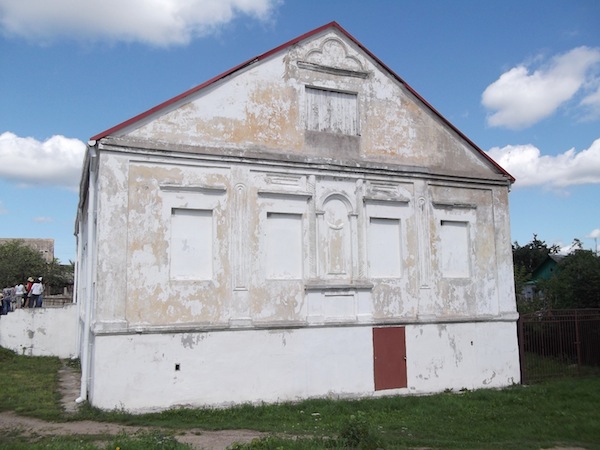
The events coincided with a campaign, still underway, by the Conservative shul on the corner of Blanshard and Pandora “to restore, preserve and revitalize” the synagogue. The Romanesque Revival building, a National Historic site, is having work done on both its exterior and interior.

Restoration began this spring, with repairs to the brick outside of the building to ensure structural integrity. Interior restorations include repairing water damage and wall cracks; painting the sanctuary; replacing lighting, smoke detectors, sound and security systems; and refinishing flooring and external doors. Regarding security, Emanu-El plans to set up CCTV cameras, with other systems to improve preparedness.

In August, the congregation held a general meeting at which a motion to increase the complete restoration budget to $1.5 million easily passed, with no objections and one abstention. According to the shul, the meeting filled four Zoom screens, with some members tuning in from Nova Scotia, staying up well past midnight in the Atlantic time zone. 

Scores of individuals and families have contributed to the architectural revitalization project. The synagogue offers the opportunity to “buy a brick” with a minimum donation of $54. The Ronald S. Roadburg Foundation, the Victoria City Heritage Trust and the Jewish Federation of Victoria & Vancouver Island are among the organizations supporting the project.

Jews first started arriving in Victoria in sizable numbers in the 1850s, with the majority traveling from San Francisco. During this era of prospectors, fur traders and steamships, those looking for gold needed to stop in Victoria, the provincial capital, for a mining licence, before moving onto the places where gold was discovered on the mainland. 

The first Jews in town came with the prospectors, supplying mining camps with food, clothing, household goods and tools. By the end of the 1850s, roughly 200 Jews were living in Victoria and, by 1860, the Victoria Hebrew Benevolent Society, the first Jewish organization in Western Canada, purchased a burial site, which still serves the community to this day.

The congregation came into being in 1862, when community members purchased the synagogue’s present site, and a cornerstone-laying ceremony, attended by the many local luminaries of the time, took place on June 2, 1863. The building was designed by the first professional architect in Victoria, John Wright.

Over the course of Emanu-El’s existence, there have been some leaner times, particularly in the mid-part of the previous century, as Vancouver became the dominant provincial city. In the 1940s, with only a handful of paid-up families, the synagogue was in bad shape. To prevent the building from being condemned, its brick exterior was covered with stucco, its windows were blocked and a false ceiling was installed to help with heating. 

In 1978, a group of volunteers decided to bring the synagogue back to its original condition, which cost, at that time, some $370,000, much of it coming from the Jewish community. Completed in 1982, the restoration was celebrated in a way similar to the original dedication in 1863, with people from many cultures coming together to honour the occasion. 

In 2003, as the community continued to expand, Congregation Emanu-El added more space to host social and cultural activities. In 2013, the synagogue had its 150th birthday with musical and theatrical events, lectures, an auction, and a gala dinner at the Empress Hotel. There was also a reenactment of the original cornerstone-laying ceremony, including a parade. Today, the synagogue grows still, with hundreds of members of all ages.

On Sept. 15, at 2 p.m., Emanu-El will be the setting for a conversation between Eleanor Wachtel, the writer and broadcaster most known for hosting Writers & Company on CBC Radio One, and Gregor Craigie, who leads the On the Island morning show for CBC in Victoria.

Reflecting on the long history of the synagogue, this year’s b’nai mitzvah class at Congregation Emanu-El wrote: “When you come in the doors, you feel different from how you feel outside. There’s an ancient and respectful vibe here. That’s the sort of feeling we get in this building; we want to honour that age.” 

For more information, visit 160emanuel.ca. 

Sam Margolis has written for the Globe and Mail, the National Post, UPI and MSNBC.

Brier fêtes supporters

Event co-chairs Lee Simpson, left, and Helen Pinsky. (photo by Pat Johnson)

Celebration and admiration were the overriding emotions Sept. 5 at the Louis Brier Jewish Aged Foundation’s first community social event since the pandemic.

The festive occasion, which took place at Heritage Hall on Main Street, brought together supporters of the foundation and highlighted five individuals who have made profound contributions to the community. The question each was asked was “How do you do it?”

Emceed by Ayelet Cohen Weil, executive director of Louis Brier Jewish Aged Foundation, and hosted by co-chairs Helen Pinsky and Lee Simpson, the evening featured plenty of shmoozing over a kosher buffet.

Pinsky wandered the room, posing questions to individuals who have made a range of contributions to philanthropic life, beginning with Gary Averbach, who raised $600,000 for cancer research by walking from Calgary to Vancouver in weather that ranged from snow and slush to 40 degrees Celsius. His answer to the question “How did you do it?” was straightforward.

“One step at a time,” he said. 

photo - Gary Averbach
Gary Averbach (photo by Pat Johnson)

Averbach walks every day, and it struck him that he could string a lot of days together and make a major trudge across two provinces to raise money for a good cause. When a beloved cousin was diagnosed with cancer, Averbach took the opportunity to do good. His advice to people about getting involved in charitable causes was equally frank.

“I don’t know anybody who gets involved who hates it,” he said, insisting this is true even when the task at hand is something one doesn’t think they like.

“I never really enjoyed fundraising but apparently I was good at it,” he said. “It was always easier for me to write a cheque rather than ask for it. But I enjoyed the camaraderie, being with people, allegiances that were the same as mine. It was one of the most enjoyable periods of my life.”

He deflected the idea that his fundraising walk was selfless.

“I wouldn’t have done it if I hadn’t enjoyed it, so it was a really selfish thing,” he said.

photo - Marie Doduck
Marie Doduck (photo by Pat Johnson)

Marie Doduck, who published A Childhood Unspoken, her memoir of being a child survivor of the Holocaust and the life she made in Canada, was asked how she did it.

“It took me 40 years to write this book,” she said. “I’ve been fighting antisemitism my whole life. Since I came to Canada as a child, antisemitism was here. Survival is something survivors do. We have no other choice, so we do it.”

Since the book was released, as part of the Azrieli Foundation Holocaust Survivor Memoirs Program, Doduck has been traveling extensively speaking about the book, her life and the lessons to be learned from her experiences.

“The book is still in demand,” she said. “It’s coming out in French. [Doduck’s first language]. And the most surprised person alive is me. Why are people reading my book when it was a personal thing to do for my children and grandchildren and great-grandchildren?” 

She called her decades of community volunteering, “a love affair” and acknowledged that, like Averbach, there are parts she doesn’t enjoy but she does them because she can.

“Fundraising makes me ill, but I’m very good at it,” she said. 

Yvette Porte said she does what she does because she is inspired by the examples of others.

photo - Yvette Porte
Yvette Porte (photo by Pat Johnson)

“I feel that I get my inspiration from all the people I’ve met, the people who have come before me,” she said. “My mom always wanted to learn. Just before she passed away, a month before, she said, ‘I think I want to learn how to play mah jongg now.’ She was so interested in everything that went on around her. 

“My dad, who believed family was the most important thing in the world, that we always had to stick together and support each other – I learned that from him. My kids, they always learned about giving, about supporting the community…. It’s inspiring to be with everyone and I hope to pass on an example of supporting your community and supporting your family to my grandchildren and great-grandchildren.”

Sylvia Cristall spoke of the lesson she gained from her family growing up in Winnipeg.

“I couldn’t afford a lot growing up, but whatever we had, my dad said, even if you have $10, $5, you give it if you can,” she shared. “When you get older and you’re earning money, every bit counts. That’s how I grew up.”

photo - Sylvia Cristall
Sylvia Cristall (photo by Pat Johnson)

After moving to Los Angeles and then meeting and marrying Lorne Cristall, the couple started a family in Vancouver. A newcomer to the city, Sylvia asked Lorne as they were driving by 41st and Oak what that building was. He told her it was the Louis Brier Home and Hospital and that they do superb work.

“That was when we were very young,” she recalled, “and he had this feeling for the elderly. He always did. I knew that one day he would be doing something for it.” And he did. The late Lorne Cristall served as president of the Louis Brier, as well as of Vancouver Talmud Torah elementary school and Congregation Beth Israel. She is especially proud, she said, that her children have followed in their parents’ philanthropic footsteps.

Ken Levitt, the former chief executive officer of the Louis Brier and a current director on the board of the Weinberg Residence, was the last one to whom the question “How do you do it?” was posed.

“I wanted to make a difference,” he said. Levitt spoke of his earlier career, which was a two-decade stint in child welfare. 

photo - Ken Levitt
Ken Levitt (photo by Pat Johnson)

“I loved it,” said Levitt. “I worked my way from a protective worker to a senior manager.”

When he was looking for a change, he considered becoming the children’s guardian for southern Alberta but the other opportunity that presented itself was at the Louis Brier. “I fell in love with Louis Brier,” he said.

“I folded laundry and I stacked dishes for the dishwasher,” he recalled. “I got to know our residents – probably hundreds, maybe thousands, that I got to know. People who are Holocaust survivors, doctors and lawyers, people who were janitors, every walk of life. Everyone had a special story to tell because they were all special.”

And, he added: “We had a balanced budget for 16 years.”

Cohen Weil welcomed the audience, explaining that the event was a thank you to donors who have made the organization’s successes possible. While the evening was celebratory, she took a moment to recognize the pain the community has experienced since the Oct. 7 attacks and credited “our peculiar resilience as a people,” Jewish positivity, hope and compassion.

“This evening was to say thank you,” she said. “We all hope our lives will be long and independent. However, for those of us who are not so fortunate in that regard, the Louis Brier is there. We continually strive to be a better, more caring and more compassionate place for those who live here.”

The event also featured video greetings from Dr. David Keselman, CEO of the Louis Brier and the Weinberg, who was out of town, and a video featuring residents evoked the spirit of the home.

Harry Lipetz, president of the Louis Brier Jewish Aged Foundation, thanked the sponsors, who ensured that no foundation funds were expended for the gathering. These included Cristall Group Investments and the Cristall family, ZLC Financial Group, Porte Communities, the Simpson family, the Marsid Family Foundation, and WestCana Services, which is the culinary provider to the Brier.

The co-chairs, Pinsky and Simpson, spoke emotionally of the contributions the Louis Brier makes to the lives of elders in the community. 

Allowing for joyful holidays

My house smells like chicken soup. That is one of the surefire ways to tell that holidays are on the horizon. It’s a cooler summer day. I have two slow cookers “working” to make that all important broth for autumn days to come. Chicken soup is a little thing but it’s one of those small details that I do in advance to make our family holidays special.

I recently read an introduction to a page of Talmud on My Jewish Learning by Dr. Sara Ronis. It examines Bava Batra 60. This page of the Babylonian Talmud resonates with what many of us are wrestling with during this past year of war. To summarize, Rabbi Yehoshua comes upon Jewish people, who, after the destruction of the Second Temple, in 70 CE, chose to become ascetics. They give up eating meat and drinking wine, because these things could no longer be offered in sacrifice at the Temple in Jerusalem. The ascetics suggested that, given the loss of the Temple, life could no longer be as spiritually rich or as physically nourishing.

Rabbi Yehoshua tries to reason with them, asking if they should stop eating bread, since the meal offerings at the Temple have also stopped. The ascetics suggested they could subsist on produce.

Rabbi Yehoshua asked if they would give up eating the seven species of produce offered at the Temple. They said they could eat other produce.

So, Rabbi Yehoshua says, I’m paraphrasing here: “We’ll give up drinking water, since the water libation has ceased.” To that, the ascetics responded with silence – of course. You can’t give up drinking water and stay alive.

Rabbi Yehoshua encourages the people to make space for mourning but to avoid extremes; he suggests that choosing to be an extremist is dangerous. Making space in our life for other things like daily pleasures and regular foods is important. Devoting all our energies to mourning will rob us of life, too.

This story came to mind when I saw the celebratory photos of Noa Argamani, a rescued hostage. She wore a yellow bikini and danced with her father atop others’ shoulders at a party. In addition to having been a hostage, her mother had passed away from brain cancer, only three weeks after Noa’s rescue on June 8. The pure, almost ecstatic joy of the images clashed in a difficult way with the ongoing war, the hostages still in Gaza, and all those suffering in the conflict. Some immediately sought to criticize this behaviour. There are those who said, “if only Jewish women were more modest, the hostages would be returned.” On the other side, some said, “Look at these Israelis celebrating even while Gazans suffer.”

I remember being told at a long ago Simchat Torah celebration that mourners, after a death of a family, shouldn’t dance or sing. Yet, maybe 10 years ago, when my twin preschoolers asked a Moroccan Jewish family in mourning for their mother, to sing with them Mipi El (a Jewish acrostic song, a piyyot, with a traditional Sephardi tune loved by my sons), these older men held up my kids, danced and sang with the Torah. It was a meaningful moment. It was full of emotion. Maybe one can dance with the Torah and celebrate a little – even while mourning. I almost felt their mother, who I never knew, who raised them to be committed and involved Jewish adults, would approve.

Rabbi Yehoshua’s logical argument and suggestion that we hold onto joy even while mourning is important. Making space for all these feelings in our lives is both powerful and hard. Smelling the chicken broth aroma filling my house makes me anticipate the New Year and holidays to come. Also, like many others, I will never be able to celebrate Simchat Torah the same way again. Yet, nothing made me happier than seeing Noa Argamani and her father make the most of every moment they have together. They deserve every happiness.

In this past year, finding ways to be grateful, to anticipate rituals, holidays and joy has felt really heavy at times. Twice in recent weeks, my family has returned home from a fun summer outing to see antisemitic graffiti in our neighbourhood. There is nothing like having to take photographs of a hate crime, call the police to make a report, and send off the photos to B’nai Brith and CIJA as well to turn a sunny family adventure into a downer. I struggle with processing all this and going on with daily life.

So, when someone I follow on Instagram showed off her Instant Pot chicken soup process, I started up my serious chicken broth production. Here’s to getting new batches of chicken soup, that liquid gold, into the freezer, ready to make new positive memories and associations for the fall holidays to come. 

Joanne Seiff has written regularly for the Winnipeg Free Press and various Jewish publications. She is the author of three books, including From the Outside In: Jewish Post Columns 2015-2016, a collection of essays available for digital download or as a paperback from Amazon. Check her out on Instagram @yrnspinner or at joanneseiff.blogspot.com.

An alternative to honey cake

Peach-blueberry cake à la Ina Garten, made by the Accidental Balabusta. (photo by Shelley Civkin)

With Rosh Hashanah right around the corner, I’m already thinking of honey cake … but not honey cake. Wanting to ring in the new year with something sweet but not traditional, I found a recipe that might just fit the bill perfectly. Looking around the stores, there is still lots of fresh fruit to be had and, in a final hurray to summer, I decided to indulge in the juicy sweetness of peaches and local blueberries. Add in a few dozen other ingredients and, voila, I produced a cake that my husband declared worthy of a Balabusta column. 

Reading the recipe I found online at sweetandsavourypursuits.com, I was initially apprehensive, since the ingredients list reads like a Tolstoy novel. Then I thought, heck, stop being a kitchen-weeny and get the job done. If the internet is to be believed (ha!), this recipe is “adapted from Ina Garten,” the “Barefoot Contessa,” so it was all but guaranteed to be good. And it was. However, I have one caveat: the baking temperature and cooking time are way off. But that’s an easy fix.

Made in a nine-and-a-half-inch springform pan, this cake has got legs. It’s gooey and sticky and holds its own. It’s the opposite of light and fluffy, but you don’t necessarily expect light and fluffy from a fruit-filled cake. Anyway, no more excuses. Just try it. But keep in mind that you will probably need to adjust your temperature up from the stated 350˚˚ F to about 365˚ F or even higher, depending on your oven. The recipe calls for a cooking time of 45 to 55 minutes at 350˚F, but the batter was still wet and jiggly after 55 minutes, so I upped the temperature and just kept adding time until the cake set, which ended up being more like an hour and 15 minutes or so. Flexibility is a must for this recipe. Don’t expect to make it when you’re in a rush. Won’t happen. But darn, it’s worth the time.

PEACH-BLUEBERRY CAKE

1/2 cup unsalted butter at room temperature
2 cups white sugar
2 large eggs at room temperature
1 cup sour cream at room temperature
1 tsp vanilla extract
2 cups all-purpose flour
1 tsp baking powder
1 tsp baking soda
1/2 tsp ground cinnamon
1/2 tsp ground cardamom (optional, and I didn’t use it)
2 large fresh ripe peaches, peeled, pitted and sliced
3/4 cup fresh blueberries rinsed and dried
1/3 cup light brown sugar packed
1/2 tsp ground cinnamon
1/4 tsp ground cardamom (optional)

1. Place rack in the middle of the oven and heat oven to 350˚ F (as I said above, I would recommend more like 365˚ F or higher – your call). Line the bottom of a 9 1/2” springform pan with parchment paper or lightly grease it. Set aside.

2. In a large bowl, sift the flour, baking powder, baking soda, salt, cinnamon and cardamom (if using). Set aside.

3. In the bowl of your mixer, add the butter and white sugar and beat on medium-high for 3 to 5 minutes, until mixture is fluffy.

4. Add eggs, one at a time, mixing after each addition.

5. Add the sour cream and vanilla extract and beat until smooth.

6. Scrape the side and bottom of the bowl before gradually adding the flour mixture on low speed.

7. Once the flour has been added, increase the speed and beat until the batter is smooth. Don’t over-beat the batter. 

8. In a medium bowl, mix the peaches and blueberries with the brown sugar, cinnamon and cardamom (if using).

9. Spread the batter evenly into the springform pan.

10. Add the fruit to the top of the batter by arranging the peaches in a circular pattern and scattering the blueberries in the gaps. (At this point, I was so tired, I just threw the whole fruit mixture on top of the batter.)

11. Bake for 45 to 55 minutes or until a toothpick inserted in the centre of the cake comes out clean or with a few crumbs clinging to it.

12. Cool the cake on a wire rack for 10 minutes before running a knife along the edge and releasing the cake from the pan.

The recipe says to serve the cake at room temperature, but who are we kidding? As soon as I could touch the cake without burning my fingers, I was stuffing it into my mouth. The recipe also suggested serving it with sweetened whipped cream or vanilla ice cream, neither of which I had, so we ate it au naturel.

The cake can be stored at room temperature for up to two days and, after that, it should be refrigerated. But, once again, who are they kidding? As if a cake would last two days in our home. Maybe we’re gluttons. Or maybe we just wanted the cake while it was fresh. My money is on freshness. And expediency.

However you parse it, this cake is summer-yummy. And, since I can already feel fall in the air, if I were you, I’d hightail it to your local grocer, buy some peaches and blueberries and get baking. The cake was delicious right from the oven. It was delicious the next morning for breakfast. And it was still delicious that afternoon. Now, it is no longer. I have no idea if it would freeze well or not, but, if so, it would make a refreshing alternative to honey cake for Rosh Hashanah. You could probably substitute berries of any kind in this cake, but I hear that blueberries are a particularly good antioxidant food. If, however, you happen to be pro-oxidant, then skip the blueberries and opt for something less controversial. Whatever. Just try this. Then thank me. 

Shelley Civkin, aka the Accidental Balabusta, is a happily retired librarian and communications officer. For 17 years, she wrote a weekly book review column for the Richmond Review. She’s currently a freelance writer and volunteer.

האנטישמיות שוברת שיאים בקנדה ובישראל לא מבינים למה

לפי נתונים אחרונים של ההסתדרות הציונית העולמית מאז השבעה באוקטובר האנטישמיות בקנדה גדלה בקרוב לשבע מאות אחוזים, לעומת התקופה המקבילה אשתקד. כשבעים אחוז מפשעי שנאה בקנדה מכוונים כנגד הקהילה היהודית המקומית. זאת בזמן שאוכלוסיית היהודים בקנדה מהווה קרוב לאחוז וחצי מאוכלוסיית המדינה

האנטישמיות שוברת שיאים בלתי נתפסים בקנדה ובעצם בכל מדינות המערב והם מדאיגים ביותר. ולמרות זאת בישראל לא מבינים בכלל מה הסיבה העיקרית לעלייה באנטישמיות נגד יהודים ואזרחי ישראל כאחד. וישראל לא מנסה להפעיל אפוא מדיניות הסברה ולימוד ברחבי העולם כדי לנסות ולהתמודד עם האתגר הקשה הזה

רובם של הישראלים מדגישים בהרחבה את העלייה באנטישמיות ברחבי העולם. זאת כדי להצדיק שהרבה יותר בטוח לחיות בישראל מאשר מחוצה לה. את הישראלים זה בכלל לא מעניין כי הסיבה לגידול המשמעותי באנטישמיות נגד יהודים וישראלים בעולם, נעוצה בתוצאות ההרסניות של פעילות צה”ל בעזה. רבים ברחבי העולם צופים ושומעים על כמות גדולה של אזרחים פלסטינים ובהם נשים וילדים שנהרגים עקב התקפות בלתי פוסקות של צה”ל. הצבא הישראלי מחפש לחסל את אנשי החמאס, הג’יהאד האיסלאמי וחברי ארגוני טרור נוספים. אך באותה עת תושבי עזה משלמים מחיר כבד מנשוא. רבים מקפחים את חייהם ומאות אלפים נותרו חסרי בית, והם נעים אנא ואנא בין איים של חורבות

לאור האובדן הגדול של חיים אדם בעזה חל כאמור הגידול המשמעותי באנטישמיות והשינאה כנגד יהודים וישראלים בכל רחבי העולם. ונראה כי לפי מדיניות ממשלת ישראל הנוכחית והעומד בראשה, בנימין נתניהו, לא יחול שום שינוי לטובה בעת הקרובה. כך שאלו שבחרו לגור מחוץ לישראל משלמים מחיר כבד שלא באשמתם

אומר יעקב חגואל, יו”ר ההסתדרות הציונית העולמית: מדובר בעלייה חסרת תקדים. בשבעה באוקטובר לא פרצה מלחמה רק נגד מדינת ישראל, אלא נגד העם היהודי כולו, עם קמפיין מתוזמן וממומן שמעורר אנטישמיות. זו תופעה שלא נראתה מאז השואה, ואנחנו יחד עם ממשלות ומדינות נוספות צריכים להילחם בתופעה הזו ולעקור אותה מהשורש. אנחנו לא ניתן לעולם לחזור לימי מלחמת העולם השנייה. כאמור חגואל לא מתייחס כלל לסוגיה מה הסיבה הישירה לעלייה באנטישמיות והיא מותם של אלפי פלסטינים בעזה בעקבות פעולת צה”ל. אי הכירה בסיבה לא תאפשר להילחם משמעותית באנטישמיות

ואילו ד”ר רחלי ברץ, ראש המחלקה למאבק באנטישמיות בהסתדרות הציונית העולמית מוסיפה: הנתונים בלתי ניתנים להכחשה. בחודשים האחרונים חל שינוי גדול לרעה ביחס אל יהודי קנדה. הדבר ניכר מאוד ברחובות ובריבוי האירועים האלימים, אבל לא פחות מכך בקרב סטודנטים, מרצים וחברי סגל בקמפוסים השונים. הרעות החולות שהפכו פופולריות במערב אירופה ובארה”ב הגיעו גם למדינה שבה מהווים היהודים פחות מאחוז וחצי מהאוכלוסייה. עם זאת, בקנדה חיים למעלה מארבע מאות אלף יהודים. מדובר בתפוצה היהודית השלישית בגודלה בעולם, וראוי שכל הגורמים הרלוונטיים יתנו את דעתם ויטפלו בתופעה חמורה זאת

לעומתם ראש ישיבת סלבודקה בבני ברק, הרב משה הלל הירש (שהוא גם חברת מועצת גדולי התורה של דגל תורה), טוען כי הניסיון לצמצם את עולם התורה, הוא זה שמביא להעצמת תופעת האנטישמיות בעולם. הרב הירש מוסיף כי עלינו שהכל מתנהל לפי פעילותו של אלוהים והכל בעצם לטובתנו. הרב מציין עוד כי אנו חיים כיום בתקופה שאינה חסרת תקדים וכלל ישראל חיות במשך מאות שנים לפני בית המקדש ולאחריו, עם אתגרים מאותם סוג של היום

Argentina, 30 years later

Jewish Federation of Greater Vancouver executive director Ezra Shanken, left, and Centre for Israel and Jewish Affairs Pacific region vice-president Nico Slobinsky were in Buenos Aires last month. (photo from Jewish Federation)

Nico Slobinsky was a 15-year-old high school student in Buenos Aires when, on July 18, 1994, the principal announced that their Jewish community centre and administrative hub had been blown up in an apparent terror attack.

The Asociación Mutual Israelita Argentina (Argentine Israelite Mutual Association, or AMIA) building was attacked by a car laden with 275 kilograms of explosive ammonium nitrate fertilizer and fuel oil. The building collapsed, killing 85 and injuring more than 300. 

The AMIA attack remains the most significant terrorist attack in Argentina’s history. Two years earlier, though, the Israeli embassy in Buenos Aires was the target of a suicide bombing, on March 17, 1992, in which 29 were killed and 242 wounded.

“I remember vividly the morning that the building was targeted and blown to pieces,” said Slobinsky, now the Pacific region vice-president of the Centre for Israel and Jewish Affairs (CIJA). “I remember the pervasive feeling [that] we are no longer safe and what’s going to become of us. I remember the dinner that night at my family’s home, where the bombing, the targeting of the AMIA, was all that my parents were talking about and what was going to happen next. There was a lot of uncertainty at the time and, 30 years later, I can tell you that the same feeling of lack of justice and lack of safety persists.”

The perpetrators of the AMIA bombing have never been brought to justice, nor have the perpetrators of the earlier embassy attack. Hezbollah claimed responsibility for the 1992 embassy bombing but it was only this year that an Argentine court ruled that Iran was behind the 1994 bombing, through their international terror subsidiary Hezbollah.

Two of Slobinsky’s friends were murdered in the attack and many in his circles of acquaintances were killed or injured. He attended and helped organize memorial events on the anniversaries of the AMIA bombing when he lived in Argentina, until 2000, and then joined with the Argentine community in Israel when he lived there. 

Last month, Slobinsky traveled to Buenos Aires for ceremonies marking the 30th anniversary of the atrocities. He was joined by a small delegation of other Vancouver Jewish community leaders, including Ezra Shanken, chief executive officer of the Jewish Federation of Greater Vancouver, and his wife, Rachel Shanken, director of operations at Jewish Family Services Vancouver; Karen James, who is on the national board of CIJA and also on the board of the Jewish Agency for Israel (JAFI); and Candace Kwinter, who is on the board of  JAFI, as well as the board of Jewish Federations of Canada-UIA, and her husband, Alan Kwinter, who is on the board of Congregation Beth Israel.

The anniversary of the terror attack coincided with a meeting of the World Jewish Congress in Buenos Aires, which the Vancouverites attended.

It is widely believed that there was government complicity in the AMIA attack. Police who were routinely stationed in front of the building departed before the bombing. Rubble from the building, which should have been preserved for investigation, was dumped in a river. In 2015, Alberto Nisman, a prosecutor leading the AMIA investigation released a 300-page report accusing then-president Cristina Fernández de Kirchner and other political leaders of covering up Iranian involvement. Hours before Nisman was to present his findings to parliament, he was found dead in his apartment. The government declared it a suicide.

James was impressed with the panoply of world leaders who attended the AMIA commemoration and the WZO conference, particularly Javier Milei, the new president of Argentina, who has made justice for the AMIA terrorists a belated priority. The presidents of Uruguay and Paraguay were also in attendance, as were Jewish parliamentarians from around the world, including Liberal Member of Parliament Anthony Housefather, and special envoys for antisemitism from scores of countries, including Canada’s Deborah Lyons, Deborah Lipstadt of the United States and Michal Cotler-Wunsh of Israel.

Family members of the bombing victims spoke and time has not lessened the agony of the attack, said James. 

“They were sobbing and some couldn’t finish speaking,” she said. “There’s never been closure for them. It was so emotional. I was in tears.”

Candace Kwinter said that standing shoulder to shoulder with the families affected 30 years ago was an act of bearing witness. 

“We’ve all been to Israel since 10/7 and it just feels like another deep, dark, awful part of our history,” she said.

Supporting Slobinsky in the return to the time and place of the bombing was a motivator for those who joined the trip, according to Alan Kwinter.

“It was important certainly to support Nico and also, in this time when there is rising antisemitism and there are so many people that are turning their backs on the Jewish people, I feel that it’s important for us to come together as a community, a global community as well as the local community, and for us to be there with those families that lost their loved ones and have never had justice,” he said. “It was important for me that we show solidarity with them, that they feel that they’re not alone.”

Slobinsky acknowledged the emotional impacts of the commemoration and drew contemporary connections from lessons of the past.

“It was difficult to be there with thousands of Argentinians on the streets still asking for justice 30 years later,” he said, noting that this early life experience reinforced his commitment to taking a leadership role in Jewish life. 

“For those who argue that Canada should embrace the Iranian regime by reestablishing diplomatic ties, the 30th anniversary of the AMIA bombing that we just attended is just another painful reminder that Iran and its proxies like Hezbollah must be held accountable not only for the horrific attack on the AMIA [but] for their export of terrorism around the world,” said Slobinsky. “In memory of my friends Viviana and Christian and to the victims, the survivors and their families – I will never forget.” 

Positive about future   

Left to right are Rachel and Ezra Shanken with their children, Vancouver city councilors Sarah Kirby-Yung and Mike Klassen, and Jewish Federation of Greater Vancouver board chair Lana Marks Pulver. The City of Vancouver proclamation designated June 25, 2024, as Ezra Shanken Day, in honour of Shanken’s 10th anniversary as head of Federation. (photo from Jewish Federation)

On June 25, Ezra Shanken, chief executive officer of the Jewish Federation of Greater Vancouver, celebrated his 10th anniversary at the job and was presented with a proclamation from the City of Vancouver by councilors Sarah Kirby-Yung and Mike Klassen declaring that day “Ezra Shanken Day.” The event took place at Federation’s annual general meeting.

Earlier this month, Shanken spoke with the Independent about the past decade, and his enthusiasm looking ahead.

The Teaneck, NJ, native, who arrived in Vancouver in his early 30s, remains one of the youngest CEOs within the 140-strong network of Jewish federations. He is quick to credit those who have helped him get to where he is today. 

“A lot of it has to do with fantastic people who were around, who believed and supported me,” Shanken said. “It helped me bring my unique self to the work and the journey. They took a chance on me 10 years ago, and I have felt incredibly privileged and thankful for the confidence that people put in me at a young age.” 

Shanken is equally thankful to have tremendous people around him at the Jewish Federation of Greater Vancouver and feels “lucky to have incredibly talented staff at a senior level who allow for a two-speed operation. We have levels in which people are able to dig deeper into issues in a substantive way,” he said.

Shanken represents the third generation in his family to have a career in the Jewish community: his father worked for Jewish organizations and his grandfather was a Conservative rabbi. Before arriving in Vancouver, Shanken spent several years at the federation in Denver, Colo., and the UJA Federation of New York. 

He likens the job of Federation CEO to that of a mayor of a small town, one that requires dealing with diverse opportunities and crises, which are presented or emerge at different times. Not to mention the myriad daily tasks he performs in his position. His work stretches through many different organizations and extends across several time zones.

A day might see him connecting with partners in Israel and others overseas in the morning, then with national colleagues. He’ll spend a portion of the day building up the community’s organizational culture, delivering what, he hopes, is a collective vision for vibrancy and care to more than two dozen partner agencies throughout Greater Vancouver and the province. He meets with community members who contribute to this vision and he engages, on behalf of the community, with allies in the public and private sectors, individuals, institutions and organizations, who work with Federation.

Looking back, he said some of his favourite memories come from Shabbat dinners over the past 10 years in which he has met with everyone from law enforcement to premiers, and countless others from various backgrounds, who have had a chance to experience and understand “who we are and, more importantly, who we are not.

“That for me has been a real blessing, now more than ever,” he said.

As it has with so many people, the post-Oct. 7 period has been a pivotal time in Shanken’s tenure at the helm of Federation. Since that tragic day, he has made three trips to Israel with public officials, parliamentarians and leaders of the local community. He plans to make a fourth trip in November.

“This has been a deeply personal journey for me and so many in my office,” he said. “I think that Oct. 7 has fundamentally changed every one of us, me included, on the soul-based level. It is part of my core responsibility to keep Ben Mizrachi’s name on the community [mind] for time immemorial. His heroic loss is one we will never forget,” he said.

Mizrachi was killed while trying to save others during the Nova music festival.

In his 20 years of working in the federation system, Shanken has been through a hurricane that knocked out power in New York and had people climbing the stairs of 40-floor apartment buildings to save the lives of elderly Jews by getting water and other supplies to them. He helped close the campaign in Seattle after the federation there was attacked in 2006. And, in the two decades, there have been multiple attacks on Israel and, of course, the pandemic.

Yet, none of his previous experiences prepared him for Oct. 7, he said.

“The sheer brutality of it and the images of it, which I have had the unenviable task of bearing witness to, has changed me fundamentally as a human being and has reinforced the need of centrality in community,” he said. 

“It also reinforced for me why I am here and what we are doing,” he added. “It could not be more clear as to why Jewish community is not just important but precious. We are going to show strength, continue to do good and put light out into the world.”

Shanken believes the next decade, in many ways, will be defined by more opportunities for engagement in Jewish community, regardless of where someone might live in the province.

“I am hoping that, as we move through the next 10 years, we will be able to look back and see a much more vibrant provincial Jewish community, as opposed to a Jewish community that is set in Victoria, Richmond and Vancouver,” he said.

Among the key things he envisages in the coming years, as Federation enters a campaign season, are coming together to push back against those who would cause harm, and creating a stronger foundation for the Jewish community.

“This is going to be about how we can be positively proud Jews,” Shanken said.

Tied to this vision, he explained, is ensuring, among other goals, that people in the community have different ways to connect, that vibrancy is built into the community, that schools are as accessible as they can be and that new people feel welcomed into the community.

The JWest project is a major part of the future. The planned 200,000-square-foot, state-of-the-art community centre, the largest infrastructure project in Vancouver’s Jewish history, will serve as a hub for more than 20 organizations, including the Vancouver Holocaust Education Centre and King David High School, as well as provide housing and child-care spaces.

As Shanken describes it, JWest will be “the physical manifestation of our community’s vibrancy in the core of Vancouver’s second town centre. It is a monument of who we are projecting onto the street.”

More broadly, he added, the growth the community will see in the next decade will be game-changing. “The next 10 years will make the last 10 years seem as though were standing still,” he predicted. 

Kicking off the next decade is Federation’s annual campaign launch Sept. 12. For more information and tickets ($36), visit jewishvancouver.com. 

Sam Margolis has written for the Globe and Mail, the National Post, UPI and MSNBC.