Israeli-inspired innovations

The Eureka Project, a Winnipeg business incubator is as innovative about its own financing and growth as it teaches future entrepreneurs to be. And, with the leadership of businessman Gary Brownstone, some of its partner companies are seeing returns in the tens of millions.

“The Eureka Project mandate is to help what I like to call ‘passionate creators’ of technology or widgets commercialize their inventions,” Brownstone told the Independent. Clients include scientists, engineers and computer programmers who have developed or are developing some kind of new technology. Typically, clients have little or no business experience, which is where Brownstone and his team come in.
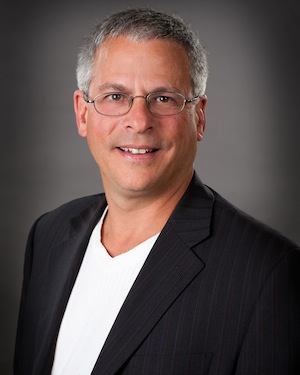
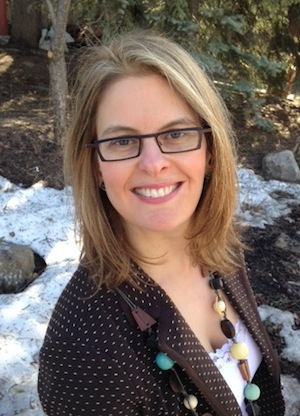
photo - Gary Brownstone
Gary Brownstone (photo from winnipeg.startupweekend.org)

Brownstone gets involved in small, fledgling startups and manages them through the initial growth phase. “Our team has expertise with taking this technology to market: finding customers and helping the founder build companies around technology,” he said.

“There are unique challenges in commercializing technology that make it different from other sectors, involving how to finance an idea, how to finance a company with no fixed assets (no buildings, land or equipment), which Canadian investors or bankers are really used to.”

When Brownstone finished his schooling, he realized he had unique experience in working with companies undergoing rapid growth, growth that could be so extreme that it had the capacity to kill the company. Anticipating the potential in companies on the verge of major growth, Brownstone’s approach was to step in to provide the professional management required to shepherd them through that phase. Once a company had managed to get through that period of growth, Brownstone would exit onto the next one. Brownstone has successfully been doing this for more than 20 years now.

“When I was recruited into this position, I saw the opportunity to do that over and over and over again – to help small companies through that first phase of growth, help get them on some solid footing for the future,” said Brownstone.

About five years ago, he started becoming more aware of how Israelis have successfully built a knowledge-based economy.

Someone gave him the book Start-Up Nation by Dan Senor and Saul Singer, and Brownstone, who had spent a year in Israel after high school some 30 years ago, was confused. “I read the book and I thought, ‘Are you sure it’s Israel they are talking about? Now they are a tech powerhouse?’” he said.

Brownstone has, since that time, made an annual trip to Israel and is still amazed by what he sees. On those trips, Brownstone meets with people in Israel who run incubators like his, those in government, policy makers and academics, as well.

“I definitely have a strong respect for what they have accomplished in Israel,” said Brownstone. “We’ve tried to bring a lot of those practices back here. I’ve gone there with senior government people both from Canada and from Manitoba to sort of open up their eyes to what some of the possibilities are if you take a similar approach.”

Since then, Brownstone has used his understanding and connection to Israel to try and bring what he calls “some best practices and good policy advice” back to Canada.

“Ideas are easy and execution is difficult,” he said. “So, a lot of companies, for a variety of reasons, will not succeed in actually commercializing their technology or not commercializing it to a degree that it’s a viable business.”

When someone comes to the Eureka Project with an idea, Brownstone asks three questions to determine whether or not they would make good clients. First, is the technology real? Second, is the individual (or team) capable? (Do they have enough talent? Are they coachable in terms of their own capabilities/capacity? What are their skill sets and backgrounds?) Third, he assess whether or not there is an identifiable market.

“In our line of work, because of the background of the people coming in the door, that’s the question that they most overlook,” said Brownstone about ensuring that there is an actual market for the product or technology. Many companies “look at the world as ‘technology push’ instead of ‘market pull,’” he explained. “We try to turn that conversation around really early on. If you were to come in the door, we’d go through the three questions and satisfy ourselves that the answers are yes, yes and yes.”

In terms of payment, Brownstone has developed a sliding scale wherein, at the beginning, clients can pay as little as a couple hundred dollars a month. “We really want to remain accessible to those that have the best likelihood of becoming [successful],” he said. “In order to do that, we try to keep our fees as low as possible, so that money isn’t really a barrier for them working with us. So, we offset a lot of the costs of delivering services to our clients, because we build a very strong, broad base of support. We get financial help from the province of Manitoba [and] we get some financial help from the U of M. We’ve built a very broad sponsorship program, so that the corporate community supports us and our clients.”

As the companies gain access to some financing and begin to grow, they hire on staff and gradually start paying more of the real cost as their finances allow. “It kind of puts the pressure on us to deliver what we promise we deliver when they come in the door,” explained Brownstone. “If we are able to help them finance and grow their companies, they should be able to pay us a little bit more for what we do.”

He said, “If someone from Vancouver called me and was looking for space, mentorship and local coaching, I might see if they would like an introduction to someone there who does what

we do, so they could have proximity.” He added, “But the short answer is yes,” to taking on Vancouver clients.

“Success begets success, so as people find out about the things that we do … a company we helped launch five years ago will probably do something in the neighborhood of a hundred million dollars in revenue this year,” said Brownstone. “In Canada, that’s a big deal. People from other regions hear about what we are doing and we find more and more we are getting approached from outside Manitoba. We don’t want to turn anyone away, so we had to find ways to help those people.

“We don’t use Manitoba taxpayer dollars to support other companies, but we do have partners and systems in place where we can deliver those services to other province’s companies.”

He added, “In a couple of instances, we’ve had companies who have relocated to Manitoba in order to work with us. There’s a great ecosystem in Manitoba for these young companies in terms of government grants and tax credits, and organizations like ours that can support them.”

The Eureka Project has developed an extensive network of companies and individuals across the United States, China, Singapore, South America, Mexico and as many as 30 other countries.

Rebeca Kuropatwa is a Winnipeg freelance writer.

My Fair Lady fantastic

Tracy Neff (Eliza Doolittle) and Warren Kimmel (Henry Higgins) before the phonetics lessons start. (photo by Tim Matheson)

It was hard not to sing along. In fact, the couple in the row behind me couldn’t stop themselves on more than one occasion. So wonderfully witty and familiar are all of the songs in My Fair Lady, which is playing at Massey Theatre until April 26.

Directed by Max Reimer, the Royal City Musical Theatre production is well worth the trip to New Westminster. If you’re like me, the proposition is daunting. I made an afternoon and evening of it, heading out from Vancouver before rush hour, enjoying a walk along the quay and dinner with friends before heading to the theatre for the 7:30 p.m. show. While it took almost an hour to get to New West, I made it back in about 25 minutes. Granted, that’s about 15 minutes longer than if I had been coming from downtown, but the parking was plentiful and free – and I had longer to sing in the car on the way home, which made the drive seem that must faster.

I had forgotten just how funny are the book and lyrics by Alan Jay Lerner – even 50ish years after they premièred on Broadway! With the stellar cast enunciating brilliantly, nary a word was lost, and the 22-piece live orchestra and 30-plus cast also gave justice to Frederick Loewe’s music.

Of course, the musical’s origins go back further, more than 100 years, to George Bernard Shaw’s play Pygmalion. Phonetics professor Henry Higgins bets phonetics enthusiast Colonel Pickering that he can take Eliza Doolittle, a street seller of flowers, and transform her: “You see this creature with her curbstone English that’ll keep her in the gutter till the end of her days? In six months, I could pass her off as a duchess at an embassy ball. I could even get her a job as a lady’s maid or a shop assistant, which requires better English.” (In Shaw’s version, the bet is three months to “pass that girl off as a duchess at an ambassador’s garden party.”)

photo - Jewish community members Kathryn Palmer and Jonathan Boudin in the ensemble of Royal City Musical Theatre's My Fair Lady.
Jewish community members Kathryn Palmer and Jonathan Boudin in the ensemble of Royal City Musical Theatre’s My Fair Lady. (photo by David Cooper)

Led by Warren Kimmel as Prof. Higgins and Tracy Neff as Eliza, there are many standouts in the Royal City production, including John Payne as the charming scoundrel Alfred P. Doolittle, Eliza’s father, and tenor Thomas Lamont as Freddy Eynsford-Hill, who falls for Eliza at the Ascot (her test run as a lady) when she cheers on the horse Dover to win, hollering, “Come on, Dover! Move your bloomin’ arse!” In addition to Kimmel, other Jewish community members involved in the show are Jonathan Boudin and Kathryn Palmer in the ensemble. Both do very well, but Palmer is particularly expressive, standing out as both a flower seller and a maid, very much at ease on stage.

The entire cast seemed to be having a great time on the preview night I attended, good-humoredly negotiating through a couple of technical glitches, including a tough-to-light candle. And the main two sets, which go from being two sides of a London street corner to Higgins’ study when they are turned around and pushed together, are fabulously detailed and necessarily sturdy (the actors must travel to a balcony on one side, a landing on the other), but they must be quite heavy – every time the halves of it slowly came together to form the study, I released a small sigh of relief.

None of this detracted from the performance. In fact, these instances made it seem more intimate, and reminded me of one of the reasons live theatre is so fun to watch. It was a great show. I got lost in the words, music, sets, costumes (gorgeous!). The cast, crew and musicians all deserve kudos – as Pickering says to Higgins after the ball, “Absolutely fantastic.… You did it!”

For tickets ($26-$47) to My Fair Lady at Massey Theatre through April 26, visit masseytheatre.com or call 604-521-5050.

Farewell, my boredom

Emma Slipp and Graham Percy in Arts Club’s Farewell, My Lovely. (photo by Benjamin Laird Arts & Photo)

Shadowy figures, damsels in distress, fedoras tilted just below one eye, ex-cons and gunshots galore fill the stage at the Art Club Theatre this month.

Raymond Chandler’s 1940s work Farewell, My Lovely is brought to life with enough campy villainy and “careful, shweetheart” to fill size 11 cement galoshes. And I loved every minute.

A warning though: if you’re used to minimal plotlines, you might want to bring a notepad to keep track of the twists and turns and numerous characters.

Graham Percy brings tough-nut detective Philip Marlowe to life as he investigates the case of a murdered nightclub manager and the missing girlfriend of an ex-con. Hired by the ex-con and pushed into the case by a lazy detective, Marlowe first tracks down Jessie Florian, the nightclub owner’s widow. A sad case, in a scotch-induced stupor, she throws herself at him, then reacts in disdain, then seems to genuinely want to help him.

On what seems to be a different track, but soon turns out to be connected to the original case, Marlowe takes a job for Lindsay Marriott (Anthony Ingram). Marriott wants Marlowe to act as a bodyguard in an exchange of a cash ransom for a rare jade necklace. That ends with Marlowe knocked unconscious, Marriott dead and a new character – Anne Riordan (Emma Slipp), who turns out to be the daughter of a policeman known to Marlowe.

Riordan knows who the owner of the necklace is – a wealthy woman by the name of Helen Grayle (Jamie Konchak). Riordan wants to join Marlowe on the case, and also demonstrates affection for him. At first, he returns her affection but is reluctant to have her involved. He continues his quest, eventually meeting with a psychic named Jules Amthor (also played by Ingram), who is somehow linked to the necklace and is also involved with drugs.

Marlowe visits with Grayle, then reconnects with Florian after she leads him down a dead-end, and then finally ends up looking for clues on an offshore gambling boat. Here is where all the loose ends are tied up, the answer to the case is found and more people are shot.

Aside from the theme of the gruff-but-good detective versus the bad guys, the thread of Marlowe’s love life keeps popping up. Each of the female characters – Florian, Riordan and Grayle – tries to seduce Marlowe. He sympathetically rejects Florian’s drunken flirtations, seems to have something serious for Riordan, but risks it for the flattering attention of the beautiful and seductive Grayle. After the case is done, he ends up with … well, you’ll have to see it for yourself.

While Percy does an admirable job of reprising the well-known hard-boiled detective role, there’s something about his character I didn’t find believable. While he had the lines and the tone right, he came across as having more of the sloppiness of Peter Falk’s Columbo than the alluring and mysterious attractiveness of Humphrey Bogart’s Sam Spade. Perhaps it’s unfair to make the comparison, but I just couldn’t see Percy’s character taking the place of Bogart’s Marlowe opposite Lauren Bacall in The Big Sleep.

One thing that did impress me in the Arts Club production was the creative use of the actors rearranging the stage set as needed between scenes, while still staying in character. I also admired the choice to use film sequences projected over the set to add context to the action on stage. Dramaturg Rachel Ditor and stage manager Jan Hodgson deserve kudos for the adaptation and presentation of the performance. Well done, shweethearts.

Farewell, My Lovely runs at the Arts Club Granville Island stage until May 2.

Baila Lazarus is a freelance writer and media trainer in Vancouver. Her consulting work be seen at phase2coaching.com.

Time to truly celebrate

This month – and in this issue – we celebrate Israel. Few regular readers would disagree with the assertion that the state of Israel represents a modern miracle. For whatever criticisms are fairly and unfairly leveled at Israel and its governments, this tiny country, populated mostly by refugees and their children, has accomplished and built one of the greatest societies in the world in what is, by historical standards, a blink of an eye.

There are so many quantitative examples of Israeli achievements: per capita numbers of Nobel prizes and other recognitions of achievements, world-leading academic publishing, number of businesses launched and successes reached, diverse and life-altering scientific breakthroughs and exceptional contributions across almost every discipline of human endeavor.

Then there are the incalculable measurements that are what strike so many of us when we visit Israel – or when we are visited by Israelis. In just the coming weeks alone, we are offered numerous samples of the cultural richness of the country.

The community-wide Yom Ha’atzmaut celebration on April 22 features Micha Biton, whose music is an example of the beauty that can emerge even in places and times of challenge, he being a part of the music scene in Sderot. A week-plus later, we will be treated to Ester Rada, an actress and singer who just emerged on the international scene.

These are just two of the most immediate examples of Israeli culture offered to local audiences year-round, including an embarrassment of riches during festivals like Chutzpah!, the Jewish book and film festivals, and during regular programming at the J. Israeli artists and photographers are regularly featured, as are speakers on diverse topics, brought here by local affiliates of Israeli universities and institutions.

To say that we – even 10,000 kilometres away – are enriched by the abundance of culture and knowledge that defines Israel is to underestimate the blessing it is to us. But this is not a one-way relationship. There is a greatness, too, in the way our community has mobilized for seven decades to help Israelis flourish. These bilateral connections are deep and important. From the moment the state of Israel was proclaimed 67 years ago, Vancouverites have been integrally involved with Israel in countless ways.

Before intercontinental travel became commonplace, stories appeared in the pages of this newspaper about locals traveling to Israel – as tourists, as volunteers, as dreamers seeking to see in their lifetimes the reality of a revived Jewish nation. More common still was the plethora of organizations emerging to assist in the nurturing of Israel through acts of tzedaka and volunteerism here at home. Women’s groups, youth movements, Zionist agencies of all stripes, “friends” of universities and hospitals, and so many other great institutions popped up, mobilized by the passion local community members felt for the rebirth of the Jewish nation.

Though these connections have changed, they have not diminished. Thanks to improved technologies and transportation, our community sends athletes to meet and compete with their Israeli cousins – and welcome Israelis here in return. We continue to support so many projects and institutions in Israel that “Vancouver” and local family names proudly adorn countless buildings, facilities, medical machinery, ambulances and other resources in Israel.

In a world that sometimes seems mad to us (as well as mad at us), there are few in our community who take for granted the blessing that Israel is to us and to the world.

As we celebrate Yom Ha’atzmaut this year, marking Israel’s 67th anniversary, let’s make a commitment to ourselves, a new year’s resolution of sorts for Israel’s new year.

Let’s be even more conscious of our relationship with Israel. Let’s go out of our way to buy Israeli products and support Israeli initiatives. Find an Israeli cause you haven’t yet supported – there are plenty of advocates right here in town for universities, charities and other great projects – and make it one of your causes. Take more of the opportunities offered to us throughout the year as Israeli speakers, performers and artists visit. Head to the Isaac Waldman Jewish Public Library and learn about an aspect of Israel that’s new to you. Watch more Israeli film. Take Hebrew lessons. The options are endless without even leaving the comfort of your hometown.

If you can, of course, travel to Israel. An “on-the-ground” education is invaluable. One of the best ways to express your curiosity, and support Israel is to spend time there, meeting Israelis, investigating for yourself aspects of Jewish history and culture, experiencing new tastes, sounds, smells and sights. And, while you’re there, open your heart and mind to the realities of this great country; pledge to learn more about the land, its people, its creatures, its ecology, the good, as well as the more challenging aspects that could use some work. Pack up the family, join a community mission or grab a backpack and head over on your own – the mishpacha is waiting for you.

Happy birthday Israel and moadim l’simcha.

Envisioning a peaceful future

photo - Mira Sucharov spoke on March 2 as part of the University of Winnipeg’s Middle East Week
Mira Sucharov spoke on March 2 as part of the University of Winnipeg’s Middle East Week. (photo from Mira Sucharov)

As part of Middle East Week at the University of Winnipeg, Mira Sucharov, associate professor of political science at Carleton University in Ottawa, spoke on the topic of Power and Identity Across the Israeli-Palestinian Divide.

About 60 people came out March 2 to the university’s Convocation Hall to hear Sucharov, who is currently the country analyst for Israel and the Palestinian territories for Freedom House, as well as a blogger and writer whose work appears regularly in several publications around the world, including the Jewish Independent.

Sucharov sees relations between Palestinians and Israelis as more polarized now than at any other time since the peace process that began two decades ago. She said she was pleased to be part of U of W’s Middle East Week, as it promotes dialogue, in contrast to the situation on many North American campuses, where hardened opposing camps are choosing shouting over listening.

Describing herself as a liberal Zionist, Sucharov explained the term as referring to someone who “believes that there is legitimacy to Israel’s existence, and that nations deserve a state.” However, “liberal Zionists not only acknowledge the existence of Israel and support its existence, they are deeply troubled by its occupation.”

Sucharov said that, while some Israelis and Israel supporters prefer the term “disputed land” to the term “occupation,” Sucharov views “occupation” as “an important word.” She explained, “We’re not just talking about a geographic swap of land. We’re talking about a population of Palestinians who are not citizens of any country.

“The IDF, on a macro level and often on a micro level, is in charge of the area and the daily lives of Palestinians who have to pass through checkpoints to get to work, to farm their land…. We know about the Israeli security barrier or separation wall that has served to disrupt daily lives in many ways in the West Bank.

“So, liberal Zionists are troubled by this idea of occupation and seek to do what they can to end it. As a Canadian from Winnipeg, I feel that by engaging in constructive discussion, constantly being educated, I can help people at a global level think more deeply, critically, and in a more engaged way about issues of global concern.”

Sucharov said that there are financial incentives, as well as ideological motivations, for living in the West Bank. “There are many who’ve moved to the West Bank because it’s cheaper,” she noted. “Part of it, no doubt, was wanting to return to biblical Israel, a sense of having a greater Israel, of being/having religious/national identity fulfilled. There’s another important motivating factor, and that was the idea of Israel having a wider girth, more strategic depth.”

In Sucharov’s view, “the occupation” should not be permanent, and dialogue is needed to get governments together for peace talks. “The only way to end the occupation is if Israelis and Palestinians come together to discuss and negotiate an agreement,” she said.

As for what such an agreement may look like, Sucharov imagines “a city with two capitals: Jerusalem, a holy place for all religions to pray at their own places of worship. Refugees will probably be returned, free return to a Palestinian state. There will probably be some compensation package, [on a] humanitarian basis for some refugees … based on historical agreements.”

If the Geneva initiative does take place, said Sucharov, “Can Israel feel safe with such an agreement?

“It used to be called, ‘give an inch, they’ll take a mile,’” she continued. “Now, there is a concern about the fact that Palestinians in a recent poll have indicated that they would want to use a two-state agreement as the beginnings of full takeover.

“Palestinians, no doubt, would want all of Israel … many of them … and Israelis, no doubt, would want all of Palestine … many of them. The question is, even if some Palestinians were desirous of acquiring or launching terrorist missions with or without the consent of its governing authority, could Israel defend itself?”

If/when Israelis and Palestinians reach an agreement, she said, they would have to make sure that there were “security guarantees from the United States … [that] the U.S. will guarantee the security of Israel.

“Palestine would have to agree to be a de-militarized state. So, both sides will not have to necessarily trust each other … [they] would have to understand that there is a security guarantee in the form of a major global superpower.

“That’s the two-state solution. But, there certainly are those in the military establishment of any state who could stand to gain from an ongoing conflict…. We have to … make peace seem more attractive.”

As things stand, Sucharov said, “Palestinians and Israelis are almost mutually fearful of one another.… I think the biggest obstacle is the culture of mutual fear.”

And then there is the question of whether or not Iran, if there is the possibility of peace between Israelis and Palestinians, will “behave in a suicidal fashion,” said Sucharov. “That’s what, in international relations, [they] call the … idea of nuclear deterrence – the idea that more nukes make the world safer. I’d prefer less nukes, less proliferation, but there is a logic to the idea of stability of nuclear weapons.

“Once peace is achieved by the government, ideally, the next generation grows up in a culture in which the status quo exists.

“Regional threats would be diffused to make peace,” she continued. However, “the Israeli-Palestinian conflict is not the only conflict in the region and we’re not going to see peace on earth, but Iran and other enemies of Israel … Hamas … would have less wind in their sails. The status quo would be peace, so there would hopefully be less local support for their belligerent postures.”

Rebeca Kuropatwa is a Winnipeg freelance writer.

Making an impact in Israel

Canadian Hadassah-WIZO’s 2015 annual campaign, “Big needs, caring hearts,” is underway in support of projects in Israel. This pillar of CHW’s fundraising provides $1.42 million in aid to children in CHW’s six day-care centres, at-risk youth at CHW’s four schools, women and seniors at CHW’s two community centres, and helps those seeking medical care at CHW’s two hospitals. In Canada, CHW supports Canadian Young Judaea summer camps.

“For me, the theme for this year’s annual campaign encompasses everything that our donors and volunteers do for CHW,” said Claudia Goldman, CHW national president. “Each has their own personal story for why they support the precious work of CHW. And, together, they make a statement about their strong belief in supporting the Jewish people by engaging in the mission of CHW, which shows what huge hearts they all have.”

Donations received through the campaign make a difference for those in CHW’s care. For almost 100 years, the organization has ensured that immediate needs are met by continually reviewing the pressing issues concerning those served by CHW projects and delivering solutions.

An example of this is the new French Na’aleh program. Youth from French-speaking countries (many times those who have faced mounting antisemitism in their home countries) have found a haven at CHW’s Hadassim dormitory school, allowing these students to focus on their studies in a secure environment. Eli, a student in the program from Paris, said, “Since being at CHW Hadassim, I no longer hide my Jewish heritage. At home, I could not go out in public with my Star of David necklace on. Here, I wear it proudly and with confidence.”

With the help of donors and friends, CHW works to improve the lives of children, women and families who are battling hunger, illness, domestic violence and other complex issues.

One additional way to support the work of CHW is to attend a mission to Israel. One such trip leaves Canada on April 20, bringing CHW members and friends to Israel for a 10-day visit. Over the course of the trip, the mission aims to provide participants with a better understanding of what CHW has accomplished in its nearly 100-year history, while bringing to light the challenges that face Israelis today. A mission highlight will be experiencing Yom Hazikaron and celebrating Yom Ha’atzmaut alongside their Israeli brothers and sisters.

This is the first mission led by Goldman, the newly elected national president. Over her two-year term, Goldman will concentrate on partnership through three components: Israel, volunteers and donors. She said, “My vision for CHW is based on the belief that each child we help is a life changed. Each woman we support is a life improved for the better. Each family we impact becomes strengthened. CHW makes it possible to fulfil the dream of making the world a better place, and we will continue to reach this goal by working hand-in-hand with our partners in Israel, our volunteers and donors. CHW’s mission to Israel enables us to foster these relationships.”

CHW is a leading Jewish women’s philanthropic organization. Founded in 1917, CHW is nonpartisan, volunteer driven and funds a multitude of programs and projects for children, health care and women in Israel and Canada. With a membership of 10,000, CHW has offices in more than 40 locations across Canada. For more information, visit chw.ca or contact Alina Ianson, CHW national executive director, at alina@chw.ca.

Family’s tale of immigration

New Home, New Hope edutains on aliya and the Soviet Union.

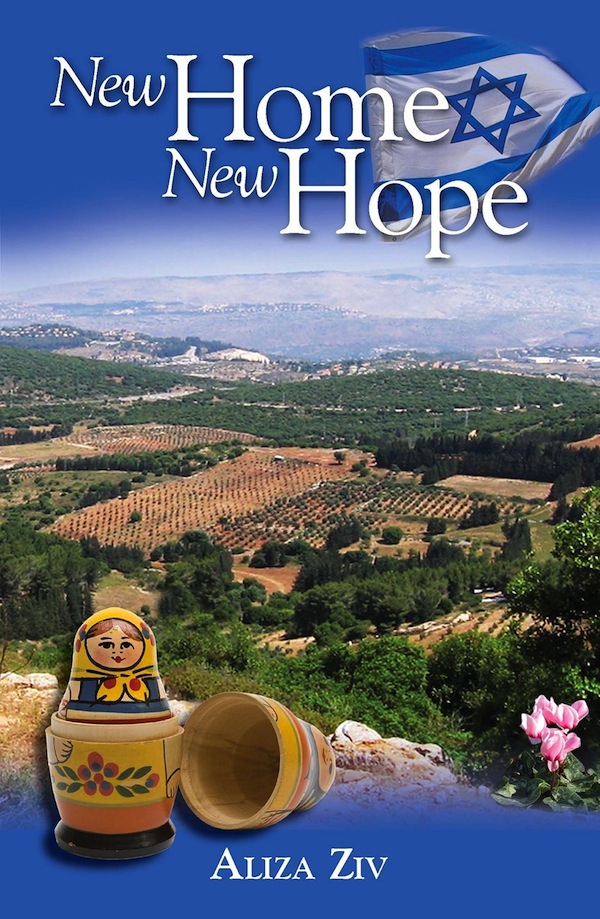
With the themes of Passover still reverberating, I read Aliza Ziv’s book New Home, New Hope (Contento de Semrik, 2014). About a single mother making aliya from the Soviet Union with her two young children, the book is about freedom, being strangers in a new land, becoming part of a community, respecting the past while trying to create a more promising future.

book cover - New Home New HopeThe story centres on Marina, Boris, 9, and Tanya, 4, and their experiences integrating into Israel from 1985 through 1995. It is both a specific and universal tale about immigration, and the challenges and opportunities new immigrants face anywhere in the world. However, the specificity is what most intrigued me. Ziv writes with authority and in detail about both the absorption process in Israel at the time and the political situation there and in Russia during that decade.

“This book was written on the basis of my vast experience teaching new immigrants who came to Israel (olim hadashim),” wrote Ziv in an email to the Independent. “These immigrants had to face a new culture, language, values, and had to adapt themselves to their new homeland.”

Ziv explained that she first published the novel in Hebrew in 2002 with the title Difficulty Beyond Words. “Later on, my husband Joe and I decided to translate it into English. It was published in October 2014, with a new name, New Home, New Hope.”

“The book is also based on what we had to face when we and our three children made our aliya in 1967,” added her husband in a separate email. “Aliza was a shlicha, sent to teach modern Hebrew using the ulpan method. She taught in Halifax, Toronto and, finally, in Vancouver at the Talmud Torah.”

While Aliza was born in Jerusalem, Joe grew up in Vancouver, went to VTT and King Edward High School, and graduated from the University of Alberta. “I was active in Young Judaea, one of the first organizers of Habonim, and one of the founders of Camp Miriam,” he said of his local connections.

The Zivs’ personal experience with immigration comes through in Aliza’s writing. She doesn’t sugarcoat the difficulties of leaving an established life, family and longtime friends and integrating into a new country, having to learn another language, find a home, (re)start a career, build relationships, etc., etc., all the while worrying about those you’ve left behind. And your new fellow citizens must also get used to your presence in their country – immigrants seem threatening to some people, to their job security, their traditional way of life, and Ziv also tackles these issues in her novel.

One particularly interesting scene is a party on a moshav at which the more established Israelis are playing old Russian songs, wondering why the new immigrants aren’t joining in. One of the Israelis explains how the chalutzim (pioneers) “came to build the Jewish homeland, and within them was an integration of socialist and even communist values and concepts. And so they established cooperatives, kibbutzim and moshavim…. We grew up with lots of love of the Russian culture, its music and especially its songs. It is really in our blood.” The new immigrants are not convinced, and one points out that many of these songs “not only have a romantic base but also have an antisemitic and militaristic, murderous one. About Bogdan Khmelnsiky, Simon Petliura, have you heard of them?” The debate continues, and it is these parts of New Home, New Hope that I found the most compelling. (I have since looked up both of these men online.)

From a literary perspective, New Home, New Hope is not one of the best books I’ve ever read, and the formatting and editing is not as clean as it would be if it had been put out by a conventional publishing house, but it is one of the more interesting books I have ever read. Ziv is a good writer and she is a fount of knowledge on topics that many readers would profit from – and enjoy – learning about.

New Home, New Hope is available in both digital (Kindle) and printed formats through Amazon.

Writing is really on the walls

An inscription on a water fountain built by Suleiman the Magnificent. (photo by Ariel Fields)

When it comes to Jerusalem, the writing really is on the wall. The problem is, some people (easily recognized, as they go around saying “it’s like talking to a brick wall”) will try to convince you walls can’t tell you anything. Don’t listen. If you ignore Jerusalem’s walls, you’ll miss out. The following matryoshka/babushka story (or story within stories) shows that “walls are the skin of the residents,” as the muralist cooperative CitéCréation is fond of saying.

Admittedly, you might initially doubt whether writing on the wall matters. To quell your uncertainty, here is what Tel Aviv University’s Prof. Jonathan Price has to say: “Inscriptions are an important and unique historical source. They provide information in many areas no other source can provide.”

Thus, while there’s no CD of the trumpet/shofar playing, we know that trumpet blasts from the southwest end of the Temple Mount indicated the beginning and end of the Sabbath. How? In his extensive history, The Wars of the Jews, Flavius Josephus writes about this practice.

The truly astounding physical evidence, however, is a stone carved sign now located in the Roman/ Byzantine section of Jerusalem’s Israel Museum. The inscription on this first century CE stone reads, “‘To the place of the trumpeting.” The stone directed the Temple kohain “trumpeter to the high point on the Temple Mount, where he would announce the beginning and end of the Sabbath.”

An archeologist described its discovery. It was found in the “debris from the dismantled walls, engraved on an eight-foot-long piece of limestone. The stone has a rounded top indicating it was a kind of parapet situated on top of the wall or the tower at the southwest corner of Herod’s giant Temple Mount. Unfortunately, the clearly readable inscription is broken off, so we only have the beginning of it.”

The trumpeter’s corner had a distinct vantage point. From his post, the trumpeter looked out over ancient Jerusalem, from the City of David to the Upper City in the West. When he gave a blast, even the merchants and shoppers in the markets heard.

Moving slightly away from the Old City, we come to an ornate Ottoman inscription just above the southern end of Sultan’s Pool. It reads: “[There] has ordered the construction of this blessed sabil, our master the Sultan the greatest prince and the honorable Khaqan, who rules the necks of the nations, the sultan of the [land of] Rum, the Arabs and the non-Arab [’ajam], the Sultan Suleiman, son of Sultan Selim Khan, may God perpetuate his reign and his sultanate. On the date of the tenth of the month of Muharram the sacred, in the year of 943 [29 June 1536].” (Ottoman Jerusalem, Auld and Hillenbrand, eds., 2000)

This sabil (drinking fountain) served the many passing pilgrims. The Ottoman ruler Suleiman the Magnificent built five more sabils inside the walls of the older city. Moreover, several other sabils (the earliest dating back to the Byzantine period of the sixth/seventh century) have been excavated at this same location.

The drinking fountain’s water came from an aqueduct originating at Solomon’s Pools, near Bethlehem. Importantly, this aqueduct primarily serviced the Temple Mount area. To insure an adequate water supply, Sultan’s Pool (today an outdoor concert venue) was a floodwater reservoir. Just a few years ago, archeologists uncovered a Second Temple period bridge that stood over the adjacent ravine of Ben Hinom Valley. The original bridge maintained the elevation of the path along which the water coursed. In 1320 CE, the Mamluks rebuilt the bridge. Two of the original nine arches supporting the bridge were excavated to their full three-metre height.

A relatively short walk from the fountain, but with a significant leap in time, we arrive at the Hebrew year 5694 (corresponding to 1933-1934). At that time, builders completed work on a structure at 6 King David St. As the country was still controlled by the British (the Mandatory period lasted from Sept. 29, 1923-May 14, 1948), the Hebrew stone dedication might be termed both prophetic and Zionist. The inscription from Psalms 102:15 reads: “Your servants take delight in its stones and cherish its dust.” Heads up, however, to view this stone, as it is high on the right side of the entranceway.

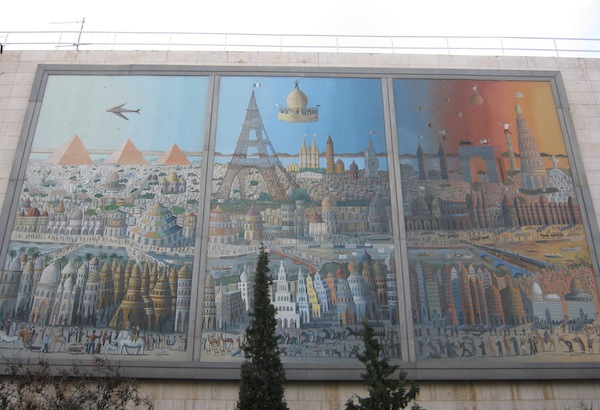
photo - In 2001, the French art group CitéCréation painted a mural depicting the Jerusalem Light Rail system, which didn’t start running until 2011
In 2001, the French art group CitéCréation painted a mural depicting the Jerusalem Light Rail system, which didn’t start running until 2011. (photo by Ariel Fields)

No matter what you think of the Mandatory period, most people will agree that the British constructed attractive and made-to-last Jerusalem streets and boulevards. Although King George Street has changed tremendously since Israel gained independence, the stateliness of the road’s 1924 commemoration is visible in the dedication stone on the side of what is now a woman’s clothing store. The esthetically pleasing inscription is carved in the languages of the time: English, the official language of the British Crown has a central spot on the stone. It is flanked by slightly smaller Hebrew and Arabic translations.

They say a picture is worth a 1,000 words, so here goes: Across from the above inscription, where King George, Strauss and Jaffa Road intersect, look up to see what was for 10 years regarded as a “time-warp” fresco. In 2001, the French art group CitéCréation painted a long exterior building wall depicting the Jerusalem Light Rail system. Since the light rail only began running at the end of 2011, for years Jerusalemites considered this painting a bad joke. Like many other Jerusalem projects, this one finally came into being years after its original promised inauguration.

Despite a violent summer and fall, the Jerusalem Light Rail demonstrates that the city’s ethnic and religious groups can – and do, literally – come into close contact. Jerusalem’s train is an example, albeit a fragile coexistence.

photo - Gavriel Cohen’s 1976 mural on the Gerard Behar building
Gavriel Cohen’s 1976 mural on the Gerard Behar building. (photo by Orli Fields)

In sharp contrast to the slow development of the light rail, the wall project on the Gerard Behar Theatre (its address is 11 Bezalel St.) shows how quickly things can get done, if one really works at it. In 1976, Gavriel Cohen painted a huge building mural in just 92 days. Humorously, this 18-metre-wide painting is entitled “Around the World in 92 Days.” When you see the painting, you will understand its “play” on the title of Jules Verne’s famous adventure story.

Like Verne, Cohen was born in France. Moreover, the Jerusalem Foundation donor who underwrote the building’s renovation was himself a millionaire French Jew. He named the building after his son, Gerard Behar. Today, the wall has added significance, as many French Jews are making Israel their home. The Jewish Agency reported nearly 7,000 French Jews made aliya in 2014, doubling the number of the preceding year.

We now move back in time to the Hebrew year 5632 (1872). In the tiny Jerusalem neighborhood of the House of David – the fourth neighborhood built outside the walls of the Old City – there is another inscription above the doorway of what (with controversy between different religious blocs) has recently become a yeshiva. David Reiz, a Jew from Jonava, Poland (today the Republic of Lithuania) donated the money to build this area. The Hebrew stone dedication contains a description of the 1872 purchase of the lot and the subsequent building of the apartments and a study house (bet midrash). The home of Rav Kook (first chief Ashkenazi rabbi of Mandate Palestine) and the popular dairy restaurant Ticho House (currently undergoing repair) are a few steps away. The square courtyard in which the inscription is found still has the wells residents used for their household needs. Reportedly, today’s residents are a mix of doctors, artists and yeshiva students.

Even if they never took up residence in Israel, over the years people of different denominations have considered Jerusalem to be their centre of the world. Thus, in front of Jerusalem’s City Hall, there is a large reproduction of Heinrich Bünting’s 1581 map of the world. Bünting (1545-1606), a German Protestant pastor and theologian with a strong interest in cartography, created a map (included in his printed map book) featuring a three-leaf clover (which to this day is still part of his native Hanover’s coat of arms). Europe is the western leaf, Asia is the eastern leaf and Africa is the southern leaf. Jerusalem lies at the centre of the clover.

As Hebrew University’s Prof. Rehav Rubin (1987) wrote: “These maps do not teach us anything about the appearance of the city in ancient times, but from them we learn how Christian Europeans and the map-makers themselves saw sacred texts and the place of Jerusalem in the sacred texts.”

So much of Jerusalem’s history is laid out on its walls; come visit to discover it.

Deborah Rubin Fields is an Israel-based features writer. She is also the author of Take a Peek Inside: A Child’s Guide to Radiology Exams, published in English, Hebrew and Arabic.

Cookbook resurfaces

Having received letters asking for copies of her 40-year-old cookbook, the author has had it reprinted, and it is available for purchase. (photo by Barry A. Kaplan)

In the 1970s, when I made aliya, I discovered that Israel was a bit behind the United States and, when renting an apartment, chances are you would not find a stove but, rather, two burners instead. Many of my friends rented apartments with the same problem, and one of them introduced me to a gadget that looked like an angel food cake pan with a lid and holes to release the heat; it had a base to place over a burner and the lidded pot went on top. It had been used in Israel for years. It was called a “wonder pot.”

I soon wrote a cookbook called The Wonders of a Wonder Pot: Cooking in Israel Without an Oven. To my surprise, it became a bestseller among students, new immigrants and people on sabbaticals, as well as those who loved the nostalgia.

In recent years, it somehow resurfaced, and I began receiving letters asking for copies of the 40-year-old cookbook. After depleting the supply my husband Barry and I brought with us, I decided to have it reprinted. Anyone in the United States or Canada who would like a copy can now have one for $25 including postage; those in Israel can have one for 100 NIS. For more details, email me at syb1023@aol.com.

Sybil Kaplan is a journalist, foreign correspondent, lecturer, food writer and book reviewer who lives in Jerusalem. She also does the restaurant features for janglo.net and leads weekly shuk walks in English in Jerusalem’s Jewish food market.