Emergency medicine at work

Dr. Oren Wacht of Ben-Gurion University of the Negev will be in Vancouver this month, giving a public lecture May 25 and promoting Heartbeat of Education, a project geared to helping more Israeli paramedics further their education in emergency medical services. (photo from BGU Canada BC & Alberta Region)

Dr. Oren Wacht, who heads the department of emergency medicine and is the academic director of the Field Family Medical Simulation Centre at Ben-Gurion University of the Negev, will be in Vancouver May 23 to 25. As part of his visit, he will speak to the community on May 25, 7 p.m., at an event titled Emergency Medicine in Action: Healing the Negev Post-Oct. 7.

An experienced emergency medical technician and the first paramedic in Israel to receive his PhD, Wacht serves, too, as a volunteer paramedic for Magen David Adom, Israel’s national emergency service.  Since Oct. 7, 2023, he has seen months of active service between his teaching and training responsibilities.  Thousands of BGU faculty, staff and students were called to serve after the Hamas attacks.

Wacht said his May 25 talk will be about his department, which trains paramedics, and will briefly touch upon his own experiences as a paramedic. 

“Since the war, I have spent most of the time in the military, in the infantry, as a paramedic,” he told the Independent. “I am trying to combine this with my work at BGU as a head of department and researcher, and, of course, my personal life and family. It is very challenging, but there is no other choice.”

Wacht’s visit to Vancouver will promote Heartbeat of Education, a project geared to helping more Israeli paramedics from all walks of life access and earn a bachelor’s degree in emergency medical services (EMS).

As the national EMS system,  Magen David Adom (MDA) has very close ties with the program. In February 2022, MDA and BGU signed an affiliation agreement as part of an academic initiative designed to improve training for paramedics and EMTs. The affiliation, believed to be the first between a national EMS service and a university, strives to bolster the quality of pre-hospital emergency care in Israel and elsewhere. 

“We want Israel to have the best paramedics and, with the program’s support, we can help our students go through our very intense program with less financial stress,” Wacht said. 

“Our program is unique,” he added, “because students do EMS shifts at MDA from the first year of studies. We are incredibly excited about this opportunity – and being able to support our students, especially since the war, is one of the most important things we need to do.”

In Israel, MDA paramedics are among the first on the scene in emergencies to provide critical care.  However, many paramedics lack the financial means to pursue higher education. The purpose of the Heartbeat of Education program is to enable paramedics to take on more specialized roles within the health-care system, bring enhanced expertise to emergencies and thereby save more lives and improve outcomes, drive innovation and support a diverse, inclusive environment that can provide life-saving services to everyone who lives in Israel.

Wacht also has created a summer program, in English, in emergency medicine at BGU. It will open this year, from July 20 to 30, and is geared towards laypeople and professionals alike. The program uses the extensive experience of tactical medicine – the delivery of care in hostile or high-risk situations that integrates medical and tactical operations to preserve life – at BGU and brings it to people in the course in a realistic environment at the school’s medical simulation centre. In addition to offering graduates a certificate from BGU, the program hopes to provide participants with the confidence to handle demanding medical challenges. 

The Field Family Medical Simulation Centre occupies four floors of the Rachel and Max Javit Medical Simulation and Classroom Building at BGU.  It includes classrooms equipped with medical devices, advanced simulators and research laboratories, and features state-of-the-art medical simulation rooms to train doctors, nurses and paramedics.  The rooms are designed to reflect real-life medical situations, such as cardiopulmonary resuscitation, procedures for trauma victims and emergency surgeries.

Since Oct. 7, many medical teams, from army and civilian organizations, have asked for guidance at the centre, and the centre has helped prepare many Israel Defence Forces teams. 

“Despite the challenges we face, and despite the fact that a significant part of the team has been called up for reserve duty, hospitals and MDA, this is our small contribution, and we stand united with the medical community in these difficult times,” Wacht said in October 2023. 

“The support of Jewish people from around the world gives all of us, and me personally, a lot of strength in these challenging times,” Wacht told the Independent. “We invite readers to visit BGU and see the fantastic work in many fields of research.”

To register for the Metro Vancouver event, visit bengurion.ca/events/vancouver-events. 

Sam Margolis has written for the Globe and Mail, the National Post, UPI and MSNBC.

Join Jewish culture festival

This year’s Festival of Jewish Culture takes place May 25. (photo from JCCGV)

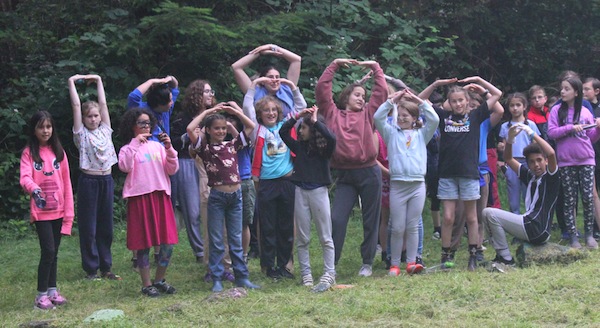
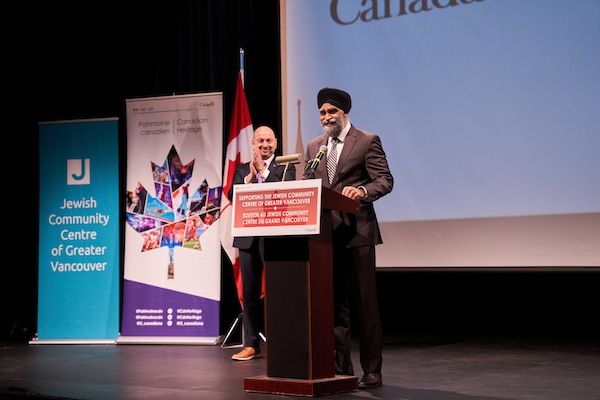
Throughout May, there are numerous events being held at the Jewish Community Centre of Greater Vancouver in celebration of Jewish Heritage Month. They culminate in the Festival of Jewish Culture on May 25, which features music, food, dance, art, a market, workshops and more at the centre, from noon to 4:30 p.m.

While some of the events leading up to May 25 have happened, there are still many activities coming up. Tied into the festival are the Western Canada Jewish Book Awards May 13 (for the list of finalists, visit jccgv.com/jewish-book-festival); an Israeli-style vegetarian potluck Kabbalat Shabbat dinner – Shishi Yisraeli – on May 16; a Jewish Street Art workshop for youth on May 22; a joint presentation on May 22 with the JCC Jewish Book Festival, with Ben Shneiderman talking about Journey Through the Spanish Civil War, an English translation of his father’s book; and a Shabbat picnic breakfast and tiyul (walk) on May 24.

photo - The Festival of Jewish Culture features live music
The Festival of Jewish Culture features live music. (photo from JCCGV)

“The main event and pre-event activities have evolved from previous years and successful ideas that people looked forward to, as well as years of the festival being harikud [about Israeli dance], and many traditions have stayed from then,” said Nomi Zysblat, coordinator of Jewish and Israeli cultural programming at the JCC, about how this year’s events were chosen. She credited Hila Olya, director of programs, for being supportive and encouraging.

“She really is someone who both leads and shines but also gives you freedom for whatever comes to mind,” said Zysblat. “I really have the pleasure of working with some great people here at the J.”

photo - Like last year's festival, this year will have a cooking workshop
Like last year’s festival, this year will have a cooking workshop. (photo from JCCGV)

There will be four workshops offered on May 25: krav maga, where youth, adults and families are invited to train together; Liat Pakes teaches how to make falafel, pita and different styles of tahini; Zohar Hagbi leads an intuitive art session, in which participants will be able to express their inner creativity; and people will have the chance to create their own Havdalah spice bags.

“One of the four blessings of Havdalah is for besamim (fragrant spices),” explained Zysblat. “Creating our own spice bags is fun for children, too, as they get to touch and breathe in a  variety of aromatic spices, and then create their favourite combination.”

There will also be live performances. Award-winning musicians Yonatan Dror and Itamar Erez will play in different Jewish styles with guitar, piano and several types of woodwinds and brass instruments. The JCC choir, led by Shir Barzel, will sing several Hebrew melodies, and Perry Ehrlich’s ShowStoppers will perform. HaOpziot, a band of local Israeli Vancouverites, will entertain with Israeli rock classics.

Food trucks will include Planted and Meet2Eat, and there will be around 12 different stalls of local jewelry, textiles, Judaica and sweets.

Keeping the event safe will be a combination of JCC security, extra paid security, Vancouver Police Department involvement, as well as a team of Bitachon volunteers.

“It’s seriously going to be an amazing day, and I’ll be selling my popsicles, too!” said Zysblat.

For more information on any part of the festival, visit jccgv.com/program-category/israeli-festival. 

A funny look at death

David Bloom, left, and Richard Newman share two different roles in Western Gold Theatre’s production of Caryl Churchill’s Here We Go, which is at PAL Studio Theatre until May 25. (photo by Colleen Bayati)

“I love Caryl Churchill – she is quirky,” actor Rosy Frier-Dryden told the Independent. “She makes you think, makes you work. You can’t just rely on lines! You have to bring her lines to life.”

Frier-Dryden co-stars in Western Gold Theatre’s production of Churchill’s Here We Go, which centres around a funeral. Director Kathryn Bracht describes the work as “a deceptively simple, 45-minute exploration on death and dying that is a surrealist meditation wrapped up in her crafty, clever dialogue.”

For the run at PAL Studio Theatre, which goes to May 25, Frier-Dryden is joined by fellow Jewish community members David Bloom and Richard Newman in the cast, which is rounded out by Bernard Cuffling, Kate Robbins and Peihwen J. Tai.

“Without giving all of the storyline away, the general structure of the play is that it’s in three parts: a funeral scene; a monologue scene, where the deceased speaks; and a final scene without words,” explained Newman.

“We did our first runs today, and it’s quite remarkable how the three scenes build on each other to explore relationships with aging and death,” added Bloom. “It’s startlingly funny and weirdly moving.”  

Bloom and Newman share roles, as do the other actors: Frier-Dryden with Robbins, and Cuffling with Tai.

“In half of the shows, I am on stage in the first third playing one of five people attending a funeral,” said Newman. “In the other half of the shows, I play the subject of the funeral, the guy who died, who has a lengthy monologue – six pages of script, to be precise. This monologue is brilliantly written – emotional, scary and, always, funny. Quite a challenge, but such a great scene to play.

“Because of Churchill’s writing and Kathryn Bracht’s direction, each actor has a lot of leeway to interpret their lines and define their characters. Like me, David will have his own interpretation of both roles, and we’ve agreed not to watch each other, so we’ll not be influenced by the other – we’re developing our characters independently. Each of us rehearses alone in the room with the director.”

Frier-Dryden also spoke enthusiastically about the latitude the actors have in this play.

“The most marvellous thing is, you are allowed to create your own character, based on what Caryl Churchill writes and the freedom she gives you,” said Frier-Dryden. “In the first scene, I am playing a character that is older and a big personality. She is a Londoner, upper class, and lives in Eaton Square with a vast array of friends. She had an affair with the guy whose funeral we are attending. In the final scene, she is ill, has dementia and she is slipping away. She and her husband have come to terms.”

photo - Rosy Frier-Dryden’s character in Here We Go had an affair with the man whose funeral the characters have come to attend
Rosy Frier-Dryden’s character in Here We Go had an affair with the man whose funeral the characters have come to attend. (photo by Colleen Bayati)

“Caryl Churchill is quite simply a remarkable playwright,” said Western Gold Theatre artistic director Tanja Dixon-Warren. “She has an extraordinary command of language and deep understanding of human nature. Her work is very reminiscent of Pinter and Beckett, in that the text is pared down to its absolute essentials. There is nothing extraneous or gratuitous.

“She has a distinctive, truly singular approach to writing,” Dixon-Warren continued. “Very often there is no punctuation, and lines are not assigned to specific characters, thus allowing the director and actors to find multiple stories and characters within the piece – knowing that they will bring their life experience to the work. This requires that the director, actors, designers really dig into the play, to find all the nuances and be very, very specific about what they are saying. Her material is, essentially, just the beginning of the conversation.”

It certainly has the actors thinking beyond the play and about their own lives: Bloom is 65, Newman is 78 and Frier-Dryden is 90.

“I find myself being grateful for being alive and still being able to move around under my own power,” said Bloom, who commented that the monologue “is both a marathon and a sprint” in which he immerses himself every bus journey, so he’s physically and emotionally exhausted at the end of each day.

“I think about my parents a lot,” he added, “because the play reminds me of their last years and the different ways they faced bodily decline and death. There’s a scene I’m not in that brings up heartbreaking memories of my father’s last years. But, mostly, I’m so delighted to be working on such a beautiful piece of writing with a group of wonderful people, many of whom are even older than I am.”

“You start to think about what’s really important, what I want to do with whatever is left of my life,” said Newman, who has lost many friends in the last year-and-a-half or so.

“What strikes me most strongly is that I am enjoying being here and am looking forward to sticking around to enjoy life as best as I can, as long as I can,” he said. “I consider myself fortunate – I run, work at keeping my body as healthy as I can – and believe my mind will follow…. This play kind of dovetails with my life and the issues and experiences that arise, the things I’m doing and how I’m dealing with life at this age. It’s a kind of serendipity to be in this play.

“At the end of the day,” said Newman, “I’m reminded that life is a gift, a miracle. I have my work, friends both young and old, family. I’m blessed.”

Here We Go also resonates with Frier-Dryden, who recently lost a family member.

“I have lived through the deaths of many, especially recently, and I think of this play and its themes … all the time,” she said. “I am not just going to rehearse – I am going with the knowledge that someone dear has died, and I can send them off and honour them. I love that every day I think of the person I loved, and he is gone, but not gone.”

Here We Go features some of the best actors in Vancouver,” concluded Newman. “This will be unlike anything you’re liable to see in the Vancouver theatre season! I hope people will come to the show to watch our performances.”

For tickets to Here We Go, visit westerngoldtheatre.org. 

OrSh open house

Or Shalom’s after-school program open house takes place May 28. (photo from Or Shalom)

Designed for ages 6 to 13, Or Shalom’s after-school program brings Jewish learning to life through music, storytelling, art and experiential activities. To learn more about it firsthand, check out the school’s open house on Wednesday, May 28, 5-6:30 p.m., at Cityview Church,  4370 Sophia St. – Or Shalom’s temporary home while the synagogue is being renovated.

Rooted in Jewish Renewal values, Or Shalom’s educational program offers a holistic approach that nurtures curiosity, compassion and a vibrant connection to Jewish life. In addition to creative exploration, the school also teaches Hebrew, Jewish prayer and traditional skills, giving children the tools to engage meaningfully with Jewish texts, rituals and community. Children are encouraged to participate fully – mind, body and spirit – in an inclusive environment that honours both tradition and innovation.

Or Shalom invites everyone to meet its community, experience the program and explore how your child could thrive in it. Email office@orshalom.ca with any questions. 

– Courtesy Or Shalom

Theatre from a Jewish lens

Laen Hershler performing REMNANTS. Hershler brings an interactive version of Dr. Hank Greenspan’s play, which is based on 40 years of conversations with Holocaust survivors, to the Peretz Centre for Secular Jewish Culture on June 8. He will be joined by Vancouver Playback Theatre. (photo from grad.ubc.ca)

In June, Laen Hershler celebrates his first year as artistic director of Theatre Terrific. He also hosts, on June 8, Listening with Survivors, “an evening of deep listening and shared reflection as monologues from Holocaust survivors open into a live, interactive performance with Vancouver Playback Theatre.”

“I was deeply honoured and excited to step in as the artistic director of Theatre Terrific,” he told the Jewish Independent. “This community has always felt like home to me, both as a person and an artist. I look forward to continuing this welcoming tradition.”

“Theatre Terrific Society is a trailblazing mixed-ability theatre company that has been championing inclusivity in the arts since 1985,” reads the website. The society is “dedicated to tackling the challenges of accessibility, representation and inclusion in the arts by breaking down stereotypes and fostering empathy across diverse communities. It creates work that resonates with universal human experiences, bridging differences through storytelling. With a compassionate yet bold approach to theatre-making, it cultivates spaces where respect, rigour and risk drive the creative process.”

Theatre Terrific’s last production, called Proximity: The Space Between Us, was well received at the Vancouver Fringe Festival last September. Directed by Hershler and Susan Bertoia, it was created with the cast and is about the struggles of aspiring artists.

photo - In June, Laen Hershler celebrates his first year as artistic director of Theatre Terrific
In June, Laen Hershler celebrates his first year as artistic director of Theatre Terrific. (photo from instagram.com/theatreterrificvan)

Hershler is also an actor and improviser, and he is pursuing a doctorate in research-based theatre at the University of British Columbia. He is part of Vancouver Playback Theatre, as well, and, as an observant Jew, he performs complete with head-covering and tzitzit. 

“Since my shift to diligently keeping Shabbat about eight years ago, my acting career moved from mainstream theatre, which almost always necessitates working on Friday/Saturday nights, to applied forms of theatre,” he said. “These include playback theatre, forum theatre and academically situated theatre, which are much less dependent on weekend shows. I love performing in these types of shows since they tend to be very socially engaged and meaningful projects.”

Hershler’s responsibilities at Theatre Terrific include arranging all the classes, courses and productions, and hiring the instructors, directors and other artists for TT’s projects. He teaches, directs and sometimes performs in the company’s offerings, and works on establishing connections with the broader community of theatre companies regionally and internationally, especially all-abilities arts organizations. 

“I love the meaningfulness of the work, the creative freedom and the amazing human beings I get to work with,” he said. “I appreciate the opportunity to create work and opportunities for theatre artists of all abilities and to produce meaningful and evocative theatre. The challenge of the work – which is learning to hold a radically inclusive space that allows for high-level artistic work while including artists across spectrums of physical, neurodiverse and cognitive abilities – is also something I cherish.”

Hershler’s theatre career began at the Jewish Young People’s Theatre of Vancouver, which was based out of the Peretz Centre for Secular Jewish Culture. The program was guided by Lynna Goldhar Smith, who he credits as being a huge influence – he began classes with her when he was 8 years old and stayed with YPT until he was 14. He said a large percentage of people that he acted with in YPT are still involved in the arts today. 

Since graduating with his master’s at the University of Cape Town in 2011, Hershler has been an instructor in the education faculty at UBC in Vancouver and in the creative studies faculty at UBC in Kelowna. He began his career as a performer and educator touring and giving workshops in France, Korea, Australia, Kenya, South Africa and elsewhere on various aspects and uses of physical theatre for both children and adults.

“I loved my role as the Tooth Prince while performing for 5-year-olds (and their parents) at one of the most prestigious theatres in Seoul, Korea,” he said.

A couple of years ago, at the Peretz Centre and at Or Shalom, Hershler performed the one-man show REMNANTS, which was written by Dr. Hank Greenspan and first produced, for radio, in 1991. Based on 40 years of conversations with Holocaust survivors, the work delves into the survivors’ experiences, exploring themes such as loneliness, rage, storytelling and the dynamics of relationships across generations.

“It was a deeply meaningful project,” said Hershler, who is bringing REMNANTS back to the Peretz Centre on June 8, in a different form.

“In this version,” said Hershler in an email, “these monologues will open into a space for collective reflection, storytelling and discussion through playback theatre – a form of theatre that invites the audience’s voices and experiences into the performance itself, creating a space for deep listening and dialogue. For this, we will be joined by Vancouver Playback Theatre.”

The evening will be about listening to the Holocaust survivors, as well as one another, he said, “to find overlap and connection with our own lives, today, in this moment in time – to learn with, to learn from, to learn alongside.”

Hershler would like to do more Jewish storytelling.  

“I would love to create work that brings down the mystical tales of Rebbe Nachman of Breslov, an interest I inherited from my father, who has long been a storyteller of Nachman tales…. Being Jewish is who I am, and it pulsates through all the work I do,” he said. “All my artistic work emerges from this prism, from a Jewish lens, from a Jewish neshamah (soul).”

For tickets to Listening with Survivors, go to peretz-centre.org. For more information about Theatre Terrific, visit theatreterrific.ca. 

Cassandra Freeman is a freelance journalist and improv comedy performer living in Vancouver.

Ancient as modern

Mosaic Revival: Three Contemporary Expressions features the work of BC artists Maria Abagis, left, Lilian Broca, centre, and Daryl Lynne Wood. Shining the spotlight on this ancient medium, these artists challenge the viewer’s perception of what a mosaic is, and its relevance in the art world today. The exhibit is at CityScape Community ArtSpace, in North Vancouver, until June 6. (Images courtesy CityScape)


Finding hope through science

The organizer of a conference panel I’m going to be on asked me some questions ahead of the event. He asked how to find hope from a Jewish perspective amid challenging times. I responded with both academic Jewish content and personal information about my sons’ recent big success at a science fair. This person, a male academic, quickly grasped the personal narrative I provided – he thought it was about being a mother. Let’s not be “essentialist,” I suggested. My ability to provide information about hope doesn’t stem from reproduction alone. 

If one looks at what is going on in the United States, where there’s interest in limiting women’s reproductive rights, including motivating women to have more children and boost the birth rate, one might think that is what women are mostly for: reproduction. Yet, all sorts of data indicate that, for example, in a country like Israel, which has a high education rate and good possibilities for women, a high birth rate is also possible.

Perhaps choosing to have multiple children is easier with better health care, reliable social networks and support and maternity leave, and in a country that ranks high in terms of happiness on a global scale. Countries without birth control or proper education for women have high birth rates, but there are also high mortality rates. Focusing on women’s reproductive capabilities alone misses the boat. If women are educated and engaged in their country’s workforce, they contribute more than their biological value – the quick response of a male academic to traditional rhetoric about mothering left me disappointed.

This notion of maintaining hope during challenging political moments can be approached in many ways. I’m still sorting out what I’ll say in the five-minute slot on the conference panel. However, something I learned yesterday in the Babylonian Tractate of Makkot, on page 20b, made me think further about these issues.

Makkot 20b is about haircuts and ritual cutting as a mourning practice. First, Jews are not supposed to cut their hair in certain ways. Second, self-harming through incisions or ritual mutilation isn’t considered an acceptable mourning practice – self-harm isn’t OK.

While I studied this, I was also checking out the Canadian election results. My father, in the United States, was surprised that we hadn’t let our kids stay up late to watch what was happening. I explained that we’d voted early, and that our kids had voted in a school mock election. Also, we wouldn’t know the complete results until later anyway. More importantly, my kids needed sleep to cope with other activities later this week. Sleep felt like more important self-care.

It struck me that much of our tradition, and Jewish law, tries to maintain a complicated form of self-care. Even in dire circumstances, Jewish tradition encourages us to practise resiliency, intellectual curiosity and hope. Each day, the sun will rise, our souls will return and we will have what we need, like clothing and food, and feel grateful for it. As I write this, I hear Omer Adam’s popular musical version of the traditional prayer said on rising, “Modeh Ani.” (Google it, it’s good!)  

While we also pray for our country and its leaders, sometimes we jokingly invoke the words that Tevye quotes his rabbi as saying in Fiddler on the Roof: “A blessing for the czar? Of course! May God bless and keep the czar … far away from us!”  

My household felt strangely conflicted about voting. We knew for instance that the Conservatives, in the past, cut funding for research and science, which worries us. Choosing parties that maintain or grow science funding is important to us personally, since my husband is a science professor. His lab needs funding to do research. Good science research can protect us. However, the Liberals have a poor track record of protecting Jewish Canadian citizens. Our local NDP MP has expressed something akin to real hate in my dealings with her. So, again, we can think like Tevye’s rabbi: we bless the outcome of a democratic election – no matter how it goes – while hoping those in charge don’t get close enough, through their actions, to do us any harm.

Similarly, the rabbis acknowledged that mourning causes us great psychological pain. This might encourage some to self-harm. Ideally, we should control that impulse. Self-care is a balancing act. It’s not always clear how to make safe choices.

Locally, I watched politicians’ interactions with the Jewish community with interest. In one case, an incumbent Jewish Liberal MP of a riding known to historically have a “big” Jewish community mentioned that perhaps only 5% of his riding was Jewish. His efforts made to support the Jewish community and offer allyship to Israel were an expression of his conscience. That choice likely didn’t help his chances and maybe even was an impediment to his campaign, but that decision to act conscientiously offered me hope, too, even if I couldn’t vote for him because I don’t live in his riding.

Sometimes, our choices aren’t as clear as we’d like them to be. It can be hard some mornings to rise full of hope and gratitude amid the political chaos and death we hear about each day. Given that, we need the reminder of ancient, traditional Jewish prayer and thought, too. There are days when I feel praying is a rote practice. Other days, I remember that we’re doing this in a way that brings us connection with ancestors who maybe didn’t have enough food, who suffered with terrible plagues or physical danger. In many ways, things are so much better for us than they used to be. This alone is worth our gratitude.

When the rabbis warned long ago against cutting oneself, they lived in a world without antibiotics or effective medical care. My conversation about finding Jewish hope wasn’t simply about reproduction, my maternal pride, but rather my pride in the kids doing good science. I have hope because I don’t only believe in blind faith, I also believe in science. Whether it’s Israel’s Iron Dome, Jonas Salk’s polio vaccine, or other discoveries, doing science is another form of self-preservation. 

The world can be a painful place. We must make compromises to continue as a small minority ethno-religion. Those choices require us to acknowledge what’s happening, to make nuanced decisions based on what’s best in the moment, and to build a better world each day.

Don’t get me wrong. I’m proud of my children, whatever they do, but I’m filled with hope because my Jewish kids won all sorts of accolades at a divisional science fair. To me, that’s Jewish self-care for the future. Yes, it’s also a political statement, too. 

Joanne Seiff has written regularly for the Winnipeg Free Press and various Jewish publications. She is the author of three books, including From the Outside In: Jewish Post Columns 2015-2016, a collection of essays available for digital download or as a paperback from Amazon. Check her out on Instagram @yrnspinner or at joanneseiff.blogspot.com.

Mastering menopause

Michelle Biton has released a new book. Written in the same style as The Instant Anxiety Solution: 5 Simple Steps to Quiet the Mind & Achieve Calm, her recently released The Menopause Weight Loss Solution: A Woman’s Guide to Menopause Without Pounds offers six steps to help women live their best lives during menopause. Both books are published by Hatherleigh Press Ltd.

The mnemonic device that anchors this book is SHRINK. After an introductory chapter about what menopause is, some of its symptoms, the role of cortisol (“the body’s primary stress hormone”) and a couple of other topics, each section explores one of the letters. So, chapters 2 through 7 are (italics added): Stimulate Your Metabolism; Harness the Power of Your Vagus Nerve; Reinforce the Eight Nutritional Strategies; Incorporate Daily Pelvic Floor and Core Exercises; Nurture Mindfulness and Mindful Eating; and Know Your Female Powers with Confidence.

“Menopause is a natural process,” writes Biton. “You officially hit menopause when you do not get your period for 12 consecutive months. The ovaries stop making estrogen and progesterone and the period disappears. It signifies the end of the reproductive years and the beginning of the wise ‘goddess’ years.

“But that is the easy version. Menopause, or pre-menopause, can feel like a rollercoaster ride of hormones or a symphony of fireworks.”

Pre-menopause, or perimenopause, can start in one’s 30s or 40s and last up to 10 years, writes Biton. “At least 80% of women will experience menopausal symptoms of varying degrees and severity.” And there are many symptoms or changes, including but not at all limited to: slower metabolism, poor memory or brain fog, weight gain around the middle, thinning hair, increased irritability and moodiness, night sweats, increased sadness, diminished sex drive and itchy skin.

image - The Menopause Weight Loss Solution book coverWeight gain during menopause apparently affects 65-70% of women, who gain an average of five to 10 pounds. One reason for this is that “women’s ability to burn calories gets cut by 30% or more,” says Biton. “By the time she reaches middle age, she will have to work almost twice as hard to burn the same amount of calories as she did in her 20s.”

Biton recommends many different types of exercise to build muscle and kickstart one’s metabolism. “Simple things like lifting your body weight against gravity does the job perfectly,” she writes. “You can do them anywhere; they are easy to do and very effective. This includes exercises like push-ups, triceps dips, lunges and squats.” She gives a description of how to do lunges and planks, and talks about things like ideal intensity levels: “Regular physical activity [like walking], versus doing one intense workout on the weekend, will be more beneficial at increasing your metabolism long-term.” She notes that adding protein to every meal can help boost metabolism, as can eating the “right kind of fat,” such as omega-3 and omega-6.

A moderate approach to exercise and eating is, not surprisingly, the recommended approach and she dedicates Chapter 4 to nutritional strategies. Chapter 5 is about ways to increase core strength (“namely, your corset and girdle muscles”), to combat weight gain around the midsection, and exercises to strengthen the pelvic floor muscles to keep incontinence at bay.

The chapter on the vagus nerve – the “key” to activating the parasympathetic nervous system (PSNS), which helps us “calm down, handle stress better, regulate your mood and feel more relaxed, connected and compassionate” – takes a lot from Biton’s previous book on dealing with anxiety. (See jewishindependent.ca/ways-to-tackle-anxiety.)

“During menopause, it is common to feel stressed and overwhelmed, not to mention disconnected, irritable, worried, anxious, depressed and questioning a lot of things in life,” she writes.

She advises: “If you’re having a hard time regulating your emotions, feeling overwhelmed or overly emotional, it’s a good idea to activate your PSNS right away.” And she offers many ways to do that, from splashing cold water on your face, to running on the spot as long as you can, to deep breathing, to immersing yourself in nature, and more.

The chapter on mindfulness focuses on differentiating between physical and emotional hunger. The former “begins in the stomach” and is “a physiological need,” while the latter is “when you eat in response to feelings…. Emotional foods tend to be high in carbohydrates, as they allow more L-tryptophan, a mood-regulating amino acid, to enter the brain. Carbohydrates (and sugar) help the body to make serotonin, the ‘feel-good’ neurotransmitter, so it makes sense why emotional eaters tend to consume foods that give them a ‘sugar high.’” Biton suggests practices like mindful eating (slowing down, chewing your food well); trying “to eat out of physical hunger 95% of the time,” while allowing yourself occasional treats; and, again, adding protein to meals “to feel full for longer.”

The last chapter of The Menopause Weight Loss Solution is about retraining our minds to think more positively and reduce negative thoughts about ourselves. It also tackles perhaps sensitive topics like changes to the vagina, body odor, breast tenderness, skin and more that happen during menopause.

There’s nothing revolutionary or in-depth in this book, but rather it provides an overview and the basics of what a woman can do to understand and get through menopause more easily.

Biton has a master’s in holistic nutrition, a bachelor’s in psychology, and a certificate in kinesiology and fitness studies. She is a former Vancouverite who now lives in Los Angeles. For more information, visit michellebiton.com. 

Don’t miss Jewish film fest

Full Support shines a positive, life-affirming light on Noa’s Bras, in Jaffa. (photo by Tulik Galon / Go2Films)

The Vancouver Jewish Film Festival is now underway, with screenings at Fifth Avenue Cinemas through May 1, then at the Rothstein Theatre May 2 and 4. There are numerous films being presented, from documentaries to mysteries, dramas and more.

Being supportive

It may seem like a strange thing to say, but women should put Noa’s Bras, in Jaffa, on the itinerary of their next trip to Israel. If you don’t need a bra, you can go try some on, just for the experience of being well taken care of. At least, that’s how it seems a visit would go, from watching Michal Cohen’s documentary, Full Support.

Full Support shines a positive, life-affirming light on this store to which women come in need of varying sizes, looks and fits. Some brave clients share their stories with the filmmakers, and the result is a moving portrayal of women of all ages, socioeconomic backgrounds and life circumstances. Among them are cancer survivors, victims of abuse, divorcées; one woman wants something sexy, another just wants something comfortable, a preteen looking for her first bra comes in with her mom. The staff – maybe one or two of whom are proprietors? (it’s not clear) – are knowledgeable, respectful and helpful. It is amazing to see the staff literally size up a client from across the counter and then know which of many, many boxes they must go to for the bras they’re looking for. The store apparently offers 189 sizes!

Outside the store, the camera catches men walking by the shop, some even peeking in, then almost running away with embarrassment. There are other moments of humour, as well as many touching moments, including when one of the store clerks pops into the tailor next door for him to sew up this or that and we find out that he and his wife are waiting for a permit to visit their daughter in Nablus.

Full Support is an interesting, thoughtful and funny film. 

– CR

A murder mystery

photo - In Highway 65, a demoted Tel Aviv detective, Daphna (Tali Sharon), finds herself assigned to investigations in the hick town of Afula
In Highway 65, a demoted Tel Aviv detective, Daphna (Tali Sharon), finds herself assigned to investigations in the hick town of Afula. (still from film)

Family secrets are the theme in Highway 65, in which a demoted Tel Aviv detective finds herself doing slashed tire and lost phone investigations in the hick town of Afula. 

Daphna (Tali Sharon), the downgraded cop, is a shlubby Columbo with appalling table manners but proficiency at her job. The lost phone – a seemingly innocuous investigation – leads to something much larger. The phone’s owner, Orly, has been missing for a week and no one has reported her absence. 

It’s a small town where everyone knows everybody’s business and outsider Daphna finds herself in the midst of a perversely convoluted family drama, crossing personal and professional boundaries with nonchalance. 

The family is marking the 10th yahrzeit of the missing woman’s husband and Daphna’s investigation puts a serious crimp in the commemoration. The family has an ominous mafia feel to it and the film jolts the viewer with an instant of truly shocking violence that illuminates the narrative and ultimately fingers the culprit.

Fans of quality Israeli TV will recognize Sharon from her role as Hodaya in Srugim, about Orthodox singles in Jerusalem. The male lead, Matan, is played by Idan Amedi, a singer-songwriter and actor known for playing Sagi Tzur in Fauda. Amedi was seriously injured during reserve duty in January 2024, when six fellow soldiers were killed in Gaza.

– PJ

Relentlessly talented

photo - Diane Warren: Relentless introduces audiences to the seemingly chaotic genius of songwriter Diane Warren
Diane Warren: Relentless introduces audiences to the seemingly chaotic genius of songwriter Diane Warren. (still from film)

Everyone knows a song that was written by American songwriter Diane Warren – everyone. For more than 40 years, she has been writing hits in multiple genres. From “Rhythm of the Night,” performed by the band DeBarge; to “When I See You Smile,” for Bad English; to “I Don’t Want to Miss a Thing,” sung by Aerosmith; to multiple songs performed by Beyoncé, Michael Bolton, Cher, Celine Dionne, Meat Loaf, Whitney Houston and so many others. Her writing has earned her a long list of awards and 16 Academy Award nominations – while she has yet to win an Oscar for a particular song, she was recognized with an honorary Oscar in 2022 for her achievements.

The documentary Diane Warren: Relentless, directed by Bess Kargman, introduces audiences to the seemingly chaotic genius of Warren, who was born in Van Nuys, Calif., into a middle-class Jewish family. The third daughter of David and Flora Warren, she is much younger than her sisters and knew, from a young age, that music – rather than something more conventional – was the path she wanted to follow. 

Her parents struggled with how to parent Warren. Her dad was supportive of her music dream, at least, but her relationship with her mother was troubled till the end. Warren grew up feeling an outsider both at home and at school. It is not clear when she was diagnosed, but having Asperger’s syndrome contributes to both Warren’s genius and her struggles. She also shares that she was molested as a child, in the context of having written “Till It Happens to You,” which Warren wanted Lady Gaga, also a survivor of sexual assault, to sing.

A lot of Warren’s collaborators lend their views to this documentary, and their respect for Warren is clear, even when there are hurt feelings. For example, she gave both LeAnn Rimes and Trisha Yearwood the song “How Do I Live,” but both versions ended up being a hit.

A master of romantic songs, Warren has no romantic partner, only a love for creating music – something she is driven to do and will continue to do as long as she is able.

Relentless is a fascinating look at a fascinating person.

– CR

Quest for the past

photo - The Property closes the Vancouver Jewish Film Festival May 4
The Property closes the Vancouver Jewish Film Festival May 4. (still from film)

One probably wouldn’t expect lots of yuks in a film about a grandmother and granddaughter traveling from Israel to Poland to reclaim property lost during the Holocaust. But the first great guffaw in the closing night film of the Vancouver Jewish Film Festival, The Property, comes early, with the frustrated chaperone of ill-behaved high school students shouting, “You don’t deserve to be taken to the concentration camps!”

Dark humour and subtle situational absurdity shine a light on serious paradoxes, twists of fate, loss and possible redemption. The film by Dana Modan, based on a graphic novel by her brother, Rutu Modan, centres around distinctive characters and intersecting personal and world history.

The trip’s mission seems straightforward, but Savta has a secret – and a secret agenda. Secrets abound, actually, but the conundrum, as the granddaughter observes drily, is that no one really cares.

Ostensibly, the family is returning to Poland to regain physical property stolen during the war – an apartment building – but it becomes clear almost immediately that the grandmother is after something else. The viewer’s assumptions about her motivations will be subtly upended. 

The grandmother, Regina (Rivka Michaeli), and granddaughter, Mika (Sharon Strimban), spend much of their time in Poland doing their own things, but their experiences – past and present – imitate the other’s. History and the present day seem to merge, then diverge, when Mika stumbles into a too-authentic immersive experience at a museum that is the essence of dark humour, as is the interaction with a museum curator who takes her work just a tad too seriously.

Family secrets, though, are the heart of the film, as are the complex interactions between Jewish and non-Jewish Poles across generations. 

Beginnings and endings and the sense that the past keeps repeating are a thread throughout The Property.

“How many times can you start a life all over again?” asks the grandmother at one point. But Mika’s experience suggests it’s all a big repetitive cycle anyway. 

– PJ

For tickets to the Vancouver Jewish Film Festival, visit vjff.org.

A wordless language

In her lab at the Hebrew University of Jerusalem, Prof. Sigal Ben-Yehuda and her team have observed that bacteria can exchange molecules, genetic material and survival strategies through tiny structures called nanotubes. These findings suggest that, rather than acting independently, bacteria are capable of molecular communication.

This microbial interaction is at the heart of Ben-Yehuda’s research, pointing to a microscopic network built on exchange and cooperation. She will present this work in Vancouver April 29, as the featured speaker at the Dmitry Apel Memorial Lecture, hosted by the University of British Columbia.

photo - Prof. Sigal Ben-Yehuda gives the Dmitry Apel Memorial Lecture at the University of British Columbia on April 29
Prof. Sigal Ben-Yehuda gives the Dmitry Apel Memorial Lecture at the University of British Columbia on April 29. (photo from Hebrew University)

Ben-Yehuda described herself as a scientist driven by questions. “I am fascinated by how bacteria make decisions, communicate and sense one another,” she told the Independent.

That interest has guided her career – from a PhD in microbiology at Tel Aviv University to postdoctoral research at Harvard. Since 2004, she has been a professor at the Hebrew University, where, two years ago, she became head of the department of microbiology and molecular genetics at the Institute for Medical Research Israel-Canada.

Ben-Yehuda’s research into bacterial communication did not begin with a specific hypothesis. “It began with a set of microscopy observations that raised the idea that bacteria can mysteriously share intracellular molecules,” she said. “That curiosity turned into a deeper investigation, which led to the identification of bacterial intercellular bridges that the group termed ‘nanotubes,’ that mediate this form of communication.”

Ben-Yehuda explained that these structures “allow bacteria to transfer molecules and DNA between cells – effectively creating a biological highway for the exchange of antibiotic resistance.”

This resistance develops when bacteria evolve to survive drugs that once killed them, posing a major challenge in treating infections. Ben-Yehuda’s findings could shape new approaches to combating infections by targeting the bacterial links rather than individual cells.

While centred on the microscopic world, Ben-Yehuda’s work speaks to something larger – an approach to science that begins with curiosity and unfolds through observation. This open-ended inquiry is exactly what the upcoming seminar seeks to celebrate.

The Dmitry Apel Memorial Seminar was created in memory of UBC PhD student Dr. Dmitry Apel, who passed away in 2013. His family, notably his mother, Dr. Maryana Apel, and sister, Dr. Sabrina Apel, sponsor the lecture that honours his devotion to pure science, which was driven by a curiosity about how the world works.

Prof. Yossef Av-Gay, a professor in the UBC Faculty of Medicine’s division of infectious diseases, who, among other things, also holds an adjunct professorship at the medical school of Ben-Gurion University of the Negev, invited Ben-Yehuda to speak.

“I thought that Sigal would be an inspiration for young scientists,” he said. “She discovered nanotubes – a great new discovery in microbiology. Having a strong microbiology department at UBC, focusing on similar fields as Sigal’s department at Hebrew University, I saw this as a chance to spark cross-continent collaborations. The Apel family has close ties to Israel, so it felt like a perfect fit and a great opportunity to bring Sigal to Dmitry’s memorial seminar.”

As a department head, Ben-Yehuda works to support early-career researchers. 

“My main goal has been to support the younger faculty members,” she said. “I’m committed to helping them create strong research groups and establish themselves – and their labs – as leaders in their fields.

“As for my lab, my approach has been to encourage curiosity-driven research, which depends on the scientists and their progression. I encourage independence and creativity.”

Although this will be Ben-Yehuda’s second visit to Vancouver, it will be her first time speaking at UBC. Hosted by microbiologist Av-Gay, her visit will include meetings with faculty and colleagues, along with the hope of having time to explore the city and its surroundings.

As for her hope of what people will learn from her lecture, Ben-Yehuda said, “An important takeaway is that connection matters. Whether you’re a microbe or a human, being part of a community can enhance resilience and adaptability. Also, cooperation – far from being a soft or secondary trait – can be a powerful survival strategy. It reminds us that strength often comes not just from competing, but from collaborating, and highlights community strength.”

For more information on the Dmitry Apel Memorial Seminar and Ben-Yehuda’s talk, visit mbim.ubc.ca/events/dmitry-apel-memorial-seminar-2025. 

Uriel Presman Chikiar is a student at Queen’s University and serves as executive vice-president of external relations at Hillel Queen’s.