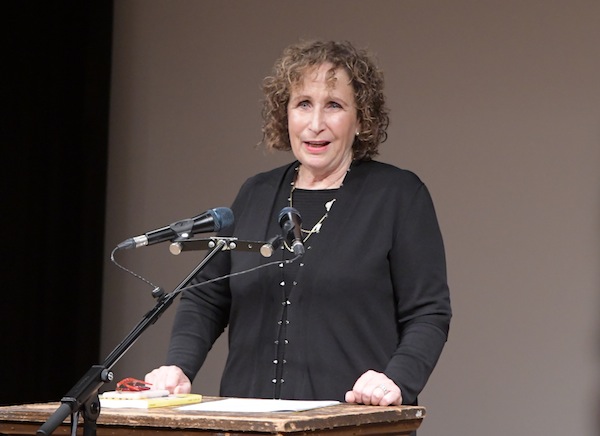
Universities have obligations

My mom left Brooklyn, NY, to attend Cornell University in the early 1960s at age 16. Among other things, women students had nighttime curfews. This type of legal responsibility or intervention, called in loco parentis (in place of a parent), was common, but, by the time my mother graduated, in the mid-1960s, times had changed. Curfews became a thing of the past.

When I got to Cornell in the 1990s, some things were the same. Cornell impressed upon its new students that “actions have consequences” and that “with rights and privileges come responsibilities.” That is, you were privileged to be there. If you did something stupid, you were held responsible. All this hit me while watching North American college campuses’ turmoil since the Oct. 7 Hamas massacre of Israelis.

I have a front row seat to the drama. My husband is a professor in Manitoba. Between the two of us, we have six degrees from five different universities. We’ve got insider knowledge. I watched some of the behaviour on campuses with horror during the first days after the attack, including seeing Dr. Russell Rickford, a Cornell professor, speak of his “exhilaration” in response to Hamas’s actions. I’m not listing all of the concerning antisemitic events that continue to occur at North American universities. We’re all seeing it on social media and the news.

The first good news I read was from an article written by Rob Eshman in the Forward, which covered Dartmouth University’s response. Dartmouth is a small school. Its academic experts on the Middle East collaborated quickly. On Oct. 9, they announced two public teach-ins, with expectations of a small crowd. Hundreds attended, and there were thousands of YouTube views. What’s the primary responsibility of a university? To educate and encourage students to be critical thinkers. Dartmouth rose to the challenge.

There are other universities following this educational approach, with mixed results. Some universities don’t have the academic firepower or the will to provide an appropriately diverse panel of experts. Some attempts have been derailed by harassment or protest. Other institutions have made poor educational efforts by platforming only one side (usually the pro-Hamas/genocide/apartheid side) of the conversation.

Most professors are evaluated for their performance and tenure on several measures: teaching, research and service. To do these aspects of their job, many feel that free speech is essential and that, while the university employs them, the administration may not hamper their speech as it pertains to teaching or research. Since early October, many professors have felt stifled when expressing their political views, particularly when it comes to anti-Israel political rhetoric about the war.

I recently read a Canadian university faculty union’s stance. The document stated all members had a right to academic freedom and free expression and the union would defend that. However, that right comes with “the responsibility to respect the rights and freedoms of others” and “does not confer legal immunity from hate speech and other violations of the law.” It also doesn’t protect a professor from criticism or condemnation from others.

This document reminds academic professionals what I was taught as an undergraduate: actions have consequences, and they must take responsibility for any consequences that may occur.

Many Jewish students are being physically harassed, verbally assaulted and intimidated on college campuses. Some universities are trying to take action. Cornell had a situation where a student made death threats towards Jewish students at the kosher dining hall. The FBI was quickly involved, the student was arrested. Soon after, the president of the university and the New York State governor sat down to eat in that dining hall with students. Rickford, the professor who spoke out about the Hamas attack as an exhilarating sign of liberation, is now on leave.

Other US universities have responded with less force. Some, like George Washington University, suspended student groups who used pro-Hamas rhetoric. Others, for example, MIT, have suspended students who participate in violent or disruptive protest from all non-academic activities. There are efforts to offer antisemitism education and awareness at some universities. Hillel, the Jewish student organization on many American and Canadian campuses, offers support and advocacy for struggling Jewish students.

Universities now also face legal action when they fail to protect Jewish students. The US Department of Education is opening investigations of antisemitism (and Islamophobia) at US schools such as Cornell, Columbia, Cooper Union, University of Pennsylvania and Wellesley College. There’s a lawsuit being brought against McGill in Montreal, with support from B’nai Brith Canada, and the University of British Columbia, York University, Toronto Metropolitan University and Queen’s University have had class action lawsuits filed against them for alleged antisemitic incidents.

Where does this lead? Consider again the notion that actions have consequences. In some widely circulated video clips, university students or professors scream obscenities and tear down posters of kidnapped victims of the Hamas attack. Some cover their faces; others sneer at the camera. Sometimes, a student is seized by regret later and begs others not to post the images. These choices, caught on video and distributed online, may affect students’ careers forever – and I think that’s OK.

Yes, university students are often (but not always) still adolescents. Perhaps, according to the research, their brains are still developing and they have poor impulse control. But they are also adults in our society. These are people who legally drink, drive, vote and fight in wars. These students are old enough to work, marry and have kids. With all these rights and also the privilege of attending university, they have the responsibility to behave appropriately. Think you might be embarrassed to be caught vandalizing posters of missing persons? Don’t do it.

University leadership and professors have an important role to play “in loco parentis.” It appears many have forgotten this. Students attend universities to get an education, to become critical thinkers and to contribute to leading and shaping our future society. They deserve more than “free speech” from their teachers. They need to learn multiple perspectives, history and policy, and that includes understanding nuance.

While most universities no longer impose curfews or other restrictions, professors owe it to their students to be mentors and role models. Professors should be upstanding community members beyond academic research and teaching. They should behave with integrity. The obligation to do service means different things in various academic disciplines, but, in every case, professors shape the next generation’s professionals beyond giving exams and classroom lectures. Teaching students how they should behave, with compassion and respect for others, matters.

Don’t get me wrong, it’s OK to speak out. Academic freedom is important, but universities have an obligation, too. They should expect students to behave with dignity and respect for the law, even when speaking out. Alumni can pressure universities to do better, as can lawsuits.

There’s no “one size fits all” answer. However, we should expect that every student should have access to education without discrimination. All students – Jewish and non-Jewish – deserve nothing less.

Joanne Seiff has written regularly for CBC Manitoba and various Jewish publications. She is the author of three books, including From the Outside In: Jewish Post Columns 2015-2016, a collection of essays available for digital download or as a paperback from Amazon. Check her out on Instagram @yrnspinner or at joanneseiff.blogspot.com.

People helping one another

The author’s husband, Dr. Scott Fields, picking tangerines in southern Israel, on Kibbutz Nitzanim. (photo by Deborah Rubin Fields)

I have just returned from laundry brigade duty. Of course, your first question is, what is the laundry brigade? As you may or may not know, in my city of Jerusalem, as well as in other parts of Israel, the hotels are currently filled with people who, for safety’s sake, have left their homes in southern and northern Israel. These moves have created an unprecedented event in Israel’s history. As one friend from Adamit, a far northern kibbutz pointed out, “We are refugees in our own country.”

In my neighbourhood, as well as in other Jerusalem neighbourhoods, residents are volunteering to clean the clothes of those evacuated to hotels. This help is very organized, with a pool of volunteers listed on an Excel file. So, I just returned the laundered clothes of a young family from the northern town of Shlomi.

And, speaking of clothes, there have been clothing drives to help those who left their homes quickly. Books and games have also been donated so that displaced families have some positive way to occupy their time.

But there are so many other noteworthy acts of goodness. One of our sons and other staff from Kfar Saba’s Meir Hospital recently drove south to the Netivot area to help a farmer pick and box watermelon. The farmer’s usual Thai or Palestinian workers are gone. In their place, hundreds, if not thousands of ordinary citizens are in the fields picking – and this is happening all over the country.

One of our daughters spent a week at Jerusalem’s Bezalel Art School sewing uniforms and add-ons for protective ceramic vests, equipment the soldiers currently need. Sewing machines were even delivered to some kibbutzim so kibbutz members could also help with this task.

While there is enough food for soldiers, some people are still providing extra food. One Jerusalem restaurant owner prepared a meal for 70 soldiers (including his son) serving up north. The food was driven to the soldiers by someone else whose partner is serving with this platoon. In my area, one of my older religious neighbours gave his Pesach dishes to observant soldiers who are staying in a university dorm (camping “in” rather than “out” as it were).

There has been a big emphasis on checking people who live alone or who have mobility issues. Volunteers are helping with shopping, picking up medication, or just visiting these solitary individuals.

During this war period, Jerusalem’s branch of Magen David Adom has held more than one blood drive. Each turnout has been unbelievable, as potential donors stood in line for hours waiting their turn. Moreover, in addition to the sandwiches the MDA staff and volunteers regularly eat on their extended 12-hour shifts, volunteers have been cooking and delivering meals (including vegetarian portions) to the staff.

On the kibbutz where one of our sons lives with his family, each family is responsible for the needs of the 100 evacuees who are currently living on the kibbutz. Yad Sarah, the Israeli nonprofit that loans medical equipment, has offered to loan equipment that the evacuees were unable to take with them. In addition, volunteers have given their time to fix up these temporary living spaces while other locals have organized hazit habayit, drop-off sites where furniture and electronics are collected for those who have had to relocate. Another nonprofit, Tenufa Bakehila, is right now fixing up neglected bomb shelters and repairing homes damaged by rockets.

Other nonprofits have opened their doors to evacuees. The Society for the Protection of Nature in Israel has people lodging in its Eilat Field School. For the past month, it has likewise been providing meals.

All over the country, evacuated children have been enrolled in local schools. Even the National Library of Israel has become involved. It just moved into a beautiful new building, but its old building on Hebrew University’s Givat Ram campus has become a temporary school for children from Shlomi.

There is the story of a small family consisting of two sons and the father. When one son, Sgt. Maj. (Res) Gil Phishitz, was killed on Friday, Nov. 3, the word went out on social media. Thousands of people dropped what they were doing to attend the funeral in Hadera. Out of respect and to show support for the tremendous sacrifice of these fallen soldiers, people who don’t personally know the families have also been visiting during the shiva period.

Israeli farmers employ many Thai citizens. On Oct. 7, some of the Thai farm workers witnessed their co-workers being kidnapped. Some even saw their friends brutally murdered by Hamas. Our younger son, along with other volunteers, has been helping Thai workers find necessary food, lodging and medical care. Volunteers organized counselors and translators to help these people deal with what could easily turn into post-traumatic stress disorder, or PTSD. Volunteers advocated for these Thai workers with the Ministry of Agriculture and with local councils. At this point, many (estimates are 8,000 out of 30,000) Thai farm workers have left Israel.

In some places, acupuncturists and massage therapists are offering free sessions to people who have been evacuated. Several social workers and psychologists continue to give voluntary assistance to those put up in Dead Sea hotels.

Volunteerism is not just with people, it is also with animals. Volunteers have gone to the south to rescue pets and farm animals that were left behind. Veterinarians have provided medical care for injured animals. The rescued animals are now in shelters, awaiting foster homes.

Last, but certainly not least. In the big cities such as Tel Aviv and Jerusalem, many have been showing up at memorial services and vigils for the fallen and the kidnapped.

Why are people doing all these things? I think the best answer comes from Hillel in the Ethics of the Fathers (Pirkei Avot), 1:14: “If I am only for myself, who am I? If not now, when?”

Deborah Rubin Fields is an Israel-based features writer. She is also the author of Take a Peek Inside: A Child’s Guide to Radiology Exams, published in English, Hebrew and Arabic.

Second round of funds to Israel

Jewish Federation of Greater Vancouver has raised $16.3 million to address the crisis in Israel and is currently distributing $2.8 million to support the needs of survivors and evacuees. This distribution is in addition to the $2.1 million already hard at work on the ground in Israel.

As Israel transitions from “emergency mode” to “emergency routine,” citizens nationwide are bracing for what is likely to be a long and challenging period. More than 300,000 Israelis have been displaced from their homes and communities, their lives turned upside down, physically and emotionally. Their needs range from mental health support to temporary burial service (in unbearable numbers) to educational activities to daily necessities and more.

This second release of funds has gone to the following organizations in Israel.

  • Bring Them Back Home: psychological support for the families of those missing and held hostage.
  • Beit Issie Shapiro: treatment and respite for evacuees and survivors with disabilities.
  • Ramat Negev Regional Council: kitchen centres for evacuated communities and mobile shelters for Bedouin schools.
  • Shaar Hanegev Regional Council: respite and treatment for young adults and terror attack survivors.
  • Tel-Hai College: supporting students and alumni through stress and trauma teams and art centres.
  • Mashabim Community Stress Prevention Centre: mental health care for the northern communities.
  • Galila: medical kits for communities of the Eastern Galilee Cluster.

Federation thanks everyone who has contributed to the Israel Emergency Campaign for making these vital and urgent supports possible. If you have not yet had an opportunity to donate, visit jewishvancouver.com/israel-fund.

– Courtesy Jewish Federation of Greater Vancouver

Victoria deli’s new chef

Lox Stock and Bagel’s new chef Lina Fainblum, left, and recently retired chef of 33 years Rose Carr, who will still be involved with the deli’s operations. (photo by Sam Margolis)

In June, Lox, Stock and Bagel deli at the Jewish Community Centre of Victoria was in something of a … well … pickle. A replacement needed to be found for Rose Carr, who had been overseeing the kitchen for 33 years, nearly the entirety of the deli’s existence, and about whom there are not enough superlatives to express her significance to both the local community and the customers the eatery serves.

Confronted with having to search for another chef, the JCCV advertised the vacancy. Many people applied but there was not a good fit, that is, a person who could fully appreciate the haimish (homelike) atmosphere of the deli and commit to staying in the position long term. The deli was forced to close.

Fortunately, the despair loyal patrons had to endure was short-lived, as Lina Fainblum, a member of the community and someone who loves cooking, came along.

“Everyone was thrilled,” said Larry Gontovnick, president of the JCCV. Lox, Stock and Bagel reopened in October, with a Wednesday to Friday schedule. Within three weeks, the deli resumed its original Tuesday to Friday hours.

“From looking pretty bad, it is going to what we wanted,” said Carr, who remains a beloved fixture at Lox, Stock and Bagel. “Lina is a mini miracle. Our prayers were answered.”

Although she has cut down her work in the kitchen, Carr is still on the board of the JCCV and runs the deli. The social aspect of the deli is very important, Gontovnick noted and, in this regard, Carr, who is also known as “Grandma Rose,” is in a class of her own.

“I’m in my third generation at the deli,” she said. “When I started here, people were bringing their little ones. Grandma Rose goes crazy when infants come in. And these kids grow up and come back and then bring in their little ones.

“We also have a lot of seniors who come in and they are treated with respect because we are all seniors,” she added.

When Carr arrived from Los Angeles in 1990, the JCCV at 3636 Shelbourne St. in Victoria’s Cedar Hill neighbourhood was in its fledgling stages, having just opened in June 1988. She introduced herself and has continued in her efforts to bring New York and Los Angeles deli food to Vancouver Islanders ever since.

At that time, the deli was located in a space at the centre that could only accommodate 15 people. Since then, it has expanded to seating 60 and, as Carr says, “many a day, we are full.”

Word of the wonderful dishes – such as knishes and kugel – spread shortly after the deli originally opened more than three decades ago. On one occasion, a group of firefighters came to test the exits of the JCCV. They wound up staying for lunch and told their friends and family, who were also eager to have a delicious and nearby nosh.

“It was recognized fairly early on that the customer base was non-Jews who lived in the area, enjoyed Jewish food and saw this as an affordable offering,” said Gontovnick. “It continues to this day. Most of our clients are non-Jewish. They love the place, the volunteers, the affordability and the quality of the food. It’s second to none. We have had a steady clientele. People come three or four times a week to eat.”

“People love us. They feel at home, they start clearing tables and they have been very generous with donations. They have been incredible accepting us as being Jewish.” added Carr. “After the Hamas attack, people whom we didn’t know would come into the JCC. They didn’t know anyone Jewish but would come to say they were praying for us. We are very well known and well liked in the community.”

As did many other establishments, Lox, Stock and Bagel faced challenges when COVID-19 struck in March 2020. The JCCV, at the time, decided to switch to takeout via the side door of the building. When the weather was balmy, they would set up tables outside.

One lasting result of the pandemic at the deli was the removal of a partition at the JCCV to open up more space and allow people to dine at tables further apart from one another.

Lox, Stock and Bagel, which received its name following a contest in the mid-1990s, serves all the standards one might expect at delis in much larger metropolitan areas: blintzes, matzah ball soup, pastrami on rye, jumbo hot dogs, pickled herring and gefilte fish. For dessert, there is the “Better Than Sex Chocolate Cake,” a favourite at the deli and at local fairs and, according to numerous sources, an item that lives up to its billing.

Lox, Stock and Bagel is open Tuesday to Friday from 11:30 a.m. to 1:30 p.m. From Dec. 5 to 15, it will be the site of Latke Mania. Hundreds of latkes will be prepared on several fryers for all those in the community to have a chance to mark Hanukkah with the traditional savoury treat.

“Our motto is: everyone’s welcome,” said Gontovnick. “This is nice place to come and just have a Jewish experience.”

Sam Margolis has written for the Globe and Mail, the National Post, UPI and MSNBC.

Inspiration to improve world

Jeff L. Lieberman – director, writer and producer of Bella! – with his mother, Carole Lieberman, at the documentary’s July screening in San Francisco. (photo by Pat Mazzera)

“I could feel defeated now / I could be broken-hearted / I could be finished long before I’d even started / But that would be too easy and I never take the easy way.”

In his production notes, Jeff L. Lieberman – director, writer and producer of the award-winning documentary Bella! – rightfully highlights these lyrics from the original song Mark W. Hornburg and Doug Jervey composed specifically for this film about Bella Abzug (1920-1998). Abzug never shied away from a fight and would always come back after a loss.

photo - Vancouver Mayor Ken Sim issued an official proclamation of Oct. 15, 2023, as the opening night of the film Bella! in Canada
Vancouver Mayor Ken Sim issued an official proclamation of Oct. 15, 2023, as the opening night of the film Bella! in Canada. (photo from Re-emerging Films)

Lieberman, who has lived in New York City since 2007, returned to his hometown of Vancouver for the Canadian première of Bella! Oct. 15 at the Park Theatre. The film was presented by the Vancouver Jewish Film Centre and sponsored by Dexter Realty. Ahead of the event, Vancouver Mayor Ken Sim issued an official proclamation of the opening night of the film in Canada. The proclamation recognizes that the documentary “explores the remarkable life and accomplishments of the late Bella Abzug, the trailblazing activist, feminist, congress member, and global advocate for equality.” The proclamation acknowledges that Lieberman grew up in Vancouver and that the idea for the film originated here. It was a suggestion from Carole Lieberman, who had gotten the idea from a neighbour, but more on that later.

For those unfamiliar with Abzug, she was one of only 12 women (of 435 members) to enter Congress in 1971. There, she was instrumental in getting women the right to have credit cards in their own name; she introduced curb cuts that allowed people with disabilities or other mobility issues more freedom of movement; and she brought in the Equality Act, the first federal LGBTQ+ rights legislation in the United States. Other issues about which she was vocal included ending the Vietnam War and supporting the impeachment of Richard Nixon.

Abzug was the first woman to run for the Senate from New York and the first woman to run for mayor of New York City. After she lost both races – in heartbreaking fashion – she took on other challenges, including being one of the leaders of the feminist movement and a co-founder of the Women’s Environment and Development Organization.

“Raised in a community filled with strong Jewish women, Bella Abzug was not a totally unfamiliar name,” writes Lieberman in his director’s notes. “Her orbit filled my 1980s home: the books of Letty Cottin Pogrebin (featured in Bella!) and Anita Diamant lined our bookshelves; we sang the songs of Debbie Friedman; and were proud to see Gloria Steinem (also featured in Bella!) appear on the evening news. However, Bella’s name did not quite push through like it had in other homes throughout the 1970s, when she appeared on magazine covers and became one of the most recognizable faces in Congress – due in part to her trademark branding – her iconic hats.”

Lieberman includes many audio clips of Abzug talking about various things, including her first jobs as a lawyer – she enrolled in law school at Columbia University in 1944, where she was one of six women in a class of 120, and graduated in 1947. She said she would go out to clients on behalf of a firm and be told to sit and wait until “the lawyer” arrived.

“So, I had an identity crisis and, in those days, professional women wore hats,” she says. “So, I put on a pair of gloves and a hat and whenever I appeared anywhere, they then knew I was there for business. I’ve since taken off the gloves, but I grew to like wearing hats and that was merely my way of being me.”

photo - Congresswoman Bella Abzug, in 1979
Congresswoman Bella Abzug, in 1979. (photo from Bernard Gotfryd, Library of Congress)

Bella! captures Abzug’s big personality and her passion for politics and social change. She made an impact on abortion rights, gay rights, equality for women and minorities, climate issues and more. Not understanding how a person who accomplished so much had basically disappeared from public knowledge was one of the reasons Lieberman made the film.

“In 2016, after completing my previous film, The Amazing Nina Simone, I began brainstorming ideas for my next project,” he writes. “My mom came up with a list of documentary ideas that like any well-meaning parent included suggestions that ignored many boundaries of reality. After politely rejecting most of the ideas, I paused when she mentioned Bella Abzug. I liked the idea but was pretty confident that her story had been told many times before. My mom said the idea had come from a neighbour who had met Bella when she visited Vancouver for a climate conference. I didn’t know George Febiger, but spoke to him on the phone and he told me about his very memorable day spent touring the city with Bella, and the many stories and insights that she had shared. He thought Bella’s story was long overdue. After doing some research, I quickly realized a comprehensive documentary film about Bella Abzug had never been done before, and George was not alone in his belief – it was Bella’s time.”

And Lieberman gives Abzug her due. He had access to never-before-shared audio and video footage, of which he and the production team of Re-emerging Films – Jamila C. Fairley, Tamar Kaissar and Amy Wilensky – made brilliant use. The film includes interviews with Abzug’s children and we meet her supportive husband, Martin, who died in 1986, through archival recordings, as well as other Abzug supporters and rivals. The film features interviews with a host of political activist celebrities who worked with and were inspired by Abzug, including Hillary Clinton, David Dinkins, Phil Donahue, Marlo Thomas, Barbra Streisand, Maxine Waters and many others.

Returning to the original song that ends the film, Lieberman writes, “It is easy for any one of us to retreat and be discouraged by the onslaught of overwhelming, bad news. It takes more work to stand up and fight – but less work if we all do it collectively. With the perils of climate change, dismantling of civil rights, and our democracy being challenged by both inside and outside threats, we hope that Bella! inspires a future generation of leaders who will pick up the bullhorn and lead us toward sustainable solutions. And we hope this film inspires everyone to find those small things they can do improve the world and never take the easy way.”

Bella! had its world première this summer in the United States. While there currently are no other screenings planned for Vancouver, the film will be aired on PBS, and will also stream more widely in the coming months. It can be rented to stream at vimeo.com/ondemand/445444. For more information, visit bella1970.com.

Creating a family heirloom

 Book designer Barbi Braude and filmmaker Cory Bretz, both experienced in family history preservation, have launched FamilyMovieStoryBooks.com, to help “do-it-yourself family historians in crafting and publishing compelling family storybooks and producing cherished family movies.” (photo from Barbi Braude)

Irene Jacobson put the months of isolation during the COVID-19 pandemic to good use, researching and publishing the history of her Jewish family’s long settlement in South Africa.

With that ambitious project completed, the retired schoolteacher thought it was time she put together her own story, which began in South Africa and carried on in the United States, where she raised three children and continued her career, after immigrating in 1977.

But, like many people, Jacobson did not feel she could write an autobiography on her own – all that ordering of memories, distinguishing between fact and anecdote, and selecting from photos and documents amassed over the years seemed overwhelming. The technological tools now available to make that task easier and the finished product more professional-looking are not widely known or may seem intimidating to the amateur.

So, Jacobson, who lives in the Chicago area, turned to a new online platform created for people like her by book designer Barbi Braude and filmmaker Cory Bretz of Vancouver, both experienced in family history preservation.

The website FamilyMovieStoryBooks.com, which they launched after a year’s development, is intended to enable anyone to craft an heirloom that they can feel proud to hand down to future generations, say Braude and Bretz.

They believe that telling stories in an appealing and lasting format, whether book, film or both, provides a sense of fulfillment to the author and can inspire their descendants.

photo - A few examples of books about Vancouverites – Ben Dayson, the Nemetz family and Lou Segal – with which FamilyMovieStoryBooks has helped
A few examples of books about Vancouverites – Ben Dayson, the Nemetz family and Lou Segal – with which FamilyMovieStoryBooks has helped. (photo from Barbi Braude)

The platform can serve as a step-by-step guide for those who want to work independently, or Braude and Bretz can arrange to have clients accompanied as much or as little as they want throughout the process.

If someone already has written a draft or taken home videos, they can be polished into a finished product, or the pair will take on the project from the very beginning, doing interviews online and going through possible imagery, shaping the material for the client.

“This innovative website aids do-it-yourself family historians in crafting and publishing compelling family storybooks and producing cherished family movies,” said Bretz. “The platform offers an array of valuable resources, including unwavering support, educational courses, interactive workshops led by experts, and professional design services.” Prospective users can take a free trial, and initial consultation is available without charge.

Jacobson had worked with Braude on her first book. “It’s fabulous. It is about my great-grandparents who went to South Africa with their four adult children, of whom one was my grandmother. We could not go further back than the great-grandparents, so we went forward and did a history book of the four siblings, their lives and descendants.”

The book about the Mierowsky family on her mother’s side, who were from Lithuania, is more than 400 pages long, with numerous photos. A copy was deposited with the Jewish Museum and Archives of British Columbia.

“The book I’m doing now through FamilyMovieStoryBooks is much less complicated and much smaller,” said Jacobson. “It is basically my biography, which I had written over a few years. As I’m older I felt I needed to get it done soon and in a simpler fashion. It’s my memories in chronological order.”

Jacobson (née Albert) was born in Port Elizabeth, a fifth-generation South African on her paternal side. She was a high school teacher there.

She and her husband came to the United States in 1977, where her children were born. Jacobson taught middle-school math and science at Jewish day schools.

“As my mother’s family is in my first book, I am going to have a small chapter, as an addendum, on my father’s family in my biography,” Jacobson said. After her autobiography is finished, she hopes to do a more comprehensive story of her Albert ancestors.

“I’m doing this book for me and my children and grandchildren. I will give copies to two friends I grew up with, as their children might find it interesting,” Jacobson said. “My first book is about how my parents’ generation grew up in South Africa. Mine is about how I grew up in South Africa and then my life in the US. I think everyone should do something for their family, especially if they have an interesting story to tell. Stories should be told, not lost.”

Jacobson chose FamilyMovieStoryBooks because it’s easy and affordable. “Barbi brainstormed a theme, so that helped me organize my thoughts. She also told me how to organize my photos to help me make choosing them easier,” said Jacobson.

“I am not particularly computer literate, but getting everything online has been easy to do. I could not find another place that did the same quality work. I wanted photos and more design. My brother-in-law worked on his memoirs with a ghost writer and it’s very dull with no design or photos. I’m looking forward to seeing the finished product, which is still a few months away, as I do what I can between traveling.

Braude said all communications with Jacobson are done remotely using Zoom for conversations and Google Drive for sharing chapters and images.

“At first I had to tutor Irene on how to use Google Drive. We are always happy to meet clients where their skill sets are computer-wise. We have the patience to empower our clients to use the internet.”

Working on the design remotely is fairly straightforward, said Braude, who employs the user-friendly Adobe Cloud for proofing feedback. FamilyMovieStoryBooks aims to serve people worldwide.

photo - A peek inside the book about Ben Dayson shows what FamilyMovieStoryBooks can do
A peek inside the book about Ben Dayson shows what FamilyMovieStoryBooks can do. (photo from Barbi Braude)

Clients receive a high-quality hardcover book with glossy pages that reproduce photos and documents like birth certificates, immigration papers and letters in the best definition.

The movies directed by Bretz have the advantage of preserving the living presence and voice of the storyteller, he said. “It’s surprising how little people at shivas know about their deceased relative.”

Distance has not precluded close collaboration, both Jacobson and Braude attest. “A wonderful relationship does form between FamilyMovieStoryBooks and our clients,” said Braude, who is also currently designing a book for a Vancouver family. “The story is a collaboration between a 90-year-old Holocaust survivor and her daughter. The daughter said to me the other day, ‘What am I going to do when we complete this project? I have so enjoyed working with you as much as seeing my mom’s story come to life.’”

Asked if the platform can be especially valuable to Jewish families in general, Braude replied, “Absolutely! I’m reminded of a quote by Sue Monk Kidd from her book The Secret Life of Bees. It goes like this: ‘Stories have to be told or they die, and when they die, we can’t remember who we are or why we’re here.’

“Jews have lived in challenging times. We are the sum of our family legacy and life’s experiences. What better gift to give to future generations than the stories that made their families who they are,” said Braude.

Bretz commented that such a meaningful experience is “a testament to the power of bridging generations through the art of storytelling.” The FamilyMovieStoryBooks platform shares publishing and cinematic know-how with the general public that can transform what might be soon-forgotten family lore into a cherished artifact, he said. Along the way, family members wherever they are can bond and share a laugh or tear while exploring their common heritage, made possible through an innovative digital environment.

Janice Arnold is a freelance writer living in Summerland, BC.

Genealogy a great motivator

On Nov. 5, Dr. Joshua Grayson, a genealogist specializing in Jewish families from Central and Eastern Europe, was the lead-off speaker for the 2023-24 L’dor V’dor (Generation to Generation) lecture series on Zoom, organized by Victoria’s Kolot Mayim Reform Temple.

Grayson is the founder of Lost Roots Family History, a website, virtual museum and research service devoted to helping Jewish families reconnect with their roots, discover their past, engage with the present and preserve their heritage for the future.

Titled In Search of Lost Roots, Grayson’s talk elaborated on how he was able to trace his family history across three-and-a-half centuries, or 10 generations, to approximately 1650. Proficient in many historical scripts, he has conducted genealogical research in German, Russian, Polish, Hebrew, Yiddish, French and Spanish.

“There’s truly an astonishing amount of information out there,” Grayson said. “With a combination of computer research, language skills, a lot of perseverance and just the right amount of luck, the depth of information you can find about your family history can be simply astounding.”

photo - Dr. Joshua Grayson, founder of Lost Roots Family History, launched this season’s L’dor V’dor lecture series, organized by Victoria’s Kolot Mayim Reform Temple
Dr. Joshua Grayson, founder of Lost Roots Family History, launched this season’s L’dor V’dor lecture series, organized by Victoria’s Kolot Mayim Reform Temple. (photo from Kolot Mayim)

Grayson’s interest in family history started at a young age, when visiting his grandparents’ home and being captivated by a photo at the bottom of their staircase. Taken in 1904, it depicted his grandfather’s grandparents and the first five of their 10 children, including his great-grandmother at the age of 11.

“To my childish imagination, I was sure I could almost feel their presence looking over me and their other descendants. At times like these, I would muse at how my close connection with my grandfather was similar to his connection with the people in this photograph. And so on down the unbroken chain of time,” he said.

As a child, Grayson remembers, he was fascinated by the notion of all the people to whom a person could be related.

He recounted later honing his research skills at the University of Southern California, where he earned a PhD in historical musicology – skills, he said, that are particularly well suited to genealogy. They include gathering historical evidence, evaluating sources and communicating ideas.

When he typed in the name of one of section of his ancestry, Penzias, into a database on the Gesher Galicia website, Grayson said, “I quickly discovered records from as early as 1805 because our family name happens to be unique. I felt fairly sure that these were long forgotten family members.”

He said, “These databases allowed me to accomplish in just a few minutes what would otherwise have taken months or years of digging through archives, scanning old record books or microfilms one record at a time.”

As a side note, Grayson stressed that creativity with spelling can be helpful, as names were not written in a standardized way until much later into the 19th century and even into the early 20th century. Although most databases use technology to automatically include names that are spelled in similar ways, the technology is not perfect.

The Zoom lecture brought to light the remarkable and inventive methods of deduction Grayson employed to ascertain his own ancestry – from an egg merchant to a Cubist painter – and the sorts of investigations he performs to uncover the family histories of those who request his services, all while conveying an infectious enthusiasm for Jewish genealogy.

As an example of his research, Grayson spoke about a client who knew nothing of her family history other than her father was from Lublin and lost his entire family in the Holocaust. Grayson was able to trace the client’s father’s family back to 1750 and followed her family members as they moved around rural Poland and to Lublin in the 1880s. He discovered relatives who fought against the Nazis with the underground resistance and, ultimately, connected her with previously unknown family members on five continents.

Grayson is currently in the final stages of constructing a text database of the names of people buried in the Old Jewish Cemetery in Prague. The database is based on two 19th-century efforts to preserve names on the tombstones, one of which was published in a book in 1880 and the other of which appears on the website of the Jewish Museum in Prague.

Commissioned by E. Randol Schoenberg, the former president of Holocaust Museum LA, formerly the Los Angeles Museum of the Holocaust, Grayson’s database will cover the names, death dates and, in some cases, biographical details of approximately 15,000 Jews who died in Prague between 1437 and 1787.

“In my experience,” said Grayson, “I’ve found that finding out about family history can be a great way to get people more involved in Judaism. Understanding where we came from and the historical forces that shaped our own families can be a powerful motivator to exploring our Jewish identity.”

For more information about Grayson and his work, visit lostrootsfamilyhistory.com.

Kolot Mayim’s next Zoom speaker will be Dr. Jennifer Caplan, associate professor and chair of Judaic studies at the University of Cincinnati and author of Funny, You Don’t Look Funny. Her talk – titled Jewish Humour from the Silent Generation to Millennials – will take place on Dec. 3, at 11 a.m. To register, and for the full lineup of speakers, visit kolotmayimreformtemple.com.

 Sam Margolis has written for the Globe and Mail, the National Post, UPI and MSNBC.

Studio 58 presents 1933 play

Left to right, Caylen Creative, Michelle Avila Navarro and Terrence Zhou co-star in Studio 58’s production of Blood Wedding. (photo by Emily Cooper)

Studio 58, the professional theatre training program at snəw̓eyəɬ leləm̓ Langara College, brings flamenco dance to the stage with Federico García Lorca’s Blood Wedding Nov. 23-Dec. 3.

Recognized for his surreal and socialist works, Lorca’s Blood Wedding is a tragedy of love, repression and duty. Set in rural Spain, a bride is torn between her fiancé and her former lover, and must balance feuds between the families. Blood Wedding is a poetic play that explores the isolation of loyalty versus personal freedom.

“Federico García Lorca’s Blood Wedding premièred in 1933, three years before he was assassinated by the fascists during the Spanish Civil War for being a socialist and a gay man,” explains director Carmen Aguirre in the press release. “This play is about forbidden love, resistance to oppressive societal norms and a foreshadowing of the war. I have set the play in an Andalucian bar on the eve of that war, where a group of flamenco dancers, musicians, actors and cantaores tell us this tragic story.”

The Studio 58 production creative team includes lighting designer Itai Erdal, who is a member of the Jewish community.

Blood Wedding will have 3 p.m. and 7:30 p.m. showtimes. New this season will be a relaxed performance, on Dec. 2, 3 p.m. The show is at Studio 58 at Langara College, 100 West 49th Ave. Tickets (from $10) are available at studio58.ca.

– Courtesy Studio 58

Double book launch

image - Ukrainian Portraits book coverJoin writer Marina Sonkina in celebrating the release of her two new books: Ukrainian Portraits: Diaries from the Border and Rupture and Other Stories. About Ukrainian Portraits, she writes: “At the end of March of 2022, I traveled to the Ukrainian-Polish border to volunteer at a refugee evacuation centre. Much as I tried to prepare myself psychologically, what I encountered face-to-face didn’t fit any of my expectations: I saw a disaster on a massive scale. I went to volunteer as someone who speaks Russian, Ukrainian and other languages; someone who had been a refugee herself.

image - Rupture book coverI soon realized that what the Ukrainian refugees needed most (apart from practical advice) was to talk about their experiences. They needed to be heard.”

The double book launch takes place Sunday, Dec. 10, 1:30 p.m., in the Aceman Seniors Lounge at the Jewish Community Centre of Greater Vancouver. Nibbles and light refreshments will be provided.

– Courtesy Marina Sonkina

Art that makes people think

Domitille Martin in Pli, part of the PuSh International Performing Arts Festival, which runs Jan. 18 to Feb. 4. (photo by Lucie Brosset)

PuSh International Performing Arts Festival returns to Vancouver Jan. 18-Feb. 4. The mid-winter event that delivers innovative, contemporary works asks the questions, “Can a live art festival be a ritual for social change? A cultural strategy? A means to rethink history while imagining possible futures?” Participating artists include Jewish community members and a production presented with Chutzpah! Festival.

Vancouver’s Vanessa Goodman (Action at a Distance) is co-creator with Tangaj Collective (Simona Deaconescu, from Romania, and Gaby Saranouffi, from Madagascar) of BLOT, Body Line of Thought: “Our bodies are strong and fragile. BLOT redefines how we see our physical selves and their relationship to the world. In a stark set reminiscent of a science lab, two dancers observe the intricacies of the body and using salt, microbiome and physiology demonstrate how interconnected we truly are.”

BLOT will be presented Jan. 22-23, 7:30 p.m., at Left of Main, with a post-show talkback after the Jan. 22 production.

PuSh, with SFU Woodward’s Cultural Programs & Touchstone Theatre, presents Toronto-based theatre company Human Cargo’s The Runner, Jan. 24-26, 7:30 p.m., at SFU Goldcorp Centre for the Arts. The play description reads: “When Jacob, an Orthodox Jew, makes a split-second decision of who to help, his world comes crashing down. Urgent, visceral and complex, The Runner invites us into a nuanced exploration of our shared humanity and the value of kindness.”

In Pli, by France’s Les Nouvelles Subsistances (Inbal Ben Haim, Domitille Martin and Alexis Mérat), “paper becomes a playground. This visually stunning, philosophical work considers risk and transformation, as told through a circus artist moving through a set made entirely of paper – like a vast, changing sculpture. The relationship between body and paper offers a new conversation about the relationship between strength and vulnerability.”

Presented with Chutzpah! Festival, the circus/dance Pli runs Feb. 2-3, 7:30 p.m., at Vancouver Playhouse and Feb. 2-4 online.

In all, PuSh features 17 original works from 15 countries, including four world premières and seven Canadian debuts. The works presented offer personal accounts of resistance and acts of vulnerability, and push us to examine our relationship to themes such as migration, displacement, labour, injustice and artificial intelligence.

Events include Club PuSh, a casual atmosphere where people can connect with artists and party with fellow festival-goers; the PuSh Industry Series, which, in partnership with Talking Stick, stimulates dialogue with attendees during the second week of the festival; youth programming for participants aged 16 to 24; and, in partnership with Playwrights Theatre Centre, free artistic consultations with visiting dramaturgs representing diverse artistic points of view and cultural contexts.

Tickets for PuSh range from $16.75 to $39, with a top-tier seating option of $69 for Pli at the Playhouse, and PuSh passes for people who want to see multiple shows. To buy tickets, visit pushfestival.ca or call the festival audience services line at 604-449-6000.

– Courtesy PuSh International Performing Arts Festival