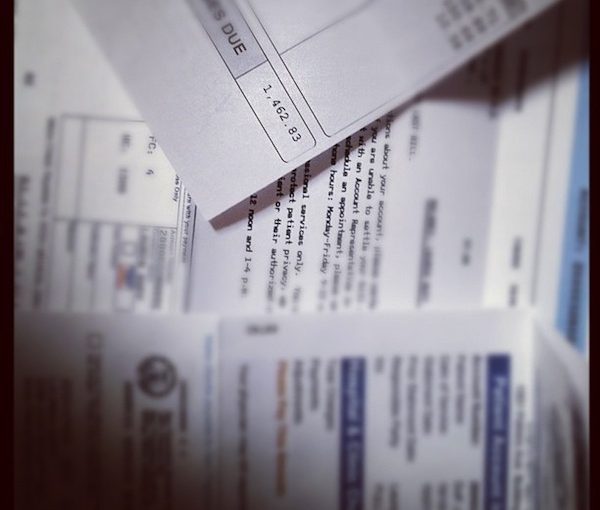
What if critical illness strikes?

(photo from flickr)

We all wonder and fear what would happen if we were diagnosed with one of many critical illnesses or suffered a heart attack or stroke.

You work hard to achieve personal and financial goals during your lifetime. Your plan is working and you have accumulated savings and investments, using tax-efficient investment strategies such as your registered retirement savings plan (RRSP). If you have to sell investments prematurely or stop investing in order to manage recovery costs, your future plans may never recover. So what should you do?

The survival rate of these critical illnesses has risen over the years and we are now most likely going to survive “the big one.” In Canada, these are the statistics: 63% likelihood of surviving at least five years after a cancer diagnosis, 90% will survive a heart attack, and there is an 80% survival rate after a stroke and hospitalization.

Here’s the problem

The issue is that there are significant costs associated with the treatment and recovery from such an illness. There can be large medical bills that are not covered by our various healthcare plans. In Canada, many will want to pursue treatments offered by private clinics at home or abroad, which can be extremely costly.

In addition to these costs, we often neglect to consider the other realities that people face, such as not being able to work. The most obvious is the loss of income suffered when one cannot work or run the family business or professional practice for an extended period of time. This might also affect the income of the spouse and other family members, those who are needed to provide home care.

What are the options?

To deal with the unexpected costs and loss of family income there are really two choices:

  1. One may choose to self-insure, meaning that one accepts the risks and has put money aside to cover the eventuality, or
  2. One may purchase critical illness insurance, which provides a lump sum after one is diagnosed with one of the critical illnesses covered in the policy.

The options in more detail

Removing the costs and lost income from one’s financial plan is a considerable setback to the financial plan. The projected retirement income is suddenly reduced and, for most people, it will never be made up. The impact is even greater if one is forced to withdraw from RRSP accounts, as these amounts are fully taxable as income.

As an example, if one needed to cover $100,000 of costs and had to withdraw it from a RRSP account, at a marginal tax rate of 50%, the person would have to withdraw $200,000 of savings intended for retirement.

The eventual impact on one’s projected retirement must be considered carefully, taking into account the income tax issues based on the source of funds, plus the loss of compounding that will no longer be enjoyed on the growth of those funds from the time of the critical illness until the time one planned to retire.

Suffice it to say, the decision to self-insure needs to be taken very seriously. Unfortunately, there are statistics that reaffirm the risks of falling ill with a critical illness are significant.

Critical illness insurance is sometimes referred to as “new insurance,” as it is a newer solution than traditional life insurance. In the past, before the many medical advancements we have enjoyed, life insurance was the solution because it was more rare to survive the illnesses.

Critical illness policies are designed to pay out a lump sum, say $100,000, typically 30 days after the diagnosis. The illnesses are defined and one can purchase a basic plan that covers heart, stroke and cancer, or the more comprehensive plans that have up to 25 covered conditions and include long-term-care insurance as well.

As of the end of 2019, one major life insurance company reported the following statistics:

  • It has paid out $520 million on 5,360 claims. In 2019, 67% were for cancer, 13% for heart attack, four percent for strokes and the remainder for coronary bypass, multiple sclerosis and other illnesses. The average age of claimants was 53 for women and 55 for men.

The lump sums paid out are used to cover medical costs, replace lost income, retire debt such as loans and mortgages, cover salaries within a business and often pay for time off and bucket list-type vacations.

There are programs available where, if one has been fortunate enough to not have made a claim, in other words, not have fallen ill with a critical illness, the policy can be canceled and all the premiums refunded. The only cost, in that case, is the time value of money on the premiums, as 100% is refunded.

It is even possible to model such a plan where one uses funds earmarked for a RRSP contribution to cover the premiums. This is more effective than one might first think, as the refund of premiums is tax-free.

The first step is to identify and understand the risks to one’s retirement plan. The second step is to consult a qualified professional to consider what protection works best for you.

Philip Levinson, CPA, CA, is an associate at ZLC Financial, a boutique financial services firm that has served the Vancouver community for more than 70 years. Each individual’s needs are unique and warrant a customized solution. Should you have any questions about the information in this article, he can be reached at 604-688-7208 or plevinson@zlc.net.

***

Sources: Manulife Insurance – Critical Illness: Asset Protection: Keep Your Retirement Savings for the Future, and Critical Illness: Retirement Protection Handbook.

Disclaimer: This information is designed to educate and inform you of strategies and products currently available. The views (including any recommendations) expressed in this commentary are those of the author alone and are not necessarily those of ZLC Financial. This information is not to be construed as investment advice. It is for educational or information purposes only. It is not intended to provide legal, taxation or account advice; as each situation is different, please seek advice based on your specific circumstance. This commentary is not in any respect to be construed as an offer to sell or the solicitation of an offer to buy any securities.
Contemplating walls

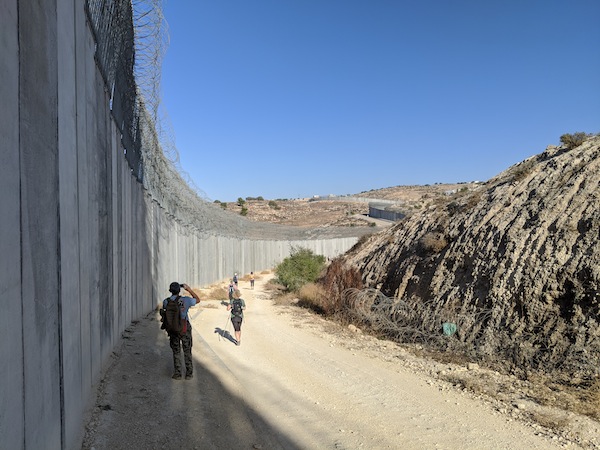
The separation wall, Bayt Mirsim. (photo by Kevin Keystone)

In this three-part series, the author recounts some of his experiences on Masar Ibrahim Al-Khalil, the Path of Abraham the Friend, in the West Bank, which he visited in 2019. The articles have been adapted from a few of the letters he wrote home to family. The events and people described are real but, for reasons of privacy, the names are fictitious. To read Part 1, click here; for Part 2, click here.

Today was our last day on the trail. After many late nights of parlour games, beers and anticipation, we were tired. One of our fellow hikers, Felix, had to stop periodically: the soles of his shoes had worn through, he could feel the tiny stones biting underneath. Uncharacteristically, he was in pain, but he muscled through.

We descended into a valley, dotted with pale green brush, reminiscent of our first days on the trail. The valley opened into expansive views of olive groves, steppes cut into the hills, tidy rows of trees buttressed by stone walls. It could have been Tuscany but was the Middle East, with a warm breeze and soft, popcorn-shaped clouds overhead.

Admiring the scenery, I thought of what lay ahead. I would be spending tonight in Jerusalem. It was a place I hadn’t been since my Birthright trip eight years ago. My rabbi had once invited me on a congregational tour of Israel, in recognition of my service to the synagogue, but I turned it down. A friend rightly pointed out that, as an Arab Muslim, he couldn’t visit the Holy Land as readily as I could. In solidarity, he suggested I shouldn’t go. That seemed fair, so I didn’t. But here I was, so close to Jerusalem and the Wailing Wall. How could I not go?

* * *

It was a hot day on my Birthright tour. We weaved our way through the Old City, through its various souks and alleyways, to arrive at a platform high above the Wailing Wall plaza. Our guides wanted us to see it there first for a clear, unobstructed view. It wasn’t busy, just another day in Jerusalem at the Wall and the holiest site in Judaism. The wide-open plaza was sleek and clean, the great stone wall standing pink and golden.

We descended towards it, and I could feel the heat. I was dehydrated and a bit dizzy. Our guides released us and we ambled forward, dazed, in the wall’s general direction. A man stopped me and asked if I wanted to put on a prayer shawl. I did. He asked me if I wanted to lay tefillin. I had never done it before. He helped me. “Repeat after me,” he said. “Baruch atah Adonai …” as he wrapped the leather band around my forearm.

Prepared, I approached, pulled in by the wall’s gravity. I slipped off my sandals to stand on the ground with my bare feet. I pressed my hand to the mottled stone and closed my eyes. “Baruch atah Adonai,” I began. Strangely, I felt both heavy and light, a yearning and also a surrender. I said the Avot v’Imahot, the prayer that recognizes our descent from Abraham and Sarah, tracing us back through the generations. I didn’t know, then, how important that moment and that prayer would be.

When I was finished, I slipped on my sandals and stepped away.

* * *

“This might be the most beautiful day on the trail,” said Jane, a soft-spoken homeopath, a Mancunian and longtime friend of fellow hikers Eve and Oliver. Her husband George was in business software. He regularly meditated.

She was right. I was worn out but had to agree. It was beautiful. Picturesque, even. Idyllic. We pulled over, as we had during our first week, to have coffee with olive harvesters and help them rake the trees. A young mother with her toddler, husband and parents: harvesting is so often a family affair. Hospitable as ever, much coffee and tea was poured and drank, olives collected, tobacco rolled, puffed and exchanged. We waved our goodbyes – shukran, aleykum salaam – and continued on.

A stretch of valley gave off onto a final stretch of orchards and, as I clambered over the low stones, I looked up and saw the separation wall. From a distance, the 25-foot concrete wall, scrawled with barbed wire, rose through the canopy of the trees. Hesitatingly, I walked towards it, tracing its contour in my mind. In some parts of the West Bank, the barrier is composed of giant slabs of concrete dotted with military towers; in others, it is coiling pyramids of barbed wire or electrified fence bordered by wide swaths of sand to detect trespassers. Here, it is rebar and cement, two-and-a-half storeys high, and cuts through olive groves and the hills around it. I pressed my hand to it; it was cold and abraiding. I closed my eyes and said a prayer for a future without it.

photo - Dawn at the Dead Sea
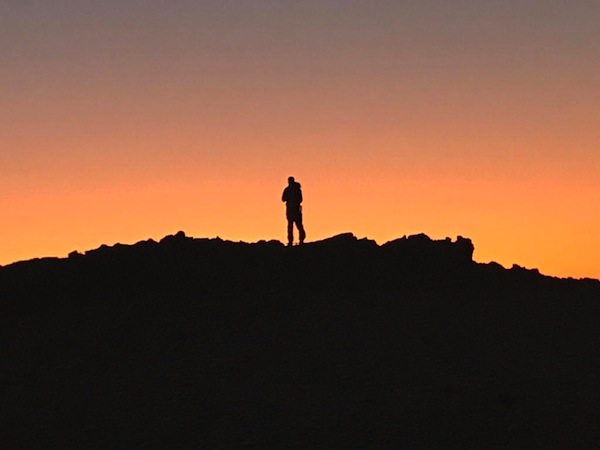
Dawn at the Dead Sea. (photo from Kevin Keystone)

* * *

Compared to the West Bank, downtown Jerusalem feels like another planet. I spent that night in a small apartment hotel off Jaffa Street, a few blocks from the Old City. It was a one-bedroom suite with a fully equipped kitchen and three-piece bathroom. The water was hot, the shower had walls and a showerhead, and I could drink the water. It was unlike many nights on the Masar.

Jaffa Street reminded me of places like Vienna or Vancouver: the pavement was so clean you could eat off of it. The pedestrian walkways alongside were spacious and wide, paved with smooth and even slate-gray tiles. The streetcars were sleek and punctual. Art galleries and museums, ornamental lights and public transportation, urban and urbane. First world versus developing; moneyed versus struggling. The contrast was deeply uncomfortable.

My friend Marta and I wound our way through the narrow, dreamlike alleyways of Nakhalat Tziyon, the walls lined with thick slabs of golden Jerusalem stone. A playful breeze danced through the trees. We stopped for lunch at a picturesque café, complete with colourful outdoor seating and painfully handsome servers. The food was delicious and expensive; we ordered hummus that came with falafel and sweet lemonade.

“How is this real?” I asked her.

“I know,” she said. “It’s shocking.”

After lunch, I returned to the place I had been many years before. I followed the signs in the Old City, the pull magnetic, feeling a mix of dread and anticipation. I saw it first as before, from above, the top of the staircase leading down to the Kotel.

Few tourists were out today, just the heat and people praying. Orthodox tradition dictates separating the genders; indeed, on the women’s side, a fraction the size of the men’s, Torah scrolls are still officially prohibited. Today, the women’s side was packed, the men’s side dotted with the odd worshipper. At the tefillin tent, an old man shawled me in his tallit. A red-headed, black-hat wearing Charedi named Isaac helped me with the tefillin. He looked about my age, or a few years younger. In another life, I wondered, would I have been him?

“Did you do this yourself?” he asked, pointing to the forearm I had already bound.

“I did,” I said. For a month, in the intervening years, I had done it every morning. “I just can’t remember how to do the hand part.”

“I can help,” he said. Isaac said many things: about God, what God wanted, the prayers I could say at the Wall. “Sometimes, you might feel like the worst Jew ever,” he said. I didn’t. I never felt that way. I wasn’t a “good Jew” or a “bad Jew,” I was just Jewish.

“Say a prayer for all your loved ones, then say a prayer for yourself,” he said. “Then maybe you’ll say a prayer for me, too.”

Blocks of stone peppered with bits of paper: the wall hadn’t changed, but I had. I pressed my hand to it, feeling its soft, pockmarked face, and closed my eyes.

* * *

I’m home now, in Canada, and wonder about my travels. I came back “with eyes wide open,” as my rabbi had prayed: to the painful, joy-filled and resilient lives of the Palestinians I met. I think about the separation wall and the Kotel, how they’re connected and what it meant to pray at them, different but related prayers. If the Wailing Wall is part of us as Jews, then perhaps its future and our spiritual liberation is bound together with the separation wall. Perhaps the Kotel will never truly be honoured until we bring down the separation wall. As I contemplate the stories of our freedom from bondage, I’m reminded of the idea that our liberation, spiritual and otherwise, is bound up with the liberation of others.

Kevin Keystone is a Toronto-based freelance writer, editor and researcher. When not hiking long-distance trails, he can be found reading, spending time with friends and family, or with his beloved partner, Aaron. His writing has been published in the Literary Review of Canada, the Jewish Independent and Good Old Boat. For this series, he thanks the guides and staff of Siraj (the Masar Ibrahim Thru-Hike tour operator), the host families and locals he met along the way and his fellow hikers, as well as friend and editor Matt O’Grady.


Israel on lockdown

(photo from Ashernet)

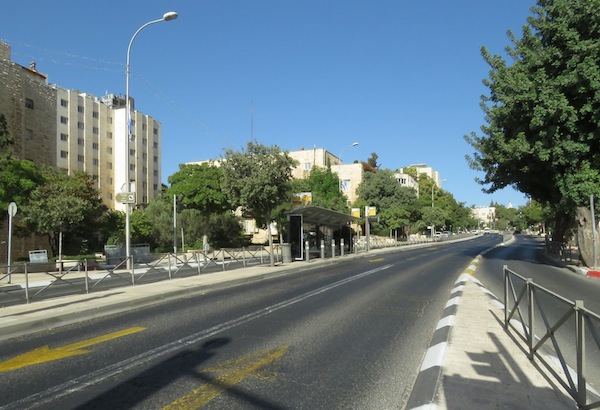
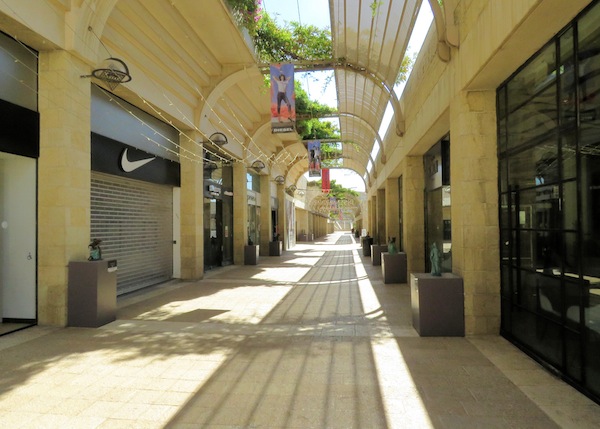
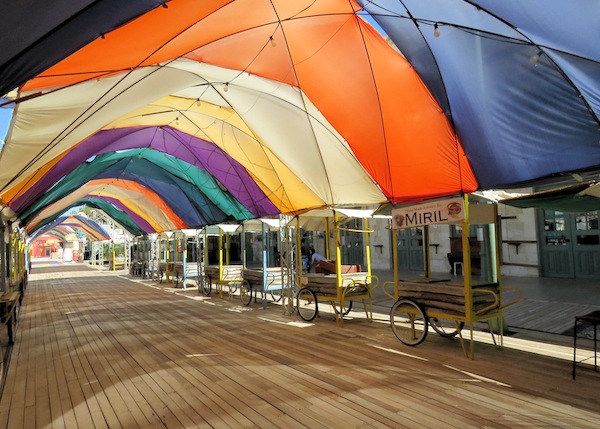
Jerusalem on erev Sukkot, Oct. 2: Keren Hayesod Street (above), the Mamilla open-air mall and the First Station complex (both below). Normally, these places are full of people, especially the day before a holiday. However, for the foreseeable future, Israel is on a total lockdown – the country has one of the highest per capita COVID-19 infection rates in the world. Traffic around the country and in the cities has been exceptionally light, as people are only allowed to travel to essential work or to buy necessities at supermarkets and drugstores.

photo - The Mamilla open-air mall
The Mamilla open-air mall (photo from Ashernet)
photo - The First Station complex
The First Station complex (photo from Ashernet)

הימורים לא חוקיים באונטריו

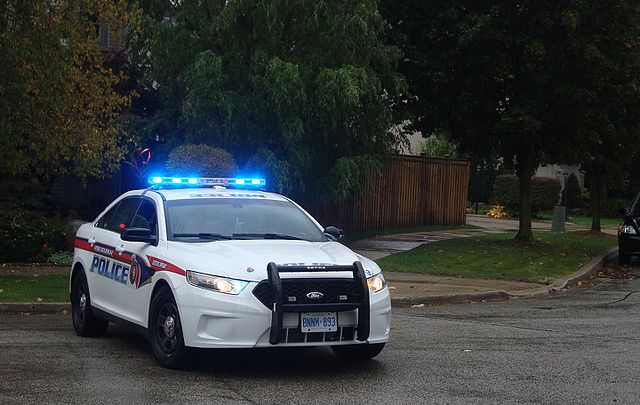
(Wikimedia)

סגירת בתי הקזינו באזור מחוז אונטריו הגבירה את משמעותית את מאמצי העבריינים באזור להגדיל את חלקם בהכנסות מהימורים לא חוקיים. משטרת יורק ניהלה זה חודשים חקירה מסועפת ומסובכת אחר המתחרש בווילה מפוארת באזור מרקהאם שמצפון לטורונטו. זאת לאחר שנתקבל מידע על קזינו מחתרתי שפעל במקלט של הבית המפואר, כאשר סכומי כסף גבוהים מאוד עוברים מיד ליד. התקבל גם מידע על כלי נשק שמוחזקים במקום, כמו גם אלכוהול רב וקרוב לוודאי שגם נערות ליווי הועסקו בשירות לאורחים המהמרים.

במשטרה העניקו עדיפות לחקירה של הקזינו הבלתי חוקי, כרגיל כמו בכל אירוע בנושא פשע מאורגן. חלק מחקירת המשטרה המתמשכת כלל שימוש באמצעים טכנולוגיים כולל מעקב באמצעות כלי טיס מהאוויר. זאת עד שהוחלט שהגיע הזמן לפשוט על הווילה המפוארת. במבצע השתתפו עשרות שוטרים ובלשים מיחידות שונות של המשטרה. שווי הווילה נאמד בכתשעה מיליון דולר והיא מתפרשת על פני כעשרים אלף סווקר פיט.

חוקרים ביחידות אכיפת הפשע המאורגנת של משטרת יורק בהם היחידה למודיעין והיחידה לטיפול בנשק, כנופיות ואכיפת סמים, פשטו על הבית המפואר לאחר שקיבלו צו חיפוש מבית המשפט, בו פעלו לכאורה כקזינו וספא בלתי חוקיים. המשטרה תפסה בפשיטה אחד עשר כלי נשק ולמעלה ממיליון דולר במזומן.

בחודש המאי השנה, יחידת המודיעין האזורית של יורק והיחידה לטיפול בנשק, כנופיות וסמים החלו בחקירה סביב קיום משחקים לא חוקיים, בעיקר בתקופת הקוויד. זאת לאחר שהמשטרה קיבלה מידע בדבר בתי קזינו תת-קרקעיים שפועלים באזור מרקהאם.

בראשית חודש יולי השנה החוקרים ערכו פשיטה לאחר שקיבלו צו חיפוש מבית המשפט על חנות שממוקמת בשדרת מידלנד במרקהאם. בחנות התנהלה פעילות של משחקי מזל לא חוקים. נתפסו שולחנות משחק, מכונות מזל וידיאו ויותר מעשרים אלף דולר דולר. חמישה אנשים ששהו במקום נעצרו.

בשבועות האחרונים יחידות שונות במשטרת יורק, בסיוע צוותים טקטיים ממשטרת מחוז אונטריו ושירות המשטרה האזורית דורהאם, קיימו מעקבים הדוקים על הבית המפואר (שנמצא ליד שדרות מקנזי). לאחר שהתקבל אישור מבית המשפט לצו חיפוש, פשטו השוטרים על הווילה ומצאו שבמקלט שלה פעל קזינו בלתי חוקי ברמה גבוהה. שלושים ושנים אנשים חשודים נעצרו במקום. לאחר חיפוש נרחב בווילה נתפסו אחד עשר כלי נשק עם תחמושת רבה, יחד עם יותר ממיליון דולר במזומן, מכונות משחק ושולחנות. וכן למעלה ממיליון וחצי בקבוקי אלכוהול. האחוזה נסגרה ונאטמה לחלוטין על ידי השוטרים.

חוקרי המשטרה הספיקו עוד לפשוט על בית מגורים באזור וודלנד שבעיר ווהאן לאחר שהתקבל אישור מבית המשפט לצו החיפוש. נמצאו עדויות לפעילות של משחקים לא חוקיים במקום, שלושה אנשים נעצרו ונתפסו למעלה משבעים אלף דולר.

במשטרה מציינים כי הפשיטות שביצעו הן משמעותיות, אך אלה הן רק תחילת המאמצים לפרוק קבוצות פשע מאורגנות, שמפעילות משחקים לא חוקיים באזור יורק. לדברי החוקרים הכסף שעובר בבתי קזינו מחתרתיים אלה מוביל לרווחים עצומים של עבריינים, שמממנים מיזמים אחרים כמו זנות וסחר בסמים. הימורים בלתי חוקיים אלה, גורמים גם לאלימות נשק, מעשי שוד מזויפים, חטיפות, סחיטה באיומים ועוד. המשטרה תמשיך להתמקד בפשע מאורגן באזור יורק ותשתמש בכל כלי העומד לרשותה, כולל חשבונאות משפטית, בכדי להבטיח כי פושעים אלו יישאו באחריות.

בכל החקירות השנה נעצרו עד כה ארבעים וחמישה איש כאשר שלושים ושלושה מהם, הואשמו ביותר משבעים עבירות פליליות.