Add holiday sweetness

When my husband opened the package with Modern Jewish Cooking: Recipes and Customs for Today’s Kitchen by Leah Koenig (Chronicle Books, 2015) in it, he remarked, “This one you’re going to like!” And he was right.

Koenig is a writer and the author of The Hadassah Everyday Cookbook. When she is not living in Brooklyn, she is traveling around the country leading cooking demonstrations. Her philosophy is keeping a “loving eye on tradition … infusing history with … a sense of innovation … making the Jewish kitchen vibrant, exciting and ever-evolving.” She has written Modern Jewish Cooking “for the next generation of Jewish cooks.”

image - Modern Jewish Cooking book coverAfter an introduction on Jewish cuisine and keeping kosher, Koenig suggests how you should stock your kitchen and provides some how-tos. Then, she dives in with 11 chapters, from breakfast to dinner and desserts – 167 recipes – plus holiday essays and menus. These are enhanced by 57 color photographs and 11 essays. As well, Koenig includes all three elements I love in a cookbook: anecdotes or stories about each recipe, ingredients in bold or standing out in some way, and numbered directions.

The subtitle is “Recipes and Customs for Today’s Kitchen.” This is exhibited in the recipes’ wide variety of origins, including North Africa, Spain, Eastern Europe (including Ashkenazi), Ethiopia, Hungary, Italy, Germany, Bukharia, Romania, Egypt, Israel, Sweden, Iraq, Persia and the Mediterranean. For Rosh Hashana, I highlight three of Koenig’s recipes:

APPLE AND HONEY GRANOLA
(six to eight servings, suggested for an Ashkenazi menu)

1/3 cup honey
1/4 cup vegetable oil
2 tbsp light brown sugar
2 tsp ground cinnamon
1 tsp ground ginger
1/2 tsp kosher salt
2 1/2 cups old-fashioned rolled oats
1 cup roughly chopped walnuts
1/2 cup roughly chopped unsalted almonds
1 cup chopped dried apples
1/2 cup golden raisins

  1. Preheat oven to 375˚F. Line a large rimmed cookie sheet with parchment paper.
  2. Whisk together the honey, vegetable oil, brown sugar, cinnamon, ginger and salt in a small bowl.
  3. Combine the oats, walnuts and almonds in a large bowl. Drizzle with the honey mixture and stir to completely coat.
  4. Spread the granola on the prepared baking sheet. Bake, stirring occasionally until deep golden brown and tasty smelling, 20-25 minutes.
  5. Remove the baking sheet from the oven, add the apples and raisins and stir to combine. Set the baking sheet on a wire rack to cool completely. Store in an airtight container for up to one week.

 
RED WINE AND HONEY BRISKET
(serves eight to 10, suggested for a Sephardi menu. Moroccan Jews customarily serve couscous topped with seven vegetables on Rosh Hashana, as the holiday falls in the seventh month of the Jewish calendar)

4- to 5-pound brisket
salt and ground black pepper
1 tbsp vegetable oil
3 large thinly sliced yellow onions
8 sprigs fresh thyme
8 thinly sliced garlic cloves
2 bay leaves
1 1/2 cups dry red wine
3 tbsp balsamic vinegar
1/4 cup honey
1 tsp onion powder
1 tsp garlic powder
1 cup chicken broth

  1. Preheat oven to 325˚F. Generously sprinkle both sides of brisket with salt and pepper.
  2. Heat vegetable oil in Dutch oven or large pot. Add brisket and cook over medium heat, turning once until browned on both sides, eight to 10 minutes total.
  3. Remove brisket and set aside. Add onions, thyme, garlic, bay leaves, 1/2 cup wine and the vinegar. Cook until onions soften slightly, about five minutes.
  4. Whisk together one cup wine with honey, onion powder, garlic powder, broth and one teaspoon salt in a bowl. If using a Dutch oven, lay brisket atop onions. If using a pot, transfer onion mixture to a roasting pan and top with brisket. Pour wine mixture over the top. Cover tightly with foil and transfer to oven.
  5. Cook for two hours. Remove from oven, uncover and turn meat to other side. Re-cover and continue cooking two to 2.5 hours more, until meat is fork tender.
  6. Remove from oven, transfer to cutting board. Cover with foil and let rest 10-15 minutes. Slice brisket, remove thyme and bay leaves. Remove onions and arrange around brisket. Spoon pan juices over brisket and serve hot.

 
COUSCOUS WITH WINTER SQUASH AND CHICKPEAS
(serves six to eight)

1/4 cup extra-virgin olive oil
2 thinly sliced yellow onions
4 cored, seeded, chopped ripe plum tomatoes
2 finely chopped garlic cloves
1 tsp ground cinnamon
1 tsp ground ginger
1/2 tsp ground cumin
1/2 tsp ground coriander
1 tsp sweet paprika
1/2 tsp red pepper flakes
15 ounces drained chickpeas
3 cups cubed, peeled butternut squash
2 peeled 1/2-inch chunked carrots
1/4 cup golden raisins
salt and freshly ground black pepper
2 1/2 cups vegetable broth
2 1/2 cups water
2 cups couscous
roughly chopped fresh cilantro or flat leaf parsley

  1. Heat olive oil in saucepan over medium heat. Add onions and cook until lightly browned, seven to 10 minutes. Add tomatoes and cook until soft, about five minutes. Add garlic, cinnamon, ginger, cumin, coriander, paprika and red pepper flakes, and cook one to two minutes.
  2. Add chickpeas, squash, carrots, raisins, broth and one teaspoon salt. Turn heat to low, cover and simmer about 15 minutes. Uncover and continue simmering, stirring occasionally until very slightly thickened, about five minutes.
  3. Bring water to boil in saucepan on high heat. Turn off heat and stir in couscous. Cover pan and let stand five to 10 minutes, until liquid is absorbed.
  4. Uncover couscous and fluff with a fork. Mount couscous onto a large platter. Make a well in the centre and fill with vegetables and chickpeas. Spoon a generous amount of liquid over couscous and sprinkle with cilantro. Serve immediately.

 
Sybil Kaplan is a journalist, foreign correspondent, lecturer, food writer and book reviewer who lives in Jerusalem. She also does the restaurant features for janglo.net and leads weekly walks in English in Jerusalem’s market.
More than just a foodie film

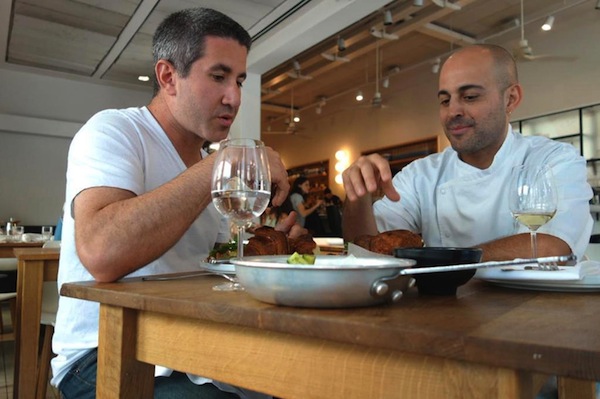
Roger Sherman’s Florentine Films crew chows down at El Babor restaurant in the Haifa area. (photo from Florentine Films)

It might seem absurd that an American filmmaker, who, until five years ago, thought that falafel and hummus were the only ingredients of Israeli cuisine, would introduce the world to the Israeli food and culture scene. But documentarian Roger Sherman – who has won an Emmy, a Peabody and two Academy Award nominations – seems to be the right guy to whet the world’s appetite for Israel’s diverse and innovative dishes.

“The reason I’m doing the film is because I found a food culture that no one in the world knows about. This is the best-kept secret,” Sherman told Israel21C during a quick interview in the lobby of a Tel Aviv hotel before setting out to film final pickup shots for his documentary, The Search for Israeli Cuisine.

Sherman discovered Israeli cuisine five years ago when he made an introductory visit to the country he’d heard so much about in the news.

“I was knocked out by what I saw, what I ate and how gorgeous the country is. Who knew that there was a gorgeous beach that runs the whole length of the country? Israel has incredible mountains and desert,” said Sherman, who finally came for a visit at the behest of a foodie tour-guide friend.

Sherman, married to the founder of influential gourmet food and wine magazine Saveur, said the country’s culinary revolution is unknown to many because most foreigners only associate Israel with “political drama and biblical history.”

“They don’t realize it’s so much more,” he said. “Israel has a food scene that I had no clue about, a restaurant scene that rivals New York, London and Paris. I think people are going to be shocked, surprised and very pleased with what they learn from watching this film.”

The two-hour PBS special is to be completed by October. Sherman admitted that he has enough material for a six-hour miniseries but prefers to pack the choice shots into 120 minutes, leaving the remaining 150 hours of footage on the editing floor.

Private backers as well as a successful Kickstarter campaign have helped support Sherman in the two-year researching and filming process. He interacts with interested would-be viewers via Facebook, Twitter, a blog and Instagram almost daily.

“The primary audience is American public television but it will be shown around the world. American public television is a fairly high demographic of people who like to travel, and a lot of people that like to travel like to eat, and they like to see new things and explore the world,” said Sherman. “It’s also for people who like to open their minds even if they don’t travel or are interested in surreptitiously going on adventures. And I think this is going to be an adventure.”

The Florentine Films documentary tries to answer the question “What is Israeli cuisine?” To do this, Sherman’s team crisscrossed the country, filming at more than 100 locations.

While the question is simple enough, the answer is not clear cut.

The film introduces audiences to the country’s leading chefs, innovative farmers, home cooks, boutique winemakers, craft beer brewers, world-class chocolatiers, cheese artisans, restaurateurs, food journalists, street foodies and traditional bakers. Some of them believe Israeli cuisine can be defined as a hodgepodge of traditions, while others say it’s too early to brand the delicious concoctions being created at local eateries.

“What we have here is confusion food. It’s all mixed together beautifully: traditional spices, techniques, dishes that intermingle with all the influences. After [service in] the army, we Israelis go to study abroad or [travel] to the Far East, India or South America. We get to know Thai and Vietnamese food, Mexican flavors. Some [return] and open restaurants. It all becomes Israeli food,” chef/baker Erez Komarovsky says in the documentary.

Chef Maoz Alonim of HaBasta restaurant is one of those against labeling Israeli cuisine as such.

“So, what is Israeli food? Domestic food. We have our inspirations from ingredients that used to be cooked here for hundreds, thousands of years. I really do not think that I serve Israeli food,” Alonim says. “I serve domestic food again and again and again. And what makes it Israeli? Sure, I take fresh ingredients from Israel and I can import the fresh oysters from France, but does this make it Israeli? No, that just makes it oysters that I really like.”

For Sherman, the American looking in, there is definitely a “something” that makes gastronomy in Israel different from elsewhere.

He shows Israeli-American chef Michael Solomonov, a James Beard Award winner and guide for the film, stopping at a Yemenite grill in Tel Aviv, where he is served 17 salads as an appetizer. The salads are an international sampling of Arab, Iraqi, Arabian, Moroccan, Russian, Eastern European, Italian, Turkish, Moroccan and Greek dishes – obviously, all made in Israel.

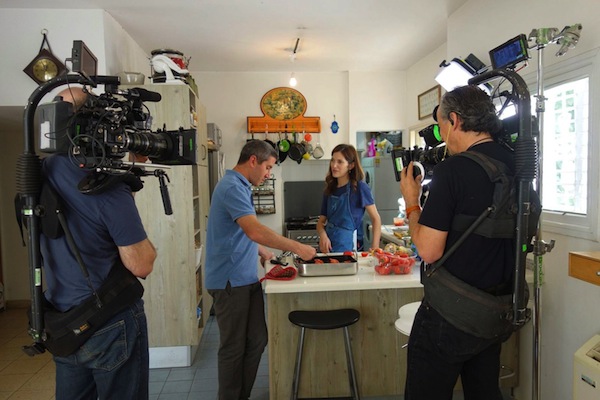
photo - Michael Solomonov being filmed in the kitchen of Krav Sakinim (Israel’s Iron Chef) judge Ruthie Rousso
Michael Solomonov being filmed in the kitchen of Krav Sakinim (Israel’s Iron Chef) judge Ruthie Rousso. (photo from Florentine Films)

“In America, it’s identifiable. But here, people say it’s too soon to have a cuisine. There are people that love the idea of a melting pot, everybody coming together. But there are also people who do not like this idea; they want to keep cultures separate,” Sherman said.

“Israeli cuisine is the amalgamation of dozens of cultures that are taking remarkable local ingredients and either trying to stay true as much as they can to their traditions or updating and upgrading.”

Sherman contends that Israeli cuisine only came into existence in the 1980s. “You have a country that began with no kitchens in private homes because, if you lived on a kibbutz, and many people did, you ate communally. And, if you talked about enjoying food, people would slap you. ‘We’re here to survive, we’re trying to create a country,’ they’d say,” Sherman explained. “Until at least the mid- to late-’80s, ‘cuisine’ was a four-letter word. You didn’t mention it.”

Today, of course, Israeli cuisine is simmering in pots around the country – and even beyond. He pointed out that three of the best new U.S. restaurants as chosen by Bon Appétit magazine are dedicated to Israeli cuisine. “Israeli cuisine is now proliferating, accelerating … in the past year, Israeli cuisine places have opened all over the world. Israeli cuisine is a force,” he said.

The Search for Israeli Cuisine is not only focused on the kitchens of Israel. Sherman spotlights Israeli agri-tech and how Israeli farmers and engineers are changing the way the world eats.

photo - Michael Solomonov dines with Israeli celebrity chef Meir Adoni in Tel Aviv
Michael Solomonov dines with Israeli celebrity chef Meir Adoni in Tel Aviv. (photo from Florentine Films)

“This is another reason I’m doing the film. If you go back, Israel was a Third World country for most of its existence. Now, it’s not just a First World country, but it is leading the world in many ways,” he said. “I don’t think many people know that Israel’s high-tech agriculture has changed the way the world eats, beginning with drip-irrigation methods and going to seedless watermelons, cherry tomatoes, soon-to-be seedless lemons. Israelis know all this stuff but people around the world don’t.”

Sherman said viewers will be flabbergasted to hear that “farm to table” and “locally sourced” are standard practice in Israel. “People will think that’s fantastic because it’s such a big deal in the U.S. right now, what is your carbon footprint,” he explained. “Here, the whole country is accessible in two hours.”

Eating is a sensory experience, and a food-focused documentary has to instil the enjoyment of cuisine through the big screen. “People who watch our teaser, which is five minutes long, say, ‘Oh my God, that made me so hungry,’” Sherman said. “So, if I can do that in five minutes, imagine what I can do in two hours. We’re telling really interesting stories about people who are passionate about what they do. The people I have found have been wonderful in sharing their passion to the world.”

Israeli-American chef Solomonov takes viewers into the lives of everyone – Jews, Christians, Arabs, Druze and Bedouins – changing the food landscape of Israel.

“Israeli cuisine reflects humanity at its best. People need to know that, regardless of what they see on TV, regardless of their political stance, the best way to relate to Israel is through its food and culture,” Solomonov says in the film.

Sherman admitted that, prior to his visit, he realized that he’d “never thought much about the Israeli people. It became clear that most people I meet don’t know much about the Israeli people either, and they’re surprised at what I reveal.”

And that’s why he doesn’t see The Search for Israeli Cuisine as simply a foodie movie.

“I’m calling this a portrait of the Israeli people told through food,” said the same filmmaker who profiled preeminent restaurant owner Danny Meyer in The Restaurateur. “It’s not a cooking show, it’s not recipes; the food is at the heart of it but it’s really about these amazing people doing these dynamic things.”

Israel21C is a nonprofit educational foundation with a mission to focus media and public attention on the 21st-century Israel that exists beyond the conflict. For more, or to donate, visit israel21c.org.

Nuclear comedy to be a hit?

Atomic Falafel poster. (photo from Atomic Falafel PR via israel21c.org)

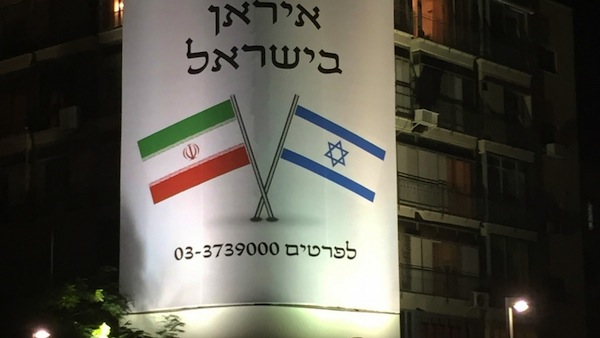
While world headlines focused on the landmark Iranian nuclear deal, an enormous billboard outside a Tel Aviv building announcing the upcoming opening of an Iranian embassy in Israel in August had the local social media community wondering whether it was an art installation, an anonymous peace group’s campaign or someone’s idea of a joke.

photo - The billboard announcement that had Tel Avivians talking
The billboard announcement that had Tel Avivians talking. (photo from Atomic Falafel PR via israel21c.org)

The Hebrew billboard included pictures of the two countries’ flags, a local phone number and the text: “Opening here soon – embassy of Iran in Israel.” It was erected at Rabin Square, the favored site for political peace rallies.

The mystery was solved in the last days of August by the people behind the sign. It was a public-relations stunt to drum up publicity for the new Israeli comedy Atomic Falafel, a madcap film about a nuclear conflict between Israel and Iran.

“A satirical comedy mocking ultra-militarism” is how producer Avraham Pirchi explained the film, which was scheduled to open in Israel on Sept. 10.

Atomic Falafel is the latest from director Dror Shaul, winner of the 2007 Sundance World Cinema Jury Prize for his semi-autobiographical film Sweet Mud. It tells the story of two girls – one in Israel, one in Iran – who spill their countries’ most valuable secrets on Facebook to prevent a nuclear crisis. The movie pits a wifi-connected younger generation against old-school warmongers in an effort to stop a preemptive Israeli attack on Iran’s nuclear facilities.

“Teenagers around the world today are much more similar than different to each other. They dress the same, listen to the same music and are not really interested in wars. I hope that the sane, logical side of Israel and the world will overcome the irresponsible one, and that my little boy born just two weeks after the end of shooting will be rewarded with a safe future,” said Shaul.

“When we started to make Atomic Falafel, we didn’t know we would be releasing the film when Iran’s nuclear power would be so relevant. But that’s what’s happened,” Pirchi told variety.com, adding that the film is “pro-peace and optimistic.”

The film is co-produced by New Zealand’s General Film Corp. and Germany’s Arden Film, Getaway Pictures and Jooyaa Film. It stars Israeli actors including Shai Avivi, Mali Levy, Yossi Marshak and Zohar Strauss, as well as Germany’s Alexander Fehling (Inglourious Basterds).

screenshot - Tara Melter, a German actress of Iranian descent who plays a supporting role in the film, raps the soundtrack’s title track, “Hitchki.”
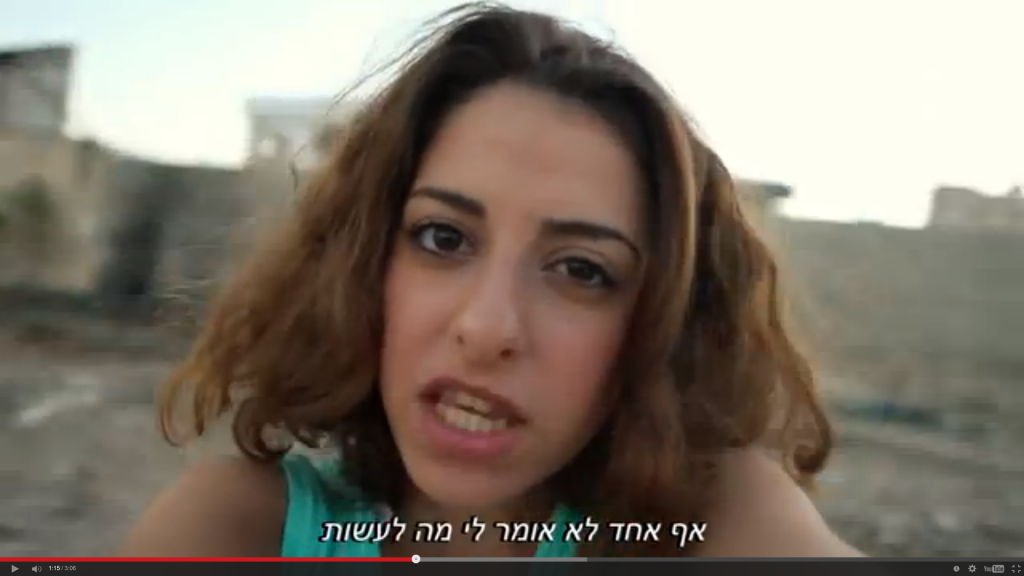
Tara Melter, a German actress of Iranian descent who plays a supporting role in the film, raps the soundtrack’s title track, “Hitchki.” (screenshot)

Tara Melter, a German actress of Iranian descent who plays a supporting role in Atomic Falafel, raps the soundtrack’s title track, “Hitchki.” The song, composed by Bahar Henschel, is addictive.

Production company United Channel Movies (UCM) announced on Facebook that Atomic Falafel has all the makings of a hit, citing that the movie’s trailer (in Hebrew only) racked up more than 100,000 views in its first two hours online. UCM says it is in talks with international agents to secure wide distribution of the movie following its Israel release.

Israel21C is a nonprofit educational foundation with a mission to focus media and public attention on the 21st-century Israel that exists beyond the conflict. For more, or to donate, visit israel21c.org.

Climbing for the kids

This coming October, some 30 Jews from around the world will be climbing Mt. Kilimanjaro to raise money for SHALVA, the Association for Mentally and Physically Challenged Children in Jerusalem. (photo from SHALVA)

Scaling the largest free-standing mountain in the world is a remarkable accomplishment. A test to human endurance and tenacity. Raising a special needs child can require the same tenacity.

This October, some 30 Jews from around the world will climb Mt. Kilimanjaro to raise money for SHALVA, the Association for Mentally and Physically Challenged Children in Jerusalem – helping the parents and kids of SHALVA scale their own personal “mountains.”

With participants from Canada and as far away as the United Kingdom, the United States and Israel, the climb has attracted an eclectic group of trekkers all bound together with a common goal. The group spans the spectrum of the Jewish community from secular to ultra-Orthodox. Each one has their own reasons for choosing to reach beyond their limits to do something incredible.

“Everyone at SHALVA is touched that so many SHALVA supporters have come together to climb for one cause,” said trip coordinator Gaby Hirsch. “What started as a U.K. initiative became a global effort as the unique opportunity captured imaginations around the world.”

To make the trip as inclusive as possible, organizers decided to make it adhere to the highest possible standards of Jewish law. The trek is serving vegetarian food and the organizers have purchased new cooking and eating utensils. On the seventh day of the trek, the group will rest for Shabbat on Mt. Kilimanjaro, allowing them to join millions of Jews around the world in keeping Shabbat as part of the Shabbos Project. While no participant is required to keep Shabbat, by making the trip adhere to the most stringent feasible level of Jewish observance, all climbers are able to maintain their own comfort level.

Photographer Sarah Raanan was looking for a challenge, a chance to push herself, but it was learning about SHALVA that made her sign up. “As soon as I found out about SHALVA, I knew I had to do this,” she explained. “The first video I watched just blew me away.”

photo - Providing services for more than 500 infants, children and young adults, SHALVA accompanies each child from birth to adulthood
Providing services for more than 500 infants, children and young adults, SHALVA accompanies each child from birth to adulthood. (photo from SHALVA)

Raanan is not the first one to be impressed by the scope of the SHALVA Centre. For 25 years, SHALVA has been helping children with special needs move beyond their limitations. SHALVA programs and services are designed to provide individual treatment for the child while also strengthening the fabric of the family. Providing services for more than 500 infants, children and young adults, SHALVA accompanies each child from birth to adulthood. Individually tailored programs are designed to help participants reach their full potential and integrate into the community.

Claire Freeman from London saw for herself the life-changing work SHALVA does when she lived in Israel. “There’s not a place in the world that does what they do. But they can’t do it alone,” she said. As a mother of three, Freeman is grateful that her children can run and play. She wanted to show them that even when you are born with the gift of being able-bodied, life is about pushing yourself to go beyond your own limitations.

Having positive impacts on their children is a common theme for participants, as is slight apprehension at leaving a brood at home.

Shoshana Baker, originally from Teaneck, N.J., but now living in Ra’anana, Israel, was unsure whether she would do the climb despite being attracted by the challenge. “At first, I thought no way, it’s too hard to leave my children. Then I realized that it was an incredible lesson for them.” Baker decided to teach by example the importance of dedicating oneself to a worthy cause.

Toronto native Helen Silverstein wanted to do something meaningful for her 60th birthday. “I wanted to do it because the kids at SHALVA can’t.” Looking to avoid a flurry of birthday cards and gifts she didn’t need, she was happy to have her friends and family sponsor her to climb.

Every climber has pledged to raise $10,000. Each one has found his or her own unique methods of raising money, from running an “Auction of Promises” to sponsored paragliding. The money raised is helping to fund SHALVA’s National Centre, due to open in Jerusalem next year. This state-of-the-art facility will enable SHALVA to expand its services to offer treatment to four times as many children.

The would-be trekkers are not without their apprehensions, and for good reason – in the course of nine days they will hike approximately 100 kilometres. Trekking through five different ecosystems, participants will be pushing their personal endurance to the limit. One of the biggest risks is altitude sickness. This condition occurs when the body responds badly to the reduced level of oxygen present at higher altitudes. Climbers are warned to watch out for headaches, dizziness and nausea.

John Corre, a grandfather of nine, is participating to celebrate his 70th birthday. Despite the extreme physical exertion, he is not fazed by the length of the climb. His biggest fear is the possibility of altitude sickness because there is no way of knowing before the climb how the altitude will affect an individual.

One climber not daunted by overcoming extreme odds is Jerusalem resident Rachel Illouz, a breast cancer survivor. As she was going through the surgery and chemotherapy, she kept telling herself that one day she would climb a mountain. In her own words, “As soon as I found out about the SHALVA climb, I said to myself ‘That is my mountain.’”

Just as SHALVA has brought together people from across Israeli society, united by the desire to give all kids the best start in life, so now SHALVA is bringing together Jews from every possible walk of life to continue that vital work. This unique trip shows us how we are all climbing mountains of one variety or another in our lives, and reminds us that it is incumbent upon us to reach out our hands and help the other up.

To help the climbers reach their fundraising targets, you can make a tax deductible donation at climb4SHALVA.org/view_profile.php?id=1401.

Breathe in and breathe out

Life in its individual expression is finite. Nearly all of us accept that. Living things reproduce themselves, so life goes on in that way. But, for the individual, life begins and, after a time, it comes to an end. An important thing is that, for most of us, we do not know when this ending will come. It is indeterminate.

Because the end time is unknown, we have the illusion, in the immediate, that life will just go on, is just going on. We are alive, we are full of plans, we are the centrepiece of the circle we have built around ourselves; it seems like it will go on forever. Certainly, in our younger years, the question of an ending hardly ever arises in our minds. Our lifetime stretches out before us into the dimly perceived future.

Am I discussing a question of universal import, or am I obsessed with my personal condition? Yoohoo! Do I still have you with me?

Even for those of us who are older, particularly those of us who are active, seemingly in good health, our lifetime also appears to be elastic. The events inhabiting our lifetime fill our consciousness. But we are aware of statistics. We see that our ranks are thinning. Some, even many, of those contemporary companions with whom we began our journey are missing at roll call. These realities do give us pause. How many more beautiful sunrises, how many more flaming sunsets will we witness? The languorous minutes of an afternoon with friends in inviting surroundings, imbibing all the consumables that yield to us their potential for pleasure, absent the pain to which all flesh is heir, how many more times will those unique experiences be ours?

I am exhilarated by being a part of the essential life event, the experience of being a living, breathing, feeling being. I know not if we are the sole sentient creatures in this universe, but I am grateful that it has fallen into my fortunate lifetime to experience this place and this time. How many of you out there must feel the same? None of us is guaranteed a life solely made up of music and roses. The inverse is true for great masses of humanity. But each of us, in some small measure, finds those moments of existence, those instants when we bless the stars that we are present, that we are here. It is inherent in being alive, in the human life experience. We really know only the present. Yesterday is gone. Tomorrow is speculation. I tell myself to ignore the extraneous. Breathe in and out; find those elements in our current experience that give us enjoyment in this instant of being alive.

Today, here in Vancouver, harvest time continues for tender fruits of all kinds. Sumptuous fruit, which for most of the year command a king’s ransom for purchase, is still being offered in the grocery outlets for a mere bagatelle. Earlier in the summer, mounds of red, ripe strawberries were being displayed in our markets in the form of architectural wonders, tempting us to reach out and bring those fruity edifices crashing down as we indulge the urge to taste. They were there, stressing the most disciplined. Blueberries, which, for most of the year, are retailed by the ounce, have been urged on us by the pound. Peaches, nectarines and melons of all kind compete for our attention on the groaning boards. We are overwhelmed with nature’s bounty, what is here and what is yet to be on offer, as the season progresses. These are just the ordinary things of the seasonal round, but they are a soft whisper of the simpler pleasures lavished on those of us who are alive.

Consumables are just an asterisk, a footnote, compared with the joys of human companionship. Were we blessed with tasks in life that stretched our potential, labor that was worthwhile? Did we find a person in our lives with whom we dared to show our essential vulnerability? A parent, a sibling, a friend, a teacher, a lover, a creature, with whom we found a basis for growth that might lead to healthy adulthood, with whom we distilled a shared experience we will remember unto death? Did we find a place and people where we felt that sense of peace, identification and commitment that determined the paths we would follow during the rest of our lives? Do the beauties of the natural world we inhabit bring home to us how tiny an element we are in the cycle of life of which we are a part? Have you looked up at the stars lately, preferably in a place where they are not blotted out by our man-made illumination, and understood just where man stands in the greater scheme of things?

We may be infinitesimal in our universe, less than the insects beneath our feet in the world man is astride like a colossus, but our tiny lives are full of meaning for us in the sheltered universe we seek to construct around ourselves. How central to us are our individual lifetimes. For most of us, our consciousness is concerned primarily with little else. How could it be otherwise? We mirror the behaviors of all the living species on our planet, seeking to ensure our survival and enhance our lifestyles. It is written in our DNA.

For some, the vision is a little broader, but even for them, the object is the enhancement of our lives in the broadest sense.

Let us toast the now of our lifetimes! To life!

Max Roytenberg is a poet, writer and blogger. An octegenarian, originally from Winnipeg, he is newly returned to Canada from Ireland and enjoying Vancouver with his bride.

Aliya changes a personality

Salomon Centre for American Jewish Thought fellow Eliana Rudee, left, and senior editor Joanie Berger enjoy lunch in Chicago. (photo by Paul Miller)

As I sit on a bench at the First Station in Jerusalem, just about to leave Israel for a weeklong conference in the United States, I watch the people around me on the most perfect Thursday. A bodybuilder-looking man feeds his young daughter and smiles at her as he leads the spoon of food into her mouth. Friends laugh and chat over ice cream, and couples walk hand in hand alongside the train tracks.

Suddenly, a sadness cascades over me as I get a too-familiar feeling of intense sadness that I experience every time I leave this amazing country. Some people call it the “Israel bug” and others call it “post-Israel depression.” Whatever it is, it feels like you’re about to leave something fulfilling and head towards a more robotic, mundane life. It means leaving behind the “Shabbat shaloms” heard from storekeepers on Thursdays and Fridays, and heading towards the “Merry Christmases” from storekeepers throughout December. It’s leaving behind the transcendent resonance of the shofar and heading towards elevator music while you’re on hold with the credit card company for the umpteenth time. It’s leaving the buzz of the people crowded into the shuk and heading towards the metronomic beeping as items are scanned at the grocery store. It feels like I am headed in the wrong direction.

But then I remember – I live here. I live in Israel. I am coming back in less than a week, and even though I am still sitting at the First Station in Jerusalem, I already cannot wait to come back. This is the epitome of my feelings for Israel, the land with which I am completely obsessed and the land that I am so very thankful to call home.

It was at this moment that I realized yet again that I have made the right decision by making aliya. This place truly fulfils me and fills my life with a sense of meaning that I have found only in my happiest moments elsewhere – an intimate gathering with my extended family, the moment I realized I had fallen in love, a birthday party that brought together all of my friends from the many parts of my life, and the feeling of learning something in college that changed my perspective on life.

As I write, I realize that these feelings are quite mushy-gushy, which (honestly!) is not usually how I am. So, in true rational form, I have concluded many times that I may be idealizing Israel, as my previous trips to Israel had been spent vacationing with family or new friends. But then, I think, how could I not idealize as I sit in the Jerusalem sun as the weekend hits, feeling so happy and sad at the same time? I honestly feel like a changed person in Israel.

My mom tells me that even before I was born, my personality was the same as it is today: I know what I want, I work hard to get it, I am rooted in facts and reality and I am a perpetual list-maker. I do things a little differently than most, and I like to lead others and pass along my passions. I am impatient and, because I feel so strongly about what I believe, my passion and confidence can often come off as inflexibility and stubbornness.

In Israel, much of my personality is unchanged. But I have found new parts of my personality finding expression and I think it is more a reflection of Israel than of myself. In Israel, I am quite able to express my emotions about this place, something that I would have found difficult and somewhat silly before. A new friend actually called me “artistic” the other day, something that I have not been called since I was very little.

After talking about Myers-Briggs with friends over the weekend, we decided to retake the test. After years and years of getting the same results, my personality profile shifted from “sensing” to “intuition.” This means that before I came to Israel, I paid more attention to the information absorbed through my five senses, but now I pay more attention to the information I receive through intuition. It also means that perhaps I am now a little more interested in the bigger picture than the details, the meaning behind the events, and new possibilities.

But I digress. Why I think this is worth mentioning is because I believe that something about being in Israel has changed this in me and has the power to change everyone who visits. When people have asked me why I chose to make aliya, I resort to talking about my feelings rather than rationality. (After all, I am not sure that someone who is purely rational would make this decision to move here!) I usually find myself saying something like this: “Well, there are a number of reasons why I moved here. One is because when I first came I fell in love with this place. I came back a number of times in the next several years, but it was never enough! I feel a fulfilment here that I missed when I lived in the U.S.” And then, when people look as if they want a more practical reason, I explain that my boyfriend and I were both thinking about living here before, so we chose to come together. It’s also a great place professionally, as a writer, because I write about Israel all the time. Rationally, it makes sense to be living in Israel if I am writing about Israel.

Previously, in explaining my decision to others, I would begin with the rational and move on to the emotional only if pressed to do so. But something about this place makes me tap into my emotions and intuitions. My theory about why this occurs is this: being in Israel inspires self-reflection in a way no other place does for me.

Israel’s history, culture, language and religion all relate to my past, present and future because of my identity as a Jew and my values of self-determination and freedom. My ancestors longed for the actualization of these values, died for the actualization of these values and survived for the actualization of these values. And now, I am helping to actualize these values by being in the Jewish state. This automatically triggers a cheshbon hanefesh – introspective monitoring about how well I am continuing to actualize the values that I find to be more important than my own being. I am, therefore, prompted every day here to integrate the values into my life, my actions, my choices.

As I am headed to the United States for the first time since making aliya, I reflect on the fact that even my choice to come for this week was based on these values. I believe to my core that creating the conditions for every person to find meaning in their lives should be a goal of humanity. For many Jews, finding their identity within the context of their culture, family and traditions means finding their identity within the context of Judaism. Israel is the place to find that identity, as nowhere else in the world do Jews come together like this to honor our past, present and future, actualize our values and traditions, and return to the only land that is inextricably tied to our identity as a people.

I came to the United States this week in order to be trained as a Birthright leader, someone who leads a group trip of young Jews to Israel, often for their first time, and guides them in learning about their own identity as a Jew. Birthright Israel and I share the same mission of creating the conditions for Jews to find their identity and meaning. I hope that, in this next week, I will learn to most effectively carry out this mission. And I think there is no better reason than this to leave my precious Israel, even for a week.

Eliana Rudee is a fellow with the Salomon Centre for American Jewish Thought and the author of the new “Aliya Annotated” column for jns.org. She is a graduate of Scripps College, where she studied international relations and Jewish studies. She was published in USA Today and Forbes after writing about her experiences in Israel last summer. Follow her aliya column on jns.org, facebook.com/aliyaannotated and instagram.com/israelgirl48.

Shofar’s deeper messages

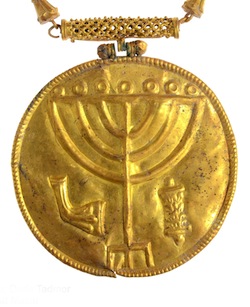
photo - Among the coins and other archeological treasures discovered in a ruined Byzantine public structure near the Temple Mount’s southern wall in 2013 was a gold medallion

Among the coins and other archeological treasures discovered in a ruined Byzantine public structure near the Temple Mount’s southern wall in 2013 was a gold medallion (inset) inscribed with a menora, a shofar and a Torah scroll, reflecting the historical presence of Jews in the area. The items are thought to have been abandoned in the context of the Persian conquest of Jerusalem in 614 CE. Hanging from a gold chain, the medallion is most likely an ornament for a Torah scroll. (photos from Ashernet)

Fleeing the Nazis, the Pesten family found themselves adrift in some nowhere land in the Soviet Union, wandering through the mud of Uzbekistan, remembering all the adventures they had met since deciding to pack their bags and flee. They felt a yearning for home and some envy for friends who stayed. No one knew yet about the concentration camps and gas chambers. In reality, there was no time for longings or regret, as they had to wake up early every morning and search for food.

The woman of the family, Hanna, was worried. It was only a few days before Rosh Hashana and there was no food in their temporary home. She wasn’t only concerned about that. She was troubled that, in this remote place, they wouldn’t hear the shofar and its blasts of t’kia, sh’varim and t’rua. She would miss the holy shudder she always experienced in those exalted moments of the shofar blowing on Rosh Hashana.

The situation was not yet hopeless. She walked the long distance to the nearby town until she came to a massive garbage heap. She wasn’t deterred by the foul stench. She began to sift through the garbage for hours, although it seemed like an eternity. Would she even find what she was looking for?

The pounding of her heart increased by the minute until, with a broad smile, she pulled out of the smelly heap, the rotten head of a ram that had been slaughtered a few days earlier and was providentially still there.

The slender moon of the end of the month was slowly traversing the gloomy skies of Uzbekistan. The angels looked down from heaven in amazement at a tiny, frail woman, who was bent over, sitting on a low stool, cleaning a curved ram’s horn with a small metal wire as she quietly sang a melody of thanks to G-d. She kept scraping without stopping and without fatigue. Then, with tremendous effort, she finally managed to completely remove the inner bone from the shofar.

That year, the stirring sounds of the shofar blasts echoed through the narrow lanes of Uzbekistan. Due to Hanna’s devotion, the community of Jewish refugees merited that this beloved mitzva was not missed. (Story excerpted from Jewish Tales of Holy Women by Yitzhak Buxbaum.)

Thankfully, here in Canada, we don’t need to do what this brave woman did to hear the shofar. On Rosh Hashana, we only need to go to a synagogue, Chabad House or community gathering. This year is called the year of Hakhel (Gathering), which takes place every seven years after the year of Sh’mita, where everyone would travel to Jerusalem for the festival of Sukkot and be in the presence of G-d when the Holy Temples stood. This year, it is even more auspicious to gather together on the first days of the new Jewish year, which begins at sundown on Sunday, Sept. 13, and continues through Tuesday the 15th.

So, why do we blow the shofar on Rosh Hashana? The Talmud writes that G-d commands us to recite verses of kingship so that we may crown Him upon us, verses of zichronot (remembrances) so that He will remember us for good. And Rabbi Abahu adds that we blow the ram’s horn to remember the Akeidat Yitzchak (the Binding of Isaac).

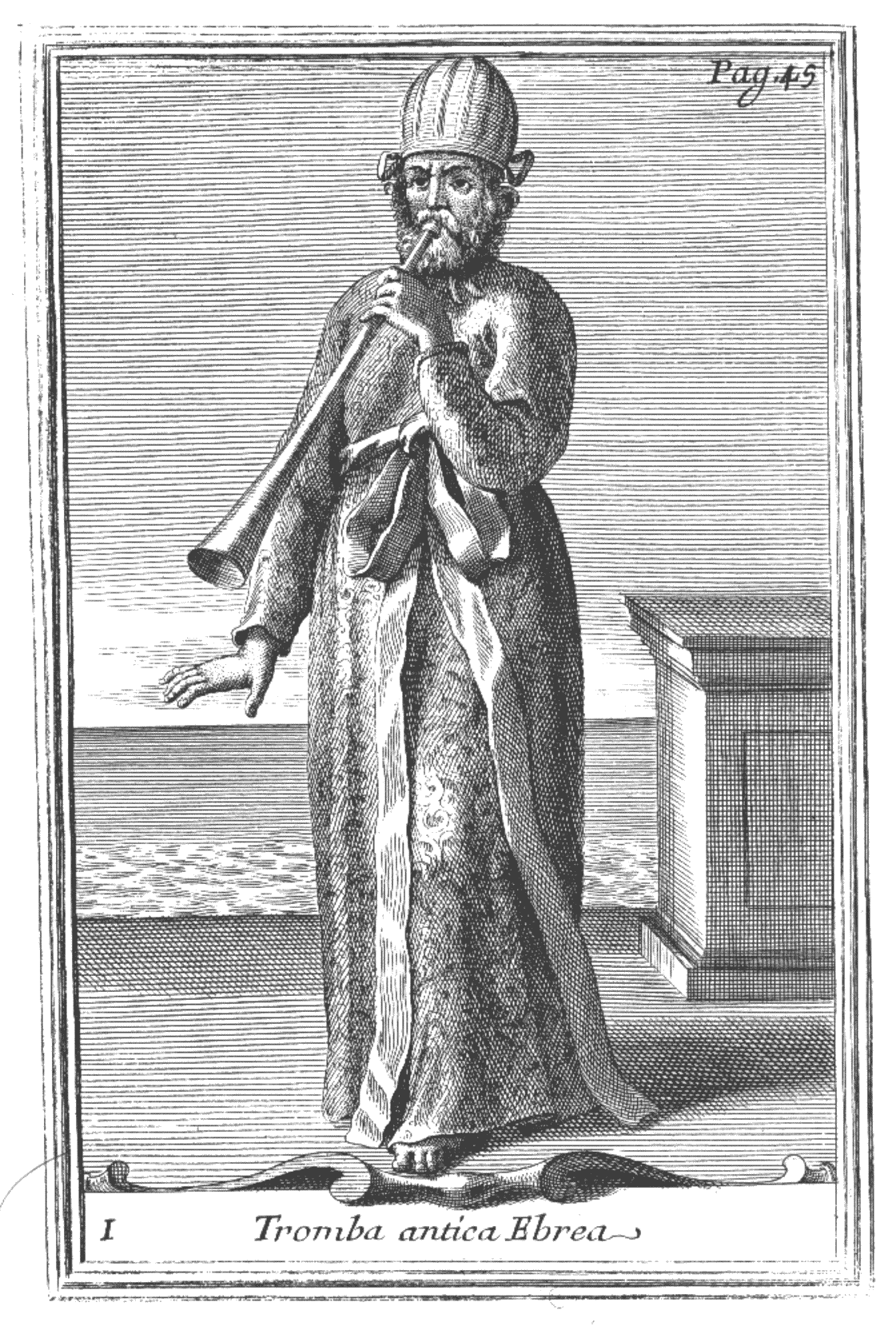
photo - “Hebrew trumpet” from Italian Jesuit scholar Filippo Bonanni’s Gabinetto armonico (1723), which comprises some 150 engravings by Arnold van Westerhout (with the help of perhaps two other artists) of musicians playing various instruments from around the world
“Hebrew trumpet” from Italian Jesuit scholar Filippo Bonanni’s Gabinetto armonico (1723), which comprises some 150 engravings by Arnold van Westerhout (with the help of perhaps two other artists) of musicians playing various instruments from around the world. (photo from commons.wikimedia.org)

There are three physical acts associated with the shofar: there is the blowing of the air, the lips that touch the shofar and the physical shofar itself, receiving the air and producing a sound.

The air is known as the hevel (breath) of the mouth. What is this hevel? It’s not just air, it’s something much greater. A person blowing the shofar gives over his entire self, this is the self-sacrifice. What is being produced, however, is not my or the shofar blower’s air, but the sound of the shofar itself. In fact, the blessing recited is “Lishmoa kol shofar,” “To hear the sound of the shofar.” Although human air is producing it, we refer to the sound as coming from the shofar. The person blowing the shofar is not of prime significance, his breath is greater than his limited self.

Our sages explain that the shofar is produced by the hevel from the depths of the heart. The word hevel is comprised of the same letters as the word halev, the heart. When a person speaks, their hevel/breath is affected by the five motions of the mouth that are used to create different vowels. When the shofar is being blown, the mouth is not involved. When one speaks, it is their voice that is heard. With the shofar, there is something much greater going on, much deeper.

According to the Jewish mystics, the letters comprising the word hevel (and halev) represent the five books of the Torah. In lev (heart), the letter hay is equal to five, followed by the numerical value of the remaining letters of lamed (30) and vet (two). These are the first and last letters of the Torah. The hevel of the heart is so much more than words. The sound of the shofar can’t have anything added to it that will make it appear more beautiful – it is pure and is capable of bringing pure spirituality down from above.

The shofar is greater even than prayer. Rosh Hashana is called Yom T’rua, Day of Blasts, not Yom T’fila, Day of Prayer. Prayer may be straight from the heart, especially on the holy day of Rosh Hashana, the first day of the Jewish year, but it is our mouths that form the words. The breath of the shofar is spirituality; there is nothing physical intertwined with it.

We can ask, “Why do we need a shofar at all? Why do we not just shout out loud without uttering any words?” It is because we want to remind G-d of the great near sacrifice of our father Abraham and our patriarch Isaac to arouse G-d’s mercy on us on Rosh Hashana as He did for them. It is the Torah reading for the second day of Rosh Hashana.

We find in Pirkei d’Rebbi Eliezer that the ram, which our sages teach us was “caught by its horns in a thicket,” (Genesis/Breishit 22:13) is the one that was used. Rabbi Chanina ben Dosa adds that it was a special ram. Its skin was the belt used by Eliyahu HaNavi (Elijah the Prophet); its left horn was blown at Mount Sinai upon our receiving the Torah, while the right horn will be blown with the coming of the Moshiach. It will usher in a time of peace in Israel and throughout the world.

May we all be written and inscribed for a year filled with many blessings for our families and communities, “ktiva v’chatima tova.”

Esther Tauby is a local educator, writer and counselor.

How Tashlich took its form

Yemenite Jews participating in Tashlich, Rosh Hashana, 1926. (photo by Shimon Korbman, Shalom Meir Tower, Tel Aviv via Wikimedia)

Readers will perhaps find it hard to believe, but the custom of Tashlich, which has become an integral part of the Jewish experience, has no mention in the Talmud. In Ashkenazi writings, the first literary sources of the Tashlich ceremony are from the late 14th century. However, with respect to the Spanish expulsion, even in late works such as the Shulchan Aruch from the 16th century, Tashlich is not mentioned.

The early Ashkenazi sources in which Tashlich is mentioned describe an unusual ceremony, both with respect to its participants and with respect to its time and place. Texts written by both Jews and non-Jews at the beginning of the modern era tell of a ceremony in which the whole community – the old, the young, the women and their servants – go out to a river bank during the middle of the day, after the midday meal. Under the shade of the tangled tree branches and against the gurgling sound of the pure river water, those present entertain themselves by throwing crumbs to the fish, which jump out of the water in an attempt to catch them. This is in contrast to the atmosphere of a Jewish festival whose focus is the synagogue.

One is led to ask how such a ceremony came to be and how it found its place on the day on which the centre of attention is the synagogue. The explanations found in Ashkenazi books on Jewish customs that were written in the 15th and 16th centuries are confusing and fragmentary, and thus it is difficult to get a clear picture of the custom from those sources. However, there are other sources from the same period. Jews who had converted to Christianity and Christians who were involved in the anthropological study of their Jewish neighbors included a description of the ceremony in their writings, which was based on Jewish texts and primarily on what they themselves observed.

It appears that the various rituals are first of all related to the intellectual level of those present. The learned among the Jews present at the ceremony recited a verse from the Book of Micah, “You will cast all their sins into the depths of the sea,” without adding any practical interpretation. Most of the community, in contrast, did not stick to the literal text but spoke what was in their hearts in simple German. The “spilling of sins” was manifested in the shaking out of one’s clothing and quickly leaving the location so that, God forbid, the spirit of evil deeds should not return the sins to the individual who had just got rid of them.

Some of the Christian sources relate that the appearance of fish during the ceremony was auspicious for those present, who viewed this as a sign that their sins had been transferred to the fish. This is similar to the belief that the scapegoat that was sent into the desert on Yom Kippur takes with him the sins of the people. In the Jewish ceremonies of the 15th century, fish appear in a different context: upon their appearance, those present are to remember that “we are like these live fish that are all of a sudden caught in a fortress.”

During the centuries in which the Tashlich custom took shape, walking to the river was an accepted pastime during the leisure hours of Jewish festivals and Shabbat. Jews and non-Jews spent time among the trees along the river banks, wading in the water and fishing. From the rabbinic texts, we learn of more than a few halachic problems related to this pastime, such as the carrying of food. Apparently, people used to carry items of food with them to throw to the fish and thus violated the prohibition of carrying from one domain to another. There were those who requested food from their gentile neighbors, who were also spending time on the river bank, in order to throw it into the river; but the act of feeding the fish itself was also prohibited. It is no wonder then that the rabbinic texts dealing with this activity on Rosh Hashana were vehemently opposed to throwing food to the fish because of the prohibition of carrying from one domain to another. As far as they were concerned, going to the river on Rosh Hashana was not related to any religious ceremony. It is interesting that some of the sources from the 15th century state explicitly that the custom of Tashlich is not particularly important and that people are not so meticulous in keeping it.

The Tashlich ceremony had other unusual characteristics, which differentiated it from “official” traditions. The literature of the 16th and 17th centuries relates that women and children participated in Tashlich, in contrast to other public ceremonies in which men were the only ones generally present due to considerations of modesty and separation between the genders. Furthermore, religious ceremonies in Jewish society generally took place in the synagogue or at home, but never in nature. With this in mind, Tashlich is to be understood not as a religious commandment but as the product of a social event. It can be said that Tashlich is a refashioning of a leisure activity as a religious/spiritual activity. It combined entertainment and prayer that had been recited on the High Holy Days for hundreds of years.

Based on the above, it can be said that there is no single explanation for the development of Tashlich. From the various existing testimonies, it can be assumed that the custom began sometime during the 14th century as an attempt to give religious significance to a popular afternoon pastime on Rosh Hashana. The time of the ceremony, its unusual location on the banks of the river, far from the community’s spiritual centre, the participation of women and children and the core of the ceremony – i.e., the casting of breadcrumbs into the river – which became an accepted pastime each Shabbat and festival, indicate that this was not a ritual created by halachists, but rather was an attempt to create another dimension to a popular pastime. The halachic texts that describe Tashlich stress its symbolism and the subjective spiritual process the believer goes through. In contrast, the texts that describe popular Jewish culture indicate that most of the public attributed the results of the ceremony to the activities carried out during it.

Over the years, there have been many efforts to give the ceremony a more religious flavor: the number of participants was narrowed, its date was changed and the weight of the texts and conceptual components was increased. Thus, Tashlich moved away from its roots in the culture of leisure in Ashkenaz and gradually took on the character that is familiar to us today.

Eli Freiman, general manager of Shuki Freiman Co. Ltd., is involved in academic research on the popular aspects of ritual in Jewish culture. This article was translated from the original Hebrew by a third party and the author does not take responsibility for any marginal disparities between the original text and this translation. This article can be found on the Shalom Hartman Institute website, hartman.org.il, and is reprinted with permission.

Reminder of fragility

Until this summer’s drought, most Vancouverites would have prayed for weather that made their umbrellas unnecessary. These High Holidays, however, many of us will be joining more wholeheartedly in the prayer for rain. (photo by Cynthia Ramsay)

I never gave much thought to the significance of rain until I moved to Miami. Rabbis in Miami face the High Holiday season with more than the usual rabbinic anxiety. In South Florida, the High Holiday season coincides with hurricane season. In the last several years of Florida living, I have reflected often on the ways in which Judaism invests rain with religious meaning. Prayers for rain mark the culmination of the High Holiday season.

The land of Israel is known as the land “flowing with milk and honey.” However, Israel is not a land flowing with water. The limited resource of water in the Holy Land is a central feature of biblical theology. Rain in the Promised Land plays an essential role in the covenantal relationship between God and the Jewish people.

Deuteronomy explains the unique spiritual essence of precipitation in the land of Israel. Unlike Egypt, where the water comes up from one’s feet, Israel is a land where people must look to the heavens for rain. In Egypt, it was easy to fall into idolatrous practices. The natural abundance of water from the Nile made the Egyptians worship the products of their own hands. However, this spiritual shortcoming is prevented in a land where the natural resources are scarce. The need to look heavenward for rain and the need to pray for rain continually remind the Israelites of God’s involvement and concern for our livelihood. “It is a land which the Lord your God looks after, on which the Lord your God always keeps His eye, from year’s beginning to year’s end.” (Deuteronomy 11:10)

God’s responsibility for dispensing rain in the land of Israel is a central aspect of our covenantal identity. Not only do we live in a land that depends upon God for rain, but God’s gift of rain will be conditioned upon the fulfilment of our covenantal duties. Every day, twice a day, the Jewish people express our love and commitment to God in the words of the Sh’ma.

The second paragraph of the Sh’ma is an excerpt from Deuteronomy about the connection between our covenant with God and rain: “If, then, you obey the commandments that I enjoin upon you this day, loving the Lord your God and serving Him with all your heart and soul, I will grant the rain for your land in season…. Take care not to be lured away to serve other gods and bow to them; for the Lord’s anger will flare up against you, and He will shut up the skies so that there will be no rain….” (11:13)

The notion that the natural events of weather are reflective of God’s covenantal relationship with the Jewish people is a difficult one for many modern Jews. This paragraph is omitted in the version of the Sh’ma found in Reform prayer books.

However, the theological lessons of Deuteronomy can be teased out without adopting a literal reading of the text. Is it true that rain falls in Israel only if the Jewish people are observing all the commandments? Or perhaps our daily recitation of the Sh’ma establishes a consciousness about our fragility in a world where we cannot control the elements. In such a world of limited human power, we recognize that our lives are a gift from God. The recognition of our dependence leads to a sense of responsibility. The Jewish response to the precarious nature of life is to find meaning and purpose in commandedness. Rain in the land of Israel serves as a reminder of our covenant with God.

According to the Torah, the scarcity of rain in Israel is a spiritual safeguard. As the Israelite nation prepares to enter the Promised Land, the Book of Deuteronomy is consumed with a fear regarding the spiritual danger of sovereignty. Once we leave the desert and settle in our own land, we might forget about God’s role in our lives:

“When you have eaten your fill and have built fine houses to live in … and everything you own has prospered, beware lest your heart grow haughty and you forget the Lord your God … who led you through the great and terrible wilderness … a parched land with no water in it, who brought forth water for you from the flinty rock; who fed you in the wilderness with manna … and you say to yourselves, ‘My own power and the might of my own hand have won this wealth for me.’ Remember that it is the Lord your God who gives you the power to prosper.” (8:12-18)

For 40 years, the Israelites depended upon God for sustenance in a hostile environment lacking natural resources. That dependency cultivated an intimacy with God and an appreciation for our human weakness. However, when we enter the Promised Land, and we build our own houses and plant our own crops, we might grow arrogant and distant from God.

According to the medieval commentator Rashbam, it is precisely because of this threat that God instituted the festival of Sukkot at the time of the harvest, when we are most likely to glorify in our material success:

“Therefore, the people leave their houses, which are full of everything good at the season of the ingathering, and dwell in booths, as a reminder of those who had no possessions in the wilderness and no houses in which to live. For this reason, the Holy One established the festival of Sukkot … that the people should not be proud of their well-furnished houses.” (Rashbam, Commentary on Leviticus 23:43)

The purpose of dwelling in the sukkah, according to Rashbam, is to remind us of our vulnerability in the desert and to return us to that ideal spiritual state of humility and dependency. Without a yearly reminder of our frail human condition, we might grow too haughty in our own land and begin to worship the power of our own hands.

The festival of Sukkot culminates in the holiday of Shemini Atzeret. This obscure holiday embodies one main ritual – tefilat geshem, the prayer for rain. Focusing on the uncertainty of rain is the perfect conclusion to the High Holiday season. One of the recurring themes of the High Holidays is the nature of human mortality. As human beings, our existence is vulnerable and ephemeral. Will we even be here next year? “Who shall live, and who shall die … who by fire and who by water?” This yearly reminder of our fragile human condition is meant to jolt us out of our complacency, to inspire us in our search for greater meaning and purpose in life.

This central High Holiday motif finds its dramatic finale in tefilat geshem, as the cantor comes forward during the musaf prayers, dressed in a kittel, the white burial shroud, and invoking Yom Kippur melodies. We conclude the spiritual marathon of the High Holidays with prayers for rain, humbled by the awareness of our fragility and our dependence upon God for sustenance and survival. As we pray for rain, we also rejoice in the notion that God cares for us and keeps His eyes on us, from year’s beginning to year’s end. Rain will be a daily reminder of our human limitations and the greater meaning and purpose we can find in accepting a covenant with God.

On this Shemini Atzeret, may our prayers for rain remind us of our vulnerabilities and our responsibilities to God, “Who causes the wind to blow and the rain to fall.”

This article was originally published in the Jewish Week and can be found on the Shalom Hartman Institute website, hartman.org.il. It is reprinted with permission.

A relatively quiet year

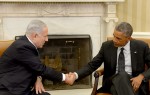
Among the events that began the Jewish year of 5775 (2014/15), Israeli Prime Minister Binyamin Netanyahu traveled to the United States, where he addressed the United Nations to warn of the danger of a nuclear-armed Iran, and met with U.S. President Barak Obama at the White House.

Prior to that visit, in September 2014, Israel received from Germany another state-of–the-art submarine, the INS Tanin. In October, United Nations Secretary-General Ban Ki-Moon was taken by the Israel Defence Forces to see a Hamas-built tunnel on the Gaza border, used for the purpose of terrorism.

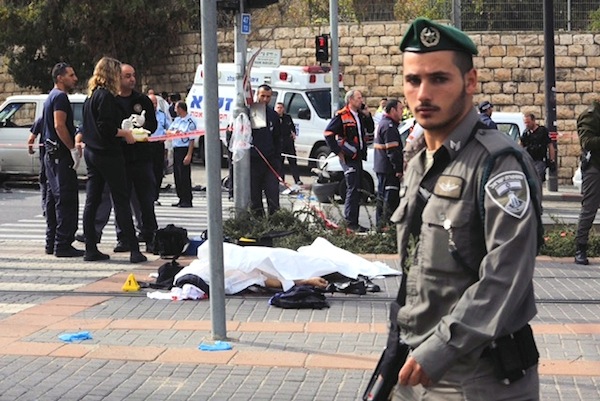
In November, there was an attack on the Jerusalem light rail in which one person died after a terrorist drove his light van into a crowd of people waiting at a train station, and also injured more than a dozen others. The same month saw two terrorists enter Kehilat Ya’acov Synagogue in Jerusalem and attack worshippers at morning prayers with knives, axes and guns, killing four people and injuring a further eight.

In December, Labor party leader Isaac Herzog and Hatnua party leader and former justice minister Tzipi Livni announced that the two parties would join, with Herzog becoming party leader. Another new face was that of Lt.-Gen. Gadi Eizenkot, who became the new chief of staff of the IDF in February.

The year was a reality check for some public figures, as their misconduct caught up with them. In February, former chief rabbi Yona Metzger, who had been subject to an investigation for accepting bribes, was indicted. In March, former prime minister Ehud Olmert was found guilty of fraud and sentenced to a prison term.

With respect to the environment and public space, the Tel Hiriya waste dump outside Tel Aviv was closed down and a development started for the foundation of a huge urban park in its place.

In March, Netanyahu won the general election, but was only able to form a majority government with a coalition. Later that month, seven siblings, aged 5 to 16, from Brooklyn were buried in Jerusalem after they died in a fire in their home.

During the year, several incidents brought into focus the complaint, particularly by Jews of Ethiopian descent, of discrimination by the police. In one, an Israeli Ethiopian IDF soldier, Damas Pakada, was attacked by a policeman, after which Pakada was invited to the Prime Minister’s Office to receive an apology.

In April, Israel was one of the first countries to respond to the earthquake in Nepal. Within a day or two, a field hospital was set up by the IDF in Katmandu.

In May, there was another attack on the light rail system in Jerusalem. This time, the terrorist was shot in the legs, then apprehended, by a security guard.

In July, the United States announced that it would release Jonathan Pollard in November. Pollard will have served 30 years in prison for spying for Israel. He will not be allowed to leave the United States for five years after his release.

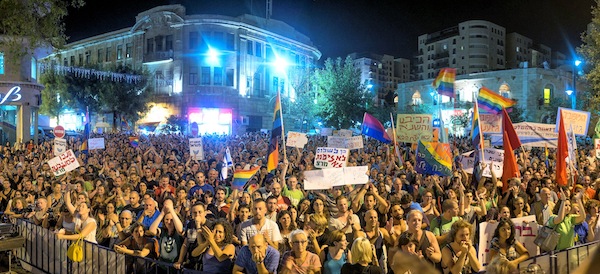
In August, Yishai Shissel, who had recently been released from prison for stabbing participants in Jerusalem’s Pride parade 10 years earlier, once again attacked marchers in the annual parade. He stabbed six people at random, and a 16-year-old died of her injuries. Once again, Israel was faced with problems relating to discrimination and violence.

As the year closed, the government concluded a deal with the companies that will be responsible for mining the huge quantities of natural gas found off Israel’s coast.


photo - A border policeman walks past the covered body of a victim of the terror attack near the Jerusalem light rail in November 2014
A border policeman walks past the covered body of a victim of the terror attack near the Jerusalem light rail in November 2014. (all photos from Ashernet)
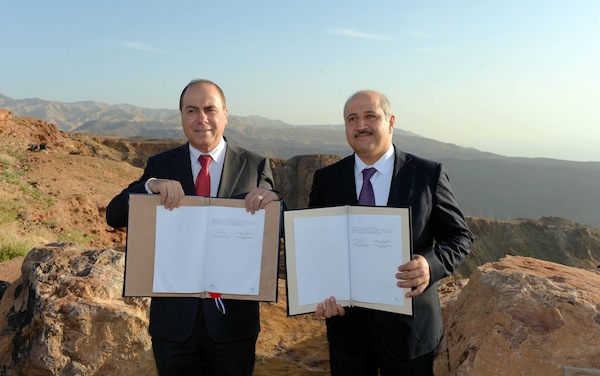
photo - Near the end of February 2015, Israel and Jordan sign an agreement to revitalize the Dead Sea by building an $800 million pipeline from the Red Sea. The measures will not only slow down the evaporation of the Dead Sea, but also supply electricity to both countries when completed.
Near the end of February 2015, Israel and Jordan sign an agreement to revitalize the Dead Sea by building an $800 million pipeline from the Red Sea. The measures will not only slow down the evaporation of the Dead Sea, but also supply electricity to both countries when completed.
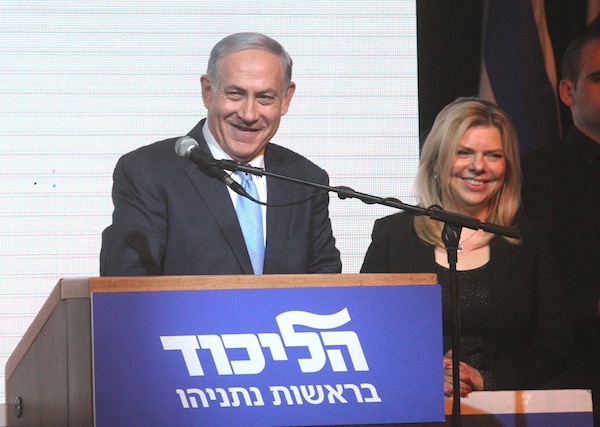
photo - In March 2015, Likud wins the general election
In March 2015, Likud wins the general election.
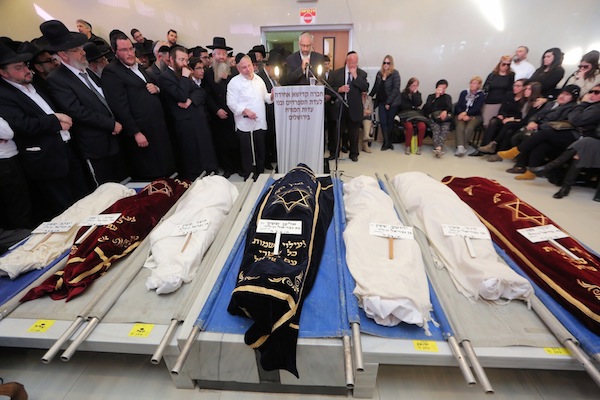
photo - On March 22, Gabriel Sassoon from New York eulogizes in Jerusalem his seven children who were killed in a house fire the previous Shabbat in Brooklyn.
On March 22, Gabriel Sassoon from New York eulogizes in Jerusalem his seven children who were killed in a house fire the previous Shabbat in Brooklyn.
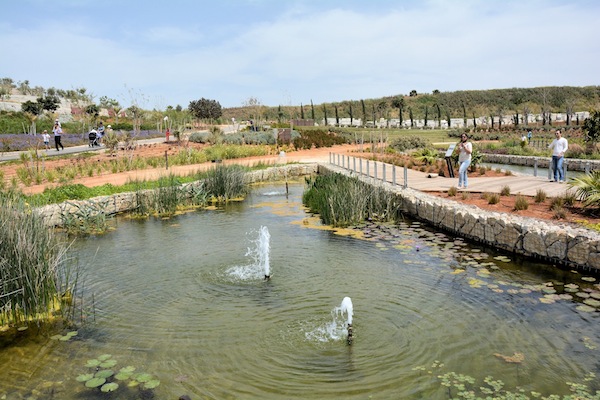
photo - The Tel Hirya reclamation project and urban park, April 2015.
The Tel Hirya reclamation project and urban park, April 2015.
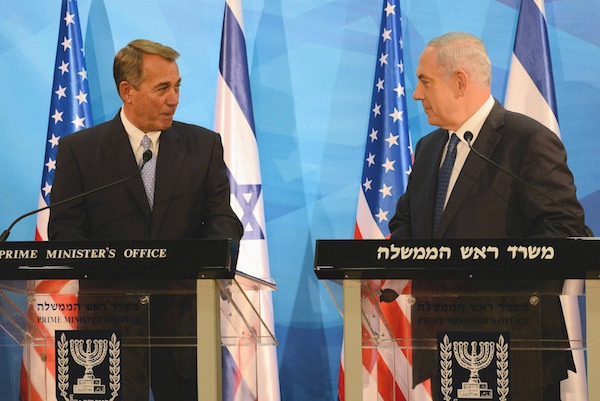
photo - In April, Senator John Boehner visits Israel to show his solidarity over the rejection of the deal with Iran.
In April, Senator John Boehner visits Israel to show his solidarity over the rejection of the deal with Iran.
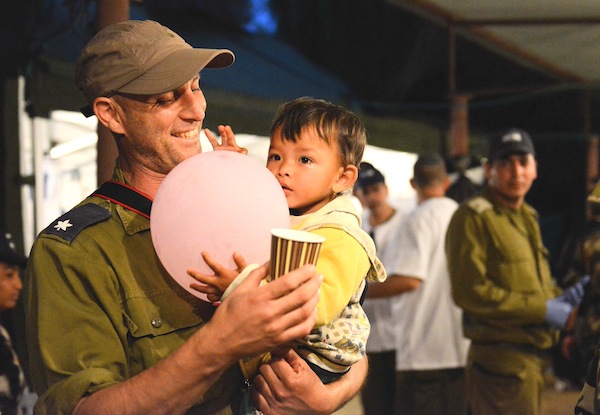
photo - Israel Defence Forces medical personnel treat injured Nepalese at the IDF field hospital in Katmandu, May 2015.
Israel Defence Forces medical personnel treat injured Nepalese at the IDF field hospital in Katmandu, May 2015.
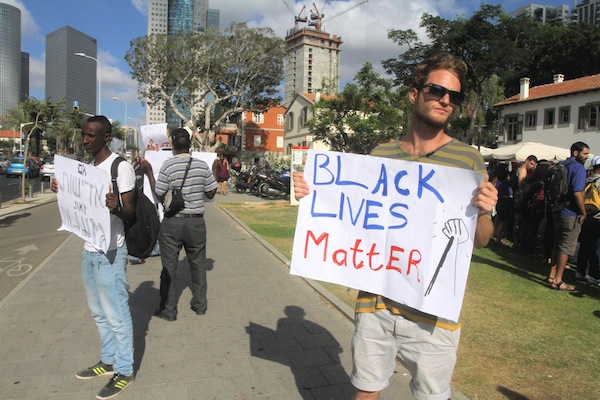
photo - Ethiopian Jews and their supporters protest outside the Ministry of Defence headquarters in central Tel Aviv, June 2015.
Ethiopian Jews and their supporters protest outside the Ministry of Defence headquarters in central Tel Aviv, June 2015.
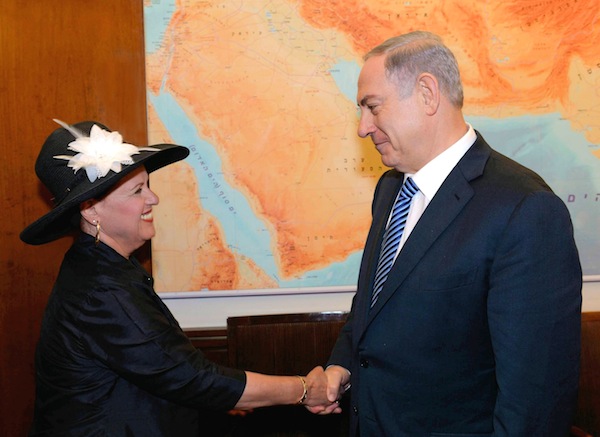
photo - Prime Minister Binyamin Netanyahu receives Esther Pollard in his office on July 29, 2015, following the news that her husband Jonathan Pollard is to be freed from prison in the United States in November.
Prime Minister Binyamin Netanyahu receives Esther Pollard in his office on July 29, 2015, following the news that her husband Jonathan Pollard is to be freed from prison in the United States in November.
photo - In August 2015, Jerusalemites take to the streets in a rally against violence and hate crimes. Thousands also take part in the demonstration in Tel Aviv.
In August 2015, Jerusalemites take to the streets in a rally against violence and hate crimes. Thousands also take part in the demonstration in Tel Aviv.