Skip to content
  • Home
  • Subscribe / donate
  • Events calendar
  • News
    • Local
    • National
    • Israel
    • World
    • עניין בחדשות
      A roundup of news in Canada and further afield, in Hebrew.
  • Opinion
    • From the JI
    • Op-Ed
  • Arts & Culture
    • Performing Arts
    • Music
    • Books
    • Visual Arts
    • TV & Film
  • Life
    • Celebrating the Holidays
    • Travel
    • The Daily Snooze
      Cartoons by Jacob Samuel
    • Mystery Photo
      Help the JI and JMABC fill in the gaps in our archives.
  • Community Links
    • Organizations, Etc.
    • Other News Sources & Blogs
    • Business Directory
  • FAQ
  • JI Chai Celebration
  • JI@88! video

Recent Posts

  • Sharing her testimony
  • Fall fight takes leap forward
  • The balancing of rights
  • Multiple Tony n’ Tina roles
  • Stories of trauma, resilience
  • Celebrate our culture
  • A responsibility to help
  • What wellness means at JCC
  • Together in mourning
  • Downhill after Trump?
  • Birth control even easier now
  • Eco-Sisters mentorship
  • Unexpected discoveries
  • Study’s results hopeful
  • Bad behaviour affects us all
  • Thankful for the police
  • UBC needs a wake-up call
  • Recalling a shining star
  • Sleep well …
  • BGU fosters startup culture
  • Photography and glass
  • Is it the end of an era?
  • Taking life a step at a time
  • Nakba exhibit biased
  • Film festival starts next week
  • Musical with heart and soul
  • Rabbi marks 13 years
  • Keeper of VTT’s history
  • Gala fêtes Infeld’s 20th
  • Building JWest together
  • Challah Mom comes to Vancouver
  • What to do about media bias
  • Education offers hope
  • Remembrance – a moral act
  • What makes us human
  • המלחמות של נתניהו וטראמפ

Archives

Follow @JewishIndie
image - The CJN - Visit Us Banner - 300x600 - 101625

Month: May 2014

Moments shine in Seminar

Moments shine in Seminar

Brian Cummins, standing, with, left to right, Michael Germant, Christine Wallace, Gina Leon and Brendan Riggs. (photo by Gregory Wills Photography)

Seminar, by American playwright Theresa Rebeck, is a sex comedy with occasional insights into the life of a professional artist. However, the play feels a bit thrown together and uncertain of how seriously it wants to be taken. As a drama, it is pretty weak. As a sex comedy, it is second rate. And, as a meditation on the life of an artist, it is half-baked. Still, it has moments that work.

The recent community theatre collaboration by Island Productions with Frolicking Divas and Bar S Entertainment marked the play’s Vancouver première. The show ran for five performances at PAL Studio Theatre and closed April 20. The cast comprised local film and television actors, including a couple of Jewish community members, Gina Leon and Michael Germant.

Rebeck is a successful television writer with credits like L.A. Law, Third Watch, NYPD Blue and Smash. In 2003, she was nominated (with a co-writer) for a Pulitzer Prize. In addition, she is a noted scholar who holds a doctorate in theatre from Brandeis University. Seminar ran on Broadway for 191 performances before it closed May 6, 2012. Allan Rickman played the lead character, Leonard, a washed-up novelist who teaches young writers. It’s a huge role, a character that dominates the play and all the characters in it.

Martin Cummins played that role in the local production. Four young writers have chosen to pay $5,000 each to study with this literary giant. As the group’s teacher, Leonard is a pontificating jerk and a destructive force. He is also the source of the play’s energy. Cummins’ characterization started with over-the-top bluster and pomposity, a level that gave the character no room to become increasingly arrogant and obnoxious as the play goes on. This weakened his performance and the production.

Four students and Leonard meet weekly in Kate’s apartment for a workshop with the “Great Man.” Kate (played by Leon) is a privileged young woman who lives in a huge apartment on Manhattan’s Upper West Side. She reveals her insecurity by constantly dropping the name of the exclusive college she once attended, as if this establishes her credibility as a short story writer. She’s in love with Martin (Germant), who eventually sleeps with Izzy (Christine Wallace).

Lots of low-comedy bed-hopping occurs in a play that aspires to be about the creation of art. The sex-comedy element may indicate that the playwright was too lazy to develop more sophisticated subplots, or maybe it just shows the playwright’s conviction that stock characters in age-old situations are essential to commercial Broadway success. She is likely right in the latter.

Douglas (Brendan Riggs) is eager to receive approval from his teacher, and Izzy enjoys Leonard’s accolades for what is clearly an inferior work. She succeeds on her looks alone, and ends up in a couple of beds.

And then there is Martin, the best writer in the group and the least secure. He is afraid to show his writing to anyone. When he finally shares his work, Leonard is deeply affected and moved to make the play’s best, and best-performed, speech. He warns Martin of the miserable life that lies before him should he pursue the writing career of which he is clearly capable.

In this speech, Rebeck (through Leonard) offers a cautionary tale about how a talented writer may produce a successful novel or two, but can then expect to see his or her excellent work ignored, suffer envy of less successful writers, and end up teaching creative writing to bored students at some insignificant college. Leonard is clearly describing his own rise and fall, and Cummins rose to the occasion with this speech and we saw Leonard’s bluster combined with personal pain and disappointments. A good moment for Cummins.

For the play’s final scene, Rebeck takes a more romantic view of artists, those individuals who are compelled to create. This final dialogue, between Leonard and Martin, allowed both actors to shine. Germant provided a layered version of Martin. He shifted from an angry victim who demands his money back to an artist in search of a mentor; and Leonard challenges the young writer to work hard. The play ends on a hopeful note.

The actors, for the most part, were too dependent on the script for the establishment of their characters. They should have displayed more anxiety in anticipation of Leonard’s judgment and more distress when he destroys their dreams. The actors needed also to demonstrate why their characters stick with the loathsome Leonard, why they don’t just leave the room and quit his class. Finally, the comedy would have worked better if director Mel Tuck had guided his actors into a faster pace and a greater focus on proper timing. Snappy dialogue needs to snap.

Michael Groberman is a Vancouver freelance writer.

Posted on May 2, 2014September 18, 2014Author Michael GrobermanCategories Performing ArtsTags Bar S Entertainment, Brendan Riggs, Christine Wallace, Frolicking Divas, Gina Leon, Island Productions, Martin Cummins, Michael Germant, PAL Studio, Theresa Beck

What might the future hold now that the peace talks have failed?

This article was originally published in the Times of Israel the day before negotiations failed and the editing takes this into account. It is reprinted with permission.

As the current peace talks between Israel and the Palestinians have failed, we need to prepare for what comes next.

For some, this preparation involves preparing the public relations case for why “they” are to blame and shoring up our arguments and defence against a partial or broad boycott, divestment and sanction (BDS) campaign. It might also involve the circling of wagons around the “loyalists” and a legislative and communal campaign against the “outliers.” Who can march, when and where, who can speak, when and where, whose support is acceptable, and who is included under our “big tent,” are all going to be the subjects of ever-increasing and acrimonious debate, and some around the world might not take it as self-evident that it is “their” fault.

What happens after we accept that, for possibly the next decade, an agreement will elude us? What happens when our aspirational horizons are contracted and the status quo is all we can look forward to? Do we commence with punitive steps, such as annexing Judea and Samaria, expanding our hold on the land through settlement building and expansion, and a cessation of financial cooperation and support with the Palestinian Authority? Do these actions contribute to a stronger and greater Israel, to Israel’s vision of itself and relationship with world Jewry and the international community?

Like U.S. Secretary of State John Kerry, I, too, fear the consequences of an energized BDS movement. But, more than that, I fear the ghetto mentality and victimhood psychology to which it would give birth. As a people, we are well schooled in living in the midst of animosity and defensive responses are imprinted on our DNA. Instead of leading the Jewish people away from a Holocaust-centred narrative, Israel would be its new locus of operations.

All criticism will immediately be subsumed under the banner of antisemitism and the world will be divided between the stark categories of friend or foe, with the former an ever-shrinking category. Friends will be confined to those who do not merely support us but who agree with us and reaffirm our narrative. Our world will become smaller and our walls higher as we create with our own hands the greatest ghetto in Jewish history.

This is not the Jewish world into which I want to raise my grandchildren. This is not a Jewish world that has any chance of attracting Jews who are searching for the location of their primary identity. This is not an Israel that can lay claim to a leadership position in Jewish life and attract the loyalty of future generations. This is not an Israel that can build new bridges, whether spiritual, moral, economic or political, with the larger world and our Christian and Muslim friends.

The making of peace requires two sides. Whether we did everything in our power and whether the Palestinians did everything in theirs is a factual question and, as such, paradoxically, unresolvable, for we rarely shape our opinions on the basis of facts, and instead shape our perception of the facts on the basis of our opinions.

We need to ensure that the cessation of the current peace negotiations does not at the same time unleash an uncontrollable process and narrative that will create a broader reality alien to who we are and detrimental to who we want to be.

I am concerned with that over which we do have control – our values, principles and identity as a nation and as a people. We need to ensure that the cessation of the current peace negotiations does not at the same time unleash an uncontrollable process and narrative that will create a broader reality alien to who we are and detrimental to who we want to be.

We now awaken to a world where policy is not the barter of negotiations nor the payment offered for compromises from the other side. We awaken to a world where we have to negotiate once more with ourselves and discover what we really want and what we need to do to get there. Settlement expansion is no longer a Palestinian problem but an Israeli one; educating youth towards violence is no longer an Israeli concern but a Palestinian one.

The demands of the other have ceased to serve as the wall behind which we hide ourselves from our own values and interests. We discover that all the punitive threats of harm that we levied at each other during the negotiations, if in fact implemented, harm “us” at least to the same degree.

Together with the mobilization of our forces for the sake of public relations, we need a mobilization of our best talent and leadership to determine and implement our national policies. We need to lead and not be led.

While a unilateral withdrawal along the lines of Gaza is not prudent, a unilateral implementation of policies that serve our moral and political interests is not only prudent but critical.

Such unilateral policies, I believe, must first fortify our Jewish commitment to the equality of all humankind, to the treatment of others as we would want to be treated ourselves and to the disdain we feel in the role of occupying another people. As an expression of these commitments, we must first clarify the borders we believe are defensible and which at the same time will allow for a viable Palestinian state.

This must be followed by a cessation of all settlement expansion, let alone building beyond these lines. At the same time, this cessation must be accompanied by a gradual dismantling of those settlements that are outside our self-proclaimed borders: first, through stopping economic incentives; second, through the provision of economic incentives to move; and third, through the construction of viable housing alternatives to accommodate the inhabitants of these settlements. All this will undoubtedly take time, but now, in the days after, what we have in abundance is time.

Just as we built a massive infrastructure to support the safety of the Israeli citizens who live there, we must now invest heavily in roads, bridges and tunnels that will allow unencumbered and free passage, to the best of our ability, for Palestinian inhabitants.

As the role of occupier is prolonged, we must be ever more conscious of the effects that it has both on those who are occupied and on those who are occupying. We must engage in an ever more rigorous analysis of our military footprint in Judea and Samaria and minimize our interference in the everyday lives of the Palestinian people to pressing security concerns alone. Just as we built a massive infrastructure to support the safety of the Israeli citizens who live there, we must now invest heavily in roads, bridges and tunnels that will allow unencumbered and free passage, to the best of our ability, for Palestinian inhabitants.

As the occupier, we must realize that the cancer is not merely affecting a small group of radical settlers but us all. We must double and triple our educational programs geared toward increasing commitment and sensitivity to the equality of human beings and to their inalienable rights. We must fight any and all exhibitions of discrimination and national racism. If we are not at the present time capable of applying our values to the Palestinian people in Judea and Samaria, we can double and triple our efforts in implementing them toward our fellow Israeli Arab Palestinian citizens.

Finally, we must relearn the old Diaspora art of living with unfulfilled dreams. The success of Israel has lured us into believing that if we will it, it will become a reality. As a result, we articulate our aspirations but have difficulty holding on to them in the midst of our imperfect reality. If aspirations for peace, justice and compassion are going to continue to define Jewish identity, we must learn to talk about them, write and sing about them, dream about them, despite the pain and disappointment that accompany our inability to as yet fulfil them.

This is part of the Torah of Israel for what happens in the days after negotiations fail, a Torah that challenges us to implement our ideals to the best of our ability and which obligates us to hold on to them, regardless of the reality within which we find ourselves. This is a Torah that empowers us as a free people to shape the world in which we live, instead of merely being its victims. This is a Torah that can prepare us for all the days after.

Rabbi Dr. Donniel Hartman is president of the Shalom Hartman Institute (hartman.org.il) in Jerusalem and director of the Engaging Israel Project. He is the author of The Boundaries of Judaism.

Posted on May 2, 2014May 1, 2014Author Donniel HartmanCategories Op-EdTags John Kerry, peace process, Shalom Hartman Institute

Peace talks fail – again

While the announcement of a Fatah-Hamas unity pact on April 23 may seem to have come out of the blue, the resulting collapse of the U.S.-led peace talks was not as surprising.

The negotiations never really gained steam and, just over a month ago, they started their nosedive. Israel announced it would not release another group of prisoners by March 29 unless the Palestinian Authority agreed to extend talks beyond their April 29 deadline (which they did not). On April 1, Israel issued tenders for homes in the east Jerusalem neighborhood of Gilo and, the next day, the Palestine Liberation Organization central council applied for membership in 15 United Nations agencies/treaties. While settlement construction freezes were not a peace-talk commitment, the prisoner releases and abstention from international recognition attempts were concessions that each side offered before the talks began last July.

The day before the unity announcement, PA President Mahmoud Abbas had threatened to hand the West Bank over to Israel if peace talks failed. After the announcement, he said that a unity government under his charge would recognize Israel, accept previous Israeli-Palestinian agreements and have Fatah in control of any weaponry/soldiers. Yet, on April 26, he demanded in return that Israel freeze settlement construction, free prisoners and begin border discussions.

On April 27, more developments. Abbas acknowledged the tragedy of the Holocaust and expressed sympathy for the families of the victims, while Hamas said that, actually, it would never accept Israel as a Jewish state. Also that Sunday, the PLO council decided to pursue membership in another 60-plus UN agencies/treaties. As well, the council refused to recognize Israel’s Jewish nature and demanded “a complete end to the occupation … the illegitimacy of settlements … and a refusal of land swaps,” when Abbas had indicated amenability to “limited land swaps.”

Israel’s cabinet made the decision on April 24 to suspend talks, not willing to deal with any government that included Hamas, a terrorist organization. However, there were dissenting opinions: Justice Minister Tzipi Livni (Hatnua), Finance Minister Yair Lapid (Yesh Atid) and Opposition leader Isaac Herzog (Labor) wanted to leave the door to negotiations open, even in the case of a unity government, if it adhered to the three conditions stipulated by the Quartet (the UN, United States, European Union and Russia): recognizing Israel, accepting previous agreements and renouncing terrorism. That said, Naftali Bennet’s Jewish Home party doesn’t recognize the Palestinians’ right to a state and Prime Minister Binyamin Netanyahu’s Likud is deeply divided on the matter.

On Sunday, Netanyahu dismissed Abbas’ Holocaust comments as “damage control,” and said that Israel will look for alternative paths to peace, that he’s “not going to accept a stalemate.” On Tuesday, the Israeli government decided to use the tax funds it collects on behalf of the PA to pay debts owed to it by the PA, and was considering additional sanctions. To that date, Netanyahu had resisted calls from within Israel to unilaterally draw its own borders.

As the United States/U.S. Secretary of State John Kerry went from blaming Israel for reneging on the prisoner release, to blaming both sides for the troubles, to understanding why Israel wouldn’t want to deal with an organization that doesn’t believe in its right to exist in the first place, to viewing the end of talks as an expected “holding period where parties need to figure out what is next,” to using apartheid to describe a possible future Israel, their leadership of the negotiations floundered. Amid this flurry of activity, the EU issued a statement Sunday supporting Palestinian reconciliation as long as a unity government upheld nonviolence, was committed to a two-state solution and accepted Israel’s “legitimate right to exist.” On Monday, the Arab League blamed Israel for the failed talks.

In broad strokes, that’s where things stood at press time. What then are some of the concerns going forward? Analysts have pointed to many, including:

• Hamas may be agreeing to resign from power when the unity government is formed because they hope to win Palestinian public opinion and, eventually, the elections to rule over both Gaza and the West Bank.

• With peace talks off the table, Hamas won’t have to change its stance towards Israel if it forms a coalition with the PA.

• Without the talks, there may be increased violence in/from the West Bank and increased international efforts to boycott Israeli goods and institutions.

• The PA could collapse if the United States withdraws financial aid because of the reconciliation with Hamas, leaving Israel responsible for West Bank residents and the moral issues that entails, as well as more international criticism and the threat of a state in which Arabs will eventually outnumber Jews.

So, as Israel turns 66, it looks like a challenging year lies ahead. We can think of more than one wish to make as the candles are blown out.

Posted on May 2, 2014May 8, 2014Author The Editorial BoardCategories From the JITags Binyamin Netanyahu, Fatah, Hamas, Hatnua, Isaac Herzog, Israel, Jewish Home, Likud, Mahmoud Abbas, Naftali Bennet, Palestinian Authority, PLO, Tzipi Livni, Yair Lapid, Yesh Atid
Creativity at the crossroads for Idan Raichel

Creativity at the crossroads for Idan Raichel

Idan Raichel performs for one night only at the Vogue Theatre on May 12. (photo by Eldad Rafaeli)

Vancouver audiences are in for a treat next month when Israeli musician and uber-producer Idan Raichel together with the ensemble of international musicians that comprise the Idan Raichel Project perform for one night only at the Vogue Theatre on May 12.

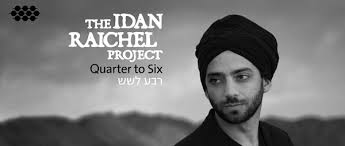
The IRP’s unique sound – a blend of African, Middle Eastern, Indian and Latin American rhythms and instruments, is familiar to Vancouver audiences. Their three previous tour stops here – also presented by the Chutzpah! Festival – were sold out well in advance. This time, in addition to old favorites, audiences will be treated to some songs from Raichel’s latest and most successful album to date, A Quarter to Six, released in late 2013 to enthusiastic reviews from music critics and fans, sky-rocketing to double-platinum status within two months of its release.

The album’s title, taken from a work by Israeli dramatist Yossi Banai, refers to the twilight hour, a time of transition from day to night. “This is a very special time in Israel, the change of the day … you can think about what has happened up until now, also what could happen,” explained Raichel, who spoke with the Jewish Independent from his home in Tel Aviv. “The hour of the day that is like the crossroads in life…. After 10 years with the Project, I feel we have reached this time … of change, a transition, both musically and personally.

“A Quarter to Six [is] a kind of closure,” mused the artist. “It speaks about the crossroads we have in life. I don’t know if it’s age, or different perspectives, but we all have it about life … it doesn’t have to be a matter of age, you can feel this crossroads when you are 15 or 50.”

More than a collection of songs, the album is what Raichel terms “a complete piece of art,” as it includes a booklet of small paintings that he has been working on for the past two years. This album “is a big musical journey – inside my life spiritually and outside, touring and collaborating with [musicians] from Germany, Portugal, Columbia. The thing that touches me the most is that people see each song fits … [it’s] part of a story and they are listening from start to finish, writing comments about the booklet.” The songs are “not just singles,” he continued. “Every song is a script in a movie, every scene is singing about the situation that he or she is in. At concerts, I see kids and their parents, grandparents with kids coming, it’s reaching a wide audience…. The first time this is a full album that goes deeply into the theme of crossroads in life.”

While the format of this album differs from previous recordings, what hasn’t changed is Raichel’s unique sound, created in part by the collaboration with international musicians. A Quarter to Six brings together an eclectic mix of voices, languages and musical disciplines with guest artists that include German counter tenor Andreas Scholl, Colombia’s Marta Gómez, Portuguese fado star Ana Moura, Arab-Israeli singer/songwriter Mira Awad, Malian singer and guitarist Vieux Farka Touré, and a selection of some of Israel’s top up-and-coming singers and musicians. Raichel wrote all the melodies and lyrics but collaborated with each artist, allowing them to interpret and adapt their song to their own personal style.

This latest record is a very personal album – mirroring the very real crossroads that Raichel faces at this stage of his life and career. The 36-year-old recently settled down with his steady girlfriend, became a father and – in a move that elicited some very strong reactions from fans across the world – cut off his trademark dreadlocks. Raichel agreed that in retrospect the album foreshadowed his own transition into adulthood.

image - A Quarter to Six cover
A Quarter to Six was released in late 2013 to enthusiastic reviews from music critics and fans, sky-rocketing to double-platinum status within two months of its release.

“Is it personal? When I wrote the album, I still had my dreadlocks, I was on and off in my relationship with my lady but somewhere inside I knew it was time to make decisions, to change things. I knew … I have to shave my dreadlocks after 14 years, I knew we were on and off but I knew I wanted her to be the mother of my kids.… Later on, it was natural. One month after the album was released, we knew that we were pregnant, things were happening.”

Having a child has opened Raichel up to a whole new world. Having a baby “gives me such a perspective about life…. I just enjoy this miracle, see how she develops and discovers new things every day…. It opens my appetite for more young creatures, maybe another nine or so. I wish!” But Raichel and his Austrian girlfriend, Damaris, are not planning on adding to their brood just yet. Their baby girl, Philipa Helena Damaris Raichel, remains with her mom in Israel while Raichel is on the road. “Damaris and the baby won’t tour with me…. I think it’s good to separate things. On the road, everyone has stuff to do. I don’t want them to feel forced to have to wake up early or, you know, to see the concerts every night.”

IRP’s blend of international musicians and sounds has put it at the forefront of the world music scene. In addition to that, Raichel calls the Project’s music “the soundtrack of Israel,” adding that the group plays the role of cultural ambassador for Israel. “The definition of world-music artist can change from one time to another, but world-music artists bring the soundtrack of where they come from. For example, Bob Marley is the voice of Jamaica; Edith Piaf, the voice of France; or like Miriam Makeba is the voice of South Africa. We feel honored when people describe our music as the soundtrack of Israel. If people don’t know anything about our country but can remember our music … especially people from conflict regions, then they see the other side of our culture.“

The past year has been a banner one for Raichel, who performed privately for Barack Obama during his state visit to Israel, appeared with French superstar Patrick Bruel and was awarded ACUM’s Composer of the Year 2013. To top it off, the popular Israeli entertainment magazine Pnai Plus named Raichel “Man of the Year.” Far from finding this flattering, the title made the unexpectedly humble musician feel uncomfortable. “Well, I was speechless then, and I’m speechless now,” he said. “In such a crazy country like ours, with so much happening every day, even every half day … how weird it [is] to get this recognition. I think a better Man of the Year would be … there is the story of one of the army commanders, he lost his two hands in an explosion and, a few months after that, he came back to the army to lead [his soldiers] again.” He added, “Just the struggle, even if it wasn’t an army, even if it was a soccer team … I don’t know, to see the power of good will, how strong you can be facing such trauma, how you can not give up to depression or pain or disappointment, that was an inspiration, I guess.”

Raichel said there is “a lot of good music coming from the Israeli music scene” nowadays. “It’s becoming more and more open to sounds from all over. Back in the day, you would hear less of the Yemenite roots, Middle Eastern influences,” it was “mostly Ashkenazi music.” And while he enthused about Israel’s modern musicians, mentioning DJ Avishai Cohen and Yemen Blues in particular, he still enjoys the music of Arik Einstein and Shoshana Damari. “Now, there are so many more radio stations, for more artists. Today, you hear music that more reflects the sound of the Israeli melting pot.”

Chutzpah! Festival artistic managing director Mary-Louise Albert said audiences are in for a whole new experience at the May 12 concert. “I have brought Idan back because it builds his audience here in Vancouver and I’m committed to supporting many artists beyond just presenting them one time. Artists develop and grow, so audiences get to experience this growth also when an artist performs multiple times.” With its 10-member ensemble (the largest of IRP’s Chutzpah! engagements), Albert said the Vogue Theatre is the perfect showcase for this high-energy, “plugged-in” event. “Vancouver audiences have not experienced this show before,” she said.

Opening for IRP is Vancouver’s Babe Gurr, who will showcase songs from her current album, SideDish, a unique blend of world music and her own roots style that has earned Gurr glowing reviews and a strong following.

Nicole Nozick is a Vancouver-based freelance writer and communications specialist.

Format ImagePosted on May 2, 2014May 2, 2014Author Nicole NozickCategories MusicTags A Quarter to Six, Babe Gurr, Chutzpah!, Idan Raichel, Mary-Louise Albert, SideDish

Posts pagination

Previous page Page 1 … Page 6 Page 7
Proudly powered by WordPress