Skip to content
  • Home
  • Subscribe / donate
  • Events calendar
  • Business Directory
  • FAQ
  • News
    • Local
    • National
    • Israel
    • World
    • עניין בחדשות
      A roundup of news in Canada and further afield, in Hebrew.
  • Opinion
    • From the JI
    • Op-Ed
  • Arts & Culture
    • Performing Arts
    • Music
    • Books
    • Visual Arts
    • TV & Film
  • Life
    • Celebrating the Holidays
    • Travel
    • The Daily Snooze
      Cartoons by Jacob Samuel
    • Mystery Photo
      Help the JI and JMABC fill in the gaps in our archives.
  • Community Links
    • Organizations, Etc.
    • Other News Sources & Blogs
  • JI Chai Celebration
  • JI@88! video

Recent Posts

  • SFU honours Gloria Gutman
  • Lifting people’s spirits
  • Wedding a ray of light
  • Indigeneity and Zionism
  • Rule of law broken: councilor
  • Football and its roles
  • The burden of defence
  • Fish Café returns after fire
  • All right in what goes wrong
  • Nuns & mermaids at TUTS
  • Camp offers holiday retreat
  • Students and mentors inspire
  • Once-in-a-lifetime trip
  • 100 dancers, one heart
  • Money for the sciences
  • What “Jewish food” means
  • Have a cookie, schnitzel too
  • Federation now across BC
  • Israel fighting for its existence
  • Deal strengthens Iran
  • Patriotic belonging diminishes
  • A campaign to engage
  • Upstanders’ first live event
  • Responding to Carney
  • Having your own home
  • Music a family tradition
  • Musical to warm heart
  • Community milestones … June 2026
  • Sharing her passion for Israel
  • Or Shalom reopens its doors
  • JFS from past to future
  • Need holistic approach
  • Sharing stories, advice
  • Journalist shares fears
  • Skills to live together
  • Road to independence

Archives

Follow @JewishIndie
image - CJN box ad Rockowers 2026

Tag: youth

Gymnast excels at her sport

Gymnast excels at her sport

At the B.C. Winter Games in Fort St. John last month, Belle David received a silver medal for her ball routine and placed fourth all around. (photo from Danica David)

Local athlete Belle David started the year off with success after success after success in her chosen sport: rhythmic gymnastics.

The 10-year-old gymnast competes provincially at level 3B (ages 9-11). At the Queen of Hearts invitational competition in Vernon Jan. 24-26, she received an all around first place, a gold medal in the ball routine, a silver medal in the free routine and a bronze in rope. At the Olympia Cup in Burnaby Feb. 7-9, she received a bronze medal in rope, as well as a special award for Miss Dance Jr. And, at the B.C. Winter Games in Fort St. John Feb. 20-23, she received a silver medal for her ball routine and placed fourth all around.

“The most fun part of rhythmic gymnastics is the competitions,” Belle told the Independent in a recent interview. “The most difficult part of rhythmic gymnastics is the long practices.”

Admitting that she gets a little nervous when she competes, she said, “but I have a lot of practise with competitions and that practise helps my nerves.”

Belle trains three times a week for four hours each time at rhythmic gymnastics and she also trains in ballet twice a week. “Altogether, I train for rhythmic gymnastics over 14 hours a week (including mandatory ballet) and, combined with my other sports, I do 25 hours a week.”

The restrictions that have been implemented by various levels of government to try and manage the spread of COVID-19 have brought changes in that regimen, however.

“Belle’s coach has set an individual stretch and strengthen program for each athlete,” Belle’s mother, Danica David, told the Independent. “The coach has sent a video, 26 minutes long, of basic training exercises she expects the athletes to follow, along with detailed plans for each gymnast. Belle is expected to film herself training and send in the film to the coach to check in daily.

“Mentally, Belle is processing the end of the season coming early. When there are still three competitions left, it’s disappointing, after all her hard work, but she will keep practising at home. She said, ‘I feel like there’s nothing to do and nowhere to go.’”

In Grade 4 at David Oppenheimer Elementary School, Belle said her favourite subject is art. Interviewed before the pandemic forced closures, she said, “I socialize at school and at practice because I don’t have time for friends outside of practice. I mostly do my homework early in the morning before school.”
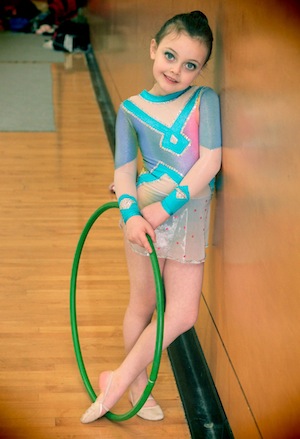
photo - Belle David at her first rhythmic gymnastics competition, at age 6
Belle David at her first rhythmic gymnastics competition, at age 6. (photo from Danica David)

Belle started dance classes at the Jewish Community Centre of Greater Vancouver when she was 4 years old and began taking rhythmic gymnastics classes when she was 5.

“I love sports,” she said. “I love baseball, dance, rikudei ’am [folk dances], swimming, skating and artistic gymnastics.”

She also makes time for community and cultural activities.

“I celebrate all the Jewish holidays and I keep Jewish traditions,” she said. “Our family hosts holiday parties and I enjoy PJ Library events and books.”

After three years performing in Goh Ballet’s The Nutcracker, Belle said, “I took a break this year to really enjoy Chanukah with my ima, abba, grandma, brother and friends. When I danced in The Nutcracker, sometimes I performed in two shows a day during the run and I missed the Chanukah fun. This year, we did Chanukah bowling, skating, the party bus and menorah parade and, as always, we lit candles and opened presents each night of Chanukah.”

Belle said she wears a red-string kabbalah bracelet on her left wrist, including in competitions, that her mom blesses.

Family is important to Belle and one of her ambitions centres around her grandparents in Israel.

“I have a short-term goal to learn the apparatus hoop,” she said. “I have a long-term goal of making it to the Grand Prix Holon.

“The Grand Prix Holon takes place in my home city (Holon) in Israel,” she explained. “I would like to compete for Canada or Israel. It’s an international competition and it’s across the street from my savta and saba’s apartment. All my family could come and see me compete. This is my dream.”

Belle’s family moved from Israel to Vancouver almost seven years ago, said her mother.

“I was born in Canada and her dad was born in Israel – we met in India,” David said. “Belle was born in Israel and she has a brother born in Canada, named Omri, he is 6 years old. Their father, Ofir, has never been able to move permanently to Canada because of the nature of his work but he visits often. We live in a multigenerational household in Vancouver with my mother, who was a former competitive athlete. She finds great joy in supporting her grandchildren to pursue athletics – it’s a family passion that skipped a generation. Belle and Omri have seven cousins in Israel and a large extended family that they miss very much.”

In Israel, David said they didn’t have access to activities like they have here. “In our town,” she said, “private country clubs dominated and we had no access without costly memberships. When we came to Canada, Belle was interested in trying everything, sports, arts, activities of all kinds, and, through the JCC and local community centres, it was affordable.

“Belle’s grandmother really encouraged rhythmic gymnastics, as she was involved in the sport herself as a teacher,” continued David. “Belle participated in a rhythmic gymnastics camp at age 5 and she was hooked. When I came to pick her up, her face was red and she looked exhausted. I expected her to want to quit but exactly the opposite – she loved the challenge. The coach had been a Russian-Israeli who spoke Hebrew and Belle felt right at home. She continued camp during the summer. In the fall, she was asked by a club to enter the competitive rhythmic gymnastic training stream.”

As the parent of athletes, David said her “biggest challenge has been being a witness to the highs and lows of the sport without holding any attachments to them. The same goes for their achievements. What Belle achieves is hers alone. It is her self-discipline and motivation to grow in sport that encourages us to support her in any way we can.

“The biggest joy for me,” said David, “is to see that Belle is a wonderful sister, modeling hard work and perseverance to her brother. Belle is self-determined: she chooses her goals and achieves them in her own time. She chose to sacrifice social time and other opportunities to train two years for the winter games. It wasn’t always easy on the family or her but she followed through. I admire her drive – when I was 10 years old, I couldn’t even keep my hamster alive.”

David described herself as “hopelessly non-competitive and uncoordinated” and, therefore, said it is hard for her “to truly invest in the competitive aspect of the sport. Judging and performance can alter from competition to competition and a place on the podium is never guaranteed.

“I find my niche in the esthetic aspect of the sport,” she said, “and support Belle by adding Swarovski crystals to her bodysuits and finding the most complimentary apparatus. These athletes place a lot of pressure on themselves and, after the long hours and hard work, people question why we subject our children to the intensity of the competitive sport. In my opinion, most of the kids at this level of sport are progressing from an inner motivation and they have cultivated a sense of belonging through sport.”

Format ImagePosted on March 27, 2020March 26, 2020Author Cynthia RamsayCategories LocalTags Belle David, coronavirus, COVID-19, gymnastics, sports, youth
Chai Lifeline in the city

Chai Lifeline in the city

A group of nine Jewish boys from Toronto was in Vancouver recently, courtesy of Chai Lifeline Canada. (photo from CLC)

A group of nine Toronto boys, aged 10-15, recently enjoyed a three-day, all-expenses-paid trip to Vancouver, courtesy of Chai Lifeline Canada, a national charity that supports the families of children or parents who suffer from serious illnesses.

The boys – each of whom has a sibling or parent who is sick – were invited on the trip as a diversion to their family challenges and as an opportunity to bond with other kids in similar situations. Students of seven different Toronto schools, the boys didn’t previously know one another, but came back from the Feb. 28-March 2 trip with strong, new friendships, said Chai Lifeline caseworker Shmuel Rosenberg.

Welcomed by the Vancouver Jewish community, the boys arrived in the city to a group of local boys handing out care packages and then joined them for an excursion to a trampoline park.

A special Shabbat was hosted by Congregation Schara Tzedeck, where the Toronto boys had the opportunity to bond with more of the local community and experience a walking tour of the city, led by Schara Tzedeck’s Rabbi Andrew Rosenblatt. Other weekend highlights included skating on the top of Grouse Mountain and hiking amid spectacular views.

Based in Toronto, with an office in Montreal, Chai Lifeline Canada has nearly 600 volunteers helping more than 2,000 family members nationally. The organization provides dozens of free initiatives to help give children stability and their families a sense of normalcy. Initiatives include counseling, tutoring for children missing extended periods of school, family retreats, sibling programs similar to that of Big Brothers, Big Sisters, and summer camps for kids. For more information, visit chailifelinecanada.org.

Format ImagePosted on March 20, 2020March 17, 2020Author Chai Lifeline CanadaCategories LocalTags Chai Lifeline Canada, education, Schara Tzedeck, tikkun olam, travel, youth
Israeli pucksters visit

Israeli pucksters visit

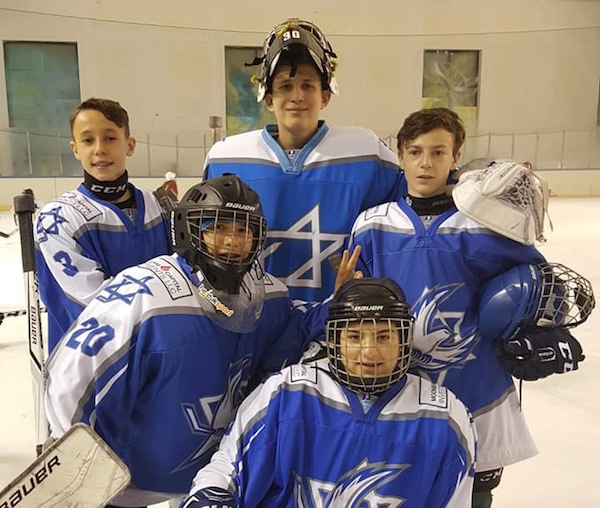
Members of the Hockey Academy of Israel. (photo from Kyle Berger)

The Jewish Community Centre of Greater Vancouver, along with the Jewish Federation of Greater Vancouver, played host earlier this month to 27 young hockey players from Israel’s Northern District who were in town for an eight-day visit.

The stops for the athletes, ages 10 to 14, on their March 5-13 Vancouver trip included a fundraising exhibition game against the JCC league (which had some former NHL players in attendance), the JCC Purim party March 9, which had a hockey workshop for kids in the gym, and a Canucks game on March 10, where Vancouver took on the New York Islanders. The Israeli junior players also had a practice skating session with Barb Aidelbaum, one of Canada’s top power-skating coaches, and ate meals at the Israeli-owned Chickpea and the Palestinian-run Aleph restaurants.

The co-ed group, comprised of youth from a variety of backgrounds – Jewish, Muslim, Christian and Druze – is part of the Hockey Academy of Israel (HIA). Situated in Metula, Israel’s northernmost town – along the border with Lebanon – the HIA (formerly the Canada-Israel Hockey School) was started in 2010 thanks to the drive and ambition of a local Israeli apple farmer and hockey aficionado, Levav Weinberg, and the initial financial support of Canadian media mogul Sidney Greenberg. Presently funded by donors from around the world, the HIA sees as its goal to make hockey fun and affordable for kids who otherwise would not get the opportunity to play.

Since its inception a decade ago, the HIA has witnessed a growing passion for the game in Israel and now boasts more than 400 young players in its academy, all of whom play at the Canada Centre in Metula, home to the only full-sized hockey rink in Israel. This is the second time a group from the HIA has visited Vancouver, a trip that was organized by the JCC and financially supported by the Jewish Federation. Members of the HIA also have visited other NHL towns, such as Ottawa, Pittsburgh and Winnipeg.

The existence of a camp in an area that has frequently made headlines for regional animosities has shown that much good can arise from sport. Many lasting friendships between players of different ethnicities have been formed at the academy.

“There are few things in the world that bring people together the way sports can,” said Kyle Berger, sports coordinator at the JCC and local delegation head for the Maccabi Games. “Sports bonds teammates together, it bonds countries together and, in some rare cases, sports can even bring peace and unity when such things seems almost impossible. This is the magic of the Hockey Academy of Israel, which brings both Jewish and Arab youth and their families together in the name of hockey.”

The HIA says it has found that, as passion for hockey grows in a region surrounded by political conflict, so too grow the bonds and respect these teammates from different cultural and political backgrounds have for one another.

Berger, along with other members of the Metro Vancouver Jewish community, has visited the hockey academy on several occasions, starting in 2012. He told the Independent that he “was blown away” by what he saw when he first arrived. “I had no idea as to the extent of the passion and the intensity the hockey academy has created for the game in Israel, and how much it has done to unite people of different cultures,” he said.

Hockey in Metula, which was featured in the 2013 TSN documentary Neutral Zone, has had a short, yet storied, history. Before the HIA was created, Canadian coaching legend Roger Neilson taught a camp in Metula in the late 1990s and played an integral role in establishing a fervour for the game in Israel.

The HIA is presently coached by Torontonian Mike Mazeika, who believes “the main goal of the academy is to integrate Jewish and Arab kids together, playing hockey, so that they can understand each other and make a difference for the future. Is that going to get us peace in the Middle East? No, probably not. But, if you don’t start small and take small steps, you’ll never be able to take a big step.”

The JCC and Jewish Federation were helped in various ways to support the HIA’s visit, including by host families, sponsors or venue/activity donors. For more information, contact Berger at [email protected] or 604-638-7286.

Sam Margolis has written for the Globe and Mail, the National Post, UPI and MSNBC.

Format ImagePosted on March 13, 2020March 12, 2020Author Sam MargolisCategories LocalTags HIA, Hockey, Hockey Academy of Israel, JCCGV, Jewish Community Centre, Jewish Federation, Kyle Berger, sports, youth
A focus on the environment

A focus on the environment

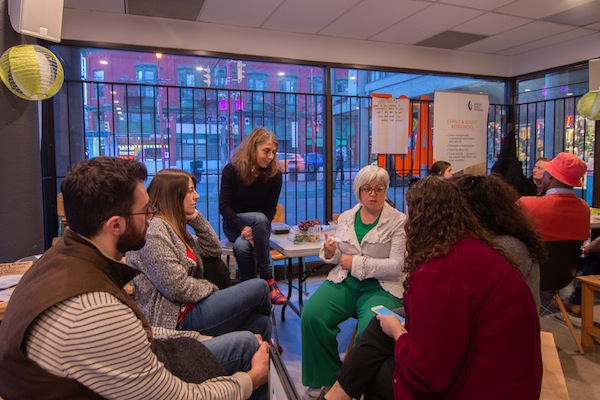
Transportation and sustainability consultant Tanya Paz, centre, participates in Tu b’Shevat Circle: Teachings from the Earth, an event spearheaded by Or Shalom Synagogue in partnership with Jewish Family Services, JQT Vancouver and UNIT/PITT Society for Art and Critical Awareness. Or Shalom’s Rabbi Hannah Dresner is seated on the stool to Paz’s right. (photo by Matt Hanns Schroeter)

More than two dozen individuals whose work involves food security and climate change issues met on Feb. 9 for Tu b’Shevat Circle: Teachings from the Earth, an event spearheaded by Or Shalom Synagogue in partnership with Jewish Family Services, JQT Vancouver and UNIT/PITT Society for Art and Critical Awareness.

Those who gathered work or devote time to such organizations as Grandview Woodland Food Connection, Sustainabiliteens, Coquitlam Farmers Market and Extinction Rebellion. They came together to explore various topics, including how their Jewishness intersects with their work in secular organizations, envisioning a sustainable world and the Jewish community’s role in social justice.

“I noticed that so many of these organizations are spearheaded by young Jews and felt it important to create an opportunity for them to see one another and recognize this aspect of kinship in their work … and whether this commonality enhances the work, draws them into kinship or stimulates any collaboration,” said Or Shalom’s Rabbi Hannah Dresner.

Or Shalom brought on Carmel Tanaka to organize a gathering. Through meetings with young adults and stakeholder groups, Tanaka met a number of people whose careers relate to food security and social justice, but most weren’t working for Jewish organizations nor were they connected to one another within a Jewish context. She and Dresner agreed it was worth bringing them together to see what conversations would blossom.

Tanja Demajo, chief executive officer of Jewish Family Services, said JFS provided funding for the event because they believed in the value of the project.

“There are a lot of Jewish and young Jewish people who are interested in food security and questions of accessibility, which is very interesting from a perspective of … whether this work is modulated by [Jewish] values and how this translates to day-to-day practice,” she said. “At the end of the day, it didn’t really matter if the different participants were working in a Jewish or non-Jewish community.”

Some attendees revealed that, for them, being Jewish is secondary to their focus on environmental issues.

“The room was full of people who identify in varying degrees with their Jewishness and, for some, it’s an important aspect of their identity and, for others, it isn’t integral,” Tanaka said.

Dresner spoke to the indelible connection between environmental action and Judaism. “In my understanding of Judaism, saving our world is at the heart of what it means to have a Jewish spiritual life,” she said. “Creative energy, or the vitality of spirit, is always flowing toward us. It’s what I’d call the ‘world that’s always coming,’ or the ongoing nature of creation. We can encourage and aid this vitality, helping to direct it where most needed, or we can impede the flow. When we are selfish and impede creative flow, the result is a deprivation of generative spirit, spirit denied to corners of creation, and we see results like species blinking into extinction.”

The rabbi wants to spend more time with young Jews working in social justice. “The Judaism I believe in mandates their work as the highest mitzvah of our moment,” she said. “It’s a misconception born of the compartmentalized Judaism in which many of us were raised not to understand that attention to the environment is a Jewish priority.”

Aaron Robinson, chair of Grow Local Society Tri-Cities, a food security group that runs the Coquitlam Farmers Market, said his work for the organization won’t ever have a Jewish mandate, but his Judaism is tied into what he does. “Personally, I can never underestimate the role that Jewish values play in the way I see the world, especially when it comes to tikkun olam,” he said, adding, “I guess it’s become engrained in me, but it was nice to bring it back to the surface to see, wow, there is this Jewish connection to all this work that we’re doing.”

Robinson appreciated the opportunity to connect with other Jews working in similar fields and hopes the conversations will continue.

Some people discussed not feeling supported by the Jewish community to undertake the work they do within a Jewish context. Tanaka said she believes the Vancouver Jewish community hasn’t focused attention on these issues until recently, citing the 2019 climate march and protests as a galvanizing factor, and said it’s time for the local community “to support young Jewish adults who are doing this kind of work … because these are Jewish issues at the end of the day.”

Some at the event suggested funding for environmental advocacy was needed. Dresner said there was also a desire for bridge building. “They seem to be asking for an arm of organized Jewish community to create some occasional containers for their gathering, just to share within the hybrid of their niche or to explore potential collaborations,” she said. “Or Shalom will be looking at finding funding to continue holding this group and its outgrowth in a loose, nurturing embrace.”

Demajo said the JFS food security program has already benefited from the event. “Being exposed to more city-wide programs and initiatives and being exposed to all different voices gives a different perspective to JFS,” she said, “because it opens up new ideas.”

Shelley Stein-Wotten is a freelance journalist and comedy writer. She has won awards for her creative non-fiction and screenwriting and enjoys writing about the arts and environmental issues. She is based on Vancouver Island.

Format ImagePosted on March 13, 2020March 12, 2020Author Shelley Stein-WottenCategories LocalTags Aaron Robinson, Carmel Tanaka, climate change, environment, food security, Hannah Dresner, JFS, Judaism, justice, Or Shalom, Tanja Demajo, tikkun olam, Tu b’Shevat, youth
Gotta Sing! Gotta Dance! deadline April 1

Gotta Sing! Gotta Dance! deadline April 1

(photo from Gotta Sing! Gotta Dance!)

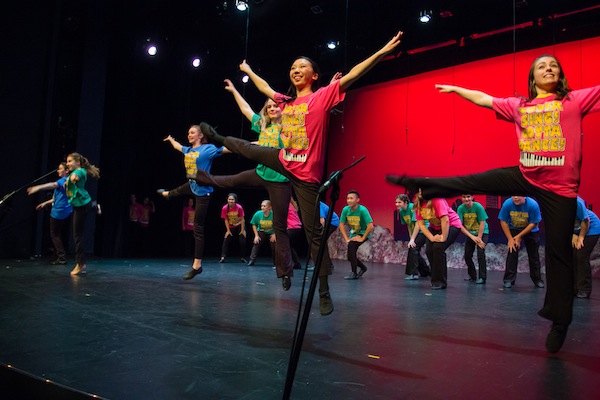
The deadline to apply for Gotta Sing! Gotta Dance! at the Jewish Community Centre of Greater Vancouver July 7-30 and Aug. 4-27 is April 1. With participants ages 9 to 19 from various parts of Canada and elsewhere in the world, director and creator of the program Perry Ehrlich will be joined this year by faculty including musical directors Wendy Bross Stuart and Diane Speirs; director Chris McGregor; choreographers Jason Franco, Keri Minty and Meghan Anderssen; acting coach Amanda Testini; and Mariana Munoz, set construction and costume co-ordination. The final production of each session will be Wild Wild West Side Story, featuring an original script and a repertoire from Broadway and movie musicals. Also being offered is the finishing school, for serious musical theatre students attending Gotta Sing! Gotta Dance!, and a boot camp dance program. Scholarships are available.

Format ImagePosted on March 13, 2020March 12, 2020Author Gotta Sing! Gotta Dance!Categories Performing ArtsTags education, JCC, Jewish Community Centre, musical theatre, Perry Ehrlich, youth
Supporting gender diversity

Supporting gender diversity

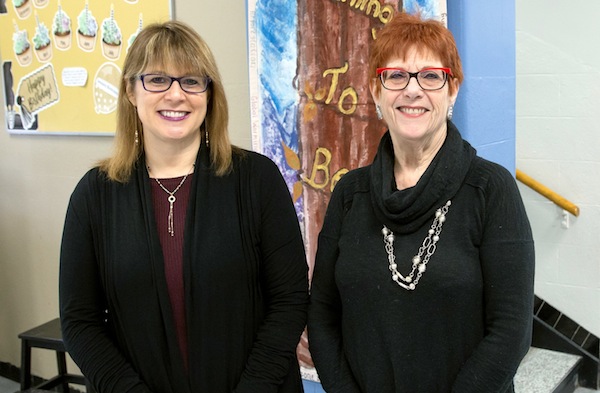
Ara Morris, principal of Brock Corydon School, left, and Naomi Finkelstein, co-founder of Parents Family Friends of Transgender Individuals. (photo from Morris and Finkelstein)

The Winnipeg School Division recently assembled a panel to discuss ways to best support trans and gender diverse children and youth, especially in school settings.

Ara Morris, principal of Brock Corydon School, was invited to sit on the Jan. 22 panel, which took place at Prince Charles Education Resource Centre. “Our school has been very active in talking about gender,” said Morris. “We’ve been making changes to our school as a result of having children in our school who are transgender. We want all of our students, all of our families, to feel included, important, and as equal members of our community and so, to do that, sometimes we have to reflect on the different ways that we are speaking, the different language that we are using.

“We know that many times children identify themselves in all different ways,” she said. “We want to be respectful of that. We have had a lot of professional development for our teachers and that has included programs from the Rainbow Resource Centre,” which offers support, counseling and educational programs for LGBTQ2S+ individuals and allies.

Brock Corydon has invited the parent of a transgender student to speak with school staff, and teachers have led sessions among themselves, as well as having had other teachers come to share how they work on being inclusive in the classroom.

“Our school division has a policy and it was updated in June 2018 for diversity and equity,” said Morris. “With all the research that our school division has been doing, I’d be surprised if other school divisions weren’t doing the same.”

Morris has received many phone calls from other principals asking for suggestions, and she works with parents to identify any needs, such as the need for a gender-neutral bathroom, which the school now has.

Even though full-time staff has been educated on the topic, part-time or causal staff also need to be informed about the proper way for teachers to speak at the school, including the use of gender-neutral language.

Naomi Finkelstein, a retired teacher and the mother of a trans child, was also on the event panel. Finkelstein was dealing with the situation 13 years ago and recalled having tried to find proper supports, which were lacking. She started a support group with another parent, called Parents Family Friends of Transgender Individuals (PFFOTI).

“I had a daughter and, when she was about 20 and a half, she came out and shared that she was transgender,” said Finkelstein. “I knew that this was something I was going to have to get support for, so I went to the Rainbow Resource Centre.”

PFFOTI started out with the two founding members and is now providing support to 170 parents. “Of course, that many do not come to all the meetings and, really, what happens is people kind of grandfather out. Their children are older now, they’ve made their transitions … maybe some have had surgery and they don’t feel the need to attend anymore. We’re always getting new people,” said Finkelstein.

“Our group is specifically for parents,” she continued, “because there are some parents who have just found out and they need the support. And there are always Kleenex boxes on the table. For some parents, it is a real shock.

“I was shocked, too, but I did my crying at home in the shower, which was really very good. There was something, I don’t know why, it was almost like being in a womb, feeling protected in there…. We want the parents to be able to share their fears and concerns; you can’t do that if a child is there.”

Over the years, Finkelstein has developed a list of do’s and don’ts for parents who suspect that their child might be trans.

The do’s list includes respecting your child’s identity and following your child’s lead and listening to them about what trans is all about. Each child is different and there’s no right way to be trans. As Finkelstein pointed out, “some go on hormones, some don’t, and some just dress in what they consider the gender’s clothing.”

The list encourages parents and others to learn about the difference between sex and gender – gender is a social construction, whereas sex is biological.

PFFOTI advises parents to start by helping and educating themselves so they can better help their child. “This involves reading and coming to support groups,” said Finkelstein. “And parents need to take into account if there are other siblings. There can be issues for the other siblings, and they need to be educated, too.”

If the children are minors, parents need to take the lead in setting up doctors’ appointments, buying appropriate clothing, getting haircuts, etc.

“Truly, the key to success is offering the kids your unconditional support,” said Finkelstein. “One of the support groups online, their motto was, ‘Fake it until you make it.’ But, we also talk about what parents need to do within the school system and that they need to advocate for their children. Although the human rights law says that they have rights, not all school divisions are on board. Winnipeg [School Division] 1 is totally on board and they have a process. We need parents to take part in the process and get the school to take part in the process.

“And a critical thing is bathroom talk,” she said. “You have to talk to your child before you go to the administration, so you’re both on the same page as to what the child wants to do. Some schools now have non-gender-specific bathrooms, which is great. I wish every school would have one.

“And then they have to talk to the administration about what their rights are. They should know those rights before they go in.”

Setting up a safe person at the school, with the help of administration, who the child can go to, someone who affirms their identity, if they are having problems, is also important, as is talking about the school’s anti-bullying policy and how that is handled.

“Past the age of 12 and up, you’re also dealing with all these hormones that rage through the child’s body,” said Finkelstein. “So, some kids are going to have to get on blockers to prevent their periods and their breasts from developing, and stuff like that.”

Parents and others must understand that a child’s identification as trans is not likely a passing phase. Although some children identify as trans and later change their mind, that is uncommon. So, do your best to avoid calling your child by their previous name, said Finkelstein.

Parents “really have to make an effort not to misgender,” she said. “Misgendering kind of denies their existence as a person, and that’s a big negative. But, as a parent, if you screw up, you just apologize. I think kids are very understanding about that. As long as you don’t deliberately misgender a child, they are open to the fact that, you’ve had them for 13, or 18, or 20 years, and, yeah, that other name is going to come out. It takes you awhile to reformat.”

Another PFFOTI recommendation is to never out your child – let them do it when they are ready.

“Statistics have proven that, [even] with children who are trans who get support from their parents and their family … four percent commit suicide,” said Finkelstein. “The statistics are much higher – about 45% – for those who do not get support. This past summer, we lost four kids (three in Winnipeg and one who had moved to Vancouver).”

Finkelstein regularly checks in with her son to talk about his mental health and to assure him she accepts him as he is.

Rebeca Kuropatwa is a Winnipeg freelance writer.

Format ImagePosted on March 13, 2020March 12, 2020Author Rebeca KuropatwaCategories NationalTags Ara Morris, Brock Corydon School, education, gender, health, LGBTQ2S+, Naomi Finkelstein, parenting, Parents Family Friends of Transgender Individuals, PFFOTI, sex, transgender, Winnipeg, youth
Directing a favourite musical

Directing a favourite musical

Malka Martz-Oberlander, left, and Dalia Currie are co-directing Little Shop of Horrors, which is at the Red Gate Revue Stage from Feb. 6-9. (photos from TES Theatre)

At 17, many Jewish Independent readers were probably spending most of their time hanging out with friends, maybe doing a music or art class or two, some sports activities. In addition to being a student, 17-year-old Jewish community member Malka Martz-Oberlander is a filmmaker, writer, film and theatre director, cartoonist, musical theatre actress and photographer. Her latest initiative is a production of Little Shop of Horrors, which is at the Red Gate Revue Stage on Granville Island Feb. 6-9.

Presenting the production is TES Theatre, or Transforming Education, which, explained Martz-Oberlander, was “originally the theatre program at the one-of-a-kind Windsor House School: a democratic, multi-campus, K-12 school in East Vancouver.

“When Windsor House School closed down last year,” she said, “former principal Meghan Carrico decided to start a theatre company for the students, like myself, who wanted to continue to do theatre and musical theatre together. The program that arose after the school’s devastating closure is grounded in the same democratic philosophy. Our mission is to make sure any student who wants to do any aspect of musical theatre can and will be supported by a willing cast and a professional musical theatre teacher.”

Martz-Oberlander is co-directing Little Shop of Horrors with Dalia Currie. Last June, the pair co-directed a production of Much Ado About Nothing that Currie adapted. According to Martz-Oberlander, Currie “loves Shakespeare” and has “co-directed and acted in many of the Bard’s shows,” including playing the role of Theseus in A Midsummer Night’s Dream in 2018, as part of the Carousel Theatre Teen Shakespeare Program.

Currie found musical theatre through joining Windsor House in 2018, said Martz-Oberlander. “She played Olive Ostrovsky in The 20th Annual Putnam County Spelling Bee and Gaston in Beauty vs. Beast, an original parody of the tale as old as time.”

For her part, Martz-Oberlander performed with Encore Musical Theatre (formerly Broadway Edge) for four years, then performed in two shows with Windsor House School and, this year, is a member of Arts Umbrella’s Pre-professional Musical Theatre Troupe.

illustration - Crystal, Ronette and Chiffon are the three narrators of Little Shop of Horrors. Malka Martz-Oberlander sketched this image of the trio, which was colourized by Emi Lavoie
Crystal, Ronette and Chiffon are the three narrators of Little Shop of Horrors. Malka Martz-Oberlander sketched this image of the trio, which was colourized by Emi Lavoie. (image from TES Theatre)

Martz-Oberlander said she and Currie initially pitched Little Shop of Horrors to the theatre company because they had both grown up watching it, “and we were very excited at the thought of directing our first musical together this year with the mentorship of our new musical theatre teacher, Isabella Halladay, who is a local musical theatre artist.”

The production involves around 30 people, said Martz-Oberlander, “and all but three of them are students. We held auditions for people within our theatre community,” she said. “We made sure that anyone who was interested has been involved in some way, whether it be onstage or in the tech booth. The actors range from age 14 to 19. There is no live band, we have backing tracks.”

Little Shop of Horrors, both a film and a Broadway musical from the 1980s, is now back on Broadway, said Martz-Oberlander. “It’s about an orphan boy taken in and given a job by Mr. Mushnik, a European Jewish immigrant and the owner of a run-down flower shop in the ‘bad part of town.’”

Despite the fact that both writers of the musical were Jewish – Howard Ashman (who passed away in 1991) and Alan Menken – Martz-Oberlander said that she and Currie were concerned about the portrayal of certain characters, in particular that of Mr. Mushnik.

“As a cast and individually, we have discussed when it’s good to bring out stereotypes and when it’s actually really harmful,” Martz-Oberlander told the Independent. “For example, the character Mr. Mushnik seems like a two-dimensional, money-hungry shop owner. The character embodies this Jewish stereotype throughout the whole story. My non-Jewish co-director and I have tried our best to approach this thought-provoking comedic piece with the intention of not perpetuating hurtful stereotypes. When producing a show written in a different decade, when values were different, it’s so important to come at it from an authentic, respectful and knowledgeable way.”

Martz-Oberlander had only praise for the production’s venue, the Red Gate Revue Stage. Saying that the cast and creative team were “incredibly lucky to get to rehearse and perform” there, she added, “I think a place like the Revue is vital at a time in Vancouver where things are less and less affordable – to have arts spaces and small theatres like the Revue is very important.”

As for Little Shop of Horrors, Martz-Oberlander said, “I think it’s a great opportunity to come out and support local youth-directed theatre and watch a fantastic show! This show is really a one-of-a-kind, hilarious science fiction musical that will have you humming tunes for weeks after.”

Tickets to Little Shop of Horrors ($5-$15) can be purchased at the door or online from brownpapertickets.com/event/4481952.

Format ImagePosted on January 31, 2020January 28, 2020Author Cynthia RamsayCategories Performing ArtsTags Dalia Currie, Little Shop of Horrors, Malka Martz-Oberlander, musical theatre, Red Gate Revue Stage, TES Theatre, youth
Youth feed homeless people

Youth feed homeless people

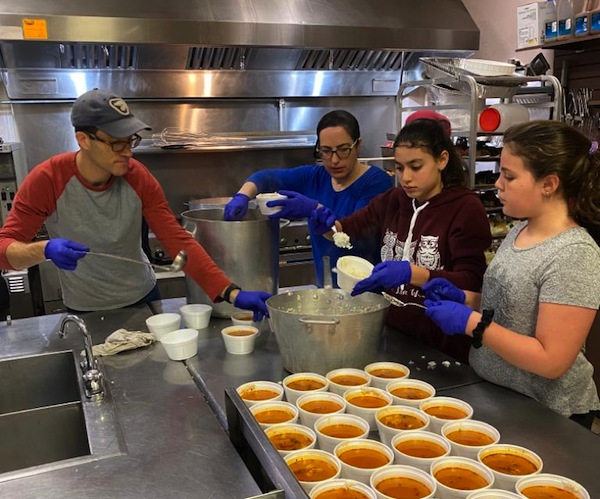
Youth from Temple Beth Ora and Gathering Angels in Edmonton help out at Boyle Street Community Services shelter. (photo from Rabbi Gila Caine)

In Edmonton, Rabbi Gila Caine and Muslim leader Nesrine Merhi-Tarrabain have combined forces to serve their local community.

Caine is spiritual leader of Temple Beth Ora, a Reform synagogue in Edmonton with nearly 100 families, which celebrated its 40th anniversary last year. Merhi-Tarrabain is director of Gathering Angels, which runs an educational centre that teaches Muslim girls Islamic values.

Caine grew up in Jerusalem and moved with her husband, Ariel, and their two young children to Edmonton more than two years ago to lead Temple Beth Ora. Their kids attend the local Talmud Torah school.

Growing up, Caine learned early on, and more so in her early teens, to always be looking for ways to strengthen and help community. She wanted to bring that same mindset – of taking responsibility for your local community – to b’nai mitzvah-age kids at her Edmonton congregation.

“We’ve wanted to go out of the classroom and do stuff outside for a few years now,” Caine told the Independent in a recent interview. “And then, through another connection I have, with Salaam Shalom group, I asked one of them if perhaps they have somebody in their community that does stuff with kids … and that maybe we could do stuff together.

“I thought that would be really cool if we could get the b’nai mitzvah kids to go out and do stuff in the community, but with other youth of a different faith group,” she said.

Caine was connected with Merhi-Tarrabain. After some effort and time, the synagogue and educational centre managed to get together on a Saturday in November, preparing and serving both breakfast and lunch at Boyle Street Community Services shelter.

“We brought food with us, had her girls, my kids, and some parent volunteers working in two shifts there that day – working together, preparing sandwiches, cooking,” said Caine. “It was actually funny to see – it was more the parents that were connecting and talking … [while] the kids were basically doing their work quietly. But, the parents got into really nice conversations with each other and they served the food. And everybody from both sides came away feeling that we should do this again.”

photo - The interfaith initiative at Boyle Street Community Services was led by Nesrine Merhi-Tarrabain, third from the left, and Rabbi Gila Caine, second from the right
The interfaith initiative at Boyle Street Community Services was led by Nesrine Merhi-Tarrabain, third from the left, and Rabbi Gila Caine, second from the right. (photo from Rabbi Gila Caine)

Caine is hoping to make serving the community a tradition at Temple Beth Ora, possibly with Gathering Angels again, as well as with other groups.

When thinking of the best activity to launch the b’nai mitzvah community service initiative, Caine chose this particular one – preparing and serving food – as she knew from experience that many of the kids really enjoy dealing with food service, having seen them help out at the shul.

“Some of these kids are b’nai mitzvah kids and they want to volunteer again,” said Caine. So, the youth group counselors “will sit with them and talk to them about what they want to do. This is the next step,” she said.

After the November project, there was another food-related volunteering opportunity for the kids last year. They joined the Edmonton Jewish community as a whole to prepare a Christmas meal for another shelter. “They really wanted to take part in that,” said Caine. “And now we will see what they will come up with next.”

According to Caine, having Merhi-Tarrabain at the Boyle Street Community Services kitchen was beneficial for several reasons, including that she had volunteered there with the girls in the past and had experience. That meant Merhi-Tarrabain could offer tips about what food to bring and how to best help in the food’s preparation and serving.

“Now, some of the parents who were there, they want to initiate more of these things,” said Caine. “And now, we have a better idea of how to do that.”

Both faith groups understand that more such gatherings are necessary before the youth can make lasting connections.

Caine said her synagogue is trying to create a project with another Muslim youth centre in Edmonton and also with one of the city’s churches. “We’re trying to create a program,” she said, “where they will have meetings, talk and learn and do stuff together … hopefully resulting in some real connection-making.”

Rebeca Kuropatwa is a Winnipeg freelance writer.

Format ImagePosted on January 31, 2020January 28, 2020Author Rebeca KuropatwaCategories NationalTags Boyle Street Community Services, Edmonton, Gila Caine, interfaith, Jews, Muslims, Nesrine Merhi-Tarrabain, tikkun olam, youth
Interfaith youth unite in service

Interfaith youth unite in service

Interfaith Youth BC participants gather at Or Shalom Synagogue on Dec. 8. (photo from Pamela Evans)

Being stewards of the earth, performing acts of kindness: it’s not just Judaism that promotes these principles, and it’s for this reason that three faith groups in Metro Vancouver have brought youth together to explore shared values while participating in community service projects.

The Ismaili Centre of British Columbia, Or Shalom Synagogue and the United Church of Canada began working together in 2019 under the moniker Interfaith Youth BC to deliver programs for youth ages 11 and up. Participants learn about tenets of Islam, Judaism and Christianity while giving back to the community at large.

“You have kids, especially the ones in high school, they’re getting together and some of them have preconceived ideas of the [different faiths],” said Harriet Frost of Or Shalom Synagogue. “Sure, they get along in what they have in common in terms of their interests, ages and what they’re all going through as teenagers, but we’re addressing the elephant in the room. We’re addressing their faith traditions…. It’s an opening to see that they have a lot more in common than they might have realized before.”

Pamela Evans, a regional minister for youth and young adults for the United Church, said the guiding principle behind the collaboration is relationship building. “We make assumptions about others that aren’t based on reality,” she said. “If we’re able to build relationships, it’s less comfortable for us to do that and it affects the way we think about things. I love that sense that [the program] is an open place for curiosity and it’s grounded in this respect for one another.”

In May 2019, youth were given texts from the Torah, Qur’an and Bible that focused on stewardship and caring for the land, and had to determine which holy book each quote was from.

“The fascinating thing is no one could get it quite right because it was quite similar,” said Frost. “It’s a powerful exercise for anyone to see that.”

Later, the youth cleaned up English Bay beach in partnership with the Great Canadian Shoreline Cleanup.

photo - Some of the items Interfaith Youth BC participants assembled into care packages to distribute in Downtown Eastside on Dec. 8
Some of the items Interfaith Youth BC participants assembled into care packages to distribute in Downtown Eastside on Dec. 8. (photo from Pamela Evans)

On Dec. 8, 45 young people gathered in the social hall at Or Shalom to once again dive into pieces of scripture, this time focused on acts of kindness. They assembled 150 care packages that included warm clothing, toiletries, sandwiches and snacks to distribute in the Downtown Eastside with support from the Lookout Housing and Health Society. The teens composed handwritten notes to include in each package. Several businesses donated items for the packages.

Through the nexus of study and action, “we are able to … provide a greater understanding of how faith and service are connected,” said Alina Daya, a secondary teacher at Ismaili Tariqah and Religious Education Board. “Through these events, youth are able to actually live out the guidance of their respective faiths and appreciate the similarities in values, guidance and practice within all of our traditions.”

Gabriel, one of the youth who attended the Dec. 8 event, was moved by the opportunity to make a difference. “I thought it was great how all the teens from different religious backgrounds could come together to help provide some small comforts to those less fortunate in Oppenheimer Park,” he said. “I was surprised at how similar our values were, especially of human kindness and compassion.”

Frost believes the exposure to different faiths and cultures can, in the long run, have the potential to break down political barriers. “It’s a bridge to sitting down and talking about it…. It’s a pathway towards peace and reconciliation in a broader sense,” she said. “If you develop a personal relationship, you realize the commonalities between everything.”

While the program is for youth, Evans sees it has ripple effects for adults as well. “I learn from my colleagues about things I didn’t know about and it feels like a blessing and a privilege to be a part of those conversations. I think sometimes adults are afraid to be in those conversations, or their privilege clouds their understanding. Youth don’t do that, so what would it look like if we shaped this generation of youth to think differently?”

The organizers plan to hold another event this year, a “festival of faiths,” at which they hope to invite other faith communities to participate.


Shelley Stein-Wotten is a freelance journalist and comedy writer. She has won awards for her creative non-fiction and screenwriting and enjoys writing about the arts and environmental issues. She is based on Vancouver Island.

Format ImagePosted on January 24, 2020January 22, 2020Author Shelley Stein-WottenCategories LocalTags interfaith, Ismaili Centre, Or Shalom, tikkun olam, United Church, youth
Two new scholarships

Two new scholarships

In an effort to lighten the financial challenges presented by the growing costs of higher education, Hillel International announced in November that it is launching two annual scholarships for students attending college anywhere in the United States and Canada. The two merit-based scholarships will total $4,000 US (roughly $5,200 Cdn) each and are available to any student who identifies as Jewish. The deadline for applications is March 15.

The Handeli First-Year Scholarship will be awarded annually to graduating high school students who demonstrate a record of leadership and volunteerism and are preparing to enter a four-year college or university. Students currently on a gap-year program are also eligible to apply.

The Hillel Campus Leadership Award, meanwhile, will be presented to full-time college students in their freshmen, sophomore or junior year who exhibit exceptional leadership skills and are pursuing a degree at an accredited school.

“Thanks to the estate of a wonderful donor, David Handeli, we were able to create the two new scholarship opportunities. Four students will receive awards this year, and we’ve already received more than 200 applications since the application went live in November and more than 1,000 applications have been started. Our hope is to expand these scholarships down the road, since we will have way more demand than supply,” Etan Harmalech, Hillel International’s vice-president of marketing, told the Independent.

For both scholarships, applicants must have a grade point average (GPA) of 2.5 or above to be considered. A full list of eligibility requirements can be found on the Hillel International website, hillel.org/college-guide/hillel-scholarships/eligibility-requirements-and-faqs. The applications for the respective scholarships can be also be found on the site, at hillel.org/college-guide/hillel-scholarships.

Like their counterparts throughout North America, Jewish college students and their families have had to contend with ever-mounting educational expenses, the increase in which over the past 20 years has exceeded the rise in household income.

The daunting cost in the United States, for example, was cited in a recent report by the College Board, an American nonprofit whose goal is to expand access to higher education. The report noted that the annual tuition for a college student had increased by more than 25% in the past decade for both private and public institutions. In several states, the cost for a year’s tuition competes with average income.

The average Canadian undergraduate pays close to $7,000 a year in tuition. Surveys conducted by Macleans in 2017 and 2018, however, found that the average cost of post-secondary education – with all of its expenses, such as rent, tuition and food, included – came in at just under $20,000 per year, with the commensurate level of debt rising with each additional year of study.

In British Columbia, students are confronted with one more challenge: finding affordable lodging near campus in an overheated housing market, an obstacle that is further exacerbated by the scarcity of available units, often leading to crowded living conditions or dwellings located far from the schools students attend.

“I am happy to see that these scholarships incentivize student involvement in Jewish life on campus. Hillels are a hub for Jewish life and often act as the last gas station before students head off into the working world,” said Sam Heller, the executive director of Hillel BC. “If we don’t get to them in college, there are fewer opportunities for Jewish young adults to engage with the community in an easy way and we may not see them until they start to have families and so on.”

Founded in 1923 at the University of Illinois Urbana-Champaign, Hillel is the largest international Jewish student organization, with representation at more than 550 colleges and universities around the world. In British Columbia, a Hillel presence can be found at University of British Columbia, Simon Fraser University, University of Victoria, Langara College, Quest University Canada, Kwantlen Polytechnic University and Emily Carr University of Art and Design.

All applications will be reviewed by Hillel’s scholarship committee following the March 15 deadline. The recipients of the scholarships will be chosen and announced on May 1.

Students looking for more scholarship opportunities should visit Hillel’s Jewish Scholarship Portal (hillel.org/college-guide/hillel-scholarships/jewish-scholarships), which contains information on several hundred scholarships available to Jewish students.

Sam Margolis has written for the Globe and Mail, the National Post, UPI and MSNBC.

Format ImagePosted on January 24, 2020January 22, 2020Author Sam MargolisCategories NationalTags education, financial aid, Hillel, scholarships, university, youth

Posts pagination

Previous page Page 1 … Page 4 Page 5 Page 6 … Page 10 Next page
Proudly powered by WordPress