Community milestones … Green Thumb & Klein

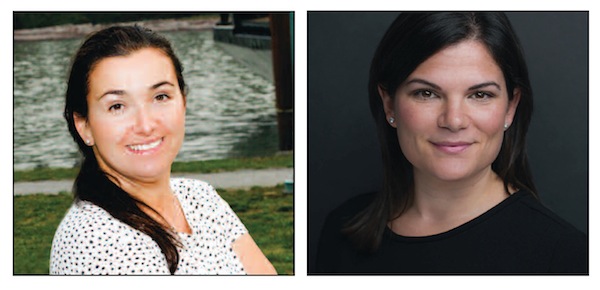
Patrick McDonald will hand the artistic reins of Green Thumb Theatre to Rachel Aberle in January. (photo from Green Thumb Theatre)

After a distinguished 32-year tenure, Patrick McDonald recently announced that he will be stepping aside as artistic director of Green Thumb Theatre at the end of 2020. After several seasons working closely with McDonald, Green Thumb’s associate artistic director and award-winning theatre artist, Rachel Aberle, will assume the role, effective Jan. 1, 2021.

McDonald has led Green Thumb Theatre since 1988. The theatre organization, which was founded in 1975, tours to schools and other venues across the country and internationally. McDonald’s dedication to placing youth engagement and artistic integrity on an even plane has underpinned the organization’s mission of providing socially engaged professional live performance to young people, regardless of geographic or economic status.

“I am proud of how, as a company, we have stayed to course over the last three decades continuing to create new, engaging and challenging work about the issues young audiences are dealing with,” said McDonald. “ I am especially proud of the number of scripts we have brought forward that are now a part of the growing canon of theatre for young audience scripts produced worldwide.”

As performing arts organizations across the globe face uncertainty and calls for innovative programming, McDonald is confident he is leaving the theatre in good hands, stating: “Rachel Aberle, in collaboration with general manager Breanne Harmon and our current staff, will, without doubt, continue this legacy and meet the current challenges head-on. They are ready, and they will do well.”

Aberle, who made her professional performance debut with the company, has penned two critically acclaimed plays for the organization. Her play Still/Falling, which explores themes of adolescent mental health, premièred in 2015 and has been performed more than 180 times across North America and received a Jessie Richardson Theatre Award for significant artistic achievement. The Code, which explores themes of consent and cyberbullying, premièred in 2018 and was recognized with a Jessie Award for outstanding production, the Sydney J. Risk Prize for outstanding original script by an emerging writer, and was included on Tapeworthy blog’s Best of Stage 2018 – selected out of almost 200 shows worldwide. Aberle has held the position of associate artistic director with Green Thumb since 2017.

“I am humbled and honoured to be asked to serve as Green Thumb’s next artistic director,” remarked Aberle, who is a member of the Jewish community. “I have grown up at Green Thumb, under the mentorship and guidance of Patrick McDonald. During these difficult times, I take this role on with a deep appreciation of the complex challenges the company faces. I believe that now, more than ever, young people deserve opportunities to explore the struggles they face on a daily basis. This is the work that Green Thumb has always done, and work that I am excited to continue to do.”

During his tenure, McDonald has commissioned more than 50 new plays from emerging and established playwrights, and has directed more than 75 productions. He has been recognized for his work, including the 2009 Jessie for career achievement and, in 2013, the Vancouver Mayor’s Arts Award. In addition to the school touring program, McDonald established mainstage production partnerships with more than 20 arts organizations nationwide and internationally.

“We are humbled to have worked with Patrick and marvel at his creativity and tenacity in moving youth theatre forward,” said Cheryle Beaumont, chair of the board. “With a long and committed history with Green Thumb and a wealth of experience to bring to her new role, we are most pleased to welcome Rachel Aberle to the position of artistic director this coming January.”

Harmon, said, “Patrick’s long history at Green Thumb has seen him mentor hundreds of emerging artists, administrators and playwrights, offering endless opportunities and truly elevating theatre for young people across the country. He will be leaving Green Thumb with a strong legacy.”

Looking to the future, Harmon, who is also a member of the Jewish community, added, “Rachel is passionate, knowledgeable and a true champion of ensuring young voices are represented truthfully. I look forward to our new partnership.”

***

photo - Alison Klein
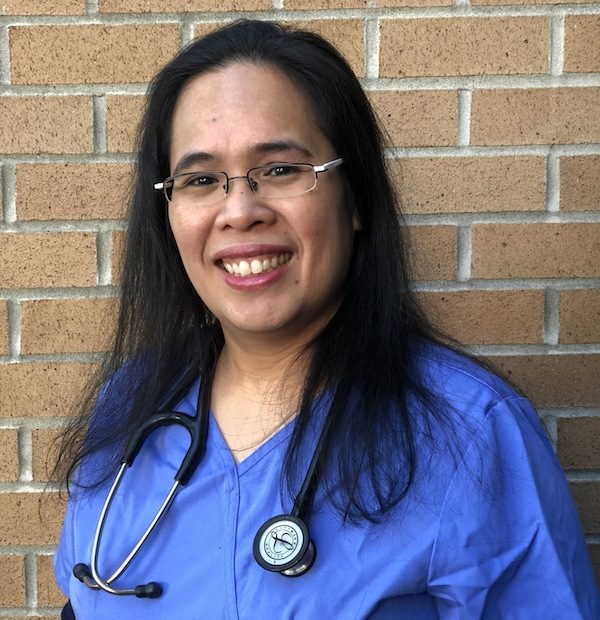
Alison Klein

Alison Klein has been accepted to the master of arts, interdisciplinary studies, in the faculty of humanities and social sciences at the University of Athabasca. The focus of her learning is disability and how services are offered to persons with disability in Canada. She plans to use her studies to inform her work on The Self Advocate, her podcast featuring people with cognitive disabilities who advocate for themselves.

Seeking to understand views

Descending into Jericho through “the Grand Canyon of the Middle East.” (photo by Kevin Keystone)

In this three-part series, the author recounts some of his experiences on Masar Ibrahim Al-Khalil, the Path of Abraham the Friend, in the West Bank, which he visited in 2019. The articles have been adapted from a few of the letters he wrote home to family. The events and people described are real but, for reasons of privacy, the names are fictitious. To read Part 1, click here; for Part 3, click here.

Tuesday was, by far, the hardest day of the trail. We climbed and descended two mountains: 1,500 feet up, 1,400 feet down; 1,000 feet up, 1,200 feet down. It’s 10 feet to a storey, so divide by 10 and think of them as flights of stairs, except that they’re rocky paths strewn with slippery rubble and spiky brambles.

Shrubs aside, Monday and Tuesday were thorny for other reasons. Our guide, Ismail, seemed very friendly. Jolly, with a wide smile and open face, he spoke English well and with a quirky British accent. He was nearly 40, married, had one young child and another on the way. He’s been a hiker and guide for a long time: trained at university, he is an expert in local fauna, flora and history. When a member of our group fell and cut his arm, Ismail was right there with bandages and fracture assessments. There was no question: he was a professional.

Ismail, though, had a satirical sense of humour, which, given the political landscape, was risky. He explained the settlers’ justification for occupying land in the West Bank. “They say that God gave it to them,” he said. The relevant verse from the Torah bubbled up in my memory. “Go forth from the land that I will show you, and I will make of you a great nation,” goes Genesis 17. I knew it because I had chanted it for my bar mitzvah.

“If God gave it to them, what did God give to us? Nothing?” Ismail said. He was smiling, but wasn’t joking. “If they get this, we’ll take Spain. We don’t need to do archeological digs – our mosques are still there to prove it.” I chuckled along with the group, appreciating the irony. But I stood back, polishing my sunglasses.

“They say they are special,” he continued, “that they are ‘the chosen ones,’ but what does that mean? That they are made of gold and jewels, while the rest of us are mud?”

“And I will take you to be my people,” God says to Abram, also Genesis 17. “And I will make my covenant with you and your descendants and through all the generations.” This idea of “chosenness” has been interpreted, reinterpreted and, at times, even rejected in our history: Reconstructionist Jews, for example, changed the relevant lines of the Aleinu prayer. Thinking of ourselves that way certainly hasn’t done us any favours. But, still, Ismail’s comments stung a little.

Writing this, I suppose his humour was a bit like my dad’s: irreverent and occasionally tasteless. I had never been offended by my dad’s jokes; his topics were largely inconsequential to me. Here, with so much at stake, it was hard to not feel Ismail’s satire more deeply. I wanted to tell him I was offended, but part of me resisted.

Sue, on the other hand, had no problem speaking up. That evening, we gathered around to discuss plans for the next day. “Tomorrow,” Ismail said, laying out a map, “will be the hardest day on the trail. There are three options: we can either hike the whole day; stop halfway and take a car; or stop near the end and take a car.” We all agreed we’d hike the whole day. Sue sat back against the bench.

“Are you OK?” he asked her. “You looked scared.”

“I’m not,” Sue replied. “I’m fine.”

“Are you sure?” he insisted. Sue was in her 70s: it seemed like he was singling her out because she was older, and possibly because she was female. “I am sorry if I scared you.”

“I’ve walked a thousand miles before,” she cut in. “I’m not scared.”

Eve laughed and said to Ismail, “Sue’s fine. It’s the two of us,” referring to her husband Oliver, herself, and their combined lack of hiking experience, “that you should be worried about.”

After the route was settled, Sue pulled Ismail aside. She pointed out to him the ageism and sexism implied in his doubting of her abilities. She was brisk; he was deeply apologetic.

“It’s fine,” she said, when he didn’t stop apologizing. “You apologized. It’s over. Howard and I fight, we apologize, it’s done.” After another round of reassurances and with parting words to the group, Ismail left for the night. I congratulated Sue on standing up for herself.

“Well, I’m an old lady,” she laughed. “I don’t have an issue speaking my mind.”

“Yeah,” I said, smiling. “Howard said you don’t take shit from anybody.” She laughed again. “But, still,” I said, “good for you for saying something.”

“Thank you, Kevin,” she said, looking at me. Even with her fortitude, I wondered if it had cost her to say something. Maybe, in some ways, it always does. “I appreciate it,” she said.

photo - A rest break, at 3 a.m., hiking to catch sunrise over the Dead Sea
A rest break, at 3 a.m., hiking to catch sunrise over the Dead Sea. (photo by Kevin Keystone)

* * *

The next day, I found myself quietly pleased at Ismail’s dressing down from Sue. Somehow it felt vindicating; even if I couldn’t find the words to speak my mind, at least someone else did.

“Before we start,” he said, “I need to show you something.”

He turned his smartphone to us and pressed play. The footage was of a road tunnel with an exit at the far end and a truck askew, blocking the way. There was shouting and then a hand flicking angrily towards a young man, yelling at him to walk. He did, with his back to the camera, one hand raised in surrender, the other halfway, awkwardly carrying a backpack. He couldn’t have been older than me. He kept walking, slowly, towards the truck and the tunnel exit. Just before he reached the truck, a shot fired. He cried out and sank to the ground.

Israeli Channel 13 News leaked the video – of an Israel Border Police officer shooting a Palestinian in the back with a rubber bullet, along with text messages sent by the shooter’s fellow officer, who had bragged about the shooting to his girlfriend. “I’m a pro, don’t you think?” he wrote.

This act of violence earned the shooter a removal from the police force. She was sent back to the Israeli army to finish her compulsory service. A year after the footage was discovered, the police internal investigations unit still hadn’t pressed charges. The apparent impunity is shocking. Compared to this, my grievances seemed trivial.

“Do you ever take Israelis on this hike,” someone asked Ismail.

“No, we don’t. We can’t, it’s too risky,” he said. “If something were to happen, if one of them gets hurt, we would all be in big trouble. Their government would say it is our fault, and we would have many, many problems.

“There are Jewish that come on the Masar,” he said. I wasn’t sure if he avoided looking at me. “We know; we don’t ask. But we will not take Israeli; we can’t.”

As the day wore on, I worked up my nerve to talk to him. I rehearsed my opener and hiked up beside him.

“So, what are your plans for after the hike,” I asked.

We didn’t talk about anything important, but it felt important to talk. I had time after the hike and didn’t have plans. I asked his advice on where I should go. I also asked him what I should say at the border if stopped.

“Just talk about the Abraham Path, how we’re all children of Abraham, peace, these kinds of things,” he said. “They like that.”

“Do you believe it?” I asked him.

“No,” he said. I tried to hide my disappointment. “You know,” he continued. “It isn’t the Jewish, it’s the Zionists. They are crazy, they think they are super-human. Every time the people are coming together, they want to separate, to make them apart. As long as this is the case,” he said, “I don’t think there will be peace.”

* * *

At lunch, I lay down to rest, settling in the shade of an olive tree. In the breeze, the leaves revealed twin shades of green, one on each side: rich, verdant forest green and pale, suede sage. There were no olives on this tree: likely, they had been recently picked. The absence they left made way for a cottony, afternoon light to filter through. As I nodded in and out of sleep, I caught glimpses of the sky. It was blue and clear.

Zionists come in many varieties, but I knew the ones Ismail was referring to. The imprecision of his language didn’t change the point. Yitzhak Rabin wasn’t assassinated by a Palestinian; he was assassinated by a Jew. A fanatical religious Zionist, a fervent supporter of the settlements and a deep-seated opponent of the peace process. Ismail didn’t have a problem with Jews, he had a problem with fanatics. That, I could get behind. I felt the same way.

Kevin Keystone is a Toronto-based freelance writer, editor and researcher. When not hiking long-distance trails, he can be found reading, spending time with friends and family, or with his beloved partner, Aaron. His writing has been published in the Literary Review of Canada, the Jewish Independent and Good Old Boat.

Lubeck shul sees restoration

Israel’s Lavi furniture factory recreated Carlebach Synagogue’s original ark from three prewar black-and-white photos. (photo from IMP)

Viewing the restored Carlebach Synagogue in Lubeck, Germany, brings to mind the biblical prophecies of consolation, where the Jewish people are reassured that the day will come when not only will they be restored to their land, but their houses of worship will likewise be restored. Sadly, neither the shul’s rabbi nor any other of the original community members are alive today to revel in the synagogue’s reinstated glory; however, in an interesting twist, several of the rabbi’s grandchildren are the children of founding members of Kibbutz Lavi, whose furniture factory designed and built the synagogue’s ark and other holy articles.

Rabbi David Alexander Winter, rabbi of the Carlebach Synagogue, fled Lubeck in 1938, together with most of his community. Several months later, on Kristallnacht, when many of Germany’s synagogues were torched and burned to the ground, the Lubeck shul was damaged and looted, but not destroyed – the building had been sold to the municipality and the contract, signed by the rabbi, was inside the synagogue, in plain view.

For Winter’s grandchildren, seeing the restoration of their grandfather’s synagogue is especially moving. “It’s a feeling of coming full circle,” said Yehudit Menachem, who visited Lubeck last year, seeking to learn more about her family history. Dr. Ariel Romem, a pediatrician and one of the grandsons, remarked that the restoration is symbolic of the re-blossoming of the Winter family and of the Jewish people as a whole. “They may have ruined the shul, but they never succeeded in breaking us,” he said.

In the seven decades since the Holocaust, the once-stately synagogue, established in 1880, has suffered looting, a firebombing, squatters and general neglect. German architect Thomas Schröder-Berkentien began working on its restoration in 2010, but the project was stuck due to a lack of funding. In 2016, the federal government dedicated a sizable sum, with other funding arriving from the Schleswig-Holstein state, the Lubeck-based Possehl Foundation and UNESCO, which had declared the Old City of Lubeck a World Heritage Site. The total cost of the project amounted to almost $10 million.

Schröder-Berkentien was intent on finding the best craftspeople for the synagogue furniture, and also felt that it was only right that the furniture should come from Israel. He found the Lavi furniture factory online and, after several inquiries and a visit to the carpentry workshop along with his team, was assured that they had the necessary experience and expertise to perform the research and produce items of quality and beauty. Indeed, in its 60 years of operation, Lavi has designed and produced interiors for synagogues in more than 6,000 Jewish communities around the world, including for new and restored synagogues in Germany.

Motti Namdar, the factory’s chief planner, described the challenge, and ultimate satisfaction, of creating replicas of the original items. “We only had three prewar black-and-white photos to go by,” he explained. “The photos showed only one angle and even that was not very clear. It was difficult to make out a lot of the detailing or which metals were used, especially for the ark, which you can see from the photos is very unusual.”

Ultimately, much of Namdar’s work had to be done by deduction and a knowledge of the history of the period. “I traveled to Lubeck to see the synagogue and examine the parts that had not been damaged. Part of the ladies’ gallery was intact. The architect had hired restoration experts who carefully removed the layers of paint from the walls, exposing the original murals. The synagogue as a whole had been built in the Moorish style, and I proceeded in that direction.”

In one of the photos, it’s possible to make out the pointed roof-like structure at the top of the ark, which Namdar designed to include 1,500 “scales,” all coated in pure gold. Under Namdar’s direction, the Lavi factory completed all the articles by the deadline. “The hardest part wasn’t the tight schedule, but, rather, building everything such that it could be taken apart, packed and shipped, and then reassembled so that everything fit perfectly.”

photo - Since its restoration, Carlebach Synagogue in Lubeck, Germany, has been serving as a spiritual hub for Lubeck’s 700-strong Jewish community
Since its restoration, Carlebach Synagogue in Lubeck, Germany, has been serving as a spiritual hub for Lubeck’s 700-strong Jewish community. (photo from IMP)

But while it was clear to the craftspeople at Lavi that they wanted to produce replicas that were as authentic as possible, the project’s architect, Schröder-Berkentien, was intent that the structure itself, which was restored to be a national monument, should serve as a testament and, in his words, “like a wound,” as a painful reminder of the events of 1938. This was the reasoning behind his decision not to redo the synagogue’s original ornate façade, which, together with the cupola and other elements, had been destroyed on Kristallnacht. “The plain red brick tells the story of what happened,” he said. “A rebuilt façade would ignore that part of history, failing to show the suffering of the era. This is what makes it such a unique monument among other German synagogues.”

When news of the coronavirus pandemic first broke in January, the factory began working overtime so that everything would be ready for the gala re-inauguration, which was to have been attended by high-ranking German officials, including Chancellor Angela Merkel, members of the restoration committee and local community figures, as well as Winter’s grandchildren from Kibbutz Lavi. However, when it was finally time for the assembly and installation of the furniture, the world was already in COVID-19 lockdown. As soon as it was possible, Lavi sent their own experts from England to complete the work. Now, the synagogue stands in all its resplendent glory, but the ceremony has been postponed indefinitely.

The important thing is that the synagogue is open and operating, serving as a spiritual hub for Lubeck’s 700-strong Jewish community. “This synagogue is not only a place of prayer, but a symbol of the revival of Jewish life in Lubeck, throughout Germany and around the world,” said the current spiritual leader of Lubeck, Rabbi Nathan Grinberg.

– Courtesy International Marketing and Promotion (IMP)

האיחוד האירופאי מקיים טיסות ניסוי לבואינג שבע שלוש שבע מקס בוונקובר

הסוכנות לבטיחות תעופה של האיחוד האירופאי החלה לבדוק את מערך הבטיחות של מטוס בואינג שבע שלוש שבע מקס, בשדה התעופה הבינלאומי של ונקובר (ווי.וי.אר) בימים אלה. מדוע אם כן נבחר שדה התעופה הבינלאומי של ונקובר לביצוע טיסות הניסוי עלי ידי הסוכנות לבטיחות התעופה של האיחוד האירופאי? זאת בגלל מגבלות הטיסה בארצות הברית שהונהגו על ידי האירופאים לאור מגיפת קוויד-תשעה עשרה. יש גם לזכור שוונקובר קרובה מאוד לסיאטל שבמדינת וושינגטון ושם נמצא המטה של חברת בואינג האמריקנית.
ועל כן בימים אלה, לראשונה מזה כשנה וחצי, נחת בשדה התעופה הבינלאומי של ונקובר מטוס הבואינג שבע שלוש שבע מקס. זאת לאחר שהמטוס שקורקע בכל העולם בשל שתי תאונות קטלניות מאוד, שגרמו להרוגים רבים. הסוכנות לבטיחות תעופה של האיחוד האירופאי מבקשת אפוא לבחון עתה את מערך הבטיחות של מטוס הבואינג השבע שלוש שבע מקס, באמצעות מספר טיסות ניסוי שיערכו מעל שמי אזור ונקובר.
לדברי דובר הסוכנות לבטיחות תעופה של האיחוד האירופאי, הסוכנות נמצאת בתיאום ובשיתוף פעולה מלא עם מינהל התעופה הפדרלי האמריקני. זאת, כדי להחזיר לשירות בהקדם האפשרי את הבואינג שבע שלוש שבע מקס. למרות זאת יש לציין שלחברת בואינג נשארו עדיין מספר משימות ופעולות לבצע במטוס ובמערכותיו השונות, במסגרת בדיקות הבטיחות שלו לאור התאונות הקשות. הדובר מציין כי אפשר בכל מקרה בשלב זה לבצע כבר מבחני טיסה למטוס הנוסעים האמריקני המתקדם, כדי לאמוד את השינויים שכבר הוכנסו בו ע”י היצרנית האמריקנית בואינג, על מנת לשפר את מערך הבטיחות שלו.
מטוס בואינג שבע שלוש שבע מקס מקורקע מאז חודש מרץ שנה שעברה, לאחר ששתי התרסקויות של דגמים שלו הרגו לא פחות משלוש מאות ארבעים ושישה בני אדם. טיסה של חברת אתיופיאן איירליינס התרסקה מחוץ לבירה אדיס אבבה והרגה את כל מאה חמישים ושבעה האנשים שעל סיפון השבע שלוש שבע מקס. ואילו חמישה חודשים קודם לכן, טיסה של ליון אייר שהמריאה מג’קרטה צללה לאחר מספר דקות לים, כאשר על סיפונו של המטוס מאה שמונים ותשעה נוסעים.
לאחר בדיקות ארוכות מוצאו חוקרי התעופה של שתי ההתרסקויות, כי היו במטוסים חיישנים פגומים שהפעילו את המערכות הטייס האוטומטי שלהם, שדחפו את המטוסים דווקא כלפי מטה ובמהירות גדולה. ואילו הטייסים שניסו להילחם ולעצור את המערכות לא הצליחו ובסופו של דבר הם איבדו את השליטה. שני המטוסים התרסקו וכאמור גרמו לאבדות גדולות בנפש.
רשויות תעופה רבות ובעיקר רשות התעופה הפדרלית האמריקנית בדקו את השינויים הדרושים לביצוע, במערכי מטוס הבואינג שבע שלוש שבע מקס השונים, כולל בתוכנת המחשבים המורכבת שלו, וקבעו סידרה של אימונים וטיסות ניסוי. וזאת כדי לאפשר להחזיר לשרות את מאות מטוסי הבואינג שבע שלש שבע מקס קרוב לוודאי במהלך שנה הבאה.
יצויין כי רשות התעופה הפדרלית של קנדה (טרנספורט קנדה) החלה לבצע את טיסות הניסוי שלה במטוס הבואינג שבע שלש שבע מקס, בחודש אוגוסט האחרון. הטיסות של רשות התעופה הקנדית מתקיימות במתקני חברת בואינג בסיאטל. זאת כחלק מבדיקה כוללת של גורמים שמחוץ לחברה ומחוץ לארה”ב – כדי לאמת את השינוים שבוצעו כבר או שהומלץ לעשותם במטוס המדובר.
ואילו רשות התעופה הפדרלית האמריקנית שמופקדת על מתן אישור להמראה מחודשת של מטוס הבואניג שבע שלוש שבע מקס, החלה בסדרת הניסויים שלה כבר בראשית הקיץ הנוכחי.

New residences open

The Ben and Esther Dayson Residences, on East Kent Avenue North, opened its doors to tenants last month. (photo from Tikva Housing)

The first tenants at the Ben and Esther Dayson Residences started moving into their new homes in late August. Managed by Tikva Housing, the 32 townhomes are located west of the River District, on East Kent Avenue North, a block from Riverfront Park.

The residences comprise four two-bedroom units (1,045 square feet), 24 three-bedroom units (1,175 square feet) and four four-bedroom units (1,305 square feet). The units were open to Vancouver-based families with one to six children, within a range of income levels. The site includes two towers that will be managed by the Fraserview Housing Co-op.

A part of the Vancouver Land Trust project, the residences share a number of amenities, such as green space and a playground. Rent will be targeted to approximately 30% of gross household income to a rent maximum. Tenants are expected to pay for hydro, phone, internet and contents insurance.

Anat Gogo, Tikva Housing’s manager of programs and donor relations, expressed her enthusiasm upon the launch. “I feel so excited for the community,” she said. “It will be a concentrated Jewish community. When you build neighbourhoods, you build community.

“The residences will also provide a home for essential workers, such as teachers, in our community,” she added.

The Dayson Residences are situated close to several daycares, elementary and high schools, as well as banks, shopping centres, grocery stores, libraries and hospitals.

The strong need for affordable housing in the region has been a prevalent concern for many years. A 2011 survey of the Greater Vancouver Jewish community identified more than 4,000 people (or 16% of the total community) who were low-income; the number included 600 children and 550 single-parent families.

To many local renters, Vancouver holds the unenviable distinctions of having the highest rents and the lowest vacancy rates in the country. At the start of the year, the rent for an average one-bedroom apartment in the city was more than $1,500 per month, while vacancy levels hovered around one percent.

Tikva Housing helps those who would be deemed “working poor” and cites the limited “life options” available to them in this expensive city. For example, to a person earning $2,000 a month, the affordable level for their rent should be a maximum of $600 per month. For the past decade especially, rents in the Lower Mainland have risen far beyond that level – thus leaving little money to set aside for food, medicine, utilities, transport or education to improve job skills.

“They save people from being on the streets. They save people from unsafe situations,” said Steve, a tenant at Tikva Housing’s Diamond Residences in Richmond. “It’s given me security. I don’t have to worry about making rent. It’s affordable. I buy our groceries. It puts me in a wonderful frame of mind. It allows me to be a good father. Without Tivka, I would not have been able to give proper care to my children.”

Tikva Housing’s stated mission is to provide a safe, stable and affordable home to every Jewish person in Metro Vancouver who needs one. Its services are geared primarily at low- and moderate-income adults and families.

It also operates the 11-unit Dany Guincher House apartments in Marpole and the 18-unit Diamond Residences cited above. Opening in early 2021 is the Arbutus Centre on the West Side – as part of a partnership with the City of Vancouver, the YWCA and the Association of Neighbourhood Houses of British Columbia – which will bring another 18 studios and 19 one-bedroom units to low- and moderate-income members of the community.

As might be expected, the number of people turning to Tikva Housing has increased during the COVID-19 pandemic. In July alone, it approved a record number of eight recipients for the Tikva Housing Rent Subsidy Program.

“The subsidy allocation for the past five months amounted to just shy of $27,000 in addition to the existing allocations, and the need continues to grow,” Gogo said.

In August, Alice Sundberg, Tikva’s director of operations and housing, announced, “I am in conversation with a few private developers and nonprofit housing providers regarding potential projects in Vancouver, Burnaby, Richmond and Surrey. I can’t say more about these opportunities at this time.”

Ben Dayson was a prominent figure in Vancouver and Richmond real estate and a philanthropist. Together with his wife Esther, they worked to help many charitable causes. Helping those in need find affordable housing was one of their primary objectives, through funds provided by the Ben and Esther Dayson Charitable Foundation.

“Our family is focused on providing funding to areas of basic needs,” said their daughter, Shirley Barnett. “Obviously, housing is one of these areas we choose to support. As my parents, Ben and Esther Dayson, were in real estate development, it seemed natural to fund a complex such as this in their memory.”

For more about the Tikva Housing Society, visit tikvahousing.org.

Sam Margolis has written for the Globe and Mail, the National Post, UPI and MSNBC.

Rallying for democracy

Local Israeli Jews gathered at Vancouver Maritime Museum Aug. 29 to join groups around the world in supporting rallies in Israel for democracy. (photo by Zohar Hagbi)

In recent years and with greater intensity during COVID-19 and the current “emergency” coalition in Israel, many believe that the foundations of Israeli democracy are being challenged by a prime minister indicted on several criminal counts. On Aug. 29, several dozen Israeli expats, members of the Metro Vancouver Jewish community and others joined compatriots in 18 cities around the world to support the growing protests in Israel.

Hundreds of supporters, standing in unison with protesters in Israel, took a stand at their respective locations in Atlanta, Amsterdam, Basel, Berlin, Boston, Cambridge, Chicago, Copenhagen, Los Angeles, Madrid, Miami, New York, Oslo, Paris, San Francisco, Toronto and Washington, D.C. Another Canadian city, Calgary, has held a rally or two. On other weeks, protesters as far as Sydney, Australia, have expressed their support.

From the outset, Vancouver organizers drew inspiration and guidance from UnXeptable, a grassroots movement launched by a group of Israelis residing in the San Francisco Bay area. This tightly knit, completely self-funded team of volunteers put together position papers, crafted marketing materials and created social media channels that seeded the formation of similar groups dotting Western Europe and North America.

The prime minister’s official residence is located on Balfour Street in Jerusalem, making it and the neighbouring squares and streets the epicentre and namesake of the protests. Meanwhile, thousands of miles away from Jerusalem, the more serene and isolated location of the Vancouver Maritime Museum served as our venue. It was the third time we have come together to hold signs, wave the Israeli flag, chant and sing in solidarity with the countless protesters, of all stripes, on the ground in Israel. In contrast to local gatherings in previous weeks, this global rally saw a significant increase in participation. Whether this was due to the broad media coverage of police violence at Balfour the week before, the global nature of this particular event, or the remarkable planning, the result was a palpable level of energy and a sense of unity.

It was a windy day, which forced us to relocate from our usual spot on the north side of the museum to the warmer grass at the front of it. The venue was chosen over more central locations out of consideration for the safety of the people involved and other sensitivities. The goal of our gathering was, after all, to support the people in Israel, while reducing the chance of friction with anti-Israelis or with those who would mistakenly claim that our actions were akin to “airing dirty laundry.” Over the years, Israelis living abroad have faced significant pushback from many parts of the Diaspora community who have had difficulty understanding and accepting their criticism of Israel. As Diaspora Jews and others learn more about the serious challenges that Israeli society faces today, they may become a little more sensitive to the internal conflicts of many Israelis living abroad – people who have given some of the best years of their lives to defending the country they love and who are genuinely concerned by what is currently taking place.

Assembled in the various cities for more than an hour, the Vancouver group joined their peers around the world in a simultaneous Zoom-powered broadcast of the rally, dubbed “Halev BeBalfour” (“the Heart is in Balfour”). This coordinated event, quite possibly the first of its kind in Israeli history, took place at precisely 9 p.m. Israel time, was streamed on the new independent channel DemocratTV and, most importantly, screened on the side of a building at the neighbouring Paris Square for the protesters to see. During an allotted two minutes, each location was given the opportunity to express its support through speeches, chants or songs. As the cities took their turn, Paris with the Eiffel Tower in the background, Berlin with its Brandenburg Gate, San Francisco with the Golden Gate and so on, Vancouver had its share of the focus.

image - The Vancouver group joined their peers around the world in a simultaneous Zoom-powered broadcast of the rally, dubbed “Halev BeBalfour” (“the Heart is in Balfour”)
The Vancouver group joined their peers around the world in a simultaneous Zoom-powered broadcast of the rally, dubbed “Halev BeBalfour” (“the Heart is in Balfour”). (image from Adi Kabazo)

Anyone who is interested can watch the video, available on DemocratTV’s Facebook page. It shows how Israelis worldwide have joined together to express their concern about the situation in Israel. In the video, you can hear people from Vancouver speaking about the need for the Israeli people to come together again and recover from the many years of divisiveness, the culture of corruption and the fear-mongering. The Vancouver group ended its two-minute segment calling for internal peace, and singing the late Arik Einstein’s “Ani Ve’ata Neshane et Ha’olam” (“You and I Will Change the World”) and “Kol Ha’olam Kulo Gesher Tzar Me’od” (“The Whole World is a Very Narrow Bridge”).

It’s no secret to anyone following Israeli news that, in past years, the country has suffered from growing internal tensions and political instability, which resulted in three elections within the span of a year. Those who yearned for a seemingly never-ending political deadlock to be broken and new national leadership to emerge in the March elections, from the combined front of Yesh Atid and the Blue and White party, were left disappointed. These voters reluctantly had to watch Binyamin Netanyahu dismantle the opposition and form what is quite possibly the most dysfunctional and largest government in the nation’s history, with a pandemic serving as its backdrop.

The focus and efforts required to address the deepening Israeli tribalism gave way to the government’s concerted fight against the virus. Israel, which was considered a role model of how to handle the health crisis by some countries early on, largely due to its aggressive lockdown, is now experiencing widespread infection. What remains from the unprecedented civilian cooperation at the start of the pandemic is record unemployment, thousands of closed businesses and a growing distrust in the motives of the country’s leadership.

As Israeli society is quite likely on the brink of a new lockdown, more and more Israelis of all political persuasions are demonstrating their frustration with the mismanagement of the crisis, their concerns for the future and their anger against corruption at the highest echelon of government. After years of ongoing investigations and constant delays, with the outcome of investigative case No. 3000 (aka the “Submarine Scandal”) still pending, Netanyahu was indicted in October 2019 on three counts of bribery, fraud and breach of trust.

Demonstrations, rallies and marches spanning hundreds of locations in major cities, road junctions and highway bridges near the prime minister’s private residence in Caesarea and in Balfour itself have consistently grown in attendance, culminating in weekly events at the end of Shabbat since June. Fueled by the unity of more than 20 grassroots movements, notably Ein Matsav (Unacceptable), Protest of the Individuals, Crime Minister, and the Black Flags, the assembly at Balfour drew an estimated 45,000 marchers and protesters at the end of August, much higher than the numbers reported by major media outlets such as Walla News and Ynet. While the protesters appear to come from all political factions, age groups, religious backgrounds and Jewish ethnic divisions, Netanyahu and his supporters have referred to them as “anarchists,” “aliens” and even “traitors.”

It’s quite possible that by the time you read this, the outcomes of the protests, the fragile political balance and the situation of the health crisis in Israel may be quite different. What won’t change, with time or distance, is that Israelis around the globe will continue their struggle to protect democracy. Our hearts remain with the people of Israel.

Adi Kabazo and his family moved to Vancouver from Israel in late 2002, when daughter Hilla was less than a year old. A high-tech marketing professional by trade and hummus maker by hobby, he keeps a close tab on Israeli affairs. The connection with Israel and sense of the obligation to uphold and protect Zionist and Jewish values is shared by Hilla, a first-year arts student at the University of British Columbia. Hilla has a strong interest in social justice and is an active member of the Camp Miriam community, as a volunteer and in her role as a summer camp counselor.

Beth Tikvah welcomes rabbi

Rabbi Susan Tendler, her husband Ross Sadoff and their daughters Sofia and Daniella moved from Chattanooga, Tenn., to Richmond, where Tendler is the new spiritual leader of Beth Tikvah Congregation. (photo from Rabbi Susan Tendler)

Moving to a new city and starting a demanding and highly visible new job would be a challenge in the best of times. For Rabbi Susan Tendler, the recently arrived spiritual leader at Richmond’s Beth Tikvah Congregation, and her family of four, it was a little more complicated.

Not only has the COVID pandemic added complexity to every detail, the family was moving from the United States. This meant that, once they made it to British Columbia after a long, though enjoyable, drive across the continent, during which they took in some national parks and historical sites, they had to go into two weeks of quarantine in their new home.

The lemons of COVID were turned to lemonade by the reaction of the Beth Tikvah community. Tendler calls their reception “extraordinarily unbelievable.”

They arrived at the house, which had been equipped with bedding, toiletries, kitchenware and small appliances, a stocked pantry and refrigerator, and almost everything the new arrivals could want.

“People would from a distance greet us and somebody brought us dinner every single night that week. And people checked on us and would just drop off some milk or whatever we needed for the next week,” she said. While her husband, Ross Sadoff, returned to the States to collect their other vehicle, the rabbi and her daughters, 10-year-old Hannah Sofia and Daniella, who is 8, settled into quarantine.

“My girls and I sat in kind of a tent in our driveway,” she said, while congregants brought socially distanced greetings. “They drove by, honked at us and welcomed us. They had signs and balloons to make us feel welcome. The community, honestly, has gone above and beyond and really demonstrates what a caring community could be and just really made us feel welcome.”

The family moved from Chattanooga, Tenn., where Tendler had been rabbi for eight years at the Conservative B’nai Zion Congregation. She also served on the faculty of Camp Ramah Darom, in the foothills of Georgia’s Blue Ridge Mountains.

She grew up in Virginia and previously held positions in congregations there and in North Carolina. Her undergraduate degree from the University of Virginia is in religious studies with concentrations on Islam and Judaism. At the Jewish Theological Seminary of America, she received her rabbinical ordination and her master’s of education in informal Jewish education. She also completed a two-year rabbinic track at the Institute for Jewish Spirituality. She describes herself as “an ardent Zionist.”

Coming to Canada generally and Beth Tikvah specifically seems bashert. Tendler and Sadoff met at a wedding at the Richmond shul. In fact, that was one of three coincidental meetings that happened before Tendler decided maybe she should consider them an omen.

“I started thinking, wow, maybe I should pay attention to this,” she said. “Why do I keep running into him?”

She had first met Sadoff in New York, when she was en route to Israel and he was rooming with a friend of hers. On a different trip to Israel, for a cousin’s bar mitzvah, the pair met again. The Beth Tikvah meetup was third time lucky.

Relocating to Canada was not in the cards until recently, but it was something like a long-held dream.

“My husband used to say to me years ago, hey, do you think we can move to Canada?” Tendler recalled. “I’d say, Ross, I’m a female rabbi. The chance of that, at this point in time, is very slight. A decade ago, there were many fewer female rabbis in Canada.”

In fact, Tendler is the first female pulpit rabbi in a Conservative shul in British Columbia.

A few factors account for the family’s attraction to Metro Vancouver. For one thing, they wanted a Jewish day school, which Chattanooga has not had for a number of years.

“We are very excited about RJDS [Richmond Jewish Day School] because we think it will offer the flexibility that our kids will greatly benefit from,” she said.

The family loved Chattanooga, but even at one of the most diverse public schools in town, not being Christian was sometimes an issue.

“In some ways, we felt like we were undermining our family values,” said Tendler in the context of raising their kids. “We just wanted them to fully embrace and love who we were raising them to be and the values we were raising them to honour and realizing that, in some ways, we were undermining them constantly.”

A lockdown that took place after false alarms of a threat at the kids’ school made Tendler and her husband ponder school security and the prevalence of gun violence in their country.

“We say things are going to be different but nothing changes,” she said. “I went to Washington, D.C., after the shooting in [Parkland] Florida and we say things are going to change but nothing changes. At some point, you have to do something different. The lobbies are too strong and we can’t even talk in the States about gun safety. It’s all like, you’re taking away my rights. Well, what about public safety?”

Possibly above all, the family just thought that British Columbia would feel like home.

“I think that, in many ways, my family moved here for holistic health reasons,” she said. “We just wanted a place that felt healthier and was more aligned with our values.”

Even comparatively small things like an efficient recycling program make Tendler feel kinship with her new hometown. “It’s a small thing but, in general, I just feel that our values and what we want to teach our children are more in line with Canada, at least with British Columbia and Vancouver, with open-mindedness and, I would say, respect for other people.”

While the transition to their new hometown was complicated, they made the best of it. During the transcontinental road trip, they stopped at sites like the St. Louis Arch, the Badlands, Yellowstone and Mount Rushmore.

“We took some little hikes and saw bison and prairie dogs,” said Tendler. “It was fun.”

Jewish diversity exists

Rivka Campbell, a co-founder of Jews of Colour Canada, speaks at a school event. (photo from JOCC)

The spirit of openness and inclusion that many Jewish organizations express in their literature and social media posts is frequently not felt by Jews of colour, according to several members of the community.

Jews of colour, who are said to represent about 12% of the overall Jewish community, constitute a broad spectrum of people, including those of African, Middle Eastern, East Indian, Asian, Indigenous and Latin American descent, yet they are vastly underrepresented in congregation attendance, on organizational boards and throughout the community as a whole.

Rivka Campbell, a co-founder of Jews of Colour Canada (JOCC), says the unwelcoming feeling happens immediately upon entering a Jewish institution. She refers to it as the “question or questions” that are asked: Do you know this is a synagogue? What made you decide to visit? When did you convert?

“These are not the sorts of questions that most Jews who attend a synagogue or other places associated with Judaism have to answer, and it is really none of anybody’s business,” Campbell told the Independent.

In a recent Jews of colour webinar run by Moishe House Montreal, participants relayed numerous negative and often disturbing experiences, some of which caused them to distance themselves from Jewish circles.

“I have withdrawn from synagogue life and gone into online mode,” Deryck Glodon, Campbell’s JOCC co-founder, stated. “I don’t want to be in a position where people make you feel uncomfortable or unwelcome. People don’t know that Jewish diversity exists.”

Another participant mentioned a rabbi who once told him to choose between being black and being Jewish. Yet another recalled several untoward remarks made in Jewish settings about Filipino people, which happened to be part of this person’s heritage.

“It’s driving many Jews of colour away from any involvement within the broader community,” noted Campbell, who is executive director for Beit Rayim, a Conservative synagogue and school in Richmond Hill, Ont.

Campbell, the sole Canadian recipient of the Union of Reform Judaism’s JewV’Nation inaugural fellowship – a leadership development program – has had numerous encounters with misconceptions. She is often asked if she is Ethiopian. Once, at a Kiddush, she had to explain to someone that being a person of colour does not correspond to a fondness for fried foods.

A noticeable thread during the Moishe House webinar was the wide disparity between the progressive causes supported by Jewish leaders and the experiences of people of colour within the community.

Many Jews of colour feel that, despite some good intentions by Jewish organizations, there are always those moments when they have to prove who they are, when they just want to be, Campbell explained. The hope, she said, is that, one day, Jews of colour won’t have to spell out what Jewish diversity is.

“Rabbi Abraham Joshua Heschel’s solidarity with Dr. Martin Luther King happened 55 years ago – we need to do something now and not rest on our progressive laurels,” she said. “Nor should we forget that Rabbi Heschel was not universally praised from within the Jewish establishment for his civil rights stand.”

As for what clergy and lay leaders can do, Campbell pointed to the resources found on Union of Reform Judaism website regarding diversity, equity and inclusion for all members of the community.

For the broader community, she said, “It is not a big deal to be welcoming. Treat me the same as anyone else. You have to see me as a Jew first. ‘Shabbat Shalom’ should flow off the tongue as easily with me as anyone else.”

She continued, “Our diversity as Jews of colour adds to the diversity of Judaism. This can be turned into a very positive thing.”

On this hopeful note, in 2017, Campbell started work on a documentary that shares several stories of people from various backgrounds within the Jewish community and is designed to show the richness therein. Its objective is “to discuss how we are starting to embrace our differences and how we can do a better job of celebrating our diversity.”

Campbell’s first involvement with Jews of colour groups began at the time social media was gaining momentum. After locating ones on Facebook, she found their focus to be American-centric. In 2012, she started her own Facebook group, A Minority Within a Minority: Jews of Colour, a Canadian-focused group.

The need to move beyond Facebook ensued and, together with Glodon, she started a website and reached out to “people in the real world to have gatherings and lunches.”

“The aim was to have an in-person connection, to do things like teaching, research and advocacy,” said Campbell. The group was incorporated as a nonprofit and, at some point, she would like it to be a charitable organization.

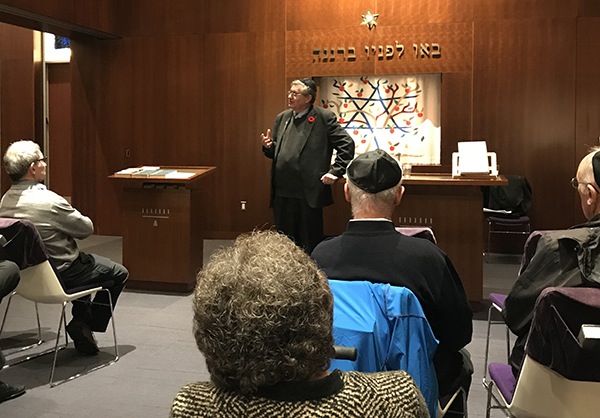
JOCC hopes to expand its presence outside of Ontario and Quebec, and would like to have more exposure in British Columbia. Campbell spoke at Beth Tikvah

in July.

For more information about Jews of Colour Canada, visit jewsofcolour.ca or their Facebook page, facebook.com/joc.canada.


Sam Margolis has written for the Globe and Mail, the National Post, UPI and MSNBC.

An Israeli-Moroccan kitchen

The falafel plate at Ofra’s Kitchen. (photo from Ofra’s)

Ask Ofra Sixto what makes her Israeli-Moroccan restaurant successful and she’ll unabashedly tell you: it’s keeping a positive attitude. But it takes a whole lot of moxie, too.

After all, it isn’t easy to launch a new restaurant in the midst of an unexpected economic shutdown and to create enough name recognition that patrons are willing to line up at your door for takeout. But that all speaks to the allure of Ofra’s Kitchen, which opened this past December, just as the holiday season was coming into full swing. Sixto, who owned a Moroccan restaurant on Hastings Street with her brother years ago, said it’s been her dream to open another restaurant – this time centring on vegetarian and vegan dishes.

Her previous restaurant was called Jacqueline Moroccan Food and was named after her late sister. When her brother was forced to return to Israel, the two siblings realized they would have no choice but to close the restaurant.

Jacqueline’s “was very successful. Very,” Sixto acknowledged.

It was the venue’s eclectic Israeli-Moroccan cuisine that later gave her the idea for a vegetarian follow-up focusing on classic Israeli dishes and flavourful specialties from around the Middle East.

“There is a great need, I think, for good vegetarian cuisine,” she said.

As a “flexible vegan,” Sixto said she often has trouble finding truly appealing food when she eats out. “When I go to a restaurant and I ask, ‘Do you have anything vegetarian?’ they push a salad. I’m not a rabbit, I want something substantial, right? So, when you come to my restaurant, you actually eat food. You eat really, really good and healthy and fresh and made-on-the-spot food that makes you feel good.”

The choices run the gamut from iconic falafel and pita, shakshuka and Israeli salad to lesser-known Iraqi kube and delicately spiced Moroccan beet salad. Diners can also enjoy an array of traditionally made desserts and Turkish coffee.

photo - Ofra Sixto’s restaurant focuses on vegetarian and vegan dishes
Ofra Sixto’s restaurant focuses on vegetarian and vegan dishes. (photo from Ofra’s)

Asked about her favourite dish, Sixto admitted she is partial to eggplant, which plays a starring role in several of her popular dishes. Her sabih – a Tel Aviv specialty that consists of fried eggplant, hard-boiled egg, tahina and an Israeli chutney – can be ordered as a pita sandwich or as a platter. She also serves homemade babaganoush and eggplant salad, early pioneer dishes that are still popular in Israel today.

“And, of course, my falafel is the best in town,” she said. “Not only by what I say but everybody else who eats it. It’s fresh, it’s crunchy outside, it’s moist and soft inside. It’s beautiful.”

But cooking isn’t the only exceptional quality that she brings to Denman Street. A big heart and an innate sense of civic responsibility are helping mobilize a small movement to ensure that those who can’t afford to eat at Denman’s restaurants also have food to eat.

Earlier this year, Sixto noticed that the number of individuals on Denman who were homeless was growing. She said the economic shutdown, which closed many establishments and sections of streets in downtown Vancouver, exacerbated the homeless problem, forcing many people onto Denman from Robson and Granville. Rather than ignoring the issue, Sixto decided to do something to help.

“When I would walk [to work] I would see so many homeless people. I decided, you know, I need to do something about it. I have the means and I could help – whatever my capacity is, right? So, I started feeding the homeless by giving away soup and falafels.”

And her reputation began to grow. “I mean, they are hungry,” said Sixto. “They get drinks, they get food, whatever they need.”

In time, she decided she could do even more. “I decided to make it a social thing and make people be a part of the solution.”

She began letting customers know that each $5 they donated would go toward feeding an individual who was homeless. Sixto said the idea is catching on. “It’s amazingly successful,” she said.

So far, Sixto estimates she has given out in excess of 1,300 meals. She admitted that the donations she receives don’t fully cover the out-of-pocket expenses. “But it doesn’t matter to me,” she said. “It’s not about that $5 that people give. It’s about the acknowledgment of the situation.

“You know, I speak with [the people living on the street],” Sixto said. “I stop and say, how are you today? Did you eat anything? How are you feeling? They are people. They were babies. Somebody loved them or not when they were babies, you know? Something happened to these people along their lives [before they got to where] they are. Nobody chooses to live on the street because it’s fun, right?”

In June, the province of British Columbia issued a revised health order to guide restaurants in how they can operate safely during the coronavirus pandemic. Sixto has taken those rules to heart. Her seating is about half-capacity, with tables situated two metres apart. And she has some gentle ground rules: patrons must agree to sanitize (either with hand sanitizer or by handwashing) when entering the restaurant and wear a mask when walking to and from the table.

Sixto also supports the province’s request to record the contact information of at least one customer per table. According to the province’s health office, the information is retained only in case COVID-19 contact tracing is necessary. Sixto said most people appreciate the effort that restaurant owners are making to keep their venues safe and comfortable.

When it came to navigating the recent shutdown, Sixto said her landlord played a big role. “My landlord is amazing,” she said. The temporary rent reduction allowed her to keep operating – “I never closed, not even for one day.”

Ofra’s Kitchen, located at 1088 Denman St., in Vancouver (604-688-2444, ofraskitchen.com), is open Israeli hours, starting at 11:30 a.m. and closing at “8ish” in the evening.

“As long as there are people, I’m feeding them. If you come by and I am there, I will open the door and seat you,” Sixto said. “Just like Israeli hours.”

Jan Lee’s articles and blog posts have been published in B’nai B’rith Magazine, Voices of Conservative and Masorti Judaism, Times of Israel, as well as a number of business, environmental and travel publications. Her blog can be found at multiculturaljew.polestarpassages.com.

Jewish genes and cancer risk

photo - Amy Byer-Shainman
Amy Byer-Shainman (photo from BRCAinBC)

With the growth of ancestry services like 23andMe, we are more aware than ever of our genes and how important they are. What we may not know is how our Jewish ancestry puts us and our children at greater risk for health issues.

Join BRCAinBC for a virtual event Oct. 1, at 7 p.m., to learn about your Jewish genes and the tenfold increased risk for Jewish people for certain cancers, including breast, ovarian, aggressive prostate cancer, pancreatic cancer and melanoma. Not only will you learn more about your risk, but you will learn where and how you can get tested and what you can do to prevent cancer.

photo - Matt Seaton
Matt Seaton (photo from BRCAinBC)

BRCAinBC is a group of individuals concerned about the effect of the BRCA genes on the Jewish community in British Columbia. The project was born out of the realization that many members of the Jewish community are not aware of the risks of carrying the BRCA genes and the risk of genetically linked cancers – BRCA 1 and 2 is the code for variant mutations of two genes known to increase the lifetime risk of several serious cancers in both women and men.

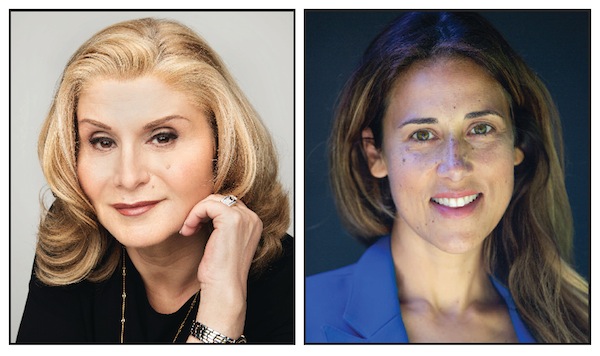
Your Jewish Genes: A Virtual Learning Event will feature speakers from across North America, including Amy Byer-Shainman, aka “the BRCA Responder,” and author of Resurrection Lily: The BRCA Gene, Hereditary Cancer and Lifesaving Whispers from the Grandmother I Never Knew; Matt Seaton, peer navigator with FORCE (Facing Our Risk of Cancer Empowered); as well as members of the B.C. Cancer Agency’s Hereditary Cancer Program and High Risk Clinic, including Dr. Rona Cheifetz, surgical oncologist, and Allison Mindlin, genetic counselor.

photo - Dr. Rona Cheifetz
Dr. Rona Cheifetz (photo from BRCAinBC)

For more information about BRCA genes and BRCAinBC, visit brcainbc.ca. To register for the Your Jewish Genes event, go to yourjewishgeneswebinar.eventbrite.ca. Tickets are by $1, $18 or $36 donation towards the BRCAinBC bursary program, which supports access to genetic testing for Jewish people in British Columbia. No one will be turned away for lack of funds.