יום הבוחר בארה”ב

(image by Zoonar/A.Makarov)

יום הבוחר: תושבי בריטיש קולומביה במערב קנדה הימרו כי דונלד טראמפ ינצח בבחירות לנשיאות ארה”ב היום, וימשיך בתפקיד לארבע שנים נוספות. אירוע הבחירות יהיה הפופולארי ביותר בהיסטוריה בקרב המהמרים

הבחירות לנשיאות ארצות הברית שיערכו היום יום שלישי, יהפכו לאירוע הפופולרי ביותר מאז ומעולם בקרב המהמרים השונים בעולם. רבים מהם מהמרים כי הנשיא הנוכחי, דונלד טראמפ, נציג המפלגה הרפובליקנית, הוא זה שינצח בבחירות את המועמד מטעם המפלגה הדמוקרטית, ג’ו ביידן. להערכת המהמרים אם כן טראמפ ימשיך לשמש נשיא ארה”ב בקדנציה נוספת בת ארבע שנים בבית הלבן.

בארה”ב חל איסור להמר בנושאים פוליטיים כמו הבחירות לנשיאות. לעומת זאת ניתן להמר על תוצאות הבחירות בקנדה במספר מדינות באירופה ובמקומות נוספים בעולם.

תושבי מחוז בריטיש קולומביה שבמערב קנדה השכנה מצפון של ארה”ב, החליטו כבר מי ינצח בבחירות לנשיאות ארה”ב, שיערכו היום (שלישי). לפי הערכת הקנדים או יותר נכון בין אלה שמהמרים, טראמפ ינצח בבחירות את ביידן.

לפי מצב ההימורים להיום: ארבעים וארבעה אחוז מצביעים על טראמפ כזוכה בבחירות, לעומת עשרים ושבעה אחוז שמאמינים שביידן ינצח. ואילו ללא פחות מעשרים ותשעה אחוז אין בשלב זה מועמד עדיף וזה קצת תמוה.

התאגיד של ממשלת בריטיש קולומביה – בי.סי לוטוריס קורפוריישן – שאחראי על כל ההימורים במחוז, החליט לאפשר לתושבים המקומיים להמר גם על זהות המנצח בבחירות לנשיאות בארה”ב, מבין השניים שמנהלים קרב איתנים, טראמפ וביידן. לפי הערכת בי.סי לוטוריס קורפוריישן למעלה מעשרת אלפים ישתתפו בהימורים לנשיאות ארה”ב היום. ובכך צפוי להישבר שיא המהמרים לאירוע בודד ביום אחד. אם כן ההימורים על הזוכה לנשיאות בארה”ב יותר פופולריים במחוז בריטיש קולומביה, מאשר זהות המנצחים באירועי הספורט הבולטים ובהם: משחקי הפלייאוף של הסופר בול, משחקי הפלייאוף של האן.בי.איי ומשחקי הפלייאוף של ההוקי. אגב, בבחירות לנשיאות לארה”ב הקודמות (שנערכו לפני כארבע שנים) בין טראמפ למועמדת המפלגה הדמוקרטית, הילרי קילנטון, כשבעת אלפיים ומאתיים מתושבי בריטיש קולוביה לקחו חלק בהימורים על זהות המנצח.

יש לציין כי אתר ההימורים של הבי.סי לוטוריס קורופריישן הוא הראשון בקנדה שהציע להמר על הבחירות בארה”ב. בשנה האחרונה בעיקר לאור מגיפת הקוביד, היקף ההימורים באתר של הבי.סי לוטוריס קורופריישן גדל משמעותית והגיע לכשני מיליארד דולר קנדי.

גם בקרב המהמרים באמצעות פלטפורמת ההימורים של אתר ההימורים הבריטי אודצ’קר, טראמפ ינצח את ביידן. בשלב זה בין המהמרים המועמד הפופולארי ביותר הוא טראמפ שזוכה לחמישים ושישה אחוז. זאת לעומת ביידן שזוכה לעשרים ושמונה אחוז בלבד. סגנית הנשיא המועמדת של ביידן, קמלה האריס, זוכה לפופולריות בשיעור של שמונה אחוזים בקרב המהמרים, ואילו סגן הנשיא של טראמפ, מייק פנס, זוכה לפופולריות בשיעור של חמישה אחוזים בלבד בקרב המהמרים. ואילו הזמר הראפר השחור, קניה וסט, שגם הוא הכריז על ריצתו לנשיאות ארה”ב, זוכה לשלושה אחוזים בלבד כמועמד פופולארי לזכייה בבחירות בקרב המהרים.

באתר אודצ’ר מציינים כי ההימורים על הזוכה לנשיאות ארה”ב היום, הופכים להיות האירוע הפופולרי ביותר בהיסטוריה מאז ומעולם, בקרב המהמרים השונים ברחבי העולם.

הקנדים כאן נערכים אף הם לבחירות: לפי הערכה כשש מאות ועשרים אלף קנדים שמחזיקים גם באזרחות אריקנית יכולים להצביע בבחירות אלה. בבחירות הקודמות לנשיאות רק כשלושים ושלושה אלף מהם הצביעו, ומדובר בכחמישה אחוזים בלבד. אך הפעם הדבר אמור להיות שונה בתכלית וקרוב לוודאי שאחוז הקנדים שיצביעו בבחירות לטובת טראמפ או ביידן יהיה הרבה יותר גבוה.

Celebrating community

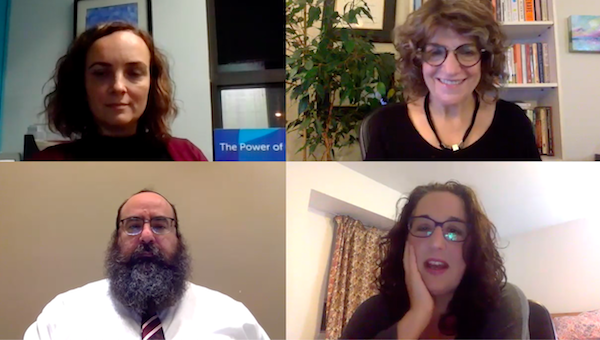
Featured speakers at this year’s Choices are Hannah Amar, left, and Michelle Hirsch. (photo from Jewish Federation)

Hannah Amar wants people to keep in mind two words when they listen to her story: resilience and connection.

Toronto-born Amar was 10 years old when she and her parents were hit by a drunk driver in a catastrophic car accident. She was the sole survivor. She went to live with an aunt and uncle, in a home with little to no Jewish identity. Her quest to regain her Jewish identity and the difference it made at the most difficult moment of her adult life is a story she will share next month at Choices.

Choices is an annual celebration of the Jewish Federation of Greater Vancouver. (Click here for an interview with Federation’s women’s philanthropy co-chairs.) It brings together hundreds of Jewish women who have made a choice to support the community through volunteerism, professional work, engagement or a financial gift. This year’s event takes place virtually on Nov. 8, and will recognize the power of women’s individual and collective contributions. The keynote speaker this year is Michelle Hirsch, a Cleveland woman who mobilized her circle to support the Jewish community of Houston after Hurricane Harvey wreaked havoc on that city in 2017. Amar is the community speaker.

When Amar came to the University of British Columbia, she sought out Hillel, the Jewish student organization, in an effort to reconnect with her Jewishness. This was her initial foray into the community.

After university, she was working in a corporate office and met a man with whom she had two sons, 16 months apart. That relationship ended and he largely disappeared. With two kids and no child support, Amar struggled to make ends meet.

With no family to fall back on, Amar put her belongings in storage and spent the better part of a year with no fixed address. She had some savings intended for her kids’ education, which was all that kept the three of them off the streets or in a homeless shelter. At one point, she was living in a room above a Starbucks, reached through a long set of steep stairs – she was eight months pregnant and had a 1-year-old.

Earlier, though, when she was still at her office job, Amar passed by the Ohel Ya’akov Community Kollel, on West Broadway. Since leaving university, and Hillel, she had not been in close contact with the Jewish community. Coming from a kickboxing class, dressed in her hot pink hoodie, she stopped outside the Kollel and was wondering whether to go in when a rabbi came down the stairs with a lollipop in his mouth.

“I thought, I can totally approach this rabbi because he’s eating a lollipop,” she recalled.

Rabbi Levi Feigelstock invited her to services on Shabbat and, the following week, she was at his family’s Shabbat table. It was the beginning of a solid connection. Both of her sons had their bris at the Kollel.

As her relationship collapsed and her housing situation became critical, it was that connection with community that provided a safety net.

A few weeks ago, Amar and her kids – Sam, 7, and Judah, who is almost 6 – moved into a three-bedroom townhome at the Ben and Esther Dayson Residences in the River District of South Vancouver. The Dayson Residences are a project of Tikva Housing, a nonprofit society that provides access to affordable housing, primarily for Jewish low- to moderate-income adults and families. The neighbourhood, which opened in 2019, consists of 32 townhomes.

“My kids are so happy, I’m so happy,” said Amar. “It’s a life-changer. It really is.”

Around Sukkot, Chabad visited with their mobile sukkah and all the kids in the residences came out. Amar loves walking around and seeing Shabbat candles in windows.

“The sense of community here – it is remarkable,” she said. “Going from no fixed address and only being the three of us for so many years to finally reaching out and dipping our toes in community and now having that.… Reaching out to the Jewish community helped me.”

The kids have already made best friends in the neighbourhood and Amar is enjoying having neighbourhood kids dogpiling on her living room floor.

“The amount of stress that’s left my body is unbelievable,” she said. “I had pain every day. Just yesterday, I woke up and I had none, so that’s pretty remarkable. I feel it leaving my body.”

Two generations ago, when Amar’s grandparents arrived in Toronto from Morocco, they, too, were aided by the Jewish community organizations that were there to help.

“It just really goes to show you how the connection in the Jewish community is amazing and how the help there is also amazing,” she said.

The keynote speaker for the Choices event, Hirsch, will share the story of how a small act of tzedakah snowballed into a huge relief effort for the Jewish community of Houston.

Hirsch is senior vice-president of her family’s business, an insurance brokerage.

“We joke that our family’s business is not just insurance for people but it’s also in our blood to ensure the future of the Jewish community,” she said. Growing up in Akron, south of Cleveland, Hirsch saw the model her grandparents and parents set in that city’s relatively small Jewish community.

“Everyone was involved because everyone was involved,” she said. “Every Jew knew every Jew and that’s just how it was.”

Hirsch became active locally and internationally, with the Jewish Federations of North America’s Young Leadership Cabinet and, more recently, with the National Women’s Philanthropy Board. She also serves on the board of the Jewish Agency for Israel North America and as chair of Cleveland’s Women in Philanthropy.

When Hurricane Harvey hit, her Young Leadership Cabinet colleagues in Houston were posting photos of the disaster on the group’s social media page. “Everyone was asking what can we do to help,” Hirsch recalled. “Some of the people in Houston were saying, we need things: people need diapers, we need cleaning supplies, none of the stores are open, the roads are blocked. We can’t just go to the store or order something to get delivered.”

Courier companies and Amazon were not delivering in Houston, but private vehicles were permitted to enter the city. Hirsch connected with colleagues in Dallas and asked if it would be possible to corral supplies there and transport them to Houston. One of the donors to the Dallas Federation owns a shipping company, so they obtained a cargo truck.

Hirsch made a preliminary Amazon wish list – toiletries, cleaning supplies, toothbrushes, other necessities – and posted on her personal social media, asking colleagues from Young Leadership Cabinet and other connections to share it. She went to bed and, eight hours later, awoke to find more than 1,000 items had been purchased and were on their way to the Dallas JCC.

“We kept adding additional items and, a few days went by, and then the Amazon trucks just started rolling in,” she said. The cargo truck made its way from Dallas to Houston well before couriers resumed services. The Houston JCC became their warehouse and volunteers came, opened the boxes, sorted the items and prepared them for community members to collect what they needed.

A couple of weeks later, some of the organizers made the trip themselves, including Hirsch. They helped out on the ground, rummaging through the flooded JCC preschool to see what toys and other items could be salvaged.

“It sounds like a sad story,” Hirsch said, “but really it’s an inspiring story, not of just mobilizing but the idea of a community that was facing such destruction that just rose up together to really come together and put back the pieces. It’s just a beautiful story of people coming together.”

More of both these women’s stories will be shared at the Choices event. For information and to register, visit jewishvancouver.com/choices-form.

Doctors urge mask use

Dr. Anna Wolak is one of the doctors who started Masks4BC. (photo from King Edward Medical Centre)

Mandatory use of masks, in addition to physical distancing and hand hygiene, will help save lives and the economy in the wake of the coronavirus, according to Masks4Canada, a nation-wide, grassroots group of healthcare professionals. The group was formed in May, while a provincial branch, Masks4BC, started operations in July.

Masks4Canada works to inform all levels of Canadian government and the public of the critical importance of wearing masks in reducing the transmission of COVID-19. The group promotes the use of masks in all indoor settings – such as schools, businesses, factories and stores – on public transport and outdoors, when physical distancing is not possible.

Jewish community member Dr. Anna Wolak, the medical director at Vancouver’s King Edward Medical Centre, is one of the doctors who started Masks4BC, following the implementation of mask mandates in Ontario and Alberta. As of this writing, such a mandate had not been instituted in British Columbia and Masks4Canada has written a public letter to the B.C. government, including Dr. Bonnie Henry, urging the adoption of one.

“A universal mask use mandate has always been up to the provincial health officer and the B.C. health minister. As numbers continue to rise, all we can do is vocalize the need for it and continue making sure the information about masks is available,” said Wolak, who also serves as a family physician and as a clinical assistant professor of family medicine at the University of British Columbia.

“As more businesses bring in mandatory mask use, it will make it easier to normalize their use. Scientific journals are also very good at making sure findings about the protectiveness of masks are available, but these publications are not typically read by the lay public and, therefore, need to be conveyed through various media channels,” Wolak added.

In its letter to the provincial government, Masks4Canada recommended that mandatory masking policies be applied with the acronym “ACT”: all indoor spaces outside the home (such as hospitals, schools, shops and businesses), crowds (any place where it is difficult to distance from others) and transit.

Though the B.C. government did not respond to the letter, the group has made an impact. Transportation authorities, including BC Transit and TransLink, have mandated masks on all public transit – buses, SkyTrain and SeaBus – and BC Ferries has followed suit. Individual businesses have likewise taken strides to implementing the wearing of masks to protect the public from infection.

According to Wolak, a mask mandate should have been introduced when numbers of daily infections were low, and before schools reopened. She emphasized, however, that it is not too late to bring about a mandate as long it happens before the respiratory viral season – which includes influenza, parainfluenza, RSV (respiratory syncytial virus) and the common cold – really gets underway.

“I think B.C. missed an opportunity to contain the virus,” Wolak told the Independent. “Ideally, I would like to see masks required in all indoor areas outside of the home, including classrooms, as well as masks in crowded outdoor areas. Of pressing importance is the need for a mask mandate in hospitals because, as surprising as this might sound, it is not currently the case.”

Masks4Canada does state that people with certain medical conditions or disabilities, along with young children, be exempt. Nonetheless, for most people they recommend the use of masks.

Further, they say there should be free distribution of masks to populations that may be vulnerable or at higher risk. Rather than focusing on penalties to enforce policy, the group encourages education to help the public understand how to wear a mask properly, as well as the importance of wearing masks for the protection of health and provincial economic recovery.

British Columbia and other provincial mask groups have seen an increase in the number of doctors supporting the cause. As other provinces put mandates in place, focus in those areas has broadened to other relevant issues, such as effective ventilation protocols and tracking school outbreaks.

Masks4Canada does not sell masks or medical supplies, nor does it endorse or partner with for-profit enterprises.

Wolak has had a significant media presence since helping create Masks4BC. She has appeared on CTV Vancouver, Global News, CTV News Ottawa and OMNI Television, among other TV news programs. She has also spoken on various news radio shows, including CKNW’s Lynda Steele Show, The Jill Bennett Show and the nationally broadcast Charles Adler Live.

For more information, go to masks4canada.org.

Sam Margolis has written for the Globe and Mail, the National Post, UPI and MSNBC.

Kristallnacht programs

Dr. Chris Friedrichs will deliver the lecture “How to Steal from Jews: A Story from Nazi Germany and What It Teaches Us,” which will be available from Nov. 9, 7 p.m., from the Vancouver Holocaust Education Centre. The Victoria Shoah Project is also holding a commemoration, called “The Persistence of Creativity Emerging from the Shards of Tragedy.” (photo from VHEC)

On the evening of Nov. 9, both the Vancouver and Victoria Jewish communities will be holding virtual Kristallnacht commemorations. This year’s commemoration marks the 82nd anniversary of the state-sponsored Kristallnacht (Night of Broken Glass), which took place throughout Germany and Austria on the night of Nov. 9-10, 1938. In the course of just a few hours, hundreds of synagogues were burned, thousands of Jewish-owned places of business were destroyed, almost 100 Jews were killed, and 30,000 Jews were arrested and sent to concentration camps. The shards of broken window glass seen in front of Jewish-owned stores all over Germany the next morning gave the memorial event its name.

The Vancouver Holocaust Education Centre, in partnership with Congregation Beth Israel and with support from the Robert and Marilyn Krell Endowment Fund of the VHEC and funds from the Jewish Federation of Greater Vancouver annual campaign, is presenting the lecture “How to Steal from Jews: A Story from Nazi Germany and What It Teaches Us,” by keynote speaker Dr. Chris Friedrichs.

The Nazi regime not only murdered millions of Jews, it also relentlessly confiscated Jewish property from owners later sent to their deaths. The illustrated lecture by Friedrichs will describe the step-by-step process by which two elderly Jews from wartime Berlin were stripped of all their assets before they were deported to the death camps – and shows how Nazi officials then fought with one another about what to do with the stolen property.

Friedrichs is professor emeritus of history at the University of British Columbia, where he taught for 45 years before his retirement in 2018. He is a specialist in German history and has been active for many years in Holocaust awareness education.

The Vancouver event is pre-recorded and will be available for viewing any time after 7 p.m. on Nov. 9: visit vhec.org/events-gallery/#videos.

* * *

In Victoria, live-streaming via Zoom, the Victoria Shoah Project will present a program titled “The Persistence of Creativity Emerging from the Shards of Tragedy.” It is a remembrance of those who suffered on Kristallnacht and in the Shoah, as well as a reminder of how and why we, as a collective society, commemorate such tragic events. Remembrance is essential; however, we also must act in tangible ways to protect all peoples in our diverse community.

In recent years, there has been the unfortunate growth of attacks on minority groups and those who are “ the other.” This highlights the need for us to stand together to protect and safeguard all peoples, regardless of religion, race, sexual orientation or other factors, which may make them targets of a hateful few. And, in this context, the Victoria Shoah Project is inviting political and law enforcement leaders, as well as representatives from the diverse faith communities, to join together at the commemoration to lead the reading of a pledge of mutual respect and support.

It is also inviting the entire community to join the event – to remember the past and commit to take action for a better future, where we will respect and protect our neighbours, not remain silent in the face of any injustice against any person or group and work towards building bridges leading to unity and shalom (peace) in our community and beyond.

For more information, email victoriashoahproject@gmail.com, or visit victoriashoahproject.ca or facebook.com/victoriashoahproject.

Task force set up

Over the last several years, there has been an alarming increase in antisemitic incidents across the globe, with many originating online. As social media posts do not stop at international borders, members of the national legislatures of Australia, Canada, Israel, the United Kingdom and the United States came together last month across party lines to launch the Inter-Parliamentary Task Force to Combat Online Antisemitism.

Members of the task force include Member of Knesset Michal Cotler-Wunsh (Blue and White, Israel), Member of Parliament Anthony Housefather (Liberal, Canada), MP Marty Morantz (Conservative, Canada), Congresswoman Debbie Wasserman Schultz (Democrat, United States), Congressman Ted Deutch (Democrat, United States), Congressman Chris Smith (Republican, United States), MP Josh Burns (Labour, Australia), MP Dave Sharma (Liberal, Australia), MP Andrew Percy (Conservative, United Kingdom) and MP Alex Sobel (Labour and Cooperative, United Kingdom).

The launch of the task force follows campaigns working to expose online antisemitism, including the #NoSafeSpaceForJewHate campaign that served as a global call to action to combat the virulent antisemitism that goes unaddressed or inadequately addressed on social media platforms.

The task force has the following goals:

  • Establishing consistent messaging and policy from parliaments and legislatures around the world in order to hold social media platforms – including Twitter, TikTok, Facebook and Google – accountable.
  • The adoption and publication of transparent policies related to hate speech.
  • Raising awareness about antisemitism on social media platforms and its consequences in order to acknowledge the tremendous responsibility that comes with the power the platforms hold.
  • Emphasizing that, if one minority cannot be protected by hate speech policies, then none can be. This task force will, therefore, serve as a means for protecting all minority groups from online hate.
  • Underscoring that the fight against antisemitism is a non-partisan consensus in democratic countries.

“Always and at this time in particular, as we stand united in fighting a global pandemic, another virus rages that requires global collaboration and cooperation,” stated Cotler-Wunsh. “By working with multi-partisan allies in parliaments around the world, we hope to create best practices and real change in holding the social media giants accountable to the hatred that exists on their platforms. It is imperative that we work together to expose the double standards.”

Housefather said, “Online hate, including antisemitic hate, is growing exponentially. Posts are viewed across national borders and impact people in many jurisdictions. Social media platforms have failed to adequately address hatred on their own. But they cannot be expected to create different policies in every separate country. By working together, we can create international definitions and recommendations for regulating social media platforms that can then be reviewed and hopefully implemented by each individual country.”

Morantz added, “Online hate is an abhorrent reality on social media platforms. I am honoured to work on a bipartisan basis with my Canadian colleagues, as well as international colleagues, to find solutions that keep all those safe who might suffer from online hate, antisemitism and discrimination.”

Choices event will inspire via Zoom

Jewish Federation of Greater Vancouver women’s philanthropy co-chairs Sue Hector, left, and Shawna Merkur. (photos from Jewish Federation)

There’s good news and bad news for the annual Choices gala, which celebrates Jewish women’s philanthropy in Metro Vancouver. The good news is Choices will be held this year, despite COVID-19. The bad news is it will be held exclusively on Zoom, as there is no alternative safe way to convene a large gathering during the pandemic.

The 16-year-old event raises tens of thousands of dollars each year for Jewish Federation of Greater Vancouver’s annual campaign. Last year, 240 donors raised $52,302. Average attendance is 500 and has been as high as 620 some years.

“Every year, the amount raised varies, based on the different expenses of the event and the amounts raised through games, raffles and silent auctions,” said Sue Hector, who co-chairs Federation’s women’s philanthropy with Shawna Merkur.

“Choices is, at its essence, an event that inspires women of all ages to give to the Jewish community or to get involved in our community,” Merkur said. “It’s all generations in the room, all coming together for Jewish Federation to help our community. It’s really quite a beautiful thing.”

In fact, Choices has been so successful over the years that there have been complaints from the men’s campaign because they have no event like it, Hector said.

When the event is in person, the cost per person is $54, which covers the expenses of the actual event, while the Federation fundraising component comes from raffles, silent auctions and games held during the event. However, women need to make their Federation annual donation when they register for Choices and the minimum donation is $136. That said, no one is turned away based on their inability to afford that donation.

This year, because there will be no food served and no physical venue required, there’s no cost to the event. Instead, organizers are asking women to make an optional $54 donation to Federation’s COVID relief fund.

“That fund is being used to help agencies in the Jewish community manage the stress of the pandemic, from the Jewish schools to the Jewish food bank,” Hector said. “A task force has come together to work on this, interview the different agencies to find out what their needs are and determine how they’ll distribute the funds raised.” (See jewishindependent.ca/the-road-to-recovery.)

The virtual event Nov. 8 at 5 p.m. will feature a community speaker, Hannah Amar, a young single mother who benefited from Tikva Housing’s programs. She will share her journey from near-homelessness to a new home at the Ben and Esther Dayson Residences. “I think her story will really speak to the women watching,” Merkur said.

A main event speaker, Michelle Hirsch, will deliver her talk from Cleveland, Ohio. A member of Jewish Federations of North America’s national women’s philanthropy board and the Jewish Agency for Israel North America, Hirsch organized the Amazon Prime initiative on behalf of the National Youth Leadership Council in response to Hurricane Harvey. (For more on both speakers, click here.)

“In some ways it’s easier this year because we don’t have a lot to organize – no raffle, no caterer or venue and no silent auction,” Hector said. “But, we still wanted everyone to come together in some fashion, and Zoom is the only way. In such crazy, uncertain times, it’s nice to have something familiar and, hopefully, this virtual event will uplift people and give them courage and hope to face what we still have to face.”

To register for Choices – chaired this year by Courtney Cohen, Leanne Hazon and Sherri Wise – visit jewishvancouver.com/choices-form.

Lauren Kramer, an award-winning writer and editor, lives in Richmond. To read her work online, visit laurenkramer.net.

Explore Torah’s secrets

“People tend to read biblical stories like they do mythology,” said Chabad Richmond’s Rabbi Yechiel Baitelman, one of the local Rohr Jewish Learning Institute (JLI) instructors. “Our course invites participants to look deeper and discover the underlying themes and relevant life lessons these stories were designed to convey.”

Baitelman is talking about a new six-session JLI course called Secrets of the Bible: Iconic Stories, Mystical Meanings and Their Lessons for Life, which starts Nov. 4, 7:30 p.m. The course will be offered both in-person, to a limited audience, at 4775 Blundell Rd., in Richmond (following COVID-19 restrictions), and online via Zoom. All classes – which are one-and-a-half hours long – will be recorded on Zoom and accessible online for six days after each class. For Vancouver Islanders, the course will be presented by Chabad of Nanaimo, 5450 Oceanview Terrace, in Nanaimo, starting Nov. 3, 7 p.m.

The course presents a unique way of reading the stories of Adam and Eve and the Tree of Knowledge, Noah and the great flood, the lifelong feud between Jacob and Esau, Joseph’s multicoloured coat, the golden calf, and Korah’s rebellion. For each of these stories, three questions will be answered: What is the deeper meaning behind the story? How does it shape the Jewish worldview? What wisdom does it hold for us today?

Throughout the six sessions, Secrets of the Bible explores major life themes, including human subjectivity and bias; the underpinnings of relationships; negotiating spiritual growth with practical impact; why inspiration is fleeting and how to make it last; understanding equality and privilege; and navigating parallel spiritual and material life paths.

Secrets of the Bible is designed to appeal to people at all levels of knowledge, including those without any prior experience or background in Jewish learning. This course is open to the public, and attendees don’t need to be affiliated with a particular synagogue, or other house of worship.

“These biblical stories come alive as their deeper meanings and insights are revealed. They hold the key to life lessons for us all,” said Baitelman. “I encourage you to sign up for this thought-provoking course that’s sure to deepen your understanding of Judaism and enrich your life. You are welcome to try the first class for free with no obligation.”

To register and for more information about the Chabad Richmond course ($95/person or $160/couple), call 604-277-6427 or visit chabadrichmond.com/jli. For the Nanaimo course ($95/person or $152/couple), call 250-797-7877 or visit jewishnanaimo.com/secrets.html.

JNF panelists focus on heart

Panel speaker Dr. Arthur Dodek in 1963, planting a Jewish National Fund tree as part of the second World Jewish Youth Convention. Dodek was in Israel representing the Student Zionist Organization of North America. (photo from Arthur Dodek)

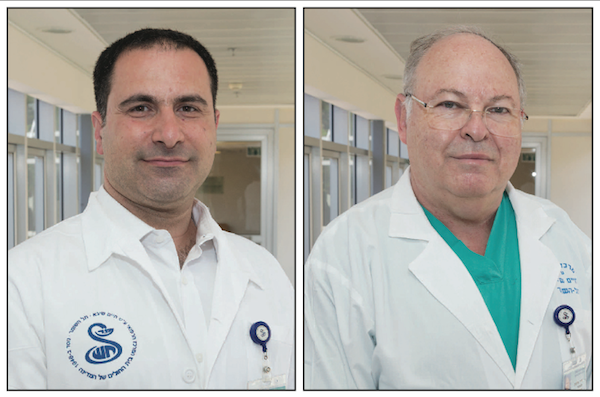
The Zoom event in Jewish National Fund, Pacific Region’s virtual sukkah on Oct. 8 was seamless and stimulating. Moderator and presenter Dr. Arthur Dodek led the presentation on heart health with a five-minute overview of risk factors. Drs. Saul Isserow, Zach Laksman and Josh Wenner each presented as well, enlightening the audience in easy-to-understand language on topics of cardiology, also in just five minutes each.

But why was JNF Pacific Region hosting a talk on heart health? Well, every year, JNF hosts a Negev Dinner, raising funds for a specific project. This year, in collaboration with the Israeli organization Save a Child’s Heart (SACH), the fundraising supports the building of a cardiac treatment room, as well as a Holter (a heart-rhythm test) room, at the Wolfson Medical Centre in Holon. The sukkah event was the second in the campaign, the first having been held on Aug. 30, for which Dr. Saul and Lindsay Isserow were honourary chairs (jewishindependent.ca/negev-campaign-goes-virtual). Isserow being a prominent cardiologist led to the idea for this second event, an educational panel on heart health.

The funds raised by this Negev campaign will help SACH focus on doing what they do best – saving the lives of some of the most vulnerable children in the world who are born with heart defects. According to Ilan Pilo, executive director of JNF Pacific Region, many of the young patients are from the Palestinian territories and some come from Lebanon and Syria. As well, there are a number of patients from African nations who have been brought to Israel for surgery, accompanied by their families. “There is a beautiful house for the families, like Ronald McDonald House, but it is an African island in suburban Israel,” said Pilo.

At the Oct. 8 panel, Dodek – using data from a variety of studies – summarized the main lifestyle and medical coronary risk factors. At the top of his list was cigarette smoking, which has decreased in prevalence by nearly 30% since 1965. Diet and cholesterol were other major factors of heart disease, with a Mediterranean or Japanese diet recommended to reduce the chance of cardiovascular events. Blood pressure is also a key issue, and Dodek touched on the benefits of a lifestyle that includes stress and weight reduction, as well as exercise.

Isserow picked up on this theme. In providing a practical, Jewish-oriented take on the best way to maintain long-term cardiac health, he said, “The best bang for your buck from a cardiac point of view is simply getting off your tuches and walking for 30-40 minutes per day.” He mentioned having a l’chaim with friends as a way to lower blood pressure, while stressing that having physical activity as part of a daily routine is beneficial not only for the heart but for myriad other areas of health.

Taking things to another level of complexity, Laksman successfully simplified the subject of atrial fibrillation (a chaotic and irregular heart beat). He spoke about the heart’s rhythm and the causes of heart rhythm disorders, as well as treatment options. He explained that age is the number one cause of atrial fibrillation, but added, “Bad habits, alcohol, probably being number one.” Other factors include genetics, really intense endurance exercise, stress and pollution. Laksman discussed how it feels to experience atrial fibrillation and offered some easy tips, including that people should learn how to take their own pulse, to determine their condition.

Wrapping up the cardiologist panel was Wenner, the youngest of the doctors. Having volunteered for Save a Child’s Heart in Israel before entering his cardiology program, Wenner had a firsthand connection with SACH’s work. But the focus of his talk was COVID-19 and the heart. One of the most important takeaways was the importance of continuing to take heart medications appropriately and regularly to maintain health regardless of rumours in the media about contraindication with COVID. One of the other points Wenner made was that people should go to the hospital if necessary. “Based on the raw data, in March and April … the overall death rate, excluding COVID patients, was significantly higher and the best theory for that is that people were staying home with their acute cardiac and other conditions,” explained Wenner.

JNF Pacific Region president Bernice Carmeli concluded the evening with a more detailed explanation of the fundraising goals and the collaboration with Save a Child’s Heart.

The event proceeded with limited breaks between speakers and short comments by the moderator. “I was asked to give my best 45-minute talk in 12 minutes and I said I can’t do it, but it turned out to be my best talk,” commented Dodek.

For those who weren’t able to attend the event, most of the program was recorded and can be accessed on YouTube or by contacting Pilo at the JNF Pacific Region office, 604-257-5155 or ilan.pilo@jnf.ca. More information can be found, and donations made, at jnf.ca/vancouver/campaigns/negev-campaign.

Michelle Dodek is a freelance writer, who also happens to be the daughter-in-law of the moderator (for full disclosure). Her husband, who is a doctor, says she has the medical knowledge of a third-year medical student.

Need more women leaders

Dr. Patricia Daly (photo from vch.ca)

Dr. Patricia Daly, the chief medical officer for Vancouver Coastal Health, provided an illuminating but discouraging perspective on the status of women in leadership positions in medicine during a National Council of Jewish Women of Canada webinar Oct. 14.

A familiar media presence in Metro Vancouver since the COVID-19 pandemic hit earlier in the year, Daly touched upon the history of women in medicine in Canada and their underrepresentation at board tables and in positions of authority.

Daly, who is also a clinical professor at the University of British Columbia’s School of Population and Public Health, pointed out that, at the time she graduated from medical school in the mid-1980s, one in three students were women. “I am at the stage in my career where physicians would traditionally be in leadership positions,” she said. “Yet, when I look around the tables where I sit, I don’t see one-third of those leaders as women, and I don’t see leadership reflecting the current reality that most students are now women.”

By 1995, there were more women entering medical school in Canada than men. By 2018, 63% of the student body nationwide was female. Nevertheless, only two of 17 Canadian medical school deans were women in that year and the Canadian Medical Association board was comprised of 20 men and six women.

Some of the theories put forward as to why there is a lopsided domination by men in positions of leadership include “unconscious biases” against women, family demands and a confidence gap between the genders, said Daly.

In the Vancouver Coastal Health region, just over 40% of doctors are women, reflective of the national average. Still, she said, fewer than 20% of all VCH leadership roles are filled by women, and that percentage decreases at more senior levels.

Recommendations of how to address this problem encompass leadership training, mentorship opportunities for young female employees and the creation of structures that would incorporate, among other things, the provision of childcare.

“We need to think about how we can support women (and men) who want a work-life balance so that they can advance in their careers and they can achieve leadership roles,” she maintained.

Daly then went into a wide-ranging overview of public health, a field with the mandate of improving the health of entire populations – through prevention of disease and injury, promotion of good health, and protection from potential harms.

Among public health’s many achievements in the past century are vaccinations, family planning, motor vehicle safety, healthier foods, control of infectious diseases, fluoridation of drinking water, safer workplaces and recognition of the hazards of smoking. Recent areas of focus in public health have been climate change and the prevention of substance abuse.

According to information provided by Daly, the average lifespan of Canadians has increased by 30 years since the 1900s, much of which can be attributed to advances in public health.

She added, “A lot of the work we do is centred on maternal-child health. In order to maximize someone’s health potential, we need to start in early childhood; in fact, in utero. Brain development is most important in the first two to five years of life. About 80% of our resources, including public health nurses, are focused on early childhood, supporting women to have healthy pregnancies, to help vulnerable mothers and for childhood immunizations.”

Public health also works on what is known as the “social determinants” of health, said Daly. These include levels of education and income, social connections and risk behaviours, i.e., diet, exercise and smoking.

“People living in poverty are at much greater risk of illness and disease, as well as injuries, despite universal healthcare,” she said. “The goal of public health is to reduce these disparities and bring the system towards one of health equity.”

The third part of Daly’s lecture was about public health and how it handles pandemics. In 1918, Vancouver’s chief medical officer, Dr. Fred Underhill, had to deal with the deadly outbreak of the Spanish flu. (The photos presented at the lecture from at that time showed an exclusively male and Caucasian medical leadership.)

COVID-19 has been Daly’s primary focus for the past eight months. As is broadly known, public health policies during the current pandemic have focused on the need to isolate cases and contacts for 14 days until a person is non-infectious; restrict travel; limit public gatherings; encourage people to physically distance; and have physicians provide virtual care when possible.

“Having access to tests is an important public health measure,” said Daly. “The single most important intervention is to isolate people who test positive and to identify their close contacts and quarantine them. We are fortunate that COVID-19 has a long incubation period. If we can identify cases, then, even if they get sick, they are not going to pass the virus onto others.”

She warned, “Despite the relatively draconian measures taken, we are not going to stop this virus without a vaccine.”

Daly also brought up some of the unintended consequences of the pandemic response, such as the growing number of overdose deaths, increased social isolation in long-term care facilities, suspended elective surgeries and the effects on the broader economy.

She concluded, “The good news is that vaccine development is very promising.”

Sam Margolis has written for the Globe and Mail, the National Post, UPI and MSNBC.

Learning his family’s history

George Heyman, ninth from the right, with family members in Poland last year. (photo from George Heyman)

Like scores of other British Columbians, George Heyman owes his life to Chiune Sugihara.

Heyman, who was reelected Saturday as MLA for Vancouver-Fairview, was born after the Second World War. But his parents escaped Poland via Japan thanks to the assistance of Sugihara, who was the vice-consul for the Japanese Empire in Kaunas, Lithuania. At risk to his career and probably his life, Sugihara betrayed orders of the Imperial Japanese government and issued transit visas that are credited with saving the lives of at least 6,000 European Jews.

Heyman, who was minister of environment and climate change strategy in the last government, was sketchy on some of this family history. So, at the urging of a distant cousin who is “a ferocious researcher,” Heyman, his sister and other family members from around the world convened in Poland last year.

“[The cousin] found others as well and he started communicating with us and sending us snapshots of things that he’d found in archives and going back a couple of hundred years,” Heyman said of the cousin, who is a retired professor in Denmark. “He found information about the village that our ancestors had once lived before they migrated to Warsaw.”

The diverse group of family members spent about 10 days together in the summer of 2019.

“We met in Warsaw, we had an initial family dinner of 20 people, three generations,” he recalled. “Everybody said a little bit about what it meant to them to be back, as well as where their lives had taken them.”

The cousin had prepared a family tree and presented each guest with a scroll outlining their genealogy. They then traveled as a group to Praszka, the village where the family had originated but left for Warsaw, probably in the late 1700s or early 1800s.

Both of his parents, Stefan Heyman and Marta Eliasberg Heyman, were born in Warsaw and they were family friends with the noted pedagogue and child advocate Dr. Janusz Korczak.

“My grandmother had been a volunteer working with him and my grandfather, who was a doctor, had also worked with him,” said Heyman. “We visited the site of the orphanage, which is now a commemorative museum. We went to the Jewish cemetery in Warsaw.… I was so pleased to see that so much had been done to rehabilitate much of the cemetery. People had been working on it since the end of the Second World War, but work continues. We wandered, we found gravestones of relatives and people we thought might be relatives. We talked to people we met there.”

They also visited the remnants of the Warsaw Ghetto, where Heyman’s maternal grandmother had been confined but from which she was rescued before the ghetto was liquidated, in 1943.

His maternal grandfather had died before the war and his grandmother, Stella Bernstein Eliasberg, had remained behind when Heyman’s parents fled. She was incarcerated in the ghetto, but was rescued in a scenario of which Heyman knows only the barest details. The ghetto wall abutted the side of a church and someone – friends of his grandparents, he thinks – brought clothing as a disguise and smuggled her out through the church and into hiding for the rest of the war. Heyman does not know whether there was any communication during this time between his mother and his grandmother. But, shortly after the war, Heyman’s parents were able to bring his grandmother to Vancouver, where she lived with them and played an important role in his life, until she passed away just before Heyman’s bar mitzvah.

Nothing is known of the fate of Heyman’s paternal grandparents.

“I often wonder what it must have been like for my father,” he said. “It’s hard enough when we remember a loved one who has died and we know the circumstances of their death. It’s horrific, as it has been for so many, many, many people … they are left only to imagine what their loved ones went through in their final days and hours. That was my father.”

The trip refashioned Heyman’s conception of his family.

“I always thought of my family as being very small,” he said. “In fairness, I didn’t know that some of these people even existed…. It gives me a sense of continuity and history.”

The trip also helped emphasize for him the lessons of the past for the politics of the present.

“We see right-wing violence, we see the beginnings of fascism appearing in many countries,” he said. “We don’t have to look far to see what happens if we take things for granted.”

He brings that experience back into his current work.

“That’s one of the reasons that our government, after 16 years of its elimination, reinstated the B.C. Human Rights Commission,” he said, “because it’s not enough to just deal with racist behaviour, hate behaviour, after it happens, we need a commission that will be responsible for educating people and recommending programs to raise people in an atmosphere of tolerance and love, not suspicion and hate. So that is also a very significant and often unnoticed achievement of our government, and we did it very early.”

He reflected: “The trip was meeting a family that I never knew I had and having more of a sense of being grounded in my family history, as well as the terrible recent history of what happened to our and so many other families, just dispersed, another diaspora all over the world.”