Reckoning with family’s past

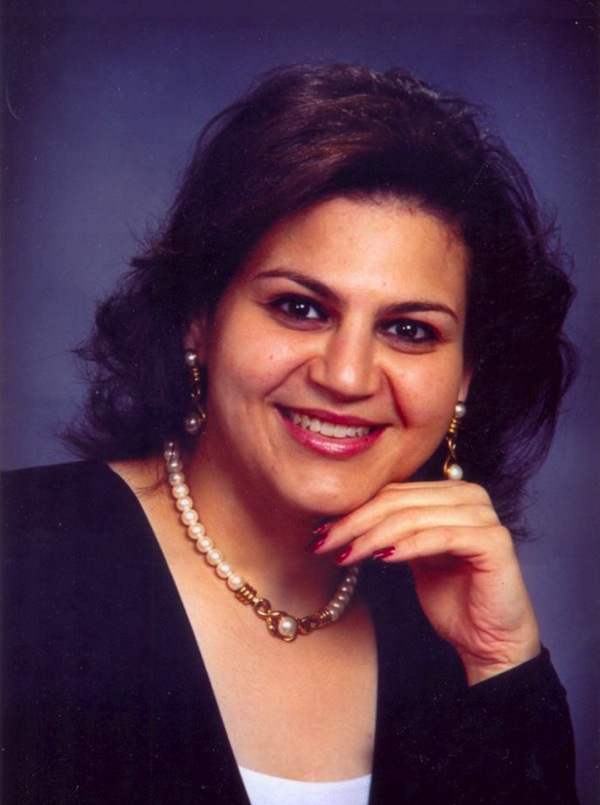
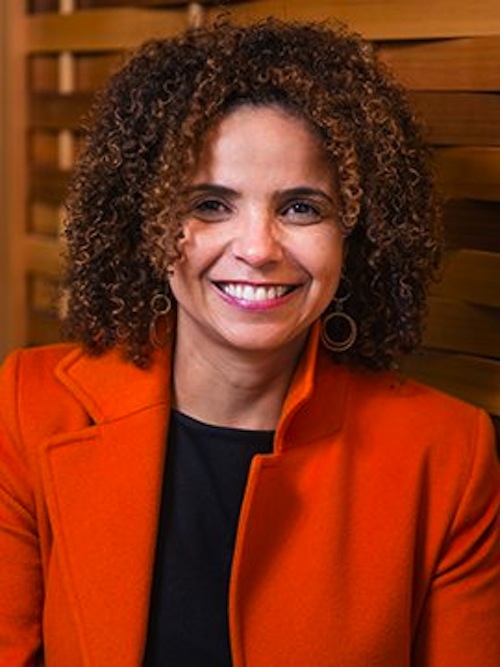
Writer and illustrator Nora Krug spoke with the Globe and Mail’s Marsha Lederman at a virtual event Oct. 27. (photo by DW Deutsche Welle)

The first time Nora Krug heard the word “Jew” was in elementary school during religion class, which was taught by the local priest. He told students that Jews killed Jesus.

Born in the German city of Karlsruhe, Krug is now associate professor of illustration at the Parsons School of Design in New York City, and author of the book Belonging: A German Reckons with History and Home. She spoke with Marsha Lederman at a virtual event Oct. 27 presented by the German Consulate General in Vancouver, the Vancouver Holocaust Education Centre, the University of British Columbia and the University of Victoria. Lederman is the Western arts correspondent for the Globe and Mail and her own book, Kiss the Red Stairs: Intergenerational Trauma, the Holocaust, and Me, is to be published in 2022.

“I came home from school that day and confronted my mother about it,” Krug recalled. “I said, ‘Are Jews evil?’ She got really angry because [it was] so obvious to her that this was something that nobody in Germany should ever think or say.”

A few years later, in her early teens, when she began learning about the Holocaust, she made a yellow star and intended to wear it as an act of solidarity with the Jewish people. Her mother, again, set her on a more appropriate path.

Krug explores her own struggles with her family’s past, as well as that of her country, in the book, a visual memoir that incorporates prose, graphics and photography. (See jewishindependent.ca/creative-engaging-memoir.)

The book was challenging on many fronts, Krug said, including her intention to tell one family’s story about the war era without downplaying German atrocities or doing anything that would appear to paint Germans as victims. While Germans did suffer during the war, it was ultimately a result of their own government’s actions.

“I’m not saying that Germans did not suffer during the war. I think they did,” she said. “But it was a self-imposed suffering.”

Like many aspects of researching a family’s or a country’s past, some things are unknowable and, at times, evidence can raise more questions than it answers. For instance, Krug had been told that her grandfather was a lifelong social democrat. But, when she dug through archives and found the military questionnaire that Germans in the American sector of occupied Germany were required to fill out to explain their war-era activities, he had acknowledged being a Nazi party member. Holding the document in her hands – not a facsimile, but the very document on which her grandfather had responded to more than 300 questions – was chilling, she said. The knowledge of her grandfather’s relationship with the Nazi party could only lead to speculation when she pieced two other facts together.

Krug had always known the location where her grandfather’s office had been in Karlsruhe. But only when she was researching the book did she discover that the Jewish centre and a synagogue were right across the street. Where was her grandfather when the synagogue was attacked on Kristallnacht and Jews were beaten in the streets? In the book, she posits four possibilities, from watching out his office window to laying home in bed sick to the most alarming possibility: that maybe he was among the mobs perpetrating the attacks.

Having lived for the past two decades in the United States – and being married to a Jewish man and having a 5-year-old daughter who is beginning to ask questions about history – all impacted her decision to write the book.

“I don’t think I would have done that had I not left Germany because I think, when I lived in Germany, I felt like I learned everything there is to learn about the war, what else is there to investigate?” she said. “That was my thinking. But, since I’ve been living in New York, I’m an individual and I am a German representing my country.”

Being away from her homeland also made her consider history more from an individual perspective.

“I think when you live as a German among Germans you accept the collective understanding of how we grew up learning about the war,” she said, crediting Germany with doing a good job addressing the topic as a nation. “But I think where we have to really still catch up is to do it on an individual basis, to really go back into our families, into the archives, into the cities where we grew up, what happened in our streets, in our houses, and investigate more deeply on an individual level.”

These are complex challenges and Krug sees a problem with the way Germans struggle with their national identity because of the terrible history of the 20th century.

“I think Germans really need to learn to love their culture,” she said. “I have a problem with it, too. I’m not saying I know how to do that. But I do think it’s a dangerous thing to only highlight our guilt. I think we need to learn, as Germans, to replace the word guilt or shame with the term responsibility.”

By struggling to express national pride, she said, Germans tend to abandon that to a fringe element.

“The problem is a lot of Germans who are willing and open to looking back at the past from a critical angle cannot express this love for their culture,” she said. “I think Germans should try to learn to do that because, otherwise, we leave it to the extreme right to do it for us and that’s a big problem.”

After Krug’s conversation with Lederman, a high school teacher submitted a question noting that some Canadian students are expressing fatigue at learning about Canada’s history of residential schools and asked whether German kids are getting tired of learning about the Holocaust. Krug acknowledged this might be the case and suggested ways of teaching that make the lessons more directly relevant for the present.

“If we had learned in Germany, for instance, more about the German resistance movement, we could have applied that knowledge to the present as well and asked ourselves, how can I help minorities that are harassed today or how can I make sure that we defend our democracy?” she said. “I think the more important question to ask is not what would I have done back then but what am I doing today on a daily basis to reflect on the issues that we have in our countries, no matter what country that is.”

Father-son campaign leaders

Jonathon Leipsic is chair of the Jewish Federation of Greater Vancouver’s annual campaign, and his father, Peter Leipsic, is co-chair of the annual campaign of the Jewish Federation of Winnipeg. (photo from Leipsics)

Father and son, Peter Leipsic and Jonathon Leipsic, are chairing the Jewish Federation annual campaigns in their respective hometowns. Peter is co-chair, with Neil Duboff, of the Winnipeg fundraising effort, while Jonathon is in his third consecutive year of leading the fundraising here in Vancouver.

For Peter, “growing up, helping others was something that just got ingrained in you. You see somebody in trouble, you reach down and help them. My father served in Europe and following in his steps I went to Israel as a volunteer, in the ’67 war. It was just an automatic.

“I remember being at our synagogue and … on the cover of Time Magazine, I guess May of ’67 … there was a picture of 800 Syrian tanks, 600 Egyptian and Iraqi…. It made Israel look like they were going to be toast. At the synagogue, they were asking for money from all the members and I remember the cheques being torn up and being returned to people … saying, that, ‘No, we’re not interested in this. We’re interested in a cheque that hurts. Don’t give us your $1,000…. We want $10,000.’

“When I saw that,” said Peter, “I was probably 21. I think that just sort of instilled in me how to look out for the underdog. People would make fun of me for handing out money to people on the street and I’d say to them, ‘Where are you sleeping tonight? Are you having a shower or not?’”

Peter has been raising money for the Combined Jewish Appeal (CJA) for more than 50 years now, and he has learned that, with some people, giving is automatic, one doesn’t even need to ask. “In the end, we all end up in the same place. Eventually, I don’t know where the cemeteries are in Vancouver, but, in Winnipeg, they’re in the North End – we’re all going to end up there, and you ain’t taking it with you!”

The Leipsics do their best to help out beyond the Jewish community, as well. Peter established a scholarship program at Winnipeg’s Gordon Bell High School, where applicants are judged, not according to scholastic achievements, but on how much of a mensch they are. This past year, there were nine recipients – the highest number yet. “They sent the bios on these people, and, they were just gut-wrenching,” said Peter. “After reading the bios, I said, ‘OK. Can I add another $1,000?’ And, of course, I sent [the list] to Jonathon, too. Well, I raised it to $6,000 and Jonathon doubled it, up to, I think, $11,000. So, instead of them getting $400 per person, they each were given $1,018. And Jonathon, of course, explained to them the significance of 18 in Jewish life. To me, I’m tickled … to actually be able to see somebody’s face, and how I changed that face – taking a massive weight off of them.”

While both Peter and Jonathon are calling on people to help, they each have their own unique styles, with Peter being more direct and Jonathon having a more diplomatic approach.

“I probably burned a couple of bridges,” said Peter of his method. “When you know that somebody has the ability and you tried to explain to them the need, yet they back off and they back off … and, at some point, they say, ‘Do you want me to hang up on you now?’ Some people just don’t get it.”

Even in times such as these, some people, like the Leipsics, are downplaying the negative aspects and focusing on the needed work at hand.

“I mentioned in my campaign opening address that we, the Jewish people, certainly have known challenges greater than COVID,” said Jonathon. “While the challenges are profound, I always like to remind people that, even though, in the last 1,000 years, the challenges were seemingly insurmountable, we overcame and moved from strength to strength by never forgetting our call from Sinai and the centrality of community and Klal Yisroel. I think that COVID has been an eye-opener for people of my generation and younger. It has to start at home, I think.”

Jonathon said that he has really learned from his father’s commitment and that it has set the tone. “We’re taught in our homes and taught through Torah … we have to make community a priority, and my father has always done that,” said Jonathon. “Whether he does it by giving more, giving his time and whatever we were in the position to be able to do, he made those decisions up front – not after all our spending was done, rather at the beginning. ‘First things first,’ as they say. He showed me the way to a life of tzedakah, commitment and meaning…. To be in the same position with him, I think, is actually really, really special.”

Having had the benefit of helping fundraise in Winnipeg, Jonathon understands the different challenges that exist in Vancouver. “We have a bigger community, but it’s spread out,” he noted. “And, as a result, the binding of the community is less tight than it was when our community was more closely tied to Oak Street [in the past, and in] the North End of Winnipeg.”

Learning from both campaigns, Jonathon said, “We work together and do what we can. At the end of the day, food security and access to safe housing is becoming more and more challenging. And then, the isolation with COVID, obviously, is really profound with the elderly and those who can’t get out…. I can imagine, when it’s raining all winter or cold, the social isolation will become even more profound … the potential [effects] it can have on them, but also, their sense of community. I think, more than ever, these sorts of community initiatives are essential.”

“If you want Jewish life to continue,” Peter added, “you must reach down and support the people that are in need. You never know who the next leaders of your community are going to be. A lot of people that have received help had nowhere else to turn, and they may turn out to be your future leaders.”

As far as both Leipsics are concerned, Judaism is defined by the talmudic words, Klal Yisroel areivim zeh bah zeh (all of Israel is a guarantor for one another).

Rebeca Kuropatwa is a Winnipeg freelance writer.

Nature in Israel talk

On Nov. 19, the Jewish Community Centre of Victoria will host a webinar dedicated to Nature Israel (Society for the Protection of Nature in Israel, SPNI) and the organization’s role in addressing Israel’s environmental challenges.

For more than 60 years, SPNI has been dedicated to protecting and preserving Israel’s natural resources, environment, natural assets and landscape. The work carried out by SPNI now will determine what the land of Israel will look like for generations to come.

photo - Jay Shofet
Jay Shofet

The Canadian Society for the Protection of Nature in Israel (CSPNI) is a registered charity with the mission to raise awareness of, and funds for, the work of SPNI to protect and preserve Israel. CSPNI is, therefore, lending support to this program, which will be led by Jay Shofet, director of partnerships and development at SPNI.

A Brief History of Israel’s Environmental Movement: A Snapshot of Today’s Sustainability Challenges and Successes will highlight the programs run by SPNI. As well, Shofet will trace the growth of Israel’s environmental movement, from its early-decades focus on a romantic notion of conservation, through its growth and professionalization stage in the 1990s, to its grassroots focus on sustainability in the last decade. Then, he will give a snapshot of where things stand today: how a new ethos of dense, sustainable cities is slowly developing; how land-use planning affects everything; how the push for renewable energy is fighting against entrenched economic interests and old infrastructure; and how Israel’s world-class biodiversity is threatened by habitat loss and fragmentation – and what SPNI is doing about it.

The webinar begins at 10 a.m. To register, go to jccvictoria.ca/webinars-3.

Reaching younger Jews

Madison Slobin wrote a guide on the Jewish ritual of mikvah because she wants to help people navigate and change our world.

Madison Slobin appeared in the pages of the Jewish Independent a few months ago for two projects she helped create: YVR Yenta and Shivah Delivers. These initiatives take Jewish rituals, such as matchmaking, in the first instance, and how we comfort mourners, in the second, and put a modern twist on them. Her latest project is another such endeavour: the writing and compiling of Rebirthing Ourselves to Rebuild Our World: A Feminist Mikvah Guide.

The guide begins by answering the question, what is a mikvah? “Mikvah is an ancient Jewish cleansing ritual performed in a sacred bath or in a natural body of water,” she writes. “We can participate in a mikvah ceremony to mark moments of transition, to make our souls and bodies feel holy, and to metaphorically rebirth ourselves and start anew.”

The Jewish Independent spoke to her about the project.

JI: What motivated you to write this guide?

MS: I was motivated to write this guide for a couple of reasons. Firstly, I saw a lot of friends and loved ones struggling to go through the transition from summer to fall due to COVID-19. It seemed like everyone’s plans for school, for work and in their lives generally had been altered or put on hold. I wanted to create a ritual space for people to process their grief, feelings of being stuck and lack of transition. To me, mikvah is a Jewish technology, which means it is an ancient tradition that is relevant to our context today and provides us with a useful blueprint for how to navigate our world. Mikvah can help us to create a forced transition in the absence of one, where we ask ourselves questions about where we have come from, where we are going and who we want to be when we get there.

The second reason I wanted to write this guide and title it Rebirthing Ourselves to Rebuild Our World is because we are collectively living in a moment of reckoning, where violent systems are being exposed and revolutionary change feels possible. I don’t want the world to “return to normal” after the pandemic has ended. I want us to create new systems, where our society is organized according to human value and dignity as opposed to being centred around capital. I wanted a forum to ask together: what work do we need to do internally to prepare ourselves to fight for the new world to come?

JI: Can you share a bit about your background, as it is relevant to your being able to write the guide and to guide others in the process?

MS: I had never guided a mikvah before this year but I am often engaged in thinking and learning about Jewish rituals, as I feel they keep me grounded and connect me to my history and ancestors. I was a Hebrew school teacher for quite a few years and grew up going to Camp Miriam, which led me down a path of working for Habonim Dror in a number of different capacities over the years. Through coordinating educational activities and building curricula, I saw firsthand the ways that Jewish ritual was a hugely helpful tool for young folks in guiding them to work towards social justice and liberation. Mikvah stood out to me as something that I wanted to learn more about, and the more I learned the different ways mikvah is being reclaimed and repurposed, the more I wanted to be a part of the movement of people doing so.

JI: How long have you practised the ritual? In what circumstances were you introduced to it?

MS: A couple of years ago, while working for Habonim Dror in New York City, my team and I went through a tough time. We were all feeling the weight of leading a Jewish organization through some very complicated situations and, ultimately, were feeling collectively burnt out. We drove to upstate New York and one of our team members led a beautiful mikvah for us. That experience helped me to understand the myriad ways that Jewish ritual can be repurposed to fit our daily needs and struggles. It was my first mikvah and it successfully allowed us to let go of experiences that had been weighing heavily on us.

I always thought mikvah was something that was reserved for Orthodox women and that it was to be strictly used for niddah, weddings or conversion. Experiencing a mikvah that was being led for me outside of these confines really opened my eyes to the ways that mikvah could be used as a modern technology, as opposed to an unchanging tradition.

JI: What are some of the benefits you’ve personally gained from participating in a mikvah? Do you do it regularly?

MS: Throughout the end of summer into fall, in preparation for the Jewish New Year, I was leading mikvah about once a week. I felt strongly that I didn’t want to be paid for this work, as I am one of the few people among my peers who has a steady job and income right now. That being said, I benefited greatly in other ways from leading this ritual for folks. It allowed me to meet amazing people who are also passionate about their Judaism or Jewishly curious folks who wanted to learn more. It allowed me to build community, the kind of Jewish community that I want to exist in Vancouver, centred around young Jews passionate about social justice. It allowed me space to continually ask myself how I want to be reborn and who I want to be, as I facilitated others asking themselves these questions.

I also led a couple special mikva’ot that included Indigenous folks, who brought and shared their own ceremonies and teachings around water and cleansing. I learned a lot from those individuals and am thankful for spaces where we can come together and share traditions and teachings with one another.

Lastly, leading all of these mikva’ot meant that I got to go swimming more often!

JI: There are three kosher (indoor) mikva’ot in Metro Vancouver, I think. It’s easier to see, perhaps, how a religious person would find meaning in the ritual. In what ways do you see the experience being meaningful for less religious women?

MS: Before every mikvah we would sit down and participate in a circle. Together, we would do some learning around mikvah, its ancient uses and how it is being reclaimed today. We would share and reflect together what purpose we wanted the mikvah to serve each one of us personally. We asked ourselves the question: what am I trying to work through that today’s ritual could help me with?

I found that, when the ritual becomes personalized and the individual chooses exactly how they want mikvah to be used, it is more likely to have a positive and lasting effect. Ultimately, mikvah gave people the opportunity to meet and connect with other like-minded people safely, so, if anything, it can just be an opportunity to do some learning, then have fun and go swimming with new friends.

JI: In what ways is your approach feminist, or different from more traditional approaches?

MS: I think the way I approach mikvah (and all Jewish ritual) is that traditions have to change and work for us in our contemporary context. It doesn’t make sense to practise Judaism in exactly the same ways that our ancestors did 2,000 years ago because our reality and our society does not look the same. I want my ancestors to recognize the rituals I am doing, but I also want to make sure that the rituals serve a function for me and the people around me, and that may mean expanding what they look like and who can participate. Jewish people continue to change and evolve, so I want our rituals and practices adapt and reflect that. I want to cultivate a living and ever-changing tradition.

JI: As winter approaches, how do you see your guiding working?

MS: I would be excited to lead a polar mikvah or two but my guess is that most likely folks will want to participate in the ritual when things warm up a little bit come spring.

JI: If there is anything else you’d like to add, please do.

MS: I was super-excited to see the guide being picked up and used across North America. There were people writing to me that I had never met, saying that they used the guide and found the ritual to be extremely meaningful.

I wrote the guide to be general enough so that Jews of any gender/race/sexuality in any location could use it to lead themselves through the ritual. I found the positive responses overwhelming and they helped me to feel connected to Jewry outside of Vancouver, who were going through many of the same hardships we were also experiencing. In writing the guide, I wanted to position myself in community with a wider movement of young Jews, demonstrating how Jewish ritual can be expanded to work for us and provide deep meaning throughout our lives.

Legacy seniors knit gift

The finished scarves, each individually packaged, and including a warm message. (photo from Legacy Senior Living) 

Last month, residents of Legacy Senior Living (the Leo Wertman Residence) gave a gift of warmth to residents of New Beginnings, a temporary housing complex for Indigenous individuals. On Oct. 7, nearly 100 hand-knitted scarves, each with an uplifting message – such as “Warm Wishes,” “Smile” and “Enjoy!” – were delivered from the independent living retirement home in Vancouver’s Oakridge area to the housing complex, which is located at Heather and 33rd.

A scarf in progress at Legacy Senior Living (the Leo Wertman Residence)
A scarf in progress. (photo from Legacy Senior Living)

The idea for the project came almost a year ago. It was organized in January, and jumpstarted by a $200 grant from the Vancouver Foundation to fund the purchase of wool. Between 10 and 20 residents regularly participated; some teaching others how to knit, others brushing up on their knitting skills. They worked together while socializing, coming together weekly for a knit-and-chat session.

“When my mother lived at Legacy, I used to knit with her for therapeutic purposes,” said Annette Wertman, who organized the effort. “Then, I thought, maybe knitting would be a good activity for the residents of Legacy Senior Living. We had a meeting of those interested – and the idea took off! We applied for a grant and were so pleased to receive one from the Vancouver Foundation. While the COVID lockdown altered the way we gathered to knit together, we followed the health protocols and still managed to knit 98 scarves! And it’s perfect that we finished this in October, a more appropriate time to donate these scarves.”

photo - The delivery of scarves, just in time for winter, to New Beginnings
The delivery of scarves, just in time for winter, to New Beginnings. (photo from Legacy Senior Living)

Not only was it a more appropriate time weather-wise, but the donation took place around Thanksgiving. The Legacy knitters were grateful to be able to make “a small but warm contribution to the community.”

“Our residence, built in memory of Leo Wertman, is a vision of inclusion, diversity and philanthropy within the Jewish community, and of our broader local community,” said Wertman, a cousin of the residence’s namesake. “We all felt very good about our project and have already begun the next project – toques and blankets!”

A shidduch like none other

Brad Chenkis shows off a couple Sonovia masks. (photo from Tikva Housing)

It all began when Boris Chenkis, owner of After Five Fashions, was watching Israel Daily TV (ILTV) and saw an interview with Liat Goldhammer, the chief technology officer of an Israeli startup called Sonovia. She was talking about a new fabric-finishing technology for textile manufacturing developed at Bar-Ilan University, explaining that the technology could repel and kill bacteria located on clothing. Because it was in early January, a few weeks before COVID-19 became a worldwide pandemic, Chenkis just listened with interest.

On ILTV March 18, Dr. Jason Migdal, a microbiology researcher in Israel, discussed how the Sonovia technology mechanically impregnates metal nanoparticles into masks that destroy microorganisms in fabric. This was verified by two independent labs. It was also durable and washable. Now Chenkis was very interested.

With COVID becoming widespread, Sonovia had positively impacted Israeli doctors and health professionals by providing them with the technologically advanced masks. On May 12, Chenkis saw another interview about the Sonovia mask technology on ILTV – and an opportunity to get involved.

During his teenage years, Chenkis lived in Israel, studying and working at Kibbutz Rosh Hanikra. With this connection to Israel that never left his heart, he wanted to support an Israeli startup and so he purchased some masks to keep his family, friends and community safe. Soon after, he received an email from Sonovia, offering him an opportunity to help distribute the masks in Canada. Chenkis said yes. The masks were shipped from Ramat Gan to Vancouver and, within days, he was delivering hundreds to friends and family.

One of those who received the Sonovia mask was Yosef Wosk. Being both pleased and impressed with the technology, Wosk, like Chenkis, saw an opportunity to help not only the community here but also Israel. Wosk wondered how the masks could be made available locally to community members who might not be able to afford them, as they cost $65 each.

Wosk spoke with Shelley Karrel, chair of Tikva Housing, who contacted Tanja Demajo, chief executive officer of Jewish Family Services Vancouver. The need for the masks was confirmed and the shidduch almost complete.

Working with Chenkis’s son, Brad Chenkis, and with Wosk’s help, Tikva has acquired and will distribute 500 masks to residents of Tikva Housing, as well as clients of Jewish Family Services. It’s a win, win and win – tikkun olam, tzedakah and chesed.

For more information about the Sonovia masks, contact Brad Chenkis directly at inquiry@afterfivefashion.com.


Women in labour force

Pamela Jeffery, founder of the Prosperity Project. (screenshot)

Pamela Jeffery, the driving force behind the Prosperity Project, led an Oct. 7 webinar entitled When Women Succeed, We all Prosper – Don’t Let COVID-19 Hold Us Back, which was part of a National Council of Jewish Women of Canada series on women and justice.

Launched on May 21 of this year, the Prosperity Project hopes to ensure that gains made by women in the workplace and elsewhere are not set back permanently by the pandemic. In July, a Royal Bank of Canada report showed that women’s participation in the labour force had decreased to its lowest level in 30 years. Women, according to RBC, have been disproportionately affected by the overall decline in work hours since March, and this has been exacerbated by the household and childcare responsibilities for which women take on a greater share than men, particularly when children are not learning in school.

“We all know that the women’s movement is unfinished,” said Jeffery. “This is why our leadership is necessary – no matter what our age or our gender. It is up to all of us to ensure that men and women have equal opportunity, which is at the heart of the Prosperity Project.”

She stressed, “There is a clear focus on making sure that the progress made over the last 60 years on gender equality is not rolled back. That is why the Prosperity Project exists.”

Jeffery spoke of three essential themes to advancing the movement: resourcefulness, relationships and risk. “Each of us has the power to bring an idea forward. We can take a calculated risk and draw on our resourcefulness and relationships to make things happen,” she said.

The Prosperity Project has several initiatives it hopes will safeguard the progress by women in the past few decades and propel it further. Among them is a “matching initiative” for nonprofit organizations whose mission is geared towards helping women with training, employment pathways, crisis counseling and mental and physical health. The initiative introduces women and men in the private sector with specific skill sets to the staff and existing boards of these nonprofits for extended volunteer assignments.

Jeffery pointed out the importance of role models and mentors for women. “A good mentor pushes someone outside of their comfort zone. Women are less likely to have mentors than men, which can explain our different career trajectories,” she said.

The Prosperity Project also plans to research and share practical solutions that will provide insights to employers and policy-makers on how to improve gender equality. Furthermore, it will enable women to learn from one another, to increase their employment income and well-being.

Jeffery cited a 2017 study by McKinsey & Co., reporting the overall societal benefits of advancing women’s equality. By addressing this issue, McKinsey found that Canada could “add $150 billion in incremental GDP in 2026 or see a 0.6% increase of annual GDP growth.”

The Prosperity Project also plans to create a modern-day Rosie the Riveter campaign, inspired by the iconic image used in advertising materials to encourage women to do factory work during the Second World War. The modern-day objective is to increase the labour force participation rate of women and, at the same time, encourage partners to share household responsibilities equally and motivate employers to bolster advancement opportunities and achieve gender parity at all levels of an enterprise.

The Prosperity Project has thus far brought on board 62 diverse female leaders from across the country, such as Enterprise Canada chief executive officer Barbara Fox, Sleep Country co-founder Christine Magee and former B.C. premier Christy Clark.

Jeffery’s own biography is one of enterprise, determination and success. An MBA graduate from Western University, in Ontario, she is the founder of the Women’s Executive Network and Canadian Board Diversity Council. She has served on the board of numerous organizations and has been a frequent contributor to the Globe and Mail and National Post.

“I am optimistic about the situation we find ourselves in, in 2020. I remind myself of how far we have come,” she said. “Back in 2003, six percent of FP500 board seats were held by women. Now, it is over 25%. I am confident we are going to be able to work together to make sure that COVID-19 does not bring us back.”

The webinar was serendipitously scheduled for an hour before the American vice-presidential debate between Kamala Harris and Mike Pence.

“We are doing quite a lot, but there is so much more to be done,” Jeffery concluded.

For more information, visit canadianprosperityproject.ca.

Sam Margolis has written for the Globe and Mail, the National Post, UPI and MSNBC.

Making a will during COVID

For hundreds of years, the basic rules for making a valid will have been the same: the person making the will has to sign it in the company of witnesses, and the witnesses have to sign, too. How can that requirement stand when we’re supposed to stay apart? Is it OK to sign and witness a will with everyone two metres apart from one another and wearing masks and even gloves?

Signing with COVID-19 precautions like distancing and wearing safety gear is legally valid, but not always practical. You’re passing around a paper document, and possibly sharing a pen. As we move into the winter months, it becomes less likely that you’ll all gather outside to sign. Signing indoors, despite social distancing and personal protection equipment, is still considered a greater risk than staying home.

Many of us have become far more familiar with videoconferencing technologies this year than we ever expected to be. How many of us had a Zoom seder or a Skype Rosh Hashanah dinner? Why can’t we update a centuries-old practice for the 21st century, especially given the COVID-19 crisis? We can.

The British Columbia government, as part of the emergency measures brought in this year, made changes to the rules for executing wills to accommodate pandemic precautions, and has also made those changes permanent. The Wills, Estates and Succession Act, which governs how we make wills, was amended to include two new sections on something called “electronic presence.”

The basic rules are still the same – the will has to be signed by the person making the will and by two witnesses, all witnessing one another more or less simultaneously, but they can sign separate paper copies – to be put together and treated as one original document – as long as they are in each others’ “electronic presence.” In other words, it should be the “witnessing a will” version of that Zoom seder.

Like everything with a will, there are technical details and you should always get professional guidance, but it is reassuring that you can remain safe, while attending to your critical planning needs.

Jeremy Costin is a business and estates lawyer practising in Vancouver. He sits on the board of directors and the governance committee of the Vancouver Holocaust Education Centre, and is a frequent guest instructor at the Law Society of British Columbia.

(Disclaimer: This article should not be construed as legal advice. Only your lawyer can give you proper advice specific to your needs.)

We must plan for our death

While our ultimate death is a certainty, when and how we will die is unknowable. And though death is inevitable, it remains a taboo subject for most. None of us knows what the future will bring. It is better to be prepared, so that if you become unable to make medical care decisions, your designated family members and healthcare providers, if you have talked to them, will have the knowledge and confidence to make those decisions for you.

As long as you are capable of understanding and communicating effectively with your doctor, nurse or other healthcare provider, you will be asked to make your own healthcare treatment decisions. But a serious accident or illness can result in you being incapable of making your own healthcare decisions at the time care is needed. This is why thinking about your preferences and talking to your future decision-makers now is so important. Making an advance care plan is a choice that will help alleviate some of the stress your family and friends could face if they are required to make important decisions for you, including who, exactly, you want your doctor to approach to learn about your wishes.

Advance care planning begins by thinking about your beliefs, values and wishes regarding future healthcare treatment and talking about them with selected family members or friends, as well as your doctor. When people you trust know what is important to you, it will be easier for them to make treatment decisions on your behalf.

Healthcare providers will always offer medically appropriate healthcare based on clinical assessment. They will want to ensure that any symptoms like pain, dizziness, nausea, bleeding or infection are understood and addressed. As long as you can understand and communicate, your healthcare provider will explain the medically appropriate care best for you, including any risks, benefits or alternatives. They will also ask if you have any questions and if you wish to accept or refuse the proposed healthcare treatment.

Some of the hardest decisions deal with the use of life support and life-prolonging medical interventions. These can include a ventilator to help with breathing, tube feeding, kidney dialysis, or CPR to restart the heart and lungs. If you were to have a life-threatening illness or injury, would you want to accept or refuse CPR? All, some, or no life support or life-prolonging medical interventions? A trial period of life support and life-prolonging medical interventions, allowing a natural death to occur if your condition is not improving?

Your advance care plan should at a minimum include these three things:

  • Having conversations with selected family members, friends, your family doctor and, if applicable, your spiritual leader, about your beliefs, your values and your wishes.
  • Writing down your beliefs, values and wishes for future healthcare treatment.
  • Writing down the contact information for the people who qualify to be on your temporary substitute decision-maker list (see below), or, if you prefer, the contact information for the representative you have chosen and named in an enhanced representation agreement, which is the one that allows you to name a person to make personal-care decisions and some healthcare decisions, including decisions to accept or refuse life support or life-prolonging medical interventions for you. (If you choose to have a representative agreement, I recommend you seek legal advice).

Bear in mind that your health and personal circumstances will change over time. As long as you are capable, you may change or cancel your advance care plan at any time and for any reason. Be sure to notify your doctor and your family members/friends of all changes you make.

Palliative care

When thinking about what to cover in your advance care plan, you might want to expressly include your wish to receive palliative care if you are suffering from a serious illness or condition. Palliative care is specialized medical care that focuses on providing patients with relief from the symptoms, pain and stress of a serious illness, whatever the diagnosis. The goal of palliative care is not to prolong life, nor to shorten it. The goal is to improve quality of life for both the patient and the family, and can be provided in a variety of locations, including the patient’s home, in a hospice, in a residential care facility or in a hospital.

Palliative care is provided by a team of doctors, nurses and other specialists who work with a patient’s other doctors to provide an extra layer of support. While often associated with end-of-life situations, palliative care is appropriate at any age and at any stage in a serious illness and can be provided alongside other appropriate treatments.

Many people choose to stay at home right to the end of their lives while receiving in-home palliative care from specialized healthcare providers. But if you are in the last few months of your life and feel that you are no longer able to manage at home, a hospice may be a good option for you. Hospices are meant to feel more like a home than a hospital. They are designed and furnished to provide a peaceful, homelike environment for you and your family while you receive end-of-life palliative care.

For more information on the delivery of palliative care in each of these settings, search the B.C. Health Ministry website or contact your local health authority.

Medical assistance in dying

Medical assistance in dying (MAiD) was made legal in Canada in 2016. It provides eligible patients who are experiencing intolerable suffering due to a grievous and incurable medical condition the option to end their life with the assistance of a doctor or nurse practitioner.

If your beliefs and values allow you to consider MAiD in the face of intolerable suffering, you should start by speaking with your doctor or your local health authority. For a variety of reasons, not all doctors will provide MAiD, and no one is required by law to do so. For some, MAiD may conflict with their personal beliefs or professional ethics. However, a patient can expect to be provided with information on how to access this service. Healthcare providers must not discriminate against patients with beliefs or values different from their own, and must provide an effective transfer of care to another healthcare professional who does offer MAiD.

To be eligible for MAiD, a patient must meet all of the following criteria:

  • be registered under B.C. Medical Services Plan
  • be at least 18 years old and capable of making healthcare decisions
  • have made a voluntary request for medical assistance in dying that was not made under any external pressure. This request must be in writing and signed and dated in front of two independent witnesses
  • have given informed consent after having been informed of the other means that are available to relieve their suffering, including palliative care, and
  • on assessment by two independent doctors or nurse practitioners, are determined to have a grievous and incurable medical condition, which means they have a serious and incurable illness, disease or disability; they are in an advanced state of decline that cannot be reversed; the illness, disease, disability or state of decline causes enduring physical or psychological suffering that is intolerable and cannot be relieved under conditions that the patient considers acceptable; their natural death becomes reasonably foreseeable. (On Feb. 24, 2020, the Liberal government of Canada introduced a bill to further amend the Criminal Code to, among other things related to MAiD, allow eligible persons to pursue a medically assisted death whether their natural death is reasonably foreseeable or not.)

A patient who has requested MAiD must be given the opportunity to withdraw their request throughout the process, including immediately before the medical assistance is administered, and this withdrawal need not be in writing or in any other particular form. Just an indication of a change of mind will do. And be aware that only patients who are themselves capable of giving consent can request MAiD. A request by a substitute decision-maker or by way of an advance directive is not valid.

Start the discussion

There is much more information available on end-of-life options than touched on in this article, and many matters not covered herein, but there is enough here to allow you to begin a conversation with those in your life who you want to make decisions for you when you cannot.

This is a lot to cover in one conversation. You can have as many conversations as you need – just get started before unwelcome circumstances make it too late. You will be doing yourself and your loved ones a big favour.

Tony DuMoulin is a founder of the law firm of DuMoulin Boskovich, where he practised commercial and real estate law for 40 years. He has a long history of involvement in Jewish organizations and municipal projects. DuMoulin is on the executive board of Jewish Seniors Alliance, in whose magazine, Senior Line, this article originally appeared in July 2020, Vol. 27(2).

Golden coins found

(photo by Shai Halevi/IAA via Ashernet)

A small pottery jar containing four pure gold coins dating from the Early Islamic period was unearthed during archeological excavations conducted by the Israel Antiquities Authority (IAA), as part of the Jewish Quarter Development Corporation’s plan to build an elevator and make the Western Wall Plaza more accessible. The jar was found by IAA inspector Yevgenia Kapil and, some weeks later, excavation director David Gellman found the coins inside it. “To my great surprise, along with the soil, four shiny gold coins fell into my hand,” said Gellman. “This is the first time in my archeological career that I have discovered gold, and it is tremendously exciting.”

According to IAA coin expert Dr. Robert Kool, “The coins date from a relatively brief period, from the late 940s to the 970s CE. This was a time of radical political change, when control over Eretz Israel passed from the Sunni Abbasid caliphate, whose capital was Baghdad, Iraq, into the hands of its Shiite rivals, the Fatimid dynasty of North Africa, who conquered Egypt, Syria and Eretz Israel in those years.”

According to Kool, “Four dinars was a considerable sum of money for most of the population, who lived under difficult conditions at the time. It was equal to the monthly salary of a minor official, or four months’ salary for a common labourer. Compared with these people, the small handful of wealthy officials and merchants in the city earned huge salaries and amassed vast wealth. A senior treasury official could earn 7,000 gold dinars a month and receive additional incomes from his rural estates amounting to hundreds of thousands of gold dinars a year.”