Cemeteries get an upgrade

The new black granite memorial wall at Schara Tzedeck Cemetery in New Westminster allows people to memorialize loved ones buried in other cities. (photo from Schara Tzedeck)

What’s new at the cemetery? Not a question one tends to ask, but the Schara Tzedeck cemeteries in New Westminster and Surrey have seen some significant upgrades and additions in recent months.

At the New Westminster cemetery, which saw its first burial in 1929, 50 graves that did not have headstones have received permanent markers. More than 100 others will ideally also see stone markers added in the coming years as the cemetery board’s Chesed Shel Emet Fund is replenished.

There are plenty of reasons why a grave might not have a permanent headstone, according to Howard Jampolsky, executive director of the Schara Tzedeck Cemetery Board.

“Sometimes, somebody had no family, maybe they were destitute, alone in the world,” he said. “Sometimes, the families just don’t have money; sometimes, one spouse dies and they get a headstone and the other spouse dies and there is no one to put the headstone.”

Whatever the reasons, the graves, some dating back to the 1950s, had temporary markers.

The Chesed Shel Emet Fund was set up primarily with donations from cemetery board members, Jampolsky said, and the first batch of 50 headstones was purchased for these unmarked graves and placed in the last few months.

photo - One of 50 headstones placed on graves that, until now, had only temporary markers
One of 50 headstones placed on graves that, until now, had only temporary markers. (photo from Schara Tzedeck)

“We were hoping to do a big unveiling ceremony, where all the graves would be unveiled and we would invite the community,” he said. But COVID intervened. He hopes such a ceremony will occur in the future.

The headstones cost about $525 each and the board is welcoming donations from the community to the fund so they can proceed with placing more stones.

Also at New Westminster, a new black granite memorial wall has been created to commemorate people who are buried in other places.

“Sometimes, someone lives in Vancouver their entire life and they die and get buried in another place, maybe they’re sent to Toronto or Israel or somewhere else,” Jampolsky said. “This is an opportunity to memorialize somebody who lived in the city and contributed to the city’s life and they don’t have a headstone here. The other possibility is people who have parents or family buried in other places where they live and don’t have the ability to go and visit. If you want to come on the yahrzeit, you can come and put a rock on top of that.”

The New Westminster cemetery also has seen a green irrigation initiative recently completed.

“We spend a lot of money irrigating our green grass here, a lot of water,” he said. “We used potable city water.”

They have now drilled a well and are also capturing rainwater, which is pumped through the irrigation system. Not only is this better for the environment, Jampolsky said, but the $150,000 cost will be recouped in about eight years at current water rates. He sees the greening initiative as in keeping with Jewish burial tradition, which is respectful of the land, rejects concrete casings and does not include embalming.

In other significant news, the Surrey cemetery, which had its first burial about a dozen years ago, now has a chapel. Until now, funerals at the Surrey site were graveside only. A sad irony is that the pandemic has meant that, after the first couple of funerals in the new chapel, services had to be again curtailed to graveside only, and with limited attendance.

The $500,000 structure was completed in late 2019 and reflects the philosophy of the board, Jampolsky said, that all members of the community be treated equally. Those being buried in New Westminster had funerals in a chapel, while those in Surrey did not. The new Surrey chapel was funded within the existing budget, but, if a community member wanted to contribute to the chapel, Jampolsky said, naming opportunities could be considered.

“The other thing we’re doing in Surrey is spending more time and effort and money to make Surrey look a lot nicer,” he said. “We are doing more landscaping work, we’re planting flowers and doing things that make it look very, very nice. We’re putting a lot of effort into that property.”

The Surrey cemetery contains about 2,000 plots while the much older New Westminster site has about 10,000. While approximately 5,000 of the New Westminster plots are filled, Jampolsky acknowledges that he can’t accurately predict how long the cemetery has before it is full.

“It really depends,” he said. There are about 80 burials annually in New Westminster. That would suggest about 60 years before it is full. But the community is growing quickly, so perhaps it would be only 50 years. At the same time, a plot may be purchased and not used for decades, he said. If a young family purchased plots today, it is reasonable to assume some burials might not occur until the 22nd century.


Helping Israel’s lone soldiers

MK Michal Cotler-Wunsh, right, with Michal Berman, chief executive officer of the Lone Soldier Centre in Memory of Michael Levin, and Jerusalem Mayor Moshe Leon at the inauguration ceremony in August of a new home for female lone soldiers in Jerusalem. (photo by Yossi Zamir)

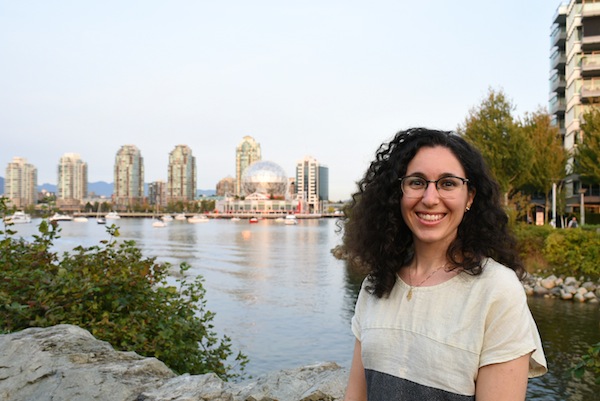
Michal Cotler-Wunsh was an 18-year-old new immigrant from Canada when she enlisted for the Israel Defence Forces some 30 years ago. Unlike most of her fellow recruits, she had no home to go to on weekends.

“I was a ‘lone soldier,’ without close family in Israel. There was no real framework that supported us – but much has changed since then, as this matter has become more acute,” she said.

Now a Knesset member (as a representative of the Blue and White coalition faction led by Benny Gantz), Cotler-Wunsh has taken up the welfare of the more than 6,300 lone soldiers lacking family in the country: immigrants, volunteers, orphans and youths estranged from their families.

“In retrospect, serving in the army was the most amazing exposure to Israeli society in many ways,” said Cotler-Wunsh, whose father Irwin Cotler was Canada’s minister of justice and attorney general from 2003 to 2006. “I did a squad leaders course and served in a very ragged anti-tank base at Nitsanim. The company slept in tents and went on marches in the dunes.”

The army gave her rent support and, on weekends, she stayed in a room in a Jerusalem apartment. “I lived with an elderly man who usually went away on weekends, so I was alone in the apartment,” she said. “To this day, I have connections with people from the Machane Yehuda market, especially the owner of the marzipan shop and the Tzidkiyahu delicatessen. These two would prepare boxes of food for lone soldiers at the end of Friday business, and we would get to Jerusalem after everything was already closed, go through the market and take the boxes of food prepared for Shabbat. To this day, I don’t forget them and they don’t forget me.”

Beyond material needs, she recalled the psychological hardship of being far from home.

“I know how important it is for lone soldiers to have their parents accompany them,” said Cotler-Wunsh, who served in the days before digital communication. “One aspect that has changed is parents’ involvement in day-to-day matters. Nowadays, it’s possible to convey to the lone soldiers’ parents a reality that they do not understand – and there’s no chance that they will understand – but they’re very concerned about. This communication calms both them and the lone soldier throughout their military service.”

“Lone soldiers need somewhere to live, a hot meal on Friday night … things other soldiers take for granted,” Michal Berman, chief executive officer of the Lone Soldier Centre in memory of Michael Levin, a nonprofit organization that looks after their welfare.

The LSC, established in memory of an American immigrant soldier killed in the 2006 Second Lebanon War, currently operates nine apartment homes, offering low-rent housing to about 100 soldiers in Jerusalem, Petach Tikva, Herzliya and Ramat Hasharon, as well as social clubs catering to about 1,000 soldiers in Tel Aviv, Jerusalem and Be’er Sheva. Only financial restraints are preventing the opening of more facilities and programs.

Beyond the social-psychological aspects, soldiers’ needs are often prosaic. “They need basic things like clean underwear, a toaster, somebody to look after them when they are sick,” Berman explained. “We have hundreds of volunteers who cook and do their laundry for them – many of them former lone soldiers or others immigrants.”

The organization’s staff also provide advice on how to navigate Israel’s bureaucracy, and attend military ceremonies, taking the place of their parents who cannot be there. “They say this means the world to them,” Berman said.

photo - MK Michal Cotler-Wunsh
MK Michal Cotler-Wunsh (photo by Avishai Finkelstein)

“The difficulties continue beyond their army service,” noted Cotler-Wunsh, who returned to Canada after studying law at the Hebrew University of Jerusalem. “After 13 years in Israel and with a small baby, for the first time in my life I missed my family. I was pregnant with my second child and also wanted to do a second degree, at McGill University, and took the opportunity to be close to my parents.”

She returned to Israel 10 years later with four children and pursued a legal career that led her to the Knesset, where she has taken up a host of social issues, including the welfare of lone soldiers before, during and after their service.

“Nowadays, when they do have a support system, the loneliness hasn’t disappeared – it’s just been postponed. It’s harder when you’re used to an all-embracing system then, suddenly, to find yourself really alone. In any case, getting out of the army is a shock. For a lone soldier, it’s even harder to go from a hierarchic system to being an independent citizen who has to make decisions that will affect their life. That’s part of the reason why so many young Israelis go traveling after their army service.”

Over the High Holidays, the LSC is launching a global crowdfunding campaign to help lone soldiers get through the toughest time of their lives. For more information, visit charidy.com/lsc.

Daniel Ben-Tal was a lone soldier serving as a paratrooper before becoming a journalist. Over three decades he has penned hundreds of articles in a host of journals and websites around the world. Formerly an editor at the Jerusalem Post and the English version of Haaretz, he is now an Israel-based freelance writer, editor and translator.

Dogs aiding recovery

Sheba is a trained physiotherapy dog. One of the patients he’s helping at Sheba Medical Centre is Nathaniel Felber, who suffered a head injury in a terror attack in December 2018. (photo from IMP)

Nathaniel Felber is an Israel Defence Forces soldier who suffered a critical head injury in a terror attack in December 2018. He has been slowly recovering, against all odds. After being in a coma for several months, he was moved to Sheba Medical Centre, where he’s been receiving intensive rehabilitation. After a brief setback following brain surgery last May, Felber has made remarkable progress, and a lot of the credit goes to Sheba – not only the hospital but its namesake, a trained physiotherapy dog.

“The dog relates to Nathaniel in a nonjudgmental way, happily accepting the food that Nathaniel offers or any other attention,” said Judi Felber, who has been at her son’s side almost constantly since the attack that upended their lives.

Prof. Israel Dudkiewicz, who heads Sheba’s orthopedic rehabilitation program, has noted a marked improvement in compliance, strength and endurance in patients like Felber, when performing physical therapy exercises with the dog.

“The dog takes attention away from the pain and difficulty of the exercise, enabling the patient to try to do more and to do it better,” explained Dudkiewicz. “I’ve watched patients who ordinarily wouldn’t be able to stand for just two or three minutes, but, when they pet the dog, they can be standing for 30 minutes and more without even realizing it.”

Felber builds strength and balance in his legs by standing and petting Sheba. He also throws a ball for the dog to retrieve, a game that repeatedly flexes his elbow, but without the tedium of the standard physio exercises for the same purpose. When brushing Sheba, Felber must exert enough pressure to run the brush through the dog’s fur, but not too much that would cause him pain.

The Felbers made aliyah from Silver Spring, Md., about 14 years ago, settling in Ra’anana with their three children and a dog. “Nathaniel loved our dog, and I think that interacting with Sheba the dog is very healing for him,” said his mother.

Dudkiewicz is delighted with Felber’s positive response to Sheba, as well as the responses of patients working with therapy dogs in general.

“We have seen dramatic improvement in patients performing physical therapy with dogs from both a physical and emotional perspective,” he said. “We aim to incorporate this as another treatment tool, such as hydrotherapy and other nonconventional therapies, for patients who can benefit from it.”

At just seven months old, Sheba is still a puppy, but his performance thus far points to a successful future. Dogs used in physical therapy must undergo a yearlong, rigorous training period. The staff must likewise be trained how to integrate the dog into their rehab programs. In the course of training, the dogs are tested periodically to see that they’re up to scratch. Dudkiewicz explained that different dogs are trained for different types of patients and their abilities. The cost of each dog, including training, is more than $30,000, meaning that its implementation in the department must be limited; however, Dudkiewicz said the results certainly justify the financial outlay.

“Neurorehabilitation is slower than anything else I’ve ever experienced,” said Judi Felber. “Nathaniel is not walking, or talking, or eating even independently – yet. But I try to focus on the positive: he’s responding to people, to us, his family. He’ll turn his head and give us his hand. He can nod yes and no and show us the number of fingers that we ask. We’ve still got a long way to go, but I’m hopeful.”

– Courtesy International Marketing and Promotion (IMP)

Hike challenges one’s views

Sunrise at the Dead Sea. (photo from Kevin Keystone)

In this three-part series, the author recounts some of his experiences on Masar Ibrahim Al-Khalil, the Path of Abraham the Friend, which he visited in 2019. The articles have been adapted from a few of the letters he wrote home to family. The events and people described are real but, for reasons of privacy, the names are fictitious. To read Part 2, click here; for Part 3, click here.

I’m writing this from a rooftop deck in the small community of Arraba, about 15 kilometres from the West Bank’s northern border. We walked two days to get here along the Masar Ibrahim Al-Khalil, the Path of Abraham the Friend, a 330-kilometre trail from Rummanah in the north to Bayt Mirsim in the south. We’re here as part of a guided tour with the Siraj Centre; for 15 years, Siraj has organized walking, cycling and hiking experiences in Palestine.

Tonight, all eight of us will be staying at this villa. It’s unusual for a host to have so much room, but the Hassan family specially renovated their home to accommodate large groups. Noor, her husband and their five children have been hosting hikers on the Masar for five years. Throughout the hike, we’ll stay in homes like this, as well as hotels, guesthouses, Bedouin tents, and even a night in a cave.

Dusk has arrived; the evening view is clear and beautiful. The sun has set over the peaks and valleys of the West Bank, the lights of Palestinian villages and Israeli settlements shimmer around us. Beyond the hill ahead of me, backlit with shades of peach, rose and grey, lies Israel, Netanya and the Mediterranean Sea. A half-moon rises above.

The villages and settlements may seem quiet and peaceable, but are walled off from one another with concrete and hostility. The sea beyond means, for some, Europe, North Africa and its opportunities; for others, impassable waters. What is this place? How did we get here?

* * *

Five of us will walk all 25 days from Rummana to Bayt Mirsim: Felix and Thomas, Quebecois hiking companions in their 40s and 50s; Oliver and Eve, two 50-something activists from the United Kingdom; and myself, a 30-something freelance writer from Toronto. The remaining three will walk one to two weeks: John, a real-estate project manager who hiked Everest for his 60th birthday; and Sue and Howard, a retired teacher-principal duo from California. Neil, a young British doctoral student, hopped off yesterday and will be back for short stints in the coming weeks. Ines, an older Swede, walked with us for just the day.

After the hike, I plan to visit a friend in Beirut. In light of the protests against the government, I shared my reservations with Ines, who lived in Lebanon for two decades. “I lived in Beirut through the civil war,” she said, smiling. “You’ll be fine.”

If not all of us are quite so hardcore, we’re all mostly hikers. Sue and Howard walked 1,000 miles on the Camino de Santiago, Spain’s well-traveled Catholic pilgrimage-turned-hiking trail. I walked the Camino, but at half their age and half as far. Felix and Thomas are also Camino veterans: we all seem to have an affinity for long-distance trails in places of importance and meaning.

We are and aren’t here for the hiking. We’ve come to see Palestine for ourselves and hear directly from Palestinians. For my part, it felt like something of a responsibility. Like many Diaspora Jews, I have supported the state of Israel, either directly or indirectly, and benefited from it. I went on Birthright, the two-week, all-expenses-paid tour designed to build affinity and political support between young Jews and the state. I’m familiar with that side of the story – but after 50 years of occupation and a seemingly never-ending conflict, something didn’t quite fit for me.

Before I left for the Masar, I asked my rabbi for a blessing. In synagogue, she prayed that I would come here “with eyes wide open” and return home “with eyes opened wide.” It’s a prayer I share.

On the Camino, in Spain, locals are largely inured to tourists; here, on the Masar, tourists are rarer. Every local we pass waves hello, is happy and surprised to see us, stops us and wants to give us coffee. Yesterday, we were stopped often by olive-pickers – it’s the season for it. Enthusiastically, they beckoned us over to the stone borders of their groves, where we sat and shared thimbles of coffee spiked with cardamom. As we walked through towns and villages, small children yelled, “Hello! Hello!” and waved to us, their parents replying to our greetings of salaam aleykum (peace be upon you) with wa’ aleykum salaam (and peace upon you) and ahlan wa sahlan, you are welcome here. In these moments, of which there are many, I’m buoyed by unimpeachable hospitality.

This is, however, different from the Camino in other ways. I walked 40 days on the Camino and rarely thought about politics; here, every day is political. I never felt awkward about being Jewish on the Camino – except once, when I asked a local barkeep at a tavern called La Judería if there were any Jews left in the town. He laughed and said: “Not since the Inquisition.” Here, my being Jewish is something I keep to myself, to avoid assumptions about my politics. It’s different when you carry so little on your back and so much in your head. The walking is both easy and hard: mercifully, I have no blisters, but I’m still uncomfortable.

In the evening, after a home-cooked meal, we sipped sweet sage tea in the Hassans’ living room and listened to their story. Noor sat beside her husband Yusef, who spoke to us in Arabic while their son, Rayan, a young man with kind eyes and short hair, translated. If memory serves, Rayan was studying in the United States, which explained his excellent English.

Two years ago, Rayan’s brother, Nader, attended a rally at his university in support of Palestinian political prisoners on hunger strike. Five weeks before we arrived, Israeli soldiers entered the home where we were now staying, at 2 a.m., and arrested him. Nader was taken to prison without charge, where he’ll likely remain without trial for up to seven months. At the end of his time, he could be released; or, he could be detained again for another seven months, without explanation. According to his family, this cycle can repeat indefinitely. The practice is both common and permitted under Israeli military law, which is still in effect in the West Bank, 53 years after the Six Day War.

Noor was quiet, eyes downcast, hands folded in her lap. This was a mother who had lost her son, taken in the middle of the night, who wasn’t sure if or when she would see him again. As I understood from them, adults over 18 are restricted from visiting prisoners: they plan to send their teenage son, Malik, to visit Nader and bring offerings of the family’s love and hope.

photo - Raking trees in an olive orchard, somewhere between Duma and Kafr Malik, West Bank, Palestine
Raking trees in an olive orchard, somewhere between Duma and Kafr Malik, West Bank, Palestine. (photo from Kevin Keystone)

In the short time we’ve been here, we’ve learned of the various ways in which Israel makes life nearly impossible for Palestinians: checkpoints; control over water, electricity, building and agricultural permits; the separation wall; demolition of homes and olive groves; restricted movement internally and internationally; arrest and imprisonment without trial; and, of course, the endless encroachment of settlements, which have been deemed illegal under international law by the United Nations Security Council and the International Court of Justice.

History, of course, is relevant to the present and, here, one can feel the weight of it, but it’s difficult to find a version that isn’t heavy with narrative. A briefing yesterday began with, “When Israel occupied Gaza and the West Bank in 1967….” That’s true, but Israel occupied the territories as an outcome of the Six Day War, which raises questions of how it started and who provoked it. (The answer, as with most things Israel and Palestine, is hotly debated and too extensive to rehash here.) Yesterday, we didn’t talk about the Six Day War, nor the nuances of what came before it. The conflict doesn’t justify the occupation, but to leave out relevant context, to drop the “why” behind the “what,” I’m not sure that’s helpful, either.

On Birthright, we visited an Israeli military base. One of our trip’s soldiers was a pilot in the air force; in the common room, rows of flat, black, airplane-shaped medallions were pinned to a wall. Someone asked what they were. “Those are enemy aircraft,” the pilot said. “Each one marks a plane we shot down.”

The group erupted in applause. I froze, horrified. It reminded me of the story we tell at Passover, when the Heavenly Hosts rejoiced at the drowning of the Egyptians in the Red Sea. “My creatures are perishing,” God silenced them. “And you sing praises?”

* * *

It’s dark now. Stars are appearing in the night sky. Crickets chirp and trucks rumble low in the distance, no doubt carrying goods along labyrinthine backstreets to avoid Israeli-controlled roads, or the possibility of a checkpoint rejection or closure. So much time and life wasted. Tomorrow, we walk. It’s day two, I’m not sure where this road will lead. But all I can do is keep walking.

Kevin Keystone is a Toronto-based freelance writer, editor and researcher. When not hiking long-distance trails, he can be found reading, spending time with friends and family, or with his beloved partner, Aaron. His writing has been published in the Literary Review of Canada, the Jewish Independent and Good Old Boat.

Building community in Israel

Monthly hikes are one of the many activities offered by the English Speakers Residents Association. (photo from ESRA)

The reasons for making aliyah are many, however, some of the big questions holding back potential olim (immigrants), especially those who are 50+ and are already settled, may include the following: “My Hebrew is almost nonexistent; what am I going to do with myself when I get to Israel?”

One of the ways to help solve these concerns is to join the English Speaking Residents Association (ESRA). My wife, Ida, and I are good examples. We made aliyah in June of 2016 from Toronto when we were in our early 60s. We had two immediate priorities: to find an English-speaking community to live in and to get involved in Israel by finding meaningful volunteer opportunities. Fortunately, we found ESRA.

ESRA was founded some 40 years ago. It has about 2,700 members in 21 different chapters in north, south and central Israel, stretching from Eilat to Nahariya and beyond. The members come from North America, the United Kingdom, South Africa, Australia, New Zealand and elsewhere. The programming, all of which takes place in English, encompasses social activities, outings (when conditions permit), educational mentoring and tutoring programs, charitable and welfare activities and volunteering. In addition, and because of COVID-19, a majority of the social activities, talks, visual tours and cooking classes have been and will continue to be presented on Zoom.

ESRA is not just for those planning on making aliyah. Many people living abroad want to be able to see and hear about Israel generally and/or participate in English-language programs and ESRA’s calendar features talks on a range of topics, from finance, current events, history, the environment and entertainment, as well as clubs, such as bridge, photography and knitting. These programs are accessible around the world and, of course, people can join in ESRA programs when visiting Israel – the group’s monthly hikes have recently restarted.

For more information on ESRA, visit esra.org.il.

 – Courtesy English Speakers Residents Association

מלון טראמפ נסגר לצמיתות

המלון טראמפ אינטרנשיונל טאור ברחוב גורגיה בדאון טאון ונקובר
(Roni Rachmani)

החברה שמחזיקה בבעלות של המלון טראמפ אינטרנשיונל טאור ברחוב ג’ורג’יה בדאון טאון ונקובר הכריזה על פשיטת רגל. לאור כך מלון טראמפ נסגר לצמיתות. המלון נסגר זמנית במהלך חודש מרץ בגלל מגיפת הקורונה ועתה כאמור הוא נסגר לתמיד. לפני כארבע שנים בנסיבות דומות נסגר מלון טראמפ אינטרנשיונל טאור בדאון טאון טורונטו. מעתה לטראמפ אין יותר נוכחות בקנדה ותושבים רבים בוודאי נושמים לרווחה. השם טראמפ לא זוכה להערכה רבה במדינה השכנה של ארצות הברית.

מלון טראמפ אינטרנשיונל טאור בוונקובר כלל מאה ארבעים ושבעה חדרים, במגדל המתנשא לגובה שישים ושלוש קומות, ונחשב למלון יוקרתי אך קטן. הוא השתרע על פני חמש עשרה הקומות הנמוכות בבניין. המגדל נחשב לשני בגובהו בוונקובר והקמתו עלתה כשלוש מאות ושישים מיליון דולר. המלון כלל ספא מפואר ומספר מסעדות יוקרתיות בהן הסינית “מוט שלושים ושתיים” שנפתחה מחדש (לאור משבר הקורונה), וגם היא עתה נסגרה לצמיתות. הדירות הפרטיות במגדל טראמפ (מאתיים ושבעה עשרה במספר) ממוקמות בקומות הגבוהות של הבניין. הן נמכרו לפני מספר שנים במחירים גבוהים ביותר. בשלב זה עדיין לא ברור כיצד סגירת מלון טראמפ תשפיע על אלה שגרים בדירות הפרטיות.

בעלת הבניין של מלון טראמפ בוונקובר היא חברת תא לניהול בתי המלון. החברה אחראית על פעילות האירוח בקבוצת הולברון הגישה את הבקשה לפשיטת רגל בשבוע שעבר. החברה שמיקומה במלזיה מחזיקה בבעלות על בתי מלון יוקרתיים ברחבי העולם. בוועד עובדי המלון בוונקובר קיבלו בתדהמה את סגירתו, דבר שיביא לפיטורי עשרות עובדים.

מלון טראפ בוונקובר נפתח לפני כשלוש וחצי שנים שנים (בפברואר אלפיים ושבע עשרה) כאשר הבעלים קבוצת הולברון (בשליטת מיליארדר ממלזיה) חתמה על הסכם עם קבוצת טראמפ לניהולו. פתיחת המלון לוותה בהפגנות של תושבים מקומיים נגד טראמפ. בזמן בניית הפרוייקט ראש עיריית ונקובר לשעבר, גרגור רוברטסון, ביקש מחברת הולברון להסיר את השם טראמפ מהבניין, לאור פניית אזרחים רבים. תקופה קצרה לאחר פתיחת המלון מנהלי הולברון הביעו חשש מההסכם עם טראמפ, שכידוע מעורר התנגדות במקומות רבים ברחבי העולם.

חברת תא מסרה לבית המשפט שחובות מלון טראמפ בוונקובר נאמדים בכחמישה מיליון דולר, ולעומת זאת נכסי המלון מוערכים בכמיליון דולר בלבד. אסיפת נושי המלון הראשונה אמורה להתקיים בשישה עשר בספטמבר.

יצויין כי בראשית החודש במשרד הבריאות של מחוז בריטיש קולומביה נתקבל מידע על פריצת מגיפת הקורונה בלאונג’ של מלון טראמפ.

דונלד טראפ ביקר בוונקובר בשנת אלפיים ושלוש עשרה, עוד בטרם נתמנה לנשיא, והכריז על הקמת המלון על שמו בדאון טאון. הביקור זכה להד נרחב בתקשורת המקומית ונכחו בו גם שניים מבני משפחתו: בנו דונלד טראמפ ג’וניור ובתו איוונקה טראמפ.

לפי הערכות בענף המלונאות רשת פור סיזנס הוטלס שוקלת לרכוש את מלון טראמפ, לאחר שעזבה בראשית השנה את המלון בניהולה הצמוד למרכז הקניות פאסיפיק סנטר, שאף הוא בדאון טאון ונקובר.

מלון טראמפ בטורונטו היה בבעלות חברת טאלון אינטרנשיונל בשליטת המיליארדר היהודי-רוסי, אלכס שניידר (לשעבר מבעלי קבוצת הכדורגל של מכבי תל אביב). הוא נסגר בשל חובות שהוערכו ביותר משלוש מאות מיליון דולר.

חברת טאלון וחברת טראמפ הגישו תביעות הדדיות אין ספור אחת כנגד השנייה בגין המלון בטורונטו. במקביל חלק מבעלי הדירות בפרוייקט הגישו אף הם תביעות נגד שתי החברות. מרבית הדירות במלון נשארו ריקות וחברת הניהול של טראמפ לא עמדה בהתחבויותיה להשכרתן.

Rediscovering Judaism

Sarah Hurwitz will help launch Jewish Federation of Greater Vancouver’s annual campaign on Sept. 8. (photo from Jewish Federation)

Sarah Hurwitz, who for seven years served as head speechwriter for former first lady Michelle Obama, will be a featured speaker at the Jewish Federation of Greater Vancouver’s annual campaign opening on Sept. 8, which will be held virtually.

Hurwitz spoke to the Independent about her new book, Here All Along: Finding Meaning, Spirituality, and a Deeper Connection to Life – in Judaism (After Finally Choosing to Look There), and her upcoming Vancouver talk, which, before the pandemic, she had planned to deliver in person.

Here All Along traces Hurwitz’s personal journey back to her Jewish roots, a journey that began after an introduction to Judaism class in 2014. Before that time, she said, her main points of contact with the faith had been at “dull, incomprehensible” High Holiday events and a “lifeless” seder.

Her book delves into such areas as the Jewish traditions of questioning, debating and interpreting religious texts, “freeing God from his human-shaped cage,” and marking holidays and lifecycle events.

“What most surprised me (after taking the class) was the depth of spiritual and ethical wisdom Judaism had to offer,” she said. “I had always been proud to be Jewish and considered myself a ‘cultural Jew,’ but I knew almost nothing about Judaism. Once I started learning, I discovered thousands of years of profound wisdom about what it means to be human – how to live a worthy life, how to be a good person, how to find spiritual connection, and so much more.”

When asked how this discovery has affected her life, she explained: “My Judaism informs how I live every day of my life. It informs the ethical decisions I make each day about how to treat others, especially when it comes to the words I speak to and about them. It’s helped me develop an adult spirituality – beyond simplistic notions of the divine as a man in the sky who controls everything and punishes us when we’re naughty – which allows me to feel greater awe, wonder and gratitude each day. And it’s brought me into an amazing community of people, not just in the U.S., but across the globe – spiritual leaders, scholars and Jewish professionals who’ve become my dearest friends, mentors and teachers.”

Study, Hurwitz said, is a big part of her Jewish practice these days, though she would not label it an “intellectual pursuit.”

“Law school was an intellectual endeavour. Jewish study is deeply spiritual and emotional for me. I don’t study Jewish texts to gain information or facts, or to hone my analytical skills. I study them to glean the deepest wisdom of my ancestors about how to live my life,” she explained.

Currently, she is studying Psalms in chavruta (partnership) with a friend. Every week, they connect on Zoom and discuss the language and themes of the Psalmists. She also had a recent series of one-on-one study sessions with a rabbi that focused on Chassidic texts.

Selected last December by the Forward as one of the 50 most influential Jewish Americans, Hurwitz helped the former first lady put together many well-received speeches – including her 2016 Democratic National Convention address – and traveled with Obama around the world. She also worked on policy issues, as a senior advisor to the White House Council on Women and Girls.

Before working at the White House, Hurwitz was chief speechwriter for Hillary Clinton during Clinton’s 2008 presidential primary campaign. She then joined the Obama campaign, serving as a senior speechwriter for then-Senator Barack Obama and helping Michelle Obama draft her 2008 Democratic National Convention speech.

Prior to the Clinton and Obama campaigns, Hurwitz served as deputy chief speechwriter for Senator John Kerry’s 2004 presidential run and also worked as a deputy chief speechwriter for General Wesley Clark’s primary bid, as well as for Senator Tom Harkin. Earlier in her career, she was a lawyer at the Washington, D.C., office of WilmerHale. Presently, she is working on a proposal for another book and, while she does not write speeches at the moment, she does “help people out with remarks they’re giving, or offer edits.”

Hurwitz’s Vancouver talk will explore a wide range of subjects, such as working for Michelle Obama in the White House, spiritual and ethical insights in Judaism that have most transformed her life, and some thoughts on the future of Judaism. She will be joined at the virtual launch by fellow keynote speaker Nigel Savage, president and chief executive officer of Hazon (jewishindependent.ca/the-world-needs-us-to-change). To register for the Sept. 8 campaign opening, visit jewishvancouver.com/faco2020.

Sam Margolis has written for the Globe and Mail, the National Post, UPI and MSNBC.

Parenting in pandemic

The Rohr Jewish Learning Institute (JLI) has recently published Parenting in a Pandemic: A Guide for the Perplexed. Part of Project L’Chaim, a new Vancouver-wide youth mental health initiative in memory of Steven Diamond, the 36-page booklet is filled with insights and practical tools from 14 mental health experts to help parents and educators support their teens through the current crisis.

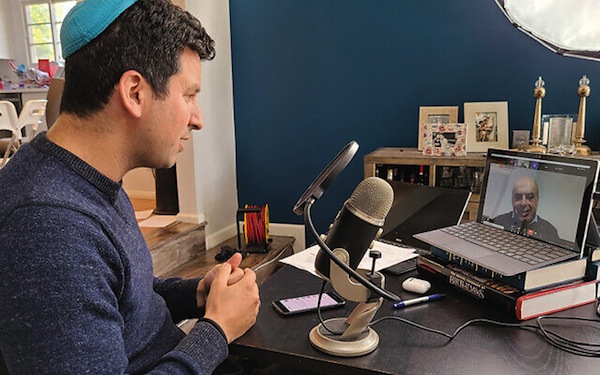
New York-based Rabbi Zalman Abraham runs the marketing and strategic planning for JLI. “We are the largest Jewish adult education network in the world, operating in over 2,000 locations,” said Abraham, who has been working in this role for the past 11 years or so.

Prior to joining JLI, Abraham authored courses and books, was an editor at askmoses.com and served in various teaching capacities. He was born in Brooklyn, grew up in South Africa, and did his schooling in the United States and Israel.

“My father is very active in dealing with the opioid crisis in South Africa,” Abraham told the Independent in a phone interview. “He’s known as the ‘addicts rabbi.’ There were times when I was growing up where there were up to six or seven addicts living in our house, because there was no better alternative then…. My father was involved with hundreds and hundreds of addicts, and overseeing their rehabilitation. He ran a halfway house, so I have a little bit of a background in that area.”

Abraham’s study of Chassidic philosophy deals a lot with Torah hanefesh, which can be loosely translated as psychology. The rabbi explained that this “is how Judaism informs us about our emotional and mental state and character, which is very relevant to addressing some of the very real mental health challenges our society is experiencing today.”

JLI has been offering courses for about 20 years, said the rabbi. “Over the past 10 years or so, many of our courses have focused on continuing education for professionals. We started with the legal profession, with courses in ethics and comparative talmudic and civil American and Canadian law. These were accredited by various bar associations of states [and provinces] across North America, including … the Law Society of British Columbia – they accredit for official continuing education credits for lawyers and attorneys…. We then began offering continuing medical education for medical professionals. Over the past few years, our most successful courses have been for mental health professionals, accredited by the American Psychological Association for psychiatrists, psychologists, therapists, social workers and the like.

image - Parenting in a Pandemic book cover - full“This is an area where Jewish wisdom informs the professional world and answers a real need. The challenge with mental illness, chemical imbalances aside, is often a result of a build-up of crisis, where a person has one crisis and another … their experiences compound, [they] have trouble envisioning a future, finding hope.… They have trouble with self-esteem, with feeling confident about life, and with finding meaning and purpose in life. These are all areas that Jewish wisdom addresses in a real way, giving people a framework within which they can find meaning and purpose.”

JLI’s international program is called My Life is Worth Living. In the Metro Vancouver area, they run the program called Project L’Chaim (“To Life”), a suicide prevention project sponsored by the Diamond Foundation in memory of Gordon and Leslie Diamond’s son Steven, whose Hebrew name was Chayim.

“We use the already existing infrastructure to educate those on the frontlines who are interfacing with teens and youth – training them to become more professionally equipped to be able to support the emotional needs of the teens in their care,” explained Abraham.

“From 2007-2017 in the U.S., there’s been a 56% rise in teen suicide. This is despite all the efforts and energies being invested in this area. This is an issue that’s getting worse and isn’t yet contained – this is in the general (not Jewish-specific) population.… There’s definitely a greater need for mental health support now than there ever was before.

“And, especially now, with COVID-19, all of this is being exacerbated. To put things into perspective, only about 10% of those who need mental health treatment get it. Even then, it’s with an average delay of 10 years between the onset of symptoms and the first treatment, according to the National Institute of Mental Health.

“Stigma is a big enemy to mental health treatment. No one wants to be labeled with a mental health diagnosis and carry that around with them for life. That stigma gets in the way of people getting the help they need.”

JLI’s approach is not clinical, but is supported by a clinical advisory board that includes Thomas Joiner, author of Why People Die by Suicide and other books on understanding why people commit suicide; Jonathan Singer, president of the American Association of Suicidology; University of British Columbia suicide expert David Klonsky; director of suicide prevention for New York State Dr. Sigrid Pechenik; Madeline Gould from Columbia University; and Jill Friedman from the American Foundation for Suicide Prevention.

“We provide professional training to those teen-interfacing adults; training that takes many forms,” said Abraham. “They learn to identify warning signs to the risk, to create a safety plan and to intervene when necessary. They learn what resources are available and what to do in various scenarios. They’re trained to be first responders. And they can isolate and help teens in the most critical situations.

“We also engage teens in group discussions, about underlying issues that are conversations for everyone – about self-esteem, hope, finding purpose and meaning in life, coping mechanisms to deal with challenges, and so on. These are conversations had outside of the mental health framework, so as to avoid stigma.”

In the Vancouver area, JLI has connected with many Jewish organizations and doctors’ offices.

“Our goal is to put it in the hands of every parent in the Greater Vancouver area,” said Abraham, who is a father himself. “It’s a compilation of 14 articles from leading youth mental health professionals, mostly from the Jewish world … to provide support to parents, so they can support their teens during these difficult times.

“The booklet gives insight to what’s going on for teens in the mental health realm and provides a lot of practical tools. The most frequently mentioned idea in the booklet is that famous line from the safety announcement on airplanes – putting on your oxygen mask first, and then helping others. People need self-care first.

“Youth, particularly teens, are social beings needing social interaction to thrive. Many don’t have this right now due to COVID-19 restrictions. Also, youth need clarity, something they can depend on … so parents need to know how to create an open channel of communication for teens to feel safe to discuss their feelings.

“The number one hope is that parents will become more aware of what their teens are going through…. Lastly and most importantly, is that they gain some tool/ideas to help them support their teens through this.”

Visit myjli.com/index.html?task=parenting for more information or to order the booklet.

“This is just the first step of many that will be coming out,” said Abraham. “We’ve already run multiple professional trainings and we hope to do many more. This is a beginning of a big, multi-year project.”


Rebeca Kuropatwa is a Winnipeg freelance writer.

Community milestones … JFS chosen for challenge, Krajden appointed OBC, Micner ordained

Following a North American call for submissions and an exhaustive selection process, Jewish Family Services (JFS) in Vancouver has been chosen by the Network of Jewish Human Service Agencies for participation in Year Two of the NJHSA Jewish Poverty Challenge, an offering of the network’s Centre for Innovation and Research. The goal of the program is to help NJHSA member agencies better analyze the marketplace, launch and manage solutions, and implement sustainable measures for success to address the many dynamics associated with responding to Jewish poverty.

NJHSA has partnered with Start Co., a venture development consultancy firm based in Memphis, Tenn., with an expertise in launching startup, entrepreneurial initiatives and engaging municipalities, corporations and nonprofits in poverty reduction responses. The team at Start Co. will provide expert consultation assistance as JFS rethinks and redesigns products and services, adjusting assumptions and organization models. Throughout, special attention will be paid to the impact of COVID-19 on service delivery methods.

“We are so honoured to have been selected to participate in this challenge,” said Tanja Demajo, JFS chief executive officer, in a press release. “The demand for our services has increased during COVID-19 and we have had to pivot quickly. Although we have adapted, we are experiencing growing pains. This opportunity through the NJHSA and with Start Co. is timely in helping us address our pain points in an innovative way so we can be more efficient and can operate at a pace our clients are demanding during this crisis.”

Reuben Rotman, president and chief executive officer of the network, added, “The COVID-19 pandemic has even further heightened the critical need for innovative solutions to the challenges of Jewish poverty. With newly vulnerable clients reaching out for assistance in unprecedented frequency, the agencies are challenged to identify new ways of working and new efforts to achieve sustainable solutions for those in need.”

For more than 80 years, JFS has delivered a continuum of social services to individuals and families of all ages and in all stages of life in the Greater Vancouver area; its pillars of support include food security, counseling and mental health, care management, financial aid and home support.

The Network of Jewish Human Service Agencies is an international membership association of more than 140 nonprofit human service agencies in the United States, Canada and Israel. Its members provide a full range of human services for the Jewish community and beyond, including healthcare, career, employment and mental health services, as well as programs for youth, families and seniors, Holocaust survivors, immigrants and refugees, persons with disabilities and caregivers.

***

photo - Dr. Mel Krajden
Dr. Mel Krajden (photo from bccdc.ca)

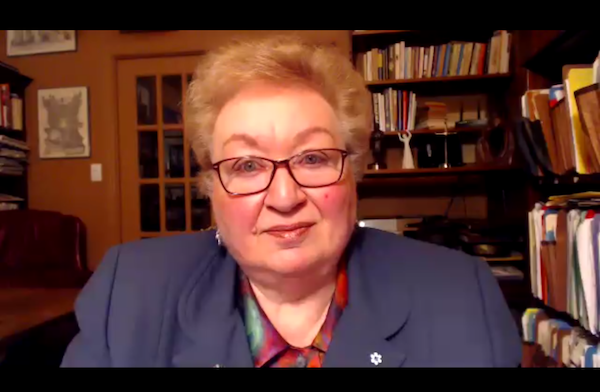
Dr. Mel Krajden is among those who will be appointed to the Order of British Columbia this year. The announcement of the 13 new appointments was made on BC Day, but the investiture ceremony will be postponed due to COVID-19 restrictions and held for recipients and invited guests at Government House in Victoria in 2021.

Krajden is medical director of the BC Centre for Disease Control (BCCDC) Public Health Laboratory and has made significant contributions to fields of research, including hepatitis, HIV, HPV and, most recently, COVID-19.

With the emergence of COVID-19, British Columbia and Canada needed urgent access to rapid, validated tests for the virus. Under his leadership at BCCDC, and relying heavily on his expertise, Krajden and his team were able to rapidly develop an assay for the province to commence testing in January 2020, weeks before other jurisdictions. Access to this test was an essential element in the management and control of the outbreak and the safety of British Columbians.

Krajden created the world-leading B.C. Hepatitis Testers Cohort, which integrates de-identified data on 2.4 million individuals tested for, or diagnosed with, hepatitis B, C, HIV and TB infections, linked to their corresponding healthcare administrative data since 1990, to create longitudinal medical histories. This cohort has produced influential pieces of evidence that shaped clinical and public health guidelines and policy in Canada and globally. He was instrumental in the development and continued progress of the Canadian Institutes of Health Research-funded Canadian Network on Hepatitis C, a multidisciplinary group committed to developing a national strategy for hepatitis C elimination.

Krajden was one of the key personnel in the STOP HIV initiative in British Columbia. This public health endeavour saw the implementation of acute HIV testing, allowing diagnosis during the most infectious period of the disease, resulting in timely interventions and communication to partners to reduce transmission. This undertaking helped lead to the lowest HIV incidence on a provincial scale in decades.

Krajden also played a pivotal role in global public policy changes in human papillomavirus (HPV) vaccine dosing regimen and the associated reduction of financial access barriers to care. Similarly, his work with respect to assessing the utility of HPV testing versus traditional Pap smears is expected to contribute to guidelines that will benefit women worldwide.

In his educational capacity, Krajden has the reputation of being a wonderful teacher and valued mentor, training researchers, health professionals and students at all levels. He is known for his willingness to provide input and advice despite numerous other commitments, contributing to the success of others. His dedication further extends into the clinical realm, where he always has patient interests at heart and never hesitates to devote his own time to make a difference in client outcomes.

In appointing Krajden to the Order of British Columbia, it is recognized that, over many decades, he has demonstrated exceptional innovation, leadership and sustained contributions to the province, country and the world. He is a highly respected visionary, scientist and educator who has inspired countless researchers and health professionals with his clinical excellence, dedication and generosity of spirit.

***

Rabbi Mimi Micner
Rabbi Mimi Micner

Tamara Micner, Rembrandt Koppelaar, Karen and Jack Micner and Dr. Talie Lewis are extremely proud to announce the ordination of Mimi Micner to the rabbinate. The virtual ceremony took place June 7 from Hebrew College in Boston. Mimi and Talie live in Watertown, a half-hour drive from Mimi’s new position, rab- bi at Temple Beth Torah in Holliston, Mass.

Mimi is the granddaughter of Kela (z’l) and Lito (z’l) Guincher, who are kvelling on the Richter scale above. She is also the granddaughter of Chaim (z’l) and Susie Micner, who are surely enormously proud as well.

Mazel tov, Rabbi Mimi! Bist 120!


3,200-year-old fortress now open to public

An aerial photo of the remains of a 3,200-year-old Canaanite fortress built near today’s town of Kiryat Gat. (photo by Emil Aladjem/IAA via Ashernet)

The Kiryat Gat fortress site, which was opened to visitors this week, was prepared by the Israel Antiquities Authority (IAA) and Jewish National Fund (KKL).

According to archeologists Saar Ganor and Itamar Weissbein of the IAA, “The fortress we found provides a glimpse into the geopolitical reality described in the Book of Judges, in which the Canaanites, Israelites and Philistines are fighting each other. In this period, the land of Canaan was ruled by the Egyptians and its inhabitants were under their control. During the 12th century BCE, two new players entered the game: the Israelites and the Philistines. This led to a series of violent territorial disputes. The Israelites settled in non-fortified settlements at the Benjamin and Judean mountains. Meanwhile, the Philistines accumulated power in the Southern Coastal Plain and established cities such as Ashkelon, Ashdod and Gat in an attempt to conquer more areas. The Philistines confronted the Egyptians and the Canaanites on the borderline, which probably passed at the Guvrin River, between the Philistine kingdom of Gat and the Canaanite kingdom of Lachish. It seems that the Galon fortress was built as a Canaanite/Egyptian attempt to cope with the new geopolitical situation. However, in the middle of the 12th century BCE, the Egyptians left the land of Canaan and returned to Egypt. Their departure led to the destruction of the now-unprotected Canaanite cities – a destruction that was probably led by the Philistines.”

image - A drawing of what the fortress probably looked like
A drawing of what the fortress probably looked like. (drawing by Itamar Viskin/IAA via Ashernet)

The dimension of the fortress is 18 metres square and watchtowers were built in the four corners. A threshold, carved from one rock weighing around three tons, was preserved at the entrance of the building. Inside the fortress was a courtyard paved with stone slabs and featuring columns in the middle. Rooms were constructed on both sides of the courtyard. Hundreds of pottery vessels, some still whole, were found in the rooms.

The remains of the fortress were uncovered with the help of students from the Israel studies department at Be’er Sheva’s Multidisciplinary School, students from the Nachshon pre-military preparatory program and other volunteers. This was done as part of the IAA’s policy to bring the general public, and especially the younger generation, closer to archeology.