Children are also stressed out

The most important thing as a parent is to be able to identify when your child is stressed. (photo from Psychology Foundation of Manitoba)

Despite the numerous technological advances we have achieved to make our lives easier, we are more stressed than ever. Even children are affected.

American psychologist Dr. Robin Alter moved to Toronto in 1980 to work at the city’s mental health centres. Her focus is on children’s health and, over her 36-year career, she has helped treat more than 10,000 families.

“If you’re just in private practice, you don’t get to do that…. You can’t see that many people,” Alter told the Independent. “So, I started thinking that I really need to start writing down what I’ve learned from this incredible experience and try to give it back.

“A lot of the things I was learning on the ground, in those face-to-face meetings, were things I couldn’t read about. It was not written in the studies I was reading. My experience, and what works for people or doesn’t, is different than what was written in books or journals.”

In addition to numerous articles, many of which can be found on her website (docrobin.com), Alter is the author of the book Anxiety and the Gift of Imagination and The Anxiety Workbook for Kids.

When she was in university, Alter’s teacher, Judy Levy, helped steer her toward working with children.

“I loved talking with them and finding ways they could express themselves so we could understand what they were feeling and why they were behaving the way they were,” said Alter. “Then, I came to Canada. I walked into these children’s mental health centres and looked around and I found all these people who shared the same mission as me…. I was ecstatic, realizing that I’m not doing this by myself. I’m doing this with an army of people who are passionate, who are inspired to dedicate their lives and energy to helping children and families.”

When the system switched to providing such care in a hospital setting, Alter opted to work from the outside, to educate people about how changes in society are affecting kids.

According to Alter, the effects of stress start at infancy for many kids, as they are thrust into a daycare environment for eight to 10 hours a day.

“That’s very hard for kids if you think about it,” she said. “When you’re with your family, you can let your hair down, right? You can be yourself, be relaxed. You’re protected, cared for, special. When you’re in a large group of other kids – even if it’s a good place – they have a number of kids to look after … there is always stress involved, some kids who want the toy you want to play with.

“You don’t have the skills yet to figure out a compromise, so you’re just fighting over the toy or feeling left out. Everybody seems to be playing with somebody and you don’t have anybody to play with. And, you know, there’s not always going to be an adult who notices that you’re under stress.

“The children leave their home early in the morning, spend all day in a competitive environment, and [are] picked up at the end of the day just to have dinner, a bath and go to bed…. Going to bed, too, is stress-inducing for all of us, but especially for kids. And we wonder why they are having trouble keeping up.

“I think there’s an epidemic of sleep deprivation,” she added. “Kids really don’t know how to unwind at night, how to take their worries and put them aside. I know most parents have a fairly good bedtime routine, where they read to their kids and turn out the lights, but I think it can be improved. Kids need to learn how to turn off their minds and put the day to rest.”

Alter has conducted nearly 6,000 psychological assessments and continues to do more. For this, there is a form that parents fill out – in 90% of these assessments, parents identify problems with sleep.

According to Alter, Vancouver’s Dr. Gabor Maté, an expert on child development, believes that many kids who are identified as ADHD (attention deficit hyperactivity disorder) are really just sleep deprived and misdiagnosed. And, if they get diagnosed as having ADHD, they will likely get medication – medication that causes sleep deprivation, further intensifying the problem.

The most important thing as a parent, said Alter, is to be able to identify when your child is stressed. The key to doing this is paying attention mainly to what is not being said. “Look for the cues,” she said. “Kids have a different response, but, usually, it’s a change in behaviour. They stop and, sometimes, their eyes get wider. We can do things to alleviate that stress, explain things to them. For example, the other night, at dinner, I drank a little bit of water, and then I was talking to Lewis [her 2-year-old grandson] and he turned to me and said, ‘Baba, you just spit at me!’

“He looked horrified at that. Why would his grandmother spit at him? Something he’s learned in daycare is that you don’t spit. He looked like I had just done this horrible thing. We explained to him that I didn’t spit at him, that it was water that came off my lips and that I’d never spit at him. Then he became unstressed.

“So, sometimes, just explaining what’s going on; giving the kid a good explanation can alleviate the stress. Those are minimal stresses. But, sometimes, there are big stressors going on.”

While stress can be overwhelming, it is important to remember that we don’t want to completely eliminate it. “Stress is our passport, or what we need to have an interesting life,” said Alter.

We have to learn that stress is a part of life and that we need to learn ways to de-stress. This is a main focus of the Psychology Foundation of Canada program Kids Have Stress Too, for kids 3 to 5 years old.

One of the strengths of the program is that it relays that stress is normal, everybody gets stressed. “And, you know, you can identify it in other kids,” said Alter. “When other kids are stressed, you can identify it in yourself and you can help yourself to feel better…. You can learn how to come back, bounce back from stress.

“I was at a session, my own personal professional session with a mother. She was very stressed by her daughter, who was 5 years old and had been diagnosed with epilepsy. The mother was very stressed by the diagnosis and the symptoms. The kids were in the room.

“The 5-year-old heard her mother talking about how stressed she was – and the kid had actually been through the Psychology Foundation program Kids Have Stress Too. Her ears perked up at the word ‘stress’ and she said, ‘Mom, I know what to do when you get stressed.’ The mother said, ‘You do?’ And the kid said, ‘You sing a song.’ She had a song she learned in the program and she sang it to her mother, and it was very cute and helpful, and the mother laughed. Laughter is a good way to alleviate stress.

“Another good way of helping kids alleviate stress is to encourage them to be helpful to others. When we are kind to others, when we reach out and give people food, and share – all those things alleviate our stress.”

The Kids Have Stress Too program teaches children to be aware of when they are stressed. Some kids feel nausea or a rush, as if an alarm system is going off in their body. Some kids feel it in their tummies. Others feel it in their heads. Once they learn what these feelings mean, it normalizes it and then it is not so scary. So, they are able to take care of themselves and sometimes take care of others.

“If you see other kids going through the program, someone stressed, they sometimes put their arm around them and say, ‘It’s OK. Everything’s alright, so let’s go play, let’s go do something fun,’” said Alter. “And that’s what it’s all about.

“There are wonderful little techniques,” she said. “The one I like most is the cloud push. You stand up and put your hands up and push the clouds away, like you’re pushing all the stress away. You’re getting rid of all the things you don’t want. Push them into the sky. Let them fly away.”

Alter shared a story about visiting a junior kindergarten class, where she read the kids a book about animals having a bad day and getting stressed. She was taken aback by the responses she got from the 4-year-olds when she asked them if they had ever had a bad day.

“I turned to them and said, ‘Well, the orangutan is having a bad day. Have you ever felt that way?’ And, I look up to see this whole sea of faces, all shaking their heads as hard as they can, saying, ‘No. No. Never!’ And, I was shocked. I realized that, even at this age, the peer pressure of how we’re not supposed to feel that way, not supposed to admit to others that we feel bad, was already instilled so early.

“Then, they went to little tables independently. We gave them crayons and paper, and each one of them drew these amazing pictures of things in their life that stress them out. One kid drew a picture of his mom having cancer and going to the hospital. Another kid drew a picture of his father leaving the family. And, I realized that they got the message, what I was reading about. They were not going to admit it in the group, but they were very eager to talk about it individually.

“We need to help kids realize that they are not alone with these problems or feelings,” said Alter. “That’s one of the biggest strengths of the program – an adult can help kids, too, by talking about their stresses.”

Parents need to be sharing their feelings with their kids, and then showing them how we move past them, she said.

“Kids don’t so much listen to what we say as much as what we do,” said Alter. “Kids are more doers. And so, for example, getting them out to the yard and doing exercise – throwing a ball around or something – is a good way to alleviate stress.

“Many kids stop talking because we use words they don’t understand, and they just don’t understand what we’re talking about. But, they understand action and behaviour. So, doing things with them and encouraging them to do things is a lot more helpful. Also, laughing is a way to alleviate stress. So, telling a joke, being silly, or just letting … stress out that way is great.

“Kids need to know that when they are out there in the ‘jungle’ of school that their parents are behind them and that they are not alone in whatever is going on,” she said. “Our daughter had a lot of trouble in grades 4 to 6 – bullying, mistreating stuff. Every night, we’d strategize what she could do, have long conversations. None of them worked. She’d say, ‘I tried that. It didn’t work.’ She knew that we were behind her, that she wasn’t alone. She had a team who understood how difficult the situation was. I think all those things help.”

For more information on the Kids Have Stress Too program and more, visit psychologyfoundation.org.

Rebeca Kuropatwa is a Winnipeg freelance writer.

Effects of crystal meth

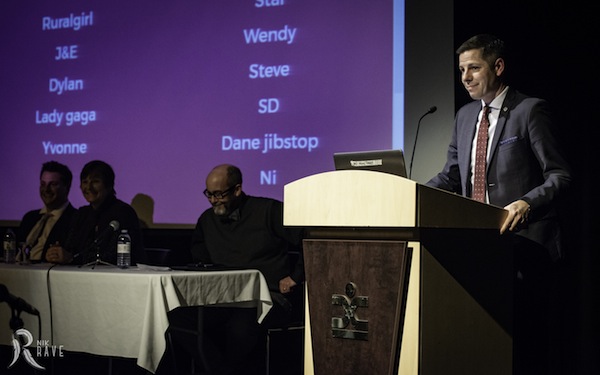
Winnipeg Mayor Brian Bowman speaks at the Nov. 22 forum Wide Awake. According to Ivy Kopstein of Jewish Child and Family Service of Winnipeg, he “is advocating to all levels of government for resources to deal with this health crisis.” (photo by Nik Rave)

“It is a significant issue in both Winnipeg and Vancouver,” Dr. Ruth Simkin told the Independent. “In Vancouver, it has been overshadowed by the opioid crisis, but is a significant problem there, too. It is seen in the Winnipeg Jewish community. I don’t have stats on its prevalence in this particular group, but it is likely similar to other populations.”

Simkin is a family physician working at a community health clinic in Winnipeg and part-time with the addictions unit/addictions consult service at the Health Sciences Centre (HSC) and Rapid Access Addictions Medicine (RAAM). The JI recently interviewed her about addiction; in particular, to methamphetamine, in light of a Nov. 22 forum in Winnipeg on the topic.

Wide Awake – An Eye-Opening Look at Methamphetamine in Winnipeg was held at the Asper Jewish Community Campus. It was co-presented by Jewish Child and Family Service (JCFS) of Winnipeg, Gray Academy of Jewish Education and the Rady Jewish Community Centre.

Amphetamines were developed in the late 1900s and used commercially from about 1930 for various reasons, including nasal congestion and to keep soldiers awake. Because of their adverse effects and addictive properties, however, their use became legally restricted in the 1970s.

Methamphetamine (crystal meth) belongs to the amphetamine class of drugs – stimulants that speed up the body’s central nervous system. Although not legally available in Canada, crystal meth has been used recreationally for a very long time.

“The initial effects of methamphetamine on the user are a sense of well-being or euphoria, increased energy and alertness, increased confidence and little need for food or sleep,” said Simkin. “Unwanted potential side effects include racing heart, dry mouth, nausea and vomiting, anxiety and restlessness. It can also produce paranoia, delusions and aggressive and violent behaviour.”

“Methamphetamine comes as a powder that can be used by ingesting, snorting, smoking or injecting,” explained Dr. Erin Knight, medical director of the HSC’s addictions program, who was a Wide Awake panelist. “It also comes in a crystal form (crystal meth). It is produced in illegal labs with fairly inexpensive and sometimes toxic ingredients. It may be made with ingredients from antifreeze, batteries and cleaning fluid.”

It is estimated that one percent of students in Manitoba from grades 7 to 12 have tried methamphetamine over the last year. It is easily accessible and inexpensive. Its price has dropped significantly in the last few years, from approximately $30 per gram to $10 per gram.

In her work at the HSC, it is common for Simkin to see patients who use meth, usually along with other drugs.

“It is a growing problem,” said Simkin about the use of the drug. “It is very accessible, cheap, has a prolonged effect on the user – six to eight hours if injected and 10 to 12 hours if smoked – and it is very reinforcing (addictive).

“As well, its effects are more unpredictable than other drugs. The number of users has doubled over the last few years. And, we’re also seeing a shift from individuals smoking meth to them injecting meth.”

According to Sheri Fandrey of the Addictions Foundation of Manitoba – who also was a Wide Awake panelist – drug mixing increases the potential for challenging behaviours and the possibility of a serious overdose. That meth is bought and sold in an unregulated market increases the risk that it may contain adulterants and contaminants that can cause further harm.

“There is no specific treatment in terms of medication,” said Simkin regarding addiction to meth. “There is some evidence for the use of motivational interviewing (MI) and rewards-based treatment.”

A recent Winnipeg Regional Health Authority (WRHA) report stated that, in the 2014-2015 fiscal year, 682 people who sought treatment at the Addictions Foundation  had used meth over the prior 12 months. A year later, that number had increased to 1,198. Meth was no longer being reported to be an occasional drug, and women were using more than in the past.

“As far as we know, meth use crosses all lines: rural/urban, high/low income and male/female,” said Simkin. “However, as with other substances, there are higher risk groups. These higher risk groups are students, low-income, rural, homeless, disenfranchised groups and people with co-occurring mental health disorders.”

Last year’s theme for Addictions Awareness Week, chosen by the Canadian Centre for Substance Use and Addiction, was “All Walks of Life.” Substance use issues and addiction do not discriminate by age, gender, class or religion.

Simkin said this is a complex and difficult issue, but suggested that having education programs in schools would be helpful, as are forums such as Wide Awake.

As a community, Simkin said there are several things that can be done to improve the situation:

1. Reduce the stigma around substance use in general, so people who need help aren’t afraid to seek it.

2. In terms of government, increase funding for detox beds and addiction treatment, including harm-reduction services.

3. Work on other determinants of health, like poverty, housing and education, as well as mental health, to try to prevent addiction in the first place.

photo - Ivy Kopstein, coordinator of the substance use and addictions program at Jewish Child and Family Service of Winnipeg, answers a question from CityTV at the forum Wide Awake
Ivy Kopstein, coordinator of the substance use and addictions program at Jewish Child and Family Service of Winnipeg, answers a question from CityTV at the forum Wide Awake. (photo by Nik Rave)

Another resource now available in Winnipeg are the RAAM clinics that have been instituted recently by the WRHA to provide low-barrier access to resources for individuals needing help with substances abuse issues, including crystal meth.

“The City of Winnipeg and law enforcement are responding to the crisis on the streets and have included public education programs in all areas of the city,” said Ivy Kopstein, coordinator of the substance use and addictions program at JCFS Winnipeg. “Our mayor is advocating to all levels of government for resources to deal with this health crisis.”

“Emergency Medical Services (EMS) has now been given the authority to give meth users the antipsychotic drug Olanzapine,” Simkin offered by way of an example.

When a loved one has a substance abuse issue, it impacts the whole family, she said. Family members may feel stressed and anxious and it’s important for them to also seek support.

In British Columbia, the B.C. Centre on Substance Use (bccsu.ca) “is a provincially networked organization with a mandate to develop, help implement and evaluate evidence-based approaches to substance use and addiction.” Other resources include Crystal Meth Anonymous (crystalmeth.org), which is similar to Alcoholics Anonymous and lists a meeting place on Hornby Street in Vancouver, and Jewish Addiction Community Services (778-882-2994 or info@jacsvancouver.com).

Rebeca Kuropatwa is a Winnipeg freelance writer.

Organ donation awareness

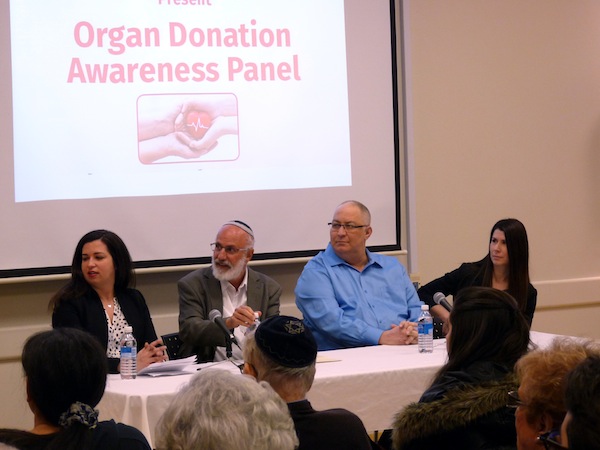
Left to right are panelists at a recent National Council of Jewish Women panel on organ transplants: Dr. Aviva Goldberg, Rabbi Yossi Benarroch, Marshall Miller and Na’ama Miller. (photo from NCJW)

On Dec. 11, the Winnipeg section of National Council of Jewish Women (NCJW) held an organ donation awareness event, featuring community members Rabbi Yossi Benarroch, Dr. Aviva Goldberg, and husband (organ recipient) and wife (organ donor) Marshall and Na’ama Miller.

Benarroch spoke first, after a welcome from organizers and a video about organ donation (youtube.com/watch?v=5cfaAWTH5zM).

“The short of it is, basically, that Jewish law permits organ donations,” he said. “There’s no question about that. Of course, when we talk about law, law is complicated and there are lots of opinions. There’s an ideal in Judaism, which is one of those foundations, and it’s called ‘pikuach nefesh doche hakol’ … which basically means that, in Judaism, there’s nothing more important than saving a life.

“I’m a very observant Jew and I keep kosher,” he said, “but if I had to eat something that wasn’t kosher – pork or whatever – in order to save my life, then Jewish law says you’re obligated to do that.”

Benarroch said it is written that, if someone saves a life, it is as if they have saved the entire world. Furthermore, he said, we are called to not stand idly by if another person is suffering. “We are obligated to intervene and actually obligated to help that individual,” he said.

Marshall Miller, who was diagnosed with progressive kidney disease more than 25 years ago, eventually required replacement therapy.

“Slowly, over time, my kidney failure began to get worse and worse,” he shared. “The disease progressed to the point where, a few years back, my GP at the time said, ‘Marshall, you’re now at the point where you have to go see a specialist because I can’t do anything more for you here … you need an expert to deal with your situation.’

“Everybody who suffers from kidney disease understands that, what kidneys do, among many things, is purify your blood. When your blood isn’t being purified properly, you can start to feel kind of lousy. I think my family can attest to the fact that I was starting to feel lousy. I think my whole family suffered along as I did, as I got sicker and sicker.”

When his kidney function was down to less than 10%, the specialist started talking seriously about replacement therapy. This involved dialysis three times a week until a matching donor could be found.

During the search for a donor, Na’ama Miller decided to find out if she might be able to help other people in her husband’s situation. As it turned out, she was a match for her husband.

“We were told it was a one hundred million shot,” she said. “And so, we were next faced with a bit of a dilemma … because it was scary for the kids. But Samantha and Maya were very much in favour of it, because they didn’t want me to be miserable anymore.”

She said, “People ask me, how I could do this … if it was hard. I give everyone the same answer. It was a no-brainer, a very easy decision for me. As Marshall said … we were all suffering along with him.”

“It’s worth it. You saved a life,” her husband added. “We hope this event here – even if only one more person signs up … hopefully, more and more people will choose to do it among the Jewish community after hearing the story.”

After the Millers spoke, a second video was screened, about a former Winnipegger who donated a kidney to save the life of a woman in California, who he has never met.

“Right now, in Canada, there are over 4,500 people waiting for an organ transplant – 4,500 Marshalls,” said Goldberg, who is the director of the Canadian Society of Transplantation and chair of the Transplant Manitoba kidney allocation review committee. “We don’t have 4,500 Na’amas. That’s why we need donors – both living and also deceased donors.

“That’s what we want to talk about today,” she said, “even if you don’t go forward to become a living donor, which is a really big deal. It’s not something that every person in this room is going to be able to do and that’s totally fair. But, there’s something that everyone in this room can do and that’s to sign up for organ donation after you’ve died – say that this is something I’d like to do, that you’d like to leave a legacy … you can save lives after you’ve died, either with organ or tissue donation. You can save lives by donating organs – heart, liver, lungs, pancreas, kidneys and even small bowel – but, also tissue donation.”

In some cases, people can donate their corneas to help improve the life of others. According to Goldberg, Manitoba, last year, was the fourth on the world list of most donors.

While Goldberg implored people to sign up as donors online, she further reminded them that talking to family about your willingness to be a donor is also very important – and not just immediate family, as they might be in the same car with you when you have a horrific accident, for example.

“The way that organ donation works in Canada, here, in Manitoba, is that after someone has died and they are potentially going to be an organ donor, their family is approached,” said Goldberg. “If you sign up for the registry, it’s a way of saying to your family, on the very worst day of their lives, that this is something your loved one wanted – wanted so much that they went to the registry, signed up, made that choice. It’s a hard discussion to have … [but] it’s so important to do.”

During the question-and-answer period, one attendee asked if there was an age limit for someone to donate an organ. The answer? “No.”

Another question was about the possibility of rejection and, to that, Marshall Miller shared his experience. “I suffered from a mild early rejection,” he said. “But, the ability to detect the rejection and be able to remedy it is incredible. They were able to treat me with medication instantaneously and, really, it was a non-issue for me. Even though there is a risk of rejection, it can easily be found if you attend your appointments and take your medication.”

For information on organ donation in British Columbia and to register, visit transplant.bc.ca.

Rebeca Kuropatwa is a Winnipeg freelance writer.

Limiting screen time is vital

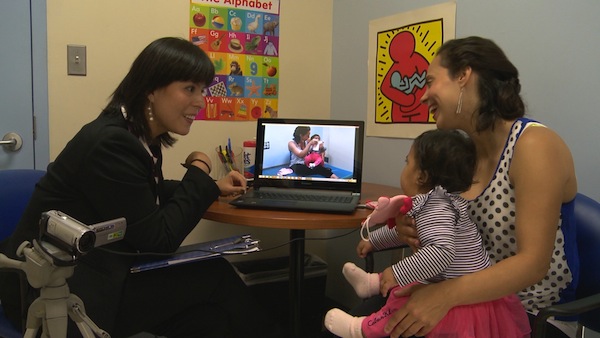
Video Interaction Project coach Jenny Arevalo in action. (photo by Andy Reichsman/Ames Hill Productions)

With the ever-increasing number and variety of screens and gadgets grabbing our attention, pediatricians are asking us to take a step back. Some are even leading a counter-movement, warning parents and caregivers of the harm these technologies are inflicting on children.

Dr. Alan Mendelsohn, a general and developmental behavioural pediatrician, is an associate professor of pediatrics and population health at New York University’s School of Medicine and Bellevue Hospital Centre.

“The American Academy of Pediatrics published a statement designed to help pediatricians and parents think about toys for their children, in an era where toys have really evolved,” Mendelsohn told the Independent. “A very significant concern is that toys with bells and whistles, so to speak – with electronic gadgetry on the one hand or apps designed to engage children on the other – are likely to have very limited, if any, benefit to very young children.”

Mendelsohn has been working to use the pediatric primary care centre to support parenting activities most likely to help children’s development and school readiness. This has led to other programs, like Reach and Read and the Video Interaction Project, both of which teach parents the importance of reading and playing with their kids.

“We still have the same kinds of toys we’ve had in the past – simple, pretend kinds of toys,” said Mendelsohn. “But, at the same time, digital toys have become a high level of focus and priorities for many families. And, that’s in part as a result of the extensive messaging taking place about how electronics can be so important for children, and how apps and computers are going to help children learn.”

photo - Dr. Alan Mendelsohn
Dr. Alan Mendelsohn (photo courtesy Alan Mendelsohn)

According to Mendelsohn, there is limited or possibly even no good scientific evidence that screens can be beneficial for children under the age of 2 – with the possible exception of video chats in which the screen is functioning as an opportunity for interaction with family members that otherwise would not take place.

At the same time, he said, there is extensive data documenting that electronic add-ons, and screens more broadly, have a great deal of potential for harm.

“This is true for children of all ages, but it’s especially true for very young infants, toddlers and children who have not entered school yet … for whom that screen time … not only can lead to developmental challenges … but it can actually interfere with play and with parents being able to engage together with their children in the kind of rich, language-based interaction that advances children’s development,” said Mendelsohn.

The American Academy of Pediatrics recommends that children under 2 have no screen time, other than the aforementioned video chats. For children 2 and older, they recommend limiting screen time to one hour or less, and having that screen time be high-quality, i.e. educational, programming.

“This limited screen time should be used as an opportunity for interacting, rather than viewing it as an opportunity for babysitting, which is how it’s often used and viewed by parents,” said Mendelsohn.

“Parents using screen time as a distracter is not necessarily a bad thing…. The academy recognizes, and I think the pediatric community recognizes, just how hard it is to be a parent, especially of a young child. Parents spend the day working and come home to chores, housework and all kinds of things. Obviously, screen time can be very helpful to parents in that way. But, it’s important that parents realize the potential for harm to their children – recognize that screen time is unlikely to be beneficial for their children.”

Mendelsohn recommends that parents find opportunities to play with their kids and read books with them, as these activities are likely to improve their child’s development and help create a positive parent-child bond.

“The important thing here is that excessive screen time, regardless of age, has the potential to lead to problems and challenges for children by interfering with their capacity to pay attention once they start school, as well as by causing challenges with their capacity to regulate their own behaviour and learn in school,” said Mendelsohn.

Schools are using more and more screens and technology, and Mendelsohn doesn’t condemn the use of screens and technology in an educational, monitored setting. Rather, monitored use should extend into the home.

“Parents face a great deal of challenges as they seek to do that,” he said. “The important thing is for parents to be aware and to work, particularly as their children get older, to monitor their children’s screen time and to interact with their children when screen time is taking place, especially higher quality kinds of programming.

“Equally important is for parents look for opportunities to turn the screen off … to have those opportunities every day, whether through reading books together or playing together – always aiming to have quality time.”

Electronic games are not all created equal and those that are engaging and interactive, that foster playing with others – qualities many board games possess – are likely not harmful and might even be good.

“There are not clear answers,” said Mendelsohn. “But, what is clear is that screen time can be overwhelming in time, and that parents have difficulty limiting it. Limiting and monitoring it is the key to having screen time be one of many components of a child’s life as she or he grows into school age versus becoming the most prominent part of the child’s life.”

Mendelsohn suggested that parents ask their pediatricians for advice.

“Pediatricians are there as a resource for parents,” he said. “Parents should raise these issues with their pediatricians, and they’ll enjoy the conversations and guidance they receive.”

Rebeca Kuropatwais a Winnipeg freelance writer.

Supporting their community

(photo by Rebecca Zaidi)

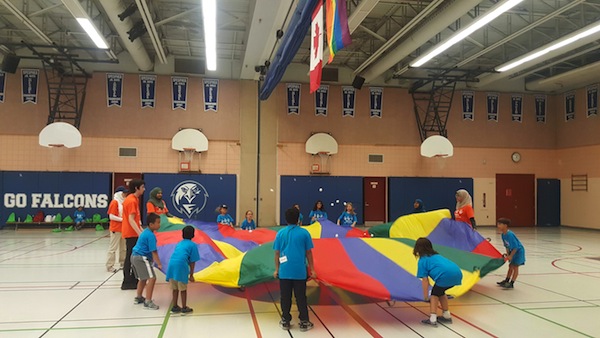
Three years ago, Rabbi Audrey Pollack of SolelCongregation in Mississauga, Ont., decided to follow the lead of Rabbi DebraDressler of Temple Israel in London, Ont., and create an interfaith peace campin Mississauga.

Pollack, who hails from the United States, moved to Canada in 2015. The Reform congregation Solel “had a tremendous reputation in the movement in terms of the education,” said Pollack, as did “the rabbi of the congregation at the time, Rabbi Lawrence Englander, who retired after 40 years here.”

As for the idea of the camp, Pollack told the Independent, “When I spoke with Rabbi Dressler, it sounded like a great opportunity to bring together interfaith dialogue and cooperation. And so, I went out there that summer for the day to see what they were doing. I thought it was a great experience for kids, adults and the teen volunteers that we have.”

As the chair of the Interfaith Council of Peel, Pollack was well-positioned to start the interfaith camp, and Solel does a lot of outreach in the Mississauga community in general.

The suburb of Toronto “has about 700,000 people and we have about 250 families in our congregation, so we’re relatively small in terms of Jewish community here,” said Pollack. “We do a lot of dialogue and conversation with the community, because we are a diverse community. It’s important for people to know who Jews are and what we are about, to make friends and to really to support each other.”

Pollack wanted to find an Islamic partner who did a lot of English-language programs, as opposed to Arabic. They found Sheikh Jaffer H. Jaffer from the Masumeen Islamic Centre in Brampton, who was excited to join, said Pollack.

“The church – Canon Jennifer Reid from Saint Peter’s Anglican Erindale – we had already been partnering with for awhile,” she said. “I knew the minister there. They run a day camp program, like a vacation Bible study program. So, that was helpful our first year, just in terms of setting up and running a day camp. They already had a few people in place that had some background.”

At first, the interfaith camp’s content was a bit of mishmash, said Pollack, but it is continually being developed and updated to meet the needs of the community. One of the bigger challenges has been to maintain a balance from each denomination; the mosque membership is much larger than that of the church and synagogue.

“The first day, we always try to do something that everyone can do together, like a get-to-know-you day,” said Pollack. “Kids need to get to know each other as kids. We do a training beforehand for our adult and teen volunteers, and, I should mention that each faith centre makes a commitment to bring a certain number of volunteers.

“The first summer we did something on tzedakah, or charity, and this summer we did something on building friendship and peace.”

Each day of camp, they go to visit a different faith centre. The campers learn a little bit more about what each group believes and how they practise their beliefs. Everyone has an opportunity to visit, have a tour and ask questions.

“We really expect the youth from each of the faith centres to do some of that explanation,” said Pollack. “It’s an opportunity for them as well.

“I remember the first time we came here [to the synagogue] with the kids for summer. Our kids were so excited, because they’d been to the mosque the day before, and they wanted to give the tour and to explain what a Torah is, why we wear kippot and things like that. So, it’s an opportunity – not only for them to learn about other faiths, but for the home faith group to be proud of who they are … and to really make the connection that there are things we share in common, and that we need to get along with each other. Basically, we need to know our neighbours.”

Most of the participating kids go to public schools around the city and may sit next to each other in class, but they rarely get to share anything about their faith in class. They may have some misconceptions or stereotypes about what someone else’s faith or culture is, said Pollack, because they don’t really discuss it.

(photo by Rebecca Zaidi)

The camp is a great opportunity to share some truth and dispel such misconceptions, she said.

The kids who have had this camp experience are already looking forward to next summer, asking when registration will be open, said the rabbi. Their parents, too, are interested in what is going on.

“On the last night of camp – we’ve been running this as a four-day camp, maybe five next summer –  we get together at one of the centres for a potluck meal,” said Pollack. “It is all-vegetarian, so everybody can eat. There’s a presentation and a slideshow. After the first dinner, all the parents said they wanted to go to camp and learn, so we started doing an adult session, too.

“We did a progressive dinner,” she said. “We started with appetizers at one centre, and then moved on to the next centre and had dinner. By the time they got here, at the synagogue, I could barely talk, because they were all chatting away with each other. And, it was great, because many of them, before this, didn’t know each other well.

“It was a really great day and we’re looking at doing some other programming this year. During the camp off-season, we’ll have an opportunity for dialogue and discussion, and some activities.”

With budget and space limitations, the camp is capped at 12 kids from each faith centre. While the campers pay to attend, the camp makes sure cost is not a prohibitive factor. “We want anyone who wants to, to be able to come, so we try to keep our costs low,” said Pollack.

The congregations are looking to create a couple more opportunities this coming year for people to meet, she said, “and they would like to do something for the older kids as well … to do an evening or afternoon activity where they could do a craft or cooking or something like that, and the adults could have a discussion on something that we have in common with each other.”

(photo by Rebecca Zaidi)

Because the Jewish community in Mississauga is small, said Pollack, “for our kids, when they come together at synagogue, it’s really important for them to connect with Jewish kids. For them, the opportunity to talk to their new friends from different religions and cultural backgrounds, with pride and support of each other, is important. It’s also really important for them to see that there are ideas and values and ethics that we hold in common. Often, we talk about what divides us.

“For younger kids, they just like hanging out with their new friends. They’ll talk about the activities they did together, while, for the older kids, they’ll articulate and express what they’ve learned or didn’t know before. Each time they go back, they gain something a little different.

“A very valuable part about this camp experience,” she continued, “is building relationships through intentional dialogue and intentional conversation, and the opportunity to do that in a camp setting means that people are doing it in different modalities. They are connecting with each other through play and through giving back to the community.

“One of the other things we’ve made part of our program each day, in addition to the activities we are doing, is giving back. We’ve invited representatives from the hospital to come and the kids have made cards for people in the hospital. We’ve invited people from our greening and planting area of the city to come also. So, they understand that, no matter what community you come from, there’s a value in supporting community.”

Rebeca Kuropatwa is a Winnipeg freelance writer.

Hate crimes in Canada spike

(image from Statistics Canada)

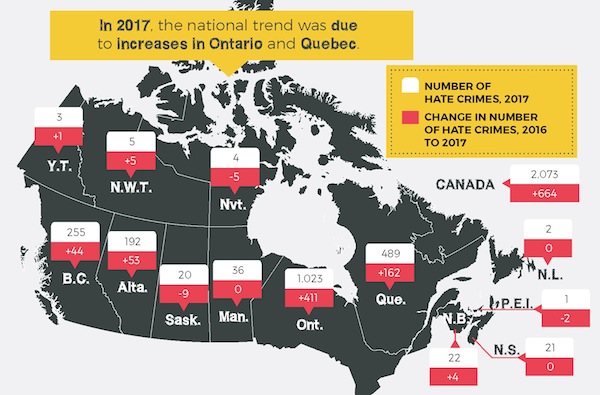
Crimes against identifiable groups in Canada have spiked sharply, according to the latest data from Statistics Canada on police-reported hate crimes. Jews and Jewish institutions were the foremost targeted group, but hate crimes against Muslims comprised the largest increase.

Across Canada, there were 2,073 police-reported hate crimes in 2017, an increase of 664 incidents over the previous year. Almost half of all hate crimes were reported in Ontario. In British Columbia, 255 hate crimes were reported to police, including 68 that targeted Jews, 36 incidents against black people, 19 against Muslims and 18 crimes based on sexual orientation. Reported hate crimes against the Muslim, black, Arab or West Asian and LGBTQ+ communities all increased nationwide.

Across the country, hate crimes against the Jewish community rose by 63% between 2016 and 2017 – from 221 incidents to 360 – and the Jewish community remained the most frequently targeted group in both absolute and per capita terms, the report stated. Hate crimes against the Muslim community increased 151% between those years, from 139 police-reported incidents in 2016 to 349 in 2017.

In one of few comparatively bright spots in the report, violent incidents decreased as a proportion of all hate crimes, accounting for 38% of reported hate crimes in 2017, down from 44% in 2016. But this proportional decline is tempered by the raw numbers. The actual number of violent hate crimes increased 25% but decreased as a proportion of hate crimes overall only because the number of non-violent crimes increased that much more – non-violent offences like mischief and public incitement of hatred increased 64%.

Of the 360 police-reported crimes against Jews or Jewish institutions across Canada in 2017, 209 of those were in Ontario and 49 in Quebec – making British Columbia not only the second province in raw numbers of anti-Jewish attacks, but almost tying Ontario on a per capita basis and surpassing all other provinces by far.

Hate crimes in Canada have been creeping upward relatively slowly since 2014, according to Statistics Canada, but 2017 saw a leap of 47% over the previous year. Most of the crimes involved hate-related property crimes, such as graffiti and vandalism.

Despite the large increase in 2017, however, hate crimes still represent a very small proportion of overall crime – about 0.1% of the more than 1.9 million non-traffic crimes reported by police services in 2017. That said, a 2014 Statistics Canada study, General Social Survey on Canadians’ Safety (Victimization), in which Canadians self-reported incidents of perceived hate crimes, indicated that two-thirds of such incidents were not reported to police, suggesting that the numbers in the hate crimes reports might underestimate actual incidents substantially.

image - Hate crimes versus religious groups, 2016 and 2017
(image from Statistics Canada)

“Police-reported hate crimes refer to criminal incidents that, upon investigation by police, are found to have been motivated by hatred toward an identifiable group,” explains StatsCan. “An incident may be against a person or property and may target race, colour, national or ethnic origin, religion, sexual orientation, gender identity or expression, language, sex, age, mental or physical disability, among other factors. In addition, there are four specific offences listed as hate propaganda offences or hate crimes in the Criminal Code of Canada: advocating genocide, public incitement of hatred, wilful promotion of hatred, and mischief motivated by hate in relation to property used by an identifiable group.”

Hate crimes against Muslims, particularly in Quebec, contributed significantly to the overall spike in 2017 reported incidents. Hate crimes in that province increased 50% over the previous year, with incidents targeting Muslims almost tripling to 117 reports in 2017 from 41 the previous year. Perhaps most disconcertingly, the biggest spike in anti-Muslim incidents in Quebec occurred in the month following the mass shooting at the Islamic Cultural Centre of Quebec, where six Muslim men were murdered in a shooting rampage on Jan. 29, 2017.

In response to the statistics, which were released Nov. 29, the Centre for Israel and Jewish Affairs called on the federal government to take a three-pronged approach to hate-motivated crime and related matters.

“In the wake of this report, we are reiterating our call on the Government of Canada to take three key steps to combat hate,” Shimon Koffler Fogel, chief executive officer of CIJA, said in a statement. “First, we are grateful that the prime minister announced he will enhance the Security Infrastructure Program. We urge the government to expand it to cover training costs, especially given that emergency training saved lives during the Pittsburgh synagogue attack. Second, we need a national strategy to combat online hate. Experience shows that vicious rhetoric online can fuel and foreshadow violence offline. Third, the federal government should strengthen the capacity of law enforcement to combat hate crime. This should include enhancing legal tools to deal with hate speech and supporting the creation of local hate crime units where they are lacking.”

A first of its kind in Canada

The University of Manitoba is now accepting applications for its interdisciplinary master’s degree in human rights. (screenshot)

The first interdisciplinary human rights graduate degree program in Canada will be starting soon, spearheaded by the director of peace and conflict studies at the University of Manitoba, Dr. Adam Muller, who helped design it.

The new degree will be the first of its kind in the country. Offered by the faculty of law at the U of M, it will train students for careers in human rights work in collaboration with the university’s faculties of arts, education and social work, as well as the Centre for Human Rights Research. Up until now, students wanting an interdisciplinary education in human rights law, theory and qualitative research methods had to go to the United States or Europe.

“We’re going to be training generations of students to serve domestically and abroad in a way that’s deeply inflected by rights, culture and ideas of dignity and social justice that, I think, in some ways, is uniquely Canadian and importantly Canadian,” Muller told the Independent.

“It’s worth noting that, when South Africa transitioned from an apartheid to a post-apartheid state, and they needed to rewrite their constitution, and particularly their charter of rights and freedoms, they drew upon the Canadian model and used Canadian jurists to assist in that drafting process.”

photo - Dr. Adam Muller spearheaded the new human rights program
Dr. Adam Muller spearheaded the new human rights program. (photo from Adam Muller)

Muller spent the first nine years of his life in South Africa. His family emigrated from there in the late 1970s in the wake of the Soweto Uprising, for political and other reasons. In addition to his position at the U of M, he is also the first vice-president of the International Association of Genocide Scholars.

Most of his work is about representations by artists of mass violence and atrocity, said Mueller. “So, I’m particularly interested in photographers, but also painters, musicians … people who try to give shape to unimaginable violence with the view of educating people about it.”

While there are other master’s of human rights programs in Canada, this is the first interdisciplinary master of human rights program in the country, said Muller.

The program will be housed in the faculty of law for a number of reasons, he said, the main one being that the language of human rights is first and foremost a legal language.

While other aspects of the program will look at the philosophical, sociological and anthropological discourses, Muller said, “There are different cultural inflections on the idea of human rights, partly because of the [perspective] that human rights practitioners have – an idea of a universal moral subject, which is complicated when you look at it anthropologically. Not all communities around the world share the same moral presuppositions, so those differences matter in terms of the understanding of global rights culture.”

While students will be encouraged to be human rights champions and advocates, the aim is that they not be so in a naïve way. “We want them to actually understand that human rights can be seen by other people as potentially unwelcome, super-impositions of a Western frame of reference over indigenous ways of thinking about the relationship with a person to the group,” said Muller.

In learning about what happened in genocides such as the Holocaust, students in the program will also be taught the continuing implications. For example, Muller wants the master’s students to go into the German studies class and learn, not just about the Holocaust, but about why it still matters in the German context today.

One of the unique aspects of this interdisciplinary program is that the courses available to students will vary from year to year, depending on what is being offered by the different faculties that have agreed to open up their classes to MHR students.

“We expect there to be, for example, considerable coverage of indigenous issues, just because there is a lot of that kind of work going on at the U of M,” said Muller. “We fully expect the MHR students to be both interested in and to become cognizant of the kind of debates surrounding human rights and indigenous people in the Americas.

“What we have is, I think, a healthy elasticity, in terms of the actual curriculum of the program,” he said. “So, there are three required courses, and then three courses students will be able to select from a vast range of options made available.”

Applications are now being accepted through the Centre for Human Rights Research at the U of M for admission in September 2019. It is not a prerequisite to have a degree in human rights.

Since the goal is to train students to become human rights professionals, the program will offer a practicum component for those students who prefer a hands-on approach.

Belle Jarniewski, who recently took on the role of executive director of the Jewish Heritage Centre of Western Canada and is probably most known for her work at the Holocaust Education Centre, which is an integral element of the JHCWC, is one of the scholars who was asked to review the MHR program proposal.

photo - Belle Jarniewski of the Jewish Heritage Centre of Western Canada was one of the scholars who reviewed the master’s in human rights program proposal
Belle Jarniewski of the Jewish Heritage Centre of Western Canada was one of the scholars who reviewed the master’s in human rights program proposal. (photo from Belle Jarniewski)

“I was quite honoured that Adam asked me to be one of the people across the country to review the proposal for the program and to submit a recommendation,” said Jarniewski. “I think that it’s very exciting to have a post-graduate human rights program offered. One of the things that I really like about it is that it really allows people to work in or concentrate on different areas of human rights.

“Certainly, I think human rights have always been important. But, in this particular time, where human rights are being abused in so many different countries, and where the mere understanding of what human rights are is being clouded, I think that a program such as this, that will produce scholars in this area, is of extreme importance.”

Jarniewski said Winnipeg is the perfect place to host such a program, with the Canadian Museum for Human Rights being in the city.

“Winnipeggers don’t fully appreciate the importance of it,” said Jarniewski. “When I go overseas, this museum has put us on the map. I think it’s just a logical city to host such a program, given that we have this wonderful museum, and our ability to access it for research purposes, as well as the ongoing work that they do in hosting lectures.

“I’m thrilled that this is happening, that it’s happening in Winnipeg, and that Winnipeg is taking on an important role in the area of human rights.”

For more information about the program, visit law.robsonhall.com/future-students/master-of-human-rights-mhr.

Rebeca Kuropatwa is a Winnipeg freelance writer.

Elman’s grows in Vancouver

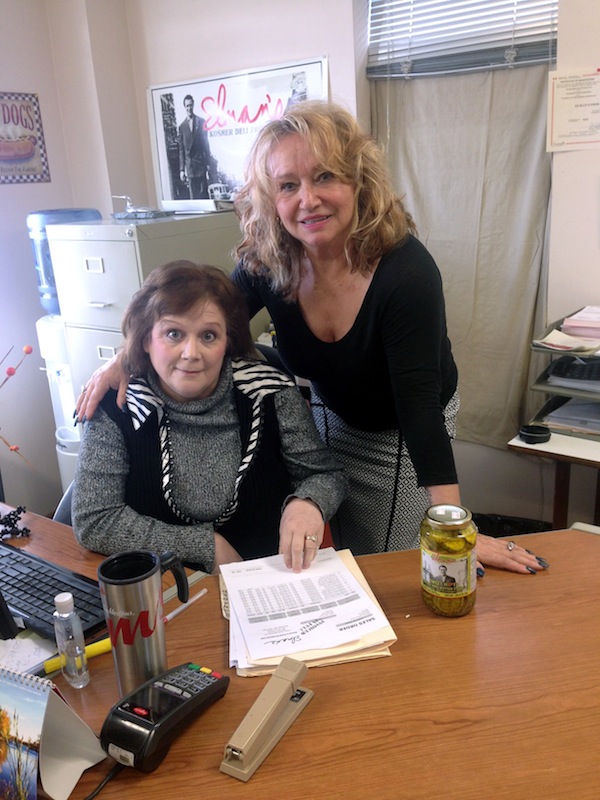
Millie Krause, who runs Elman’s, with receptionist Bonita Bouchard. (photo from Elman’s)

They started making horseradish 80 years ago and haven’t stopped. Elman’s Food Products is still making horseradish in small batches and, over the years, they have added new pickled products to the mix.

Today, Elman’s is run by Millie Krause, widow of the founder’s son, Manny Finkleman, who passed away in 2004. The company is gradually increasing its reach west from Winnipeg, led by Millie Krause’s daughter, Payton.

Six years ago, Payton Krause moved to Vancouver to be closer to friends and expand the family business, in which she first started working in the late 1980s. By then, the family had moved the company out of the garage and into its current-day location on Jarvis Avenue in Winnipeg’s North End.

“At that time, Payton, my daughter, was working here,” Millie Krause told the Independent. “And that was good, because she could keep an eye on things while I was running back and forth to hospitals, and taking Manny back and forth to this and that.”

In 2004, Manny Krause passed away. Since then, the brunt of the management has been in his wife’s hands.

“It was a really big learning curve for me, because my background was in sales. It took awhile,” she said. “Everybody wanted the same deals that Manny used to give and they didn’t really know who I was … but we survived.

“I always say that, if you don’t know something, find out. Just ask. If we look a little stupid or something down the road, who cares? Just get it done. That’s really the attitude we took it with. Now, what Manny said to me before he passed away … was that I should run it [Elman’s] for a couple of years, with Payton’s and everyone’s help … and then, sell it. So, 15 years later, I’m still here. The thing is, back then, when Manny was running the business, he ran it, if I might say, by the seat of his pants. He dealt with every problem that came up at the time, but he didn’t really remember what he did the next time, so it was like constant chaos.”

She and her daughter have tried “to reformulate the company and brand it – brand it into something that maybe wasn’t there at the time,” she said.

They position their products in the specialty food section, staying away from big retailers like Walmart and Giant Tiger. They sell the product by promoting the story behind it – making sure people know they’re a small, local family business with a long history in the city.

“I think we’ve succeeded in doing that,” said Krause, saying the process has “been a little slow.”

“Before Manny passed away,” she explained, “we were shipping from Winnipeg to Thunder Bay, and then west, but in very small ways. Then, Payton wanted to move out there, as apparently she needs mountains and water around her, and she wanted to open it up further. Actually, she’s done that.”

Expansion means winning over new clients, and that is exactly what her daughter is achieving in Vancouver.

“In fact, Payton had to pass a taste test,” said Krause. “Some of the wannabe customers she went to call on cut up 10 slices of pickles and said, ‘OK, now, which one is yours?’ And, I think she thought, ‘Sheesh! What if I get this wrong?’ But, she got it right.”

One breakthrough is that Elman’s pickles are included in all B.C. Ferries’ burgers. “They put the pickle on the top of the bun,” said Krause.

As another example, she said Elman’s are also used by Fairmont Hotels in Vancouver.

“The goal is to obviously get more business,” she said. “Up until this point, we didn’t have a lot of boots on the ground. We don’t have salespeople. The only ‘salespeople’ we have is Payton in the Vancouver area, but she has managed to do quite well. That is her goal – to get as much business as we can. It will hopefully get to a point that we can get enough business to be busy continually.”

Krause is hoping to get in with another large food service restaurant, which would allow Elman’s not only to be busier but to have the working capital to keep operations going. According to its website, the company currently has about 10 regular staff and casual employees.

Elman’s products carry a kosher certification from OU Kosher. For more information, visit elmans.ca.

Rebeca Kuropatwa is a Winnipeg freelance writer.

Adversity leads to innovation

Sara Raposo-Blouw, left, and Erin Goldberg taste the chocolate mocha and vanilla blueberry flavours of Thrive. (photo by Ian Blouw)

Erin Goldberg, 30, was only 5 years old when it was discovered that she had rhabdomyosarcoma in her abdomen, attached to one of her ovaries.

Rhabdomyosarcoma (RMS) is an aggressive and highly malignant form of cancer that develops from skeletal muscle cells that have failed to fully differentiate. It is generally considered to be a disease of childhood, as the vast majority of cases occur in those below the age of 18.

Growing up in Winnipeg, Goldberg spent almost 130 days at the Health Sciences Centre (HSC) receiving treatments and recovering from procedures over a two-year span before she was cleared of RMS.

Goldberg’s struggle with the cancer and her unwavering will to make the world a better place have served as a driving force in her life ever since. And her memories from that time, as a child struggling to keep food down, have led to her helping develop a liquid food replacement that would have been priceless to her when she had RMS.

“Basically, everything I ate was making me nauseous, and that was due to chemotherapy,” Goldberg told the Independent. “It sort of alters your taste. And I would also throw up anything I would eat. It was important to have as many bland foods as possible. With liquid nutrition, it’s a lot easier to consume your calories than with anything solid. It’s denser and is a better option in the hospital.”

Goldberg said she went into nutrition because she was interested in disease prevention. After meeting Sara Raposo-Blouw and Lisa Reed, dieticians at the HSC, and them sharing their experiences with one another, they came up with the idea of a liquid nutritional drink. They knew, firsthand, the lack of options people had.

“The beverage options in hospitals were really lacking,” said Goldberg. “Patients find the taste of what there is too sweet. I recently spoke to my friend’s dad, who is a psychiatrist, and he actually prescribes Boost six times a day for one of his patients, because he has a motor disorder … he’s constantly moving, so his caloric requirement is elevated so much. He needs to have six of these beverages in addition to his regular food intake. When you have that much of something that is too sweet and has ingredients that are highly processed, or if you’re vegan or have allergies, you just can’t do it. You need an alternative. And there was really nothing out there.”

Goldberg and partners have developed a new option, called Thrive, that uses local ingredients, two of them being flax oil and pea protein. The formula is completely plant-based and free of major allergens, like dairy, soy, corn and wheat.

The trio solicited the help of a Burnaby beverage developer to help them produce the drink with the necessary specialized equipment.

While competitors have come out with flavoured drinks and drinks that cater to particular groups of users, Thrive differs in that it is a basic formula that everyone can use, adding their own ingredients as desired, depending on their needs.

“Currently, we have one adult formula, but we’re working on one for children,” said Goldberg. “The main difference between the one for adults and the one for children is the protein content. It’s very easy for us to adjust the formula accordingly. And, as far as different patient populations, we don’t have other types of formulas. Basically, if a higher caloric content is necessary, then more of the beverage would be prescribed. But, at this time, we only have one formula.

“The palatability really stands out for our product compared to these other competitors,” she said. “A lot of the ingredients they use are bitter. They are trying to mask that bitter taste with the sweetness, coming up with flavours like chocolate, strawberry and vanilla.”

Because of its mild flavour, Thrive also can be used to make solid food, similarly to milk, but with a much higher nutritional punch. For those seeking a flavoured drink, they can choose to add whatever flavour they wish to the degree of sweetness they like.

A couple of months ago, Goldberg flew to Montreal to accept the Social Mitacs Entrepreneur Award and a $5,000 cheque, in recognition of what she and her partners are doing. Different levels of government have also stepped up with funding, as has North Forage.

“We’ve been receiving support from North Forage, a business incubator in Winnipeg,” said Goldberg. “They’ve helped us get off the ground and understand the business side of things, because we are coming at it from a science background. So, the three of us needed some input there.

“We are currently looking for investors,” she added. “We have a couple that are interested, but we need more to move on to our next phase and are looking at government funding. Once we are up and running, our first year, we are planning on having online sales direct to the consumer.”

Based in Winnipeg, their initial target is to partner with the Winnipeg Regional Health Authority, as well as other health authorities across Canada. Goldberg is confident that, once they taste the product and look at the nutritional information, the authorities will sign on.

The partners are also confident that their target timeline of production by next summer can be met, even with the need to do a scale-up and validation trial in Quebec because no facility in Manitoba is currently capable of doing this.

“We require very specialized equipment when it comes to the aseptic packaging that we require, because we want our product to be shelf-stable, so it doesn’t have to be in the refrigerator,” said Goldberg. “That equipment is very expensive and very specialized. They have it in Quebec. Once we scale-up, we will go to Toronto and that will be our facility to actually produce the product on an ongoing basis.”

At the moment, the partners are working with their lawyers to set up the deal structure to bring in investors for the validation tests (costing $250,000).

For more information, visit vitalfoods.ca.

Rebeca Kuropatwa is a Winnipeg freelance writer.

Eliminating chlorine’s effects

Elliot Kimelman’s C-Spray is available online at amazon.ca. (photo from Elliot Kimelman)

Going for a swim is something many people enjoy. But, many times, even if you shower right after, you can still smell the chlorine. If only there was a way to prevent that. Now, thanks to Winnipegger Elliot Kimelman, there is.

Kimelman attended Gray Academy of Jewish Education for elementary and high school. He took to swimming as a child and kept it up, eventually becoming a swimming instructor in Grade 10.

“I was really enjoying my job, but that’s how the idea for C-Spray started – because my skin started getting really irritated by the pool water,” he explained. “I have quite sensitive skin, so it bothered me a lot. I knew I had to be in the pool for work, but, at the same time, I could literally feel the damaging effects on my skin, which I didn’t like.”

He tried various products, but didn’t find them very effective. So, he researched the topic more deeply and found that certain combinations of minerals and vitamins have the potential of eliminating chlorine molecules. And, with help from some friends who were studying chemistry at the University of Manitoba, he developed a chlorine-eliminating body spray.

“Basically, I found that Vitamin C is one of the active ingredients in a solution I created that eliminates chlorine on skin, hair, swimsuits, or anything,” said Kimelman. “I felt that this was cool and very interesting.

“I started creating the solution, just for myself, and I used it and loved it … and didn’t think much of it. Then, I was discussing it with my coworkers and friends, and they all said, ‘Elliot, you have a really interesting product there. Why don’t you try bringing it to market?’ So, I thought to myself, ‘That sounds great. But, how do I do that?’”

He was in high school at the time.

In Grade 12, Kimelman enrolled in an entrepreneurial program for students, called Junior Achievement. When his group was looking for an idea for a product or a service to create in a four- to five-month period, Kimelman pitched the idea of C-Spray and the group liked it.

“They all thought it was quite unusual,” he said. “They didn’t really understand it. I don’t think I understood it at that point. But, they didn’t have any other interesting ideas, so we thought, ‘Why not?’ That’s when C-Spray was born.

“I was the president of that entrepreneurial group. And so, we met every week for five months. We created this product – the beta version, the testing, the prototype – and we brought it to market, in the sense that there were a few trade fairs that were organized for us that we sold the product at … which was all very exciting.”

Then, Kimelman found his first client – the owner of Swimming Matters, a swimwear accessory outlet in Winnipeg. They were interested in the product and agreed to carry it on a trial basis.

But, being part of a short-term program, C-Spray was shelved when Kimelman’s Junior Achievement stint ended. He went off to business school but soon decided to re-launch C-Spray, which he did this past summer.

“At that point, I’d studied business for almost two years,” he said, “so I had a better sense of what accounting was, what marketing was, how operations worked, etc. And, I felt I might as well try to start this business up again when I come home for the summer…. I arrived back in May and I put the pedal to the metal, and basically started C-Spray again. I started Winnipeg production, getting all the pieces moving. Then, of course, the most difficult part – getting the sales. I started talking to everyone I knew, every store I could think of – a store for luxury swimwear, cheap swimwear, anything related to aquatics whatsoever.”

Kimelman has been getting feedback from a wide range of customers, from high-end swimwear retailers who are worried about chlorine on their swimwear, to people who swim all the time and are worried about the chlorine’s effect on their skin and hair.

C-Spray has been on sale via amazon.ca, as well as at 10 other retail outlets in Winnipeg and Toronto. The product comes in two spray bottle sizes, 240 millilitres, which should be good for about 160 uses, and half that size.

“How it works is, after you swim, whether in a chlorinated pool or hot tub, you get out, hop in the shower and rinse off whatever pool water you have on you,” said Kimelman. “Then, you spray an ample amount of C-Spray all over your body and hair – anywhere you’d like to eliminate chlorine…. It doesn’t actually turn soapy … there aren’t any additives in it whatsoever. You spread it around your body and hair, and then shower as usual. You can use whatever products you’d like. At the end of the process, you’ve completely eliminated chlorine, which soap alone doesn’t do.”

Kimelman said that, even in saltwater pools, high levels of chlorine are used, so you should follow the same process.

While other products on the market claim to eliminate chlorine, Kimelman has found that they mostly just mask the smell.

C-Spray differentiates itself in a few ways. First, it is made with a combination of vitamins, minerals and stabilizing salts. “There are no additives, parabens (preservatives), perfumes, colours or sulfates,” said Kimelman. “It’s a completely natural, raw formula, which a lot of customers like.”

Second, he said, “When you do chemical tests to other products specifically marketed as being chlorine-eliminating shampoo and body wash … in beakers, you see the concentration of chlorine via these DPD tablets…. C-Spray eliminates the chlorine instantly, but these other products either don’t or they only mask the smell of chlorine, but it still exists. So, C-Spray is more effective than most sprays on the market.”

The only reason you will not find C-Spray in retail stores in other places in Canada, including Vancouver, is because Kimelman has not yet had time to spread the word.

“I’m happy to work with any retailer, to give some samples or give an introduction remotely,” said Kimelman. “My plan is now to primarily focus on maintenance and building the company slowly and organically while I finish school.”

Rebeca Kuropatwa is a Winnipeg freelance writer.