Aiming for carbon neutrality

Jeff Golfman’s Raw Office helps “businesses save money and be more eco-friendly in their supplies.” (photo from Raw Office)

Jeff Golfman has been working on ways to preserve nature since he was a boy. “I can trace it back to my time going to camps in the summertime and just really connecting with nature and with the human impact we have on the planet,” said Golfman, who went to B’nai Brith Camp in Kenora, Ont., and also spent one summer at Camp BB in Pine Lake, Alta., in addition to spending time at family cottages.

“Initially, it was just seeing people leaving garbage at campsites and leaving garbage in the wilderness. That really bothered me as a kid. It really stuck with me. That’s where it started, really. For me, wanting to be concerned about the legacy and what we leave behind, in terms of … how we show up on the planet and what we leave when we’re gone.”

Born in Vancouver, Golfman grew up in Winnipeg and is now living in Toronto. He started Winnipeg’s blue box recycling program in 1990 and then began researching how to make paper without trees, eventually getting patents to make tree-free paper, which is now available in big box stores like Staples, Office Depot and Office Max. About five years ago, he turned his attention to developing and sourcing product for his recently launched online office supply store, the Raw Office (rawoffice.ca).

“We help businesses save money and be more eco-friendly in their supplies,” he told the Independent. “It just made sense to do business with purpose…. It wasn’t so much that my passion was to save the world. It was more like I asked myself, ‘What is logical?’ And, to me, it’s logical that we’d want to do good while making commerce at the same time.”

While Raw Office’s current client base is 80% American, the company does business all across Canada, including in Vancouver, Calgary, Winnipeg, Toronto and Montreal.

“We’re using artificial intelligence and data to come into businesses and make recommendations for them on how they can make better informed decisions,” said Golfman. “Most people, when they go shopping, basically just browse and shop, and add to their cart and check out. It’s a lot of manual work to do that. What we do is put together a custom-made, curated program for each and every business that we come into. So, we’re really a one-of-a-kind program for each and every client we work with.”

Golfman’s company helps clients increase their use of recycled material for starters. Leading by example, Raw Office is currently the only office supply company that is 100% carbon neutral.

“What we practise and help businesses to do is to make an improvement from where they are today,” said Golfman. “It’s not about 100% or nothing. It’s about making an improvement. On average, the companies that have chosen to work with us are saving 30% financially and are getting 200% eco-improvement.

“I can’t speak to the tax benefit just yet, because everything is so new and is a moving target. We’re doing this outside of the political system, to help business be carbon neutral at no extra cost, which I think is the ideal scenario.”

While many companies are working toward going carbon neutral, no other large international player has cracked the office supply sphere. “There are other companies doing eco-friendly office supplies, but the ones we’ve found are not national and international in scope like we are,” said Golfman. “They are usually regional players and niche players.”

Raw Office has teamed up with the Bonneville Environmental Foundation and are buying carbon offsets to support landfill-to-gas projects, with 83,000 products on their website that show their individual environmental footprint.

“They are basically going into the landfill and pulling methane out of the landfill, and repurposing that for power and energy, and helping us reduce our emissions,” explained Golfman. “So, in a nutshell, we’re buying offsets and not charging our customers … banking that into the cost of working with us.”

By eliminating the bricks-and-mortar storefront of a conventional business, Raw Office is able to pass on the savings and offer carbon-offset products that cost 20-30% less.

“We are a technology-based company,” said Golfman. “We don’t hold inventory. We do drop shipping. It’s very similar to other tech companies that have been able to disrupt industries and reduce costs.”

Anyone can buy from Raw Office, but the bigger the company, the bigger the savings and planet impact. “We add a whole bunch of value to larger businesses that have multiple locations,” said Golfman. “A lot of the companies we work with are larger, with dozens or hundreds of locations. Most of our customers are like that, but we add value to all companies.

“One thing we do that is really uniquely for larger companies is the curated program and, also, we have these really great approval processes that allow managers and owners to approve of items and orders. And, we have these really cool features that allow the bookkeepers to integrate into their accounting software more easily.”

Meanwhile, Golfman is also working to create enhanced environmental and financial reports for his customers.

With products made all over the world, Raw Office offers complete transparency, with each product showing the country of manufacture and an eco-score.

“The eco-scoring system we created takes into account the country of manufacturing, eco-certifications and things like that,” said Golfman. “So, you’ll know, with transparency, if you’re buying something that’s made in Canada or overseas…. We make that really clear. If you had a preference for local manufacturing, you can do that on our website using filters … or, if you had a preference for some other country, we can do that, too. It’s all part of the search functionality.”

In his free time, Golfman volunteers with the nonprofit Green Kids, which he founded and of which he is board president.

“It’s an environmental theatre,” he said. “We do live theatre for children. We tour schools across Canada, all the way from Victoria, B.C., throughout Vancouver, Manitoba and Ontario. To date, 1,400,000 Canadian children have seen the Green Kids show.”

Golfman also runs a health blog, called, “The Cool Vegetarian,” where he interviews people about healthy eating and lifestyles.

Rebeca Kuropatwa is a Winnipeg freelance writer.

Teen wins for speech

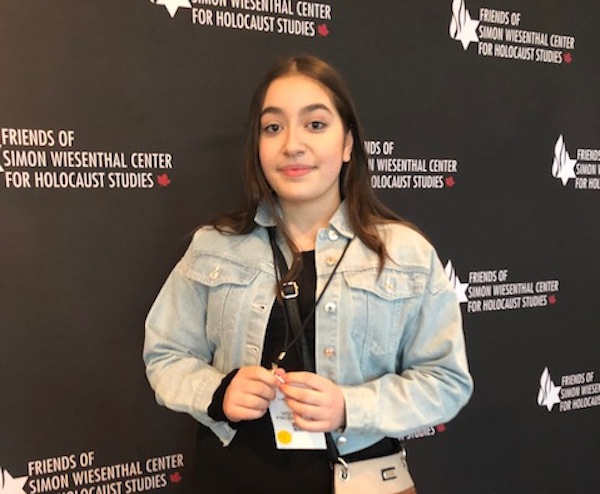
Deema Abdel Hafeez placed third in the Friends of Simon Wiesenthal Centre for Holocaust Studies’ annual speech contest. (photo from Janet Lee Elementary School)

Every year, the Friends of Simon Wiesenthal Centre for Holocaust Studies puts out a call to Ontario students in grades 6 to 8 to submit a speech reflecting on a quote of Holocaust survivor Simon Wiesenthal, z”l. This year, the quote selected was, “I believe in the good in people,” and students were encouraged to think about how to make the world a better place.

Deema Abdel Hafeez, a Grade 8 student at Janet Lee Elementary School in Hamilton, Ont., entered the contest, the first round of which was in February. Hafeez comes from a Palestinian family who moved to Canada 20 years ago.

“When I heard the quote, I didn’t want to just base it on the good in people … unicorns, rainbows,” Hafeez told the Independent. “I, more so, attacked the quote. I was like, you cannot believe in the automatic good in people, because it takes time to find the good in people.

“I wrote about my Islamophobic experiences. I was saying that you have to define the word ‘good’ to believe in the good in people. And, you have to become the good yourself before you can assume the good in other people.”

Hafeez shared that, while her school is pluralistic, with students of many different faiths, racism still very much exists.

“All the racist slurs and things like that, that’s how I attacked the quote,” said Hafeez. “I talked about how my family can’t go out without [experiencing it] … how my mom is being told to go back to her own country, or how anyone wearing religious clothing … is attacked in social standing … and how things are at a disadvantage for people like us. Obviously, it’s not as bad as it used to be, but, as a world, we need to try to change more.”

Hafeez said one of her Muslim neighbours had been badly beaten, to the point that he had almost died, just because he is a Muslim.

In the classroom, Hafeez has witnessed hate. “People mention jokes on social media and like things like that, and they talk about different colours of skin as if following a stereotype… and it’s, like, you’re funny, but you’re not … it’s just rude.”

When asked about how her parents felt about her entering the competition, Hafeez said she had entered without their knowledge. “It wasn’t because they wouldn’t have allowed me to,” she said. “But, I kind of just entered without telling anyone. At home, we talk about the Palestine-Israel conflict a lot, because we have a lot of family in Palestine. We can’t hate a whole group of people, because that’s hypocritical and we’re nice people … so, we don’t hate Israeli people. I have a lot of Israeli friends and I’m Palestinian. It’s cool, because, I feel like, with the Palestinian-Israeli conflict, there’s a way we can live in harmony, both nations living in the same land.”

Hafeez is a member of the school group Making a Difference.

“We do a lot of fundraisers and things like that,” she said. “I volunteer my time while making projects for my school and having the whole school getting involved in these projects. That’s how … I think I’ve become ‘the good,’ in my opinion. I find good as not seeing other people as objects and not labeling them and things like that … becoming the good is more mental to me. You can’t judge anyone. You can’t say, this person is good or bad. You can define yourself and, if you believe you’re doing the best you can at being good … if everyone did that in the world, then we’d live in a better place.”

Hafeez said she watches the news a lot and feels there is far too much violence that results from people judging others.

“I’m not talking about politics,” she said. “If everyone just stopped judging other people based on their religion, colour, sexual orientation … if everyone just focused on themselves, then our world wouldn’t be as hateful a place as it is right now.”

Hafeez practised her speech with her eight siblings.

“I feel like the hardest part for me was just managing my time and how I was supposed to practise my speech, and do all the things for my speech while I also have school, sports, classes … that was the hardest part,” said Hafeez. “The speech itself came easy for me. It is my own thoughts and is everything I’d thought about before. I stayed up late at night thinking these thoughts. I already knew what I wanted to say, so, on the stage, I wouldn’t be reading off a paper. I’d be talking about what I’ve been thinking about.”

The practise paid off. Hafeez was among 10 students chosen to attend a workshop and have their speeches taped as part of the semifinals on March 3 at the Friends of Simon Wiesenthal Centre in North York, a suburb of Toronto. A panel of judges then selected five students for the finals on March 28 at the Toronto Centre for the Arts. Hafeez placed third, winning an iPad.

Hafeez and her school have sent the Simon Wiesenthal Centre a grant application in the hope of organizing a peace summit, incorporating some anti-Islamophobic and anti-discrimination workshops for area schools.

Hafeez is already thinking about what types of activities she would like to undertake in high school, next year, such as starting up a group for change.

“I feel like, when I do that, I’ll be introduced to everything else I can do at my high school,” she said. “I have a lot of siblings, know a lot of teachers. I feel like it won’t be hard, to use my voice to reach people in high school.”

Meanwhile, Hafeez will find good use for her new iPad.

Rebeca Kuropatwa is a Winnipeg freelance writer.

Awards all round

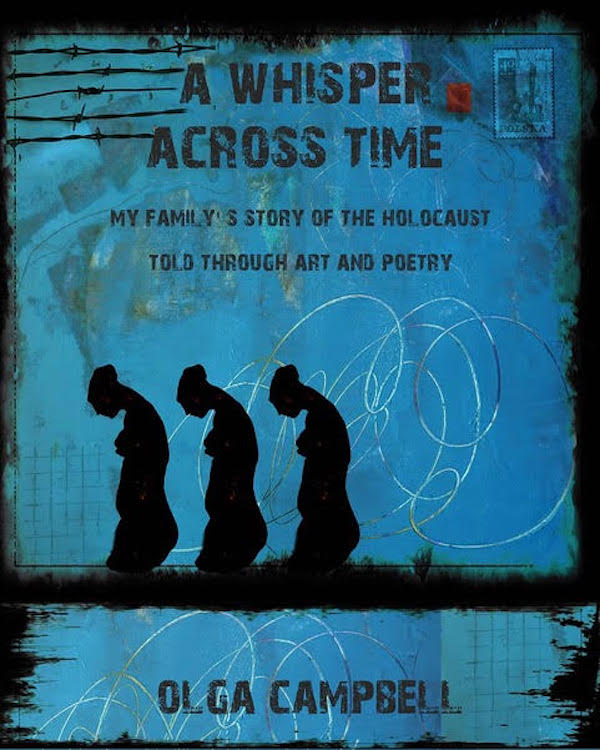
Each year, the Eric Hoffer Award presents the da Vinci Eye (named after Leonardo da Vinci) to books with superior cover artwork. Cover art is judged on both content and style and, among this year’s winners is Olga Campbell’s Whisper Across Time: My Family’s Story of the Holocaust Told Through Art and Poetry (Jujabi Press). The book is still being considered for category, press and grand prizes.

Whisper Across Time also won the Ippy Award for independent self-published authors. Campbell’s book was selected as one of the 2019 Independent Publisher Book Awards’ Outstanding Books of the Year under the freedom fighter category. Campbell planned on attending the May 28 gala event in New York.

(For a review of the book, see jewishindependent.ca/a-story-told-in-art-and-poetry.)

* * *

Julia Ivanova’s National Film Board documentary Limit is the Sky saw its Toronto première on May 2 in the retrospective of the largest documentary film festival in North America, Hot Docs. Ivanova is one of only three directors from British Columbia who have received a Focus On retrospective at Hot Docs since 2002 – the others are John Zaritsky and Nettie Wild.

photo - Julia Ivanova
Julia Ivanova (photo from NFB)

Ivanova, the director, cinematographer and editor of Limit is the Sky is a Russian-Canadian filmmaker. She came to Canada at the age of 30, became a filmmaker in Vancouver and captured Canada from within but with the ability to look at the country from a distance. She has made documentaries for the NFB, CBC, Knowledge Network, played Sundance and won many awards for her films.

The screening of Limit is the Sky, the NFB film about the Fort McMurray boom-bust-fire circle and the winner of the Colin Low Best Canadian Feature Award at DOXA 2017, commemorates the third anniversary since the worst wildfire and the worst natural disaster in Canada’s history devastated the capital of the oil sands. (See jewishindependent.ca/diverse-doxa-festival-offerings.)

The Hot Docs Focus On retrospective of her work includes the world première of her new film, My Dads, My Moms and Me, a film about the joy and turmoil of parenting in the modern family, including same-sex partners, surrogates, adoption and combinations that break the old conventions. The film follows three families, filmed twice, 12 years apart – in 2007 and in 2019.

* * *

image - When We Were Shadows book coverMore than 250,000 children participated in the Ontario Library Association’s annual Forest of Reading program and have helped choose the best Canadian authors and illustrators. On May 14 and 15, thousands gathered at the annual Festival of Trees, an annual rock concert of reading, hosted at the Harbourfront Centre, where winners of the 2019 Forest of Reading program were announced. Among the books awarded honours was When We Were Shadows by Janet Wees, published by Second Story Press. (For more on Wees and the book, visit jewishindependent.ca/saved-by-dutch-resistance.)

* * *

By Chance Alone: A Remarkable True Story of Courage and Survival at Auschwitz by Max Eisen (HarperCollins) won Canada Reads 2019. The book was championed by TV host and science broadcaster and author Ziya Tong, and was chosen by the five panelists as the book for Canadians to read in 2019. This year’s title fight asked the question: What is the one book to move you?

image - By Chance Alone: A Remarkable True Story of Courage and Survival at Auschwitz book coverAfter four days of debate in front of live audiences, Tong and By Chance Alone survived the final vote to be crowned this year’s winner. The runner-up was Homes by Abu Bakr al Rabeeah and Winnie Yeung (Freehand Books), which was defended by Simple Plan drummer Chuck Comeau. Audiences can catch up on all of the debates on demand on CBC Gem or by downloading the Canada Reads podcast from CBC or iTunes.

“Before 2016, I don’t remember seeing swastikas, but these days I see them often – in the news and on social media. But here’s something even more shocking: one in five Canadian young people have not even heard of the Holocaust. They don’t know what it is, ” said Tong.

This year’s debates took place March 25-28 and were hosted by actor, stand-up comedian and host of CBC Radio’s Laugh Out Loud, Ali Hassan.

Many reasons for optimism

Given two recent murderous attacks on American synagogues, combined with terrorist missiles from Gaza landing throughout southern and central Israel, it is easy and understandable to be pessimistic. But a new study on Jews in Canada is jam-packed with reasons for optimism.

The report 2018 Survey of Jews in Canada was released recently. Produced by the Environics Institute for Survey Research, the University of Toronto and York University, the study was funded by Federation CJA and other Jewish communal organizations. To those who have followed these subjects closely, the data are not completely surprising but, brought together in a single document, it is quite a compendium of encouragement.

Inspired by a groundbreaking 2013 Pew Research Centre study on American Jewry, the report assesses a wide range of factors, including the importance of Jewishness in the lives of respondents, how they define that identity, membership in synagogues and Jewish organizations, financial support for Jewish causes, candlelighting and other religious observances, intermarriage, experiences with discrimination, connections to Israel, dedication to repairing the world, migration patterns and even federal political party support.

image - 2018 Survey of Jews in Canada coverPerhaps because of its inspiration in the American example, the study routinely compares Canadian findings with the situation to the south. This is fair, given the useful contrasts it provides – and it is especially illuminating to see that many of the differences between the Jewish communities in the two countries paint a very positive picture of the Canadian situation.

Only half of American Jews have made a financial donation to a Jewish organization or cause, compared with 80% of Canadian Jews.

Canadian Jewish kids are twice as likely to attend a Jewish day school or yeshivah and a greater proportion of Canadian Jews have attended Sunday school, Hebrew school or an overnight Jewish summer camp. The number of Canadian Jews who are bar or bat mitzvah is higher than that of Americans – 60% versus 50%. Intermarriage rates in the United States are about 50%, compared with 23% in Canada.

Canadian Jews have a much stronger connection to Israel than American Jews, with twice the likelihood of having visited the country. Nevertheless, Canadians and Americans “are similarly divided in their opinions about the political situation in Israel,” according to the report.

Rudimentary Hebrew is common among the vast majority of Canadian Jews, with 75% saying they know the aleph-bet and 40% claiming to be able to have a conversation in the language. Among the groups with the greatest proficiency in Hebrew are those under 30 years of age. These numbers are significantly higher than those of our American cousins.

Among Jewish Canadians, 64% say that being Jewish is very important in their lives, compared with 46% of Americans, while only 8% of Canadian Jews say being Jewish is not very, or not at all, important, compared with 20% of American Jews.

An astonishing 80% of Canadian Jews (or, at least, respondents to the survey) indicate an educational attainment of a bachelor’s degree or higher, compared with 29% of the general population. Similar findings two decades ago led to a major investment by Jewish communal bodies in youth-serving agencies like Hillel, which was seen as the last, best hope for reaching unaffiliated young Jews. As these numbers suggest, while many other aspects of Jewish identity may be discarded or de-emphasized, the commitment to education is among the most effectively transmitted values from generation to generation.

Among Canadian Jews, 47% belong to a Jewish communal organization other than a synagogue, compared with 18% for Jewish Americans. (In Winnipeg, this number is 57%, which helps explain why that comparatively small Jewish community is so impressively active.)

The report does not provide definitive explanations for the differences, though different factors are suggested to play a role in various scenarios. If we were to posit an overarching theory about the differences between American and Canadian Jews, it would go back to the 20th century’s very different experiences. The Canadian Jewish community was massively influenced by postwar immigration, including survivors of the Holocaust. These newcomers remade the Canadian Jewish community, to some extent, in their own image. The American Jewish community, in comparison, was already strong and had well-developed infrastructures before the

influx of survivors and other immigrants after 1945. As the report indicates, Canada also has a different approach to multiple identities, with multiculturalism being officially celebrated, whereas the American trend is to downplay difference and assume a unified Americanism.

Of course, there is no prize for being “better” Jews than our fellows from another country – even if it does satisfy our innate Canadian need to differentiate ourselves from Americans. Nonetheless, in a world with so many challenges, where is the harm in celebrating good news?

Jewish people worldwide are in a time of challenge and change. Many European Jews are questioning their futures there, and communities in Latin America, Africa and Asia are experiencing a range of external and internal challenges, including changing relationships with Israel and with the rest of the Diaspora. Some of the factors that account for the positive news in the recent report are distinctively Canadian and cannot be replicated. But the study deserves a closer look by all Diaspora Jewish communities to see if there are successes that could be replicated elsewhere. We sometimes like to flatter ourselves by declaring “the world needs more Canada.” So might the Jewish Diaspora.

Traveling beyond classroom

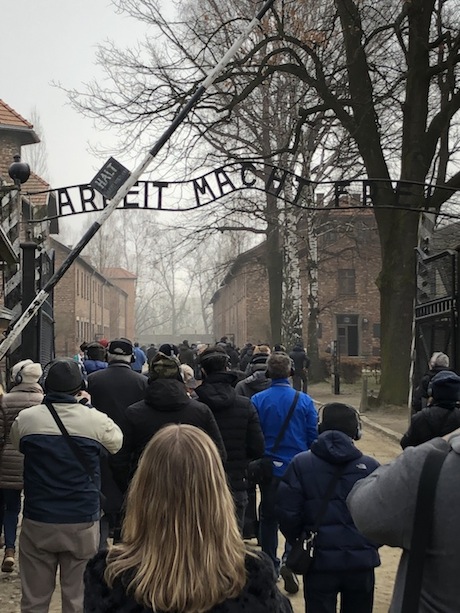
Springfield Collegiate Institute students walking into Auschwitz. (photo by Jim Osler, SCI)

Holocaust education is commonplace in Jewish schools. But, in public schools, discussion about the Shoah is at each teacher’s discretion. Some 14 months ago, teachers at Springfield Collegiate Institute public school in Oakbank, Man., decided they would take 30 Grade 11 and 12 students to see Second World War sites firsthand.

Despite that Oakbank is home to few Jewish families, the school has been inviting Holocaust survivors to speak to students and has been educating its students about the Holocaust for years. Last year, teachers Jim Osler and James Chagnon made the decision to take things further.

“While this was not on a topic brought up in a regular class, we organized activities outside of class time for these students in the evenings and on the weekends to educate them a little more,” said Chagnon of preparing the students for the 12-day trip, which started March 20.

“We visited a synagogue and talked to a rabbi about what it means to be Jewish, because we don’t have any experience with that,” Chagnon told the Independent. “We went and met two Holocaust survivors, who talked about their experiences in the camps. And we went to a conference on antisemitism hosted at the Rady JCC [in Winnipeg]. So, we did a lot of prep work outside of the school with these guys to make sure they’d be ready for what they’d be experiencing.”

Chagnon referred to a recent study that found that only about 30% of Canadian high school students had awareness or knowledge of the Holocaust.

“I had always taught English here in the school in addition to history – novels like The Diary of Anne Frank – and these seem to be getting pushed to the wayside,” said Chagnon. “The younger generations these days, especially in a community like ours that doesn’t have a big Jewish population … it’s just something I don’t think parents have a lot of experience with and, so, it’s not passed onto the kids. So, if they don’t learn about it in school or as part of our programs or clubs, they maybe aren’t going to learn about it at all.”

The school had wanted to take more than 30 students on the March trip, but had to stick to that maximum for logistical reasons. Participating students had to fundraise to pay their way.

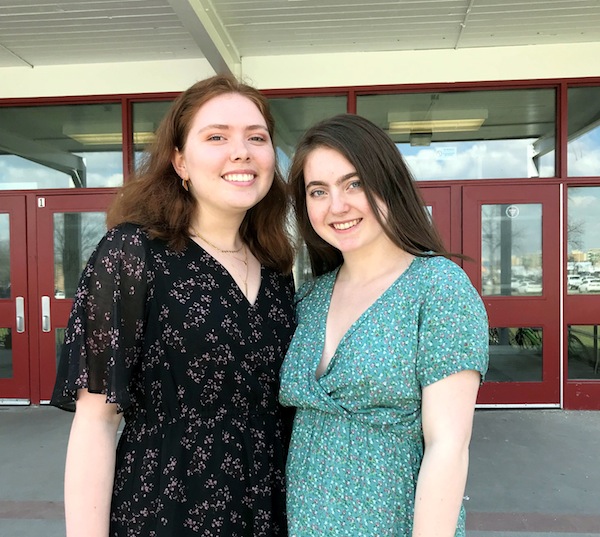
Madison Stojak, in Grade 12, and Anna Palidwor, in Grade 11, were both born and raised in rural Manitoba, and had little knowledge or interaction with Jews prior to attending Springfield Collegiate.

photo - Springfield Collegiate Institute student Ana Palidwor, left, teacher James Chagnon, centre, and student Madison Stojak
Springfield Collegiate Institute student Ana Palidwor, left, teacher James Chagnon, centre, and student Madison Stojak. (photo by Jim Osler, SCI)

“Hearing Holocaust survivors’ stories and then going to the camps, like Auschwitz and Birkenau … you could remember what the survivors said and picture it, what they must have gone through while they were there,” Palidwor told the Independent. “How we felt while we were there has stuck with everybody after we came back. Also, we’re more aware of the race issues that are out there… That’s definitely stuck with me … realizing it’s still here, wherever we go, the hate.”

While the school group was at the Warsaw Ghetto, a man on a motorbike drove by and gave the middle finger to a group of Israeli students who were standing beside them. “After all that, you’re just more aware of it, anywhere you go,” said Palidwor.

Both Stojak and Palidwor have talked about their experiences with family and friends.

“When I shared it with my family members, it was kind of surreal to them,” said Stojak. “They were like, ‘How could other people treat people like this? How could this happen? How come no one stopped it?’ They were questioning the same things I think all of us were questioning on the trip.”

“One of the strong points we really tried to push on the students, in terms of their learning, to understand, is that this isn’t the first time this has happened,” Chagnon said. “We definitely want it to be the last time, so we can’t just sit by and be passive bystanders anymore. When you see antisemitism, you are now obligated to call it out, draw attention to it, so we can change the way the world works.”

When the students returned from the trip, they were taken aback by some of the reaction they heard from fellow students who did not go.

Stojak said, “I hadn’t heard any comments before the trip like these – until they realized we were there … people started making rude comments … hateful comments. I think they were saying it to get us upset, and I also think that they’re really undereducated and don’t understand how serious it is.

“One comment someone said to me was, ‘Don’t touch me with your Holocaust hands!’ That’s what someone said to me. And, as soon as he said that, I said, ‘What did you just say?’ And he repeated it. I looked at him and said, ‘You didn’t just say that to me. That’s ridiculous. Do you know how many millions of people died there? That’s not something you should be saying.’

“I stood up immediately and shut it down,” said Stojak. “It made me feel sick to my stomach. How could someone make a comment like this? When he said that, I pictured standing there at Auschwitz or Birkenau and thinking, how could someone be so ignorant to say that?”

“These kinds of comments are making us want to be more active,” said Palidwor, “and to explain it to more people who weren’t there and tell them what the Holocaust is.”

photo - The 30 Springfield Collegiate Institute students, three parent chaperones and two teachers in the old town square in Krakow, Poland
The 30 Springfield Collegiate Institute students, three parent chaperones and two teachers in the old town square in Krakow, Poland. (photo from SCI Students)

One of the things that stuck in Chagnon’s mind from the trip was the incident with the Israeli students. He noticed that there were a dozen security personnel with the Israeli student group but none with the Canadian school group.

“One of my students said, ‘Wow, I didn’t understand how bad it was – that these kids on a school trip from Israel have to be accompanied by security guards,’” said Chagnon. “That kind of struck me and I made sure to point it out to my students. It gives you a bit of perspective for the Jewish community – how scared they must be all the time – that they can’t send students to learn about the history of their people, their culture and religion, without having to send security with them.”

Another thing that stood out for Chagnon occurred when the group was visiting a Jewish cemetery and noticed that locals use the cemetery as a bathroom stop for their dogs.

“I’m a guest in their country, but I was shaking, I was so angry,” he said. “I couldn’t believe people would show such indignity to a group of people who suffered so much already.

photo - The memorial at Mila 18 Ghetto Uprising site in Warsaw, Poland
The memorial at Mila 18 Ghetto Uprising site in Warsaw, Poland. (photo by Jim Osler, SCI)

“We had a nightly debrief at the end of every evening,” he continued, “where we sat around and talked about the day, how we felt about it and our reactions to it, and that’s one thing I brought up … that some of this stuff may seem to have gone away … maybe it isn’t as bad as it was, but that doesn’t mean it’s not there, just bubbling under the surface, waiting for an opportunity to pop up.

“For me, that’s the reason we did a trip like this, and I know Jim [Osler] feels the same way.… They say people who don’t study history are doomed to repeat it and, for me, that’s very true. You have to talk about these things, even the ugly things in history, so we don’t let it happen again.”

Rebeca Kuropatwa is a Winnipeg freelance writer.

Trying to make access equal

Dr. Cheryl Rockman-Greenberg (photo from Rockman-Greenberg)

In the 1970s, when Dr. Cheryl Rockman-Greenberg was eyeing the budding field of genetics as a career, she had to become a pediatric doctor first. Now, Rockman-Greenberg counts her clinical background as a blessing, one that, today, geneticists no longer require.

“Having a strong background in clinical medicine certainly always helped me in my career, because the kind of genetics I was always interested in was in rare metabolic diseases,” said Rockman-Greenberg. “These are diseases often caused by enzyme deficiencies that go by very elaborate names. Having a good foundation in clinical medicine through pediatrics certainly helped me.”

Rockman-Greenberg, who lives in Winnipeg, was invited to speak at the city’s Congregation Shaarey Zedek Sisterhood Interfaith Luncheon on April 30.

“I learned that the luncheon was spearheaded through the sisterhood in many ways to promote information sharing between the faiths,” she said, noting that a purpose of the event is education and “to look at how we can build bridges between people of different faiths and not build walls.”

“From a global perspective,” she said, “I think it fits the themes of the interfaith luncheon. And, from a Jewish perspective, I’ve certainly been involved over the years, particularly with the National Council of Jewish Women, of increasing awareness of the importance of genes for health, and bringing together some of the advocacy groups in rare genetic disorders.

“I helped the National Council put out a brochure on carrier testing on new genetic disorders in the Ashkenazi Jewish population that has been extremely well-received worldwide. This information is always evolving.”

At the luncheon, Rockman-Greenberg was planning to discuss, among other things, Bill S-201, also known as the Genetic Non-Discrimination Act, which passed into law in Canada in 2017, though it is still being challenged by insurance companies in Quebec.

“This is a remarkable act in the sense that it does protect Canadians from the use of genetic test results outside of medical care and medical research,” Rockman-Greenberg told the Independent. “In other words, genetic test results do not have to be disclosed to insurance companies or employers. We’re one of many countries who have such legislation in place, and many people here have worked for years and years lobbying for similar legislation for Canada.”

Methods of genetic testing continue to advance, said Rockman-Greenberg. Tests that were nonexistent or very complicated to administer as recently as two decades ago can now be done quickly and inexpensively.

“The evolution has dramatically changed over the past 10 years, particularly in the sense that the techniques we use to diagnose genetic disease have dramatically changed – from studying one gene at a time, to being able to sequence the entire genome of an individual,” she explained.

When Rockman-Greenberg refers to “new genetics,” she is referring to the ability to offer state-of-the-art, revolutionary genetic testing that was not possible just 10 years ago. It is this access that Rockman-Greenberg is lobbying for now.

“Everybody doesn’t have the same access to the testing in Canada,” she said. “It’s certainly not uniform from province to province or within provinces. So, many people are very committed to ensuring there are strategies in place to promote fairness.

“Notwithstanding that, the legislation is going to protect people against disclosing information that is already in place. I think we are ahead of the game because we have this in place. But, we are not ahead of the game in making sure people are going to have access to new diagnostic testing and new therapeutics in a way that’s going to be equal across the board.”

Rockman-Greenberg’s focus on rare metabolic diseases means that she has witnessed firsthand the struggles to get specialty drugs approved through a system focused on the big diseases, such as diabetes and cancer.

“You may get a new drug for diabetes that will be approved and available for patients very quickly, whereas some of the new drugs for other diseases I treat can take years and years before they go through the approval process,” she said.

Rockman-Greenberg thought that the topic was an appropriate one for an interfaith gathering, “as everybody having the same chance to be successful is very important to me. I work with families and patient support groups to help remove barriers and help people feel empowered.”

She said, “There are many challenges in dealing with rare diseases and I try to work both sides: the patient side, as well as advocate for changes at the government level, to make sure there is fairness in access to new therapies.”

Rebeca Kuropatwa is a Winnipeg freelance writer.

CIJA fights online hate

“We were saddened, horrified and deeply angered by the murderous terrorist attack in Christchurch, which was clearly motivated by hatred of Muslims that was at least in part fomented online,” Martin Sampson of the Centre for Israel and Jewish Affairs (CIJA) told the Independent. “This is another disturbing example of how terrorists and mass murderers make use of social media – both before and after attacks – to spread their heinous message.”

On Friday, March 15, 50 Muslims were murdered by a white nationalist terrorist at two mosques in Christchurch, New Zealand. On Oct. 27, 2018, 11 Jews were murdered at Tree of Life Synagogue in Pittsburgh, Penn. Both perpetrators had been active in spreading hatred online. In the case of Tree of Life Synagogue, the shooter had written a post announcing his intentions hours before the attack.

“This issue has been of interest to us for some time,” said Sampson. “We included it as a core federal priority in our Federal Issues Guide, which was released in September of 2018. The horrific shooting at the Tree of Life Synagogue in late October, and the fact that the assailant had been highly active in promoting antisemitism on social media – it is reported that he posted more than 700 antisemitic messages online in the nine months or so prior to the attack – underscored the urgency of the issue and the need to increase awareness about the connection between online hate and offline violence. This is why we launched notonmyfeed.ca.”

The goal of CIJA’s #notonmyfeed campaign is to reduce the spread of online hate speech. “In any democratic society that values freedom and individual rights, no right is absolute,” said Sampson. “Striking a reasonable balance between preserving free speech and protecting Canadians from those who systematically demonize and slander entire communities is a challenging, complex task, but not an impossible one.”

CIJA is calling for a comprehensive response that addresses hate in a variety of forms, not just antisemitism, he said. “We can preserve free speech while protecting Canadians from those who deliberately promote hostility – and even glorify violence – against entire communities.”

Sampson said there is a direct link between online hate speech and violence. “In countless cases – such as in the case of individuals who have been radicalized to participate in terrorism or hate crimes – online propaganda has been a significant factor,” he said. “This is a complex issue. Understanding it and developing tools to counter it is why we are calling on the government of Canada to take the lead by launching a national strategy to tackle online hate, working in partnership with social media platforms and internet service providers.”

Some people contend that, if online hate speech foreshadows offline violence, there may be some value in monitoring it, rather than forcing it underground. As well, if kicked off one social platform, those inciting hatred can just move to another one.

“In cases of ignorance, inappropriate statements or offhand comments that are bigoted, counter-speech is clearly the best response, and these types of online behaviours are not the focus of our calls for a national strategy to tackle online hate. In cases of propaganda being systematically produced by extremists – particularly when it includes the glorification of violence – allowing it to continue can in some cases pose significant risks to public safety,” said Sampson about these concerns. “Moreover, allowing such behaviour to take place on social media platforms often violates the basic terms and conditions of those sites. Social media platforms should enforce their own existing policies.”

The movement to boycott, divest from and sanction Israel over its treatment of Palestinians is controversial, with some seeing it as a legitimate tactic opposing human rights abuses and others seeing it as a form of discrimination rooted in antisemitism. “It is neither the focus of our policy position on online hate, nor can I perceive any scenario in which BDS would be implicated or affected by a national strategy to tackle online hate,” said Sampson, when asked whether BDS was one of the intended targets of CIJA’s campaign. “To be clear – we strongly oppose BDS and work to expose and counter the real agenda of the BDS movement, but that is a very separate challenge and completely distinct from our call for a national strategy to combat online hate.”

Asked if CIJA has any plans for addressing hate speech in the Jewish community itself, Sampson said, “Our position on online hate is that a national strategy should address hate in a variety of forms, not just antisemitism. This is why we have mobilized a coalition of communities, including the Muslim community, to join us in this effort. We believe every online account should be held to the same standard, regardless of the identity of the person who runs the account. When it comes to the Jewish community, we strive to set an example in how we manage our social media accounts, allowing debate and diverse opinions in the comments section of our posts, while having a zero tolerance policy toward bigotry and hateful comments.”

Matthew Gindin is a freelance journalist, writer and lecturer. He is Pacific correspondent for the CJN, writes regularly for the Forward, Tricycle and the Wisdom Daily, and has been published in Sojourners, Religion Dispatches and elsewhere. He can be found on Medium and Twitter.

Don’t dismiss findings

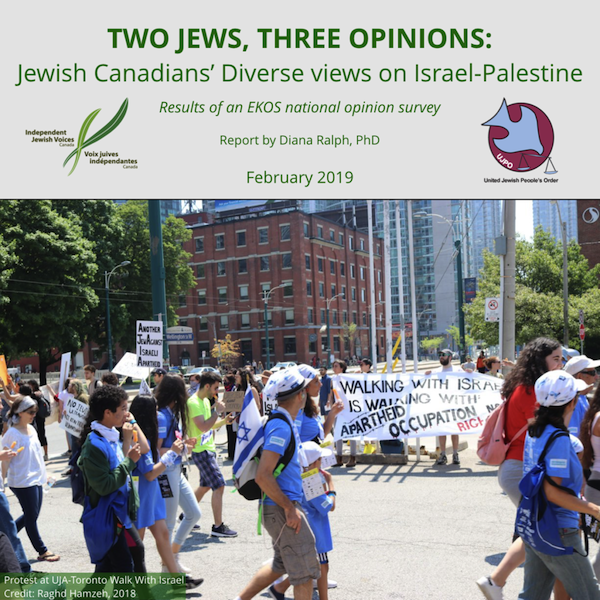
A survey of Jewish Canadians indicates that we are not a Zionist monolith. This will be news to no one who has enjoyed a family seder or logged onto social media in recent years. However, it is useful to have a fairly comprehensive public opinion survey on the range of issues that tend to most divide us.

For some, the organizations that co-sponsored the survey will lead to outright dismissal. Undertaken by the polling firm EKOS on behalf of Independent Jewish Voices Canada (IJV) and  (UJPO), the goal of the exercise was no doubt to show considerable support for the positions espoused by these two groups that are routinely critical of Israeli policies.

By and large, though, the methodologies of the survey appear to have been relatively unbiased, and to ignore the findings is to bury our heads in sand.

Almost half (48%) of Jewish Canadians surveyed believe that “accusations of antisemitism are often used to silence legitimate criticism of Israeli government policies.” More than one-third (37%) have a negative opinion of the Israeli government. On the matter of the United States moving its embassy to Jerusalem, 45% oppose and 42% support the move. Nearly one-third (30%) think that a boycott of Israel is reasonable and 34% also oppose Parliament condemning those who endorse such a boycott. Almost one in three (31%) oppose the military blockade of the Gaza Strip.

The sponsors of the survey see the results as evidence that Jews whose positions are often dismissed as marginal actually represent a large swath of Canadian Jewish opinion.

We quibble with aspects. One question asks: “In 2004, the International Court of Justice ruled unanimously that the wall built by the Israeli government on Palestinian territory violates international law. In response, one year later, over 170 Palestinian citizens’ organizations called for a boycott to pressure Israel to abide by international law. Do you consider the Palestinians’ call for such a boycott to be reasonable?” It may be a bit much to ask someone answering a phone at dinnertime to disagree with something called the International Court of Justice and 170 Palestinian organizations. Overall, though, most of the questions were not misleading nor did they have preambles intended to lead the respondents, as did this one. The survey does, nonetheless, reflect a prevailing narrative that Israel has no legitimate security concerns and erects barriers along the West Bank and blockades Gaza just for fun. But that is the playing field we are on.

Whatever criticisms or doubts we might have about the survey should not distract us from the reality it means to deliver. There are serious divisions between Diaspora Jews and the approach of the government of Israel. Ignoring, papering over or stigmatizing these differences of opinion will harm both Jewish cohesion in the Diaspora and crucial support for Israel. As we have said in this space many times over the years, Israel’s leaders must make decisions based on its security needs, not on what makes it easier for Diaspora Jews to be proud Zionists. However, we do Israel and our own community a disservice by isolating and denouncing those who disagree with the positions of our main communal agencies.

An election is approaching in Israel and that could lead to more of the same or to a significant shift in policy – or to some sort of hybrid between the two. Things change quickly, particularly in that part of the world, and what is true in a survey today may not be true in a year or five.

Even if Israeli policies remain largely the same after April’s election, it is probably not a sustainable position for Canadian or other Diaspora Jewish communities to pretend that a (seemingly) growing chorus of dissent is nonexistent, insignificant, misguided or ill-willed. That is a recipe for irrelevance, particularly among younger Jews.

In fairness, the idea that the Jewish “establishment” is a monolith is an unjust characterization. A diversity of opinions exists in our communal organizations and, certainly, in the plethora of traditional media (like this one) and new media (blogs, online publications and social platforms), a million flowers bloom. So, we challenge the premise that our community enforces a strict ideological membership code. But, we definitely could be better at acknowledging the full range of diversity – even if that means arguing and contesting positions, or even shifting our communal narrative. Indeed, that is entirely in keeping with our community’s tradition.

The survey raises questions we rightfully should be addressing.

Sports talent runs in family

Sarah Jacobsohn is the Ultimate Canada 2018 Junior Female Athlete of the Year. (photo from Sarah Jacobsohn)

Last month, Ultimate Canada named Sarah Jacobsohn the 2018 Junior Female Athlete of the Year.

“I was in the middle of biology class, looked at my phone, and saw that one of my teammates had texted me saying congratulations and a long paragraph,” recalled Jacobsohn about hearing of the award. “And I was like, what’s going on? I had no idea.

“Then, I saw the article that was written about me and I got the notification that they had selected me for the award … and I started crying in the middle of class and I called my mom. It was so surreal and just amazing.”

Jacobsohn was born in St. Louis, Mo., in 2000, and moved with her parents and older sister to Winnipeg in 2006. She has been attending Gray Academy of Jewish Education since then, and will be graduating this year.

Athleticism runs in the family. Both of Jacobsohn’s parents played sports into adulthood. She also gets her height from her parents: her mom is 5’11” and her dad is just over six feet.

photo - Sarah Jacobsohn is the Ultimate Canada 2018 Junior Female Athlete of the Year
Sarah Jacobsohn is the Ultimate Canada 2018 Junior Female Athlete of the Year. (photo from Sarah Jacobsohn)

Jacobsohn has played sports for as long as she can remember. “I played Timbits soccer since I was in Grade 1, then I continued playing competitive tennis and soccer. Once I found ultimate, I quit all those other sports to play ultimate,” she told the Independent. “For my high school, I still play volleyball, basketball and ultimate but, on a competitive level, I gave the others up for ultimate.” (That said, she remains a competitive player at the other sports. For example, on the school’s varsity basketball team, she has been averaging 37 points per game.)

Ultimate was designed to be played without referees. “The spirit of the game is heavily emphasized, which is something you don’t find a lot in competitive sports in this day and age,” said Jacobsohn. “Essentially, it’s about maintaining a level of sportsmanship and integrity while playing the sport. You have to make the calls yourself and communicate with other players on the other team. And, it’s always maintained, that sportsmanship and respect for other players. Even at the highest level, ultimate is still heavily dependent on player communication, which I think is amazing.”

At the higher levels, there are “observers,” who help the players regulate the game, but they only intervene when asked by the players to do so. And, even after having been asked for their opinion, it is still up to the players to accept or disregard an observer’s call.

“I think that’s what a lot of sports have lost in the past few decades,” said Jacobsohn. “That competitive atmosphere takes away from the sportsmanship, and it shouldn’t. There should be a balance.”

In ultimate, she said, “people understand that, to keep that respect of the game, they have to be honest. It’s really amazing to see that, even at the highest level.”

Jacobsohn started playing ultimate in Grade 6 and, at 14 years old, her coach convinced her to try out for the provincial junior team. She made the team, as one of the youngest in the group. It was there that a national coach spotted her and, at age 15, she traveled to Vancouver for the national tryouts and made the team.

Jacobsohn participated in her first world championship in Poland in 2016, and Canada took home the gold. Last summer, Jacobsohn, as captain, led the provincial team to a gold medal. She went on to captain Team Canada to a bronze medal at the world championship in Waterloo, Ont.

All of these feats, as well as her extensive involvement in the ultimate and broader communities, contributed to Jacobsohn being chosen for the athlete-of-the-year award.

“The award is strictly based on achievements from the past year,” said Jacobsohn. “So, last year, I was captain of my provincial team and we won gold at nationals for the first time ever. Then, as captain of Team Canada, we won bronze at the worlds. And, I’ve done a lot of community stuff locally.

“I’ve been involved in the Winnipeg ultimate community for six or seven years, which is a lot, when I’m only 18 years old. I’ve gotten to know essentially the entire ultimate community. I’ve literally grown up in this community – finding a lot of leadership opportunities in it and chances to voice my opinion. I fight a lot for gender equity and voice that opinion a lot in the Winnipeg ultimate community.”

Jacobsohn serves on the Manitoba Disk Sports board, offering suggestions, as a high school student, about tournament arrangements and how the province runs the sport. She also has been very involved in the Winnipeg Ultimate Women’s Competitive League, helping to get a lot of juniors involved.

“As a very competitive female athlete, I understand my responsibility growing up as a female athlete in today’s world,” she said. “I have an immense responsibility to stand up and role model for other female athletes, and I’m not scared to do that.

“And, going to school where I’m one of six girls in my grade, I’ve been able to gain respect from a lot of boys and change perspectives on what being a female athlete means.”

Now, Jacobsohn is busy training for the under-24 national team tryouts. And, while her main aspiration is to become a doctor, like her dad, she is hoping to continue playing ultimate competitively for many years to come.

Rebeca Kuropatwa is a Winnipeg freelance writer.

NDPer sponsors anti-JNF bid

Ayalon Canada Park in the Ayalon Valley is one of the projects JNF supports. (photo by Guy Asiag, KKL-JNF photo archive)

A member of Parliament has agreed to sponsor an e-petition that calls on the government to revoke the charitable status of the Jewish National Fund of Canada (JNF).

This is the first time an MP has lent support to an effort to rescind JNF’s tax-exempt charitable status in Canada and marks the latest development in a long-running battle by those opposed to the JNF’s charitable status.

Quebec NDP MP and national revenue critic Pierre-Luc Dusseault has agreed to sponsor petition E-1999, which, as of this writing [Jan. 21], had garnered more than 1,400 signatures. It went online on Jan. 9 and will close for signatures on May 9.

E-petitions are an official system whereby petitions that are sponsored by an MP and receive 500 signatures will be tabled in the House of Commons. The government must then respond within 45 days.

It was submitted by Independent Jewish Voices of Canada (IJV), which is considered an outlier within the Jewish community, due to its support for the boycott, divestment and sanctions movement against Israel.

On its website, IJV calls itself “a grassroots organization grounded in Jewish tradition that opposes all forms of racism and advocates for justice and peace for all in Israel-Palestine.”

The JNF was recently the subject of a scathing story by the CBC, which reported that the charity was under a Canada Revenue Agency audit for using charitable donations to build infrastructure for the Israel Defence Forces, “in violation of Canada’s tax rules.”

The JNF responded by saying that it stopped funding projects on Israeli military bases in 2016 and that the projects only “indirectly” involved the IDF, because they were for children and youth on land owned by the IDF.

In a subsequent interview with the CJN, JNF Canada’s chief executive officer, Lance Davis, said the charity is working with the CRA on its review and issued staunch defences of JNF’s financial transparency and donor accountability.

The e-petition, which is addressed to the minister of national revenue, says JNF Canada “engages in discriminatory practices, as its landholdings are chartered for exclusively Jewish ownership, lease and benefit, as noted by the United Nations, the U.S. State Department, a former attorney general of Israel and the JNF itself.”

It says evidence “strongly indicates” that JNF Canada violates the Income Tax Act, common law and Canada Revenue Agency policy over its IDF-related projects.

As well, it claims the charity violates Canadian and international law “by enabling physical changes within occupied territory, thereby helping Israel effectively annex land within occupied territory, and, in the case of east Jerusalem, deepen control over land already annexed illegally.”

“Notably,” it adds, “the JNF Canada-funded Canada Park was built on the lands of three Palestinian villages destroyed following the 1967 war in direct violation of the Fourth Geneva Convention.”

It also accuses JNF Canada materials of depicting “occupied territory as part of Israel, a representation that runs contrary to Canadian foreign policy and international law.”

It calls on the minister of national revenue to revoke JNF’s charitable status, if the charity is found to violate the Income Tax Act, or CRA guidelines and policies.

It was initiated by Rabbi David Mivasair, a longtime IJV activist now based in Hamilton, Ont. He called the e-petition “part of an ongoing process” to hold public officials accountable.

“It’s incontrovertibly factual that JNF Canada is in violation of Canada’s tax laws,” Mivasair claimed. “It has been for decades. It’s been reported for decades.”

This latest campaign “is not something that I take any pleasure in doing, but feel is morally necessary to be done,” he added.

According to guidelines for MPs, no debate is permitted when a member presents a petition. An MP “may make a brief factual statement (referring to the petition being duly certified, to its source, to the subject matter of the petition and its request, and to the number of signatures it carries), but members are not allowed to read petitions nor are they to indicate their agreement or disagreement with them.”

In 2017, IJV submitted an 85-page complaint about JNF Canada to the CRA and the national revenue minister. That followed many other campaigns designed to pressure federal officials.

This is the first time IJV has submitted a parliamentary petition and it’s “just one way of drawing public attention to this,” said the group’s national coordinator, Corey Balsam. “We’re assuming [officials] will look into it and not much more than that. [But] it’s definitely a big step for our campaign.”

He said Dusseault is “not someone who’s very engaged [in the issue], but he heard the concerns and saw the evidence.”

Dusseault did not reply to the CJN’s requests for comment.

In a statement posted to its website, JNF called the e-petition “as empty and scurrilous as earlier efforts to delegitimize the outstanding work of the JNF and, by extension, the existence of the state of Israel.”

JNF said its outreach suggests “that those who are applying any degree of critical thinking see the petition for what it is and are dismissing it as not worthy of engagement.”

For Jewish National Fund of Canada’s response to the Jan. 11 Jewish Independent editorial, click here.