Torah, grain … a lady

As a famous Jewish comedian used to kvetch, “I don’t get no respect.” I feel we treat Shavuos similarly. In Temple days, how would you compare the Holy of Holies to a Jerusalem tavern down the street? Silly question, yes? Then why does Shavuos get such minor league attraction?

We got the Torah! The cradle of Western civilization! So, some of us go to shul (compare it to Yom Kippur attendance) and we study, or nap, through the night over an open Chumash. We eat dairy and read the Book of Ruth. No bugles blare and no rabbis make two-hour presentations.

Even books designed to explain Judaism’s beauty give it short shrift: 10 pages to the Jacob/Esau rivalry, a page and a half to this modest holiday. I’m only a scribbler, not a sage, but I don’t get it. Then, there’s the fact that our reception of the Torah is combined with a harvest celebration. What’s the connection? The relationship between barley and Torah seems odd. Maybe one is food for the body, the other for the soul. Are we trying to economize on holidays? Two for the price of one?

And why do we read the Book of Ruth, which is a tract featuring intermarriage – a practice loudly condemned by dozens of statements in the Torah? It seems to be written by someone who favored fraternization with our deadly enemies, the Moabites. Remember that the path to the Promised Land goes through Moab. We fought our way through it. How did this book get chosen? Did they take a vote on Purim after a day of gorging on the grape?

The Book of Ruth is a book in which everyone is gentle, even the Moabites. Everyone is supportive of their fellow characters. If it were a play, this story would run for years on Broadway.

Ruth, a Moabite, is loyal to her mother-in-law, Naomi. Her first husband, Naomi’s son, has died. Naomi – remember, a Jew – strategizes with Ruth to win the heart of Boaz, also a Jew. A famine stalks the land. Perhaps the agricultural setting explains the use of the holiday as a harvest celebration, but not its connection with the Torah. I consider this every time I think of Shavuos, one of the three special occasions, along with Sukkot and Pesach, when all Israel flocked to the Temple. With the destruction of the Temple, I think we lost the grandeur of Shavuos.

They shouldn’t have named it Shavuos, Hebrew for weeks. Indeed, seven weeks after Pesach comes Shavuos. Like in a Jewish wedding ceremony – seven times the bride (Israel) circles her groom (the Creator), thereby remembering and reenacting our covenant. We rest on the seventh day and, for seven years, the land must lie fallow. Even today, that ancient poetic number still glows with luck – from the sublime to the ridiculous, the seven wins initially for the dice shooter and excites the roar of the winners.

I can see it now. It’s 1000 BCE and the annual meeting of the Israelite holiday commemoration committee. “We need a special day to honor and commemorate that fateful day when God gave us the Torah,” said the chairman. A chorus of agreement rocked the room. Done. Then that guy in the back of every room (yes, he was around even then) shouted, “Yeah, but what about the grain harvest?” Puzzled, the committee men looked at each other in bewilderment. The grain harvest?

The chairman spoke: “Look, we got enough holidays now – nobody’s working. Let’s save a holiday and throw it in with Shavuos. [And they hadn’t even made Tu b’Shevat yet!] After all, the grain harvest lasts seven weeks, and the Holy One gave us Torah seven weeks after we paraded out of Egypt. We’ll make Shavuos celebrate both events, thereby economizing on holidays. Done.”

Shavuos, for all its importance, doesn’t get its due. No big feasting, no dramatic breast-beating, no triumphant chauvinism; only the satisfaction that more than three millennia ago in the darkest of the dark ages we were chosen to receive from the Hand of God a solemn covenant that we would be a light of civilization to the nations of the world.

No matter how many weeks after Pesach it falls, let’s face it: “Weeks” doesn’t do it justice. They should have called it Yom Torah or something like that. If I were a member of the holiday naming committee, I’d have called it Independence Day.

Ted Roberts is a freelance writer and humorist living in Huntsville, Ala.

It’s every day that counts

The author and her mother at Matanuska Glacier on a previous Mother’s Day adventure. (photo from Masada Siegel)

At a party a few years back, a high school friend approached my husband and cheekily said, “You do realize your wife Masada is going to turn into her Jewish mother. Are you prepared for that?”

My husband, a serious look on his face, responded, “ I should be so lucky.”

My friend’s grin turned to shock and I laughed, knowing why his greatest wish is for me to turn into my Jewish mother.

My mom is organized, thoughtful, kind and a fabulous cook who makes everything from scratch. She is the perfect hostess, makes people feel at ease, a great listener, advisor, diplomat and one of the most well-read people I have ever met.

My brother-in-law Gabe agrees. He always jokes that he married my sister, Audrey, because our mom was already taken – my sister was the next best option.

The truth is moms never get enough credit for the backbreaking work they do to make their families lives better. Mother’s Day is an opportunity to recognize the commandment to honor your mother and father. It’s special to focus on the woman who gave us life, and Jewish mothers, like mothers all over the world, are obsessed with making sure everyone else is happy. Often that means they never take time to look after themselves.

My mom, a former sergeant in the Israeli army, happens to be the queen of doing for others, and not so good at relaxing and taking care of herself. So, to celebrate her, I took her to the Omni Scottsdale Resort at Montelucia for a spa day.

At first, she protested the concept of an 80-minute massage. She’s not great at sitting still, always feeling the need to be productive. We both shook our heads: Mom at how she could have a daughter who writes about life and leisure, and me on how I could have a mom who is such a giver and less good at receiving.

Entering the Omni’s Joya Spa is like taking a trip to Morocco, between the low-light entrance and a room filled with plush red couches and endless pillows to the pool overlooking the spectacular Camelback Mountain. After wandering into a most comfortable, quiet room filled with canopy beds, we headed off to enjoy our Joyambrosia massages.

After, we indulged in a poolside lunch and I asked my mom what other Mother’s Day experiences she would enjoy. She laughed, “It’s about being appreciated daily, and family making an effort all year long to be close and loving. Sharing time together and making wonderful memories are what matter most in this world.”

I began to think of new ideas for celebrating people who I love. All it takes thoughtfulness and creativity, as simple as printing and framing a photo or making a tasty breakfast.

Another idea is to take your mom away from the everyday; go away for a weekend or take a day trip. A few years ago, I took my mom through the wilds of Alaska. We took trains, planes and automobiles, hiked glaciers, experienced fabulous food and drank in the beauty of a new place and time spent together.

Whatever you decide to do for that special person, be it your mom, a family member or friend, the most important gift you can give is your time. That said, you can never go wrong with a luxurious massage! Happy Mother’s Day!

Masada Siegel is an award-winning journalist and photographer. Follow her @masadasiegel and visit her website, masadasiegel.com.

A rockin’ Yom Ha’atzmaut

Israeli musician Micha Biton headlined the community’s Yom Ha’atzmaut celebration. (photo by Rhonda Dent)

It was just shy of a sellout crowd on April 22 at the Chan Centre for the Performing Arts, as Israeli rock pioneer Micha Biton headlined the community’s main celebration of Yom Ha’atzmaut.

photo - Richmond Jewish Day School Choir
Richmond Jewish Day School Choir (photo by Rhonda Dent)

As it does every year, the evening began with the conclusion of Yom Hazikaron, led by Geoffrey Druker. In the singing of the national anthems, Vancouver Talmud Torah Choir was joined by Partnership2gether twin school Alei Givah Choir in Kfar Giladi (by video) for O Canada, while Richmond Jewish Day School Choir and Partnership2gether twin school Hameginim Choir in Kiryat Shmona (by video) sang Hatikvah.

Diane Switzer, board chair, Jewish Federation of Greater Vancouver, which led the celebration supported by some 50 community partner organizations and countless sponsors and volunteers, spoke briefly. She provided an overview of how the funds raised here for our partnership region in Israel – Eztabah Hagalil (the Galilee Panhandle) – are spent.

“Our Gesher Chai (Living Bridge) program aims to deepen connections with Israel on a person-to-person basis,” she said. “It builds lasting ties between our two communities, and is a cornerstone of Jewish Federation’s work.

photo - JCC Or Chadash dancers
JCC Or Chadash dancers (photo by Rhonda Dent)

“Through Gesher Chai, we help local day school students build enduring relationships with their peers at their sister schools in Israel. We fund exchanges between local educators and their Israeli counterparts so they can develop a shared curriculum. And we help connect the JCC Or Chadash dancers you’ll see tonight with the Hora Goel dancers from our partnership region. The impact of these programs, which promote Jewish identity and unity for elementary and high school students, can be felt around the world and here at home.

“Etzbah Hagalil is geographically, economically and politically removed from the centre of Israel,” she continued. “It is surrounded on three sides by Syria and Lebanon, and often bears the brunt of attacks when tensions flare. High unemployment and limited opportunities for education and advancement are ongoing concerns, and the area is home to many at-risk youth. Jewish Federation’s strategic investment in this region is aimed at breaking the cycle of poverty, improving living standards and developing the region’s long-term economic prospects.”

Warming up the crowd before Biton’s performance was the Or Chadash dancers. The evening also included greetings by video from Premier Christy Clark, as well as from mayors Benny Ben Muvchar (Mevo’ot Hermon), Giora Saltz (Galil Elyon), Rabbi Nisim Malka (Kiryat Shmona), Ilan Or (Yesod Hama’ala) and Herzel Boker (Metula).

For more photos from the event, click here.

Create your own clay camel

How fast time flies. Passover is almost here again, and it’s time to prepare a new tutorial, I said to my 7-year-old daughter while getting out a magic box with colorful modeling clay.

At school, we are reading a lot about Passover right now, she said to me. When the Jewish people crossed the dessert, they had camels with them, who carried people and their belongings. Mom, can you teach me how to model a baby camel? Please, mom, can you?

Of course I can, my dear. Come over here, I said, inviting my daughter to join me at the table to work on the model of a baby camel. For the young readers of Jewish Independent, as always, I have prepared pictures to demonstrate the process. Find yourself a comfortable seat and start working on your creation!

image - Clay camel by Lana Lagoonca, steps 1-51. Take a few pieces of modeling clay and a toothpick. Mostly we will work with orange color, but we will also use some brown, white and black pieces.

2. Prepare equal amounts of clay to form the baby camel’s head, neck, body with two humps and four legs.

3-4. Bend the legs a little in the middle and finish them with brown cushion-like hooves, perhaps parted in the middle front. Connect the neck, body and hooves.

5. For the head, you can use white and black pieces of clay for the eyes. Or blue or green clay, if you have it. Take some brown clay and shape the nose and also give your camel a tuft of hair on top of its head.

6. Cover the tips of the humps and tail with tufts of hair as well. We have made our baby camel! You can now take your new little friend for a walk.

image - Clay camel by Lana Lagoonca - taking it for a walkIsn’t it great to make toys with your own hands? You will also make your family happy by adding your creation to the Passover seder table. If you take a picture of your baby camel and print it, you will have a real postcard.

Let your imagination guide you and join our art lab! Send photos of your artwork to curlyorli@gmail.com, and you may have a chance to win Curly Orli Goes to Vancouver, a book illustrated with clay pictures.

Wishing you a kosher and happy Pesach, dear friends! See you next time.

Lana Lagoonca is a graphic designer, author and illustrator. At curlyorli.com, there are more free lessons, along with information about Curly Orli merchandise.


Bold, new menus for Pesach

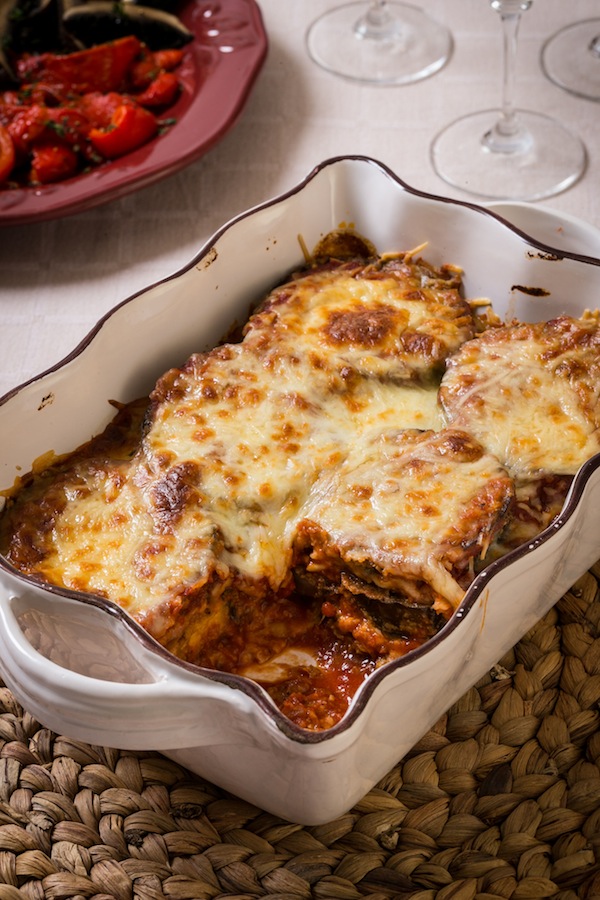
Paula Shoyer’s eggplant parmesan, featured in her latest cookbook, The New Passover Menu. (photo by Michael Bennett Kress)

The New Passover Menu by Paula Shoyer (Sterling, 2014) emboldened me. It was the whole package: the full-color photos, the clear text (blue for tools and ingredients; black for instructions), the organization by menus, the exotic-sounding nature of some of the offerings (gratin dauphinois, anyone?) and Shoyer’s dedication of the book:

“For all the kosher baker fans who asked me to write a cookbook of savory recipes. But, as my friend Suzin Glickman believes, you should still eat dessert first.”

Shoyer, of course, is famous for her baking. Bestselling The New Passover Menu joins her dessert bestsellers The Kosher Baker: Over 160 Dairy-Free Recipes from Traditional to Trendy and The Holiday Kosher Baker. She is a contributing editor to several kosher websites and cookbooks, as well as magazines, and is also a consultant for kosher bakeries and companies. She is no stranger to the Jewish Independent, as an internet search will show, and so it was with excitement that we received her latest cookbook.

In the press material accompanying The New Passover Menu, Shoyer says, “These recipes have been inside my head for years. As a book of 65 recipes, it offers not every possible Passover recipe but rather the best possible versions of food and desserts adapted for the Passover holiday.”

It lays out full menus for the two seders, as well as a Shabbat and Yom Tov menu, and menus for the holiday week, including lunch suggestions. There are several breakfast options and, of course, a lengthy list of dessert choices.

There is a chart of Passover cooking and baking substitutes, and a brief discussion of the holiday and its preparations (removing chametz and kashering the kitchen). Shoyer shares some memories of her seders past, and this leads into a description of the Passover table, the seder plate and its symbolic items, matza, salt water and wine.

Each recipe includes the preparation time, cook time, what items can be prepared in advance (and how long in advance) and all the equipment that will be needed. A brief paragraph accompanies each recipe, either a personal story about it or advice on cooking with some of its ingredients.

It was hard to narrow the selection of which recipes I would try. Since one of my taste testers is vegetarian, I shied away from such tempting creations as Seared Tuna with Olives and Capers with Kale Caesar Salad, and Moroccan Spiced Short Ribs. I opted instead for one main dish – eggplant parmesan – and something unique (and easy to make and transport) that I could bring to my host’s seder – banana charoset.

The New Passover Menu emboldened me in a couple of ways. First, I felt confident to adapt right from the beginning. So, for example, while Shoyer did not call for the eggplant slices to be sprinkled with salt and let sit for awhile to reduce their potential bitterness and bring some of their moisture to the surface (which I dabbed away with paper towel), I did it just in case. The recipe lists tomato sauce but, not wanting to buy or make any – as so many bought brands contain a lot of sodium and to make my own sauce would have been one more thing to do – I used a can of crushed tomatoes and added garlic powder, oregano and pepper to it, ingredients already included in the recipe. Finally, Shoyer offers a frying and a baking method for the eggplant slices, and I picked a middle version: I coated the slices as if for frying but then baked them, drizzling a little olive oil over them once they were laid out in the pan.

As for the banana charoset, I kept to the recipe for the most part, only adding more wine than recommended to brighten it up. I think the banana I selected for the mixture was on the too-ripe side. One thing to note with the charoset is that it tasted even better the next day, so I’d make it in advance if possible. The bold part of this recipe is that I pretty much insisted on bringing it to a seder once I’d tasted it.

The following recipes are reprinted from the cookbook, so the “I” and “my” from here on refers to Shoyer. Enjoy!

EGGPLANT PARMESAN

Serves: 12–15. Prep time: 10 minutes. Cook time: 20 minutes to fry eggplant; 35-40 minutes to bake. Advance prep: may be assembled one day in advance, fully baked three days in advance, or frozen; thaw completely before reheating. Equipment: cutting board, knives, measuring cups and spoons, two shallow bowls, large frying pan, nine-by-13-inch baking pan, silicone spatula.

Eggplant parmesan is one of my favorite Italian dishes. It is best made by my brother Adam Marcus, who has paid his rent for occasionally living with us by lovingly making his master version of this dish with a homemade sauce. Although I try to avoid frying foods (except for doughnuts and chicken once a year), I find that eggplant parmesan tastes better made with breaded and fried eggplant slices. If desired, you can grill the slices in the oven until fork-tender and then layer and bake as described below. If you go the healthier route, sprinkle the oven-roasted slices with some garlic powder, salt and black pepper. Depending on the size of the eggplants, you will end up with two or three layers in the pan.

1/3-1/2 cup oil for frying
3 large eggs, beaten
1 1/2 cups Passover breadcrumbs or matza meal
1/2 tsp garlic powder
1 1/2 tsp dried oregano
salt and black pepper
2 medium eggplants, not peeled, sliced into 3/4-inch-thick rounds
1 1/2–2 cups tomato sauce
2 cups shredded mozzarella cheese, or more as needed
1/3 cup freshly grated parmesan cheese

Preheat oven to 350°F.

Place a large frying pan on the stovetop and add 1/3 cup oil. Pour the beaten eggs into a shallow bowl. In another bowl, stir together the breadcrumbs, garlic powder and oregano and season with salt and pepper to taste. Heat the oil over medium-high heat. When the oil is hot, fry the eggplant slices in batches, browning both sides, until fork-tender, about 10 minutes per batch. Transfer to a plate covered with paper towels. Add more oil to the pan between batches if the pan gets dry.

Using a silicone spatula, spread about 3/4 cup of the tomato sauce in the bottom of a nine-by-13-inch baking pan. Place one layer of eggplant slices on top. Sprinkle with one cup of the shredded cheese. Cover with a second layer of eggplant. Pour another 3/4 cup sauce on top and use the spatula to spread the sauce on top of the eggplant pieces. Sprinkle with one cup of the shredded cheese. If you have more eggplant slices, place them on top, then add some tomato sauce and more shredded cheese. Sprinkle the parmesan all over the top.

Cover the pan tightly with aluminum foil and bake for 35 to 40 minutes, or until the eggplant layers are heated through and the cheese is melted. If you assembled the dish in advance and stored it in the fridge but did not bake it, bake for an extra 20 minutes.

BANANA CHAROSET

Makes three cups (serves 25 for seder). Prep time: 10 minutes. Advance prep: may be made three days in advance. Equipment: cutting board, knives, measuring cups and spoons, food processor, box grater, silicone spatula, small serving bowl.

photo - Banana charoset, from Paula Shoyer's The New Passover Menu
Banana charoset, from Paula Shoyer’s The New Passover Menu (photo by Michael Bennett Kress)

Charoset is the element on the seder plate that represents the mortar used by the Israelite slaves to build bricks. Growing up, I had seders almost exclusively at my parents’ house or a handful of other relatives’ homes, and everyone made the same charoset: walnuts, apples and sweet wine all smooshed together. It was only when I began hosting my own seders that I discovered a wide variety of charoset recipes from every corner of the world where Jews have ever resided. This recipe comes from my friend Melissa Arking, who is a fabulous cook. I added chopped walnuts at the end for some texture.

You can buy nuts already ground, with the skin or without. I have a coffee grinder dedicated to grinding nuts. You can also use a food processor, as long as it can reduce the nuts to a fine grind, almost like a powder, when you need almond flour for baking. If you grind nuts for too long, you will end up with nut butter.

3 large ripe bananas
2 cups ground walnuts
2 tbsp sugar
1/2 tsp ground cinnamon
2 tbsp sweet kosher wine
2 apples, shredded on the large holes of a box grater
1 cup walnut halves, chopped into 1/3-inch pieces

In the bowl of a food processor fitted with a metal blade [a hand blender also works], place the bananas, ground walnuts, sugar, cinnamon and wine. Process until the mixture comes together. Transfer to a small bowl, add the apples and chopped walnuts, and stir to combine.

Charoset’s many variations

Ashkenazi-style charoset: apples, walnuts, cinnamon and red wine. (photo by Yoninah via commons.wikimedia.org)

What Passover seder symbol is common to all communities but is not mentioned in the biblical passage that enjoins us to eat the paschal offering, matza and bitter herbs? Charoset.

Charoset is loosely defined as a paste of fruit, spices and wine, symbolic of the mortar used by the Hebrews when they were slaves in Egypt.

The word is of unknown origin but may be from the word heres, meaning clay, because of its color. The custom of eating charoset is thought to have come from the time of the Babylonians, who dipped food in relishes or sauces to add flavor.

Some years ago, I surprised all my seder guests by serving both the traditional Ashkenazi version and a Sephardi version of charoset, which everyone loved and wanted in future years.

The New York Times Passover Cookbook, edited by Linda Amster, says that the Iraqi version of charoset is one of the oldest and most time-consuming recipes, dating back to the Babylonian exile of 579 BCE. Made into a jam from dates, grapes, pomegranate and honey, it was a sweetener in the ancient world and is still used by Iraqi, Burmese, Syrian and Indian Jews.

The Talmud says charoset must be sharp in taste and similar to clay in substance and color. Differing geographies is one of the reasons there are differing charoset recipes.

Ashkenazim tend to use apples, chopped almonds, cinnamon, red wine and perhaps even matza meal; sometimes walnuts or other nuts are used. Sephardi and Mizrahi Jews tend to use fruits that grew in Eretz Israel in biblical times, such as grapes, figs, dates, almonds and pomegranates. Israelis often turn charoset into a dessert by adding bananas, dates, orange juice and/or sugar.

Abraham Chill, author of The Minhagim (The Customs), writes that each ingredient symbolizes something different from the Egypt experience. The mixture as a whole stands for the mortar used by the Jews in making bricks, and the cinnamon resembles the color of the bricks they made. Wine represents the blood of the Jewish infants thrown into the Nile. Almonds are used because the Hebrew word for almond, shaked, is also a word that means to accelerate, as G-d accelerated the end of slavery. Apples are used because it was said that Jewish women during that time gave birth to their babies under apple trees in order to avoid detection by the Egyptians.

In her book The Jewish Holiday Kitchen, Joan Nathan states that charoset is “one of the most popular and discussed ritual foods served at the seder.” She says the fruits and nuts refer to verses in the Song of Songs, which mention an apple tree and the garden of nuts; the red wine recalls the Red Sea.

Because the maror or bitter herb is so strong, some say that the real purpose of charoset is to allay the bitterness. As part of the seder, the charoset and maror are placed between matzot to make a sandwich, which is said to have been invented by the first century CE Rabbi Hillel, hence, its name, the “Hillel sandwich.”

There are as many variations on the ingredients of charoset as there are Jewish communities.

Jews from the island of Rhodes use dates, walnuts, ginger and sweet wine. Jews of Salonika, Greece, add raisins. Other Greek Jews use walnuts, almonds, pine nuts, raisins, cinnamon, cloves and red wine and spread it thickly on matza. Turkish Jews include orange.

A Moroccan friend told me she used some of the seven species from the Bible in her charoset: dates, almonds, nuts, pomegranate seeds, figs, wine and cinnamon. Jewish Daily Forward Food Maven columnist Matthew Goodman once wrote in the Forward that Moroccan Jews sometimes make charoset paste and roll it into balls. He says this is a legacy from Jews of medieval Spain, who made the balls of apples, dried fruit, almonds, cooked chestnuts, sugar and cinnamon (but no wine) and then drizzled the balls with white vinegar before serving.

Jews of Venice use chestnut paste, dates, figs, poppy seeds, walnuts, pine nuts, orange peel, dried apricots, raisins, brandy and honey, while Jews of Bukharia use nuts, almonds, dates, raisins, apples and wine. Egyptian charoset contains dates, nuts, banana, apples, wine, cinnamon and pomegranate seeds.

An Iraqi woman told me that instead of a paste type of charoset, they would buy a special date honey and sprinkle chopped nuts on top. Goodman, again in the Forward, explained that its foundation is a syrup, halek, made by boiling dates, straining the liquid and then reducing it over a low flame until thick. Halek is one of the earliest of all sweeteners and may be the source of the reference in “land flowing with milk and honey.” Chopped walnuts or almonds are then added to the syrup. Jews of Calcutta also follow this custom.

A Dutch woman told me that she makes a chunky mixture with more apples and only a few nuts, plus cinnamon, sugar, raisins and sweet wine. Jews from Surinam in Dutch Guiana use seven fruits and coconut.

Following the injunction to have a sharp taste, Persian Jews use dates, pistachios, almonds, raisins, apples, orange, bananas, pomegranate seeds, sweet wine, cloves, cardamom, cinnamon, vinegar and black pepper. Likewise, Yemenite Jews use dates, raisins, almonds, nuts, figs, dates, sesame seeds, apples, pomegranate seeds, grape juice, ginger, cinnamon, cardamom, cloves and black pepper. Jews from Afghanistan pound charoset in a mortar with a pestle and use walnuts, hazelnuts, almonds, apples, sweet wine, pomegranate seeds, dates and black pepper.

One exception I have found to Ashkenazim following the strictly sweet version was a friend whose father’s family came from Galicia. He recalled that their charoset was made from apples, nuts, wine, cinnamon and horseradish.

Here are but a few recipes.

CLASSIC ASHKENAZI CHAROSET

6 chopped apples
1/3 cup chopped nuts
1/4 cup raisins
1 tsp cinnamon
2 tbsp sugar
1/4 cup red sweet wine

Combine apples, nuts and raisins. Add cinnamon, sugar and wine. Depending on your preference, this can also be made in a food processor.

DATE CHAROSET

1/2 cup seeded, finely chopped dates
1/2 apple, grated
1/2 cup chopped almonds
1/8 cup red wine
1/2 tsp cinnamon
1/4 tsp ginger

Combine dates and apple. Add nuts, wine, cinnamon and ginger.

SEPHARDI CHAROSET

1/2 cup chopped dates
1/2 cup chopped raisins
1 cup chopped walnuts
1/4 cup chopped almonds
1/4 cup red wine
2 tbsp lemon juice
1/8 tsp cinnamon

Combine dates and raisins. Add walnuts, almonds, wine, lemon juice and cinnamon. Form into balls.

SPICY CHAROSET

12 figs
1 1/2 cups pitted dates
2/3 cup raisins
2 seeded oranges
2/3 cup almonds
1/2 cup dry red wine
1/4 tsp cayenne pepper
1 tsp cinnamon

In a food processor, coarsely chop figs, dates, raisins, oranges and almonds. Try to keep the fruit chunky unless you prefer it pureéd. Pour into a bowl. Add wine, cayenne, cinnamon and blend.

Sybil Kaplan is a journalist, foreign correspondent, lecturer, food writer and book reviewer who lives in Jerusalem. She also does the restaurant features for janglo.net and leads weekly shuk walks in English in Jerusalem’s Jewish food market.

Chicken for Pesach midweek

A tagine is a North African, slow-cooked savory stew, named after the earthenware clay pot in which it is cooked. (photo by Iron Bishop via commons.wikimedia.org)

After the sedarim, by midweek, you may be looking for some creative ideas for Passover dinners. Here are three dishes I frequently serve.

A mina is a traditional Sephardi savory layered pie, which is a great way to use up leftover chicken. In Spain and Turkey, it is called mina; in Egypt, maiena or mayena; in Algeria, meguena; and, in Italy, scacchi. The pie is also popular among Jews from the island of Rhodes and Yugoslavia.

A tagine is a North African, slow-cooked savory stew, named after the earthenware clay cooking pot, whose base is flat and circular with low sides. The cover is cone or dome shaped, which traps the steam and returns the condensed liquid to the pot, thus requiring very little liquid when cooking. In a chicken tagine, vegetables or dried fruit, nuts and spices are added.

Finally, leek patties known as kyeftes de prasa in Ladino, kifte in Turkish, keftas or keftes in Greek, are popular among Mediterranean Jews for Passover. I like to add chicken to mine.

CHICKEN MINA
6-8 servings

2 cups cooked, shredded chicken
1/2 cup chopped scallions
1/2 cup chopped Italian parsley
1/4 cup chopped mint
1/4 cup chopped dill
5 eggs
6 matzot
chicken soup
olive oil
1/2 cup tomato sauce
1/4 tsp nutmeg

  1. Preheat oven to 350˚F. Grease a rectangular or oval baking dish.
  2. In a bowl, combine chicken, scallions, parsley, mint and dill. Add two eggs and blend.
  3. In another bowl, combine three eggs, tomato sauce and nutmeg.
  4. Place matzot in bottom of a deep dish. Pour enough chicken soup to soften, about three minutes.
  5. Place two matzot in greased baking dish. Brush with olive oil. Spread half the chicken filling on top. Add two more matzot, brush with oil and spread rest of chicken filling on top. Top with remaining two matzot.
  6. Pour tomato sauce on top. Bake for 45 minutes. Cut into squares to serve.

CHICKEN TAGINE
8 servings

1 cup matza meal
8 pieces of chicken
4 cups chopped onions
2 cups chicken soup
1 1/2 – 3 cups prunes, apricots or other dried fruit
2 tsp cinnamon
1 tsp ginger
1/4 cup lemon juice
2 tsp lemon peel
1 cup slivered almonds
oil

  1. Place matza meal in a shallow dish. Dip chicken pieces in the meal.
  2. Heat oil in a soup pot. Add chicken and brown. Add onions, chicken soup and dried fruit and simmer until chicken is cooked.
  3. Add cinnamon, ginger, lemon juice, lemon peel, and almonds. Simmer another 20 minutes.

CHICKEN-LEEK PATTIES
6-8 servings

3 leeks
1 cup chopped onions
2 cups chopped cooked chicken
2 eggs
1 cup mashed potatoes
1/2 cup matza meal, plus extra
salt and pepper to taste
1 beaten egg
oil

  1. Place cut-up leeks and onions in a saucepan with water, bring to a boil, reduce heat and simmer 30 minutes.
  2. Drain and chop. Add chicken, eggs, 1/2 cup matza meal, mashed potato, salt and pepper and blend.
  3. Place egg in one shallow bowl and additional matza meal in the second bowl. Take chicken mixture and make into patties. Dip into beaten egg then in matza meal for coating.
  4. Refrigerate for awhile at this point if serving later. Before serving, heat oil in a frying pan and fry until patties are brown on both sides. Drain on paper towels.

Sybil Kaplan is a journalist, foreign correspondent, lecturer, food writer and book reviewer who lives in Jerusalem. She also does the restaurant features for janglo.net and leads weekly shuk walks in English in Jerusalem’s Jewish food market.

Add culinary flair to Pesach

Grilled salad with chicken is one of the many tempting dishes in A Taste of Passover.

Every now and then, there’s a new recipe book that blows you away with innovative, easy-to-make dishes combined with tantalizing photographs that render you hungry within a couple minutes of flipping through the glossy pages. A Taste of Pesach (ArtScroll, 2014), a project of Yeshiva Me’on Hatorah (in Roosevelt, N.J.), is one such book. It promises to reinvent your Passover menu and inspire you with creative culinary twists and turns during this hungry time of year.

image - A Taste of Pesach  coverMany schools and communities have tried the same technique of compiling a recipe book and selling it as a fundraiser, and that’s how this one had its genesis seven years ago. But while most of those fundraiser books have a short lifespan before they’re recycled or mislaid, A Taste of Pesach is unlikely to follow the same trajectory. For one, it’s a gorgeous book you can’t wait to page through and one you’d be proud to hand over as a gift to a newlywed child or close friend. For another, it’s chock full of irresistible culinary eye candy, with recipes that are for the most part easy, calling on ingredients that are readily available. Look through the book and you find yourself murmuring, “Hmm…. I can do this.”

The mothers who volunteered the 150-plus recipes for A Taste of Pesach are a diverse group but they all want the same things at the end of the day, write the editors in the book’s introduction. “Food that will get rave reviews, user-friendly, visually attractive recipes with accurate cooking times and yields and recipes that have broad appeal and that work. We’re just like you,” they write.

Most of the recipes don’t require a huge spirit of adventure in the kitchen, but rather call for a minor stretch in their use of different ingredients than you might typically incorporate. The sweet potato crisps salad, for example, is a lettuce-based green salad to which strips of fried sweet potato are added as a garnish just prior to serving. The image of this dish is so tempting, it makes you want to reach in and steal a piece of crisp off the topping. This is true for the majority of the recipes, each one prefaced with a photograph and categorized by chapter into appies, soups, salads, fish, poultry, meat, sides, dessert, cake and cookies, and gebrokts. The recipes are accompanied by handy tips on how to make their preparation easier and faster, or how to plate it most attractively. There are traditional old favorites like gefilte fish, chremslach and kugels, and more modern twists or reinvented dishes like unstuffed cabbage, pastrami and spinach-stuffed chicken and cashew-butter muffins.

Extra eye candy is offered in the chapter headers, which display images of seder plates reflecting different times, styles and tastes. Passover is not a time of year that usually excites Jewish taste buds, but A Taste of Pesach promises to add flair, creativity and innovation to your table – without stretching your culinary skills to their limits.

Lauren Kramer, an award-winning writer and editor, lives in Richmond, B.C. To read her work online, visit laurenkramer.net. This article originally appeared in Canadian Jewish News.

A friend on our long journey

The close relationship humans share with yeast is truly ancient, and predates humanity itself. (photo by Lilly M via commons.wikimedia.org)

During the holiday of Passover, we are told not to eat leavened bread (chametz). The leavening of bread is caused by yeast, a single-celled fungus. The yeast induce a chemical reaction called fermentation, which converts water and sugar into alcohol and carbon dioxide. The bubbles of carbon dioxide gas produced during this reaction cause the bread to rise and become porous, ultimately resulting in delicious fluffy bread. The close relationship humans share with yeast is truly ancient, and predates humanity itself.

Since fungi lack mobility, it had often been assumed that they were more plant-like than animal-like. But genetic studies in the 1990s revealed that fungi are actually more closely related to animals than to plants. The common ancestor that animals and fungi share would have probably been single-celled, and resembled in many ways our friend the yeast. So we can consider them very distant cousins (not invited to the Passover seder).

Fruit are an important part of the diet of all apes, including humans and their ancestors. A ripe sweet juicy fruit is full of sugar and water, the key ingredients for fermentation. There are many different varieties of yeast that are found commonly all over the world, on the human body, in the soil, and often on the skin of fruits. Fermentation of ripe fruits due to the presence of such yeast is common in nature, and would have inevitably been eaten by the ancestors of humanity for millions of years. Primatologists have observed various species of monkeys getting drunk off such naturally fermented fruit. To explain this puzzling phenomenon, biologist Robert Dudley at University of California-Berkley formulated the “drunken monkey” hypothesis. Fruit evolved as a means for plants to use animals as a method of seed dispersal; however, if the fruit rots before it gets eaten, the seed doesn’t get dispersed. Alcohol is a volatile molecule, which means it floats around the air very easily. If a fruit begins to ferment, the alcohol molecules spread much further and faster than the smell of the fruit would on its own. Animals, such as monkeys and apes, can, therefore, smell from a greater distance that there is delicious fruit, helping them find and eat the fruits, and thus helping to disperse the seeds of the plant. It is an evolutionary relationship that benefits the plant, the yeast and the animal, a win-win-win scenario.

Moderate consumption of alcohol is in fact healthy and nutritional. Alcohol contains more calories than either carbohydrates (sugar) or proteins. Let us remember that calories were integral to survival before the obesity epidemic of the modern age. Alcohol can also protect against many diseases, especially cardiovascular diseases. Studies have even shown that people who consume alcohol in moderation live longer than those who don’t. Despite the many dangers associated with excessive alcohol consumption, the low doses normally consumed in nature ultimately may have provided a survival advantage to the ancestors of humanity.

The first civilizations arose in part due to intensive cereal agriculture. These cereals were used to make bread and beer. In Mesoamerica, they made a beer from corn, in China with rice and, in Mesopotamia and Egypt, they used barley and wheat to make beer and bread. These innovations that played an integral role in the building of civilization were thanks to yeast. The first writing system ever developed was Cuneiform, in Mesopotamia during the third millennium BCE. Among the first written records in history are references to the production, distribution and consumption of beer. Some scholars suspect that the Jews acquired this beer brewing knowledge during their exile in Babylon. The Hebrew word for drunk, shikur, is thought to be derived from the Babylonian word for beer, shikaru. However, if the story of Passover is to be believed, then perhaps the ancient Israelites brought the knowledge for beer making from Egypt.

Wine, an essential component of any decent Passover seder, also has an ancient history. The earliest evidence for intensive wine production can be found at the archeological site of Hajji Firuz Tepe in modern-day Iran, which has been dated to sometime around 5400 BCE. Genetic analysis corroborates that strains of wine yeast originated in Mesopotamia, but put the date back 10,000 years ago. Some archeologists have speculated that the strains of yeast used for making bread and beer originated from wine yeasts, however the evidence for this remains contentious. Wine and beer were both produced in Egypt, and were important culturally, religiously and medicinally, and Egyptians would bury jars of wine in the tombs of the pharaohs. Analysis of DNA found inside ancient Egyptian wine jars from the tomb of a pharaoh from 3000 BCE identified the same species of yeast used to make wine today: Saccharomyces cerevisiae.

If there were indeed Jewish slaves in Egypt, they would have eaten bread and drank beer and wine, leavened and fermented by the same fungus that we use to leaven bread and ferment wine today; a little old friend that has joined us on our long journey through the vast deserts of time. L’chayim.

Ben Leyland is an Israeli-Canadian writer, and resident of Vancouver.

Matza: a symbol of humility

Matza and chametz are both composed of the same letters, except that matza is spelled with a hey and chametz with a chet. The only difference between a hey and a chet is that the chet is completely closed from three sides, while the hey has an opening on top. (photo by Yoninah via commons.wikimedia.org)

On Pesach, we are only allowed to eat matza, not chametz. What is the difference between chametz (leavened bread) and matza? How do they differ?

Matza differs from chametz in two respects:

1) With chametz, the dough rises, while for matza, the dough remains as is. In spiritual terms this means that chametz signifies arrogance, while matza signifies modesty and humility.

Matza is essentially lechem oni, the bread of poverty, of affliction (Deuteronomy 16:3 and Rashi’s commentary on this verse). Matza signifies humility, which manifests itself especially in lechem oni. The mitzva (obligation) to eat matza can only be observed with humility. The matza that the Israelites ate in Egypt was lechem oni.

2) The words matza and chametz are both composed of the same letters, except that matza is spelled with a hey and chametz with a chet.

The hey is similar to the chet. Both consist of three lines and are open from below. The only difference between them is that the chet is completely closed on the top, while the hey has an opening on the upper left side.

image - chet and het
The Hebrew letters chet and het.

The open side below (which chet and hey share) symbolizes that “sin crouches at the entrance.” (Genesis 4:7) The closure on both sides in the letter chet indicates that there is no escape from that fact, i.e., that sin crouches at the entrance. The opening on top, in the hey, indicates that notwithstanding this fact there is an opening above, indicating the possibility to leave one’s condition behind and to become a better person.

It is indeed no more than a small opening, but our sages teach us that G-d says: “‘Open for Me as little as the eye of the needle, and I will open for you like the entrance to a hall.’ For a single thought of self-improvement can change one instantaneously from an altogether wicked person into an altogether righteous person.” (Talmud Kidushin 49b)

These two differences between matza and chametz are interdependent. Where there is conceit and grandiose self-esteem, one doesn’t think of improvement. If there is humility, then, even if one may have stumbled, they will think of improvement. Where there is humility, there is no attempt at self-justification. Rather, one takes honest stock of oneself and, when finding improprieties within oneself, he or she will try to improve. With haughtiness, however, one will always find rationalizations to justify and excuse all doings.

Here’s a story to illustrate this point. When seeing a pauper, the one who seeks to avoid the mitzva of tzedaka will use the argument of Turnus Rufus (Baba Batra 10a), who asked of Rabbi Akiva: “If your G-d loves the poor, why does He not support them?” In other words, for reasons of haughtiness, if one accepts one’s wealth as one’s due and, in fact, feels that they deserve even more than what they already have, why then should they give away any of it? Arrogance doesn’t allow for the reality of another and, therefore, one may take it for granted that the other is not his or her equal. To this person, therefore, it is obvious that the other is poor simply because they don’t deserve any better. As it is surely the Divine Will that the other be poor, why then should one give him anything?

The humble one, possessed of humility, reasons differently.

a) He examines and judges himself whether he is essentially better than the other, and his self-examination leads him to give charity. It is written in Psalms 99:4, “You have done justice and tzedaka in Jacob.” That is, the justice, i.e. the self-judgment, leads him to tzedaka.

b) The humble one contemplates this possibility, but also notes that he himself has been blessed generously in spite of his own deficient status and condition. Thus, he is moved to conclude that we are as children of G-d. As these conditions relate to the mitzva of tzedaka, so, too, they apply to all good deeds.

This year, when we come to celebrate Passover at the festival seders, especially when we eat the matza, and when we are surrounded by our children, grandchildren and guests, we celebrate our people’s freedom from Egypt. Take time to contemplate the spiritual nature of matza, to be humble and feel the needs of our less fortunate friends, family and community members. We are celebrating, as well, the freedom of being able to go from haughtiness to kindness, from our limitations to our freedom. When we celebrate Passover this way, we will naturally feel happy that we are able to help provide what others need.

May this Passover prove to be an inclusive festival, where everyone will be able to rejoice and feel for one another. Wishing you a kosher and happy Passover.

Esther Tauby is a local educator, writer and counselor.