Salmon for the holiday

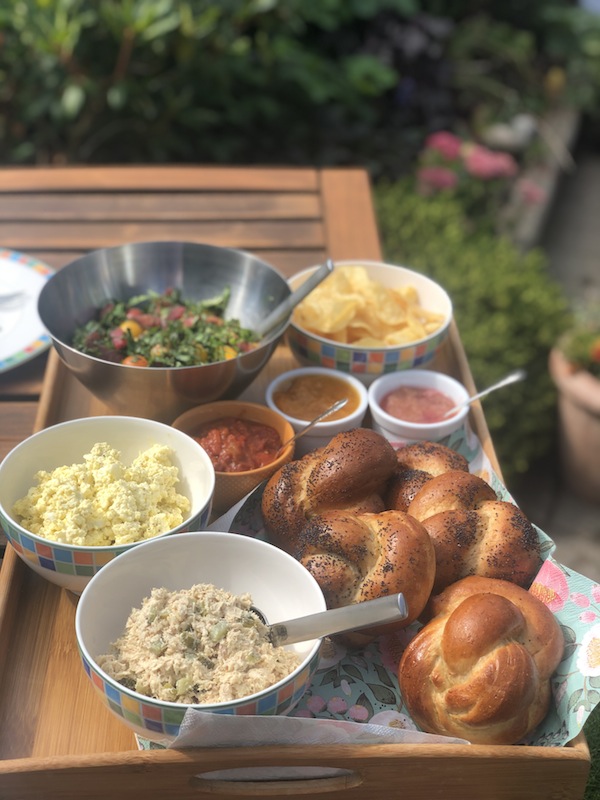
One of the symbols of Rosh Hashanah is the fish head – “God will make you the head, not the tail” is the blessing. Fish is often served at one of the holiday meals and here are a few salmon recipes that would be nice to serve for lunch or brunch.

HOT DOG BUN SALMON SANDWICHES
(This recipe is adapted from Food & Wine. It makes 8 servings.)

1/2 cup plain yogurt
2 finely chopped celery ribs with leaves
1 tbsp chopped chives
2 tbsp chopped flat leaf parsley
1 tbsp fresh lemon juice
salt and pepper to taste
4 loose cups flaked roasted salmon
8 hot dog buns
melted unsalted butter
potato chips

  1. In a bowl, combine yogurt with celery, chives, parsley and lemon juice. Season with salt and pepper. Fold in salmon.
  2. Heat a griddle. Brush the cut sides of the buns with butter and toast.
  3. Fill the buns with salmon salad. Top with potato chips.

SALMON BURGERS
(This recipe comes from Rick Moonen of RM Seafood in Las Vegas with my changes. It makes 6 servings.)

5 coarsely chopped scallions, white and green parts only
3/4 cup coarsely chopped red pepper
3/4 cup coarsely chopped green pepper
1 1/2 pounds skinless, centre-cut salmon, cut into 1-inch cubes and frozen for 30 minutes
1/2 cup dry breadcrumbs
salt and pepper to taste
2 tbsp unsalted butter
1/4 cup olive oil
6 split and toasted brioche buns
harissa-spiced mayonnaise (optional)
cucumber relish, lettuce and tomato slices, for serving

  1. Pulse scallions and peppers in a food processor until finely chopped. Transfer to a bowl. Pulse salmon until finely chopped and with some bigger chunks. Transfer to bowl.
  2. Fold in breadcrumbs, salt and pepper and one-third cup harissa mayonnaise (to make: add two tablespoons of the North African paste to two-thirds cup mayonnaise). Oil hands and shape into six patties. Transfer to a lightly oiled plate and refrigerate 30 minutes.
  3. Light a grill. Melt one tablespoon butter and two tablespoons olive oil in a frying pan. Add three burgers, cook on both sides four to five minutes. Transfer to a plate. Add another one tablespoon butter and two tablespoons olive oil to pan and fry remaining burgers.
  4. Spread harissa mayonnaise on buns. Top with burgers, relish, lettuce and tomato slices.

SMOKED SALMON AND ONION FRITTATA MUFFINS
(This recipe comes from Foods You Want for the Life You Crave by Nealy Fischer. It makes 4 to 5 servings.)

1 1/2 tsp olive oil
1 tbsp unsalted butter
1/2 small finely chopped onion
1 1/2 ounces lox or smoked salmon
4 large beaten eggs
1/4 cup chopped chives

  1. Preheat oven to 400°F. Grease six-cup muffin pan with olive oil or vegetable spray.
  2. Heat olive oil and butter in a frying pan. Add onion and cook eight minutes.
  3. Move onions to one side of frying pan, fry smoked salmon one minute. Break into small pieces.
  4. Transfer onion and salmon to a bowl and allow to cool.
  5. Add eggs, chives, salt and pepper to bowl and combine. Pour into muffin cups. Bake for 20-25 minutes or until eggs are set in the centre. Let cool one minute then remove from pan.

Sybil Kaplan is a journalist, editor of nine kosher cookbooks (working on a 10th) and a food writer living in Jerusalem. She has written the kosher restaurant features for janglo.net since 2014 and leads weekly English-language Shuk Walks in Machane Yehuda.

Try new-ish dish in new year

Quinoa (keen-wah) is a plant whose seed is eaten like a grain, like wheat, originally from the Andean region of South America. However, it is not a true grain. Quinoa contains higher amounts of protein compared to true grains, and it does not contain any gluten.

Eating quinoa might make people feel fuller than wheat or rice and it might also decrease post-meal levels of blood fats called triglycerides compared to eating bread. Here are some recipes you might like to try in the new year, particularly if you are gluten-free or celiac.

BASIC QUINOA
(makes 3 cups)

2 cups water
1 cup quinoa

  1. Place quinoa and water in a saucepan. When all the grains turn white, bring to a boil.
  2. Cover and cook until all the water is absorbed (about 15 minutes).

QUINOA TABBOULEH
(This recipe is from Rancho la Puerta in Tecate, Mex. It makes 4 servings.)

2 tbsp olive oil
2 tbsp fresh lemon juice
2 tbsp chopped Italian parsley
1 minced garlic clove
salt and pepper to taste
1 cup water
1/2 cup rinsed quinoa
1/2 cup chopped cucumber
1/2 cup chopped tomatoes
1/4 cup chopped fresh mint
1/2 cup chopped parsley
8 lettuce leaves

  1. Whisk oil, lemon juice and parsley in a bowl with garlic, salt and pepper.
  2. In a saucepan, bring one cup water to boil. Add quinoa, cover, reduce heat and cook until water is absorbed, about 13 minutes. Transfer to bowl and cool.
  3. Add cucumber, tomato, mint and a half cup of parsley. Pour dressing on and toss to coat.
  4. To serve, arrange two lettuce leaves on each of four plates. Spoon quinoa tabbouleh on top and serve.

LEMONY QUINOA SALAD
(This recipe is from California Chef Jeremy Fox from a Food & Wine article on America’s best vegetarian cooking. It makes 4 servings.)

8 large red radishes
1 small black radish
1 peeled medium carrot
1 cored medium fennel bulb
1 cup quinoa
2 1/2 cups water
finely grated zest of 2 lemons
juice of 1 lemon
2 tbsp vegetable oil
salt and pepper to taste

  1. Using a mandolin grater, thinly slice radishes, carrot and fennel and transfer to a bowl of ice water. Refrigerate about one hour, until crisp.
  2. In a saucepan, bring quinoa and water to a boil. Cover and cook over low heat until water is absorbed, about 20 minutes. Let cool.
  3. Drain and dry vegetables. Combine lemon zest and lemon juice with oil in a bowl. Add quinoa and toss. Season with salt and pepper.
  4. To serve, place quinoa in salad bowls and top with vegetables.

CRISPY QUINOA SLIDERS
(This recipe is from Food & Wine by Chef Kay Chun. It makes 12 sliders.)

2/3 cup quinoa
2/3 cup water
2 1-inch slices whole wheat bread, crusts removed, bread cubed
2 large eggs
1 cup coarsely grated zucchini
1/2 cup grated Parmesan cheese
1/4 cup chopped chives
3 minced garlic cloves
salt and pepper to taste
4 tbsp vegetable oil
mini buns, lettuce, tomatoes, onions, pickles

  1. In a saucepan, cook the quinoa in boiling water until just tender, about 10 minutes. Drain and spread onto a baking sheet to cool.
  2. Pulse bread in a food processor until coarse crumbs (about one cup).
  3. Whisk eggs in a bowl. Squeeze liquid from zucchini and add to eggs. Stir in cheese, chives, garlic, salt and pepper. Add quinoa and breadcrumbs. Let stand 10 minutes.
  4. Scoop 12 mounds of mixture to form half-inch-thick patties. Heat one tablespoon oil in a frying pan. Add six patties and cook about three minutes, until golden on the bottom and crisp. Re-oil the pan and fry the remaining six patties for three minutes.
  5. Serve in mini buns with lettuce, tomatoes, onions and pickles.

Sybil Kaplan is a journalist, editor of nine kosher cookbooks (working on a 10th) and a food writer living in Jerusalem. She has written the kosher restaurant features for janglo.net since 2014 and leads weekly English-language Shuk Walks in Machane Yehuda.

Add a spinach salad to menu

Spinach may have originated 2,000 years ago in Persia but it is native to central and western Asia. Now widely popular, there are many tasty ways to prepare it. In addition, its health benefits are many, especially if eaten raw, so here are a few recipes for a healthy new year.

MY FAVOURITE SPINACH SALAD
(4 servings)

4 cups fresh, chopped spinach
6-8 halved cherry tomatoes
2 medium, sliced kohlrabi
2 grated hard-boiled eggs

dressing
1/2 tsp minced onion
1 crushed garlic clove
salt and pepper to taste
1/4 tsp sugar
1/8 tsp paprika
dash dry mustard
dash celery seeds
1 tbsp red wine vinegar
1 tbsp + 1 tsp olive oil
1 1/2 tsp water

  1. In a salad bowl, combine spinach, cherry tomatoes, kohlrabi and eggs. Set aside.
  2. In a jar, combine dressing ingredients, close and shake well.
  3. Dress salad just before serving.

CRUNCHY SPINACH SALAD
(4 servings)

4 cups torn spinach
1 cup fresh bean sprouts
1/2 cup sliced and drained water chestnuts
2 chopped hard-boiled eggs

dressing
1/4 cup brown sugar
1/4 cup vegetable oil
2 1/2 tbsp red wine vinegar
2 1/2 tbsp ketchup
1 1/2 tsp Worcestershire sauce

  1. In a salad bowl, combine spinach, bean sprouts, water chestnuts and eggs.
  2. In a bottle or jar, combine dressing ingredients. Cover and shake well to mix.
  3. Before serving, pour dressing over salad and toss.

SPINACH SALAD DRESSING
(This salad dressing recipe is from P.J. Clarke’s in New York, which was founded in 1884. The bar was once a saloon owned by Patrick J. Clarke, an Irish immigrant who was hired in the early 1900s and, after about 10 years working there, bought the bar and changed the name. It has had other owners since then and now has multiple locations.)

1/4 cup fresh lemon juice
1 large egg yolk or 1 tbsp mayonnaise
3/4 tsp salt
1/2 tsp dry mustard
1/4 tsp freshly ground black pepper
1/4 tsp sugar
1 small chopped garlic clove
1 cup olive oil

  1. Blend all ingredients except oil in a food processor until smooth.
  2. With motor running, add oil in a stream and blend. Transfer to a jar, cover and keep chilled until serving.

Sybil Kaplan is a journalist, editor of nine kosher cookbooks (working on a 10th) and a food writer living in Jerusalem. She has written the kosher restaurant features for janglo.net since 2014 and leads weekly English-language Shuk Walks in Machane Yehuda.

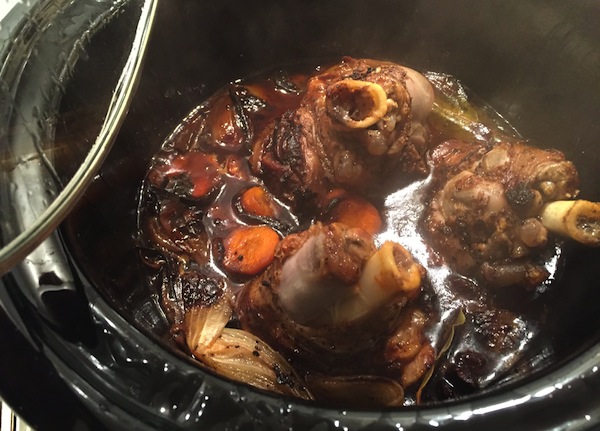
Lamb shanks a savoury dish

Lamb is a rich meal, so count on one shank per person. (photo by Arild Finne Nybø)

This year, I plan to stray from my plebian Rosh Hashanah chicken and salmon, and go all in with lamb shanks. Even as I write this column, I don’t know whether or not we’ll be able to gather with family this year for the High Holidays. But, I’m hopeful. And, after spending a year-and-a-half’s worth of Jewish holidays celebrating via Zoom (or on our own), it’s left me remarkably unfazed. We have to eat, after all. It may as well be yummy. As my father always reminded me, “I am the most important guest in my own home!” So, lamb it is.

Being a shockingly bad liar, I feel compelled to come clean right at the get-go. I have never cooked this dish before. My husband Harvey is the lamb expert at our home. But it’s high (chai) time I stretched my culinary balabusta skills. For the record, I am breaking all my own rules, by making a dish that has more than five ingredients, and which looks like it’ll take a good hour or more to prepare. But we’re worth it. The end result will be a smooth, savoury dish with extrastellar depth and gastronomic nuance. Ha! And if you believe those hyperbolic words, I have a bridge to sell you. But, in all seriousness, it’s one of my favourite meals, rich though it may be.

As you know, if you’re a hardcore carnivore like me, lamb is a very fatty meat. As well, it has a distinctive flavour that you either love or hate. There don’t seem to be many fence-sitters when it comes to lamb. Harvey and I position ourselves squarely in the love-it camp. While we don’t eat it often, we consider lamb fancy food, and usually only have it on special occasions. Like Tuesdays. It plays well with rice, couscous, noodles or potatoes, which makes it an equal opportunity meat. And that’s something I admire in my food.

MOROCCAN LAMB SHANKS

6 lamb shanks
coarse salt and pepper to taste
3 tbsp plus 1/4 cup olive oil
1 large onion, finely chopped
6 large garlic cloves, minced
4 carrots, cut crosswise into 1/2-inch pieces
4 celery ribs, cut crosswise into 1/2-inch pieces
2 tbsp packed brown sugar
1 tsp dried thyme
1 tsp ground cumin
1 tsp paprika
1/2 tsp ground cinnamon
1/4 tsp ground cloves
1/4 tsp cayenne, or to taste
1 1/2 cup dry red wine
3 cups beef broth

  1. Preheat oven to 325°F. Season the lamb with salt and pepper.
  2. Heat three tablespoons oil in a heavy pot over medium-high heat. Add the celery, carrots and onion and cook until very soft, eight to 10 minutes.
  3. Add the thyme, cumin, paprika, cinnamon, cloves, cayenne, brown sugar and garlic and cook for three minutes.
  4. Add the wine, then raise heat to high and bring to a boil. Lower heat to medium and add the beef broth. Leave on medium heat while you brown the lamb shanks.
  5. Pour the remaining 1/4 cup of olive oil into a sauté pan. Over medium-high heat, brown the lamb shanks well on all sides.
  6. Transfer the lamb shanks to the roasting pan (or Dutch oven) and pour the braising liquid on top. Cover with a lid or aluminum foil and cook for one hour. Remove the lid/foil and cook two-and-a-half to three hours more, turning the shanks over every half hour until the meat is very soft.
  7. Remove the shanks from the braising liquid and strain the liquid. Skim any fat that rises to the surface, then use the liquid as a sauce.
  8. Serve over rice, couscous or noodles, or with potatoes.

I can say with a fair degree of certainty that this is one of the tastiest lamb dishes I’ve ever had the pleasure of devouring. It’s not exactly summer food, but it’s perfect for fall or winter. If you served it for Rosh Hashanah dinner, you would undoubtedly impress the heck out of your guests. Or whomever you plan to eat with. It’s a labour-intensive recipe, no question about that. But you’ll thank me once the smell comes wafting out of your kitchen and you begin to food swoon.

Like I said, it’s a rich meal, so count on one shank per person. If you’re Israeli, you’ll probably opt to lay it gently on a mountain of rice or couscous, but maybe you’ll go rogue and settle it lovingly on a bed of noodles. We Ashkenazim like our meat and potatoes (a little too much, I’m afraid), so I’ll probably make a side of roasted baby new potatoes. If you go the traditional Ashkenazi route and start with gefilte fish and matzah ball soup, I guarantee you’ll be stuffed to the gills by the time you get halfway through the lamb. But will you stop? I think not. It’s kind of like a marathon … you don’t get halfway through only to say, “I think I’ve had enough.” Oh no, you’ll throw yourself into this Moroccan lamb like it’s a cold lake on a hot day.

As for Rosh Hashanah dessert, if you think anyone will have even a millimetre of space left in their stomach for a little something sweet, think again. I’d say there might even be a vomitorium involved, but we’re not Roman, so … no. Maybe put out some fruit for those who are really feeling gluttonous and want to ring in the New Year with a Gaviscon chaser. It’ll only be a token gesture (the fruit, not the Gaviscon), but you can always have it the next day for breakfast. Mind you, I’m usually so stuffed the following day that I can barely face food until maybe 9 a.m. Decide for yourself. Those little fruit jellies are always a nice touch, and barely take up any room.

Before you start feeling full just reading this, remember that you don’t have to eat every course that’s served during Rosh Hashanah dinner. You’re allowed to beg off the first three and save yourself for the main event. No one will be offended. In fact, probably no one will even notice. Whatever you end up doing for the High Holidays, be healthy, be safe and here’s to a sweet new year full of positive and inspiring adventures. Shana tova u’metuka.

Shelley Civkin aka the Accidental Balabusta, is a happily retired librarian and communications officer. For 17 years, she wrote a weekly book review column for the Richmond Review. She’s currently a freelance writer and volunteer.

It’s time to revel in fish

During the nine days before Tisha b’Av, a day of fasting and mourning, it is customary to refrain from eating meat – but not fish. Here are some fish salad options for that week – and the rest of the summer – as well as some sauces that are great for both fish and vegetables. This year, Tisha b’Av starts the night of July 17.

CUCUMBER AND FISH SALAD
(I adapted this recipe from Food & Wine. It makes four to eight servings.)

2 large cucumbers
1 1/4 pounds skinned fresh cod, haddock or sea bass fillet
1 chopped scallion
small bunch chopped dill
salt & pepper to taste
5 tbsp milk
4 tbsp mayonnaise
2 tbsp sour cream or plain yogurt
4 black or green olives & cucumber ribbons

  1. Peel one cucumber and dice in a bowl. With a vegetable peeler, remove six long strips from second cucumber, then dice and add to bowl. Sprinkle with salt then drain on paper towels.
  2. Place fish in a frying pan with scallion, some of the dill, salt and pepper and milk. Poach until fish begins to flake. Remove and let cool.
  3. Wash and drain cucumber and dry. In another bowl, mix mayonnaise with sour cream or yogurt. Stir in cucumber and fish. Garnish with olives and cucumber ribbons.

CLASSIC CEVICHE
(I adapted this recipe from Food & Wine. It makes eight servings.)

1 pound fresh, skinless snapper, bass, halibut or other fish fillet, cut in half-inch pieces
1 1/2 cups fresh lime juice
1 medium white onion, chopped into half-inch pieces
2 medium-large tomatoes chopped into half-inch pieces
1/3 cup chopped cilantro
1/3 cup chopped pitted green olives
1 to 2 tbsp olive oil
salt to taste
3 tbsp fresh orange juice
1 large or 2 small peeled, pitted, diced avocados
tortilla chips for serving

  1. Combine fish, lime juice and onion in a glass or stainless steel bowl. Add more lime juice to cover fish and allow it to float freely. Cover and refrigerate four hours until a piece of fish, when broken open, no longer looks raw.
  2. In a large bowl, mix together tomatoes, cilantro, olives and olive oil. Stir in fish and salt. Add orange juice, cover and refrigerate if not serving immediately. Before serving, stir in avocados. Serve with tortilla chips or crackers.

HORSERADISH WHIPPED CREAM SAUCE

1 tsp prepared mustard
6 tbsp horseradish
1 tsp salt
1/8 tsp pepper
1 cup whipped heavy cream

  1. Combine mustard, horseradish, salt and pepper. Let stand 15 minutes.
  2. Fold in whipped cream.

PIQUANT HERB SAUCE

1/2 cup dry white wine
1/2 cup parsley sprigs
1/4 cup white vinegar
1 small quartered onion
2 large garlic cloves
2 1/2 tsp dried crushed tarragon
1/4 tsp dried crushed chervil
pepper to taste
1 cup mayonnaise

  1. Place white wine, parsley, white vinegar, onion, garlic, tarragon, chervil and pepper in blender cover and blend until uniform.
  2. In a saucepan, stir over medium heat until reduced to 1/3 cup.
  3. Strain, return to saucepan, stir in mayonnaise. Heat until warm. Garnish with chopped parsley.

CHIMICHURRI

1/2 cup olive oil
1/2 cup chopped parsley
2 tbsp chopped cilantro
2 tbsp fresh lemon juice
2 large minced garlic cloves
1 tsp crushed red pepper
1 tsp red wine vinegar
1/2 tsp sweet smoked paprika
1/2 tsp dried oregano
1/4 tsp kosher salt

  1. Mix all ingredients in a blender.

DILL CREAM SAUCE

1/4 cup dry white wine
2 dill sprigs
2 medium minced shallots
1 cup unsalted pareve chicken soup
1 1/4 cups whipping cream
salt & pepper to taste
2 tbsp snipped fresh dill

  1. Combine wine, dill sprigs and shallots in saucepan and bring to a boil.
  2. Add pareve chicken soup and cook to reduce to two tablespoons.
  3. Stir in cream, salt and pepper. Bring to a boil. Cook until thick, about seven minutes. Before dishing out, stir in dill and serve hot.

Sybil Kaplan is a journalist, lecturer, book reviewer and food writer in Jerusalem. She created and leads the weekly English-language Shuk Walks in Machane Yehuda, she has compiled and edited nine kosher cookbooks.

Why is night different?

It was the first night of Passover and I was feeling miserable. By now, I recognize the ache. It’s the one I get when I am thousands of miles away from my family.

Away from the days of being young and just naturally assuming there would be a seder night with family. Away from old familiar melodies and reminders. I remembered when my mum would say a prayer in a funny British accent, or how we would all be tapping our hands vigorously on the table while singing. I’d be sitting with siblings and cousins, playing games with the matzah, sneaking a sip or three of heavily sweetened kosher red wine and counting down the time until we could eat.

Forty years ago, after leaving Israel, I moved to London, where there were always relatives to fill that gap. However, back in the younger days, my Jewish identity took something of a back seat. As a teen in Israel, I always wondered why I wasn’t allowed to join my friends at the beach on Shabbat. As a child, we were raised as Orthodox Jews but, when we immigrated to Israel, some of the traditions, sadly fell by the wayside.

Vancouver eventually became my permanent home and, initially, I’d always worry where I would be spending the Jewish holidays. Frequently, friends and kind strangers invited us to their homes. It only seemed to deepen the family longing pangs.

When I became a parent, my husband and I began to host our own celebrations and seders and we always included strangers and synagogue friends. Fortunately, when my oldest son was 3, we became friends with another family. They knew some family-less people and it wasn’t long before we all celebrated the Jewish holidays together, a tradition which has continued – until recently.

When the pandemic began and social distancing became necessary, holiday gatherings were cancelled. Zooming on our phones became the norm. It was different. Something of a novelty.

A few days before Pesach this year, I glanced at the secular calendar, which indicated Sunday as the eve of Pesach, so I arranged for our kids and partners to come Sunday night. It wasn’t until mid-afternoon Saturday that I realized I had goofed and Pesach commenced that night. By 4 p.m., the sadness had crept in. My sister had phoned from Israel and filled me in on the lovely seder she had attended.

My brother had sent photos. All the well-wishers had phoned and sent greetings.

For the first time in many years, my husband and I would be all alone and unprepared. There was little motivation to do anything. We ordered an Indian (vegan) meal to be delivered. I forced myself to light the festival candles and mutter some prayers. Then, the phone rang for the first time in hours.

It was a good friend. She sounded excited. Although she had hosted many a seder elsewhere, she was holding her first with her daughter in Vancouver, rather than attending an organization’s or other event via Zoom.

“You must come over and see my table! It’s so beautiful! Even just for a few minutes,” she said.

I begged off because we would be seeing our infant grandson the following afternoon and just couldn’t take the chance. Besides, our delivery would be arriving any minute. “Cancel it! We have lots of food here!”

I would have dearly loved to have dropped everything and gone to her house. I recalled how, some 20 years earlier, she and her daughter had attended our seder. We settled on a FaceTime call and sang the Shehecheyanu blessing together.

A knock at the door; our food had arrived. We said goodbye. But my friend’s enthusiasm was infectious. Her phone call, when I so needed to be remembered, reminded me that we weren’t, in fact, alone in the world.

We pulled out Haggadot and some of the seder plate preparations for the following day. Miraculously, there was enough kosher wine to get us to the third glass of wine and the spilling of the wine for the 10 plagues. My husband and I took turns reading while the candles flickered.

Unlike most of our past seders, it was quiet and peaceful.

This year, I really asked myself: “Why is this night different?”

The answer could be lengthy but I do know that, on this particular night, there was a little soul intervention.

Jenny Wright is a writer, music therapist, children’s musician and recording artist.

Grilling kebabs for Lag b’Omer

Grilled skewers make great Lag b’Omer fare. (photo from pixabay.com)

Lag b’Omer, which this year starts on the eve of April 29, is not mentioned in the Torah. The holiday isn’t mentioned anywhere, actually, until the 13th century, and no particular foods are associated with it.

The Torah does command us to begin counting the Omer on the second night of Passover. Omer, which means sheaf, was a measure of grain from the new barley harvest cutting, brought to the Temple on the 16th of Nissan. Fifty days later is Shavuot. Thus, the counting of the Omer provides a bridge between the Israelites being freed and receiving the laws. The seven-week period is a period of mourning, when observant Jews do not shave or get haircuts and when there are no marriages or public festivities.

The respite is Lag b’Omer. Lag is a combination of the Hebrew letters lamed, which stands for the number 30, and gimmel, which stands for the number three. The 33rd day of counting the Omer commemorates the time when students of the second century’s Rabbi Akiva, who supported Bar Kochba’s rebellion against the Romans, were struck with a plague. On this day, it stopped.

Most Jewish holidays feature different symbolic foods. In Joan Nathan’s Jewish Holiday Cookbook, Lag b’Omer barely gets a mention, as “a time for picnicking” – she suggests roast chicken, eggplant salad, German potato salad, Moroccan carrot salad, fresh fruit and cookies. Of all my many Jewish and Israeli cookbooks, the only one that devotes an entire chapter to Lag b’Omer food is A Taste of Tradition by Ruth Sirkis. She says the bonfires mark the beginning of the outdoor cooking season and recommends pickle dip, tehina, mini relish trays, mixed grill (kebab and shashlik), pita, baked potatoes, baked corn, fruit and lemonade.

Here are three tips for grilling on a skewer: flat or square skewers will keep the food from revolving; if you spray the grill before cooking, foods will not stick; and partially cook vegetables before threading on a skewer, so foods cook in the same amount of time.

And here are a few recipes.

MEAT AND POTATOES SHASHLIK
(6 servings)

2 pounds cubed beef
1/3 cup balsamic vinegar
1/4 cup olive oil
1 tbsp Dijon mustard
1 tbsp Worcestershire sauce
2 tbsp soy sauce
1 tbsp cilantro or parsley
12 small red or white potatoes
2 small onions, quartered

  1. In a plastic bag, combine balsamic vinegar, oil, mustard, Worcestershire sauce, soy sauce and meat. Close and let marinate two hours or, if refrigerated, up to eight hours.
  2. Place potatoes in a saucepan and cover with water. Bring to a boil, reduce heat and cook for 15 minutes. Drain and place in a bowl.
  3. Pour some marinade into the bowl of potatoes and toss.
  4. Thread six skewers, alternating meat cube, potato, meat cube, onion quarter, meat cube, potato, meat cube. Thread the remaining potatoes and onions on extra skewers.
  5. Grill skewers three inches from the heat for five minutes on each side (for medium rare), more for well-cooked, basting with marinade before turning.

LAMB KEBAB
(6 servings)

1/2 cup olive oil
2 tbsp red wine vinegar
1 tbsp minced garlic
1 1/2 tsp Dijon mustard
3 pounds cubed lamb
2 red bell peppers
2 green peppers
2 quartered onions
12 mushrooms
1/2 cup chopped cilantro

  1. Place olive oil, vinegar, garlic, mustard and lamb in a plastic bag, close, shake and set aside.
  2. Core and seed peppers, cut into one-by-two-inch pieces. Add to marinade along with mushrooms. Place in refrigerator at least four hours.
  3. Place onion quarters on a plate and brush with some of the marinade. Thread meat on skewers, alternating with vegetables and allowing three pieces of lamb per skewer. Grill three inches from the heat for five minutes per side for medium rare, brushing with marinade when turning.

GRILLED VEGETABLES
(8 servings)

1/4 cup olive oil
1/4 cup red wine vinegar
1 tbsp minced garlic
2 tsp Dijon mustard
1/2 tsp basil or oregano or Italian seasoning
2 quartered red onions
1 red (or yellow) pepper cut in 1.5-inch strips
1 green pepper cut in 1.5-inch strips
4 halved plum tomatoes or 8 cherry tomatoes
4 squash cut in half-inch pieces
1 eggplant cut in half-inch pieces

  1. In a plastic bag, combine olive oil, wine vinegar, garlic, mustard and spices. Add vegetables, close bag, toss and let marinate at least three hours.
  2. Using one skewer for each vegetable, thread onto skewers allowing half an inch between each. Grill three inches from the heat source for three to five minutes, carefully turning. Place marinade in a bowl. Slide vegetables off skewers into marinade and toss.

Sybil Kaplan is a journalist, lecturer, book reviewer and food writer in Jerusalem. She created and leads the weekly English-language Shuk Walks in Machane Yehuda, she has compiled and edited nine kosher cookbooks, and is the author of Witness to History: Ten Years as a Woman Journalist in Israel.

Spreading joy on Purim

In the kitchen, left to right, are Stacey Kettleman, Leah Reghatti, Francie Steen, Deborah and David Freedman, Shelley Ail and Linda Rothberg. (photo from Beth Tikvah)

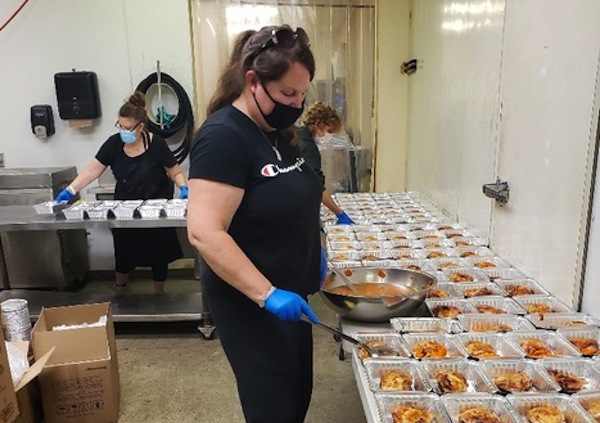
This Purim, Beth Tikvah Congregation packaged more than 240 holiday bundles, delivering one to every member household – spreading not only joy, but raising funds for the synagogue’s preschool and Hebrew school.

“As we enter the month of Adar, our tradition teaches, we must increase joy,” explained Rabbi Susie Tendler, the congregation’s spiritual leader. “The talmudic statement (Ta’anit 29a) is not specific about whose joy we are increasing, rather that it is incumbent upon us to spread joy and cheer, brightening these dark days. Communities around the globe have certainly been wrestling with how to deepen connections and spread joy this past year. Beth Tikvah decided to take the wisdom of our tradition and do so through festive and colourful mishloach manot, Purim packages, that went to every member family living in British Columbia.”

photo - More than 1,000 hamantashen were baked and more than 240 mishloach manot delivered
More than 1,000 hamantashen were baked and more than 240 mishloach manot delivered. (photo from Beth Tikvah)

The effort was multigenerational. There were the volunteers in the kitchen, who made more than 1,000 hamantashen. B’nai mitzvah families and the congregation’s youth groups (USY and Kadima) helped assemble the packages. There were the volunteers who counted, sorted and put the finishing touches on the packages, and those who picked up and delivered the packages all over Richmond and Vancouver. And, of course, the whole endeavour would not have been possible without those who funded it.

photo - More than 240 mishloach manot were delivered
The finished packages. (photo from Beth Tikvah)

In addition to all the congregants who ordered the mishloach manot and volunteered in various ways, Isha L’Isha was a sponsor of the initiative, Leanne Hazon supported the program “relentlessly during all hours of the day,” Alon Sabi designed the ordering system, and BT program manager Yvette Sabi created the boxes.

“For me,” said Tendler, “particularly during COVID, the opportunity to hang a bundle from someone’s door, ring the bell, and then step back three metres or so, and wish someone a happy holiday personally was splendid. However, the joy did not stop there. We received an outpouring of communications from people testifying to the joy and surprise felt from these packages which, in turn, deepened the joy felt by all of the volunteers. It is true, sometimes the little things bring the biggest smiles, and one smile significantly sparks another smile.

Childhood memories

Chicken soup with matzah balls is a staple of the Ashkenazi Passover seder; for meat-eaters, at least. (photo from onceuponachef.com)

My father used to start the seder with a joke. One I remember was: Abe goes to see his boss and says: “We’re doing some heavy house-cleaning at home tomorrow for Pesach. My wife says she needs me to move all the heavy furniture, clean the stove and even clean out the garage.” “We’re short-handed Abe,” the boss replies, “I just can’t give you the day off.” “Thanks boss,” says Abe. “I knew I could count on you!”

Passover was both an exciting and an embarrassing time for me. Both my parents were born in Australia in the late 19th century, when Jews were quite a rarity there. The influx of Jews from Europe to Australia only began after the Second World War, when those lucky enough to survive the Holocaust reached our shores. Back then, I was the only Jewish child in my school, so I had no Jewish friends and, apart from some family members, neither did my parents. Of necessity, we were quite assimilated, as there were few facilities available for Jews in those far-off days.

Still, we adhered to some traditions, and one was the seder. As a child aged 7, it was exciting for lots of reasons, but I had no one to share it with except my two brothers and two sisters, all much older than I was. Our family of seven would sit around the table with Great-Aunt Frances and Uncle Dave, and some of our non-Jewish neighbours, who looked forward to being invited to join us in this, to them, odd ceremony every year. One of them was Penelope, who had a daily radio show and, the next day, she would relate to her listeners all the details that she understood and that seemed to fascinate her.

The table would be set with a white tablecloth and all the traditional seder trappings, with a big decanter of raisin wine my mother had made. I was wearing my “best” dress, which I loved. Like most people during those Depression years, we had very little money, so most of my clothes were hand-me-downs from my sisters. But this one had been bought especially for me and I loved it – pink velvet, with puff sleeves and a lace collar. It broke my heart when I outgrew it.

My father, of course, sat at the head of the table, a big pillow on his chair for reclining. Dad was a man of enormous contrasts, something of a genius. He knew Hebrew, Latin and Greek and thought no one could call themselves educated without an acquaintance of these classical languages. But he was also very modest, rarely let it be known that he was a scholar, and had a fund of off-colour stories that always made me blush and resulted in my being very prudish well into adulthood.

He would conduct the service from the Haggadah in Hebrew, giving explanations in English all the way through. He said that the Wise Son who asked questions at the seder was so intelligent that no one had the faintest idea what he was talking about. The Wicked Son had to be excluded from the table, so he went back to work and got paid double-time for working on Pesach. When the Simple Son asks, “What is this?” you just tell him, “It’s dinner.” And, as for the one who does not know how to ask, you go and wake him up and say, “Next year, remember to come to the table.”

When it came to the Four Questions, Dad had transliterated the “Ma Nishtana” for me in big English letters and the guests all thought I was very clever to be reciting something in Hebrew when I was only 7. I did nothing to disillusion them. I loved the singing and so did our guests, who, after some coaching from Dad, sang along with us heartily, with mostly mispronounced words. I remember we always sang one song in English, “Chad Gadya”: “Only one kid, which my father bought for two zuzim….”

A good meal followed, although my mother – a great cook of Australian dishes – didn’t do too well with Pesach recipes, as her own mother had died when she was my age, so she didn’t have the benefit of learning from her mom. But she tried valiantly. The chicken soup was good, apart from the matzah balls, which were as tough as bullets; and her gefilte fish I won’t attempt to describe. Our guests probably thought we were meant to suffer, and this was just another punishment like having to eat matzot for a week.

Just as I couldn’t share my friends’ Christmas and Easter festivities, I didn’t even tell them about our seder. But now I realize how special it was. When I close my eyes, my family are with me again. Maybe that seder was the last time we were all together in person, as my two brothers soon went overseas with the Royal Australian Air Force. The younger one, shot down over Rommel’s lines in Tobruk, never returned. Over the intervening eight-plus decades, the losses have multiplied. There is only one beloved sister left, and she is in Australia.

I would love my parents to be able to see my family at a seder in Israel. We are more than 50 people now, including all the grandchildren and great-grandchildren. I am sure we observe it more authentically today, but there is something special I have lost that can never be replicated – the family I once had, who gave a little girl love, safety and security.

When I think about our seder table back then, it’s not just about the matzot, shankbone, roasted egg, bitter herbs and charoset. I see the family I have loved and lost, and hear the jokes and the songs and the laughter. I have come a long way since then, both spiritually and physically, but the seeds were planted back then, at the seder table with my family, who will never be forgotten.

Dvora Waysman is a Jerusalem-based author. She has written 14 books, including The Pomegranate Pendant, which was made into a movie, and her latest novella, Searching for Sarah. She can be contacted at dwaysman@gmail.com or through her blog dvorawaysman.com.

Symbolisms of the afikoman

Ask any young child, and even some of the older ones, what is the best part of the seder, and the answer will probably be – looking for the afikoman.

The afikoman is the name of the middle of the three portions of matzah that accompany the seder plate. As part of the seder, the leader breaks the middle matzah into two pieces, and the larger portion becomes the afikoman.

Several interpretations of this word have developed over the years. One is that it is of Greek origin, possibly from the word epikomas or epikomios, which could mean after-meal songs and entertainment or dessert. This meaning would then be the basis for the custom that one is prohibited from eating or drinking after tasting the afikoman – to prevent emulation of the Greek custom of going to parties after plentiful meals. Afiko means remove and mane means dishes. In other words, we have finished, so let’s go to another place and continue celebrating.

Abraham Chill, in his book The Minhagim (customs), writes that, in ancient times, after concluding a meal, people would call out “afikoman,” a combination of the words afiko, take out, and man, meaning sweets. Since the afikoman matzah symbolized the paschal lamb, this referred to the idea that, by eating the afikoman, it would be the last taste in our mouths after the seder, and one would continue to think and talk about the Exodus.

The Mishnah says, “One may not add afikoman after paschal meal.” Chill relates that the lamb was the last portion of food eaten at the seder. Since the destruction of the Temple, the afikoman became the symbol of the paschal sacrifice, which took place in Temple times on Passover night.

Before the end of the seder, it is customary for the leader to hide the afikoman. After the meal, the children try to find it and ransom it back for money or presents. Tradition also says the idea was a gimmick to encourage children to stay awake during the seder.

Jews of Iran, Afghanistan, Greece, Kurdistan and Bukharia keep a piece of the afikoman matzah to protect against the “evil eye,” and for good luck.

Among some Jewish groups, pregnant women carry a piece of the afikoman with salt and coral to hold during delivery.

In Iraq and other Middle Eastern countries, during the seder, children wrap the afikoman in a piece of material and tie it to their backs. They leave the room and pretend to be travelers. When they return, the seder leader asks: where are you coming from? They reply, “Egypt.” The leader then asks, “And where are you going?” And they respond, “Jerusalem.”

Some Sephardi groups and others do not follow the custom of “stealing” the afikoman for ransom from the children. Yemenites also do not participate in this custom. They say the Hebrew letters in the word afikoman – aleph, peh, yud, kaf, vav, mem, nun – stand for the following words: aleph for egozim (nuts); peh for payrote (fruit); yud for yayin (wine); kaf for keliyot (granules of grain); vav for u’vasar (and meat); mem for mayim (water); and nun sofit for nehrd (spices).

Whatever your customary rituals for the holiday, may you have a happy one.

Sybil Kaplan is a journalist, lecturer, book reviewer and food writer in Jerusalem. She created and leads the weekly English-language Shuk Walks in Machane Yehuda, she has compiled and edited nine kosher cookbooks, and is the author of Witness to History: Ten Years as a Woman Journalist in Israel.