The lights of allyship

This Chanukah, kindle the light of liberation, not just for you and your loved ones, but for all people whose freedom of expression is threatened. (photo by Robert Couse-Baker / flickr.com)

In a time of identity searching, introspection and anticipation, Chanukah can be an inviting space to reflect and refract the light before us. From the Chanukah that was to the Chanukah we arrive at, the world has shifted and we are not the same. This holiday of chocolate, oil and games of dreidel beckons us into a moment of contemplation.

Chanukah expresses a language of novelty, innovation and a miraculous expansion from what we thought was possible. The ease and accessibility, the simplicity of candles, the sense that Chanukah is predictable and performative belies the very creative, radical nature of the Festival of Lights.

The annual Chanukah experience, at its core, is an opportunity to receive new insight, empowerment and opportunity to overcome the forces that oppress, debase and deny our most essential identities. Had the few Maccabees not searched to provide that light for the many, none of us would have a miracle to celebrate today. Even though we are privileged to be able to publicly observe our traditions, Chanukah reminds us that our work is not complete until everyone can safely and freely express their identities.

Visibility and proximity

One of the unique aspects of Chanukah is that it is the only festival that occurs in two different months. It is literally positioned between Kislev and Tevet to help us be aware and adapt to changing times. In the light of the candles, it is possible to see our roles anew, clarifying our commitment to ensuring that the privilege and expression of being is available to everyone.

When the Talmud explores modalities of the mitzvah of lighting the chanukiyah, it says that each and every person should have a candle. It continues to explain that an even greater beautification of the mitzvah is when everyone is able to increase the light with each additional day. When everyone has their own chanukiyah, when everyone is able to light all the candles on each night, then everyone is bringing the fullest light possible. This is the hope: with so much light, the world is relieved of darkness.

Our rabbis teach that this attribute of adding is connected to Joseph, whose story we read on Shabbat Chanukah. Joseph’s name means to increase, and his story reveals the relationship between proximity and visibility. The Talmud, Shabbat 22a, juxtaposes the narrative of Joseph being thrown into a pit with the laws detailing the proper placement of the menorah and the limits on how far off the ground it can be.

In Genesis 37:18, Joseph’s brothers “saw [Joseph] from afar … and they conspired against him.” They throw him into a pit, which Genesis 37:24 says “was empty and didn’t have water.” But the rabbis disagree, arguing that, while “empty” implies that the pit didn’t have water in it, it was not without venomous pit-dwellers. There were snakes and scorpions that the brothers didn’t know about, because they were not close enough to the pit to see.

Moreover, the distance at which the brothers first saw Joseph approaching made it easy for them to plot against him. In not one, but two cases, the brothers’ lack of proximity leads to actions that degrade and humiliate. If only they waited to see their little brother up close before acting, they might have changed their plan. If only they approached the pit to look inside, they might have seen the snakes and scorpions. The Torah is clear: proximity and visibility lead to responsibility.

It is for that reason the Talmud instructs us that we cannot place a menorah too far off of the ground – we must be close enough to see and be affected by the candles. If the menorah can’t be seen, we miss the message of the miracle, and the opportunity to take responsibility is lost.

The Hasmoneans were descendants of Aaron, who, the Mishnah tells us, was a lover of peace, pursuer of peace and lover of peoples.

Judaism is a religion of action, and we must be practitioners of our tradition’s wisdom by taking responsibility.

Today, even with technologies that keep us connected across oceans and continents, we understand the challenge and, more so, the threat of being too distant. Jews have a response to prevent the dehumanization that often comes when we are distanced from the lived experience of others – draw in close.

A great miracle happens with allyship

The Hebrew words behind the story of Chanukah and Joseph also reaffirm the holiday’s charge to increase visibility, to be an ally. The rabbis saw our world as created through speech and language and, thus, all Hebrew letters represent hidden truths. Just like the story of Joseph in the pit, the closer you look, the more that is revealed.

The mystics teach that the Hebrew letters for Greece (Yavan is spelled yud, vav, nun) are three lines that descend as the word progresses. The great and mighty culture that claimed elite thought and refinement was in fact a culture that debased and denigrated. Greek leadership prioritized the body over the spirit; what was seen on the outside was of greater value than that which was within. Thus, it could be said that Greece, by elevating the external, actually debases it, a message hidden within the descending letters: yud, vav, nun.

The Hebrew word for Joseph, Yosef, begins with the same first two letters. But the third letter is where the comparison is stark. Instead of a nun sofit (a nun at the end of a word), which is a straight line going down, we have the round letter samech, a symbol for equality. Unlike the hierarchy of the nun, the circle of the samech allows every point on its circumference to be equidistant to the centre. Joseph chooses to chaver (friend) up and stops the descent by treating others as equals.

The nun and samech form the word miracle, nes. The first letter, nun, is the only letter in Hebrew that doesn’t appear in the alphabetical acrostic of the prayer Ashrei. Our rabbis explain that this letter stands for nefela, falling, and, therefore, is omitted. The next letter in the alphabet is the samech and it starts the Ashrei verse, “samech l’chol hanoflim,” “supporting all those who have fallen.” Jews in those days, as in ours, had a choice between the “nun” and the “samech” – to align with the oppressors and feel secure or to ally with those who needed support. In choosing the latter, a great miracle (nes) happened there.

Kindling the light

As the story and words of Chanukah convey, the Jewish response to oppression is not just to be free but to dismantle the system of oppression and provide equality for others. Today, we place a menorah in the window in order to publicize our engagement in the ancient and ongoing story of this struggle. We stand up in broken places of despair and hopelessness to rededicate ourselves and our institutions to this cause. Now, when we see an injustice, when we are proximate to the dehumanization of a child of G-d, we not only see the unholy act itself but also we recognize the imperative to respond.

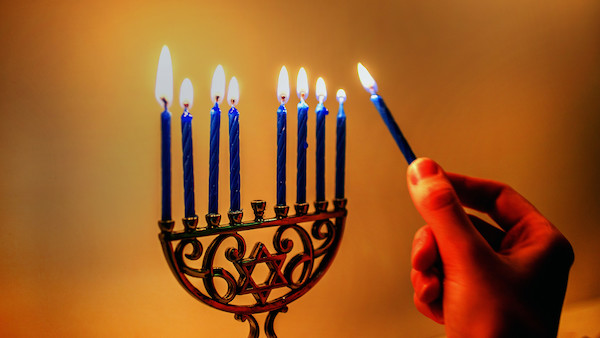
This Chanukah, kindle the light of liberation, not just for you and your loved ones, but for all people whose freedom of expression is threatened. Kindle a light to banish the darkness of hatred, racism, transphobia and misogyny. Kindle a light that signals to outsiders that you are a home (or an organization) committed to rededication and the recreation of holy space, particularly in the most broken of places.

Chanukah was not immediately established as a holiday. The Talmud teaches that the rabbis waited until the following year to institute a permanent commemoration. When they realized that the miracle could be replicated – that, in every generation, Jews could learn to take the little they had and turn it into something miraculous – they created the holiday. That is the holy ask of Chanukah: to be the light that can extend and expand, to be the miracle that someone else needs.

Michael Walzer writes that “wherever we go, it is eternally Egypt,” but that there is a Promised Land, and the only way to make it across the wilderness is by “joining hands, marching together.” The story of oppression and liberation is also a story of allyship. We will not survive without hands to support and guide us, to hold and elevate us. This year, on Chanukah, be the light and bring the light out of the closet and into the world.

Rabbi Mike Moskowitz is scholar-in-residence of trans and queer Jewish studies at Congregation Beit Simchat Torah in New York and Rabbi Dara Frimmer is senior rabbi at Temple Isaiah in Los Angeles. This article was originally published in the Jewish Journal and articles by other Shalom Hartman Institute scholars can be found at shalomhartman.org.

Heroes throughout the ages

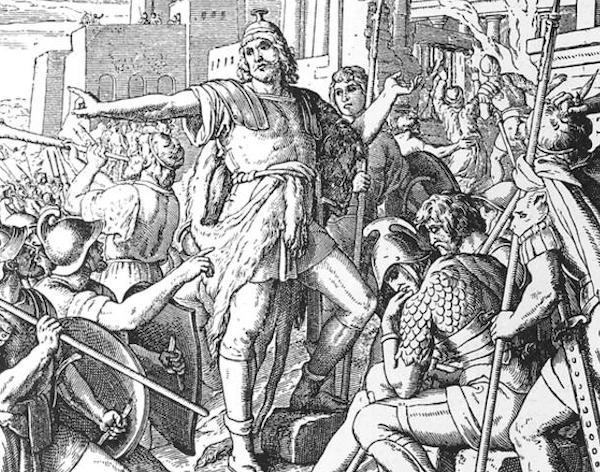
Judah Maccabee purifies the Temple, etching by Julius von Carolsfeld, 1860.

Every year, we look forward to Chanukah, even though it is not even mentioned in the Torah. Its name means “Dedication” and it starts on erev the 25th of Kislev, which, this year, falls on the night of Nov. 28.

The festival celebrates the triumph of the Maccabees, led by Mattityahu and, later, by his son Judah, over the Greek Syrians, led by Antiochus. As a result, Jewish sovereignty was reestablished in Judea for a time.

But we should not forget that this ancient conflict was also a civil war between the Jewish people themselves. The Hellenists admired Greek culture, which they began to emulate; whereas the Maccabees remained steadfast in their adherence to Judaism’s ideals and beliefs. The factions disagreed on various issues, including the rite of circumcision, a fundamental and crucial Jewish ritual that the Hellenists claimed violated the perfection of the body.

In 175 BCE, Antiochus tried to wipe out the Jewish religion entirely by substituting the Greek language, gods and customs. The final blow came when the Temple was defiled and a giant statue of the Greek god Zeus was erected there, with the Jews ordered to worship it.

Some, like Hannah and her seven sons, resisted passively, choosing death rather than idol worship. Hundreds hid in caves and some suffocated to death. But there was no active resistance until the Hasmonean family of Mattityahu and his sons at Modi’in raised a banner: “Whoever is for the Lord, follow me!”

A small army was formed, with Judah Maccabee as its leader. Antiochus sent three armies to suppress the revolt, but the Maccabees triumphed. Their first priority after victory was to purify the Temple.

As the story goes, all the cruses of oil had been defiled except one. Instead of burning for just one day, it miraculously lasted for eight days, until more holy oil could be acquired. Hence, the celebration of Chanukah for eight nights and days.

Today, Chanukah still has relevance. We remember not only the heroism of the Maccabeans, but other heroic acts. Many times in Israel we have seen the victory of a tiny nation against a larger and stronger one, the few against the many.

In 1948, the young Israel Defence Forces defeated much larger Arab armies to usher in the independent state of Israel. Earlier, in the Second World War, there was widespread Jewish resistance to Hitler’s brutal policies and Jews fought in the ghettos and joined partisan units in forests outside Polish and Russian cities conquered by the Nazis.

Israel’s operation into Entebbe to rescue hostages in Uganda is another instance of modern heroism and our history abounds with examples. The revolt of the Hasmoneans is the symbol of the spirit of Zionism. Today, in Western society, no tyrant is forcing us to abandon our faith, but many Jews are in great danger of losing their Jewish identity nonetheless. Hellenism, in a different form, is alive and well.

Chanukah has broad human significance as a festival of liberty and religious freedom, not just for us, but for all people. It is a humanistic festival. The symbol of Chanukah is light and the real miracle is that, despite millennia of persecution and dispersion, the light of our people has never been extinguished.

Dvora Waysman has written 14 books, and the film The Golden Pomegranate was based on her book The Pomegranate Pendant. Her latest novel is Searching for Sarah. She can be contacted at dwaysman@gmail.com.

Dream warms frozen flames

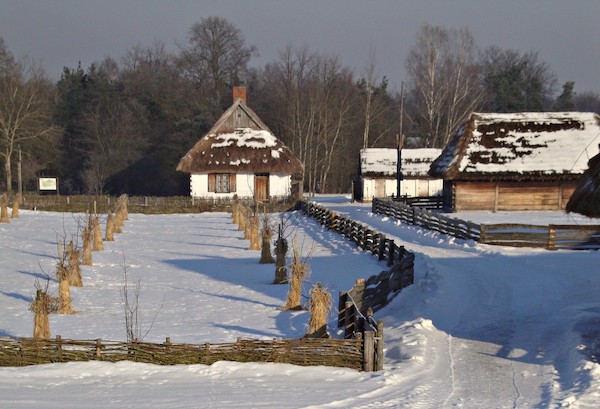
It was just before sunset on the last night of Chanukah, the coldest it had ever been in Chelm. (photo from pxhere.com)

It was a cold day in the village. It was so cold that when Reb Cantor, the merchant, sneezed without covering his mouth, his mucus solidified and blew a hole through the window of his shop, which his wife fixed by throwing a cup of tea at his head. He ducked, and the tea hit the windowpane and froze into place. It was that cold.

It was so cold that the flame of the eternal light in the synagogue froze solid. Instead of flickering brightly, it stood still, like red and yellow glass.

The villagers were frightened. It was just before sunset on the last night of Chanukah. Soup froze on its way from the pot to the table. Vodka oozed as it was poured into a glass. Chanukah candles snapped at the slightest touch. Reb Cantor’s matches broke into splinters. Stoves were almost useless. Warm challahs froze into rocks in seconds. Axes had to be warmed or else, when they struck the firewood, the blades shattered as if they were made of crystal. The Uherka River had frozen solid, trapping in its icy clutches a flock of geese late to leave the area.

It seemed as if the end was near. Everyone was hungry. They were afraid to go outside because the wind sucked the heat from their skin. The air itself left their lips numb. Kissing could be dangerous.

The day had been dark and cold, and the night would be darker and colder. Meals were uncooked and uneaten. Chanukah candles, set in their menorahs, were unblessed and unlit. Families stayed in their homes, huddled together in bed.

Even in the house of the wisest man in the village of fools, the menorah was dark.

Rabbi Kibbitz shivered in his bed with his wife, Channah Chaipul (she kept her maiden name, which, as you know, is another story). The two of them lay fully dressed beneath four sheets, three blankets, two quilts and seven coats – everything warm that they owned. Still, his teeth were chattering. For the first time in his life, he regretted not owning a dog or a cat.

“Channah,” the rabbi said. “We have to light the candles.”

“You do it,” she said. “I’ll watch from here.”

“My hand is too unsteady. The shammos will blow out. You are better at that sort of thing.”

“I’m almost warm,” she said. “You do it.”

“I’m nearly frozen,” he answered.

“So? You want me to get out of bed, light the candles, and come back in with icy cold feet?”

He shuddered. The last time she had put a cold foot on his ankle, his heart nearly stopped.

He sighed and closed his eyes. Maybe in a few minutes he would….

“Are you awake?” she said, elbowing him in the ribs.

“Channah!” he said, suddenly sitting up. “I had a dream!”

“Are you crazy? Lie down, you’re letting in a draft.”

“No, Channah, I’ve had a dream. Quickly! Get up! We need to gather everyone together in the synagogue.”

Mrs. Chaipul squinted at her husband. She hadn’t seen him this excited since he’d beaten Rabbi Abrahms, the schoolteacher, at canasta. “What did you dream?”

“I can’t tell you,” he answered. He slid out of bed and gasped as the frigid air slapped his neck like an icy wet towel. “Tell everyone to bring their menorahs and come to the synagogue. Quickly!”

Grumbling and shivering, Mrs. Chaipul stood, and nearly stopped right there. She wondered if it was possible for blood to freeze. Then, the rabbi went one way and his wife went the other, banging on doors and windows. They ran as fast as they could (which was remarkably briskly, considering their ages), waking villagers and telling them to gather in the synagogue.

“What? Why? Are you crazy?”

“Yes, I am,” said Mrs. Chaipul. “But the rabbi has had a dream. So you can freeze in your house or freeze in the shul. It’s up to you.”

Parents groaned. Children were wrapped in blankets. Doors were pried open. Menorahs were carried carefully, lest they crack into pieces on the short trip to the synagogue.

The small shul filled quickly.

Rabbi Kibbitz stood at the front, on the bimah, with five tallisim wrapped around his shivering old shoulders. He stood beneath the eternal light, staring at the still-frozen flame.

“Is everyone here?” he asked. Everyone looked around and nodded. No one was missing. “Then, please, somebody shut the door!”

“It’s shut,” came a shout from the back.

“Oy,” muttered the chilled rabbi.

“So, Rabbi, what is it?” said Reb Cantor. “What is so important that you asked us to risk life and limb to come to the synagogue on a night so cold my eyeballs almost froze?”

“I had a dream,” the rabbi said.

“So, I heard,” answered Reb Cantor. “You maybe want to tell us what the dream was?”

“I dreamed,” Rabbi Kibbitz sighed, “that all the villagers of Chelm gathered together in the synagogue.”

“Yes? Yes?”

“Well, in my dream, it was a cold, cold night, and the Chanukah candles weren’t yet lit.”

“Yes? Yes?” the villagers repeated.

“And everyone, all of you, came here to the synagogue.”

“Yes? Yes?”

“That’s it.” The wise rabbi shrugged. “We were all here. Then Channah nudged me, and I woke up.”

“That’s not much of a dream,” muttered Mrs. Chaipul.

The citizens of Chelm stared in disbelief at their beloved rabbi.

“You’re crazy!” shouted Reb Cantor. “You yanked us out of our moderately warm beds and dragged us here to tell us that you had a dream that we were all here? That’s it? Rabbi Kibbitz has finally lost his mind! Rabbi Abrahms, it is time for you to become the chief rabbi of Chelm.”

The villagers began to grumble and argue and stamp their feet. A wave of exasperated hot air lifted to the ceiling as their voices rose into shouts.

“Wait, wait!” Rabbi Kibbitz said. “Please, listen.”

Just then a child’s voice shouted, “Look! Look!”

It was young Doodle, the orphan, and one of the most foolish boys in the village of Chelm.

Doodle was pointing up at the eternal lamp. The pale light was thawing – flickering faintly, but growing brighter as it filled the synagogue with its glow of red, orange, yellow and gold.

Reb Cantor himself lifted Doodle up. “Careful, careful now,” he whispered, as the young boy touched his shammos to the light of the eternal flame.

That candle was passed back and forth throughout the shul, as every family lit their own shammos. Everyone held their breath, wondering whether the wind and the cold would extinguish the thin flames.

Then, at long last, the villagers of Chelm said the blessings all together. The shammosim touched the other candlewicks. Soon, for each family, one flame became eight (plus the shammosim).

Now the synagogue was full of light, and the villagers began to sing.

Reb Cantor swept the old rabbi up in a bear hug. “That was some dream!”

Everyone laughed and danced.

They stayed there all night, and the candles burned so slowly that it was well past dawn before the last one burned out.

That morning, when the doors to the synagogue were opened at last, a warm breeze left the shul and spread out over the village.

The ice on the Uherka River cracked, and the flock of trapped geese took flight. All the villagers watched and cheered as the birds sped south.

And, from the east, the sun rose higher, and its rays felt warm with promise.

Izzy Abrahmson is a pen name for author and storyteller Mark Binder, who  lives in Providence, R.I., and tours the world – virtually and in-person. Abrahmson’s Winter Blessings: Warm Stories from the Village was a National Jewish Book Awards finalist.

A happy family holiday

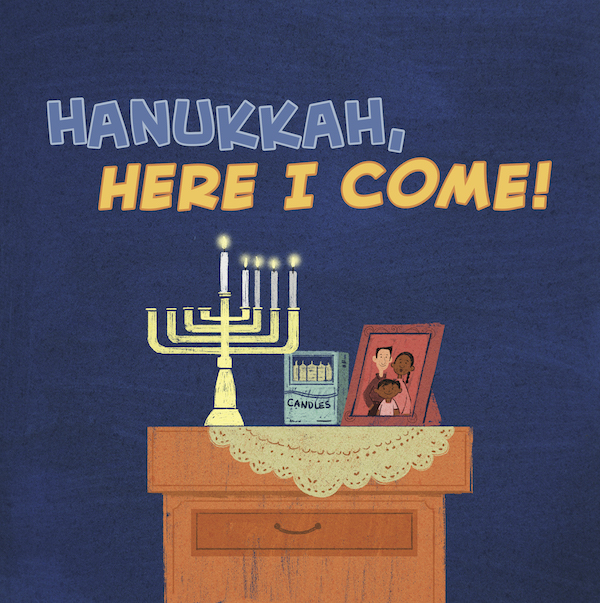
Mini poems that rhyme and colourful  illustrations combine for a family-filled, fun-filled and food-filled holiday book for younger revelers. Hanukkah, Here I Come! (Grosset & Dunlap) by writer D.J. Steinberg and illustrator Sara Palacios is an energetic account that touches upon all the many things a kid might look forward to on Chanukah.

Starting with the setting up of the candles and the stacking of the presents, the meal prep also begins. The children help out their parents.

We briefly learn about the brave Judah Maccabee, “Macca-BAM! Macca-BOOM!” and how he and his brothers made history and the Jews took back their Temple. We light the candles, sharing in the joy with the neighbours across the street, who can be seen from their apartment windows. First gifts are unwrapped and selfies are taken – these illustrations are particularly delightful, as we see and read: “Click! That one cut off my sister.

“Click! Where’s my mother’s head?

“Click! That one’s dark and blurry.

“Click! That’s Mom’s finger instead.”

image - A page from Hanukkah, Here I Come! (Grosset & Dunlap) by writer D.J. Steinberg and illustrator Sara Palacios
A page from Hanukkah, Here I Come! (Grosset & Dunlap) by writer D.J. Steinberg and illustrator Sara Palacios.

There is chocolate gelt, a lesson on how to play dreidel and a visit to Bubbe and Grandpa’s (implying a mixed family perhaps, that the grandfather is not Zayde). Latkes and apple sauce – or are you on Team Sour Cream, instead? – follow. The happy noise of the family celebrating together mounts and dinner is served, with a warning that your jelly doughnut dessert might just explode all over your face.

The last night of Chanukah arrives all too soon.

Editor’s Note: Unfortunately, because of supply chain issues, the publication of Hanukkah, Here I Come! has been postponed to fall 2022.

Sukkot a time for happiness

As a kid, Sukkot wasn’t a holiday we observed at home. Our congregation was where I decorated and visited a sukkah, but it wasn’t a big festival for us. The temple did feel like an extension of my house since my mom worked full time there – but it wasn’t my house.

By contrast, as a married adult, we’ve really embraced Sukkot at home. We’ve built a sukkah in the backyard of each home we’ve lived in. We’ve more than 20 years now of experience in inviting guests for big sukkah dinner parties and having quiet family meals together, too. We enjoy buying a lulav and etrog so we can “shake it in the sukkah!” on our own.

It’s brought us lots of pleasure, which is apt because Sukkot is the only festival that is labeled “z’man simchateinu” or “our time of happiness.” It’s literally our time to party. In Tractate Sukkah, it describes the special “in the place of the drawing of water” celebrations at the Temple on Sukkot as the party to end all parties. In Tractate Sukkah 51a, it says this twice, in both the Mishnah and Gemara, “One who did not see the celebration … never saw celebration in his days.”  The Gemara goes further to explain: “One who did not see Jerusalem in its glory, never saw a beautiful city. One who did not see the Temple in its constructed state, never saw a magnificent structure.”

Like any spare, ancient text, we can read this several ways. My first tendency is to recall overhearing university acquaintances laughing. When they saw me, as they laughed, they explained that their fraternity bash was “the party to end all parties” and “they were so blasted” and “it’s a shame you weren’t there!” Then I’d feel some shame. I hadn’t been invited, feeling left out and uncomfortable. Then, as an introvert, I’d privately admit relief!  I didn’t have to deal with the noise, drunks, drugs and cigarettes, either.

Yet this is not at all the negative, emotional reading that I think the rabbis intended. The talmudic sages were describing a truly joyous, amazing, mind-blowingly big celebration. It’s hard during the pandemic to wrap my brain around this huge way of celebrating. The Temple in Jerusalem and its way of observing the festivities are also long past, but there are still big sukkahs out there in the world, full of party-goers, no matter the year.

Many of us struggle at times to find the joy in our lives – the world news, natural disaster and ongoing pandemic waves can leave us reeling and wondering when things will get better. When we can gather, many people are flooded with joy at a crowded wedding or a big festive event. However, modern-day Sukkot can bring us joy even without the enormous shindig or party to end all parties at the Temple in Jerusalem.

For me, being outside, at any time of year, helps me find that inner calm, contentment and grounding. I’ve also recently observed moments when I start feeling anxious or sucked into negativity. At those times, I’m consciously trying to step away from the news and the social media feed. I’m giving myself time every day to read a book, cook, study Talmud, knit, and watch my kids and dog play. I need to make space for finding that joy.

This summer, we’ve had a lot of wasps outside in Winnipeg, along with heat, drought and wildfire smoke. It was so bad that our difficult-to-assemble patio table never made it out onto the deck. We used the matching chairs, but gave up on eating outside. I recently tested the waters with my husband, asking if he felt it would be worth it to assemble everything for Sukkot anyway. After all, three out of four family members have gotten wasp stings in the yard so far. It hasn’t been auspicious.

He responded positively, as only a biology professor who studies insects might, noting that wasps weren’t active at night, that cooler temperatures and winds helped, and that we should set things up as usual. He was right. By planning to build a sukkah despite everything, we could optimize our chances at “our time of rejoicing.” Studying Tractate Sukkah this summer made me anticipate the holiday so much that I couldn’t wait for this joyful holiday this time around.

Towards the end of August, the weather started to turn. Our lawns have finally gotten enough rain to turn green again and, as the temperatures drop, the wasps are less active. Winnipeg isn’t a place where many people consider sleeping in the sukkah, or even insist on eating every meal there. It’s often just too cold, but that also kills wasps! Once or twice since we moved here, it’s even snowed during Sukkot.

In Tractate Sukkah 26a, the talmudic rabbi Rava suggests leniency in terms of dwelling in the sukkah. Sick people are exempt from this commandment, but Rava suggests that, if you’re suffering, you too are exempt. His examples include biting flies or a foul-smelling sukkah floor but, when comparing the weather in Israel or Babylonia to Winnipeg, Rava would likely suffer here. Our freezing fall temperatures are sufficiently uncomfortable that many seek only a brief moment in the sukkah rather than a camp out.

I’m still drawn to crisp, clear fall evenings outside in the dark, however. We’ll be wearing our coats and smelling the leaves turning. It’s not the right year to invite lots of guests for parties. We’ve got kids too young to be vaccinated yet. We’re being very cautious.

Still, Sukkot gifts us with excuses to stay up late and enjoy the outdoors each autumn just a little bit longer. The chance to celebrate, this time of our happiness, is upon us. Give yourself that chance to let go of the negativity, worries and anxieties. Have a completely legitimate, Jewishly commanded break outdoors. It’s that time of year to get out into nature and party!  Sukkot is here. Enjoy.

Joanne Seiff has written regularly for CBC Manitoba and various Jewish publications. She is the author of three books, including From the Outside In: Jewish Post Columns 2015-2016, a collection of essays available for digital download or as a paperback from Amazon. Check her out on Instagram @yrnspinner or at joanneseiff.blogspot.com.

A most ancient dish

“Stuffed vegetables – a most ancient Sukkot dish, probably having its genesis with the grape leaves remaining on the vine after the harvest that were then filled and simmered until tender – are common sights on holiday tables in all communities,” wrote the late Gil Marks. “As there were few or no grapes in much of northern and eastern Europe, the prevalent cabbage became a handy substitute.”

Perhaps we stuff foods on Sukkot to remind us of the harvest and abundance in the fields, as well as the multiple blessings we have been given in life. Here are a few recipes I have in my files.

SHARA’S STUFFED TOMATOES
(This is my daughter’s recipe.)

halved tomatoes
salt and pepper to taste
2 tbsp breadcrumbs
2 tbsp olive oil
1 minced garlic clove
grated Romano cheese
basil

  1. Grease a baking dish. Preheat oven to 300°F.
  2. Place tomato halves in baking dish. Sprinkle with salt and pepper.
  3. Combine breadcrumbs, olive oil and garlic in a bowl. Spoon onto tomato halves.
  4. Sprinkle on cheese and basil.
  5. Bake (or broil) until brown. Serve immediately.

RUTH’S IRAQI STUFFED PUMPKIN
(My longtime friend made this recipe. It makes 4-6 servings.)

2 pounds cleaned pumpkin
margarine pieces
cinnamon for sprinkling
3 cups cooked rice
ginger to taste
1/2 cup raisins
1/4 cup finely chopped nuts
brown sugar

  1. Preheat oven to 350°F. Grease a baking dish.
  2. Place pumpkin in baking dish. Dot with margarine pieces. Sprinkle with cinnamon. Bake for 30 minutes.
  3. In the meantime, oil a frying pan. Fry rice with cinnamon and ginger until brown. Add two cups water and simmer.
  4. Spoon rice into pumpkin and bake one hour.
  5. Fry raisins and nuts a few minutes and add to pumpkin. Sprinkle brown sugar on top. Bake until pumpkin is soft.

STUFFED ZUCCHINI
(makes 6 servings)

1 1/2 pounds zucchini, halved and quartered with pulp removed
1 1/2 cups seasoned breadcrumbs
3 tbsp olive oil
1 1/2 cups tomato sauce with onion
3/4 cup freshly grated Parmesan cheese (optional)

  1. Heat oil in a frying pan, add zucchini quarters, cover and cook until lightly brown. Reduce heat to low, cover and cook 10 minutes more. Transfer to a baking dish.
  2. Place pulp in a bowl and stir in breadcrumbs. Spoon breadcrumbs into the zucchini. Top each with one tablespoon tomato sauce. If using cheese, sprinkle each with one tablespoon cheese.
  3. Broil three inches from heat source for three to four minutes, until sauce bubbles (and cheese melts, if using it).

Sybil Kaplan is a journalist, editor of nine kosher cookbooks (working on a 10th) and a food writer living in Jerusalem. She has written the kosher restaurant features for janglo.net since 2014 and leads weekly English-language Shuk Walks in Machane Yehuda.

Light of holiday meals

Light of Shabbat Volunteers packaging kosher meals for the High Holidays. (photo from Chabad Richmond)

On Aug. 29, a contingent of 12 Chabad Richmond volunteers worked to ensure that recipients of the Richmond community Light of Shabbat (LOS) meal program would be well fed throughout Rosh Hashanah, Yom Kippur and Sukkot.

The volunteers cooked more than 800 LOS meals in a local kosher commissary. “This is truly a labour of love,” said organizer Chanie Baitelman, co-director of Chabad Richmond. “Our Light of Shabbat participants rely on these meals. It’s not just about feeding individuals and families, it’s about nourishing their souls as well.”

Since 2011, Chabad Richmond has run a community-building program called Light of Shabbat, where volunteers cook and deliver kosher Shabbat meals to old and young, singles and families, the unemployed and working poor, immigrants and born-and-raised community members. The program is run entirely by volunteers, who coordinate, plan, shop, cook, bake, package and deliver full, healthy, kosher meals.

Since the pandemic began, more than 12,000 such meals have been prepared and delivered to people in the Richmond community. All of this is made possible through the generosity of donors, many of whom are LOS volunteers themselves. They know that everyone needs a helping hand at some time in their life.

For more information about Chabad Richmond, visit chabadrichmond.com.

– Courtesy Chabad Richmond

About the Rosh Hashanah cover art

image - JI Rosh Hashanah issue 2021 cover with art by Deborah ShapiroDeborah Shapiro is a self-taught, award-winning artist from Akron, Ohio, who creates collages from bits of magazine paper – no paint is used. Her subjects include nature scenes, animals and still life images. Many of her pieces have words and added meaning, as with the apple collage that graces the cover of this special issue of the Jewish Independent. You will find parts of apple pie recipes within the cut part of the apple. Apples, of course, are one of the symbols of Rosh Hashanah, representing, as we dip them in honey, our wishes for a sweet new year.

Shapiro began her art career later in life, after the age of 50, following a jaw surgery.  Her mother gave her magazines as she recovered and Shapiro used them as paint to create paper paintings. Prior to that, she was a videographer for more than 35 years. To see more of her creations, visit deborahshapiroart.com or facebook.com/deborahshapiroart.

Returning to our holiday tables

Planning ahead can help minimize touch points and help keep a small gathering safe. (photo by Michelle Dodek)

We all remember the days when we gathered family, friends and maybe some strangers together at our holiday table to celebrate Rosh Hashanah. For me, it feels like a distant memory but I know I loved preparing loads of food for all of us to enjoy together. And I’m looking forward to doing it again this year, albeit outside, under cover of a tent my brother luckily bought before his eldest daughter’s bat mitzvah (and has subsequently used for the bat mitzvah parties of his two younger daughters and other gatherings, particularly since COVID hit).

Dinner in my family has always a “family style” affair, where dishes are passed from one to the next and then left on the table for anyone to help themselves to seconds or thirds. Lunch on the first day of Rosh Hashanah, which is the main event in my home (aka “the Big Lunch”), has been, for the more than 20 years I’ve hosted it, a giant buffet.

For some people, reverting back to the way things were may be an easy mental step. For others, in an environment with unvaccinated children, immunocompromised loved ones and a newfound awareness about germ transmission, things will not go back to the way they were pre-pandemic. Not yet, given the latest mask mandate, and maybe not ever.

What to serve and how to serve it has always been a challenge in my family. How do we make sure everyone is comfortable with the food choices and the way they are presented? We have a few parameters since we are kosher and have those with nut allergies, dairy sensitivities, oral allergy syndrome, a few vegetarians and others who are just plain particular. Inviting upwards of 40 people, usually closer to 75, always presents some logistical fun, especially with environmental concerns ruling out disposables. All of these challenges have created an environment where thinking creatively about food is a necessity. My formal training as a chef has helped with this process.

The two parts to making sure your guests are at ease this holiday season are choosing a delicious menu (as usual) and presenting the food in a way that features as few touch points as possible. Menus can go one of two ways: traditional or modern. For traditional foods, I will defer to your family’s minhag (tradition). Some families and cooks take great pleasure in their annual interaction with time-honoured recipes. I treasure my baba’s potato knish recipe and relish the prospect of circling my challah and topping it with another small, braided crown the way my mom showed me when I was a little girl.

As a vegetarian, however, I have never presented a full array of traditional Ashkenazi foods to celebrate any holiday. Pickled tongue? Not a chance. In fact, I felt like a bit of a bad Jewish mother when my daughter was 5 years old and leaned over to me at my mother’s yontif table as the soup was served and whispered, “Chicken in soup! Weird!” My soups are seasonal, bright vegetable soups like butternut squash or carrot ginger.

photo - Composed salads are colourful and tasty
Composed salads are colourful and tasty. (photo by Michelle Dodek)

The farmers market produce that looks most appealing is what guides my menu. I feel strongly that bringing the bounty of our local harvest to my celebration of a spiritual new year is integral to our connection with where we are and how we live. That topic, however, is for another article.

Let me suggest, if you wish to bring your offerings into 2021 and still have your food choices reflect the symbolism of our tradition, try a couple of approaches.

First, look to Israeli cuisine. The mash-up of all Jewish traditions from Austria to Addis Ababa give many tasty options that will become new staples at your family gatherings.

Second, many Sephardi foods focus on beautiful vegetables and fruits that were not available to people living in Eastern Europe. However, living as we do today, we have access to almost every possible kind of produce. Invest in a few good cookbooks, like those of Adina Sussman, Jana Gur, Einat Admony or Yotam Ottolenghi for ideas on how to up your game with some vegetable forward, delicious, holiday-worthy food.

As far as ways to serve your food, here are some options to consider in order to be considerate of your guests in this special year of our emergence from pandemic holiday isolation.

Option 1: “Modified Family Style aka Downton Abbey,” using family members as the serving staff. For this option, the cook enlists the help of a few willing family members, (in my case, my teenaged children, my sisters and my brother). Each helper is given the responsibility to serve a dish, going from guest to guest, giving a description of the delicacy and spooning out an appropriate amount. While efficient, this does lend itself to the possibility of green bean almandine on Bubbie’s shoulder or salad in Grandpa’s lap.

Option 2: “Plated Dinner aka Eat What’s On Your Plate aka Sweat Away, Host.” This is the restaurant-style plate that hasn’t been so common at home since the Starbucks revolution in dining, where everyone has to have everything their way. In this model, everyone gets the same thing, in approximately the same amounts. Similar to a restaurant but without choosing your order. This results in more food waste, because, although it hasn’t been dropped on Grandpa’s lap, some of dinner will no doubt be pushed to the perimeter of the plate and left for the compost. It also requires, as suggested in the third version of the name, for someone to toil in the kitchen to make every plate and be on call if someone wants seconds of quinoa pilaf and doesn’t have the good fortune of sitting next to a toddler who has pushed all of that mixed grain thing to the edge of her plate. One can enlist the help of volunteers to assist with the plating to speed things up and, most certainly, some people will be needed to take the finished plates to the table, but the onus of refills will almost certainly fall to the person in charge of the kitchen.

Option 3: “Staffed Buffet” is probably the easiest, depending on the set up of your house. In this iteration of food service, a couple of people serve the buffet of food to the guests as they walk by with their plates. This eliminates having everyone touch the serving utensils. It requires fewer helpers than Option 1 and is more customized than Option 2. The catch is that your house needs to be set up to accommodate a group of hungry Jews traipsing along – and staying patient long enough with their family members who are acting as servers – to get all of their food. One major recommendation is, to avoid a stampede or major butting in line, do not serve any version of smoked salmon. For some reason, the sight of thinly sliced orange fish causes many Jewish people to act like Americans at Walmart on Black Friday.

Good luck with your holiday entertaining. Keeping things small this year to ease back into the intimacy of entertaining is also probably a great idea. Remember to say a hearty Shehechiyanu with your assembled guests for, if the pandemic has taught us one lesson, it is never to take being with our loved ones for granted. Shana tova.

Michelle Dodek is a longtime contributor to the Jewish Independent and a balabusta. She shares her love of cooking and entertaining through culinary classes, both in person and on Zoom.

Being a Jewish woman

The Daughters of Zelophehad by artist Frederick Richard Pickersgill, engraver Dalziel Brothers, 1865-1881. (photo from metmuseum.org)

“A cobbler passed by the window of Rabbi Levi Yitzhak, calling out: “Have you nothing to mend?!” The rabbi began to cry: “Woe is me! Rosh Hashanah is almost here and I have not yet mended myself!” (Zichron Ha Rishonim)

According to Rabbi Kruspedai, in the name of Rabbi Yohanan, three books are opened on Rosh Hashanah: one for the wholly righteous, one for the wholly wicked and one for most of us, those in between. The wholly righteous are inscribed and sealed in the Book of Life; the wicked in the Book of Death; and the rest of us are held suspended until Yom Kippur, when we are judged worthy or unworthy. The zodiacal symbol for the Hebrew month of Tishri is, fittingly, a balance – the scales of justice.

When Creation was established, but still incomplete, humans had an important role – to fill the earth with life and to sustain life at the highest level (Genesis 1:28). We became a partner with the Creator in tikkun olam, perfecting the world.

Women are not relegated to a minor position in this task. As Rosh Hashanah approaches, Jewish women reflect on their role, knowing that they have more to do than merely bake honey cakes, send out Shana Tova cards and light candles.

Since coming to live in Israel five decades ago, I have felt the need for a deeper, more spiritual aspect. Every type of Jewish woman is represented in Jerusalem, from the ultra-Orthodox matron to the professional modern religious woman; from the Reform woman rabbi to the completely secular woman who sees any kind of ritual as nonsense. Each has her convictions and will act on them accordingly.

Having begun my life as a fairly assimilated Jewess, I fall somewhere in the middle. I consider myself a modern, observant woman, although I fall short of my daughters, who cover their hair and have studied Talmud, Mishnah and Jewish philosophy at a level of commitment to Judaism I probably will never attain. Yet, I am not totally ignorant, nor have I been left entirely unaffected by the feminist movement. I do believe that the Torah was given by G-d at Mount Sinai and one may not change it even one iota. But neither am I satisfied to fulfil the prayer of the pious father at his daughter’s birth in the Middle Ages: “May she sew, spin, weave and be brought up to a life of good deeds” – especially as the first three skills are completely beyond me!

I want to find a comfortable spiritual niche for myself within the framework of halachah (Jewish law). I have no desire to don tallit or tefillin to make a feminist statement, yet I know there are possibilities that exist for the Jewish woman that give her a place beyond catering to the family’s gastronomic needs when the Days of Awe come round. Many opponents of orthodoxy contend that women are not honoured in Judaism, despite the deep reverence for Sarah, Rebecca, Rachel and Leah. My namesake, Dvora, the judge and prophetess, is also greatly honoured for her political, moral and religious leadership.

There are contemporary Orthodox women who have widened the halachic barriers by challenging practices of separate synagogue seating, and questioning the right of women to be called to the Torah and to be counted in the minyan (traditionally, the minimum 10 men required for communal worship). These privileges do not unduly attract me – if they did, I would attend a Conservative or Reform synagogue. I am not even tempted to join a halachically permitted women’s “minyan” – I rather enjoy my silent communion with G-d and don’t feel it necessary to see everything that is going on. G-d hears Jewish women’s pleas, as He did in the case of the childless Sarah, Rachel and Hannah and the landless daughters of Zelophehad.

I don’t yearn for religious parity with men. Not everything in life can be equal or fulfilled at every given moment. Demands for personal gratification and unreal expectations can destroy relationships in the secular sphere also. Blu Greenberg, a pioneering Orthodox feminist and writer, has defined “time, energy, a measure of sacrifice and generosity of spirit” as the enemies of instant gratification and believes that one is only free within an ethical and moral structure.

With the approach of the High Holy Days, there are women who are searching for a role that will be neither insignificant nor undervalued. We are sifting through the perspectives of Jewish values, what we can welcome and what we can reject.

We will attend synagogue and listen to the shofar as men and women are obligated to do, and try to observe the period of penitence that ends with Yom Kippur. There are also tehinnot (petitional prayers; in Yiddish, tkhines) for women, written in Yiddish in Bohemia and published in Germany, Russia and Poland in the 18th century, which I would like to find and have translated. They emphasize G-d as a loving father rather than as a stern judge; the merit of the matriarchs; and define rewards in terms of pious and virtuous children. They represent a kind of folk literature, mirroring the daily life and concerns at that time in the ghetto. As it is known that many of the tehinnot were composed by women – a rare phenomenon – I think they are appropriate prayers to be added by women to the traditional ones at this time.

Mainly, I think, we should sustain our belief that women, as well as men, are made in G-d’s image. For me, being a Jewish woman largely defines who I am and what I am called to do. Our sages tell a story that, when the Torah was first given, G-d told Moses to teach it first to the women. I believe the reason – that is still valid today – was that women were the architects of the next generation, and their acceptance of it would determine whether or not future generations would continue the covenant. Surely, there is no more significant role as we approach the New Year and the Day of Judgment. May we all be inscribed for a good year.

Dvora Waysman, originally from Melbourne, Australia, has lived in Jerusalem for 50 years. She has written 14 books, and the film The Golden Pomegranate was based on her novel The Pomegranate Pendant. She can be contacted at dwaysman@gmail.com.