Laugh, cheer, boo at panto

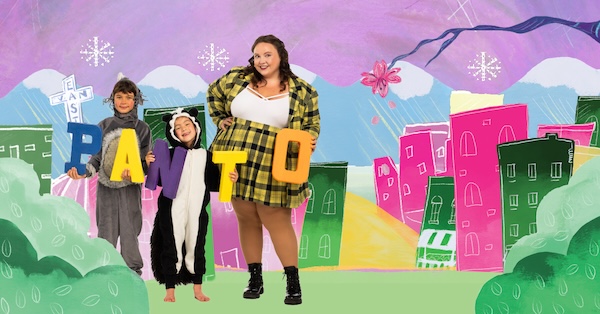
Steffanie Davis, who plays Belle, with a couple of the young actors in East Van Panto: Beauty and the Beast, at the York Theatre until Jan. 7. (photo by Emily Cooper, illustrations by Cindy Mochizuki)

Every year, the Cultch and Theatre Replacement’s annual panto, celebrating East Vancouver and poking fun at pop culture and local politics, seems to outdo itself. East Van Panto: Beauty and the Beast, which opened at York Theatre last week, is a rollicking good time that doesn’t sacrifice quality for fun. The text, music, sets, performance – everything is top-notch about this production that will have you cheering, booing, laughing, clapping … generally having a great time.

In the story by new-to-the-panto playwrights Jivesh Parasram and Christine Quintana, Belle, who dreams of studying business at the University of British Columbia so she can get the skills to bring wealth to her East Van neighbourhood, is captured by Beast, an arrogant young man from West Van who is turned into a mattress by Enchantress for his unbending attitude. The curse will not be lifted until this young man, who “won’t flip for nobody,” is able to change his mind – a prized ability in this production. Unfortunately, the curse extends to the staff and patrons of the Japanese food store into which the man had entered to buy some sushi. Transformed into such items as miso soup, soy sauce and various types of sushi, these innocents rely on Belle to save them – and herself – “before the last cherry blossom falls.”

Using physical humour and wittily riffing on pop songs like “Flower” by Miley Cyrus, “Kokomo” by the Beach Boys and “Sweet Dreams” by the Eurythmics, the panto cast is led by Steffanie Davis as Belle and Jason Sakaki as Beast, both strong actors with fantastic singing voices, funky moves and excellent comedic timing. The supporting cast is equally as skilled, and they are, in turn, supported by first-rate creative, design and production teams. Anita Rochon directs the show, and Veda Hille is composer and musical director. Jewish community member Mishelle Cuttler, as assistant musical director, alternates nights with Hille at the keyboard.

East Van Panto: Beauty and the Beast is an ode to community. In this iteration, it highlights two decades-old local businesses, Fujiya Japanese Foods and Mr. Mattress, which are located across the street from each other, at Venables Street and Clark Drive. A highlight of opening night was meeting several folks from Mr. Mattress, a long-time advertiser in the Jewish Independent.

The panto runs until Jan. 7 in-person and on-demand online Dec. 18-Jan. 7. For tickets, visit thecultch.com/event/east-van-panto. 

Studio 58 presents 1933 play

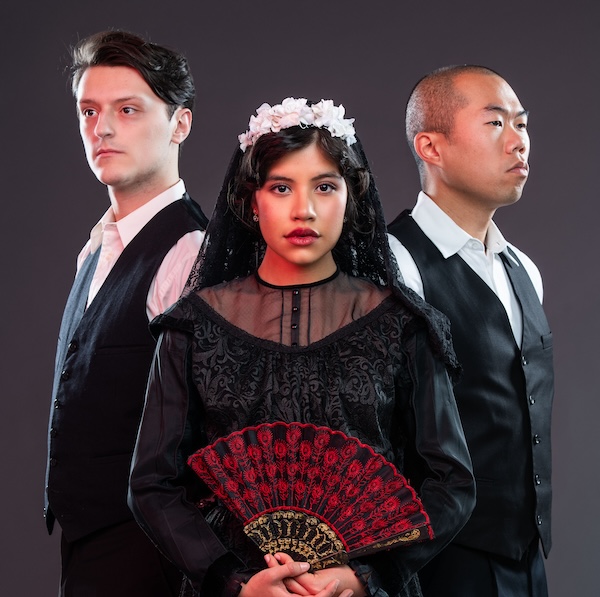
Left to right, Caylen Creative, Michelle Avila Navarro and Terrence Zhou co-star in Studio 58’s production of Blood Wedding. (photo by Emily Cooper)

Studio 58, the professional theatre training program at snəw̓eyəɬ leləm̓ Langara College, brings flamenco dance to the stage with Federico García Lorca’s Blood Wedding Nov. 23-Dec. 3.

Recognized for his surreal and socialist works, Lorca’s Blood Wedding is a tragedy of love, repression and duty. Set in rural Spain, a bride is torn between her fiancé and her former lover, and must balance feuds between the families. Blood Wedding is a poetic play that explores the isolation of loyalty versus personal freedom.

“Federico García Lorca’s Blood Wedding premièred in 1933, three years before he was assassinated by the fascists during the Spanish Civil War for being a socialist and a gay man,” explains director Carmen Aguirre in the press release. “This play is about forbidden love, resistance to oppressive societal norms and a foreshadowing of the war. I have set the play in an Andalucian bar on the eve of that war, where a group of flamenco dancers, musicians, actors and cantaores tell us this tragic story.”

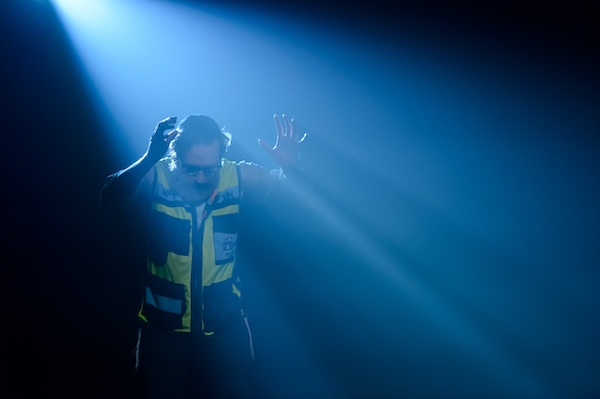
The Studio 58 production creative team includes lighting designer Itai Erdal, who is a member of the Jewish community.

Blood Wedding will have 3 p.m. and 7:30 p.m. showtimes. New this season will be a relaxed performance, on Dec. 2, 3 p.m. The show is at Studio 58 at Langara College, 100 West 49th Ave. Tickets (from $10) are available at studio58.ca.

– Courtesy Studio 58

Art that makes people think

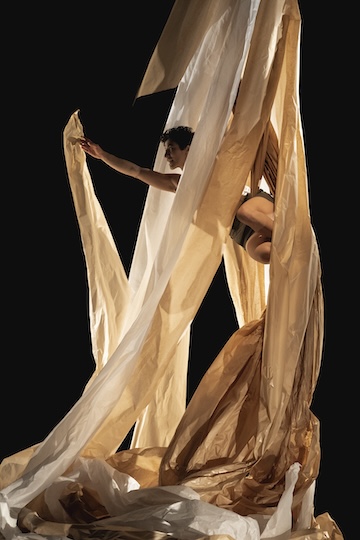
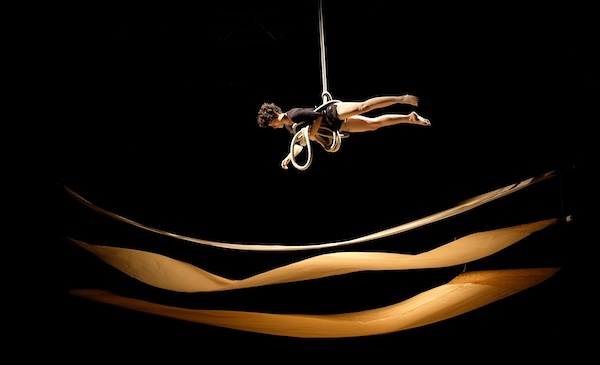
Domitille Martin in Pli, part of the PuSh International Performing Arts Festival, which runs Jan. 18 to Feb. 4. (photo by Lucie Brosset)

PuSh International Performing Arts Festival returns to Vancouver Jan. 18-Feb. 4. The mid-winter event that delivers innovative, contemporary works asks the questions, “Can a live art festival be a ritual for social change? A cultural strategy? A means to rethink history while imagining possible futures?” Participating artists include Jewish community members and a production presented with Chutzpah! Festival.

Vancouver’s Vanessa Goodman (Action at a Distance) is co-creator with Tangaj Collective (Simona Deaconescu, from Romania, and Gaby Saranouffi, from Madagascar) of BLOT, Body Line of Thought: “Our bodies are strong and fragile. BLOT redefines how we see our physical selves and their relationship to the world. In a stark set reminiscent of a science lab, two dancers observe the intricacies of the body and using salt, microbiome and physiology demonstrate how interconnected we truly are.”

BLOT will be presented Jan. 22-23, 7:30 p.m., at Left of Main, with a post-show talkback after the Jan. 22 production.

PuSh, with SFU Woodward’s Cultural Programs & Touchstone Theatre, presents Toronto-based theatre company Human Cargo’s The Runner, Jan. 24-26, 7:30 p.m., at SFU Goldcorp Centre for the Arts. The play description reads: “When Jacob, an Orthodox Jew, makes a split-second decision of who to help, his world comes crashing down. Urgent, visceral and complex, The Runner invites us into a nuanced exploration of our shared humanity and the value of kindness.”

In Pli, by France’s Les Nouvelles Subsistances (Inbal Ben Haim, Domitille Martin and Alexis Mérat), “paper becomes a playground. This visually stunning, philosophical work considers risk and transformation, as told through a circus artist moving through a set made entirely of paper – like a vast, changing sculpture. The relationship between body and paper offers a new conversation about the relationship between strength and vulnerability.”

Presented with Chutzpah! Festival, the circus/dance Pli runs Feb. 2-3, 7:30 p.m., at Vancouver Playhouse and Feb. 2-4 online.

In all, PuSh features 17 original works from 15 countries, including four world premières and seven Canadian debuts. The works presented offer personal accounts of resistance and acts of vulnerability, and push us to examine our relationship to themes such as migration, displacement, labour, injustice and artificial intelligence.

Events include Club PuSh, a casual atmosphere where people can connect with artists and party with fellow festival-goers; the PuSh Industry Series, which, in partnership with Talking Stick, stimulates dialogue with attendees during the second week of the festival; youth programming for participants aged 16 to 24; and, in partnership with Playwrights Theatre Centre, free artistic consultations with visiting dramaturgs representing diverse artistic points of view and cultural contexts.

Tickets for PuSh range from $16.75 to $39, with a top-tier seating option of $69 for Pli at the Playhouse, and PuSh passes for people who want to see multiple shows. To buy tickets, visit pushfestival.ca or call the festival audience services line at 604-449-6000.

– Courtesy PuSh International Performing Arts Festival

A spoof on true crime

Left to right: Sophia Paskalidis, David Underhill, Drew Ogle and Mai Stone (seated) co-star in Tragedy, Slander & Wine. (photo by Sarah Cherin)

When a community theatre production ends with an actor dying on stage, the media descends on the small B.C. town. Conspiracy theories flourish and no one is above suspicion.

This is the plot of Tragedy, Slander & Wine by Jewish community member David Volpov, which premières at the NEST on Granville Island Nov. 13-19. The mystery/comedy explores, among other things, media literacy.

“My goal in writing Tragedy, Slander & Wine is to bring awareness about the issue and to invite audience members to think more critically about the media they consume. So, that’s where the idea of true crime entered the play,” said Volpov, executive director of Promethean Theatre, which is presenting the work. “I see true crime lovers popularize a lot of sensationalistic interpretations of well-known deaths. I think people tend to want to believe wild hypotheses instead of the cut-and-dried truth simply because it’s more entertaining. This conspiratorial thinking can become dangerous if it impedes on innocent people’s lives, which is what happened in real life to the town of Moscow, Idaho, after several infamous deaths.”

On Nov. 13, 2022, Ethan Chapin, Xana Kernodle, Kaylee Goncalves and Madison Mogen were stabbed to death in the young women’s off-campus (University of Idaho) house. False accusations and other misinformation proliferated, causing much harm to the community. Eventually, suspect Bryan Kohberger was charged with their murders, and his trial continues.

In Volpov’s fictional story, the play’s description notes, “The finger-pointing grows so rampant that the victim’s sister, Shannon (Mai Stone), can’t even have a healthy relationship with her own mother. Shannon’s longtime friend Alec (Drew Ogle) promises to help Shannon replenish her image in the public eye and shed her status as a pariah. But they find out that manipulating the media is harder than they anticipated. They have to get past power-hungry reporter Penelope (Sophia Paskalidis) and gatekeeping publicist Colin (David Underhill). Soon, Shannon uncovers a secret plot that upends everything she thought she knew about the tragedy.”

The play features four actors on stage and seven performers who act only on screen.

“I knew that I needed a multimedia film component in the production to spoof true crime,” Volpov told the Independent. “We filmed interviews with the townsfolk, who give the audience information about the circumstances of the mystery of the play. The film is played on TVs, which are onstage during the entire performance.”

This approach was new to many working on the production and Volpov said he appreciated the help of a few film artists who offered their guidance. In particular, he noted, “Our videographer, Bruna Xavier, and our film editor, Ian Tan, are both godsends. I’m really excited for audiences to see what this collaboration created because it’s not something that Vancouver audiences have seen before.”

Tragedy, Slander & Wine is Promethean Theatre’s sixth production. Formed in 2018, the company’s mandate is “to create work opportunities for emerging artists,” said Volpov. “There are some apprenticeships open to emerging artists in Vancouver theatre companies, but I keep hearing from my peers that these positions only take them so far. They feel stuck in what they consider a trainee limbo before they can get a shot at a role they want. That’s why Promethean puts emerging artists directly in positions of creative leadership. In that sense, we act as a launchpad for artists who want to continue expanding their practices.” (For more information, visit prometheantheatre.ca.)

photo - With Tragedy, Slander & Wine, playwright David Volpov invites audience members to think more critically about the media they consume
With Tragedy, Slander & Wine, playwright David Volpov invites audience members to think more critically about the media they consume. (photo from Promethean Theatre)

Volpov joined the producing team after having acted in Promethean’s first production, Saint Joan. He graduated from the bachelor of fine arts acting program at the University of British Columbia in 2020.

“Like many people who graduated then, my final play at UBC was cut short after just three performances due to COVID,” he said. “This experience really opened my eyes…. I always knew acting is a difficult profession, but to see virtually every theatre and movie set shut down spiked my existential worries a lot. There’s a silver lining, though. I returned to playwriting during the lull period in 2020 because I realized that writing was a way I could create art while social distancing. I learned that I didn’t have to wait for theatre work to come to me; I could generate work myself. In hindsight, I didn’t actually know what art I wanted to make when I graduated UBC. It wasn’t until I began writing plays that I found my voice and had something to say about the world.”

Tragedy, Slander & Wine is one of the works Volpov began writing during the pandemic. “I felt troubled by how quickly conspiracy theories spread,” he says in the press release for the play. “I saw this cycle repeat after each major world event. Our abilities to engage in meaningful discourse eroded while our reliance on bias-confirming news increased. With so much misinformation online nowadays, how is anyone supposed to parse through what’s fact and what’s fiction?”

“Research shows that feelings of anxiety, disenfranchisement and isolation cause people to think more conspiratorially,” Volpov told the Independent. “People feel comforted by believing that their enemies cause their bad fortune (as opposed to random chance). One of the reasons conspiracy theories endure is because they have a backfire effect: when someone confronts a conspiracy theorist about their beliefs, it is interpreted as confirmation. Theorists think ‘of course, the higher powers want to convince me I’m wrong, that’s part of their plan.’ I don’t think conspiracy theories will ever go away, unfortunately.”

Nonetheless, Volpov is doing what he can to improve the situation, in addition to writing about it.

“Promethean Theatre partnered with a media literacy platform to provide education about the topic,” he said. “They are called Ground News and are a Canadian company based out of Kingston, Ont.

“I believe that there are many ways that people can combat their confirmation biases and to have a well-rounded knowledge about current events,” he continued. “The number one thing people can do is to read multiple sources about one story. I know it probably feels like a chore, but reading different perspectives can mitigate our political blindspots.

“After that, I recommend cutting your social media use when engaging with current events. Traditional media isn’t perfect, and it’s rightfully facing scrutiny from the public, but social media can be especially pernicious because the algorithm can steer people to engage with content that already supports their beliefs. Also, the algorithm boosts sensationalistic content while ignoring nuance, which I think is necessary for every discussion.

“My next piece of advice is, be diligent about claims you read. If information can’t be traced back to a source,” he said, “it can’t be verified as true.”

Tragedy, Slander & Wine is recommended for audience members age 16+ because of its “mature content, including references to substance abuse, murder and suicide.” Among the performances is a matinée for high school students Nov. 15, and artist talkbacks after the Nov. 18 and 19 matinées. For tickets, visit plainstage.com/events/tragedy-slander-and-wine.

Survivors play brings tears

On Oct. 29, six young actors offered a powerful rendering of Survivors, a play by Wendy Kout, at the University of Victoria’s Phoenix Theatre. The production will tour BC and other Western provinces. (photo by Peter Nadler)

On Oct. 29, six young actors offered a powerful rendering of Survivors, a play by Wendy Kout about 10 Holocaust survivors. The performance at the University of Victoria’s Phoenix Theatre had the audience, many of whom were decades older than the actors, reaching for handkerchiefs as the last words of the play, “never again,” were spoken in unison on stage.

The Victoria organizers, who have been given the rights to perform Survivors across the Western provinces, are hoping the play and its message will eventually reach, inform and educate students about the Holocaust and the dangers of hate.

Suitable for audience members from Grade 6 and up, Survivors is intended to provide students the ability to recognize the short- and long-term effects of prejudice, discrimination and, ultimately, genocide. Other objectives are to foster critical thinking in young (and older) people and impress upon them the importance of human rights and social justice advocacy.

The six actors – Julie McGuire, Ryan Kniel, Sarah-Michelle Lang, Nolan McConnell-Fidyk, Sophie Radford and Brandon Sugden – took on the roles of the 10 Holocaust survivors and dozens of other characters pertaining to their respective stories during the 65-minute performance.

Survivors progresses chronologically, portraying events leading up to, during and after the Holocaust, bringing to the stage the experiences of Jewish children and teenagers from Europe. The professional cast portrays the survivors, starting at innocence and continuing through the terrifying rise and rule of bigotry, xenophobia and violence, before they immigrate to America.

Among others, the play includes the stories of a teen who watched her boyfriend being taken away to a concentration camp, a girl who was separated from her parents and relocated to England through the Kindertransport, and a boy whose family struggled to escape to China.

Four of the 10 survivors on whom the play is based were still alive when the play premièred in New York in 2018. Though each story is unique, all the survivors “went through this horror and came through the other side to build meaningful, contributing, beautiful lives,” notes Kout. “We’re not just telling history. We’re telling history as a cautionary tale for the present and the future.”

Several prominent members of the public, such as MLAs Murray Rankin and Rob Fleming, were in attendance at the UVic performance. In remarks made after the show, Rankin suggested he would press the Ministry of Education and Child Care to bring Survivors to schools in the province.

Rankin’s comments preceded the announcement by Premier David Eby the following day, Oct. 30, that Holocaust education would become mandatory in high schools throughout British Columbia beginning in the 2025-26 academic year. The move made British Columbia the second province, after Ontario, to mandate study of the Shoah.

There is a tangible sense of urgency by the organizers of Survivors to have the play viewed as widely as possible.

“We need to capture young minds of young people at an early stage before hate and racism becomes normalized,” their literature states. “We need to do this in the schools, because that is where most young people can be reached and it’s an opportunity to educate children and engage teachers.”

Survivors, with its aim to educate young people about hate, comes at a time when clear evidence of the ignorance of history has been in the news. In September, Anthony Rota, the speaker of the House of Commons, stepped down after honouring a Ukrainian veteran who fought with a Nazi unit during the Second World War.

More broadly, the organizers of Survivors cite a report by the Azrieli Foundation, Yad Vashem and others, which found that 62% of millennials did not know that six million Jews were killed in the Holocaust, 22% of millennials had not heard or were not sure if they had heard of the Holocaust, and 23% of all Canadians believe that two million or fewer Jews were killed during the Holocaust.

The Victoria production of Survivors that played last fall in school auditoriums, theatres and libraries, and had four public performances was the first international tour of the play. (See jewishindependent.ca/survivors-a-cautionary-tale and jewishindependent.ca/theatre-that-educates.) There are other tours currently on both coasts of the United States, and Kout, along with the New York company that developed Survivors, is creating a documentary on how the play came to be.

Survivors was originally commissioned and developed by CenterStage Theatre in Rochester, NY, in 2017, when Kout was asked to write a Holocaust play about survivors who had immigrated to the city. Shortly thereafter, while watching neo-Nazis march in Charlottesville, Va., Kout expressed the feeling that she was not simply writing an historical play but also a “warning play.”

For the Victoria troupe, Zelda Dean, the director, said, “Our goal is to expand the tour to more of Vancouver Island, to Vancouver on the mainland, and to select schools in the interior. The following year we will expand to include more schools throughout BC and other Western Canadian provinces.”

To learn more about Survivors and to donate, visit holocausttheatre.com.

Sam Margolis has written for the Globe and Mail, the National Post, UPI and MSNBC.

The opposite of death is love

Hadar Galron in Whistle, which is at the Firehall Arts Centre Nov. 14-15, as part of the Chutzpah! Festival. (photo by Nathan Yakobovitch)

“As a child I was never hugged or kissed; I think my parents did not even see me. I wrote this story to stop being an invisible child,” Israeli author Ya’akov Buchan has said about Whistle: My Mother was Mengele’s Secretary.

The play Whistle is part of this year’s Chutzpah! Festival, with performances Nov. 14 and 15 at the Firehall Arts Centre. Writer, director and actor Hadar Galron, who adapted Buchan’s story for the stage, stars in the monodrama.

“Buchan was born to two Auschwitz survivors, and began writing after he was injured in the Yom Kippur War. He’s written 18 books – four concerning the Holocaust – but he felt that people don’t read so much anymore, and that he wanted to write a play about second generation Holocaust survivors,” explained Galron in an interview with the Independent. “Dramatic writing and prose are very different techniques, and Ya’akov sent me about 30 pages of interesting and well-written content, but not dramatic enough for stage.

“The first meeting with him was out of respect – I thought I’d give him a few tips and let him take it from there,” she continued. “I remember the turning point: I said, ‘You mention twice in these pages the name Mengele. You can’t just throw in a name like that, it needs to have some dramatic payoff, or not to be mentioned at all.’ Ya’akov said nothing, just nodded. And, suddenly, I thought that maybe Mengele had tortured one of his parents. ‘Were any of your parents somehow … (how to say this?!) … connected to Mengele?’ Ya’akov looked me squarely in the eye and said, quietly, ‘My mother was Mengele’s secretary.’ That was when I knew I would take the task, and help him tell his story and the story of the second generation.”

In recent years, Galron has been working on several plays that deal with the lasting impacts of trauma. “We tend not to consider [the] second generation as traumatic,” she said, “but something as horrendous as the Holocaust leaves some people so scarred that they cannot really love anymore, even their children. Or, they love but in a different, obsessive way. The children who grow up without feeling love are traumatized, too, but their wounds are invisible.

“It’s important to understand that, whilst the trauma lasts a minute or a year or five years, post-trauma lasts a lifetime and, when considering [the] second generation, then even more than a lifetime. Long-term traumas such as [the] Holocaust are not a swing of the sword, they are more like the bite of a snake – the venom penetrates the body and mixes with the blood of the victim.”

Though she generally directs her own works, Galron said, “When I’m the actress, I need someone on the outside. At first, I thought maybe I’d direct and not act. It was Ya’akov who begged me, after seeing my stand-up cabaret Passion Killer, to act the part.”

Jaffa, Israel-born director and playwright Hana Vazana Grunwald was the first person who came to Galron’s mind to direct.

“We studied theatre together at Tel Aviv University, but that was decades ago! I had no idea where to find her,” said Galron. “We’d met a couple of times in festivals, etc., along the years. I was thinking of her on my morning walk-jog in the park by my home. In the distance, I saw a woman that reminded me of Hana and then we got closer and I saw it actually was Hana! She lives five minutes away from me, but that was the first day she decided to go out and take a power-walk before work. I don’t believe in coincidence – it’s only God’s way of remaining anonymous.”

Grunwald started out in community theatre more than 25 years ago. She is the director of the Frechot Ensemble, a collective of women creators, which she founded some 10 years ago.

“I see myself as a feminist Mizrahi (Middle Eastern Jew) writer, who brings to the forefront my personal story,” she told the Independent. “But my personal story is never just my own, it’s an inherent part of my political story, my family’s story and the collective which I belong to. I feel that my world isn’t really represented in Israeli theatre. I don’t see the household I grew up in, I don’t encounter complexities and dilemmas that interest me. I realized I have the responsibility to represent myself – I have to write these texts, I have to tell these stories. My job is to search through history and prose and to bring back the voice of all those whose voice was taken away from them.”

When Galron sent her the script for Whistle, Grunwald said, “I was immediately hooked. But, after we met again, I felt that the opportunity to work together and find connections would also be reflected in the play’s dramaturgy.

“The challenge that the play Shirika [Whistle, in Hebrew] brings to our door is how to retell the story of the Holocaust and the story of the members of the second generation, who feel transparent. Two images guided me in my search for the keys to directing the play,” said Grunwald.

“The first: whistle. Tammy, the protagonist, lost her ability to whistle, she lost her ability to love and feel loved and, as she says in the play, ‘The opposite of death is not life, the opposite of death is love.’ The way this whistle is expressed on stage is through the prop of a kettle full of boiling water. The boiling and bubbling kettle and the whistler on stage metaphorically tell the story of the Holocaust, a story that never ends.

“The second image we chose is the painting. Tammy is a painter and, when we wondered what was painted on the stage, we realized that the body is the canvas, the body treasures and carries the wounds of the past, the memories – the actress jumps from limb to limb and with the help of simple means such as brushes and paints Tammy marks national history…. This is the way in which the trauma is present again on the stage.

“It seems that precisely now the spectacle of a whistle is given a relevant meaning,” Grunwald added. “We find ourselves facing a terrorist attack in which again Israeli Jews are brutally murdered and mass murdered because of their Jewishness. We again witness horror stories in this war against Hamas. We find ourselves again, 75 years after the establishment of the state of Israel, in a shocking event that reminds us of the fear of being destroyed. The harsh scenes from both sides shake the soul, sow terror and fear, and remind us that the feeling of security is a temporary illusion and we must not forget it. I work at the Hebrew-Arab theatre in Jaffa, a theatre that gives a stage to the binational discourse, it gives a stage to both narratives, and I feel that, these days, it is the first to be hurt.”

Galron also works with artists of different backgrounds and shared one of her experiences.

“Between 2016 and 2018, I was artistic director of the Shalom Festival, a small festival that was an official part of the Edinburgh Fringe fest,” she said. “We created this festival after an Israeli production, in 2014, was shouted down by the BDS [boycott, divest and sanction movement] and, in 2015, there were no Israeli productions.”

She was inspired by Sir Rudolf Bing, founding director of the Edinburgh International Festival, from which the Edinburgh Fringe Festival has its roots. Galron explained that Bing, a Jewish-Austrian opera singer, who fled Nazi Germany, “created the festival as a cultural bridge, inviting, firstly, German artists to take part! With that in mind, I told the sponsors of the Shalom Festival that we cannot make a one-sided Shalom (Peace) Festival and that, as the artistic director, I would like to bring artists from all of Israel, including Israeli Arabs – both Muslim and Christian – and also some Palestinian artists. At first, there was big objection but, eventually, I convinced them that these are Palestinians who believe in peace, in dialogue. Until today, even in these times, I am in contact with my Palestinian friends.

“I believe art is a bridge,” she said. “I believe art and culture and theatre have the power to heal – to give us insight and create empathy. From my very first performance as a stand-up artist – my show was on the status of women in the Jewish law – I made a decision to make my art meaningful, to merge life and stage.”

Since the Oct. 7 Hamas terror attacks on Israel, Galron has been posting related videos and other items on Facebook, including “Creativity in place of survival” writing challenges. She got the idea from a course she took during COVID with Dr. Joe Dispenza. “In one of the online digital courses, he speaks of how our brain can be either in ‘survival’ or in ‘creativity’ mode,” said Galron. “The moment I heard this, I understood many things about myself and how creativity has always been for me a way of surviving. Now I know that, when we begin to be creative, we actually begin to pull ourselves out of ‘survival’ [mode] even if we are being creative whilst we try to survive. A bit like Baron Munchausen explains that he pulls himself by his hair out of the pit.”

About how she is doing since the attacks, Galron said, “I didn’t have a real answer to that question until yesterday, because everything is so chaotic. But I was speaking to a university student of mine who answered, ‘I’m committed to the good.’ I was so moved by this. She told me she adopted it from her yoga teacher. I adopted it from her. I’m committed to the good.”

For tickets to Whistle and other Chutzpah! shows, visit chutzpahfestival.com.

Two world premières

Artists of Ballet BC and Arts Umbrella practise Shahar Binyamini’s BOLERO X. Part of HERE, which runs Nov. 2-4, the work brings 50 dancers on stage for the first time in Ballet BC history. (photo by Marcus Eriksson)

Ballet BC begins its season Nov. 2-4 with HERE, a diverse program that includes two new works from choreographers who have never worked with the company before, and the return, by popular demand, of Enemy in the Figure by William Forsythe.

“Each work stands on its own, and there are no common themes, so to speak,” Ballet BC artistic director Medhi Walerski told the Independent. “It invites audiences to create their own narrative and interpretation, allows for personal engagement, and invites them to explore the scope of human connection and expression.”

One of the new works featured is the world première of Israeli choreographer Shahar Binyamini’s BOLERO X.

“I have been following Shahar’s work for awhile, and I was eager for both the company and the audience to immerse themselves in his distinctive style and choreographic language,” said Walerski.

It will be the first time Binyamini is presenting his work in North America, Walerski added, “and it is a privilege that he has chosen Ballet BC for this special occasion.”

BOLERO X brings 50 dancers to the stage – the most in Ballet BC history.

Of the logistics, Walerski said a multitude of factors come into play. “Scheduling is at the forefront, both in the studios and at the theatre. Fortunately, we’re collaborating with Arts Umbrella Dance, sharing a common vision of turning the impossible into reality.

“On the production side, the costume department is putting in tremendous effort,” he said. “Led by our dedicated head of wardrobe, Kate Burrows, our incredible team is going the extra mile to bring that vision to life. Our rehearsal directors are navigating a new experience of rehearsing many dancers at once, and they are doing this brilliantly. It shows the professionalism and dedication of our remarkable team.”

Binyamini returned to Vancouver to work with the company this week. It is important that such performances continue, even when there is a war going on “because the arts and creation are amazing bridges in order to build trust,” he said. “What we see happening could easily happen anywhere else and be used as inspiration for other conflicts to accelerate in the same direction. The crime against humanity is the destruction of trust and, in order to build trust, you need to create channels into humanity. Dance could be a very important vessel or tool to connect people. And this is what gives me the motivation to be here and working. Because what I do is important, especially now.”

“Art has this unique power to breathe life into the world, and it brings vitality into our everyday lives,” said Walerski. “It is an incredible force that transcends boundaries. It has this magical ability to bridge gaps between people, regardless of geographical or cultural differences. It’s like a vibrant thread weaving through the fabric of humanity, connecting hearts and minds. It brings a sense of unity and shared understanding, nurturing a profound connection among individuals who might otherwise seem worlds apart.”

The press material for BOLERO X says “the creation explores themes of unison and repetition, while still allowing for individuality and stand-out solo and duet performances.”

“I’m focusing more and more on the dancers’ uniqueness in relation to the large group,” said Binyamini. “There is unison, but individuality within that unison. Here at Ballet BC, I find I can explore more the individual aspects and solos. These dancers are so generous and they give you everything – all they have. It’s very rewarding.”

Maurice Ravel’s 1928 composition, Bolero, “is very repetitive, obviously, the melody itself, but the orchestration brings more layers,” Binyamini explained. “A long crescendo of something getting more intense has been very present in my work previously. It’s what turns me on. So, when I started working with Ravel, I tried various works, but got fixated on this and it felt like it really fit. It allowed me to focus on something I was already into, but gave me the anchor and licence to clear out all the unnecessary thoughts or feelings. I decided to just focus on the musicality and the playfulness, which allows the dancers to stay playful.”

Binyamini was not at all daunted by the challenge of having 50 dancers on stage.

“I felt and still feel how much of a force it is to react to, and to say yes to. To have a dialogue with 50 dancers is such a powerful thing in the studio and it enables me to be in the moment, especially with all the other things going on in my life,” he said. “I feel very comfortable working with a lot of people.”

photo - Ballet BC artist Sidney Chuckas at work in the studio ahead of the season opener HERE
Ballet BC artist Sidney Chuckas at work in the studio ahead of the season opener HERE. (photo by Marcus Eriksson)

The other new creation – and world première – being presented in HERE is Stephen Shropshire’s Little Star. Originally commissioned by former Ballet BC artistic director Emily Molnar, its trip to the stage was delayed by the pandemic.

The inspiration for Little Star was composer Angelo Gilardino’s “cycle of guitar variations based upon ‘Ah vous dirais-je Maman,’ a popular children’s song originating in 18th-century France and adopted for the English-language lullaby ‘Twinkle, Twinkle, Little Star,’” explains the press release. “Shropshire’s movement language for the creation is dynamic, beginning with themes suggesting something child-like and playful, before evolving into something more intricate and complex.”

Rounding out the HERE program is Forsythe’s Enemy in the Figure, which was mounted by Ballet BC in 2018. Set to music by Thom Willems, the work involves improvisation, which means that each performance is different.

“Dance can tell a universal story, like music,” Binyamini said. “I think it’s very challenging to tell a story based on movement, but, when doing it correctly, it’s very effective and has the potential to go much deeper than words, because it’s something we all have in common. We can all relate to physical effort, and have empathy for someone that is moving. You can connect to that energy. To be able to tell a universal story through movement is a big challenge, but very satisfying.”

HERE takes place Nov. 2-4, 8 p.m., at the Queen Elizabeth Theatre. Tickets, starting at $19, are available at balletbc.com.

Trauma, loss and hope

Composer Rita Ueda has written an opera inspired by Barbara Bluman’s book I Have My Mother’s Eyes. (photo by Danilo Bobyk)

“In light of what is happening in the news today, we need to tell the story of Chiune Sugihara and the Bluman family more than ever,” composer Rita Ueda told the Independent. “I suspect more and more world leaders, communities and individuals will be faced with the decision to either do the easy thing, or the right thing. We need to tell ourselves more stories of compassion, courage, healing and family love.”

Ueda’s chamber opera I Have My Mother’s Eyes: A Holocaust Memoir Across Generations premières at the Rothstein Theatre Nov. 18-19, as part of the Chutzpah! Festival. Directed by Heather Pawsey, the opera tells the story of Sugihara, the Japanese diplomat who risked his own life during the Holocaust to issue visas to Jews, including members of Vancouver’s Bluman family. Its title comes from the late Barbara Bluman’s book of the same name, which was published in 2009, five years after her death from cancer.

“I don’t think I fully knew why I wanted my mother’s book published … when I immersed myself in this legacy project,” said Danielle Schroeder. “Looking back, bringing her story and my grandmother’s stories to life brought me a lot of comfort and meaning as I grappled with the profound sense of loss her death brought…. Also, at the time it was published, stories about the impact of intergenerational trauma and resilience were not being written about that much in the mainstream, so I felt my mom’s book was unique in the way it interweaves and interconnects her and her mother’s stories of trauma, loss and hope. And, of course, being able to share with the world the story of courage, generosity and compassion of the Sugihara family was also important to me.”

Ueda found out about the Bluman family in 2017, through an installation at the Maritime Museum, and reached out to George Bluman, Barbara’s brother. She was moved by the intergenerational nature of I Have My Mother’s Eyes.

“Zosia [Susan] Bluman’s escape from the Holocaust is only a part of the story,” she said. “The story of how the next two generations carried on the family legacy affected me to the core. When George suggested I expand the opera to include the story of the three generations of the Sugihara family that saved them, I became compelled to create the opera!”

“I was very touched and honoured that such a well-respected Canadian composer would want to write an opera about my mom’s book,” said Schroeder. “Especially after meeting Rita in person and learning … how my mom’s book impacted her, it was easy to say ‘yes.’”

Ueda’s opera is inspired by Barbara Bluman’s book, rather than based on it.

“Opera is best suited to convey the characters’ emotional journey,” Ueda explained. “The opera covers all three characters from the book – Zosia, Barbara and Danielle – the three generations of the Bluman women, and their love for each other in light of all the events in their lives. Materials on the three generations of the Sugihara family were based on my two visits to the Sugihara family in Tokyo. Madoka Sugihara spent over five hours with me on each visit, and she showed me many photos and books. She let me play [her grandfather] Chiune Sugihara’s collection of sheet music on his piano, and she told me many family stories. I was truly moved by the two families’ journey of survival, healing, and love for each other.”

George Bluman shared a bit about the real-life people depicted: Zosia, Barbara and Danielle on the Bluman side and Chiune, Yukiko, Hiroki and Madoka on the Sugihara side.

Bluman’s mother was born in 1920 and died in 2004. “Her story, before coming to Vancouver in July 1941, comes to life in I Have My Mother’s Eyes,” he said. “In Vancouver, she worked as a salesperson/buyer in women’s clothing at Cordell’s and Jermaine’s. She was one of the founders of the annual Warsaw Ghetto memorial program, the forerunner of the current annual Yom Hashoah commemoration. Mum is featured in the 2000 PBS documentary Sugihara Conspiracy of Kindness, as well as in the Holocaust museums in Washington, New York and Los Angeles. She loved her family, hosting raucous weekly Sunday dinners for all, often including her children’s friends.

“My sister, Barbara Bluman (1950-2001), graduated from UBC Law School in 1975, among the first large class of women. She was an independent thinker and feminist who lovingly balanced raising her children and her career in law. Her commitment to human rights was demonstrated in all of her pursuits…. Her deep dedication to Holocaust understanding led to her contribution to the Gesher Project, a second-generation cultural exploration of the Holocaust, and organizing an important symposium on the Nuremberg trials.”

Bluman said that, from 1996 to 2000, his sister made notes from 19 interviews with their mother. “Excerpts from these notes formed the basis for her book,” he said, praising his niece’s efforts in getting the book published.

“Yukiko Sugihara (1913-2008) married Chiune Sugihara (1900-1986) in 1936,” said Bluman. “In 1993, my family first met her, together with her oldest son, Hiroki (1936-2002), and Michi (Hiroki’s wife) for a few hours at the Vancouver airport during a stopover on their way to a dinner in Toronto organized by Ontario Premier Bob Rae involving the Jewish and Japanese communities. There was a spontaneous outpouring of strong emotions. To me, in her demeanour, she was an empress! She knew no English and I no Japanese, but I felt what she was saying. My mum and Barbara attended the dinner in Toronto, where the principal guest speaker was David Suzuki.”

There were a few other encounters, and Bluman said he and his brother Bob have corresponded regularly with Madoka. “I have met her twice in visits to Japan,” said Bluman, noting that Bob joined him on the second visit.

“Madoka is a very gracious person and works passionately on making the world aware of the heroic legacy of her grandparents. According to Madoka, her grandmother Yukiko played a most essential role in the Sugihara story.”

Ueda’s opera is “especially meaningful,” said Schroeder, “because it brings my mother back to life and honours her in such a profound way.”

She added, “I wouldn’t be here if it wasn’t for the Sugihara family, so to see a piece of art be created that brings our family together is moving beyond words.”

photo - Teiya Kasahara as Yukiko Sugihara and Barbara Ebbeson as Zosia Bluman in I Have My Mother’s Eyes, which is part of the Chutzpah! Festival
Teiya Kasahara as Yukiko Sugihara and Barbara Ebbeson as Zosia Bluman in I Have My Mother’s Eyes, which is part of the Chutzpah! Festival. (photo by Flick Harrison)

It has taken seven years to get to this point – the opera’s première.

“George and Danielle have been wonderful to work with,” said Ueda. “They have shown me photos (which you will see in the production) and shared family stories with me. They also introduced me to the wonderful Sugihara family.”

Ueda shared “two fun facts”: George Bluman, an emeritus math professor at UBC, trained her brother, a former math professor himself; and she has received permission to turn Yukiko Sugihara’s Midnight Sun Songs, poems that chronicle her story as the wife of Chiune Sugihara, into a sequel to I Have My Mother’s Eyes. The world première will be in Tokyo in October 2024.

Ueda has been composing since she was a toddler. “My late mother was an opera singer, so I grew up in a household with music,” she said. “My early musical ‘scores’ were crayon drawings of picture-representations of the sounds I improvised at the piano. My very first composition teacher when I was 3 (who was about 95 at the time) encouraged me to improvise at the piano and to keep on ‘drawing’ scores in crayon colours, even though his own teachers in the 1880s were Helmholtz and Tchaikovsky. He also arranged for me to see many concerts and events with composers such as Steve Reich, Earle Brown and John Cage.”

The environment, human rights and other societal issues have inspired Ueda’s work. “People in the audience do not need to agree with what I say in my music, but I want them to use the experience as a catalyst for important community dialogue,” she said.

For Ueda, opera is the perfect medium for telling a story with a strong emotional content.

“Opera cannot deliver a blow-by-blow story like a TV drama, film or documentary,” she acknowledged, “but music combined with voice can speak to you at the deepest, most profound level. Through opera, I hope to tell engaging and relevant stories that are important to us – who we are, what we stand for, and what we believe in. European opera has had a history of elitism throughout the past 400 years, but recent Canadian opera productions have been changing this. I hope I Have My Mother’s Eyes will contribute to this change.”

For tickets to see I Have My Mother’s Eyes, visit chutzpahfestival.com.

Melding multiple forms of art

Karina Bromberg during Eden Shabtai‘s Elevate Intensive in Los Angeles in August 2022. (photo from Karina Bromberg)

“I think the difference between my dream as a kid and my wanting to do this professionally was getting to experience the behind-the-scenes of what it means to be a professional dancer and choreographer,” Karina Bromberg, 21, told the Independent. “I fell in love with the journey towards the ‘goal’ of being in a movie or on stage and that’s what made me want to keep pursuing this career path.”

Bromberg is the producer and director of the rishon series, which integrates choreography with live music, videography, photography and fashion. The first iteration, rishon.1, was held this past June and rishon.2 will take place at SKL Design+Vision in Burnaby on Oct. 14, at 1:30 p.m.

“Drawing from the knowledge acquired during the creation of rishon.1 and a careful analysis of the final product, my focus for the second instalment has primarily been on elevating the visuals displayed on screen, refining the choreography and creatively designing the performance space,” Bromberg shared with the Independent.

“Given that rishon serves as a platform for emerging and diverse creatives to converge, the cast for rishon.2 is intentionally different, maintaining a commitment to inclusivity and diversity. While the overarching goal and concept remain consistent,” she said, “the skills honed from the first iteration have empowered me to progress and further enrich what rishon offers to both the audience and the dedicated crew involved.”

The idea for rishon came in 2021, when Bromberg and a friend, during a freestyle session, gave each other different objectives to dance.

“I noticed I would analyze and apply the objective to my dance through the senses: How does it look? How would it feel? What smell would it have? Does it make a sharp, or soft sound?” said Bromberg, who is originally from Karmiel, Israel. “It was then that the idea to create something that will somehow involve the five senses formed. Months of pondering the idea led me to realize it needed to evolve into an in-person showcase, which later took the name rishon, meaning ‘first’ in Hebrew.”

Wanting to stage something different, Bromberg searched for venues that would allow audience members to stand amid the artists. “The ultimate goal,” she said, “was to create an immersive and intimate environment where both the audience and the artists were on the same level. Concurrently, I began working closely with TRS, a music artist, and was involved in campaigns for a fashion brand; getting to know artists from different industries, I saw the potential to bring us all together in one space. I expanded on rishon’s creative framework by bringing in the elements of live music, fashion design, modeling and video content of art created for screen.”

Bromberg has been dancing seriously since the age of 5, doing competitive aerobics in Israel, and, at 12, starting “hip-hop, house, popping and dancehall classes at the local dance studio,” she said. “I was dancing competitively at dance competitions like Hip Hop International in Israel and, upon immigrating to Canada, I stopped for about a year. It took me and my parents some time to understand how things work here and to find a studio we could afford and I could easily commute to alone. So, in the meantime, I learned routines off YouTube and danced in my living room.”

Bromberg was 14 when her family moved to Vancouver, and she admits to having been “resistant and closed-minded about the move … but my parents strived and worked hard to open up more doors and provide a better future for me and my younger brother.

“The story of why Vancouver is pretty funny,” she added. “My mom liked to go on Google Earth and see different neighbourhoods and, when she saw the Science World ball, she decided we were going to Vancouver. It was pretty, and less cold than the rest of Canada – which, coming from Israel, was important to us!”

Bromberg’s resumé now includes dancing in Netflix, Paramount+ and CW productions.

“In 2019,” she said, “there was a big audition for Christmas Chronicles 2, choreographed by Chris Scott. Unrepresented by a dance agency, I attended the audition and made it to the last round. I remember having a lot of fun, but I didn’t set my expectations too high. Two months later, while visiting my family in Israel, I received an email confirming that I had booked the job. It was such a proud and surreal moment. Being my first job, I absorbed a wealth of knowledge and remain thankful for the opportunity extended to me.

“The onset of COVID-19 resulted in a work hiatus until 2021, when I was directly booked for a short dance scene in Honey Girls. Being unrepresented at the time, I diligently pursued and submitted self-tapes to anything I could find. In the same year, I booked Monster High, my biggest commercial job to date. It was three months in length, and one of the best times of my life. I was invited back to dance in Monster High 2 in the beginning of 2023 and, following this gig, I was able to get represented by a local dance agency. I recently wrapped up filming for Riverdale Season 7, Episode 14, marking another milestone in my journey.”

Bromberg said she has always loved performing and would help choreograph end-of-the-year shows in her elementary school back in Israel. “I’ve just always had a pull to perform and dance and move my body,” she said. “I’ve always dreamed of being on the big stages or in music videos ever since I was allowed to watch MTV, but I think the dream became something more solid and realistic in my mind in 2021 when I was visiting LA to perform at a showcase. I have been training with a company based in LA since May 2020, four to five times a week over Zoom in my room or garage. The opportunity to work with the choreographer in person and to be in the room with people I look up to, I remember feeling so in my purpose and starting to believe even more that this is what I am supposed to be doing.”

Falling in love with the journey towards her goal includes a commitment to creating. She has videos on her website of solo dances that she has choreographed.

“I wanted to practise dancing for the camera, as well as start investing in my own ideas,” she said. “I often have a vision for visual art that can be made when I listen to songs, and I enjoy directing these videos and filming them, so I made a promise to myself to go through with every idea that doesn’t leave my mind and I have the itch to create.”

Several of the videos feature the music of Baby Keem.

“The production on the songs and Baby Keem’s delivery have stuck out to me since the first time I heard him, and the pull to choreograph and create to his music has been unstoppable since,” she explained. “I recently watched an interview with him, where he talks about constantly living in his art and taking inspiration from anything he does … and I feel very much the same. I go to concerts and watch for the creative direction, the choreography, the show flow, or I will put on a movie or a TV show and look at angles it was shot from and the editing. I am constantly playing music no matter what it is I’m doing and I often hit the ‘go to radio’ feature on Spotify to discover new artists and genres to continue the creative flow and keep an open mind. The inspiration comes from everything I do, consume and engage with.”

In this context, it is easier to see how Bromberg conceived and mounted the multifaceted rishon.

“From a technical standpoint, bringing rishon.1 to fruition in June required extensive research, numerous emails, location scouting, securing funds and making quick adjustments,” she said. “It was a significant learning experience for me, considering I had never organized an event before…. Building a team was crucial to me, and each member brought unique and specialized knowledge, contributing to the success of the show.

“Reflecting on the process, I almost forget the hard and consistent efforts, along with the many no’s I encountered while seeking funding and assembling my team,” she said. “Looking back, the overwhelming feeling is how right everything felt…. Creatively, outlining the show came naturally.  I knew I wanted the soundtrack to be one album, and the ideas just flew to me. I went with my first thought, leaving no room for second-guessing. Whenever anxiety or ‘imposter syndrome’ crept in, I looked back at the progress I’d made, refocused on the work, and found it dissipating.”

For more about Bromberg, visit karinabromberg.com. For tickets to rishon.2, go to eventbrite.com.

Survivors a cautionary tale

On Oct. 29 at the Phoenix Theatre in Victoria, there will be a one-night-only performance of Wendy Kout’s play Survivors, which is touring schools this month. (photo by Peter Nadler)

In light of the success of last year’s pilot tour, the educational play Survivors is touring middle and secondary schools throughout Vancouver Island this month. And, with the support of the University of Victoria, there will be one public performance of the play this month: at the Phoenix Theatre, Oct. 29, 2 p.m. Last year’s public shows sold out.

Following the mistaken honouring in Parliament recently of Ukrainian-Canadian Yaroslav Hunka, who fought in a Nazi unit during the Holocaust, there should no longer be any doubt about the ignorance of the history of the Holocaust. This conclusion is further supported by the existence of monuments in Canada that honour Nazi veterans who were members of the Galicia division of the SS in Ukraine. Furthermore, Canada’s Governor General Mary Simon has apologized for the Order of Canada given to Peter Savaryn in 1987. Savaryn was chancellor of the University of Alberta and president of the Progressive Conservative Party of Alberta in the 1980s – he also served with the Waffen-SS, a voluntary Nazi unit in Ukraine during the Second World War.

A 2019 study done by the Azrieli Foundation, Yad Vashem, the United States Holocaust Memorial Museum and the Claims Conference revealed Canadians’ lack of knowledge of this period in history. For example: 62% of millennials did not know that six million Jews were killed in the Holocaust and 22% of millennials hadn’t heard or were not sure if they had heard of the Holocaust. Nearly one-quarter of all Canadians believe that substantially fewer than six million Jews were killed (two million or fewer) during the Holocaust.

History shows that when it comes to racist attacks and xenophobia, Jews are often the “canary in the coal mine.” Holocaust awareness and education could not be more timely or important. “We’re not just telling history,” said Survivors playwright Wendy Kout. “We’re telling history as a cautionary tale for the present and the future.”

Survivors explores hatred, the capacity to survive and thrive, and serves as a call to consciousness of the present challenges. Combining history with life lessons, the audience is guided through a time when hatred was normalized. The audience is both uplifted by the survivors’ triumphs and inspired to take action against present and future racism.

The play tells a chronological history of the Holocaust through the personal prism of experience, interweaving the stories of 10 Holocaust survivors, four of whom were still alive when the play premièred in New York in 2018. Though each has a unique story, all the survivors “went through this horror and came through the other side to build meaningful, contributing, beautiful lives,” said playwright Wendy Kout.

The Victoria production of Survivors will be touring throughout the four Western provinces for the next few years. For more about those tours and the organizations collaborating on them, visit jewishindependent.ca/theatre-that-educates and holocausttheatre.com. For tickets to the Oct. 29 matinée at Phoenix Theatre, go to eventbrite.ca.

– Courtesy Victoria Theatre Productions