Who holds power over you?

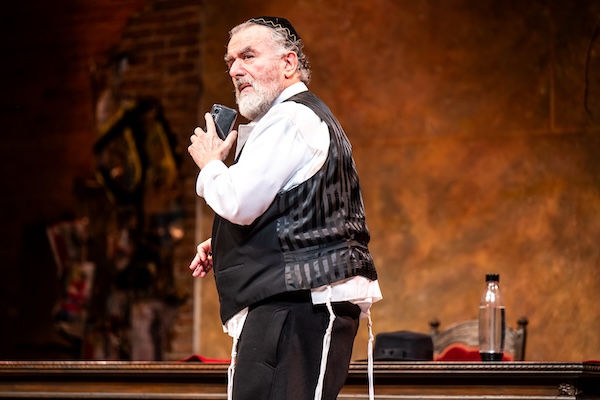
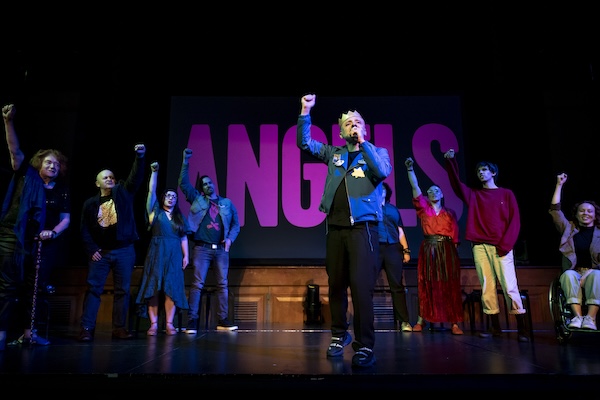
Jeremy Goldstein, centre, and volunteer participants in the Newcastle, Australia, performance of Truth to Power Café earlier this month. Members of the Vancouver community will participate in the event here on Nov. 3. (photo by Cassandra Hannagan)

“Who has power over you and what do you want to say to them?” This is the question at the centre of Jeremy Goldstein’s Truth to Power Café, which he will present – with the help of local community members – Nov. 3 at the Rothstein Theatre as part of the Chutzpah! Festival.

“As with all our events, we invite participants to sign up to the project through a combination of open call and personal invites, which we send out in close collaboration with our presenter, who, in this case, is the wonderful Chutzpah! Festival,” explained Goldstein. “We don’t normally confirm the line-up until a week or two before the performance, so it’s a little early to say what people will speak about, but we’re looking for Vancouverites willing to engage in a process of compassionate truth-telling. When we combine this with my own memoir, told through poetry, image, film and music, it makes for fantastic theatre.”

The deadline was earlier this week for local community members of all ages, experiences and backgrounds to apply to be a part of the event. Selected participants will present a short monologue related to the question of who has power over them and what they want to say to that person, whoever it may be, a parent, sibling, boss, politician, neighbour, friend. In a 2022 Total Theatre Magazine article, Goldstein wrote, “Participants’ voices are heard and understood through the political and philosophical beliefs of Harold Pinter and his Hackney Gang.”

“Nobel Prize-winning playwright Harold Pinter wrote about power and occupation. His inner circle, the Hackney Gang, were a group of working-class lads who met in 1947,” Goldstein explained to the Independent. “They knocked about London’s East End in the 1950s, where they took on the bullies and fought with antisemitic fascists. The gang included my late father, Mick Goldstein, and the late poet/actor Henry Woolf, who became known as the ‘King of the Avant Garde,’ and with whom I co-created the show directed by Jen Heyes.

“For 60 years, the Hackney Gang held firm in their belief of an independent media and in speaking their truth to power,” said Goldstein. “They remained on the side of the occupied and the disempowered and their allies. These are the people we invite to appear in the show with me.

“Ultimately,” he added, “the show has become a love letter to the memory of my father Mick, and his friends of 60 years, Henry Woolf and Harold Pinter.”

Goldstein started Truth to Power Café eight years ago.

“Back in 2016, I was presenting New York’s queen of the underground and former Andy Warhol Factory superstar Penny Arcade at Soho Theatre in London,” he said. “I wanted to stage a pre-show event so I opened up my address book and invited 24 Londoners to respond to the question, ‘Who has power over you, and what do you want to say to them?’ Over four nights, I saw the theatre come alive with raw and compassionate truth-telling and was compelled to make a show out of it.”

But there were unexpected challenges.

photo - Jeremy Goldstein brings his Truth to Power Café to the Chutzpah! Festival Nov. 3
Jeremy Goldstein brings his Truth to Power Café to the Chutzpah! Festival Nov. 3. (photo by Cassandra Hannagan)

“Two weeks before the first night, my face became numb and the doctors told me I had a stage 4 lymphoma,” shared Goldstein. “At the time, I didn’t know if I would live, let alone make it to the Soho Theatre performances. Eighteen months and a stem cell transplant later, I was cured and premièred the show at Festival 18, the arts and culture program for the Gold Coast Commonwealth Games in Australia.

“I’ve been on the road with it ever since, playing everywhere from poor working-class mining communities in the north of England to remote townships in the Australian outback to Queer Zagreb in Croatia and on to Lincoln Centre in New York – Truth to Power Café is a genuine global hit.”

Since it began, the show has had some 800 diverse participants taking part in eight countries.

“Some participants are established writers, artists and community activists, whereas others have never spoken up in public before, let alone centre-stage, under lights in their local theatre, sharing intensely personal life stories in front of their friends and family,” said Goldstein. “I’ve become a vessel through which these stories are told. It’s a very privileged position to be in and I don’t take it for granted. I want people taking part to have a positive experience, so I’m very aware of people’s well-being as part of the process leading up to each performance, and into the show itself. I check in with everyone after the show. Many of our participants have become my friends.”

He is well aware of how confronting power can put a person in a vulnerable position.

“The basic rule in life is don’t rock the boat or to tell a white lie to keep the peace, so whether you choose to speak from the personal, political, professional or even all three, speaking truth to power can put you at risk,” he said. “We, therefore, make the show in a safe space or, in the words of one our recent participants, Ed Wright: ‘To talk truth to power, to find our own power, we need to be able to feel safe. To have our power returned to us when it has gone missing, we need to know we have been listened to.’”

The question being asked – “Who has power over you and what do you want to say to them?” – is meant to challenge ideas of power and give voice to people who don’t normally have a chance to speak out, said Goldstein.

“People from marginalized communities tend to talk about progressive change, whereas those with privilege and power want to maintain the status quo and have more power,” he said. “We live in the post-truth age of the demagogue, where fake news is the new norm. In politics, the oppressed often have to fight for the right to simply say what they are experiencing and, in personal relationships, that artificial barrier is also in place. If you have an approach to allowing the conversation to happen, the chances of change occurring are much higher.”

The Nov. 3 Chutzpah! show is Truth to Power Café’s Canadian première and its 60th performance.

“It’s extremely rare to have two significant milestones back-to-back,” said Goldstein, “so I can’t wait to celebrate this with the good people of Vancouver.”

Chutzpah! runs Nov. 1-10. For the full lineup and tickets, visit chutzpahfestival.com or call 604-257-5145. 

New this year for the Chutzpah! Festival: Jewish Community Centre of Greater Vancouver members receive discounted ticket prices and concession purchases at the theatre. Select Student/Senior/JCC Member tickets and ChutzPacks and bring your membership card to the theatre.

Space for love amid messy

Chutzpah! resident artists Livona Ellis, left, and Rebecca Margolick in their debut collaborative piece, Fortress, which is part of a double bill at the Dance Centre next month. (photo by Benjamin Peralta)

Strength, vulnerability, love, pain, joy, healing, creation. Two world premières at this year’s Chutzpah! Festival explore these and other aspects of what it means to be human. The Nov. 8-9 double bill of Fortress and About Time are being presented with the festival’s community partner, the Dance Centre.

Fortress is the debut collaborative piece by Chutzpah! resident artists Rebecca Margolick and Livona Ellis. In it, the dancers and choreographers contemplate femininity, what it means to be strong, what it means to be vulnerable and the balance between the two.

“I draw strength from the resilience and emotional intelligence of the women in my life. My mom, Mary-Louise Albert, and my grandmothers, Phyllis Margolick and June Albert, are key inspirations,” Margolick told the Independent. “I also think of my great-great-grandmother, Rivka Margolick, who fled the pogroms in Latvia in the late 1800s with her nine children. She died a week after arriving in Montreal, but her bravery continues to inspire me. I often think about how that one lucky and bold move to escape and to come to Canada has led to me here, now.”

Margolick’s heritage infuses her creative life.

“Jewish culture encourages asking questions and exploring ideas from multiple perspectives, which mirrors my creative process,” she explained. “I constantly question the work I’m building, not out of doubt, but as a way to deepen and refine it. This openness to possibilities, paired with a focus on collaborative exploration, is something I see as a direct reflection of my Jewish values, and one that I connect to strongly in my culture, my work, and the overall way I operate in the world.”

Born and raised in British Columbia, Margolick recently returned to Vancouver.

“I officially moved back in July, but I had been coming back here more often since the pandemic,” she said. “I was based in New York City for 14 years. For the last 18 months, I was nomadic and traveling around for work without a home base. I chose to settle back in Vancouver to be closer to family, have better access to nature, have a calmer lifestyle, and to strengthen the community and close friendships I have here.”

Margolick’s choreographic work has been presented around the world, and she has danced with various artists and companies, including Sidra Bell Dance New York from 2012 to 2016. She joined Andrea Peña & Artists this year.

Ellis has performed with several groups, including 11 seasons with Ballet BC, and has create works for many companies. She received the Vancouver Mayor’s Arts Award for Emerging Artist in 2017 and the inaugural Louise Bentall Award for Emerging Choreographer in 2023. She is also a dance educator.

The Jewish Independent first wrote about Fortress and Margolick and Ellis’s collaboration in 2021 (jewishindependent.ca/four-solos-and-a-duet). 

“It has almost completely changed!” said Margolick of the work’s evolution since then. “We took some base movement ideas from the original work, for example, rocking, and then extrapolated on it. Our themes and original inspiration for the work have remained similar. We’ve let ideas breathe more, creating space for simplicity to stretch, and allowing the work to feel more spacious and exploratory.”

Margolick described how she and Ellis work together.

“Like a lot of creative processes, it feels like we’re building a puzzle,” she said. “We start with throwing out a bunch of ideas (puzzle pieces), trying them out, placing them next to other ideas, and seeing how they work together. Some ideas fit, while some don’t. It’s a constant process of refining, editing and reworking until the picture becomes clear. We aim to craft an arc that makes sense but still leaves room for mystery and space for the audience to create their own experience.”

As for her own journey with femininity, strength and vulnerability, Margolick shared, “Over time, I’ve grown more comfortable in my own skin, learning to embrace my imperfections and express my emotions more freely. I’ve come to understand that there is great power in vulnerability. As I’ve matured, I’ve also leaned into dialectical and critical thinking, which has helped me appreciate the complexity of femininity. Working on Fortress has reinforced for me that true strength lies in allowing space for tenderness and care, even when it feels messy.”

***

About Time choreographer Idan Cohen has also come to better understand messiness – the countless disparate ideas, feelings and events that co-exist at any given moment – in his exploration of time via Philip Glass’s solo piano études.

“It’s been very challenging to create throughout this traumatic year,” he acknowledged. “It feels like, since Oct. 7, one faces two major options: there are those who break and those who assemble, constructing something out of the pain and confusion. I chose to create About Time as a commentary on the ways we consume information, form opinions and lose empathy. Time goes on whether we want it to or not. The question is, with what do we fill that space, the time we are given. My time is filled with both love and pain. I break, but I also feel the urge to create, provoke thought and promote healing.”

Born and raised in Israel, but now an established Vancouverite, Cohen’s career includes seven seasons with Kibbutz Contemporary Dance Company and various international tours, residencies and scholarships. A multiple-awarding-winning performer and choreographer/director, he is founder and artistic director of Ne.Sans Opera & Dance.

The original idea to create a piece to Glass’s études came from Cohen’s colleague and friend, conductor and pianist Leslie Dala, back in 2020. 

photo - Will Jessup in Idan Cohen’s About Time, an exploration of time through Philip Glass’s solo piano études. In this year’s Chutzpah! Festival, Jessup and Benjamin DeFaria perform the piece with pianist Leslie Dala at the Dance Centre Nov. 8-9
Will Jessup in Idan Cohen’s About Time, an exploration of time through Philip Glass’s solo piano études. In this year’s Chutzpah! Festival, Jessup and Benjamin DeFaria perform the piece with pianist Leslie Dala at the Dance Centre Nov. 8-9. (photo by Chris Randle)

“Even now, between other projects, I find myself continually returning to Glass’s études,” said Cohen. “I have to understand the core of the music. It is more than just the composer’s intention – it’s about tracking and studying their identity, which makes them a cultural phenomenon, that deep essence through which they form a perspective, their cultural DNA. Glass is such a fascinating artist, and I have a tendency to obsess and study things over time – it is a friendship. I am immersed in Glass’s unique understanding and appreciation of time, and in the way he engages with philosophies and perspectives.”

Cohen has learned a few things from this immersion. In particular, he said, “In order to survive, I had to remind myself that no timeline is more important than another – joy and pleasure exist in any given moment, alongside tragedy, weakness and pain. There are multiple realities, and the worst atrocities happen simultaneously with moments of celebration and joy.”

While the music is the foremost inspiration, Cohen said it serves as “the gateway through which a creative world is assembled.”

“In a creative process,” he said, “I need to find my interpretation of the music, to discover where the core connection lies between the music and myself. It is an act of artistic communication – between artists, between Glass and me, the dancers, Leslie Dala, the designers and everyone involved. I find the act of art-making to be an important practice in both creation and healing.”

Dala will perform Glass’s études live during About Time, which features dancers Will Jessup and Benjamin DeFaria.

To the community, “who have endured unbearable pain this year,” Cohen said, “I dedicate every movement and every step of this creation to you, sending you strength and love. I am praying for better times to come.”

***

The Fortress and About Time double bill will take place at Scotiabank Dance Centre. For the full Chutzpah! Festival lineup and tickets, visit chutzpahfestival.com. 

New this year for the Chutzpah! Festival: Jewish Community Centre of Greater Vancouver members receive discounted ticket prices and concession purchases at the theatre. Select Student/Senior/JCC Member tickets and ChutzPacks and bring your membership card to the theatre.

Heart of the City tribute

Actor Kieran Sequoia (Breaking Bad, Disney’s Night at the Museum) is one of the performers in The Keep It Raw Cabaret: A Tribute to Jay Hamburger, co-presented by the Heart of the City Festival and Theatre in the Raw on Nov. 9 at Russian Hall (photo by Katie Keaveny)

Guided by the theme “Threads of Connection,” the 21st annual Downtown Eastside Heart of the City Festival takes place Oct. 30-Nov. 10, with more than 100 events throughout the Downtown Eastside and online. Several members of the Jewish community are involved.

The festival opens Oct. 30, 2 p.m., at Carnegie Community Centre Theatre with co-founders Terry Hunter and Savannah Walling as they reflect on their 21-year history with the festival, express gratitude to fellow artists, residents and organizations, and “pass the paddle” to new leadership. Special guests include, among others, Bob Baker/S7aplek (Squamish Nation); Chinese-Canadian rap artist Gerry Sung (Scope G), who is also a cast member of Props Master’s Dream, which is part of the festival offerings; Pavel Rhyzlovsky (accordion) and Leonard Chokroun (violin), from Strathcona’s Ukrainian Hall; and grass dancers Larissa Healey and Pavel Desjarlais. 

Jewish community member Itai Erdal is the lighting designer for The Prop Master’s Dream, which takes place Nov. 2, 2 p.m. and 7 p.m., at Vancouver Playhouse (tickets: bit.ly/3B8rO0w).

This fusion opera produced by Vancouver Cantonese Opera is inspired by the true-life story of Wah-Kwan Gwan (1929-2000), a little-known Chinese opera performer and prop master born to a local Chinese father and Indigenous mother. The Cantonese Opera cast is joined by Sung and Haudenosaunee/Irish actress and singer Cheri Maracle, and features projections by filmmaker Anthony Lee.

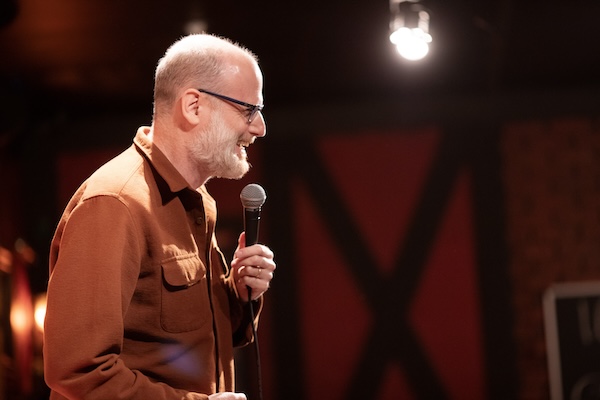
photo - Counselor and stand-up comic David Granirer will be joined by comedians from Stand Up for Mental Health on Nov. 2 for a Heart of the City Festival show at Carnegie Theatre
Counselor and stand-up comic David Granirer will be joined by comedians from Stand Up for Mental Health on Nov. 2 for a Heart of the City Festival show at Carnegie Theatre. (photo from Heart of the City Festival)

Also on Nov. 2 – at Carnegie Theatre, 4 p.m. – is Funny Side Up: Stand Up for Mental Health. Counselor and stand-up comic David Granirer will be joined by comedians from Stand Up for Mental Health, to look at the lighter side of taking meds, seeing counselors, getting diagnosed and surviving the mental health system. Jewish community member Granirer’s Stand Up for Mental Health teaches stand-up comedy to people with mental illness. This event is one of the festival’s many free offerings.

On Nov. 9, 8 p.m., at Russian Hall, the festival honours Jewish community member Jay Hamburger, who died earlier this year. Hamburger was a beloved teacher, political activist, radio host and artistic director of Theatre in the Raw, which is co-presenting the event (tickets: bit.ly/4eqs3Cu).

The Keep It Raw Cabaret: A Tribute to Jay Hamburger features choral singers, stand-up comedy, staged theatrical surprises, a taste of Hamburger’s original poetry and writings, and more. Among the participants are Jewish community members Stephen Aberle and Hamburger’s son, Sylvan Hamburger.

The Heart of the City Festival is presented by Vancouver Moving Theatre in association with the Carnegie Community Centre and the Association of United Ukrainian Canadians and a host of community partners. The festival works with, for and about the Downtown Eastside community to carry forward the area community’s stories, ancestral memory, cultural traditions, lived experiences and artistic processes to illuminate pathways of resistance and resilience. For the full lineup and other information, visit heartofthecityfestival.com. 

– Courtesy Heart of the City

Eclectic season for Ballet BC

Opening Ballet BC’s 2024/25 season Nov. 7-9 is the world première of Dawn, from French choreographer Pierre Pontvianne. Also featured in the season opener are Heart Drive, from Dutch choreographic duo Imre and Marne van Opstal, with music by Israel-born Amos Ben-Tal, and Frontier, by British Columbia’s own Crystal Pite.

Dawn is Pontvianne’s first work for North American audiences. Known for defying genre and expectation, his movement language is intimate and organic, with a strong capacity for political resonance.

The primal and electric Heart Drive, which had its world première in the 2022/23 Ballet BC season, returns to the stage, inviting audiences to acknowledge the fundamental energies we all possess, energies that allow us to form bonds by entertaining our fantasies of love, commitment and pleasure.

Rounding out the program, Pite’s Frontier is the characterization of dark matter, the personification of shadows. “As a creator, I find a pleasing parallel between what we don’t know about the universe, and what we don’t know about consciousness,” said Pite. “Creation, for me, is about venturing into unknown territory and being in a generative relationship with doubt.” Featuring the full Ballet BC company, this is a rare chance to experience a large-scale work by Pite.

The season continues March 6-8 with an evening featuring a world première by Bogota-born, Montreal-based Andrea Peña, winner of the 2024 Ballet BC Emily Molnar Emerging Choreographer Award; Swedish choreographer and longtime Ballet BC collaborator Johan Inger’s PASSING, set to an original score by Ben-Tal, as well as selections from Erik Enocksson and Moondog, which was commissioned by Ballet BC in the 2022/23 season; and a new commission from Spanish choreographer Fernando Hernando Magadan.

The season closes May 8-10 with a piece created for Ballet BC by Bobbi Jene Smith and Or Schraiber, alums of Israel’s Batsheva Dance Company, founding members of the American Modern Opera Company and current artists-in-residence with LA Dance Project. The duo is known for reflecting everyday experiences through their intense, unexpected and expressive creations, and for their reverence of and collaborations with the world of cinema.

The closing program also features a remount of German choreographer Marco Goecke’s Woke Up Blind, in which seven dancers move through a world of sound highlighted by the guitar licks and vocals of late American musician Jeff Buckley; and a world première by Ballet BC artistic director Medhi Walerski, who is known for movement language that embodies the essence of the human spirit through intimate partnering and dynamic group work.

Royal Winnipeg Ballet returns this season, bringing Nutcracker to Queen Elizabeth Theatre Dec. 13-15 and, for the first time, Surrey’s Bell Performing Arts Centre (Nov. 23-24). And Ballet BC Annex returns, a collaboration with Arts Umbrella and Modus Operandi that tours regionally, bringing performances and workshops to schools across the province. The main company will also tour, performing large ensemble works, such as Pite’s Frontier, Shahar Binyamini’s 50-dancer BOLERO X and Walerski’s Chamber, in cities such as Montreal, Ottawa and Los Angeles. The company will continue its MOVE adult classes, and series in dance, pilates and yoga. 

For more information, visit balletbc.com. 

– Courtesy Ballet BC

Fringe Fest coming soon

Jem Rolls’ The Kid Was a Spy is part of this year’s Vancouver Fringe Festival, which runs Sept 5-15. Other Jewish community members with shows include Rita Sheena, with Everybody Knows: Leonard Cohen Dance Theatre, and Theatre Terrific artistic director Laen Hershler and Susan Bertoia co-direct Proximity: The Space Between Us, which was co-created by an all-abilities cast. For the full festival lineup and tickets, visit vancouverfringe.com.

Plays offer understanding, release

Dromio in The Comedy of Errors. Bard on the Beach runs into September. (photo by Tim Matheson)

Every day, we are bombarded with news about war, hate, crime, inflation, the list goes on. How to make sense of it all? Often, good theatre can provide deeper meaning and understanding of the world, or at least offer us a break from the world. Cue Shakespeare and his 400-year-old lens that is remarkably accurate in contemporary times…. And that takes us to Bard on the Beach.

Last issue, I reviewed Bard’s productions of Twelfth Night and Hamlet (jewishindependent.ca/bard-plays-with-tradition). This issue, I start with Measure for Measure, then move to The Comedy of Errors.

In Shakespeare’s Measure for Measure, the Duke of Vienna has enacted laws outlawing sex between unmarried couples. He then leaves the city in the control of puritanical Angelo and disguises himself as a friar to observe what happens. A young man, Claudio, is prosecuted for the crime of impregnating his girlfriend and is sentenced to death. When the condemned man’s virginal sister, Isabella, a novitiate in a local nunnery, comes to plead for his life, Angelo is smitten. He offers to save Claudio’s life if Isabella will sleep with him. What a great platform to explore the male hierarchy, corruption, sexual predators, coercion and authoritarian control.

photo - Tal Shulman as Abhorson in Measure for Measure
Tal Shulman as Abhorson in Measure for Measure. (photo by Tim Matheson)

In the Bard production, director Jivesh Parasram has taken the story and, in an absurdist twist, made premarital dancing the offence punishable by death. The setting: the disco-crazed 1970s and ’80s, in the glitzy Club Europa. Act 1 opens with hooded monks frenetically dancing on a neon-lit dance floor replete with a disco ball, presided over by a silver-clad, fox-head-wearing DJ (Jewish community member Tal Shulman, who later does duty as the black-hooded executioner, Abhorson). The Duke (a superb Scott Bellis) rips off his monk robes to reveal a sparkly suit as he dances his way over to Angelo (a staid, suspendered Craig Erickson) and hands him authority over the city. The edict is given – tansen verboten (dancing forbidden) – but that does not stop an erotic pas de deux between Claudio (Jeremy Lewis) and Julietta (Tess Degenstein), leading to Claudio’s arrest and imprisonment.

When Isabella (Meaghan Chenosky) is told of her brother’s fate by Lucio (Karthik Kadam), she rushes to Angelo’s office. At first, she is rebuffed but then Angelo offers her Claudio’s life in return for a dance. She grapples with the request, wanting to save her brother’s life, but refuses, threatening to expose Angelo’s hypocrisy. His response: no one will believe her. Sound familiar? 

To save Claudio’s life and retain Isabella’s chastity, a plan is hatched to switch Mariana (Leslie Dos Remdios), Angelo’s previous lover, to dance with the cad. A huge panda bear head is part of the subterfuge.

Meanwhile, there is a side story of two “dance hall workers,” who are worried about the morality laws and the impact they will have on their “business.” The pair become involved in the plot to free Claudio. For how it all ends, you’ll have to see the play.

Throughout the production, the foxy DJ pops up to play the hit tunes as the cast busts out into various, often raunchy, dance moves. Kadam also plays Master Kevin Bacon and performs some impressive footwork to the theme song from the movie Footloose.

The set is fab (thanks to designer Ryan Cormack), the costumes hip (credit to Alaia Hamer), the dancing energetic (kudos to choreographer Krystal Kiran) and the oldies but goodies nostalgia-inducing. If the opening night audience reaction is any measure of its success, Bard’s take on Shakespeare’s “problem play” is destined to be the hit of the season. It certainly will bring in a younger crowd. 

***

Playing on alternate nights with Measure for Measure (and with the same cast) is Shakespeare’s shortest work, The Comedy of Errors, about two sets of identical twins separated at birth in a shipwreck. Egeon (Bellis), a merchant from Syracuse and father of one of the sets of twins, has been arrested and sentenced to death in Ephesus for breaking a law that prevents people from traveling between the two cities. Seeking leniency, he tells the Duke (Degenstein) why he is there. Many years before, he had a wife and identical twin sons (both named Antipholus), who had identical twin servants (both named Dromio). During the shipwreck, he saved one son and his servant while his wife and the other son and servant were washed away. His Syracusean son, Antipholous, has taken Dromio to look for his lost brother. Now Egeon is looking for both his sons. A 24-hour reprieve is granted. Conveniently and unbeknownst to anyone, both sets of identical twins are in Ephesus. Of course, that sets the scene for confusion, mistaken identities, slapstick humour and hilarious miscues. There even is a goofy exorcism.

Director Rebecca Northan (who helmed last year’s Goblin Macbeth) has set the play in its proper period, ancient Greece. Once in the tent, you feel like you are in an open Mediterranean market with colourfully decked out vendors hawking their wares – silks, carpets, gold – mingling with the audience as they take their seats.

Northan has chosen to have one actor play both twins in a set, which can be confusing and will keep you on your toes. Lanky Antipholus (Lewis) wears a red and blue shoulder sash. When the red side is showing, he is from Syracuse; the blue, Ephesus. Meanwhile, diminutive Dromio (Shulman) also uses red/blue swatches to signal his identity. Shulman is very funny and his talent is evident as he frantically races around the stage, and in and out of the tent. 

The main confusion surrounds the purchase of a gold chain that has yet to be paid for although money has been tendered. Where is the necklace? Who has the money? Who paid for what?

The second area of confusion is the relationship between Ariana (Chenosky), the wife the Ephesian Antipholus and her husband, who likes to “go out with the boys.” When she sends her servant to fetch him home and finds that he does not recognize her (wrong twin) and that he has fallen for her sister, Luciana (Cynthia Yusuf), she explodes. In all of this, Kadam, playing both a coquettish courtesan and an Urdu-speaking merchant, steals the show. I wish he had been on stage more.

As usual in any Bard comedy, all’s well that ends well and all becomes clear. Tying everything together is great behind-the-scenes work: the set (Cormack), costuming (Christine Reimer), sound design (Ben Elliott) and lighting design (Hina Nisihoka). My only complaint is that, as the actors did not have microphones, some of the dialogue is lost. And some of the shtick works and some does not, but it is in the name after all – a comedy of errors. Come early to take advantage of the artisan market set outside the performance venue.

For tickets to any of the four Bard productions, visit bardonthebeach.org or call 604-739-0559. 

Tova Kornfeld is a Vancouver freelance writer and lawyer.

Grateful to do what she loves

Advah Soudack (photo courtesy)

I watched Hallmark’s Love, Lights, Hanukkah! on television but never imagined that I would meet the actress who played Becky Berman, the lead character’s half-sister. But Advah Soudack lives right here in East Vancouver. 

This spring, I organized a series of Playback theatre classes for people with lived experiences of mental health challenges and addictions, which was funded by the Consumer Initiative Fund. Laen Hershler, a member of Vancouver Playback Theatre, recommended Soudack to teach the classes.

Soudack taught with enthusiasm, determination and emotional honesty. She gained the trust of the students quickly and soon they were leaping up on stage to improvise one another’s stories and emotions. 

“I had a wonderful time teaching Playback these past few weeks,” she said. “I was amazed and inspired by the bravery I witnessed in the class. I loved working with a group of artists coming from all walks of life, some with years of theatre and improv experience and others with very little.

“I think the thing I enjoyed most about teaching Playback … with this specific group of individuals, was witnessing a group of people who didn’t know each other at first, come together, play, explore, trust, allow themselves to be vulnerable, share with open hearts, let go and create together as if they had been working as a troupe for a long time.” 

Soudack’s enthusiasm for the theatre began when she was a child.

“I grew up with a lot of music in my home. My dad was very musical and played the piano, and my mom was always singing around the house,” she said.

“In elementary school, I had a music teacher named Donna Piper and she saw my flair for performing and told my parents to take me to audition for The Music Man with a company called Greater Vancouver Opera Society,” she added. “At 8 years old, in leggings my mom had bought me in France, a fitted T-shirt and a funky baseball hat, I sang ‘Wadda Wadda Wadda’ and played the air trumpet. I got the part!” 

photo - Advah Soudack
Advah Soudack (photo courtesy)

Soudack regularly teaches improv to children. For several years, she took her considerable talent to Perry Ehrlich’s Gotta Sing! Gotta Dance! performing arts summer camp at the Jewish Community Centre of Greater Vancouver. There, she taught improv and ensemble-building exercises and assisted director Chris McGregor. She also “created and ran the finishing school program, which taught kids audition skills, from entering the audition room to character creation, and how to prepare monologues and songs.”

Soudack recently completed two seasons at Bard on the Beach with A Midsummer Night’s Dream and Henry V. Other recent theatre credits include Courage Now, The House at Pooh Corner and a touring production of Glory. You may have seen her on television in Blockbuster and/or The Christmas Contest. She is also known for her work as an actor in animated films, including My Little Pony, Polly Pocket, Lego Friends, Beyblade Burst Evolution and Adventures of Ayuma. 

She says that all the roles she has played have been challenging and fulfilling. 

“I feel like I have grown and learned from every role I have played and every theatre project I have been part of,” she said. “I guess one role that sticks out for me is the role of Lucille Frank from Parade, which I portrayed about six years ago with Fighting Chance Productions. This was one of the first roles back from a hiatus I had taken from theatre. I had been forcing myself to audition again, anything that came my way, even if I was scared sh*tless.”

When she got the role, she began a journey into the world of Leo and Lucille Frank. Leo Frank was wrongfully convicted of murdering a young girl in 1913, and was lynched by a mob who broke into the prison when his death sentence was commuted to life imprisonment. Lucille Frank defended her husband through everything, dying in 1957, long before Leo Frank was posthumously pardoned in 1986.

“I was at the downtown library for days and spent many hours reading old, archived newspaper articles about the case, reading books and looking up everything I could find that had information about the young, Jewish couple living in Atlanta, Ga.,” said Soudack, adding that the roles she finds most exciting are the ones based on real people and events. When the research involves history, she is always extra excited.

“I feel very honoured that I have had the opportunities that I have had to work in the arts in Vancouver,” she said. “I feel very grateful to be able to do what I love and what inspires me and makes my heart feel full. It is also a gift to be a vessel for others’ stories and bring them to life for this community.” 

Soudack spent time in Israel about 10 years ago. 

“When Oct. 7 happened, I felt very strongly about going. I am still wanting to go and plan to make a trip in the near future,” she said. “I have so many family members in Israel and it feels like a second home. Whenever I am there I always think, ‘OK, this is home, I feel like I belong here.’ There is something about the energy of the country and the people that makes me feel alive and vibrant.”

Soudack is a proud graduate of the University of Alberta’s bachelor of fine arts’ acting program. In Hebrew, Advah means “little wave” or “crest of the wave.” 

Cassandra Freeman is a journalist and improviser who lives in East Vancouver.

Bard plays with tradition

Nathan Kay as Sir Andrew in Bard on the Beach’s production of Twelfth Night. (photo by Tim Matheson)

Summer is here again and with it comes that perennial favourite, Bard on the Beach. This year, the BMO Main Stage hosts Twelfth Night and Hamlet, well into September.

First up, Twelfth Night, from Shakespeare’s later period, was written to provide light entertainment for the close of the 12 days of Christmas. Director Diana Donnelly’s adaptation for this comedy is to set it in a carnival-like atmosphere in Illyria, to take advantage of the chaotic shenanigans served up in the narrative (including a fight scene using table tennis paddles). As stated in the show notes, “Illyria is peopled with a bizarre mix of characters: a ringmaster, strongman, rocketman, clowns, pirates and several fortune tellers.”

In Twelfth Night, twins Viola (Kate Besworth) and Sebastian (Charlie Gallant) are separated after a shipwreck. Viola washes up on the shores of Illyria into the midst of the circus. Thinking that her brother has perished, she disguises herself as a man (Cesario) to work for magician Count Orsino (Aidan Correia). Meanwhile, the Count is trying to woo circus star Countess Olivia (Olivia Hutt) and sends Cesario out to do the deed. However, Olivia is not interested in the Count, being preoccupied with other tragic events in her life, and falls for the messenger while the messenger falls for the Count, making for an interesting love triangle.

Add to the mix Olivia’s drunk-but-well-meaning uncle Sir Toby Belch (Marcus Youssef) and his foolish sidekick Sir Andrew Aguecheek (Nathan Kay), cunning maid Maria (Evelyn Chew), the Fool (Anton Lipovetsky, doing double duty as musical director) and, in a gender reversal, the Countess’s puritanical, let-there-be-no-fun manager Malvolia (Dawn Petten), who secretly pines for the Countess, and the mayhem takes off. Amid all this, Sebastian reappears on the Illyrian scene, leading to comical mistaken identity scenarios. 

You might as well call this Bard iteration Twelfth Night: The Musical, as cast members often burst into song – terrific original ones by local composer Veda Hille – giving credence to a famous line in the play, “If music be the food of love, play on.” While I found the first act somewhat disjointed and confusing, trying to figure out what was going on when and with whom, the second act saved the day and the enthusiastic cast/music made up for any shortcomings in this adaptation.

To that end, kudos to understudy Besworth, who got the call a day before opening night to step into the shoes of Camille Legg and, without the benefit of rehearsal, gave a sublime performance. Hutt is charming as the Countess, Youssef is as good-humoured as you can get and Gallant does able double duty for the musical bits with guitar and drum work. Bard veteran Andrew Wheeler is the Ringmaster and controls the pace of the circus (when he can). Petten is a standout and takes the concept of emoting to new heights in a sparkly yellow cat suit when she is spun around on the “Wheel of Misfortune,” while being punished by Belch and his cronies for her kill-joy attitude. Very much an ensemble cast, special mention has to be made of the two Jewish community cast members, Kay and Lipovetsky, whose comedic timing and antics will keep you in stitches. 

Costumer Mara Gottler has scored a home run with costumes that can only be described as fabulous – particularly Hutt’s colourful sequined frock and a flowing, white, asymmetrically hemmed wedding dress (I want this dress!) complemented with black suede stiletto boots. All the costumes are suggestive of a carnival and set designer Pam Johnson gives the audience a multi-hued circus with colourful games, ladders, balls and banners. 

Purists may wince at the liberties taken with the original script but this production will be a hit with those in the summer crowd who are looking for a Shakespeare Lite experience.

For something completely different, there’s Hamlet. I loved, loved, loved it! I have seen many productions of Hamlet but this one is by far the one that gave me the most clarity in understanding the story. This is Shakespeare at his finest. 

Stephen Drover, adapter and director, in a brilliant twist of chronology, starts the play off with Hamlet on stage orating the suicide soliloquy (usually in the third act). Right away, we see the angst of the prince as he grapples with life and death (“to be or not to be”). His life is a mess – his uncle Claudius kills his father, the king of Denmark, and takes the throne; his mother, Queen Gertrude, marries Claudius; his best friends from university, uildenstern and Rosencrantz, betray him; and his girlfriend, Ophelia, kills herself. What’s left to live for? It is the dread of what might come after death that “makes cowards of us all” and so Hamlet chooses life on this “mortal coil.”

photo - Nadeem Phillip Umar Khitab as the title character in Bard’s Hamlet
Nadeem Phillip Umar Khitab as the title character in Bard’s Hamlet. (photo by Tim Matheson)

Hamlet is set on his fateful path by an eerie visit from the ghost of his father, who describes his murder most foul and importunes his son to avenge his death. Feigning madness, Hamlet sets off to right what is rotten in Denmark amid the wealth and power of the royal court. 

The action includes a foray into a graveyard where actor Lipovetsky injects some moments of lightness into an otherwise dark tale with his comedic take on the gravedigger. We also are privy to the funeral of Ophelia and, in the finale, an epic fencing duel culminates in multiple deaths, including a poignant farewell for Hamlet. Kudos to fight director Jonathan Hawley Purvis for his choreography of this sequence. Choreographer Lisa Goebels also provides some stunning freeze frame dance moments showcasing some fancy footwork by the older royals.

In another interesting staging twist, the original play-within-a-play device, which mimics the king’s death (poison in his ear), becomes a song from traveling performers, played by Christine Quintana and Lipovetsky.

Pam Johnson’s set is a cavernous library with floor-to-ceiling bookshelves and secret doors that allow the actors to enter and exit the stage seamlessly. A huge crown hangs from the ceiling and plays a critical role in the final scene. Being set in the present time allows for contemporary costumes – tattered jeans, T-shirts for the young, fitted dresses and pant suits for Gertrude and double-breasted suits for the older gents, courtesy of costume designer Barbara Clayden. 

While this is Hamlet’s story, it really is only made possible through the teamwork of a very skilled cast. Nadeem Phillip Umar Khitab is the quintessential Hamlet, with his physical presence and determination palpable as he undertakes his filial task of revenge. (Starting Sept. 2, Hamlet will be played by Chirag Naik.) Besworth is an ethereal Ophelia who sees no option but to take her life when both her brother, Laertes (Kay), and her father, Polonius (Wheeler), forbid her to have anything to do with Hamlet. Munish Sharma plays Claudius; Jennifer Clement, Gertrude; Ivy Charles and Aidan Correia, Guildenstern and Rosencrantz; and Youssef, the Ghost.

For tickets to any of the Bard productions, visit bardonthebeach.org or 604-739-0559. Comedy of Errors and Measure for Measure run on the smaller Howard Family Stage. 

Tova Kornfeld is a Vancouver freelance writer and lawyer.

A love affair that lasts

Sarah Heyman and Jerry Callaghan co-star in Bema Productions’ Same Time, Another Year, which opens July 17 at Congregation Emanu-El’s Black Box Theatre. (photo from Bema Productions)

From July 17 to 28, Bema Productions will be staging Same Time, Another Year, the sequel to Bernard Slade’s Broadway hit Same Time, Next Year, at Congregation Emanu-El’s Black Box Theatre.

The sequel catches up with Doris and George, who, in the first instalment, have carried on a long-standing love affair – meeting each other for a weekend once a year despite being married to others. Same Time, Another Year starts on their 25th anniversary, in 1976, and continues through their subsequent February rendezvous over the next 17 years.

The pair are now in their late sixties, faced with the responsibilities and consequences of life, all the while reexamining love beyond their annual assignation and the romance contained within it. Told in six scenes, and against the backdrop of the late 20th century, their affair and their perspectives on their relationship evolve and change. Along the way, there are illnesses, career successes and setbacks, second marriages, second families, and grandchildren.

“I knew that many of our patrons would remember Same Time, Next Year and, like me, wonder what happened to George and Doris 25 years later. I have had quite a few [people] tell me this since the advertising went out,” said Zelda Dean, founder and managing artistic director of Bema. “Maybe because I am ‘that age,’ the play spoke to me, as it addresses what we all have to face as we age – the fears that everyone has about their health and about losing the ones we love.”

Doris and George form a special bond beyond the bedroom, one with its own sincerity. Further, they provide a kind of gauge for what happens in the other’s life.

Dean told the Independent that what she likes most about the play is the unique relationship that develops over the many years, although the characters only meet once a year. She feels that audiences will enjoy the continuation of their journey.

Dean added that it has been a delight to work with the two leads, Sarah Heyman and Jerry Callaghan, whom she described as two very gifted actors. Both have been in the business for several years and are also close friends, which, Dean explained, made it easier for them to portray the relationship between the couple. 

“A ‘two-hander’ is always a challenge for the actors. Of course, many lines have to be learned and there is never time for a break on stage,” Dean said. “This particular play has six scenes, mostly four years apart. This means the actors have to change their costumes in two minutes or less. Much harder than one would think, especially standing in the wings.”

A Canadian playwright and actor, Slade created two popular television series in the late 1960s and early 1970s, The Flying Nun and The Partridge Family. He also wrote for Bewitched and The Courtship of Eddie’s Father, among others. He began his career as an actor, performing in more than 200 plays on stage, radio and television, in regional theatres around Toronto and on camera for the CBC.  By the mid-1970s, Slade turned his comedic focus to the stage and wrote more than a dozen plays.

One of the most produced and successful two-person plays, Same Time, Next Year opened on Broadway in March 1975, originally starring Ellen Burstyn and Charles Grodin, and ran for more than 1,400 shows during the course of nearly four years. It toured across the United States, played in London and was translated into several languages. It was adapted into a film in 1978 that featured Burstyn and Alan Alda. 

It has been said that Slade’s strength as a writer derives from his ability to fill the characters’ lives with events of great richness and depth, and still maintain the easy lightness so important to a romantic comedy – with strong dialogue and a consistent, realistic and emotional tone. The theme of Same Time, Another Year, as well as the original, is that few (if any) relationships fit into neat boxes, and each has its own rhythm and place in people’s lives.

For more information, showtimes and tickets, visit Bema’s website, bemaproductions.com. 

Sam Margolis has written for the Globe and Mail, the National Post, UPI and MSNBC.

Not-so-accessible city

Lenard Stanga as Hugh and Cadence Rush Quibell as Shiloh in Realwheels Theatre’s Disability Tour Bus podcast, which will be released July 17. (photo by Rashi Sethi)

On July 17, Realwheels Theatre releases its new production, Disability Tour Bus, as a radio play podcast available for streaming at realwheels.ca.

Written for podcast platforms by Amy Amantea and Jewish community member Rena Cohen, Disability Tour Bus follows Shiloh, a young wheelchair-user, as they navigate their first day as a guide for Funcouver Bus Tours. Working alongside longtime employee and relentless dad-joker Hugh, Shiloh struggles to stick to the Funcouver script when so much of “Canada’s most wheelchair-accessible city” is still so inaccessible. People and politics collide until a new passenger, Tess, comes aboard and offers common ground. The tour must go on! Because there’s someone special waiting for Tess at the end. At least she hopes there is.

The role of Hugh is played by Lenard Stanga, Jewish community member Cadence Rush Quibell plays Shiloh, and co-writer Amantea is Tess. The cast is rounded out by Mack Gordon, Caitlyn Bairstow, Ian Hanlin and Lauren Jackson playing multiple parts.

“As a wheelchair-user, I’ve heard that whole ‘most accessible city’ line a lot,” said Realwheels co-artistic director Adam Grant Warren. “It’s a big part of the reason I moved to Vancouver from the other side of the country. I’ve been here for 16 years now. After hundreds of busted elevators, torn-up sidewalks and too-full buses, I know Vancouver has a lot of work to do. Access-wise it means well, but it’s a mess sometimes. For me, that’s one of the most interesting tensions in this project: the attempt to create access when no one thought to ask what those of us who are looking for it actually need.” 

– Courtesy Realwheels Theatre