The Debaters special edition

The special Chutzpah! Festival edition of The Debators will be moderated by Kate Davis. (photo from Chutzpah!)

This year’s Chutzpah! Festival opens with a bold question: “The Ten Commandments. Holy Moses, is it time for some new ones?” And the audience at the Rothstein Theatre Nov. 2 will be the ones to decide which comedian answers the question best at the special festival edition of The Debaters.

“As holder of stage rights for The Debaters comedy format, I have been presenting non-CBC stage productions for awhile, all with radio host Steve Patterson as moderator. These have been very successful, but I’ve also been keen to produce stage versions for specific audiences in different communities,” show creator Richard Side told the Independent. “This Chutzpah! Festival is the perfect opportunity to do that with a cast of comedians and a debate topic that will really connect with the audience and with [artistic managing director] Jessica Gutteridge’s vision for the fest.”

Debating the topic at the Rothstein Theatre will be comedians Jacob Samuel and Charlie Demers, and comedian Kate Davis will act as moderator. But the event won’t just be about making jokes.

photo - Charlie Demers
Charlie Demers (photo from Chutzpah!)

Demers, a Debaters regular, shared “his bona fides for this event” with Side: “I was team captain of the Canadian delegation to the World Schools Debating Championships in Jerusalem in 1998; you can also say that I am a novice Anglican Third Order Franciscan.”

“The 3rd order Franciscan movement,” explained Side, “is a group that includes religious and lay people who try to emulate the life of St. Francis of Assisi…. As for how it relates to the topic of the Ten Commandments – [Demers] is arguing that the 10 commandments do not need revising so, along with the jokes, I am sure he will have some heartfelt points as well. And that is why I thought him ideal for a comedy debate that was not going to just ‘roast’ the commandments but also might have some insight in it, too. Facts and funny is what The Debaters is all about, laughs – and logic.”

Samuel, who is Jewish, is on the other side of the argument. First appearing on the CBC radio show about six years ago, he told the Independent: “Preparing for The Debaters is always a combination of excitement, stress and wracking my brains on how to squeeze jokes out of a given topic. I do a lot of brainstorming, writing and rewriting, and pacing around going over my arguments out loud. For the Chutzpah! show I’ll be preparing as I always do. However, I am doing maybe a bit more research than I would normally do to try to be as accurate as possible when it comes to the Torah and Jewish beliefs. I think it’s fair to say that this audience may be a bit more knowledgeable about Judaism than the average crowd.”

photo - Jacob Samuel
Jacob Samuel (photo from Chutzpah!)

Jewish Independent readers will be quite familiar with Samuel, whose one-panel cartoons the paper has published and whose comedy career the paper has followed.

“I think the last time I was in the Jewish Independent,” he said, “it was to promote the recording of my debut comedy album in late 2019 (what a time that was!). Well, it turns out, I won a Juno Award for that very album in 2021. I also got married and now have a mini Bernedoodle named Mendl who, to me, is also Jewish (he’s loud, anxious and has a very sensitive stomach).”

Samuel has learned a lot since his first time on The Debaters, which was at the 2017 Winnipeg Comedy Festival. “The debate was about emojis,” he said. “I thought it would be really subversive and clever if I held up giant emoji printouts for my closing argument – not the greatest idea for an audio-only show but, hey, it was my first time on radio. Luckily, they had me back and enough times that I often lose count.”

Davis, a member of the Toronto Jewish community, is also a Debaters veteran.

“My first Debaters,” she said, “was in 2007 in London, Ont. – ‘Should dads be in the delivery room?’ Of course, I was for this, as dads are the ones who got us into this mess in the first place.”

For Davis, being a mom is not just part of her private life, she incorporates it into her writing and gives parenting workshops, too, as well as talks on various related, and unrelated, topics.

“I love performing comedy and my speaking is my comedy and everything I believe in,” she said. “Over the years, I have created four different keynotes on work/life balance, connectivity, mindfulness and mental resilience, all of which I hope contribute to a healthier, happier life. Whether I am writing my comedy, books, scripts or a keynote, I find being multifaceted is like going to the gym – you don’t just work out your arms. Each one contributes to each other. I might write an article and think that’s a great joke and try that in my standup.”

Davis said she is “super-excited to be moderator for The Debaters – Chutzpah! Edition” that stars Demers and Samuel.

“I know what great comics they are and, honestly, I think moderating is being a great listener and keeping things going. But, let’s be honest,” she said. “I am pretty excited for the puns!!! Also, to prepare, I will be eating as many matzo balls as I can.”

For tickets to the The Debaters – Chutzpah! Edition (which is not a CBC-affiliated production and won’t be recorded for broadcast), visit chutzpahfestival.com. A portion of ticket sales will benefit the Jewish Community Centre of Greater Vancouver’s inclusion programs.

Tzimmes helps close festival

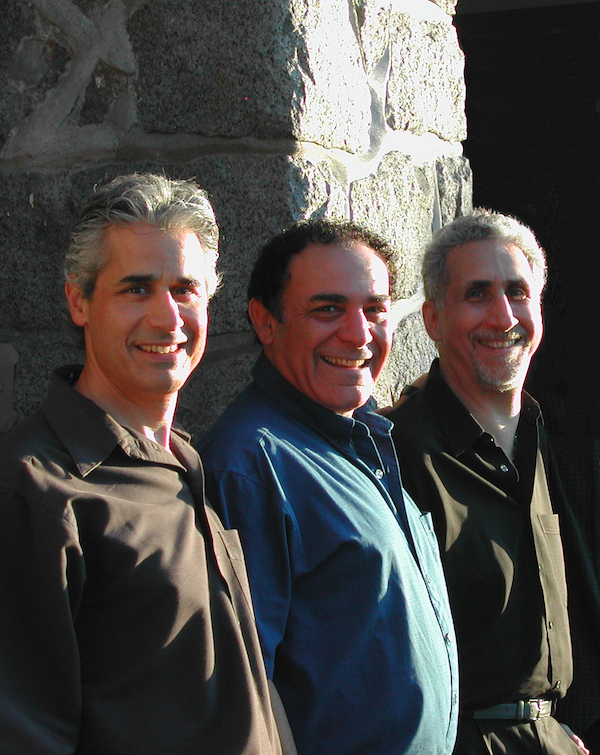
Left to right, Tzimmes’s Saul Berson, Yona Bar Sever and Moshe Denburg perform in the Ukrainian Hall Community Concert and Social on Nov. 5. (photo from Heart of the City)

A festival favourite, Tzimmes, will perform at the 20th Annual Downtown Eastside Heart of the City Festival, taking part in the Nov. 5 Ukrainian Hall Community Concert and Social, which closes out the 100-plus live and online events that take place at more than 40 venues over 12 days.

Presented by Vancouver Moving Theatre with the Carnegie Community Centre, the Association of United Ukrainian Canadians and other community partners, this milestone year of the festival – with the theme “Grounded in Community, Carrying it Forward” – starts Oct. 25.

“We have performed at DTES Heart of the City Festival on several occasions over the years,” Tzimmes founder and band leader Moshe Denburg told the Independent.

“November 2008 was the first time and, two years later, in October 2010, we performed again. We were invited a few years ago, in the fall of 2020, but couldn’t make it due to a scheduling conflict.”

In addition, said Denburg, a small group from the Vancouver Inter-Cultural Orchestra (VICO), which Denburg founded, played the festival in 2011. “The repertoire was, of course, intercultural, but included klezmer and Hebraic pieces as well,” he said. “Every time we played the festival, there was a truly welcoming atmosphere, and I would like to say it is an honour to be part of the mitzvah (good deed) that Heart of the City is performing for the neediest amongst us.”

“For 20 years, the Heart of the City Festival has been grounded in the Downtown Eastside and focused on listening and learning from the cultural practices of the community,” notes the press release. “The festival works with, for and about the Downtown Eastside community to carry forward our community’s stories, ancestral memory, cultural traditions, lived experiences and artistic processes to illuminate pathways of resistance and resilience.” The festival’s mandate “is to promote, present and facilitate the development of artists, art forms, cultural traditions, history, activism, people and great stories about Vancouver’s Downtown Eastside.”

The closing event at which a trio of musicians from Tzimmes will play – Denburg (lead vocal/guitar), Yona Bar Sever (lead guitar/backup vocal) and Saul Berson (clarinet/flute/saxophone) – will also feature the Barvinok Choir, Dovbush Dancers and the Vancouver Ukrainian Folk Orchestra. The concert will be opened by cultural speaker Bob Baker of the Squamish Nation and DTES resident, artist, poet and community activist Diane Wood will read “100 Years of Struggle” by the late Sandy Cameron, an historian and poet, among other things, who was very involved in the Downtown Eastside.

About what the Tzimmes trio will play at the concert, Denburg said, “The Tzimmes repertoire is always made up of Jewish music in the larger world context. So, there will be aspects of klezmer and Yiddish song (European), Ladino (Judeo-Spanish/Mediterranean), and pieces in a more Middle Eastern style as well. If anyone wants a primer on our repertoire, they can visit our YouTube page: @BigTzimmesProductions. Have a look/listen to ‘Dror Yikra,’ ‘Cuando’ and ‘Moishe’s Freylakh,’ and you’ll get an idea of what’s to come.”

The Independent last spoke with Denburg in 2021 about Tzimmes’s then-new two-CD album The Road Never Travelled. Since that interview, the group released, in 2022, a remixed and remastered version of their first album, calling it Sweeter and Hotter.

“In 2020, as we were creating our fourth album, The Road Never Travelled, I realized that there was almost enough material for a second disc, but it needed a few more pieces,” said Denburg. “Around that time, my dear friend and band mate, Yona, suggested that I try to remix our debut recording. We always felt that we were constrained by a simpler technology back in 1993, and that certain aspects of the mix could be improved – vocals could be clearer, instruments brought into better relation and so on. Looking around, I found a fine facility in Red Bank, N.J., that specialized in transferring old reel-to-reels to a digital format. The tapes of Sweet and Hot were 27 years old, but they transferred wonderfully to digital tracks.

“On the second disc of The Road Never Travelled, we included several remixed liturgical pieces from Sweet and Hot,” Denburg said, noting that the group continued the process and worked on every track of their 1993 debut album. He said, “The result, we believe, is an enhanced version of Sweet and Hot that does not compromise the original at all; in fact, we humbly submit, the result of all this work is that the sweet parts are even sweeter, and the hot stuff even hotter!”

The closing concert/social of the Heart of the City Festival – called Building Community: 20 Years of Friendship – takes place at the Ukrainian Cultural Centre, with doors opening at 2 p.m. and the concert at 3 p.m. Tickets ($30/$20) are available at eventbrite.ca.

***

photo - Among the many Heart of the City events is a month-long exhibit at Carnegie Community Centre of photographer David Cooper’s work for the festival over its 20 years
Among the many Heart of the City events is a month-long exhibit at Carnegie Community Centre of photographer David Cooper’s work for the festival over its 20 years. (photo from Heart of the City)

Among the many other events taking place during Heart of the City is an exhibit of photographer David Cooper’s work for the festival over its 20-year history, curated by Vancouver Moving Theatre co-founder Terry Hunter. (For more on Cooper, see jewishindependent.ca/capturing-community-spirit.)

Cooper will attend the Nov. 1, 4 p.m., opening reception in the third-floor gallery at Carnegie Community Centre. The exhibit, which runs to Nov. 30, will feature two to four photos from each of the festival’s 20 years, displayed chronologically with the festival poster for each year.

Organizers said Cooper provided guidelines for selecting the images: “simple, elegant, expressive images with energy, movement and/or emotion that represent the cultural and social diversity of the festival’s programming and people.” The exhibit also will include photos of festival participants who have passed away.

For more information, visit heartofthecityfestival.com.

Tell your own “crankie” stories

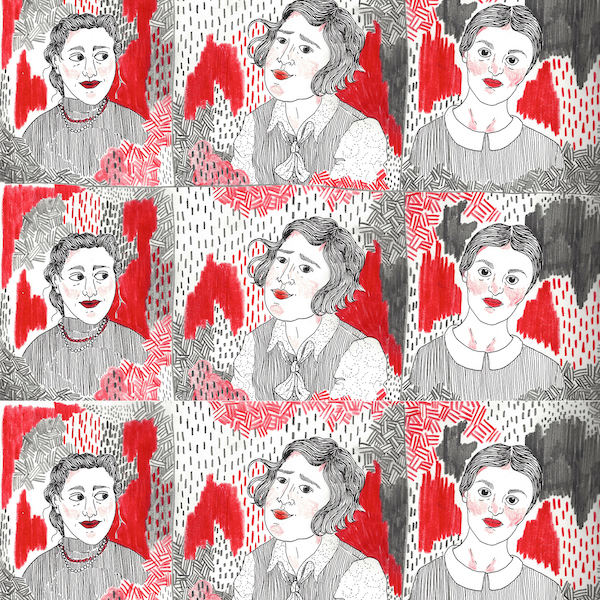
Where Do Stories Come From? (fun vanen nemen zikh di mayses) on Nov. 9 highlights a poem from each of three Yiddish women writers: Ida Maze, Esther Shumiatcher-Hirschbein and Yudika. (Illustration by Cesario Lavery)

This year’s Chutzpah! Festival includes several opportunities for people to participate in the arts being performed. A prime example is Where Do Stories Come From? (fun vanen nemen zikh di mayses), wherein attendees of the Nov. 9 event at the Rothstein Theatre will be able to learn new music inspired by Yiddish poetry and, in the Zack Gallery, on Nov. 7 and/or Nov. 12, participate in a “crankie” workshop.

Where Do Stories Come From?, which is presented by the Chutzpah! Festival and KlezKanada – co-curated by the organizations’ respective artistic directors, Jessica Mann Gutteridge and Avia Moore – includes “new musical and visual settings for three Yiddish poems by celebrated Canadian women writers, selected and translated by Faith Jones, with accompanying visual artwork in the form of ‘crankies’ – a centuries-old art form in which an illustrated scroll, evocative of the Torah, is wound across spools set in a viewing window.”

The artistic directors decided early on to work with the poetry of Canadian women writers who wrote in Yiddish, said Gutteridge, “and there was no more perfect collaborator to work with on selecting the poetry than Vancouver’s own Faith Jones. For the musical work, we drew on the incredibly rich community of KlezKanada’s artists and were lucky that Sarah Larsson was interested in the project – she’s not only a gifted composer with a thorough knowledge of Yiddish music, but is herself a stunning vocalist and music director.

“We also spent a lot of time looking at incredible artworks by Jewish visual artists and ultimately selected Benny Ferdman, Ava Berkson and Cesario Lavery, all of whom bring an interest in Yiddish, diverse styles, and interest in visual storytelling to the project. As part of the project involves community participation, we also ensured that all the artists are skilled at and enjoy working with community of all abilities and ages.”

The idea for the event came after Gutteridge met Moore at a KlezKanada Summer Retreat in 2022.

“When the JCC Association announced they would be funding new community-based projects incorporating live music and storytelling with an emphasis on partnerships,” said Gutteridge, “we realized we had a wonderful opportunity to work together to share our assets – KlezKanada’s immersive creative residency environment and access to brilliant artists with knowledge of Yiddish culture, and the Chutzpah! Festival’s presentation opportunities.

“KlezKanada’s 2023 Summer Retreat theme was Yiddish film and, because it’s a very unplugged environment, had plans to explore the ‘pre-film’ illustrated story technique of crankies,” she continued. “We thought this art form would pair beautifully with the musical work being created, and would offer a very engaging opportunity to the community to participate in creating a multidimensional presentation together.”

Where Do Stories Come From? is supported by the JCC Association’s Making Music Happen program and Chutzpah! Festival’s music programming is supported by AmplifyBC’s Live Music Presentation Fund.

The event’s title comes from one of the three poems highlighted, one by Ida Maze. “It’s a poem that grabbed the entire group immediately and we knew we wanted to work with it,” said Gutteridge. “In the poem, Maze creates a strong visual image of a little house that appears to be abandoned, but as you approach you see that a fire is lit and, in the house, sit a grandfather and a grandmother sharing culture and stories with the children, and the stories are then carried away on the wind. For us, this poem really captured the idea of the project – that intergenerational cultural transmission is the key to how we survive and thrive and, in many ways, is a model for how we hope to see this project unfold. But I think the very notion that we pose this as a question invites everyone who experiences the work to ask themselves where they think stories come from.”

The other poems are by Esther Shumiatcher-Hirschbein and Yudika.

“Faith made a longer list of poems selected for their striking visual imagery and potential musicality and presented them to our full group of artists,” explained Gutteridge. “Right away, we all responded to the Ida Maze work and had to then narrow our choices to two more. We asked the artists to highlight which poems they found particularly inspiring and, as artistic directors, Avia and I also kept an eye on whether the selections were creating an interesting and balanced program in terms of style and theme. It was an enjoyable and smooth process and I think we all enjoyed kicking off the project together in this way.”

As for the workshops, Gutteridge said, “Ava and Cesario will be with us through the week to guide workshop participants through the process of making their own crankies, inspired by prompts from the poetry we will provide. While the crankies being made for the music event will be large scale, a wonderful characteristic of this art form is that it can be made any size using very humble materials like a shoebox or even a matchbox. With our partner the Zack Gallery, the work created in the workshops will be on display in a community exhibition, and our video director Flick Harrison will be on hand to help participants capture their crankies in action. Participants can opt to share their crankies and stories in an online video gallery. We hope we will see intergenerational groups making crankies together!”

During the week, Chutzpah! will also be hosting the return of the Flame, with their evening of storytelling on Nov. 6.

“The Flame’s artistic director, Deb Williams, will teach her remarkable day-long storytelling workshop on Sunday, Nov. 12, ending just before our final crankie workshop and the concert presentation,” said Gutteridge. “We hope that these projects together will inspire community participants to explore their own stories and find new and inspiring ways to tell and share them.”

For tickets to Where Do Stories Come From? and other Chutzpah! events, visit chutzpahfestival.com.

Multidisciplinary approach – When the Walls Come Down

Racheal Prince, left, and Caroline Hébert in When the Walls Come Down, which is at the Rothstein Theatre Nov. 8 and 10. (photo © iiiiportraits)

“I think the performance is a really fun way to learn a little bit about Deaf culture,” Caroline Hébert, the lead actor and inspiration for When the Walls Come Down, told the Independent. “I hope people can make the time to try something different and I look forward to meeting some new people at the Chutzpah! Festival.”

When the Walls Come Down (WTWCD) will see three performances at the Rothstein Theatre next month, as part of the festival. A collaboration from Vancouver’s Dance//Novella, led by Racheal Prince and Brandon Lee Alley, the work highlights moments in Hébert’s life, “shed[ding] light on stereotypes and difficulties faced by many Deaf Canadians and tell[ing] a story of resilience and love,” according to the press material. It is performed with movement, music, projections and lighting, and in ASL with English voiceovers.

“Racheal and Brandon and the WTWCD team have been learning ASL,” said Hébert. “It’s really inspiring to me to see a group of people who want to create an environment where we can share ideas and our culture. I want to participate in more collaborations as I continue my journey as a Deaf actor. This is my first time stepping into a leading role for a one-hour show. I think, at first, I wasn’t really sure if this is something I could do. Over time, I realized that I can do it, and I can connect to many different people through my art form.”

The creation of WTWCD began in 2020, said Prince and Alley, when “our curiosity led us to explore the fusion of ASL and dance, with a strong desire to collaborate with a Deaf actor and blend their creative ideas with ours. Caroline was recommended to us by Chis Dodd, director of SOUND OFF. What intrigued us further was her last name, Hébert, which happened to be the maiden name of Racheal’s grandmother. This unexpected connection felt like a sign. After a video-translated conversation with Caroline, we realized that she possessed a compelling story that needed to be shared, so we quickly chose her as the central character for the work.”

As for her decision to be that central character, Hébert said, “I was interested in trying something new and I thought why not!? I did dance a little when I was a child so maybe that was also part of the reason?”

WTWCD debuted as a live-streamed performance during the 2021 Vancouver International Dance Festival (VIDF), which made it “challenging for us to establish a direct connection with the audience and gauge their reception of the work,” said Prince and Alley. “However, we knew this work had the potential of uplifting and illuminating a traditionally marginalized community, so we kept refining and building upon our initial ideas.”

In 2022, they received an invitation to perform WTWCD in Edmonton at the SOUND OFF festival, the first time the piece was presented in a live setting. “To our astonishment, the audience responded with thunderous stomps and a standing ovation. It was truly incredible to witness the profound connection the work had with the Deaf community,” they said.

In addition to that positive reaction, the pair won the 2023 VIDF Emerging Choreographic Award. “To us,” they said, “this award emphasized the collaborative and harmonious aspect of the work’s creation, transcending our roles as individual choreographers.”

Both creatives multitasked to make WTWCD. Prince and Alley choreographed the work; they played a part in the storyline creation and development with Hébert and her daughter, Anna-Belle Hébert, all four of whom perform the piece; Alley composed the music and Prince did the costume and set design. Other key contributors are lighting designer James Proudfoot, assistant lighting designer Chengyan Boon, and mentors and coaches Chris Dodd and Landon Krentz.

“Being a contemporary dance company, one of our goals was to find innovative ways to convey the music to a Deaf audience,” said Prince and Alley. And it was Alley who “came up with the idea of using a playful animation to advance the storyline and evoke the emotional essence of the music.

“To realize this vision, we collaborated with the Vancouver Film School,” they said. “We pitched our ideas to them, leading to the organization of a competition involving five different groups. Each group listened to our concepts and then presented us with small animations. After careful consideration, we selected the group that we believed best captured the essence of the work and the nuances of the music. They went on to create the animations that will be showcased during the performance.”

Listed on Dance//Novella’s website are producer Jill Tao, designer/animators Kanako Takashima and Cecilia Cortes, animation lead Arturo Acevedo and storyboard artist/designer Heena Yoon.

An integral part of this project has been Anna-Belle Hébert.

“She is a CODA (child of Deaf adult), fluent in ASL, QSL, English and French,” explained her mother. “Anna-Belle understands who I am and the story I want to share because it’s partly her story too. In the beginning, I recommended that Racheal and Brandon reach out to Anna-Belle to see if she would like to join the process, which they enthusiastically agreed to. In the performance, she is my voice over actor, but has also been a huge part of the creative process. She really helps bridge the gap between our ideas and how they can connect to hearing and Deaf people at the same time.”

Both Prince and Alley talk about how much they have learned while creating WTWCD. “One significant revelation for us,” they said, “was the realization that ASL and English are two distinct languages. Initially, we attempted to transcribe everything in an effort to ensure clarity, but this approach only seemed to confuse Caroline further. With the guidance of a specialized ASL coach, Caroline developed a unique method for documenting the script on paper. This breakthrough allowed her to memorize and retain everything effortlessly while making it her own.”

Prince and Alley had nothing but good things to say about Hébert.

“Caroline is an incredibly generous and patient collaborator,” they said. “During our rehearsals, we frequently paused our creative process to listen to stories from Caroline’s life. Each story offered us a glimpse into the experiences of a Deaf child, mother and student, which ultimately became the core of our creative journey. The exchange of knowledge and personal narratives became the driving force behind our work, giving it profound meaning for our team.”

When the Walls Come Down is at the Rothstein Theatre Nov. 8 and 10, at 8 p.m., and there is a special matinée for school groups grades 6 and up on Nov. 9, 11 a.m. (contact nrt@jccgv.bc.ca for more information about that). The show runs 60 minutes with no intermission. For tickets, visit chutzpahfestival.com.

Treatise on war, peace

Left to right: Tom Pickett, Advah Soudack, Kate Besworth and Karthik Kadam in Bard on the Beach’s production of Shakespeare’s Henry V, which runs to Aug. 13. (photo by Tim Matheson)

Bard on the Beach rarely presents Shakespeare’s history plays. The last time Vancouver audiences were treated to one of the House of Lancaster trilogies was in 2011. Like Julius Caesar, currently playing on the Mainstage, Henry V is a timely production, based on world events. Unlike Julius Caesar, which is set in modern times, director Lois Anderson has envisioned the setting for Henry V as an indeterminate time in a wartorn future.

In Henry V, there is a device Shakespeare often used – a play within a play. A traveling troupe of nine actors, seeking shelter from a raging storm, suitcases in hand, arrives in an apocalyptic time to present their version of Henry V. Their ultimate message: make love, not war.

When Henry IV died, his 16-year-old son, Prince Hal, ascended to the throne of England. His father had, on his deathbed, made it clear to his son that, to take on the crown responsibilities, he had to give up his profligate lifestyle and his association with the lower-class tavern set, including his mentor Falstaff. Once on the throne, and taking government matters seriously, Henry V is surrounded by ambitious advisors who encourage him to invade France as part of the ongoing Hundred Years War between the two countries. Reluctant at first, the arrival of an emissary at his court with a “gift” of tennis balls (analogous to a slap in the face) from the cocky French Prince, the Dauphin, convinces Henry to go to war.

On the battlefield, Henry comes of age, transitioning from an impressionable youth to a fierce leader of men. Although vastly outnumbered, the English are ultimately successful in the 1415 Battle of Agincourt, spurred on by Henry’s rousing now-iconic call to arms: “We few, we happy few, we band of brothers; for he today that sheds his blood with me shall be my brother.”

As part of the boy-to-man transition, Henry takes a hard line with his tavern pals, who have also joined the fight for king and country – condemning one to death for stealing a loaf of bread and eschewing the pleas for reconciliation from a dying Falstaff.

The audience is guided through the story by a narrator, the Chorus, who welcomes us to “the show” and provides numerous asides that give context and meaning to what is happening on stage, both in the action and in Henry’s mind (manifested by flashbacks to his carefree days of youth).

All the cast, save for the eponymous lead, play multiple roles and Anderson has chosen to always keep the actors on stage. When not involved in a scene, they sit off to the side. Costume changes take place right in front of the audience. The intimate Douglas Campbell Theatre allows for this up-close-and-personal action.

The women in this production are standouts. Jewish community member Advah Soudack not only acts, doing double-duty portraying Mistress Quickly (one of the tavern denizens) and the emissary Mountjoy, but also has a chance to show off her vocal skills with a haunting solo. Newcomer Marlee Griffiths is simply delightful as the French princess Katharine, especially as she practises English with her maid. Emilie Leclerc is both the narrator and French Queen Isabelle, and makes her Bard debut with a strong performance.

Kate Besworth plays Henry V in a gender reversal. Anderson’s vision encompasses the insecurity and angst of a teenager suddenly placed in charge of a country at war, who must make decisions with far-reaching consequences. Yet that same youth can be painfully shy when it comes to wooing, winning and wedding Princess Katherine (a strategic alliance that helps broker peace between the warring nations). Diminutive Besworth ably portrays these two sides of Henry’s character.

Among the male actors, Billy Marchenski is a tough Exeter; Craig Erickson, Henry IV; Tom Pickett, the King of France; and Karthik Kadam, the Dauphin. Munish Sharma gets to play with the role of portly Falstaff.

However, the real stars in this rendering are the designers. Kudos to all of them, starting with Jewish community member Amir Ofek in charge of the set design. In the program notes, he writes, “Director Lois Anderson and myself reimagined this production as an immersive audience experience that starts from the moment you enter the performance space.” He certainly accomplished this goal. When you step through the front tent flap, you are transported into a futuristic sepia-and-earth-tone world, chairs haphazardly stacked, looking like they are about to fall over (a metaphor for the chaos of the world), and an inner tent made of burlap sacks stitched together (scavenged from various local coffee shops), all atop a cracked, parched dirt floor. You really do feel like you are in a tent in the middle of a battlefield. The chairs are used to represent everything from beds to thrones to canons to barricades to weapons.

Mara Gottler’s costumes reflect the “anytime and no time” design mandate she was given and lend themselves to the quick on-stage changes. She wanted to “convey a visual narrative of war and love,” and accomplishes this with different colour palettes for the French and English courts and the tavern gang. Sophie Tang’s lighting, together with Joelysa Pankanea’s musical score, complete the effect. Original songs for the troupe add a novel layer to the production and choreographer/fight director Jonathan Hawley Purvis deserves a mention for the clever battle scenes.

Anderson’s vision is certainly a treatise on the evils – and inevitability – of war, yet still holds out a glimmer of hope for redemption through love.

Henry V runs until Aug. 13. For tickets, visit bardonthebeach.org or call the box office, 604-739-0559.

Tova Kornfeld is a Vancouver freelance writer and lawyer.

The courage to be oneself

The ensemble of Theatre Under the Stars’ The Prom has energy and talent. Jewish community member Cadence Rush Quibell is third from the right. (Emily Cooper Photography)

This summer, Theatre Under the Stars (TUTS) has brought two stories of individuality and bravery to Stanley Park – The Prom, which opened July 11, and Roald Dahl’s Matilda: The Musical, which opened the following night. Both opening night shows began with a welcome chant from members of the Coast Salish people, who explained the Indigenous history of the park.

At the opening of Matilda, there was hardly an empty seat.

“My mummy says I’m a miracle,” sang the chorus of bright-eyed children as the curtains rose. It is soon revealed that the parents of the show’s heroine – gifted 5-year-old Matilda – do not share this feeling. Matilda’s mother even calls the day of her child’s birth the worst day of her life.

The story follows Matilda’s struggle to embrace her intelligence and natural courage, despite her crude, TV-obsessed parents, who constantly put her down. She begins to find her place at her school, whose motto is “children are maggots,” pushing past the frightening Miss Trunchbull and towards her personal solace of literature and imaginative storytelling.

Matilda seamlessly conveys its titular character’s frustration and joy. Notably, the set consisting of huge books is a clever signal of the constant comfort Matilda finds in books, and how storytelling is what ultimately leads her to a happy ending.

The show’s energetic ensemble executes intricate choreography and vocals with ease. The ensemble is united and contains an array of younger and older performers, which comes in handy to tell the story of “When I Grow Up.”

Siggi Kaldestad brings talent beyond her years to the role of Matilda, providing a solid and confident backbone for the entire production. Kaldestad is a triple threat, and her sweet yet dynamic performance of “Naughty” offers the proof. Paula Higgins, playing the angel-esque teacher, Miss Honey, brought lovely vocals to the character’s journey of self-confidence and connection. Another standout was Jyla Robinson playing Miss Trunchbull – her physical comedy and terrifying demeanour served well in bringing the famously nasty character to life.

While the narrative of Matilda largely centres around its main character, it truly was an ensemble production, where many supporting characters shone. This was also true for TUTS’s production of The Prom.

The Prom opens on the failing careers of four eccentric, selfish Broadway actors – Dee Dee Allen (Caitriona Murphy), Barry Glickman (Greg Armstrong-Morris), Angie Dickinson (Amanda Lourenco) and Trent Oliver (Matthew Valinho). Seeking a cause that will allow them to regain relevance, they choose to help Emma, a lesbian student in Edgewater, Ind., take her girlfriend to prom, despite the parent-teacher association having canceled prom to prevent that from happening. Emma is under scrutiny in her town of apparent homophobes – the worst being the unsuspecting mother of her girlfriend – and the crew of Broadway has-beens is determined to spread tolerance to people they view as closed-minded hicks and come out as heroes. Chaos follows, yet so do lessons of acceptance and generosity.

Murphy and Armstrong-Morris are masterful performers with powerful stage presences who ably transform their characters from self-absorbed and out-of-touch to caring and relatable. Armstrong-Morris’s “Barry is Going to Prom” reveals intriguing dimensions to the well-established spunk of his character, and Murphy’s “It’s Not About Me” is a true showstopper. The power duo is joined by Lourenco’s Angie, who is classy and entertaining to watch, as well as Valinho’s hilarious and cheeky Trent Oliver.

These eccentric personalities are well-balanced by Anna Pontin’s earnest and mature portrayal of Emma. Pontin brings a warm vocal tone and a comfortable stage presence to this emotionally complex role. Emma’s love interest, Alyssa Greene, is brought to life with an equally beautiful voice and authenticity from Brianna Clark. Whether it’s Valihno’s standing back flip in “Love Thy Neighbour,” or Murphy’s soulful belt in “The Lady is Improving,” this cast truly shines.

photo - Anna Pontin, right, plays Emma, and Brianna Clark is Emma’s love interest, Alyssa, in Theatre Under the Stars’ production of The Prom
Anna Pontin, right, plays Emma, and Brianna Clark is Emma’s love interest, Alyssa, in Theatre Under the Stars’ production of The Prom. (Emily Cooper Photography)

The Prom’s ensemble has solid energy and talent, while sometimes wavering in transitions between scenes. It was wonderful to see Jewish community member Cadence Rush Quibell among them (jewishindependent.ca/finding-their-place-in-theatre). The choreography is upbeat and sincere, especially in the show’s finale, “It’s Time to Dance.” The script is hilarious, and its message is uplifting and heartwarming; it is clear that The Prom preaches inclusion for the LGBTQ+ community and beyond, welcoming anyone who seeks the courage to be themselves – similar to the messages of Matilda.

This season of TUTS allows young, local talents to shine, featuring many children and adolescent-age performers between the two productions. They should all be commended for the dedication and professionalism that is often clear in TUTS productions.

Both Matilda and The Prom drive the classic musical theatre message that no one is alone, even when the world appears to have turned its back. While Matilda is ignored by her parents, she connects with Miss Honey; while Emma is shunned by her town and family, she is embraced by the Broadway performers.

Further, both productions inspire embracing individuality in the face of judgment or constraints, whether it be ridiculous parents or the outdated beliefs of an entire community. The message that you can control your own story is entrenched in both productions. When the students revolt against Miss Trunchbull in the glorious “Revolting Children,” it is loud-and-proud self-determination. When Emma stands up for herself, it is a more subdued demonstration, yet no less genuine. Her intimate, acoustic guitar performance of “Unruly Heart” proves equally effective in allowing its heroine to regain control over her narrative.

Don’t miss The Prom and Matilda this summer. Visit tuts.ca for showtimes and tickets.

Alisa Bressler is a fourth-year student at Queen’s University in Kingston, Ont. She is an avid reader and writer, and the online director of the arts and culture publication MUSE Magazine. Bressler is a member of the Vancouver Jewish community, and the inaugural Baila Lazarus Jewish Journalism Intern.

Finding their place in theatre

Cadence Rush Quibell has their debut at Theatre Under the Stars this summer. (photo by Veronica Bonderud / The Portrait Sessions)

Cadence Rush Quibell makes their debut with Theatre Under the Stars (TUTS) this summer in The Prom, which alternates with Matilda, until Aug. 26 at the Malkin Bowl in Stanley Park.

Growing up in Port Coquitlam, Rush Quibell was homeschooled from Grade 2 to Grade 10. As a young person, they took up musical theatre, joining a junior, amateur-level production company.

“It was the only thing to do,” they told the Independent. “It was what all the homeschool kids did at the time.”

Musical theatre felt comfortable and aligned with their strong sense of creativity. “It was totally up my alley,” they said, and it was not long until they fell in love with the art form. When they moved to a public school for grades 11 and 12, Rush Quibell upheld this passion, participating in their school’s annual productions.

Rush Quibell stopped performing after they graduated. They would regularly tell their wife Jenn how much they missed theatre but, as a wheelchair user, they felt certain that the world of theatre had no space for them. As a kid, Rush Quibell did not use a wheelchair or identify as a person with disabilities.

In the summer of 2021, Rush Quibell chanced upon a Facebook advertisement for Realwheels Theatre, which, its website explains, “creates and produces performances that deepen understanding of the disability experience. We tell stories in which disability itself is not the focus of conflict, but rather forms the landscape upon which universal issues are debated onstage.”

photo - Cadence Rush Quibell has their debut at Theatre Under the Stars this summer
Cadence Rush Quibell has their debut at Theatre Under the Stars this summer. (photo by Veronica Bonderud / The Portrait Sessions)

Rush Quibell found a call for auditions and “it felt perfect,” they recalled. They remember bursting into tears at the “possibility of theatre being possible for me again.” It was their wife Jenn who encouraged them to audition, despite some of Rush Quibell’s health concerns and the logistical challenge of commuting from their home in Langley to Vancouver, where the program was located. “She was there to remind me of who I am,” they said of Jenn.

Rush Quibell’s experience at Realwheels “opened a lot of doors,” they said, not only reminding them of their love for theatre, but giving industry exposure that would lead to subsequent projects. They said it was great to learn from the Realwheels instructors and to be surrounded by Vancouver’s local theatre community. Such access to advice from seasoned professionals, as well as a close community of fellow actors, was “invaluable,” they said.

This period of self-discovery, as Rush Quibell called it, coincided with an exploration of their religious identity. They were curious about exploring Judaism, despite being raised in a Christian household and distancing themselves from religion during adolescence. Their fascination with Judaism formed through conversations with Jewish friends and from connecting with Jewish people on social media. “I didn’t realize you could convert,” they said. “It was a feeling of, ‘I think I found it,’ and ‘this feels right.’” They said the community at Temple Sholom made them feel welcome and comfortable enough to explore Judaism. Days before our interview, Rush Quibell’s conversion became official.

During their time at Realwheels, Rush Quibell learned about a musical theatre course offered by the Arts Club. Musical Theatre 101, led by Peter Jorgenson, provided an amateur setting that allowed them to gain confidence for professional auditions. With this new foundation, when Rush Quibell came across a Facebook post about TUTS auditions for The Prom, they seized the opportunity. Jorgenson and other Arts Club instructors helped them prepare an audition song and organize sheet music.

After securing a role in the show’s ensemble, Rush Quibell faced the challenge of navigating their wheelchair use. TUTS was very accommodating, they said, renting a lift for them to get on and off stage – which was, admittedly, “a little terrifying” to navigate at first.

TUTS continues to remain dedicated to improving accessibility, said Rush Quibell, noting that they are not the first disabled performer at TUTS, just the first wheelchair user. “It’s difficult being the first at anything, but it is also super-rewarding,” they acknowledged.

“This is a really neat experience,” they said, highlighting the importance of authentic and diverse representation on stage.

Reflecting on their own theatre journey, Rush Quibell shared, “If I went to a show and saw a wheelchair user on stage, perhaps I would have gone into theatre sooner.” They are hopeful that their work on The Prom can set a precedent for future disabled actors who aspire to join TUTS, or the theatre in general. “We’re showing the audience and everyone I’m working with that this is a totally viable and normal thing to do,” they said.

Authenticity and acceptance are core messages of The Prom. The production follows four Broadway stars who travel to small-town Indiana to support a local student, Emma, in challenging the rules and expectations of her community so she can take her girlfriend to the prom. Rush Quibell highlighted that, while the show explicitly addresses LGBTQ+ inclusion, its themes extend to anyone seeking meaningful representation and inclusion. “We are talking about literally everyone, not just gay and straight,” they said.

Participating in TUTS has been a great experience for Rush Quibell, and they were looking forward to opening night when the Independent interviewed them.

The cast has been kind and supportive, frequently sharing information on upcoming theatre projects and auditions, said Rush Quibell, adding that The Prom’s story resonates with many of their castmates.

Rush Quibell’s role in the show’s ensemble has been “a blast” – they get to balance singing, dancing and acting, doing so with energy and enthusiasm. In this show’s ensemble, “you do everything,” they said.

Our interview ended with Rush Quibell saying The Prom promises to be a heartwarming, comedic and vibrant production a story well worth sharing in 2023.

For tickets to the show, and to Matilda, visit tuts.ca.

Alisa Bressler is a fourth-year student at Queen’s University in Kingston, Ont. She is an avid reader and writer, and the online director of the arts and culture publication MUSE Magazine. Bressler is a member of the Vancouver Jewish community, and the inaugural Baila Lazarus Jewish Journalism Intern.

Improv conference held here

Viola Spolin is widely thought to be the mother of modern improvisation. (photo from amazon.ca)

If you thought that improv was only for entertainment, think again. This summer’s applied improvisation conference at Granville Island will showcase some of the world’s best applied improvisation coaches, trainers and facilitators.

The conference will be hosted by the Applied Improvisation Network in partnership with the Improv Centre, formerly Vancouver Theatresports.

Avril Orloff is one of four Jewish community members on the Vancouver conference planning committee. She told the Independent that there will be more than 30 workshops offered, from improv in education and health care to using it to navigate difficult conversations, increase confidence, build community and address humanitarian issues.

“The hard part will be choosing among all the great offers,” she said.

Conference dates are July 27-30, with July 25-26 called “Learning Journeys” before the conference proper, where people can sign up to do a deep dive into particular topics for a half or full day.

“Another highlight is the Open Space sessions on the final day, which is a marketplace of ideas where anyone can offer a workshop on any topic they’re particularly interested in,” said Orloff. “Open Space is a great lab for people who want to test out new ideas, processes and games, or put out an ask to anyone who’s willing to answer.”

Orloff dived into applied improv in 2022 and fell in love with it.

“The weekly classes and open space sessions were a bright spot in my life during the pandemic,” she said. “They expanded my outlook beyond the confines of the immediate moment and made me feel connected during a time of isolation.”

Since then, she has used applied improv techniques more and more in her work as a facilitator, starting with the online “connection cafés” she hosted during the pandemic, and now in person.

Avi Dolgin is another community member on the planning committee. He said they are expecting 200 delegates with a dozen or so who are local but the majority from elsewhere in Canada, as well as from the United States, Europe and Asia.

Dolgin sees improv as a profound way of unlocking human potential. Now retired, he uses improvisation to teach Bibliodrama at Or Shalom.

“In my life, an improvisation mindset encourages me to greater spontaneity, unexpected creativity and a greater willingness to help others in their ideas,” he said.

Carol Ann Fried, an inspirational speaker and consultant who lives in Vancouver, is also on the conference committee. She is presenting an applied improv workshop alongside Sarah Fisk and Matt Weinstein.

“Now that many people – but not all – are meeting again in person, the need to conduct ‘hybrid meetings,’ where some are in person and others are online, has arisen,” she said. “This split format is difficult, in part because it is hard for people to interact with each other. Our session attempts to address this issue with specific structures and activities to engage people in a hybrid setting, that are based in the values of improv, and that can be used in any work context.”

Well-known improviser Colin Mochrie will be one of the keynote speakers at the conference. Mochrie is most famous for appearing in the television show Whose Line Is It Anyway for the last 30 years.

Jewish community member David Diamond is the other keynote speaker. He will be giving a demonstration of Theatre for Living, with three audience members. Based on Augusto Boal’s Theatre of the Oppressed and Diamond’s lifelong interest in physics, Theatre for Living uses improvisation to create scenes that stimulate community dialogue and calls for change, in particular cross-sectoral understanding.

Applied Improvisation Network (AIN) was created in 2002 to bring together professionals with a keen interest in the study, practice and teaching of applied improvisation. Initially, a group of 30 or so improvisers gathered for the first conference in San Diego. Today, AIN is a global community of more than 8,000 participants online and across numerous regional and local groups.

Ed Reggi is AIN’s president and another member of the Jewish community. Reggi, who lives in St. Louis, Mo., told the Independent that there has always been a Jewish presence in the organization, from its founding to the present day.

Reggi said he takes his inspiration from Viola Spolin (1906-1994), who is widely thought to be the mother of modern improvisation. Spolin was the daughter of Jewish immigrants from Ukraine. Spolin’s father, Make Mills, had escaped pogroms in Ukraine to come to the United States. Her grandfather stayed in Ukraine and died at the hands of Stalin’s troops after the Soviets took his farm.

Much of Spolin’s work and success comes from her body of experience around recreational play. She studied under Neva Boyd, who was a sociologist, and documented recreational games, dance and activities that came over from Europe, Reggi said.

“Of course, Viola’s son, Paul Sills, watched his mother developing her Theatre Games and he took them over to the University of Chicago, where he worked with Mike Nichols, Elaine May, Ed Asner, Alan Alda and Avery Schreiber and so many more.”

Sills went on to create the Second City in Chicago, now North America’s oldest improvisation theatre institution, where Saturday Night Live stars Gilda Radner, John Belushi, John Candy, John Belushi, Dan Aykroyd, Eugene Levy and Catherine O’Hara made their debuts.

Reggi is excited about attending the conference here in July.

“I think, because this conference is happening in Vancouver, I expect more Jewish presence. Last year, we were in Ávila, Spain, after two years of being halted by the pandemic. I am thrilled to be coming back together in person again.”

For more information about the conference, go to appliedimprovisationnetwork.org/vancouver-conference-2023.

Cassandra Freeman is a freelance writer living in Vancouver.

Bard masters comedy, tragedy

Oscar Derkx (Orlando) and Chelsea Rose (Rosalind) in As You Like It. (photo by Tim Matheson)

What do you get if you mix a Shakespearean comedy with 23 Beatles hits from the 1960s and set the whole thing in Vancouver and the Okanagan? An unforgettable night at Bard on the Beach, which opened its 34th season with a remounting of its 2018 hit As You Like It.

Various nips and tucks to the original script have been made. While purists may not appreciate the surgery, the Bard version still follows the convoluted saga of four pairs of young lovers who cross paths as they work through obstacles in their quests for true love. After all, all you need is love.

The action starts in Vancouver with a zany pre-show bout of Superstar Wrestling – make sure you get into the tent 15 minutes before curtain time. Ringmaster Touchstone introduces Charles 2 Guns Leibowitz, a narcissist on steroids, who takes on all comers for cash prizes. Orlando, who has been denied his inheritance by older brother Oliver, decides to go for it, although the underdog in size and confidence.

During the match, Orlando catches the eye of Rosalind, and it is love at first sight (“she loves you, ya ya ya!”). However, Rosalind is banished from Vancouver by her aunt, and runs off to the Okanagan with best friend Celia and faithful servant Touchstone. To do this safely, Rosalind uses one of Shakespeare’s favourite ploys and disguises herself as a boy (Ganymede), with Celia playing her sister.

Orlando, with his devoted servant, Adam, also heads to the Okanagan when his brother threatens to have him killed. As expected, he crosses paths with Ganymede/Rosalind and her entourage.

Add to the mix a lovelorn rube and the object of his affections, a shepherdess who becomes enamoured of Touchstone, a commune of back-to-earthers headed by Rosalind’s mother, who also was banished, and the plot twists and turns through secret notes, trysts, actors hiding behind trees (it is Shakespeare after all), strange picnics and more. Every scene morphs smoothly into a Fab Four moment through songs like “I Want to Hold Your Hand,” “Can’t Buy Me Love” and “All you Need is Love,” high-energy, fancy footwork (a shout out to choreographer Jonathan Hawley Purvis) and toe-tapping music from a five-piece band helmed by musical director Ben Elliott (who also acts in the play).

This is a real ensemble piece and every cast member seems to give it their all. I was particularly impressed with Chelsea Rose’s vocals, as Rosalind. Oscar Derkx (Orlando) is boyishly charming and can also belt out a song. Elliott (Silvius) showcases his comedic chops in a raunchy pas de deux with Alexandra Lainfiesta (Phoebe). Finally, Scott Bellis, as Jacques, movingly delivers the iconic soliloquy “All the world’s a stage,” where the Bard explores the circle of life in seven stages, from babe to senile senior. Clad in a black turtleneck sweater and corduroy bell bottoms, Bellis is the quintessential beatnik. He also gets one of the best lines of the night – “I can suck melancholy out of a song as a weasel sucks eggs.”

Director Daryl Clonan can be proud of this latest iteration, which has toured through parts of Canada and the United States. The production values are top rate, starting with the glitzy set including a psychedelic VW parked at the back of the stage. Kudos to costume designer Carmen Alatorre for capturing the essence of the era – paisleys, acid-wash jeans, fringed vests, bell-bottoms, granny glasses, headbands and beads for the Okanagan granola set with Jackie O pillbox hats, white gloves, two-piece suits, chinos and polyester shirts for the urban crowd. And Gerald King’s lighting works wonders with a rainbow palette projected against Plexiglas panels that illuminate the tent backdrop of ocean and mountains.

***

In something completely different, the cast members of As You Like It also star in Julius Caesar, which plays alternating nights on the BMO Stage.

Bard on the Beach last produced Julius Caesar in 2007. This summer’s adaptation by Stephen Drover, set in modern times, brings novel perspectives to the classic tragedy of political ambition, jealousy, tyranny, treachery, mob rule, murder and revenge, and will resonate with contemporary audiences.

Despite the title, the real protagonist is Brutus, who grapples with his loyalty to Caesar and what he believes is the greater good of Rome, when approached by a group of senators to help assassinate Caesar. Hesitant at first, he ultimately joins the other senators in plotting Caesar’s demise – to take place at a meeting on the Ides (15th) of March. Though Caesar has been warned by a local soothsayer to beware that day, he ignores that warning and the pleas of his wife to stay home.

Caesar (an impressive Andrew Wheeler) arrives at the senate resplendent in a white business suit, topped off with a jaunty fedora, to the cheers of his people. Once there, Brutus and his fellow conspirators surround Caesar and, one by one, stab him, the final thrust coming from Brutus. In this viscerally haunting scene, Caesar falls to the ground, his white suit covered in red blood, as he utters his last words, “et tu, Brute,” surrounded by the conspirators, their hands dripping with blood.

At the state funeral, Brutus tries to convince the crowd that Caesar had to die for the good of Rome, but Mark Antony – a loyal friend to Caesar and a skilful orator – gives the “Friends, Romans, countrymen, lend me your ears” speech, over a ghoulish glass coffin containing Caesar’s bloodied body. The crowd turns against the conspirators, who are forced to flee. Antony then summons Caesar’s nephew, Octavius, to raise an army to hunt down and kill the conspirators so that Caesar’s death can be avenged. This leads to a civil war, with the action coming right into the audience.

In the penultimate scene, Brutus, having been visited by Caesar’s bloodied ghost and surrounded by his fallen comrades, realizes that defeat is at hand and implores his trusty servant to kill him. Andrew McNee’s performance as Brutus in this scene is compelling.

The final scene is eerie, as Caesar’s ghost slowly walks off the stage into the sunset amid wisps of smoke.

Director Cherisse Richards has chosen to reverse many of the roles so that most of the conspirators are female, as is the role of Mark Antony, played by Jennifer Lines, who is simply sublime.

In another twist, Caesar’s wife, Calpurnia, and Portia, Brutus’s wife, appear more prominently in the adaptation, providing insights into the private lives and feelings of their husbands.

The stark set showcases a mix of old and new – jagged concrete columns evoke ancient Roman architecture, which morphs into tables, desks and even a wardrobe, against a backdrop of multimedia screens.

Jessica Oostergo’s warrior costumes are metaphors for good versus evil – Octavius’s allies clad in light khaki fatigues while Brutus’s side roams the stage in black and grey, looking like SWAT team members.

Video designer Candelario Andrade’s projections – spanning the spectrum from Joan of Arc, to Napoleon at Waterloo, to the Jan. 6, 2021, riots at the U.S. Capitol – accompanied by sound designer Kate Delorme’s ominous scores contextualize the action.

For Bard on the Beach tickets and the full schedule, which also includes Henry V and Goblin: Macbeth, visit bardonthebeach.org.

Tova Kornfeld is a Vancouver freelance writer and lawyer.

Theatre that educates

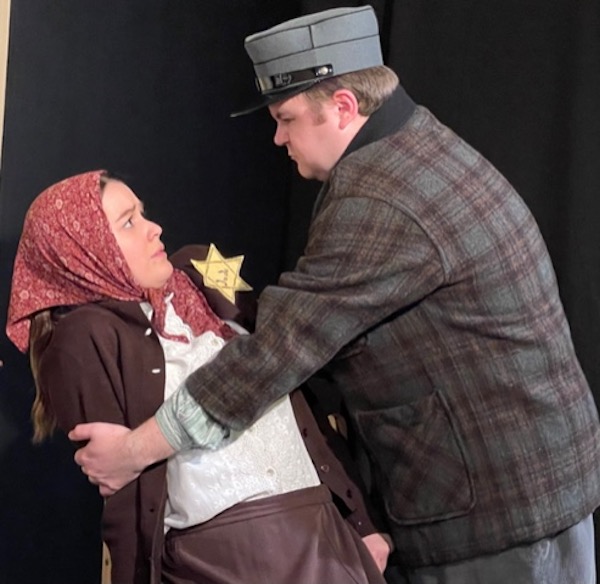
Wendy Kout’s play Survivors is based on 10 real-life stories of young people’s Holocaust experiences. (photo by Peter Nadler)

Last year, Victoria-based Bema Productions and the Victoria Shoah Project collaborated on a pilot project: a nine-performance tour to middle and secondary schools of Survivors, a Holocaust-themed play by Wendy Kout. The success of the tour, which reached more than 1,100 students and 500 adults in the Victoria area, has led the organizations to broaden their reach throughout Vancouver Island, Metro Vancouver and other Western provinces beginning this autumn.

“Following our pilot tour in Victoria, we were asked to cover the Western provinces, and I happily accepted the challenge,” said Zelda Dean, the director of the play. “We will be touring to 30 schools on Vancouver Island in October 2023. In the fall of 2024, we will tour on the Mainland and in Alberta. Saskatchewan and Manitoba will be toured in 2025 – 150 performances in total will be presented.”

Citing a 2018 Canadian survey produced by the Azrieli Foundation, Yad Vashem, the United States Holocaust Memorial Museum and the Claims Conference, the Victoria organizers offer compelling reasons why Holocaust education is necessary today, particularly (but not only) for youth. According to the survey, 52% of millennials cannot name a concentration camp or ghetto; 62% of millennials did not know that six million Jews were killed in the Holocaust; 22% of millennials haven’t heard or are not sure if they have heard of the Holocaust; and 23% of all Canadians believe that substantially fewer than six million Jews were killed (two million or fewer) during the Holocaust, while another 24% were unsure of how many were killed.

“I have been alarmed at the ongoing rise in antisemitism for some years and have been looking for a suitable educational play. I had previously produced a play by Wendy and loved her work,” said Dean, regarding the selection of Survivors.

The intention of the one-hour play, suitable for those from Grade 6 to adulthood, is to provide a vehicle to teach lessons from the Shoah to younger audiences. Based on 10 real-life stories of young people’s Holocaust experiences, the play hopes to enable students to recognize the short- and long-term causes and effects of prejudice, discrimination and, ultimately, genocide. It also aims to foster critical thinking and bring the importance of human rights and social justice advocacy to the forefront.

Survivors goes through the chronological history of the Holocaust by enacting the experiences of Jewish children and teenagers from Europe. The young cast of six professional actors portrays the survivors, starting at innocence and continuing through the terrifying rise and rule of bigotry, xenophobia and violence, before they immigrate to America.

The play includes the true stories of a teen who watched her boyfriend being taken away to a concentration camp, a girl who was separated from her parents and relocated to England through the Kindertransport and a boy whose family struggled to escape to China.

Dean credited the young actors in the production for their diligence and dedication to their parts. “I put a casting call out and was delighted that a large number of very skilled young actors tried out for the roles. Those who were cast were tasked with doing considerable research into the Holocaust prior to rehearsals starting,” she said.

Survivors was originally commissioned and developed by CenterStage Theatre in Rochester, N.Y., in 2017, when Kout was asked to write a Holocaust play about survivors who had immigrated to the city. Shortly thereafter, while watching neo-Nazis march in Charlottesville, Va., Kout expressed the feeling that she was not simply writing an historical play but also a “warning play.”

The Victoria production in November and December 2022 – which played in school auditoriums, theatres and libraries, and had four public performances – was the first international tour of the play. There are other tours currently on both coasts of the United States, with Kout, along with the New York company that developed Survivors, creating a documentary on how the play came to be.

“Sharing the history of the Holocaust with students provides an important historical example of the dangers of allowing hatred and intolerance to take hold within a society,” said former B.C. minister of education Rob Fleming about the Victoria tour.

Additionally, several students who saw the play offered their input concerning how the performance affected them.

“I want to continue to learn more about the Holocaust and people’s stories. I’ve read [Elie Wiesel’s] Night and seen this play but other than that I haven’t heard many personal stories, so I’d like to learn more,” said one.

“I learned once again that I should not judge others selfishly based on race, religion, appearance or prejudice, and I will try to [remember that] whenever I meet new people from now on,” contributed another.

The organizers are looking for financial support to fund the upcoming Western Canadian tours.

“Over $450,000 is required to offer this powerful educational play to so many students, and we are actively fundraising to individuals, corporations, foundations, etc. We are running a campaign inviting folks to sponsor a school in their area for only $500,” Dean explained.

For more information about the play and to contribute, visit holocausttheatre.com or email info@holocausttheatre.com.

Sam Margolis has written for the Globe and Mail, the National Post, UPI and MSNBC.