Nieces enjoy new kids books

I review a lot of books for the Jewish Independent. Over the years, that has included many children’s books. I do my best in these instances but, as much as I like to let my inner child run free occasionally and as much as I’d one day like to create a children’s book or two, I’m a grown-up. What do I really know about how enjoyable the single-digit-age set will find a publication? Well, for my latest two reviews, I turned to a couple of experts for advice.

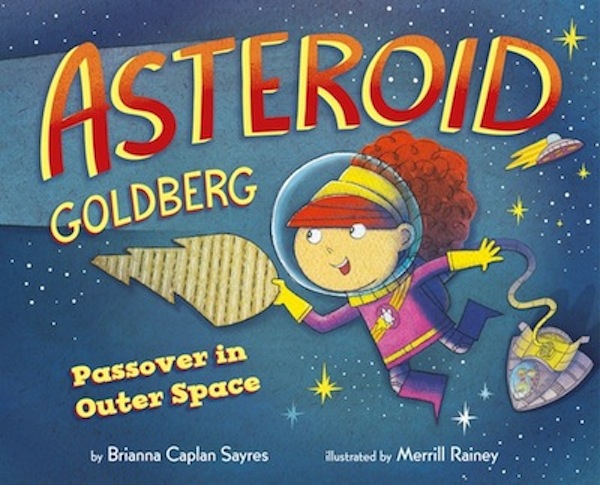
With COVID-19 causing the shutdown of schools, my youngest nieces – Fae, 8, and Charlotte, 6 – were suddenly available to be put to work. With their parents’ blessing, nay, encouragement, I scanned and emailed them two recent books published by Intergalactic Afikoman (see jewishindependent.ca/new-publisher-set-to-launch). The assignment was to read Asteroid Goldberg: Passover in Outer Space by Brianna Caplan Sayres and illustrator Merrill Rainey and Such a Library! A Yiddish Folktale Re-imagined by Jill Ross Nadler and illustrator Esther van den Berg. As my nieces were new to the reviewing world, I gave them a handful of questions to answer: What did you like about the books? What did you not like? What did you learn? Would you recommend the books to your friends?

Their mother, Deborah Weiss, sent me summaries of their answers, as well as Fae’s handwritten responses – I’d asked her to be the family’s scribe for the job.

They started with Asteroid Goldberg, which features Asteroid and her parents on their way home from Pluto for the Passover seder. When the family gets to earth’s orbit, they are not allowed to land (for an unstated reason), so they must make alternate seder plans on the fly (pun intended). A few of Jupiter’s moons for kneidl, a piece of Saturn’s rings for matzah, the Milky Way as their pantry. Who to invite? Family members close by, including Grandma Luna, who was biking on Venus, and Uncle Cosmos, who was hiking on Mars. When they come to the Mah Nishtanah, Asteroid asks, “What makes this night so different?” to which the answer is “Everything!” Caplan Sayres couldn’t have known how relevant her Passover story would be this year.

photo - Fae’s note on what her mother, Deborah (D.), thought of the book Asteroid Goldberg: Passover in Outer Space
Fae’s note on what her mother, Deborah (D.), thought of the book Asteroid Goldberg: Passover in Outer Space.

Both Fae and Charlotte loved the story and the artwork. Even though Charlotte found it a bit too long, Fae recommended it for kids 7 and under.

“I like this book because it was a rhyming book and because it had lots of play-along words,” wrote Fae, who explained to her mom that “play-along words are words with multiple meanings.”

As for lessons learned, Fae “did not learn anything.” However, her sister, who can be a pistol, said she learned that one should “never go on a rocket before Passover.”

As for their mom’s thoughts, Deb said, “I really liked this book. As we get ready for a Passover that will be very different this year, I loved reading about a family that had to change their Passover plans and still had lots of fun and found new ways to celebrate. This really resonated with me!”

Deb and the girls also enjoyed Such a Library! “I thought this was a really clever and imaginative take on a well-known folktale,” said Deb, who noted, “Both girls liked the funny text, the story and the artwork. We also liked the clever name of the librarian.”

In Such a Library!, Stevie heads to the public library to read his book – “With three brothers, two sisters and a baby at home, Stevie’s house was never quiet.” As he starts to read, though, he hears pages turning, computer keys tapping. He tiptoes to the librarian, Miss Understood, and says, “This library is too noisy.” He tells her, “It’s like a party in here.” Thinking that a party sounds like a wonderful idea, she opens a book: “Hundreds of colourful balloons flew from the pages, followed by party hats and horns.”

image - Such a Library! book coverEach time Stevie goes to Miss Understood to complain, she opens another book and the library becomes a zoo, then a circus, as the characters jump out of the pages of the books she opens and take over the library. Only once the characters are all returned to their books can Stevie enjoy reading his, to the relatively quiet sounds of the pages turning, computer keys tapping.

Such a Library! is an interpretation of the Yiddish folktale about a man who thinks that his small house is too crowded with his wife and many children. The rabbi recommends that the man also bring into the house the family’s cow, chickens, goats, geese and ducks. When the man can’t take it anymore, the rabbi tells him to kick out all the animals, after which, the small house seems quite big and spacious.

Fae would recommend Such a Library!, once again, to kids age 7 and under, while Charlotte really liked it and would recommend it to anyone.

As for what the girls learned, Deb said, quoting Charlotte, “We learned that, if you’re looking for a quiet place to read, to not to go to the library when it’s full of acrobats!”

To order either book, visit intergalacticafikoman.com/books.

Among Canada’s best books

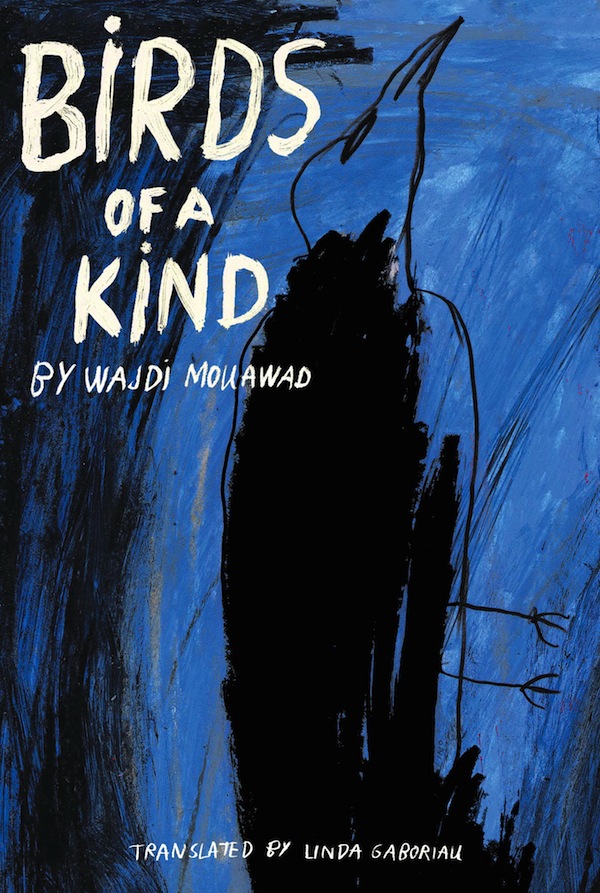
In the play Birds of a Kind by Wajdi Mouawad, the character of Eitan, injured in a terrorist attack in Jerusalem, lies in a coma. As his estranged parents and his grandmother hope for his recovery, they bitterly dig ever deeper into their familial dysfunction. At one point, the doctor tells them about Eitan, “What matters is the voices of those dear to him. His parents, his friends.”

His father responds, “His friends are in Berlin.” His mother, “Or New York.” His grandmother, “But his fiancée is here.” (The Palestinian fiancée that his parents cannot fathom and regarding whom they are nasty, based on a mix of racism, fear, guilt, concern over their own identity, secrets they have kept and more.) The doctor tells the trio, “The stronger the emotional attachment, the quicker the brain responds. We reconstruct ourselves through affection.” Godspeed to Eitan, then.

Birds of a Kind is a fascinating, if somewhat predictable, story and Mouawad’s exposition of complex and hyper-relevant topics, such as group identity versus individual choice, is nuanced and poetic; he uses language beautifully. It is no wonder that Montreal-based translator Linda Gaboriau earned the play its 2019 Governor General’s Literary Award for translation (from French to English).

Also faring well in last year’s awards was Calgary writer Naomi K. Lewis, whose Tiny Lights for Travellers was a finalist in the non-fiction category of the prize, which is funded and administered by the Canada Council for the Arts.

image - Tiny Lights for Travellers book coverLewis is extremely candid and self-critical in this travel memoir. Readers learn about her family, her struggle with developmental topographical disorientation (which means she can’t envision a map in her head and, therefore, often gets lost), the complicated messages about Judaism she received growing up, her insecurities about being Jewish (including a botched nose job when she was a teen) and her failed marriage, among other things. We follow her on her literal and metaphorical journeys to self-discovery, -understanding and -acceptance, as her personal story is interwoven with her retracing of the route her grandfather took in 1942 to escape from Nazi-occupied Netherlands to southern France, from where he then traveled through Spain and Portugal to get to London, England.

While Tiny Lights for Travellers includes excerpts from Lewis’s grandfather’s journal of his escape, it is mostly about Lewis and her exploration of identity, family history and the Holocaust. As Lewis notes well into her book, “the journal seemed a tease, so withholding, the anomalous 30-page confession of someone who otherwise lived inside his own experience with no desire to make himself known to anyone.”

Lewis may have set out with a goal of learning more about her grandfather, of connecting to her past, “trying to find what made me,” but there are not clear links from the past to the present. The journey is revealing in the end, just not about her grandfather or exactly how she came to be who she now is, but rather in coming to terms with who that person is.

Dealing with anxieties

Deborah Grayson Riegel, left, and Sophie Riegel co-wrote the book Overcoming Overthinking. Sophie also authored Don’t Tell Me to Relax! (photo from Riegels)

Many people experience one or more kinds of anxiety disorder, yet fewer than half seek professional help, often because of the perceived stigma of having such a condition, according to Deborah Grayson Riegel and Sophie Riegel.

Both Deborah and her daughter Sophie, 19, have more than one diagnosed anxiety disorder – Deborah has three and Sophie, four. Initially, as Deborah and husband Michael were helping Sophie with her anxiety, they didn’t tell her about Deborah’s. But that silence has ended.

Today, Deborah is a speaker, executive coach, instructor and writer who works part-time in the Jewish community in Manhattan. The bulk of her work is within the corporate community, helping people navigate difficult conversations.

“As Sophie and I were putting our book together, I realized how much of my work is about helping people manage the anxiety associated with getting up and speaking in front of other people, or giving feedback or having hard conversations,” Deborah told the Independent.

Most recently, Deborah was invited to work with Duke Corporate Education, which she was excited about, with Sophie having just started as a freshman at Duke.

“I think Sophie feels really strongly about letting parents know that, if you’re withholding or not exploring medication because of a stigma, because of a fear of dependency, because of anything, you may be costing your kid time,” said Deborah. “Sophie had said in a different interview, where questions came up about what we as parents wish we’d done differently … Sophie’s answer was that she wished we’d explored medication sooner.”

According to Sophie, seeking professional help is important, as the combination of both counseling and medication worked best for both her and her mother, as it does for many others.

image - Don’t Tell Me to Relax! book coverShortly after a traumatic experience at the age of 13, Sophie began working on her first book, Don’t Tell Me to Relax!: One Teen’s Journey to Survive Anxiety and How You Can Too, which she completed in five years. “I started writing it because I was being severely bullied due to some of my obsessive compulsive tendencies,” said Sophie. “I talked to my therapist and we realized the only way to have people stop bullying me was to educate them. So, I ended up giving a 20-minute presentation in seventh grade about my experience living with OCD [obsessive compulsive disorder] and anxiety, and the girls who had bullied me ended up coming up and apologizing to me. I realized that, if I could have that kind of impact in 20 minutes, imagine what kind of impact I could have if I wrote an entire book that I could share with everyone.”

Once Sophie’s book came out, she and her mom decided to co-author one together. Called Overcoming Overthinking: 36 Ways to Tame Anxiety for Work, School and Life, it came out last year.

“When Sophie would be out speaking about the strategies that she uses to navigate anxiety, she heard herself saying, ‘one thing I learned from my mom is … and another thing I learned from my mom is’ … and, I hadn’t realized I was saying or doing these things,” said Deborah. “But Sophie was picking up some strategies I’ve used for myself. So, I said that there are clearly a lot of strategies we’re both using, and maybe we could put them in a book.

“Secondly, I had gotten a call from an organization that had thought that Sophie’s book was something we wrote together. They said, ‘Oh, you wrote this book together … we’d love for you to come and speak.’ And I said, ‘Well, we haven’t written a book together, but we will by October!’ So, we just said, ‘All right, now we’ve told somebody we’re going to write a book … now we have to go write it.’ So, we had a little bit of artificial, external pressure, but it worked well for us.”

In her first book, Sophie shares her journey with anxiety disorder and offers advice to parents, teens and educators; she also debunks anxiety myths and provides a list of resources.

In Overcoming Overthinking the mother-daughter duo offers self-help tips and tools, and focuses on strategies and advice, with about a quarter of the book being from a personal perspective.

One of the stories Sophie shares in the second book is about bribing her therapist to convince her parents that getting a dog would be worthwhile and helpful for her. “We ended up getting a dog, but the interesting part of the story is that my mom is absolutely terrified of dogs … or was … we went from having no dog to having this 80-pound pitbull,” said Sophie.

“And it’s a sign of how much a parent will do to make sure their child is OK … that they will go above and beyond and do anything they need to do. Because, at that point, right before getting a dog and before things started getting a little better for me, my parents thought I’d never be able to graduate high school … that I’d have to be institutionalized, those kinds of things. With this dog, Nash, who’s my best friend, I was able to learn new strategies to handle the anxiety … and learned how much my parents really loved me, and what they were willing to do so I was able to live a healthier lifestyle.”

Both books have been well-received, with parent readers sharing messages such as, “My teen is going through this exact same thing and, because they read your book, they’re starting to know how to talk about it … and I know how to talk to them about it, so you’ve really opened up the lines of communication between us.”

Deborah said, “I got one message from a parent who originally thought their kid was having a heart attack, but then realized from what they had read in Sophie’s book that it was actually a panic attack. It kept them from having to bring him to the ER, because they realized it wasn’t a heart attack. So, they were able to help at home thanks to Sophie’s book.”

Both Deborah and Sophie strongly encourage people to seek professional help when in need. Their book is not a substitute for psychological intervention, they stressed. Deborah added, “We strongly recommend getting that kind of support, whether it’s cognitive behavioural therapy, which has worked for both of us, [or other approaches.]”

image - Overcoming Overthinking book coverOvercoming Overthinking has 36 chapters, which is intentionally double chai (18), symbolizing the saving of the two authors’ lives. The book is divided into three sections.

“The first one is about strategies to change your thinking, to help you change your perspective and mindset, and as a tool for coping with anxiety,” said Deborah. “The second one is about creating new strategies, some concrete things you can do to help you work with anxiety that we think are a little bit out of the box … not what one might call a typical strategy. And the third part is to connect with others about the idea of not isolating yourself and the importance of reaching out, even if that means outing yourself that you’re struggling with something. Most people are uncomfortable being vulnerable. So, we give 12 strategies in that section about how to not do this alone.”

Sophie added, “Also, we go into how it’s good to change your perspective about what connecting with others means. It can mean connecting with a rescue dog, connecting with professionals, connecting with friends and connecting with your parents.”

“I have catastrophic thinking,” said Deborah. “That’s one of the ways my OCD and anxiety show up. Catastrophic thinking has two key elements…. It’s overestimating unlikely probabilities and overestimating devastating consequences. And so, in the morning, we’d put our kids on the school bus and I’d articulate that this is probably the last time we’d ever see them again. Or somebody would get sick and I’d say they’re probably going to die. Or Michael would not answer his phone when I called, and I’d assume he’s dead on the highway. At a certain point, I came to realize that not everybody thinks like this … and that it’s not healthy to think like this … or healthy in a relationship to articulate things that the person cannot help in any way.”

Deborah said she ended up going to speak with a psychologist and getting medication. “That medication has taken my catastrophic thinking from 98% down to two percent,” she said. “Sophie was valedictorian of her class and she got into Duke … her first choice. Sophie is an all-American athlete and has won anti-bullying awards. She has written two books and struggles with four significant anxiety disorders.

“I’m somebody who has a successful career, a healthy marriage and two great children. I travel all over the world for my work. And I struggle with three diagnosed anxiety disorders.

“So, one of the important points is that you can have AD, you can have mental illness, while you can also be happy, healthy and successful. And that feels like a very important message to share,” said Deborah.

For more information about the Riegels’ books, visit donttellmetorelaxbook.com and overcomingoverthinking.com.

Rebeca Kuropatwa is a Winnipeg freelance writer.

Heart-felt and pain-filled memoir

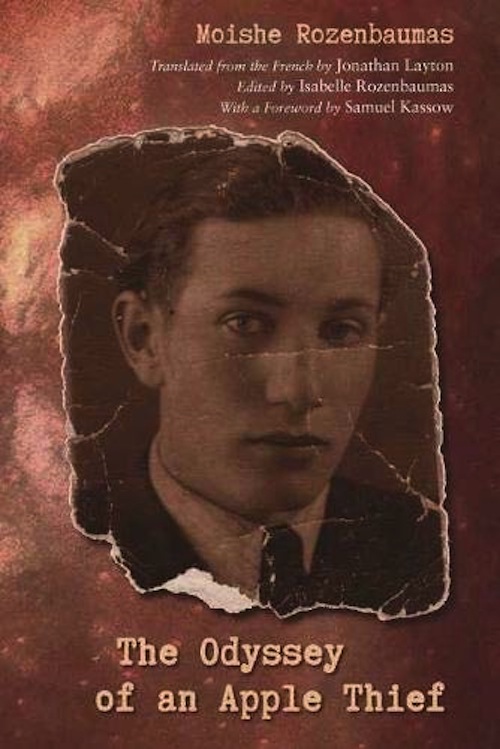
From the page before the opening of Moishe Rozenbaumas’s incisive, heart-felt memoir, we already feel the pain that will inhere in much of his story. Even before we begin reading this autobiography, we see a photocopy of the author’s dedication, handwritten in Yiddish, to the memory of his mother and three brothers, with the dates they were murdered by the Germans’ Lithuanian collaborators in August 1941, in Telz, where Rozenbaumas (1922-2016) was born.

Many people know Telz as the name of the famous yeshivah that was located there, but The Odyssey of an Apple Thief (Syracuse University Press, 2019) by Rozenbaumas – translated from the French by Jonathan Layton and edited by Isabelle Rozenbaumas – takes us into the city, depicting a vibrant Jewish culture, zeroing in on housing, way of life, learning and sports. The title comes from little Moishe’s sneaking into the bishop’s orchard next door and nabbing apples, and the author gives us an historian’s sweep of an area, with a memoirist’s penchant for detail.

For instance, his description of a middle-class household’s Sabbath meal. Although Jews lived “in poverty, hand to mouth,” middle-class Jews had munificent Sabbath meals. Typical to Eastern European towns, the housewife prepared the cholent pot at home, then brought it to the baker, whose oven was heated all Friday night long throughout the Sabbath. Then, around noon on Shabbat, the woman would go and pick up her cholent. Most Jews didn’t have the sort of meals that Rozenbaumas describes, which are at odds with the reigning poverty in Telz.

When the Germans occupy Lithuania, Rosenbaumas accents the avid cooperation between the Lithuanians and the Germans, who murdered 90% of Lithuania’s Jews. He writes that the situation of the Jews in Lithuania was no worse than in other countries; they weren’t loved but they were tolerated. However, in the very next sentence, we read that once, when the president of Lithuania addressed an antisemitic rally, he said that nobody should be stupid enough to slaughter a productive cow while it’s still giving milk.

image - The Odyssey of an Apple Thief book coverRozenbaumas provides what he considers a needed reassessment of the yizkor bikher, the memorial books that survivors of various towns assembled after the Holocaust, which always accented the people’s “piety, purity and morality,” even though there were all kinds of individuals. What is often omitted from these yizkor bikher, Rosenbaumas states, is the miserable poverty of Jews who lived in lightless cellars, had only black bread dipped in powdered sugar for food, froze in winter, and dressed in rags.

During the financial crisis in the late 1920s, his father’s successful fabric shop began slipping. Rather than declaring bankruptcy, the father ran away to Paris, where he had sisters. Despite continuing promises, the father never sent any support to his wife and children, and was unaware of what happened to his family until after the war.

Without a father, the author’s mother and her four boys slowly sank into poverty and hunger. Rozenbaumas becomes an apprentice to a poor tailor with 10 children who live in squalid quarters. Soon, he is the sole breadwinner for his family. But, when the Germans invade, he flees eastward to the Soviet Union, just like his father had fled westward. But the author doesn’t notice the irony of the breadwinner again fleeing alone. True, Rozenbaumas asks his mother to come, but she refuses; he doesn’t ask any of his brothers to join him in his flight.

In the Soviet Union, life wasn’t easy. First, Rozenbaumas served four years on the front, undertaking dangerous reconnaissance missions; he was wounded and decorated several times. He regrets that Jewish former soldiers from other lands never mention the half million Jews who fought with the Red Army, including hundreds of Jewish generals and other high-ranking officers.

When Rozenbaumas’s unit liberates Lithuania, first thing he does is go to his house in Telz, where he finds Lithuanians occupying his now-emptied home. He learns where his family was massacred and longs for revenge, which soon comes. After volunteering as a translator for the Russians, he gets the satisfaction of hunting for the Lithuanian murderers, finding them, watching their trials and immediate executions. He even found the murderer of his youngest brother, Leybe, “who may have been,” Rozenbaumas adds, “his playmate.”

When Rozenbaumas finally decides to leave communist-controlled Lithuania, he describes the nightmare of leaving, taking the great risk of paying an exorbitant fee for forged papers that would guarantee his exit. He makes it, finally, across the border into Poland, with suspense and fright accompanying him like a second skin. It was not until he got to Vienna that he could breathe freely.

One day, Rozenbaumas met a man who knew about his father in Paris and thus was able to find him. But the father-son relationship was uneasy. The father never expressed a word of emotion regarding the murder of his wife and his three sons.

Coincidence also plays another crucial role. Rozenbaumas, by chance, bumps into his old girlfriend, Roza, and later marries her.

Rosenbaumas concludes his touching narrative with the hope that the stories of the European Jewish civilization that was brutally erased from the face of the earth will not be forgotten.

 Curt Leviant’s most recent novel is Katz or Cats; Or, How Jesus Became My Rival in Love.

Shalev’s latest not her best

In an interview with the Jewish Independent in 2014, after her book The Remains of Love came out in English, Israeli writer Zeruya Shalev said that, until that novel, she had been avoiding writing directly about what she called “the Israeli reality.” She said at the time: “And yet, still I am wrestling with the dominance of this reality, and try not to let it take over my books – it’s enough that it controls my life.”

Shalev’s latest novel to be translated into English is all about the Israel reality, but not in the engaging and provocative way that The Remains of Love was (see jewishindependent.ca/zeruya-shalev-opens-jewish-book-fest). Concisely called Pain, Shalev’s story about a Jerusalem woman suffering post-traumatic stress syndrome, which flares up on the 10-year anniversary of when she was seriously injured in a terrorist attack, is anything but concise. Translated ably by Sondra Silverston, the book needed a better editor, as Shalev gets lost in the physical and emotional suffering of her protagonist Iris, who is not portrayed likeably.

image - Pain book coverDespite being the respected principal of a successful school, despite being married to a perhaps dull but well-meaning husband (who could well be distant because of his wife’s indifference to him) and despite raising two competent and kind but vulnerable children, one of whom desperately needs her help, Iris cannot let go of a lost love from her teenage years. When, by chance, at a clinic, she meets Eitan, the man who left her so abruptly so long ago – he is now a doctor who specializes in the treatment of pain – Iris goes headlong into the fantasy of what her life could have been with him, despite all indications that he’s a selfish and emotionally stunted ass. She considers leaving everything tangible and good that she has built for herself for a life that never was.

There are some astute observations in this novel – about trauma and how it affects not only the person injured but those who love them, about the harmful effects of living in the past, about forgiveness, about the fickle nature of life, and more – but it gets lost in Iris’s nearly interminable self-pity and self-delusion. Pain is not Shalev’s best work.

Writing for Israel at UN

Aviva Klompas recently published the book Speaking for Israel: A Speechwriter Battles Anti-Israel Opinions at the United Nations. (photo from Aviva Klompas)

Aviva Klompas came close to writing a declaration of war. In early 2013, after an Israeli post was fired upon by Syria – one of a number of attacks – Klompas was tasked with penning a condemnation that would be submitted to the United Nations.

Still relatively new as director of speechwriting for Israel’s Permanent Mission to the UN in New York City, she recalled the criticism she received: “Be more direct. Be more assertive about things,” she was told. “I thought to myself, ‘channel outrage.’ I tried to do so. I wrote this very stern letter, and I took it to the ambassador to review.”

Klompas, who spoke with the Independent recently, said she then learned the art of diplomacy, and how words might set off an international firestorm.

“To be clear,” Ambassador Ron Prosor, then Israel’s permanent representative to the UN, told her, “you don’t have any authority to declare war.” And it was off to a rewrite.

Thankfully, there weren’t any other close calls, but there are many other fascinating stories – many of which Klompas has brought to light in Speaking for Israel: A Speechwriter Battles Anti-Israel Opinions at the United Nations (Skyhorse, 2019). The book is a candid examination of how the Israeli delegation – and Israel as a whole – is perceived and treated in the international body.

image - Speaking for Israel book coverDuring Klompas’s time at the UN, several major events occurred, including but not limited to the Iran deal, countless anti-Israel resolutions, Palestinians’ bid to join the International Criminal Court, the kidnapping and murder of three Israeli teenagers, and 50 days of war between Israel and Hamas in Gaza. She wrote the book, she said, to show the tireless work of those who advocate for the Jewish state and who rarely get their due.

“It always feels like it is an uphill battle by the nature of the bias at the UN,” she said. “There are people who show up every single day and never say, ‘Why are we doing this? We should leave the UN.’ I’ve never had a single colleague make that suggestion. They came to work and did the job. I think, it’s a little bit my story, but it’s really our story.”

Klompas was director of speechwriting from 2013 to 2015.

“It’s very few people that make the headlines – the ambassador, maybe the deputy ambassador, maybe the foreign minister – but what about everyone else that is doing it day in and day out?” she asked.

About her work, the Toronto native said it advanced Israel’s policies and informed public opinion. Being successful at it, she said, required overcoming some challenges. For one, there was a culture clash.

“Certainly, Israelis are much more direct in their feedback, which is for better or for worse. At first, it is startling, but then you get to understand that it’s not personal,” she said.

Learning how to write in someone else’s voice was difficult, too. Prosor has “a very distinct style,” she said, describing him as “extremely articulate, funny, charming and intelligent. To be able to write for somebody like that takes time.”

In addition, Prosor took a different approach to diplomacy, when “so many speeches can be dry and not entirely lively,” said Klompas. “He’d be all too happy to break out into song in the middle of a speech, whether it be a song about African nations, which got him a standing ovation from some of the African nations in the General Assembly, [or] he would sing John Lennon’s ‘Imagine.’ In a speech about women, he sang Aretha Franklin’s ‘Respect.’”

Klompas gave him the nickname “the Singing Diplomat.”

“Ambassador Prosor felt it was very important to be heard and, to be heard, you have to be different,” she explained. “He knew he had to capture attention to get people to listen.”

In the beginning, she would have to write up to 20 drafts of a speech before she got a sense of the ambassador’s voice and style. Sometimes, there wasn’t much time to tweak.

“It’s pretty stressful,” she said. “You can get a phone call any time of day or night, weekend, and be told the Security Council is convening a special session, come down to the office, we have to get writing. You could have a couple of days’ notice or a couple of hours’ notice. And emergency sessions tend to get a lot of publicity.”

Klompas, who is now associate vice-president of Israel and global Jewish citizenship at Combined Jewish Philanthropies in Boston, said there were poignant takeaways from her job as a speechwriter.

“You can’t be easily deterred by situations that seem unfair or unreasonable. You need a courage of conviction to deflect the constant attacks and brush aside the fact that systems and processes aren’t as simple as one might hope,” she said. “I’d say that my experience gave me a greater sense of what happens behind the scenes in international diplomacy, and the ways in which Israel is working to find equality in the family of nations.”

Dave Gordon is a Toronto-based freelance writer whose work has appeared in more than 100 publications around the world.

Play’s vital importance

Shepherd Siegel, author of Disruptive Play. (photo by Laura Totten)

Shepherd Siegel is a hardcore idealist. At least, it would seem so, based on his book Disruptive Play: The Trickster in Politics and Culture (Wakdjunkaga Press, 2018).

“What if we didn’t take everything so seriously and capitulate to the competitions of war and business?” he writes. “What if we let our utopian dreams and desires out to play, out of the box? What if we did more than talk about it and constellated our lives around play and art instead of work and commerce?

While all about play, Siegel’s 358-page analysis is more academic than whimsical. A writer, musician and educator, he earned his doctorate at University of California Berkeley and has more than 30 publications to his credit. Quickly into the book, he admits the inherent difficulties in writing on this topic: “By attempting to put play, an irrational activity, into the rational fictions of words, I fear that naming this magic will dispel it.” And, to some extent, it does, but his prose is clear and engaging; his examples well-explained and well-researched.

Siegel defines three types of play. Original play is what kids up to three years old do; it has no purpose except fun, it is spontaneous and creates a sense of belonging. Cultural play entails games with winners and losers; it involves learning skills through practise, it comprises rules and moral lessons. Disruptive play “disrupts the normal functioning of society”; it is “resistance to contest-based society and a public affirmation of the natural play element that pervades all life.”

Disruptive players – or tricksters – have existed throughout history, in both oral and writing-based cultures. Siegel gives some 25 examples, beginning with the trickster Wakdjunkaga, whose precise origins are unknown, but whose story comes from the Winnebago (or Ho-Chungra) tribe, “which emerged in northwestern Kentucky in roughly 500 BC. From 500 AD and for about a thousand years, they lived in what is now Wisconsin.” He ends with the Yes Men: “Jacques Servin and Igor Vamos are known by many aliases, but they are Andy Bichlbaum and Mike Bonanno when they are the Yes Men,” and they operate under the motto, “Lies can expose truth,” using guerilla theatre and other tactics, Siegel writes, to “embarrass and proclaim the sins of those who would wage unjust wars, destroy the environment, or cause the suffering and death of other people.”

image - Disruptive Play book coverSiegel discusses in depth several trickster tales from various parts of the world. He analyzes King Lear’s Fool, Bugs Bunny and The Simpsons in this context, as well as real people, such as Alfred Jarry, Marcel Duchamp, Andy Kaufman, Abbie Hoffman and others, and movements like dadaism in art, the Beat Generation in literature and rock and roll in music. He also offers a couple of models on which a play society could be based: the Fremont Solstice Parade in Seattle and Burning Man in Nevada.

While acknowledging that there are many problems in the world, Siegel foresees a time when society will be able to meet all of its members’ basic needs. When this time comes, he writes, “the greatest remaining problem will be one of establishing and maintaining societies of trust. Play, as we shall see, absolutely requires trust in order to thrive, even to exist.” However, until that time comes, disruptive play – which threatens power brokers and structures – is a dangerous venture.

“Playful adults, artists, the poor, people with disabilities and deviators are all sent to the margins,” writes Siegel. “From the 17th-century development of military tactics and the industrial revolution of the 18th century came a more prescriptive sense of the normal and the suppression of carnival celebrations and urges … thus the binding of the Trickster spirit. The concentration of power, by its very nature, requires divesting this spirit, treating the Trickster as the Fool or court jester. But eventually the Fool makes fools of those who would constrain, punish and repress Trickster spirit.”

Unfortunately, while most of the tricksters Siegel highlights do indeed have their time in the sun and they manage, for awhile, to speak truth to power and get people to question their values and society’s direction, their lasting impact has been minimal, even if they themselves have proven memorable. The potential for building a play society – given Siegel’s convincing argument that capitalism or commercialism and play are antithetical – is a long shot. The models of Fremont and Burning Man are small-scale, time-bound events and do not seem feasible as models for society as a whole, for any length of time.

That said, Siegel’s is an exciting vision. “As (and if) our society achieves economic, environmental and social balance, the search for a meaningful life will take on greater importance and become more complex,” he writes. In this utopia, play, which “has meaning but not purpose … is the perfect antidote for existential crisis in a world of questionable purposes. Only by entering a state that discards purpose – that plays – might our true purpose be discovered.”

God and America

Michael Medved’s latest book is God’s Hand on America: Divine Providence in the Modern Era. (photo from Michael Medved)

Most of us would call them close calls or dumb luck – the many things in American history that could have gone terribly wrong, but didn’t. But Michael Medved firmly believes they weren’t merely happy accidents; rather, they were a direct result of God’s guidance.

Medved’s God’s Hand on America: Divine Providence in the Modern Era (Crown Forum) is a chronological sequel to 2016’s American Miracle (Crown Forum), a book that began with the pilgrims in 1620 and ends with Lincoln’s assassination, on April 14, 1865. They share a common theme, he said: “Divine intervention is extraordinarily obvious and important in tracing the course of American history.”

Story after story, Medved builds the case that there are solid “arguments for divine providence in the rise to power, and continued power and prosperity, of the United States.” President Theodore Roosevelt, for example, was shot in the chest but a folded speech in his jacket pocket took the bullet.

In another of many examples, a seemingly lucky moment came during the Battle of Midway, in June 1942. U.S. planes had gotten lost over the Pacific Ocean but, just in time, they suddenly found their way back, to dive bomb Japan’s fleet. History, said Medved, regarded this as a huge blow to the Japanese – at a time when the Americans and British had, up until that point, faced setback after setback, loss after loss, and were struggling to make advances in the Pacific.

“Fate, destiny, providence and the United States is a complicated process. It doesn’t mean America only wins, but it does mean that it’s safe to say that Lincoln, Washington, the Roosevelts, were right; Kennedy and Eisenhower were right; that America has been used as an instrument, or vehicle, for grand purposes by a Higher Power,” noted the Jewish syndicated radio host, whose daily program reaches more than five million listeners, across 300 stations. Medved is also author of 12 other books, including bestsellers The 10 Big Lies About America and Hollywood vs. America.

image - God’s Hand on America book coverHis thesis isn’t out of the blue, either – since the first landings, ordinary Americans and their leaders have believed that God helped in their nation’s successes, said Medved. For people of faith, it was the most reasonable explanation for the seemingly inexplicable. Their Bible-centred view carried over to an appreciation of Jews, he added, at a time when there were few Jews in the United State, i.e. until the 19th century.

They recognized, he said, “the special place the Jewish people had in America,” especially conscious of the verse in Genesis, which says that anyone who blessed the Jews would be blessed, and anyone who cursed the Jews would be cursed. These beliefs were exhibited in many ways, such as the Hebrew words on the seal at Yale, Urim and Thummim, elements of the ancient high priest’s breastplate, used for obtaining oracles; and the seal of Dartmouth College, which has El Shaddai (God) in Hebrew.

Early colonizers even identified themselves as being “like the Israelites who have crossed a perilous ocean to come to the land that was promised,” said Medved. “That identification of Puritans [goes] all the way back to the founding of New England in the 1630s.… They described themselves as ‘New Testament Hebrews.’ The identification with the Jewish people was very profound.”

While at Princeton, then-future president James Madison’s concentration of study was Hebrew, said Medved. Later in history, Harry Truman formally recognized Israel, minutes after it was declared a country. And then there was Richard Nixon’s military aid to Israel during the 1973 Yom Kippur War – quite unexpected, said Medved, given the recordings that surfaced of Nixon using insulting epithets against Jews. According to Medved, Nixon’s gesture of goodwill, though not mentioned in the book, saved the Jewish state from annihilation.

Dave Gordon is a Toronto-based freelance writer whose work has appeared in more than 100 publications around the world.

Belief in God gives strength

Author Cheri Tannenbaum gives a talk about her book, A Woman of Few Words. (photo from Gefen Publishing House)

“Happiness is a choice,” writes Cheri Tannenbaum in her book Woman of Few Words: My Creative Journey with Dystonia (Gefen Publishing House, 2019).

No one would blame Tannenbaum for not being happy, for staying in bed, for giving up. But that’s not who she is. “From the first day of my illness to this very day,” she writes, “I wake up each morning, say Modeh Ani (the prayer said upon waking in the morning), push myself out of bed, and consciously and deliberately choose life.”

Born in Edmonton, Tannenbaum is the oldest child of Samuel (z”l) and Frances Belzberg; the family moved to Vancouver when she was 16. With refreshing honesty, Tannenbaum shares her struggles with anorexia, but also some of the ways in which she was a “happy, fun-loving, gregarious, outgoing flower child” when she was in her teens. She writes about how she became religious, and it is her strong belief in God that has buoyed her since she became ill with dystonia at the age of 20, the first sign of which was that her “handwriting suddenly became totally illegible.” As well, her voice became monotonic, and other symptoms appeared, including severe difficulties in walking and, eventually, speaking, a symptom that, very much later in life, was remedied, as the unexpected result of medication intended for another purpose.

Woman of Few Words details Tannenbaum’s life with dystonia, which, according to the Dystonia Medical Research Foundation, which was founded by her parents, “is characterized by involuntary muscle contractions and spasms.” She openly talks about the time she attempted suicide and the difficulties she had in having children. She offers thoughts on living with the illness and lessons she has learned, as well as several pages on dystonia and many inspirational quotes from various sources.

Tannenbaum has a bachelor’s in psychology and a master’s in human development. She has followed her passion – art – in more than one creative direction. She has a long-lasting marriage, three children, grandchildren, and family and friends who care about her, and she has lived in several places in the world, making her home in Efrat, Israel. As she writes, “Dystonia is not my essence, nor does it define me.” It does, however, present many challenges.

“If I didn’t have the belief that there is an all-loving, all-powerful G-d who runs the world and has a master plan, then all challenges are just random; things that happen are just occurrences coming from nowhere…. Most probably, those challenges would feel meaningless and purposeless,” she told the Independent.

image - Woman of Few Words book coverTannenbaum responds to every reader who sends her a note. “The notes I have gotten have been extremely positive, telling me how I have helped them or given them a different perspective, etc.”

She said, “If I were to have gotten only one response that I have touched one person’s soul then I have accomplished what I set out to do – baruch Hashem, I have gotten more than one.”

Tannenbaum’s mother shared some of the ways in which her daughter’s illness affected the family.

“Cheri’s illness was slow in showing itself so, at first, her tripping or falling or dropping things was almost a joke for her siblings,” said Belzberg, who has three other children. “I took her to our family doctor, who said it was just teen angst, then that it was physiological, so she saw a psychiatrist, who said she was fine, so back to the GP.

“As her condition became worse, I began shopping for different kinds of medical advice locally and even to Scripps Clinic in California, and still no answers.

“In the meantime,” said Belzberg, “Cheri met Harvey, married and moved to Los Angeles … and her condition worsened.”

Belzberg said it took almost five years for them to get a diagnosis and a name for her daughter’s condition: dystonia muscular deformans. “There were, at that time, three known patients,” said Belzberg. “Today, we have several hundred on this continent alone.”

With no known patients and no known treatment or cure, Belzberg said, “My husband mobilized with the help of two doctors from UCLA [University of California, Los Angeles], Dr. John Menkes and Dr. Charles Markham; we gathered about five or six known neurologists from across the U.S. and began to do research. Meetings were set up for every two weeks and both my husband and I monitored the meetings between the experts … with the whole purpose of finding everything there was to know about the disease and how to treat it.

“Word got out that this was being addressed and there was more interest from within the research community,” she said. “We got a grant from the NIH [National Institutes of Health], plus our own … financial support, to establish ourselves, and began a series of research conferences with different doctors with different specialties. That was almost 40 years ago and, this June, there will be the Samuel Belzberg 6th International Dystonia Symposium in Dublin, Ireland, the latest in our international annual meetings.

“Through our persistence, as parents, we have created an international research body with a large patient list and researchers waiting to have their grants financed,” said Belzberg. “We also – as parents and ones who are crucially and emotionally involved – started our own scientific board and monitored them ourselves. We set a precedent – no other research board that we know of allows lay people to actually participate, verbally, in the discussions as they ponder their findings.”

Belzberg noted that funding is always a concern because dystonia “is not a well-known disease or a recognizable name, though we fall in the category of MS [multiple sclerosis] and Parkinson’s.”

Asked what advice she would have for a parent of a child with a chronic illness, Belzberg said, “Every family has to deal with their own crises emotionally, spiritually, within their own strengths, and persist in finding answers. Chronic illnesses can be very wearing both for the patient and the family, so it takes a great deal of tolerance and understanding on the part of each to make it through the day.”

For someone who just found out they have a chronic illness, Tannenbaum said, “I would first give them a big hug and sit with them, hold their hands and just listen to them vent – how they feel about the diagnosis, their anger, their fear, their hopelessness, their ‘why me?’

“When they would be ready to hear me, I would tell them that there is a G-d, master of the universe, who loves you more than anyone else loves you in the whole wide world. Everything G-d does is for the good, even though I know it doesn’t feel that way right now. This is a test that G-d knows you can pass; otherwise, He wouldn’t have given it to you…. This is an opportunity for you to grow and to bring out your hidden potential and strengths that you never knew existed within you. Through this test, you can create miracles. Through this test, you can bring good and G-d into the world. Depending on your attitude and perspective, you will be able to help and change other people’s lives. This test is bringing you farther along to fulfilling the potential that only you can do.”

Life with inherited trauma

Dr. Gita Arian Baack, author of The Inheritors: Moving Forward from Generational Trauma. (photo from Gita Arian Baack)

Dr. Gita Arian Baack, author of The Inheritors: Moving Forward from Generational Trauma, was in town earlier this month to speak at the Cherie Smith JCC Jewish Book Festival and hold a three-day experiential workshop with the Second Generation Group in Vancouver.

The Ottawa-based counselor began her festival presentation with a quote from the late Israeli novelist Amos Oz, who wrote, “Our past belongs to us, but we do not belong to it.” For Baack, the quote underscores her message to inheritors of the Shoah – that “we were given life and an obligation to bear witness and honour the martyrs and heroes of the Holocaust. And that we also have the right to live full and joyful lives.”

“Generational trauma stems from devastating events which transpired before we were born,” Baack told the Independent. “In the case of the Holocaust, we have experienced it from birth; it is as if we were there. We carry an unrelenting sadness, sense of absence and betrayal.”

The ultimate question her book explores is: “How can we live a full life despite the difficult trauma we inherited?”

Prior to writing The Inheritors, Baack conducted doctoral research into the subject of intergenerational trauma and resilience, yet what she uncovered did not fit or go deeply enough into either. Often, resilience is described as bouncing back with support from others. But, she said, “You don’t bounce back from the Holocaust!”

She was resolved to unravel answers to these and other questions, such as why are so many of us resilient and compassionate despite our inherited trauma? Do we carry memory from one generation to another? How do we move forward, when the usual therapies for trauma have proven not to work for us?

“We are also faced with the difficulty of piecing together our family stories,” said Baack. “Much of our family stories are full of holes, unknowns and even secrets, our roots destroyed. Understandably, we have strong emotions but don’t know how to deal with them; for example, excessive sadness, fear of authority, worry, lack of trust, lack of safety, etc.”

Further, inherited trauma is often frozen, embedded in the brain stem, also known as the primitive brain – accessing it is difficult, but it can be done, she said.

Baack noted that ancient wisdom, the Bible and new epigenetic scientific research explain that trauma is passed onto generations in the DNA, and even the cells, for as many as seven generations. She strongly believes that this is the case if it is acknowledged and processed; if it is not, then it can take longer than seven generations.

image - The Inheritors book coverThough Baack’s own experience is being a child of Holocaust survivors, The Inheritors encompasses others who have been victimized: Canada’s indigenous population, survivors of the Rwandan genocide and of several other horrible episodes of recent history. The book also looks at trauma on a personal level, from those who have suffered as a result of natural disaster, an accident, economic hardship, the justice or education system, illness or loss of a loved one.

The intent of The Inheritors is to serve as a tool for moving forward, said Baack. The book is filled with dialogues, poetry and stories from people of different backgrounds. Readers are invited to explore their story, and there are questions at the end of each chapter to help them process that story and, in so doing, transform their pain. At the least, in the end, they will have a written story as a legacy to their descendants.

The Inheritors has had other, unexpected, impacts. For example, the conductor of the North Carolina State University orchestra commissioned composer and flutist Allison Loggins-Hull to write a piece for an upcoming performance and she has chosen to write a work inspired by the book – Inheritors Overture will première on April 5 in Raleigh, N.C.

The group dialogues that Baack conducts offer a means of validation through other people with similar experiences and various experiential tools that can help further a deeper exploration of their trauma stories, the “undiscussables” and the unknowns. Group participants, she said, are often surprised by the creativity, laughter and camaraderie that arise.

The Inheritors is dedicated to (and inspired by) Baack’s two half-siblings. “From my earliest beginnings, I remember carrying a great sadness for my siblings, Henush and Halina Arian, who were only 4 and 3 years old, respectively, when they were killed,” she writes. There was no information about the circumstances of their death or burials, “But their existence was real and has mattered to me in an extraordinary way. And so I don’t fight the sadness; I embrace it. It has a special place. I am the carrier of their memory. This burden is the most cherished of all my burdens.”

At the age of 4 or 5, Baack had what she describes as a “knowing” or “inherited memory.” A “felt sense” told her, even at that young age, that her siblings, two of 1.5 million children killed by the Nazis, had both been shot in the back. When she asked her father how her half-siblings died, he said he didn’t know. Nonetheless, the memory (and feeling) she had inherited persisted, and could be placed on a spot in the middle of her back, with a knowing that her half siblings had been shot in that place.

Her research revealed that the timing of their deaths was before gas chambers had been built, and children under 5 were regularly shot. In 2019, a tour guide in Krakow pointed to the very street where the children and their mother were shot. To Baack, it was a stunning confirmation of her lifelong memory.

Baack has been consulting and coaching individuals and organizations for more than 30 years. She recently founded the Centre for Transformational Dialogue to help individuals and communities that have inherited devastating legacies. She also has written a book of verse, Poems of Angst and Awe, published in 2017.

For more information, visit gitabaack.com. Baack continues to research inherited memory and wishes to hear from others on the subject. She can be reached at gbaack@rogers.com.

Sam Margolis has written for the Globe and Mail, the National Post, UPI and MSNBC.