We Care believes in change

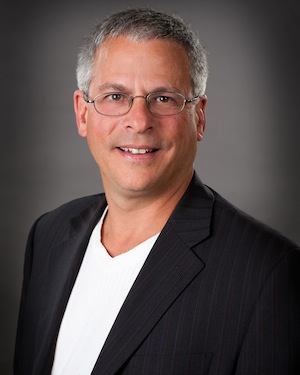
Leah Gazan (photo by Rebeca Kuropatwa)

Human traffickers target those who are most vulnerable – women and children, and people from impoverished and marginalized cultures and communities. Anti-trafficking organizations estimate that between 12 and 30 million people are held in forced labor (including sexual servitude) and that two to four million people are trafficked across borders each year.

On March 12, Manitoba marked its second Human Trafficking Awareness Day. To observe the day, National Council of Jewish Women (NCJW) of Canada, Winnipeg section, held the event United We Care, An Evening in Support of the We Care Campaign for Education about Missing and Murdered Indigenous Women and Girls.

The program took place at Graffiti Art Programming and included an art exhibit, as well as an address from Leah Gazan, an advocate for MMIW issues in Manitoba and the rest of Canada. Indigenous artist Jessica Canard created a painting during the event that was auctioned off at the end of the night.

Gazan introduced herself as a member of the bear clan. “The bear clan has roles and responsibilities,” she said. “One is to be a protector. My mother was a child welfare survivor, a Lakota woman, a street kid. She overcame great obstacles, obtained a master’s degree, and changed legislation.

“My father was a Holocaust survivor from Holland and, like my mother and in spite of historical trauma he experienced, he went on to receive two master’s degrees, a teaching degree, raise a family and spend his life trying for social justice with a special focus on fighting for children.”

Gazan said her parents taught her that change is possible, “with the goal of realizing a good world for all peoples, animal life, plant life, our women and our girls. We are all sacred. We all have to take responsibility for the collective well-being of all creation.”

The We Care campaign came from a conversation between Gazan and artist and singer Raine Hamilton. Upset about what was happening to indigenous women and girls in Canada, Hamilton wanted to do something. Gazan encouraged her, saying, “If you want to do something, Raine, you do something, and I will support you.”

In 2013, James Anaya, former special rapporteur on indigenous issues for the United Nations, called the state of violence and the number of murdered and missing indigenous women in Canada a national crisis. According to the RCMP’s 2014 National Operational Review on Missing and Murdered Aboriginal Women, “Police-recorded incidents of aboriginal female homicides and unresolved missing aboriginal females in this review total 1,181 – 164 missing and 1,017 homicide victims.” There were 225 unsolved cases: 105 missing for more than 30 days as of Nov. 4, 2013, “whose cause of disappearance was categorized at the time as ‘unknown’ or ‘foul play suspected’ and 120 unsolved homicides between 1980 and 2012.”

“We represent 4.3 percent of the Canadian population, yet we represented 16 percent of all reported homicides,” said Gazan. “Indigenous women and girls are not safe in this country and this is related to a number of factors, including high rates of poverty among indigenous women.”

According to the UN and the platform action committee in Manitoba, Gazan said, “The current rate for poverty for indigenous women living off reserve is at 42.7 percent. That is twice the rate for non-indigenous women and exceeds rates of indigenous men, with an average income of $13,300. That’s $6,060 lower than non-indigenous women and approximately $5,000 lower than indigenous men.”

Gazan stressed, “This is not an indigenous issue. This is an issue for all Canadians who want to protect the fundamental rights of all persons. It will take all of us in solidarity to address these issues.

“One cannot begin to understand the complexity of this issue without the focus on the colonization of indigenous women,” she continued. “Prior to colonization, our women and, in particular, our grandmothers were the main decision makers within our nations. Women were seen as powerful. This was very much related to our ability to bring life into the world.

“Through the eyes of colonialists, indigenous women were seen as property of men, much like women in Europe at that time. The exclusion of indigenous women in decision making eventually led to the cultural, social and economical dispossession of indigenous women that was eventually stipulated in policies that were enforced in the Indian Act.

“In 2006, the International Indigenous Women’s Forum noted that the systemic violation of their collective rights as indigenous people is the single greatest risk factor for gender-based violence, including violence perpetrated within their communities.”

The situation can be changed, however, “and that’s exactly what the purpose of the We Care campaign is,” said Gazan. “It’s to educate and engage fellow Canadians so that we can change that story … so we can end what has resulted in unacceptable levels of violence that’s perpetrated against indigenous women and girls in this country.

“It’s a place where we can come together to demonstrate and send a clear message that we will not stop until indigenous women and girls are afforded the same rights and safety as are afforded to other Canadians.”

The group hopes that this campaign will become one of the main issues in the upcoming federal election.

“We need Canadians to join with us in unity, to say that we care,” said Gazan. “It seems so overwhelming that people don’t know what to do because it’s so bad, but I don’t think it’s because people don’t care. I believe people care.

“What if we start to join together to recreate a new story that results in a safer city, province and country for indigenous women and girls as an act of humanity?”

NCJW across Canada and its international body, the International Council of Jewish Women, has established advocacy against human trafficking as a priority issue. All proceeds from the March program’s ticket sales and the auction went to the We Care campaign.

To participate, snap a photo of yourself holding a sign that says #WeCare and #MMIW, then post it on Twitter and Facebook, showing it’s an issue that matters to you. More information is available at facebook.com/wecaremmiw.

Rebeca Kuropatwa is a Winnipeg freelance writer.

השקעות זרות בפרוייקטים של דירות במנהטן

קנדה נמצאת במקום הראשון מבחינת השקעות זרות בפרוייקטים בענף הנדל”ן למגורים במנהטן בניו יורק, בשנת 2014. (צילום: Cynthia Ramsay)

קנדה נמצאת במקום הראשון מבחינת השקעות זרות בפרוייקטים בענף הנדל”ן למגורים במנהטן בניו יורק, בשנת 2014. כך עולה מדו”חות של החברה לניתוח מידע ‘ריל קפיטל’ מניו יורק. ישראל נמצאת במקום הרביעי והמכובד בטבלה.
להלן שש המדינות הזרות המובילות בהשקעות בפרוייקטים, של דירות במנהטן אשתקד. במקום הראשון – קנדה עם 987 מיליון דולר, במקום השני – יפן עם 107 מיליון דולר, במקום השלישי – סין עם 99.8 מיליון דולר, במקום הרביעי – ישראל עם 23.4 מיליון דולר, במקום החמישי – הונג קונג עם 12.9 מיליון דולר ובמקום השישי – אוסטרליה עם 4.7 מיליון דולר. כל הסכומים נקובים בדולרים אמריקניים.
את ההשקעות הקנדיות במגורים מנהטן מבצעים שלושה גופים גדולים. החברה הציבורית לניהול נכסים ‘ברוקפילד’ מטורונטו, שמשקיעה 917.3 מיליון דולר בחמישה פרוייקטים. החברה הציבורית שותפות ‘וונקס ריל אסטייט’ מטורונטו, שמשקיעה 46 מיליון דולר בשני פרוייקטים. והחברה הפרטית ‘קריסט ריאלטיס’ ממונטריאול, שמשקיעה 23.7 מיליון דולר בשני פרוייקטים.
כל ההשקעות מישראל בהיקף 23.4 מיליון דולר מתבצעות על ידי גוף אחד, בשלושה פרוייקטים למגורים. מדובר בחברה פרטית בשם ‘קסקייד ונצ’רס’ שאינה מוכרת ולא נמסר מידע נוסף אודותיה.
בתחום ההשקעות הזרות בפרוייקטים בכל ענף הנדל”ן במנהטן (כולל המסחרי והמשרדים), קנדה גם כן במקום הראשון – עם השקעה גדולה מאוד שנאמדת ב-1.993 מיליארד דולר. במקום השני – סין עם 1.796 מיליארד דולר, במקום השלישי – סינגפור עם 1.577 מיליארד דולר, במקום הרביעי – איחוד האמירויות הערביות עם 1.303 מיליארד דולר, במקום החמישי – נורבגיה עם 1.114 מיליארד דולר ובמקום השישי – אוסטרליה עם 805 מיליון דולר. לעומת זאת ישראל נמצאת הרחק עם השקעה שמגיעה ל-161.4 מיליון דולר בלבד.
שבעה גופים קנדיים מוערבים בנדל”ן של מנהטן. החברה הציבורית לניהול נכסים ‘ברוקפילד’ מטורונטו, שמשקיעה 962.5 מיליון דולר בשישה פרוייקטים. קרן הפנסיה ‘אומרס’ מטורונטו, שמשקיעה 545.75 מיליון דולר בפרוייקט אחד. קרן הפנסיה סי.פי.פי אינווסטמנט מטורונטו, שמשקיעה 252 מיליון דולר בפרוייקט אחד. קרן הפנסיה ‘קאיס דה פוט’ מקוויבק סיטי, שמשקיעה 149.5 מיליון דולר בפרוייקט אחד. החברה הציבורית שותפות ‘וונקס ריל אסטייט’ מטורונטו, שמשקיעה 46 מיליון דולר בשני פרוייקטים. החברה הפרטית ‘קריסט ריאלטיס’ ממונטריאול, שמשקיעה 23.7 מיליון דולר בשני פרוייקטים. והחברה הפרטית ‘רובי ונצ’רס’ מטורונטו, שמשקיעה 13.6 מיליון דולר בפרוייקט אחד.
שלושה גופים ישראליים מעורבים כיום בנדל”ן על סוגיו השונים במנהטן. מדובר בחברה הפרטית ‘גלובל הולדינגס’ של אייל עופר, שמשקיעה 95 מיליון דולר בפרוייקט אחד. החברה הציבורית קבוצת דלק שבשליטת יצחק תשובה, שמשקיעה 43 מיליון דולר בפרוייקט אחד. והחברה הפרטית ‘קסקייד ונצ’רס’ שמשקיעה כאמור 23.4 מיליון דולר בשלושה פרוייקטים למגורים.
לאור עלייה מתמדת במחירי השכירות במנהטן שוכרים רבים עוברים לגור ברבעים האחרים. ובעיקר בברוקלין שמעבר לגשר שגם שם המחירים לא מפסיקים לעלות. במקביל לעליית המחירים הגבוהות, מדד הדירות הפנויות במנהטן רושם כל הזמן שיאים שליליים חדשים. באזורים הזולים “יחסית” במנהטן (כמו האיסט ווילג’), שכירות של דירת סטודיו עוברת את האלפיים דולר חודש, ואילו שכירות של דירת שני חדרים מתקרבת לשלושת אלפים דולר לחודש.
בניו יורק כמעט ואי אפשר להשיג דירות בדיור בן השגה. לבניין חדש בברוקלין שמכיל 38 דירות בנות השגה נרשמו 70 אלף איש. ואילו לבניין במנהטן שמכיל 106 דירות בנות השגה נרשמו 60 אלף איש.

Rada brings Israeli soul here

Ester Rada is at the Imperial on May 2 and McPherson Playhouse on June 19. (photo from Ester Rada)

Ester Rada’s most recent recording, I Wish, was released in March. The EP features Rada’s interpretation of four of her “favorite songs of the great Nina Simone”: “I Wish (I Knew How It Would Feel to be Free),” “Sinnerman,” “Four Women” and “Feeling Good.” Rada takes these classic songs made famous by an iconic singer/songwriter and makes them her own. Chutzpah, in the best sense of the word – which makes it fitting that Rada is being presented in Vancouver by Chutzpah!Plus. She plays the Imperial on May 2.

Rada was born in Kiryat Arba, just outside of Hebron, a year after her parents and older brother immigrated to Israel from Ethiopia as part of Operation Moses in 1984.

“Childhood is an amazing period of time because, as a kid, you see only the good in life, and there is a lot of good growing up in a small town, so life was great,” Rada told the Independent about her younger years. “Only when I look back I realize how strange and unnatural it is to grow up between fences and soldiers and fear from your neighbor.”

Raised in a religious household, Rada was exposed mainly to religious music, as well as Ethiopian, of course. Her mother’s decision to move the family to Netanya when Rada was 10 (her parents had divorced many years earlier) turned out to be pivotal.

“Netanya is a bigger, non-religious city near the sea, no fences and borders,” said Rada. “Drawn to this freedom, I allowed myself to enter the secular world. At the age of 12, MTV and VH1 were the platforms I could get music from, and there I was exposed to Stevie Wonder and Babyface, Boyz II Men, Lauryn Hill, Erykah Badu, D’Angelo; their souls entered mine.”

Rada composes, sings and plays multiple instruments. When asked to highlight some of her musical training and/or performing background, she said, “At the age of 10, I was part of Sheba Choir. At the age of 15, my brother bought me my first guitar and I taught myself how to play. At 18, I was recruited to the army as a singer for two years.”

She has lived in Tel Aviv since the age of 21. “It is the best place in Israel,” she said. “The culture and art, music and beauty, freedom and love are the things that took me there.”

Joining Habima Theatre, Rada’s acting career took off before her singing career. She has performed on stage, on television and in film. While she still works in both arts, she admitted, “It’s getting harder combining the two. Last year, I was still acting in the theatre, but when I started touring I had to quit. I still get offers, but I’m not going to do theatre soon – but I’m shooting a movie this summer.”

While she speaks more than one language, Rada sings mainly in English. Her full-length record, Ester Rada – which includes the four songs on her debut solo recording, the EP Life Happens – features all English songs, with the exception of “Nanu Ney.”

“The music I listen to is mainly in English, the first song I wrote at the age of 13 was in English – also, I want to share my love with the whole world and I feel English is an international language,” she explained.

Her music has been described as a fusion, “gracefully combining Ethio-jazz, urban funk, neo-soul and R&B”; “her own blend of ska, reggae, world music, dance beats and jazz.” But Rada told the Independent, “I don’t like to describe it, as there is no one definition. I’m a mix of a lot of things and so is my music. Also, I’m changing all the time, so I believe that the ‘Ester Rada sound’ will change as well.”

Her look certainly has changed over the years, and one can’t help but remark on her unique, keen sense of fashion.

“I’ve always loved beauty,” she said of her style. “I remember myself as a kid wearing my mom’s shoes, clothes and makeup. I love that by wearing different clothes I can become something else.”

And much of her music celebrates such freedom, encouraging listeners to have the courage to explore, to not be afraid, to experience life and to enjoy it. Rada’s musical adventures tell us that she definitely practises what she preaches.

Ester Rada’s 19+ show at the Imperial, 319 Main St., on May 2 starts at 8 p.m. Tickets are $36 (students $25), plus GST and service charge, from chutzpahfestival.com or 604-257-5145. She also is scheduled to perform in Victoria at the McPherson Playhouse (rmts.bc.ca or 1-888-717-6121) on June 19, 7:30 p.m.; tickets are $45/$53.

Israeli-inspired innovations

The Eureka Project, a Winnipeg business incubator is as innovative about its own financing and growth as it teaches future entrepreneurs to be. And, with the leadership of businessman Gary Brownstone, some of its partner companies are seeing returns in the tens of millions.

“The Eureka Project mandate is to help what I like to call ‘passionate creators’ of technology or widgets commercialize their inventions,” Brownstone told the Independent. Clients include scientists, engineers and computer programmers who have developed or are developing some kind of new technology. Typically, clients have little or no business experience, which is where Brownstone and his team come in.

photo - Gary Brownstone
Gary Brownstone (photo from winnipeg.startupweekend.org)

Brownstone gets involved in small, fledgling startups and manages them through the initial growth phase. “Our team has expertise with taking this technology to market: finding customers and helping the founder build companies around technology,” he said.

“There are unique challenges in commercializing technology that make it different from other sectors, involving how to finance an idea, how to finance a company with no fixed assets (no buildings, land or equipment), which Canadian investors or bankers are really used to.”

When Brownstone finished his schooling, he realized he had unique experience in working with companies undergoing rapid growth, growth that could be so extreme that it had the capacity to kill the company. Anticipating the potential in companies on the verge of major growth, Brownstone’s approach was to step in to provide the professional management required to shepherd them through that phase. Once a company had managed to get through that period of growth, Brownstone would exit onto the next one. Brownstone has successfully been doing this for more than 20 years now.

“When I was recruited into this position, I saw the opportunity to do that over and over and over again – to help small companies through that first phase of growth, help get them on some solid footing for the future,” said Brownstone.

About five years ago, he started becoming more aware of how Israelis have successfully built a knowledge-based economy.

Someone gave him the book Start-Up Nation by Dan Senor and Saul Singer, and Brownstone, who had spent a year in Israel after high school some 30 years ago, was confused. “I read the book and I thought, ‘Are you sure it’s Israel they are talking about? Now they are a tech powerhouse?’” he said.

Brownstone has, since that time, made an annual trip to Israel and is still amazed by what he sees. On those trips, Brownstone meets with people in Israel who run incubators like his, those in government, policy makers and academics, as well.

“I definitely have a strong respect for what they have accomplished in Israel,” said Brownstone. “We’ve tried to bring a lot of those practices back here. I’ve gone there with senior government people both from Canada and from Manitoba to sort of open up their eyes to what some of the possibilities are if you take a similar approach.”

Since then, Brownstone has used his understanding and connection to Israel to try and bring what he calls “some best practices and good policy advice” back to Canada.

“Ideas are easy and execution is difficult,” he said. “So, a lot of companies, for a variety of reasons, will not succeed in actually commercializing their technology or not commercializing it to a degree that it’s a viable business.”

When someone comes to the Eureka Project with an idea, Brownstone asks three questions to determine whether or not they would make good clients. First, is the technology real? Second, is the individual (or team) capable? (Do they have enough talent? Are they coachable in terms of their own capabilities/capacity? What are their skill sets and backgrounds?) Third, he assess whether or not there is an identifiable market.

“In our line of work, because of the background of the people coming in the door, that’s the question that they most overlook,” said Brownstone about ensuring that there is an actual market for the product or technology. Many companies “look at the world as ‘technology push’ instead of ‘market pull,’” he explained. “We try to turn that conversation around really early on. If you were to come in the door, we’d go through the three questions and satisfy ourselves that the answers are yes, yes and yes.”

In terms of payment, Brownstone has developed a sliding scale wherein, at the beginning, clients can pay as little as a couple hundred dollars a month. “We really want to remain accessible to those that have the best likelihood of becoming [successful],” he said. “In order to do that, we try to keep our fees as low as possible, so that money isn’t really a barrier for them working with us. So, we offset a lot of the costs of delivering services to our clients, because we build a very strong, broad base of support. We get financial help from the province of Manitoba [and] we get some financial help from the U of M. We’ve built a very broad sponsorship program, so that the corporate community supports us and our clients.”

As the companies gain access to some financing and begin to grow, they hire on staff and gradually start paying more of the real cost as their finances allow. “It kind of puts the pressure on us to deliver what we promise we deliver when they come in the door,” explained Brownstone. “If we are able to help them finance and grow their companies, they should be able to pay us a little bit more for what we do.”

He said, “If someone from Vancouver called me and was looking for space, mentorship and local coaching, I might see if they would like an introduction to someone there who does what

we do, so they could have proximity.” He added, “But the short answer is yes,” to taking on Vancouver clients.

“Success begets success, so as people find out about the things that we do … a company we helped launch five years ago will probably do something in the neighborhood of a hundred million dollars in revenue this year,” said Brownstone. “In Canada, that’s a big deal. People from other regions hear about what we are doing and we find more and more we are getting approached from outside Manitoba. We don’t want to turn anyone away, so we had to find ways to help those people.

“We don’t use Manitoba taxpayer dollars to support other companies, but we do have partners and systems in place where we can deliver those services to other province’s companies.”

He added, “In a couple of instances, we’ve had companies who have relocated to Manitoba in order to work with us. There’s a great ecosystem in Manitoba for these young companies in terms of government grants and tax credits, and organizations like ours that can support them.”

The Eureka Project has developed an extensive network of companies and individuals across the United States, China, Singapore, South America, Mexico and as many as 30 other countries.

Rebeca Kuropatwa is a Winnipeg freelance writer.

My Fair Lady fantastic

Tracy Neff (Eliza Doolittle) and Warren Kimmel (Henry Higgins) before the phonetics lessons start. (photo by Tim Matheson)

It was hard not to sing along. In fact, the couple in the row behind me couldn’t stop themselves on more than one occasion. So wonderfully witty and familiar are all of the songs in My Fair Lady, which is playing at Massey Theatre until April 26.

Directed by Max Reimer, the Royal City Musical Theatre production is well worth the trip to New Westminster. If you’re like me, the proposition is daunting. I made an afternoon and evening of it, heading out from Vancouver before rush hour, enjoying a walk along the quay and dinner with friends before heading to the theatre for the 7:30 p.m. show. While it took almost an hour to get to New West, I made it back in about 25 minutes. Granted, that’s about 15 minutes longer than if I had been coming from downtown, but the parking was plentiful and free – and I had longer to sing in the car on the way home, which made the drive seem that must faster.

I had forgotten just how funny are the book and lyrics by Alan Jay Lerner – even 50ish years after they premièred on Broadway! With the stellar cast enunciating brilliantly, nary a word was lost, and the 22-piece live orchestra and 30-plus cast also gave justice to Frederick Loewe’s music.

Of course, the musical’s origins go back further, more than 100 years, to George Bernard Shaw’s play Pygmalion. Phonetics professor Henry Higgins bets phonetics enthusiast Colonel Pickering that he can take Eliza Doolittle, a street seller of flowers, and transform her: “You see this creature with her curbstone English that’ll keep her in the gutter till the end of her days? In six months, I could pass her off as a duchess at an embassy ball. I could even get her a job as a lady’s maid or a shop assistant, which requires better English.” (In Shaw’s version, the bet is three months to “pass that girl off as a duchess at an ambassador’s garden party.”)

photo - Jewish community members Kathryn Palmer and Jonathan Boudin in the ensemble of Royal City Musical Theatre's My Fair Lady.
Jewish community members Kathryn Palmer and Jonathan Boudin in the ensemble of Royal City Musical Theatre’s My Fair Lady. (photo by David Cooper)

Led by Warren Kimmel as Prof. Higgins and Tracy Neff as Eliza, there are many standouts in the Royal City production, including John Payne as the charming scoundrel Alfred P. Doolittle, Eliza’s father, and tenor Thomas Lamont as Freddy Eynsford-Hill, who falls for Eliza at the Ascot (her test run as a lady) when she cheers on the horse Dover to win, hollering, “Come on, Dover! Move your bloomin’ arse!” In addition to Kimmel, other Jewish community members involved in the show are Jonathan Boudin and Kathryn Palmer in the ensemble. Both do very well, but Palmer is particularly expressive, standing out as both a flower seller and a maid, very much at ease on stage.

The entire cast seemed to be having a great time on the preview night I attended, good-humoredly negotiating through a couple of technical glitches, including a tough-to-light candle. And the main two sets, which go from being two sides of a London street corner to Higgins’ study when they are turned around and pushed together, are fabulously detailed and necessarily sturdy (the actors must travel to a balcony on one side, a landing on the other), but they must be quite heavy – every time the halves of it slowly came together to form the study, I released a small sigh of relief.

None of this detracted from the performance. In fact, these instances made it seem more intimate, and reminded me of one of the reasons live theatre is so fun to watch. It was a great show. I got lost in the words, music, sets, costumes (gorgeous!). The cast, crew and musicians all deserve kudos – as Pickering says to Higgins after the ball, “Absolutely fantastic.… You did it!”

For tickets ($26-$47) to My Fair Lady at Massey Theatre through April 26, visit masseytheatre.com or call 604-521-5050.

Farewell, my boredom

Emma Slipp and Graham Percy in Arts Club’s Farewell, My Lovely. (photo by Benjamin Laird Arts & Photo)

Shadowy figures, damsels in distress, fedoras tilted just below one eye, ex-cons and gunshots galore fill the stage at the Art Club Theatre this month.

Raymond Chandler’s 1940s work Farewell, My Lovely is brought to life with enough campy villainy and “careful, shweetheart” to fill size 11 cement galoshes. And I loved every minute.

A warning though: if you’re used to minimal plotlines, you might want to bring a notepad to keep track of the twists and turns and numerous characters.

Graham Percy brings tough-nut detective Philip Marlowe to life as he investigates the case of a murdered nightclub manager and the missing girlfriend of an ex-con. Hired by the ex-con and pushed into the case by a lazy detective, Marlowe first tracks down Jessie Florian, the nightclub owner’s widow. A sad case, in a scotch-induced stupor, she throws herself at him, then reacts in disdain, then seems to genuinely want to help him.

On what seems to be a different track, but soon turns out to be connected to the original case, Marlowe takes a job for Lindsay Marriott (Anthony Ingram). Marriott wants Marlowe to act as a bodyguard in an exchange of a cash ransom for a rare jade necklace. That ends with Marlowe knocked unconscious, Marriott dead and a new character – Anne Riordan (Emma Slipp), who turns out to be the daughter of a policeman known to Marlowe.

Riordan knows who the owner of the necklace is – a wealthy woman by the name of Helen Grayle (Jamie Konchak). Riordan wants to join Marlowe on the case, and also demonstrates affection for him. At first, he returns her affection but is reluctant to have her involved. He continues his quest, eventually meeting with a psychic named Jules Amthor (also played by Ingram), who is somehow linked to the necklace and is also involved with drugs.

Marlowe visits with Grayle, then reconnects with Florian after she leads him down a dead-end, and then finally ends up looking for clues on an offshore gambling boat. Here is where all the loose ends are tied up, the answer to the case is found and more people are shot.

Aside from the theme of the gruff-but-good detective versus the bad guys, the thread of Marlowe’s love life keeps popping up. Each of the female characters – Florian, Riordan and Grayle – tries to seduce Marlowe. He sympathetically rejects Florian’s drunken flirtations, seems to have something serious for Riordan, but risks it for the flattering attention of the beautiful and seductive Grayle. After the case is done, he ends up with … well, you’ll have to see it for yourself.

While Percy does an admirable job of reprising the well-known hard-boiled detective role, there’s something about his character I didn’t find believable. While he had the lines and the tone right, he came across as having more of the sloppiness of Peter Falk’s Columbo than the alluring and mysterious attractiveness of Humphrey Bogart’s Sam Spade. Perhaps it’s unfair to make the comparison, but I just couldn’t see Percy’s character taking the place of Bogart’s Marlowe opposite Lauren Bacall in The Big Sleep.

One thing that did impress me in the Arts Club production was the creative use of the actors rearranging the stage set as needed between scenes, while still staying in character. I also admired the choice to use film sequences projected over the set to add context to the action on stage. Dramaturg Rachel Ditor and stage manager Jan Hodgson deserve kudos for the adaptation and presentation of the performance. Well done, shweethearts.

Farewell, My Lovely runs at the Arts Club Granville Island stage until May 2.

Baila Lazarus is a freelance writer and media trainer in Vancouver. Her consulting work be seen at phase2coaching.com.

Time to truly celebrate

This month – and in this issue – we celebrate Israel. Few regular readers would disagree with the assertion that the state of Israel represents a modern miracle. For whatever criticisms are fairly and unfairly leveled at Israel and its governments, this tiny country, populated mostly by refugees and their children, has accomplished and built one of the greatest societies in the world in what is, by historical standards, a blink of an eye.

There are so many quantitative examples of Israeli achievements: per capita numbers of Nobel prizes and other recognitions of achievements, world-leading academic publishing, number of businesses launched and successes reached, diverse and life-altering scientific breakthroughs and exceptional contributions across almost every discipline of human endeavor.

Then there are the incalculable measurements that are what strike so many of us when we visit Israel – or when we are visited by Israelis. In just the coming weeks alone, we are offered numerous samples of the cultural richness of the country.

The community-wide Yom Ha’atzmaut celebration on April 22 features Micha Biton, whose music is an example of the beauty that can emerge even in places and times of challenge, he being a part of the music scene in Sderot. A week-plus later, we will be treated to Ester Rada, an actress and singer who just emerged on the international scene.

These are just two of the most immediate examples of Israeli culture offered to local audiences year-round, including an embarrassment of riches during festivals like Chutzpah!, the Jewish book and film festivals, and during regular programming at the J. Israeli artists and photographers are regularly featured, as are speakers on diverse topics, brought here by local affiliates of Israeli universities and institutions.

To say that we – even 10,000 kilometres away – are enriched by the abundance of culture and knowledge that defines Israel is to underestimate the blessing it is to us. But this is not a one-way relationship. There is a greatness, too, in the way our community has mobilized for seven decades to help Israelis flourish. These bilateral connections are deep and important. From the moment the state of Israel was proclaimed 67 years ago, Vancouverites have been integrally involved with Israel in countless ways.

Before intercontinental travel became commonplace, stories appeared in the pages of this newspaper about locals traveling to Israel – as tourists, as volunteers, as dreamers seeking to see in their lifetimes the reality of a revived Jewish nation. More common still was the plethora of organizations emerging to assist in the nurturing of Israel through acts of tzedaka and volunteerism here at home. Women’s groups, youth movements, Zionist agencies of all stripes, “friends” of universities and hospitals, and so many other great institutions popped up, mobilized by the passion local community members felt for the rebirth of the Jewish nation.

Though these connections have changed, they have not diminished. Thanks to improved technologies and transportation, our community sends athletes to meet and compete with their Israeli cousins – and welcome Israelis here in return. We continue to support so many projects and institutions in Israel that “Vancouver” and local family names proudly adorn countless buildings, facilities, medical machinery, ambulances and other resources in Israel.

In a world that sometimes seems mad to us (as well as mad at us), there are few in our community who take for granted the blessing that Israel is to us and to the world.

As we celebrate Yom Ha’atzmaut this year, marking Israel’s 67th anniversary, let’s make a commitment to ourselves, a new year’s resolution of sorts for Israel’s new year.

Let’s be even more conscious of our relationship with Israel. Let’s go out of our way to buy Israeli products and support Israeli initiatives. Find an Israeli cause you haven’t yet supported – there are plenty of advocates right here in town for universities, charities and other great projects – and make it one of your causes. Take more of the opportunities offered to us throughout the year as Israeli speakers, performers and artists visit. Head to the Isaac Waldman Jewish Public Library and learn about an aspect of Israel that’s new to you. Watch more Israeli film. Take Hebrew lessons. The options are endless without even leaving the comfort of your hometown.

If you can, of course, travel to Israel. An “on-the-ground” education is invaluable. One of the best ways to express your curiosity, and support Israel is to spend time there, meeting Israelis, investigating for yourself aspects of Jewish history and culture, experiencing new tastes, sounds, smells and sights. And, while you’re there, open your heart and mind to the realities of this great country; pledge to learn more about the land, its people, its creatures, its ecology, the good, as well as the more challenging aspects that could use some work. Pack up the family, join a community mission or grab a backpack and head over on your own – the mishpacha is waiting for you.

Happy birthday Israel and moadim l’simcha.

Envisioning a peaceful future

photo - Mira Sucharov spoke on March 2 as part of the University of Winnipeg’s Middle East Week
Mira Sucharov spoke on March 2 as part of the University of Winnipeg’s Middle East Week. (photo from Mira Sucharov)

As part of Middle East Week at the University of Winnipeg, Mira Sucharov, associate professor of political science at Carleton University in Ottawa, spoke on the topic of Power and Identity Across the Israeli-Palestinian Divide.

About 60 people came out March 2 to the university’s Convocation Hall to hear Sucharov, who is currently the country analyst for Israel and the Palestinian territories for Freedom House, as well as a blogger and writer whose work appears regularly in several publications around the world, including the Jewish Independent.

Sucharov sees relations between Palestinians and Israelis as more polarized now than at any other time since the peace process that began two decades ago. She said she was pleased to be part of U of W’s Middle East Week, as it promotes dialogue, in contrast to the situation on many North American campuses, where hardened opposing camps are choosing shouting over listening.

Describing herself as a liberal Zionist, Sucharov explained the term as referring to someone who “believes that there is legitimacy to Israel’s existence, and that nations deserve a state.” However, “liberal Zionists not only acknowledge the existence of Israel and support its existence, they are deeply troubled by its occupation.”

Sucharov said that, while some Israelis and Israel supporters prefer the term “disputed land” to the term “occupation,” Sucharov views “occupation” as “an important word.” She explained, “We’re not just talking about a geographic swap of land. We’re talking about a population of Palestinians who are not citizens of any country.

“The IDF, on a macro level and often on a micro level, is in charge of the area and the daily lives of Palestinians who have to pass through checkpoints to get to work, to farm their land…. We know about the Israeli security barrier or separation wall that has served to disrupt daily lives in many ways in the West Bank.

“So, liberal Zionists are troubled by this idea of occupation and seek to do what they can to end it. As a Canadian from Winnipeg, I feel that by engaging in constructive discussion, constantly being educated, I can help people at a global level think more deeply, critically, and in a more engaged way about issues of global concern.”

Sucharov said that there are financial incentives, as well as ideological motivations, for living in the West Bank. “There are many who’ve moved to the West Bank because it’s cheaper,” she noted. “Part of it, no doubt, was wanting to return to biblical Israel, a sense of having a greater Israel, of being/having religious/national identity fulfilled. There’s another important motivating factor, and that was the idea of Israel having a wider girth, more strategic depth.”

In Sucharov’s view, “the occupation” should not be permanent, and dialogue is needed to get governments together for peace talks. “The only way to end the occupation is if Israelis and Palestinians come together to discuss and negotiate an agreement,” she said.

As for what such an agreement may look like, Sucharov imagines “a city with two capitals: Jerusalem, a holy place for all religions to pray at their own places of worship. Refugees will probably be returned, free return to a Palestinian state. There will probably be some compensation package, [on a] humanitarian basis for some refugees … based on historical agreements.”

If the Geneva initiative does take place, said Sucharov, “Can Israel feel safe with such an agreement?

“It used to be called, ‘give an inch, they’ll take a mile,’” she continued. “Now, there is a concern about the fact that Palestinians in a recent poll have indicated that they would want to use a two-state agreement as the beginnings of full takeover.

“Palestinians, no doubt, would want all of Israel … many of them … and Israelis, no doubt, would want all of Palestine … many of them. The question is, even if some Palestinians were desirous of acquiring or launching terrorist missions with or without the consent of its governing authority, could Israel defend itself?”

If/when Israelis and Palestinians reach an agreement, she said, they would have to make sure that there were “security guarantees from the United States … [that] the U.S. will guarantee the security of Israel.

“Palestine would have to agree to be a de-militarized state. So, both sides will not have to necessarily trust each other … [they] would have to understand that there is a security guarantee in the form of a major global superpower.

“That’s the two-state solution. But, there certainly are those in the military establishment of any state who could stand to gain from an ongoing conflict…. We have to … make peace seem more attractive.”

As things stand, Sucharov said, “Palestinians and Israelis are almost mutually fearful of one another.… I think the biggest obstacle is the culture of mutual fear.”

And then there is the question of whether or not Iran, if there is the possibility of peace between Israelis and Palestinians, will “behave in a suicidal fashion,” said Sucharov. “That’s what, in international relations, [they] call the … idea of nuclear deterrence – the idea that more nukes make the world safer. I’d prefer less nukes, less proliferation, but there is a logic to the idea of stability of nuclear weapons.

“Once peace is achieved by the government, ideally, the next generation grows up in a culture in which the status quo exists.

“Regional threats would be diffused to make peace,” she continued. However, “the Israeli-Palestinian conflict is not the only conflict in the region and we’re not going to see peace on earth, but Iran and other enemies of Israel … Hamas … would have less wind in their sails. The status quo would be peace, so there would hopefully be less local support for their belligerent postures.”

Rebeca Kuropatwa is a Winnipeg freelance writer.