Green party reckonings

During the election campaign, Green leader Annamie Paul was surprisingly candid about her precarious position at the helm of her party. She acknowledged that she spent almost all the campaign in her home riding of Toronto Centre because she might not be welcomed by Green candidates across the country. She suffered a near-defenestration just before the election and the simmering internal strife the Greens barely managed to conceal through the campaign will inevitably boil over now, especially after her own poor results in Toronto Centre.

Paul faced horrific online racism and antisemitism during and after her campaign for the party leadership. We trust that she will share more of her experiences without reservation now that her tenure is almost certainly at an end. Rarely has so talented and qualified an individual offered themselves for public office – and even more infrequently has any political figure been so ill-treated by their own party.

Canadians, but especially Green party regulars, must examine what happened. Paul and other members of the party owe it to Canadians to examine the entrails of this affair and determine what roles racism, misogyny and antisemitism played in the matter. If there are Green activists who have legitimate grievances against Paul, they should be transparent and demonstrate that their extraordinary treatment of their leader was based on policy or strategic differences and not on her innate identities.

To do or not to do (the Bard)

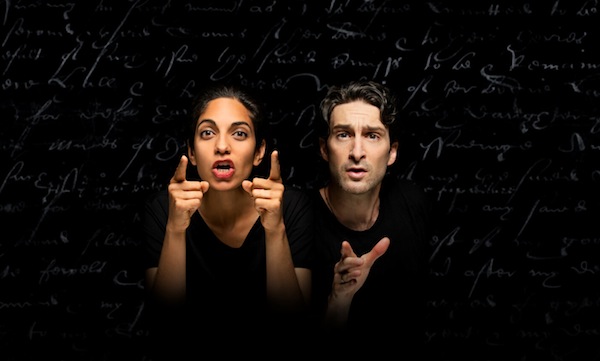
Bard on the Beach’s Done/Undone, written by Kate Besworth, co-stars Harveen Sandhu and Charlie Gallant. (photo from bardonthebeach.org)

Throughout COVID, Vancouver’s Bard on the Beach has been unable to mount its popular summer festival at Vanier Park. However, it is easing its way back into the hearts and minds of Shakespeare fans with its innovative film production Done/Undone, written by Kate Besworth and starring Bard veterans Charlie Gallant and Harveen Sandhu, who take on multiple and diverse roles. The creative team includes community member Mishelle Cuttler as sound designer.

The film raises many probing questions. Is time up for Shakespeare’s works in the #metoo, woke, cancel culture era? Is there room today for plays written 400 years ago that can be interpreted as misogynist (The Taming of the Shrew), racist (Othello) or antisemitic (The Merchant of Venice)? Are the Bard’s works not just the reflections of a white, privileged male, written for colonial audiences to glorify British mores and culture? Or was English writer Ben Johnson, who died in 1637, right when he said Shakespeare was “not a man of his age, but a man for all times?” Should any form of Bardolatry continue or should Shakespeare and his folios be laid to rest as we move forward with contemporary artists telling contemporary stories?

To answer these questions, the film, set against the backdrop of a working theatre, uses snappy vignettes to showcase the pros and cons of the debate with interesting and perhaps unexpected results.

It opens as the two actors arrive at the theatre to prepare for a production of Hamlet, and the question first arises. Sandhu appears as Shakespeare to state that the purpose of writing is to “hold a mirror to humanity,” as she lists off the myriad subjects that the Bard explored – the sea, star-crossed lovers, a donkey in the arms of a fairy queen, an exiled warrior, an emperor of Rome, a triumphant king, how choices matter, and how governments fail us.

We then are spectators to a battle of wits between dueling professors, explaining and emoting from their respective lecterns. Gallant emphatically argues that Shakespeare is a product of a white, patriarchal society, using words as a tool of cultural imperialism written, originally, for white men to perform (women were not allowed to act in Shakespeare’s times, so male actors would take on the female roles) and that there is no place today for his work. Sandhu counters that Shakespeare’s texts still evoke emotions that resonate within the contemporary world – his topics of love, hate, greed and lust are timeless and embedded in the human character, she argues. She sees Shakespeare as remarkably progressive, with many of his characters in gender-fluid roles and with his portrayals of strong women – Rosalind, Cleopatra and Lady Macbeth, to name a few. His works can provide teaching moments, says Sandhu, giving the examples of Taming of the Shrew to show the harm that misogyny causes, King Lear, the scourge of elder abuse, and Othello and Merchant as vehicles to elicit tolerance and empathy in society.

Other vignettes in the film include a Bard board member – a neurosurgeon – who, during an opening night audience address, poignantly recounts the solace he found in the dark spaces of the theatre during a production of King Lear after the loss of a patient. He says that darkness was the escape from the reality of his grief.

Another scenario depicted is a couple taking in a performance of Romeo and Juliet, where the woman is clearly more into it than her male partner, who finds the Shakespearean language highbrow and difficult to understand.

Then there are the gothic, spectre-like creatures who denounce the Bard’s portrayal of women and Blacks in a macabre pas de deux; a talkback session after a Measure for Measure performance, where the female actor embarks on a scathing indictment of colour-blind casting; and the finale, in French, as the two actors attend an inventive Shakespeare festival in Montreal.

Shakespeare’s influence is global. At any given time, somewhere on the planet, one of his plays is being produced, either in its original form or as an adaptation. Do we judge him with our contemporary lens or should we remember the times in which he wrote and appreciate his genius? Done/Undone is a thoughtful and intelligent production that seamlessly blends the worlds of cinema and theatre, and considers some difficult questions. It leaves you to draw your own conclusions.

Done/Undone, with a run time of 76 minutes, is available for streaming online until Sept. 30. Tickets can be purchased at bardonthebeach.org or from the box office at 604-739-0559.

Tova Kornfeld is a Vancouver freelance writer and lawyer.

Tackling the hatred head on

When white supremacists converged on Charlottesville, Va., four years ago chanting “Jews will not replace us,” it was the first encounter most of us had had with the conspiracy theory known as “the Great Replacement.”

In the pretzel logic of racists, immigration and multiculturalism are products of the Jewish imagination, with Jews perpetrating, through behind-the-curtains jiggery-pokery, what the tiny number of actual Jews in the world cannot do demographically: replace Aryan culture with alien races and cultures. The absurdity of the “theory” makes a lot more sense as one delves deeper into the trends and characteristics of antisemitism. Three wildly different but related books show that the projection of all that is wrong in society onto an empty vessel that happens to be Jewish recurs repeatedly. As ludicrous as the Great Replacement is, it dovetails magnificently with thousands of years of anti-Jewish prejudice and propaganda.

In Jews Don’t Count: How Identity Politics Failed One Particular Identity (TLS Books, 2021), author David Baddiel explores how the treatment of Jews is the exception to effectively everything today’s progressives espouse.

“It is a progressive article of faith – much heightened during the Black Lives Matter protests following the murder of George Floyd in 2020 – that those who do not experience racism need to listen, to learn, to accept and not challenge when others speak about their experiences,” he writes. “Except, it seems, when Jews do. Non-Jews, including progressive non-Jews, are still very happy to tell Jews whether or not the utterance about them was in fact racist.”
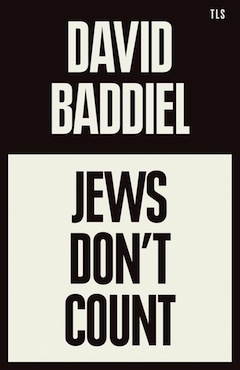
image - Jews Don’t Count book coverBaddiel discusses how racism and antisemitism are disentwined to disadvantage Jews, placing antisemitism lower on a “hierarchy of racisms” than other forms.

“Jews are stereotyped, by the racists, in all the same ways as the other minorities are – as lying, thieving, dirty, vile, stinking – but also as moneyed, privileged, powerful and secretly in control of the world,” he says. “And, if you believe, even a little bit, that Jews are moneyed, privileged, powerful and secretly in control of the world … well, you can’t put them into the sacred circle of the oppressed. Some might even say they belong in the damned circle of the oppressors.”

Baddiel confronts the canard that Jews can’t be victims of racism because they represent a religion, not a race – an audacious defining of an entire people by others who do not belong to the group, itself an example of something progressives would deign to do with no group other than Jews. By pushing antisemitism down the victimization scale, perpetrators can then accuse people who call out antisemitism as diminishing the experiences of minorities with legitimate claims to oppression.

When Baddiel called out one prominent antisemite, saying he had rarely heard so blatant a statement from someone with so large an audience, the perpetrator replied: “’Cos everyone was scared, that’s why.”

By alleging that a cabal of powerful Jews is policing the language of critics, the perpetrator, Baddiel writes, “isn’t a racist, he’s a hero, finally standing up and saying the things that need to be said even though it will bring down the wrath of this all-powerful Jewstablishment on his head.”

Similarly, when an article in the New York Times seemed like an attempt to rehabilitate the notorious antisemite Louis Farrakhan, the author replied to a critic who mooted the negative impact this could have on Jews: “Somehow, among the million concerns, you believe that yours are supposed to rise to the top.… That is called privilege.”

A recurring theme is that, unlike other minorities, Jews are not “innocent victims.” Baddiel (and the other authors mentioned here) do not explicitly say it, but it is understood that, for antisemites, Jews are not victims because, whatever the calamity, they bring it on themselves.

Another recent book, Israel: A Simple Guide to the Most Misunderstood Country on Earth by Noa Tishby (Free Press, 2021), picks up on some of Baddiel’s themes.

Tishby is an Israeli-American actor with a strong Zionist lineage. Her grandmother was a founder of the first kibbutz in Israel. Her grandfather was Israel’s first ambassador to West African countries and served on the Israeli delegation to the United Nations. Her great-grandfather was the founder of Israel’s ministry of industry and trade. Tishby served in the Israel Defence Forces entertainment troops, which she describes as, basically, “a nightly USO [United Service Organizations] tour.” She starred in an Israeli prime time soap opera – Ramat Aviv Gimmel, a sort of Israeli Melrose Place – then made the move to Hollywood.

image - Israel book coverHer book is aimed at people of her demographic – young, hip, leftist (though presumably non-Jewish) readers – and she presents, through biography and history, a tidy Zionist narrative that hits the bases. She does what pro-Israel writers rarely do: she uses emotion and personal stories, rather than dogged reliance on facts, chronology and empiricism. This is not to diminish the fact-based foundation of the book, but her first-person narrative connects the reader to the land and people of Israel in a way that cold facts do not.

Tishby provides a simple but thorough overview of regional history and the development of Israel, as well as the parallel history of the Palestinian and Arab peoples in the area. She dissects the claims of the BDS movement one by one, debunking the prevailing leftist narrative in the West. She pillories the obsession of the United Nations with anything Israeli and rebuts allegations of colonialism, apartheid, ethnic cleansing, unequal warfare and occupation quite effectively.

She recounts how, in the years after the Second World War, there were roughly 11 million refugees worldwide, 700,000 of whom were Palestinian.

“The 10,300,000 non-Palestinian refugees were funneled into UNHCR (United Nations High Commissioner for refugees, created in 1951), the UN agency dedicated to resettling and integrating refugees and/or stateless peoples,” she writes. The Palestinians got their own unique refugee agency: the UN Relief and Works Agency for Palestine Refugees in the Near East (UNRWA).

“While UNHCR is constantly working on getting the global number of refugees down, with UNRWA the numbers go up, up, up,” Tishby writes. “After the 1948 war, there were approximately 700,000 displaced people. Now UNRWA has 5.6 million ‘refugees’ registered in their books. How is that possible?”

Even Palestinians living in Gaza and the West Bank are counted as refugees by UNRWA, she notes, asking: “Can you be a refugee from Palestine when you currently live in … Palestine?”

Near the end of the book, Tishby throws some questions at the reader: “How would you handle a wannabe Sharia state 30 miles from your house? How should Israel retaliate when Hamas fires thousands of rockets into southern Israeli towns? Why haven’t the Palestinians agreed to make a final peace deal? Will the PA unite with Hamas and, if so, will Hamas denounce violence, like, ever? Why is Israel singled out? What about other countries that actually do systematically abuse human rights? Why aren’t activists focused on their freedoms of religion, speech, and assembly, which Israel grants all her citizens? Where are the boycott movements of neighbouring countries that literally kill people for their beliefs, desire for freedoms and democracy, or sexual orientation?”

Tishby’s Israel is an engaging, entertaining read and an ideal primer for newbies to the subject. For those more immersed academically or through lived experience with this topic, there is little new information, but it is largely an enjoyable read although, in an effort to be hip and approachable, she routinely employs gratuitous profanities, which might grate on some readers.

Far from these two volumes on the scale of page-turning readability is the monumental tome Anti-Judaism: The Western Tradition by David Nirenberg (W.W. Norton & Co., 2013). Published eight years ago, it had somehow escaped my eye and, when I did get my hands on it, it sat for some time on my pile. Cracking the spine was daunting because the thesis is dark and unnerving.

Nirenberg undermines the received wisdom that antisemitism is characteristic of ideological extremes in Western civilization. Instead, he depicts “anti-Judaism” as absolutely central and foundational to the very identity of Western civilization. (He differentiates “antisemitism,” which is discrimination against Jews, and “anti-Judaism,” which is perhaps a more pernicious, guileful thing, attributing “Judaism” and “Jewishness” to anything undesirable, whether the object is Jewish or not.) Applying Nirenberg’s thesis to Charlottesville is a simple way of understanding it. In the eye of the racists, immigration and multiculturalism are bad, ergo, by definition, they are “Jewish,” whether actual Jews have any hand in them or not.
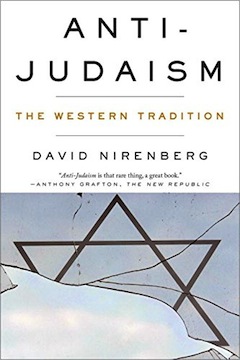
image - Anti-Judaism book coverNirenberg provides a sadly compendious recital of civilizations for whom “Jews,” “Jewishness” and “Judaism” were used as a prism through (and against) which non-Jews defined their own identities.

“Why did so many diverse cultures – even many cultures with no Jews living among them – think so much about Judaism? What work did thinking about Judaism do for them in their efforts to make sense of their world?” he asks.

In Christianity, Jews are viewed as “materialist” and earthly, which is juxtaposed with Christians’ self-image as being concerned with the spiritual and the divine. In a theology where things terrestrial are equated with all things evil, the corollary is predictable.

Nirenberg quotes Jean-Paul Sartre, who said: “if the Jew did not exist, the antisemite would invent him.” The subtext of Nirenberg’s book, one could say, is that both things are true: the Jew does exist and the antisemite invented him. There are, in effect, two different “Jews”: real Jews and the image antisemites have created and refined for millennia.

It is this latter imaginary “Jew” that has been used not only to torment generations of actual Jews, but also to contrive the self-identities of civilizations. Nirenberg includes both Christianity and Islam under the rubric of Western civilization when he writes: “anti-Judaism should not be understood as some archaic or irrational closet in the vast edifices of Western thought. It was rather one of the basic tools with which that edifice was constructed.”

Since Christianity and Islam were both founded as supercessionary religions to Judaism, juxtaposing that theological parentage with an antipathy to the descendants of the parent religion creates a cognitive dissonance that Nirenberg describes as the “truth of Jewish scripture and the falsity of the Jews.”

Somehow, adherents of both religions have intrepidly managed to accommodate the dissonance.

“The simultaneous inclusion and exclusion of Judaism became for Islam – as it had been for Christianity – a structuring principle of the world, one through which Islamic truth was explored, discovered and articulated,” he writes. Jews were “both necessary and noxious, prophetic and pernicious.”

The religious bigotry permeates Western civilization, not just its religion, he argues. Nirenberg discusses how Marx employed typical Christian perceptions of Jews as materialistic to fit his atheistic ideology. He also analyzes how it influenced the Enlightenment and the French Revolution. For example, while the Declaration of the Rights of Man and of the Citizen, the great document of the French Revolution, does not mention Jews or Judaism, “it was famously presented and represented to the people – in a painting and in print – as two new tablets of law, replacing those handed Moses on Mount Sinai.” Never mind Christianity and Islam, when it came time for what was probably the most progressive, liberal society yet in modern history to define itself, the revolutionaries took Jewish imagery and firmly demarcated themselves as “not that.”

What is striking when immersing oneself in volumes about antisemitism is the stark certainty of today’s “critics of Israel” that they are untainted with antisemitic bias. They apparently have given little, if any, thought or effort to learn the history of antisemitism and its myriad permutations.

While Nirenberg speaks very little about Israel, he packs a powerful punch when, after hundreds of dense pages excruciatingly dissecting how civilizations for thousands of years have understood their identities and their most significant beliefs in direct opposition to Judaism, he declares: “We live in an age in which millions of people are exposed daily to some variant of the argument that the challenges of the world they live in are best explained in terms of ‘Israel.’”

Coincidence? It doesn’t seem so to those have studied the history and malleability of anti-Jewish ideas.

Pride trumps bigotry

Writer Ben M. Freeman (PR photo)

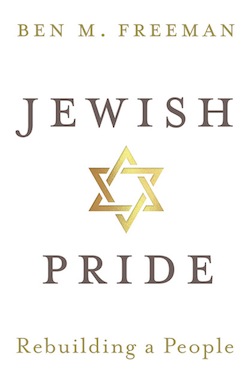
Antisemitism is not a Jewish problem, writes Ben M. Freeman in his new book Jewish Pride. “It is a non-Jewish problem that has an impact upon Jews.”

Freeman is a young Scottish Jew whose book projects some of the lessons of his coming out as a gay man onto the experiences of Jews dealing with the internalizing of others’ expectations and prejudices. He speaks of “passing,” of how a member of some minority groups can identify as a member of the majority.

“There are those who describe the ability of some LGBTQ+ people and some Jews to pass as a ‘privilege,’” he writes. “However, from my experience, this is a specific form of oppression itself.”

Freeman insists that the book is not about antisemitism, but rather its opposite: Jewish pride. But, perhaps by necessity, antisemitism plays a big role.

“Our journey is not about fighting antisemitism. That is the non-Jewish world’s journey,” he writes. “The Jewish journey is one of self-discovery, self-acceptance and self-love – in the name of collective pride.”

In the same way that antisemites have gone some distance to characterize who and what Jews are, anti-Zionists have stolen the word Zionism and redefined it to their perverse definitions, he suggests.

Above all, the fact that so many of the perpetrators of antisemitism are unfamiliar with its history is precisely the reason people can exhibit antisemitism while claiming – often haughtily – to be free of it.

“Due to a lack of education about both the conflict and Jewish history, most people are not armed with the knowledge to understand the connection between anti-Zionist rhetoric and historical antisemitism,” he argues. For example, the recurring libel that Israelis harvest organs from unsuspecting victims is a modern variation on the ancient blood libel – but people ignorant of that catastrophic history do not see their complicity as they perpetuate outlandish allegations. Likewise, the depiction of Israel as a unique embodiment of evil in the world mirrors the ancient projection on Jewish people of society’s fears and false narratives of evildoing.

He discusses how the International Holocaust Remembrance Alliance’s Working Definition of Antisemitism has led to a whole new wave of arguments around what is and is not anti-Jewish bigotry.

The British sociologist David Hirsh created the “Livingstone Formulation,” named after the former mayor of London, Ken Livingstone. It encapsulates the pretzel logic in which expressions of concern about antisemitism are met with a refusal to engage and a counter-accusation that the charge of antisemitism is made up as a conspiracy to silence legitimate criticism of Israel, as a “weaponization of antisemitism for political ends.”

This was in clear view during the spate of overt antisemitism that engulfed the Labour Party in the U.K. under the leadership of Jeremy Corbyn. Concerns about rampant Jew-baiting and unconcealed antisemitism were, Freeman writes, routinely dismissed as a “smear campaign against Jeremy.” It was, in short, bullies crying that they are being bullied.

image - Jewish Pride book coverFreeman points out the core problem for Jews in the evolving interpretations of hierarchical discrimination.

“There is a view of racism that suggests it is prejudice plus power, which implies that only those in positions of power over others can be racist,” he writes. “This definition leads to the notion that most forms of racism and prejudice are ‘punching down’ and that only marginalized groups with less or no power are being oppressed. While this experience is true for certain communities, this specific definition of racism, combined with exaggerated antisemitic perceptions of Jewish power and privilege, can be particularly dangerous for Jews. It thus lends to the erasure of the Jewish experience and of antisemitism as a legitimate form of prejudice. It can also allow those on the left – and some marginalized groups – to actively target us as representatives of elite power structures.”

Freeman’s core message is that Jews, like LGBTQ+ people, need to overcome the negative programming with which they are bombarded by the larger world.

“Jewish people have been in a dysfunctional relationship with the non-Jewish world for over 2,000 years,” he writes. “To be accepted, we have tried, over and over again, to change who we are.… In our thousands of years of history, has this sacrifice ever worked? No…. This cycle has to stop. The way to stop this abusive, destructive and exhausting cycle is to turn to ourselves for that acceptance and love.”

One might have hoped that a book on this subject would glance at the remarkable reversal of homophobia in most parts of the Western world in recent years, how that progress was achieved and how the lessons from that experience might be repurposed to fight antisemitism. But that, perhaps, is a future tome for Freeman or someone else to undertake.

Reason to worry a lot

With 13 parties in the Knesset – and several of those umbrellas encompassing a variety of factions – patching together a coalition will be a challenge. It may not be possible at all, meaning Israelis would see their fifth election within a little more than two years.

Whatever pileup of strange bedfellows eventually manages to form a government, one particular possibility should be especially disconcerting.

To enhance their chances of passing the electoral threshold, three far-right parties united under the banner of Religious Zionism and succeeded in taking six Knesset seats. The Religious Zionist party, led by Bezalel Smotrich, seeks to annex all (or part, depending on which faction you listen to) of the West Bank and adheres to a familiar litany of Israeli far-right policies.

For this round of elections, they partnered with another small faction, called Noam, whose platform ostensibly seeks to create a halachic theocracy. In practical terms, the party is obsessed with homosexuality and seeks to delegitimize LGBTQ+ Israelis and roll back legal protections and equality. In addition to attacking gay people, the party has equated Reform Jews with Nazis and Palestinian terrorists who “want to destroy us.”

The third rail in this extremist triumvirate is Otzma Yehudit (Jewish Power), which is a descendant of the outlawed racist party Kach, led by the American-born fanatic Rabbi Meir Kahane, who was assassinated in 1990.

When Kahane was in the Knesset, before a law was passed to bar overt racists from elected office, all other members of the assembly would walk out when he rose to rant against Arabs. In an eerie echo of the Nuremburg Laws, Kahane sought to legally prohibit sexual relations between Jews and non-Jews, among other far-reaching extreme positions.

An indication of the shifts in Israel’s body politic over the decades is evidenced by the fact that the incumbent prime minister, Binyamin Netanyahu, worked behind the scenes to get these small extremist factions to cooperate in order to reach the electoral threshold. While previous prime ministers – and every other member of the Knesset at the time – refused to listen to the hateful rhetoric of Kahane, this prime minister helped ensure his ideological successors would be represented in the Knesset.

It is bad enough that these ideas will be given a legitimacy they do not deserve by mere dint of their advocates being members of the Knesset. As a small rump of crazed zealots, they should be ignored and shunned. Instead, they will play a central role in the determination of who (if anyone) forms the next government.

It is worth recalling an incident in Austria, in 2000, when the xenophobic, racist and arguably neo-fascist Freedom Party, led by Jörg Haider, entered into a governing coalition in that country. The government of Austria to which Haider belonged was sanctioned and condemned by governments worldwide and other member-states of the European Union ceased cooperation with Austria’s government.

While the Abraham Accords have reduced Israel’s diplomatic isolation dramatically, the country still faces unjust judgment in the court of global opinion. If a new governing coalition includes a segment of enthusiastic homophobes, misogynists, racists and ethno-religious supremacists, a universe of denunciation would rain down on the country. And rightly so.

In what may be an irony of historical proportions, that ugly scenario could be prevented by another stunning development on the other end of the political (and ethno-cultural) spectrum.

A new Arab party, called Ra’am, has bolted from the conventions of the Arab political sector and adopted a pragmatic approach. Rather than the purely oppositional stands taken by the other Arab parties for decades, Ra’am seems prepared to play the game that small Jewish parties have excelled at. In a fractured political culture, the tail often wags the dog. Ra’am, led by Mansour Abbas, seems to understand the opportunity this presents. Strangely, this Arab religious party could find common cause with Jewish religious parties on issues like funding for parochial education and other community needs (as well as its apparently virulent hatred of homosexuality).

As the horse trading begins in earnest this week to patch together a quilt of some ideological consistency in the Knesset, Ra’am is sitting in one of the most enviable positions of potential power, possibly able to extract all sorts of treasures out of a leader desperate for their crucial four votes. The only thing they have explicitly ruled out is any situation that would enable groups like Religious Zionism, Otzma Yehudit and Noam.

How ironic it would be if Israel were saved from its own worst angels by an Arab political party that learned its capacity for power from watching the fringe elements on the other side of the Knesset.

Can we learn from COVID?

Spring and the holiday of Passover are all about renewal and hope. This year, as our elders begin receiving the coronavirus vaccines and our economy appears to be recovering from the most critical disruption in living memory, things seem promising. We anticipate fleeing our bondage of social isolation and being transported to a land, if not of milk and honey, at least to a place of mixing and hugging.

We have (hopefully) learned a great deal. There have been many opportunities to benefit from the disruption in our lives. At the individual level, we may have learned new skills or crafts – like cross stitch or baking sourdough! – or used the time to study new fields or languages. On the collective level, we have learned that the entire world, regardless of governance, religion, language and every other difference, could mobilize (albeit not equally well) to respond to a crisis.

We also learned that, when necessary, many governments and societies could rise to the occasion (again, with different levels of competence) to save lives. Billions of dollars were “found” to save potentially devastated economies and support businesses and households. Scientists and medical professionals cooperated across boundaries to search for vaccines and to care for the ill. Ordinary people – not just first responders and others in the direct line of care but grocery clerks and those who provide services previously taken for granted – became heroes of the moment.

As the months dragged on, divisions emerged. People and their governments sometimes differed on the best responses, or any response at all. A cohort emerged questioning everything, from the best ways to stop the spread of the virus to the very existence of the virus that has infected more than 100 million and killed more than 2.5 million.

As we hopefully approach the beginning of the end of this extraordinary era, let us remember its beginning – not the fear of the unknown that engulfed us, but the unity the world seemed to exhibit in coming together to confront a danger that knows no borders.

Imagine the challenges we might be able to face and resolve if we could mobilize the world the way we did in those earliest moments of the pandemic. Can we come together to finally confront the climate emergency, which could be every bit as fatal as an unchecked virus if not addressed? Can we unite to overcome racial divisions and inequality? Can we even marginally close the chasm between richest and poorest in Canada and across the planet?

The incredible hurdle that was thrown across our civilization’s path a year ago showed our capacity for coming together when the stakes were high enough.

There are a lot of areas where the stakes are high. Can we take the lessons we’ve learned over the past 12 months and apply them there?

Hope in the presidency

There is no perfection in human affairs. We are imperfect beings and our creations are always flawed. But this does not stop us from striving for perfection, knowing that our reach should exceed our grasp.

The preamble to the United States Constitution begins with, “We the People of the United States, in Order to form a more perfect Union …” and then sets forth the things that the founders agreed to aspire toward, knowing that perfection is unreachable but that aiming for a “more perfect” future is still an ideal to pursue.

This idea is central to Judaism also, that the world was created imperfect and unfinished because it is the role of humanity to complete that work – or, rather, to advance in the direction of completion/perfection even knowing it is unattainable.

This theme appeared also in the poem by Amanda Gorman, the first United States National Youth Poet Laureate, at the inauguration last week of President Joe Biden. “Somehow we’ve weathered and witnessed / a nation that isn’t broken / but simply unfinished,” she said.

That day, Inauguration Day, felt to many like a collective swerve away from an abyss. After the violence at the Capitol two weeks earlier, after four years of chaos and cruelty at the top of the U.S. administration, and at what we hope is the beginning of the end of the pandemic of our lifetimes, it felt like a move in the right direction, a reversal from the trajectory of spiraling rancour. The violence at the Capitol on Jan. 6, so horrific and deadly, may have been the wakeup call that enough Americans needed to recognize the destination to which the “Trump train” was always headed.

The most fundamental component of a democratic society – the peaceful transition of power – was assaulted on Jan. 6, a day most of us never dreamed we would see, an experience that people in autocratic societies know too well but we hoped we never would. We may never know how close the United States came to genuinely losing its democracy but we can hope that the shock of the violence and the widespread refusal to accept the outcome of a properly run election opened enough eyes to the dangers of that approach. As President Biden said, “enough of us have come together to carry all of us forward.”

Regardless of party affiliation, the transfer of power seemed to many like a return to the project of a more perfect union.

By the skin of their teeth, the Democratic party held the House of Representatives and reclaimed the White House and the Senate. The new Biden administration better reflects the diversity of the country’s racial, religious, gender and other components, not least of which is exemplified by the first female vice-president and the first one who is not white.

The refusal of the outgoing president and his wife to adhere to longstanding decorum and decency and their petulant retreat to Florida before the inauguration was a slap in the face for the very idea of democracy itself. To the credit of the vice-president, Mike Pence, he stepped up where the president would not. So, too, did all the living former presidents, three of them in person at the inauguration and the fourth, Jimmy Carter, calling Biden the night before the inauguration to offer wishes of support. This was a powerful show of respect for the office that Trump never exhibited when he held it and which he further despoiled while leaving it. But he is gone now from there, ideally forever, and we trust that a less divisive and corrupt government will carry that country forward.

It is notable that our hopes for 2021 focus so much on a vaccine. The idea of this science – that injecting a dose of a virus into a body to develop an antibody to a more destructive manifestation – might be extrapolated into our body politic. The virus of extremism, tyranny and violence that we saw on Jan. 6 may have inoculated some Americans to combat the spread of such threats. As we strive for herd immunity in our public health, we can perhaps seek a similar degree of protection in our public life. There will always be bad people and bad ideas. Ensuring that they are kept in check and not permitted to reach pandemic levels is as close to perfection as we can possibly attain. We can hope that, in the spirit of Biden’s words, enough people will come together in defence of the great values that country was founded on to carry all of us forward.

Chapter soon behind us

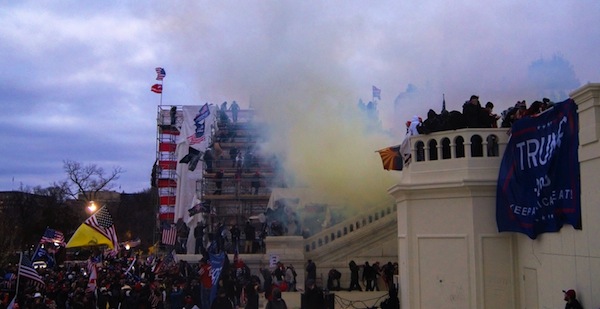
The violence at the U.S. Capitol on Jan. 6. (photo by Tyler Merbler/flickr)

Elect a clown, expect a circus. That has been a recurring meme over the past four years. As the reality show that is the Donald Trump presidency staggers into its final few days, the full fruit of the president’s years of bellicosity and violent language expressed themselves at the U.S. Capitol Jan. 6. Incited by the president, who repeated his utterly baseless claims of a stolen election, thousands of people marched on the seat of America’s democracy, smashed windows, stormed the building, threatened lawmakers and defaced and desecrated the premises.

Some observers, including many Republicans, expressed shock at a turn of events that was almost entirely predictable. After years of the most irresponsible rhetoric imaginable from the so-called leader of the free world, and after two months of undermining the most sacred facet of American democracy, the peaceful transition of democratically elected administrations, violence was a surprise only to those who have not being paying attention – or who observe through ideological blinders.

It seems to be a turning point. A growing, though still far too small, number of Republicans are finally saying they have had enough of the outgoing president’s petulance and possibly criminal irresponsibility. Listening to some, it appears they were looking for an opportune moment to break with their leader, and the violence – which killed five people – provided the ideal opening.

It is not enough for apologists to pretend that these elements are in any way peripheral to Trumpism. He has encouraged, abetted and refused to condemn the most evil strains in the American body politic, from the Ku Klux Klan to Proud Boys, referring to “very fine people on both sides” at Charlottesville – when one side was white supremacists with a sprinkling of neo-Nazis and anti-democratic thugs. Faced with the destruction his words and his supporters wrought at the Capitol, Trump uttered the least a president could possibly say, calling on the rioters to go home, while also repeating the lies that led to the violence in the first place. Then he added: “We love you. You’re very special.” He just can’t help himself.

Among the insurrectionists at the Capitol were overt Nazis, including at least one wearing a shirt with “Camp Auschwitz” emblazoned on it and another with the acronym “6MWE,” meaning “six million wasn’t enough.” These are the very special people Trump loves. Jews and others who were taken in by an embassy move and other ostensibly “pro-Israel” acts should know now the fire with which they were playing.

There must be accountability. At the top, those who abetted and encouraged the worst actions of the past years should be held criminally liable, if that is the extent of their culpability. At a lesser level, those who tacitly or explicitly permitted what has happened – Republican senators, congress members and party officials – will ideally suffer at the ballot box at the next opportunity. Among ordinary people, including some in Canada who have expressed support for this extremist and white nationalist approach, we should seek introspection around how we may have been drawn into a political disease that we should have recognized for what it was – yet let proceed along a path that almost inevitably led to the loss of human life and the shattered glass at the U.S. Capitol last week.

We might also hope that leaders of other countries will look at the American case as an instruction in the dangers of oratorical brinksmanship, division and scapegoating. One of Trump’s greatest allies, Israel’s Prime Minister Binyamin Netanyahu, is in an election (again) and it will be illuminating to see if his style softens at all. In Europe, where far-right populism is seeing a resurgence, perhaps the warning shots from Washington will inspire a little more moderation.

Barring more violence on Inauguration Day, God forbid, this chapter will soon be behind us. Joe Biden was not everyone’s first choice for president, he was more of a compromise pick. Based on decades of experience, he has been charged with picking up the pieces of a society shattered by four years of negligent and confrontational executive leadership. It doesn’t hurt that he has a grandfatherly demeanour and a history of consensus-building. While the outgoing president will not attend the swearing in – more proof that he abhors the core principles of democracy – beside Biden will be Kamala Harris, the first woman and the first Black and Asian person to assume the vice-presidency.

No humans are perfect. The Biden-Harris administration will make mistakes and we will criticize them. But we can rejoice in the arrival of a new future, led by people of goodwill, intelligence and moderation, who know the difference between right and wrong, between neo-Nazis and very fine people.

Better choice needed

Yad Vashem holds an almost sacred place in the Jewish world. The foremost repository of materials relating to the Holocaust, and Israel’s official memorial to the victims of Nazism, the centre is practically an obligatory destination for visiting diplomats and foreign dignitaries. It is a solemn place dedicated to the terrible past, but with an explicit vision for a future without hatred and genocide.

Yad Vashem is rightly focused on the Jewish particularity of the Shoah. We take for granted the logic of Yad Vashem being located in Jerusalem. The capital of Israel and, spiritually, of the Jewish people seems a logical place to remember this massive cataclysm in Jewish history. But it commemorates a history that took place thousands of kilometres away, in Europe. Its presence in the Jewish state is itself a statement about Jewish particularism. But this does not erase the universal lessons Yad Vashem advances.

Since its founding in 1953, it has been a model for the world in commemorating and educating about the worst chapters in human history. The events of the 20th century that necessitated the invention of the word “genocide” did not end with the Holocaust. Genocides have occurred since 1945 – and before. Educators and others who strive to preserve and transmit these histories and their lessons struggle over the balance between respecting the very specific characteristics of the Holocaust, for example, with the broader messages for all humanity. At a time when antisemitism is experiencing a resurgence, it is essential that the role of Jew-hatred be addressed and confronted, at least in part with the recent past as a warning for the dangers of complacency.

While the struggle between universality and particularism is challenging, all can probably agree that Yad Vashem stands as a monument to human rights and the dignity of all people – and as a lesson to those in societies where those values are compromised. At the same time, the existence and focus of Yad Vashem safeguards the particular and monumental horrors of the genocide against the Jews.

This is why there is rightful concern over the proposed appointment of former brigadier general Effi Eitam as head of Yad Vashem. His proponents – including Prime Minister Binyamin Netanyahu, who nominated him for the position – contend that Eitam’s career has been spent defending the Jewish state. And among the lessons many people take from the exhibits of Yad Vashem is the necessity of a Jewish state as a bulwark against a world that has yet to cure itself of antisemitism.

But Eitam’s military record is more than troubling, and this is the main reason for concerns about his appointment. During the First Intifada, he brutally instructed his troops to break the bones of a 21-year-old Palestinian prisoner, Ayyad Aqel. The soldiers beat the young man to death. Four of Eitam’s soldiers were court-martialed and the Military Advocate General reprimanded Eitam and recommended he never be promoted. (He was.) In addition to his military career, he served two terms in the Knesset representing various religious parties, and held several cabinet portfolios.

Beyond Eitam’s record of heinous action is a record of deeply concerning and racist ideas. He has referred to Arab Israelis as a “cancer” and promoted ethnic cleansing of West Bank Palestinians: “We’ll have to expel the overwhelming majority of West Bank Arabs from here and remove Israeli Arabs from political system,” he said in 2006.

Referring to human beings with terms like “cancer” is precisely the sort of dehumanization that can be a precondition to genocide. In any society – including one as open as Israel, where diverse views and expressions are the norm – these statements must preclude someone from a role like head of the world’s foremost research centre about, and memorial to, the Shoah. Eitam’s military service – he was part of the raid on Entebbe, among other things – can be seen as evidence that a strong Israel is the best defence for the Jewish people in a world capable of genocide. But Eitam’s statements cannot be justified from the mouth of one who seeks to advance the lessons, particular or universal, that Yad Vashem is expected to convey.

The nomination is threatening to create yet another schism in the government, as Netanyahu’s coalition partner Benny Gantz opposes Eitam’s appointment. Ideally, a more suitable leader will be found for this important role, one who stands as a defender of the sanctity of the Shoah and its lessons for humanity.

Panel on shared legacy

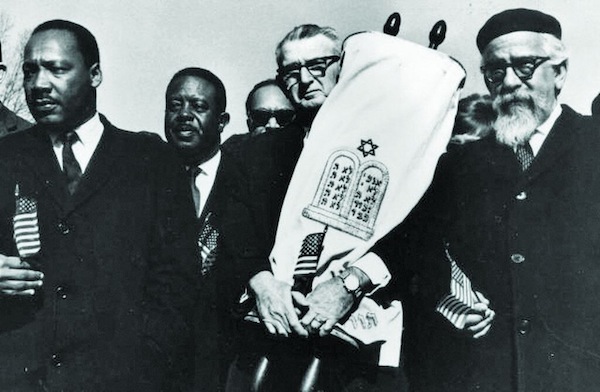
A still from the documentary Shared Legacies: From the left are Martin Luther King Jr., Ralph Abernathy, Maurice Eisendrath and Abraham Joshua Heschel during the march from Selma to Montgomery, 1965.

The Victoria Shoah Project held a panel discussion on Oct. 20, following an online showing of the documentary Shared Legacies: The African American-Jewish Civil Rights Alliance.

The 2020 film, part of the sixth annual Victoria International Jewish Film Festival, chronicles the common history of prejudice and hardships each group has faced, and features footage of the relationships of such luminaries as Dr. Martin Luther King and Rabbi Abraham Joshua Heschel. Included are interviews with many prominent civil rights leaders of the time, such as Andrew Young, John Lewis, Rabbi Alvin Sugarman and Rabbi Peter S. Berg.

After the screening, there was a Vancouver Island-based panel discussion with Adrienne and Barrie Carter, Paul Winn and the Victoria Shoah Project’s Robert Oppenheimer. From their own experiences, they each spoke about African-Canadian and Jewish-Canadian relations. They also talked about the film, and the events from 1960s America that it depicts, from personal, historical, present-day and Canadian perspectives. Rick Kool, also of the Shoah Project, served as moderator.

Adrienne Carter was born in Hungary in 1944, as the Nazis marched into the country and were increasing their campaign to exterminate the Jews. Many in her extended family died in Auschwitz. She and her family moved to Canada in 1956, following the Hungarian Revolution. “The whole stateless experience is very well known to me,” she recalled. “I married Barrie in 1965, at a time when Blacks and whites rarely ever connected, let alone married, and at a time when many Southern states had laws against interracial marriages.”

A co-founder and the director of services at the Vancouver Island Counseling Centre for Immigrants and Refugees, she has spent much of her working life helping immigrants by providing therapy to those who have experienced trauma, including intergenerational trauma.

Barrie Carter, who was a special needs education assistant until his retirement, told the audience of his early years. Born in Jacksonville, Fla., he moved to the northeastern part of the country where, in his teens, he volunteered with the NAACP in Bridgeport, Conn., and in New York and picketed Walgreens to challenge their segregationist luncheonette policies in the South. He immigrated to Canada on a bicycle in 1963. “While I was riding north, people were taking the bus south to the March on Washington. But I just had to get away,” he said.

Both Barrie and Adrienne Carter have traveled around the world, providing services to victims of torture and genocide.

Winn, whose work experience includes having been the executive director of the Canadian Race Relations Foundation, followed by recounting his experiences growing up in Toronto’s diverse Kensington Market neighbourhood.

“When I was 10 or 11, I was a Shabbos goy. I would do some things for the neighbours on Saturdays because they were unable to perform those tasks for religious reasons,” Winn recalled. “I got invited to bar and bat mitzvahs.”

He said, “It was natural for the Black and Jewish communities to support each other when there were struggles with such things as immigration. When I watched the film, I remembered how the connection between the religious Black and Jewish communities helped bring about a lot of activities in Canada, as well.”

Oppenheimer, a clinical psychologist with a focus on traumatized children and youth, a human rights activist and a staunch promoter of Holocaust education, also shared some information about his career. Reflecting on the 28 years he spent working in Detroit, he said, “It was an interesting experience for me. I was the only non-African-American on the staff and I was impressed with how welcoming the community was to me.

He added, “One of the things that impressed me about the movie was when Heschel said ‘not to be a bystander to history.’ I think that is central to my idea of human rights, that we cannot just stand by.”

“One of the things that really hit me in the film,” said Kool, “was a pastor standing in a church with a rabbi who said, ‘Reverend King isn’t here anymore, Rabbi Heschel isn’t here anymore, but are their children here now?’”

Barrie Carter observed that the youth in activist groups today “have the same dynamism as we did. They have an energy and a knowledge of concepts. It isn’t just a blind following. It is a positive morality.”

“They seem to believe it is part of their responsibility to make things better,” added Winn about today’s activists. “They want to make things better.”

Sam Margolis has written for the Globe and Mail, the National Post, UPI and MSNBC.

***

Note: This article has been amended to reflect the correct name of the film festival. It is the Victoria International Jewish Film Festival.