Hillel BC to Rwanda, Israel

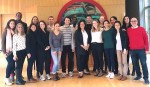
The Hon. Jody Wilson-Raybould, minister of justice and attorney general of Canada, centre, addressed Project Tikkun participants at Hillel BC on March 13. (photo from Hillel BC)

As the academic year winds down on university campuses across the province and students gear up for exams and summer jobs, 15 student leaders from the University of British Columbia and Simon Fraser University are also preparing for a totally different experience: a 16-day experiential learning and service trip to Rwanda and Israel.

Project Tikkun was developed by Hillel BC to challenge students to “understand the essence of hate by breaking down stereotypical thinking.” It is a yearlong program of learning that allows participants to explore the root causes of racism and antisemitism, culminating in a service trip to Rwanda and Israel between May 3 and 18.

The overseas component will enable participants to bear witness to how the diverse citizenry of two relatively young nation-states have grappled with a legacy of genocide. It will provide a firsthand examination of conflict resolution and reconciliation through the humanitarian work and activism pursued in each country to build durable and bonded communities.

According to its website, Project Tikkun brings together “undergraduate students of different ethnic backgrounds, religious practices, sexual orientation and personal beliefs to establish a caring and committed community of change-makers.”

Rebecca Recant, program director at Hillel BC, noted that the intent of the project is also to “build a local community of allies that can support each other when a [hateful] incident comes up, no matter which community.”

Student interest in the program exceeded the limited number of spaces and, last fall, a diverse group of 15 participants was selected. The group includes students of Chinese, Taiwanese, Indian, Korean, Persian and Rwandan backgrounds and a mix of the Jewish, Sikh, Baha’i and Christian faiths. The religious affiliation of the Jewish students varies – some come from secular homes whereas others were raised Orthodox; some have visited Israel and, for others, this will be their first trip to Eretz Yisrael.

Over the course of the year, the participants have been getting to know each other and examining their biases through intensive group learning sessions in which they have explored the history of Canada, Rwanda and Israel. A number of guest speakers, ranging from academics to community activists, have facilitated discussions. Of note, Dr. Andrew Baron, an assistant professor of psychology at UBC whose research examines the cultural and cognitive origins of unconscious bias, structured tests for Project Tikkun participants based on the Harvard Implicit Bias Test that he helped create. Jordana Shani, managing director of Hillel BC, explained that the testing of participants’ level of bias takes place at three different intervals: at the outset of the program, prior to departure and one to two months after return to Canada. The testing provides a way “to measure what we’ve done and how effective the program has been,” she said.

Certainly, much time, effort and money has been channeled into the program, especially the service trip. The journey begins in the capital city of Rwanda, Kigali, where local guides will accompany the students on a tour that will highlight the many landmarks and memorials of the 1994 genocide. The students will then travel to the Agahozo-Shalom Youth Village (ASYV), where they will spend the bulk of their time. Established in 2008 as a residential community-home to protect and nurture Rwandan children who were orphaned during and after the genocide, ASYV now cares for approximately 500 of Rwanda’s most vulnerable high school-aged students. It is modeled after Yemin Orde, an Israeli youth village founded in 1953 to care for orphans of the Holocaust, and it provides a family-like environment for at-risk youth.

The Rwandan students “grow up in this youth village hearing about the youth aliyah village in Israel that [ASYV] was based on,” said Recant. “It’s an Israeli model that is part of the connection between the two countries. They even know Hebrew words, like tikkun olam.”

At the youth village, Project Tikkun participants will learn and live side by side with the ASYV students and volunteer in the classrooms, on the farm and in the kitchen. They will accompany the ASYV students during their foray into town to fulfil a weekly community service commitment.

Libia Niyodusenga, a second-year UBC economics and geography student who was raised at the Agahozo-Shalom Youth Village, is looking forward to returning to Rwanda as part of Project Tikkun. “I think the country itself has the best ways and methods of teaching people through so many organizations that are based in Rwanda and so many history-based sites that you can learn from,” he said.

From Rwanda, Project Tikkun participants will travel to Israel, arriving on Yom Ha’atzmaut, where they will celebrate Israel’s independence in Jerusalem. Later, they will commemorate the victims of the Holocaust at Yad Vashem, tour the Old City and observe Shabbat before moving on to explore other parts of the country, including the Yemin Orde Youth Village. All the while, participants will learn from and volunteer with Israelis who are committed to combating intolerance and inequality – political, religious, ethno-cultural and socio-economic – to effect positive change within Israeli society.

The Israel portion of the trip will demonstrate that complex issues – both regional and domestic – defy the simplistic characterizations often portrayed by the media and that “you can love the country and be critical of it at the same time,” said Shani. The participants, she added, “will meet with people who believe in the right of Israel to exist and who are engaged to make it a better place.”

Jasmeet Khosa, a fourth-year student of international relations at UBC whose Sikh parents immigrated to Canada from Punjab, India, said: “I know that this project focuses on Rwanda and Israel as case studies [for conflict resolution and activism], but what I’ve learned so far is that this extends far beyond – [the message] is universal.”

By all accounts, Hillel BC is pleased with the results of the project thus far. Participants are inspired to help create positive change both at home and abroad and have developed a profound sense of strength through their diversity. As Khosa observed, “… the great thing is that we come from such different backgrounds – academically, culturally, religiously – that everyone brings their own perspective and we get a really great mix in that everyone has something unique to contribute to discussion and friendships, in general.” Niyodusenga added that the connections between program participants are already “deep and intimate.”

In reflecting on the many experiential learning and service trips that she participated in during university and how integral they were to forming her identity, Recant said, “Trips like this are life-changing.”

Shani and Recant are grateful for a grant from the Diamond Foundation that made Project Tikkun possible. While participants will pay a fee, the cost of the program is heavily subsidized to ensure that finances do not pose any obstacles. However, because of the decrease in the value of the Canadian dollar, Hillel BC is continuing to seek financial support for the program. For more information about Project Tikkun, visit projecttikkun.hillelbc.com; to make a donation, call 604-224-4748.

Alexis Pavlich is a Vancouver-based freelance reporter.

Faxes, printers hacked

Simon Fraser University was among those targeted by a hacker spewing antisemitic hate. (photo from facebook.com/PeakSFU)

Simon Fraser University was among many universities targeted by a white supremacist computer hacker purveying antisemitic hate.

Andrew Auernheimer, an Arkansas native now living in Abkhazia, a secessionist region of the republic of Georgia, told the Washington Post that he was responsible for causing at least 20,000 printers and fax machines throughout North America to spew out copies of an anti-Jewish hate poster.

SFU was among the campuses whose fax machines were affected last month, according to Nancy Johnston, executive director of student affairs.

“They weren’t actually posted, they just arrived on people’s faxes,” Johnston said. “It was all just removed and trashed here.”

The sheet featured two swastikas and the words, “White man, are you sick and tired of the Jews destroying your country through mass immigration and degeneracy? Join us in the struggle for global white supremacy at the Daily Stormer,” followed by the web address for the neo-Nazi hate site.

The printer hacking affected administrative and departmental offices at campuses in many U.S. states, the Post reported, adding that an official for the Anti-Defamation League said his organization had received many reports from people concerned about the content emerging from their printers and fax machines.

“Any demonstration of anti-Jewish hostility is a cause of serious concern,” said Nico Slobinsky, director of the Centre for Israel and Jewish Affairs, Pacific region. “This flyer and its contents have no place on any campus in Canada.”

Rabbi Philip Bregman, executive director of Hillel BC, which serves SFU among other campuses, sent this statement to the Independent: “We at Hillel BC are extremely concerned about this latest example of antisemitism that is circulating throughout North American universities. It is our hope and dream that humanity will eventually find a way to live with each other with respect and loving kindness.”

In the UN, on campus

Canada’s foreign minister has called on the United Nations Human Rights Council to review the appointment of Canadian law professor Michael Lynk as its special rapporteur on human rights in Palestine.

Last week, Stéphane Dion tweeted (because that is how diplomacy happens these days): “We call on @UN_HRC President to review this appointment & ensure Special Rapporteur has track record that can advance peace in region #HRC.”

The Centre for Israel and Jewish Affairs has denounced the appointment of the University of Western Ontario academic, who has been associated with anti-Israel activities in Canada. Lynk has said that Israel should be prosecuted for “war crimes,” he accused Israel of “ethnic cleansing,” has spoken at conferences that reject a two-state solution and serves as a leader in a group that promotes Israel Apartheid Week.

While Dion questioned the wisdom of appointing Lynk, CIJA went further, arguing that the position itself is illegitimate.

“It is ludicrous that this is the UN’s only special rapporteur focused on the human rights of a particular community,” said Shimon Koffler Fogel, CIJA’s chief executive officer. “It is likewise shameful that the special rapporteur refuses to investigate the abuse of Palestinian rights by the Palestinian leadership, particularly Hamas in Gaza. In so doing, the special rapporteur obscures genuine human rights violations in the Middle East and the underlying obstacles to Israeli-Palestinian peace.”

A related conflict blew up in academia last week. Just as the appointment of an avowed anti-Zionist as UN rapporteur surely will not advance peace between Israelis and Palestinians, the complete disavowal of the existence of antisemitism on campuses will not promote intellectual discourse or peace.

In the wake of ongoing efforts by the BDS movement to boycott Israeli academics and force universities to divest from Israeli holdings, while occasionally nastily intimidating Jewish students on campuses across North America, the University of California board of regents recently passed a statement condemning antisemitism, along with 10 principles against intolerance as a whole. It is the result of several months’ research and consultation.

The statement that introduces the principles is an amended version of an earlier expression that would have condemned anti-Zionism. Instead, it condemns “antisemitic forms of anti-Zionism.” If the only state in the world targeted for elimination is the only Jewish one, it should be an uphill battle to continue the charade that anti-Zionism is not equivalent to antisemitism, or at least driven by it to a large degree. Nevertheless, the regents’ statement is a starting point for increased civility on campuses that have seen, they note, “an increase in incidents reflecting antisemitism…. These reported incidents included vandalism targeting property associated with Jewish people or Judaism; challenges to the candidacies of Jewish students seeking to assume representative positions within student government; political, intellectual and social dialogue that is antisemitic; and social exclusion and stereotyping.”

Some critics say the statement is designed to stifle opposition to Israeli policies. Others say it could harm free speech. Yet others say it didn’t go far enough, in that it didn’t condemn bigotry against other specific groups.

None of these objections holds water. While the working group’s report might have been initiated by concerns over antisemitism, the document speaks to many other forms of intolerance: “University policy prohibits discrimination based on race, color, national origin, religion, sex, gender, gender expression, gender identity, pregnancy, physical or mental disability, medical condition (cancer-related or genetic characteristics), genetic information (including family medical history), ancestry, marital status, age, sexual orientation, citizenship, service in the uniformed services, or the intersection of any of these factors.”

As for free speech, including, presumably, that about Israel, the document stresses the importance of freedom of expression and of inquiry: “The university will vigorously defend the principles of the First Amendment and academic freedom against any efforts to subvert or abridge them.” And, it notes: “Each member of the university community is entitled to speak, to be heard and to be engaged based on the merits of their views, and unburdened by historical biases, stereotypes and prejudices.”

But: “Regardless of whether one has a legal right to speak in a manner that reflects bias, stereotypes, prejudice and intolerance, each member of the university community is expected to consider his or her responsibilities as well as his or her rights … mutual respect and civility within debate and dialogue advance the mission of the university, advance each of us as learners and teachers, and advance a democratic society.”

The UN – and many others – could learn a thing or two from UC’s regents.

Must confront issues

Angela Merkel’s Christian Democratic Union suffered dramatically in state elections in Germany last weekend. The German chancellor’s party received a brutal admonishment from voters, who concurrently gave startlingly strong support to a far-right, anti-immigrant party that is almost brand new to the scene.

The election was a referendum, to a large extent, on Merkel’s liberal approach to refugees from the Middle East. Last year, 1.1 million refugees streamed into Germany after often perilous journeys from the eastern Mediterranean. At the current rate, this year could see even more arrive unless, as some even in Merkel’s own coalition argue, border controls are imposed.

Still, there is no question that Germans – and everyone else on the continent – are confounded by the challenges created by refugees flowing in from Syria, Iraq and elsewhere in the Middle East. Merkel is in the process of negotiating with Turkey a cash deal that would see Turkey offer an alternative destination for those set on Europe. Yet even that would not allay all the concerns among Europeans and others in the West.

Are there potential terrorists among the millions of people on the move? It would be a foolhardy terror leader who would miss the opportunity to plant some agents in the West when an opportunity so ripe as the current porous borders presents itself, so almost certainly. But terrorists will find their marks even if it is not so convenient – and many of the perpetrators of European terror in recent years have legitimately been in the countries they attacked. Some were even citizens. The seriousness of this potential should not be diminished, but neither should we lull ourselves into believing that stanching the refugee flow would eliminate the terror problem.

As we have noted previously, more prevalent dangers may come in the form of some refugees’ attitudes and approaches to women and minorities. Violence (most notably a huge number of sexual assaults on New Year’s Eve) and other anti-social behaviors being reported suggest that there will be a serious challenge integrating some refugees into societies where expectations of women’s and men’s behaviors are radically different than in Syria and Iraq.

Then there are the economic realities, which have been remarkably glossed over. Before 9/11, opponents of admitting immigrants and refugees could be depended upon to raise fears of unemployment and abuse of social services. Thanks to the real or inflated threat of Islamist terror, economics seems to have been eclipsed. Even Donald Trump, whose campaign plays on every imaginable fear of difference or diversity, has limited his hate-fueled anti-Muslim rhetoric almost exclusively to the terror motif. In his mind, evidently, Mexicans take jobs, Muslims are terrorists.

Yet neither Trump’s xenophobia nor Merkel’s open-handedness will solve the underlying problems of war and despair that drive people to risk their lives to reach Europe or the Americas. And even if that crisis were to be solved which, despite U.S. Secretary of State John Kerry’s efforts, seems remote, we need to remind ourselves of a larger issue still.

We are one world. A country may once have been able to close its borders and seal itself off from the rest of humankind. The 20th-century fate of the Jews of Europe is the most memorable reminder that this was once true. But no more. We can set policies and even build walls, but we are part of an irrevocably interconnected and interdependent world. Efforts to stop the advance of this reality will ultimately be futile, even if they were desirable.

We need to find a way to get along. There could hardly be a more simplistic statement, but it is nonetheless true. We need to find ways to coexist inter-culturally and intra-culturally. With those who are coming to Europe and North America, we need to engage in a deep and committed dialogue to find common ground and we must not be afraid, as Canadians so often are, of confronting cultural differences, because ignoring them will cause problems, not solve them.

Racism at the root of BDS?

The Canadian Union of Postal Workers is again attacking Israel and urging its members to support the campaign to boycott, divest from and sanction the Jewish state. Last week, the union’s national president, Mike Palecek, sent a communiqué to members packed with boilerplate calls for attacking Israel economically and politically, including a call to end the Canada-Israel Free Trade Agreement.

The BDS movement lays bare a stark moral dissonance among so-called “progressives.” In confronting almost every other conflict and issue, these are people who urge discussion, negotiation, compromise, dialogue, conciliation. Except when it comes to Israel.

Why is Israel treated differently in this, as it is in so many other realms?

Obviously, Israel is held to a higher standard, as so many critics have noted, because it is a democracy, it prides itself on human rights and rule of law. However, the standards to which the world holds Israel are impossible ones that no country could measure up to when faced with the continual threats and violence that the country has endured for nearly seven decades.

The Jewish country – given the Bible, the Holocaust, the principles upon which it was founded – is expected to be the quintessence of morality and humanity. Which it might have been capable of, were it not for the fact that those who seek its destruction recognize no parallel standards of morality or humanity.

BDSers and other extreme critics of Israel shield themselves in a blanket rejection of the idea that their ideology could in any way be influenced by negative perceptions of Jews. Be that as it may, Donald Trump, of all people, may have illustrated the situation perfectly while speaking with Jewish Republicans last December.

“Look, I’m a negotiator like you folks; we’re negotiators.… This room negotiates perhaps more than any room I’ve spoken to, maybe more,” he said.

To Trump, being an expert negotiator is a compliment, though compliments often have double edges.

The stereotype of Jews as unconquerable negotiators is a driving force behind BDS. It is so universal a stereotype that Trump didn’t even realize it might be offensive, just as so many BDSers are blind to the bigotry inherent in their worldview.

Consider Sept. 28, 2000. The Israeli-Palestinian peace process was proceeding and an independent Palestinian state was in reach. Then Yasser Arafat left the negotiating table and began the Second Intifada. A decade and a half of continued statelessness for Palestinians has followed, as well as endless violence and thousands more deaths. World reaction should have been to rear up against Arafat’s rejection of negotiation and his return to violence. It wasn’t. Despite all reason, the world nearly unanimously empathized with Arafat’s actions. Why? Because many in the world, consciously or not, hold to ideas that let them believe the Palestinians were never going to get a fair shake. Despite all evidence suggesting that negotiation was leading to a two-state solution, violence was completely understandable because, you know, no one bests the Jews at negotiating.

Of course, there is the other factor – that Arafat seems to never have wanted a two-state solution, but this does not explain the reaction of erstwhile progressives and peace-seekers around the world.

Other stereotypes of Jews also drive the tactics of BDS. Note the two primary targets of the movement. First, it’s about attacking Israel economically. Secondly, it’s about academic boycotts. First, hit them where it hurts: in the pocketbook. Then sock it to them in the intellect.

It is hard not to draw the conclusion that, at its root, BDS is a movement steeped in racism.

סערת דונלד טראמפ

דבריו החמורים של המועמד הרפובליקני לנשיאות בארה”ב, דונלד טראמפ, בגנות המוסלמים, מעוררת תגובות נזעמות גם בקנדה. (צילום: Gage Skidmore via wikimedia.org)

סערת דונלד טראמפ מגיעה גם לקנדה: פוליטיקאים קוראים להחרימו וחברי מועצות בערים קוראים להסיר את שמו מהמגדלים

דבריו החמורים של המועמד הרפובליקני לנשיאות בארה”ב, דונלד טראמפ, בגנות המוסלמים, מעוררת תגובות נזעמות גם בקנדה. טראמפ אמר השבוע במסגרת קמפיין הבחירות שלו שיש לאסור על המוסלמים להיכנס לארה”ב, בין אם כמהגרים או כתיירים. טראמפ מוביל עדיין בסקרים מול שאר המועמדים של המפלגה הרפובליקנית, אך הביקורת נגדו במפלגה ומחוצה לה, בארה”ב ומחוצה לה, רק הולכת וגדלה. טראמפ באימרותיו השנויות במחלוקת והפרובוקציות שלו נמצא במסלול הנכון להפוך לאחד האישים השנואים בעולם.

שר החוץ של קנדה, סטפן דיון, אמר בנוגע לטראמפ: “מעולם לא קרה בקנדה מה ששמענו כעת בארה”ב מטראמפ. אנחנו לא יכולים לקבל דבר כזה. אף מפלגה בקנדה לא תתקרב לדברים כאלה. אזרחי קנדה יתנגדו לנצח לאמירות שכוללות שנאת זרים כזו”. ראש ממשלת קנדה, ג’סטין טרודו, סירב להגיב ישירות על דברי טראמפ בטענה כי כל אחד בתפקידו אסור לו להגיב בנושאי פוליטיקה פנימית של מדינה אחרת, במיוחד כאשר מתנהלת בה מערכת בחירות. עם זאת טרודו ציין והוסיף כי: “אזרחי קנדה יודעים היטב היכן הוא עומד בנוגע לנושאים כאלה”.

מנהיגת האופוזיצה הזמנית מטעם מפלגת השמרנים, רונה אמברוז, דחתה את דבריו של טראמפ וטענה שהם מגוחחים. לדבריה: “זה בידי תושבי ארה”ב לבחור מי יהיה המנהיג הבא שלהם, אבל אני בטוחה שרבים ואפילו במפלגתו, חושבים שהתגובות שלו הן מגוחחות”. ואילו מנהיג המפלגה הדמוקרטית החדשה, טום מולקייר, טוען שהגיע הזמן לאסור על אנשים כמו טראמפ שמפזרים דברי שינאה, להיכנס לקנדה”.

במקביל חברי מועצה בעיריית טורונטו וונקובר גם הם יוצאים בחריפות נגד דברי טראמפ. מספר חברי מועצת העיר טורונטו דורשים להחליף השם “טראמפ” של מגדל המלון דירות בדאון טאון, בשם אחר. מגדל טראמפ בטורונטו פועל מאז ראשית 2012. גם חברים במועצת עיריית ונקובר דורשים אף הם להחליף את השם “טראמפ” של מגדל המלון דירות ברחוב ג’ורג’יה בדאון טאון, בשם אחר. מגדל טראמפ בוונקובר שבנייתו הולכת ונשלמת בימים אלה, יפתח בראשית שנה הבאה.

טראמפ מתכוון לבקר בישראל לקראת סוף השנה. במסגרת הביקור לפי מקורביו הוא ינסה לעלות להר הבית ואין ספק שפרובוקציה כזו מצידו, יכולה להצית את כל המזרח התיכון. ראש ממשלת ישראל, בנימין נתניהו, למרות שדחה את דבריו של טראמפ בגנות המוסלמים, כן הסכים להיפגש עימו כשיגיע לישראל.

ארגון או.אי.סי.די: ישראל וקנדה במקום טוב מבחינת נטל המיסים

ישראל וקנדה נמצאות במקומות מוכבדים מבחינת היקף נטל המיסוי בקרב שלושים וארבע המדינות, החברות בארגון או.אי.סי.די. ישראל הצטרפה לאו.אי.סי.די ב-2010 והחברות בו מחויבויות לערכי דמוקרטיה, שקיפות ודבקות בערכי כלכלת שוק ופיתוח כלכלי.

הארגון פרסם בשבוע שעבר את נתוני 2014 ונטל המיסים של חברותיו עומד על 34.2% בממוצע. המדינה עם נטל המיסוי הגבוה ביותר היא דנמרק עם 47.6%. אחריה: צרפת (45%), בלגיה (44.7%), איטליה (43.9%), פינלנד (43.7%), שבדיה (42.8%), אוסטריה (42.5%), נורבגיה (40.5%), לוקסמבורג (38.4%) והונגריה (38.4%) במקומות התשיעי והעשירי. גרמניה (36.5%) במקום השלושה עשר, בריטניה (32.9%) במקום השמונה עשר ואחריה ספרד (32.7%) במקום התשעה עשר. ישראל במקום העשרים ושלושה עם נטל מיסוי של 30.6%, ואחריה במקום העשרים וארבעה קנדה עם 30.5%. יפן (30.3%) במקום העשרים ושישה, אוסטרליה (27.5%) במקום העשרים ותשעה, אחריה במקום השלושים שוויץ (26.9%), ובמקום השלושים ואחד ארה”ב (25.4%). המדינה עם נטל המיסוי הנמוך ביותר היא מקסיקו (19.7%) במקום השלושים וארבעה.

Model response to injustice

Seventy-two years ago yesterday, two Polish women, Zofia Kossak and Wanda Filipowicz, founded the Council for the Assistance of the Jews. By 1942, awareness of the intent of the Final Solution was becoming widespread. By creating an underground movement to assist and shelter Jews in Nazi-occupied Poland, these women and all who assisted them put their own lives at immense risk.

Throughout the Second World War, countless individuals, at great risk to themselves and their families, undertook to assist their Jewish neighbors. These included Christians in every part of Europe and also Muslims, notably in Albania.

There are, of course, plenty of stories of collusion, betrayal and collaboration. There are, we remind our children, good and bad behaviors among any group of people, but the redemptive stories of people doing the right thing help restore humanity to our collective self-understanding.

Today, Jewish people still face challenges in various parts of the world. By sheer numbers, however, the vast majority of Jews live in Israel and North America, where life is free of the systemic bigotry Jewish people experienced in much of the world through much of history. Especially now, from our place of relative security and privilege, we should be turning our attention to the atrocities playing out against other minorities around the world.

In the world today, Christians are being persecuted and murdered in Africa and Asia. In North Korea, an estimated 50,000-70,000 Christians are held in the country’s notorious labor camps. In Nigeria last year, more than 300 churches were destroyed and more than 600 Christians killed; and mosques are being targeted with deadly attacks against clerics who speak out against the Islamist group Boko Haram, as happened – again, tragically – earlier this week. In Yemen and elsewhere in the Muslim world, those who convert to Christianity face the death penalty. In China, government forces oppress Uyghur Muslims in the west of the country. In Cambodia, members of the Buddhist majority have been attacking the Muslim minority. And, in India, systematic violence against Muslims is widespread. The list goes on and on – and this list only includes instances of persecution against Muslims and Christians; there are many other populations around the world under threat of discrimination, persecution and brutality.

The Jewish value of adam yachid, a single human being, means that humankind descended from one individual so that no one can say, “My father is greater than your father.” As Jews, but more especially as people who enjoy the freedom to express ourselves without fear of retribution from government or mob, we have an obligation to speak out on behalf of those who cannot. This is something we should do not because others did it when we were oppressed, but because their actions are the model of the human(e) response to injustice.

What can we do? In small and large ways, we can inform ourselves and our circles of influence about the issues facing minority communities worldwide. There are plenty of organizations working quietly on these topics. Consider supporting one. Inform yourself on events in other parts of the world that affect specific populations. When elected officials – and those who hope to become elected officials – knock on our doors in the federal election next year, we should let them know that the issues that are important to us go beyond those that impact our immediate lives.

Fresh, solemn significance

For a great number of Canadians, particularly those too young to remember the Second World War, Remembrance Day is not the day of intimate commemoration it was for previous generations. Canadian engagement in Afghanistan, however, has once again bestowed on this solemn occasion more immediacy. That said, most young Canadians who file into school auditoriums for the recitation of “In Flanders Fields” and a moment of silence understandably may not experience the same emotional reaction as their parents or grandparents who participated in or lost loved ones in the world wars.

This Nov. 11 will probably have poignancy beyond the routine, though, because of the tragic events of recent days. Our country is mourning Warrant Officer Patrice Vincent, who was murdered last month in Quebec, and Corporal Nathan Cirillo, who was shot at the National War Memorial in Ottawa two days later.

The murder of Cirillo was immediately followed by a dramatic shootout at the heart of our democracy, the Parliament Buildings, in which the assassin and thankfully no one else was killed.

The symbolism of the latter shootings is unambiguous. A killer – maybe deranged, maybe driven by ideology, maybe a bit of both – kills a military official standing guard at the icon of Canada’s military sacrifices, then heads directly to the legislature of our country, apparently intending further destruction.

Reaction has varied intensely. American 24-hour news outlets treated the occasion with typical spectacle. Canadian media have been credited with exhibiting characteristic Canadian moderation. Canadians have not, evidence so far suggests, gone hog-wild in demanding the swapping of human rights for physical security. A typically Canadian assessment will be made about whether elected officials should have greater protection, but there has been minimal hysteria about an imminent invasion by terrorists.

These incidents, of course, raised the inevitable fears and allegations. Both crimes were perpetrated by men who were newly observant Muslims. Yet, there is minimal evidence that either was in any way connected to a larger Islamist network or that religious fanaticism was a greater driver than grave psychological or emotional troubles.

Still, there was reaction in the unlikeliest of places. In Cold Lake, Alta., a mosque – talk about a little mosque on the prairie – was a hate-crime target with, among other things, “Go home” spray-painted on its exterior. In what was the perfect Canadian response, locals showed up to clean off the graffiti and festoon the place with signs, including one with the message “You ARE home.”

There may be a place for hate-crimes legislation and certainly there are laws against vandalism, but the greatest reaction of all is individual members of a community coming together to undo – literally and figuratively – the hatred purveyed by a minority of bigots.

As we prepare to mark Remembrance Day Tuesday, members of our community also gather Sunday night to mark the 76th anniversary of Kristallnacht. This date marks the horrible moment when the incremental threats of the Nazi regime moved from words to deeds, and the intimidations of successive antisemitic laws moved toward the grisly realities of the Final Solution.

Kristallnacht also holds particularly fresh import in a world where Jewish shops and people this year have been subjected to attack in Europe and elsewhere. Both of these solemn days call on us to consider events of the past and to be vigilant in the present. Lest we forget.