Charlottesville a turning point?

(photo by Ryan M. Kelly via cbc.ca)

Last weekend, in Charlottesville, Va., hundreds of white supremacists, Ku Klux Klanners, neo-Nazis and other racists and antisemites rallied and brought violence to the hometown of Thomas Jefferson.

The images that emerged are bone-chilling. Men (mostly) carrying torches, swastikas and Confederate flags, screaming the ugliest epithets imaginable against African-Americans, gays and Jews. When the city of Charlottesville eventually ordered the racists to disperse (the racists were authorized to rally until things got violent), one of them got in his car and rammed it through a crowd of counter-demonstrators, killing one young woman and injuring many. The violence could have been infinitely worse, it should be noted, as scores of racists in battle fatigues were seen carrying combat weapons on their way to the rally, as is their Second Amendment right in that open-carry state.

Anyone who spent any time on social media or watching cable news in the succeeding days knows that the events and the issues raised by the rally and the preceding march through the University of Virginia have been assessed from multiple angles. The delayed and impotent response of President Donald Trump has been singled out as among the more worrying aspects.

The president of the United States responded by blaming “many sides” for the violence, an appalling equivocation that diminishes the office even further than the depths to which he has debased it in the past eight months. Items of Trump paraphernalia, notably “Make America great again” caps, were prominent among the racist ralliers and some commentators think the president’s remarks were tempered so as not to upset a political base that includes the very worst elements in American society.

David Duke, the former head hood of the KKK, said the rally was a step toward fulfilling Trump’s promises and, after Trump’s bland statement on events, Duke crowed that, essentially, his guy is in the White House. Meanwhile, Maxine Waters, an African-American congresswoman and outspoken critic of Trump, dubbed it the White Supremacists’ House.

The American Civil Liberties Union advocated for the right of the racists to express themselves and, while Canada has different laws and customs around this, we would not contest the idea of racists expressing themselves peacefully, primarily because suppression can metastasize bad ideas the way mold grows in darkness. The answer to bad speech, we have been arguing in this space for decades, is not no speech, but more speech. Indeed, many Americans and others have been motivated by their revulsion at events in Charlottesville to recognize the racial and cultural problems it represents, and have engaged in the civil discourse on the side of good.

We admit, though, that free speech works best when decent people are in leadership. So, for instance, when white supremacists and neo-Nazis rally and murder, a U.S. president should arouse the country’s best instincts as the leading voice for unity in diversity and basic human decency. That didn’t happen after Charlottesville.

Also, police preparations may have been inadequate. When African-Americans have peacefully marched in recent years, militaristic counter-measures have been put in place, as in Ferguson, Mo., after the shooting death of Michael Brown. In Charlottesville, gun-swinging, fatigue-festooned, swastika-waving white people were met with limited police presence, to the extent that they were permitted to physically attack counter-protesters.

An additional factor – perhaps the only one not adequately hashed over – is the subdued reaction to the antisemitism permeating the event. The poster for the rally featured a Magen David about to be smashed by a sledgehammer. A recurring chant at the rally, premised on the idea of white culture being subsumed, was “You will not replace us … Jew will not replace us!” Seig heil salutes and chants of “blood and soil,” a Nazi slogan, were part of the show.

The president notwithstanding, most American leaders have condemned the racism of the event, but condemnations of antisemitism in particular have been far less prominent in the aftermath. Hopefully, people feel that their statements against bigotry encompass antisemitism; less optimistically, perhaps there is a feeling that, while other forms of hatred are anathema to American ideals, displays of antisemitism are less surprising and, therefore, less requiring of explicit denunciation. This is something that needs further consideration and discussion.

If, as former president Barack Obama was fond of saying (quoting Dr. Martin Luther King, Jr.), “the arc of the moral universe is long but it bends toward justice,” Charlottesville may turn out to be a positive turning point in a long and tragic history of racism, antisemitism and xenophobia in America. Optimists among us hope that the political awareness of erstwhile apathetic Americans will be awakened by the sight of torch-wielding Nazis in American streets – and spurred to action by the fact that this reality doesn’t elicit swift and strong condemnation from the most powerful person in the country and, indeed, in the world.

As Canadians, we have our own shameful history of racism and antisemitism to reckon with and should not allow ourselves any smugness when assessing our neighbour’s current spasm of hate. The passing of German-Canadian Holocaust-denier and Nazi-sympathizer Ernst Zundel this month in Germany – to which he was extradited in 2005 and convicted for inciting racial hatred – and a scan of Canadian web commenters around these subjects remind us that we remain far from some bigotry-free beacon to the world.

Still, it is only when these things are out in the open that they can be challenged and debunked. So, as debilitating as it may be to see and hear these ugly ideas and actions, it gives us the opportunity to counter them – if, unlike the president of the United States, we choose to do so sincerely.


Prejudiced reasoning

On June 24, as part of gay pride festivities taking place in cities around the world, an incident occurred at a “dyke march” in Chicago that rightfully caught the attention of people everywhere. A group of Jews who were attending the event with rainbow pride flags emblazoned with the Star of David were asked to leave.

There are at least two galling aspects to this incident. The first and most obvious is the unabashed bigotry of throwing people out of what is ostensibly a human rights march because they belong to an identifiable group. The second is the misrepresentation of victim and victimizer – Jews were asked to leave because some other participants might feel “triggered” or “unsafe.”

To understand the reasoning, such as it is, we need to recognize how concepts of minority and human rights have altered in recent years – and how these changes bode ill for Jews.

Among the varied forms of antisemitism is one that sees Jews as the embodiment of privilege. This is because antisemitism differs from many other forms of discrimination in part by how the perpetrators view their target. White supremacy, which also seems to be having a renaissance in the United States, is a strain of discrimination that allows the perpetrator to feel better about themselves by positioning themselves (in their minds) above members of another group. Antisemitism, at present at least, differs in that the perpetrators often attribute to Jews a sense of superiority. Review the comments section of almost any news story involving Jews and see how ubiquitous the term “Chosen people” is in the screeds of antisemites. There is a prevalent idea that Jews think they are better than other people – and deserve to be brought down a notch.

In Chicago, people who see themselves as victims turned what limited power they had onto a group that they miscategorized through a crude and racist ideological lens: the powerful Jews may oppress Palestinians and control Hollywood, Washington, the banks, the media and what not, but, at the very least, we can promote equality and justice by kicking them out of our dyke march. There is actually a logic to it, if you recognize the prejudiced reasoning behind it.

Economic inequality experienced by minorities, police violence, systemic discrimination, growing social intolerance, a rise of open racism and xenophobia and a vast range of other problems are real. The idea that anyone was “unsafe” because Jews were present in a lesbian march is not. This type of thinking diminishes the credibility of these movements. It also undermines the foundation of the entire social justice movement, which talks constantly about “allies.” When it comes to Jews, it seems, talk is all it is.

MLA seeks out positive solutions

George Heyman is the member of the B.C. legislative assembly for Vancouver-Fairview. (photo from George Heyman)

George Heyman is one of numerous British Columbia residents who owe their lives to the Japanese diplomat Chiune Sugihara. Though born after the Second World War, Heyman is the son of a Polish Jewish couple who were among the estimated 6,000 Jews aided in fleeing Nazi Europe by the acts of Sugihara, who was the vice-consul for the Empire of Japan in Lithuania.

“That’s a story my parents didn’t spend a lot of time telling me about, which I’ve since found out is actually very common – parents don’t tell their story,” Heyman told the Independent. “But I learned much about it in recent years and it has been well-documented with a number of exhibits telling the story in Vancouver and the United States and other parts of Canada and in Japan.”

Sugihara risked his career – and his life – issuing transit visas to Jews. An estimated 40,000 descendants of “Sugihara Jews” are alive today because of his actions.

Once they had escaped Europe, Heyman’s parents were sponsored by family in Vancouver.

“Canada was certainly not falling over to welcome Jewish refugees,” said Heyman. “But they had distant relatives who were from Austria, who had already established here before the war started, seeing the writing on the wall. They sponsored them. My dad enlisted in the reserves, worked as a machinist in a boiler factory – even though he had an engineering degree – until he could get his credentials recognized in Canada, and eventually went on to work in the profession in which he had been trained.”

Heyman was born at Vancouver General Hospital, in the riding he now represents in the B.C. legislature, Vancouver-Fairview. The New Democrat says his family’s experience – and his own experience with casual antisemitism – helped shape his approach to the world and politics.

“I think, as a young child growing up in Canada, I just wanted to be what most children wanted, which was to be accepted,” he said. “I remember the normalization of what we would now recognize as clearly antisemitic jokes or comments or generalizations or characterizations. As a young boy, I had a hard time speaking up against it. It took a lot of courage to say, ‘you can’t talk about Jews that way’ or ‘why are you using the term Jew, my religion, in that way that is clearly not a good one?’”

These experiences, Heyman said, helped him recognize injustice and learn to value other people regardless of their economic class, ethnicity or religion, “to embrace people, not categorize them or shun them.”

“As part of that, I was also learning to stand up for who I was,” he said. “Like many young Jews, I was torn between looking for my identity and wanting to fit in. It’s been a lifelong journey.”

These experiences also helped lead him to careers in the labour movement and public office. Heyman served as head of the B.C. Government and Service Employees Union, then executive director of the Sierra Club of British Columbia, before being elected to the B.C. legislature in the 2013 election.

One of the reasons he has taken the opportunity over the years to speak up about his own experiences, Heyman said, has been “to try to deepen understanding and let people know what casual and thoughtless racist comments do to people who are the recipients of them.”

Antisemitic rhetoric and threats in North America and the murder of six Muslims in a Quebec mosque have had a range of unintended consequences, he said. They have ensured that people do not take security for granted and they have caused a coming together of disparate religious and ethnic groups.

“When Muslims at prayer in a mosque in Quebec are murdered, members of the Jewish community stood with Vancouver Muslims at the mosque and expressed their own solidarity as well as horror at the actions,” he said. “And Muslims have come to the [Vancouver Jewish Community] Centre for peace circles, to express their solidarity.… What makes us strong is when we work together, understand each other, support each other, build institutions together; not when we live in isolation or fear, because then we just give encouragement to those people who thrive on creating fear and hatred because it’s the only answer they have for what’s missing in their lives. I’d rather find a positive, constructive answer to those things that are missing in people’s lives, whether it’s spirituality, faith or some measure of economic equality, and build community solidarity that way.”

Heyman said he and the rest of the NDP caucus want to see the recommendations of the Truth and Reconciliation Commission report implemented, including educational components about the history of First Nations.

“The commission talked about ensuring that there is a healthy education component in schools, right from the earliest stages, about the history, what was wrong with it, how we can grow beyond it and heal,” he said. “The same is true of the racist laws that existed in Canada that impacted Chinese, South Asian, Japanese and other immigrants, who actually did the hard labour, in many cases, of building this country that other people weren’t willing to do. The same is true of understanding the history of the Holocaust that happened in Europe, which obviously was overwhelmingly targeted to Jews, but not only. How that connects to other aspects of racism, hatred and genocide, [and to] recognize the genocides that have happened in other parts of the world, as Jewish speakers at Holocaust memorials in the legislature have consistently done.

“We need to educate young people, both about the horror of the past and what it leads to, about the impact of thoughtless words or actions that promote or embody racist thought, but also about the benefits to us all when we live and work together and appreciate each other and embrace each other.… Government has the resources and the authority to both legislate against hatred and racism, but also to animate the actions that can ultimately, if not wipe it out, shrink it to the minimum amount that we would hope.”

On the Israel-Palestinian conflict, Heyman said he supports a two-state solution and does not support the boycott, divestment and sanctions (BDS) movement.

“I’ve never chosen to personally support or even quietly implement on my own behalf a boycott of Israeli products,” he said. “I also think it’s important in this context that we distinguish between tactics that some people choose to make a political point and whether or not that tactic is synonymous with antisemitism. I think, for instance, there are antisemites who express their views through a variety of mechanisms, and I also think there are Jews and other people who are legitimately concerned about government actions and want to find a two-state solution and peace that brings an end to the conflict and brings security to both Palestinians and Israelis who may support that tactic without being antisemitic. Personally, while I support a two-state solution, I very much want to see the hatred and conflict in the Middle East solved and that means, for me, opposing terrorism as well as opposing actions that block the road to peace.”

He added: “I think it’s important for people to recognize that those who call for a just peace and a two-state solution may be calling for justice for Palestinians and justice for Jews and Israelis, and they are not incompatible.”

As voters prepare for the May 9 election, Heyman said there are plenty of topics on the agenda.

“There are issues of affordability, issues of fairness and services for communities, for people needing healthcare, for seniors, for children, for working families, issues of housing and very important issues of, how do we build a modern, diversified economy that doesn’t threaten our children and grandchildren with an unliveable future due to climate change?” he said. “We can’t put off the choices of transitioning to a supportive society, a society that takes care of seniors and kids, as well as a society and economy that employs people productively while respecting and protecting the environment – those are the choices we need to make today.”

The Jewish Independent’s provincial election coverage continues with interviews with other candidates in future issues.

Don’t miss this Parade

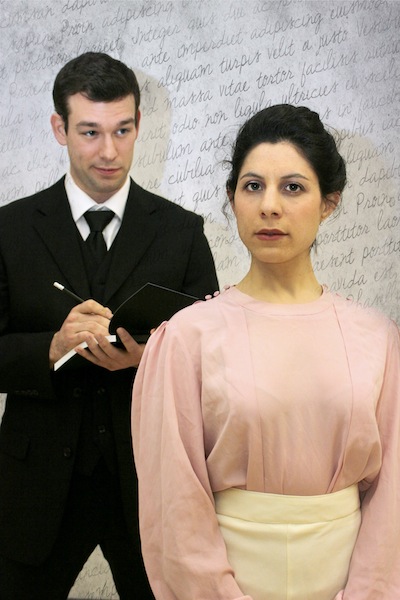
Left to right are Kaila Kask (Mary Phagan), Emily Smith, Rachel Garnet and Alina Quarin with Riley Sandbeck (Leo Frank). (photo by Allyson Fournier)

On Aug. 17, 1915, 31-year-old Leo Frank was kidnapped from the Georgia State Penitentiary in Milledgeville by a Ku Klux Klan lynch mob and hanged by his neck until he was dead. His alleged crime: the rape and murder of 13-year-old factory worker Mary Phagan. His real crime: being Jewish, successful and a northerner in an impoverished Deep South still reeling from the humiliation of the Civil War and looking for retribution against its perceived oppressors.

The case has been the subject of novels, plays, movies and even a mini-series. But who would have thought that you could make a musical out of such a tragedy. Author Alfred Uhry (Driving Miss Daisy) and Broadway producer Hal Prince (Cabaret) did. Thus Parade was born, with music and lyrics by Jason Robert Brown. It opened on Broadway in 1998, won two Tonys and went on to be produced across America to much acclaim.

Now, Fighting Chance Productions, a local amateur theatre company, is bringing this compelling story to Vancouver audiences for its Western Canadian première at the Rothstein Theatre April 14-29. Director Ryan Mooney and lead actor Advah Soudack (Lucille) spoke with the Jewish Independent about the upcoming production. But first, more background, because it is an incredible story.

Frank was a slight man – five feet, six inches tall, 120 pounds – with a nervous temperament. Born in Texas and raised in Brooklyn, he graduated from Cornell University with a degree in mechanical engineering and was enticed to move to Atlanta in 1908 to run the factory owned by his uncle. There, he met and married Lucille, a 21-year-old woman from a prominent Jewish family. The newlyweds lived a life of privilege and wealth in a posh Atlanta neighbourhood, Frank became the president of the local B’nai B’rith chapter. However, having been brought up in the vibrant Yiddish milieu of New York, he always felt like an outsider amid the assimilated Southern Jewish community.

The journey to his tragic demise started the morning of Saturday, April 26, 1913, when little Mary put on her best clothes to attend the Confederate Memorial Day Parade in downtown Atlanta. On the way, she stopped at the National Pencil Factory, where Frank was the superintendent, to pick up her weekly pay packet from his office. That was the last time she was seen alive. Her body, half-naked and bloodied, was found in the basement of the factory later that day. Shortly after, Frank was arrested by the police and charged with the crime along with the African-American janitor, Jim Conley.

The trial was a media circus fueled by a zealous district attorney, Hugh Dorsey, who was looking for a conviction in a high-profile case to popularize his bid for the governorship of Georgia, and Tom Watson, a right-wing newspaper publisher who wrote virulent, racist editorials against Frank, casting him as a diabolical criminal and calling for a revival of the Klan “to do justice.” Frank was convicted by an all-white jury on the testimony of Conley – who had turned state’s evidence in exchange for immunity – and sentenced to death in a trial that can only be characterized as a miscarriage of justice replete with a botched police investigation, the withholding of crucial evidence, witness tampering and perjured testimony. This was America’s Dreyfus trial and Frank was the scapegoat.

The conviction appalled right-thinking people and mobilized Jewish communities across America into action. William Randolph Hearst and New York Times publisher Adolph Ochs campaigned on Frank’s behalf. The conviction and sentence were appealed. Georgia governor John Slaton was lobbied to review the case. For two years, Frank sat in jail not knowing his fate until, one day, he heard that Slaton had commuted his death sentence to life in prison. In response, frenzied mobs rioted in the streets and stormed the governor’s mansion. A state of martial law was declared and the National Guard called out to protect the city. Against this backdrop, Frank was transferred into protective custody at the state penitentiary but that did not stop the lynch mob, some of whom had been jurors at the trial.

It wasn’t until 1986 that Frank was (posthumously) pardoned by the Georgia State Board of Pardons and Paroles.

Jewish Independent: What attracted you to this play?

Ryan Mooney: Parade has been a favourite musical of mine for as long as I can remember. I was drawn to it because it is such a fascinating story, it speaks so much to its time and continues to speak to us. When people see it, they will want to know more. It has beautiful soaring music, is very emotional, but also it is real, so relatable. It will take you on a journey that will touch you in many ways.

Advah Soudack: The songs, the music. When I was going through the script and getting used to the music, I could not get through some of the songs without choking up, it was so emotional, beautiful and real.

JI: How would you classify it as a theatrical piece?

photo - J.P. McLean (Britt Craig) and Advah Soudack (Lucille Frank) are part of the 25-person cast of Parade, which will have its Western Canadian première at the Rothstein Theatre April 14-29
J.P. McLean (Britt Craig) and Advah Soudack (Lucille Frank) are part of the 25-person cast of Parade, which will have its Western Canadian première at the Rothstein Theatre April 14-29. (photo by Allyson Fournier)

RM: It is, in essence, a love story about a young man and a woman who learn through tragic circumstances to have a deeper love for each other and to appreciate each other’s kind of love.

AS: Leo sees love as a service, being a provider, while Lucille looks for love in spending quality time together and physical intimacy. Over time, their two loves unite.

JI: This isn’t your typical musical. It has a very dark side. It covers the kind of subject matter usually covered in narrative plays. Do you think people want to see this kind of musical theatre?

RM: Our company, as our name states, takes chances and we are taking a chance on this, but I think the risk is worthwhile and that audiences will appreciate the story. It seems to do very well wherever it plays – Broadway, London. We thought the Rothstein Theatre would be the perfect venue and we hope that the Jewish community will support us.

JI: Is this strictly a Jewish story?

RM: It is not necessarily just a Jewish story, it could be about anybody, anywhere. It is a fascinating look at a historic event through a musical lens. I don’t think Prince was trying to make a political statement when he produced the show but rather to educate people about the event. At the time of its first production, 1998, shows like Ragtime and Showboat were on Broadway alongside Parade. It seemed to be a time for examining how mainstream America treated those people it considered lesser citizens.

JI: What was it like to cast?

RM: The production requires a large cast: 25. I needed people who could sing and act. Lots of people auditioned and we ended up with a great cast, with the members spanning the ages of 18 to 60. What makes this show very relevant is that we have actors playing roles for their real ages, not trying to be someone younger or older, and that makes the production more realistic. I wanted at least one of the leads to be Jewish and Avdah was perfect for the role of Lucille.

AS: When I heard about this show, I jumped at the chance to apply. I had been out of theatre for about 10 years and I really wanted to get back into it. I was lucky enough to get a callback after my first audition and felt very proud of my performance the second time around. I was thrilled when I got the role.

JI: What is it like to deal with a true event as opposed to a fictional account?

RM: Because it is a real life story, there is so much more research you can do to make sure you get it right. I read Steve Oney’s And the Dead Shall Rise: The Murder of Mary Phagan and the Lynching of Leo Frank and gave it to members of the cast to read to get a feel for the characters and some background information. There is some material that did not make it into the musical but the play does essentially honour the accuracy of the event.

AS: I am reading the book right now and it is so fascinating to get the story behind the character and be able to use that as an actor.

JI: How are Leo and Lucille portrayed in the script?

RM: He is not portrayed that sympathetically. At the trial, he is really cold and does not look repentant but, ultimately, we see him break. If he were just shown as a martyr and everyone else a villain, that would not be interesting for the audience. Instead, the audience sees his flawed human character and that is why it is a great story to tell – [he’s] a person with faults that anyone can relate to.

AS: She is a Southern woman and a product of the American melting pot, more assimilated than Jewish, and that is how she survives. America wants you to become American first and everything else second. People like her thought like that and assimilated. Then, she is thrust into this case, where horrific things are being said against her husband on a daily basis in the newspapers and she has to deal with that. Yet, she stands by him and is one of his biggest supporters. She even went to the governor’s mansion to personally lobby him to intervene in the case. For a young Southern Jewish woman, that was a big step. So, you see her grow into this strong, independent woman.

She comes across very strong in the play, perhaps stronger than she really was in real life, but she was so committed to Leo’s cause and to him. She came every day to jail to visit him and bring him food. The circumstances of the tragedy allowed her the opportunity to become a heroine.

JI: What will the staging be like?

RM: The set is a long wall with platforms set at different levels. The lights will move through the different levels from scene to scene to create more of a cinematic flow, more like a movie than live theatre. We did not want the story’s flow to be interrupted by the audience clapping after every song. Of course, we do hope the audience will give a standing ovation at the end of the show.

JI: What do you expect audiences to take away from the musical?

RM: I want them to walk out with questions and want to look up more information about the case, but I also want them to leave with the understanding that all good art finds the grey in life and that everything is not black and white. One of the biggest issues in America today is the mentality that you are either with us or you are against us. The world is going in that direction and it is a hard place to be. You have to be able to see issues from all angles if you want to see any positive growth. There are some ambiguities in the show but there are also strong life lessons about the dangers of prejudice and ignorance.

For tickets to Parade, visit fightingchanceproductions.ca.

Tova Kornfeld is a Vancouver freelance writer and lawyer.

More crucial issues at hand

Islamophobia and antisemitism have again reared their ugly heads this year, including with mosque burnings and desecrations of Jewish cemeteries in the United States. In response to the attacks on the St. Louis cemetery, Muslim-American activist Linda Sarsour helped launch a crowdfunding campaign to help rebuild. A few days out from its March 20 closing, launchgood.com had raised more than $160,000 – its goal was $20,000.

Sadly, some in the Jewish community – in both the United States and Canada – have sought to discredit Sarsour and her gesture of solidarity. I have seen accusations of Sarsour being an antisemite and of supporting Hamas, so I’ve been spending time trying to dig up the proof. But no one who levies these charges seems to be able to produce a shred of evidence.

Here’s what I did see: a two-minute video circulating in the right-wing blogosphere, which is meant to incriminate Sarsour. But there was nothing incriminating in the video. Sarsour even mentions Israel’s “right to exist,” something that landed her in hot water, ironically, with some in the Palestine solidarity movement. As Haaretz reported, she has actively told her followers to avoid using antisemitic language when criticizing Israel’s actions in Gaza, calling that kind of discourse “unacceptable.”

She is accused of shilling for Sharia law. I have seen her make tongue-in-cheek remarks about Sharia, pining for better maternity leave in America and forgiven credit card debt. It seems right-wingers could use a sharper irony sensor.

Finally, I have seen a photo showing her posing in a group with someone who apparently had ties to Hamas. She herself has denied Hamas ties. It’s tough to accuse someone of supporting a group when she denies all links. She doesn’t sound like a very loyal or helpful supporter to me.

Now, she is certainly no Zionist. In 2012, she tweeted, “Nothing is creepier than Zionism.” She supports BDS (boycott, divestment and sanction of Israel) and a one-state solution. If that’s the full and entire body of actual evidence linking Sarsour to the unsavoury views of which she’s accused, then we need to focus on that alone.

Is it beyond the pale to oppose Zionism? And is BDS antisemitic? According to the U.S. State Department’s definition of antisemitism – which relies on the “3 Ds” definition: demonization, delegitimization and double standards when it comes to Israel – one could argue that, in its opposition to Zionism (which, in its current manifestation, precludes Palestinian refugee return), it is. The trouble is, the 3 Ds definition of antisemitism is hugely problematic. It implies that opposing a particular ideology – even one that strains under its own weight to maintain ethnic privilege within a democratic framework – means that one is promulgating hatred of Jews. The logic just doesn’t hold up.

So, without actual evidence for Sarsour’s so-called antisemitism, I smell a toxic brew of Islamophobia and misogyny. A strong, vocal Muslim-American woman with a Brooklyn accent who stands at the podium of the half-a-million-strong Women’s March on Washington (which she co-chaired) and mentions that she’s her occupied-territories-residing grandmother’s “wildest dream” might just be a bit much for those who think Muslims deserve to be taken down a notch or that Palestinians living under occupation are not deserving of basic rights.

If that’s what it is – Islamophobia and anti-Palestinian prejudice – then I wish they would just say so. It would give me more time to devote to other matters rather than asking for evidence where none exists.

Speaking of antisemitism, we should be asking why President Donald Trump took so long to condemn recent antisemitic incidents, humiliated a Jewish reporter who politely challenged him on this, and appointed a top advisor – Steve Bannon – who is linked to trafficking in antisemitism and other forms of racism. And we must ask why the forces of antisemitism and Islamophobia have been so rapidly unleashed. We must stand together against all forms of antisemitism, Islamophobia and racism, as Sarsour would have us do.

Mira Sucharov is an associate professor of political science at Carleton University. She is a columnist for Canadian Jewish News and contributes to Haaretz and the Jewish Daily Forward, among other publications. A version of this article was originally published by CJN.

We must be united

More than 100 headstones were vandalized at the Chesed Shel Emeth Society cemetery in University City, Missouri. (screenshot from cbc.ca video )

We do not need to delineate the full roster of antisemitic incidents that have made the news recently. Toppled headstones, bomb threats against Jewish institutions, spray-painted swastikas, defaced mezuzot, hate messages left on doors, physical assaults in France.

On the one hand, there is a necessity to catalogue and condemn each and every incident – and police and Jewish community organizations are doing this. On the other hand, for the sake of our own individual and collective sense of security and peace of mind, we must try to assimilate these incidents into some sort of coherent narrative that, hopefully, does not lead to panic.

For the sort of individual who would desecrate a cemetery after dark, there could be a perverse thrill in making global news for what may have been little more than a drunken act on a Saturday night. The fact is that these acts – in North America certainly – are perpetrated by a tiny number of individuals. A somewhat larger number of dedicated antisemites will take cruel pleasure in the grief and fear these acts instil in Jewish communities and individuals.

The most important thing is how the great majority of people react to such incidents. It is deeply heartening to see Muslim communities uniting with Jewish communities to make right as many of the toppled gravestones as possible in St. Louis and Philadelphia. This is a model of unity in the face of hatred.

It is also necessary for the broader public – those neither Jewish nor Muslim or having membership in other targeted groups – to express their outrage and opposition to such expressions.

The situations in which Jewish and Muslim Americans find themselves are different. Muslims are being specifically targeted not only by racist individuals and groups, but by agencies of the state. This is a particularly frightening scenario. Jews are being targeted by apparently random acts of desecration and hatred. This is frightening in a somewhat different way, in that government actions, ideally, are subject to the checks and balances set out in the U.S. Constitution and we hope that those safeguards survive and thrive in this era.

Imagine deplaning after a domestic flight in the United States and being met by security officials demanding to know “Are you a Jew?” This is an immensely chilling prospect. And this is precisely what some Muslim travelers have experienced in recent days: officials of the state demanding identification papers and inquiring as to whether travelers are Muslim. Additionally alarming is the fact that many people would probably never have heard about these incidents had one of those who experienced it not been Muhammad Ali Jr. Thank goodness, at least in this context, for America’s celebrity culture.

While there have been innumerable antisemitic incidents in recent years, those who are not immersed in such news are often only dimly aware of the frequency and increasing severity of these events. When a Jewish friend posts news of a new attack on social media, you will thankfully see condemnation from Jewish and non-Jewish friends alike. But you are as likely to see shock and disbelief.

More important than what Martin Luther King Jr. called the strident clamour of the bad people, in times like these, is the appalling silence of the good people. Part of this is caused by the refraction of media and the isolated silos of information in which we have surrounded ourselves, so that we do not encounter ideas or news from outside our respective bubbles. There are many people who simply do not yet know the extent of anti-Jewish and anti-Muslim incidents taking place.

Those who do know are elected officials in positions of power. It is heartening to see Canadian leaders and many in the United States Congress expressing solidarity with the victims and condemning the perpetrators. U.S. Vice-President Mike Pence has been at the frontline of showing solidarity with targeted Jewish communities, at least. Getting appropriate remarks out of President Donald Trump has been troublingly difficult.

We may not be able to pre-empt the actions of individuals who are driven to topple gravestones or call in bomb threats. But the finest antidote to such incidents is for ordinary people to come together in condemning these acts and speaking out in favour of the values of respect and inclusiveness. As a targeted community, Jewish Canadians and Americans have a unique role in both making others aware of what is happening and showing our Muslim friends and fellow citizens that we stand with them, as they are standing with us in communities where desecrations have taken place.

Acknowledging – and demonstrating – that we are all in this together is our best hope for thriving in these times.

These times call for solidarity

When a multicultural country like Canada faces a stark rise in hatred targeting one ethnic group, its social and ethical solidarity is put to the test. The question for Canada’s Jewish establishment is, how will it respond to the shocking spike in hatred targeting the Muslim community?

On the heels of the Quebec City mosque shooting, which left six worshippers dead, and then a hate-filled protest outside of a Toronto mosque, a private member’s motion to condemn Islamophobia was introduced in Parliament. Regrettably, the Centre for Israel and Jewish Affairs (CIJA) is opposing the motion, at least in its current form.

Liberal MP Iqra Khalid introduced the non-binding motion (M-103) urging the government to “better reflect” the Canadian Charter of Rights and Freedoms by “quell[ing] the increasing public climate of hate and fear,” while “condemn[ing] Islamophobia and all forms of systemic racism and religious discrimination.” Her motion also asks Parliament to convene a study to address these issues and “to conduct needs assessments for impacted communities.”

As the motion – intended to express the will of Parliament but falling short of having any legal force – acknowledges, there are already Charter provisions for opposing racism and discrimination. And Section 319 of the Criminal Code already outlaws “communicating statements in any public place, incit[ing] hatred against any identifiable group where such incitement is likely to lead to a breach of the peace.” But, sometimes, the law is not enough to signal collective revulsion.

The demonstrators outside the downtown Toronto mosque held signs such as “Ban Islam” and “Muslims are terrorists.” Interviewed on camera, one of the protesters makes the following chilling observation: “They [she presumably means Muslims] start out friendly and, before you know it, they grow so much in population that they take over.” The interviewer challenges her: “This is sounding a lot like what people said about Jews at one time,” to which the protester replies: “There’s no comparison. Jews were not evil.”

For its part, CIJA calls M-103 “flawed.” As CIJA head Shimon Koffler Fogel writes, the motion “requires us to silence legitimate concerns or suppress a public conversation about those strains of Islam that pose a real and imminent threat to Jews around the world,” adding that the motion “denies space and opportunity within the Muslim community to confront those strains of Islam that do indeed exist and do indeed cause harm to the majority of Muslims who do not subscribe to an extremist ideology.” For these reasons, CIJA is urging lawmakers to oppose it.

It’s not the first time a private member’s motion has been introduced to focus Canada’s attention on a specific form of hatred. In 2015, Conservative MP James Bezan asked “all members [of Parliament] and all Canadians [to] join me in denouncing antisemitism.” In 2015, Liberal MP Irwin Cotler asked the “House [to] condemn the alarming development of a new antisemitism….” And then, of course, there’s the 2010 Ottawa Protocol on Combating Antisemitism, which convened parliamentary representatives from an array of countries to call out antisemitism.

CIJA director of communications Martin Sampson shared with me the amended text of the motion CIJA proposed to Khaled, including trying to add a clause that would “recognize that criticism and condemnation of any and all forms of extremism is not only acceptable but necessary in a free and democratic society; and tasking the proposed study to define ‘Islamophobia in Canada.’”

Bernie Farber, former head of Canadian Jewish Congress and now head of the Toronto-based Mosaic Institute, a diversity, peace and justice organization, said he is “baffled and stunned” by CIJA’s opposition to the motion.

Is the lack of explicit acknowledgment of the legitimacy of criticizing religion a problem, as CIJA is suggesting? No. Parliamentary motions have no legislative force. The existing Criminal Code – including laws governing freedom of expression – will remain unaffected. Fogel’s claim that the motion will silence criticism by force of law is simply wrong. It may serve to dampen enthusiasm for the kind of hateful anti-Muslim demonstrations we saw in Toronto, but that is the point.

Or perhaps the vagueness of the term Islamophobia is a problem. Sampson calls the word “politically charged and imprecise.” Cotler, for instance, is suggesting that M-103 be amended to say “anti-Muslim bigotry.”

But, like homophobia, Islamophobia is simply the term that exists to denote this form of bigotry. When I asked historian of language Liora Halperin why the term got saddled with the more clinical “phobia” suffix instead of acquiring the more straightforward “anti” prefix, she acknowledges that phobias are psychiatric diagnoses, not ideologies. But, she adds, “in practice, fear is indeed part of racism.”

The term antisemitism – which, ironically, was coined by a German antisemite – captures the unique phenomenon of Jew hatred. Similarly, Farber argues, “hatred of Muslims needs its own specific word to get people to understand the importance of what this kind of hatred of Muslims can do. And we’ve seen it, sadly, right here in Canada.”

These times call for solidarity in the face of rising tides of antisemitism, Islamophobia and all other forms of racism. In the wake of the mosque massacre and the hateful protests on Toronto’s usually peaceful streets, coupled with the shadow of U.S. President Donald Trump’s xenophobic policies, the time is now for Canadians to stand together against Islamophobia. That’s the word we have, that’s the member’s motion being proposed, and that’s the wave of hatred – one prominent wave among many, sadly – that we urgently need to address.

Mira Sucharov is an associate professor of political science at Carleton University. She is a columnist for Canadian Jewish News and contributes to Haaretz and the Jewish Daily Forward, among other publications. A version of this article was originally published on haartez.com.

United against racism

Artur Wilczynski, Canada’s ambassador to Norway, gave the keynote address at the Feb. 22 SUCCESS community forum. (photo from SUCCESS)

SUCCESS’s Safeguarding Our Communities, Upholding Our Shared Values: A Community Forum on Immigration and Racial Discrimination was a full-house event at University of British Columbia Robson Square on Feb. 22.

The keynote speaker, Artur Wilczynski, Canada’s ambassador to Norway, shared his family’s story about how they survived the Holocaust and came to Canada. “I am a Polish, a Jewish, a Quebecois. Most important, I am a Canadian,” he noted.

“Diplomacy doesn’t give you immunity from discrimination but gives you a platform to speak against it,” he said.

“It is important for Canadians to speak out against various forms of discrimination and xenophobia. As an immigrant to this country and the son of Holocaust survivors, I have been privileged to serve my country as an ambassador and senior official. It is why I feel it is my obligation to work towards a more inclusive and respectful Canada.”

He thanked SUCCESS for allowing him to share his story at the forum.

Wilczynski’s keynote address was preceded by two panel discussions. Panelists included, among others, Dr. Robert Krell, Vancouver Holocaust Education Centre founding president and outreach speaker; Dr. Gurdeep Parhar, University of British Columbia faculty of medicine; Chief Dr. Robert Joseph, Reconciliation Canada ambassador; and Sarah Al-Qaysi, program assistant, SUCCESS. SUCCESS chief executive officer Queenie Choo welcomed the audience to the forum. Among the sponsoring organizations of the event were the Jewish Independent, Jewish Federation of Greater Vancouver and the Centre for Israel and Jewish Affairs.

photo - Young audience members hoped to take what they learned at the forum about the immigrant experience and share it with those who could not attend the event
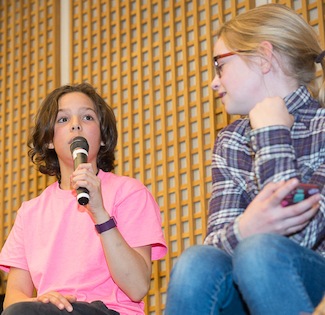
Young audience members hoped to take what they learned at the forum about the immigrant experience and share it with those who could not attend the event. (photo from SUCCESS)

At the facilitated discussion for Call for Actions, a group of young audience members raised questions on how they could share the knowledge they learned at the forum with those who were not able to attend.

SUCCESS will be launching a series of community roundtables across Metro Vancouver. These facilitated conversations will create a platform for community members to share and reflect on thoughts on diversity and inclusion, while engaging them in thought-provoking discussions regarding cultural integration in our community – to build safe, strong and enlightened neighbourhoods. Each session will be held at one of SUCCESS’s local offices or another accessible community location.

SUCCESS will also create a documentary video, featuring interviews with immigrants and community leaders, about the value and contributions of immigrants in Canada. The video will be distributed through multiple channels, including a special screening video launch, online and social media networks, and grassroots outreach through high schools and universities to help educate future generations about the stories of immigrants in Canada, who we are and where we are from.

Condemning bigotry

A group of people gathered outside a Toronto mosque last Friday carrying signs reading “Ban Islam” and “Muslims are terrorists.”

The idea that a group of Canadians would stand outside a place of worship and call for an entire religion to be banned is an act so bigoted that it deserves universal condemnation. This was not, it needs to be noted, a protest against a particular statement, like that of an imam in Montreal who recently issued a call to “destroy the accursed Jews.” When clergy or places of worship enter the realm of hate speech, calling them out is legitimate. Standing outside a mosque demanding that Islam be “banned” is an affront to our country’s constitution and values.

Of course, among this country’s values and central to our constitution is free expression. There is the inevitable balance between free expression and expressions of hatred, a balance that courts are occasionally called upon to discern.

That balance is the subject of debate – some of it extremely unpleasant – as a result of a parliamentary motion, M-103, before the House of Commons this week.

Partly as a result of the horrific murder of six worshippers in a Quebec City-area mosque Jan. 29, Toronto Liberal MP Iqra Khalid made a motion to “recognize the need to quell the increasing public climate of hate and fear” and to “condemn Islamophobia and all forms of systemic racism and religious discrimination.”

Some opponents, including Conservative MPs, have raised concerns that condemnation of “Islamophobia” could stifle legitimate conversations about Islam and the relationship between terrorism and extreme elements of the religion. Others, like National Post columnist Rex Murphy, take issue with the very term Islamophobia, which suggests fear, an emotion that may or may not be the primary concern here.

A similar issue we struggle with is the term “antisemitism,” which does not always seem to suit discrimination. Many prejudices about Jews are unconscious, therefore not necessarily consciously “anti”-anything. Moreover, many stereotypes about Jews involve “positive” attributes. But “All members of this group are awful” or “All members of this group are awesome” are simply flip sides of the same coin of prejudice.

In any event, these are the words that have come into common parlance and this is the nomenclature with which we are dealing. And the “debate” around this current motion is startlingly reminiscent of a similar debate over condemning antisemitism that took place two years ago almost to the day. Some expressed concern that criticism of Israel could become illegal, while others insisted singling out antisemitism was unnecessary, since we already have laws against the promotion of hatred against identifiable groups. The stifling of criticism of Israel was nonsense, of course, as are fears that “creeping Sharia” or banning condemnation of Islamist terrorism will somehow become enshrined in law due to M-103. When a particular group in Canada experiences a surge in negative expressions toward them, it is right that elected officials note and condemn it.

It is wise to remember what M-103 is in the first place. It is a parliamentary motion that is more a statement of wishful thinking than of law. As such, it seems the perfect tool for a message against Islamophobia. We do not need to criminalize all manner of expression, even when it borders on hateful or discriminatory. But it is a fine thing indeed for our elected officials to express their opposition to it, as the elected voice of Canadians.

Of course, they do not speak for all Canadians. There are Canadians, like those who protested at the mosque last week, who are openly expressing anti-Muslim attitudes. They would presumably not support a motion that wishes such attitudes were not part of the national dialogue.

Likewise, the obscene and hateful messages, including death threats, received by some of M-103’s proponents contradicts the argument that anti-Muslim attitudes are not a significant force to address in Canada. A poll released this week suggesting that one in four Canadians would agree with a Trump-style travel ban on people from Muslim-majority countries is another signal.

There can be no doubt that Islamophobia, or whatever we want to call it, is a problem of some proportion in Canada. We should call it out, as should our elected officials. The arguments against the motion should be particularly familiar to Jewish Canadians, who heard similar lines around condemning antisemitism. The vocal opposition to the very idea of condemning any particular form of bigotry should itself be evidence that Canadians and our elected officials should rise to the occasion.