Skip to content
  • Home
  • Subscribe / donate
  • Events calendar
  • News
    • Local
    • National
    • Israel
    • World
    • עניין בחדשות
      A roundup of news in Canada and further afield, in Hebrew.
  • Opinion
    • From the JI
    • Op-Ed
  • Arts & Culture
    • Performing Arts
    • Music
    • Books
    • Visual Arts
    • TV & Film
  • Life
    • Celebrating the Holidays
    • Travel
    • The Daily Snooze
      Cartoons by Jacob Samuel
    • Mystery Photo
      Help the JI and JMABC fill in the gaps in our archives.
  • Community Links
    • Organizations, Etc.
    • Other News Sources & Blogs
    • Business Directory
  • FAQ
  • JI Chai Celebration
  • JI@88! video

Recent Posts

  • Story of Israel’s north
  • Sheltering in train stations
  • Teach critical thinking
  • Learning to bridge divides
  • Supporting Iranian community
  • Art dismantles systems
  • Beth Tikvah celebrates 50th
  • What is Jewish music?
  • Celebrate joy of music
  • Women share experiences 
  • Raising funds for Survivors
  • Call for digital literacy
  • The hidden hand of hate
  • Tarot as spiritual ritual
  • Students create fancy meal
  • Encouraging young voices
  • Rose’s Angels delivers
  • Living life to its fullest
  • Drawing on his roots
  • Panama City welcoming
  • Pesach cleaning
  • On the wings of griffon vultures
  • Vast recipe & story collection
  • A word, please …
  • מארק קרני לא ממתין לטראמפ
  • On war and antisemitism
  • Jews shine in Canucks colours
  • Moment of opportunity
  • Shooting response
  • BC budget fails seniors
  • Ritual is what makes life holy
  • Dogs help war veterans live again
  • Remain vital and outspoken
  • An urgent play to see
  • Pop-up exhibit popular
  • An invite to join JWest

Archives

Follow @JewishIndie
image - The CJN - Visit Us Banner - 300x600 - 101625

Long-forgotten chapter: 1942’s Operation Torch

Long-forgotten chapter: 1942’s Operation Torch

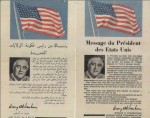
A message from U.S. Gen. Dwight Eisenhower to the people of Casablanca, found on the street of that city in 1942. (image from commons.wikimedia.org)

In the wake of invasion and military defeat in the summer of 1940, Adolf Hitler and the French government in Vichy, now headed by Marshal Pétain, concluded an armistice by virtue of which France was divided into an occupied zone and a non-occupied zone. The conditions imposed by Germany were at first relatively lenient: the French government retained partial autonomy in the occupied north and full autonomy in the non-occupied south. Vichy also retained varying degrees of control over the French colonial empire: while Algeria remained under direct French rule, Morocco and Tunisia had the status of protectorates under their native rulers supervised by France. In Morocco, King Mohammed V defied France by refusing to apply Vichy’s antisemitic laws. In Tunisia, Gestapo and SS followed Erwin Rommel’s army and, in 1942, rounded up the Jewish population for deportation to the Nazi death camps.

In the spring of 1942, strong disagreements among the Allies came to light in regard of the strategy to adopt against Germany. While President Franklin Roosevelt initially leaned in favor of Josef Stalin’s insistent demand for a landing in Western Europe in 1942, in the end, he reluctantly rallied to Prime Minister Winston Churchill’s view that such a landing at that time could not possibly succeed. He believed that the Allies would not be ready for this risky operation until late in 1943, or even 1944. Churchill proposed that, instead, an Allied landing be staged in North Africa, in order to deny Germany and Italy full control over the Mediterranean and compel Rommel’s army, which was retreating from Libya, to fight on two fronts.

In preparation for this operation, the Americans entered into secret contacts with the anti-Vichy underground in Algiers to enlist its assistance in the landing, albeit with some reluctance since the United States still recognized the legality of the Vichy government with which it maintained diplomatic relations.

Such is the background of Operation Torch placed under the command of Gen. Dwight Eisenhower. On the morning of Nov. 8, 1942, a mostly American fleet of more than 100,000 men landed under air cover on the coasts of Morocco and Algeria. Three days later, the Germans violated the armistice of 1940 and invaded the southern zone of France in collaboration with the Italians.

In the port of Algiers, the landing was greatly facilitated by the local resistance, composed in the main of young students, who effectively sabotaged the communications of the local French military, seized public buildings and even arrested two of the top commanders: Admiral François Darlan, Pétain’s former prime minister, and Gen. Alphonse Juin. It is important to note that two-thirds of these 400 young resistance fighters were Jews. The French authorities in Algeria were fanatically devoted to Vichy and so zealous in the implementation of that regime’s antisemitic legislation, that they established internment camps in the Sahara in preparation for the round-up and deportation of the Jewish population to the death camps of Europe. Vichy also deprived the 116,000 Jews of Algeria of the French citizenship that had been awarded them in the 19th century.

What happened after the Allied landing is simply shocking. The young Jews, whose support facilitated the capture of the Algerian capital, were abandoned to whatever fate had in store for them. Instead of handing North Africa to the control of the Free French Forces organized by Gen. Charles de Gaulle from London, the Americans allowed Vichy’s stooges to remain at the helm.

What happened after the Allied landing is simply shocking. The young Jews, whose support facilitated the capture of the Algerian capital, were abandoned to whatever fate had in store for them. Instead of handing North Africa to the control of the Free French Forces organized by Gen. Charles de Gaulle from London, the Americans allowed Vichy’s stooges to remain at the helm.

Roosevelt despised de Gaulle and his Free French Forces, and chose to place in command of the French army of North Africa, whose commanders, including Darlan, resented Germany’s violation of the armistice of 1940, the semi-Vichyste Gen. Henri Giraud. The young anti-Vichy fighters were for the most arrested and interned in the Sahara. Some of them narrowly avoided being executed. The Vichy laws remained in force. De Gaulle eventually rallied a number of generals in charge of colonial troops in French Equatorial Africa and arrived in May 1943 in Algiers, where he established the authority of Free France, invalidated the Vichy laws, and restored to the Jews their French citizenship.

Unfortunately for those of us who grew up revering him, Roosevelt’s connivance with Giraud and Vichy’s military commanders, and politicians in Algeria who had conveniently changed sides, was not the only instance of his betrayal of the hope that our people had pinned on him during the dreadful years of the Shoah. As for de Gaulle, the sympathy that he expressed for the suffering of our people at the time of the liberation of France and his sadness-filled admonition to his Jewish soldiers in the Free French Forces that antisemitism was not dead, were expressions of a friendship, which unfortunately did not survive the temptations of realpolitik and opportunism. On the morrow of Israel’s victory in the Six Day War of 1967, de Gaulle labeled the Jews a “proud and domineering people” and turned France from an ally into an enemy of Israel.

It took nearly half a century for the Jewish resistance in France to win official recognition; for the members of the Jewish communist urban underground, even longer. The Jewish contribution to the liberation of French Algeria is only now beginning to be written about.

René Goldman is professor emeritus at the University of British Columbia.

Format ImagePosted on January 17, 2014March 31, 2014Author René GoldmanCategories Op-EdTags Alphonse Juin, Charles de Gaulle, Dwight Eisenhower, François Darlan, Franklin Roosevelt, Free French Forces, French Algeria, Henri Giraud, Marshal Pétain, Operation Torch, resistance fighters, Vichy, Winston Churchill

Stamp collector Ed Kroft wins awards

Collect postal history and you learn not just how mail has traveled in years past, but also how people lived and functioned. Just ask Ed Kroft, a collector and historian of postal history from Israel who was recently awarded the 2013 Leslie Reggel Memorial Award by the Society of Israel Philatelists (SIP) for his outstanding contributions to Israel philately.

photo - Ed Kroft
Lawyer Ed Kroft, an avid stamp collector, was granted the 2013 Leslie Reggel Memorial Award by the Society of Israel Philatelists.

Kroft is a Vancouver tax lawyer and ardent collector of postal history who started collecting stamps at the tender age of 10. “My teacher at Associated Hebrew Day Schools in Toronto, Ed Deutsch, would bring his stamp collection to school to show us, and he focused on the stamps of Israel,” he recalled. “We formed a stamp club at school and later, I worked at a stamp store to put myself through university.”

Stamp collecting has changed significantly over the years, as many people have moved from soaking stamps off the paper they were used on, to collecting postal history and learning to understand the postmarks and information on the envelopes that contain those stamps.

“Postal history tells a story about how mail has traveled, which requires you to learn about the area, the population, how to read postmarks and envelopes,” he said. “The beauty of collecting postal history as opposed to collecting stamps is that you’re collecting different pieces of mail and trying to describe the history of the postal services.”

In a room filled with bookshelves containing the vast collection he’s amassed, Kroft has binders containing mail that originated in Israel but was destined for many different corners of the world, from New Zealand and Australia to South Africa, Argentina, the Caribbean islands, Brazil and Chile.

“As a Jew, I care about this because it’s interesting to see where Jews were at that time,” he said. “This collection gives me connections to Jewish culture and identity, Jewish history, geography, events, places, buildings and customs. This is part of our heritage, and we can’t let this history disappear.”

Kroft’s collection of mail from the Holy Land dates from the 1870s to the present day. From one binder, he pulled out an envelope inscribed by Ze’ev Jabotinsky to one of his relatives in 1918, and another written to Jabotinsky by his mother. There’s an envelope written by Captain Joseph Trumpeldor and another by Sir Moses Montefiore. While the letters are often no longer in those envelopes, the envelopes offer evidence about the passage of mail, Kroft explained.

The Society of Israel Philatelists is a nonprofit dedicated to studying and promoting Israel philately, with members all over the world. Kroft joined SIP in the mid-1970s and has been an active member ever since, currently serving as its president.

“My collection of Holy Land philately has helped me make many friends around the world who have common interests,” he said. “It’s taught me a lot about Judaism and brought to life things I learned when I was much younger.”

His collections include the history of Rishon LeZion from settlement through statehood, 1882-1948, a history of prisoners of war in 1948-1949, and the history of the Carmel Wine Co., among others. Each one tells a story through postal history, a story about which Kroft is passionate, eager to learn more about and committed to teaching others. “I’m honored to win the award,” he said. “The people who preceded me were extremely knowledgeable and great collectors.”

For now, he is intent on keeping the future of SIP bright by spreading information about its members and their work, and he is hoping to attract new collectors to its ranks.

Kroft will be speaking on The Relevance and Enjoyment of Philately, the Hobby of Stamp Collecting, to Jews in the 21st Century, on Jan. 30, 7:30 p.m., at Temple Sholom Synagogue.

Lauren Kramer, an award-winning writer and editor, lives in Richmond, B.C. To read her work online, visit laurenkramer.net.

Posted on January 17, 2014May 1, 2014Author Lauren KramerCategories LocalTags Leslie Reggel Memorial Award, Society of Israel Philatelists, Temple Sholom Synagogue

New York shows Marc Chagall

Seeing the Chagall show at the Jewish Museum in New York made me recall the year when Marc Chagall (1887-1985) was 90 and I decided it was high time that he, my favorite Jewish artist, and I meet. But first let me tell you about the current Chagall exhibit.

Until Feb. 2, lovers of Chagall’s works can see a fine selection of his paintings that were done between the early 1930s and 1948. Titled Love, War and Exile, the exhibit of 31 paintings, 22 works on paper and assorted photos and letters have been drawn from various public and private collections.

For me, Chagall was the ultimate Jewish artist of the 20th century. He combined artistic intelligence, vivid imagination, sensitivity to and awareness of Jewish history, and deep-rooted Jewish knowledge, based on his early education and the ambience of his Chassidic family in Vitebsk, Russia. Moreover, his knowledge of Yiddish and Yiddish lore expressed itself in many of his works.

Chagall’s colorful and fantastic paintings, with lovers in the air, suspended candelabras, a disembodied painter’s palette, roosters, flower-bedecked cows and snow-covered villages are seen in plenitude. In this show, there are also many crucifixion scenes, for Chagall saw the Jesus figure as representative of the martyrdom of the Jewish people during the 1940s. He himself, his beloved wife, Bella, who figures in so many of his paintings, and his daughter, Ida, were fortunate enough to escape from France and come to the United States in June 1941. The war in Europe was raging and it was just several months before the United States entered the battle in December 1941.

Chagall’s depictions of Jesus invariably have him wearing either a tallis or a tallis-like loincloth, thereby accenting his Jewishness. Although some viewers conclude that it is only during the l940s that Chagall began to paint Jesus on the cross, Chagall painted Jesus as early as 1908, when he was in his late twenties.

To understand Chagall’s works, especially those that are related to thoroughly Jewish themes, a deep understanding of the Yiddish language and Jewish culture are needed. Alas, even museums, which supposedly have knowledgeable staff, err in their interpretation because of ignorance.

To understand Chagall’s works, especially those that are related to thoroughly Jewish themes, a deep understanding of the Yiddish language and Jewish culture are needed. Alas, even museums, which supposedly have knowledgeable staff, err in their interpretation because of ignorance.

A classic example is his painting “Over Vitebsk” (not in this show), which depicts a village and its rooftops, and over the houses floats a bearded figure, with cap and cane, holding a stuffed sack. I remember visiting a museum once with my father, Yakov, and seeing this famous Chagall painting. The curator went to great lengths describing the scene. Reading this banal description, my father laughed and said, “They don’t understand this painting because they don’t know Yiddish and they don’t know Yiddish folk expressions. What Chagall is doing here is visualizing a Yiddish phrase: ‘geyen iber dee hizer’ – ‘going over the houses’ – an expression that actually means ‘going from house to house begging.’”

So, then, without a knowledge of Yiddish lore, Chagall’s brilliant rendering of this scene is misunderstood. What was mistaken as a typical Chagall “floating” scene is actually a rendering of a Jewish beggar going from house to house, as Jewish beggars did all over Eastern Europe, trying to collect food to put in their sacks.

In this show, too, we have one of Chagall’s crucifixion scenes in a shtetl, where there is a huge fire on the left side of the painting. The description on the little card says that it is a kind of crossing of the Red Sea. However, in reality, it is Chagall’s depiction of the Holocaust, a visual rendering of the Yiddish expression “mayn shteytl brent” – “my town is burning.”

I don’t know if the Jewish Museum’s administration is aware of the coincidence, but in the room that shows many of the artist’s crucifixion canvases there is a rather large cross-shaped blue sofa where visitors can sit and view the paintings.

One of the most fascinating parts of the show for me was the Yiddish letter that Chagall wrote to the mayor of Tel Aviv, accepting an invitation to visit. His calligraphy is clear and beautiful, showing the early schooling he had in writing the Hebrew letters, and his Yiddish is fluent and evocative. After all, he is a native Yiddish speaker. On view too is a letter to Hermann Struck, to whom Chagall writes that he hopes his visit will be beneficial to his art. Struck is identified merely as a “printer.” Missing from the description is the fact that Struck himself was a noted artist, who wrote a definitive book on etching. Moreover, Struck was a former teacher of Chagall.

Accompanying this show is a comprehensive catalogue, co-published by Yale University Press, entitled Chagall: Love, War and Exile. In addition to the paintings on view, the book also has many other related paintings, an English translation of some of Chagall’s Yiddish poems, and photographs. One particularly engaging photo is one of Chagall sitting in front of his painting of Bella, right next to Bella herself, who poses wearing a black dress with lace collar and holding a white lace fan.

Now I’ll return to getting to see Chagall in St-Paul-de-Vence, a small town not too far from Nice, in the Provence region of southern France. To see a very private artist, whose visitors were controlled by his managerial second wife, Vava, was not easy. For such an attempt one needs, as the Israeli expression has it: proteksia – or “pull.” I knew the then president of Hadassah, Miriam Freund, who had worked closely with Chagall when that organization commissioned Chagall to make the stained glass windows for the famous Hadassah Hospital synagogue in Jerusalem.

I explained my wish to Miriam, who gladly said she would try to be helpful. She gave me Chagall’s phone number and preceded it with a call to Chagall, telling him that an American writer would like to visit him. She told him that I knew Yiddish, and stemmed from a family whose origins were in Russia. And then she told him one more crucial fact that I had told her might clinch the acquiescence. I knew that Chagall’s first wife, Bella Rosenfeld, stemmed from a family named Levant, which was Bella’s mother’s maiden name. I asked Miriam to accent the fact that our family name, Leviant, might very well be connected to Bella’s family. Miriam also mentioned that I would be in Switzerland during the summer.

In short, Miriam was told that when I was in Europe I should call Chagall’s house. I couldn’t wait. Soon as I arrived in a little town in Switzerland, I dialed the number that Miriam had given me. A woman answered the phone, probably Chagall’s wife, Vava. I introduced myself, told her I had gotten the phone number from Miriam Freund of Hadassah, and hoped I could make the visit to see Chagall, since in a couple of weeks we would be in Nice, and would actually be in the town of St-Paul-de-Vence.

The reply was a very brief message in French: “The master [le maître] is not accepting visitors.”

And, so, that was the end of my Chagall adventure. In person, but not on museum walls.

The final irony of Chagall’s long and productive life is that the Jewish painter – who throughout his long life encapsulated Jewish themes, Jewish imagery, Jewish expressions and Jewish religiosity – was buried by his second wife, Vava (herself a Jew, from a noted Russian Jewish family), in the local Catholic cemetery in St-Paul-de-Vence.

Curt Leviant’s most recent book is the short-story collection Zix Zexy Ztories.

Posted on January 17, 2014March 31, 2014Author Curt LeviantCategories Arts & CultureTags Bella Rosenfeld, Chagall: Love, Jewish Museum of New York, Marc Chagall, War and Exile, Yiddish
Mystery photo … Jan. 10/14

Mystery photo … Jan. 10/14

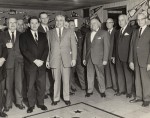
State of Israel Bonds parlor meeting, men’s group, Vancouver, B.C., 1964. (JWB fonds, JMABC L.14507 )

If you know someone in this photo, please help the JI fill the gaps of its predecessor’s (the Jewish Western Bulletin’s) collection at the Jewish Museum and Archives of B.C. by contacting [email protected].

Format ImagePosted on January 10, 2014July 23, 2014Author JI and JMABCCategories Mystery PhotoTags Jewish Museum and Archives of British Columbia, Jewish Western Bulletin, JMABC, JWB, State of Israel Bonds
This week’s cartoon … Jan. 10, 2014

This week’s cartoon … Jan. 10, 2014

For more cartoons, visit thedailysnooze.com.

Format ImagePosted on January 10, 2014April 16, 2014Author Jacob SamuelCategories The Daily SnoozeTags Jacob Samuel, thedailysnooze.com, woolly mammoth

Nicholas Winton’s kindertransport

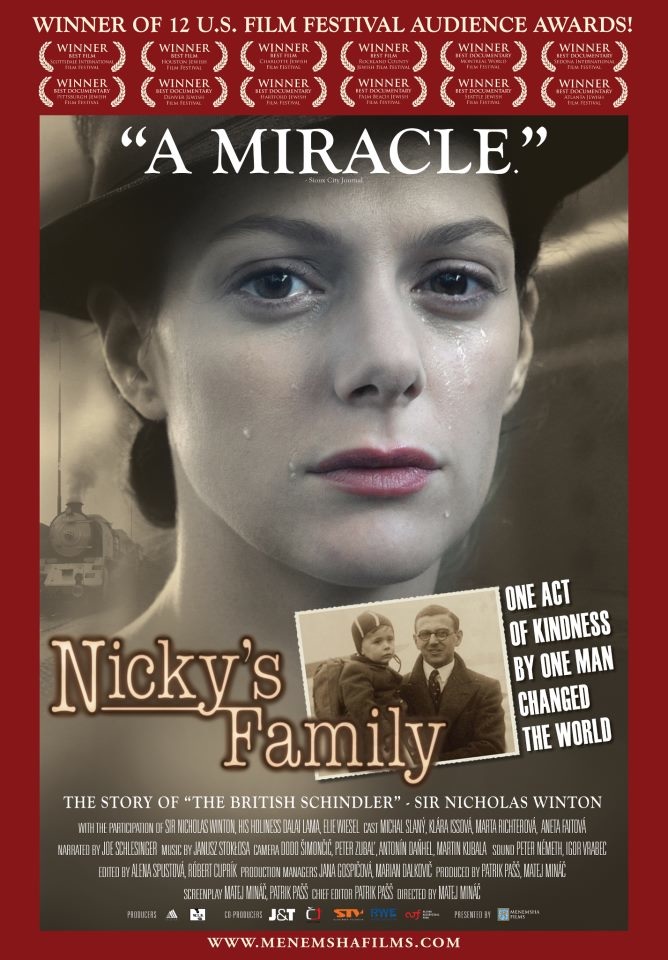
The Wallenberg-Sugihara Civil Courage Society will mark Vancouver Raoul Wallenberg Day on Jan. 19 with the screening of the documentary Nicky’s Family, about Holocaust hero Nicholas Winton.

Now 104 years old, Winton lives in England (where he was born). The story of his heroism during the Holocaust starts in 1938, when he was a stockbroker. Receiving a letter from a friend in Prague about the plight of Jews in German-occupied Czechoslovakia, he traveled there to assess the situation for himself. Shocked at what he witnessed, he established an organization to aid children from Jewish families, setting up office in his hotel room in Prague, from which he eventually expanded.

poster-Nicky's Family
Nicky’s Family will be screened in Vancouver on Jan. 19.

The director of Nicky’s Family, Matej Minac, said in an interview on Czech Radio in 2003: “When he came here to Prague, and wanted to rescue all these children, and he had a plan how to do it, everybody was telling him – you know, it’s absurd. You can never manage it. The British won’t let the children in. The Gestapo won’t let the children out. You don’t have the money, so how do you want to do it? It’s crazy. And Winton said that anything that is reasonable can be achieved.”

After Kristallnacht, in November 1938, the British Parliament approved the entry of refugees younger than 17 into the country, if they had a place to stay and a warranty was paid. Knowing this, Winton left his friends in Prague to manage the gathering of the children there and returned to London, where he started a campaign to find foster homes and the necessary guarantees for as many children as he could.

Winton also organized for the Jewish children to be transported on trains and then on to ferries to England, where the foster families met them. The operation later became known as the Czech Kindertransport. It lasted until the official start of the Second World War on Sept. 1, 1939, by which time 669 of “his children” had arrived in England. He kept records of the names and addresses of the children, their parents and their foster families. Most of the Jewish parents in Prague perished during the Holocaust.

Winton never told anyone of this enterprise. Fifty years after the fact, his wife found a suitcase in the attic with all his wartime documentation. She contacted the BBC, and they sent letters to the addresses of the foster families. Several dozen people responded. Most of them didn’t know the identity of their rescuer. His “children” and their children and grandchildren now number more than 6,000.

A 1988 TV program about the reunion of Winton and dozens of the children he had saved started a snowball of recognition; among the honors, Winton was knighted by Queen Elizabeth II.

In the late 1990s, Minac was searching for a theme for his next film. The Czech director read Pearls of Childhood by Vera Gissin, in which she mentions Winton and his rescue operation.

“I was astonished,” said Minac in the aforementioned radio interview. “That’s exactly what I needed for my story. I wrote a film treatment and I asked one lady, Alice Klimova, whether she could translate it into English. She said: ‘Matej, I think you have a few mistakes in your treatment, especially the scene in the train station, when the children are leaving for Britain.’ I said: ‘How do you know?’ And she said: ‘I know because I was one of those children, of Winton’s children…. I was only four-and-a-half years old. I don’t remember it so well. Why don’t you call Nicky, Nicky Winton?’ And I said: ‘How do you mean Nicky Winton? He’s still alive?’ She said: ‘Yes. He’d be very happy to talk to you, he’s a nice person, and I’m sure he would help.’ Two months later, I visited Nicky. We spent a beautiful afternoon together, and I knew that I can’t do only one film … but I will have to do also a documentary….”

In the end, Minac made three movies about Winton: one feature, All My Loved Ones (1999), the documentary The Power of Good: Nicholas Winton (2002), which won an Emmy Award, and Nicky’s Family (2011), which includes reenactments and never-before-seen archival footage, as well as interviews with Winton and a number of those he rescued.

The Wallenberg-Sugihara Civil Courage Society, which is hosting the Nicky’s Family screening and reception here, incorporated in April 2013, Deborah Ross-Grayman, one of the society’s founding members, told the Independent. “This was the natural outgrowth of the Raoul Wallenberg Day event, which began in 1986 with the placement of a plaque in Queen Elizabeth Park. It was revived on the 20th anniversary in 2006, as a cooperative event sponsored by the honorary Swedish consul, Anders Neumuller, and the Vancouver Second Generation Group…. We formed the society in order to be able to formally present an award for civil courage, and so acknowledge and support such heroic acts today.”

She added that approximately 50 diplomats from different countries risked their lives and careers to save the lives of Jews during the Second World War. “We have shown films highlighting the acts of Wallenberg, Sweden, and Chiune Sugihara, Japan, [whose visa saved Ross-Grayman’s mother’s life] as well as people from Chile, Portugal and Spain. Wallenberg saved approximately 100,000 people and Sugihara saved approximately 6,000. Their names stand as a symbol for all such courageous and heroic acts.”

Nicky’s Family will screen at the Jewish Community Centre of Greater Vancouver’s Rothstein Theatre on Jan. 19 at 1:30 p.m.

Olga Livshin is a Vancouver freelance writer. She can be reached at [email protected].

Posted on January 10, 2014March 28, 2014Author Olga LivshinCategories LocalTags Deborah Ross-Grayman, kindertransport, Kristallnacht, Matej Minac, Nicholas Winton, Nicky's Family, Pearls of Childhood, Raoul Wallenberg Day, The Power of Good, Wallenberg-Sugihara Civil Courage Society

Complexities of human sexuality

Some people still act as if same-sex attraction were a crime or, at least, an abomination and ought, therefore, not be tolerated. Russia, for example, recently announced that it will not permit any of its orphaned children to be adopted by people living in jurisdictions recognizing homophilic marriages, thereby ensuring that they will not end up in any of the more liberal democracies, including Canada. Perhaps this is based on the supposition that homosexual adoptive parents will somehow transmit their sexual preference to their charges, although there is no evidence that such attraction is a learned behavior, nor, indeed, that it is inherited. And, in either case, why should it be anathematized? It evidently does not harm consenting adults and becomes a crime only if we insist that it is.

For as long as there has been human heterosexuality, there has also been homosexuality. Overwhelming psychological and historical evidence demonstrates that same-sex attraction has been a consistent feature of human society, going back at least to the earliest days of antiquity, and that it harms no one who does not, somehow, insist on being “harmed.” The only people who may suffer are homosexuals themselves who, if they live in a bigoted environment, often have to conceal their sexuality or face expressions of disapproval, including imprisonment and violence, especially if they are men; female homosexuality seems more widely accepted.

There is no mention of homosexuality in the Christian Testament. The Jewish Testament, while decrying homosexuality between men, makes no mention of sexual attraction between women, which certainly existed.

God’s destruction of Sodom was allegedly a consequence of what is described as its “depravity,” (Genesis 13:10) interpreted as sodomy, a word still appearing in some criminal codes and defined as “the unnatural sex acts between two men.” (This became the basis for a criminal indictment in the notorious 1896 trial of Oscar Wilde, which my 1929 edition of Encyclopedia Britannica describes as “moral obliquity.) But Sodom was more likely destroyed because it was notoriously inhospitable to strangers, its sole survivor being Lot, the city’s only cordial resident. (And his wife, who shortly thereafter turns into a pillar of salt because she disobeyed God’s order by looking backward at the doomed city. As a side note, while Lot exhibited remarkable concern for his male guests, that evidently did not extend to his daughters, whom he offered to the mob.)

Leviticus is more explicit. In 18:22, it states: “Thou shalt not lie with mankind as with womankind; it is an abomination.” This inveighing against homosexuality was likely occasioned not by presumed morality, but rather as a consequence of a far more important remonstrance, viz., “Be fruitful and multiply” (Genesis 1:28), a demographic imperative necessitated by competition among various peoples, some of them more numerous than the Israelites, in the Fertile Crescent of Canaan. The “sin” of Onan (Genesis 38:9), for example, has been interpreted as not being simply that he cast his semen on the ground in coitus interruptus with Tamar, his widowed former sister-in-law, but that he subverted God’s command to “be fruitful and multiply.”

Much effort has gone into uncovering the underlying causes/motivation(s) for homosexuality. Theories have ranged widely, yet none has adequately explained same-sex attraction in spite of its apparent inevitability among persons of both genders, its long history, and its observed appearance in non-human species. 

Much effort has gone into uncovering the underlying causes/motivation(s) for homosexuality. Theories have ranged widely, yet none has adequately explained same-sex attraction in spite of its apparent inevitability among persons of both genders, its long history, and its observed appearance in non-human species. Moreover, there may not be a single cause, but rather a constellation, perhaps including social, hormonal, genetic and environmental factors and, furthermore, one ought not assume that explanations for male homosexuality, no matter how cogent, can be extended to female homosexuality (lesbianism). To place this in perspective, the causes of heterosexuality, while it is evidently the norm and can result in progeny, are also not clear, although convention, conditioning and an impulse toward parenthood must be counted prominently among them.

In our current more-accepting environment, many homosexuals have “come out of the closet.” But we may never know the full extent of homosexuality because in disapproving social-cultural environments, even its self-acknowledgement may be difficult. Indeed, in many jurisdictions, homosexual behavior is still criminal, although its practitioners are rarely indicted. Far more common is that suspected homosexuals, especially men, have been the targets of blackmail, violence and murder. Even when the public is more tolerant, there is no uniform level of acceptance, so often homosexual relations are still clandestine for fear of the reaction of relatives, employers, fellow workers and others, including heterosexual spouses. “Coming out” by formerly “closet homosexuals” is still a life-changing and challenging experience. Consequently, public homosexual behavior still is dependent on local acceptability. What is permitted, for example, in Vancouver or Tel Aviv, may precipitate expressions of disapproval elsewhere.

It is estimated that exclusively homosexual men constitute about five percent of the male population, with approximately twice that number being occasionally homosexual. From an anatomic, physiologic, genetic or endocrine point of view, homosexuality offers no reliable markers. It is neither entirely genetic nor developmental in origin. The level of gender-related hormone production in most homosexuals does not differ significantly from that of heterosexuals and, ordinarily, male and female homosexuals, in their usual behavior and appearance, can be indistinguishable from their heterosexual peers or, on the contrary, they may, in the case of males, become “queens,” or of females, “butch.” Indeed, who has not speculated on what life might have been like, had he or she been of the opposite gender? (Interestingly, all human fetuses start out with external genitalia apparently female. While there are no proven instances of parthenogenesis – the development without spermatozoa of a complete embryo – among people, it can occur in other mammals.)

To offer additional revealing commentary on the idiosyncrasies of human sexual behavior, approximately 270 days after every nighttime power outage lasting a few hours, there is almost invariably a small but significant blip in the number of babies born in the affected area.

To offer additional revealing commentary on the idiosyncrasies of human sexual behavior, approximately 270 days after every nighttime power outage lasting a few hours, there is almost invariably a small but significant blip in the number of babies born in the affected area. Evidently, when it comes to TV versus sex, the data suggest that the former is frequently preferred.

However, our culture, if not obsessed with sex, is obviously mindful of it. Advertisers certainly have discovered that sex sells. “Sexy” has now become an adjective that defines anything from form-fitting or revealing clothes to a more permissive tax bill. It usually implores us to be more attractive (“sexy”) by the profligate and indiscriminate purchase and use of a great variety of products. In any case, any mention or hint of sex, almost without fail, attracts attention.

Sexual intimacy plays a prominent role in the way men and women relate to one another and, to be complete, the way women relate to women and men to men. The desire for sexual intimacy can arise from many sources – the release of sexual tension (a large factor in adolescence and youth), an expression of love, reassurance of one’s sexual attraction and capability and, since we live in a largely competitive society, to keep up with the purported national average. People being as variegated as they are, there are any number of other conceivable reasons and their combinations. So, while the heterosexual form of sexual intimacy is predominant (and the only one that can now give rise to progeny), finding the reasons can be difficult because, as is the case in uncovering the motivation for any human activity, although the final common pathway can be an objective behavior, the impulses for it are never in the singular, and may be arcane, derivative and complex.

It is clear that traditional Judaism does not approve of homosexuality, although congregations, individual Jews and rabbis may have a more accepting and realistic approach. Yet, the Talmud has the virtue of candor, suggesting, for example, frequencies, according to profession, of (heterosexual) intercourse, something quite unimaginable in Christian commentary, especially when one considers the Catholic priestly vow of chastity and that the preeminent female in Christianity is considered a virgin, even after the birth of Jesus’ younger sibling(s).

When it comes to all (non-coerced) sexual behavior, former prime minister Pierre Trudeau cogently declared that “the state has no place in the bedrooms of the nation.” It’s a sensible sentiment also expressed, in pithier form and broader terms, by Jimmy Durante, a popular madcap comedian of the 1930s and ’40s, known affectionately as “The Schnozz” because of his prominent proboscis: “Leave da peepul,” he vigorously intoned, “da hell alone!”

Eugene Kaellis has a doctorate in biochemical endocrinology. He is the author of several publications, including Making Jews, on the theme of the current basic problem of Diaspora Jewry, which is available from lulu.com.

Posted on January 10, 2014March 27, 2014Author Eugene KaellisCategories LifeTags Christian Testament, homosexuality, Jewish Testament, Leviticus, Onan, sexuality, Sodom

Posts pagination

Previous page Page 1 … Page 661 Page 662
Proudly powered by WordPress