Providing mutual support

Sara Omer and her kids lost their husband/father Reuven in 2008. (photo from IMP Group)

May 1 was Yom Hazikaron (Israel Memorial Day), May 2 celebrated Yom Ha’atzmaut (Israel Independence Day) and this month marks the 50th anniversary of the Six Day War and the reunification of Jerusalem. For the widows of Israel’s fallen soldiers, who paid the ultimate price so that Jews all over the world could revel in the modern-day rebirth of the Jewish state, these anniversaries stir varying emotions.

At 94 years old, Devorah Arkin Roth is one of the country’s oldest war widows. Her husband, Mordechai Arkin, was killed while defending Hadassah Hospital in Jerusalem just weeks before the official outbreak of the War of Independence in May 1948. She shares fond memories of her husband, as she stares at the photo album of their wedding and the newborn pictures of their first child.

“He was a very talented man who wanted to go to Columbia University in New York to study physics,” she recalled. “But the deteriorating security situation in the country wouldn’t permit him to leave. He worked at Hadassah Hospital and doubled as a guard when he was killed. At the time of his death, I was already pregnant with our second child.”

photo - At 94 years old, Devorah Arkin Roth is one of Israel’s oldest war widows
At 94 years old, Devorah Arkin Roth is one of Israel’s oldest war widows. (photo from IMP Group)

Though Roth remarried and feels privileged to be a mother, grandmother and great-grandmother, she still gets the jitters each time one of her grandchildren goes into the army. “It’s difficult to see your grandchildren being drafted into the IDF [Israel Defence Forces] after what I had to endure, and even more so because one of my grandchildren was injured as well in battle,” she said.

The Six Dar War was an astounding military accomplishment, as the IDF beat back the armed forces of Egypt, Syria and Jordan – but 776 IDF soldiers lost their lives.

Pte. Yossi Mori was killed on the first day of the Six Day War (June 5, 1967) after his unit was shelled in a minefield. His widow, Dania, recalled, “We had a great group of friends and, to this day, we meet every Memorial Day at his grave. During these years, you keep going, building your home, raising children and grandchildren. You don’t just sit all day thinking about your loss, because then your life would stop.”

First Lieut. Yehuda Ram died while liberating the Golan Heights on the last day of the war (June 10). “Yehuda died when he was 23 years old and we had only been married for a year. It was young love, an innocent one,” Shoshana, his widow, remembered. “I actually came back from the war filled with guilt. Why did I survive and he didn’t? Those feelings disappeared with the years because you can’t keep living like that.”

Even in between wars, when IDF soldiers constantly train in order to be ready for the next conflagration, there are inherent dangers, which can exact a toll.

For example, Sara Omer’s world was nearly destroyed in 2008, when her husband Reuven was killed in the midst of a training exercise as part of his IDF reserve duty. She had to face life alone with her three young boys, twins Nadav and Yotam, who were 6 years old, and Guy, then 2 years old.

“The unexpected loss of my husband was indeed shocking and, when Yom Hazikaron comes around every year,” she said, “it is a difficult day for all of the widows, but my children, who are now teenagers, attend a special ceremony at the Knesset, which is both uplifting and inspiring.”

Run by widows and orphans, the IDF Widows and Orphans organization (IDFWO) creates a support network to help them through difficult times. The organization provides services that touch every aspect of their lives, from a communal bar/bat mitzvah service at the Kotel, to professional training courses.

One of the most important activities of the IDFWO is to bring together people with common experiences for mutual support. Regular retreats give widows a break and a chance to benefit from mutual understanding. The IDFWO Otzma Camps give orphans the same opportunity.

“Once a war widow, always a war widow, even if you remarry and love your second husband. The IDFWO gatherings and activities are very important for a very specific reason,” one of the widows explained. “We might not always agree with each other’s opinions about different things, but we all speak the same language and understand each other, as widows. Since we have all experienced the same loss and trauma, we can speak to each other in our language and help each other when we need to, especially on Yom Hazikaron, when we all could use a hug and a smile.”

To learn more about the IDFWO, see idfwo.org/eng.

Israel’s BDS website

Featured on israelbds.org are popular articles that describe the history of Israeli-international scientific cooperation, research that has resulted from that cooperation and the people involved, as well as links to scientific papers. (image from israelbds.org)

Building Dialogue through Science, or BDS, is the purpose of a new website, israelbds.org, which features the many and varied scientific studies that rely on close collaboration between Israeli researchers and those in different countries.

These studies range from the SESAME synchrotron, a Middle Eastern facility based in Jordan that serves life-sciences researchers from Egypt to Iran; efforts to discover the processes that lead to the stellar explosions known as supernovae, in which Israeli researchers are alerted to possible events in the California night sky; brain research; quantum physics studies; scientific archeology; and much more.

Featured on the website are popular articles that describe the history of Israeli-international scientific cooperation, research that has resulted from that cooperation and the people involved, as well as links to scientific papers.

“Building dialogue through science, rather than building walls, has always been our way of doing things,” said Weizmann Institute of Science president Prof. Daniel Zajfman. “If we are going to work against the other BDS [boycott, divest from and sanction Israel], we must do so with real information. That is the intent of the site we have created. When scientists cooperate in their research, they bring back to their countries an understanding of the ways people can work together on many levels – over and above the scientific – including respect for other cultures and a desire for peaceful coexistence. That is why we believe that cooperation between Israeli scientists and those in universities and research institutes around the globe must be preserved at all costs.”

The hope, indeed, is that anyone visiting the website will understand what the world stands to lose from cutting off ties to Israel’s researchers and preventing students and labs around the globe from benefiting from Israeli advances.

Valeria Ulisse, an Italian research student studying the development of the nervous system at the Weizmann Institute of Science sums it up: “In Italy, I was in a really good lab but I was missing something internally. I wanted to improve my knowledge, to start a new project, to change my life and I found the place to do it.”

Israeli science is open to collaboration with anyone, independent of their political opinions.

“Research thrives on the meeting of different worldviews, and it is important to preserve that freedom to meet and discuss, even with those with whom we don’t always agree,” said Zajfman.


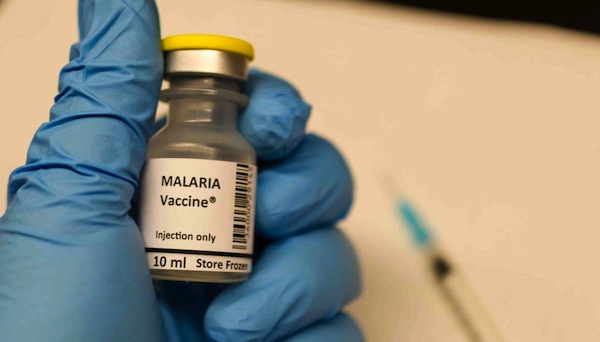
A potential malaria vaccine

A malaria vaccine based on stabilized proteins could circumvent today’s problems. (photo from wis-wander.weizmann.ac.il)

Despite decades of malaria research, the disease still afflicts hundreds of millions and kills around half a million people each year – most of them children in tropical regions.

Part of the problem is that the malaria parasite is a shape-shifter, making it hard to target. But another part of the problem is that even the parasite’s proteins that could be used as vaccines are unstable at tropical temperatures and require complicated, expensive cellular systems to produce them in large quantities. Unfortunately, the vaccines are most needed in areas where refrigeration is lacking and funds to buy vaccines are scarce. A new approach developed at the Weizmann Institute of Science, recently reported in Proceedings of the National Academy of Science, could, in the future, lead to an inexpensive malaria vaccine that can be stored at room temperature.

The RH5 protein is one of the malaria parasite’s proteins that has been tested for use as a vaccine. This protein is used by the parasite to anchor itself to the red blood cells it infects. Using the protein as a vaccine alerts the immune system to the threat without causing disease, thus enabling it to mount a rapid response when the disease strikes, and to disrupt the parasite’s cycle of infection.

Research student Adi Goldenzweig and Dr. Sarel Fleishman of the institute’s biomolecular sciences department decided to use the computer-based protein design tools they have been developing in Fleishman’s lab to improve the usefulness of this protein.

Based on software they have been creating for stabilizing protein structures, Goldenzweig developed a new way of “programming” proteins used in vaccines against infectious diseases. Such proteins, because they are under constant attack by the immune system, tend to mutate from generation to generation. So, the program she developed uses all the known information on different configurations of the protein sequence in different versions of the parasite. “The parasite deceives the immune system by mutating its surface proteins,” she explained. “Paradoxically, the better the parasite is at evading the immune system, the more clues it leaves for us to use in designing a successful artificial protein.”

The researchers sent the programmed artificial protein to a group in Oxford that specializes in developing malaria vaccines. This group, led by Prof. Matthew Higgins and Simon Draper, soon had good news: the results showed that, in contrast with the natural ones, the programmed protein can be produced in simple, inexpensive cell cultures, and in large quantities. This could significantly lower production costs. In addition, it is stable at temperatures of up to 50°C, so it won’t need refrigeration. Best of all, in animal trials, the proteins provoked a protective immune response.

“The method Adi developed is really general,” said Fleishman. “It has succeeded where others have failed and, because it is so easy to use, it might be applied to emerging infectious diseases like Zika or Ebola, when quick action can stop an epidemic from developing.”

Fleishman and his group are currently using their method to test a different strategy for treating malaria, based on targeting the RH5 protein itself and blocking its ability to mediate the contact between the parasite and human red blood cells.

For more on the research being conducted at the Weizmann Institute, visit wis-wander.weizmann.ac.il.

Being a woman in the IDF

From left to right, Staff Sgt. Maya, Sgt. Noam and Brigadier General (Res.) Gila Klifi-Amir at a Friends of the Israel Defence Forces program April 3 in New York City. (photo by Shiryn Ghermezian)

Israel’s female soldiers seem to break barriers on a consistent basis. In January, new figures revealed that the number of women serving in combat roles in the Israel Defence Forces’ Homefront Command is up 38% this year. Last month, the IDF launched a pilot program in which women will be trained as tank operators for the first time.

Indeed, the Jewish state takes pride in being an oasis for gender equality in a Mideast region largely bereft of women’s rights, and this attitude extends to Israel’s military. At the same time, for a nation facing ever-present security threats both internally and on its borders, gender equality has its limits.

“The mission of the army is to protect and win. We need to understand that the mission of the army is not equal opportunity,” Brigadier General (Res.) Gila Klifi-Amir, who has had a 30-year career with the IDF and served as an adviser on women’s issues to the military’s chief of staff, said April 3 in New York City.

Klifi-Amir moderated a discussion with three female Israeli soldiers – Sgt. Noam, Staff Sgt. Maya and Staff Sgt. Y, whose full names were withheld for security reasons – in a program hosted by the Young Leadership Division of Friends of the Israel Defence Forces, a nonprofit whose mission is “to provide for education and well-being” of IDF soldiers.

The soldiers on the panel all told JNS.org they have never felt discrimination for being a woman in the military, and that their male counterparts treat them with respect. Y described the interactions as “very, very professional,” and Maya – who commands an infirmary at her battalion’s headquarters – explained, “We train with the guys, we do everything like them. Inside the unit, everything is the same.”

Israel is the world’s only country where military service is obligatory for women. From ages 18-26, women must serve two years in the military – with some exceptions, such as if they are pregnant. Today, 95% of the IDF’s positions are available to women, according to Klifi-Amir.

Yet “equal opportunity” does not exist in the purest sense, the soldiers said. Klifi-Amir told the crowd she does not believe all military positions should be open for women, depending on the mission. The physical training required for some military roles may be too grueling for a woman’s body, and the IDF is responsible for the life of each soldier, she said.


Read more at jns.org.

Planning longest pipeline

Prime Minister Binyamin Netanyahu meeting with Noble Energy executives in the Prime Minister’s Office on April 3. (photo from IGPO via Ashernet)

About 20 years ago, natural gas was found off the Mediterranean coast of Israel. Conservative estimates put the reserve at more than 40 trillion cubic feet of natural gas. It was found by U.S. company Noble Energy, which has invested more than $6 billion to develop these natural resources. Israel, Cyprus, Greece and Italy are now considering how a pipeline could be built by 2025, and they have signed a memorandum of understanding that will see the world’s longest under-sea natural gas pipeline. At an estimated cost of about $7 billion, the privately financed pipeline will run for some 2,200 kilometres. Turkey has also indicated an interest in being connected to the pipeline in the future.


Using film school as therapy

From Ma’aleh School of Television, Film and Art, standing, from left to right, are Asher Lemann, David Cohen, Chanan Ariel, Ofir Shaer, Yosef Baruch Kalangel and Nachum Lemkus. Sitting, from the left, are Keren Hakak, Menachem Assaraf and Shalom Sarel. (photo from Ma’aleh)

When a major donor came to Neta Ariel, director of Ma’aleh School of Television, Film and Art, with an offer to provide scholarships as long as the students give back to the community, Ariel accepted the challenge.

“Ma’aleh is located in the centre of Jerusalem and, unfortunately, there are a lot of social issues,” Ariel told the Jewish Independent. “For example, lots of high school-age teens walk the streets or, during the night, use drugs and live on the streets. So, my students tried to help them – we knew a few of them, and we invited them to come to the school once a week for two hours in the afternoon to learn about film.”

The students at Ma’aleh became mentors, encouraging the teens to bring their own stories to life through the materials. Another group – comprised of immigrants from Ethiopia – also works with the students.

“Tell your story,” said Ariel of the most important aspect of the program.

“At the end of the year,” she said, “when we screened the movie for the group, teacher, friends … it was an amazing thing. They [had] left high school, or the family didn’t want them; they felt like they’re losers and didn’t have self-confidence. When we had the screening and their family or friends came, they really appreciated them. And the film gave them hope. We thought, the making of the film was not only fun, it was a teaching tool to uplift them and our students.”

Through learning how to film, from making personal connections and from telling their stories – which often included trauma or conflict, from rape, violence and negative treatment to gender or sexual orientation issues – they began to heal.

For most participants, it was their first encounter with therapy.

“Most of the time, at the end of the day, after the project was done, they shared with us that this is the first time they’d dealt with this,” said Ariel. “This was their way to tell the society, family or friends that this is their story and what I suffer from.”

From these beginnings, the school developed a curriculum for the program and, with each passing year, it has grown. Now, the school offers two such programs, focusing on how to use film as therapy and how to work together.

“You have a group of social workers and filmmakers,” explained Ariel. “Every week, they meet and work on the exercises we give them, and they work together to find a balance. It works well, the partnership. It’s amazing how the psychologist becomes a filmmaker and the filmmaker comes to understand psychology.”

Months after Operation Protective Edge, the school decided to host a group of bereaved mothers from the conflict, to determine if there was a way they could help.

They found ways of incorporating filmmaking into the process of mourning. At each meeting, they studied and focused on one aspect of filmmaking – lighting, filming, music, and so on. Once taught, participants were given an exercise to practise the skill. Then, they were given a camera and asked to practise filming.

“They didn’t tell them to make a movie about something specific,” said Ariel. “They gave them a task about something emotional. Most chose an aspect connected to the son they lost a few months ago.

“Then, we teach them how to write the script, how to do voiceovers, how to incorporate music. Automatically, most would think about their son or themselves and their fears. So, part of the meeting was talking about what we go through, and a lot of it was about creating things.

“At the end of the year, everyone together made a film called Saba. The main character in the movie is the grandfather, as all of them had mentioned their grandfathers, from time to time.”

Last year, the school opened a bereaved fathers group and found that, while they seemed to barely communicate in the classroom, they collaborated well outside of class. They put together what Ariel described as an “amazing movie” about their surviving kids.

“This is something the fathers said – that the kids at home blamed the parents, saying that, at home, they give a lot of time, attention and energy to something dedicated to the dead son … and [are] not taking care of them,” said Ariel. “Regardless of the age of the kids, in every house, they found it was the same situation. And, it was just amazing.

“Now, we are trying to open a group for grandparents … but, most of them, they can’t come, too hard for them, very far. So, I hope that … we’ll open another group for bereaved mothers … those who couldn’t come last time.”

While the main objective of Ma’aleh stems from a Jewish perspective, Ariel travels the world to introduce filmmaking and therapy to schools.

“Most of our students come from a Jewish Orthodox background … not all, but a lot of them,” said Ariel. “And, a lot of the subjects we touch on are connected to Jewish identity and our roots.”

At the time of her interview with the Independent, Ariel had just returned from the United States, where one of her stops was at a Christian school, where she spoke about how to best relay religious differences through film.

Apart from teaching, Ariel uses these trips to fundraise for the school and to keep in touch with filmmakers, mostly in Los Angeles.

“When they come to Israel, they help us, come to give a workshop at our school,” said Ariel. “We do projects together. Most importantly, we’re sharing our graduate movies with the world. A lot of institutions in Israel and America use them as education tools, cultural tools, and even, from time to time, to promote Israel.

“My goal is that this tool will be used for all kinds of populations. Many different kinds of groups can take care of themselves using this process.”

For more information, visit maale.co.il. The bereaved fathers’ short film can be seen at youtube.com/watch?v=uoNiQVSqhOw&feature=youtu.be.

Rebeca Kuropatwa is a Winnipeg freelance writer.

Bonding over backgammon

Jerusalem Double tournament at Machane Yehuda market, Jerusalem. (photo from Jerusalem Double via israel21c.org)

On a winter night inside the Mayer Davidov Garage in the Talpiot industrial area of Jerusalem, some 500 university students, mechanics, high-techies and senior citizens – wearing kippot, kaffiyehs and everything in between – played or cheered on contestants in a backgammon championship accompanied by live Arabic music.

Backgammon (shesh-besh in this part of the world) is thousands of years old and remains a popular pastime among Arabs and Jews. And, in Jerusalem, a surprising number of them are playing the board game together since the spring 2016 launch of Jerusalem Double, a project of the nonprofit organization Kulna Yerushalayim (We Are All Jerusalem).

“Backgammon is played throughout the Middle East, so we have this game in common. It’s fun, down-to-earth, accessible and inclusive,” said Zaki Djemal, one of the founders of Jerusalem Double along with Dror Amedi, Mahmoud Schade, Hiday Goldsmith, Kamel Jabarin, Mahmoud Jamal Al-Rifai, Matan Hayat, Noa Tal-El and Shir Hoory.

“Games have an amazing power to reduce tension and create empathy,” said Djemal, 29, also the cofounder and managing partner of fresh.fund, the first student-run venture capital fund in Israel.

Often, players discover other cultural commonalities through the medium of the game. “Shaike, a Jew who runs a car-parts shop, is playing with Munzir, a Palestinian originally from Bethlehem, and they’re speaking in Arabic. Shaike pulls out his oud and Munzir starts singing,” Djemal pointed out to Israel21c.

Djemal, a Harvard graduate born in London and raised in Jerusalem, explained the origins of Jerusalem Double in his recently filmed TEDxWhiteCity talk titled Game Changer: How Backgammon Will Bring Peace to the Middle East.

“I was sitting together with Jewish and Arabs friends at Hiday’s house in Jerusalem,” he said. “We were discussing a project we’d been working on to bring Jews and Arabs together around a shared love for Middle Eastern music, but we couldn’t agree on anything, and very quickly our discussion deteriorated into a heated debate. Then, in the middle of all of it, my good friend Dror said, ‘Guys, why don’t we take a break? Let’s play something. How about backgammon?’… In six short minutes, this game had completely defused all tension.… We thought to ourselves: ‘Why not organize a backgammon tournament for Jews and Arabs … to meet beyond the daily grind of buses, supermarket checkout lines, hospitals? And we wanted there to be crossover between neighbourhoods that for years have been completely segregated.”

Some 150 people showed up for the first Jerusalem Double tournament in Beit Hanina, a Palestinian neighbourhood in East Jerusalem. “A third of them were from West Jerusalem, and it wasn’t easy convincing them to come,” said Djemal.

One of Djemal’s friends, a religious Jew in high-tech, was afraid of coming to Beit Hanina. “He thought it would be dangerous, but we insisted. And he ended up winning the tournament that night. For us, the real victory is that he’s attended every one of the events since and that’s, in a nutshell, what a project like this can accomplish.”

Mahmoud Al-Rifai, 53, was the one who offered to host the event on his home turf. “I didn’t even know how to play shesh-besh, but I went along with it because I met these young people who were trying to do something important and looking for a place to make it happen,” he told Israel21c. “I like to work with people who do things, not just talk about things. And I knew it would work because I’ve done some joint events in Beit Hanina since 2004. To me, it was an attempt to break the stereotype that it’s dangerous here.”

photo - Jerusalem Double, in Hebrew and Arabic
Jerusalem Double, in Hebrew and Arabic. (photo from Jerusalem Double via israel21c.org)

The stereotype-breaking went both ways. Some local teens known to be wary of Jewish Israelis encountered them in a new light at the Jerusalem Double event.

“They were dancing and hugging Jews, playing shesh-besh with them, exchanging phone numbers,” marveled Al-Rifai, whose nonprofit organization, Jerusalem Consortium for Research and Development, holds interfaith meetings and other mixed events. He also is a Sufi master and runs a computer business and a social jewelry-making business for women in cooperation with the municipality.

“It was beautiful and we can’t just stop here,” said Al-Rifai, a self-described diehard realist.

Djemal agreed: “Our plan is to organize an international backgammon championship in Jerusalem with delegations from Turkey, Morocco, Jordan and Egypt all playing backgammon,” he said.

The crowd that came to the fourth Jerusalem Double event, in Talpiot, included Deputy Mayor Ofer Berkovitch and supermarket king-politician-philanthropist Rami Levy. Djemal said 64 people played “and the rest just come for the party. We have a good following and are getting new participants all the time because we’ve created a way for people to interact.”

Jerusalem Double won $35,000 in the Jerusalem Foundation’s 2016 Social Innovation Challenge. The project is also supported by the Pratt Foundation and Jerusalem municipality.

“It’s pretty amazing to see this happening,” said Djemal, whose long resumé includes entrepreneurial ventures, beekeeping, journalism, mentoring and humanitarian work with Israeli organizations IsraAID and Tevel b’Tzedek. The Jerusalem Double cofounders previously started Simply Sing, a series of popular public sing-alongs in Hebrew and Arabic, which they are now reviving.

Djemal said he returned to Jerusalem after five years in the United States because “I thrive on being close to where it’s all happening and being confronted with so many issues that need to be solved. I didn’t want to come back and be complacent. I see a lot of opportunity in the city.”

Israel21c is a nonprofit educational foundation with a mission to focus media and public attention on the 21st-century Israel that exists beyond the conflict. For more, or to donate, visit israel21c.org.

Forgetting our fright?

An entire mouse brain viewed from above: neuronal extensions connect the two amygdalas (brightest spots on both sides of the brain) with the prefrontal cortex (top). (photo from wis-wander.weizmann.ac.il)

Erasing unwanted memories is still the stuff of science fiction, but Weizmann Institute scientists have now managed to erase one type of memory in mice. In a study reported in Nature Neuroscience, they succeeded in shutting down a neuronal mechanism by which memories of fear are formed in the mouse brain. After the procedure, the mice resumed their earlier fearless behavior, “forgetting” they had previously been frightened.

This research may one day help extinguish traumatic memories in humans – for example, in people with post-traumatic stress disorder, or PTSD.

“The brain is good at creating new memories when these are associated with strong emotional experiences, such as intense pleasure or fear,” said team leader Dr. Ofer Yizhar. “That’s why it’s easier to remember things you care about, be they good or bad; but it’s also the reason that memories of traumatic experiences are often extremely long-lasting, predisposing people to PTSD.”

In the study, postdoctoral fellows Dr. Oded Klavir (now an investigator at the University of Haifa) and Dr. Matthias Prigge, both from Yizhar’s lab in the neurobiology department, together with departmental colleague Prof. Rony Paz and graduate student Ayelet Sarel, examined the communication between two brain regions: the amygdala and the prefrontal cortex. The amygdala plays a central role in controling emotions, whereas the prefrontal cortex is mostly responsible for cognitive functions and storing long-term memories. Previous studies had suggested that the interactions between these two brain regions contribute to the formation and storage of aversive memories, and that these interactions are compromised in PTSD, but the exact mechanisms behind these processes were unknown.

In the new study, the researchers first used a genetically engineered virus to mark those amygdala neurons that communicate with the prefrontal cortex. Next, using another virus, they inserted a gene encoding a light-sensitive protein into these neurons. When they shone a light on the brain, only the neurons containing the light-sensitive proteins became activated. These manipulations, belonging to optogenetics – a technique extensively studied in Yizhar’s lab – enabled the researchers to activate only those amygdala neurons that interact with the cortex, and then to map out the cortical neurons that receive input from these light-sensitive neurons.

Once they had achieved this precise control over the cellular interactions in the brain, they turned to exploring behaviour: mice that are less fearful are more likely to venture farther than others. They found that when the mice were exposed to fear-inducing stimuli, a powerful line of communication was activated between the amygdala and the cortex. The mice whose brains displayed such communication were more likely to retain a memory of the fear, acting frightened every time they heard the sound that had previously been accompanied by the fear-inducing stimuli.

Finally, to clarify how this line of communication contributes to the formation and stability of memory, the scientists developed an optogenetic technique for weakening the connection between the amygdala and the cortex, using a series of repeated light pulses. Indeed, once the connection was weakened, the mice no longer displayed fear upon hearing the sound. Evidently, “tuning down” the input from the amygdala to the cortex had destabilized or perhaps even destroyed their memory of fear.

“Our research,” said Yizhar, “has focused on a fundamental question in neuroscience: How does the brain integrate emotion into memory? But, one day, our findings may help develop better therapies targeting the connections between the amygdala and the prefrontal cortex, in order to alleviate the symptoms of fear and anxiety disorders.”

For more about the research being done at the Weizmann Institute, visit wis-wander.weizmann.ac.il.

An artificial odour test

(image from wis-wander.weizmann.ac.il)

Say someone claims to have developed a system to “capture” any odour in the form of a digital code – one that could be transmitted online or uploaded to the internet and faithfully reproduced at the receiving end. How could we be sure that the system is valid? In other words, how can we know that, for any possible odour someone has captured digitally and transmitted, the smell we receive is indeed a recognizable, fair rendition of the original?

Prof. David Harel of the Weizmann Institute of Science’s computer science and applied mathematics department explains that, as opposed to video and audio, an odour reproduction system is still far from viable, although some of the components already exist.

“We still don’t understand the process by which the numerous combinations of odourants in our environment are identified and sensed as a particular smell in our brains after they enter our noses, attach to the several hundred kinds of odour receptors there and are transferred to the brain as signals,” he said. But he and his colleagues had, already 15 years ago, laid out the basic principles of such a digital smell system.

This system would need a “sniffer” – a sort of artificial nose – to take “snapshots” of the odourous substances in the air. It would also need a “whiffer” that, something like a colour printer, would be able to mix a fixed set of around 50 chemical odourants in precisely given proportions – something in the way a printer mixes a small number of inks – and release measured amounts of the resulting odour into the air accurately, in a controlled manner.

photo - Prof. David Harel of the Weizmann Institute of Science
Prof. David Harel of the Weizmann Institute of Science. (photo from wis-wander.weizmann.ac.il)

Harel believes that such systems will eventually exist, pointing out that research is continually improving our understanding of how smell is “encoded” and how we perceive it. Although reasonably good sniffers and whiffers exist, the tantalizing scientific challenge is to work out the algorithm for connecting the sniffer’s reading into the whiffer’s emission; that is, a method is needed for translating any given odour into precise instructions for the whiffer to follow. The output mixtures would have to be experienced by humans in the way that photos are today – as reproductions that our sense recognizes as faithfully capturing the original.

Despite the fact that this challenge appears to be extremely difficult, Harel recently devised a test that could be used to assess the validity of such a system, if and when one is proposed. One of his inspirations was the Turing test proposed by the British father of computer science, Alan Turing, to test claims of human-like intelligence in a machine. A tester sits in one room and holds conversations with entities in two other rooms – one a human and the other the candidate computer. Through questions, chitchat and serious discourse, the tester tries to identify which is which; if repeated tests cannot distinguish the computer from the human, it is said to possess artificial intelligence. “The problem with using such a test for artificial olfaction,” said Harel, “is that such blind comparisons are detached from the element of human recognizability; and there is no adequate language to describe smells in general, meaning verbal discussions would not work either.”

Harel devised a “lineup” test, whose key feature is the immersion of odours with their natural audio-visual references, thus eliminating the need for verbal description. A team of neutral testers is given several short video clips – for example, of a bakery, a zoo, a dusty attic, a flowering meadow, etc. – and is asked to match an odour emitted by the sniffer with its correct clip. The clips are prepared by a team of challengers, whose role is to try to disprove the claim that the proposed system is valid.

To make sure that the test is fair – for example, the subjects won’t be required to identify the odour of a damp cave hidden from view in the clip of a meadow scene – the group is divided into two. One half is exposed to the actual odours collected and preserved at the video sites, and the other to the artificial, chemically reproduced odour created by the sniffer-whiffer system. That way, the second team of participants – those smelling the whiffer output – are required only to correctly match the odour to its clip when the first team – those exposed to the real odour – succeeds. As in the Turing test, the artificial is pitted against the natural in a blinded experiment, but here the test uses odour immersion for recognizability, and the test is asymmetric, requiring from the artificial no more than is required from the real thing in order to be declared successful.

For more on the research being conducted at the Weizmann Institute, visit wis-wander.weizmann.ac.il.