Can you hear me now?

The black dial phone in the Jerusalem residence of former prime minister Levi Eshkol. (photo by Sharon Altshul)

Around Rosh Hashanah, some of us do this back-and-forth dance, reflecting on things past while looking ahead. As I live in Israel, I am going “to dance” to what I believe is the most pervasive part of our daily existence – our (some would say obsessive) phone use.

In the days prior to Israel’s becoming a “start-up nation,” telephone service was in pretty sad shape. For many years, most Israelis did not have phones in their homes. So, in the evening, you would wash up, dress up and go outside to use a public telephone. To make your call, you would load your pockets with asimonim, round, grooved, metal tokens. If you were calling someone outside your area code, you would hope that the weight of all the necessary asimonim would not tear your pockets.

photo - In the old days, Israelis would need to gather up their asimonim and head to the public payphone to make a call
In the old days, Israelis would need to gather up their asimonim and head to the public payphone to make a call. (photo by Hidro for Creative Commons)

Talking on payphones was fraught with problems. For starters, how would the person at the other end know you wanted to chat? Answer: the call had to be carefully arranged in advance, with both sides knowing the time, location and telephone numbers of the public telephones that were to be used.

It was an event requiring lots of patience. You had to stand in line with your neighbours, who also wanted to use the phone. You had to ignore the pressure from those behind you, telling you to hurry up and let someone else have a turn. Loud “discussions” occasionally broke out. People claimed they had a dahuf (urgent) call to make or receive. (In Israel, the term dahuf is thrown around a lot.) Thus, the beginning of the Israeli telecommunication era is essentially a study in how people function in groups.

Moreover, Israeli payphones seemed to have a mind of their own. You would be talking when, suddenly, in one big gulp, the telephone cruelly swallowed all your tokens. No amount of whacking the sides of the phone box or banging the receiver in its cradle would return the tokens. You were simply finished for the night. Talking on a payphone was such a tricky business, people would resort to sending postcards, as it was an easier way to relay a message.

By and large, Israeli households did not have telephones until the 1960s – as late as 1964, 55,800 Israeli homes were waiting for phones. If someone had acquired a telephone before the sixties, the person was either suspected of, or envied for, his or her protectzia, the fact that s/he “knew” somebody.

After a long wait – possibly for years – the phone company gave a household a black stationary phone with a short cord. Meaning that, to talk, you had to stay in one place. If you were lucky, nobody’s line would cross yours. If it did, you were stuck listening to their private affairs. People didn’t hang up right away because they didn’t know how long it would take to reconnect with friends. And, while on the subject of talking on the phone, to counter the high cost of doing so, employers with chatty employees or families with talkative children (or adult family members) went to the extreme of putting a lock on their dial phone.

After the implementation of the black telephones, changes came faster. Although the colour choice remained limited, Israelis could choose something other than a phone. They could also order a long phone cord or a press-button phone. Likewise, people could have phones in more than one room. Some advances have gone smoother than others. For example, fax installation and transmission continues to gravely challenge Bezek (the Israeli telephone company, established in 1984) and Bezek users.

In the international sphere, things also changed, albeit unevenly. In the late 1950s, Israel got hooked up to five continents. To place or receive an overseas call, you had to go to the central post office. You sat in a special glassed-in wooden booth while a special operator made the connection.

After a period of time, there were telecartim, or insertable phone cards for public phones. These cards became quite popular and many Israelis became phone card collectors and traders. I remember attending a telecart exhibit in Tel Aviv.

photo - There are a few remaining payphones in Israel
There are a few remaining payphones in Israel. (photo by Deborah Rubin Fields)

What feels like light years later, Israelis started equipping themselves with cellphones and, not long after that, with ear sets. Suddenly, it seemed that many people were experiencing severe mental health problems. In public, flaying arms and shouting at invisible people became rampant. I remember the first time I spotted a person exhibiting this behaviour. Only when he drew near did I see a thin black wire around his jaw and ear. I sighed, “another cellphone casualty.”

Israelis are apparently now making up for lost time by being glued to their mobile phones. They converse everywhere (on dates, in toilets, on trains and buses) about everything.

Some of the usage issues are (pretty close to being) unique to Israel. If you were under the impression that kashrut (kosher) is a food-related concept, think again. In Israel, as well as in a few Western countries, there are kosher cellphones. While they are not edible, they have been a boon to Israel’s ultra-Orthodox community. According to Cellular Israel, “a kosher phone is any phone that is approved and certified by vaad harabonim” (the rabbinic committee for matters of communications).

A kosher phone can only make and receive voice calls. Text messaging and emails will not work on a kosher phone. Moreover, for health, security, public services, water and electricity personnel, there is even a kosher phone designed to avoid breaking the laws of Shabbat. Technically, this mobile device may be dialed without connecting. There is even a kosher de-smarted (meaning that it has no web-browsing capability) smartphone.

Not all the changes appear to be positive. While more studies need to be done, Israeli researchers are beginning to think there is a real downside to cellphone use – it might even interfere with the biblical injunction to “be fruitful and multiply.”

As reported in Reproductive BioMedicine Online, there appears to be an association between higher rates of abnormal semen concentration and talking on cellphones for an hour or more a day, and talking on the devices as they are being charged. Among men who reported holding their phones within 50 centimetres of their groin, a higher rate of abnormal sperm concentration was found. Semen concentration was abnormal among 47% of those who stored their phone in their pants pockets, while it was abnormal in only 11% of the general male population. In brief, Israeli men might need to curb their cellphone use.

There might be another advantage to having an alternative to cellphones. Several years ago, when there was a wave of terrorism, having old-fashioned payphones around turned out to be beneficial. When an attack occurred, Jerusalemites whipped out their cellphones “to report in” with their families. With so many people simultaneously calling, the system crashed. It was the city’s remaining public phones that allowed people to reassure worried loved ones.

Admittedly, many of the above changes likewise happened elsewhere in the Western world; the telecommunication revolution has been a global revolution, after all. But, for many in Israel, each change or step of the way was met with a kind of curiosity or wonder that may have been singular to Israel. Today, that innocence has disappeared. For better or for worse, I’m not sure.

Deborah Rubin Fields is an Israel-based features writer. She is also the author of Take a Peek Inside: A Child’s Guide to Radiology Exams, published in English, Hebrew and Arabic.

Betalains boost resistance?

Unripe (top) and ripe (bottom) tomatoes. Regular tomatoes (far left) start out green (far left top) and turn red when ripe (far left bottom). In contrast, genetically engineered tomatoes assume different shades of red-violet, depending on whether they produce betalains (the column second from left), pigments called anthocyanins (second from right) or betalains together with anthocyanins (far right). (photo from wis-wander.weizmann.ac.il)

Colour in the plant kingdom is not merely a joy to the eye. Coloured pigments attract pollinating insects, they protect plants against disease, and they confer health benefits and are used in the food and drug industries. A new study conducted at the Weizmann Institute of Science, published in Proceedings of the National Academy of Sciences, USA, has opened the way to numerous potential uses of betalains, the highly nutritious red-violet and yellow pigments known for their antioxidant properties and commonly used as food dyes.

Betalains are made by cactus fruit, flowers such as bougainvillea and certain edible plants – most notably, beets. They are relatively rare in nature, compared to the two other major groups of plant pigments and, until recently, their synthesis in plants was poorly understood. Prof. Asaph Aharoni of Weizmann’s plant and environmental sciences department and Dr. Guy Polturak, then a research student, along with other team members, used two betalain-producing plants – red beet (Beta vulgaris) and four o’clock flowers (Mirabilis jalapa) – in their analysis. Using next-generation RNA sequencing and other advanced technologies, the researchers identified a previously unknown gene involved in betalain synthesis and revealed which biochemical reactions plants use to convert the amino acid tyrosine into betalains.

To test their findings they genetically engineered yeast to produce betalains. They then tackled the ultimate challenge: reproducing betalain synthesis in edible plants that do not normally make these pigments.

photo - Tomatoes that have been genetically engineered to produce betalains only in the fruit, but not elsewhere in the plant
Tomatoes that have been genetically engineered to produce betalains only in the fruit, but not elsewhere in the plant. (photo from wis-wander.weizmann.ac.il)

The success announced itself in living colour. The researchers produced potatoes, tomatoes and eggplants with red-violet flesh and skin. They also managed to control the exact location of betalain production by, for example, causing the pigment to be made only in the fruit of the tomato plant but not in the leaves or stem.

Using the same approach, the scientists caused white petunias to produce pale violet flowers, and tobacco plants to flower in hues varying from yellow to orange pink. They were able to achieve a desired hue by causing the relevant genes to be expressed in different combinations during the course of betalain synthesis. These findings may be used to create ornamental plants with colours that can be altered on demand.

But a change in colour was not the only outcome. Healthy antioxidant activity was 60% higher in betalain-producing tomatoes than in average ones. “Our findings may in the future be used to fortify a wide variety of crops with betalains in order to increase their nutritional value,” said Aharoni.

An additional benefit is that the researchers discovered that betalains protect plants against grey mold, Botrytis cinerea, which annually causes losses of agricultural crops worth billions of dollars. The study showed that resistance to grey mold rose by a whopping 90% in plants engineered to make betalains.

The scientists produced versions of betalain that do not exist in nature. “Some of these new pigments may potentially prove more stable than the naturally occurring betalains,” said Polturak. “This can be of major significance in the food industry, which makes extensive use of betalains as natural food dyes, for example, in strawberry yogurts.”

Furthermore, the findings of the study may be used by the drug industry. When plants start manufacturing betalains, the first step is conversion of tyrosine into an intermediate product, the chemical called L-dopa. Not only is this chemical itself used as a drug, it also serves as a starting material in the manufacture of additional drugs, particularly opiates such as morphine. Plants and microbes engineered to convert tyrosine into L-dopa may, therefore, serve as a source of this valuable material.

The research team included Noam Grossman, Dr. Yonghui Dong, Margarita Pliner and Dr. Ilana Rogachev of Weizmann’s plant and environmental sciences department, and Dr. Maggie Levy, Dr. David Vela-Corcia and Adi Nudel of the Hebrew University of Jerusalem. Aharoni’s research is supported by the John and Vera Schwartz Centre for Metabolomics, which he heads; the Leona M. and Harry B. Helmsley Charitable Trust; the Adelis Foundation; the Lerner Family Plant Science Research Fund; the Monroe and Marjorie Burk Fund for Alternative Energy Studies; the Sheri and David E. Stone Fund for Microbiota Research; Dana and Yossie Hollander, Israel; the AMN Fund for the Promotion of Science, Culture and Arts in Israel; and the Tom and Sondra Rykoff Family Foundation. Aharoni is the recipient of the André Deloro Prize, and the incumbent of the Peter J. Cohn Professorial Chair.

For more on the research being conducted at the Weizmann Institute, visit wis-wander.weizmann.ac.il.

A shift to inclusion in Israel

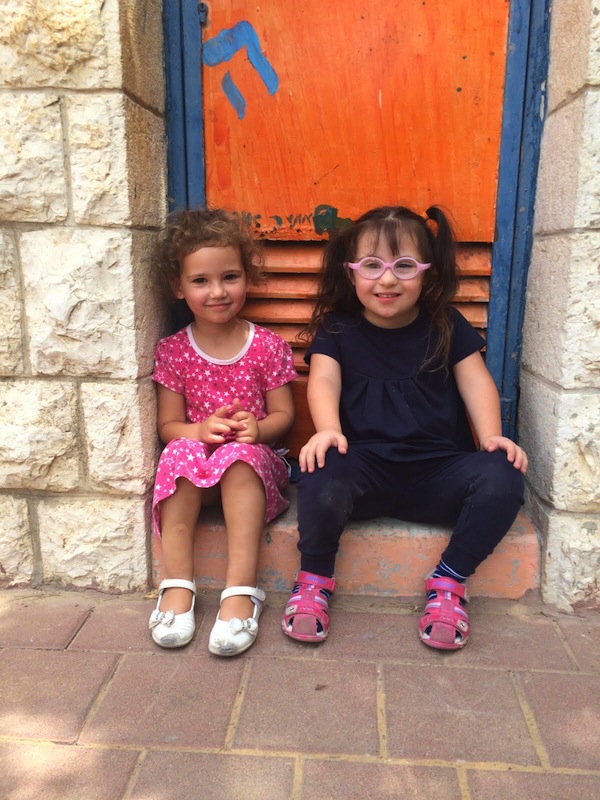
The 2017 Select Fashion and Totto bags’ Back to School ad campaign, in collaboration with Beyachad, featured Israeli children of varying abilities. (photo by Nechama Orah Photography)

In 2010, Gabrielle Markowitz set up a Facebook account in the name of her then-newborn daughter, Hallel. Called Hallel Mini Supermodel, the page is part of Markowitz’s goal to change the public perception of people with disabilities. And she has made some progress.

Hallel has Down syndrome. Set to start Grade 1 this September, she was chosen, along with several other Israeli children of varying abilities, to model the 2017 summer collection in Select Fashion and Totto bags’ Back to School ad campaign. The shoot was in collaboration with the Israeli organization Beyachad, which works to increase and strengthen society’s inclusion of people with disabilities.

Beyachad was started by Channie Plotnick, a New Yorker who has been concerned with this issue since she was 9 years old.

“I was living in New York,” said Plotnick, who now lives in Israel. “Not far from the home where I was growing up, there was a home for adults with disabilities. I was going to school every day and doing my thing. I’d pass by the home and I could see the people with disabilities through the windows. I could see them just sitting around and pretty much doing nothing – being locked in that home for many, many hours, just sitting around.

“I saw this a couple times a day, every day. I felt that these people are jailed in this place. I figured, I have to figure out a way to get them out of this. One day, I asked my mom if I could invite them for Shabbat morning. My mom said to give them my phone number and see. So, one Friday, they actually called and said they wanted to come over for Shabbat morning.

“I can remember myself sitting at home at the window and looking out that morning, and waiting anxiously for them to come. It was sort of a big group. I think there were eight adults with two staff accompanying them.

“We had a wonderful Shabbat meal. We played games and they became part of the family. For me, it was like a victory to see them out of jail and … part of a community, of our family.”

Plotnick has high expectations of herself as well as of others. Where some see disability, she sees ability.

As an adult, Plotnick made aliyah. She attended Tel Aviv University and earned a bachelor’s degree in psychology and a master’s in special education. From then on, it was no longer enough for Plotnick to be able to see ability in all people. It was now about figuring out how to care for these abilities and shape them toward everyday integration into society.

photo - An image from the Select Fashion and Totto bags’ Back to School ad campaign
An image from the Select Fashion and Totto bags’ Back to School ad campaign. (photo by Nechama Orah Photography)

“When I came to Israel, I was working as a supervisor in a special ed school,” she told the Independent. “I saw children who I thought could learn in regular schools, with help and support. I started looking around for schools and support, and I realized there were no services for children who wanted to be integrated in regular schools.”

So, in 2008, Plotnick started up Beyachad Foundation, to aid in the empowerment and inclusion of people with special needs.

“When someone wants to be in a regular school, we help them with resources, information, advocacy and case management, connecting them to the right people, figuring out how to get them resources from different departments,” said Plotnick.

The Knesset calls Plotnick when they are considering disability inclusion-related laws.

“In Israel, there’s a lot of welfare state taking care of people with disabilities,” explained Plotnick. “I call it a ‘stifling hug,’ as they’re taking care of the needy. But, it’s a situation where they are … making it so they are dependent, as opposed to helping special needs people be independent and able to contribute to society.”

According to Plotnick, the welfare system disperses benefits according to labels – it puts people into a box labeled “Down syndrome” or “autism.” These labels carry with them a set of expectations, and the people become the label.

“Today, when a social worker gets a person in front of him/her who has Down syndrome, she/he looks at his/her lists and says, ‘OK, we have schools with special education that focus on children with Down syndrome. And, when they are adults, we have what’s called workshops. This is what we have.’ You’re not looking at individuals and their abilities. You’re looking at a person with Down syndrome. You’re not even looking at the person. On the flip side, when you complement abilities, you look at individuals. That change of looking at a person and saying, ‘You’re an individual. Let’s see what your abilities are and let’s see what you can do with your abilities.’ That’s the change we are trying to make.”

Beyachad does not want to compete with, or put out of business, special ed schools or workshops. Its aim is to offer more options.

“It’s a lot easier for us, as society, to adapt to the needs of the less-abled than it is for the less-abled to adapt to our society,” said Plotnick. “As such, we have a duty to adapt to their needs.

“I’ll give you an example. If today we go out onto the street and all of the signs are in Braille, you and I would be the ones who are disabled, as we won’t be able to read them. Society has the ability to change people into disabled – and society has the ability to create people who are more able.

“As long as we adapt things in society for people with disabilities, they will end up being less disabled. If I come to a regular school and I’m a person with disabilities and the curriculum is adapted for me and school accessibility is adapted for me, I will be less disabled.”

Change will come slowly, but Beyachad has the motto ‘If it is to be, it’s up to me,’ and they work to provide the support individuals need to make accessibility possible. For more information or to lend support, visit beyachad.org.il.

Rebeca Kuropatwa is a Winnipeg freelance writer.

Miraculous discovery

(photo from Israel Antiquities Authority via Ashernet)

A 1,500-year-old mosaic floor, with a Greek inscription, was discovered this summer following groundwork for a communications cable infrastructure near the Damascus Gate in the Old City of Jerusalem. David Gellman, the director of the excavation on behalf of the Israel  Authority, said, “The fact that the inscription survived is an archeological miracle…. We were about to close the excavation when, all of a sudden, a corner of the mosaic inscription peeked out between the pipes and cables. Amazingly, it had not been damaged.” Hebrew University in Jerusalem’s Dr. Leah Di Segni deciphered the inscription, which “commemorates the founding of the building by Constantine, the priest. The inscription names the emperor Flavius Justinian. It seems that the building was used as a hostel for pilgrims.”


Luxury in Jerusalem

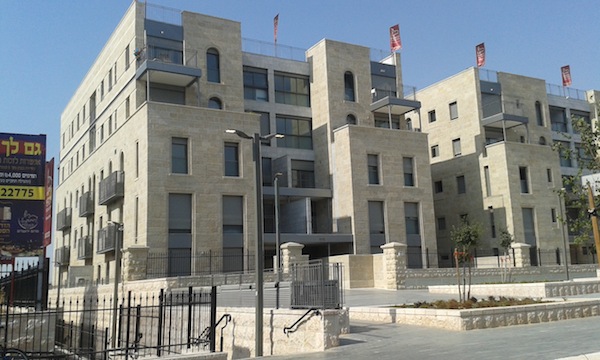
Merom Yerushalayim’s new condominiums. (photo by Gil Zohar)

Having recently acquired Toronto’s troubled 65-storey Trump International Hotel and Tower, now rebranded as the St. Regis Toronto, Joseph Waldman – one of the principals of the city’s Rothner Highgates Group – has set his sights on Jerusalem.

The Antwerp-born developer and his partner, Ricky Rothner, are looking to Merom Yerushalayim (Jerusalem Heights), a project of 218 luxury condominiums located on Malchei Israel Street at the highest point in central Jerusalem.

Notwithstanding that the Holy City is awash with unsold luxury apartments and unfinished high-end towers, Waldman and Rothner, together with their Jerusalem partner Shmuel Narkiss, have found a niche market. They’re targeting Charedim, a segment of Israeli society stereotypically characterized as having low economic status. With only 34 of the 172 units in Phase I left unsold and the unit owners occupying their homes since Passover, the Merom Yerushalayim project has succeeded beyond expectations.

Prices start at NIS 35,000 ($12,500 Cdn) per square metre. Who are the purchasers of these more than $1 million homes? They’re equally divided between North Americans and Europeans with a smattering of Israelis, said Merom Yerushalayim’s sales manager Yehuda Eagle, who fluently banters with clients in Hebrew, Yiddish and English.

Designed by Jerusalem’s Braidman Agmon Architects, the project adds seven residential buildings to five historic buildings, which are being preserved and given new functions. The derelict Schneller Orphanage, with its distinctive Bavarian onion-dome cupola, is slated to become a museum of Jewish heritage. Another 19th-century structure will be refurbished as a synagogue and a third as a yeshivah for teenage boys.

Of the seven new residential buildings, five have been completed. Two are eight floors high. Three were built to a height of five storeys, pending a zoning-density change to permit an additional three levels. The housing blocs are clustered together and nearly four-fifths of the historic compound has been set aside as green space. Parking is underground.

Waldman hedges about the schedule of the final two buildings. While a huge hole has been excavated for them, construction will depend on sales, he said.

Acknowledging that he will keep a condominium for his family’s use, Waldman told the Jewish Independent, “Try not to write about me. I’m a simple guy. I don’t want kavod [honour].”

photo - The Schneller Orphanage is slated to become a museum of Jewish heritage
The Schneller Orphanage is slated to become a museum of Jewish heritage. (photo by Gil Zohar)

The Schneller Compound has a storied past. In 1860, Johann Ludwig Schneller (1820–1896), a Lutheran missionary from Basel, Switzerland, established the orphanage for nine survivors of the Druze massacre of 10,000 Maronite Christians in the mountains of Lebanon. By the next year, the orphanage had taken in 40 boys, and soon also began accepting girls. For eight decades, the Syrisches Waisenhaus (Syrian Orphanage) flourished, expanding to include an institution for the blind and a vocational school. It provided both academic and vocational training to orphaned boys and girls from Palestine, Syria, Egypt, Ethiopia, Armenia, Turkey, Russia, Iran and Germany. By the end of the 1800s, it had become the largest compound outside of the Old City.

During the Second World War, British Mandate officials interned and deported the orphanage’s German staff. The sprawling site was turned into the largest Allied ammunition dump in the Middle East. In March 1948, with Britain quitting Palestine, the base was seized by the Zionist military organization Haganah. Following statehood, and until 2008, it served as an Israel Defence Forces camp.

When the Israeli army redeployed to bases in the Negev, the state-owned property was put up for sale by the Israel Lands Authority and ultimately purchased by the Rothner Highgates Group. Before construction could begin, the Israel Antiquities Authority (IAA) carried out salvage digs – and archeologists discovered a winepress and bathhouse that served Rome’s 10th Legion Fretensis.

While Charedim have opposed other archeological digs, these excavations were carried out without incident.

“This is an excellent example of many years of cooperation and deep and close ties with the Charedi community,” said IAA Jerusalem district archeologist Amit Re’em. “The general public is used to hearing of the clashes between the archeologists and the Orthodox community around the issue of the graves, but is unaware of the joint work done on a daily basis and the interest expressed by the ultra-Orthodox sector. The Israel Antiquities Authority is working to instil our ancient cultural heritage in this population, as it does with other sectors.”

Respecting Merom Yerushalayim’s Charedi character, the project’s marketing wing, Sun-Chen, sends out a weekly Hebrew-language commentary on the Torah portion. Rothner Highgates’ promotional video depicts preparations for Shabbat and, towards the end of the advertisement, it says that the development is “20 minutes from the Kotel, three minutes from Geula. Close to the centre, close to the heart. Merom Yerushalayim. The best of two worlds.” It also describes it as “country living in the heart of Yerushalayim.”

Luxury competition

In 2011, Montreal billionaire Rabbi Hershey Friedman and a group of Canadian investors bought the heavily-indebted Azorim Investment Development and Construction Co. Azorim recently completed Boutique HaNevi’im on the Street of the Prophets near downtown Jerusalem. The seven-storey project includes 87 luxury apartments and a boutique hotel. The promotional video features Friedman standing on the roof terrace looking out over the golden Dome of the Rock citing, “If I forget thee, O Jerusalem, let my right hand wither.” (Psalms 137:5)

Gil Zohar is a journalist based in Jerusalem.


Bridging STEM gender gap

LeadWith’s leadership team at one of the organization’s events, left to right: co-founders Shira Weinberg and Dalit Heldenberg and managing director Aviv Ziv. (photo by Hadas Eldar Photography)

STEM-related women’s groups are popping up all over the world – and Israel is no exception. In fact, the country is a leader in this area.

Shira Weinberg and Dalit Heldenberg co-started LeadWith, a group for women like them – women interested in STEM (science, technology, engineering and math) and seeking camaraderie.

Weinberg, a senior product manager at Microsoft, started out as a software developer while in the Israel Defence Forces’ marine core, and then worked and studied as a software engineer for five years. She’s been with Microsoft for nine years, first as an engineer and then as a product manager.

“As a woman in the industry, I always felt like there aren’t many women,” said Weinberg. “At the beginning, I got used to it and I figured that’s how it is in this area and that’s OK. But, after a few years in the industry, I realized it doesn’t have to be like that.

“That’s one of the reasons I started LeadWith, and I’m also doing some other stuff related to promoting girls and women in the tech industry.”

Raised by a father who worked in the industry in Herzliya, Weinberg was much more familiar with computers than were most of her friends. She went into computer science in high school, which paved the way to her position in the IDF.

Like Weinberg, Heldenberg also started her career as a software engineer. “As a kid, I was always attracted to computers more than the others,” said Heldenberg. “I knew that this is what I wanted to learn, computer science.”

Both young women feel strongly that there is no reason the gender gap should be as big as it is today.

“As you look higher and higher in management positions, there are fewer women,” said Weinberg. “This is something we want to change. And this is one of the main reasons I wanted to lead this change.”

Heldenberg added, “Even when I studied computer science, I’d always see too few women in this field. When I was learning high school physics and when I studied computer science, I was always missing women. We want to see more women wanting to be in management roles.”

Weinberg and Heldenberg understand that, in order to create this change, they need to provide mentorship to other women. They now have bi-monthly get-togethers that include networking and education sessions.

“We found a lot of demand from women for these kinds of events,” said Heldenberg. “At the first event, we weren’t sure how many women would come. We planned for about 50, but ended up with 200 attendees.

“We are currently doing three types of activities. One, the meet-ups, where we usually have 100 to 200 women come.

“We also have the mentoring program, where we hold events also every two months. The mentoring events are smaller in terms of size, but we have our team of mentors all volunteering and joining in for the events. We hold sessions of one-on-one mentoring conversations for around 30 minutes…. For each mentoring event, we have about 25 mentees.”

The third activity is an accelerator program for women entrepreneurs who are at the end stages of launching their start-up. In the first program, they had 13 entrepreneurs. It involved nine full days of sessions over nine weeks, with each day focused on different tools relevant to entrepreneurs.

“At the end, we had a big demo day with important people in the industry,” said Heldenberg.

With more than 1,600 people now involved with LeadWith, it is clear that they are filling a previous void and that their approach is working.

“At the events, we put a lot of focus on networking,” said Weinberg. “We usually have a short networking session before the main session begins. We make sure every woman will talk with one or two women she hasn’t met before … that really helps them know more women in the industry and creates more conversations.

“Always after these kinds of events, you hear good stories about things that happen because of the networking and the new connections. Of course, you get to know other women in the industry.

“Also, at the time when a woman wants to change roles, she can draw upon the extensive connections she has gained at our events. You can never know what will come out of this kind of connection. We always hear great stories.”

LeadWith’s focus is both on connecting women who are already in the industry, as well as those who studied computer science or technology but, for one reason or another, did not go on to work in the field. The organization hopes to draw these latter women back into the field.

“A month ago, we did a hackathon in collaboration with another organization, called Cyber Girls,” which brings computer science to those around 16 and 17-years old, said Weinberg. “They brought the girls and we brought the women, and we divided into teams that included both women from the industry and the girls. It was a few hours. There were multiple teams. Each team had a big mission and a lot of tasks along the way – quizzes and such – to figure out solutions that involve writing code.

“What was amazing was that each team in this hackathon was … 10 teenaged girls and a woman from our community, and the quizzes they had to do were really tough. The young girls were very ambitious, they couldn’t get the answers from us. It was really good to see that. They are very smart.”

LeadWith is a nonprofit organization and volunteers are an integral part in whatever they do, said Heldenberg. “We get some help in posting events in certain offices, [donations of] snacks and drinks for events, those kinds of things, from Microsoft, Google and Wix.”

Both Heldenberg and Weinberg think there are multiple reasons for the lack of women in STEM fields, from how children are raised, the educational system and society as a whole. They also are concerned that, if they spread themselves too thin, they will achieve less. As such, they have opted to focus, for now, on industry women in their 20s to 40s. For more information, visit leadwith.org.

Rebeca Kuropatwa is a Winnipeg freelance writer.

Population growth & nature

The four lines in this diagram are projections based on four levels of fertility of the general population. In 2059, there could be more than 20 million people in the state of Israel. However, if the birthrate drops to the replacement level of 2.1 children per woman during her lifetime, in 2059, it would be only about 10 million. (image from population.org.il)

While by no means unique to Israel, with less space than most to work with, it is happening a little faster there – population overload. While some feel it is too late to do anything to alleviate the problem, one growing group of Israelis is putting its energy into making a bid to re-educate the public about the need for stabilization, as opposed to growth.

One of the leaders in the group is Prof. Alon Tal, chair of the department of public policy at Tel Aviv University (TAU). Tal was born and raised in North Carolina before making aliyah after high school, at the age of 20.

“I’m an activist trapped in the body of an academic,” he quipped. “For many years, I fought it, but I tried very hard to stay an advocate for environmental interests in the country.”

A father to three daughters, Tal decided to move to Israel, as it seemed like a unique and exciting place, and he wanted to take his Jewish identity seriously.

“In Israel, every year, we take open spaces and turn them into houses, highways and commercial centres,” he told the Jewish Independent. “We live in a small country. We have the responsibility to give quality of life, to find a better way. We’re not meeting our responsibility to our great land.”

Tal is at the forefront of Israeli leaders calling on the Israeli government to adopt a policy that stabilizes the population.

“We have to cancel financial payments to families with more than two children,” he said. “We should not be encouraging it [larger families]. It means that we need to strengthen the status of women in the communities, like in the Orthodox communities. We need to make contraception available free of charge, [grant] basic rights of women to abortion, by removing some of the strings attached…. We need a policy that [aims for] stability, rather than maximum growth.”

While most Israeli Jews are raised with the fear that the Arab population will outgrow the Jewish one, Tal is trying to make people aware that there are lower fertility levels being seen in most populations, including Arab ones, while Jewish are on the rise.

A main thrust to all this need for change, Tal said, is the alarming rate of vanishing nature.

“To me, it’s very clear,” he said. “Israel’s wildlife is disappearing. It’s happening faster than I thought it would. If we had 10,000 gazelles 15 years ago, there are only about 2,500 now and they were just declared endangered by the International Union for Conservation of Nature (IUCN). Pretty much, when you go through that report, you can see everything is on the decline. One-third of mammalian species are described as endangered or extinct. It’s a horrible thing that Israel is letting this happen. I don’t want anyone to [be able to say] they didn’t know this was going on.”

When the Independent contacted Tal to be interviewed for this article, he was en route to the official opening of a new museum at TAU – Israel’s Museum of Natural History.

Tal has helped write new laws and has also been involved, indirectly, with Israel’s National Nature Assessment Program (NNAP). Recently, the first State of Nature report came out, explaining how construction and agricultural development have introduced some invasive species to Israel – to the extent that several bird species in southern Israel can no longer survive.

NNAP has established a program that operates out of the new museum, as part of a joint initiative with Jewish National Fund Israel, the Environmental Protection Ministry, and Israel Nature and Parks Authority. Its mission is to promote proper land management based on the science of open areas with Israel’s biological diversity in mind.

“It’s not a policy thing,” said Tal. “We want to save wildlife, set aside land, create ecological corridors, stop hunting and stabilize population growth.”

Although Tal acknowledged that the need to do these things is not news to many people, he is adamant that it must continuously be communicated in different ways to get to the tipping point of producing change.

“I was on television three times this week,” he said. “Every time I’m there, I mention what’s going on. I’m doing what I can do. Everyone needs to make a contribution.

“This is really about a change in Israel’s cultural DNA. We were raised on maximum population growth. We now have to stabilize. We have to tell people that, if we want to be responsible for other species that means we have to stop the incredible hemorrhaging of open spaces. If we don’t, then there won’t be any more nature.”

Tal plans to keep meeting with every willing influential person in order to educate enough people to swing the pendulum towards restoring nature. He anticipates that the new museum will be helpful in this regard.

“In order to change something, you have to know,” said Tal. “You have to look at the habitats, species logs, and take measures there. Anybody who considers Israel a promised land or has an emotional attachment to this holy place – Christian, Muslim, Jewish – we all share this responsibility. Just like how I make contributions for the Amazon rainforest, because I understand how it affects me. If you have an initiative you feel connected to, you should support it. Come to Israel and get involved, go on vacation and get involved, write letters to Israel’s decision-makers letting them know you expect the Jewish state to be a responsible trustee of its nature.”

For more information, visit population.org.il.

Rebeca Kuropatwa is a Winnipeg freelance writer.

Galilee as a food-tech hub

Former chief scientist of Israel Avi Hasson, left, and MK Dr. Erel Margalit. (photo from Noa Yaar)

Having the Upper Galilee be the world’s food-tech hub is the dream of Israeli Member of Knesset Erel Margalit, who recently announced he will run for leadership of the Labour party. And the work has started in the form of Israel Initiative 2020 (ii2020).

Leading the establishment and development of the food-tech hub in Kiryat Shmona is Michal Drayman, a partner and chief financial officer of Jerusalem Venture Partners (JVP). She has 11 years of high-tech experience and 14 years’ experience in the agro-bio medical activity area of investment.

For Drayman, ii2020 is her volunteer job, and she describes her role as “vice-chairman.” The initiative started up nearly four years ago, focusing much of its work in Israel’s upper north and south.

“We decided to focus on agri-food development in the Eastern Galilee, which is made up of a group of 22 municipalities, from Tiberius in the south, up to Metula in the north and the Golan Heights in the east,” she told the Independent.

They began working with the region in January 2014, holding brainstorm sessions and doing about six months of research with 10 leaders from the region to pinpoint a focus, which became agriculture.

“Anything that can be grown on earth can be grown in the Eastern Galilee,” said Drayman. “Because of the difference in height, climate, water and land, it allows them to grow anything from tropical things to cherries, apples and everything in between.

“We also discovered that the area already has a lot of activity when it comes to agro-bio research – in particular, with Migal, a foundation founded in the early ’70s that has about 115 employees, 65 PhDs and about 50 laboratories developing food and agro-bio activity.”

With Tel-Hai College to develop the academic focus – most of its 5,000 students are studying agriculture, bio-technology, food and nutrition – the region is well-positioned in the field.

As Drayman and team sought an even more specific focus, they decided on medical food, which means any food promoting health and preventing illness. “With this, we’re taking into consideration modified food, functional food, macro-bio activities, and how it will affect us concerning nutrition going forward,” said Drayman.

While work in this field is being done on a large scale by the Volcani Centre, as well as by other institutions throughout Israel, it has rarely reached the market. It took Drayman only six months to get consensus from area municipalities that medical food would be their focus, after which she began on the year-long process of writing up a plan.

“Bio-technology and health, there’s so much to do that, with the right investment, we see the potential of growing something significant in that area,” she said. “In food tech, there’s a lot of innovation and research, but not a lot of invested money. Much of the work that is done is void of being able to monetize it. That’s true of the world, not just in Israel.”

Looking at how food companies impact health by what they put into the food they make – ingredients such as sugar and salt, for example – Drayman and team are working with the industry to change regulations, especially food labeling. The goal is to give customers clear information about the nutrition content in the product they are buying.

“The idea is that companies cannot just [add] sugar whenever they don’t have another ingredient and want to fill [the product] with something very cheap,” said Drayman. “We’re going to show … a red stop light on food. If it has too much salt or sugar, it will be identified on the wrapping.

“The food industry is going through significant change,” she added. “Regulations, GDP talks, and the fact that people are more educated and understanding about what we’re eating, will affect how we’ll be when we get older. If we’re going to make sure we’re eating proper nutrition, then probably we’re going to affect a lot of the illnesses and reduce the amount of obesity.”

Exactly three years from the initiation of the project, with the 22 municipalities participating, the government approved about 80% of Drayman and team’s submitted budget. Next, they will speak with various multinational companies to see if they will invest in research and development in the area.

“One of the things that’s already in process is the movement of the Volcani Centre that is currently in the Tel Aviv area to the Galilee,” said Drayman. “It was declared, but I’m less optimistic about how fast it will happen. But it was declared it will happen, which is huge, because we’re talking about 5,000 scientific people doing research. So, moving that kind of activity would be significant.”

The municipality of Kiryat Shmona has allocated a building to house the new food innovation centre and funds are being collected to allow for the renovations, with Jewish National Fund picking up half of the $6 million tab.

“Basically, we want it to be an iconic building in the centre of Kiryat Shmona, something that will be visible from the road,” said Drayman. “It will have an accelerator for food-tech activities and activities with kids and education – trying to have two percent of top-tier students working together with the accelerator, incubator and entrepreneurship … being part of a success story.

“We’re going to also have music, because we don’t want to have it only as a high-tech building. We want to make sure we have regular people being part of it, living the scene, and not isolating this kind of activity.”

To raise the remainder of the needed funds, Drayman is working to create a consortium of five multinational companies that would run the accelerator and, subsequently, create and run an incubator.

“The accelerator, as opposed to regular accelerators that only do mentoring and primarily help when you’ve started to build a theme … we want to do proof of concept with our accelerator,” said Drayman. “We’d like to invest money, not only time and support, from high-tech people. We want to actually invest money and run the project for four to 12 months to identify an actual R&D project or research and bring it to commercialization.

“Assuming it’s able to be commercialized, then we’d like to take it into the space of an incubator and invest larger amounts of money to be able to run the project until an actual company is created.”

As of press time, IBM was considering providing data analytics.

For more information or to get involved with ii2020, contact Noa Yaar at noa@ii2020.org or 1-781-530-8025.

Rebeca Kuropatwa is a Winnipeg freelance writer.

Purifying water

photo - In February 2015, Gal Water Technologies Co., from nearby Caesarea, launched the mobile water purification systemOn July 10, at Givat Olga, Indian Prime Minister Narendra Modi, centre-left, and Israeli Prime Minister Binyamin Netanyahu sample water that has just been purified to the World Health Organization standard in the Galmobile. In February 2015, Gal Water Technologies Co., from nearby Caesarea, launched the mobile water purification system. The small vehicle, the first of its kind in the world, weighs 1,540 kilograms, operates on a 12-volt electric supply and can be set up in less than half an hour. It can connect to almost any water source. (photos from Ashernet)

Jerusalem a high-tech hub

Lior Schillat of Jerusalem Institute for Policy Research and Maya Halevy of Bloomfield Science Museum Jerusalem will speak at Jerusalem of Gold: Capital of Innovation & Tech on July 16. (photos from CFHU Vancouver)

“Hebrew University is probably the only university that ‘founded’ a state rather than vice versa, as the cornerstone for the university was laid on July 24, 1918, and, on April 1, 1925, the Mount Scopus campus was opened,” Dina Wachtel, Western region executive director, Canadian Friends of the Hebrew University, told the Independent. “The contemporary history of the city of Jerusalem and the story of the Six Day War is intertwined with the story of the university – what better way to celebrate that than by bringing in four of Jerusalem’s change-makers?”

The July 16 TED Talk-style event at the Jewish Community Centre of Greater Vancouver – hosted by CFHU, the Jerusalem Foundation and JCCGV – “is a celebration of the start-up nation and the role the city is playing in becoming a centre for innovation and technology,” said Wachtel. “Thus, it is also the story of how innovation improves the lives of humanity in this world regardless of boundaries of any kind: geographical, political, ethnic, religious.”

At the event called Jerusalem of Gold: Capital of Innovation & Tech, the speakers will be Lior Schillat, director general of Jerusalem Institute for Policy Research; Maya Halevy, executive director of Bloomfield Science Museum Jerusalem; Yonatan Avraham, student ambassador of HUstart, the university’s entrepreneurship centre; and Tamir Huberman, vice-president of business development and information-technology director of Yissum, the technology transfer company of Hebrew U. The Jewish Independent interviewed each of the presenters in anticipation of their Vancouver visit, and will feature Schillat and Halevy this week, and Avraham and Huberman on July 7.

Schillat will talk about Jerusalem’s Population: What Does the Future Hold? But first, what about the Jerusalem of the past – what would have inspired a Canadian Jew to make aliyah 50 years ago?

Actually, said Schillat, in the 20th century, the biggest wave of immigrants from countries such as Canada came right after the Six Day War.

“If you’re Canadian and you’re making aliyah in ’67 and you’re choosing Jerusalem for your home, I guess the main reason you would do that would be because of the spiritual effect the glorious victory of 1967 would have on you,” said Schillat.

“If you are a bit more practical, you also understand that, with this victory, Jerusalem, for the first time since 1948, became again the centre of the country … centre in the geographical meaning and also the centre of attention as to what was going on in the country.”

Fifty years later, he said, while “we still haven’t reached some kind of stability in the situation in Jerusalem,” the city “is one of the most interesting … cities in Israel, and why is that? First of all, it’s Jerusalem, meaning it’s beautiful, it has stories that are in the heart of billions of people all over the world…. I would say the Jerusalem brand is stronger than any other brand in Israel, including the Israeli brand itself…. So, if you would come to Jerusalem, it would be because you want to spend your life in a way that is a bit more meaningful than … in any other city in Israel, in any other Western country.”

In Jerusalem, he said, “from the moment you wake up until the moment you go to sleep, you live for something, for an idea. It’s true for everyone – of course it’s true for religious people, but it’s also … true for secular people. Life here just has much more meaning. You know, it’s not for nothing that Jerusalem is 10% of the Israeli population but 25% of civic society organizations are based here. And if you look at Israel’s biggest struggles or debates, many of them were generated from the Jerusalem society.”

Jerusalem is a completely different city than it was 50 years ago, said Schillat. “Jerusalem is one of the most advanced high-tech ecosystems in the world today…. When you look at the numbers, you see that, today, Jerusalem is considered among the 30 biggest ecosystems in the world. And some of the researchers even say that they would consider it for next year among the 20.”

It’s not the tech hub that Tel Aviv is, he acknowledged, but, in proportion to its population, Jerusalem rates high on the tech scene. And this shouldn’t be surprising, he said.

“People here are using their minds all the time, and high-tech is exactly that – it’s how you use your mind in order to create gain, in order to create technology that could help better the world…. The number of technological companies in this city has more than doubled in the last four years. The number of employees in high-tech is growing 15% every year for the last three years.”

Schillat gave as the best example of Jerusalem’s growing prominence in this area the recent acquisition by Intel of Jerusalem-based company Mobileye for $15.3 billion. Not only that, he said, but Intel also has decided to base in Jerusalem its international research and development centre for autonomous cars.

“I don’t see the Jerusalem of the future as being another New York or another Frankfurt or another Tel Aviv; it won’t be a financial centre. I see it as a city of knowledge; of creating fruits from thinking, from knowledge, from discussion. And I also think that Jerusalem is facing now the amazing challenge, and very hard challenge, of integrating into this group of thinkers and builders the more weak populations…. The real test for Jerusalem for the next 50 years would be, ‘Did you integrate the Charedi groups, did you integrate the Arab groups into this economic development model of a city of thinkers, or did you just go with this idea by yourself, meaning just a small elite group of thinkers went with it by themselves and left the majority of the city behind?”

One facility that is trying to integrate various population groups is Bloomfield Science Museum. Founded and operated by the Jerusalem Foundation and HU, the museum is supported by the national and municipal governments. Its website describes science “as a common language that disregards physical borders, cultural and religious differences and enables dialogue among participants with a common interest and diverse backgrounds.” Halevy will talk on the topic Raising a Start-up Nation.

“There is much research that shows that young kids love science and science classes,” she said, “but they don’t see themselves in a STEM [science, technology, engineering and mathematics] career, mainly because they believe that having a STEM career is being a scientist, which they think it is to work alone in a lab, and can be relevant only to the best scholars. Our role is to show the variety of opportunities that STEM learning can open for them in a future career.”

Bloomfield serves as a lab and hub for education programs, she said. “As a lab, we develop new approaches, new pedagogy, new tools, and we test those with a variety of people, as we are also a hub for all the communities in Jerusalem.”

The museum collaborates with institutions around the world, as well. A current exhibit that will travel to Ottawa, among other places, is the Bicycle Exhibition 2 x 200. The new Canada Science and Technology Museum is set to open in November after extensive renovations and the exhibit is scheduled to arrive there after a few other stops.

The idea for the exhibit came when Halevy was on a visit to Ottawa in October 2015, at the request of then-Israeli ambassador to Canada Raphael Barak, “who wished to develop cooperation among cultural institutions from Canada and Israel.”

Visiting the museum while it was under renovation, Halevy saw the collection of bicycles it had in storage and learned that 2017 would mark 200 years since this invention.

“So we decided to focus our cooperation on a bicycle exhibition,” she said, “to use their collection and to add interactive exhibits – we are very experienced in this field – and the idea was that we will develop and build the whole exhibition in Jerusalem and later on it will travel to Ottawa.

“We were lucky to find two more partners, from Germany and Italy, that loved the concept of the exhibition and that wished to join us, so the tour will start in Jerusalem, will move to Bremen (July 2018) and then to Naples (July 2019) and will end in Ottawa (2020). We were also approached by other museums that wish to present the exhibition after the partners’ tour ends.”

Bloomfield signed a letter of intent with Ontario Science Centre last year. “The main idea is to develop our cooperation around the culture of innovation and to start developing this culture from an early age, as the future of both our economies is based today on innovation and entrepreneurship,” explained Halevy. “We plan to develop together an interactive exhibition and special programs for young children and youth and to connect them to each other. We wish to open the exhibition and launch the programs in 2018 – 70 years to the establishment of Israel. During my time in Toronto, I will have a meeting with the CEO and president of the Ontario Science Centre, Dr. Maurice Bitran, to discuss it more in-depth.”

As for other collaborations with Canadian institutions, Halevy said, “We might develop new collaborations on my tour, as I plan to visit my colleagues from Calgary and Vancouver.”

Jerusalem of Gold: Capital of Innovation & Tech is open to the public. Tickets are $45, though Wachtel said, “Students who are interested in coming to the event are welcome to register at our office and receive a free ticket.” For tickets, the speakers’ bios and other information, visit cfhu.org, email vanc@cfhu.org or call 604-257-5133.