May there one day be peace

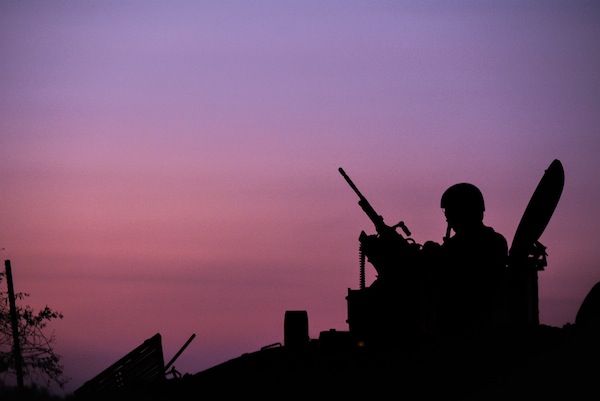
Operation Protective Edge, on Aug. 3, 2014. (photo from flickr.com/photos/idfonline)

Part 3 of a three-part series, in which the author shares his diaries from the homefront, providing a glimpse of daily life under missile threat during Operation Protective Edge in 2014. For Part 1, click here; for Part 2, click here. 

July 23

Day 16. Iron Dome success rate at 90%. Missiles still get through. Today, an errant rocket hit a house. No casualties. This prompted yet again another lecture from Dad to his kids. Don’t be over-confident and continue taking the Code Red alerts seriously.

Six hundred and sixteen dead in Gaza. Mostly civilians. Locked in a war zone. A human catastrophe. Simply put, as American Civil War general William Sherman put it, “War is hell.”

Hamas fighters seen emerging from their hideout in an ambulance. Balancing war aims with the desire to avoid collateral damage, the Israel Defence Forces decided against bombing the ambulance.

More missile action in Rehovot. Spoke with our son while huddled in our protective room. He was out with friends at a nearby café. They talked with us from under a table.

July 28

Huge uncertainty. Again that word. Shuffling from ceasefire to ceasefire. Meantime, my Code Red app doesn’t stop beeping.

What is sure? The death and devastation in Gaza is tragic. The continued threat to Israel from Hamas’s missiles and terror tunnels is unacceptable. Two ends of a very sharp sword that Hamas must sheathe to bring quiet.

Israel cannot rest until the Hamas threat is eradicated. Or at least severely beaten. In the past 12 months, more than 200 missiles have been fired at our southern communities. Another 200 rockets were fired at the same communities in the 10 days leading to our military offensive. Since the start of Operation Protective Edge, a staggering 2,500 rockets fired at Israel. Yikes!

Exceptionally telling was a picture in our morning paper. Israeli soldiers carrying a wounded bomb-sniffing dog in a stretcher to a waiting helicopter. Contrast to Hamas terrorists firing from behind women and children.

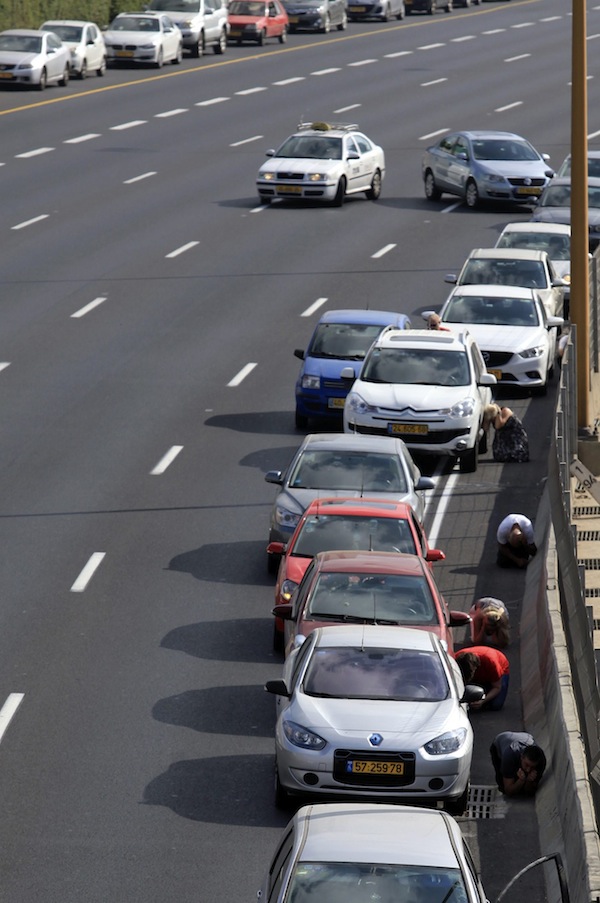
Returning from Tel Aviv with my wife and daughter, a Code Red sounded. A known routine. Pull over. Exit car. Crouch down on roadside. Cover heads with hands (!). My wife huddled over our daughter and I huddled over my wife. Double protection for my daughter. Unbeknownst to my daughter, while the Iron Dome chased and intercepted its target overhead, I managed a quick and loving grope of my wife. Nothing like some comic relief. Another Love Is moment.

July 31

Driving home from work as a missile barrage hit the south. Three people lightly injured by falling missile fragments. Text messages from my loving family:

Wife: “Where’s Dad?”

Son: “Think he’s at work. Tough luck for him – ha ha!”

My son inherited my dark and cynical sense of humour.

A country at war: 65,000 reservists now called up; 18,000 pending call-ups. Flags strung up along our main roads. War jingles on the radio. Billboards supporting our troops. Famous Israeli singers touring the front (which is one city over!). Patriotic teenagers waving flags and dancing at major intersections.

Nonstop beeping of the Code Red app. Heard everywhere. Movie theatres. Restaurants. Grocery stores.

Soldiers’ funerals attended by hundreds.

Solidarity with impacted businesses in the south, holding market days in major cities. Large public service campaign to buy “blue and white.”

Aug. 2

Sixty-three of our bravest boys killed. Three civilians killed. One soldier, Hadar Goldin, captured. Dead or alive?

U.S. President Barack Obama asked Hamas – one of the most barbaric terrorist movements in the world, who flagrantly have violated six humanitarian ceasefires, who hide behind innocent women and children, who plant arsenals and war rooms in hospitals, schools and mosques – to please set the soldier free. Pretty please. With sugar on top. Don’t think the president gets it.

Aug. 5

Three times I told my son to get up for work. Each time, he mumbled OK. Each time, he fell back asleep. Then, running to our safe room at 7:15 a.m. with Code Red apps blaring, he finally got out of bed.

Leaving home this morning, I told my daughter that today should be relatively quiet. Entering another ceasefire. “Ya, like Hamas will respect that,” my 12-year-old quipped.

A tough day yesterday. More than 85 rockets rained on Israel. Terror attacks in Jerusalem. Terror alerts in Tel Aviv. Entering a 72-hour truce, which will hopefully usher in … something.

Preparing for the inevitable “day after.” Fists clenched. Hearts palpitating. Brow sweating.

Aug. 6

Halfway into the truce. So far, quiet met with quiet. Yesterday, I woke to the sounds of missiles and my Code Rep buzzing. Today, I woke to the sounds of silence – well, actually, to the sounds of my kids arguing and my dog barking. Beautiful noise.

There’s an atmosphere of victory. Our soldiers – our children – are heroes. Hamas was dealt a severe and long-term blow. Is more isolated in the Arab world. Some strategic shifts in alliances per the dictum “My enemy’s enemy is my friend.”

Will not forget those who fell in our defence, as well as the few civilian casualties. Saddened by the death and destruction in Gaza. Pray that one day soon Gazans will rise above Hamas, save themselves.

Hope our enemies are deterred from other misadventures. Pray that peace will be upon us. Am Yisrael chai.

Aug. 11

A bit premature with my last entry. Suffering from wishful thinking. Looks like victory has not yet arrived. While Hamas took a severe beating and is largely isolated, they continue their disregard for a real truce.

Both sides met in Egypt to negotiate a settlement while the ceasefire took effect, but huge gaps. Not surprisingly, talks broke down. Hamas resumed their missile barrage. Israel reactivated our air defences and continues to pound Gaza.

International condemnation of Israel totally disproportionate. Fierce anti-Israel and antisemitic rallies throughout the world, especially in Europe. Jews surrounded in synagogues (France). Jew-free areas (United Kingdom). A rabbi killed on his way to synagogue (United States). Jewish kids bullied in schools (Australia).

Still feel safer in Israel than in Europe. Even now. Think the mass immigration of Arabs to European lands and poor absorption processes taking effect.

Going to Italy next week for a family vacation. Need to minimize our “Israeliness.” English will be our language of choice. A bit scary.

Amid a second three-day truce, am doubtful the truce will last.

Aug. 13

The truce ends at midnight. Lots of anxiety. What comes next?

Didn’t Netanyahu once say he would never negotiate with terrorists? The world looks different at the top, when the decision is yours.

Am working late tonight. If the truce ends early, I hope it lasts at least till I get home.

Aug. 17

Waiting on the outcome of an extended ceasefire. Expires midnight Monday.

The solid backing and relative discipline Netanyahu enjoyed from the government is starting to crack. Lots of conflicting postwar opinions, positions and plans. Two Jews, three opinions.

Heading to Italy for our long-awaited family respite.

Aug. 26

Back from Italy. Fiftieth day of Operation Protective Edge.

While away, we tried, as best we could, to unwind from the tensions of our little shtetl. You can never really escape the reality of your country being hit by missiles. Especially with the Code Red app going off when eating pizza in a town square, when visiting the Coliseum, when at the Vatican, when touring the medieval hamlets of Tuscany. Could have just turned off the app but, for a sense of identity, some twisted need to remain connected, didn’t.

After 50 days, Gaza is burning. Death and devastation are immense. But Hamas – like that Duracell rabbit – just keeps going.

In a Sisyphus-like manner, another ceasefire is in the making.

Israel is awash in the ALS Ice Bucket Challenge. Escapism of any kind, however temporary.

Aug. 29

Waited a few days before writing this entry. Wanted to be sure this ceasefire held. It has. But gaps remain wide. Hamas remains a wild card.

Discussions in Israel are intense. Significant introspection. If Netanyahu thought the Gaza battlefield was tough, here comes the national post-mortem. This soul-searching (self-flagellation?) is indicative of the Israeli psyche, our democracy. This constant search inwards may be the secret to our success as a people, as a country.

A contrast to the other side. Celebrating their “victory.” Dancing in the streets. Shooting in the air. Proclamations of battles won that never happened. A lack of critical introspection that will, unfortunately, keep our enemies from making any real progress in developing a strong, forward-looking society.

Former National Security Council head Ya’acov Amidror: “One of the main differences between Israeli and Palestinian societies is that, if Israel has a glass of water three-quarters full, it will complain about and search for the missing quarter. If the Palestinian glass is only one-quarter full, it will celebrate the one quarter and even imagine a second quarter.”

What was? What will be? I defer to our pundits and leaders. To hopefully bring, if not peace, at least quiet to this wonderful, ever-challenged, always robust, constantly developing and very happy country.

May peace be upon us. As-salumu alayna. Shalom.

Bruce Brown, a Canadian-Israeli, made aliyah 25 years ago. He works in high-tech and is happily married, with two kids. He is the winner of a 2019 American Jewish Press Association Simon Rockower Award for excellence in Jewish writing.

Ride to help Israeli veterans

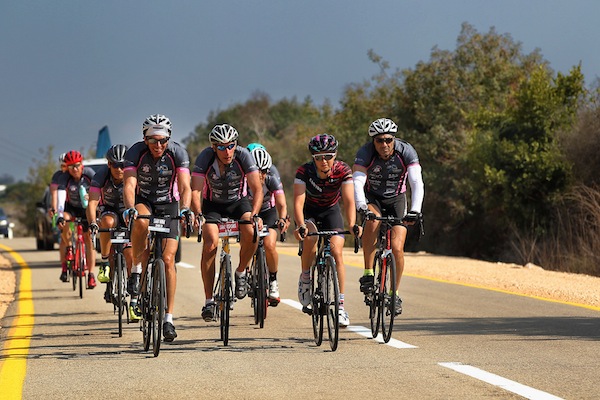
Beit Halochem Canada’s Courage in Motion saw many riders return to do the five-day annual cycle in Israel again. (photo from Beit Halochem Canada)

The 12th annual Courage in Motion, an initiative of Beit Halochem Canada, Aid to Disabled Veterans of Israel, welcomed cyclists from across Canada, joined by some Americans and Israelis. From Oct. 27-31, these international cyclists rode alongside Israel’s disabled veterans on five fully supported routes through northern Israel’s archeological sites and landscapes.

Fundraising is open until Dec. 31, and it is expected that the ride will raise approximately $750,000 Cdn. Sponsors’ support and cyclists’ fundraising facilitated the participation of more than 100 injured Beit Halochem Israel members this year. Money raised also funds programming at Beit Halochem centres in Israel. Thanks to the ongoing success of the ride, cycling has steadily grown in popularity at the state-of-art centres.

Lisa Levy, national executive director of Beit Halochem Canada, is the ride’s founder. An avid cyclist herself, she said, “Cycling in Courage in Motion means visiting Israel, supporting an incredible cause, and connecting directly with our members. Beyond the ride’s huge fundraising component, I never fail to be excited by witnessing lifelong friendships taking shape. It is truly a life-altering experience that you never forget and one that participants want to repeat!”

photo - 3 cyclists
(photo from Beit Halochem Canada)

Annually, the ride welcomes both new and repeat participants. This year, returning cyclists included Toronto-born Keith Primeau, who rode in last year’s CIM for the first time. Primeau enjoyed the experience so much that his daughter Kylie accompanied him this time.

Primeau played 15 seasons in the National Hockey League, most notably with the Philadelphia Flyers, prior to his career being cut short due to multiple concussions. He co-wrote the book Concussed! Sports-Related Head Injuries: Prevention, Coping and Real Stories (2012), detailing life after concussion.

Other international returnees included former cycling champion Eon D’Ornellas, who competed throughout the 1970s and 1980s on behalf of both Canada and his native Guyana. The proprietor of Toronto’s D’Ornellas Bike Shop, he started a cycling club more than 25 years ago. In 2011, D’Ornellas, then 59-years old, suffered a stroke during a training ride.

Among the Beit Halochem members participating in Courage in Motion 2019 was Asi Mekonen. In 2012, just prior to his release from the Givati Brigade, Mekonen suffered severe head injuries, with resulting brain damage, vision and hearing impairment, and memory loss. Following five years of physical and cognitive rehabilitation at Beit Halochem, he is now a Jerusalem-based musician. Besides experiencing several Courage in Motion rides, he has completed two marathons. Mekonen was already known to many of the ride’s Canadian participants through his on-stage appearances in this year’s Beit Halochem Canada Celebration of Life concerts.

This year, cyclists may have ridden alongside a future Paralympics hand-bike medallist. Critically wounded in 2002 in a military operation while serving in the artillery corps, Amit Hasdai was left with paralysis on the right side of his body. During rehabilitation, he benefited from equestrian therapy, later competing internationally. Since turning to hand-bike racing at Beit Halochem Tel Aviv, Hasdai has enjoyed participating in Courage in Motion. Hasdai’s natural talent, enhanced by Beit Halochem’s support of his training and coaching, has resulted in his current ranking of eighth in the world. He is training to qualify for the 2020 Paralympics in Tokyo.

Courage in Motion’s participants enjoyed group activities, including a cycling tour of the agriculture region of the Hula Valley and an evening with Israel’s heroes – all Beit Halochem members – who shared their personal stories of tragedy and resilience.

The next Courage in Motion takes place in Israel from Oct. 18-22, 2020. Registration is expected to open in March 2020. See courageinmotion.ca.

The missiles continue

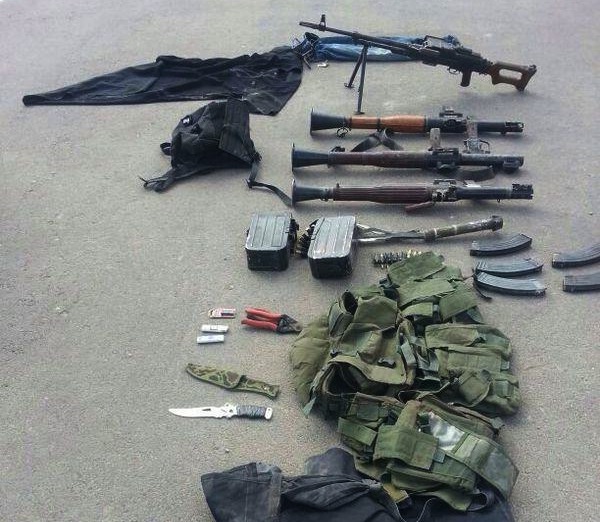
Weapons seized from terrorists who infiltrated Israel through an underground tunnel to carry out a massacre in an Israeli community. This photo was taken on July 19, 2014. (photo from flickr.com/photos/idfonline)

Part 2 of a three-part series, in which the author shares his diaries from the homefront, providing a glimpse of daily life under missile threat during Operation Protective Edge in 2014. For Part 1, click here; for Part 3, click here.

July 13, 2014

Day six. Woke up at 4 a.m. Browsed the headlines on my smartphone. Some talk about talk about considering talk about a truce. Fell back asleep. Rudely awoken at 6:11 – I angrily checked the time – by a siren. Incoming. So much for all the talk. My wife and I groggily made our way to our daughter’s room, our protective room.

Son Dor is enjoying Eilat. Returning by bus this evening. Maybe it makes more sense to take the afternoon bus. Think the skies are quieter in the daytime.

Sides still too far apart for a truce.

When Prime Minister Netanyahu talks about a long-term truce, what does he mean? With my son going into the army in two years, I don’t want another ceasefire like we had in 2008 and 2012, which allowed Hamas to rearm and wage new wars so soon after. Not acceptable. Our cabinet reconvenes today to further consider a ground offensive. What a job our prime minister has!

So much damage in Gaza. How can Hamas not cry uncle? Despite its macho threats, its salvos of rockets – more than 100 fired over the weekend – the impact to Israel is minimal. Largely due to a poor-quality arsenal. The constant pressures of our offensive. Our amazing Iron Dome. And the well-prepared and trained homefront (that’s us!).

July 15

Ceasefire to take effect at 9 a.m. Final terms to be agreed. Somewhat ass-backward. Shouldn’t terms be agreed first? What do I know? Hope it brings quiet. Peace.

Gazans needs new leadership. The classic choice of guns or butter, they need to decide if they want to continue being human shields in a war they cannot win.

My son returned from Eilat. Without incident. With a great tan and funny stories. But frustrated. Tossing the morning newspaper aside, he growled, “We’re crushing them. We need to continue until they are clearly defeated! This truce is bullshit. We’ll only face more missiles next year. You don’t stop when on the verge of victory. It allows your enemy to retrench and rebuild.” The rashness of youth has a point.

I left for work with a delicate sense of calm. Maybe I can worry less today. Alas, an hour into the ceasefire, missiles were again fired at Israel. Errant missiles? Or continued, self-defeating defiance by Hamas? Previous operations also had a number of false truces. Then there was quiet. To paraphrase from Sting, I only hope the Gazans love their children, too.

But another beat prevails. More and more missiles fired by Hamas since the ceasefire went into effect. The kids, alone at home, went scurrying to our safe room for a third time in the last hour.

From her Tel Aviv office, my wife sounds somewhat flustered. A mother’s distress. Loud booms heard overhead from the Fab in Kiryat Gat. My daughter called from the protective room. Safe. Frustrated. Not understanding what Hamas doesn’t understand about a ceasefire.

In the meantime, Israel is holding its fire. Hoping for the best. Preparing for the worst.

Anyway, I need to complete a report for work.

July 17

The war continues. The truce that wasn’t never took hold, despite Israel’s willingness. We’ve agreed to a five-hour unilateral, humanitarian ceasefire, to give Gazans a respite. Effective 10 a.m. today. We continue building our military reserve – 50,000 soldiers patiently await their orders.

We thwarted an infiltration. Thirteen terrorists heading towards a border community through an underground tunnel were stopped.

We continue rendering the Hamas war machine ineffective, while Hamas continues to subject Gaza to suffer Israel’s might. Uncertain where this leads.

Received a pretty frantic call from my wife and son. On their way to Tel Aviv, they witnessed an Iron Dome sound and light show – we shot down four missiles. They could almost feel the heat of the sky-high blasts. Scattering out of the car, they held each other as they ran for cover in a nearby shelter. Talking to me, their voices a mixture of exhilaration, excitement, fight. Then they continued their drive to work.

The true hero of this war is the Iron Dome. Probably one of the greatest military defence breakthroughs of the last hundred years. Can’t imagine the situation without it.

July 18

Fearful. Hopeful. Last night, at 10:38 p.m. (precisely), Israel embarked on a long-anticipated ground operation. For peace. I am fearful for our sons, brothers, fathers, some sisters, too. Trusting our nation will soon hammer Hamas’s swords back into plowshares (Isaiah 2:4).

We fell asleep around midnight, huddled in our den watching nonstop news. Reporting was spotty. Events happening very quickly. Full disclosure not a privilege. Lots of uncertainty – that word again – adding to fears and hopes.

Also concerned about our neighbours in Gaza, caught in the crosshairs of Hamas insanity. I like to think the majority of Gazans are innocent pawns, fiercely used by Hamas to terrorize Israel with crude and indiscriminate missile attacks. Israel makes a clear distinction: this war is with Hamas, not Gaza.

Hamas waited not a second after the humanitarian ceasefire ended to resume its barrage of missiles. They also fired a few during the ceasefire.

July 20

Updated my smartphone. Another brilliant Israeli application. Designed under extreme pressures. Called Code Red. Brilliant. Beeps with every missile attack, even advising the location. Seems everyone downloaded this app – the office can be quite noisy at times.

Went to Tel Aviv with the kids for lunch yesterday. Needed a break from our pressure-cooker existence. We hung out along Rothschild Boulevard. Lots of cool cafés and shops. With 50,000 reservists down south fighting for our security, quite a contrast.

There was a missile attack as I was leaving Rehovot this morning. I was outside the mall – running a quick errand – so sought cover in a doorway with five others. My daughter home alone. Called her. Asked if she wanted to come with me to work. “No, Dad, I’m fine. Be careful.” How quickly they mature.

My son is still going out evenings with his friends. I’d prefer he stay home, but teenagers will be teenagers, even in wartime.

July 21

Yesterday was a tragic day for Israel. Thirteen of our best, killed defending our country. Now 18 soldiers killed since the start of hostilities. A collective weeping. Each soldier someone’s child, sibling or parent. Taken from routine to defend life and country from this insanity from Gaza.

Again, Israel found Hamas terrorists attempting to infiltrate the country from their tunnels of hell. Intending to carry out a terrorist rampage in one of our border communities. Targets not soldiers, but innocent, unsuspecting families. Grandparents. Children.

Israel goes to great lengths to protect civilians in Gaza. When Israel targets terrorists hiding and firing from a civilian building, it first warns the local population by dropping leaflets, blaring the message on loud speakers, even making phone calls and sending text messages. Or, does a “knock on the door” – shoots small, precise, non-explosive ordinance at a roof to urge inhabitants to vacate before attacking. Israel aborts an attack if noncombatants are in harm’s way.

Hamas has different values. Not rational. Not humane. They urge and sometimes force Gazans into targeted areas. Hamas counters Israel’s pre-attack announcements by threatening retaliation, even execution, to those who heed the warnings. Hamas strategically locates command-and-control operations within hospitals, schools, mosques. This is their defensive shield. As our prime minister said, “They don’t give a whit about the Palestinian people.”

Our war is not against the people of Gaza, but against the terror organization ruling and subjugating Gaza – Hamas.

A mother was quoted today: “Knowing my son is entering this strip of land governed by such demons is frightening enough. Aware that he is doing so with a weapon in one hand and a law book in the other – representing the Israeli approach to asymmetrical warfare – is beyond my capacity as a mother to bear. Israeli parents, famous for over-protectiveness at the playground, must make their peace with such parental cognitive dissonance. It is a feat I wish on my enemies. Only then will there be hope of genuine coexistence.”

Bruce Brown, a Canadian-Israeli, made aliyah 25 years ago. He works in high-tech and is happily married, with two kids. He is the winner of a 2019 American Jewish Press Association Simon Rockower Award for excellence in Jewish writing.

Operation Black Belt diaries

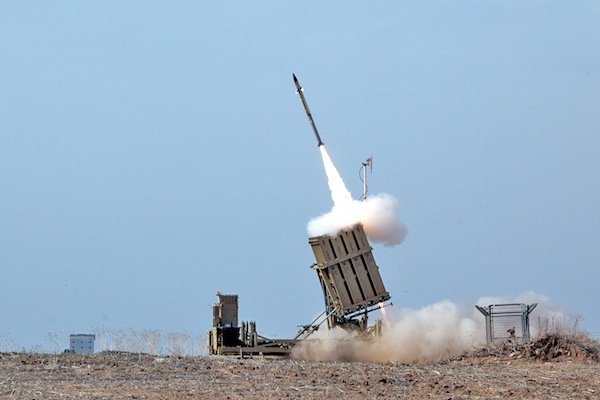
A missile from Israel’s Iron Dome is fired to intercept a missile coming from the Gaza Strip, in November 2012. (photo by Nehemiya Gershuni-Aylho/IDF)

Interesting. Sad. Frustrating. Predictable. Some five years after Operation Protective Edge, there are the same tensions and military conflagrations between Gaza and Israel. As my three-part homefront diaries from 2014 is being printed as a retrospective in the Jewish Independent (see other article on this page), Israel continues to defend itself from indiscriminate missile fire from Gaza. With this diary, I hope to capture the same sense of homefront resilience. From the mundane to the philosophical, this is how I experienced it.

Tuesday, Nov. 12, 2019: Again. A little bit tedious. This business of war. Woke up just after 6 a.m. to a siren. Incoming. Oh well. Time to get up anyway. Just a few hours earlier, Baha Abu al-Ata (try say that while standing on your head) was assassinated in a targeted killing by the Israel Defence Forces. He was a top Palestinian Islamic Jihad (PIJ) commander in Gaza.

Not much later, a text message from the school district. School canceled. My daughter happy. Twenty minutes later, several of her friends show up for breakfast. Their conversation: missiles, sirens, stress levels, locations hit. Where is the giggling? The talk of boys? Of parties? OK, there was also that. Teenagers in the homefront.

Missiles hitting as far north as Tel Aviv. Several months ago, this was a red line. An exception. Now, the norm.

My wife called her mom, who lives just outside Tel Aviv. We’re bringing her here until the missiles stop.

Wednesday, Nov. 13: Two hundred missiles slammed into Israel. Remarkably, very little damage. Did the PIJ ever hear of GPS? Shhh. Don’t tell them.

The enemy is the Palestinian Islamic Jihad. Not Hamas. Not sure the difference. Or how important it is. Both radical Islamic parties. Both fire missiles at Israel. Both want to destroy Israel. Both want to kill Israelis.

Thursday, Nov. 14: A very quiet night. And then, around 6 a.m., the missiles started again. Raining on the south. By late afternoon, another 100 missiles fired on us. Yikes.

Told to brace for several days of fighting. Most of the missiles fired today fell around the Gaza periphery. PIJ not ready for a ceasefire. Acting as if they own this game. Maybe they do. Where is our might? Our deterrence? Our “make my day” attitude? Must put an end to this constant threat. To the PIJ. To Hamas. To their ability to fire indiscriminately and nonstop at Israel. It’s not fair. “Fair.” Like that’s a concept in war.

My big question, somewhat rhetorically, but also looking for answers: how did Gaza develop so many darn missiles? Shouldn’t we have stopped this stockpiling before it got out of hand? Same mistake in Lebanon, where Hezbollah has 150,000 missiles aimed at my home. Double yikes!

Regarding the current threat – 42 missiles fired at us in last 15 minutes. Triple yikes!

And, as I was sleeping in our apartment up north, where I stay occasionally during the week because of work, a missile was shot down over Rehovot. My daughter was woken at 11:30 p.m., alone at home. She excitedly recounted the difficulty she had shutting the fortified window in our protective room. The recently replaced screen is the culprit. By the time she finally got it shut, boom! The missile was shot from the sky by our trusty Iron Dome interceptor.

I need to fix that screen for next time.

Friday, Nov. 15: The fighting has been called Operation Black Belt. A ceasefire agreement reached. Not surprisingly, the ink not yet dry, more missiles fired into Israel.

Just wondering. When ceasefires agreements signed, does the PIJ – not Hamas, I remind you – and Israel sit around a table, sign a document, exchange pens, take a few selfies? OK, silly thought. But, if they did, might be a way to reduce animosity. They could even share a drink at an “after event.” Ha.

How does Operation Black Belt impact Israel’s political woes? Still a country without a functioning government.

And Gaza has a functioning government? A rhetorical question I couldn’t refuse to ask.

More than 400 missiles fired into Israel since Tuesday. Fifty-eight Israeli civilians injured, but none seriously (I think, I hope). Not sure our number of retaliatory attacks but reportedly significant.

Our ability to pinpoint attacks is just amazing. Baha Abu al-Ata (and his wife) were taken out while sleeping in his apartment. No other deaths or damage.

Saturday, Nov. 16: My morning news feed: “Intermittent Rockets Continue to be Launched by Palestinian Islamic Jihad.” Now, isn’t that lovely. Actually, it’s difficult to distinguish the morning thunderstorm – finally raining – from the sounds of missiles and anti-missiles clashing overhead. A boom is boom is a boom.

This is a ceasefire? Middle East-style, anyway. The proverbial beat goes on.

Bruce Brown, a Canadian-Israeli, made aliyah 25 years ago. He works in high-tech and is happily married, with two kids. He is the winner of a 2019 American Jewish Press Association Simon Rockower Award for excellence in Jewish writing. This article originally appeared in the CJN.

Protective Edge retrospective

Drivers take refuge from rockets in Tel Aviv, July 9, 2014. (photo from flickr.com/photos/idfonline)

Part 1 of a three-part series, in which the author shares his diaries from the homefront, providing a glimpse of daily life under missile threat during Operation Protective Edge in 2014. For Part 2, click here; for Part 3, click here.

July 8

Operation Cast Lead, 2008. Operation Pillar of Defence, 2012. Now, Operation Protective Edge, 2014.

Naïvely, I disassociate the unraveling events from the grisly murders of teenagers Gilad Sha’er, Eyal Yifrach, Naftali Fraenkel. Then the murder of teen Muhammad Abu Khdeir. Gripping the country in horror, fear and dismay. I hope a sense of normalcy will prevail.

It doesn’t. Last evening was disrupted by 15 rockets fired over Rehovot, my little shtetl. Our Iron Dome intercepted several of them. The rest missed their targets, falling into open land. Two hundred missiles fired at Israel over the past week.

The attack took us by surprise. Pizza ordered, my son just finished his shower, my daughter hanging in her room, which doubles as our reinforced shelter. The siren sounded. Together with our dog, we ran to join my daughter in her room. A bit invasive to a teen. But she forgave us.

I took a few extra seconds. I had 30, after all. Grabbed a large bottle of water, some chocolate, a few asthma inhalers. “Dad! Get your ass in here!” my son shouted as I was scouring the kitchen for more goodies.

Then. All clear. We left my daughter’s room. I mean, the protective room. The doorbell rang. Pizzas here.

Amazed the delivery boy was still doing his rounds. I admonished him for not seeking shelter. He says he waited out the attack in our stairwell (also a reinforced area). Quite impressed with his delivery skills, gave him a large tip. The pizza arrived in less than 30 minutes, as advertised. Great job.

Went to bed a few hours later. My daughter had a difficult night. Couldn’t fall asleep and came into our room a couple times. Did our best to comfort her. But what can we say? We were attacked with missiles.

We promised our daughter she wouldn’t have to stay home alone, that she could join me at work. Not sure this was a wise promise. My office is located more south. My big worry – the drive to work. Driving there, I imagine myself in an episode of Wagon Train.

Looks like we are moving into a major ground offensive. A pending call of up to 40,000 reservists. Imagine the impact this will have on our economy, on our society. Fortunately, my son’s army duty is two years away. Somewhat reassuring, but not much, as these operations tend to repeat themselves every couple of years.

July 9

Visited our safe room twice last night. Hamas fired missiles as far north as Tel Aviv. Even targeted our capital. Didn’t expect such a quick escalation. We responded. Pounded 150 targets inside Gaza. I pity the poor Gazans suffering the slings and arrows of their leaders.

Heard another siren while walking my dog this morning. Poncho and I ran to the nearest shelter, the stairwell of a neighbouring building. Waited the mandatory 10 minutes with a mother and her child. Adding to an already complicated situation the child had cynophobia – started panicking at the site of my dog. Poncho and I chivalrously moved one floor up.

Poncho also feels the stress. Waiting in the stairwell, amid the booms and sirens, he started crying, pawing me.

I think about my son and his friends, who have a trip to Eilat planned for tomorrow. They are debating whether to go. Tough call. My wife and I also are struggling with this. That dang security factor! But there is also the heroic, stoic pizza delivery guy message. Life in Israel.

July 10

Operation Cast Lead cost $50 million a day; total cost, one billion bucks. Pillar of Defence cost $2 billion. Where is this money coming from?

We’ve destroyed more targets in the last 36 hours than in all of Operation Pillar of Defence.

More than 90 missiles were fired at Israel yesterday. Thirty were struck down by the Iron Dome. Rehovot was pretty quiet, with only one evening siren. I was home alone while my wife and kids were at the mall, which they said was totally empty. So, why were they there? Great question. One I ask every time they’re at the mall. Missiles or not.

Yesterday, we received an automated call from our mayor. Rehovot, along with other southern municipalities, has declared a state of emergency. Not sure what this means. Think we need to stay within 90 seconds of a protected space. Try factoring that into your busy day!

Morning papers filled with instructions on how to stay safe. Definitely a well-prepared country with this sort of thing. Facts speak for themselves. No casualties, despite more than 300 missiles fired at us since hostilities broke out.

My gym routine at work was disrupted by a double siren (one after the other). While waiting in the protected area, I positioned myself for a dash to the bench press once the all clear was sounded. Priorities!

The situation was becoming routine. How quickly we adapt. Calling home, I asked the standard questions. What’s up? What are you doing? What’s for lunch? Any missiles? Reading your book? A totally ordinary conversation.

My son and his friends went to Eilat, which is outside the battle zone. So, in the meantime, just the regular parental worries for a vacationing teen.

On a patriotic note, I hung a flag on our balcony today. Nothing like a good war to bring out the blue and white in me.

That night, the 1970s comic strip Love Is came to mind. Discovered a new one – love is … being alone with your wife in a bomb shelter.

July 11

A siren went off this morning while I was driving to the supermarket. Always dreaded being in a car during a siren. Seems the least safe place. There I was at an intersection, a little jittery, looking for a place to pull over and exit the car – then run for fortified cover … or lie down with my hands over my head. Spotted a place just down the road. Reminded myself I had 90 seconds to get to relative safety.

The red light took forever to change. Waiting. Waiting. Waiting. Green! A car zoomed out from behind. Cut me off. Took my coveted spot. Dang! Most drivers stopped on the spot, like when the sirens sound on Remembrance Day, so I did the same. Then bolted from my car. Crouched down. Put my hands over my head and hoped for the best.

Crouching next to me was the guy who cut me off. He also didn’t get to “the spot” in time. He apologized. We exchanged pleasantries about the unpleasant situation. And then, moved on.

What’s with the covering our heads with our hands stuff? Will that protect us from burning debris falling from the sky? I told my daughter I’m going to start driving around with her bike helmet. Though not a bad idea, it was quickly nixed. If I did that, she warned, she’d never drive with me again. Too embarrassed I guess. Teens. Even during war. Go figure.

Yesterday afternoon, the Iron Dome intercepted several missiles over Rehovot. Parts of the Weizmann Institute of Science were covered with bomb fragments. Especially by the pool. The lifeguard had ensured the kids were out of the water and ushered to safety. A miracle no one was hurt. One panicked child ran back to reclaim his sandals. The lifeguard ran after him. Unable to drag him back in time, he covered the child with his body. Bomb fragments littered the ground around them. Another Israeli hero. Like the pizza delivery guy.

A missile was fired towards the Upper Galilee from Lebanon this morning. We fired back. Hope our Lebanese friends are deterred. Certainly prefer not to open another front.

The Israel Defence Forces also has struck 1,100 Hamas targets in Gaza: 210 targets over the last day, including 81 underground rocket launchers, 21 command and control centres, 15 attack tunnels, 10 training centres, seven administrative buildings. And a partridge in a pear tree.

July 12

Woke up this morning to find my daughter watching the news. Instead of her usual Saturday morning teen programs, she was actually watching the news. One of the first tragedies of war is innocence. On the positive side, we finally got our daughter interested in the news.

Another casualty of war? Certainty. We are no longer certain about so many things. Things that affect today, things that affect tomorrow, things that affect next year. Small things, large things. Lots of things. Not certain.

Two missile attacks on Rehovot today. Surreal. Scary.

Trying to keep a normal routine. Went to a matinée today. Still planning our summer vacation. Busy with work. Busy at home. Baking chocolate chip cookies. Watching Friends reruns. Doing everything with this horrendous situation in the background. Or the foreground.

A bit despondent today. Want this to end. But what’s the end? What about the economic fallout of a $2 billion bill? What about the political and diplomatic fallout? Waiting for some good news.

Bruce Brown, a Canadian-Israeli, made aliyah 25 years ago. He works in high-tech and is happily married, with two kids. He is the winner of a 2019 American Jewish Press Association Simon Rockower Award for excellence in Jewish writing.

Iron Dome inspection

Prime Minister Binyamin Netanyahu, right, visiting an Iron Dome missile intercept control centre Nov. 14, accompanied by Israel Defence Forces Brig.-Gen. Ran Kochav. (photo from IGPO via Ashernet)

Iron Dome has a success rate of around 90%. Each Israeli missile costs some $50,000 and the cost of each battery has been put at some $100 million, but the number of lives saved and buildings protected makes Iron Dome one of the most significant military developments.

Harpers at Lake Hula opening

Laureen and Stephen Harper, centre left, and Daniel Atar, KKL-JNF world chair, centre, were among those who cut the ribbon at the Nov. 6 official opening of the Stephen J. Harper Hula Valley Bird Sanctuary Visitor and Education Centre. (photo by Michael Huri)

Former Canadian prime minister Stephen Harper was in Israel earlier this month for a four-day visit with a delegation from the Jewish National Fund of Canada, where he took part in the dedication of the new visitors centre at JNF Lake Hula Park in northern Israel, which is named in his honour.

Budgeted at $25 million Cdn, one-fifth of which was raised by the JNF of Canada, the Stephen J. Harper Hula Valley Bird Sanctuary Visitor and Education Centre south of Qiryat Shmona is seen as “the flagship project of Keren-Kayemet L’Yisrael (KKL),” the JNF’s Israel-based sister organization. Harper contributed to the cost of the project, and the auditorium is named for his wife, Laureen, in recognition of her service to Canada, friendship to Israel and dedication to the preservation of nature and wildlife.

Stephen Harper was honoured at the JNF of Canada’s 2013 Negev Dinner in Toronto. At the time, then-JNF chief executive officer Josh Cooper said: “Given his well-documented love of animals, we felt this would be an appropriate project to present to him.”

Now completed, six years after fundraising began, the facility promises to transform the experience of ornithologists and bird watchers who come to the Hula Valley. There, they can watch the twice-a-year seasonal migration of 500 million birds from more than 500 species, from Europe and Central Asia to Africa, and back.

The Hula Valley, located in the shadow of Mount Hermon, is considered the crown jewel of Israeli conservation efforts. Known in the Bible as Merom, up until the 1950s, it was full of swampland that was notorious for breeding malaria-carrying anopheles mosquitoes. In the 1950s, the wetlands were drained, with the hope that fertile farmland would result; instead, environmental devastation and the extinction of some indigenous species followed. Farming in the area was never successful and JNF ultimately decided to reflood part of the former lake.

Known in Hebrew as Agamon Hula (Little Lake Hula), the flat valley is filled with an array of birds, including cranes, pelicans and eagles. Visitors can observe the birds and also cycle around the site.

***

At the gala dinner Nov. 5 in honour of Harper, which took place at the Waldorf Astoria Hotel in Jerusalem, Israeli Prime Minister Binyamin Netanyahu spoke about the danger Iran’s nuclear ambitions poses for Israel, the Middle East and the West.

“Iran expands its aggression everywhere. It seeks to envelop Israel. It seeks to threaten Israel. It seeks to destroy Israel. We fight back,” Netanyahu said. “I also want to say, given Iran’s efforts to expand its nuclear weapons program, expand its enrichment of uranium for making atomic bombs, I repeat here once again – we will never let Iran develop nuclear weapons. This is not only for our security and our future; it’s for the future of the Middle East and the world.”

Netanyahu was particularly concerned about Tehran’s plans to start injecting UF6 (uranium hexafluoride) gas into the centrifuges to enrich uranium to five percent at the heavily fortified underground Fordow Fuel Enrichment Plant, located inside a mountain 32 kilometres northeast of the Shi’ite holy city of Qom.

Earlier in the day, Iran’s nuclear chief Ali Akbar Salehi promised that his country would violate the element of the 2015 nuclear deal known as the Joint Comprehensive Plan of Action, which Tehran had worked out with the P5+1 (China, France, Germany, Russia, the United Kingdom and the United States). The United States left the deal last year and has imposed sanctions on Iran in an attempt to force it to renegotiate the document. Tehran, in turn, has begun violating the deal in an attempt to pressure the United States to recall the sanctions.

Under the 2015 agreement between Iran and world powers, Iran agreed to turn Fordow into a “nuclear, physics and technology centre,” where 1,044 centrifuges would be used for purposes other than enrichment, such as producing stable isotopes, which have a variety of civil uses. The deal bans nuclear material from Fordow and, by injecting UF6 into centrifuges, the facility will become an active nuclear site rather than a research plant as permitted under the pact.

***

Since leaving Parliament after the Conservative party was defeated in the 2015 federal election by the Liberals, Harper has become president of the Awz venture capital fund advisory committee. The fund, founded by managing partner Yaron Ashkenazi, specializes in investments in Israeli security and intelligence startups, and manages $100 million in assets. The fund has invested in 12 companies to date, according to the Israeli financial website Globes.

Harper, an enthusiastic supporter of Israel, has visited many times. On Jan. 20, 2014, he addressed the Knesset plenum, saying: “It is, thus, a Canadian tradition to stand for what is principled and just, regardless of whether it is convenient or popular. But, I would argue, support today for the Jewish state of Israel is more than a moral imperative, it is also of strategic importance, also a matter of our own, long-term interests…. For too many nations, it is still easier to scapegoat Israel than to emulate your success.”

About the education centre, he said in a statement, “This park is one of the greatest restoration stories, just like this country is to the Jewish people. It is a magnificent honour to have this centre named after my name, and I am grateful for this beautiful occasion.”

Gil Zohar is a writer and tour guide in Jerusalem, Israel.

On return to Canada, life changes

Victor Neuman (photo from Victor Neuman)

In this eight-part series, the author recounts his life in Israel around the time of the 1973 Yom Kippur War. The events and people described are real but, for reasons of privacy, the names are fictitious.

Part 8: Epilogue

In a backhanded, minor way, I was a casualty of the war, too. The lack of help during the conflict meant I had to work alone trying to preserve the banana crop. One day, on my tractor, I was in a hurry, carrying several sacks of fertilizer to the fields. They had to go into the distribution tank before the irrigation timers flipped a switch and began irrigating another field. Someone at the kibbutz had helped me load them onto the hood of the tractor, with the idea that, at that height, I could drop them easily into the tank at the other end.

It didn’t work out that way. I hit a rut in the road and all the sacks slid to the ground. As fast as I could, I reloaded all the bags – which were 50 kilos each – lifting them from the ground to the tractor hood, and carried on. I felt OK at the time but I had herniated a disc in my back. The pain started later that day and got worse over the next few days. I saw a doctor in Hedera and got a daunting prognosis. My back might need surgery but no surgery would be possible in the near future. Wounded soldiers had priority, so only life-saving procedures were available to civilians. Had I been lucky enough to have been shot as well, they could have done something for my back.

I had to return to Canada to get the operation and, although I didn’t realize it at the time, my time in Israel was coming to an end. My plan was clear in my head. I would go home, get the surgery, return to Israel cured, become a kibbutz member, marry Tamar and live happily ever after. As the saying goes: “Man plans and God laughs.”

Away from Tamar in Canada, I had the growing realization that I wasn’t going back to Israel. The best explanation I can give is to repeat what a friend once told me.

He was a rude bugger but he had the right of it when he said, “Millions of years of evolution have turned men into slobbering idiots around women. Our problem is that we’re always thinking with the wrong head.”

Whatever Tamar and I had going on, it wasn’t happening between my ears. As beautiful as she was, I couldn’t imagine spending my life with her and I had to end things. And, if I ended things, I could never return to the kibbutz after jilting their darling firstborn-on-kibbutz child. And that particular kibbutz was the only place in Israel where I could imagine a life for myself.

It was over in every sense and way. I wrote a painful letter to Tamar. She wrote an even more painful letter back to me, using English expressions I didn’t know she had. She hated me. That made two of us. Lost another woman. Lost a country. Lost my purpose in life. How careless can you get?

Ironically, my back injury, which had started the whole process of turning my life on its head, simply healed itself. No surgery and no pain after just a few months. My life had completely changed direction because a few sacks of fertilizer fell off a tractor. Once again, life turning on a dime.

As much as I loved English literature, I still had no notion of how to use my master’s degree. Teaching wasn’t my thing and, with that degree, there wasn’t much else. I had to change gears – drastically. Then I recalled something from my time doing archeology.

While we tourist-volunteers struggled in the heat and dust, digging endlessly to uncover the ruins of Tel Beersheva, a surveyor stood over us and used his instrument to map out the location of walls as they were discovered. To do it, he spent most of his time staring through his instrument at his survey assistant – a woman in a two-piece bathing suit who was holding the survey rod. I started thinking an archeological surveyor was the job for me. You may think of me as a shallow person. In my defence, I am.

To make a long story short, I began studying survey technology at the British Columbia Institute of Technology. That morphed into surveying fish hatcheries, which morphed into surveying logging roads, which morphed into designing logging roads, which morphed into a lifelong career designing highways for the Province of British Columbia and an engineering firm called Binnie Engineering Consultants. Nowhere along the line did I ever do archeological surveying, and the only survey assistants I ever had wore flannel shirts, jeans and hiking boots.

In time, my road design work left me feeling a little parched, culturally. I decided to join the Vancouver Jewish Folk Choir. There, I met the gal who has been the love of my life for the past 31 years and counting. After meandering through life for what seemed like an eternity, what I wanted was crystal clear to me. I wanted her. And I learned something about finding my purpose in life. The main deal is to find the right person. The rest is just commentary.

We had our first date on New Year’s Eve. We were engaged by February and planning to be married by May. Her family was apoplectic about the timeline so we pushed the marriage date to September. I’ve stuck by her and she is stuck with me. And so, more than 30 years after puberty, I was finally all grown up. And you know what? By all I hold dear, she is the most beautiful creature I’ve ever laid eyes on.

Time is a river, they say, and this river may have almost run its course to the sea. But I remember the stream that became that river. I can never get Israel out of my mind, after all this time. And my leaving that country to lead the easy, secure life in Canada will always haunt me. It was 1974 and I still remember, clear as a bell, the sign I passed in Lod airport on the way to my plane home. In Hebrew and English, it said: “Will the last one to leave the country please turn off the lights.” Even believing I was soon coming back, I felt like a traitor.

A long time ago, when I was courting the dear lady I married, I did something very old-fashioned. I wrote her love poems. She may have married me because of them or in spite of them, I’m not sure which. I reread one of them recently and something dawned on me. It wasn’t a poem just for my beloved. It was also a poem for everybody in that land; everybody trying to hold onto their place in the sun or everybody trying to find it. It’s called “Magic”:

On this shattered summit / Over plains flooded red by sunfall / Where insect armies sullen, blooded / Crawl craters in search of victim’s missed / We perch uneasily / And wonder at a lethal world

But then, conjured by you / I felt for one bedazzled, high moment / We were magicians such as none before / And with our silk top hats / And our crimson capes, love-woven / We could pluck rabbits out of a hat / Launch birds out of a box / Or trick the world into decency.

(Previously: “Learning the lay of the land”; “When Afula road went quiet”; “Tending the banana fields in war”; “Weapon training begins”; “Near tragedy on guard”; “Fighters return to kibbutz”; “The fire-like impacts of war”)

Victor Neuman was born in the former Soviet Union, where his family sought refuge after fleeing Poland during the Second World War. The family immigrated to Canada in 1948 and Neuman grew up in the Greater Vancouver area. He attended the University of British Columbia and obtained a BA and MA with majors in English literature and creative writing. Between 1968 and 1974, he made two trips to Israel, one of which landed him on a kibbutz at the time of the 1973 Yom Kippur war. Upon his return to Canada, he studied Survey Technology at BCIT and went on to a career of designing highways for the Province of British Columbia and the firm of Binnie Civil Engineering Consultants. When he retired, he reconnected with his roots in creative writing and began writing scripts for Vancouver Jewish Folk Choir concerts and articles for the Jewish Independent. Neuman and his wife, Tammy, live in southeast Vancouver and enjoy the company of friends, their extensive extended family and their four sons.

The fire-like impacts of war

Life for many kibbutz members changed after they served in the war. (photo by Victor Neuman)

In this eight-part series, the author recounts his life in Israel around the time of the 1973 Yom Kippur War. The events and people described are real but, for reasons of privacy, the names are fictitious.

Part 7: The Ceasefire

The ceasefire came on Oct. 25, 19 days after the war had begun. It was a short war, if you look at it one way. In another way, it was a short episode in a long war going back to 1948 and stretching forward to a distant and indiscernible point. With the Yom Kippur War, we came to realize that Israel’s enemies could fight and lose many wars and still exist, while Israel could not afford to lose even one.

Still, we were grateful for the end of hostilities and longed for the return of all of those who had gone to fight from the kibbutz. Remarkably, they all survived to return. Remarkable because kibbutz soldiers had a reputation for aggressive leadership and devotion to duty. At that time, the statistic most often referenced was that only five percent of the population of Israel lived on kibbutzim but 20% of the officers in the Israeli military were kibbutz members. Correspondingly, they routinely made up a high percentage of war casualties.

But, just because no one was dead did not mean that nothing had died.

Tzvie and Ari seemed unfazed by the experience. They were back in the bananas with me and back to their joking ways. We were all sitting around having lunch, heads down in our plates when Tzvie popped up, threw a banana peel at Ari and then pretended to be eating like everybody else. Ari first faked a return throw and then threw it in earnest, hitting Tzvie on the side of the head.

“Hey! Why do you think it was me?” said Tzvie.

“I didn’t know at first so I just pretended to throw back. Only you ducked. The one who ducks is the guilty party.”

When they weren’t pranking each other, they were happily preparing for their return to Europe. The kibbutz had voted to give them another vacation to replace the one they had cut short to help in the war.

Others who returned were not the same. Yossi, a quiet youth, was a medic in the war. I had never worked with him nor had a close friendship with him, though, as I did everybody on the kibbutz, I saw him around a lot. Now, I was not seeing him around much. Not in the dining hall, not in the recreation room, not in any of the places kibbutzniks normally gathered. I passed by his flat and noticed a tray of food outside his door. When I asked a friend of his what was going on, he told me that Yossi hadn’t come out of his room since coming back. His friends decided that, if they couldn’t coax him out, at least they could make sure he didn’t starve to death. They would leave a food tray and he’d retrieve it when no one was around, and then put the empty tray out to be picked up. This went on for two weeks before Yossi finally began to appear and made the attempt to begin living again.

Yossi on the one hand, Tzvie and Ari on the other. I suppose war is a fire that can melt some metals and harden others.

Then there was Aryeh, one of our youngest who went to fight. He was still undergoing the three-year service requirement when the war broke out.

Aryeh drove an armoured personnel carrier and had been patroling in his vehicle near the ceasefire lines in the Golan. Night-driving conditions on the border required that headlights be cut or suppressed to reduce the vehicle’s visibility to the enemy. A member of Aryeh’s crew pestered him to let him drive the vehicle. The man was not an experienced driver but Aryeh let him take over the wheel. In a short time, the new driver lost control of the carrier and rolled it off the side of the road – Aryeh’s neck was broken and he was rendered a quadriplegic.

Aryeh was released from the hospital when they had done all they could for him. He required ongoing care but his doctors felt he needed to be home, where his family and friends were. They equipped his bed and room with every gizmo known to mankind and left him to make what he could of his life.

We all were horrified by what had happened to him and it became a kind of required pilgrimage to visit Aryeh and pass some time with him. Tamar was particularly determined to be at his side as much as she could. When we visited him, we were all so damned cheerful.

“Try to keep his spirits up,” we told ourselves. So, we joked, we gossiped, we kibbitzed, we pretended. Tamar was better at it than I was. She was naturally talkative, inherently upbeat and she carried on beautifully.

Aryeh was like Tamar – relentlessly cheerful. He never complained about his condition, never even talked about it. Those were conversations that were kept in his own head and I could only imagine the price he paid for what he couldn’t say.

Thinking about it later, I came to realize I’d do the same in Aryeh’s situation. Here you are, 20 years old, with no working arms or legs, no future to speak of. Perhaps no wedding or kids or life. All you have are your friends. Do you really want to drag them into your abyss to the point where they start avoiding you? Lose the last thing that gives you any semblance of contentment? And so, you let the tears flow when you are alone and the jokes flow when you have company. As I said, relentlessly cheerful.

Our next door neighbour, Shmuel, came home to his wife and two kids. I was incredibly glad to see him. When Shmuel was called up, he was in the middle of a birthday party for one of his two daughters, the 9-year-old. He finished the party, got into his uniform, grabbed his gun and then stopped in to see me before he headed north.

“I have a favour to ask, Kanadi.”

I knew that, in two hours, he would be on the front lines in the Golan. And that, three hours after his daughter’s birthday party, he could be dead. I was ready to give him any damn thing he wanted.

“I understand your parents in Canada shipped you a crate with a stereo system – the one you have on Tamar’s bookshelf. I was wondering if I could get the wood crate from you. I want to make a wagon for my kids.”

“Yes, take it,” I said. “And take the stereo, too.”

He treated it as a joke but I was only half-kidding. In that moment, there wasn’t enough I could do.

But Shmuel came back. I wanted to give him a bear hug when I spotted him walking up the path but his family called dibs.

The war was over. Or, to put it more accurately, this war was over.

(Next Time: Epilogue)

(Previously: “Learning the lay of the land”; “When Afula road went quiet”; “Tending the banana fields in war”; “Weapon training begins”; “Near tragedy on guard”; “Fighters return to kibbutz”)

Victor Neuman was born in the former Soviet Union, where his family sought refuge after fleeing Poland during the Second World War. The family immigrated to Canada in 1948 and Neuman grew up in the Greater Vancouver area. He attended the University of British Columbia and obtained a BA and MA with majors in English literature and creative writing. Between 1968 and 1974, he made two trips to Israel, one of which landed him on a kibbutz at the time of the 1973 Yom Kippur war. Upon his return to Canada, he studied Survey Technology at BCIT and went on to a career of designing highways for the Province of British Columbia and the firm of Binnie Civil Engineering Consultants. When he retired, he reconnected with his roots in creative writing and began writing scripts for Vancouver Jewish Folk Choir concerts and articles for the Jewish Independent. Neuman and his wife, Tammy, live in southeast Vancouver and enjoy the company of friends, their extensive extended family and their four sons.

Important finds in Usha

A 1,400-year-old hammer and nails, found at the ancient city of Usha. (photo by Yoli Schwartz/IAA via Ashernet)

An Israel Antiquities Authority (IAA) excavation some 15 kilometres east of Haifa at the ancient city of Usha revealed a 1,400-year-old hammer and nails, confirming that the ancient inhabitants of Usha manufactured iron tools.

photo - One of the broken wine glasses found in Usha
One of the broken wine glasses found in Usha. (photo by Yoli Schwartz/IAA via Ashernet)

The IAA’s community excavation, carried out predominantly by youth and volunteers, has exposed part of a Jewish settlement with ritual baths, oil presses and winepresses. Indications are that the primary occupation of the Usha inhabitants was the large-scale processing of the olive trees and vines they cultivated on the surrounding hills. The discovery of the ritual baths indicates that the Jewish press workers took care to purify themselves in the ritual baths in order to manufacture ritually pure oil and wine.

According to Yair Amitzur, director of the excavation and of the Sanhedrin Trail Project for the IAA, “the settlement of Usha is mentioned in the Jewish sources many times in the Roman and Byzantine periods, as the village where the institution of the Sanhedrin was renewed, after the destruction of the Temple in Jerusalem, and after the failure of the Bar Kochba Revolt in 135 CE. The Sanhedrin was the central Jewish council and law court, and it was headed by the president, Rabban Shimon ben Gamliel the Second, who presided in Usha, and then his son, Rabbi Yehudah Hanasi. Here, in Usha, the rabbis of the Sanhedrin made decrees to enable the Jewish people to recover after the war against the Romans, and to reconstruct Jewish life in the Galilee.”