Culture & accessibility

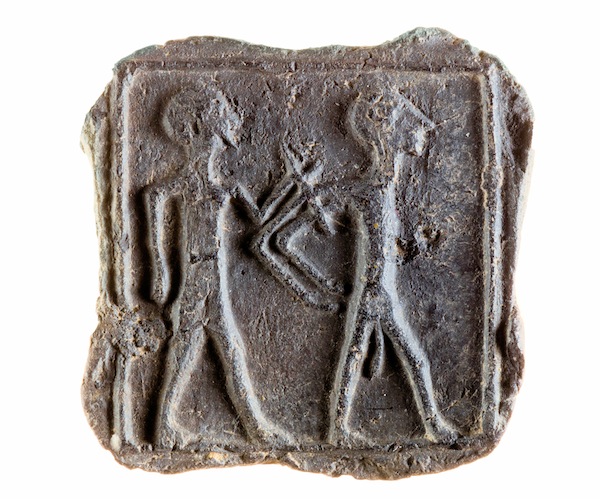
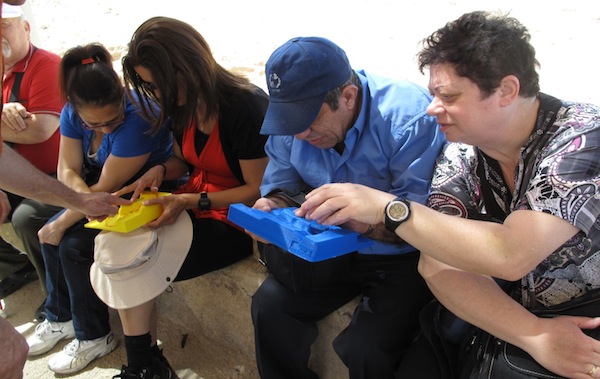
Visitors to Masada learn more about the site through Gadi Mathov’s miniature model of the landmark. (photo from Mathov Design)

What would it take to make museums, cultural sites and tourist attractions more accessible to people with visual, intellectual or developmental disabilities? For the past 25 years, Israeli professional miniaturist Gadi Mathov has been working on solving this problem using models.

At Masada National Park, for example, people with visual impairment can understand the site’s unique topographical structure and history through Mathov’s 3D tactile models.

“We also created for them miniature models of siege vessels that illustrate the Roman siege of Masada,” he explained. “The way I define it, a model is a physical representation of a product or an idea. A model is a medium that allows people to communicate and pass along ideas between them.”

Mathov Design models are used in leading cultural institutions such as the Israel Museum and sites managed by the Israel Antiquities Authority and the Israel Nature and Parks Authority. Mathov also cooperates with the Commission for Equal Rights of Persons with Disabilities, the National Insurance Institute and the Access Israel nonprofit organization.

Mathov Design’s 100-square-metre model of Jerusalem, featuring the Temple Mount, the Tower of David, the Knesset, the new Jerusalem Light Rail and other iconic structures, can be seen in Times Square in New York City as part of the Gulliver’s Gate project.

Birdwatching via models

Agamon Hula, a must-visit birdwatching and natural beauty attraction in northern Israel, is also enhanced by Mathov’s models. Here, he cooperated with Pnina Ceizler, Keren Kayemeth LeIsrael-Jewish National Fund’s northern region projects and accessibility coordinator, and KKL-JNF’s chief ornithologist Yaron Charka to make the site’s research station a place of interest for people with disabilities – visitors can see and/or feel models of the birds that migrate in the area, as well as special globes and maps that highlight migratory routes.

“There are quite a few models that we’ve created to enhance the experience for people with visual impairments,” said Ceizler. “We see that it’s useful for everyone, also for children with disabilities or with autism.”

The accessible experience at the research station has proved to be a huge hit, she told Israel21c. She tried it out on a group of people with visual impairments before opening it up to private visitors and organized trips for schools and people with special needs.

“They enjoyed this whole experience up close. They were impressed and admired everything,” she said of the accessible centre’s first visitors.

Back to the future

Mathov has worked in his profession for 37 years, but it came about quite by accident. “It was a temporary job while I was an architecture student, and then I found out that I liked it better,” he recounted.

Decades later, he’s still in love with the job. “They’ll have to take me out of here in a coffin,” he joked, speaking of his workshop in the central city of Lod.

Along with cultural institutions, his clients include the defence establishment and medical instrumentation companies.

Mathov is not worried about work drying up in the age of technological advancement. “There’s nothing more comfortable or clearer than a model,” he said. “There are dozens if not thousands of uses.”

Lately, it’s become much easier and cheaper to create a model. “The biggest development was the introduction of what we call computerized production,” Mathov explained, citing 3D printers, lasers and CNC (computer numerical control) machines. “Each of these technologies helps us create a much more complex and higher-quality product in less time and for a cheaper price.”

Mathov hopes that, one day, people will be able to print out models at home of the places they’re planning on visiting. “Today, no one goes to the store to buy music; no one goes to Blockbuster to watch a movie. I imagine that, when you’ll want a miniature model, you won’t go to a miniaturist. You’ll be able to download them and print them by yourself,” he explained.

However, printing is only the end of a process that begins with human creativity. Mathov said a model should contain “the human spark of the soul of the person who created it.”

And, while he mourns the disappearance of craftsmanship, Mathov is a firm believer in advancement. “You have to keep on looking forward,” he said. “To understand what the technologies are and where they’re heading; how to adopt them or compete against them or circumvent them.”

For more information, visit mathov.co.il/English.aspx.

Israel21c is a nonprofit educational foundation with a mission to focus media and public attention on the 21st-century Israel that exists beyond the conflict. For more, or to donate, visit israel21c.org.


Israeli start-up’s Beehome

Beewise wants to replace traditional, wooden hives with high-tech, autonomous ones. (photo from Beewise)

What do cucumbers, avocados and coffee all have in common? Aside from being absolute necessities (yes, avocados, too), they’re all crops pollinated by bees. And, if things keep heading in the current direction, we’re screwed.

Bees are extremely important. About one-third of all plants and plant products consumed by humans are dependent on bee pollination. Unfortunately, the combination of modern demand and natural stresses such as climate change, pests and illness mean that the global bee population is dying at a dizzying rate, endangering our diets and well-being.

To combat this, efforts are being made to rehabilitate the bee population. In Israel, these endeavours are given a very Start-Up Nation twist, complete with computer vision, artificial intelligence and precision robotics, which are all part of the world’s first autonomous beehive, developed by Israeli start-up Beewise. Called Beehome, it’s a device that can house up to 40 bee colonies – that’s two million bees – and take care of their health and upkeep through an app on the beekeeper’s phone or tablet.

“It’s what’s called a disruptive innovation,” said Beewise chief executive officer Saar Safra. “We’re coming to replace all the beehives in the world.”

photo - Beewise chief executive officer Saar Safra
Beewise chief executive officer Saar Safra. (photo from Beewise)

The idea for an autonomous beehive came from Safra’s business partner, Eliyah Radzyner. A beekeeper by profession, Radzyner was aghast at the fact that beekeeping methods have not progressed for ages. He was convinced that a computer, machine or robot could do a much better job, and joined forces with Safra, a serial entrepreneur.

At present, most beehives around the world look like they did some 150 years ago – plain wooden constructions whose upkeep requires beekeepers to dress in full hazmat mode and light a smoker before opening them up, taking care of pests, supplying the bees with food and water and harvesting the honey. All this extensive manual labour means that commercial beekeepers, who take care of most of the bees in the world, only get to each hive about once every few weeks. Lots of bees are lost in between rounds to illness, pests and other problems.

“If you manage to identify the problem at the outset and take care of it in a specific manner, then, first off, it will be a lot less invasive; second, you’ll resolve the problem before it becomes a concern; and, third, you’ll save the bee,” Safra explained.

“We built a beehive that knows how to do these things,” he said, listing its three main components: artificial intelligence, computer vision and precision robotics.

The first, he said, is in charge of recognizing and identifying problems at the very outset. A real-time response is then carried out using computer vision to detect and monitor the situation, with precision robotics executing the required solution. The only things in the autonomous hive that require a human hand are filling the water and food and collecting the honey, which is harvested by machine.

photo - In Beewise's hives, even the honey is harvested by machine
In Beewise’s hives, even the honey is harvested by machine. (photo from Beewise)

While there are other companies trying to take care of bees amid the crisis, no one else has built an autonomous beehive. Currently in beta stage, Beehome is now being used by some commercial beekeepers.

“At first, there’s skepticism, because it’s so left-field,” Safra noted. “The moment we show people the device and that it works, there’s unbelievable excitement.

“There are beekeepers who are second, third or fourth generation. The beekeeper sees how his business is disappearing before his eyes, on his watch,” he added. “Then you suddenly show him this technology, this solution, and he sees that it works. Imagine what a relief that is.

“The idea that we’re saving bees using technology is an amazing thing,” Safra said. “When you take AI and apply it to traditional industries that haven’t been touched in 150 years, the yield is incredible.”

The funding for Beewise came from venture capital funds, as well as from European and Israeli grants. And doing business in Israel has been wonderful, said Safra, who returned to the country some two years ago after 15 years in the United States.

“The ecosystem in Israel is amazing. It’s simply optimized for start-ups,” he said. “There’s also a crazy infrastructure in terms of services and everyone knows how to work in startup mode.”

Beewise aims to be the new standard, Safra said. “There are 90 million beehives around the world. They’re all wooden beehives that don’t work anymore.

“We’re doing well by doing good,” he concluded. “Every hive that I create and which functions and succeeds – the result is more bees alive.”

For more information, visit beewise.ag.

Israel21c is a nonprofit educational foundation with a mission to focus media and public attention on the 21st-century Israel that exists beyond the conflict. For more, or to donate, visit israel21c.org.


Take time to see Maskit

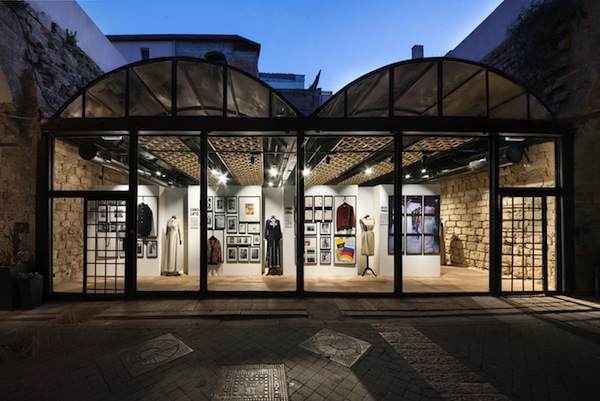
Maskit is located at 4 Auerbach St., in Jaffa. (photo from Maskit)

When next in Israel, in addition to walking the beaches of Tel Aviv, being spiritually uplifted at the Wailing Wall in Jerusalem and enjoying the food across the country, carve out some time to see the fashion houses that have put Israel on the map.

Over the last few years, Israel has been leading in the fashion industry, with numerous graduates from Shenkar College of Engineering, Design and Art landing jobs with renowned fashion ateliers in Europe. But let’s take a step back in time.

In the 1950s, post-independence, immigrants from Yemen and Morocco arrived in Israel. The government sought to train the women in textiles in order to provide for their families. At the time, Ruth Dayan (Moshe Dayan’s wife) was approached to lead the women and, seeing their talent in embroidery and weaving, she suggested that the government and a Hungarian designer, Fini Leitersdorf, initiate a designing business.

The House of Maskit became the headquarters of fashion, with Ruth Dayan as the principal designer. Maskit became famous for their signature caftan, with embellishments of embroidery, textures and the colours of Israel. At their peak, Maskit was featured in Vogue. Their tunic-style creations were considered art, gaining world recognition, enabling them to sell in Bergdorf Goodman, Neiman Marcus and Saks. As Maskit’s success grew, a higher-end line was introduced, which had buttons made from river stones, olive trees and pure silver. The fabrics were from the finest sheep’s wool, as well as silk, linen and cotton.

In the 1970s, however, the Israeli government stopped funding Maskit, shifting its spending to other priorities, notably the military. Ruth Dayan stepped down and, ultimately, Maskit closed.

Full speed ahead some 30 years, designer Sharon Tal, who graduated from Shenkar, returned to her native Israel after designing for the House of Lanvin in Paris and Alexander McQueen in London.

Although a new mother, she was still working, involved with a British lifestyle website that focused on the trends in Israel. Tal’s aha moment came when she saw Duchess of Cambridge Kate Middleton’s wedding dress, which was designed by the House of Alexander McQueen. Upon viewing the outfit, with its elaborate embroidery, she knew it was time for her to get back to design.

Together with her husband, Nil, they discovered that the House of Maskit was ready to reopen. Tal picked up the phone and called Ruth Dayan, then 94 years old. The two became friends and Maskit eventually was reborn, in 2013, melding together its history and Tal’s designs, known for their soft lines and feminine feel.

Maskit’s clients include actresses like Sarah Jessica Parker and Jamie Lee Sigler. However, one of the greatest honours was when the late first lady of Israel, Nechama Rivlin, bestowed then-U.S. first lady Michelle Obama with a coat designed by Tal on a visit to Israel.

The couturier’s home is in Jaffa, where Tal has her atelier. The décor is wondrous, with stone walls, warm natural hues and rows of heavenly designs displayed. On your next visit, do some shopping for what are sure to be lifetime classics.

For more information, visit maskit.com.

Ariella Stein is a mother, wife and fashion maven. A Vancouverite, she has lived in both Turkey and Israel for the past 25 years.

Beauty of spring in Israel

Spring. Every year, it returns like a miracle and Israel is carpeted with wildflowers. There are nearly 3,000 types of wild plants in this tiny land, a wonderful profusion, among the most abundant on earth. Israel boasts a variety of different ecological systems – deserts and marshes, high mountains, dense forests and open fields, with wildflowers to suit each habitat.

Wildflowers are protected in Israel and nature reserves prohibit the picking of any flowers, even the most common, which helps them to propagate over wider areas. In turn, this brings the sunbirds, which feast on their nectar.

The Song of Songs, which we read every Passover, is a most beautiful love poem. King Solomon wrote it as a dialogue between a young shepherd and his beloved: “Rise up, my love, my fair one and come away / For lo, the winter is past / The rain is over and gone / The flowers appear on the earth / The time of singing is come / And the voice of the turtle is heard in the land.”

The flowers he refers to, nitzanim, still carpet the fields – shiny red poppies flaunting scarlet beauty in the grass.

In Jerusalem Forest, delicate cyclamens bloom in the crevices between the rocks. Called Solomon’s Crown (in Hebrew), they lift their pink, cream or lilac heads on slender stalks. Clumps of wild violets, the dew shimmering like diamonds, add their touch of magic.

Israel’s rainy season, mid-October to late March, leaves a bequest of green. Sharon Valley is dotted with tulips and narcissus. “I am the rose of Sharon, a lily of the valleys” – it is believed that King Solomon was referring to the magnificent black tulips of the Galilee.

In spring, even the weeds in Israel are pretty – the milk vetch, which is a thistle, adds purple blooms to the roadside. The rockrose is abundant in forest glades and the orange ranunculus bursts into bloom. Like its velvety cousin, the anemone, it is a protected wildflower in Israel.

The perfume of daffodils – which suffused the winter – still wafts on the breeze and the white, cream, yellow and blue noses of lupins are pushing through the soil. Oleanders are in bud, growing wild by the banks of the River Jordan and near streams in Galilee, promising a burst of summer beauty. And the blue statica reminds us that we, too, have a Mediterranean coast like the famed Riviera. This lovely sea plant flowers from mid-spring to mid-summer, when its corolla drops off and only the sepal remains.

Who says Israel has almost no natural resources? When you see the splendour in the grass of the land’s spring glory, the wildflowers glowing like jewels, you’ll echo the poet’s words: “Had I but two loaves of bread / I would sell one of them / And buy white hyacinths to feed my soul.”

Dvora Waysman is a Jerusalem-based author. She has written 14 books, including The Pomegranate Pendant, which was made into a movie, and her latest novella, Searching for Sarah. She can be contacted at dwaysman@gmail.com or through her blog dvorawaysman.com.

Predicting diabetes risk

A new computer algorithm can predict in the early stages of pregnancy, or even before pregnancy has occurred, which women are at a high risk of gestational diabetes. (photo from Weizmann Institute)

A new computer algorithm can predict in the early stages of pregnancy, or even before pregnancy has occurred, which women are at a high risk of gestational diabetes, according to a study by researchers at the Weizmann Institute of Science.

The study, reported recently in Nature Medicine, analyzed data on nearly 600,000 pregnancies available from Israel’s largest health organization, Clalit Health Services.

“Our ultimate goal has been to help the health system take measures so as to prevent diabetes from occurring in pregnancy,” said senior author Prof. Eran Segal of the institute’s computer science and applied mathematics, and molecular cell biology departments.

Gestational diabetes is characterized by high blood sugar levels that develop during pregnancy in women who did not previously have diabetes. It occurs in three to nine percent of all pregnancies and is fraught with risks for both mother and baby. Typically, gestational diabetes is diagnosed between the 24th and 28th weeks of pregnancy, with the help of a glucose tolerance test in which the woman drinks a glucose solution and then undergoes a blood test to see how quickly the glucose is cleared from her blood.

In the new study, Segal and colleagues started out by applying a machine learning method to Clalit’s health records on some 450,000 pregnancies in women who gave birth between 2010 and 2017. Gestational diabetes had been diagnosed by glucose tolerance testing in about four percent of these pregnancies. After processing the dataset – made up of more than 2,000 parameters for each pregnancy, including the woman’s blood test results and her and her family’s medical histories – the scientists’ algorithm revealed that nine of the parameters were sufficient to accurately identify the women who were at a high risk of developing gestational diabetes. The nine parameters included the woman’s age, body mass index, family history of diabetes and results of her glucose tests during previous pregnancies (if any).

Next, to make sure that the nine parameters could indeed accurately predict the risk of gestational diabetes, the researchers applied them to Clalit’s health records on about 140,000 additional pregnancies that had not been part of the initial analysis. The results validated the study’s findings: the nine parameters helped accurately identify the women who ultimately developed gestational diabetes.

These findings suggest that, by having a woman answer just nine questions, it should be possible to tell in advance whether she is at a high risk of developing gestational diabetes. If this information is available early on – in the early stages of pregnancy or even before the woman has gotten pregnant – it might be possible to reduce her risk of diabetes through lifestyle measures such as exercise and diet. On the other hand, women identified by the questionnaire as being at a low risk of gestational diabetes may be spared the cost and inconvenience of the glucose testing. (Visit weizmann.ac.il/sites/gd-predictor to access the self-assessment questionnaire.)

In more general terms, this study has demonstrated the usefulness of large human-based datasets, specifically electronic health records, for deriving personalized disease predictions that can lead to preventive and therapeutic measures.

The work was led by graduate students Nitzan Shalom Artzi, Dr. Smadar Shilo and Hagai Rossman from Segal’s lab at the Weizmann Institute of Science, who collaborated with Prof. Eran Hadar, Dr. Shiri Barbash-Hazan, Prof. Avi Ben-Haroush and Prof. Arnon Wiznitzer of the Rabin Medical Centre in Petach Tikvah; and Prof. Ran D. Balicer and Dr. Becca Feldman of Clalit Health Services.


Worst traffic in the OECD

In central Tel Aviv, a driver slotted their car in between two properly parked vehicles. (photo from Ashernet)

Traffic density on Israel’s roads averages about 2,800 vehicles per kilometre, worst of all the OECD countries, for which the average is around 800 vehicles/kilometre; after Israel, Spain comes in at number two, with 1,300 vehicles/kilometre. As both the standard of living in Israel and the country’s population increase rapidly, the road and rail infrastructure, as well as the development of public transportation, are not keeping pace, even though there is a high price to pay for congestion. Israel’s Ministry of Finance put the cost of congestion in Israel at approximately $10 billion per year.

Promoting fair trade in Israel

Raz Frogel (photo from Fair Trade Israel)

Raz Frogel, 23, has taken it upon himself to increase the number of fair trade items on Israeli store shelves.

Frogel, who lives in Dror Israel commune in Haifa, first read about child labour and improper working conditions when he was 16 years old. The article was about people working in cocoa fields and, after reading it, he announced to his parents that he would no longer eat chocolate, and explained why. He then spent the next two years in search of a solution.

“When I was 18 years old, I found fair trade and started doing research about it and looked into where I could find fair trade products,” Frogel told the Independent. “When I was released from the army, I started the fair trade movement in Israel.”

In his research, Frogel came across a 2016 article in the Independent: jewishindependent.ca/many-benefits-of-fair-trade.

“I realized nobody in Israel tried to promote fair trade or was trying to change the situation,” said Frogel. So, he took on the responsibility “and started to spread word of fair trade in Haifa, trying to make Haifa the first Fair Trade City in Israel. There are 2,000 cities in the world with the designation of fair trade towns,” he said, “but none in Israel.”

Frogel said many people try to shame companies into becoming fair trade employers, but he sees this as a wrongheaded approach, akin to movements and groups promoting the boycott of Israeli companies and products.

“We try to focus on the good companies and give them our support, and not on companies with what we see as wrong or bad practices,” he said. “I don’t want to shame anybody. I just want everybody to go fair trade.”

As a first step to achieve this goal, Frogel is trying to raise awareness.

“When you walk on a street in Israel, you can ask 10 people what fair trade is and maybe one will know,” he said. “So, before we can go to the companies and ask for fair trade products and change behaviour, we need to educate the public, create awareness.

“Ten years ago, there were no vegan products in Israel, but, when the community and demand grew and grew … there is now no coffee shop without soy milk or something like that. So, with fair trade, we need to copy this process. We need to raise awareness, create demand, and create communities that create demand. Then, we need to go to companies and ask for fair trade products.”

About 20% of Israelis live in poverty, the majority of whom are women, some of whom are paid less than minimum wage and suffer from other unfair labour practices. With this in mind, Frogel connected with an organization working to empower women. So far, Achoti (My Sister) is the only business in Israel that uses fair trade.

While fair trade in the food industry is a relatively known issue, Frogel pointed out that the fashion industry is also problematic.

If workers need to be paid more, that extra cost could be added to the price of the product. But, the extra money paid to the workers could come from another part of the industry chain. And, while investors want the highest possible return, it is up to us – the end users – to determine the value of a product by voting with our dollars or shekels, said Frogel. If the demand is high enough, more producers could be encouraged to enter the market, thereby increasing supply and placing a downward pressure on prices.

“I think there is no price to pay,” contended Frogel, “because, when you look at the U.K., the cheapest products in the store are fair trade, like Cadbury or Nestle … and Starbucks. When you look at fair trade in places where it’s common, it’s cheaper than non-fair trade products. When we talk to people, we try to explain to them that, when there is a demand, the prices of products will come down and everybody can support it.

“Right now, it’s very expensive to buy fair trade in Israel,” he admitted. “I can’t lie. But, we’re working on it and I don’t think fair trade should be more expensive.”

While Frogel is working on bringing fair trade to Israel, he hopes that readers will join the global movement, wherever they are, and join a local fair trade initiative to promote it in their communities.

Currently, Fair Trade Israel has a Facebook presence and the organization can offer tax receipts to donors through Achoti.

“We are trying to raise Friends of Fair Trade, wanting to raise a lot of support from all over the world, to show that fair trade is part of Jewish values,” said Frogel. He wants to see Israel become “a fair trade movement leader.”

Starting by focusing on Haifa, and Israel in general, Frogel is organizing events and doing advocacy work in schools and businesses. As far as getting Haifa recognized as a Fair Trade City, he is working to fulfil the requirements for such recognition, such as attaining a high level of fair trade awareness and product availability. “We have a lot of support from the city council and have a group of great people leading this project,” said Frogel. “We have stores with fair trade products, but not in every neighbourhood. We started programs in schools in the last month and we have special programs on campuses to raise fair trade awareness and product availability.”

For more information, visit achoti.com (which is in Hebrew) or contact Frogel at frogel.raz@gmail.com.


Rebeca Kuropatwa is a Winnipeg freelance writer.

Making hydrogen from sunlight

Avigail Landman, right, and Rawan Halabi with an experimental prototype device. (photo from Ashernet)

Researchers at the Technion-Israel Institute of Technology have developed a prototype system for efficient and safe production of hydrogen using only solar energy. Published in the journal Joule, the study was led by Avigail Landman, a doctoral student in the Grand Technion Energy Program, together with Rawan Halabi, a master’s student from the faculty of materials science and engineering, under the joint guidance of Technion and University of Porto (Portugal) professors. The system contains a tandem cell solar device. Some of the sun’s radiation is absorbed in the upper layer, which is made of semi-transparent iron oxide. The radiation that is not absorbed in this layer passes through it and is subsequently absorbed by a photovoltaic cell. Together, the two layers provide the energy needed to decompose the water into hydrogen and oxygen. The innovation is a continuation of the theoretical breakthrough by the Technion research team presented in a March 2017 article in Nature Materials. Hydrogen is a highly sought-after material in many areas of our lives and, today, most of the world’s hydrogen is produced from natural gas, but this process emits carbon dioxide, whose environmental damage is well known.

Constructing age-tech maps

Keren Etkin (photo by Pazit Oz)

Keren Etkin, a 32-year-old Israeli master’s student, has been working on what she calls the Age Tech Market Map. This small but full link library is a place for older adults to find the latest news about technology.

“I am a gerontologist by training and tech enthusiast by nature,” said Etkin, who was born and raised in Israel and currently lives in Tel Aviv. “Gerontology is the study of various aspects of aging and gerontologists are either scientists researching the various aspects of aging or professionals working in the aging business.”

While working on her undergraduate degree in the sciences, Etkin began volunteering with Holocaust survivors, which she found a stark contrast to working in the lab. After graduating, she continued further along this path, finding work in the nonprofit sector. But she soon realized that, without a relevant degree, it would be challenging for her to advance her career, which is why she is currently studying for a master’s in gerontology.

“I work at the intersection of tech and aging, which is a very interesting place to be right now, professionally,” said Etkin. “I also run The Gerontechnologist [thegerontechnologist.com], which allows me to explore different aspects of the age-tech ecosystem and talk to many interesting people who do interesting and impactful work.”

Etkin’s first job in the industry was with Intuition Robotics, where she helped develop and build ElliQ, a friendly sidekick for older adults.

“ElliQ was the first big project I was involved with,” said Etkin. “I was recruited to Intuition Robotics in 2016 as the company’s first employee and only gerontologist. That was a very hands-on project that I feel fortunate to have had the opportunity to work on for several years.

“I know there are other gerontologists out there working in or with start-ups or investing in start-ups, and I think that’s a good thing – to have professionals from the aging industry come work inside the tech industry and help build tech solutions for the aging population.”

ElliQ makes it easier to connect to family, friends and the digital world, and helps users stay active and engaged. With it, people can read and respond to messages, share pictures, get reminders about medications, respond to questions and even receive surprise suggestions throughout the day.

“I think incorporating technology into any field of work is beneficial, specifically when it comes to the aging industry,” said Etkin. “There’s a lot to gain, since it’s very labour intensive. Some of the work currently being done by humans could be done by machines – like paperwork and some physical tasks – hence, freeing up humans to perform tasks that require uniquely human skills, such as empathy, critical thinking and creative problem-solving.”

The biggest hurdle Etkin sees in the industry is that most tech companies do not view older adults as potential users. In her opinion, they are missing out on a huge sector.

“Studies show that older adults are adopting technology more and more,” she said. “Internet use is rising steadily and many older adults own smartphones. From my experience, older adults are willing to use technology as long as they find that it’s useful and brings value to their lives.”

According to Etkin’s website, “The global spending power of people 60+ years old is expected to reach $20 trillion by 2020. Americans over 50 are expected to spend $84 billion annually on tech products by 2030.

“Contrary to common belief, most older adults hold a positive perception of technology. Many are eager to learn new tech skills as long as they find them useful. However, most of them admit they require some assistance in setting up and learning to use new devices.

“A report by the Pew Research Center found that 42% of older adults in the U.S. own smartphones and that 67% use the internet. Baby boomers spend an average of 27 hours a week online.”

Etkin began working on The Gerontechnologist in 2017. At the time, she was just looking for was a snapshot of the ecosystem and she was curious to learn what other people in the field were working on.

“After spending many, many hours doing online research, I came to the conclusion that there was no age-tech market map out there and so I decided to create it myself,” said Etkin. “After publishing it online, I got a lot of feedback and realized that other people were also interested in this. I also realized that I enjoyed creating content about age tech, and it sort of took off from there. The blog today serves anyone who’s interested in tech for older adults.”

This past summer, Etkin started posting podcasts and video series on thegerontechnologist.com, and she plans to keep working on projects that she is passionate about and that she thinks bring value to the world.

Etkin is working on the 2020 Age Tech Market Map. In the process, she will evaluate more than 2,000 service providers and choose the top 200 for the map.

“I would love to hear about Canadian start-ups developing tech for older adults,” said Etkin. “You can reach me through the contact page on my website or message me on LinkedIn and Twitter.”

Rebeca Kuropatwa is a Winnipeg freelance writer.

An advocate for two states

Eli Kowaz is communications director at the Israel Policy Forum. (photo from Eli Kowaz)

This article is one in an occasional series about people with British Columbian roots having positive impacts in Israel and elsewhere.

For Vancouver-born Israeli Eli Kowaz, there is only one path to ensuring Israel remains both a Jewish state and a democracy: a two-state solution. The road to that ideal may be long and the slogging hard, but this is the core mandate of the Israel Policy Forum, where he serves as communications director.

Though focused on Israel and its situation, IPF’s mission is to “shape the discourse and mobilize support among American Jewish leaders and U.S. policymakers for the realization of a viable two-state solution.”

Israel currently has military control over the entire land from the Mediterranean Sea to the Jordan River but, to continue being a Jewish state as well as a democracy, Kowaz said, Israel faces a decision.

“It can decide to annex the West Bank, keep the entire land and, if it wants to be a Jewish state, it will have to give up on the democracy aspect because, if it was to grant all the citizens living between the Jordan and the Mediterranean equal rights, then already today, Jews would be about 50-50, a small majority,” he said.

The answer is not cut and dry, he acknowledged. The Jordan Valley is a vital Israeli security interest and, come what may, Israel is likely to maintain military control there for the foreseeable medium-term. But both Israeli Prime Minister Binyamin Netanyahu and U.S. President Donald Trump have recently obfuscated their countries’ erstwhile support for a two-state solution. In Netanyahu’s case, it’s at least partly political, said Kowaz.

“He is dependent on his right-wing coalition partners, he’s willing to say things and even do things to secure his position as prime minister, even though he’s already surpassed [David] Ben-Gurion as Israel’s longest-serving one,” Kowaz said. “A lot of it is right-wing pandering to those people. Another part of it is a genuine security concern. The research done by the top security experts in Israel and others show that there is a way to keep that area secure while advancing a gradual separation of Palestinians and an eventual two states. Obviously, it’s not something that’s happening tomorrow.”

Kowaz, now 29, grew up in Vancouver’s Oakridge neighbourhood with an Israeli father, Joseph Kowaz, who moved to Vancouver in his 20s, and a mother, Andrea (Rogow) Kowaz, who moved here from New York at a young age. His late maternal grandparents were community leaders and academics Dr. Sally and Dr. Robert Rogow.

He attended Vancouver Talmud Torah and Hebrew Academy for elementary school and Magee and King David high schools, “so I kind of got a taste of Orthodox Jewish education, more of a secular traditional and also public school, so it was nice to have,” he said.

Kowaz did a gap year in Israel after high school, studying at Hebrew University and Ben-Gurion University. Returning to Canada, he graduated from McGill University in Montreal and then completed a graduate degree in digital media at Ryerson University in Toronto. His final project for his degree addressed ways to remember and educate about the Holocaust in the 21st century.

“From the beginning, I wanted to do something that was Israel-related,” said Kowaz. “So, it was either move straight to Israel or look for something Israel-connected that was outside of Israel.” He moved to New York City and soon got work at IPF. He moved to Tel Aviv last year and, in July 2018, married Tal Dor, a former graphic designer for the Israel Defence Forces newspaper BaMahane. She occasionally gives Kowaz advice and support from her experience.

Part of a generation that gained political awareness during the Second Intifada, Kowaz said he has been affected by the violent imagery of those days.

“I obviously want the best for everyone, but Israel is most important to me and I want Israel to be a Jewish state,” he said. “I want Israel to be a state that’s also accepted in the world to the best that it can be. Obviously, there will still be people that hate us but I don’t want Israel’s best allies to be Hungary, Poland, these right-wing [governments] with elements of fascism. We don’t want those to be our best friends, so, at the end of the day, I don’t think we have a perfect partner and the Palestinians, they’re never going to be a perfect partner, but we should do what’s best for Israel, which is at least preserve conditions for a two-state solution, a form of separation to secure Israel as a Jewish and democratic state as a goal for the next five, 10, 15 years. Keep that a possibility. And, right now … I think it’s definitely still an option. It’s still on the table. We haven’t killed it. But it’s treading in the wrong direction.”

The Israel Policy Forum began in 1993, said Kowaz, on the very day the day of the famous handshake on the White House lawn with Yitzhak Rabin, Bill Clinton and Yasser Arafat.

“At that time, Yitzhak Rabin was looking for American Jewish support for his vision of peace,” he said. “Even back then, AIPAC were already becoming close with Binyamin Netanyahu, who [had been] Israel’s ambassador to the UN and, at that time, he was already opposition leader.”

IPF does a lot of work in Washington, D.C., with policymakers, convening roundtable discussions and panels with congresspeople, congressional staffers and opinion leaders, as well as organizing events in synagogues around the United States, all focused on preserving conditions for two states.

Their positions are credibly backed up, said Kowaz, by security experts in Israel, called Commanders for Israel’s Security, which was begun by former major-general Amnon Reshef, a hero of the Yom Kippur War, and includes a cadre of 290 former IDF generals, Mossad and Shin Bet division heads and others.

“They work in Israel, so we work closely with them to relay their policy proposals and their messaging to an American audience,” he said. “It represents about 80% of the retired security establishment. It doesn’t get more legitimate than that. These are people that, I think, between all of them have 6,000 years of experience at the highest positions, making decisions constantly with people’s lives.”

While AIPAC has an upstart challenger on the left, J Street, Kowaz sees IPF as a more fact-based alternative to the politically oriented advocacy groups.

“People are looking for a voice that is different, that’s more policy-based, less trying to rally the troops and more looking at the facts,” he said. “I think we provide that kind of home and, in a way, everything’s very fact-based.”

Kowaz looks forward to continuing to work toward the perpetuation of Israel as a Jewish democratic state.

“It really doesn’t matter to me what the role is, I think that’s where I’d like to see myself,” he said, adding: “I’ve given up on the professional soccer career.”